Rad Procedures Final
 Call Kai
 Learn
Learn Practice Test
 Spaced Repetition
 Match
Match Flashcards
 Knowt Play
1/171

There's no tags or description
Looks like no tags are added yet.
Name | Mastery | Learn | Test | Matching | Spaced | Call with Kai |
|---|
No analytics yet
Send a link to your students to track their progress
172 Terms
Which of the following breathing instructions should be used for an RAO position of the sternum to maximize its' visibility?
orthostatic breathing technique
Which of the following structures connects the anterior aspect of the ribs to the sternum?
costocartilage
Which of these statements is true regarding the differences between true and false ribs?
the anterior portion of a true rib attaches directly to the sternum with its' own costocartilage
How should the arms be positioned for an erect lateral projection of the sternum?
drawn back toward the spine
What is the preferred SID for the lateral sternum projection?
60"-72"
The sternal angle correlates to which thoracic verterbral level?
T4 - T5
The palpable concavity at the superior border of the sternum is called the:
jugular notch
What structures comprise the sternocostal joint?
sternum and costal cartilage of the rib
What structures comprise the sternoclavicular joint?
sternum and clavicle
What structures comprise the costotransverse joint?
tubercular facet and transverse process of the spine
What structures comprise the costovertebral joint?
vertebral body and costal facet
What structures comprise the costochondral joint?
anterior rib and costal cartilage
What structures comprise the sternal angle?
manubrium and sternal body
What structure is located on the internal surface of the rib and contains costal arteries, veins, or nerves?
costal groove
Which sternal structure correlates to T10?
xiphoid process
Upper ribs are best demonstrated with which of the following breathing instructions?
suspended on inspiration
What degree of body rotation is required for the RAO projection of the sternum?
15-20 degrees
If the patient's condition does not permit the technologist to obtain an RAO projection of the sternum, what alternate position can be used?
LPO
Which sternoclavicular joints are demonstrated in the RAO projections?
right SC joints
Where and how is the central ray directed for an AP projection of the upper ribs?
perpendicular 3"-4" below jugular notch
Which ribs should be visible on an AP projection of the lower ribs?
rib pairs 8-12
Which oblique projection would best demonstrate the left posterior ribs?
LPO
When performing oblique rib projections, how much should the patient be rotated?
45 degrees
The 5th rib is an example of a(n):
true rib
T/F: Ribs pairs 8-12 are considered floating ribs.
False
Which of the following positions will best demonstrate the axillary portion of the right ribs?
RPO
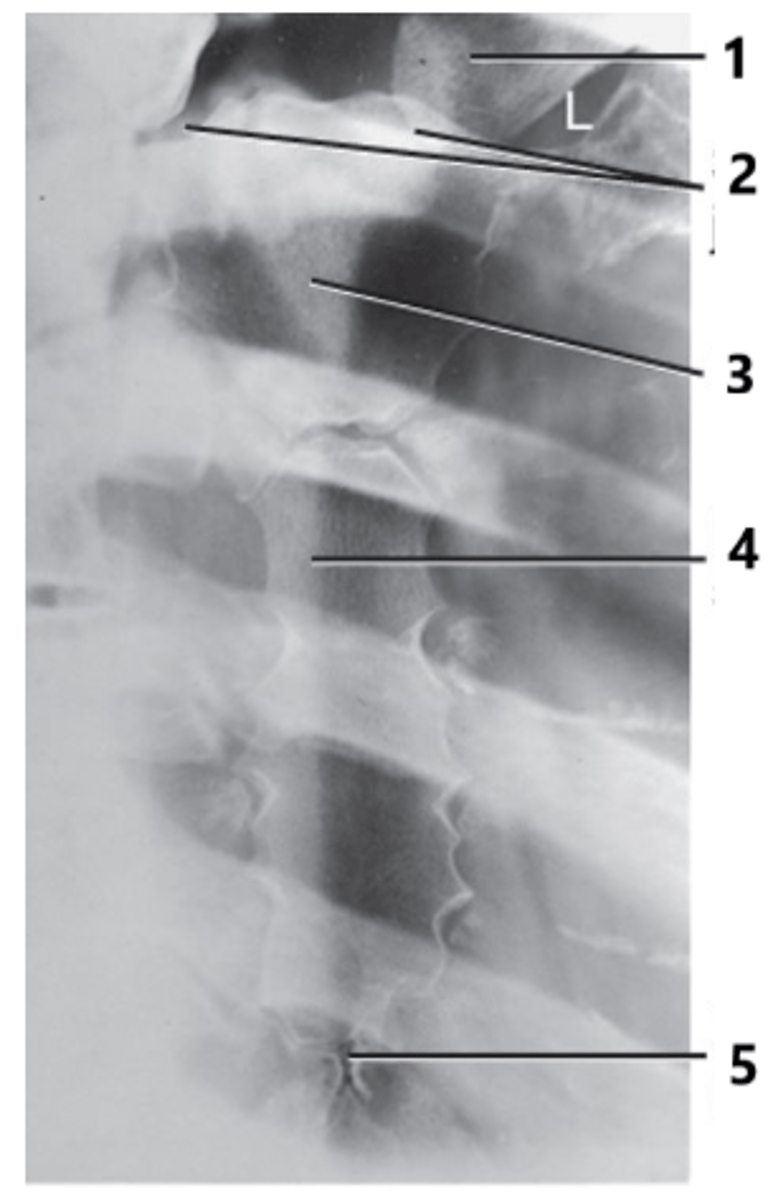
Which structure is identified by the number 1?
clavicle
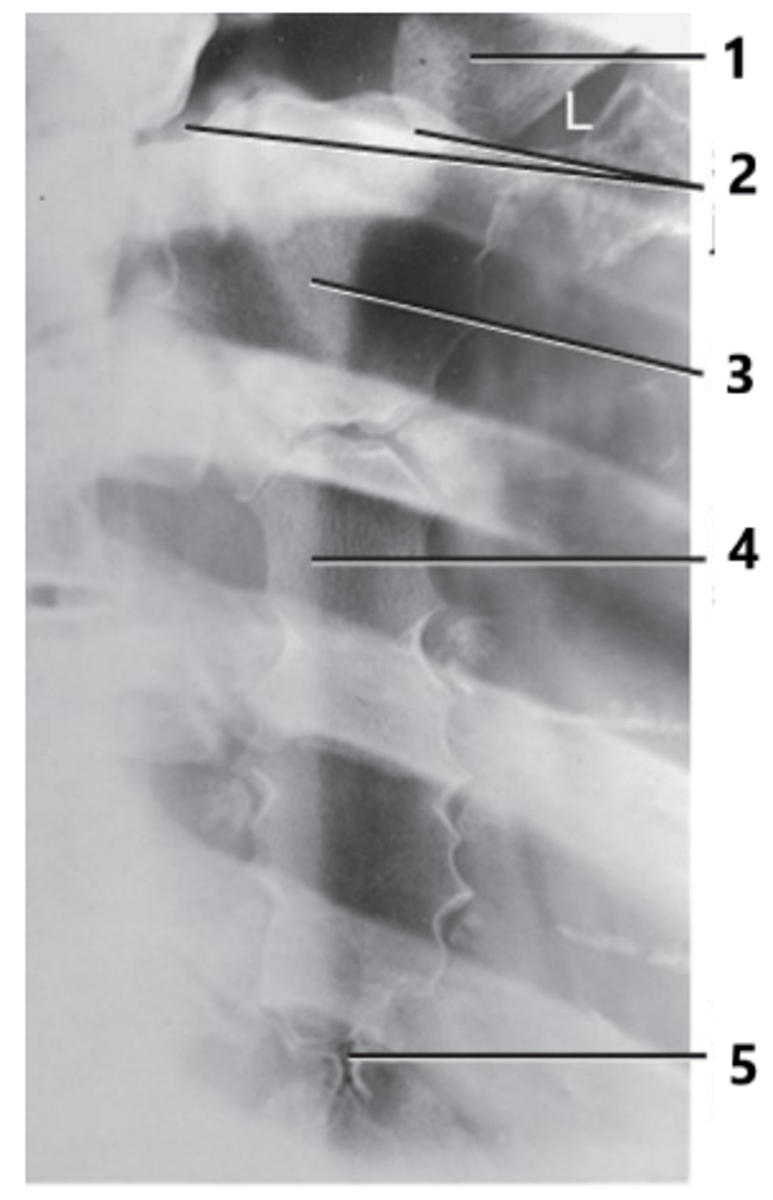
Which structure is identified by the number 5?
xiphoid process
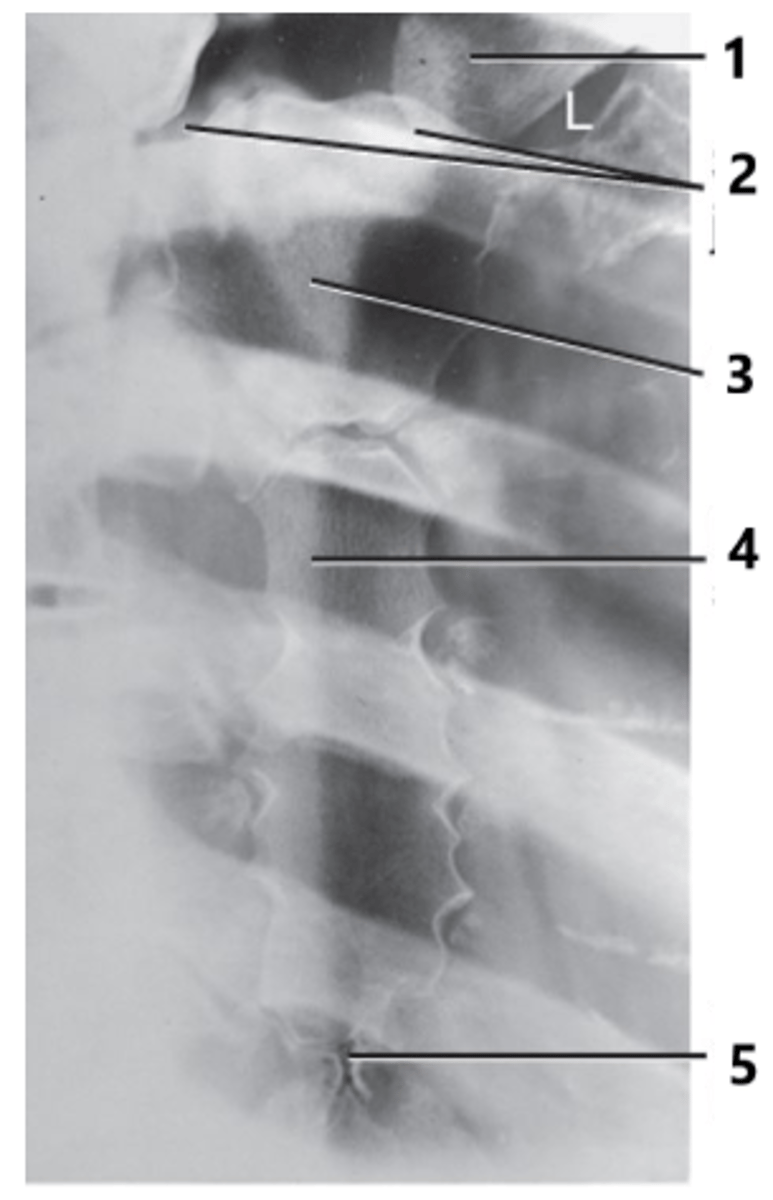
Which structure is identified by the number 4?
sternal body
Which portion of the sternum articulates with the sternal end of the clavicle?
manubrium
Define Cholecystectomy:
removal of the gallbladder
Define Cholelithiasis:
gallstones
Define Cholecystitis:
inflammation of the gallbladder
Define Biliary Stenosis:
narrowing of the bile ducts
Define Choledocholithiasis:
stones in the common bile duct
Which of these abdominal organs serves to produce lymphocytes and store and remove red blood cells from the body?
spleen
Which of these abdominal organs serves as both an endocrine and exocrine gland?
pancreas
The common bile duct is comprised of:
common hepatic duct and cystic duct
Which of these is the largest lobe of the liver?
right lobe
Which of these procedures is usually performed in the surgical suite directly after surgical removal of the gallbladder to check the patency of the biliary ducts?
operative cholangiogram
The preferred modality used to image the gallbladder is:
sonography
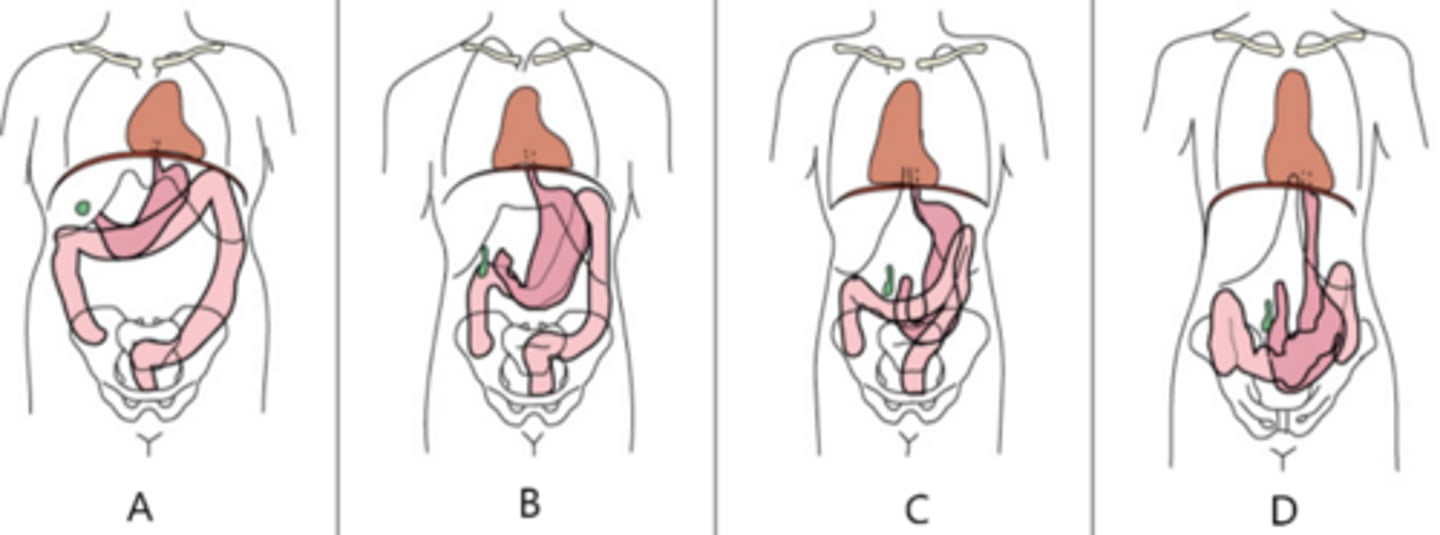
Which of these illustrations represents the sthenic body habitus?
B
Which projection demonstrates the stomach with a barium-filled fundus and an air-filled body and pylorus?
AP
In which projection in the GI series is the entire stomach visualized, and the body of the stomach and the C-loop are barium-filled?
right lateral
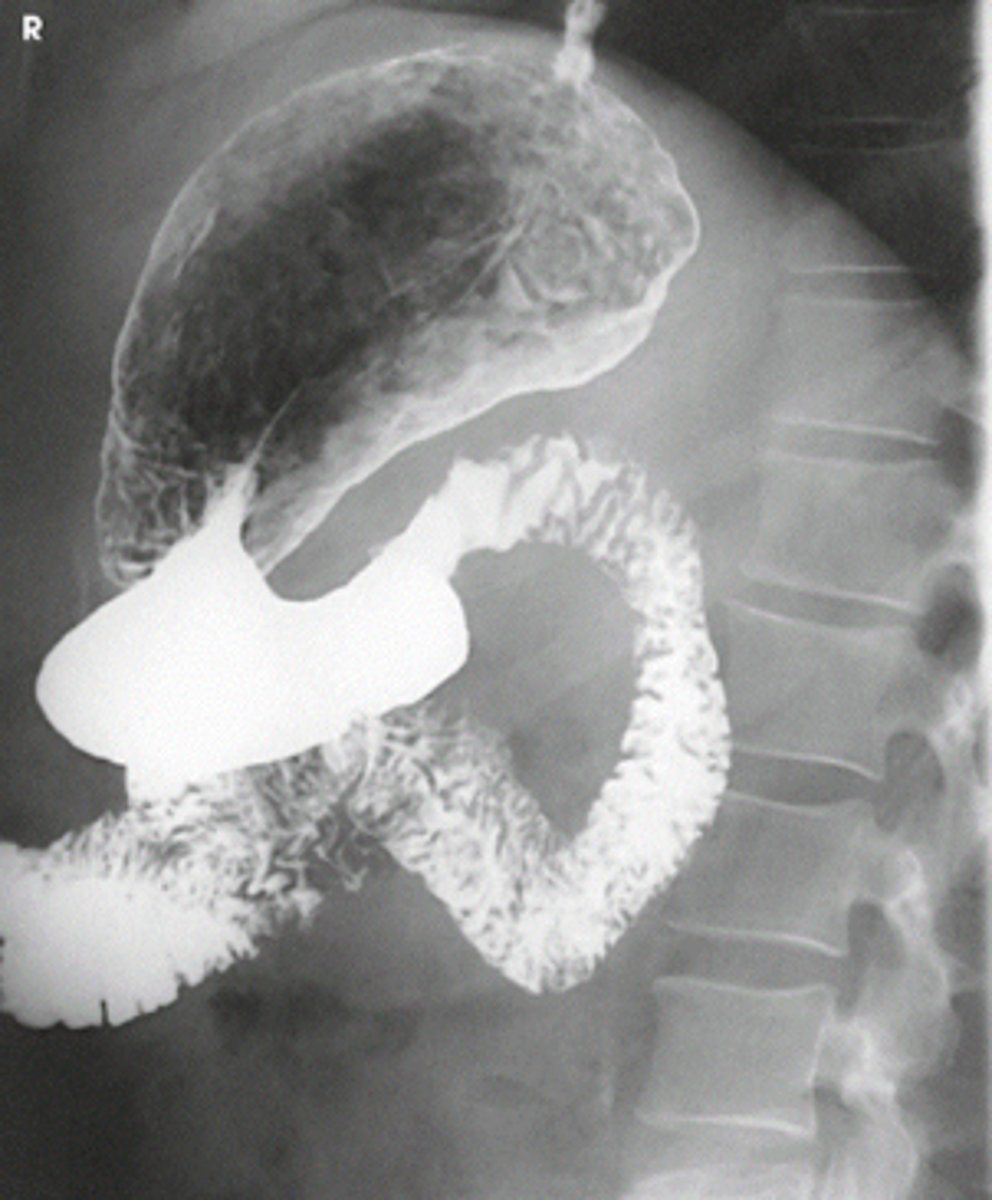
Identify the position the patient is in for the following image.
right lateral
In which projection in the GI series is the duodenal bulb seen in profile filled with barium?
RAO
Which of these exercises/maneuvers is described as a patient taking in a deep breath and bearing down as if trying to move the bowels?
valsalva maneuver
Air, naturally occurring gas bubbles, gas crystals and carbon monoxide are all examples of:
negative contrast media
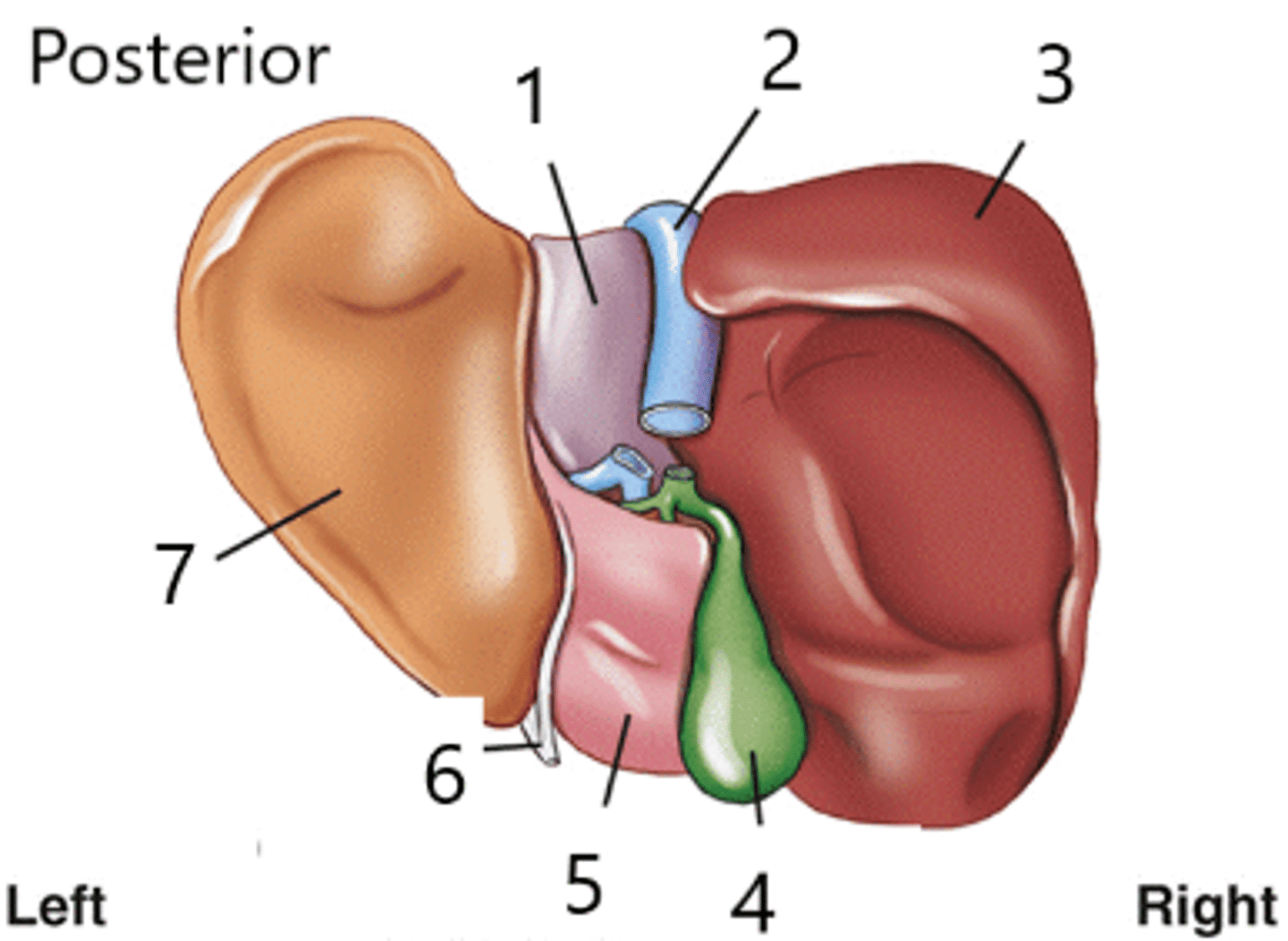
Which structure is identified by the number 1?
caudate lobe of the liver
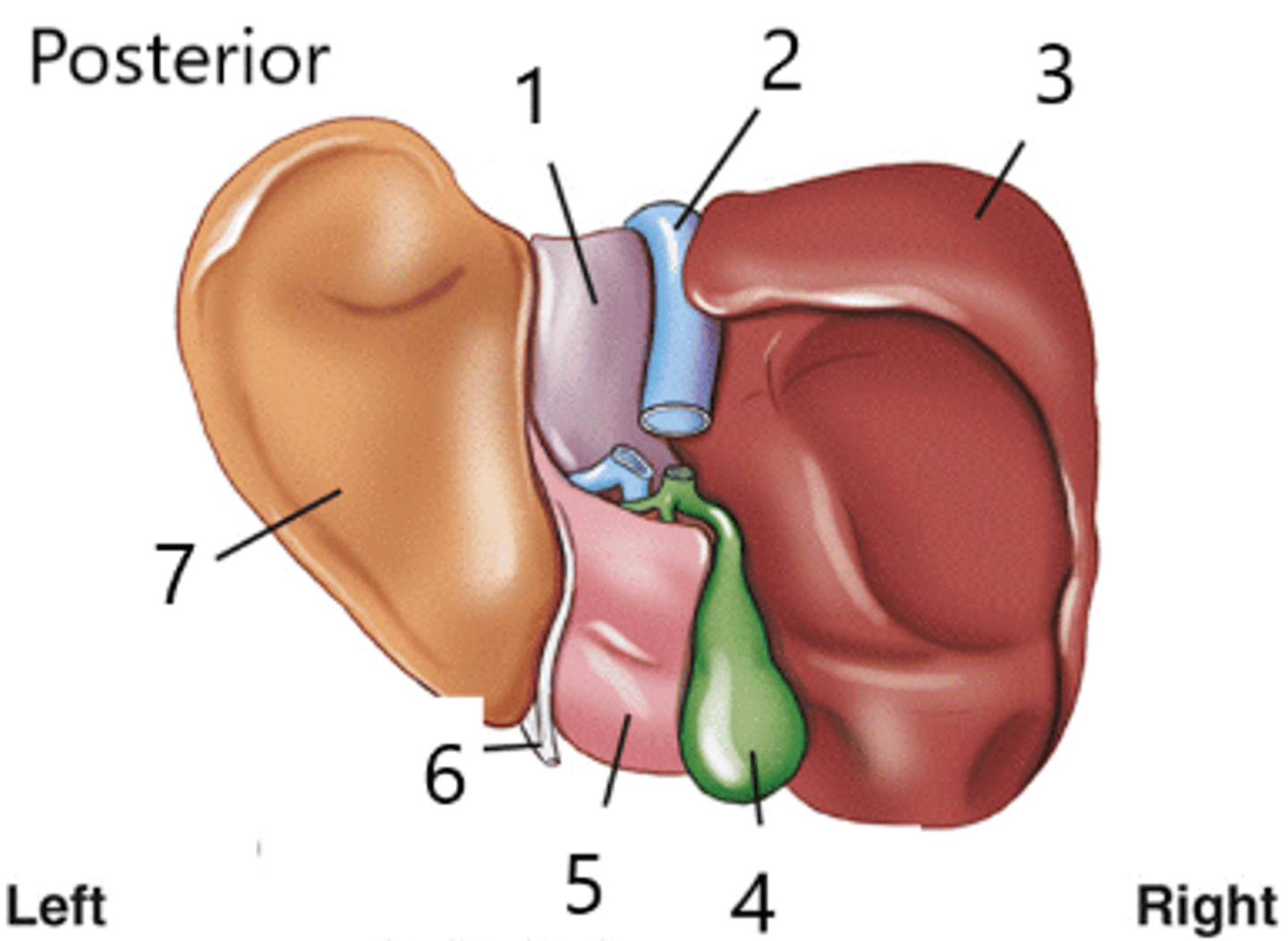
Which structure is identified by the number 4?
gallbladder
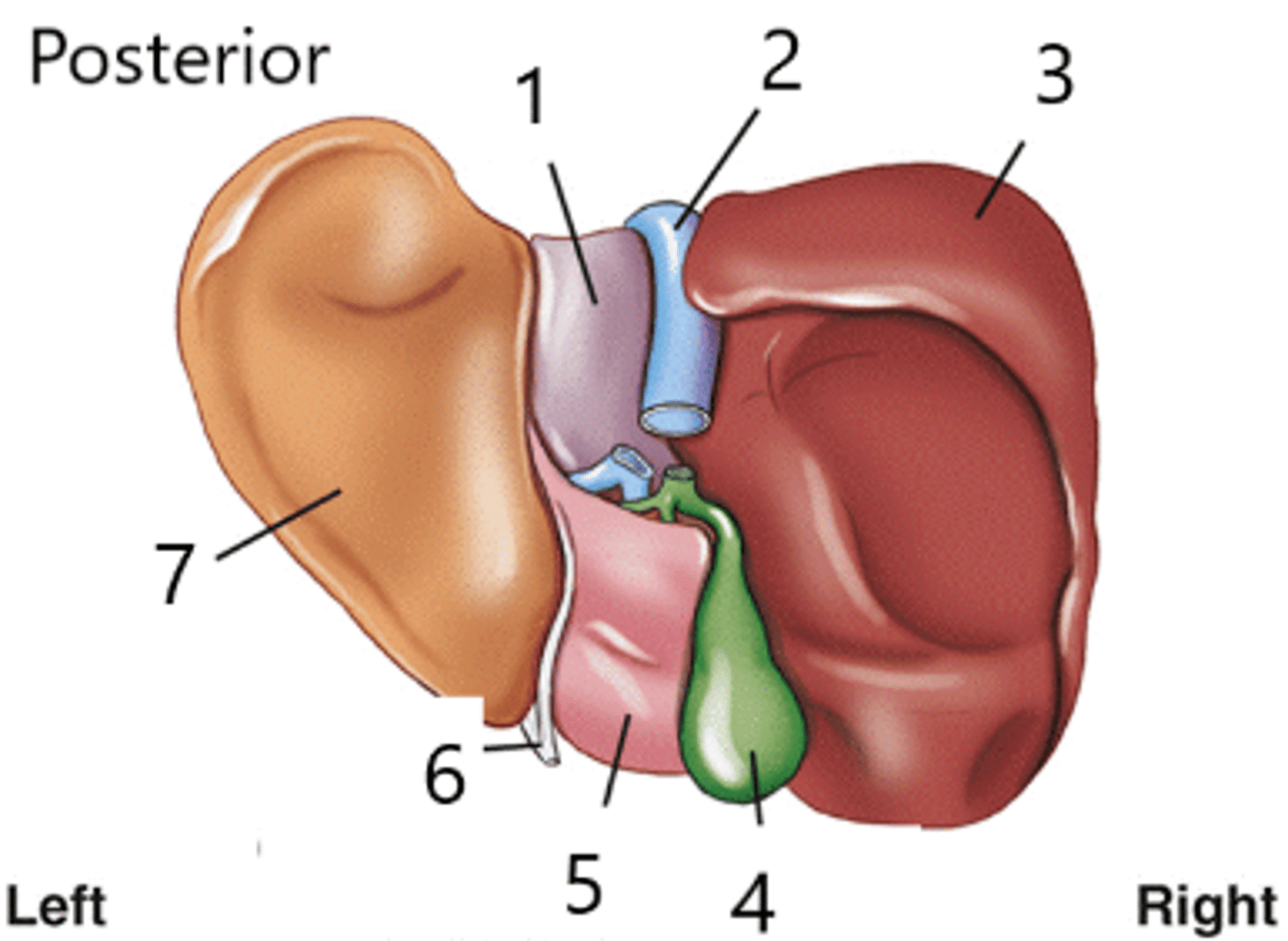
What structure is identified by the number 3?
right lobe of the liver
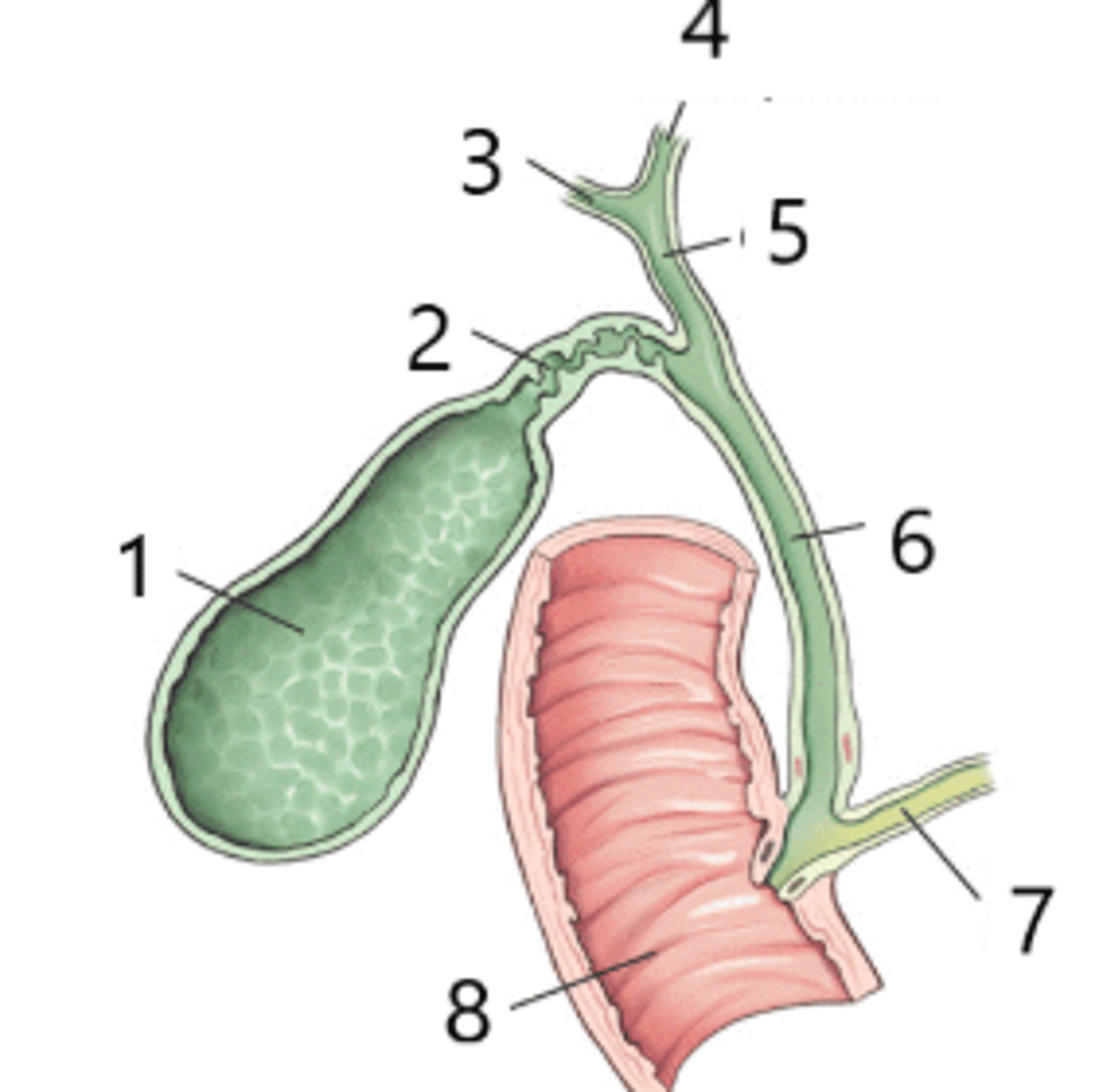
What structure is identified by the number 4?
left hepatic duct
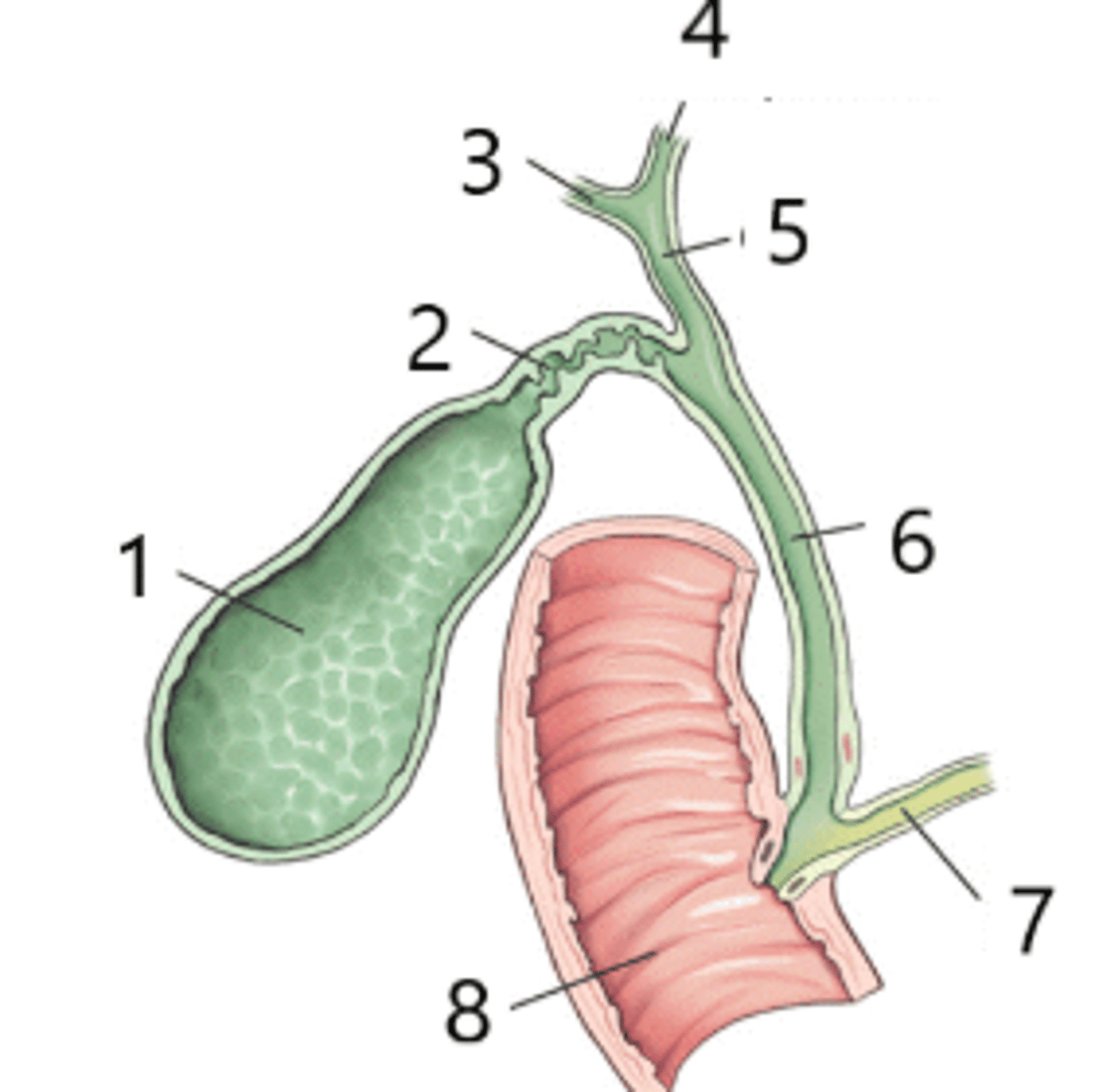
What structure is identified by the number 2?
cystic duct
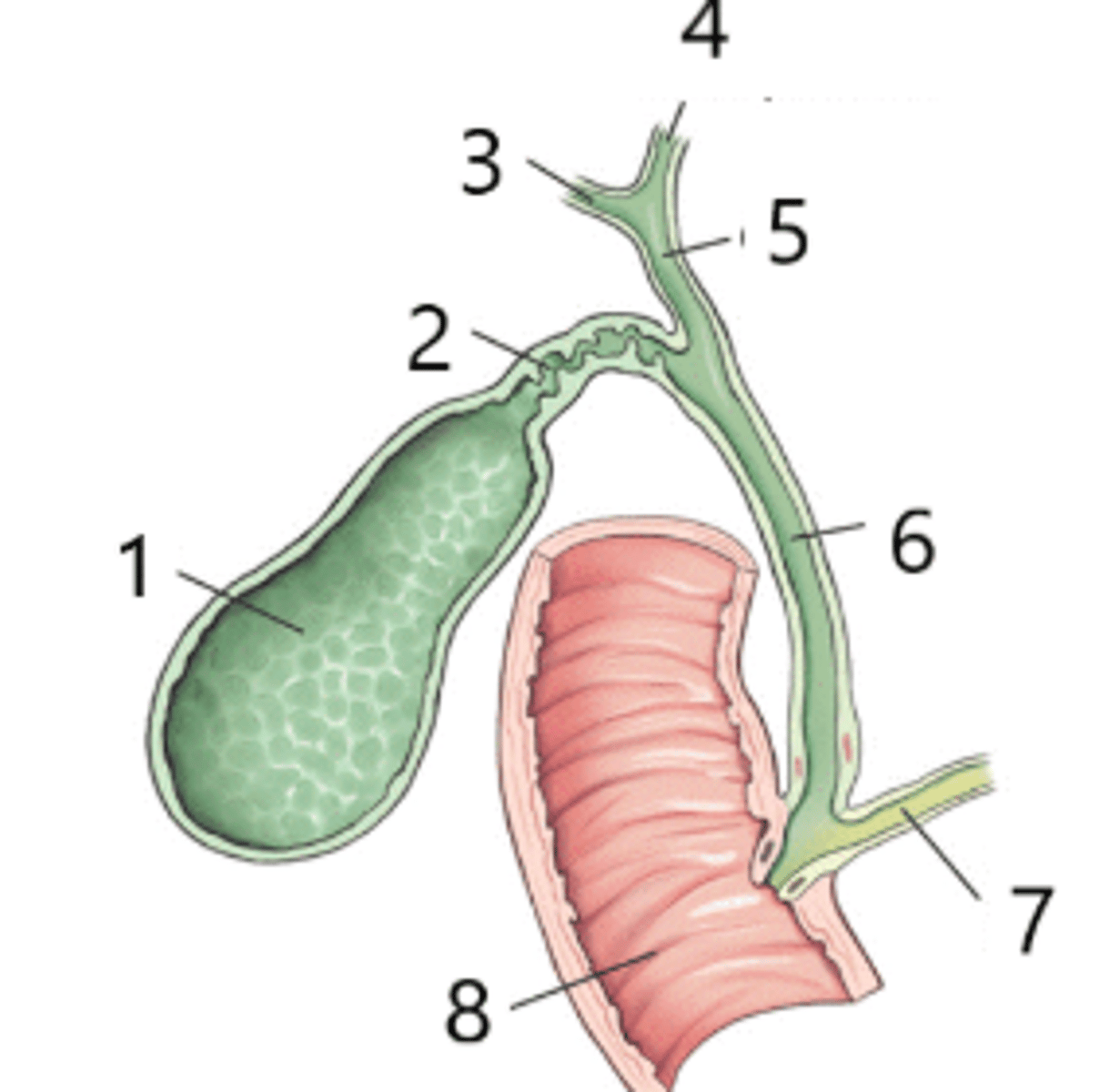
What structure is identified by the number 6?
common bile duct
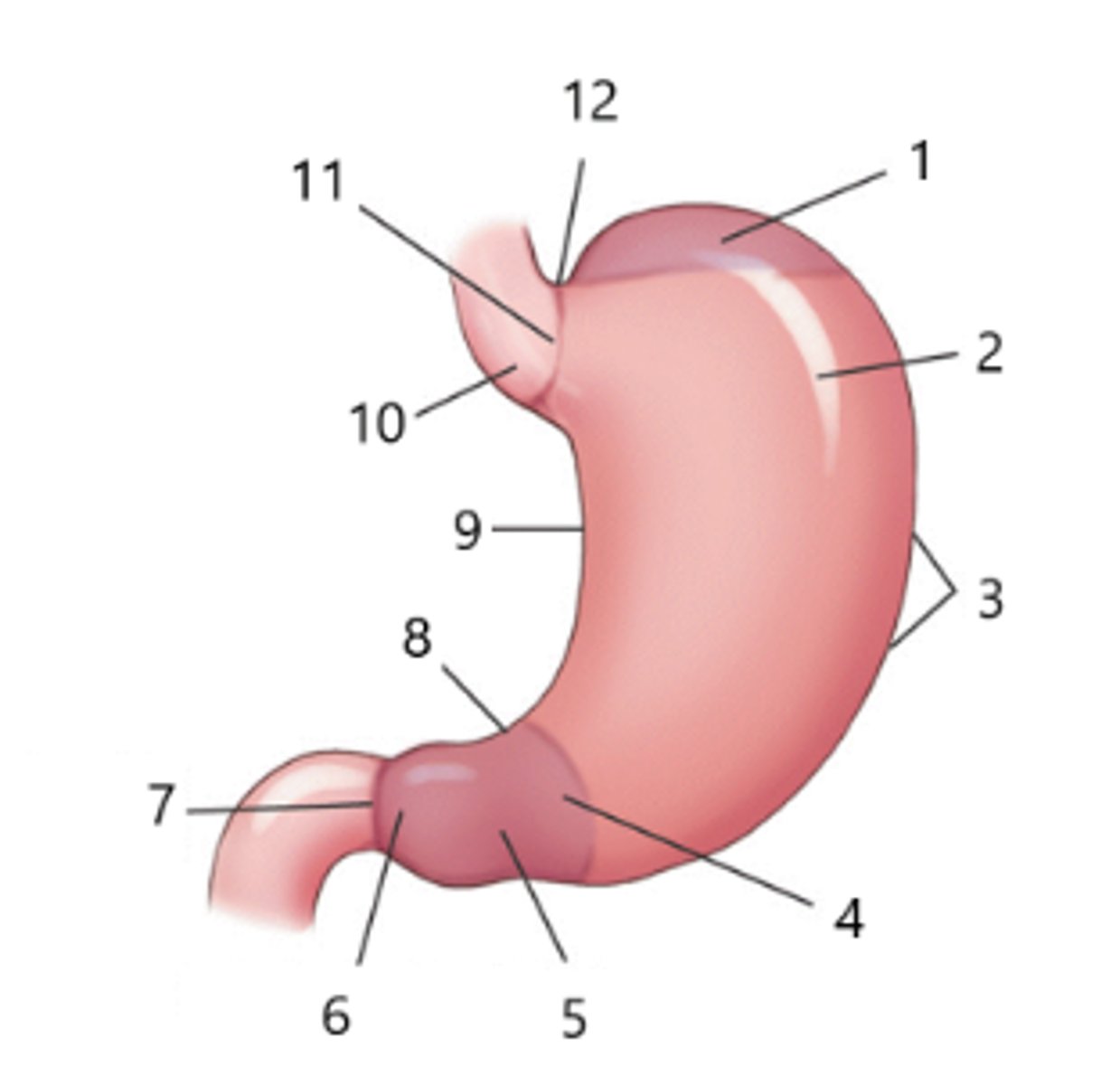
What structure is identified by the number 8?
angular notch
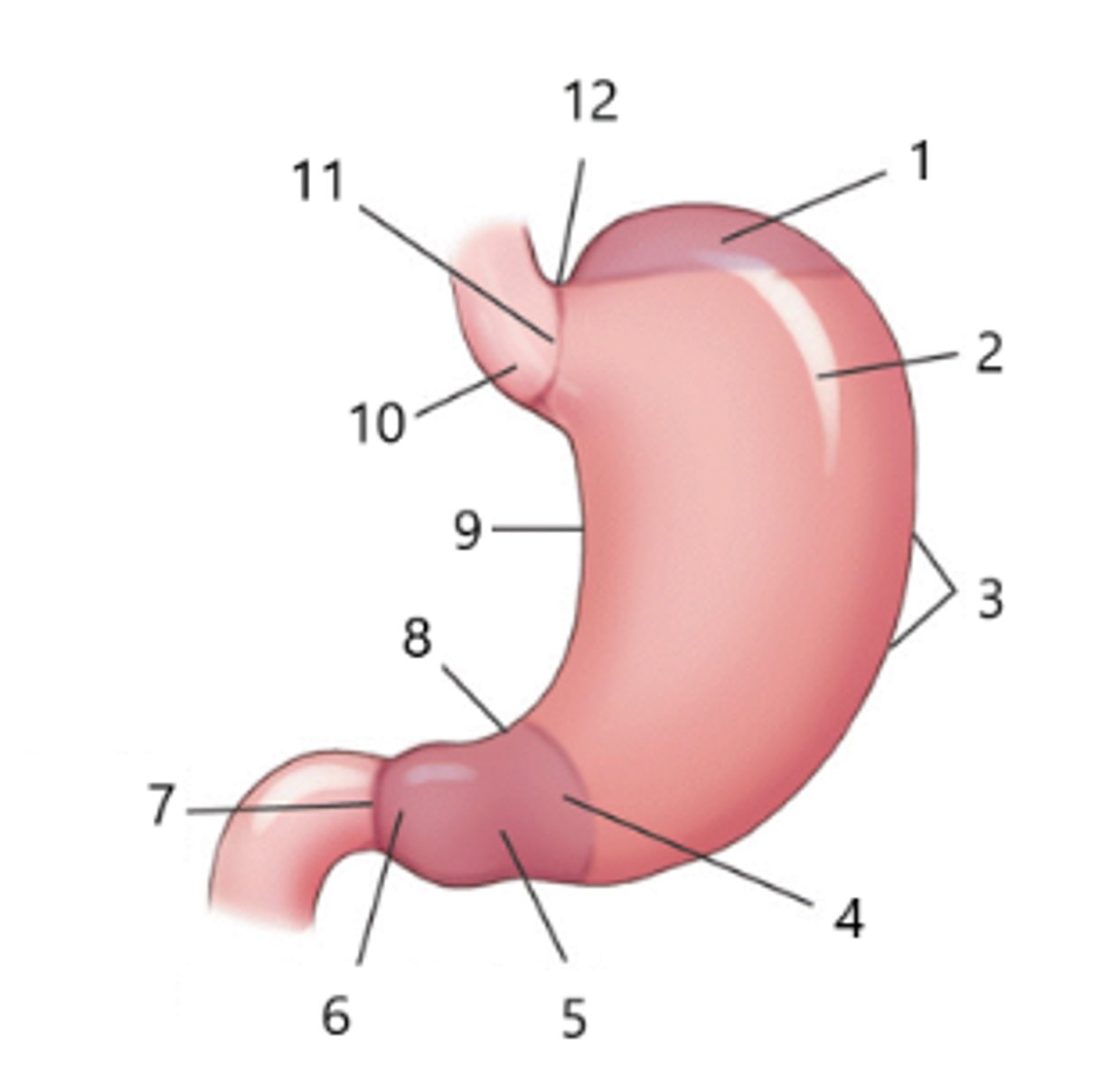
What structure is identified by the number 3?
greater curvature
What is the atomic number for barium?
56
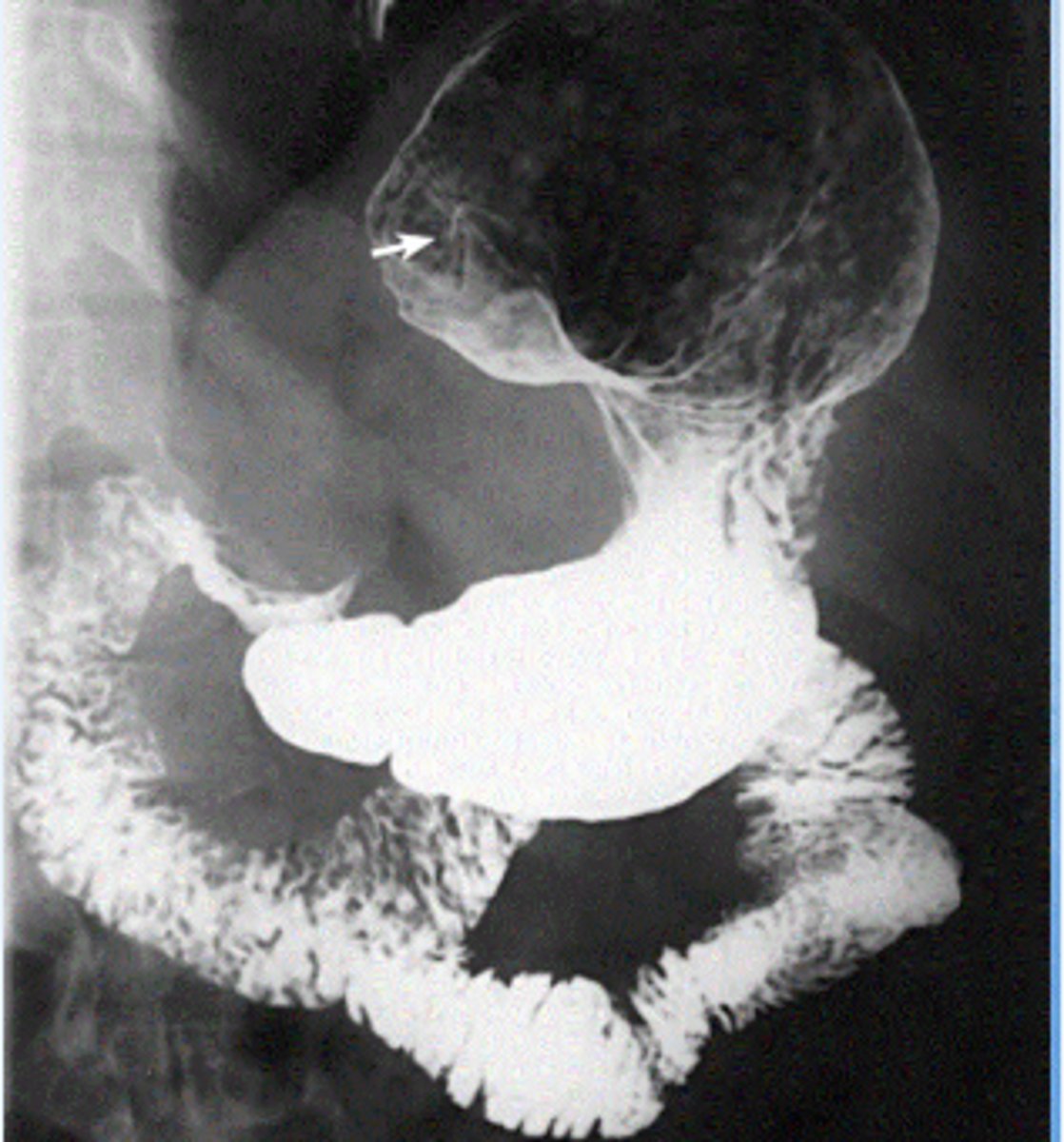
Which of the following GI images was created in the right anterior oblique position?
The spleen is found in which abdominal quadrant?
left upper quadrant
Which of these techniques could be used to demonstrate esophageal reflux?
all of these techniques could be used to demonstrate esophageal reflux
3 multiple choice options
In which projection of the GI series is the retrograstic space best demonstrated?
Right lateral
The act of swallowing is termed:
deglutition
The esophagus is located ___to the trachea.
posterior
The opening between the esophagus and the stomach is called:
esophagogastric junction
The dilated portion of the distal esophagus is called:
cardiac antrum
Which term describes the outer, lateral border of the stomach?
greater curvature
What is the term used to describe the longitudinal mucosal folds found within the stomach?
rugae
Which specific part of the pancreas is adjacent to the duodenum?
head
In which body habitus would the patient's stomach be located high and transverse?
hypersthenic
Which of the following clinical indications would be considered a contraindication for using barium sulfate?
possible perforated bowel
What pathology can be identified by a gastric bubble seen above the diaphragm?
hiatal hernia
Which of these is not considered an accessory organ of digestion?
spleen
Where in the body is bile formed?
liver
What is the name of the cranial suture formed by the inferior borders of the parietal bones and their respective temporal bones?
squamosal
What is the name of the prominent landmark or bump found on the external surface of the occipital bone?
external occipital protuberance
Which cranial bone contains the organs of hearing and balance?
temporal bone
The sphenoid sinus lies directly inferior to which of these bony structures?
sella turcica
Which of these cranial pathologies describes a fracture that occurs at the base of the skull that involves the sphenoid, ethmoid, occipital and temporal bones?
basilar skull fracture
A large opening found at the base of the occipital bone where the medulla oblongata passes through is called:
foramen magnum
The pituitary gland sits within which of the following structures?
sella turcica
Which structure is described as a conical process that arises superiorly from the cribiform plate of the ethmoid bone?
cristi galli
The smooth, slightly prominent triangular area found between the eyebrows and above the bridge of the nose is called:
glabella
The term used to describe the topmost portion of the skull is:
vertex
Which of these is described as the point where the coronal and sagittal sutures articulate?
bregma
Which structure is found at the junction of the frontal and nasal bones and is used as a positioning landmark?
nasion
Which cranial bone articulates with the frontal and sphenoid bones, as well as 11 facial bones?
ethmoid
Which cranial bones form the top and sides of the cranium?
parietal
The foramen ovale, foramen spinosum and foramen rotundum are found in which portion of the sphenoid bone?
greater wing of sphenoid
The zygomatic process projects anteriorly from which cranial bone?
mandible
The medial juncture of the eyelids is called the:
inner canthus
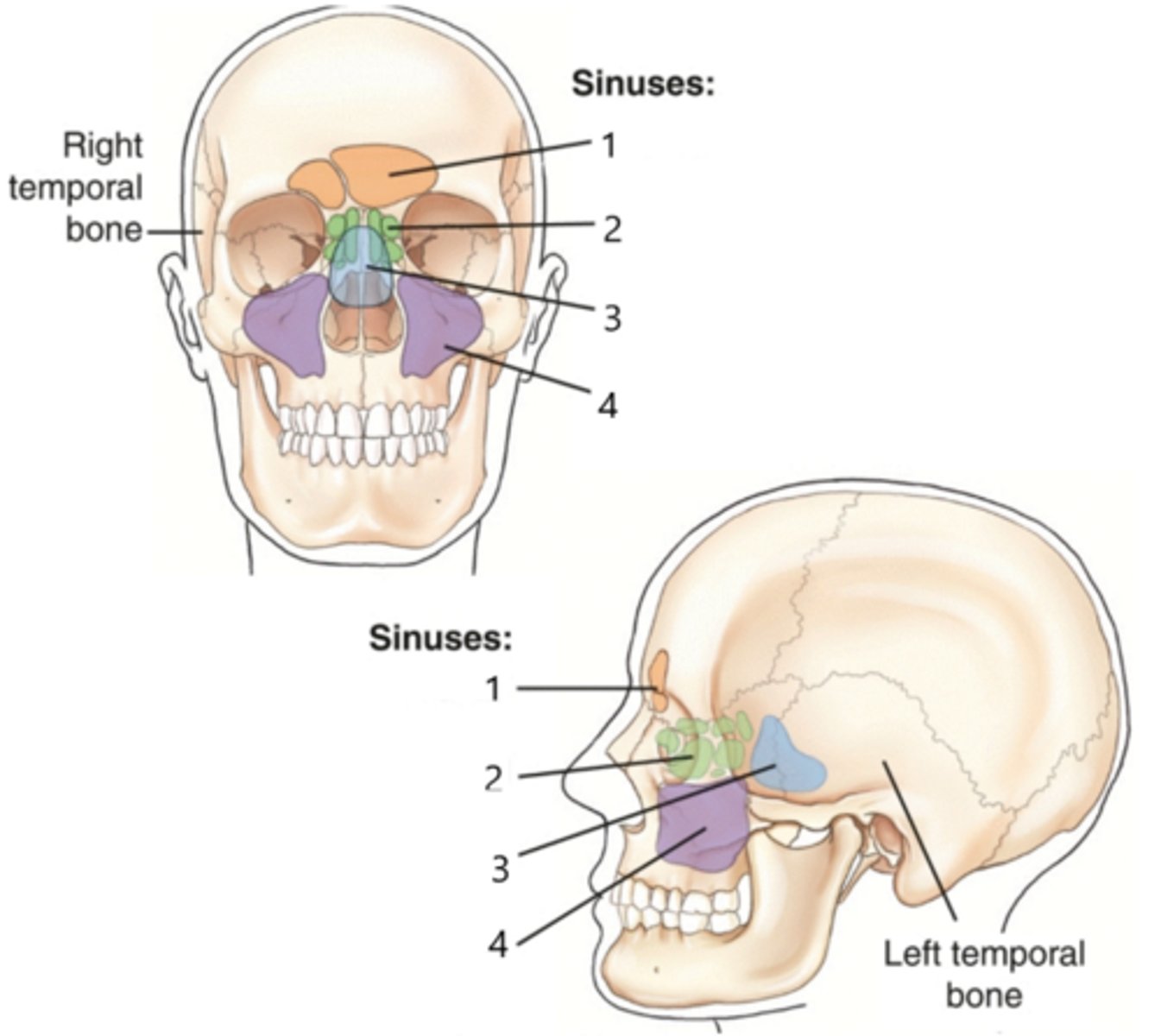
Which sinuses are indicated by the green shading on this illustration?
ethmoid
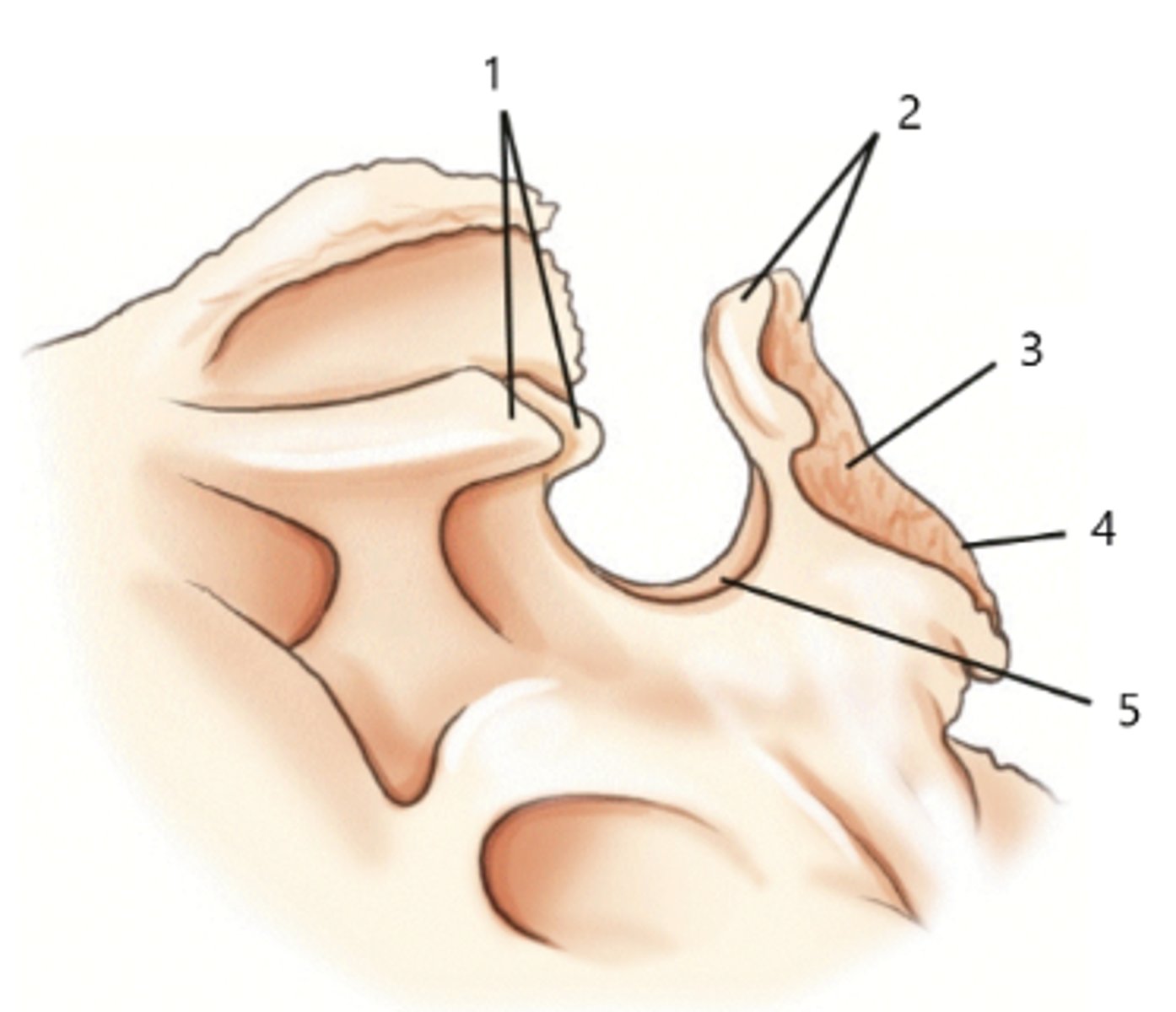
What structure is indicated by the number 1?
anterior clinoid processes
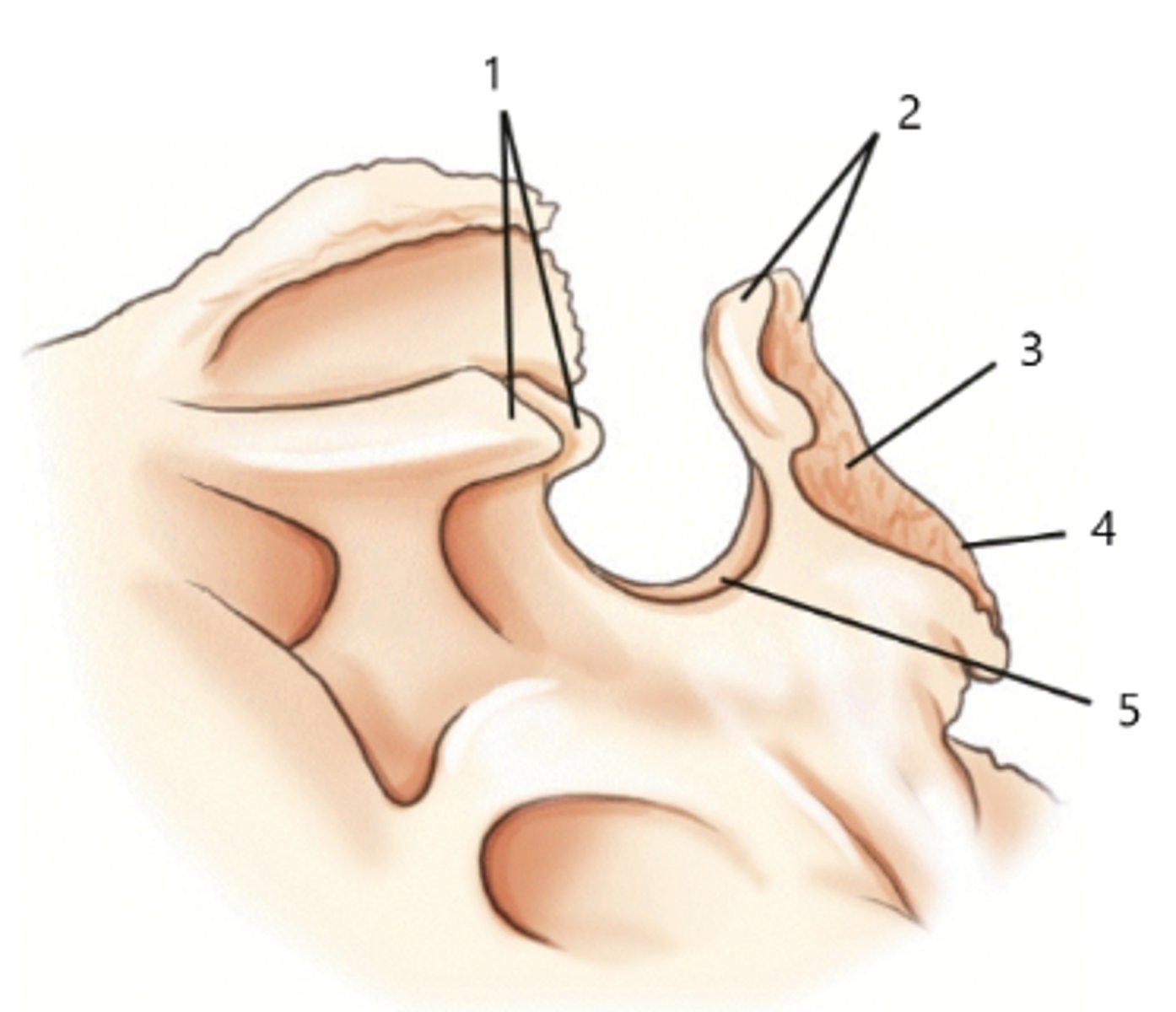
What structure is identified by the number 2?
posterior clinoid process
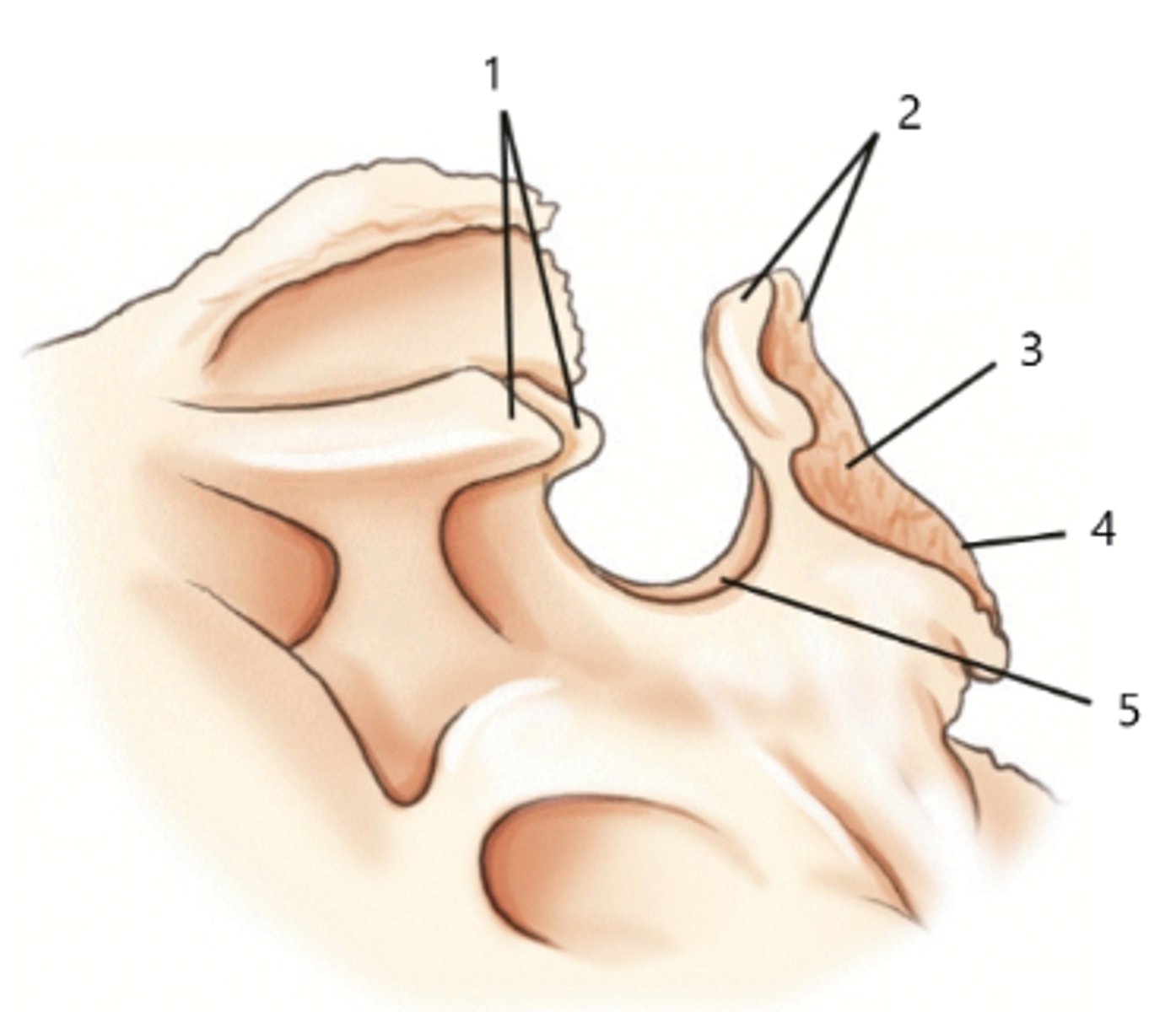
What structure is identified by the number 3?
dorsum sella
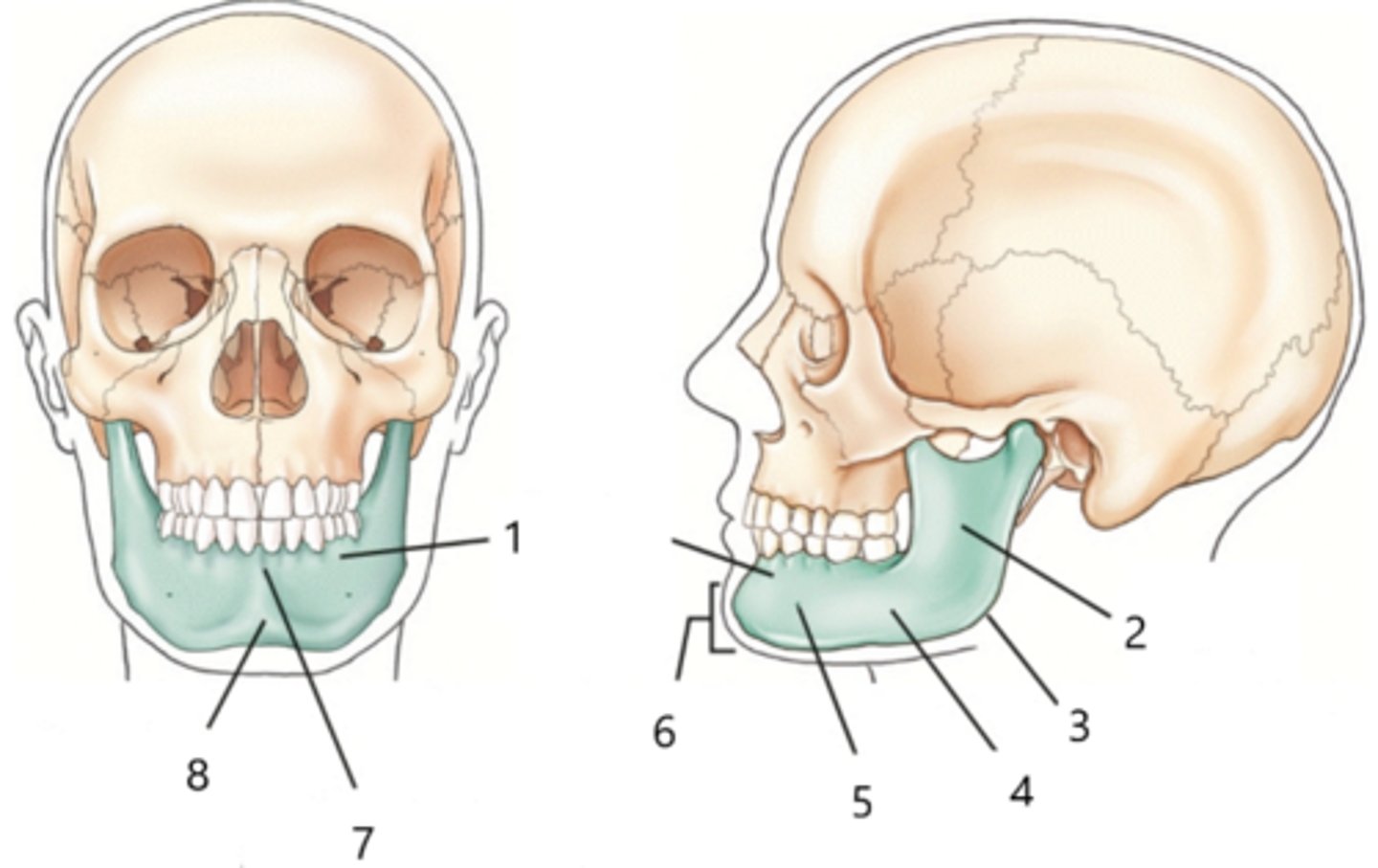
What structure is indicated by the number 3?
mandibular angle
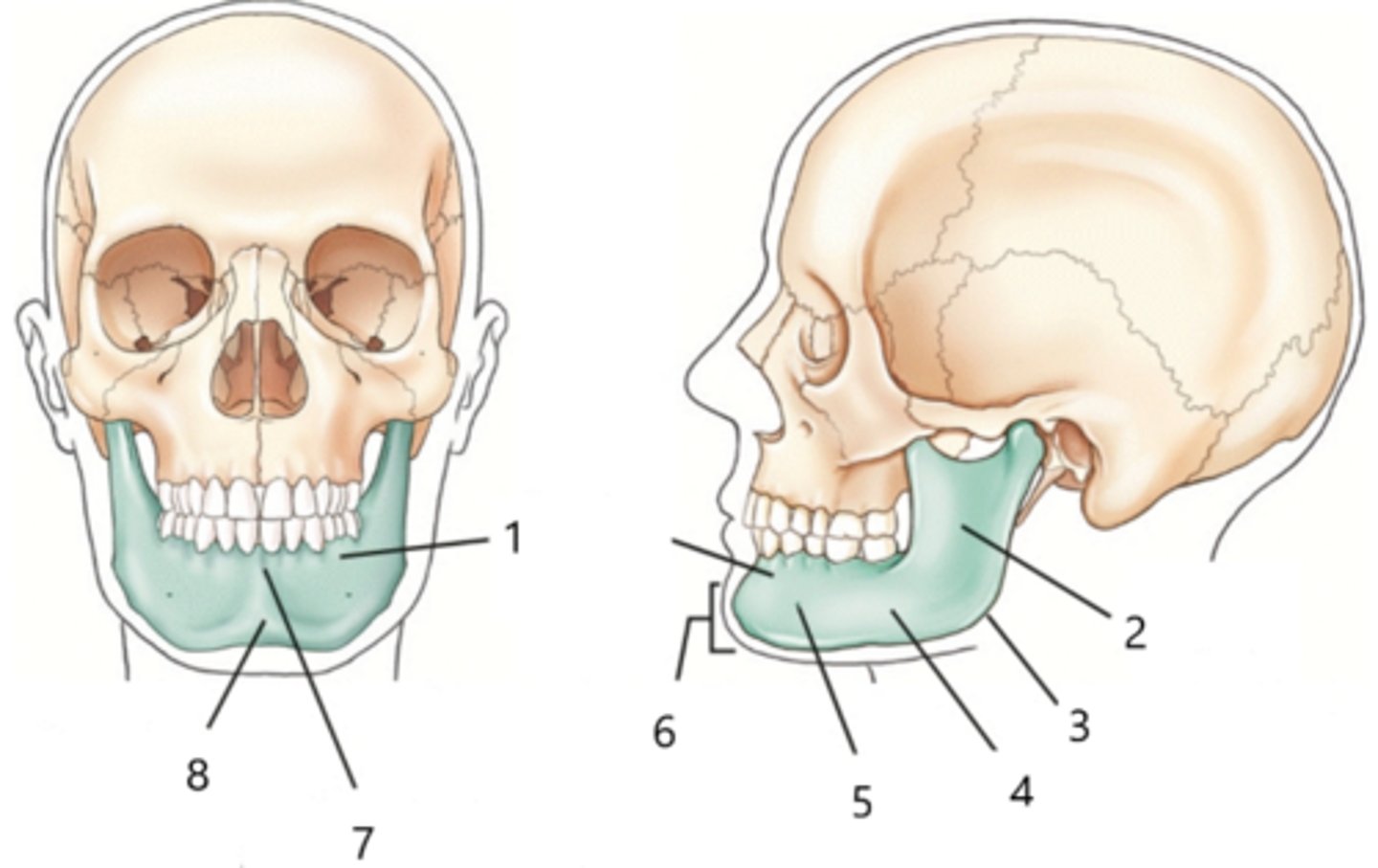
What structure is identified by the number 2?
ramus
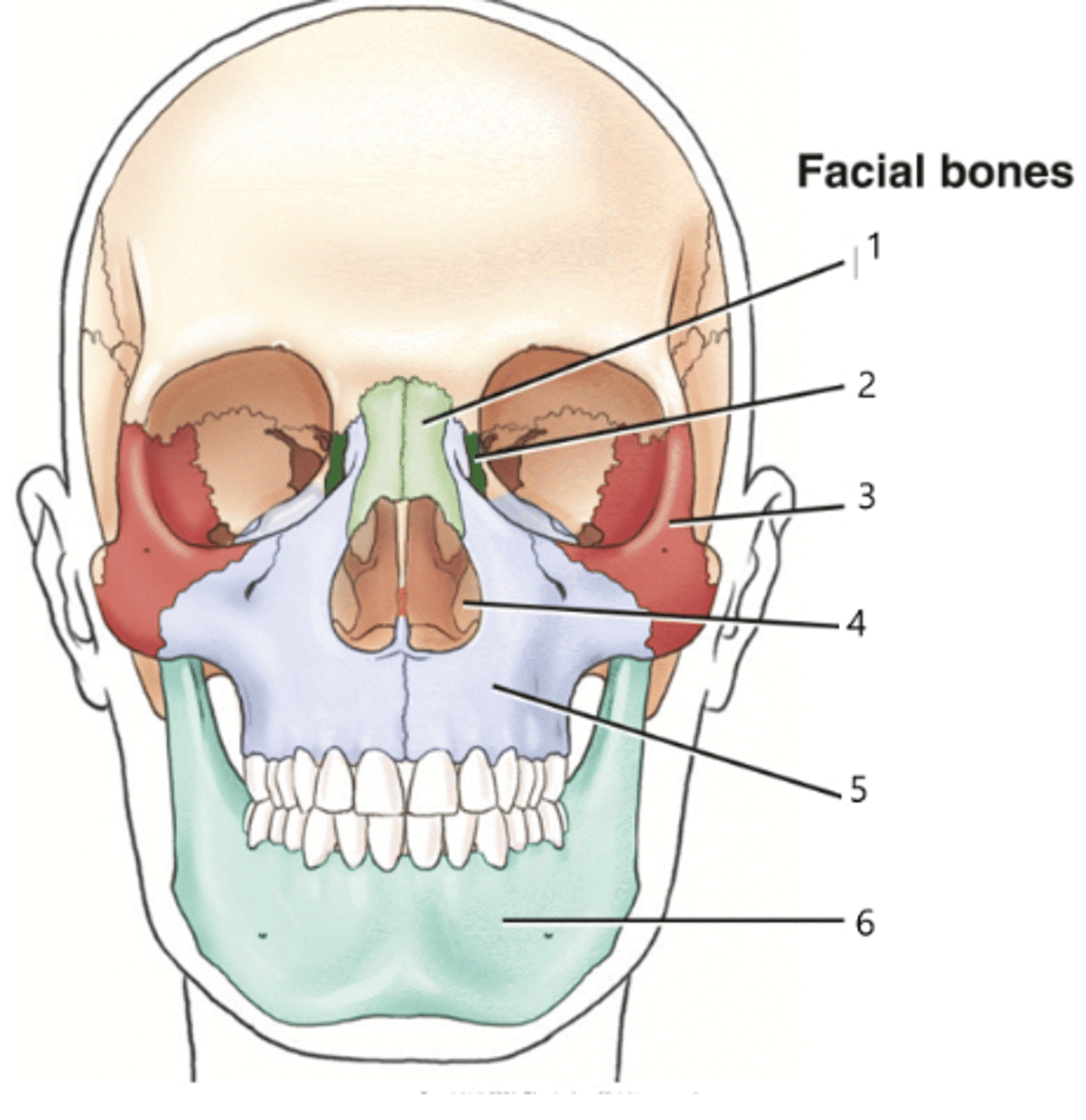
What structure is identified by the number 1?
nasal bones
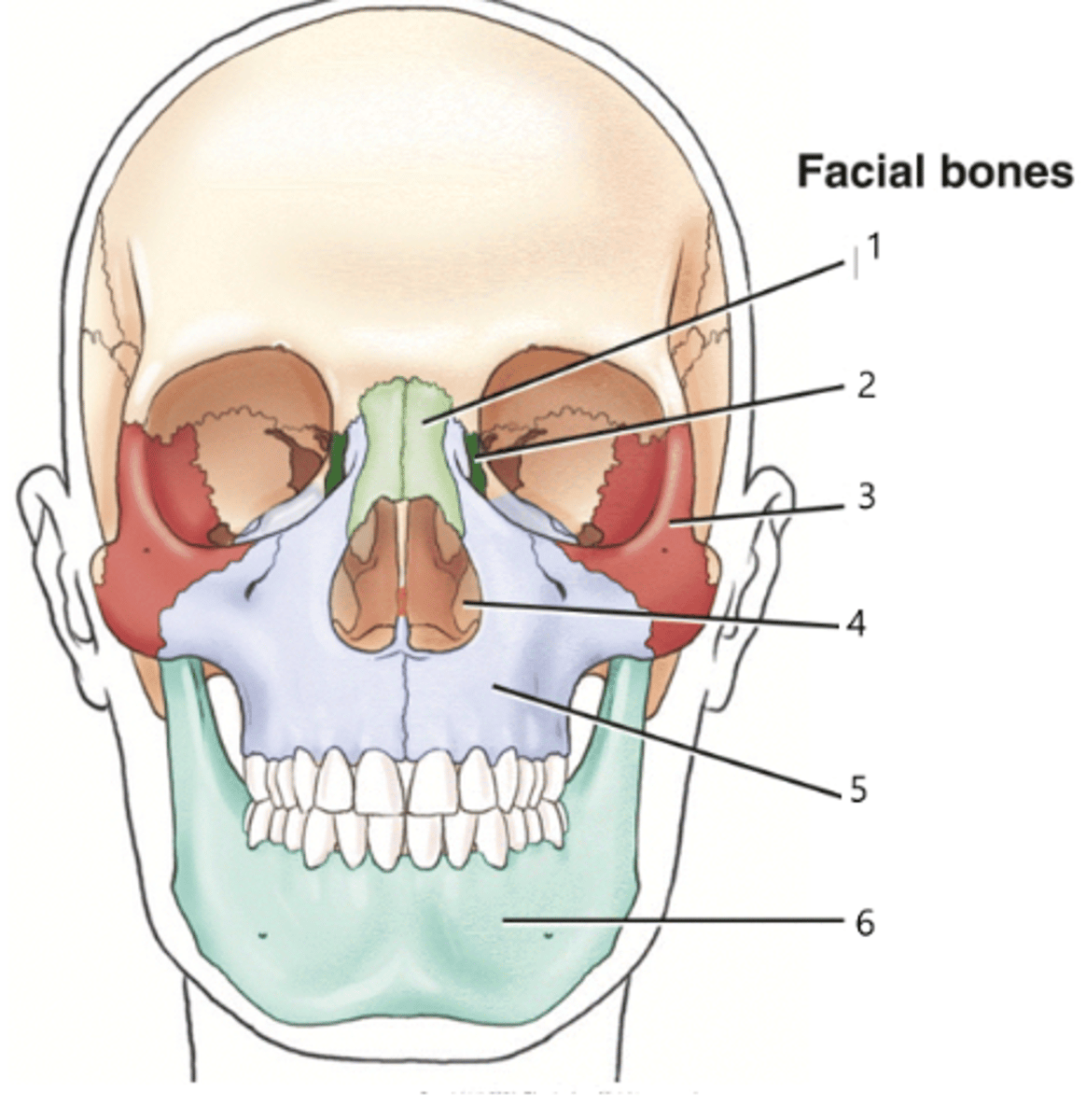
What structure is identified by the number 3?
zygoma
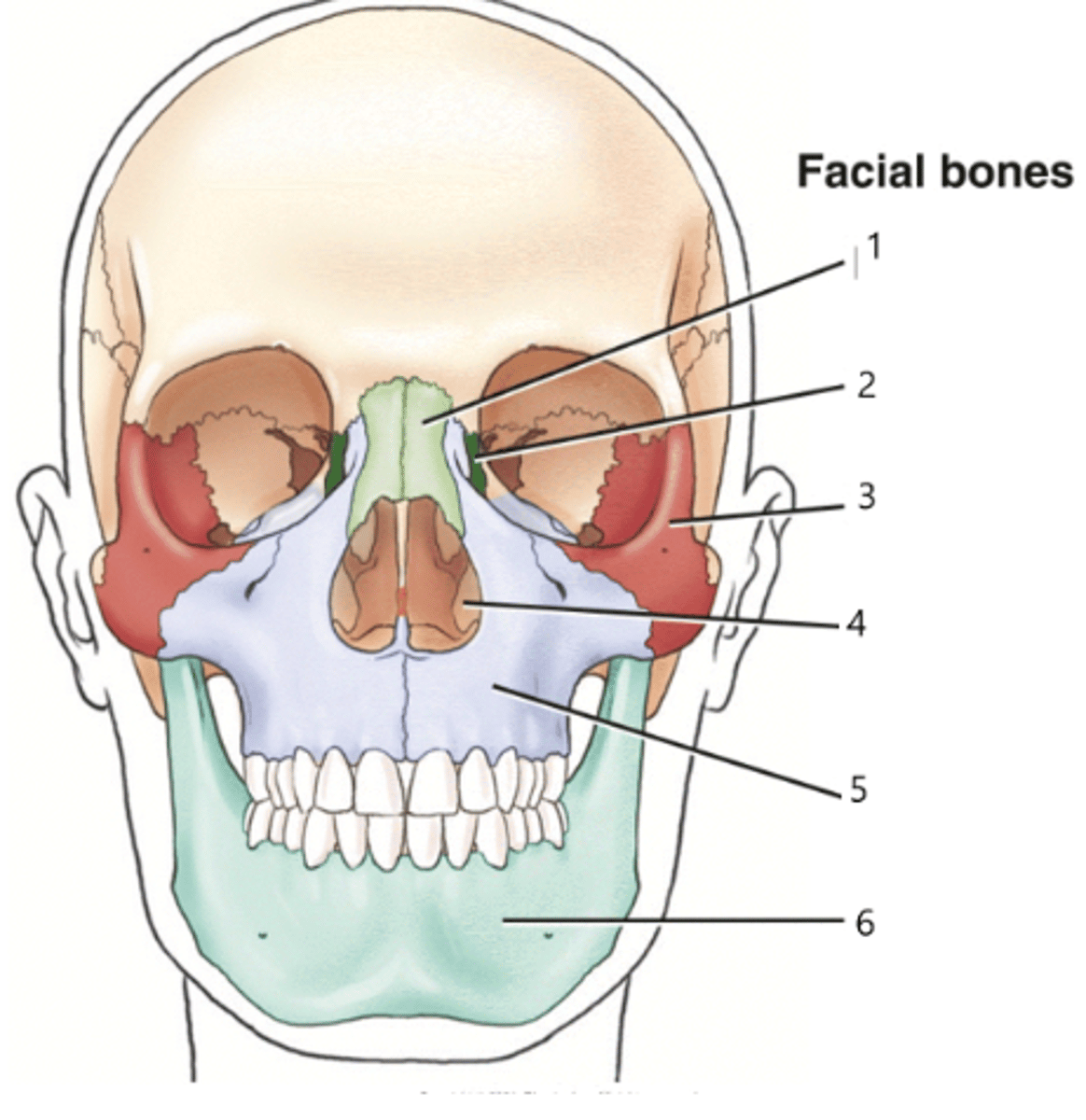
What structure is identified by the number 2?
lacrimal
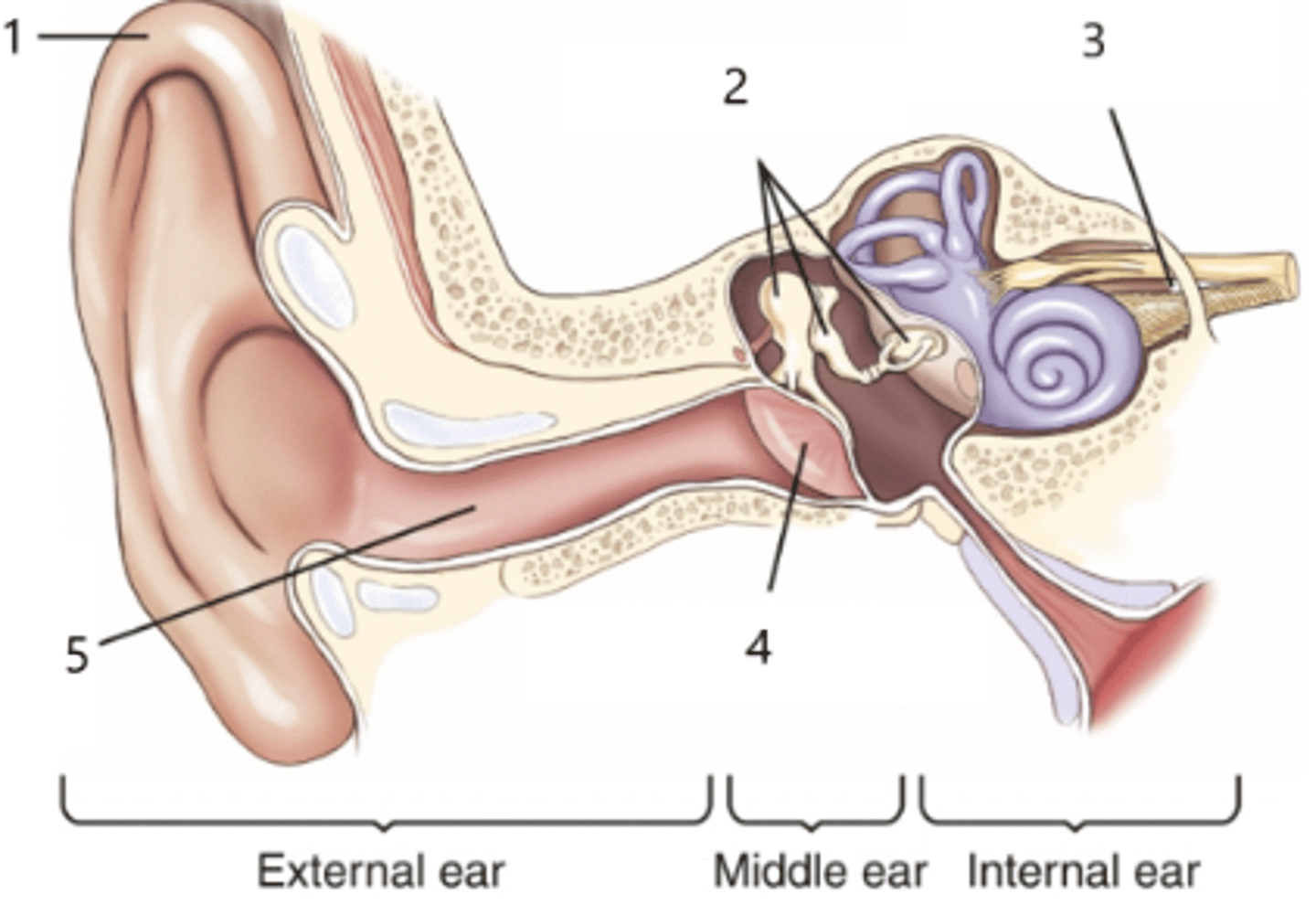
What structure is identified by the number 2?
auditory ossicles