W 7/8 - Statistics
 Call Kai
 Learn
Learn Practice Test
 Spaced Repetition
 Match
Match Flashcards
 Knowt Play
1/117

There's no tags or description
Looks like no tags are added yet.
Name | Mastery | Learn | Test | Matching | Spaced | Call with Kai |
|---|
No analytics yet
Send a link to your students to track their progress
118 Terms
what 3 things are descriptive statistics based on?
based on shape, central tendency, variability
what are descriptive statistics
basic stats that make meaning of data, first pass through
ex: mean, median, mode
what is the mode?
most frequently occurring score
what is the median?
the middle number
how to take the median of an even sample?
take the average of the one above and below
ex/ 10.5 for a sample of 20
can you have multiple or no modes?
yes
what does it mean when you have no mode?
each sample occurs equally
what is the goal of descriptive stats?
to make sense of the target population based on a small sample
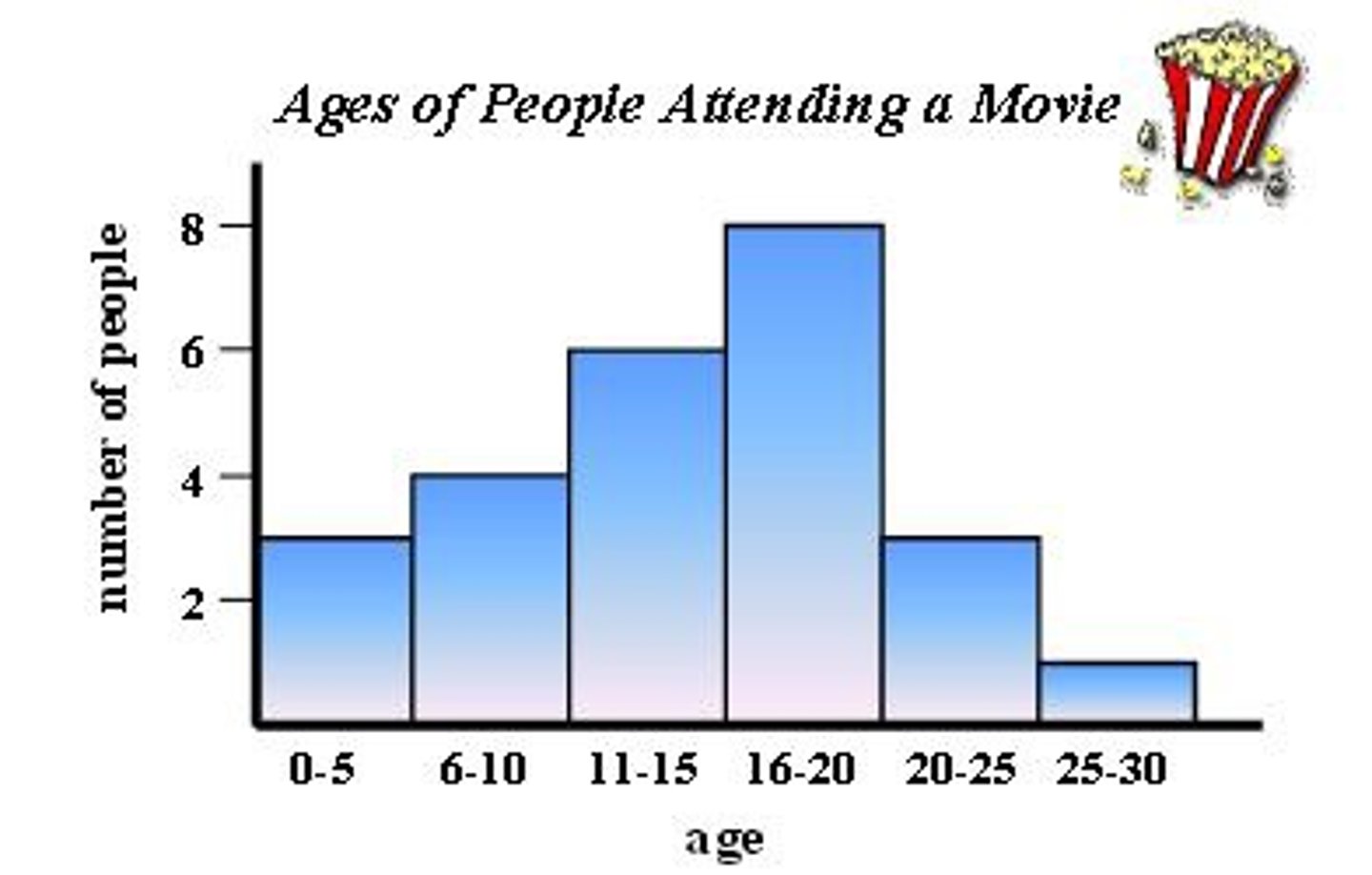
what is a histogram?
a diagram consisting of rectangles whose area is proportional to the frequency of a variable and whose width is equal to the class interval.
what is a skewed curve?
when the curve is not symmetrical (to one side or the other)
-deviations from the bell curve
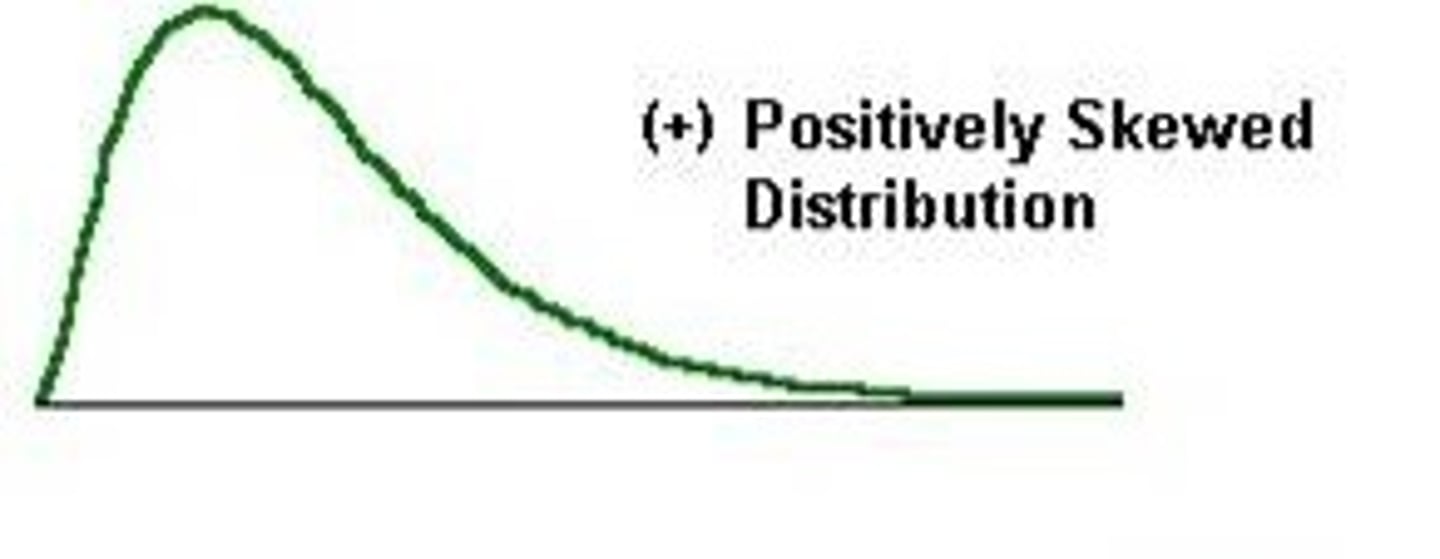
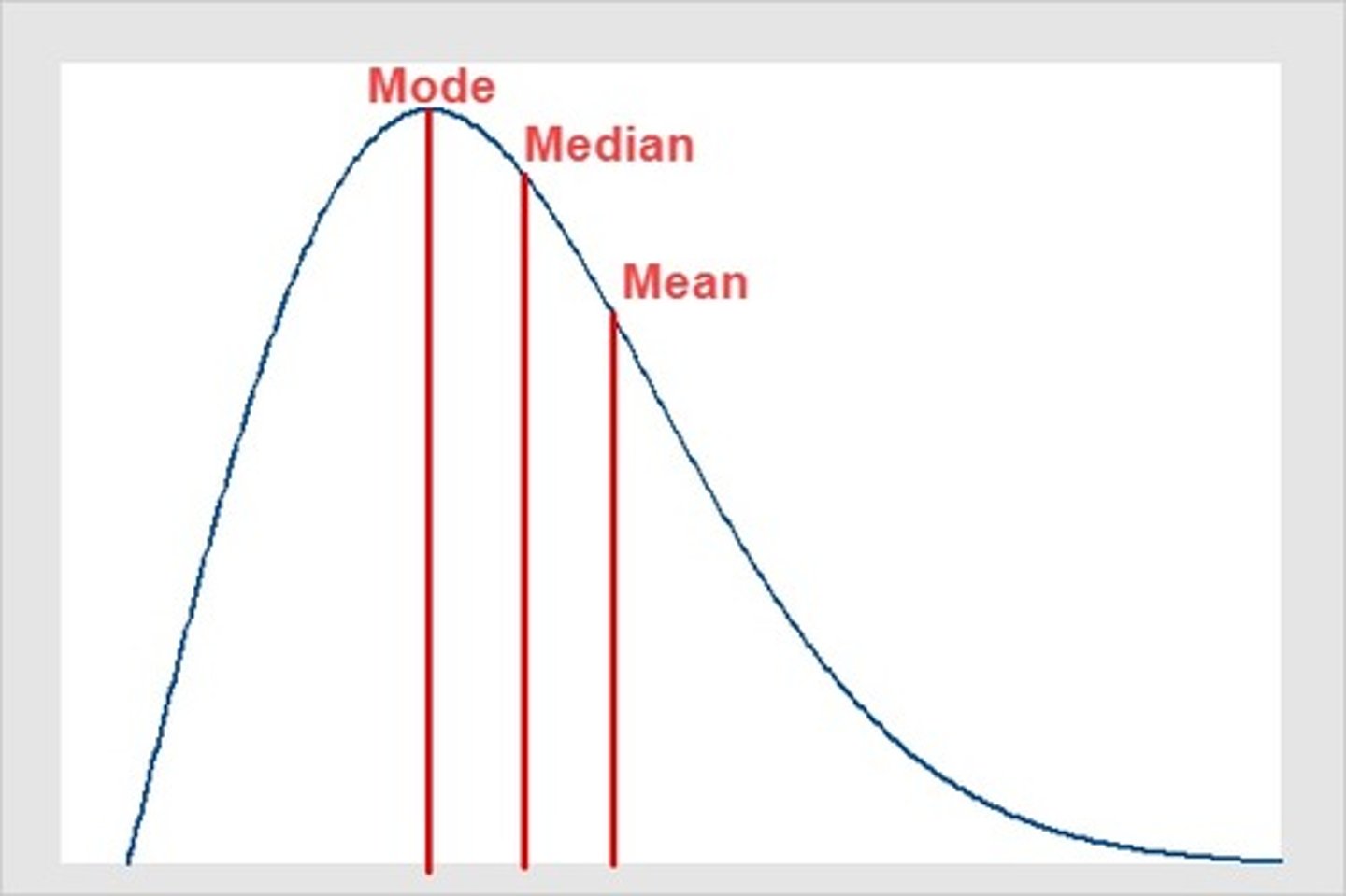
What is a positive skew?
A type of distribution in which the long tail is on the positive (right) side of the peak and most of the distribution is concentrated on the left.
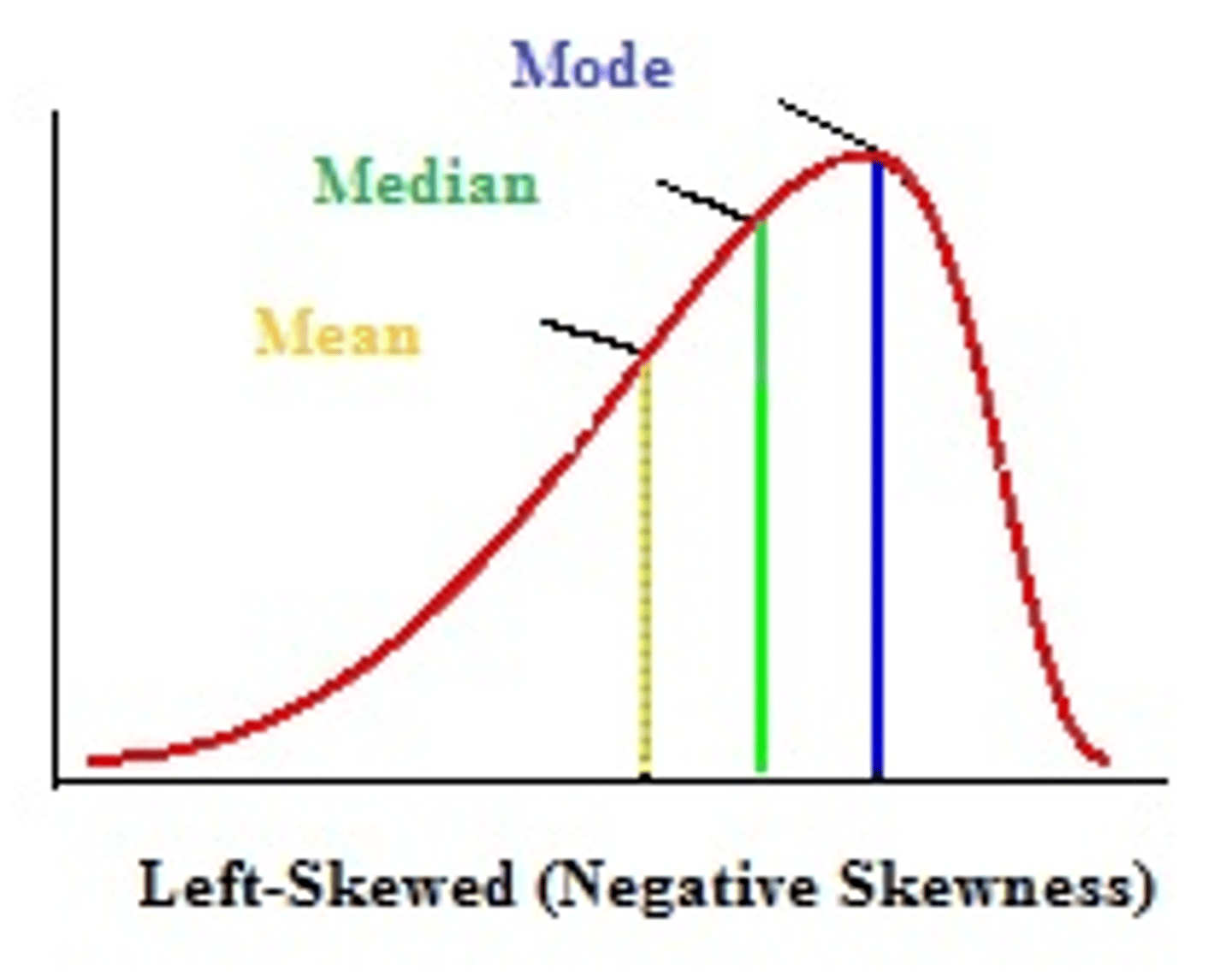
what is a negative skew?
A type of distribution in which the long tail is on the negative (left) side of the peak and most of the distribution is concentrated on the right.
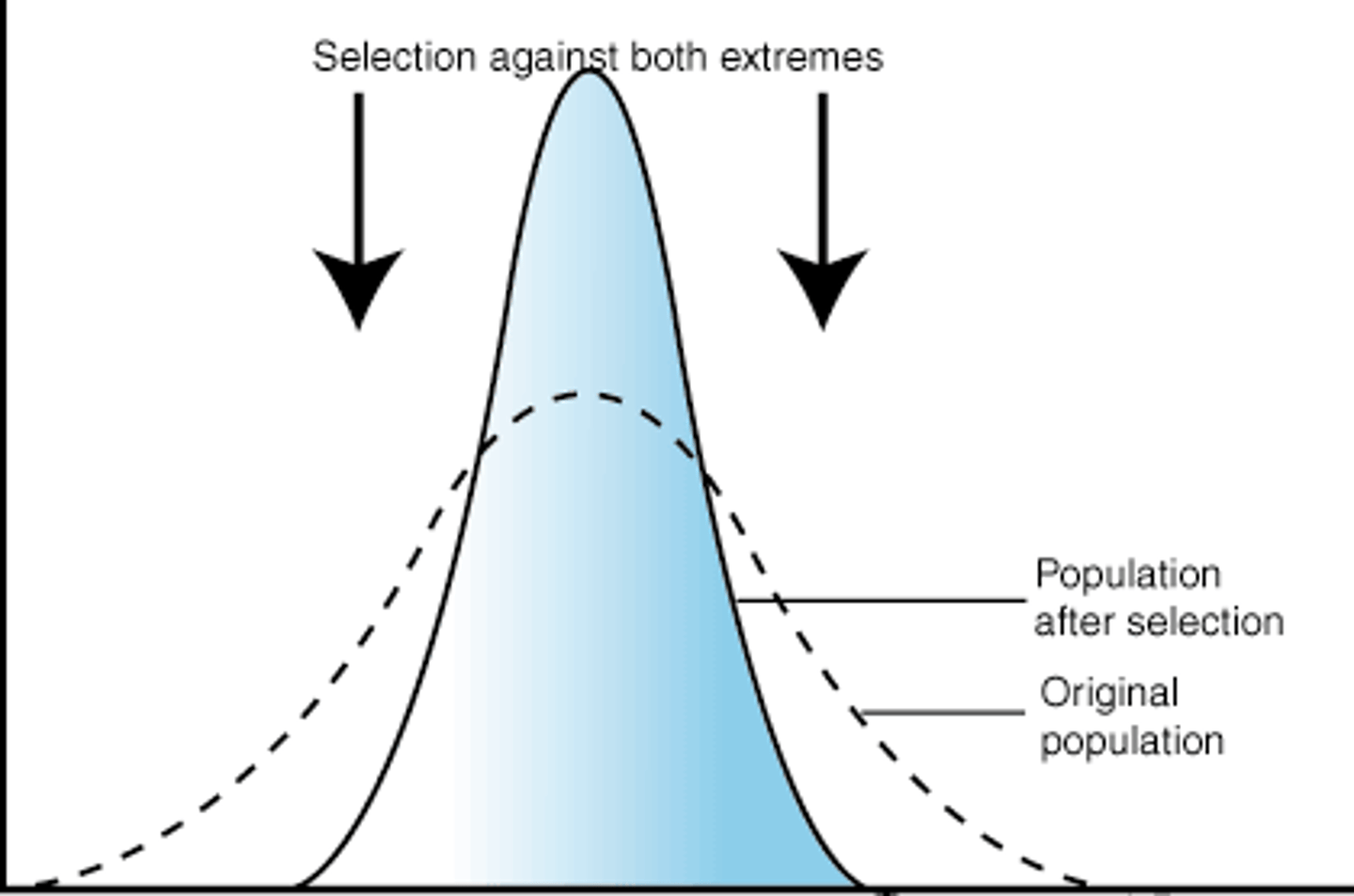
if bell curve is super skinny and tall, what happens to the range?
the range is small, so low variability
coefficient of variation (CV)
The ratio of the SD to the mean expressed as a percentage:
CV= (SD/mean) X 100
-expression of the variability over the average
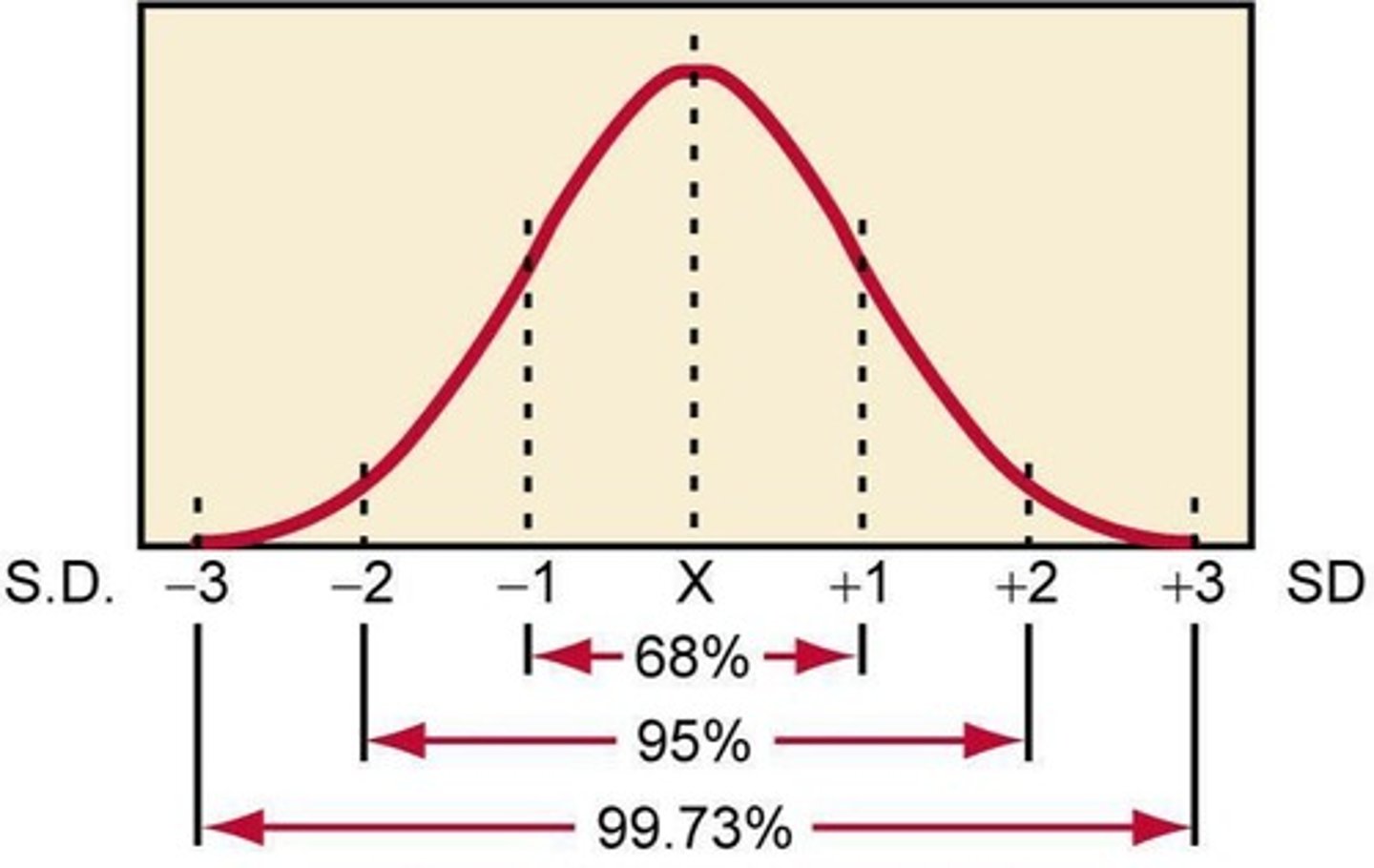
1 SD is ___% if the data
68.26%
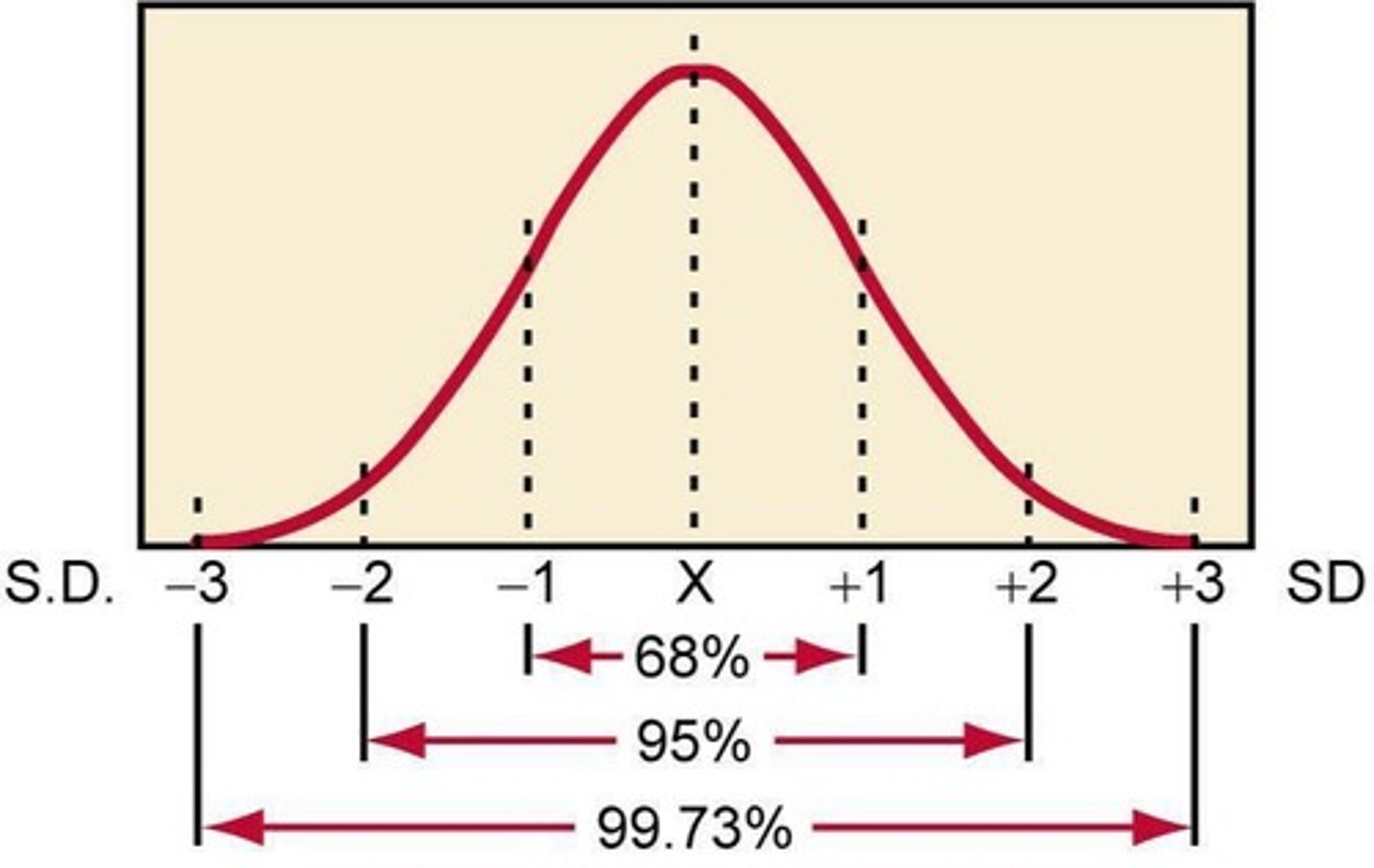
2 SD is ___% if the data
95.44%
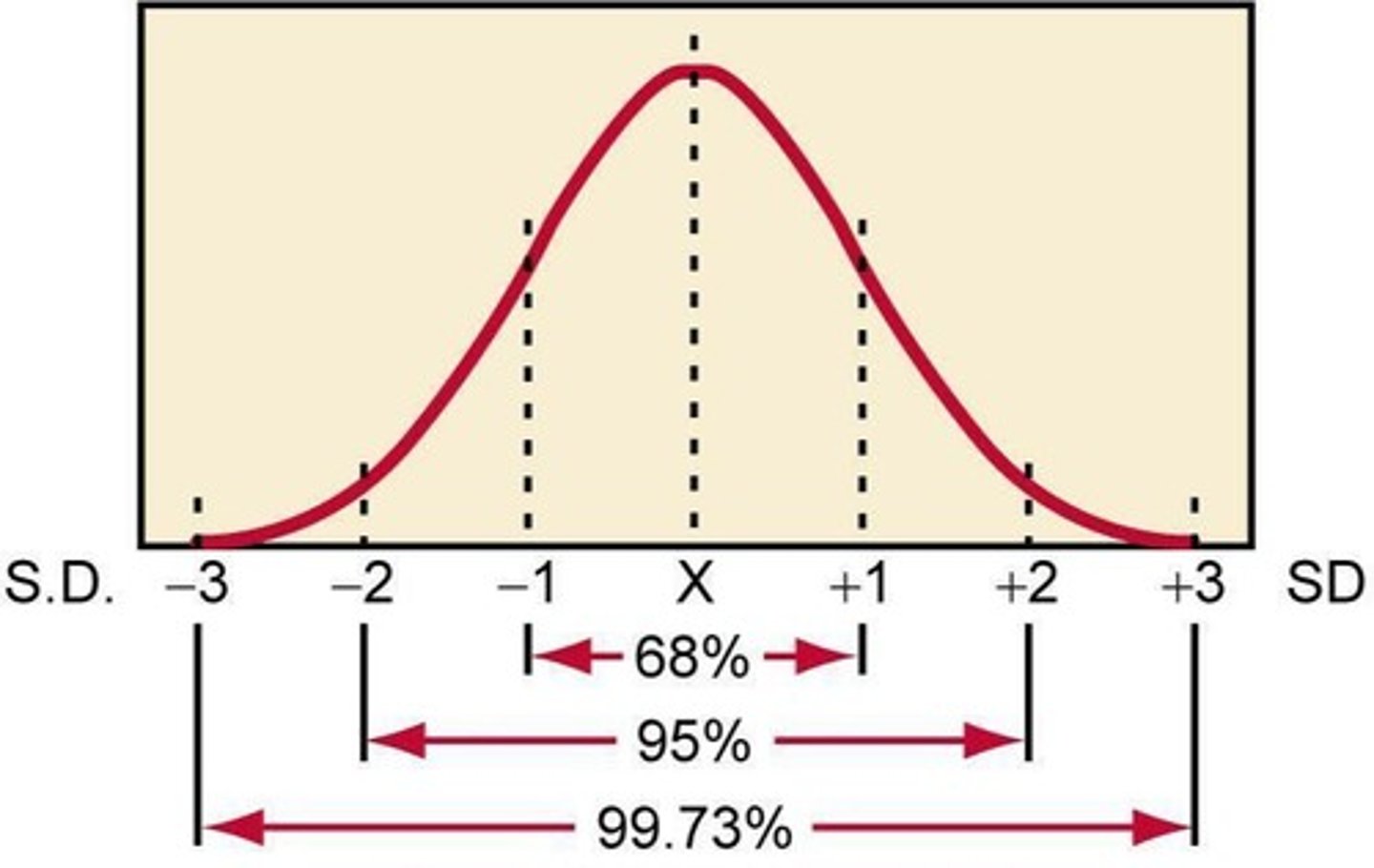
3 SD is ___% if the data
99.74%
what does x bar mean?
sample mean
what does μ (mu) mean?
population mean
what does S mean?
standard deviation
what does σ (sigma) mean?
population standard deviation
what are confidence intervals?
estimates how well the sample mean represents thee population mean
what happens to out confidence in our sample mean as our sample size increases?
more confident
the more people we sample the more likely we are to get to the ______ ______?
true mean: better representation of the population
what happens to our confidence in our sample mean as our standard deviation increases?
less confident: more variability
what does SE mean?
standard error of the mean
what happens to CI if SE is small?
tight confidence interval
what happens to CI if SE is large?
wide confidence interval
do you want a large or smaller confidence interval?
small CI, shows a better representation of the true population mean
what is nominal data?
names or labels for data but no specific order or rank
ex/ eye color
what is ordinal data?
names or labels for data with a specific order and rank, but distance between labels is not uniform
ex/ levels of assist, max assist, min assist, contact guard, etc.
can you do interferential stats on nominal or ordinal data?
no because there is no order to them and the distance between factors is not uniform
-the math can't math
rank the levels of data?
nominal, ordinal, interval, and ratio
what is interval data?
specific order and rank with known distance between values but no true zero value/absence
ex/ temperature
what is ratio data?
specific order and rank, known distances between values, and true zero
ex/ goniometry
what is inferential statistics?
statistical test that support conclusions about population characteristics based on data from a sample
what is inferential stats based on?
probability
what is the purpose of inferential stats?
is the difference between groups real or due to chance
what is the null hypothesis?
there is no significance difference between groups
what is the alternate hypothesis?
there is a significant difference between groups
-not equal
-directional: greater than or less than
what is the research hypothesis?
your initial guess when starting an experiment
-could be null or alternative hypothesis
what is a t test?
Statistical hypothesis test used to determine if 2 sets of data are significantly different from one another
what is a unpaired t test?
groups are independent-not the same people
ex/ comparing OSU to George fox
what is a paired t test?
groups are the same people but comparing pre and post intervention
ex/ comparing star wards now to future Star Wars
what is the advantage of doing a paired t test vs a independent sample?
it shrinks the variability and gives you a statistical advantage for finding significance
What is a 1 tailed t test?
the results may skew towards one direction over the other
what is a 2 tailed t test?
non-directional: unsure of which way the results will skew
is a 1 tail or 2 tailed t-test stronger?
2 tailed t-test because p= .05 gets split in half. Therefore, you have a 2.5% chance of making an error since the results is split into 2 tails
when would you choose to do a 1 tailed t test?
if you have pilot data that can help predict the direction of the study
what are 2 types of inferential stats?
parametric vs non parametric
when to use parametric tests?
1. random sampling from normal population
2. equal variances
3. interval or ratio data
when to use nonparametric tests?
1. small n
2. unequal variances
3. nominal or ordinal data
what are 3 common parametric test?
t test, paired t test, ANOVA
what are 3 common non parametric tests?
-Mann whitney U test
-Wilcoxon signed rank test
-Kruskal-wallis test
when do you ANOVA?
when you have 3 or more groups
statistical methods rely on ____ to determine if groups are different
probability
what is the p value if you have 80% probability of having LBP?
p= .8
explain what p<.005 means?
there is less than a 5% probability that the between group difference determined using stats occurred by chance
-the between groups differences are likely to occur 95% of the time
what box is the beta level in the 2x2 table?
when your results say no difference and there actually is no difference
-box a
what box is the alpha level in the 2x2 table?
when your results say there is a difference and there actually is a difference
-box d
the alpha level is set to reduce potential of what type of error?
type 1 error
the beta level is set to reduce potential of what type of error?
type 2 error
explain what a beta level of .20 means?
that when your statistical test result indicates no difference, you are willing to accept that it may be due to chance 20% of the time
how does alpha level affect sample size?
smaller the alpha level, the less probability you are willing to accept, therefore the sample size needs to be larger
why are alpha levels typically smaller than beta levels?
because you want to be confident that there is a difference between treatments, since the risk of harm is greater if you say there is a difference and the treatment is actually not effective
what is the purpose of the effect size?
helps us understand the magnitude of the change that statistics results indicate
do you want a small or large effect size?
large
how to calculate effect size?
(mean 2- mean 1)/ standard deviation
a .20 effect size is a small or large change?
small
a .80 effect size is a small or large change?
large
what does it mean if you find statistical significance but a small effect size?
there is no clinical significance because the magnitude of the change is small
what are 2 things to consider when finding statistical significance?
1. is this likely to be meaningful to patients
2. relative to the scale of the measurement, is the difference large/meaningful
what does a 95% confidence interval indicate?
there is a 95% chance that the true difference between the groups lies within this interval
can a confidence interval tell you if the the difference between groups is statistically significant?
yes! if the confidence interval does NOT contain 0, it can be sig.
what does it mean if the CI contains 0?
the groups are NOT significantly different because the means are the same
when are inferential stats used the most?
-when comparing 2 or more groups
-comparing change over time in 1 or more groups
the active intervention must follow a....
standardized protocol
what does the standardized protocol consist of in intervention studies?
the provider, dose and progression of exercises
investigators in intervention studies must be blinded to.....
-subject group assignment
-baseline measures
what are design options for intervention studies?
-case study/case control
-single group
-2 group
-3+ groups
what analysis should be performed for a single group intervention study?
paired t test and repeated measures ANOVA
in a 2 group intervention study, do both groups get the active intervention?
no, one group gets something else, either a control or a different intervention
what statistical analysis should be performed for a 2 group intervention study
mixed model ANOVA for each outcome measure
what are you assessing in a 2 group ANOVA?
if each group changed from pre to post intervention AND if the groups are different to each other
what are 5 factors that can harm internal validity?
-no baseline comparison
-low sample size
-lack of blinding
-narrow scope of recruitment/enrollment
-no randomization
what does intention to treat mean?
all participants are analyzed in the exact group they were randomly assigned to, regardless of whether they completed, switched, or even received the treatment
what are the main categories in ANOVA terminology?
factors, ex/ fruit or storage condition
what are the different groups within a factor called?
levels, ex/ fruit: apple vs orange, storage condition: cellar vs fridge
what are the 3 results an ANOVA test can tell you?
1. no significance
2. main effects
3. interaction effects
what is the difference between main effect and interaction effects?
main effect shows a difference between levels, while interaction effects shows that the levels of one factor are different depending on the levels of the other factor
apples last longer than orange: main or interaction effect?
main effect of fruit
the apples lasted longer in the fridge while the oranges lasted longer in the cellar: main or interaction effect?
interaction effect between fruit and storage condition
what is a repeated measures ANOVA?
the subjects are compared to themselves
what is a mixed model ANOVA?
subjects are compared to themselves AND to another group
when and why are post-hoc tests performed?
when the ANOVA says there a significance, so now you need to determine where that significance is
when evaluating a study that has used ANOVA for statistical testing, what 4 things should you check for?
1. check that the data are continuous (interval or ratio)
2. determine how many factors and levels are being analyzed
3. test for main effects or interaction effects depending on number of factors
if there is more than 2 factors, do you want to test for interaction effects or main effects in a ANOVA?
interaction effects
if there is only one factor, do you want to test for interaction effects or main effects in a ANOVA?
main effects
what does MANOVA stand for?
multivariate analysis of variance
when to perform a MANOVA
when 2 or more dependent variables are included in the analysis