Microbiology Lab Practical 2
 Call Kai
 Learn
Learn Practice Test
 Spaced Repetition
 Match
Match Flashcards
 Knowt Play
1/91

There's no tags or description
Looks like no tags are added yet.
Name | Mastery | Learn | Test | Matching | Spaced | Call with Kai |
|---|
No analytics yet
Send a link to your students to track their progress
92 Terms
Some bacteria have the enzyme catalase, that breaks down and detoxifies _______ to ___ and ___ partially disabling the antimicrobial effect of this disinfectant.
H2O2 (hydrogen peroxide), H2O, O2
Red blood cells also express ______ --> that's why wounds bubble when exposed to H2O2!!
catalase
Aim of the ________ test is to check for the enzyme that protects bacteria against the toxic by-products of oxygen metabolism --> H2O2
catalase
________(enzyme) is present in most obligate aerobes & facultative anaerobes
catalase
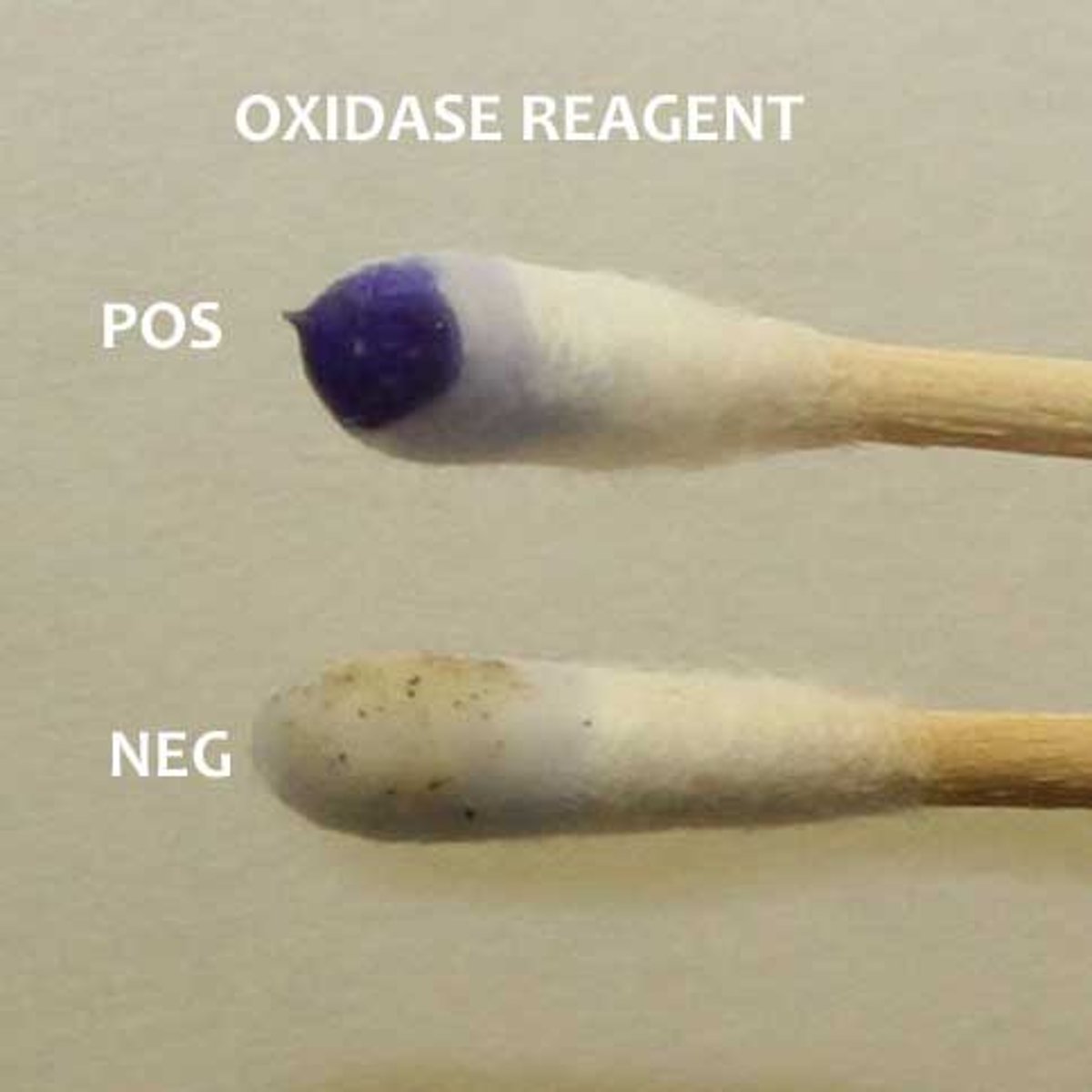
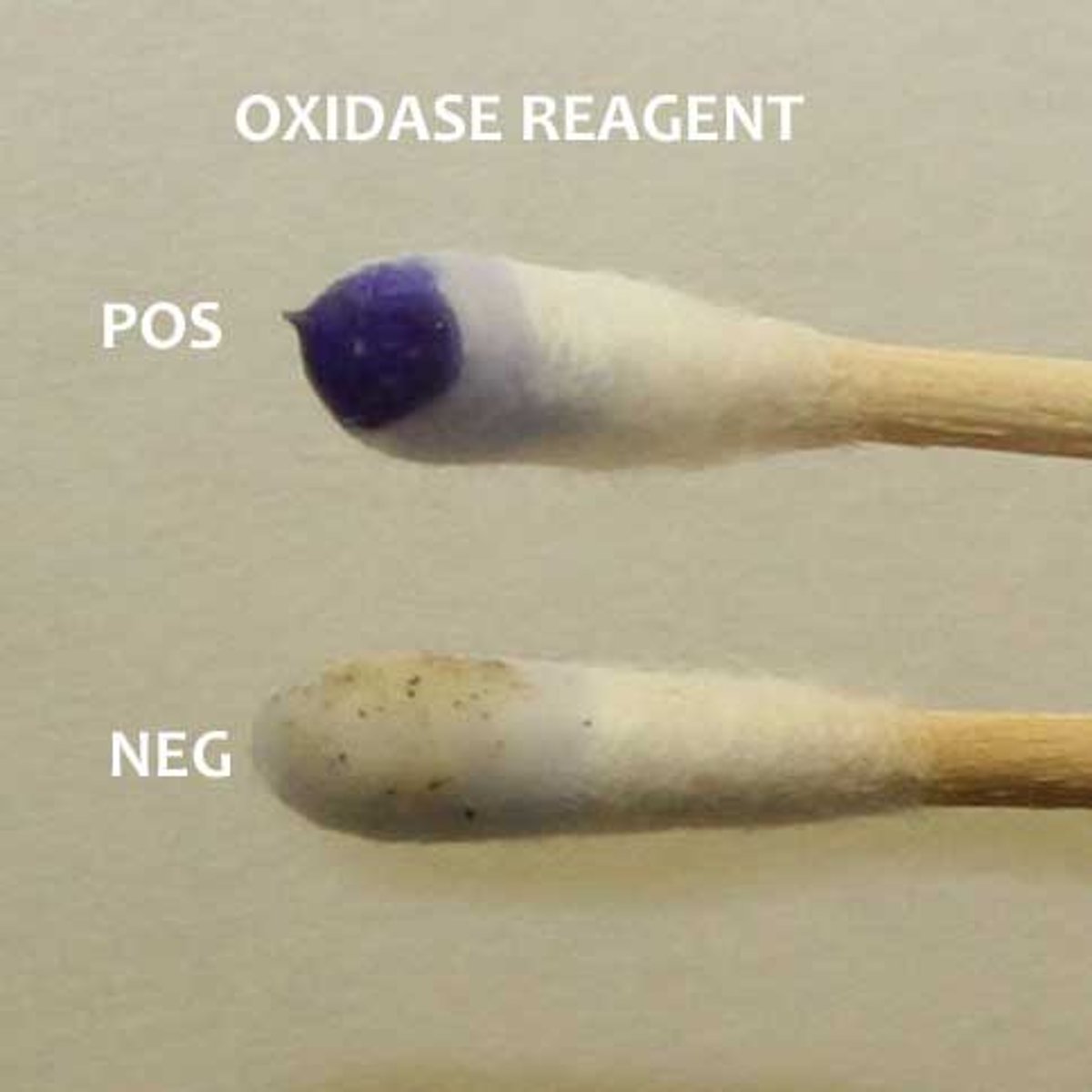
Reagents in the _______ test involve: chromogenic reducing agents; turn blue/black when oxidized
Oxidase
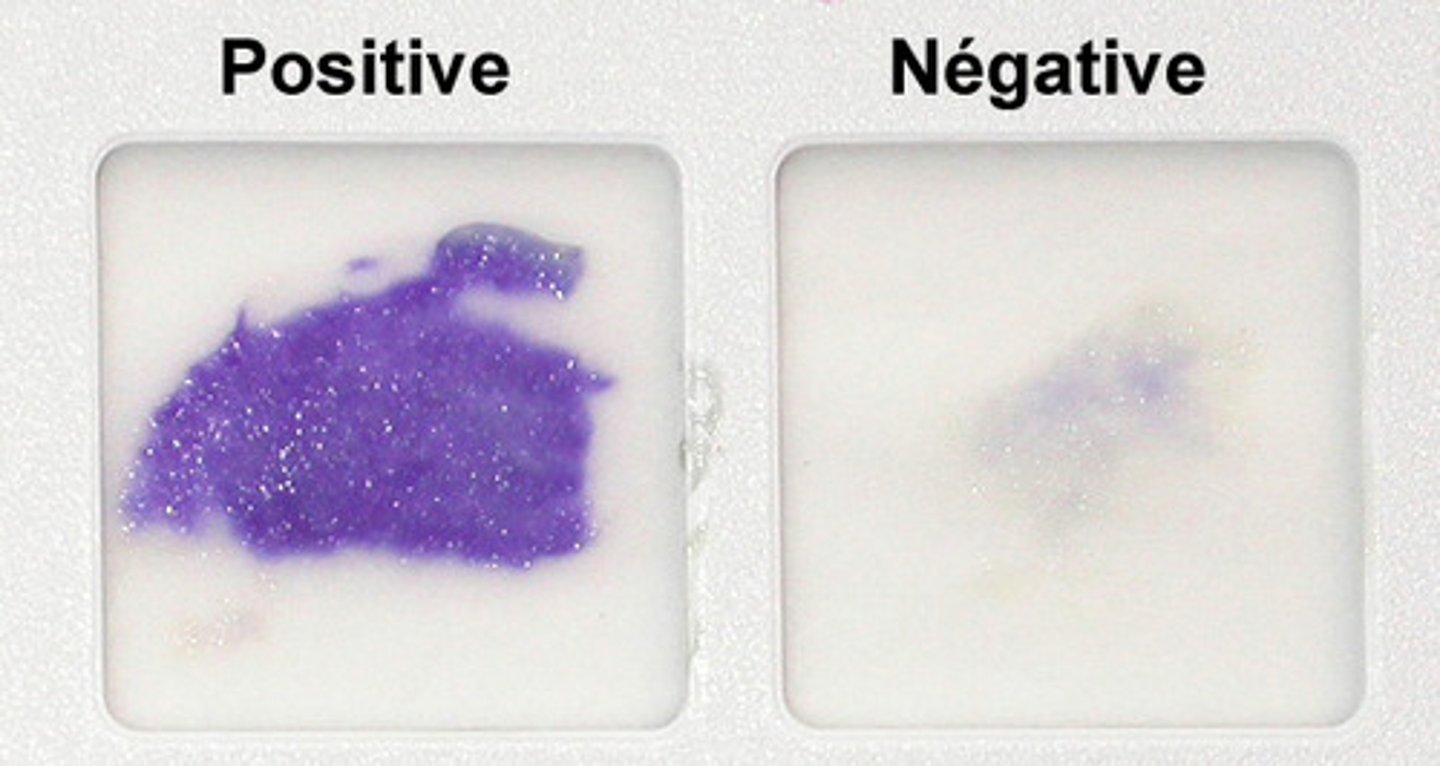
Cytochrome C oxidase (reduced) receives electrons from _______ _______ _______ (oxidized) which turns it black/blue (+ result) (>20 secs!!!!)
chromogenic reducing agent
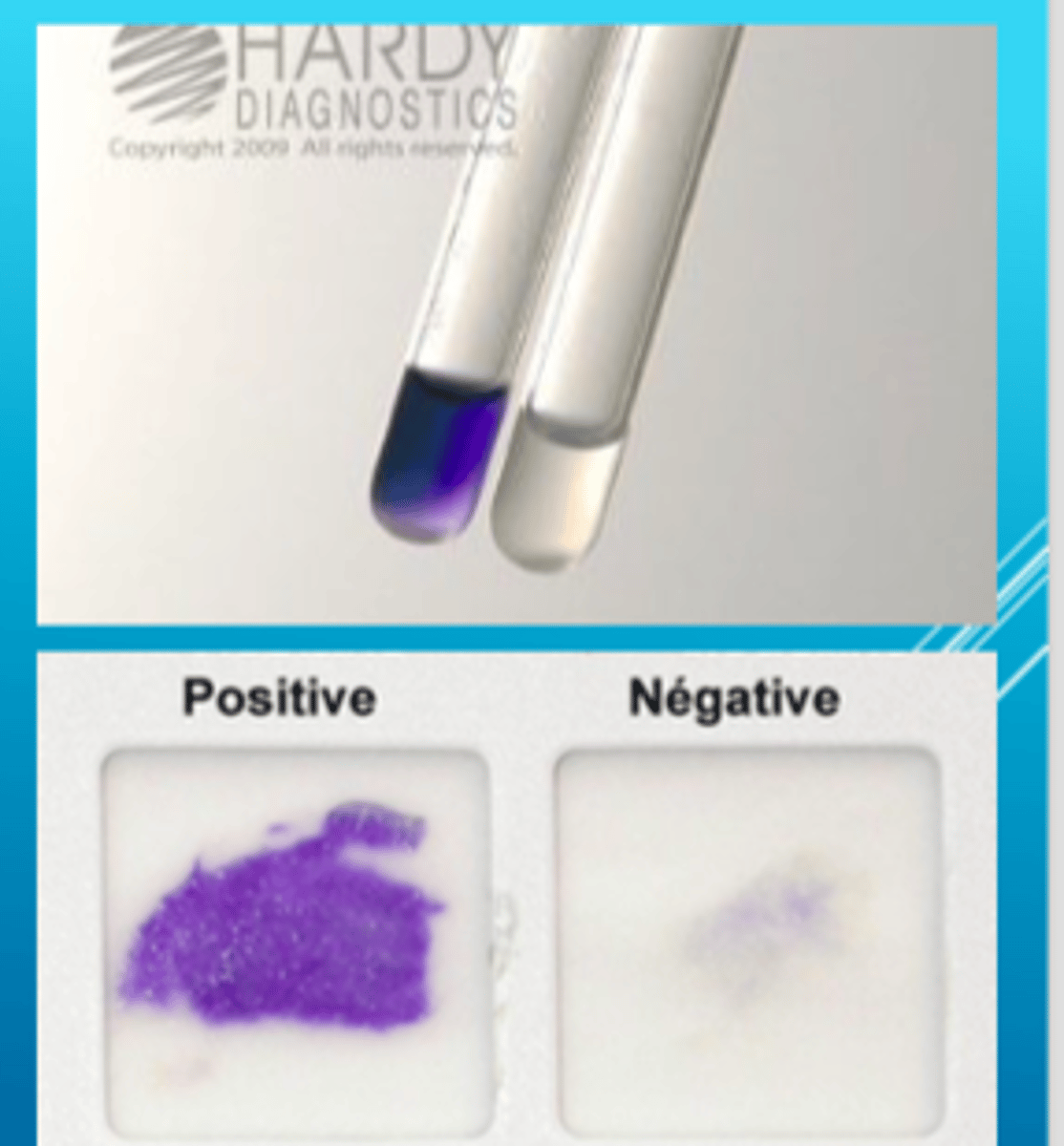
Any color change after 20 seconds during the _______ test, should be disregarded
Oxidase
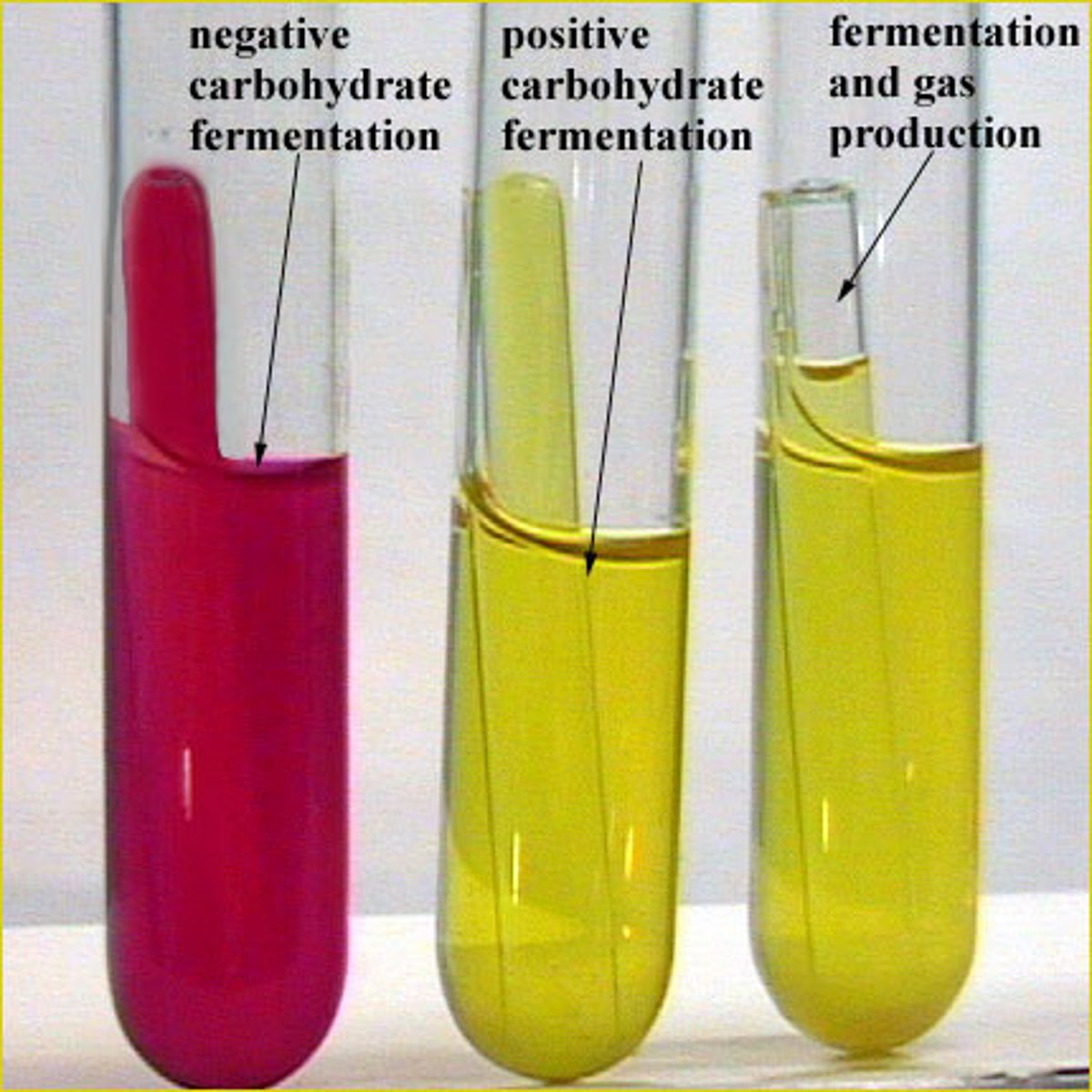
Phenol Red Test checks for __________, & if they do, which _______ can be catabolized/used, & if they do, whether or not they produce only _______ alone or along with _______ as by product.
fermentation, sugars, acid, gas
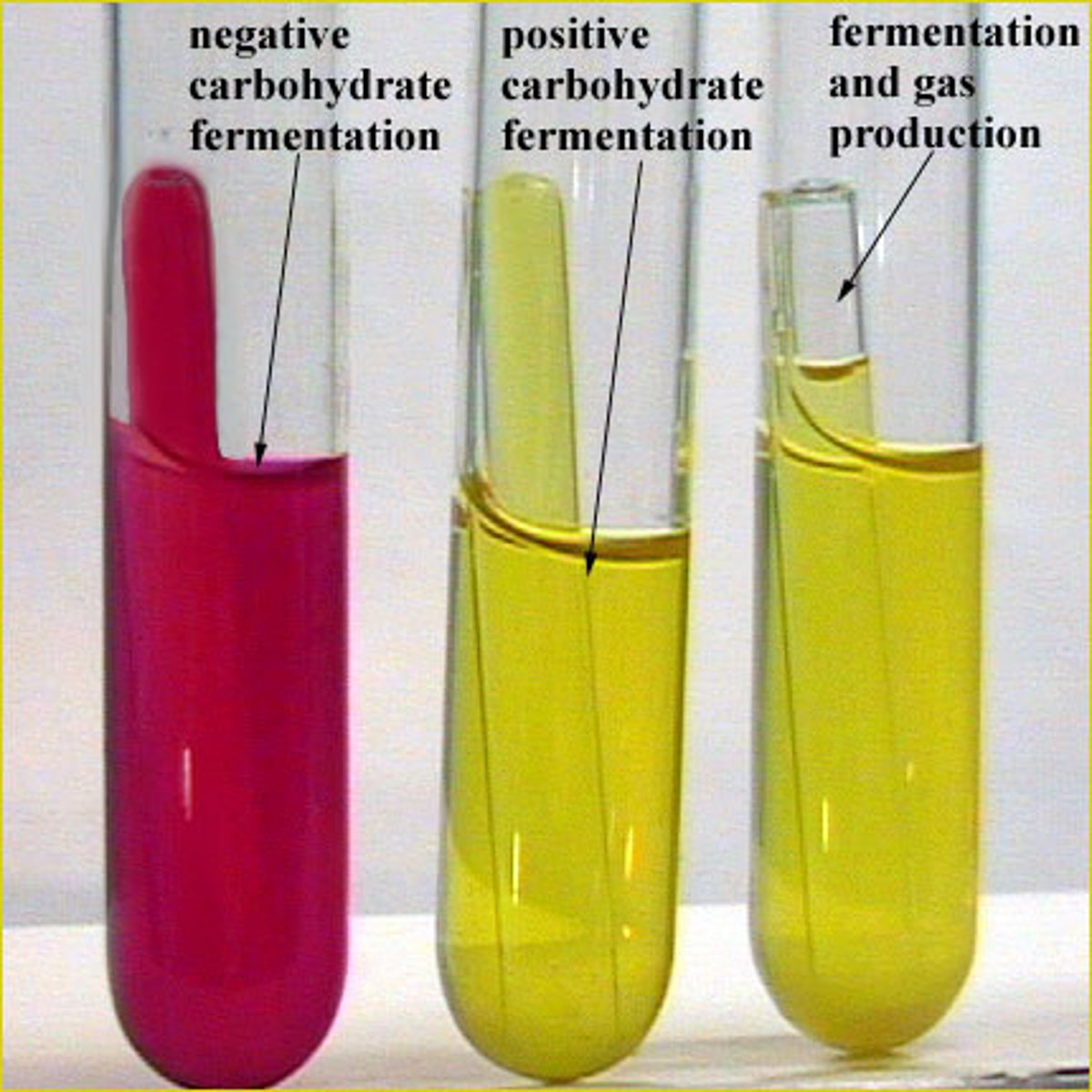
Aim of phenol red test is to determine the ability of an organism to catabolize _____ through __________
sugars, fermentation
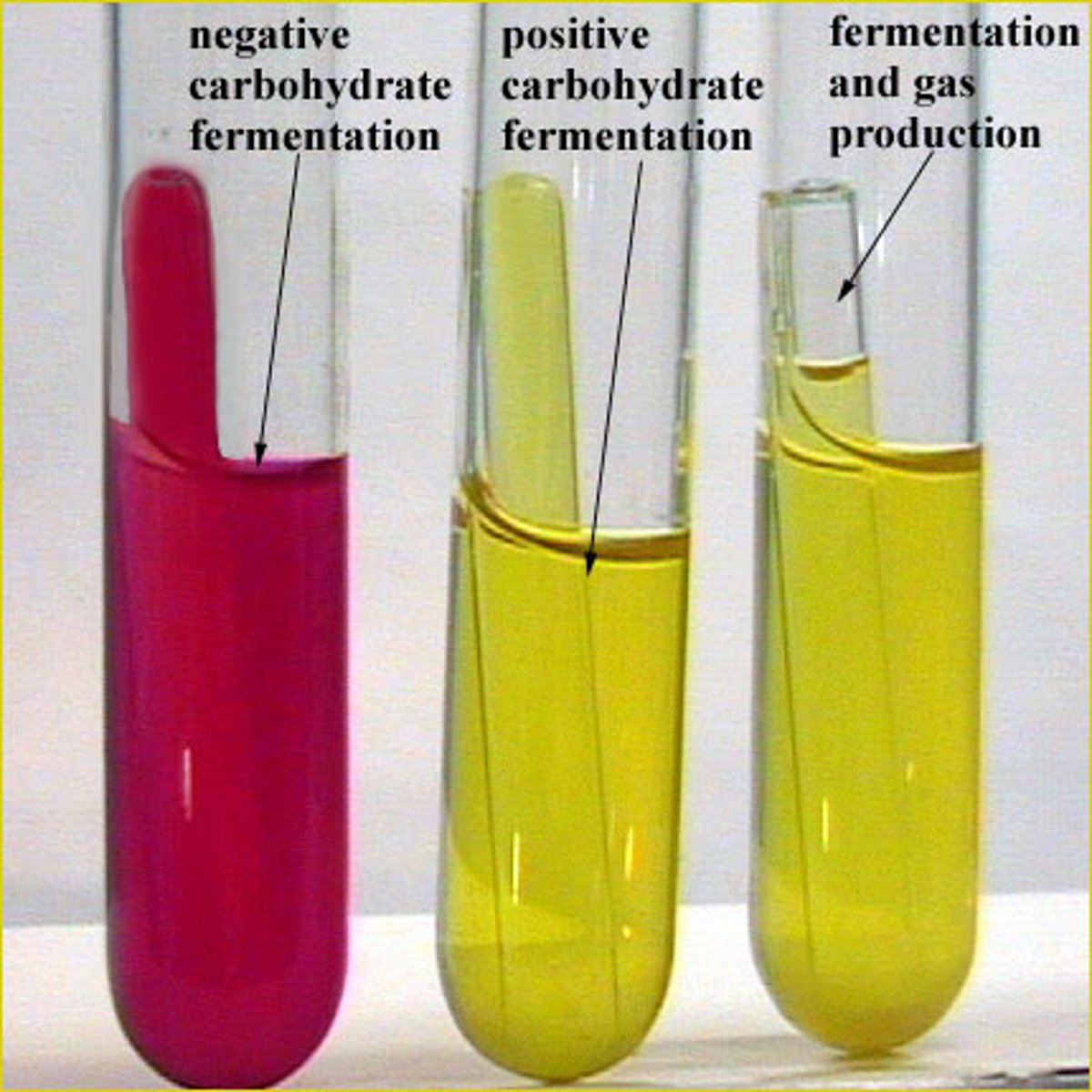
The phenol red test has 3 tests in one:
1. Glucose PR- checks for __________ (acid)
2. Sucrose/lactose PR- checks for_______ _____ (i.e., lactase, sucrase)
3. Durham tube – checks for ____ production as _______
1. fermentation
2. carb enzymes
3. gas, byproduct
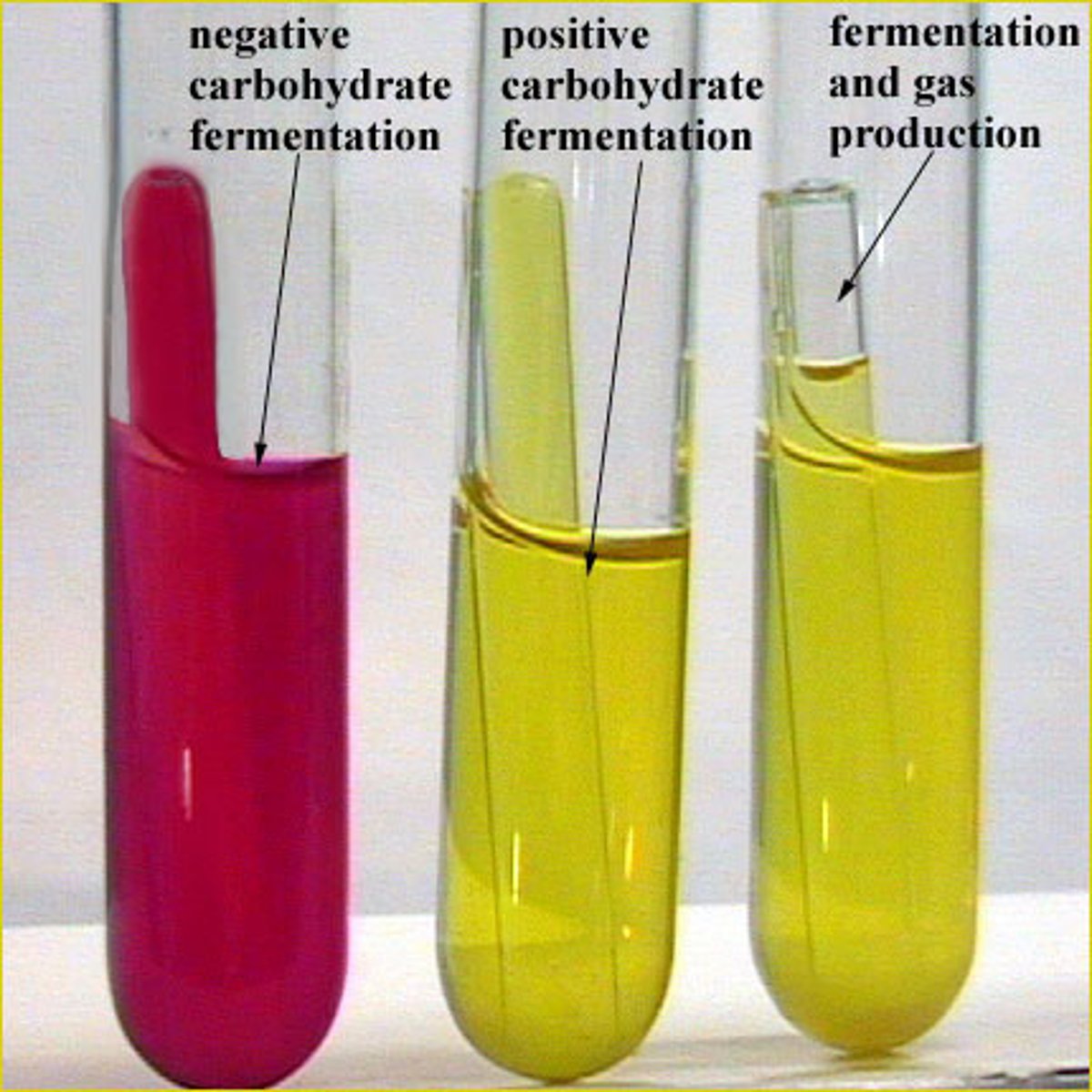
Reagents in phenol red test include one medium. (has one ______ present, & ___ [indicator])
sugar (glucose, lactose, sucrose, mannitol, etc), pH
In the phenol red test, a pH indicator is used.
Neutral pH is _____
acidic pH is ______
basic pH is ______
red, yellow, pink

If the phenol red medium turns yellow (+), bacteria are using the ______ during _________; if purplish (-), they utilize ______ through _______ respiration.
Red= (-)
sugars, fermentation, proteins, aerobic
The durham tube within the phenol red medium checks for ___ production(indicatesfermentation)
gas (CO2, H2)
If the phenol red test doesn't change colors, it means the bacteria doesn't _________ for that specific _____
ferment, sugar
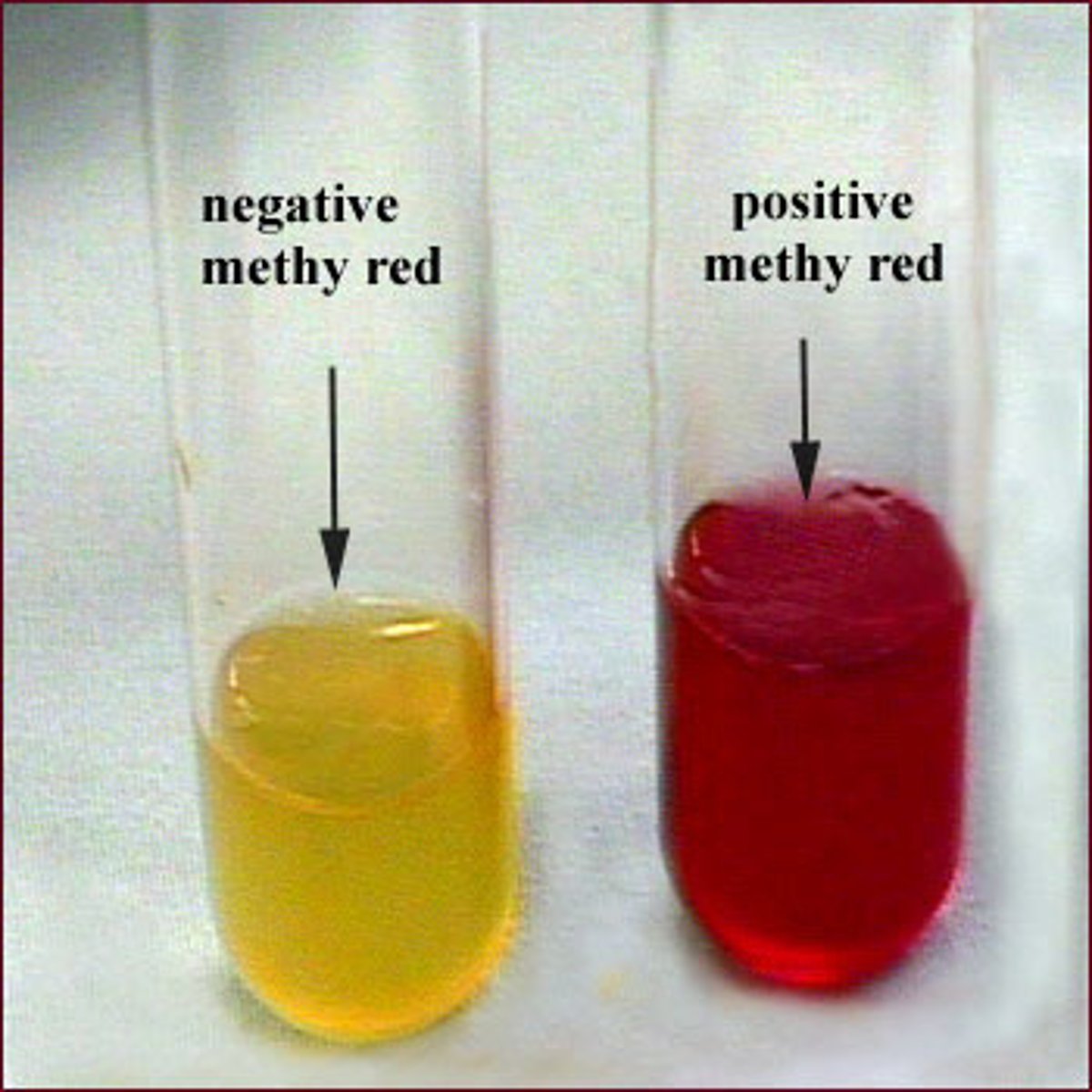
The methyl red test's aim is to detect organisms capabilities to ferment ______ ___ ______.
mixed acid glucose, acidic (pH-4)
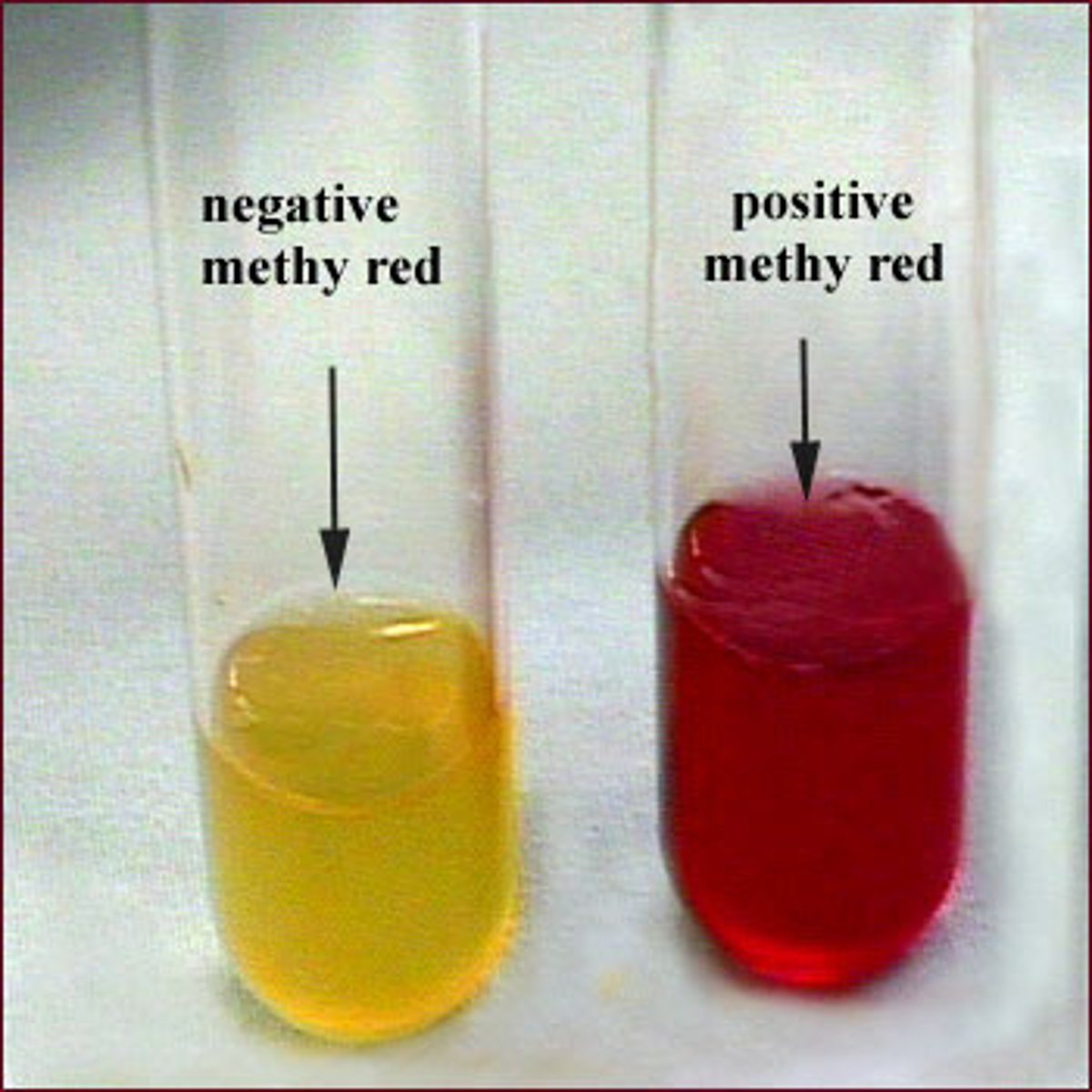
Reagents used in methyl red include a medium with ________ & a __ _______
sugar (glucose), pH indicator
Methyl red (neutral pH = ________ - result, while acidic pH = __________ + result)
yellowish, red
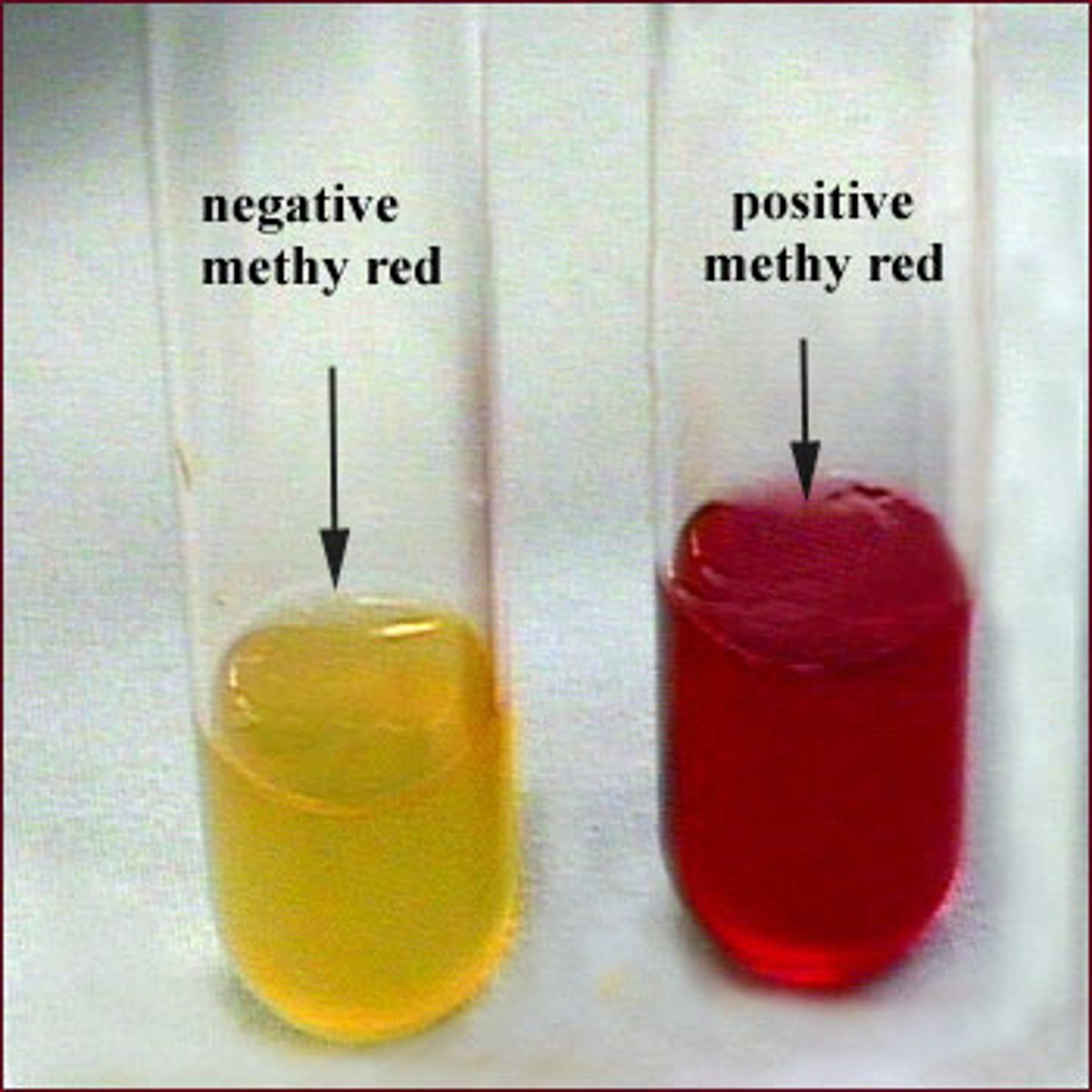
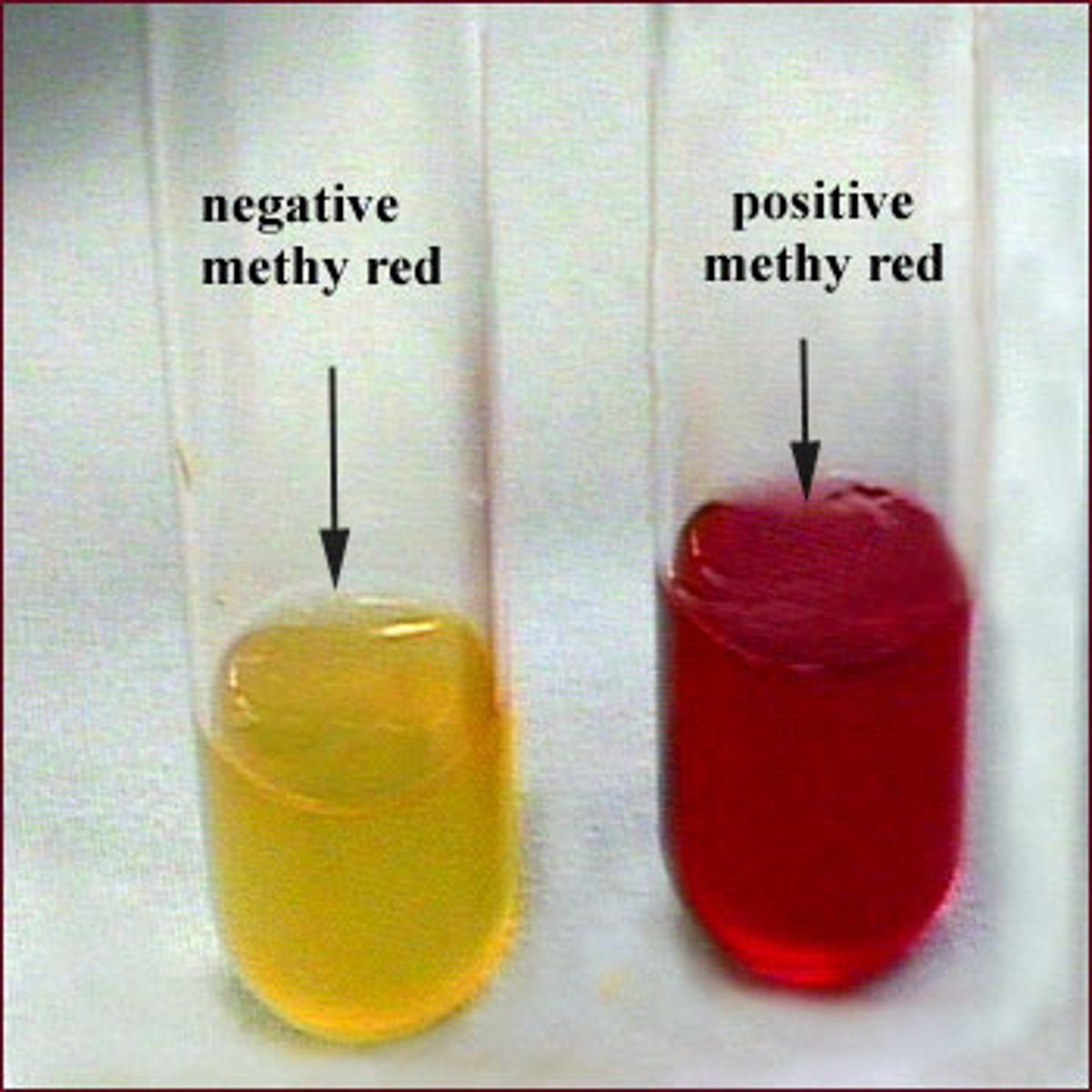
Methyl red medium results:
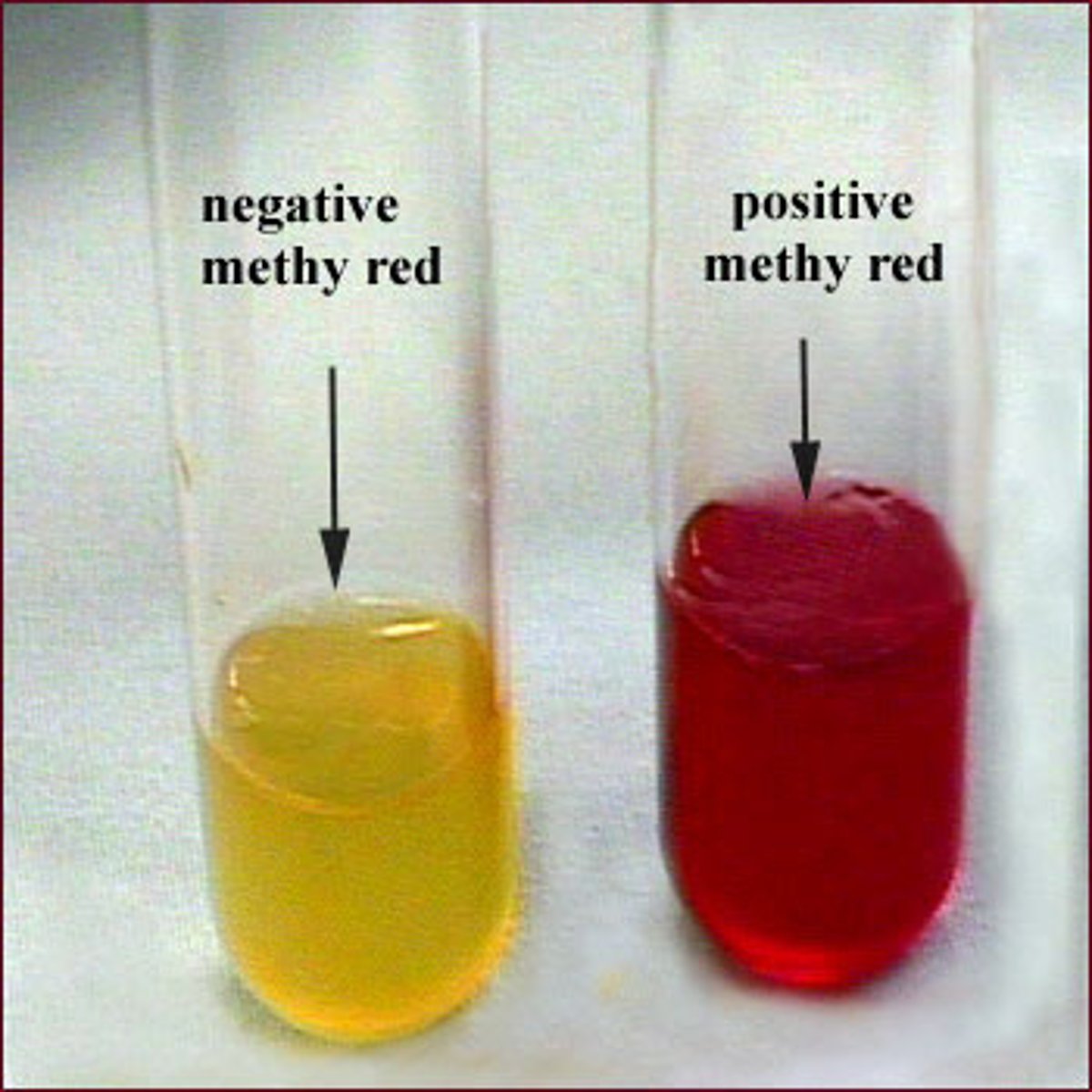
Red = acidic (__ result) Yellow = neutral/basic (______ result)
Phenyl red medium results:
Red = neutral/basic (___ result) Yellow = acidic (_____ result)
positive, negative
negative, positive
No change (yellow media) = __________ for mixed acid fermentation. Red media = __________ (Methyl Red Test)
negative, positive
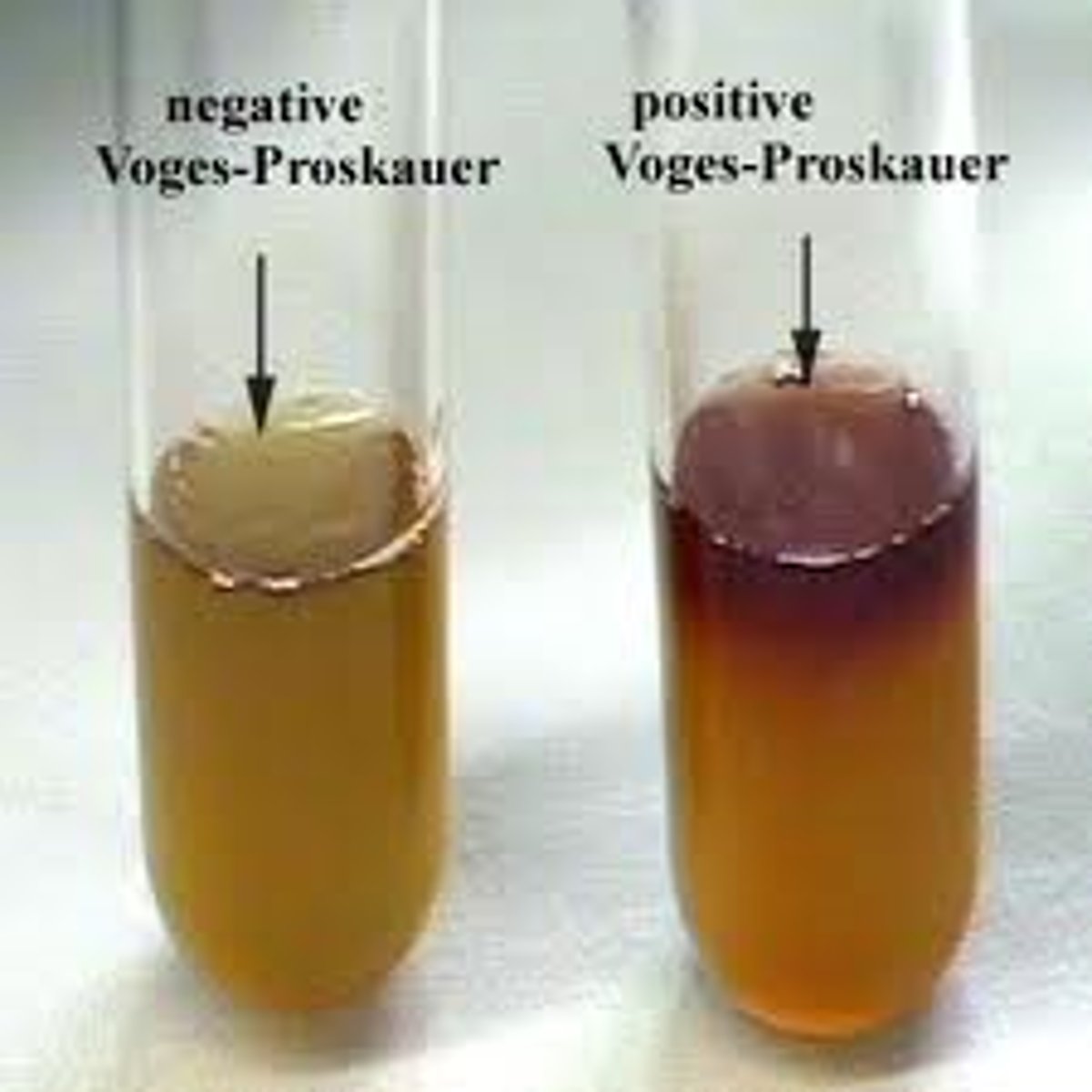
Test for detecting organisms ability to ferment glucose to acid, then to acetoin. Checks for production of butanediol.
VP (Voges Proskauer) Test
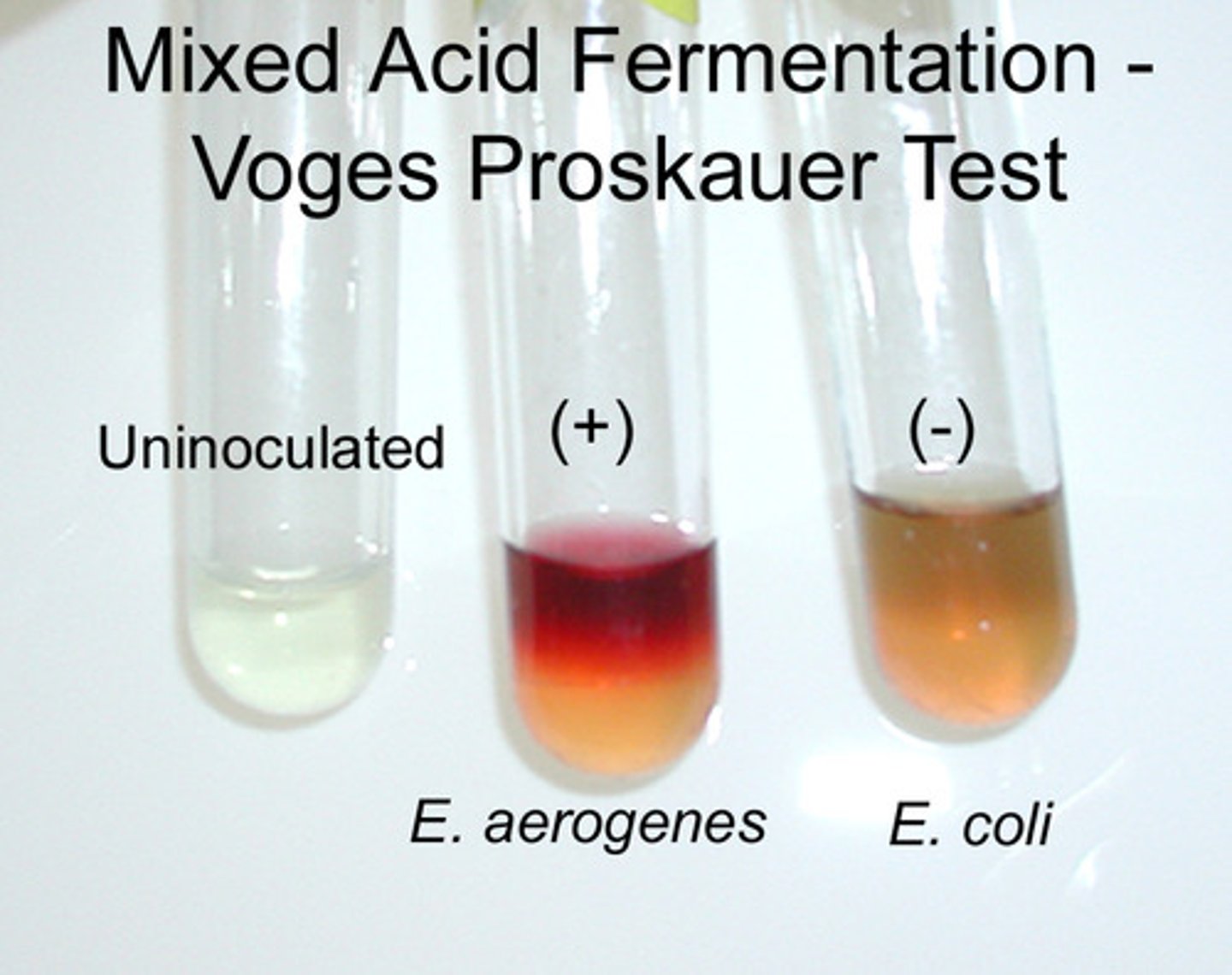
Reagents for Voges-Proskauer test include a medium with ______ & _________ (VP I) (toxic) & _________ ________ (VP II)
sugar (glucose), alpha-naphtol, potassium hydroxide (KOH)
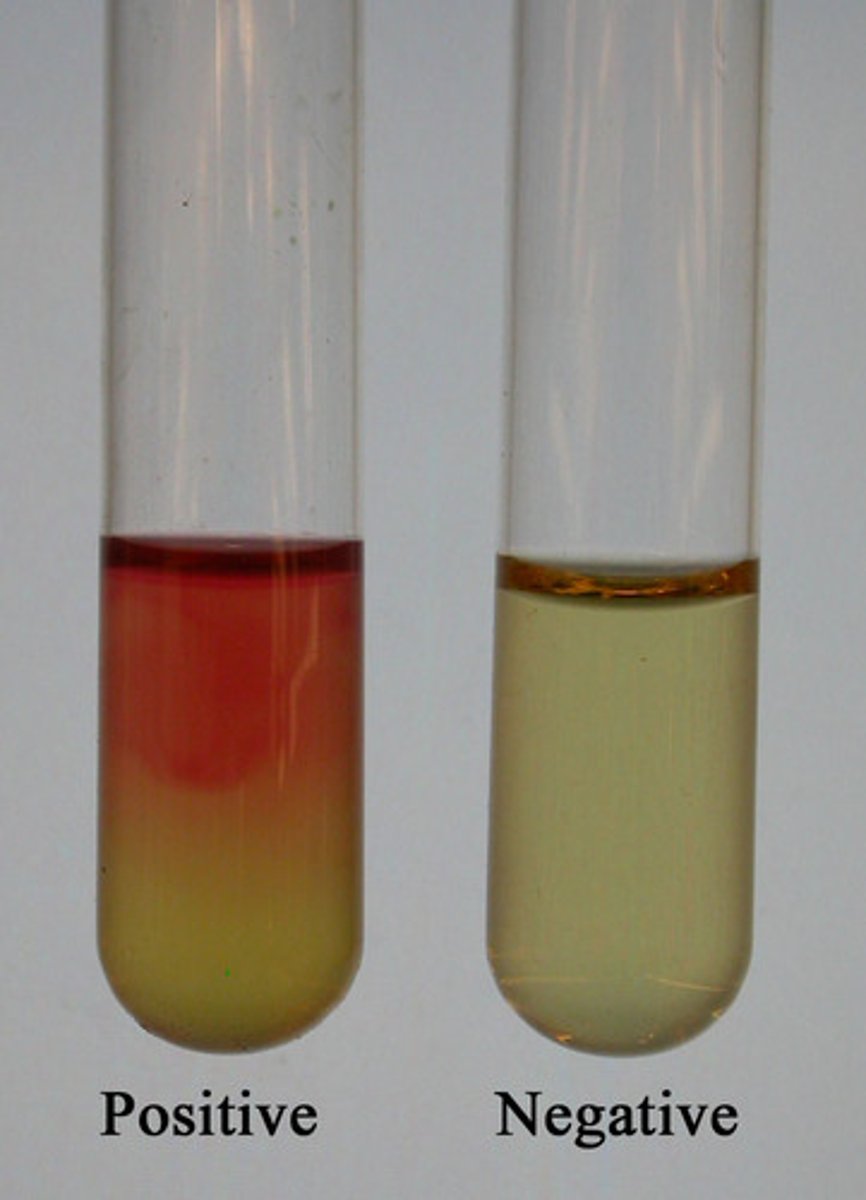
VP I (a-naphtol) & VP II (KOH) both react with w/ acetoin if present producing a ___________
red acetoin compound
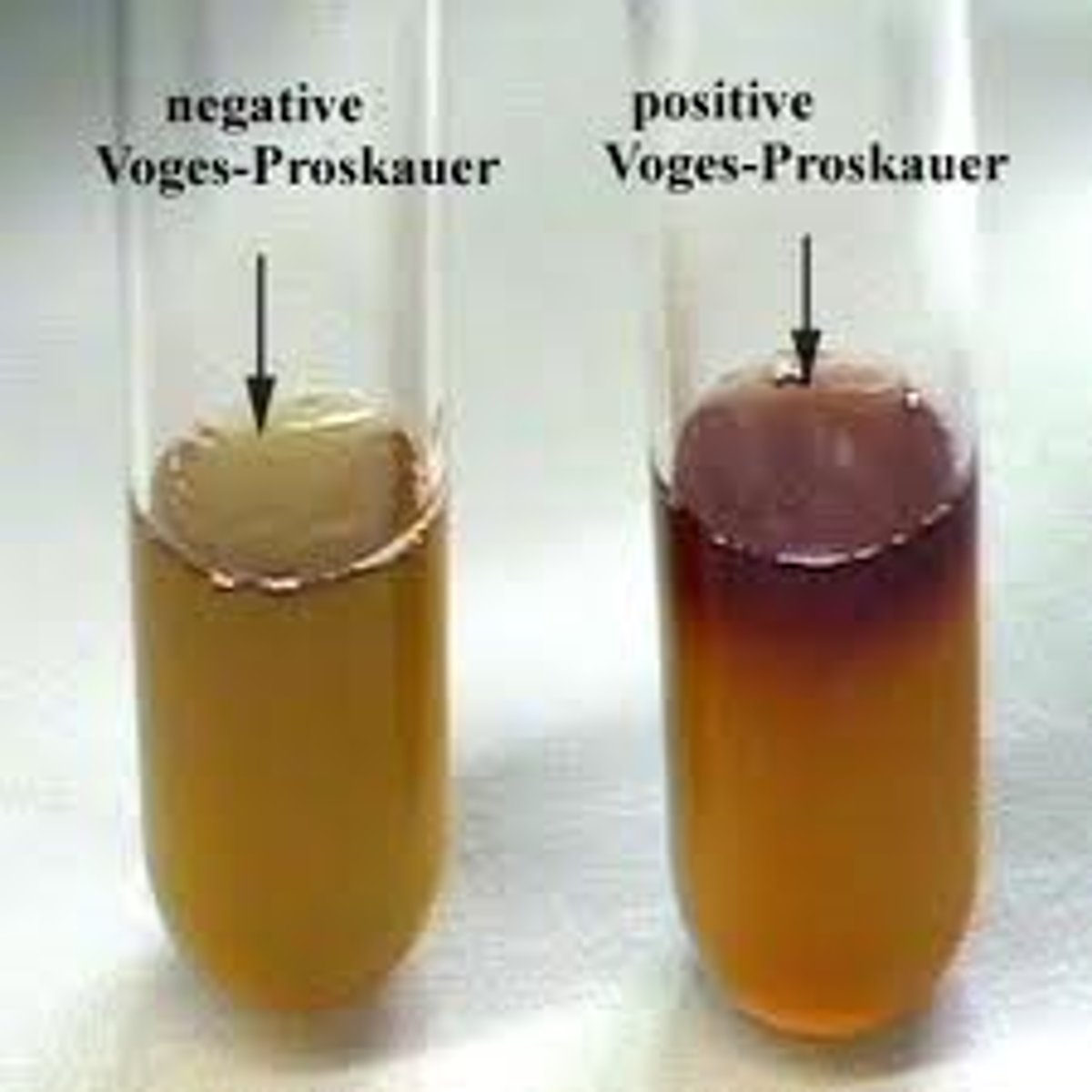
Voges-Proskauer Test Results:
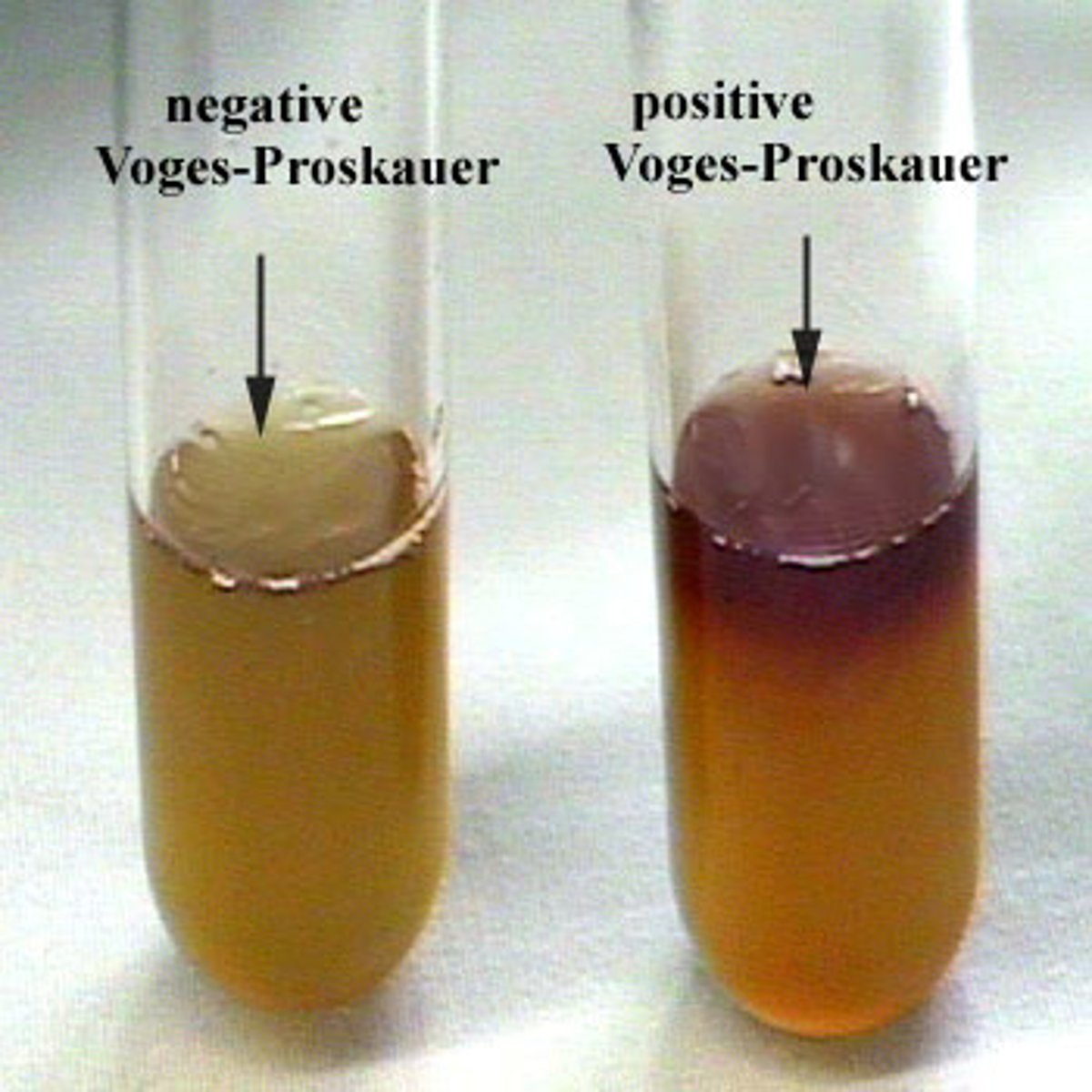
-No change/yellowish color = __________ for fermentation (_______ production)
-Red= __________
negative = no acetoin produced/ no partial mixed acid fermentation, positive = partial mixed acid fermentation
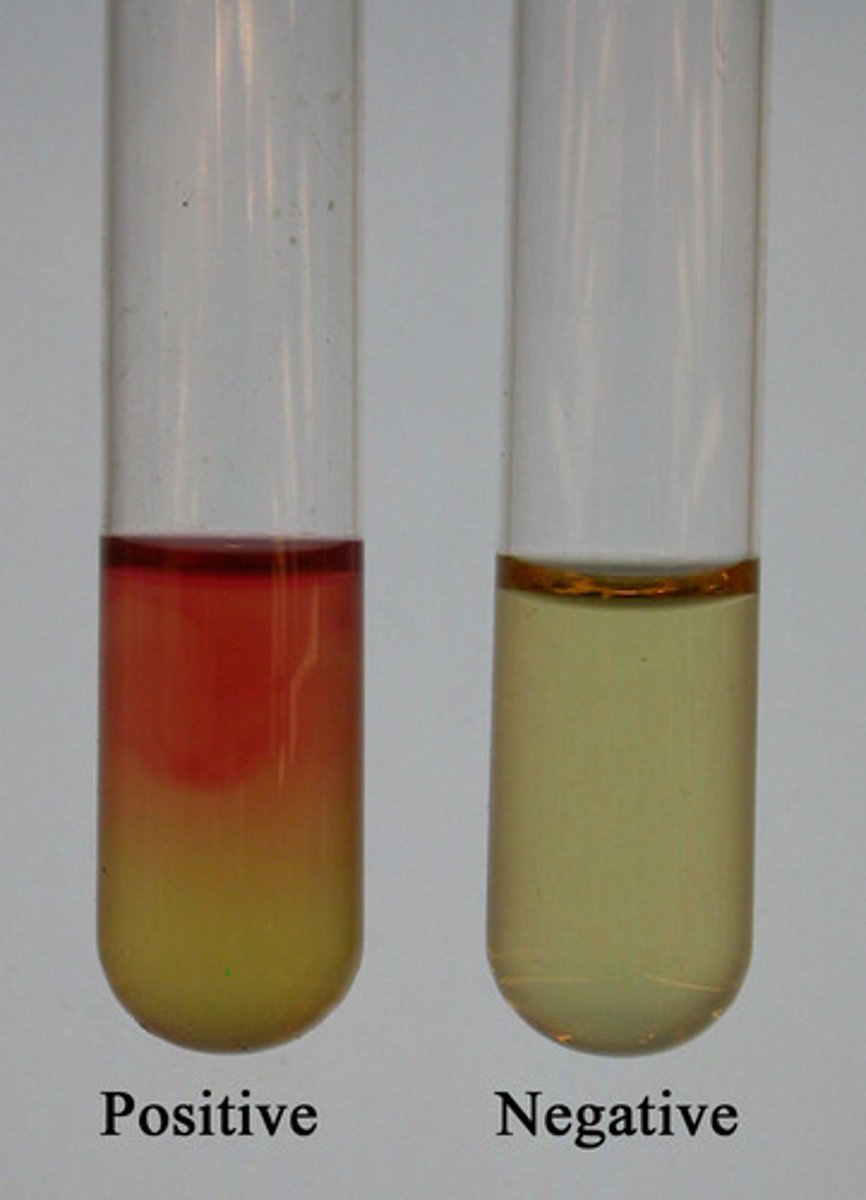
___________ Aims to determine the ability of the bacteria to use sodium citrate as the only source of carbon and inorganic ammonium hydrogen phosphate (NH4H2PO4) as a source of nitrogen. Possible only if the organisms are capable of fermenting citrate.
Citrate Utilization Test
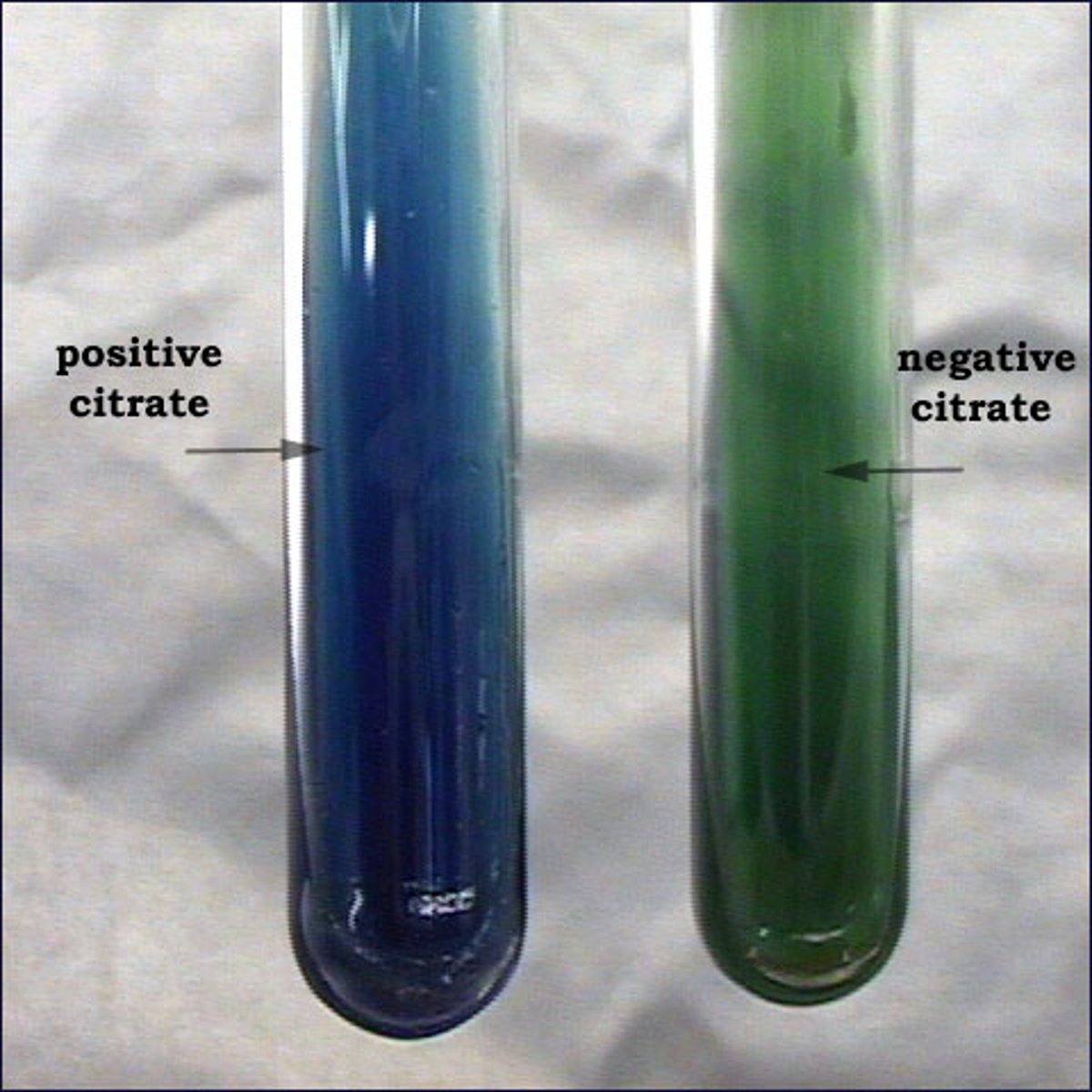
Reagents in Citrate Utilization Test:
1. High concentrations of ______ ______ (only source of _____).
2. pH indicator___________ ______ (some citrate positive organisms will produce ______ when using citrate --> ___ pH)
1. sodium citrate, carbon
2. bromothymol blue, ammonia, basic (pH)
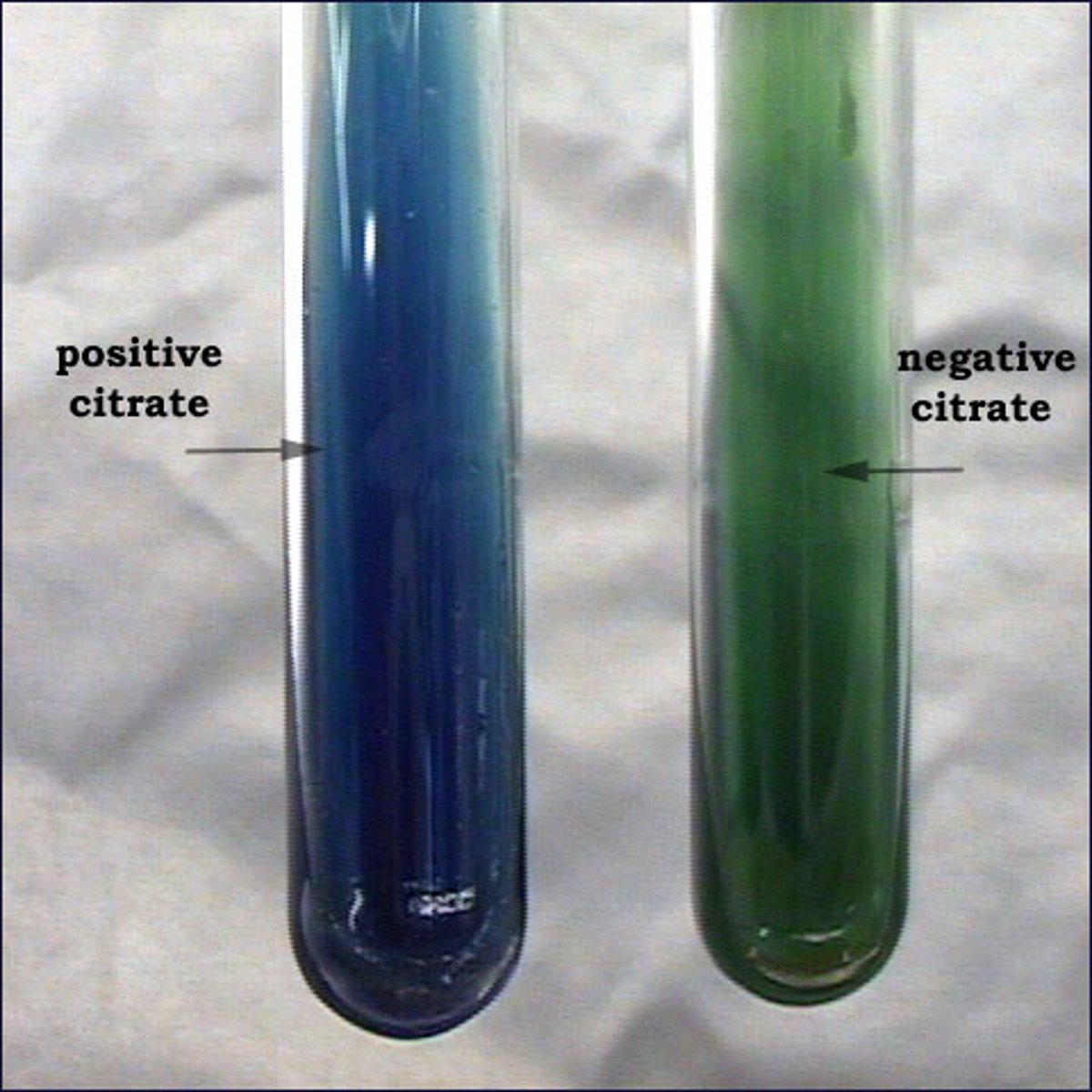
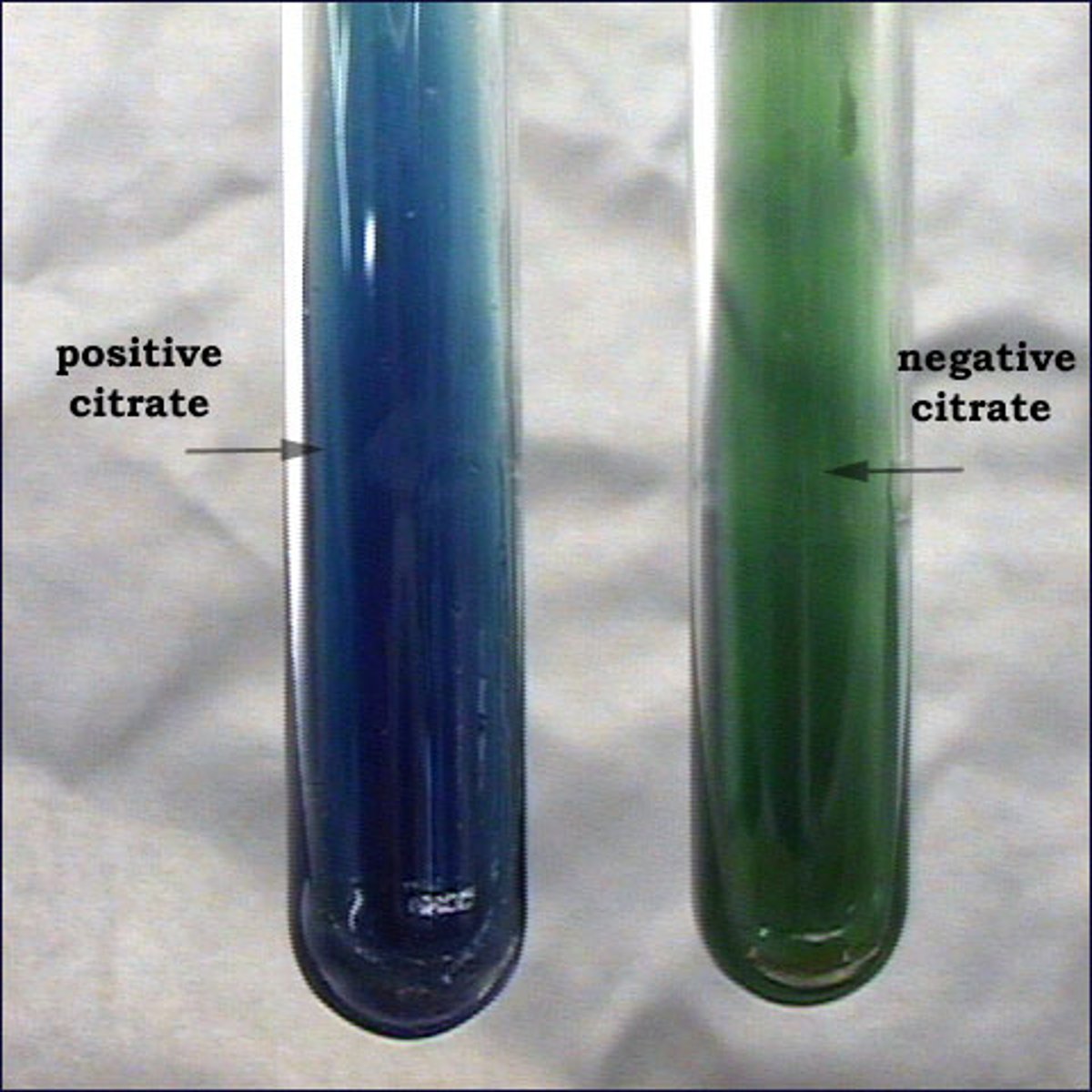
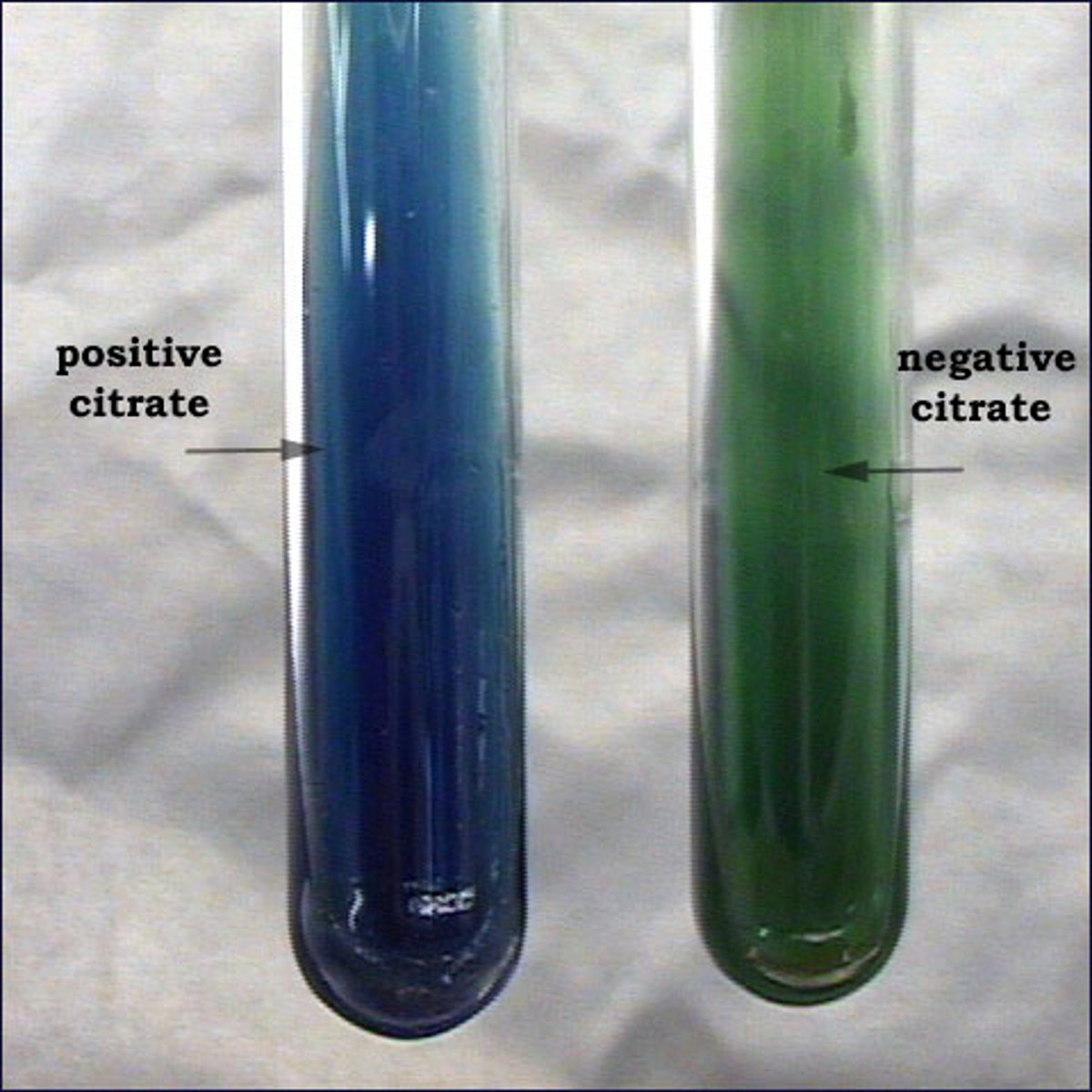
Positive citrate utilization test is _____ & indicates growth. Negative (or positive) result is ________ meaning, likely, no growth.
blue, green
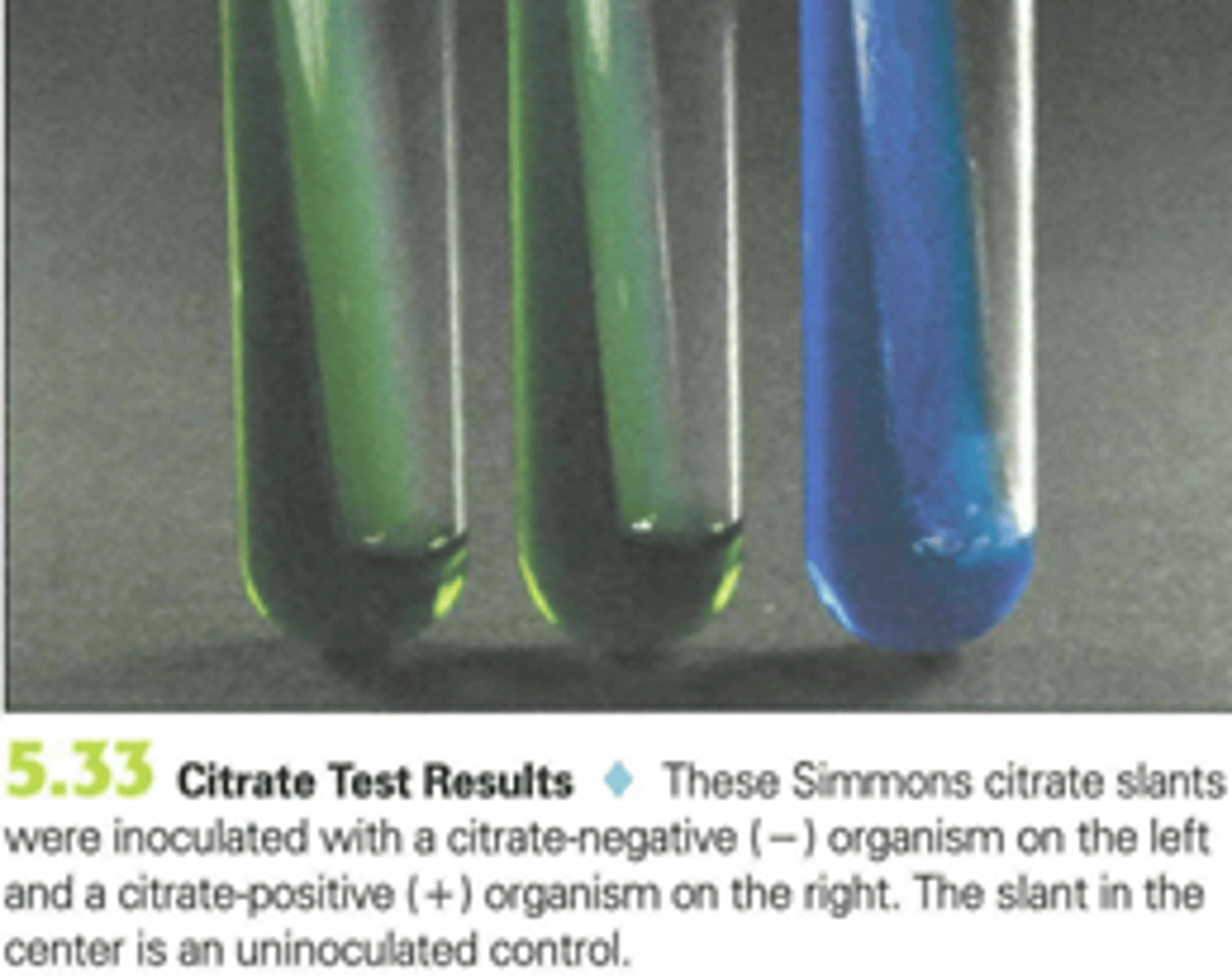
Color is tricky. Some bacteria can grow using ______ but the media will not experience a change in color. ______ is ALWAYS positive. ______ could be positive OR negative.
citrate, blue, green
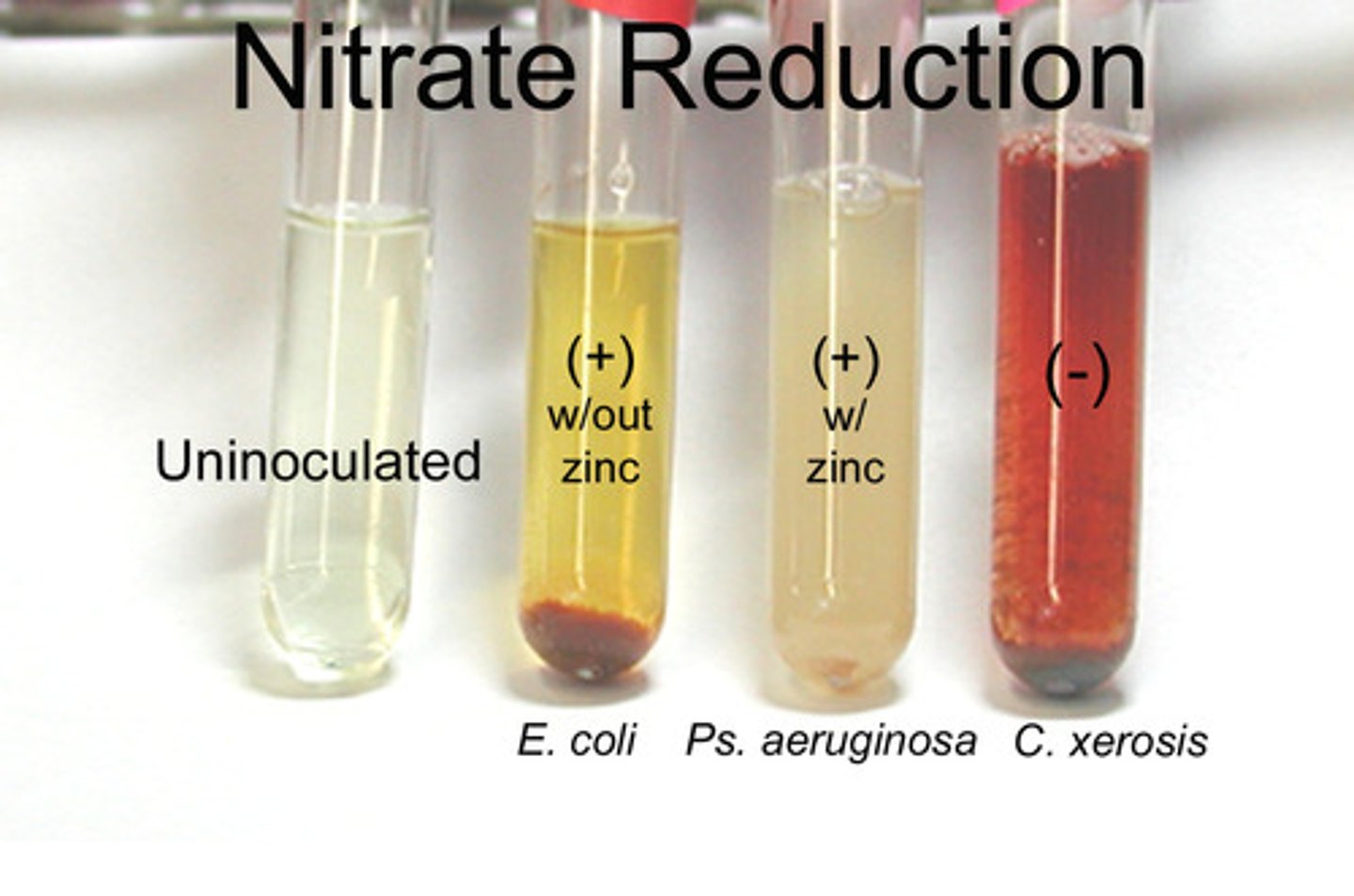
________ _______ Test is used to determine whether an organism reduces nitrate to nitrite.
Nitrate Reduction
UTI test strips/ lab tests look for the presence of ________. Urine in healthy people will NOT contain it (reason for ________ reduction test)
Nitrites, nitrate
UTIs is mostly caused by enterobacteria; they convert nitrates down to ____
nitrites
People suffering migraines might have a mouth microbiome enriched nitrate ________ bacteria that convert Nitrates to _____ oxide.
reducing, Nitric
Gas gangrene is often caused by Clostridium ______. Causes death of muscle tissue.
perfringens
Nitrate Reduction Test:
Nitrates are used as electron acceptor in the e- transport chain (________ respiration) down to _________ gas
anaerobic, Nitrogen
Why should we care about the Nitrate Reduction Test?:
Production of high levels of ______ by gut bacteria. Bacteria converting _______ into _______, might be toxic.
ammonia, nitrates, ammonia
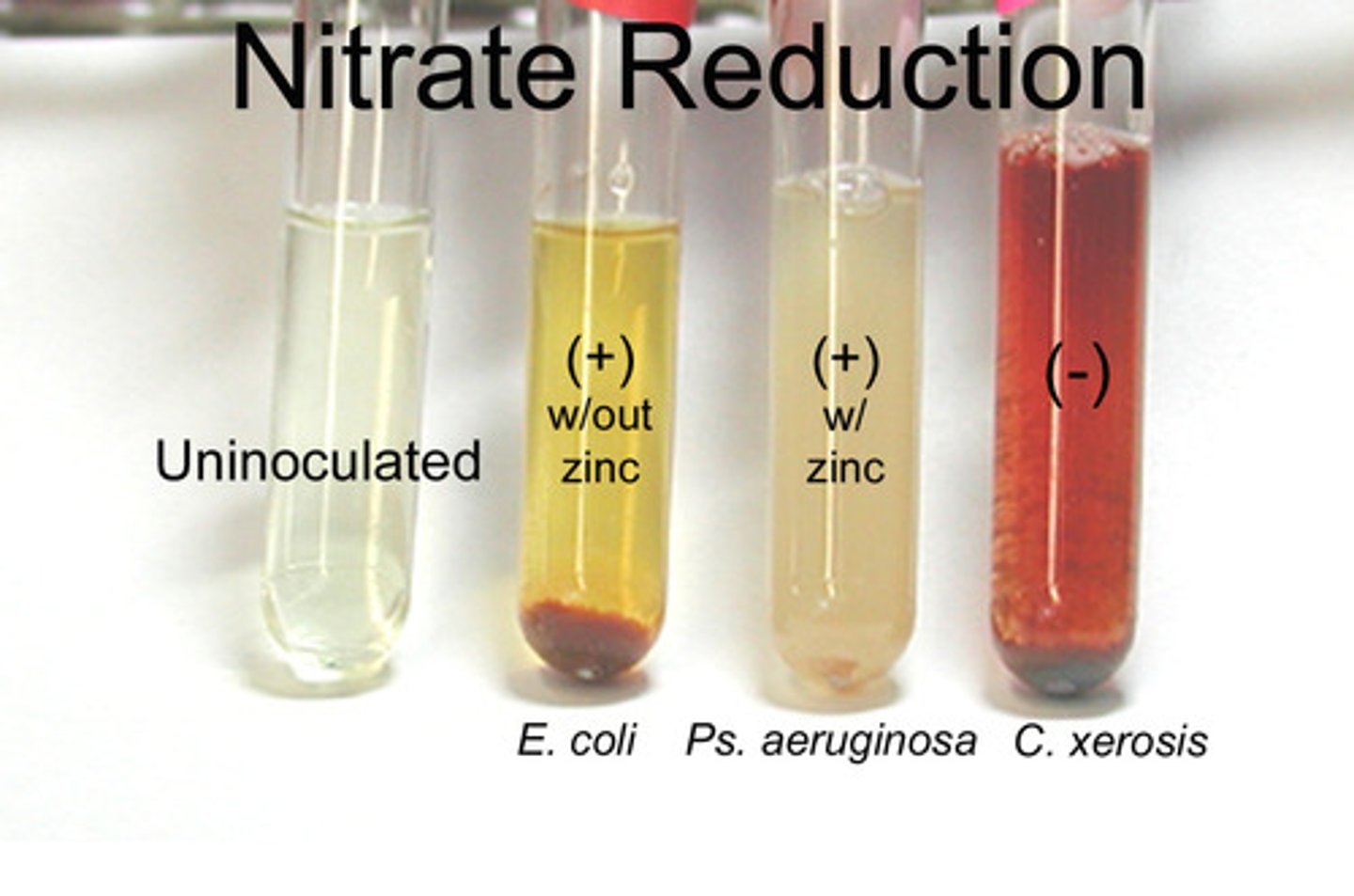
Aim of Nitrate Reduction Test:
Determining the ability of an organism to transform _______ into ______ by the enzyme Nitrate reductase (NR).
nitrates, nitrites
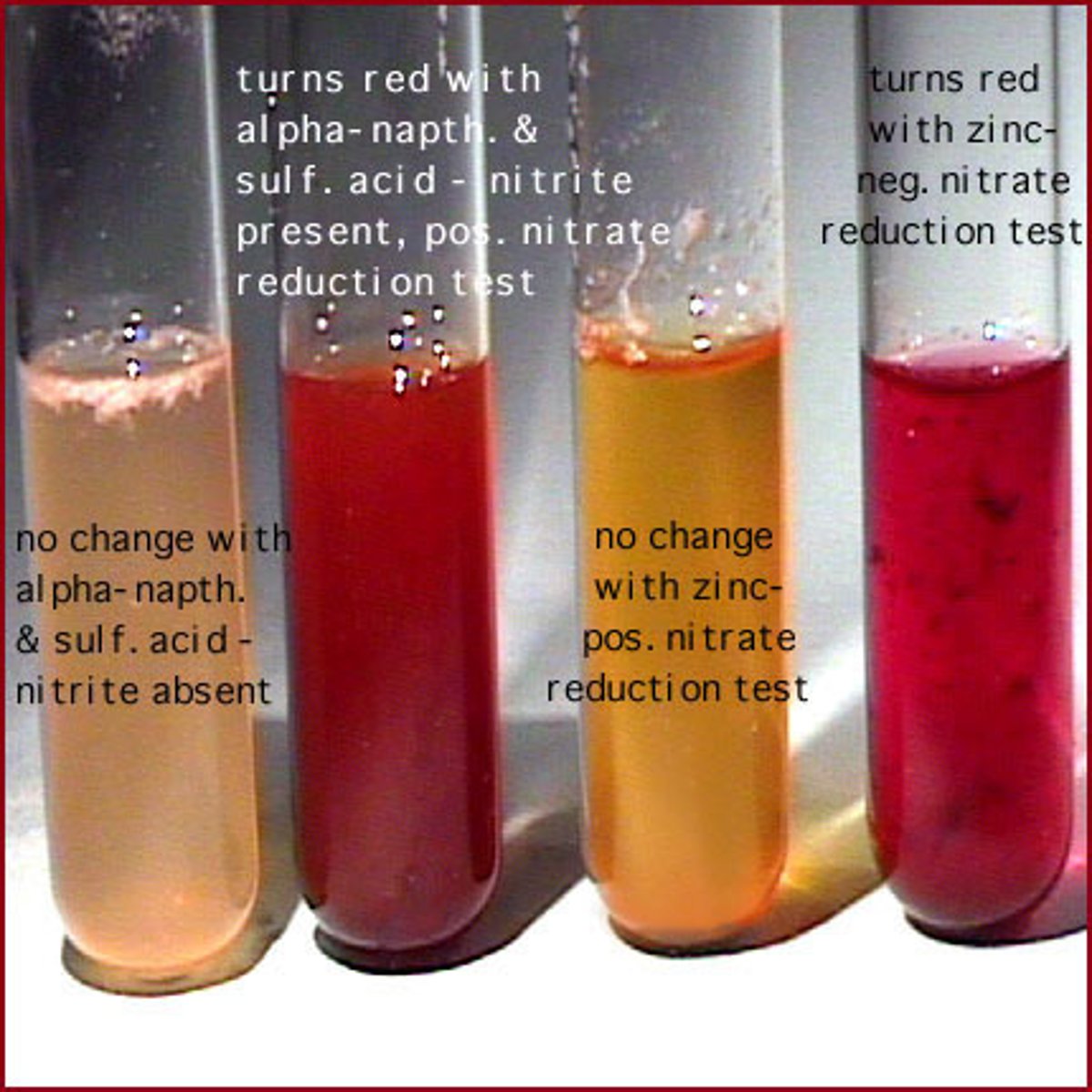
Nitrate Reduction Test Reagents:
a) medium w/ _______
b) alpha-___________ (NR-A) & ________ acid (NR-B)
c) _____ (chemically catalyzes conversion of Nitrates into Nitrites)
a. Nitrate
b. nitrate reagent A (sulfanilic acid), nitrate reagent B (alpha-Naphthylamine)
3. zinc
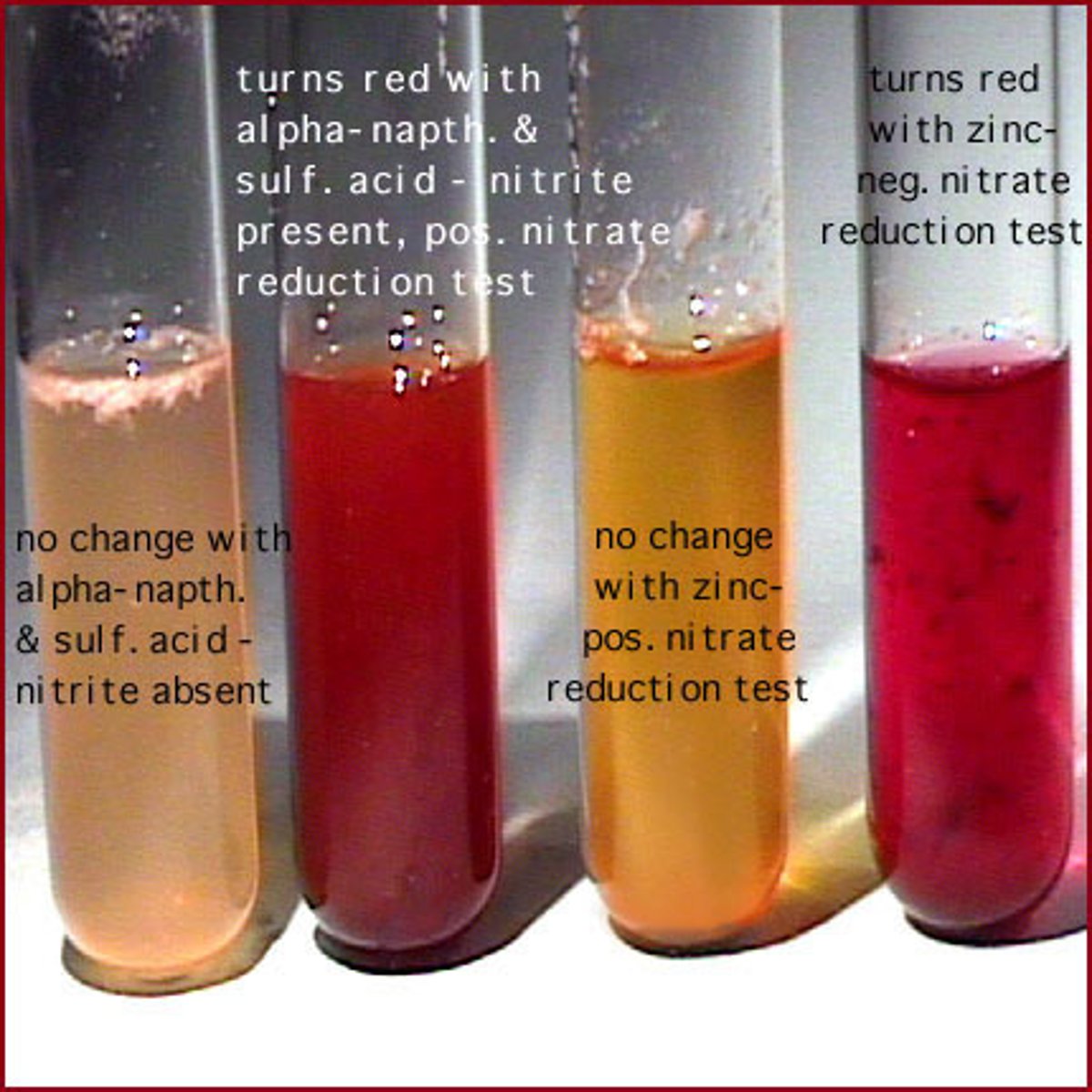
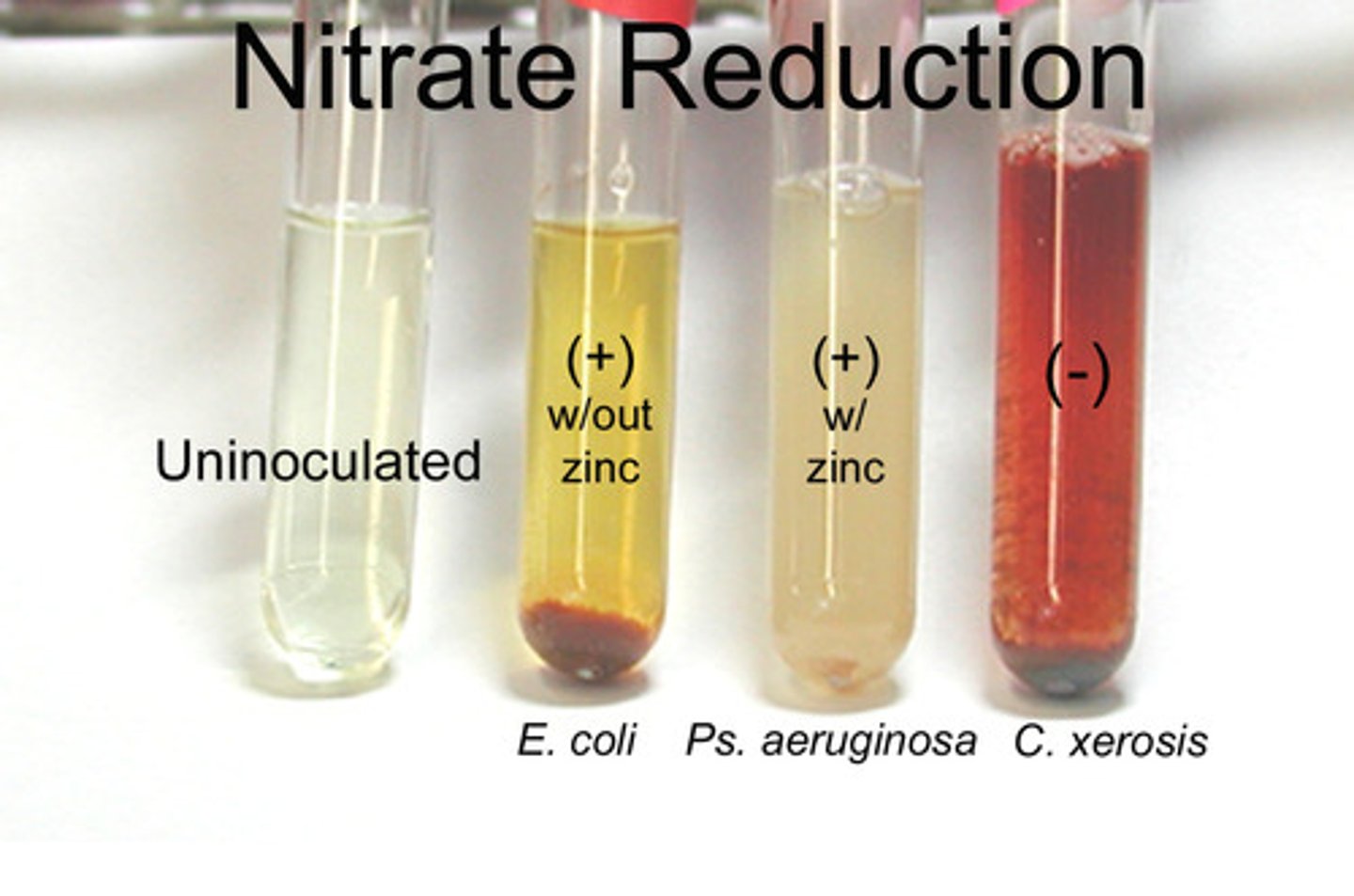
Results of Nitrate Reduction Test will turn ____ (color) ONLY if ______ is present w/i tube. (via ___ production)
red, nitrites, gas
Nitrate reduction Steps:
1. Add __ drops of nitrate reagent A, & __ drops of reagent B.
2. If colorless after Step 1: add pinch of ____ dust (mix/let rest 10 min)
8, 8, zinc
a-napthylamine & sulfanilic acid ONLY react with __________ (turns RED +)
nitrites
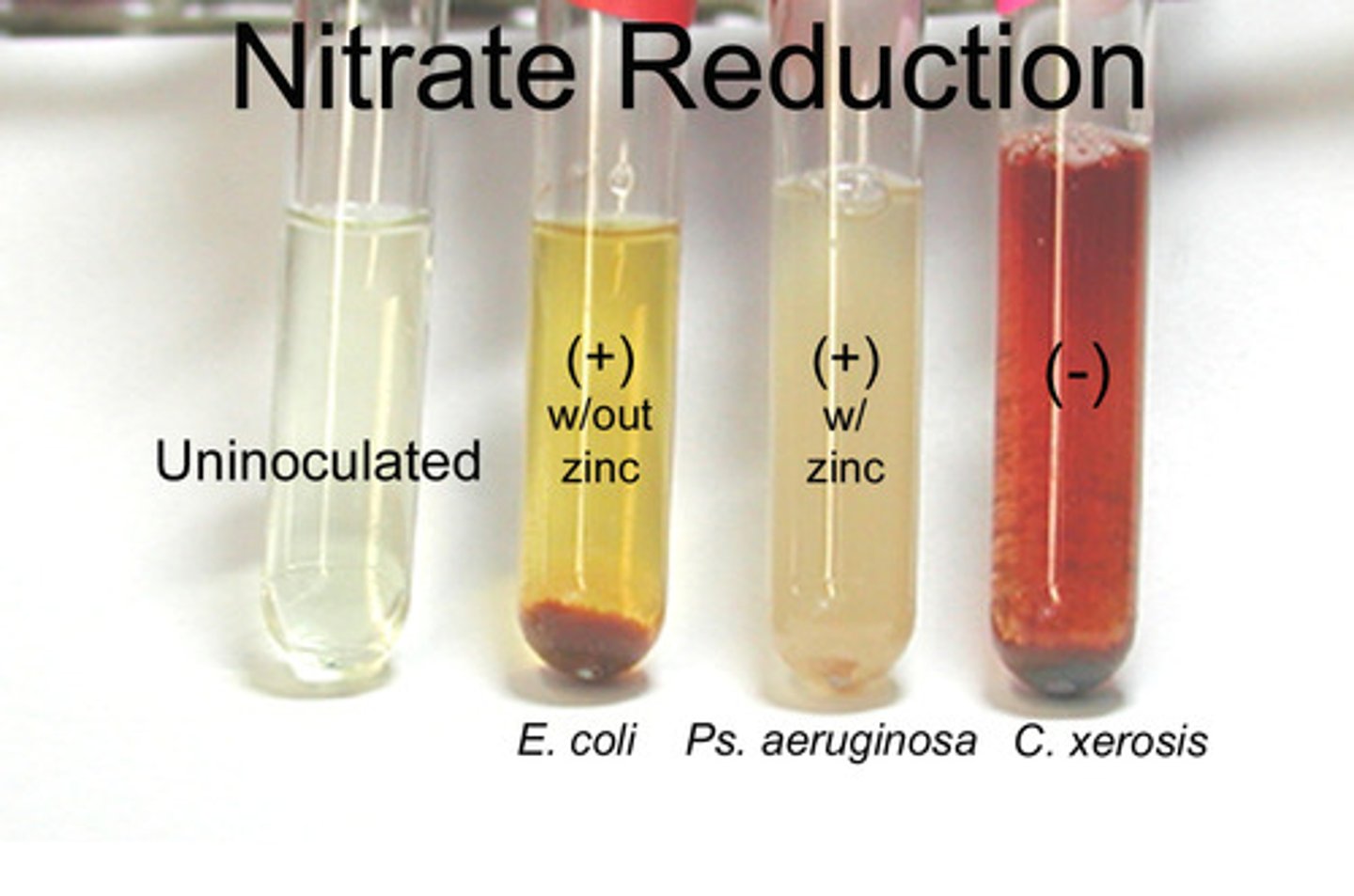
The zinc dust will _______ the reduction of nitrate to nitrite chemically. Thus, if the nitrate has not been reduced by the organisms, i.e., they are nitrate-negative, it will be reduced by the zinc dust and a ___ color will develop in the incubated medium within 15 min.
catalyze, red
If solution turns red/purple after adding Zn to tube (Nitrate reduction) test, it means the organisms weren't able to convert ______ to ________ (Zn reduces it instead)
nitrate, nitrite
Adding Zn to nitrate reduction test tube and having it turn red/purple is a ______ result. If ________, it wouldn't change color due to LACK of _______ (zn wouldn't react, ______ used up!)
negative, positive, nitrate, nitrite
H. Bile Esculin Test Aim:
Differentiates ______________ _____________ (fecal bacteria) from other gamma _________ species (nonhemolytic/group b) based off presence of the enzyme: _________
Enterococcus faecalis, streptococcus, esculinase
H. Bile Esculin Test Reagents:
a) ___: inhibits growth of gram-positive cocci EXCEPT enterococci
b) ______: plant glucoside that can be metabolized by Enterococcus
c) ______ _____: combines w/ esuletin producing a dark brown precipitate
bile, esculin, ferric citrate
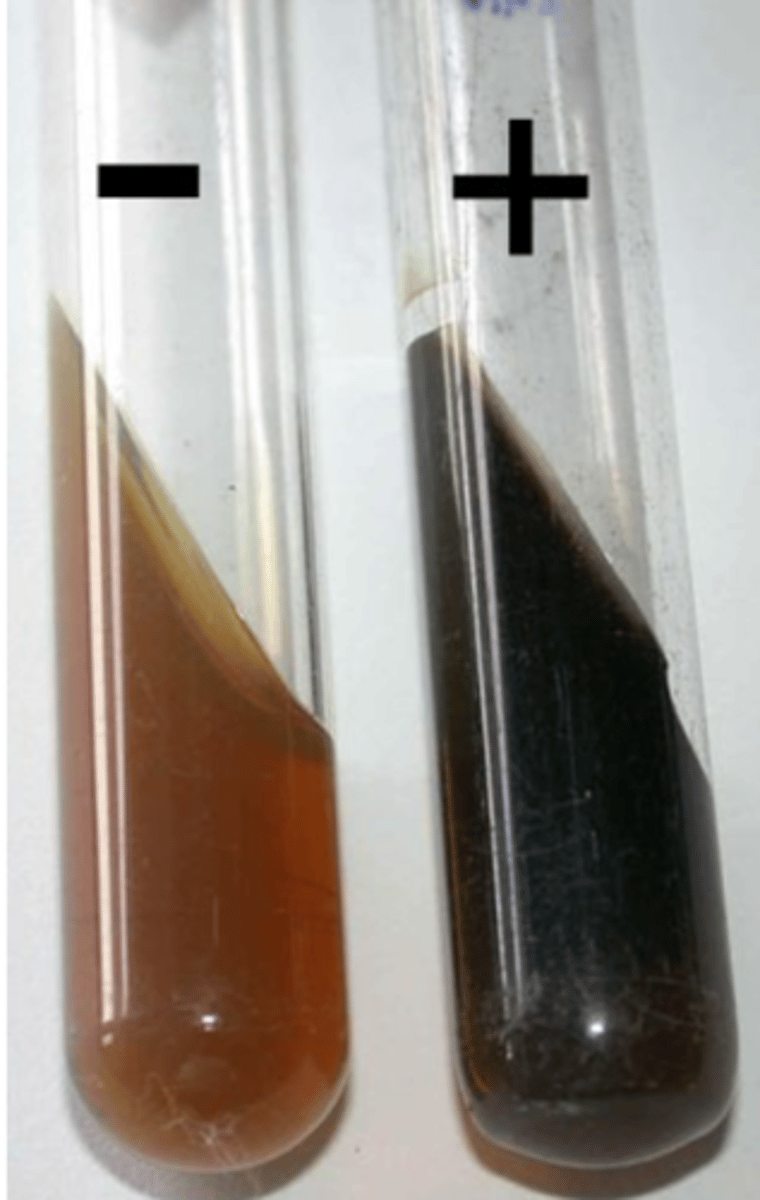
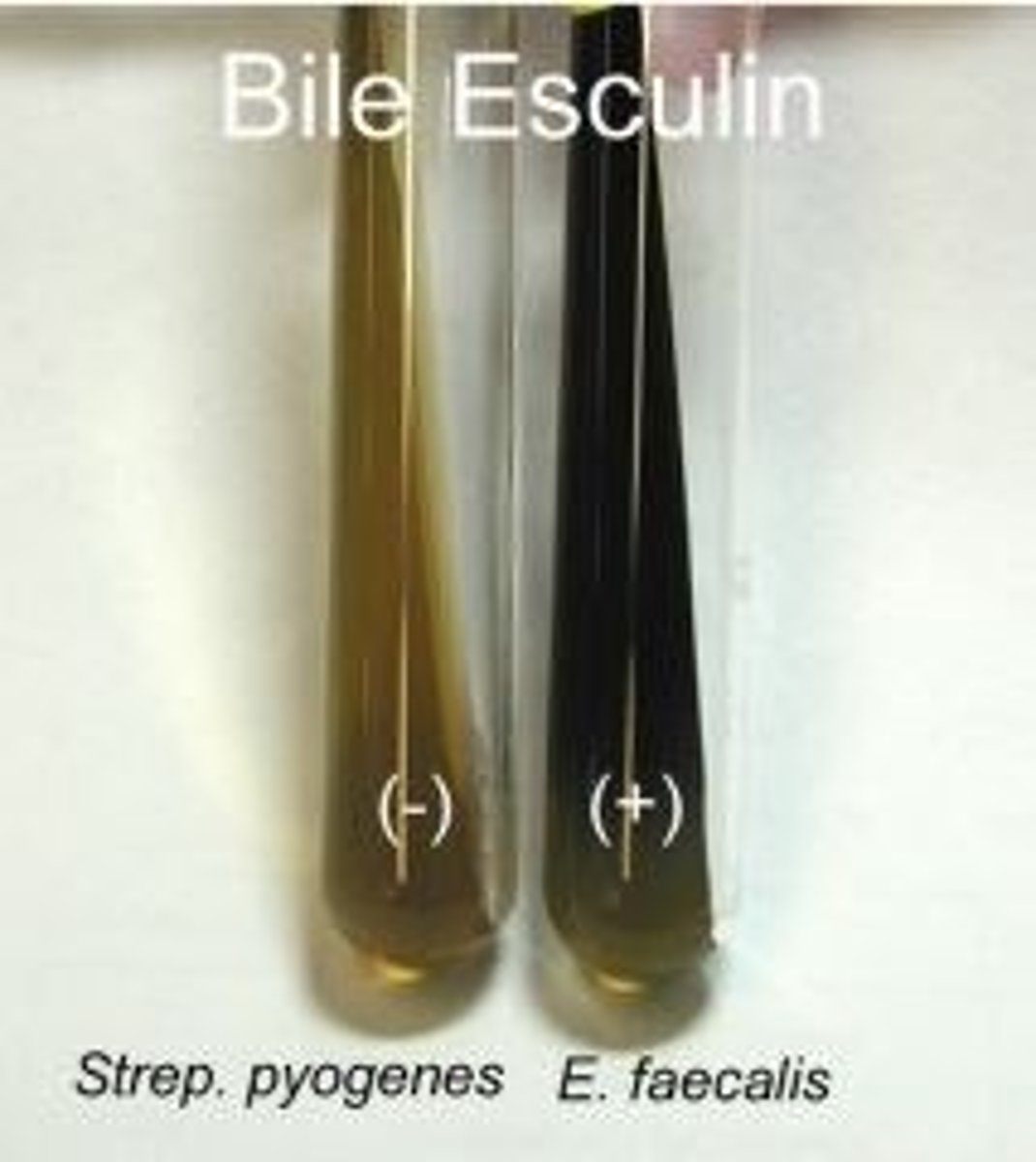
H. Bile Esculin Test Results:
_______: Agar darkens
_______: No color change
Positive, negative
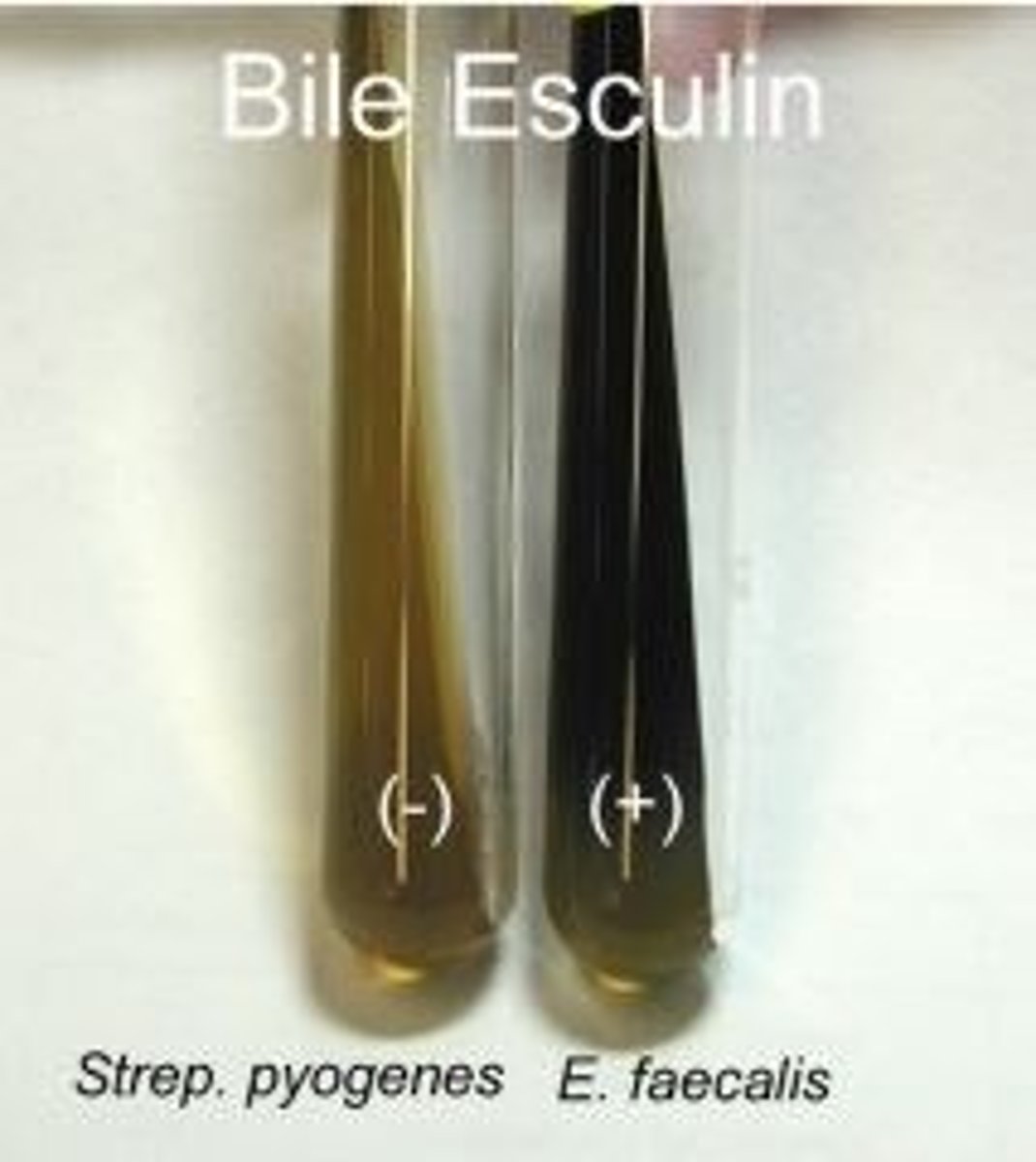
H. Bile Esculin Test Reagent Functions:
a. Bile – inhibits growth of Gram-_______ cocci but enterococci.
b. Esculin – Plant glucoside that can be metabolized by __________
c. Ferric citrate- combines with ______- producing a dark ______ precipitate
positive, Enterococcus, esculetin, brown
_______ catabolism is important in the process of putrefaction (rotting) & food spoilage
Protein
Milk is spoiled by bacteria --> _____ is
the most abundant protein in milk. Degradation
of it will produce foul smell in putrid milk.
casein
Protein catabolism occurs via ____________, ____________ & ________ ______ removal (bacteria produce byproducts omitting smell)
decarboxylation, deamination, side chain
Decarboxylation Products are ______ (pH scale) We use pH indicators to identify.
basic
Why should we care about amino acid decarboxylation?
Pressure ulcers and tissue infections emanating ______. Caused by bacterial infections that produce volatile _____ from amino acid decarboxylation (putrescine /cadaverine)
malodor, amines
Aim of Amino Acid Decarboxylation (Arginine, Ornithine, & Lysine) Test:
Used to identify the presence of a ____________ enzyme
decarboxylase
Amino Acid Decarboxylation Test Reagents:
a. ______, ________ or _____ (also _____ and extracts)
b. __ __________ (acidic=yellow under 5.5pH, basic = purple over 6.8)
c. ___ ______ --> Promotes fermentation -> Low pH = Production of decarboxylases
a. Arginine, ornithine, Lysine, sugars
b. pH indicator: bromocresol purple
c. mineral oil
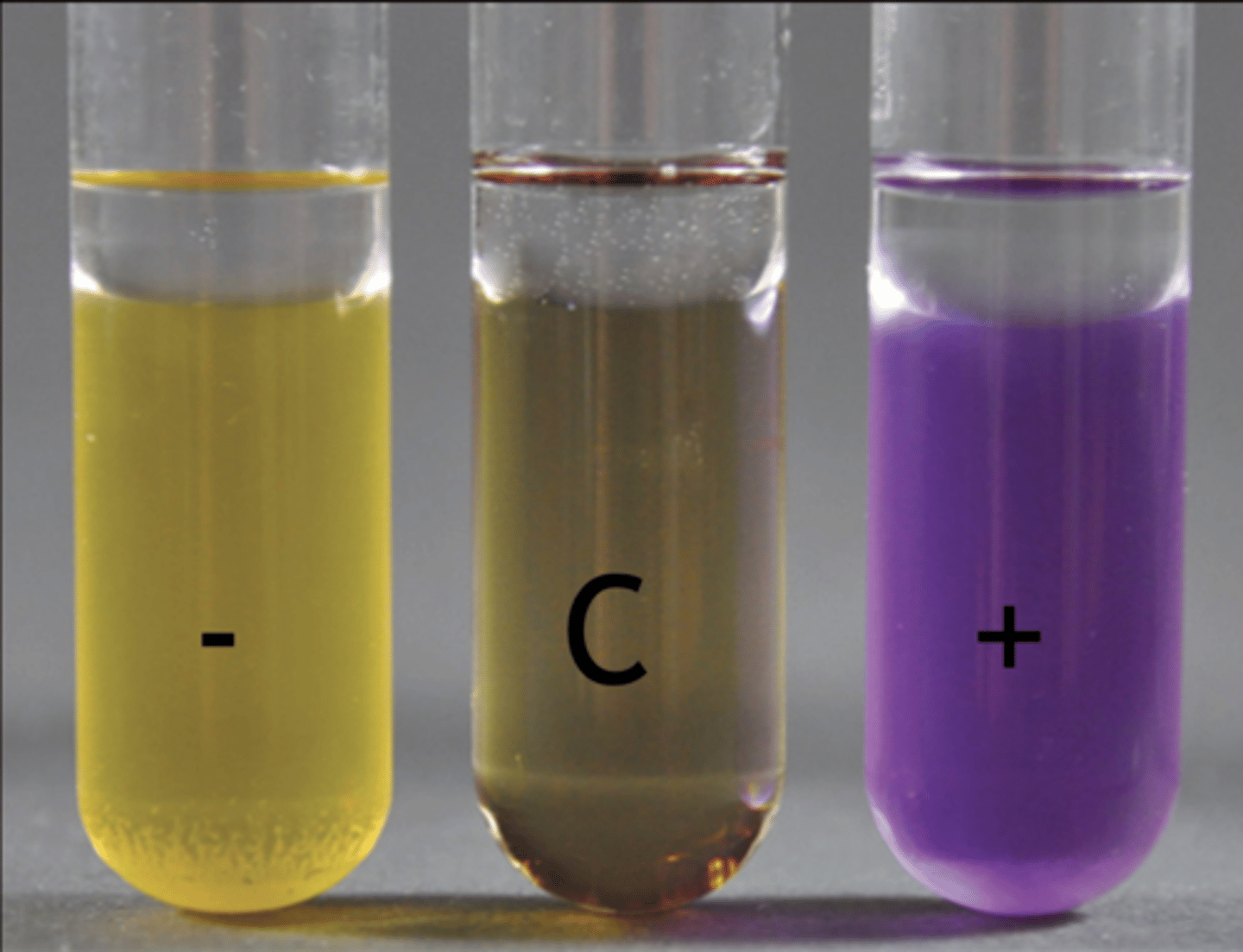
Amino Acid Decarboxylation Test Results:
Yellow --> _______ for decarboxylation
Purple --> _______ for decarboxylation
negative, positive
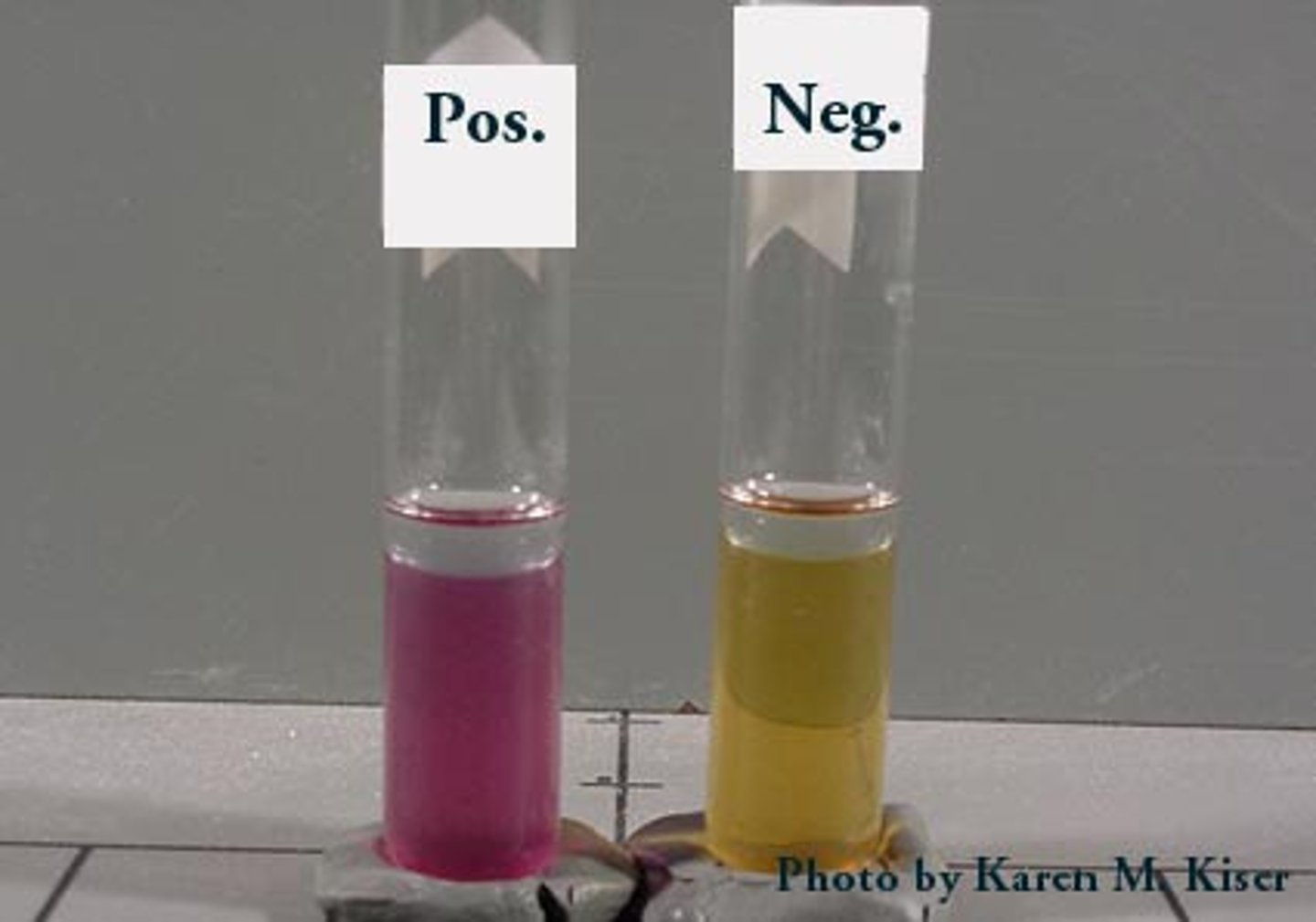
Positive Decarboxylase Positive Result
Decarboxylase synthesis is activate producing _______ byproducts turning the tube __________ (color)
Alkaline, purple
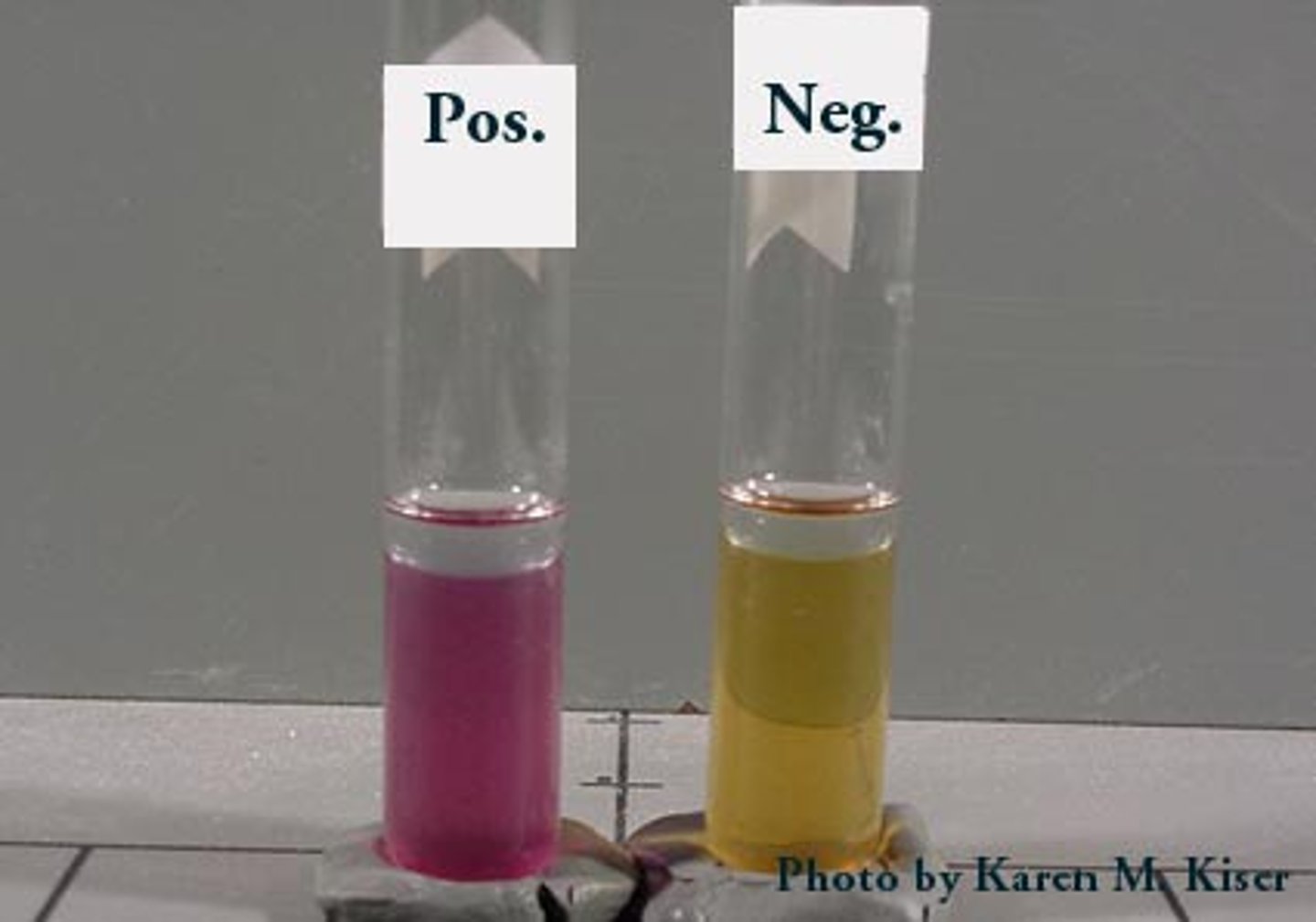
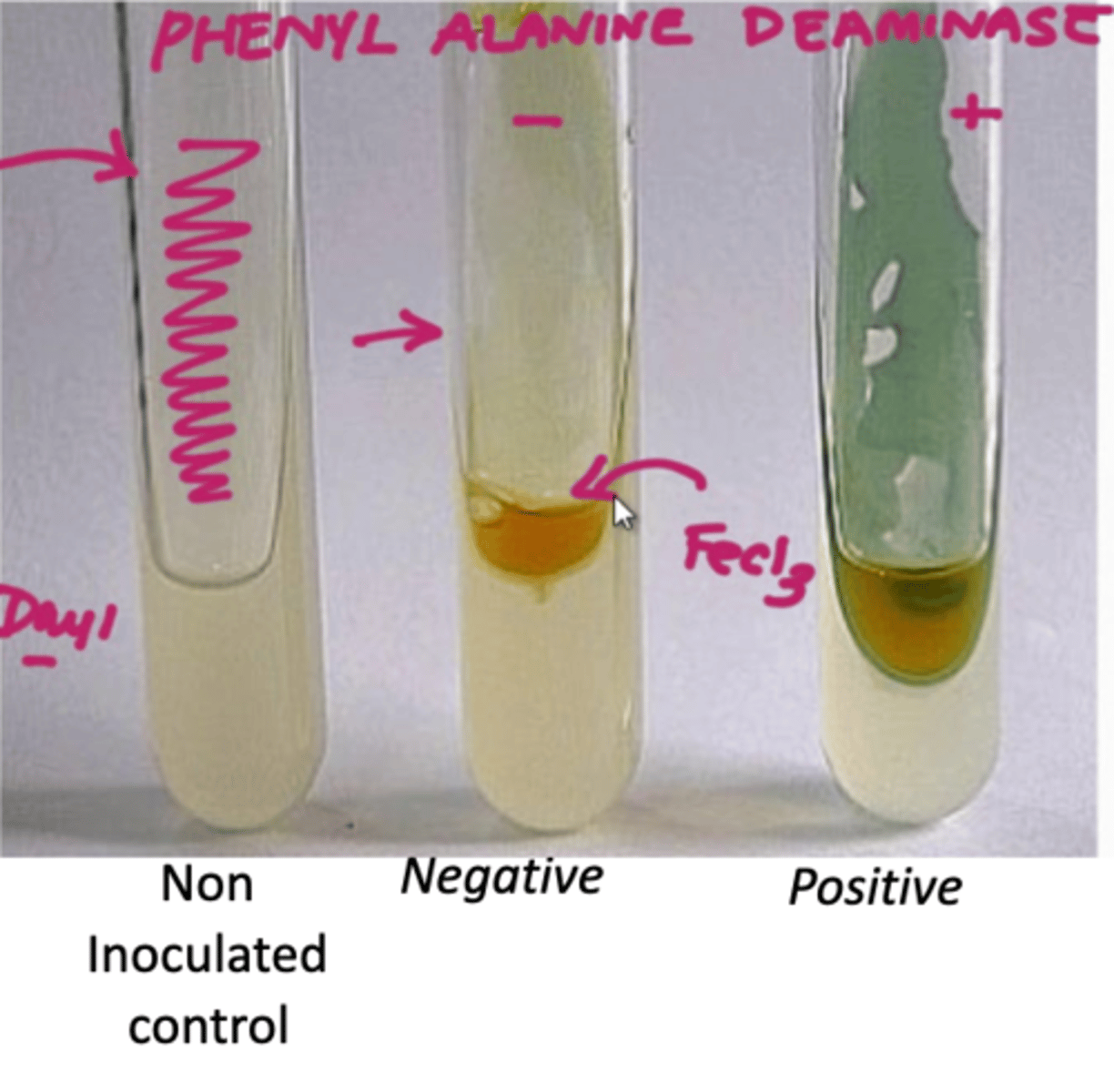
Phenylalanine Deaminase Test Aim:
determining presence of deaminase enzyme __________
Phenylalanine deaminase
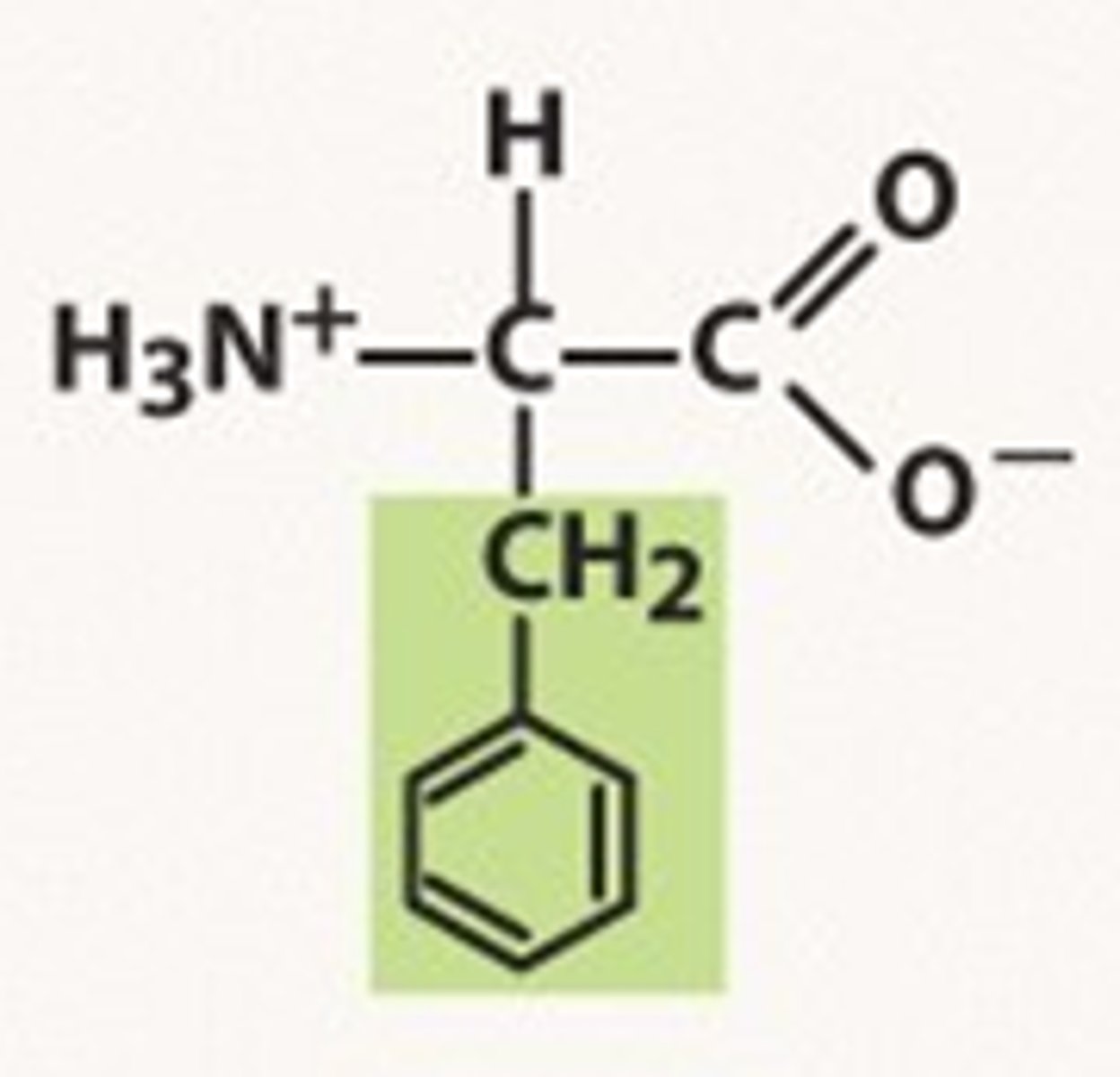
Phenylalanine Deaminase Test Reagents: Medium
a. (also yeast extract)
b. _______ _______ (reacts in the presence of phenylpyruvic acid --> Green color).
a. Phenylalanine
b. Ferric chloride
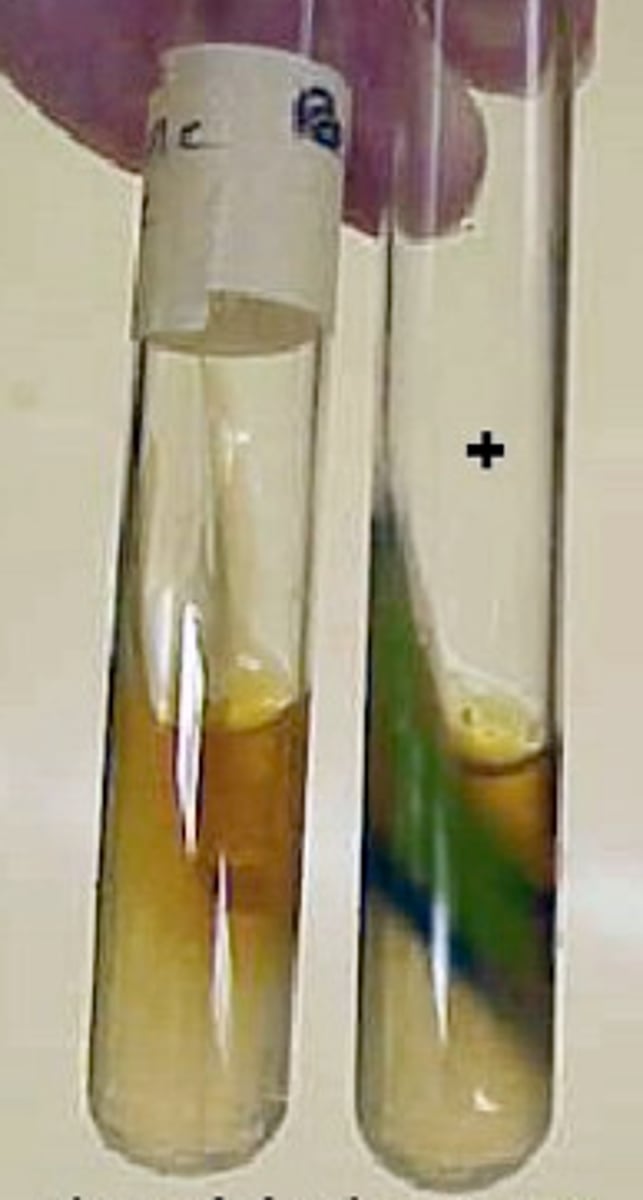
Phenylalanine deaminase test Results
Positive for deamination: ____________
Negative for deamination: _____________
green color, no change
C. SIM Test (Amino acid side chain removal) Test Aim:
To characterize gram ________ _________ (salmonella vs shigella) based on motility and amino-acid catabolism capabilities
negative enterobacteria
C. SIM Test (Amino acid side chain removal) Consists of 3 Tests in One:
1. _______ reduction: Determine if bacteria display Cysteine Desulfurase activity (removes sulfur from amino acid cysteine). SH2 can also be produced during anaerobic respiration (in anaerobic environment only)
2. ______
3. _____ formation– Determine if bacteria display Tryptophanase activity. Metabolism of tryptophan (Amino acid found in proteins-peptone) metabolized to indole (Indole detected with Kovac’s reagent pink if indole is present)
Sulfur, Motility, Indole
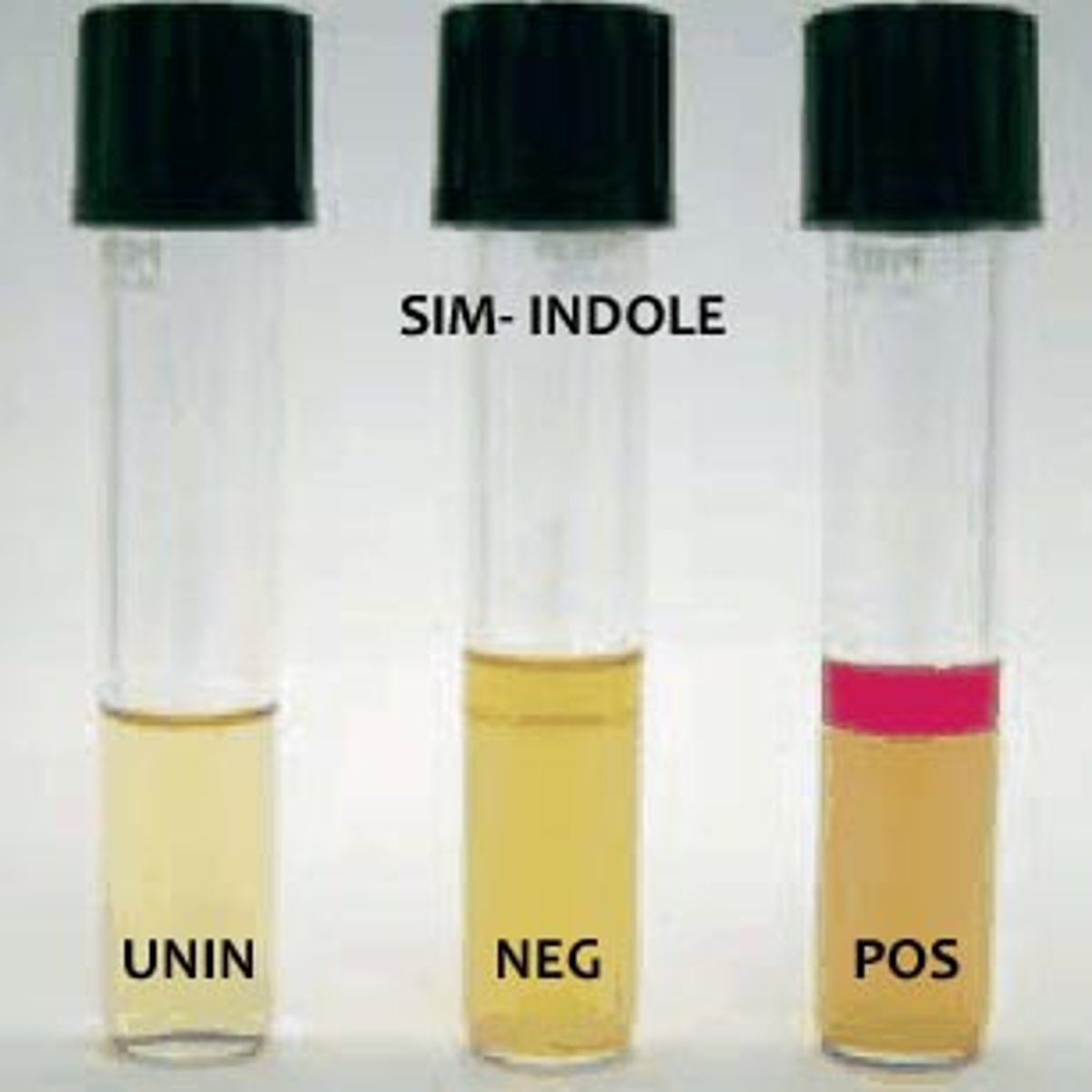
Indole production (Tryptophan Hydrolysis-SIM) Test Aim:
Identify bacteria with the enzyme _________ (breaks down amino acid Tryptophan to Pyruvate for energy -> waste byproduct generated = Indole) (SIM)
Tryptophanase
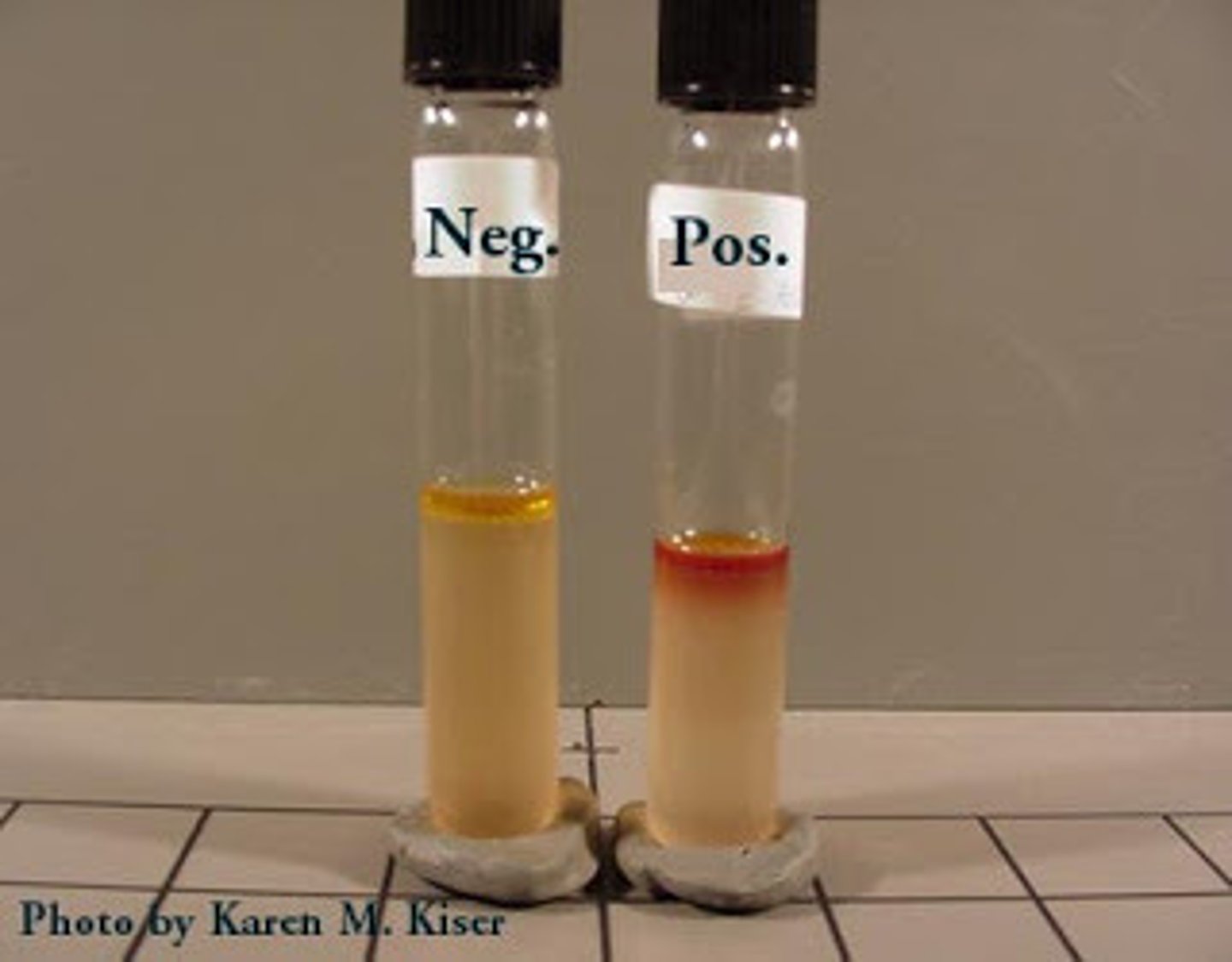
_____ production is indicative of amino acid breakdown to _____ for energy by the enzyme Tryptophanase (SIM)
Indole, pyruvate
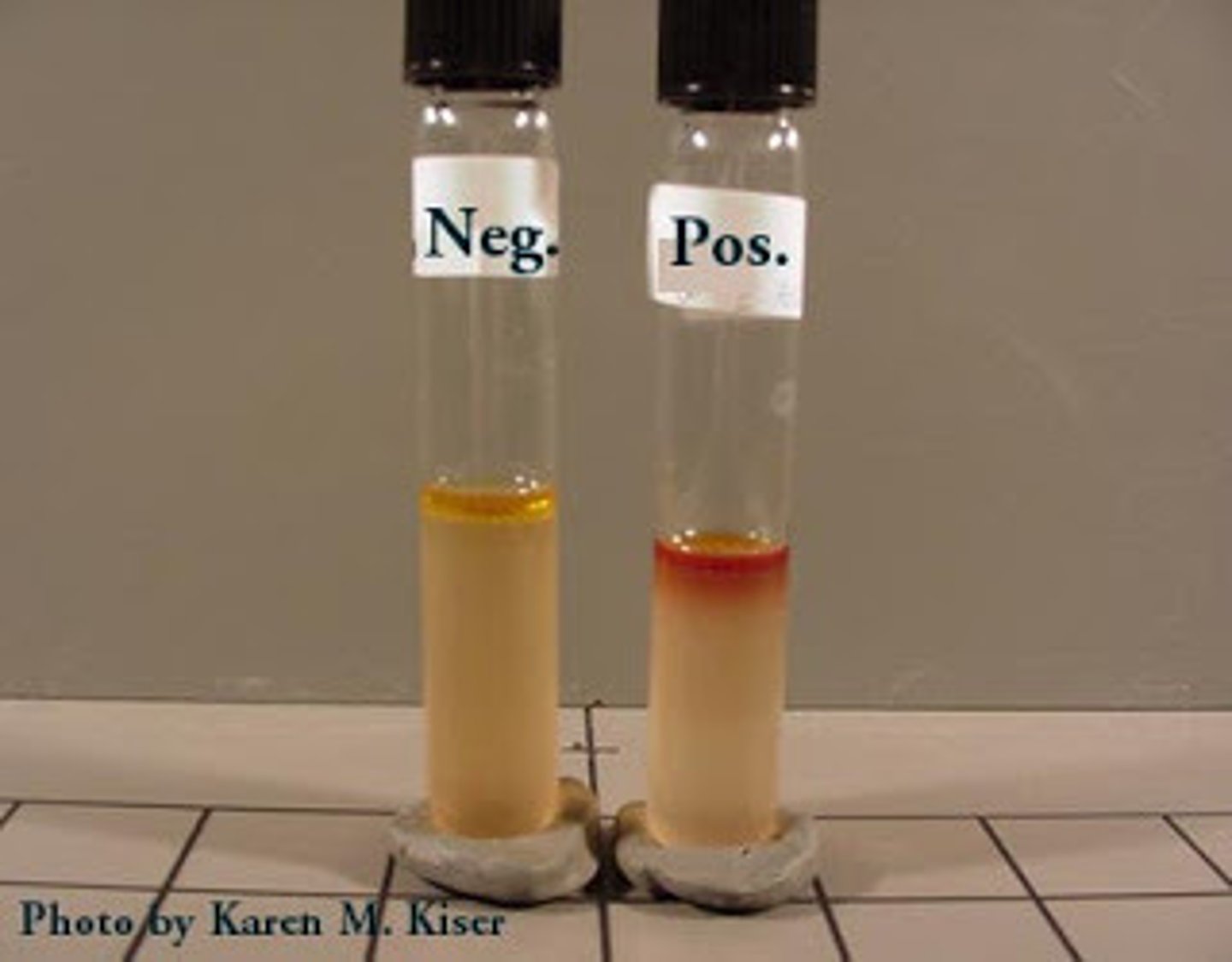
Reagents for Indole production (SIMTest):
Media with 1% _____
_______ reagent (6-8 drops)
Tryptone, Kovac's
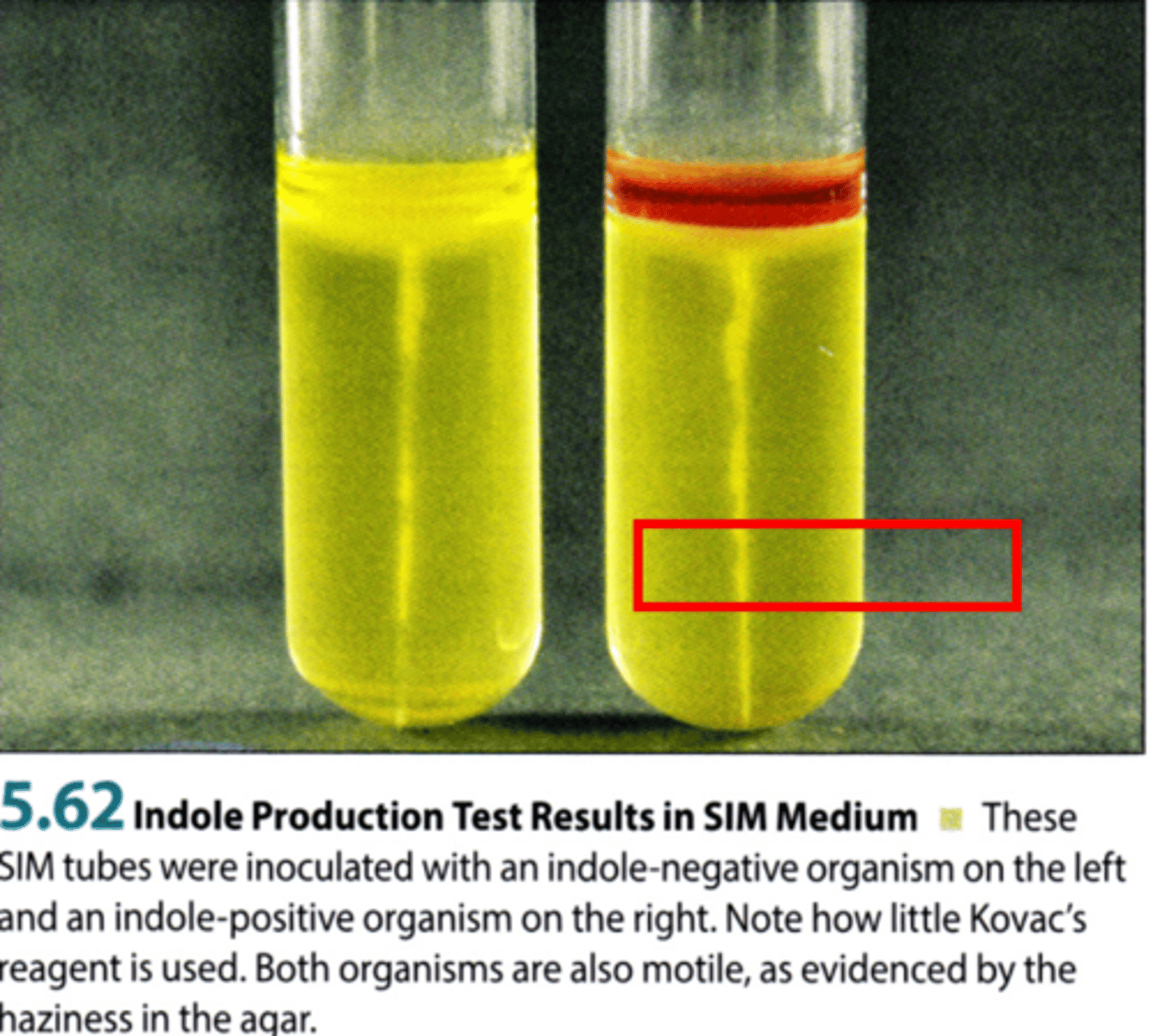
Reagents for Indole production (SIM Test) Results:
___ ring formation at the ___ of the tube
after addition of Kovac’s Reagent = + for indole
red, top
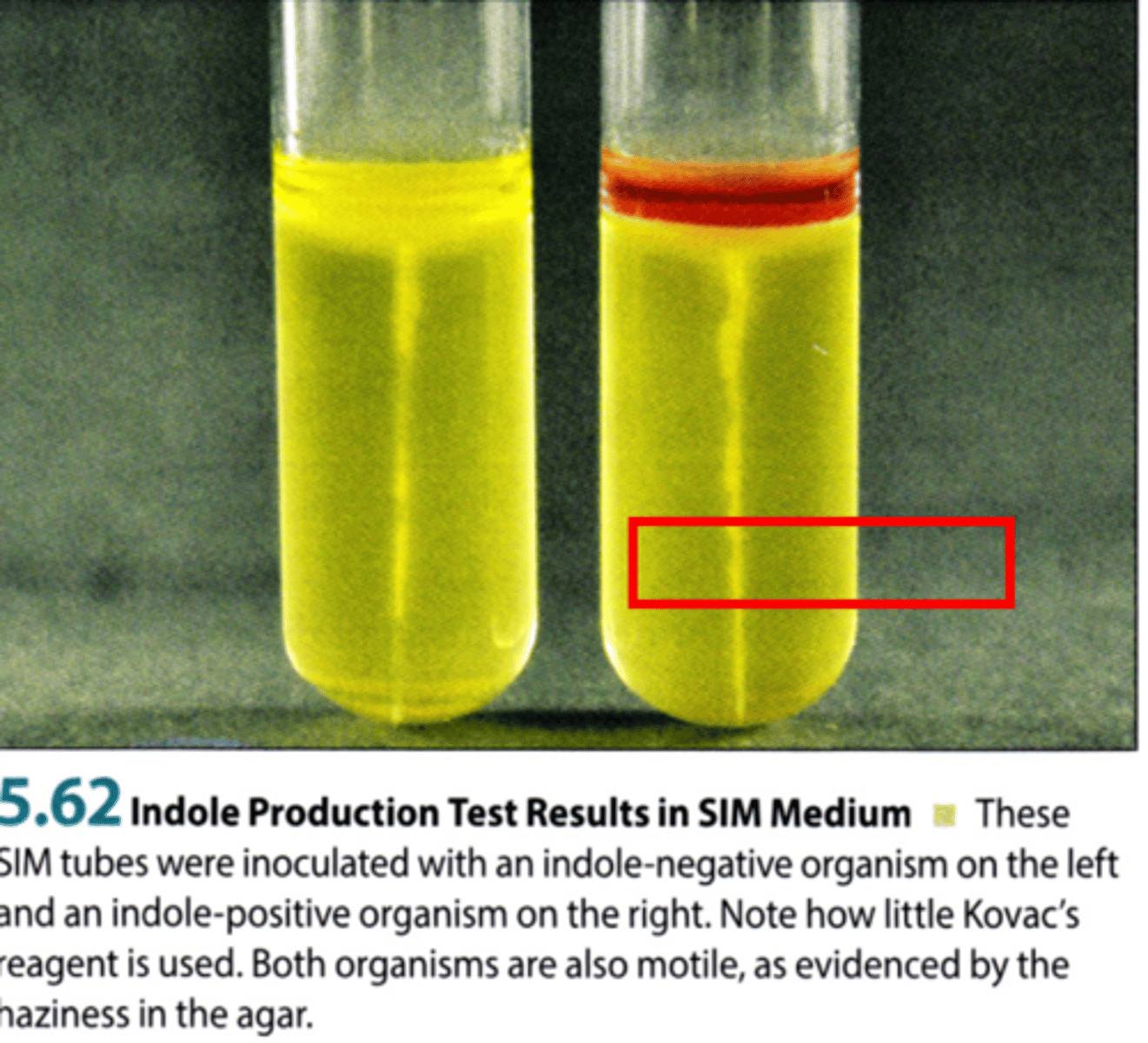
SIM motility test Aim: Identify _____ in bacteria.
Reagents: Media with 0.75% )_____ (Solid enough to prevent diffusion of the media while allowing the motility of bacteria)
Results: Turbidity of tube beyond stabbing point indicates ______ (cannot see the black line crossing)
motility, agar, motility
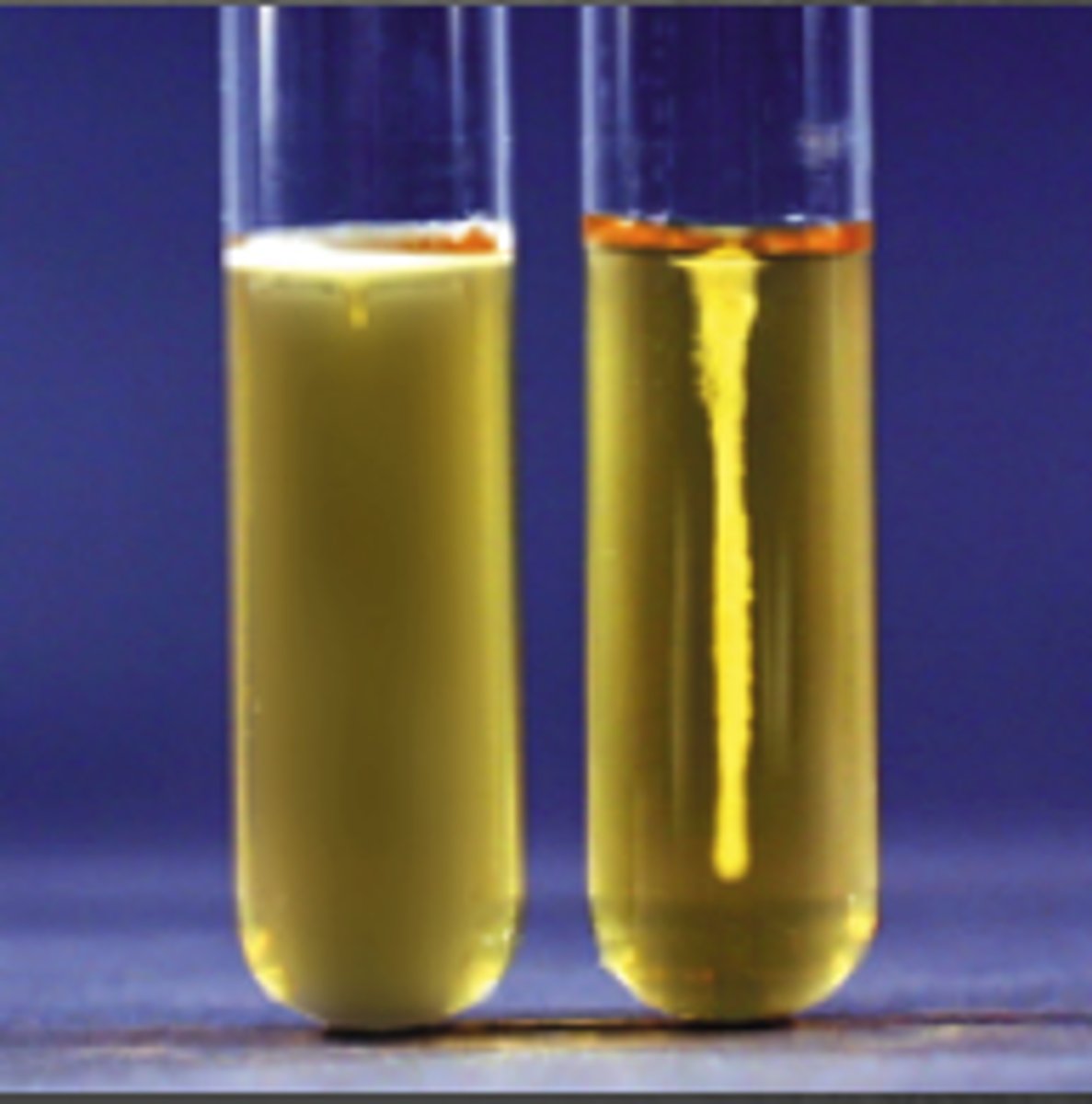
Urease Test Significance:
-Peptic ulcers! Helicobacter pylori can thrive in stomach thanks to _____ --> produces _____ that neutralizes gastric acids.
Urease, ammonia
Urease Test Significance:
urease-positive bacteria converts ___ to _________ (why piss smells so bad)
urea, ammonia
If your pee stinks like ammonia… You might have a urinary tract infection caused by ____ _______.
Proteus mirabilis
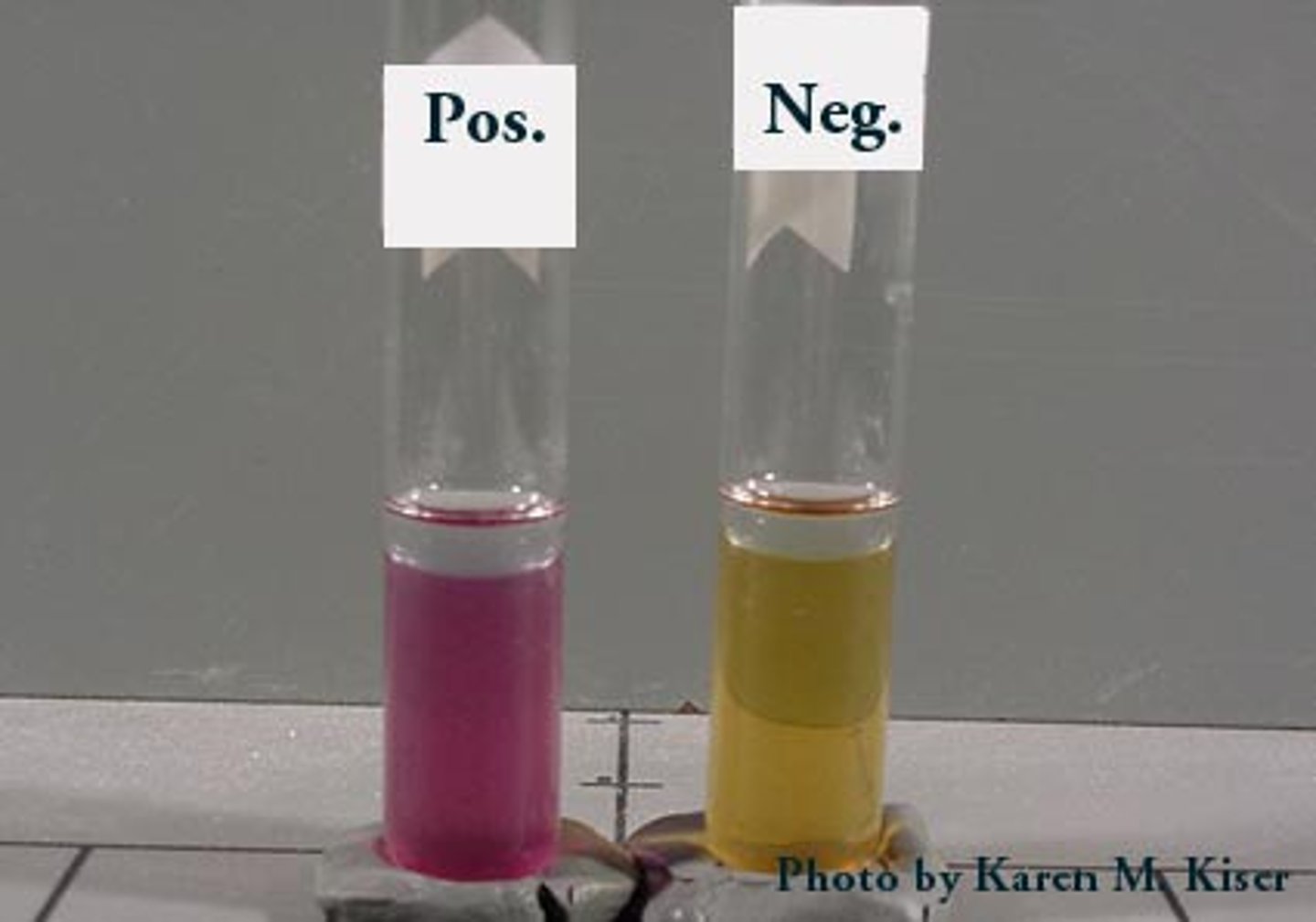
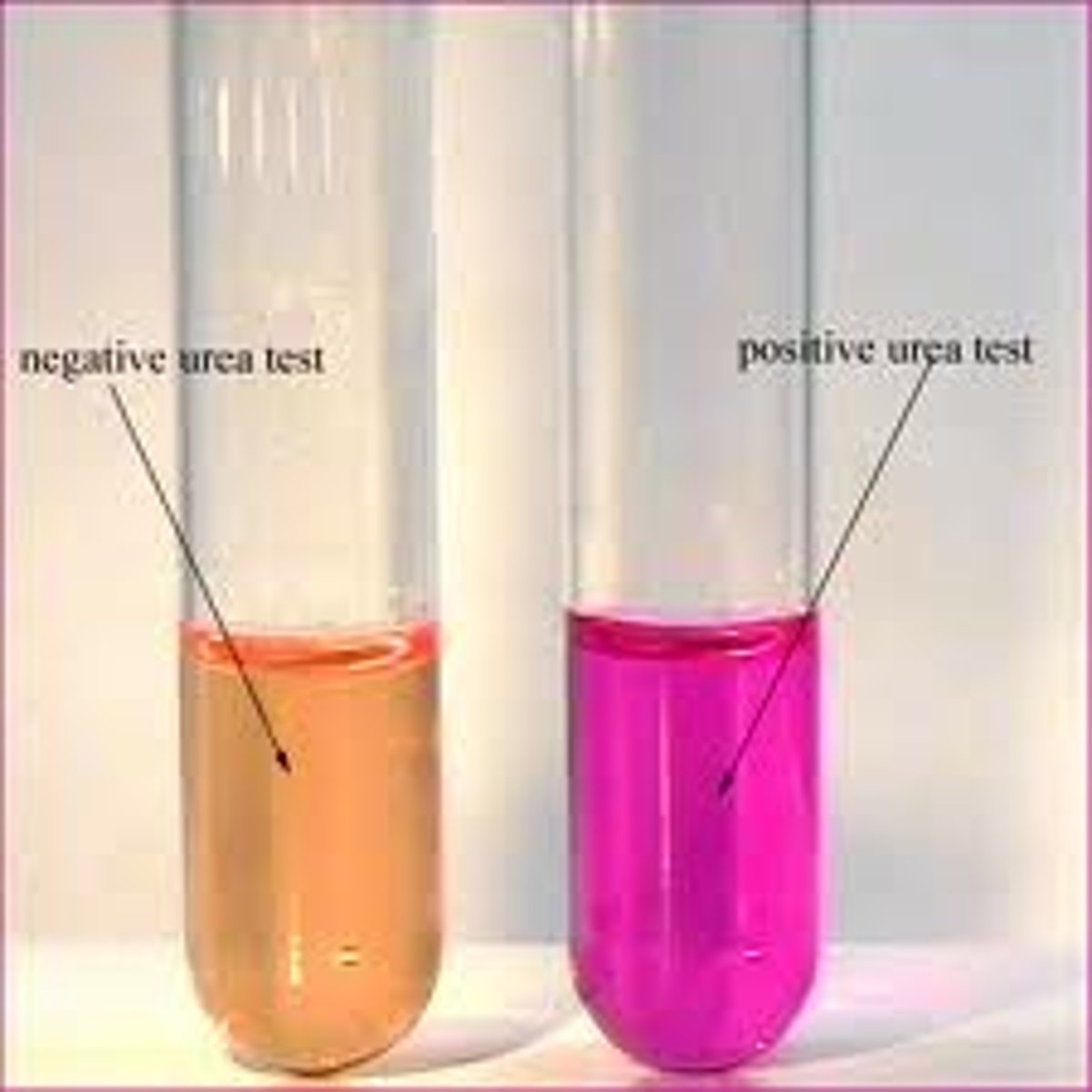
Aim of Urease Test: Determining the ability of an organism to hydrolyze ___ into _______ (strong base = increased pH), through the production of the enzyme urease.
Reagents: medium with urea ____ _____ (orange/peach at _____ pH. Pink at _____ pH)
Results:
_______= Pink (high pH)
________ = no color change (peach)
urea, ammonia,
phenol red, neutral, basic
positive
negative
a-naphthylamine and sulfanilic acid are reagents for the ________.
Nitrate Reduction Test
citrate utilization test may be ________ if green
positive and negative
Purple on paper (positive result) is what metabolic test?
Oxidase test
If bubbles are present (positive), the metabolic test is looking for the enzyme _________ (also in RBC)
catalase
Catalase detoxifies ________ _______ (purple paper)
hydrogen peroxide
Voges Proskauer test is used to identify bacteria able to perform _______ fermentation
Butanediol
RED Methyl red test is a ___________ result
positive
Voges Proskauer uses the following reagent/s ______________ + ________ ________
alpha-naphthol + potassium hydroxide
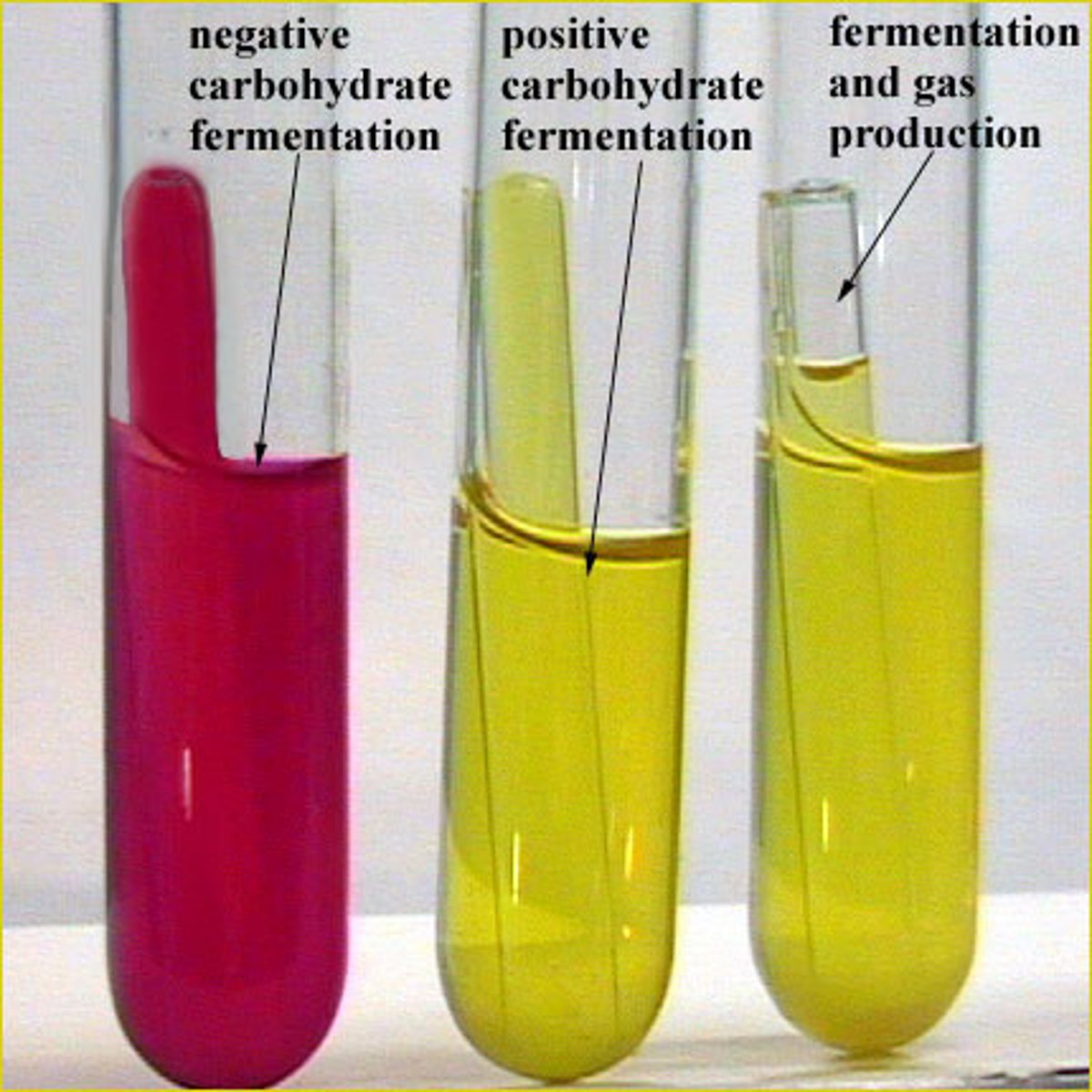
Phenol Red Test Results
red color= ___________ for fermentation (uses __________ or no glucose)
yellow color= ________ for fermentation (bubble indicates _______)
negative, respiration, positive, gas (production)
What is formed when sulfur production is positive (SIM test)? [C]
black precipitate
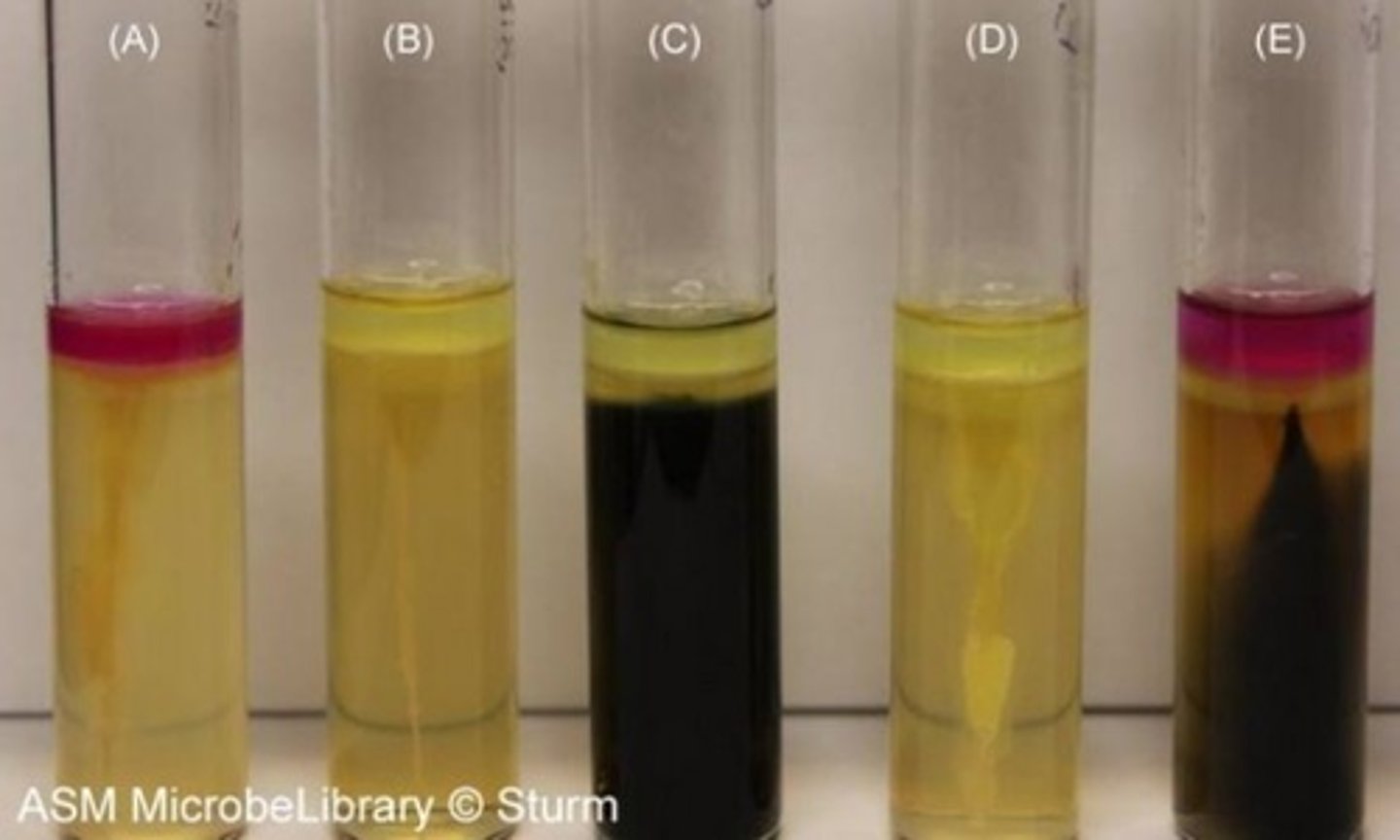
What happens when Indole is present? (SIM test A)
Red top forms (positive)
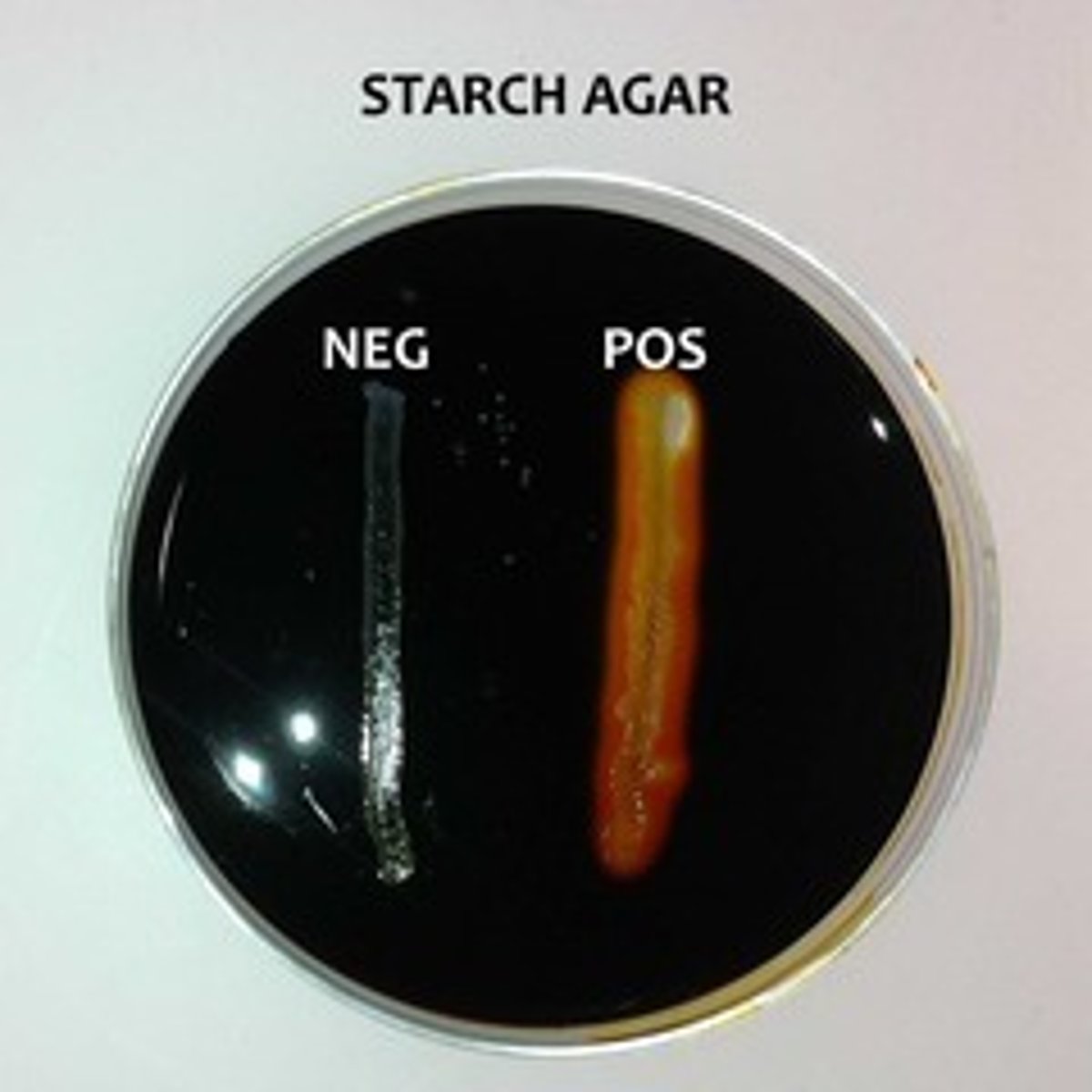
Starch agar results + it uses the enzyme __________
amylase
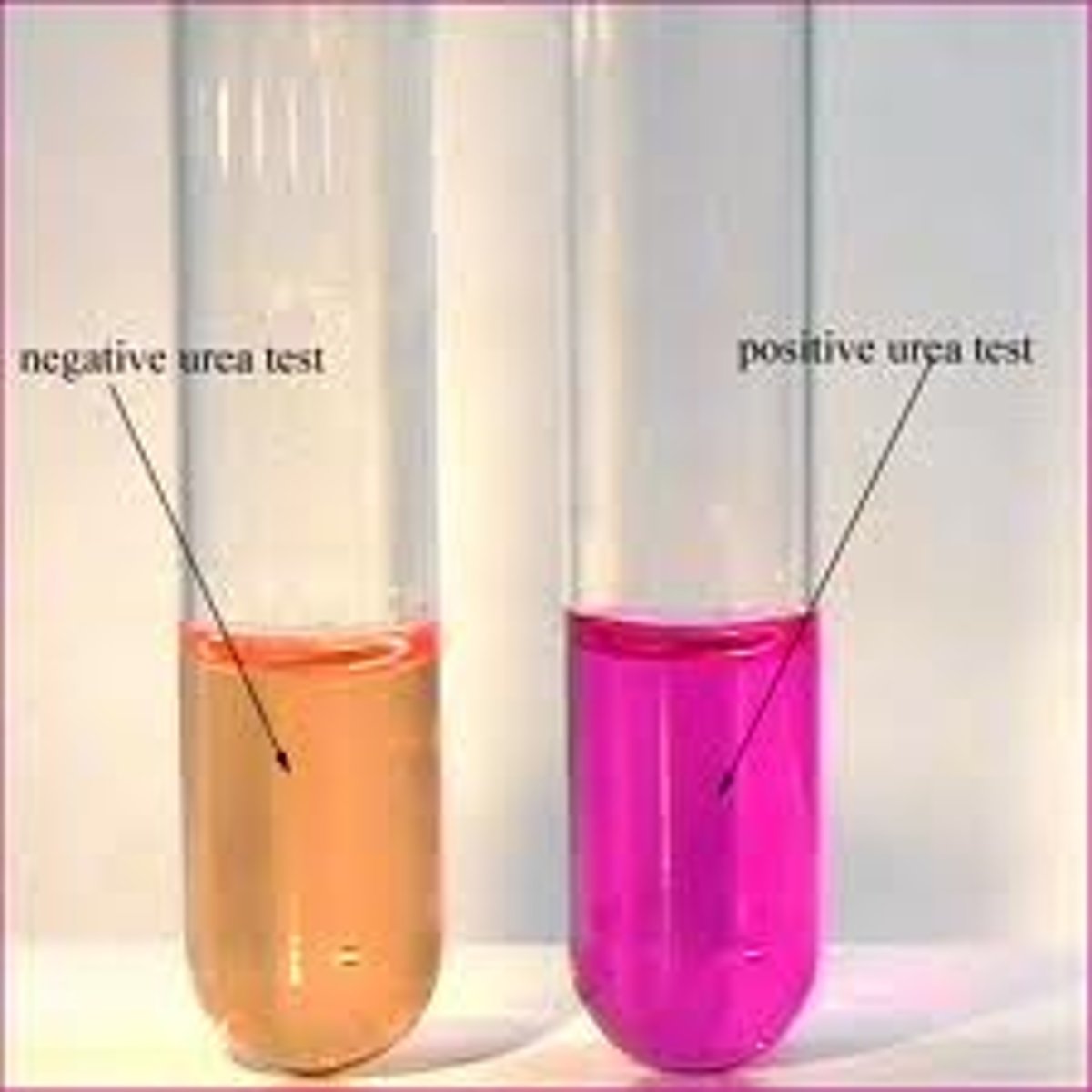
Test for determining the ability of microorganisms to degrade urea by means of the enzyme urease.
Urease Test
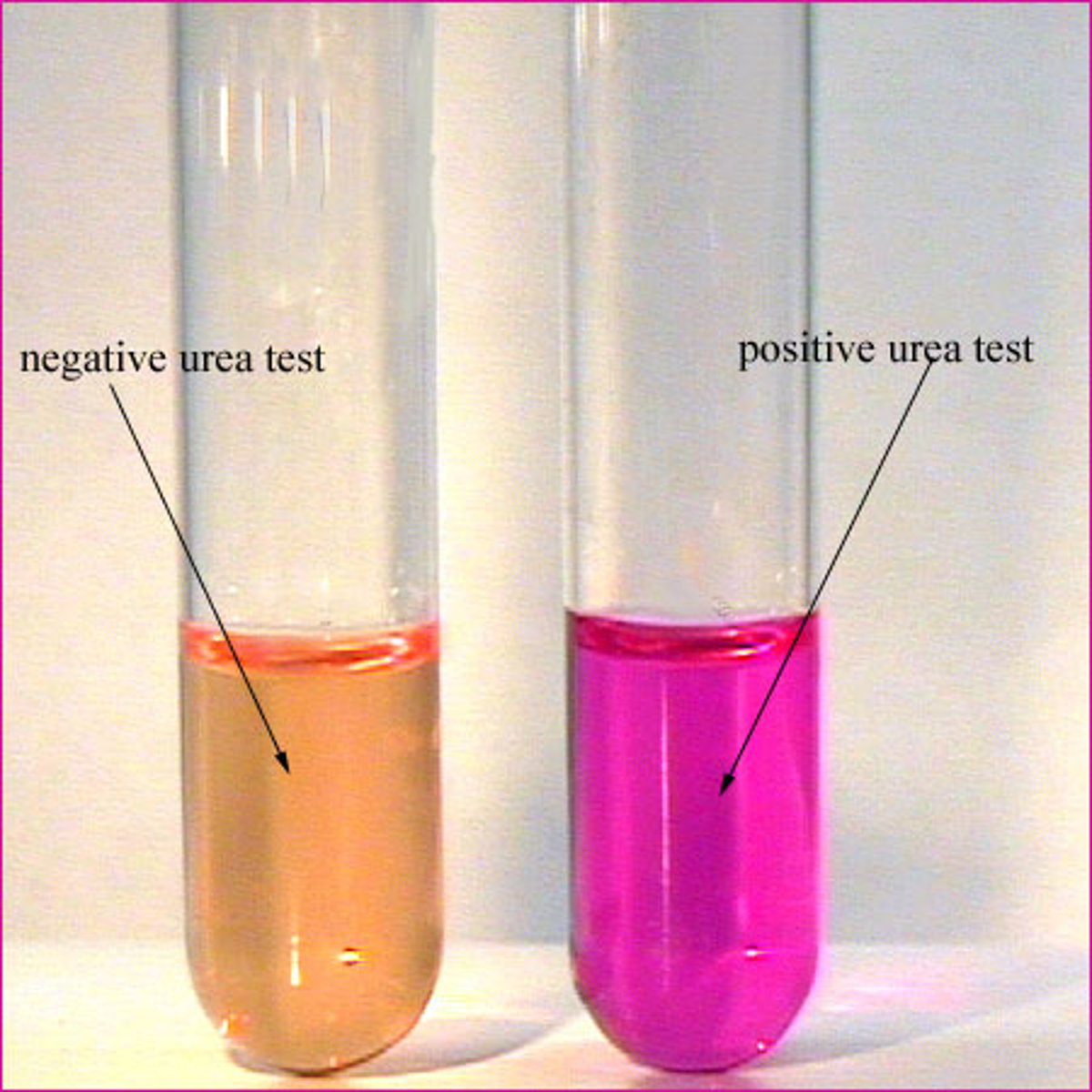
urease test
phenol red
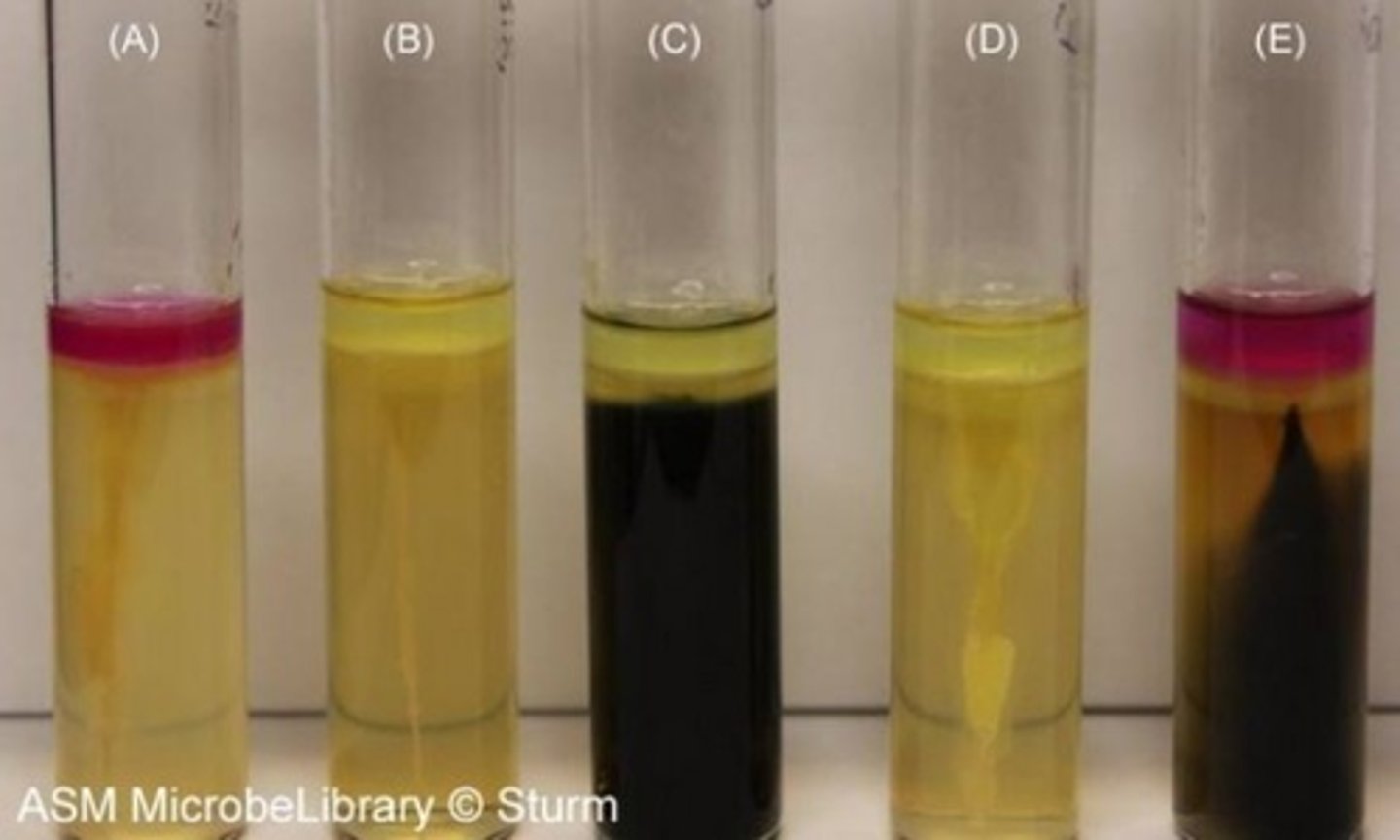
Positive result in phenol red test are ______ in color, AND may or may not have a _________ w/i tube
yellow, bubble
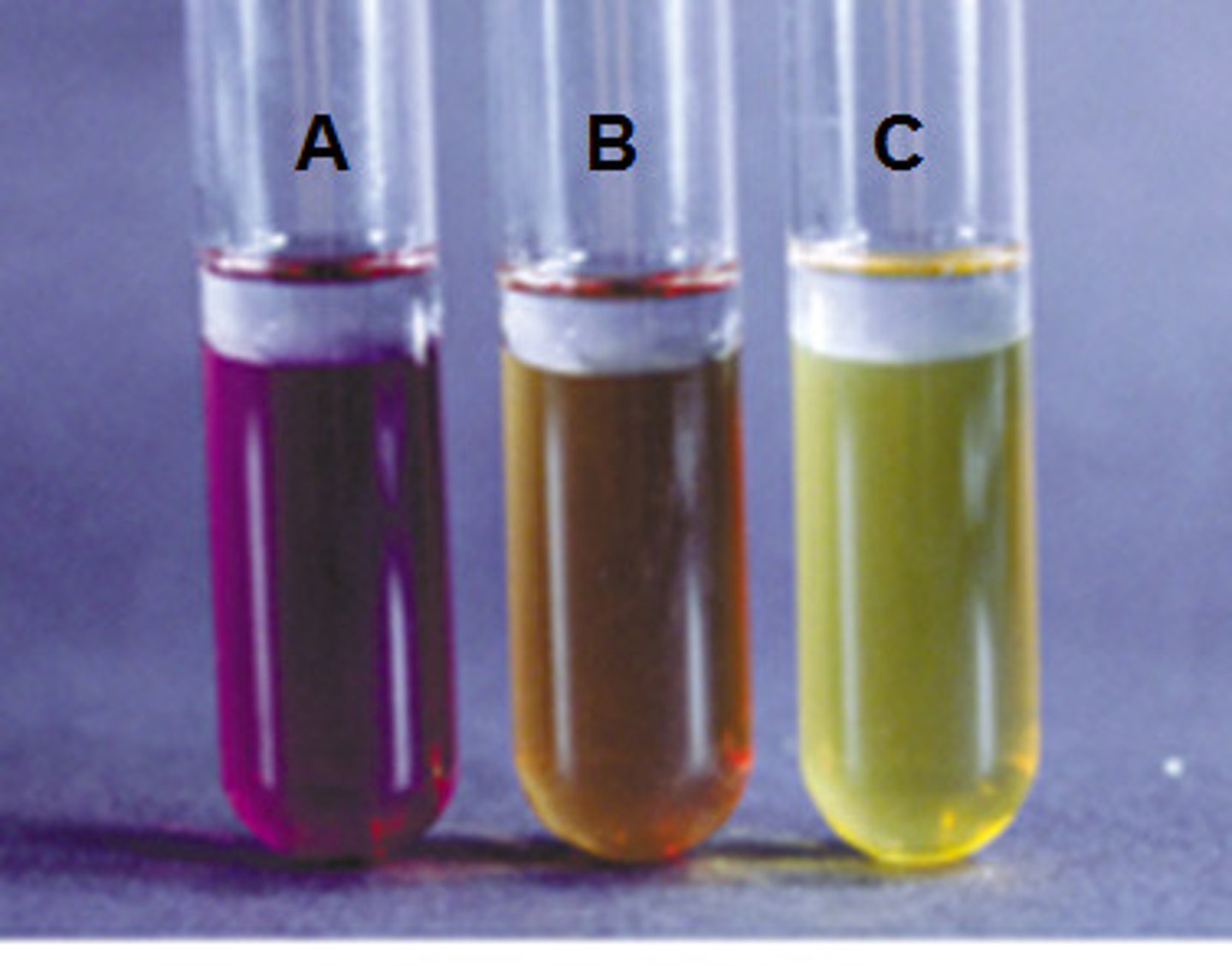
decarboxylation test results
Only _______ color is positive
Decarboxylase enzyme present if:
+ Purple
MINERAL OIL (anaerobic)
- yellow = fermentation but no decarboxylation
Purple(positive) decarboxylase test is either acidic or basic: _______
basic
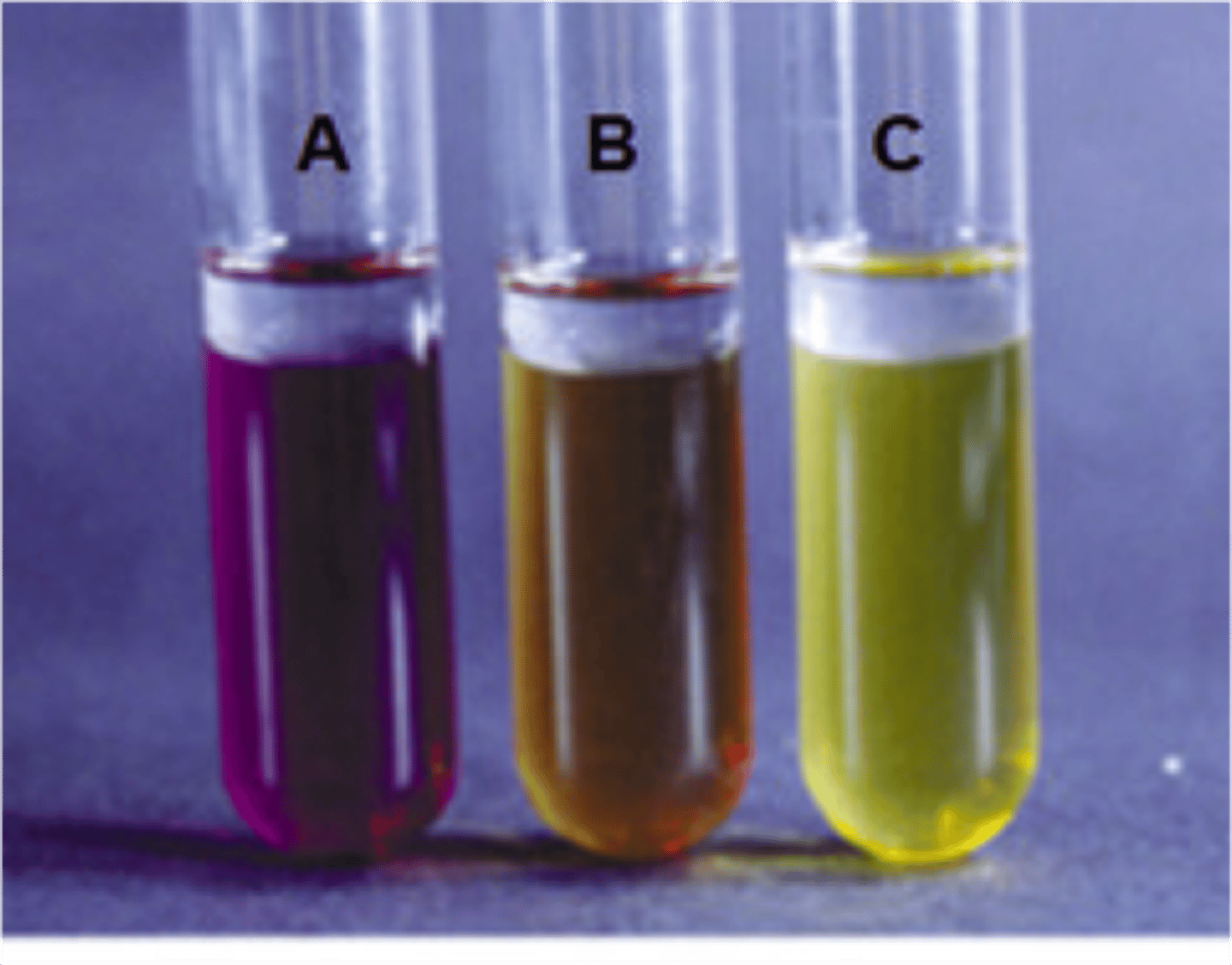
Yellow(negative) decarboxylase test is either acidic or basic: _______
acidic
Test employed to differentiate among the urea- positive gram-negative bacilli on the basis of the ability of the microorganisms to produce phenyl-pyruvic acid by oxidative deamination.
Phenylalanine Deaminase (PDA) Test
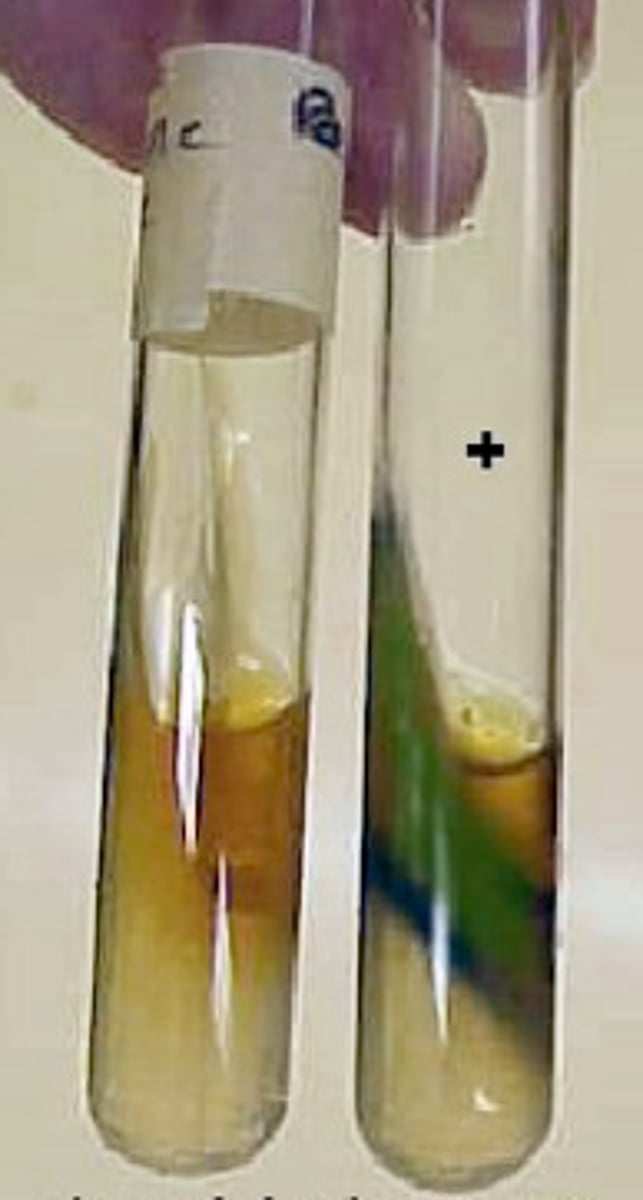
Phenylalanine Deaminase Test:
Green is ___________
Unchanged is _________
positive, negative
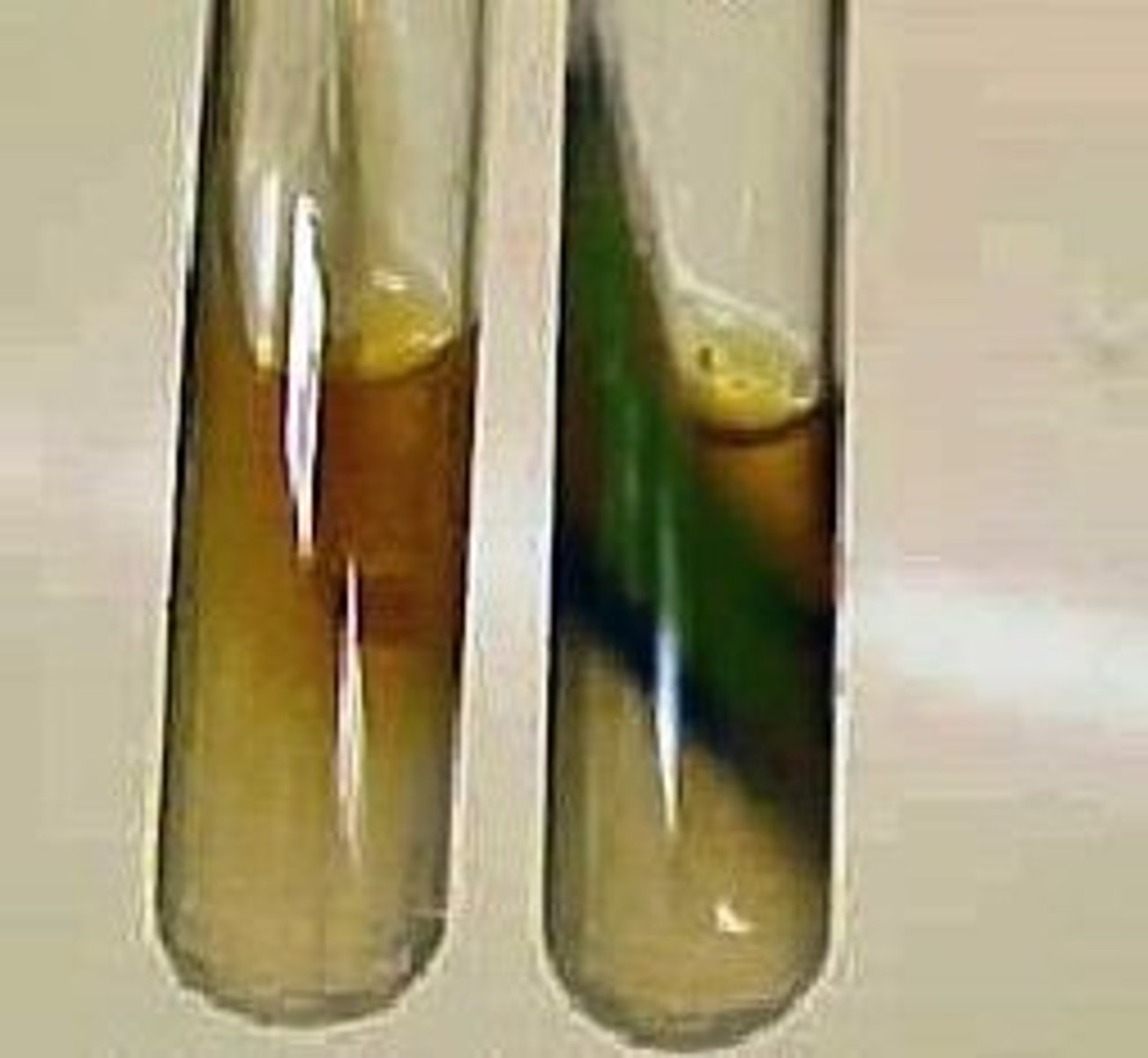
Phenylalanine Deaminase Test reagents _______ _________ (FeCl3)
Ferric chloride
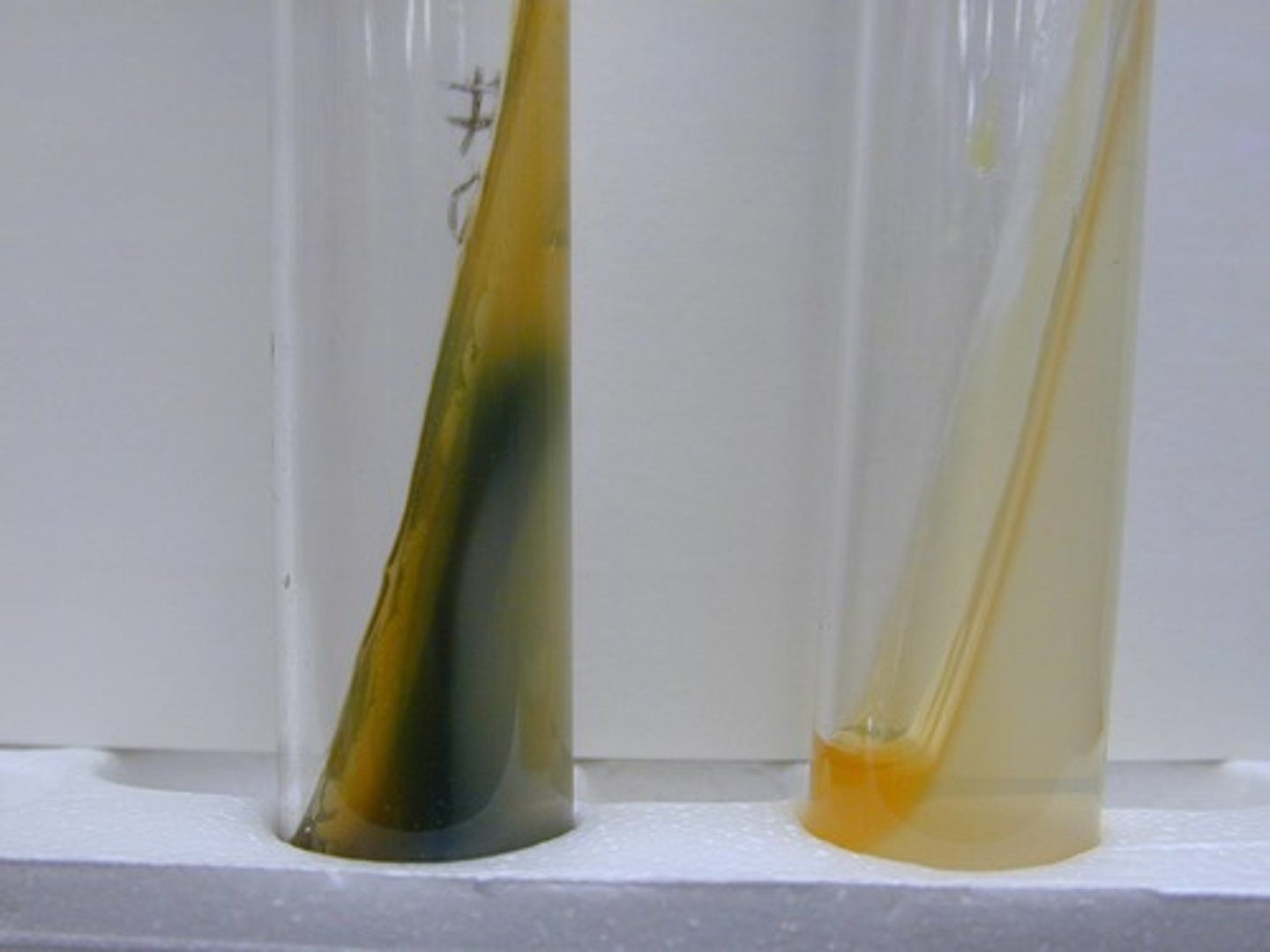
Methyl Red Test measures the production of ______ _______ by fermentation of glucose
mixed acids