Ecology Exam 4
5.0(6)
Studied by 137 people Call Kai
 Learn
Learn Practice Test
 Spaced Repetition
 Match
Match Flashcards
 Knowt Play
Card Sorting
1/137

There's no tags or description
Looks like no tags are added yet.
Last updated 2:44 AM on 4/11/23
Name | Mastery | Learn | Test | Matching | Spaced | Call with Kai | Chat |
|---|
No analytics yet
Send a link to your students to track their progress
138 Terms
1
New cards
Intraspecific competition
competition among members of the same species
2
New cards
Interspecific competition
competition among individuals of different species
3
New cards
Resource
* Any substance or factor that is both consumed by an organism and supports increased population growth rates as its availability increases
* Consumed, availability decreases
* Used for maintenance and growth
* Reduced availability reduces population growth
\
* Consumed, availability decreases
* Used for maintenance and growth
* Reduced availability reduces population growth
\
4
New cards
Renewable resource
resources that are constantly regenerated (seeds, sunlight)
5
New cards
Nonrenewable resources
resources that are not regenerated(space)
6
New cards
Leibig’s law of the minimum:
law stating that a population increases until the supply of the most limiting resource prevents it from increasing further.
7
New cards
Competitive exclusion principle
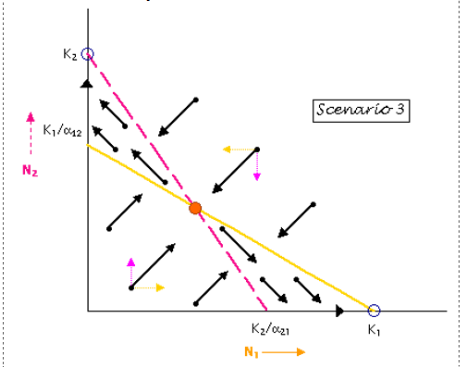
two species cannot coexist indefinitely when they are both limited by the same resource.
When two species are limited by the same resource, one species is often a better competitor survives better when resources are scarce. (Grocery store ham example)
When two species are limited by the same resource, one species is often a better competitor survives better when resources are scarce. (Grocery store ham example)
8
New cards
Possible outcomes of competition
* coexistence
* Species 1 Wins (Drives Species 2 to local extinction)
* Species 2 Wins (Drives Species 1 to local extinction)
* Winning species depends on starting conditions
* Species 1 Wins (Drives Species 2 to local extinction)
* Species 2 Wins (Drives Species 1 to local extinction)
* Winning species depends on starting conditions
9
New cards
Asymmetric competition
A competitive relationship between two species in which each has a competitive advantage with respect to different limiting factors in the environment
10
New cards
Exploitive competition
competition in which individuals consume and drive down the abundance of a resource to a point that other individuals cannot persist. (the sister in the milk example)
11
New cards
Interference competition
when competitors do not immediately consume resources but defend them; considered direct competition. (the brother in the milk example)
12
New cards
Apparent competition
when two species have a negative effect on each other through an enemy—including a predator, parasite, or herbiviore.
13
New cards
Allelopathy
a type of interference competition that occurs when organisms use chemicals to harm their competitors. (effective strategy for invasive plants)
14
New cards
Lotka Volterra Competition model
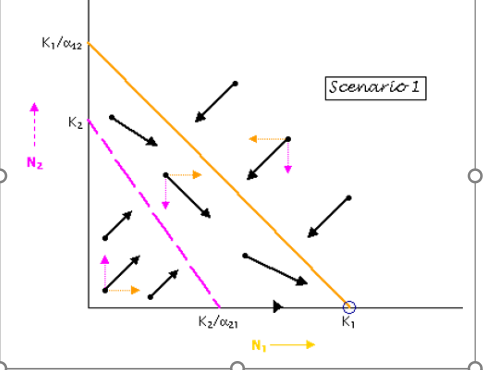
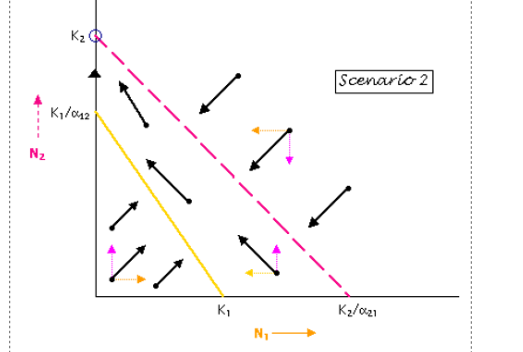
r1N1(1-N1+aN2/K1) = N1
r2N2(1-N2+BN2/K2)= N2
\
α = competition coefficient for species 1, which converts individuals of species 2 into the equivalent number of individuals of species 1.
β = competition coefficient for species 2, which converts individuals of species 1 into the equivalent number of individuals of species 2.
r2N2(1-N2+BN2/K2)= N2
\
α = competition coefficient for species 1, which converts individuals of species 2 into the equivalent number of individuals of species 1.
β = competition coefficient for species 2, which converts individuals of species 1 into the equivalent number of individuals of species 2.
15
New cards
Competitive interactions
* # of individuals using resources of species 1 = N1 + α • N2
* # of individuals using resources of species 2 = N2 + β • N1
* # of individuals using resources of species 2 = N2 + β • N1
16
New cards
Species 1 outcompetes species two
17
New cards
Species two outcompetes one
18
New cards
Competitive exclusion
19
New cards
Coexistance
20
New cards
community
An assemblage of species that occur together in the same place
21
New cards
Historical debate in community ecology
1. Superorganism – Holistic concept
\- (Frederick) Clements
2\. Individualistic concept
\-(Henry) Gleason
22
New cards
Holistic concept(clement)
Communities are a distinct ecological unit or organization having recognizable boundaries and whose structure and functioning are regulated by interaction among its component species
requires that communities be discrete entities and distinguishable from one another
requires that communities be discrete entities and distinguishable from one another
23
New cards
Individualistic concept (gleason)
a loose assemblage of species that can tolerate the conditions of a particular habitat
Does not require boundaries
Does not require boundaries
24
New cards
Closed community
distributions of species sets closely coincide and are separated from other sets of species
25
New cards
Open community
species are independently distributed along environmental conditions
26
New cards
Species richness
the number of species in a community.
27
New cards
Relative abundance
the proportion of individuals in a community represented by each species.
28
New cards
Log-normal distribution
a normal, or bell-shaped, distribution that uses a logarithmic scale on the x-axis.
29
New cards
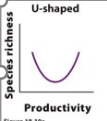
U-shaped productivity curve
30
New cards
Negative productivity
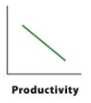
31
New cards
None productivity
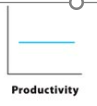
32
New cards
Positive productivity
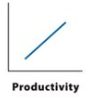
33
New cards
Hump shaped productivity
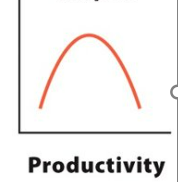
34
New cards
Keystone species
a species that substantially affects the structure of communities, although species might not be particularly numerous.
35
New cards
Intermediate disturbance hypothesis:
the hypothesis that more species are present in a community that experiences occasional disturbances than in a community with either frequent or rare disturbances.
36
New cards
Food chain
a linear representation of how different species in a community feed on each other.
37
New cards
Food web
a complex and realistic representation of how species feed on each other in a community.
38
New cards
Trophic level
a level in a food chain or food web of an ecosystem.
39
New cards
Primary consumer
Species that eats producer
40
New cards
Secondary consumer
a species that eats primary consumers.
41
New cards
Tertiary consumer
a species that eats secondary consumers.
42
New cards
Omnivore
a species that feeds at several trophic levels.
43
New cards
Guild
within a given trophic level, a group of species that feeds on similar items; members of the group are not necessarily related.
44
New cards
Problems with trophic levels
Informality of construction
Lumping species into guilds or categories
Ignore changing roles (catfish: detritivore/predator)
All links equal, although may vary in strength
\
Lumping species into guilds or categories
Ignore changing roles (catfish: detritivore/predator)
All links equal, although may vary in strength
\
45
New cards
General conclusions of trophic levels
Most are fairly short (average = 4 links in previous)
Most are open (receive significant input from and export to adjoining systems)
Most are open (receive significant input from and export to adjoining systems)
46
New cards
Bottom-up control
**:** when the abundances of trophic groups are determined by the amount of energy available from producers.
47
New cards
top down control
when the abundances of trophic groups are determined by the existence of predators at the top of the food web.
48
New cards
Community stability
the ability of a community to maintain a particular structure.
49
New cards
Community resistance
the amount a community changes when acted upon by a disturbance (e.g., addition or removal of a species).
50
New cards
Community resilience
the time it takes after a disturbance for a community to return to its original state. (diversity improves this)
51
New cards
Succession
the process by which the species composition of a community changes over time.
52
New cards
Seral stage
each step of community change during succession
53
New cards
Pioneer species
the earliest species to arrive at a site; typically are able to disperse long distances and arrive quickly at disturbed sites.
\
\
54
New cards
Climax community
the final seral stage in the process of succession; generally composed of organisms that dominate in a given biome.
55
New cards
Chrono sequence
a sequence of communities that exist over time at a given location.
56
New cards
Primary succession
the development of communities in habitats that are initially devoid of plants and organic soil, such as such dunes, lava flows, and bare rock.
57
New cards
Secondary Succession
the development of communities in disturbed habitats that contain no plants but still contain organic soil (e.g., plowed fields, forests uprooted by a hurricane).
58
New cards
Lake succession (1/2)
1. After a lake or pond is created, the edge of the water body is initially colonized by plants.
2. The plants expand laterally across open water and begin accumulating dead plant matter (i.e., peat).
3. Plants continue to expand and the peat layer becomes thicker.
4. Lateral expansion of plants eventually covers the lake surface and peat sediments fill in the basin.
59
New cards
Lake succession (2/2 )
1. An open lake or pond experiences a drought of one or more decades and the water level falls.
2. Plants colonize the newly exposed lake sediments.
3. As the drought ends, the lake fills and living plants detach from lake sediments and float on the lake’s surface.
4. Peat sediments eventually fill the basin.
60
New cards
Facilitation
a mechanism in which one species increases the probability that a second species can become established.
61
New cards
Inhibition
a mechanism in which one species decreases the probability that a second species will become established (e.g., by competition, predation, or parasitism).
62
New cards
Priority effect
when the arrival of species at a site affects the colonization of other species; often occurs through inhibition.
63
New cards
Tolerance
when the arrival of species at a site affects the colonization of other species; often occurs through inhibition.
64
New cards
Transient Climax
A climax community that develops in an ephemeral habitat (ex. seasonal ponds)
65
New cards
Transient climax communities
a climax community that is not persistent; occurs when a site is frequently disturbed so a climax community cannot persist.
66
New cards
Cyclic Climax
A repeating sequence of stages of succession, none of which by itself is stable, but together represent a persistent pattern
67
New cards
Fire maintained climax community
a successional stage that persists as the final seral stage due to periodic fires.
68
New cards
Grazer maintained climax community
when a successional stage persists as the final seral stage due to intense grazing.
69
New cards
Ecosystem
**the assemblage of organisms together with their physical and chemical environments**
70
New cards
Charles Elton (1920’s)
**introduced idea of food web and energy transfer within the web**
71
New cards
A.G Tansley (1935)
Introduced the term “ecosystem” as the fundamental unit of ecological organization
72
New cards
Ecosystem Ecology
the study of natural systems from the standpoint of energy flow and cycling of matter
73
New cards
Ecosystem thermodynamic principles
* Conservation of Energy
* Entropy increases due to inefficiency
* Treats ecosystems (and the Earth) as giant thermodynamic machines
* Entropy increases due to inefficiency
* Treats ecosystems (and the Earth) as giant thermodynamic machines
74
New cards
Primary productivity
the rate at which solar or chemical energy is captured and converted into chemical bonds by photosynthesis or chemosynthesis.
75
New cards
Standing Crop
the biomass of producers present in a given area of an ecosystem at a particular moment in time.
76
New cards
Gross primary productivity (GPP)
the rate at which energy is captured and assimilated by producers in an area.
77
New cards
Net primary productivity (NPP)
the rate of energy that is assimilated by producers and converted into producer biomass in an area; includes all energy that is not respired:
78
New cards
Remote sensing
a technique that allows measurement of conditions on Earth from a distant location, typically using satellites or airplanes that take photographs of large areas of the globe.
79
New cards
Inefficiency of energy transfer
* 5-20% of energy passes to next trophic level (\~10%)
* Why?
\- Assimilated energy= ingested – egested energy
\-Production= assimilated energy – respiration - excretion
* Why?
\- Assimilated energy= ingested – egested energy
\-Production= assimilated energy – respiration - excretion
80
New cards
Ecological Efficiency (Food chain efficiency)
the percentage of net production from one trophic level compared to the next lower trophic level.
81
New cards
Energy Transformations
* Chemical elements reused constantly
\-Cycle between biologically usable and un-usable states (organic and inorganic)
* Energy is gained or lost during transformations
\-Oxidation—gives up electrons (loses energy)
\-Reduction—accepts electrons (gains energy)
* Assimilatory Processes—inorganic→organic
\-Requires energy (Photosynthesis)
* Dissimilatory Processes—organic→inorganic
\-Releases energy (Respiration)
\-Cycle between biologically usable and un-usable states (organic and inorganic)
* Energy is gained or lost during transformations
\-Oxidation—gives up electrons (loses energy)
\-Reduction—accepts electrons (gains energy)
* Assimilatory Processes—inorganic→organic
\-Requires energy (Photosynthesis)
* Dissimilatory Processes—organic→inorganic
\-Releases energy (Respiration)
82
New cards
Greenhouse effect
the process of solar radiation striking Earth, being converted to infrared radiation, and being absorbed and re-emitted by atmospheric gases.
83
New cards
Solar equator
the latitude receiving the most direct rays of the Sun.
84
New cards
Albedo
the fraction of solar energy reflected by an object.
85
New cards
Atmospheric Convection currents
the circulation of air between the surface of Earth and the atmosphere; caused by properties of air.
86
New cards
Saturation
the limit of the amount of water vapor that air can contain.
87
New cards
Adiabatic cooling
the cooling effect of reduced pressure on air as it rises higher in the atmosphere and expands.
88
New cards
**Adiabatic heating**
the heating effect of increased pressure on air as it sinks toward the surface of Earth and decreases in volume.
89
New cards
Latent heat release
when water vapor is converted back to liquid, water releases energy in the form of heat and warms air.
90
New cards
Hadley cells
the two circulation cells of air between the equator and 30N and 30S latitudes.
91
New cards
Intertropical convergence zone (ITCZ)
the area where the two Hadley cells converge and cause large amounts of precipitation.
92
New cards
Polar Cells
atmospheric convection currents between 60 and 90 latitudes that are similar to Hadley cells.
93
New cards
Coriolis effect
the deflection of an object’s path due to the rotation of the Earth. (wind isnisn’tt air moving against earth, it is earth moving against air)
94
New cards
Gyre
a large-scale water circulation pattern between continents.
95
New cards
Upwelling
and upward movement of ocean water
96
New cards
Rain shadow
a region with dry conditions found on the leeward side of a mountain range as a result of humid winds from the ocean causing precipitation on the windward side.
97
New cards
Tropical climate
characterized by warm temperatures and high precipitation, occurring in regions near the equator.
98
New cards
Dry climate
characterized by low precipitation and a wide range of temperatures; found at approximately 30N and 30S latitudes.
99
New cards
Moist subtropical mid-latitude climate
characterized by warm, dry summers and cold, wet winters.
100
New cards
Moist continental mid-latitude climate:
exists in the interior of continents and is characterized by warm summers, cold winters, and moderate amounts of precipitation.