AP Macroeconomics Unit 4
 Call Kai
 Learn
Learn Practice Test
 Spaced Repetition
 Match
Match Flashcards
 Knowt Play
1/56

There's no tags or description
Looks like no tags are added yet.
Name | Mastery | Learn | Test | Matching | Spaced | Call with Kai |
|---|
No analytics yet
Send a link to your students to track their progress
57 Terms
commodity money
performs the function of money, but has alternate uses
ex. gold, silver
fiat money
serves only as money with no alternate uses
ex. paper money
loans
agreement between the lender and borrower to pay back a set amount over time
bank deposits
money deposited into a bank
stocks
a share of ownership in a company
bonds
an IOU to repay principal and interest, which represents debt obligations in the form of borrowing
what are the 4 types of financial assets?
loans, bank deposits, stocks, bonds
liquidity
how fast, easily, and reliably something can be converted into cash
M0
monetary base (central banks money) all the money we know exists
M1
currency in circulation—demand deposits and other liquid deposits like savings accounts and checkable deposits—”the money supply”
M2
near money—mutual funds, long-term/high yield savings, time deposits, money market accounts
expansionary policy
easy money—designed to counteract a recession by increasing the money supply
contractionary policy
tight money—designed to counteract inflation by decreasing the money supply
central bank
makes efforts to promote full employment, maintain price stability, and encourage long-run economic growth through control of the money supply and interest rates
fractional reserve banking
banks are required to hold on to a portion of their deposits in their reserves
required reserves
money the bank MUST hold based on the reserve requirement
excess reserves
usable money for the bank
open market operations
purchase and sale of government securities (bonds) by the Fed to increase/decrease the banks’s excess reserves
federal funds rate
the interest rate banks pay each other for overnight loans
expansionary
the fconed buying bonds is a(n) _____ policy
contractionary
the fed selling bonds is a(n) _____ policy
the fed gives money to the public in exchange for bonds
the fed buying bonds is an expansionary policy because…
the fed takes money from the public in exchange for bonds
the fed selling bonds is a contractionary policy because…
discount rate
the interest rate banks pay the fed for overnight loans to meet the required reserve
expansionary
lowering discount rates is a(n) _____ policy
it lowers the cost of borrowing for banks
lowering discount rates is an expansionary policy because…
contractionary
raising discount rates is a(n) _____ policy becauseit
it raises the cost of borrowing for banks
raising discount rates is a contractionary policy because…
administered interest rates
the interest rate controlled by the fed that are meant to incentivize the banking system towards/away from lending
ex. discount rates and IOR rates
expansionary
lowering IOR rates is a(n) _____ policyco
contractionary
raising IOR rates is a(n) _____ policy
banks get less money by storing with the fed, and therefore loan out more money
lowering IOR rates is an expansionary policy because…
banks get more money by storing with the fed and therefore loan out less money
raising IOR rates is a contractionary policy because…
IOR (interest on reserves) rate
rates provided by the fed to banks when they store money with the fed
money demand
the desire for people to hold money in spendable form
reserve requirement/required reserve ratio
the percentage of deposits the bank must hold
expansionary
decreasing the reserve ratio is a(n) _____ policy
contractionary
increasing the reserve ratio is a(n) _____ policy
limited reserves
the amount of money in the banking system is limited, and all monetary policies are effective
change the amount of money banks have, changing interest rates
ample reserves
banks have ample money, only administered interest rate policies are effective
maintain amount of reserves, not influence interest rates
what are the two rules of banks balance sheets?
assets = liabilites
reserve requirement must be followed
what are the three functions of money?
medium of exchange: used to buy goods and services
unit of account: measures the value of goods and services
store of value: allows you to store purchasing power for the future
inverse
interest rates and the price of previously issues bonds have a(n) _____ relationship
inverse
interest rates and investment spending have a(n) _____ relationship
direct
money supply and supply of loanable funds have a(n) _____ relationship
fisher equation
nominal interest rate = real interest rate + inflation rate
real interest rate = nominal interest rate - inflation rate
money multiplier equation
Mm = 1/reserve ratio
equation to find the change in money supply
Δ excess reserves x Mm = Δ money supply (S money)
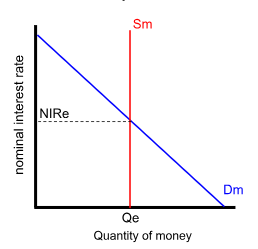
money market graph
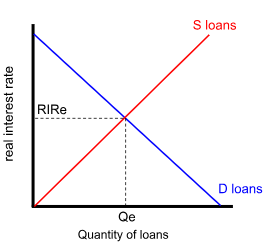
loanable funds market graph
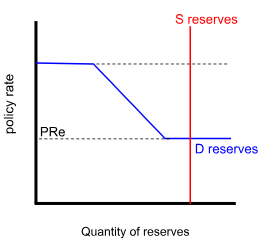
reserve market graph
expansionary shifters of the money supply
decreasing the reserve requirement
buying bonds
lowering discount rates
contractionary shifters of the money supply
increasing the reserve requirement
selling bonds
raising discount rates
shifters of the money demand
changes in price level: more spendable money is needed to meet higher price levels
changes in income: higher income = more spendable money
very specific tech: the development of tech to increase the desire to have and ability to hold spendable money
shifters of the supply of loanable funds
changes in money supply
profitability of loans
saving behavior
foreign investment
shifters of the demand of loanable funds
consumer borrowing
business optimism
government borrowing
shifters of the demand of reserves
change in administered interest rates