PMLS Lesson 10 & 11
 Call Kai
 Learn
Learn Practice Test
 Spaced Repetition
 Match
Match Flashcards
 Knowt Play
1/79

There's no tags or description
Looks like no tags are added yet.
Name | Mastery | Learn | Test | Matching | Spaced | Call with Kai |
|---|
No analytics yet
Send a link to your students to track their progress
80 Terms
Mandatory
Requirement for health practitioner to demonstrate and maintain competence due to the constantly changing scope of. Practice and technological advancement.
Continuing Professional Development (CPD)
Enhance overall knowledge, skills, and attitudes.
Aims to improve capability and competency across the entire profession.
Focuses on holistic lifelong learning.
Continuing Professional Education (CPE)
Concentrates on learning a specific skills or a set of skills.
Aims to improve professional competence in particular areas.
More task- or skill- focused
Executive Order No. 266
Institutionalization of the Continuing Professional Education (CPE) Programs of the Various Professional Regulatory Boards under the Supervision of the Professional Regulation Commission (PRC).
PRC Resolution No. 281, Series of 1995
Standardized Guidelines and Procedures for the Implementation of the Continuing Professional Education (CPE) Programs for Professionals
Republic Act 8981
PRC Modernization Act of 2000
Republic Act 10912
Continuing ProfessionalDevelopment (CPD) Act of 2016
RA 10912 - CPD ACT OF 2016
Lifelong learning = Learning activities undertaken throughout life for the development of competencies and qualification of the professional
CPD - inculcation of advanced knowledge, skills and ethical values in a post-licensure specialization or in an inter-/multidisciplinary field of study, for assimilation into professional practice, self-directed research, and/or lifelong learning
Chair
(In CPD) Member of Professional Regulatory Board
1st Member
(In CPD) President or officer of an Accredited Professional Organization
2nd Member
(In CPD) President or officer of the national organization of deans or department chairpersons of schools, colleges, or universities offering the course.
1st Member
(In MedTech) President of PAMET
2nd Member
(In MedTech) President of PASMETH
45 days
In CPD Process, CPD providers need to apply their programs to the CPD council at least __ days prior to the conduct of the CPD activity.
Every 3 years
The required period for every professional to renew their Professional Identification Card (PIC).
0%
Required CPD Units on JAN - JUN 2017
30%
Required CPD Units on JUL-DEC 2017
60%
Required CPD Units on 2018
100%
Required CPD Units on 2019 ONWARDS
Participant
Receives the approved credit units assigned to the program.
Supporting Document: Certificate of attendance with hours, seminar program, and participant list.
Professional Track, Academic Track, Self-directed, and Pamphlet/Book or Monograph
CPD Activities includes
Resource Speaker
Earns 3 credit units per hour
Supporting Document: Photocopy of certificate, papers, and program in invitation.
Panelist / Reactor
Earns 2 credit units per hour
Supporting Document: Certification fro sponsoring organization and program copy.
Facilitator / Moderator
Earns 1 credit unit per hour
Supporting Document: Certification from sponsoring organization and program copy
Monitor
Gets twice the number of approved credit units of the program.
Supporting Document: Monitoring report, certificate of appearance, and authority to monitor.
In-Service Training
Na earn a maximum of 20 credit units for a 12-month period (or fraction thereof) upon completion.
Supporting Document: Certificate of training and training description.
Master’s Degree or Equivalent
Full credit unit for compliance period upon completion of degree or full credit units if compliance period upon completion of residency
Supporting Document: University certification, diploma and transcript of record
Doctorate Degree or Equivalent
Additional credit units fro compliance period upon completion of degree
Supporting Document: University certification, diploma and transcript of records
Professional Chair
Earns 15 CU per year
Supporting Document: Certification of grant or appointment paper
Residency/ Externship Specialty/ Subspecialty Program
Earns 10 CU per year
Supporting Document: Hospital certification, certificate of completion
Participant (In fellowship grant)
Earns 2 CU per grant
Supporting Document:
Supporting Document: Certification from the Granting Institution and/ or Certificate of Fellowship
Resource Speaker (In Fellowship Grant)
Earns 4 CU per grant;
Supporting Document: Certification from the Granting Institution and/ or Certificate of Fellowship
Researcher (In Fellowship Grant)
Earns 5 CU per grant
Supporting Document: Certification from the Granting Institution and/ or Certificate of Fellowship
Post Graduate Diploma / Certificate
Earns maximum of 30 CU for a 12-month period or fraction thereof upon completion.
Supporting Document: Diploma/ Certification from the institution
60 days
Evaluation period of CPD
Affidavit of Undertaking
Professional who cannot fulfill the CPD Unit Requirement can file this to allow their PIC renewal.
Health Care Waste
Refers to all solid and liquid wastes generated.
85%
Percentage of Non Hazardous Waste
Paper and cardboard
Packaging
Food waste
15%
Percentage of Hazardous Waste
Infectious waste
Pathological waste
Sharps
Genotoxic waste
Pharmaceutical waste
Radioactive waste
20.19%
Increase in hazardous waste over the past 5 years
Health care waste generators
Hospitals
Infirmaries
Birthing homes
Clinics and other health-related facilities
Laboratories and research centers
Drug manufacturers
Institutions
Mortuary and autopsy centers
Infectious waste
All wastes suspect to contain pathogens or toxins in sufficient concentration that may cause disease a susceptible host.
Pathological and Anatomical Waste
Tissue sections and body fluid or organs derived from biopsies, autopsies, or surgical procedures sent to the laboratory fro examination.
Sharps Waste
Waste item that can cause cuts, pricks, or puncture wounds. They are considered the most dangerous health care waste because of their potential to cause both injury and infection.
Chemical Waste
Discarded chemicals generated during disinfection and sterilization process.
Pharmaceutical Waste
Expired, split, and contaminated products, drugs, and vaccines including discarded items used in handling pharmaceuticals.
Radioactive Waste
Wastes exposed to radionuclides including radioactive diagnostic materials or radiotherapeutic materials.
Non-hazardous or General Waste
Wastes that have not been in contact with communicable or infectious agents, hazardous chemicals radioactive substances, and do not pose a hazard.
Chronic exposure and acute exposure
Exposure of general population
RA No. 8749
The Philippine Clean Air Act of 1999
RA No. 4226
Hospital Licensure Act if 1965
RA No. 9003
Ecological Solid Waste Management Act of 2001
RA No. 6969
Toxic Substances and Hazardous and Nuclear Waste Control Act of 1990
RA No. 9275
The Philippines Clean Water Act or 2004
Administrative Order No. 2008-0021
Gradual Phase-Out of Mercury in all Philippine Health Care Facilities and Institutions, July 30, 2008
Administrative Order No. 2008-0023
National Policy on Patient Safety, July 30, 2008
BFAD (FDA) Memorandum Circular No. 22 series of 1994
Inventory, Proper Disposal and/ or Destruction of Used Vials of Bottles
Black Line container
Three-bin system, Non-infectious waste
Yellow lined container
In Three-bin System, Infectious waste and Sharp waste
Brown
Chemical Waste, Pharmaceutical Water
Orange
Radioactive Waste
Green
Biodegradable Waste
Black or Colorless
Non-biodegradable Waste
Incineration
the high-temperature burning of waste to reduce its volume and weight, converting it into ash and gas. Philippines is the only country that banned this process.
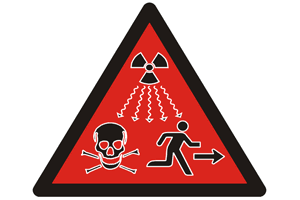
Old Radiation Symbol
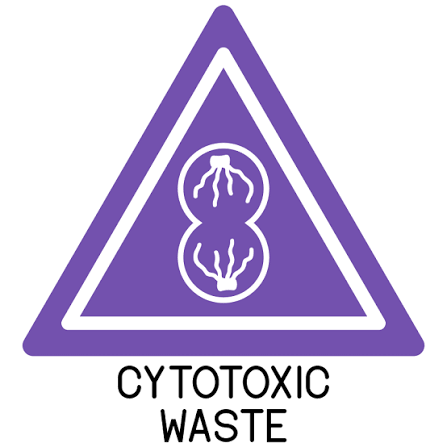
Cytotoxic Symbol
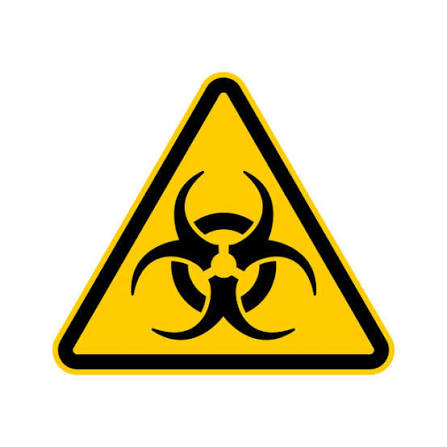
Biohazard Symbol
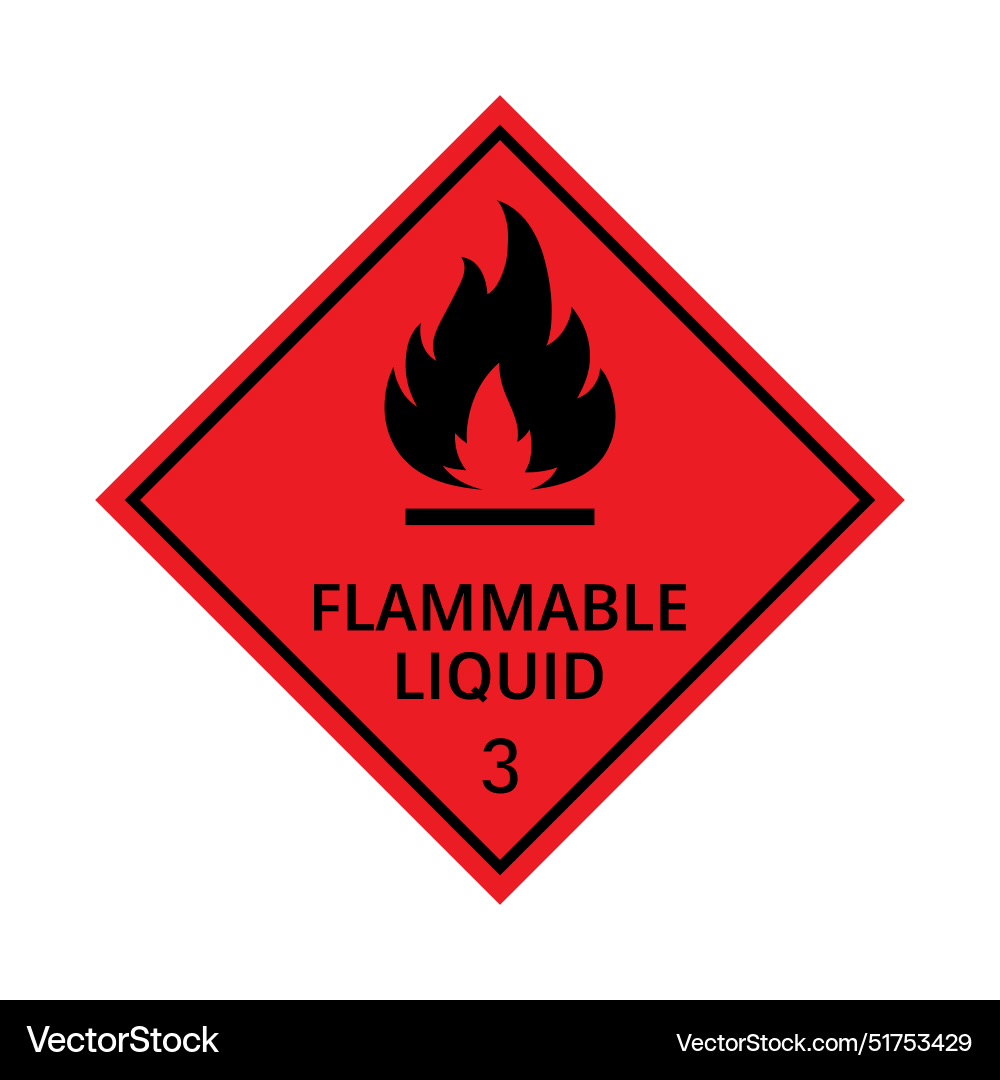
Flammable Liquid Symbol
New Radiation Symbol / Ionizing Radiation Sign
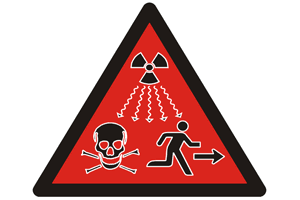
Infectious Symbol
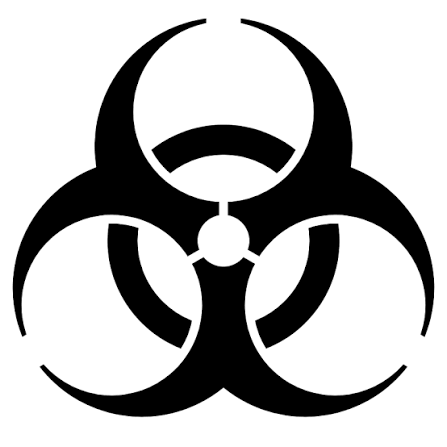
Corrosive Symbol
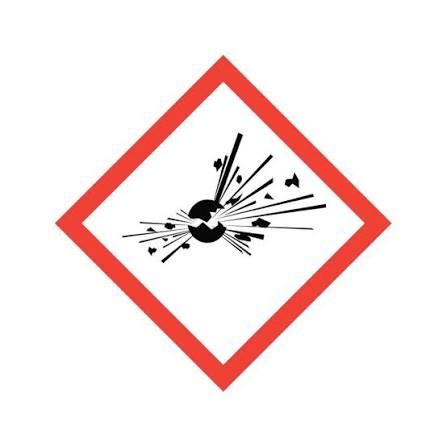
Reactive Symbol
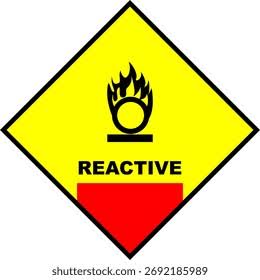
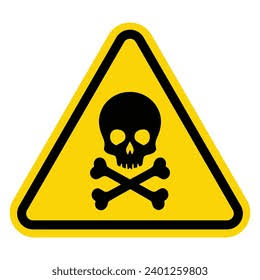
Poison/Toxic Symbol
Pyrolysis
Is the thermal decomposition of health care waste in the absence of supplied molecular oxygen in the destruction chamber where the said waste is converted into gaseous, liquid, or solid form
Autoclave
Is the use of steam sterilization to render waste harmless and is an efficient wet thermal disinfection process.
Microwave
Is a technology that typically incorporates some type of size reduction device
Chemical disinfection
To kill or inactivate present pathogens
Encapsulation
Involves the filling of container with waste, adding and immobilizing material, and sealing the containers
Inertization
Is especially suited for pharmaceutical waste. The homogenous mass produced can be transported to a suitable storage site.
Landfill
Last stop for the trash