personality, mood, emotion - understanding patient behaviour
 Call Kai
 Learn
Learn Practice Test
 Spaced Repetition
 Match
Match Flashcards
 Knowt Play
1/14

There's no tags or description
Looks like no tags are added yet.
Name | Mastery | Learn | Test | Matching | Spaced | Call with Kai |
|---|
No analytics yet
Send a link to your students to track their progress
15 Terms
the self: define
self concept
self esteem
self image
personality
trait theories
Self concept:
Beliefs about ourselves + our characteristics
Relatively stable, but disability, ageing can lead to a change
Self esteem:
How worthy we feel, tied to self concept
Affected by success/failure
Rises through adulthood, declines around retirement
Self image:
How we present ourselves – behaviour + appearance
Actual vs ideal image
Personality
Internal factors that make up self
Relatively stable over time
Account for indv differences
Trait theories – personality consists of number of underlying factors
Trait theories
Everyone has all traits (to greater or lesser extent)
Traits normally distributed (post ppl have moderate secors, extreme scores are rarer)
Traits are biological in nature (extroverts have low cortical arousal so seek out stimulating experiences, opposite for introverts)
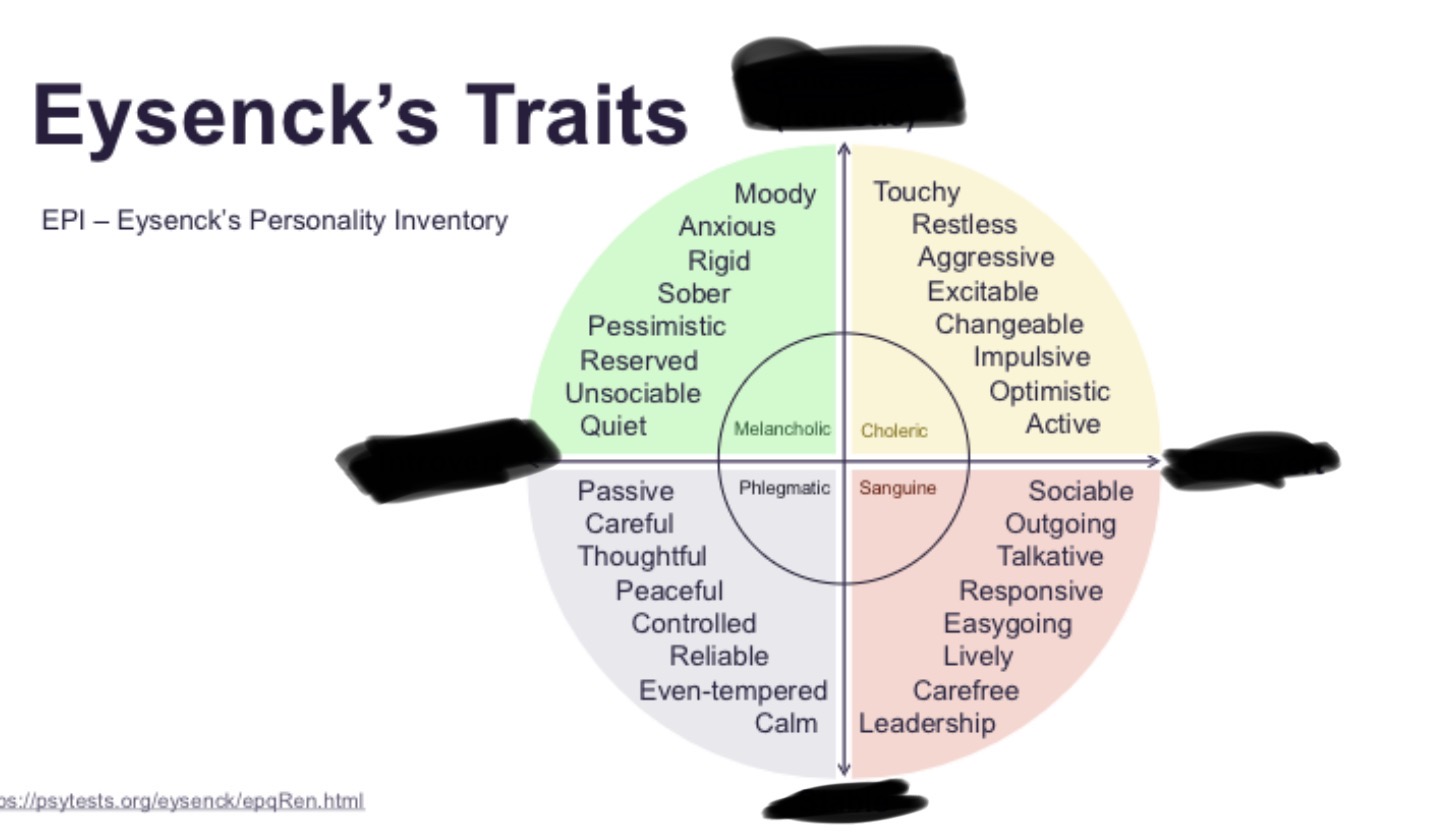
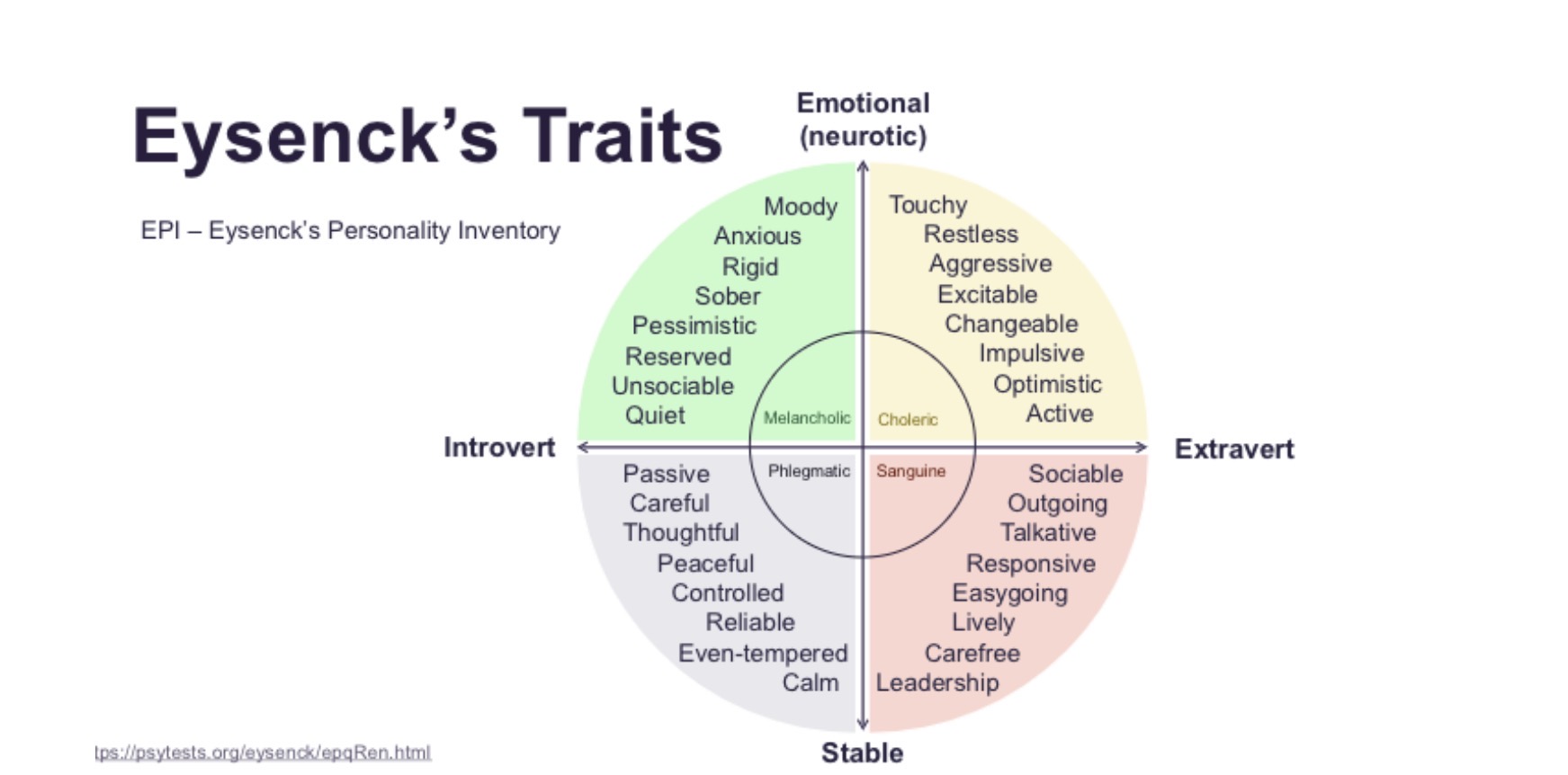
what are the 4 eysenck’s traits
introverts
extraverts
stable
emotional/neurotic
explain the 3 personality types
ABC
Type A:
Competitive, ambitious, impatient, aggressive
Higher risk of coronary heart disease
Type B:
Relaxed, non-competitive
Type C:
Nice, hard working, suppress emotion
Higher risk of cancer
how do these personalities change over time
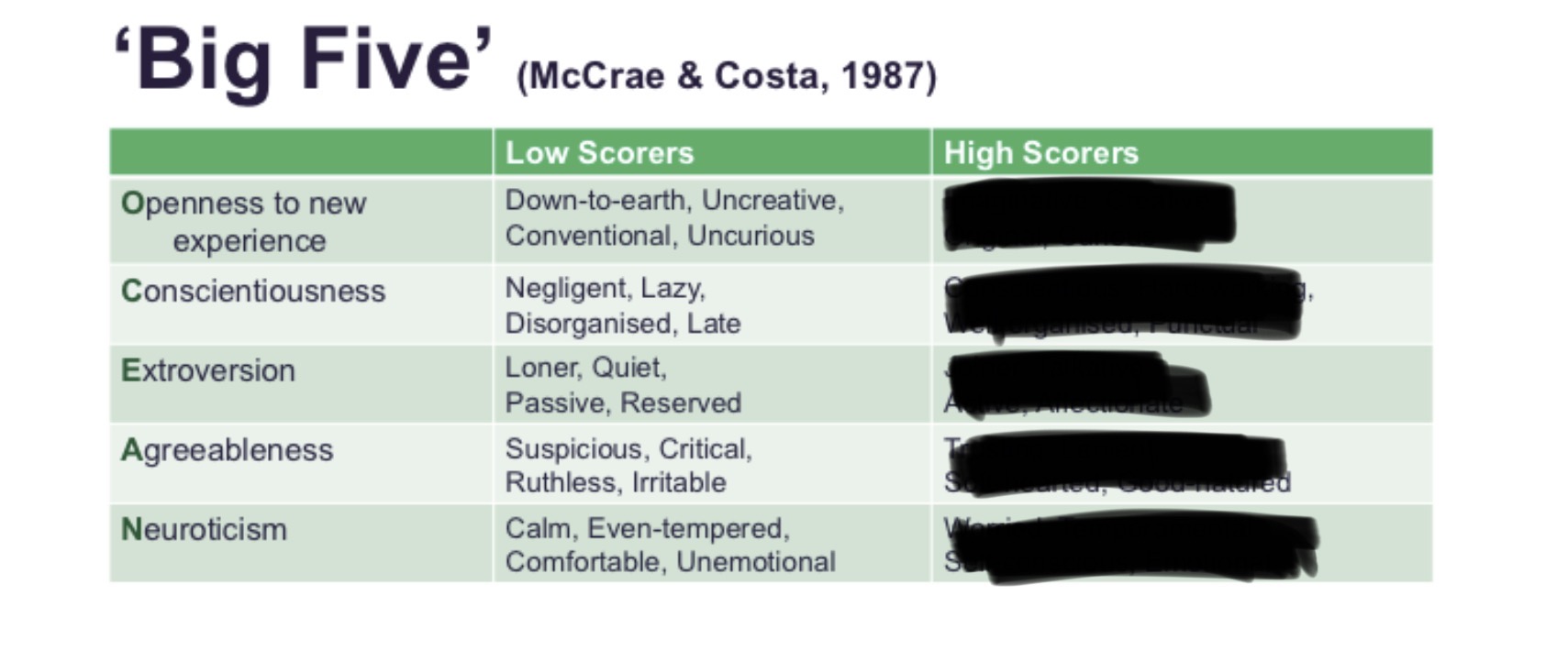
openness
conscientiousness
extroversion
agreeableness
neuroticism
Openness: desire to try new experiences declines slightly
Conscientiousness: ability to handle tasks + organise improves
Extroversion: need to seek social support declines slightly for women, changes little in men
Agreeableness: warmth, generosity and helpfulness make biggest improvements in 30/40s
Neuroticism: worry and sense of instability decrease for women, not men
what are 4 components of emotion
Components of emotion
Physiological:
Limbic system (ANS + endocrine)
Frontal cortex
Cognitive:
Apraisal, labelling
Behaviour:
Actions, gestures, posture
Expressions
Conscious feeling:
Experienced emotion
how does regulating emotions change with age
Appears older people experience less intense emotions
MRI evidence suggests older adults are better at regulating emotions
Favour positive stimuli
Better at ignoring negative stimuli
Favour suppression over reappraisal
what is mood
characteristics of low and high mood
is it temporary or permanent
State of mind
Relatively temporary
Influenced by internal and external factors
Low mood
Tearful, hopeless, negative – depression?
High mood
Elation, high energy, poor judgement – mania?
what is motivation
what are internal and external factors affecting it
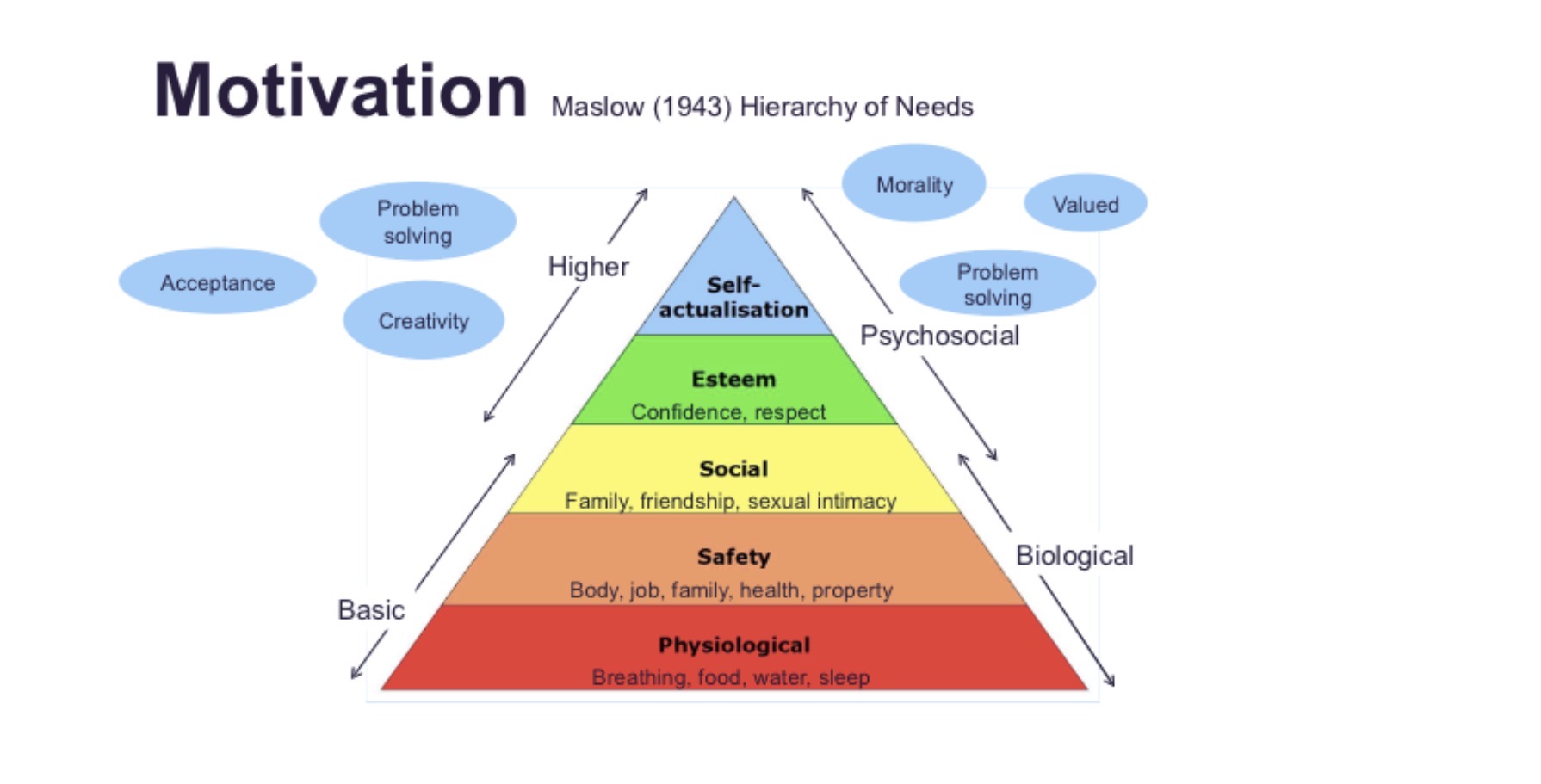
Motivation
Process that initiates, maintains goal centered behaviours
Involves biological, emotional, social, cognitive forces that activate behaviour
Internal factors – curiosity, personal fulfilment, altruism, needs
External factors – financial incentives, prestige
what are some factors that influence external factors
- Sick role
May encourage deference
White coat syndrome
Patients may act anxious, timid in consultations compared to home
Illness/disease
Can alter approach to life
Myocardial infarction can make you make lifestyle changes
Injury
Visible injuries may reduce self esteem and confidence
what is fundamental attribution error
what is self attributing bias
Fundamental attribution error
Overestimate internal factors
Underestimate external factors in behaviour of others
Self serving attribution bias
Attribute our positive behaviour internally
Attribute our negative behaviour externally
abnormal behaviour
what is it
many examples
What is abnormal behaviour??
Social judgements of normality are vague, subjective and influenced by cultural norms
Clinical judgements of normality are based on specific criteria listed in ICD-10
BUT – historic changes to this list
Differences based on race, gender, sexual orientation
Abnormal behaviour??
Compulsions
Obsessions
Delusions
Hallucinations
Paranoia
Phobias
Characteristics necessary for ideal mental health:
Positive view of self
Capability for growth and development
Autonomy and independence
Accurate perception of reality
Positive friendships and relationships
Able to meet demands of environment
BUT – cant achieve all at once
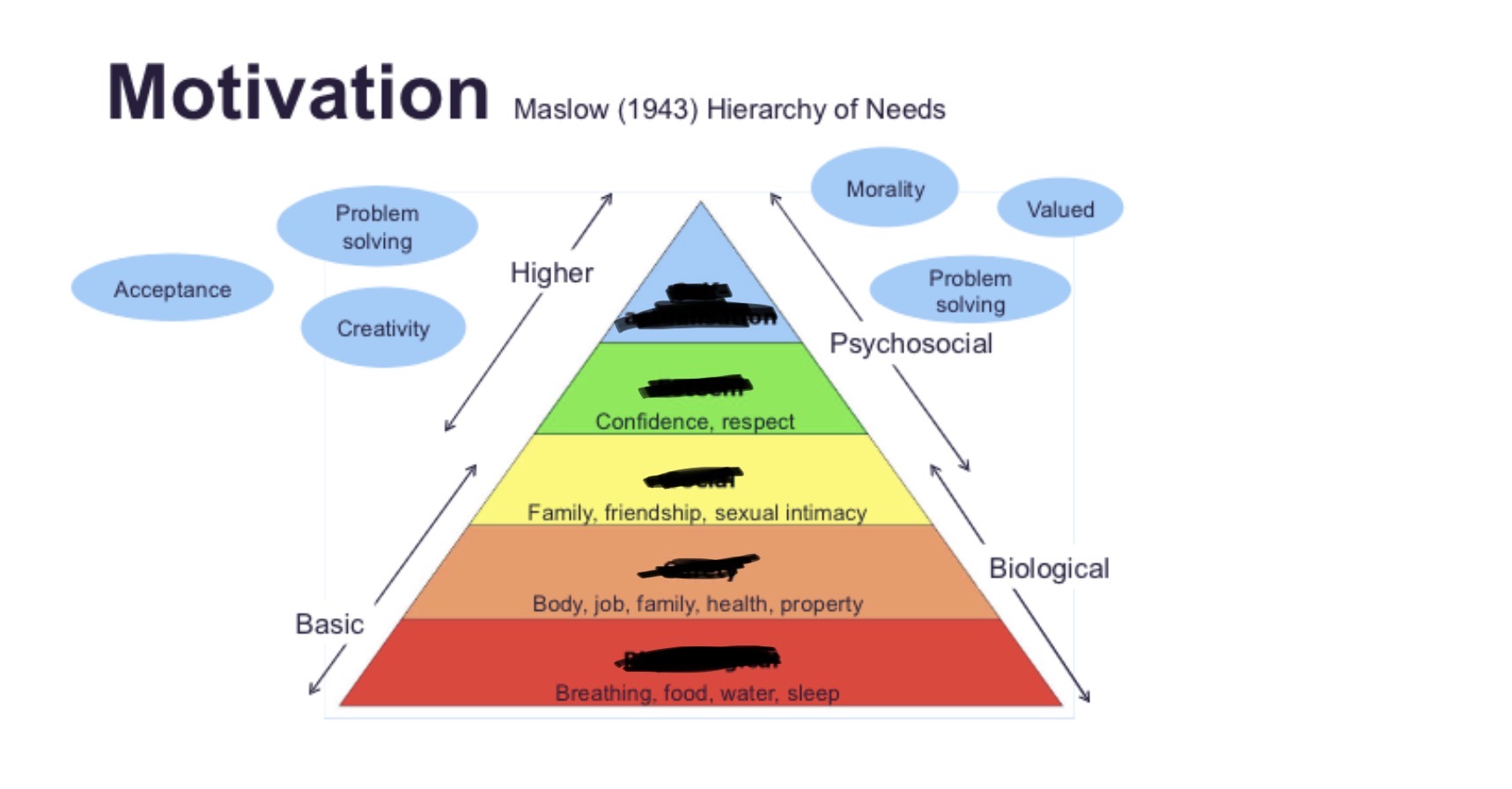
hierarchy of needs