Animal Circulatory Systems
 Call Kai
 Learn
Learn Practice Test
 Spaced Repetition
 Match
Match Flashcards
 Knowt Play
1/18

There's no tags or description
Looks like no tags are added yet.
Name | Mastery | Learn | Test | Matching | Spaced | Call with Kai |
|---|
No analytics yet
Send a link to your students to track their progress
19 Terms
true circulatory systems share:
a circulatory fluid to facilitate nutrient and/or gas exchange
set of tubes/vessels for fluid transport (arteries, capillaries, veins)
a muscular pump (heart) to move the circulatory fluid
can be open or closed
gastrovascular cavity
functions in both digestion and distribution of substances throughout the body
small organisms with only two cell layers; flattened body with high surface area/volume ratio
sponges, cnidarians, and flatworms lack a distinct circulatory system
exchange of fluids is assisted by the pulsing of the animal’s body
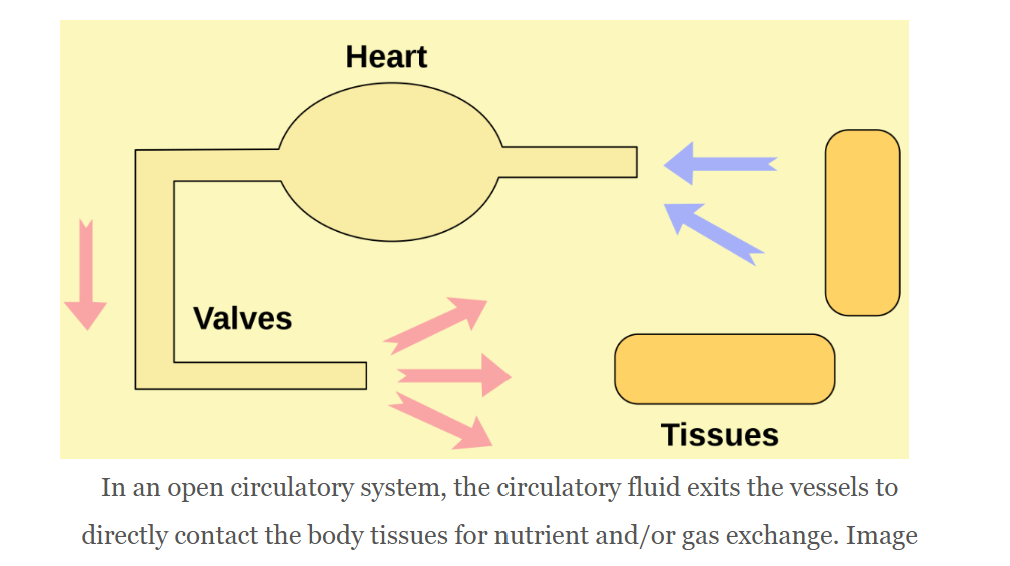
open circulatory system
circulatory fluid, called hemolymph (blood), is pumped by the heart through vessels and exits the vessels into a body cavity where it directly bathes the organs directly for nutrients and/or gas exchange- the circulatory fluid is the interstitial fluid
heart has arteries but no veins
may or may not exchange oxygen; has oxygen-carrying pigment but not contained within cells- free in the hemolymph
low pressure = less energy cost
common among invertebrates, including arthropods and most mollusks
no oxygen exchange in insect circulatory system
closed circulatory system
circulatory fluid (blood) is pumped by a muscular heart and:
is confined to vessels
is distinct from interstitial fluid
transports oxygen and carbon dioxide
common among many invertebrates including annelids (earthworms) and cephalopods (octopi and squids)
higher pressure = more energy cost
multiple single-chambered hearts and no lungs in the annelid circulatory system
circulatory system in vertebrates
system consisting of blood vessels and a two(+) chambered heart
blood enters heart thru an atrium and is pumped out through a ventricle
arteries carry blood away from heart toward capillaries
capillaries are site of gas and nutrient exchange between blood and interstitial fluid (exchange doesnt happen anywhere else)
veins return blood from capillaries to heart
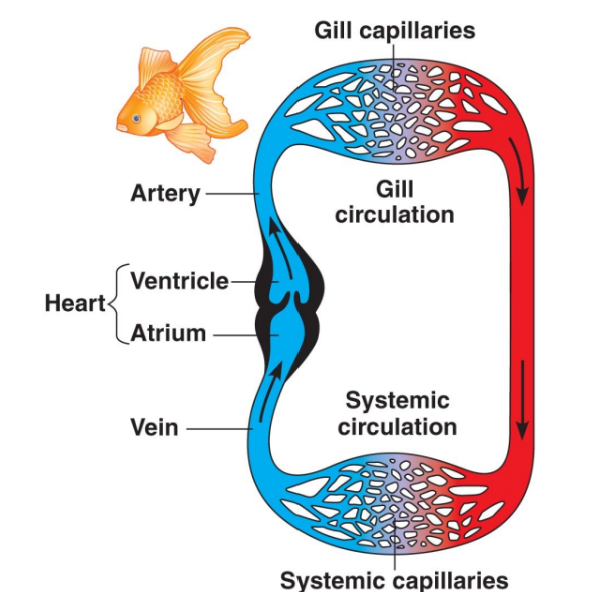
single circulation
bony fishes, rays, and sharks have single circulation with a two-chambered heart
blood leaving the heart passes through two sets of capillary beds before returning to the heart:
gills
body tissues (systemic)
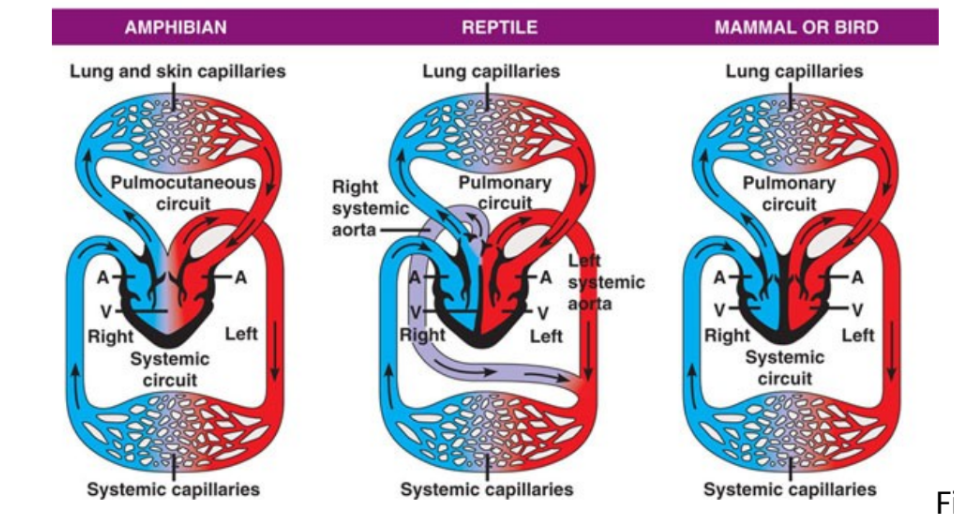
variations in double circulation
amphibians, reptiles, mammals and birds have double circulation
blood leaving heart passes through only one set of capillary beds before returning to heart- either pulmonary or system
oxygen-poor blood flows through pulmonary circuit to pick up oxygen through the lungs
amphibians have a pulmocutaneous circuit (lungs + skin)
oxygen-rich blood delivers oxygen through the systemic circuit
evolution of vertebrate circulatory systems
in mammals and birds, the heart is divided completely into four chambers: two atria and two ventricles
oxygenated blood is fully separated from deoxygenated blood, which improves the efficiency of double circulation and is probably required for supporting the warm-blooding lifestyle of mammals and birds
four-chambered heart of birds and mammals evolved independently from a three-chambered heart- convergent evolution
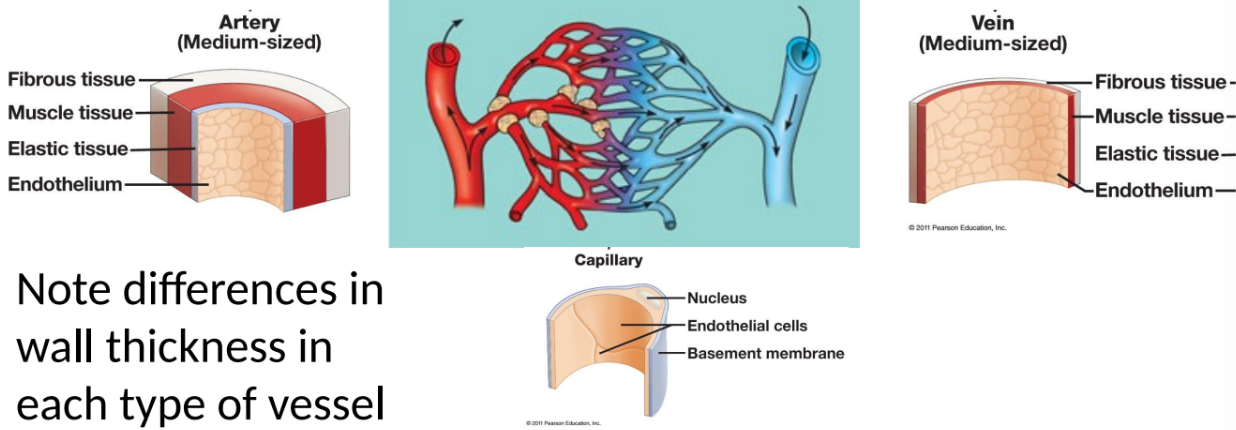
blood vessel types
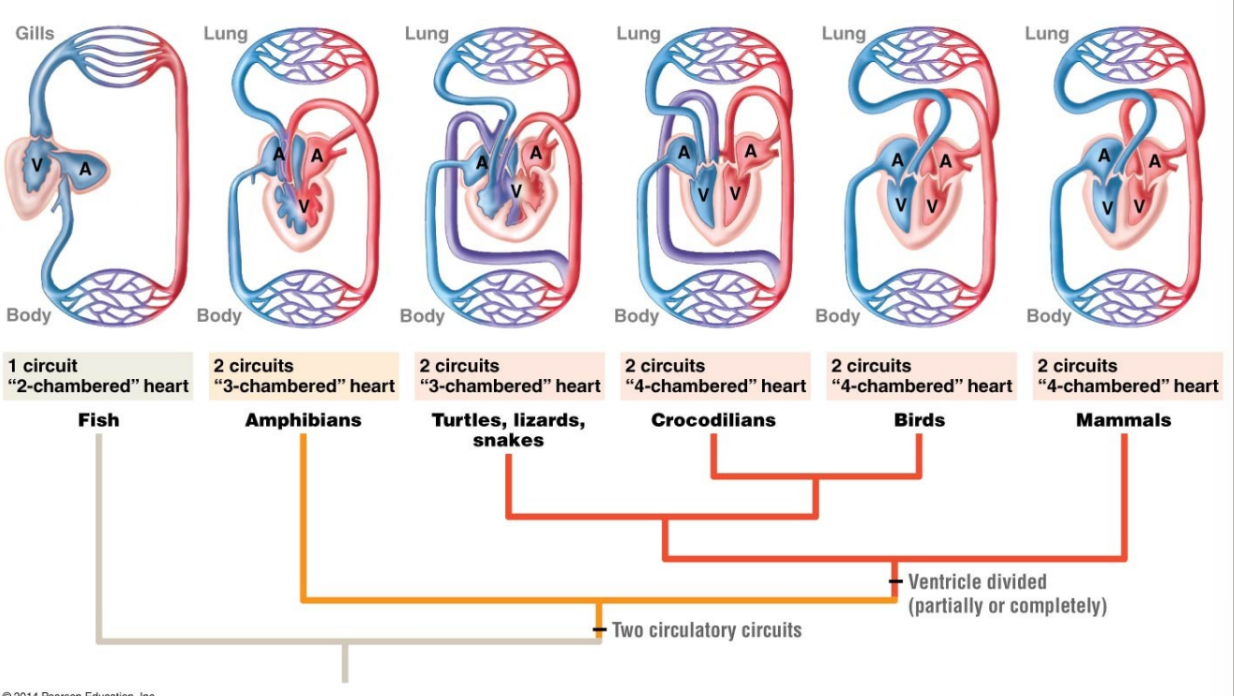
veins
arteries
capillaries
veins
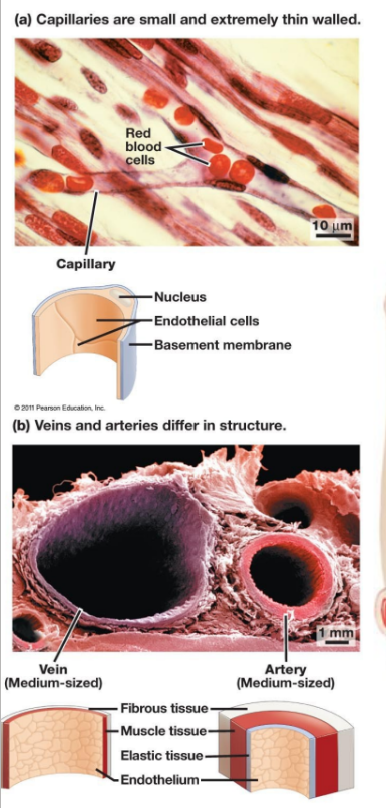
carry blood into the heart under low pressure from capillaries
arteries
carry blood away from heart under high pressure toward capillaries
capillaries
have slower blood flow and lower blood pressure and very thin walls → permit gas/nutrient exchange between blood and interstitial fluid
the pressure of blood flow is highest to lowest in:
arteries > capillaries > veins
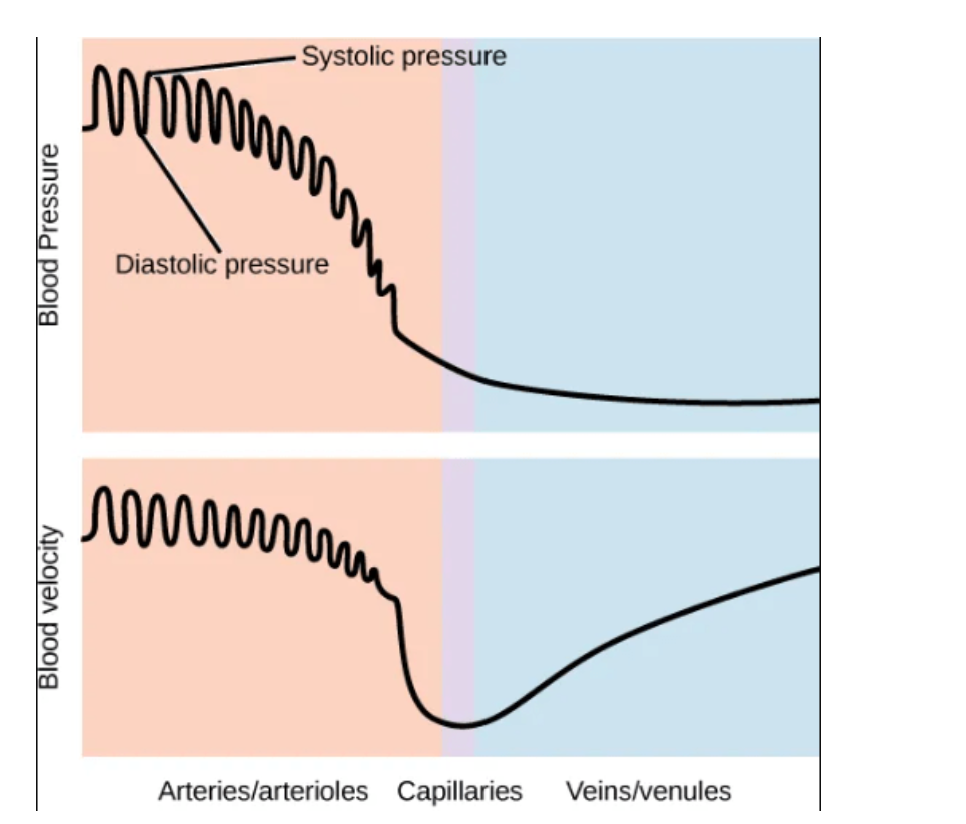
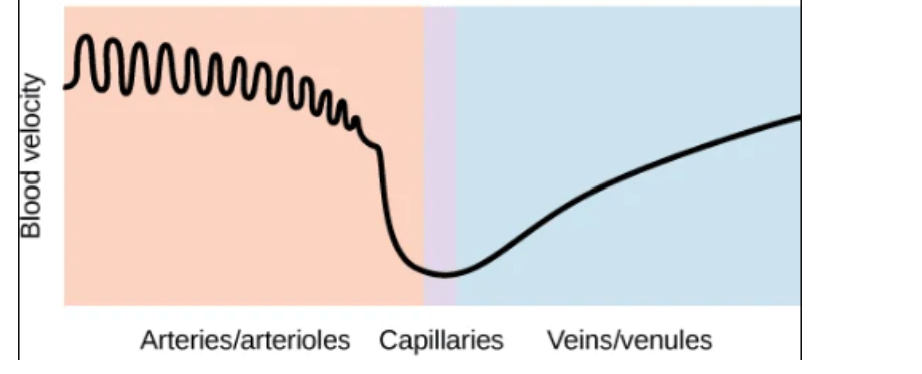
the velocity of blood flow is highest to lowest in:
arteries > veins > capillaries
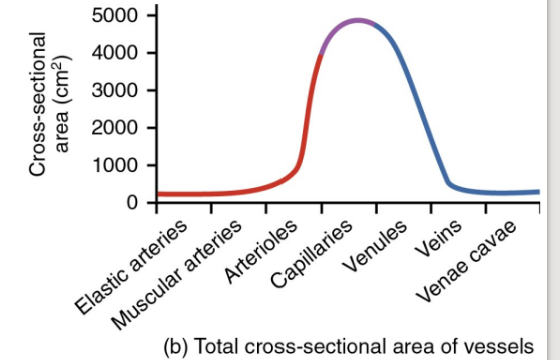
the total cross-sectional area of blood flow is highest to lowest in:
capillaries > veins > arteries
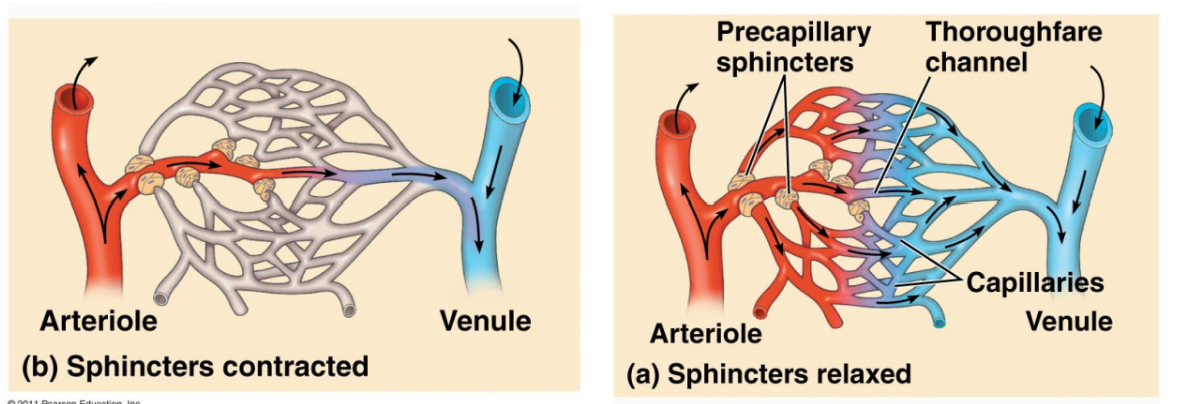
blood flow and pressure can be regulated within the capillaries by the muscles through:
vasoconstriction- narrowing of blood vessels → increases blood pressure
vasodilation- widening of blood vessels → reduces blood pressure
open systems: contraction of body muscle helps regulated blood pressure and velocity
closed systems: contraction of arterial and venous smooth muscle helps regulate blood pressure and velocity
gas, nutrient, and fluid exchange across capillaries:
in addition to exchange of gas and nutrients, plasma (watery connective tissue in blood) also leaves the capillaries and contributes to the interstitial fluid (extracellular fluid surrounding body tissues)
most of the plasma-derived interstitial fluid returns to the capillaries before the capillaries converge into venules bc of an osmotic and pressure gradient across the length of the capillary:
plasma leaves the capillaries dt relatively higher pressure at the arteriole end of capillary
as plasma leaves, the pressure in the interstitial fluid increases and the conc of proteins and other large solutes remaining in the capillaries increases
loss of watery plasma creates hyperosmotic solution within the capillaries, especially near the venules
as a result, most of the plasma diffuses back into the capillaries near the venules
remaining plasma drains out from the interstitial fluid into nearby lymphatic vessels, where it passes through lymph nodes before it returns to the heart through lymphatic system
osmotic pressure
the pressure which must be applied to a solution to prevent inward flow of pure solvent across a semipermeable membrane
water moves out of capillaries where blood pressure is higher than the osmotic pressure, and into capillaries where blood pressure is lower than the osmotic pressure
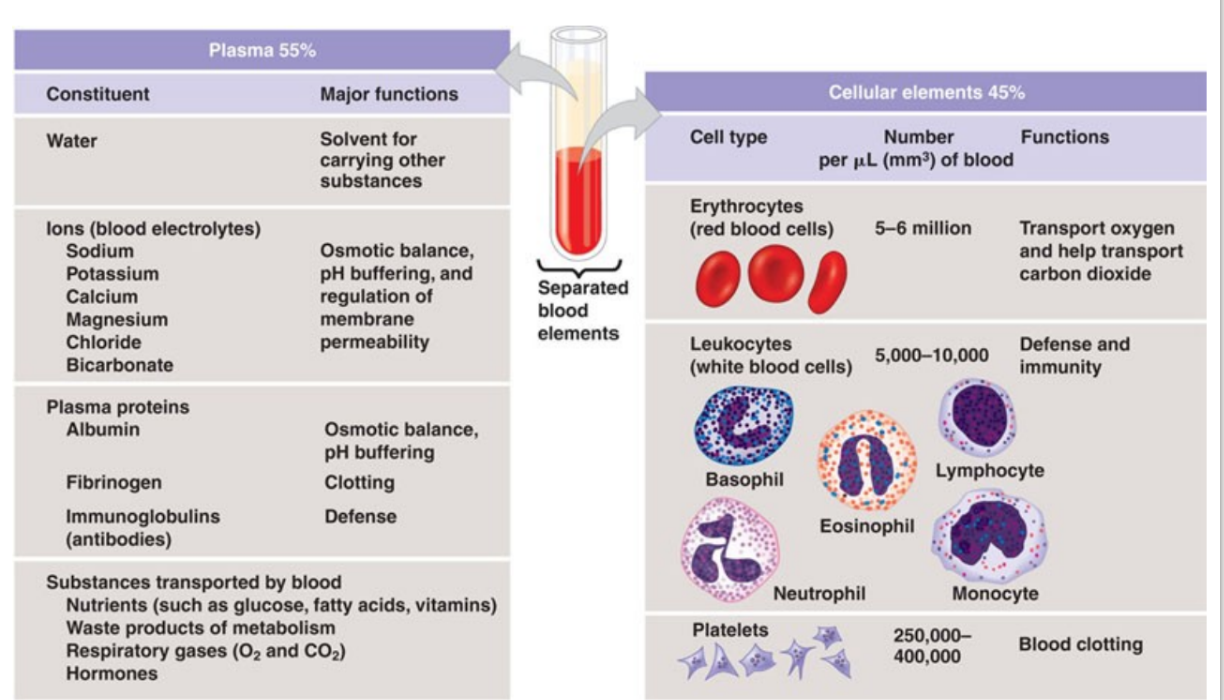
composition of blood
blood = the liquid that moves through the circulatory system
plasma: liquid portion of the blood
contains water, proteins, salts, lipids, and glucose
red blood cells: contain hemoglobin- transports oxygen + co2 in the circulatory system of vertebrates and many invertebrates
invertebrates that utilize hemolymph rather than blood have alternatives to hemoglobin to bind and transport oxygen:
hemocyanin- blue-green, copper (mollusks, crustaceans, some arthropods)
chlorocruorin- green, iron (four families of polychaete tubeworms)
hemerythrin- red, iron (some polychaete worms and annelids)
white blood cells: immune response; formed continually
platelets: work with other factors to promote blood clotting at sites of tissue damage