GENDER PSYC FINAL
 Call Kai
 Learn
Learn Practice Test
 Spaced Repetition
 Match
Match Flashcards
 Knowt Play
1/91

There's no tags or description
Looks like no tags are added yet.
Name | Mastery | Learn | Test | Matching | Spaced | Call with Kai |
|---|
No analytics yet
Send a link to your students to track their progress
92 Terms
· Core traits people value in partners
Similarities among g/s
Honesty, warmth, affectionate, kind, shared interests
Physical attractiveness not as important, kind and friendly far more important than physical attractiveness in 18-40 y/o adults
Kind, intelligent, health no difference and highest importance
LBG same traits valued
Women are more choosy, want someone who is equally employed and educated (caring and wealth)
Men still enjoy physical attractiveness more
Small but consistent gender/sex differences
Physical attractiveness slightly more important for men
Financial resources, status, and earning potential slightly more important for women
Evolutionary theory for g/s differences in preferences
Evolutionary: men value indicators of fertility so value attractiveness, women want to ensure the survival of their children so they want more financial security (parental investment model) so, young women who are attractive date older men who are wealthy (YUCK!)
Social role theory for g/s differences in preferences
Social role: the g/s based division of labor causes these differences (women in home, earn less, men earn more) so women seek stability for their in home tasks and lower income: “In a study of 37 cultures, they found that men were more likely than women to value a partner who was a good cook and a good housekeeper”
Domestic skills are valued in women when financial resources are valued in men
As women and men roles become more equal, this will decrease
Traditional dating scripts and how they are structured
Emotional intimacy is important: in hetero, self disclosure is important to male and female, moreso female
Moment of closeness for a man when they sit in silence, moment of disconnectedness for women in the same moment
Heterosexual women still value boundaries more than lesbian women
Heterosexual men have a more difficult time maintaining boundaries than gay men
How scripts shift in LGBTQ+ relationships
Women and lesbians minimize boundaries to increase intimacy, men and gays maximize boundaries to maintain intimacy
Sex important and enhanced for all
Differences between romantic ideals and behaviors
Men more romantic than women
Women more suffering in marriage and more of a necessity for money so romance is a luxury
Men more likely to endorse romantic beliefs on the romantic beliefs scale
Sex is more important for men in both hetero and gay relationships, key for intimacy
Women are more fluid sexually
Erotic plasticity: sex drive is influenced by social and cultural factors (think of sexual revolution in the 1970s) (immigrant women have changes in sexual behaviors while men have less changes) women have more erotic plasticity and fluidity (different hormones and fluctuations)
Concept of premarital sex obselete
Men are more permissive than women
Depends of stage of relationships
Sexual double standard
More acceptable for men than women to have sex
Sexual orgasm gap: cishet men more frequent orgasm, regardless of gender/sex of partner
Cis women who are in relationships with cis men least likely of all to report orgasm
Most frequent climax when sexual partner is transman, nonbinary, or ciswoman
How norms are maintained socially
Peers are encouraging people to behave in ways consistent with gender/sex-role norms. However, the sexual double standard also stems from people viewing sexual behavior to be riskier for women than men.
That men orgasm more frequently than women is referred to as the orgasm gap and may be explained by sexual scripts that promote sexual assertiveness based on gender/sex norms for masculinity.
Women engage in more relationship maintenance
Implications for behavior and judgment
romantic relationships
Past research has typically compared people with same gender/sex partners to people with other gender/sex partners—inferring sexual orientation. However, this research may or may not have included bisexuals and likely excluded people who have had same gender/sex attractions or experienced same gender/sex behavior but did not identify as gay or lesbian. Some researchers advocate studying men who have sex with men (MSM) or women who have sex with women (WSW) to make it clearer what is being studied and to be more inclusive of people who are reluctant to identify as non-heterosexual (Diamond, 2008).
Less LGBTQ+ research
Most people have only studied cishet
· Demand–withdraw pattern
Demander initiates problem discussion
Withdrawer avoids problem discussion
Cishet- woman is demander and man is avoider
Women prefer closeness, men prefer independence so there is fundamental conflict
Women less satisfied in relationships than men
Similar phenomenon in LGBTQ+ couples
Status and tolerance for arousal are factors
Poor relationship satisfaction across LGBTQ+ and cishet couples
Emotional expression differences
Cishet- woman is demander and man is avoider
Women prefer closeness, men prefer independence so there is fundamental conflict
Women less satisfied in relationships than men
Similar phenomenon in LGBTQ+ couples
Status and tolerance for arousal are factors
· Role of gender norms in conflict behavior
Historically, this interaction pattern has been studied within the context of heterosexual couples and middle-class White couples. Whether measured by self-report or observations of behavior, among these couples, the demander is more likely to be a woman, and the withdrawer is more likely to be a man (Christensen & Heavey, 1993; Gottman, 1994). A study of more economically diverse couples also has shown that the demand/withdraw pattern is gendered and that it increases during the first years of marriage (Ross et al., 2019).
Woman values closeness man values boundaries
Emotional vs sexual jealousy patterns
Women find a wider range of bx to qualify as infidelity
Emotional cheating versus sexual cheating
Evolutionary: women are more emotionally jealous because if a man forms another emotional bond, he could take his resources elsewhere
Consistent college studies
Double-shot hypothesis
Straight men: sexual infidelity implies emotional infidelity, women: sexual infidelity and emotional infidelity are different
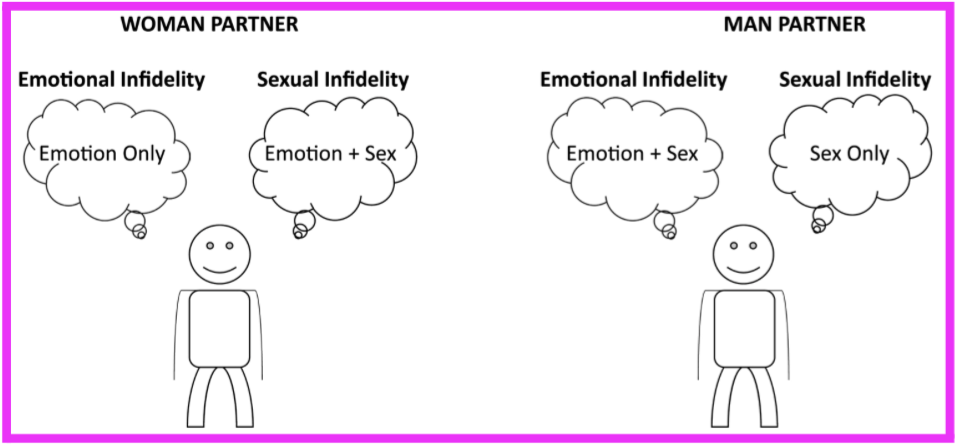
Assumptions people make about infidelity
Among heterosexuals, more men than women reported being more upset by sexual than emotional infidelity (54% vs. 35%)
LGB people, there were no gender/sex differences, and the majority of each group was more upset by emotional than sexual infidelity
A recent review of the literature concluded that gay men, lesbians, heterosexual men, and heterosexual women all view emotional infidelity as more distressing than sexual infidelity (Rokach & Chan, 2023).
Division of labor of relationships
Women do the day to day tasks
Men do the maintenance and other household labor
LBGTQ+ more egalitarian
However, mothers and fathers are not in complete agreement. Mothers are more likely than fathers to say that they do more. Fathers are more likely than mothers to say that responsibilities are shared.
Women’s labor has increased after the covid pandemic
Men who do household labor experience backlash
Bc paid work is a masculine trait, unpaid labor is a feminine trait
· Fairness vs equality
in household labor
In the United States, a strong predictor of household labor is economic resources. Those who make greater contributions to family income participate less in household labor because household labor is undervalued in a patriarchy, as it relates to more traditional feminine gender/sex roles.
Interestingly, this idea holds among more gender/sex diverse parents. In a study of trans and nonbinary parents, the person who made less money and worked fewer hours had the larger share of childcare but not overall household labor (Tornello, 2020). Several studies have found that the number of hours people work outside the home influences the division of labor at home. People who work more hours outside the home engage in less household labor (Horne et al., 2018). In Do Gender/Sex 9.6, you can see how much unpaid and undervalued caregiving and household work is worth.
· Power dynamics and relationship satisfaction
Economic power predicts household labor and satisfaction
Poorer satisfaction in trans and nonbinary parents if the labor is unfairly divided and straight couples
· Health benefits of relationships
Being married benefits physical and mental health
For LBGTQ+ couples and straight couples
In cishet research, men experience greater health benefits from marriage
· Why men and women benefit differently
Social support: men, partner is the primary support, married men have larger social networks than single, divorced men
LBGTQ+ more reciprocal support
Social control: women attempt to regulate partners health with medicine, praise and exercise (cishet women do more health work
More collaborative among LBGTQ+ couples
· Adjustment to breakups and who initiates
50% of marriages end in divorce
Higher for black and hispanic couples, lowers for asian
Higher for gay men, less lesiban women least cishet
Women more likely to initiate dissolution
Stronger adverse effect on men than women
different strains (men more household labor, women, income support and parenting)
Loss of social support for men
Women more aware of problems in the relationship
Women more prepared for breakup
power
Power: ability to act directly to effect a change or get ones needs met
power over
use of dominance or coercion to force an affect, despite resistance
power-to
ability to produce an effect from experience and inner wisdom
power-with
use of cooperation and connection with others to produce an effect
How power operates in everyday and institutional contexts
Oppression and power enacted and reinforced by violence
Can be good power like when you get a degree and have power over a subject and the college has power over you
· What empowerment involves
Power to and power with act against power over in order to empower change
sexual harassment: · Interaction between individual traits and environment
Unwelcome sexual advances, requests for sexual favors, and other verbal or physical conduct or sexual nature
· Types of harassment
Submission is a term and condition, explicit or implicit, of employment
Submission to or rejection of such conduct by an individual is used as the basis for employment decisions of an individual
Interferes with work environment
Metoo movement: power with movement
LEVELS
g/s harassment: sexist comments, suggestive stories
Unwanted sexual attention: learning, attempts at touching, repeated requests for a date
Sexual coercion: bribes, threats involving sex, negative consequences for refusing to have sex
· Workplace and structural influences for harassment
QUID PRO QUO: person offers benefits or consequences in exchange for sexual favors
Hostile environment hostile environment in workplaces
MYTHS: fabricated/exaggerated, ulterior motives, natural heterosexuality, woman’s responsibility
Perception & Gender Differences in sexual harassment
Difficult to estimate prevalence of sexual harassment because it is underreported and difficult to define
· Differences in how behaviors are interpreted in sexual harassment
Reports higher for endorsing specific bx than when bx are labeled as sexual harassment, when it is not labelled SH, will say to did happen
Role of fear, risk, and socialization in sexual harassment
Women are socialized to be submissive while men are socialized to be aggressive
stalking: Core features (fear, persistence, control)
Course of conduct directed toward a specific person that would also cause a reasonable person to feel fear
Unwanted phone calls, emails, texts
Repeated attempts to contact person
Attachment theory for stalking
insecure attachment and fear of abandonment
stalking theory coercive control theory
dominance and aggression used to control someone
· Patterns across different victims of stalking
TGE report higher rates than cis
Bisexual women higher rates
Cismen lowest rates
General agreement on def of stalking but women perceive it to be more serious that men
Women report more severe and psychological and physical effects
Likely due to fear
They also perceive the person as more guilty and having a higher internet to harm
Sexual Violence
· Typical characteristics of perpetrators
Attitudes more predictive than demographics
High hostile sexism
Traditional g/s roles
High masculine g/s role stress
VICTIMS
Women of color
LGBTQ+
Disabled women
Cis women
Working class women
Women in industries dominated by men
Men with marginalized IDs
· Patterns of reporting and underreporting
in sexual violence
Reports higher for endorsing specific bx than when bx are labeled as sexual harassment, when it is not labelled SH, will say to did happen
Underreported overall
· Role of social and institutional barriers
in sexual violence
Expect a reaction to the SH, but actually still put up with it (study)
Theories of sexual harassment emphasize power-over differentials and men’s dominance within a patriarchy, and that harassment is a product of both individual difference variables and situational variables (e.g., when the masculine role is threatened, when women’s gender/sex is made salient).
Sexual harassment is most likely to occur in a climate that tolerates sexual harassment and does not have clear policies in place to deter it.
Intimate Partner Violence (IPV)
Violence that takes place in the context of intimate relationships (physical, psychological, sexual)
Textbook: threw something that could hurt, grabbed, slapped, kicked, bit, punched, hit with an object, beat up, twisted arm or hair, slammed against wall, choked, burned, scalded on purpose, used knife or gun
Intimate terrorism
control/power over, systematic repetition of violence (men perpetrate more)
Violent resistance, defense against above
Situation couple violence
episode of violent bx, response to stress, most common, similar rates in men and women, for women more injury and fear inducing, IPV more strongly related to depression in women
violent resistance
defense against intimate terrorism
· Role of control vs situational conflict
IPV
Control: power over - constant and threatening
Situational conflict: one issue caused by stress
Perpetrators: history of childhood abuse, witness parent IPV as children, substance abuse, history or relationship problems, low edu or SES
gender and power differences in IPV
Mostly mutual but women have worse effects from it
Men have more power
Masculine gender role stress linked to control and explains intimate terrorism
Men perceive women in negative terms
Linked to witnessing violence as a kid (difficultly regulating emotions)
Cultural Context of Violence
· Rape culture
Environmental characterized by high sexual violence
Attitudes that normalize
Maintain oppressive systems, power-over
Men entitled to sex with anyone who is subordinate to patriarchy
Feminine role of sexual gatekeeping
SV means of policing anyone who transgresses traditional g/s norms
Practices in rape culture: dresscode that overly penalizes feminine bodies
Abstinence only sex ed (only delays sex by 6 months and makes the discussion of sex a hostile environment)
· Sexualization of violence
Sexualizes and normalizes violence against women and LBGTQ+ people
· Myths that maintain or justify violence
Blame victim (clothes, she asked for it)
Not blame perpetrator (“Rape happens when a guy’s sex drive gets out of control.”)
Denying if it was really rape (“A rape probably didn’t happen if the girl has no bruises or marks.”)
False accusations being made (“Rape accusations are often used as a way of getting back at guys.”)
Token refusal (“A woman has to say no at first so she doesn’t seem like a slut.”)
Leading on justifies rape (“She wore lacy panties which means she was looking for sex.”)
Women like forcible sex (“Feeling dominated turns women on.”)
· Mortality vs morbidity differences
Men higher mortality but more boys at birth than girls (more risk taking, substance abuse, and aggression)
Women higher morbidity rates (more autoimmune diseases, greater activity restriction, greater rates of being prescribed drugs, understudied in healthcare) sexual minorities greater risk or morbidity than cishet
Artifacts (SES, ethnicity, race, rural v urban, etc) also determinants
· The gender/sex paradox in health differences
Women utilize healthcare services more but are at greater risk of morbidity
· Global and structural patterns
in health and gender
External discrimination (discrimination in healthcare and stress from minority stress)
Internalized homophobia
Physician bias (coronary heart disease)
Studies historically focused on men
Women treated less aggressively than men
Treatments of CHD more beneficial for men
CHD manifests differently for men and women
Comorbid with the smaller veins in women
Less likely to be referred to treatment
Treatments developed for men
Heart disease not taken as seriously in women than in men
More microvessel disease in women
SES
EDU
· Major causes of death
see image
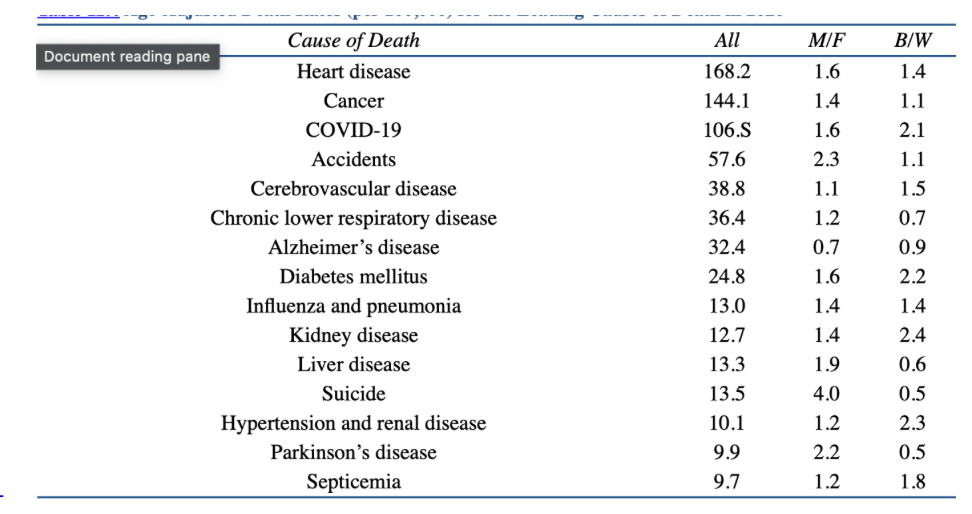
· Behavioral risk factors
in health differences in gender
preventable and non preventable differences
Women do more preventative care
Lesbiane women are an exception
Less likely to have health insurance (spouse and employment gives health insurance)
Discomfort dealing with heteronormative care win LGBTQ+
Smoking: men do more (more masculine traits) but men more successful in quitting than women and women are more psychologically addicted
Situational cues more strongly connected to smoking for women
Concern with weight gain
Alcohol: men drink more than women
Takes proportionally less alcohol to have the same effect on women than men
Telescoping faster in women than men (women progress more quickly to dependence and addiction)
Drug use: more likely for men to use all types of illicit drugs
Physical exercise preventative but men meet the requirements more
· What can distort gender differences in health data
Use of healthcare
Gender inequality
· Differences between actual vs apparent effects in health
Apparent is more stereotyped, actual is the actual effects?
· Risk-taking vs prevention
Preventative care
Drug use
· Influence of gender norms
in health
More masculine to abuse substances
More masculine and accepted to be obese
More masculine to not care about health problems
Women do a lot of health work in relationships
It is more feminine to ask for help and maintain body and appearance
· Differences in substance use and outcomes
Women have a harder time getting off of cigarettes
· Differences in access, use, and treatment in healthcare
Men have more access but do not use it as much
Women are treated with male care and are often not treated correctly
· Bias in diagnosis and referral in healthcare
Women are not taken as seriously, the pain is not taken as seriously
Most women are referred to get prescriptions more than actual treatments
Especially with CHD
· Implications for outcomes (e.g., heart disease)
Women will survive less because not cared for as well
· Caregiving roles and health consequences
Women must be responsible for caregiving of self and family
In a study of caregivers of grandchildren, women had more caregiving tasks than men, had more physical limitations due to caregiving than men, and reported overall poorer quality of life (García-Jiménez et al., 2024). Men were also more likely to report that they were involved in caregiving for pleasure, whereas women were more likely to report that they had no choice in becoming caregivers. And, not surprisingly, people had better mental and physical health when they felt that they had a choice in caregiving.
· Nurturant role hypothesis
According to the nurturant role hypothesis, women’s roles require them to attend to the needs of others, and taking care of others interferes with taking care of oneself. First, the nurturant role leads to caretaking behavior, which results in fatigue and vulnerability to illness. Second, the nurturant role leads to greater exposure to communicable diseases. Finally, once sick, the nurturant role prevents one from taking care of oneself.
· Unmitigated communion
Although communion is typically unrelated to health, unmitigated communion is associated with poor health, especially greater psychological distress, increased disturbed eating behavior, and poorer health behavior (Helgeson, 2012). The mechanisms linking unmitigated communion to health differ from those related to unmitigated agency. One mechanism has to do with interpersonal relationships. Individuals who score high on unmitigated communion report greater interpersonal stress and are more strongly affected by it. Unmitigated communion is also linked to poor health care, but for different reasons than unmitigated agency. The high unmitigated communion individual neglects health care because the person is overly involved in taking care of others, similar to the nurturant role hypothesis. The person characterized by unmitigated communion has a host of interpersonal difficulties related to self-neglect, including difficulties asserting one’s needs, self-effacement, and self-subjugation.
· Body size as a social status marker
· Intersection with gender expectations
Patriarchy
evil=fat, good=skinny
With gender/sex, men have a higher status than women, so we have more positive expectations of men compared to women. With obesity, we have more positive expectations of non-obese compared to obese people. This is called sizeism and can be conceptualized as one of the systems of privilege and oppression operating in our lives. We have negative stereotypes of people who are obese, and obese people suffer from discrimination in employment and health settings.
Mental Health, Identity, Well-being
Stigma with individual mental illness found that cross cultural perceptions
Perceptions that mental illness is personal flaw
Assumptions of dangerousness
Negative emotional reactions from others
Social exclusion
Employment exclusion
Humanizing and combatting stigma
Use person first language
· Shift from pathology to distress (gender dysphoria)
Gender identity disorder allowed TGE to get GAC covered by insurance and psychological treatment covered by insurance but the definition was stigmatizing
Gender dysphoria: incongruence between individuals experienced and expressed gender and assigned gender
Distress and impairment is important in areas of functioning
No longer is directly tied to a trans or gender expansive ID
Prevalence: no population studies to estimate prevalence
25 million people globally
1.4 million people in U.S.
Gender dysphoria rates are less than population totals
· Implications for diagnosis and care gender dysphoria
Psychological,HRT, operations = GAC
Reduce distress experienced by incongruence between sex assigned at birth and G/S ID
Controversy for GAC and youth in the U.S.
Conservative political opposition for TGD/GAC
Methodological studies are few so it iss unclear on how certain gac works
Depression & Gender
Five+ symptoms present more than two weeks
Depressed mood most of the time, anhedonia, changes in appetites and weight, sleep disruptions, sluggishness, fatigue, worthlessness, guilt, difficulty concentrating, suicidality
Genetic component
hormones
· Differences in rates and reporting depression
21 million U.S. adults
5 million U.S. adolescents
280 million adults globally
Higher among Bisexual, LGBTQ+, and ciswomen (2:1)
· Role of gender norms and socialization
depression
A common concern is that men do not report depression because depression is inconsistent with their gender/sex role.
The term depression has feminine connotations; it implies a lack of self-confidence, a lack of control, and passivity—all of which contradict the traditional masculine gender/sex role.
men omit their symptoms, especially at mild to moderate levels of depression, whereas women tend to notice symptoms. Men start to “notice” depressive symptoms with increasing severity
Gay men who adhere to masc g/s norms have more depression
ENDORSEMENT OF TRADITIONAL MASC NORMS THE KEY ISSUE IN SEEKING HELP
· Help-seeking patterns
depression
Help seeking congruent with feminine g/s norms
Lead to more diagnosis among trans female individuals and women
ENDORSEMENT OF TRADITIONAL MASC NORMS THE KEY ISSUE IN SEEKING HELP
unmitigated communion related to depression in several populations
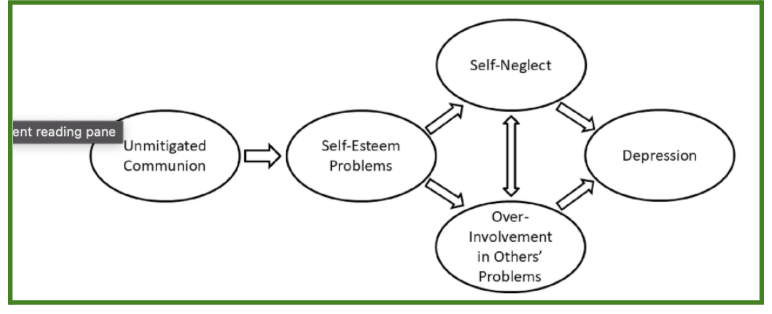
Suicide
· Gender differences in attempts vs completion
More men complete; 4x more likely to complete fatal suidice than women
Higher rates of fatal suicide among american natives and alaska natives
Trans adults 7x more likely to think about suicide and 8x more likely to do nonfatal suicidal bx than cis adults
LBGTQ+ youth 3.5 times more likely to engage in suicidal bx than their cishet peers
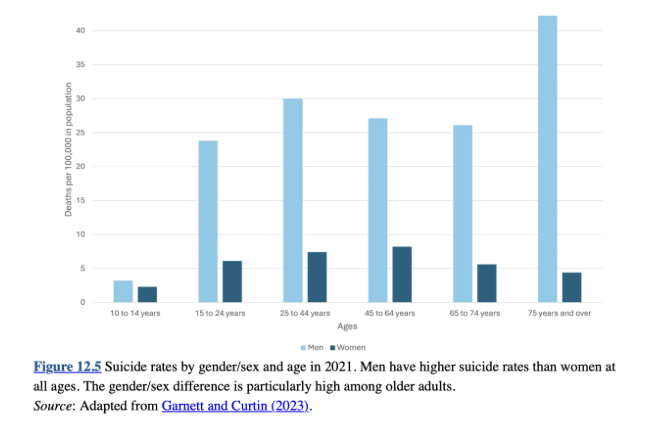
· Role of method and social norms
in suicide
Paradox: men die by suicide at higher rates tahn women
Women engages in more nonfatal suicidal bx than men
What explains the paradox?: mechanism - men more likely to use firearm, highest lethality, women equally likely to use firearm, poison, or suffocation, more time for intervention if less lethal so resuscitated more
Stigma and gender roles
Feminine: congruent with nonfatal suicidal bx, women who die by suicide are weaker, foolish, and less adjusted than men who killed themselves, permissability fo nonfatal suicide and stigma of fatal suicide based on the feminine women decreases women’s risk of dying
Masculine: congruent with fatal suicide, stigma of nonfatal suicide (seeming feminine or weak) and permissability of fatal suicide based on masc norms increases mens risk of dying
· Risk and protective factors
in suicide
Individual: history of suicidality and mental health issues, legal problems, job problems or loss, adverse childhood experiences, abuse and violence
Relational: relationships ending, violence, social isolation
Community: inadequate access to healthcare, acculturative stress, community violence, historical trauma, discrimination
Societal: easy access to lethal mechanisms, unsafe portrayals of suicide in media
Protective factors: coping skills, reasons for living, strong cultural IDs, social support, belongingness, mental healthcare, physical health care, less access to lethal mechanisms, cultural, religious, and moral prohibitions to suicide
Minority Stress & Mental Health
· External vs internal stressors
Oppression predicts poorer mental health
Ses, race, g/s. Sexual orientation, and intersectional oppressions
Proximal: internalized transphobia, negative expectations for interactions, conceal g/s id, gender dysphoria
Distal: g/s discrimination, g/s related rejection, g/s victimization, nonaffirmation of g/s ID
· Impact of discrimination
Poorer mental health
· Intersectional risk
minority stress
Higher risk
Race based traumatic stress: RBTS and G/S
Models to explain increased prevalence of PTSD in communities of color
Negative race based events can produce PTSD symptoms
Racist discrimination is traumatizing
Mixed findings when considering G/S
No difference in gender in RBTS
Strongest in black women and latino men veterans
Trauma
· Psychological impact of discrimination
TGE: increased lifetime of proximal/distal stressors
As we would expect from the gender minority stress framework, internalized homophobia & G/S minority identity predicted higher levels of PTSD, especially for survivors of sexual trauma.
The significance of this finding is that the discriminatory systems of cisgender heterosexualism, which teachLGBTQ+ people to internalize feelings of homonegativity, exacerbate traumatic dress symptomology in those same persons.
The exposure to distal & proximal stressors may even be significant enough to elicit PTSD symptoms in LGBTQ+ individuals in the absence of a traumatic event.
· PTSD-like responses
Avoidant symptoms: Avoiding & attempting to avoid internal (memories, thoughts) and external (people, places,objects) reminders of the event.
Intrusive symptoms: recurring & involuntary memories of the event, distressing dreams, flashbacks, distress & reactivity to triggers
Arousal symptoms: irritability & anger, reckless & unsafe behaviors, hypervigilance for potential threats, easily startled, difficulty concentrating, problems with sleep.
Cognitive & mood symptoms: memory disruptions related to events, negative beliefs about self & world (I am ruined, the world is not safe.), blaming themselves for trauma, presence of persistent negative emotions, lack of interest in pleasurable activities, feeling detached from others, inability to feel positive emotions.
Traditional masc incongruent with PTSD symptoms
Men with high traditional masculinity report PTSD as emasculating
Women more likely to experience interpersonal trauma which predicts PTSD
Conformity to femininity correlated with threat appraisals and more passive coping
Body Image & Eating Behavior
Anorexia, bulimia, BED, and disturbed eating disorder
· Objectification processes
Experience of one's body being treated as an object for evaluation and use by others
Leaders to continuous monitoring and self evaluation
Adverse effects on body satisfaction, performance on math test
Femininity hypothesis: more endorsement of feminine social norms related to more objectification across TGE and queer groups
· Sociocultural influences
EDs
Thin ideal: society’s obsession with dieting and pressure for thinness
Prescribed norm for femininity
Teach that thinness is goodness
Body image: perception of what it is like to be in out bodies
Black women described body image is defined by: hair, skin, attitudes, physique, interpersonal relationships, oppression, and media images
TGE- multiple body image influences and pressures, avoid discrimination so fit body image ideals
· Links to performance and self-concept
EDs
Social media comparison leads to higher social comparison
Higher body dissatisfaction
Body dissatisfaction the highest predictor for an ED
Neurodiversity & Diagnosis
· Gender differences in diagnosis (e.g., autism)
ASD: 1-2% of the U.S. population
White children highest rates compared to black and latine children
TGE highest rates 6-26% than pop avg
Possible overlap
Connected by neurodivergence
.67 correlation with gender dysphoria
Boys 3x higher to be dx than girls
ADHD: globally, 2.2%, 7.2% of children
Middle ot upper class countries report highest rates like U.S. and australia
Boys 2x higher than girls to be dx
· Masking/camouflaging
neurodiversity
ASD: ToM, necessary for girls constancy, internalizing g/s attributes, self conscious emotions
ToM lower in ASD
Girls with ASD seem as transgressing g/s norms rather than children with a treatable condition
“Extreme male brain” ASD seen as more masc as a result, boys and men are more easier to diagnose
Media representations: most popular examples of ind. With ASD are boys and men
ADHD: boys more hyperactive than girls (d = .31) and little difference in inattention (d = -.06)
Boys more disruptive so gain attention
Girls ADHD more likely to be comorbid with anxiety and depression so girls ADHD is overlooked in this context
Boys 2x more likely to be diagnosed when symptoms are ambiguous and do not even meet all criteria
Parents rate girls with ADHD as less distressed and impaired than boys
Complex G/S patterns with race and ethnicity
White and hispanic girls from high income, low edu, high rates
Boys in same groups lower rates
· Access to care issues
neurodivergence
When girls do receive an ASD diagnosis, they are more likely to receive it in adulthood compared to boys who tend to receive a childhood diagnosis.
There is an equity issue here because early diagnosis & supportive treatments are known to significantly improve outcomes for individuals with ASD, & it appears girls & women have their ASD symptoms systematically ignored.
When we think of stereotypical feminine G/S norms, we consider sociability, primacy of relationships, ability to understand another’s perspective, emotional expressiveness, & expectwed demureness or shyness.
ASD, as noted, is indicative of difficulty socializing & maintaining relationships, & restriction & challenges with emotional expression.
Wouldn’t they stand out since femininity roles and ASD are at odds? Perhaps they are seen as nonnormative or “bad” girls who would benefit from treatment or support.
Well-being & Happiness
· Hedonic vs eudaimonic well-being
Hedonic: pleasurable life is linked to happiness - (men)
Eudaimonic: pleasurable life is linked to a meaningful life - (women)
· Role of mindfulness
No difference in binary G/s in some studies
Mindfulness stronger predictor of well being for women in others
Adherence to traditional masculine norms
Inverse correlation between mindfulness and related outcomes
Regardless of G/S
Access dedication is positive correlation with mindfulness in men
Remember than masc and fem are plural and multi faceted
· Gender differences in pathways mindfulness
The happiness the 65 participants in this qualitative study described revolved around relationships forged through crafts (passing down craft traditions, strengthening warmth & connection with recipients of crafts), personal growth (learning new skills, crafting as coping), & mindfulness (relaxation through rhythm & repetition of textile work, focus on present)
Queer theorists ask us to consider not only happiness, but aliveness.
Lives worth living, that are livable, might not always be happy in the queer context. While ostensibly happy, these participants did not report their lives “livable” in their conditions (happy is a straight way of thinking & their happiness occurred when they tried to conform to heterosexist ideals).
Shared struggles with others in the LGBTQ+ community emerged as a theme related to aliveness & may produce happiness through friendship, activism, & resistance.
Psychological Functioning
· Role of masculinity and femininity traits
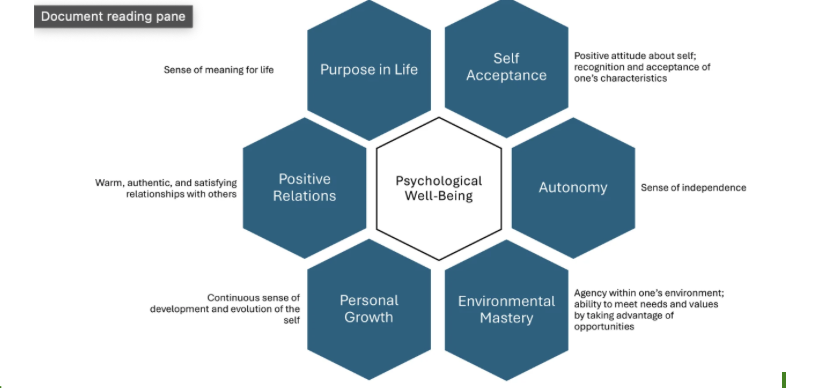
Higher endorsement of masculinity related all six dimensions for women and men
Higher endorsements for fem to all dimensions but autonomy
both/and g/s relate to greater well being
Independent and connectedness emotionally responsive and self possessed, magnetic and communal
With G/S equality.
When we have a balanced mosaic of characteristics of femininity and masculinity that predicts greater well-being for all of us, we might hypothesize that G/S equality in the institutions & systems we navigate will also relate to well-being.
This hypothesis is supported in research examining perceived G/S equity in the workplace.
When women & men endorsed more G/S equity in their workplace, they reported greater well being.
The predictive effect of G/S equity on well-being was stronger for women, but is essential to note that no one suffered as perceived equity increased.
Freedom is the best predictor for well-being.
In this case, measured by civil liberties & individual rights.