cell divison
 Call Kai
 Learn
Learn Practice Test
 Spaced Repetition
 Match
Match Flashcards
 Knowt Play
1/10

There's no tags or description
Looks like no tags are added yet.
Name | Mastery | Learn | Test | Matching | Spaced | Call with Kai |
|---|
No analytics yet
Send a link to your students to track their progress
11 Terms
Interphase
Cell growth
90% of cell cycle
3 Phases:
g1 - growth for newly formed cell
s - synthesis of new dna
g2 - prep for mitosis
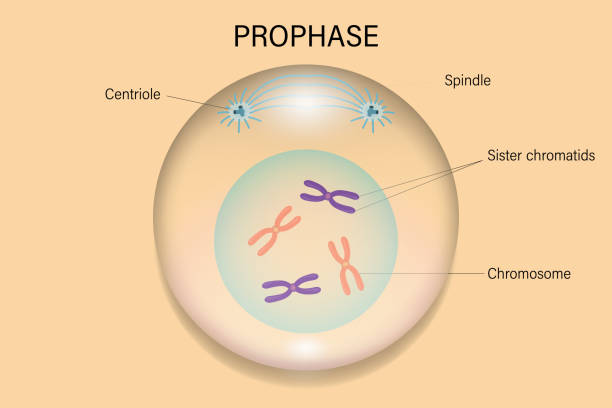
Prophase
1st phase
Centrioles grow spindle fibersthat extend into nucleus and attached to centromere
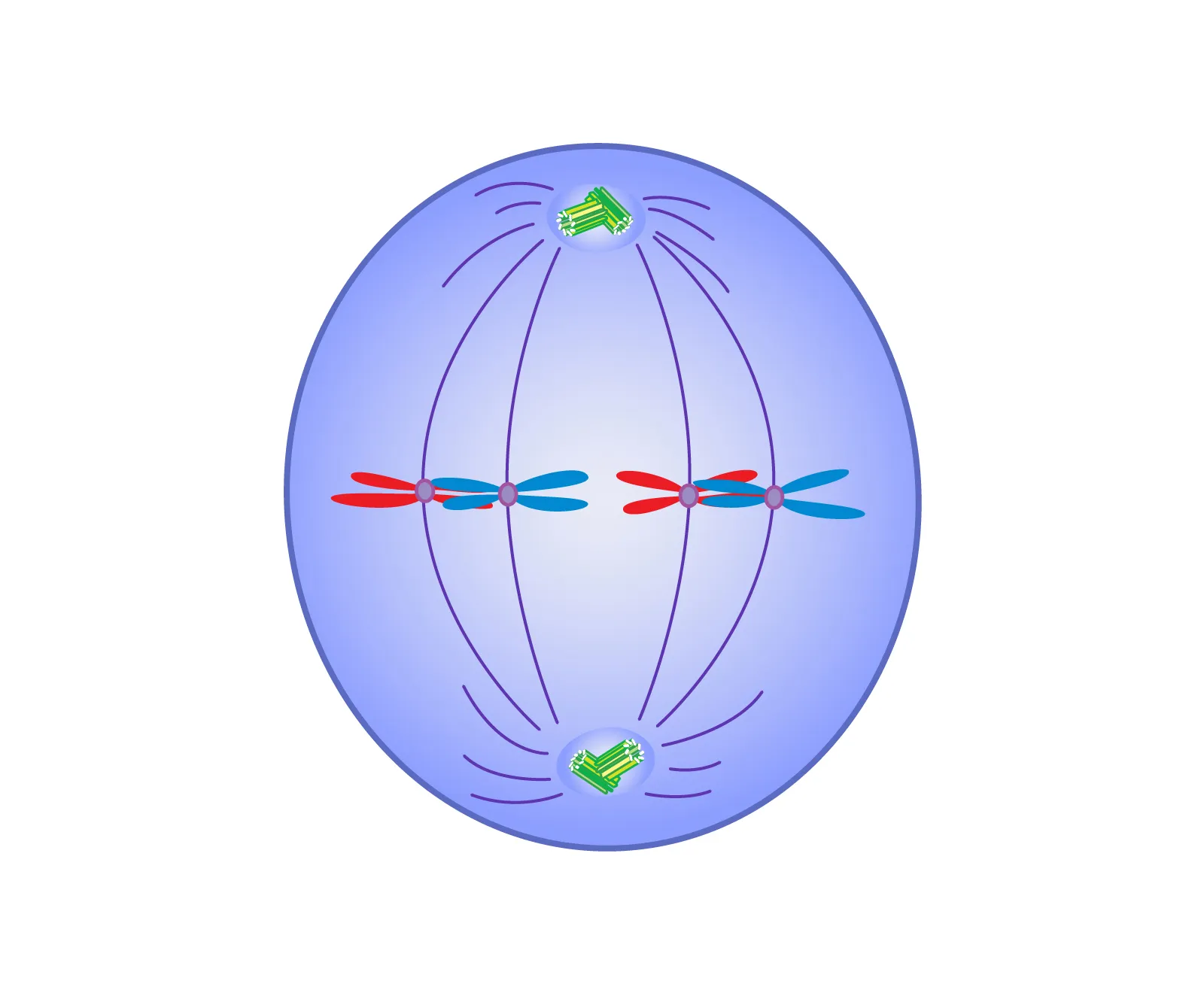
Metaphase
2nd phase
Chromosomes move toward the middle of the cell
Centrioles move to end of cell
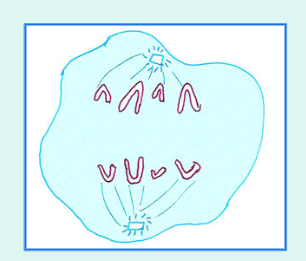
Anaphase
3rd phase
Centromeres dissolve and chromosomes move towards the centriole guided by the spindle fibers
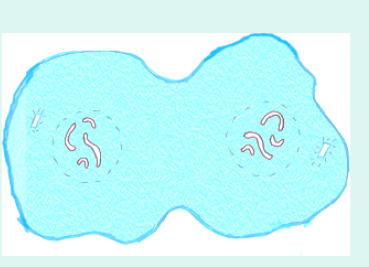
Telophase
4th phase
Chromasomes reach opposite poles of cell
Spindle fibers dissolve
Membrane begins to form around each mass of chromosome
(cytokenisis at the end, organelles divide into each cell)
Meiosis
Cell division by which gametes with half the number of chromosomes are produced (2n → n)
Gametes (M,F) combine to form zygote, ensures genetic differences
Interphase I (meiosis)
Chromosomes replicate instead of DNA
Each Chromosomes consists of two sister chromatids
Prophase I (meiosis)
synapsis occours: homologous chromosomes come together to form a tetrad
tetrads are two chromosomes
crossing over occurs
Metaphase I (meiosis)
Tetrads align on the metaphase plate
Orientation of pairs is random = variation occurs
anaphase I (meiosis)
homologus chromosomes go towards opposite poles
sister chromatrids remain attacged at centromere
telophase I (meiosis)
each pole now has haploid set of chromosomes
Cytokenisis occurs and 2 cells are formed
goes onto pmat II which isthe same as mitosis