Population and the environment AQA A-level Geography
 Call Kai
 Learn
Learn Practice Test
 Spaced Repetition
 Match
Match Flashcards
 Knowt Play
1/142

There's no tags or description
Looks like no tags are added yet.
Name | Mastery | Learn | Test | Matching | Spaced | Call with Kai |
|---|
No analytics yet
Send a link to your students to track their progress
143 Terms
Arable farming
Flat land, high quality, cereal and root crops
Pastoral farming
Livestock rearing, semi-desert
Mixed farming
Arable and livestock, common form of UK agriculture
Intensive farming
Fruit, flower, vegetable production, high investment in labour, high yields per hectare
Commercial farming
Crops produced for commercial use
Extensive farming
Low inputs, large areas of land, yields per hectare are low
Subsistence farming
Farmers produce for themselves and their families
How does climate determine food productivity?
- climate = measured by precipitation, temperature, sunshine hours, humidity, frequency of extreme weather
- adequate rainfall = appropriate weather for rearing livestock and photosynthesis
- climate can influence fevers such as malaria, yellow fever and ebola
How does soil determine food productivity?
- soil fertility = dependant on soil structure, texture, acidity, organic matter, nutrients
- alluvial soils = caused from natural disasters, volcanoes, floodplains, flooding, river beds
- dense, more fertile soils are able to provide for a higher population
- soil fertility can increased by artificial chemical fertilisers
How does water determine food productivity?
- used for human hydration and irrigation
- maintains food production
Tim Meyer's farming in the Tundra (Alaska)
Permafrost land (frozen ground)
30x100 foot high tunnels
Does not use pesticides and herbicides
Tunnels allow warm, dry soil and growing season to be twice as long (planting earlier and higher profits recieved)
Farming in monsoon areas
Climates can be cool and dry or dry and hot
Rain can be used as hydropower
Directly affects over 50% of India's population
CSA - climate smart agriculture
- policy makers make more of a chance to help improve the climate situation
- farmers motivated to try new techniques
- combine finance to target CC
- improve food security to use climate smart farming
IARI (Indian Agricultural Research Institute)
- stressed by drought
- drought contingency plan....
watch rainfall
response and recovery programmes
plan reviewed and regularly updated
ground moisture conserved
How is soil formed?
- compression
- break down of small rocks
- weathering
What is the pedosphere?
The outer most layer of the earth, composed of soil
What is the role of soil?
- plant growth
- water storage + supply
- earth atmosphere
- organism habitat
What degrades soil?
- less trees and vegetation
- deforestation
- leeching (nutrients and minerals are washed out of the soil)
Zonal soil
Mature soils that are well developed and stable for a long period of time
Chernozem zonal soil
- black soils that are rich in organic matter
- one metre deep, clay-like texture
- high fertility, attract modern agriculture
- mineral content driven from wind-blown sediments
Red/yellow latosols of the tropical rainforest
- organic nutrients stored
- hot and wet climate
- burning releases ash which provides nutrients for the infertile soil
- the land is farmed on which allows the forest and the soil to recover
Components of food security
Availability - reliable and consistent source
Access - sufficient resources to purchase
Stability - ability and stability to access and utilise food
Utilisation - knowledge and basic sanitary conditions to prepare and distribute food
GAFSP (global agriculture and food security programme)
- a global partnership fighting hunger, malnutrition, poverty
- empowers poor and vulnerable smallholder farmers
- donor money
- horizontal plots prevent erosion
- measurable progress
- generating income to reduce rural poverty levels
World Food Programme (WFP)
- supports farmer organisations to invest in crop production and gain access to quality markets
Uganda = land-locked country that produces more food than consumed, provides vulnerable populations, school feeding policy, school meal programme, provides cash/food assistance
Burkino Faso = aims to combat malnutrition, education enrolment encouraged, gender equality, daily breakfast and lunch, monthly food distributions
Salinisation
- excessive water application/irrigation = when this evaporates, the salt is left behind on the soil
- water table rises which leaves dissolved salts at the surface
- land is abandoned due to the high salt concentration so land yield is decreased massively
- land is flushed with lots of water
Soil erosion (wind)
the top fertile layer is removed by wind power
- loss of seedlings, fertilisers, pesticides, young plants sandblasted
- reduction in crop productivity
- organic matter applied, increased land roughness, increased plant cover
Soil erosion (water)
the top fertile layer is detached due to water
- loss of seedlings, fertilisers, pesticides
- reduction of crop productivity, pollution of wetlands, groundwater and lakes
- field drains and ditches installed, early sowing or crop covering, contour ploughing
Waterlogging
- insufficient oxygen due to pores being filled with water
- precipitation, irrigation, river floodwater exceeds limits of evapotranspiration and percolation so water sat on surface
- stunted growth and low yield
- diversion of water flow, raised beds with shallow surface drainage, tolerant crops/pastures
Soil compaction
- weight and pressure compacts the soil (e.g. wheels, grazing livestock)
- causes small pores reduced for infiltration
- fixed by maintenance, choosing tyres correctly, traffic farming, excess weight is removed
Types of soil structure
- granular and crumb structures = sand/silt/clay grouped together in grains
- blocky structures = soil in square/angular blocks
- prismatic structures = vertical columns or pillars, clay rich
platy structures = thin sheets, horizontal
caused by .... rapid wetting, hard setting, poor infiltration
Impacts of soil structure breakdown
- physical fracturing and mixing
- decay
- net reduction in soil organic matter
- freezing and thawing help soils to recover
- add organic matters
- avoiding overworking
- adding mulch
What are DALYs?
Disability adjusted life years
- measure of morbidity in society
- measure the number of years of healthy life are lost by being in poor health or state of disability
Morbidity definition
- diseased, ill, condition that damages health and life quality
- can be used to mean the relative incidence of a particular disease in a society
Childhood mortality definition
Death of children under the age of 5
What is the epidemiological transition?
A description of the changing population patterns of population age distribution, mortality, fertility, life expectancy and causes of death
- It assumes that infectious diseases are replaced by chronic diseases overtime due to expanded public health and sanitation
Phases of the epidemiological transition
- Age of...
Infection and famine
Reducing pandemics (worldwide disease spread)
Degenerative and manmade diseases
Delayed degenerative diseases
Age of infection and famine
20-40 years
Poor food security, poor income, poor sanitation = infection risk increased
Weak immune systems, more vulnerability to disease
Age of reducing pandemics
30-50 years
Better housing and sanitation, increased food security (better diet)
Improved technology and better healthcare causes mortality rate to decrease
Age of degenerative and manmade diseases
50-60 years
- lifestyle choices have detrimental impacts, life expectancy increased due to fewer pandemics, more anthropogenic diseases, average lifestyle is less active
- increase in smoking, drinking, poor diet, increased risk of chronic diseases
Age of delayed degenerative diseases
70 + years
Lifestyles in general involve less risk than in LICs
Better healthcare, improved technology allows peoples lives to be extended, people who live this long will potentially experience dementia and other age related diseases
Evidence of the epidemiological transition
- theory claims that infectious disease have decreased and chronic diseases have increased
- from 2000-2012, numbers decreased from infectious diseases and chronic disease numbers began increasing
- advanced medical technologies being able to diagnose diseases that previously remained undiagnosed
How does climate link to disease?
- extreme weather patterns = increased chances of disease spreading to increase
- high temperatures = malaria and dengue fever spread increased
- more bacteria spread in warmer temperatures
How does latitude link to disease?
Higher latitude = less light = lower levels of serotonin = higher rates of depression= seasonal affective disorder = higher rates of suicide
Air and water quality
- 50,000 people a year are dying prematurely due to toxic emissions
- can cause peoples lives to be cut short by 9 years
London - air pollution
- 9400 premature deaths
- 2 million people are living in toxic areas
- causes older population to live in heart and respiratory problems
Athens - air pollution
- planned to cut diesel vehicles by 2025
- ships, boats on harbour (+ air pollution)
Mexico city - air pollution
- 21 million people living there
- health warning for citizens due to air pollution
What is malaria?
Blood disease caused by an infection from parasites (mosquito)
Infected blood can then be passed on to the next person when biting the victim
Symptoms of malaria
Headaches, vomiting, exhaustion, sweating, shivering, fever
Location of malaria
Tropical and sub-tropical areas
At least one million deaths annually
Most cases occur in the sub-saharan Africa, mostly in children under 5
Who is at risk of malaria?
Young children - no immunity
Non immune pregnant women
Semi immune pregnant women - risk of miscarriage, low birth weight
HIV infected semi immune pregnant women - a higher risk of passing HIV infection to their newborns
International travellers/immigrants
Malaria prevention
Avoid being bitten by using repellents, screens, coverage
Injections
Medications
Economic impacts of malaria
Healthcare facilities strained due to number of patients admitted
Reduced amount of tourists
Increased medical costs
Less money spent on government aspects
Cost to government
Reduced number of population that are able to work
Social impacts of malaria
- high levels of child mortality
- occupations (e.g. farming, fishing, animal rearing, stone quarrying) have increased exposure
- lifestyle may have to be changed
- high morbidity/mortality rates
- causes long term brain impacts
Environmental impacts of malaria
- sprays/chemicals can affect other insects and contaminate water sources
- more subsistence crops used than profitable cash crops as a lot of workers will either be dead or sick during harvest time
Temporal changes in malaria
- seasonal incidence
- rainfall seasons e.g. November to May
Spacial changes in malaria
global distribution
(equator, between tropic of capricorn and tropic of cancer)
Malaria in Uganda
life expectancy = 55 years
total population = 38 million
65% of under 5's receiving anti-malarial drugs
$670 GNI per capita
transmission occurs all year due to high temps/rain
large bodies of water act as a mosquito breeding area
3.6 million cases reported in Uganda in 2015
What are affluent diseases?
- diseases that are thought to be a result of increasing health in society
e.g. type 2 diabetes, alcoholism, depression, CHD, some forms of cancer
Causes of CHD
- excess body fat strains the cardiovascular system
- physical environment =
air quality = more particulate matter
relief and land topography = less likely to exercise on steep land
climate = higher risk of heart attack in cold and damp conditions
Socio-economic factors of CHD
- more money to spend in more developed countries = more factors
- tobacco use --> 60% higher risk in smokers
high cholesterol
infrequent activity - 20% of cases caused by lack of activity
diabetes - type 2 diabetes
high blood pressure
alcohol use - 2% is caused by high consumption
poor nutrition
obesity
Impacts of CHD on health and wellbeing
- heart attacks = damage to heart muscles, permanently and cause fatal effects
- rehab programmes
- exercise and education as well as lifestyle choice changes reduce the risk of developing CHD
Impacts on economic well-being (CHD)
- individual cost/cost to family
- costs NHS around £8.7 billion in 2009
- smoking-related illness caused global net loss of $200 billion per year
CHD prevention strategies
- education
- affordable treatments
- promotion of healthy living practices
- nutrition and health labelling
- introduction of recognisable logos for healthy foods
Policies and legalisation for CHD
Reduction in tobacco smoking (advertising ban, smoke-free areas, health warnings on packets, taxation and outright bans in public areas)
Role of international agencies for CHD
6 WHO offices globally and they are responsible for....
- disease classification
- prevention and treatment
- supporting international health issues
Rapid population growth pyramid
Narrow at the top due to high death rate, wide base due to high birth rate
- concave shape = low life expectancy
- young population
- LEDCs = Phillipines
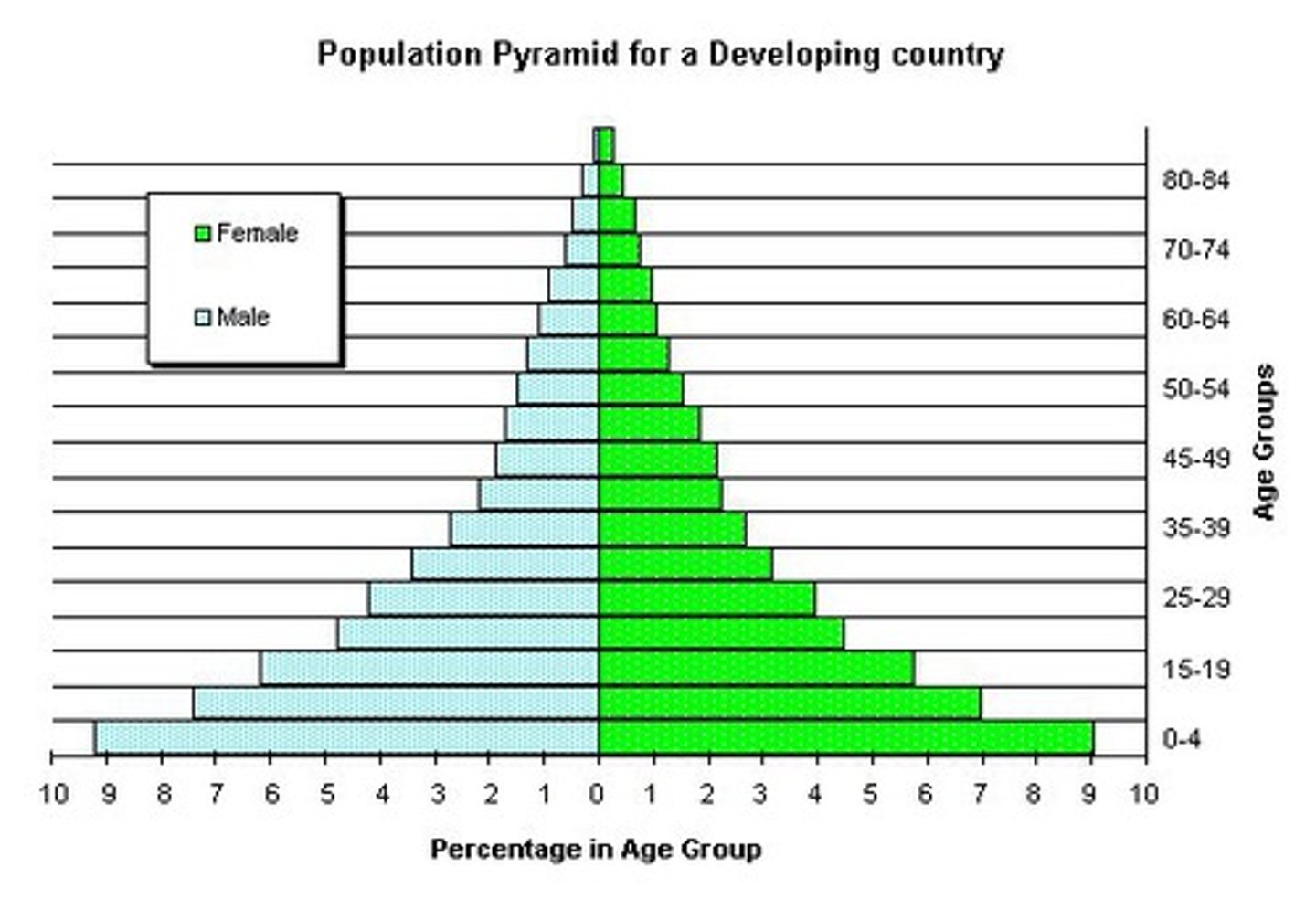
Slow population growth pyramid
Square shape due to slow population growth
- typical shape for an ageing population
- MEDCs = UK
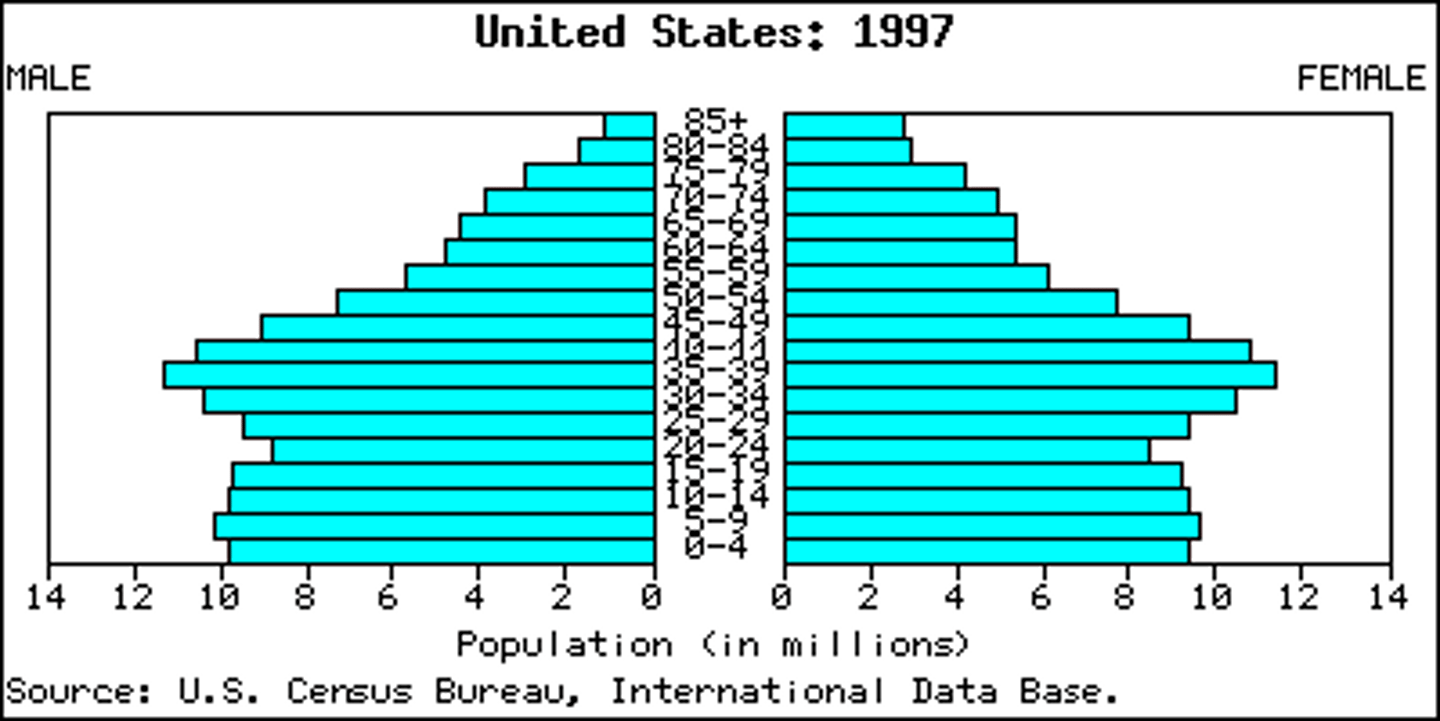
Negative population growth pyramid
Top/middle heavy = fall in population
- very low birth rate
- death rate exceeds birth rate = slight fall in natural population
- many elderly, high dependancy ratio
- very high life expectancy
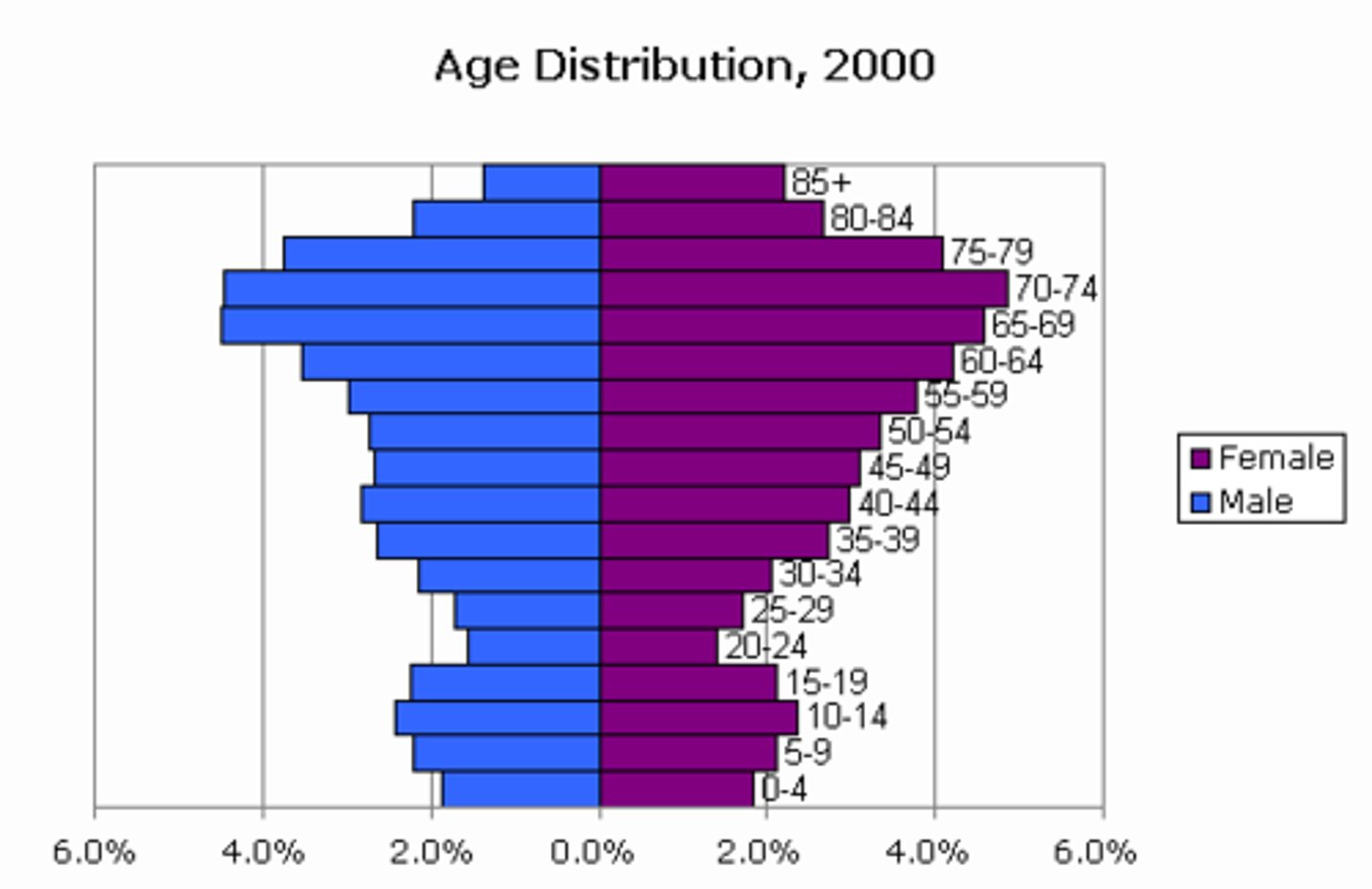
What is a dependancy ratio?
Relationship shown between the economically active and the non-economically active (working and dependant)
How to calculate dependancy ratios?
children (0-14) and elderly (65 and over) divided by economically active x 100 = number of dependants per 100 people working
Comparison between DTM and PP
DTM - natural increases/decreases, shows balance between births and deaths
PP - migration, sex of people, affects of large-scale wars, epidemics of war
Both compare past trends and projection of future structures. Governments can use this kind of information to help plan economic and social policies
Youth population (economic)
- larger tax base
- opportunity to build on an educated society
- not achieving optimum work force
- high prices on food (risk of poverty)
Youth population (social)
- may commit crimes in order to survive
- easier to let children die
- overcrowding
- stronger communities
- homelessness due to unemployment
Youth population (political)
- political instability
- country benefitted
- government blamed if education system fails
Ageing population (economic)
- taxes go up = more pensions to pay for
- slow economic growth --> spent on retirement homes
- working for longer
Ageing population (social)
- increased leisure activities
- more of a community
- medical care strain
- less crime
- demand for unpaid family carers
- less children = more money on older relatives
- pensions are lowered
Ageing population (political)
- only vote for things to benefit them
- less likely to reap the benefits of investment in education or climate change
Impacts of migration - London
- elderly move away to retire (no longer need to live there and may not be elderly-friendly)
- some start in London (build a family) and then move out
Impacts of migration - Eastbourne
- aged 70+ population
- move away for university/more job opportunities
- lower population ages 19-44
- cheaper place to live
- high amount of green space
Push factor examples
a flaw or distress that drives a person away
- population pressure
- poor infrastructure
- inadequate job offer
- bad education chances
- poor healthcare
- ecological problems
- natural disasters
- social implications
Pull factor examples
a benefit that attracts people
- improvement in the standard of living
- better healthcare and availability of services
- varied employment opportunities
- higher wages
- quality of education
- less social issues
- future prospects
Asylum seeker definition
someone who flees their country and applies for asylum
- cannot return to origin country due to founded fear of death or persecution
- usually flee due to civil war or natural disaster
Refugee definition
- person fleeing
- civil war or natural disaster
- an asylum seeker whose application has been successful
What is Lee's push-pull model?
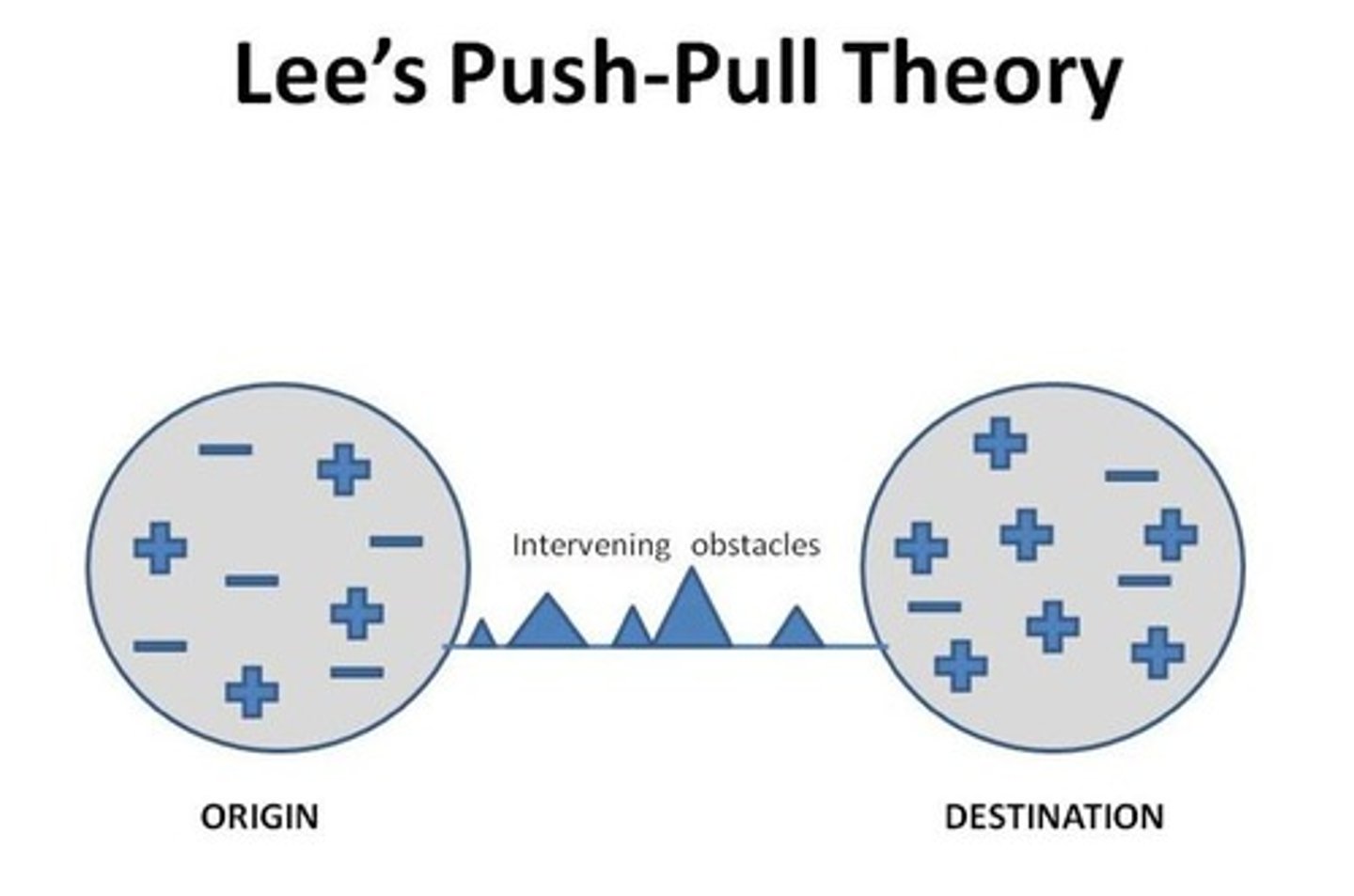
Stage 1 of the DTM
- no birth control
- short life expectancy
- disease, war, famine
- slow population growth
- high and fluctuating birth and death rate
- regions such as Amazonia
Stage 2 of the DTM
- lack of birth control
- economic growth = improved sanitation, healthcare and personal health
- population explosion
- decrease in death rate, high birth rate
- poorer areas such as LICs, Mali
Stage 3 of the DTM
- birth rate falls due to birth control
- more women would rather work than start a family
- smaller families desired
- birth rate falls, death rate continues to fall
- South Africa, Morocco, UAE
Stage 4 of the DTM
- fluctuations between birth rate and death rate due to economic recessions (falls) and optimisms (rises)
- United Kingdom
Stage 5 of the DTM
- birth rate falls due to economic reasons
- death rate increases due to environment and society such as foods high in sugar and salt
- fluctuations in death and birth rate
- economically developed countries such as Japan
Host country - social implications
- cultural advantage
- maternal, infant healthcare pressure
- school pressure
- social pressure
- ethnic and racial tensions
Host country - economic implications
- cheap labour
- working migrants pay/spend taxes
- increased workforce size
- reduced dependancy
- job pressure
- unemployment
Host country - political implications
- growth of political parties
- pressure to control immigration
Host country - health implications
- increased infectious diseases
- healthcare pressure increased
- non-communicable and infectious disease
Host country - environmental implications
- increased demands for energy, water, food, land for development
Home - demographic implications
- lower birth rates (people of a child-bearing age leave)
- population unbalanced
- loss of male population
Home - social implications
- reduced healthcare and education pressure
- traditional culture loss
- family unit breakups
- community unit breakups
- may lose qualified workers (e.g. doctors, nurses, teachers)
Home - economic implications
- reduced pressure on resources less unemployment
- lose skilled people from workforces
- less agricultural and industrial production
Home - health implications
- migrants leave infected areas
- less healthcare management (vulnerable remain at risk)
Home - environmental implications
- areas may be abandoned
- less environmental management