Pulmonary Exam 2: SRBD for the Dentist (Dr. Guerrero)
 Call Kai
 Learn
Learn Practice Test
 Spaced Repetition
 Match
Match Flashcards
 Knowt Play
1/75

There's no tags or description
Looks like no tags are added yet.
Name | Mastery | Learn | Test | Matching | Spaced | Call with Kai |
|---|
No analytics yet
Send a link to your students to track their progress
76 Terms
Define the following:
- Natural physiologic function required for survival
- Active neurobehavioral state maintained through a highly organized interaction of neurons and neural circuits in the CNS
Sleep
Define the following:
"A reversible behavioral state of perpetual disengagement from and unresponsiveness to the environment"
Sleep
Define the following:
"a state in which a person is aware of and responds to sensory input from the environment"
Wakefulness
The brain constantly uses energy and accounts for ____% of the energy used by the body
20%
T/F: Although brain activity changes during sleep, the amount of oxygen consumed by the brain during sleep is the same as in the awake state. HOWEVER, patients with a breathing issue during sleep such as sleep apnea or COPD will usually have a lower oxygen level
True
The brain can only survive for _____ minutes if is completely deprived of oxygen
4
_________ is essential for:
- Recovery from fatigue
- Tissue repair (heart and skeletal muscles)
- Memory consolidation
- Brain function
Sleep
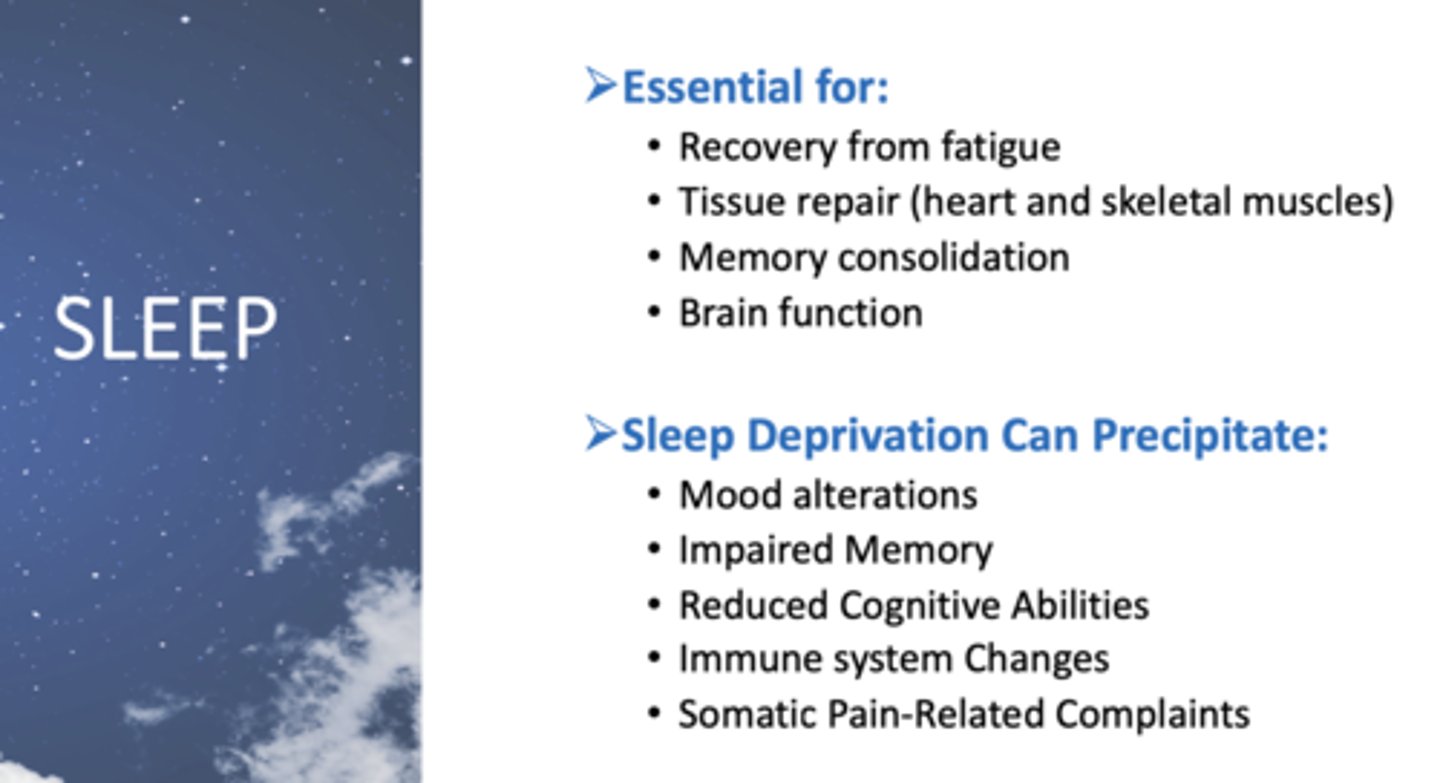
Sleep deprivation can precipitate what five things?
- Mood alterations
- Impaired memory
- Reduced cognitive abilities
- Immune system changes
- Somatic pain-related complaints
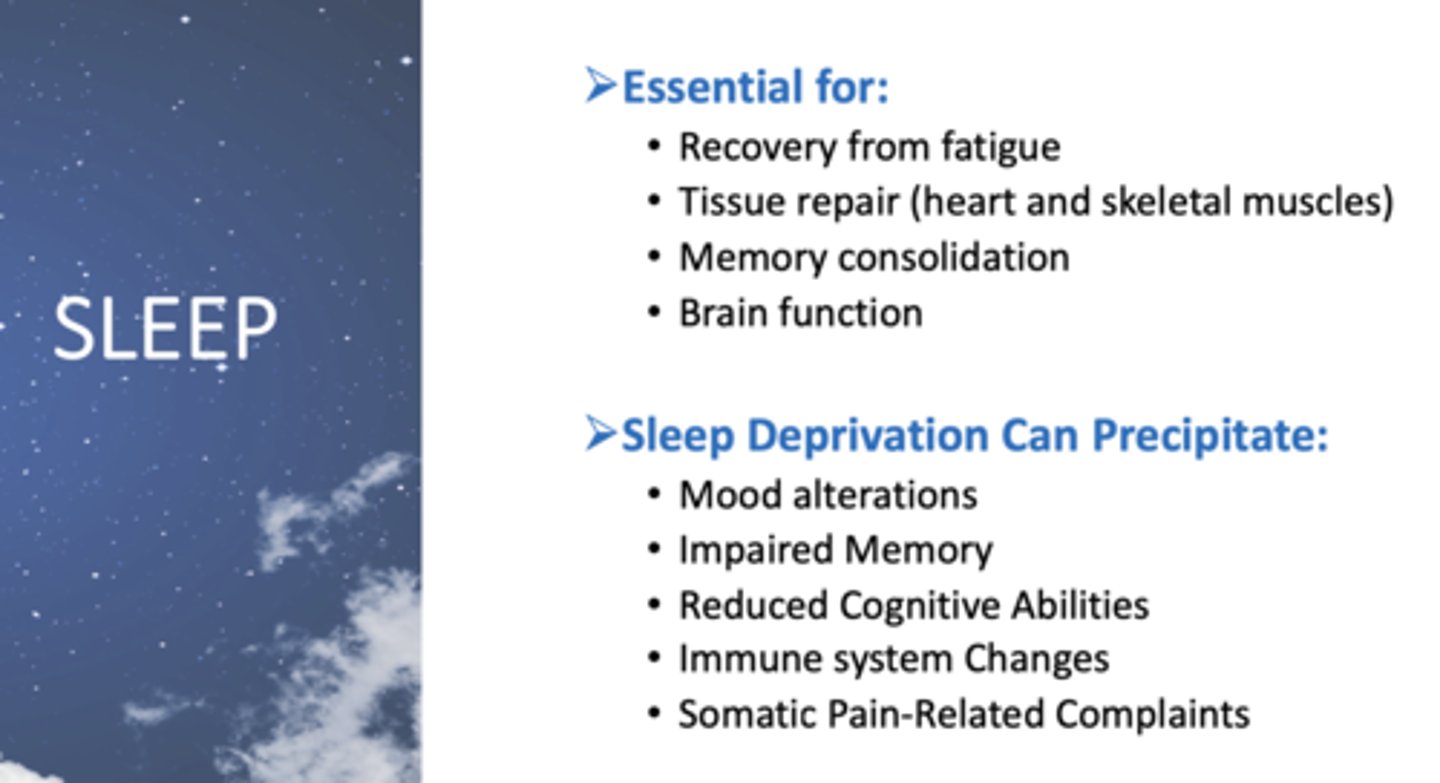
Humans, plants, animals, and many organisms follow a daily cycle of biological activity based on a 24 hour period known as the ____________ which allows the organism to conserve energy
circadian rhythm
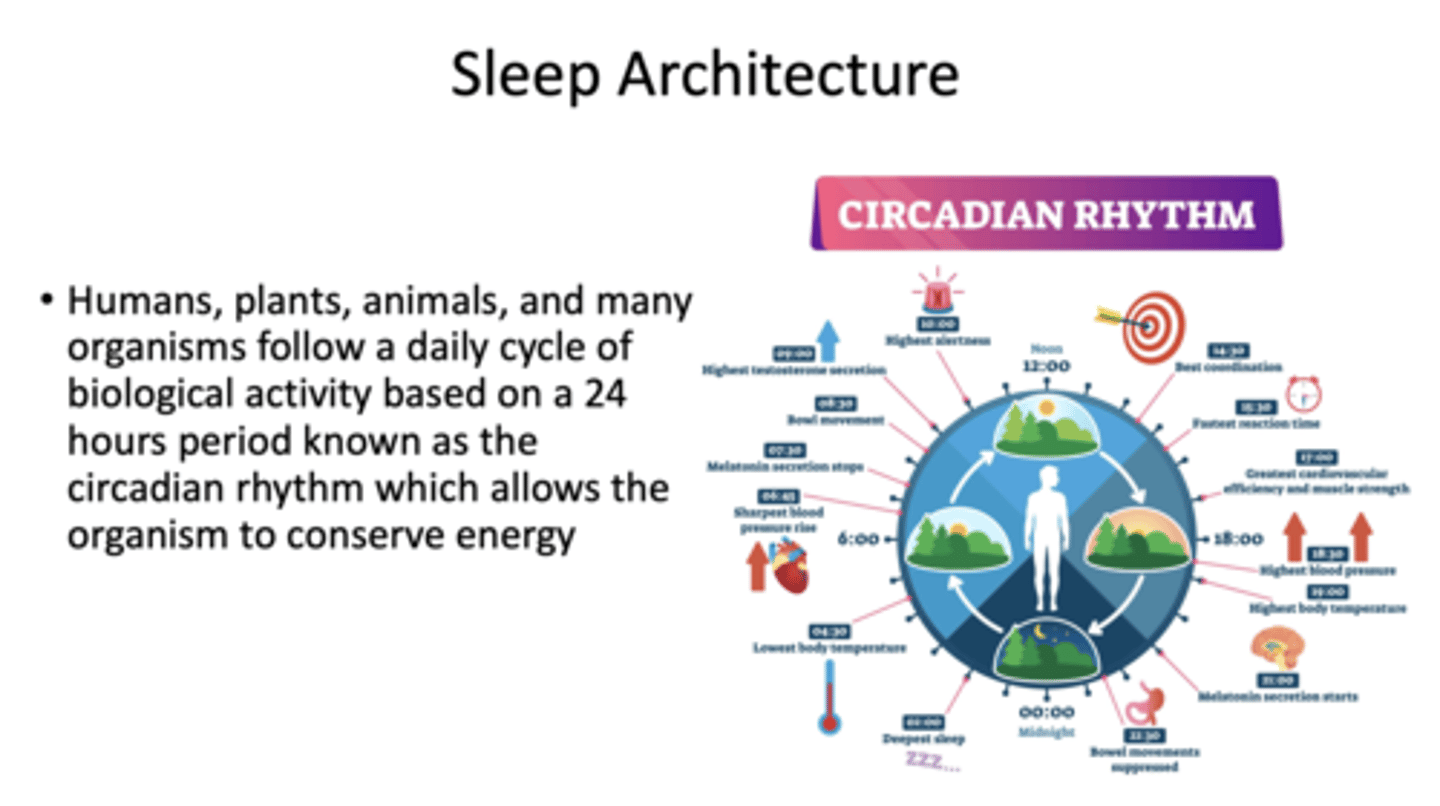
______________ is generated by an internal clock that is influenced by environmental variations such as cycles of light and dark corresponding to day and night
Circadian rhythm
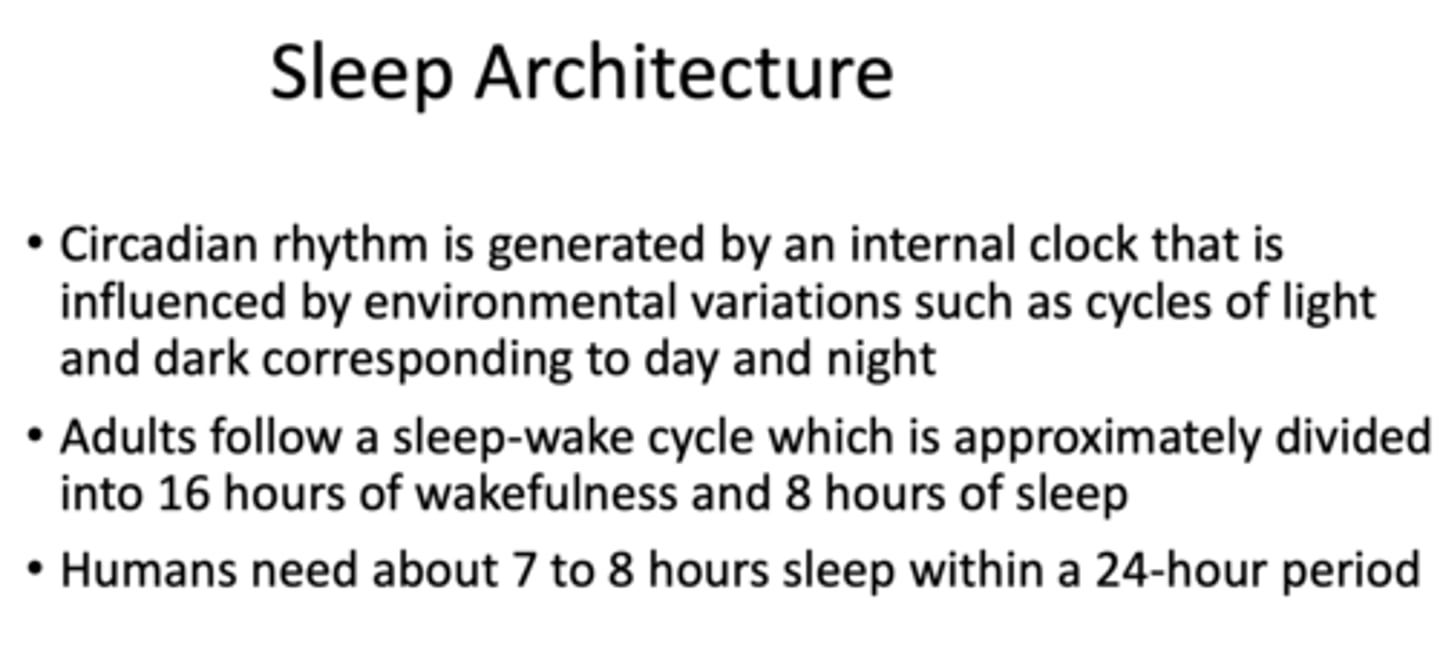
Sleep cycles occur between _________ and _________ sleep alternating in recurrent 90-minute cycles anywhere from three to six times a night
NREM, REM
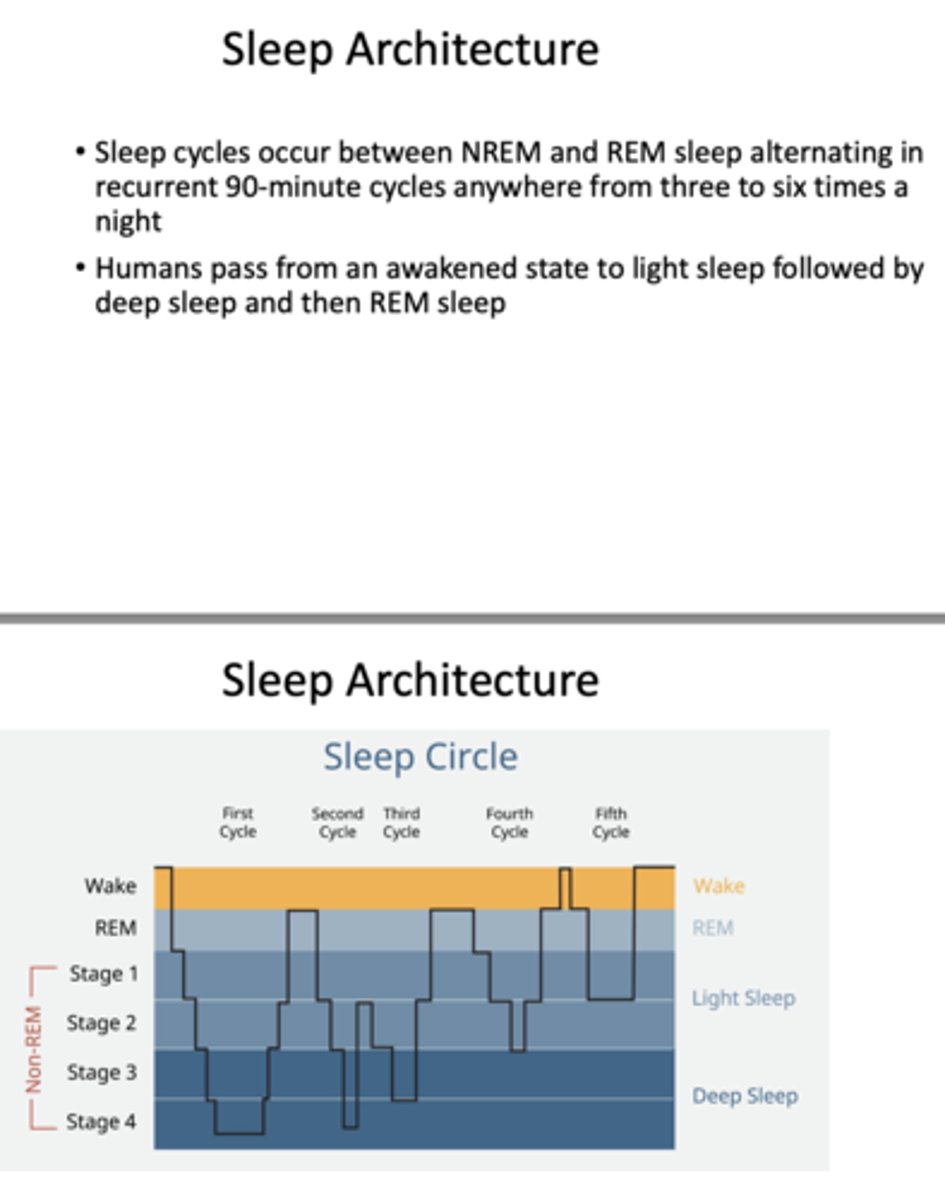
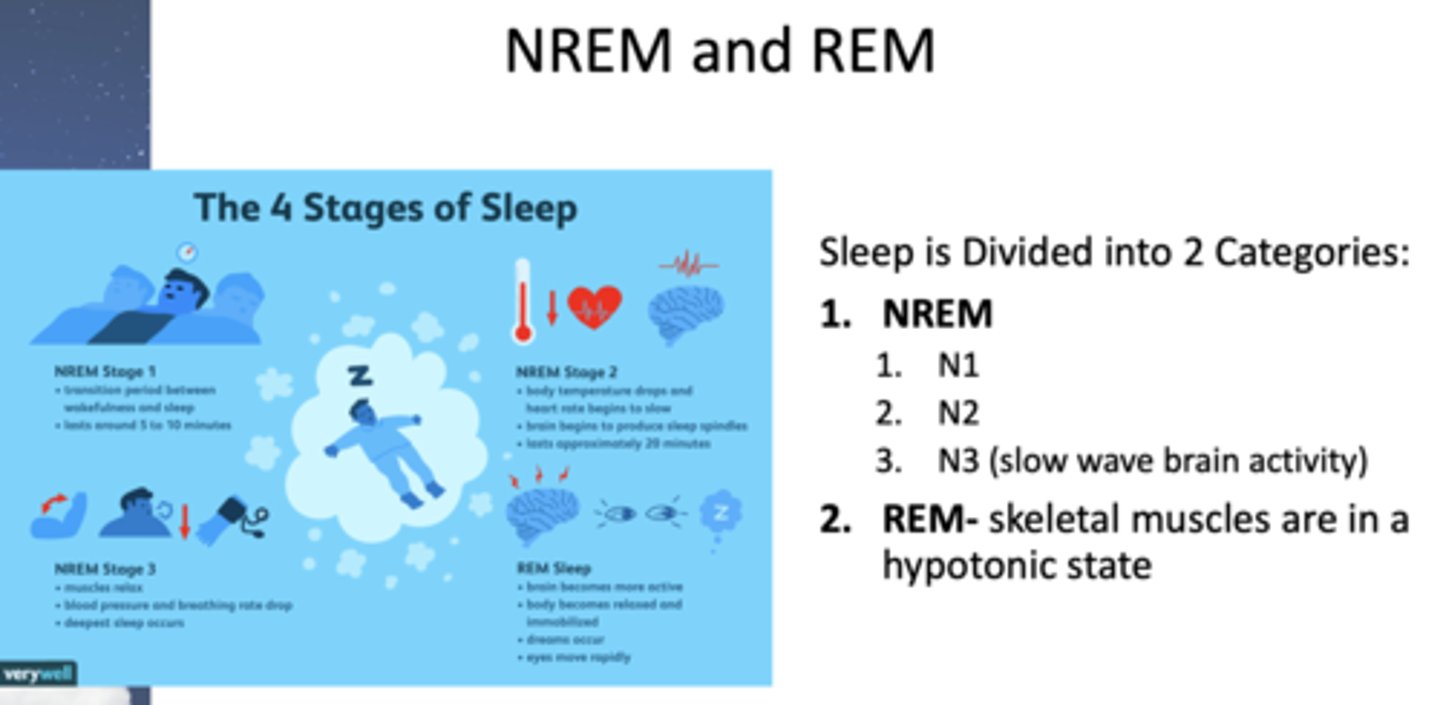
Sleep is Divided into what two categories?
1. NREM
1. N1
2. N2
3. N3 (slow wave brain activity)
2. REM-skeletal muscles are in a hypotonic state
What is the sleep study that involves recording the multiple physiologic variables that affect sleep while the patient is asleep?
polysomnography
Which sleep study is performed in a hospital or sleep lab where audio and video studies of the patient are taken?
polysomnogram
Sleep staging can only be accomplished using what test?
EEG
Which test measures brain activity?
EEG (electroencephalogram)
Which test monitors eye movements?
EOG (electrooculogram)
Which test records muscle activity?
EMG (electromyogram)
T/F: Home units (AKA Home sleep study) are also available for studying patients in their usual sleep setting, BUT are not as comprehensive as a in lab and do not have the capability to report sleep staging
True
The most common sleep disorders associated with orofacial pain/dentistry are what? (3)
- Insomnia
- Sleep bruxism
- Sleep apnea
What has the following characteristics?
- An inability to fall asleep or remain asleep at least 3 times per week for longer than one month
- Most common sleep complaint and has been estimated to affect 10 to 30% of the adult population
- Higher prevalence rate in women and the elderly
Insomnia
Define the following:
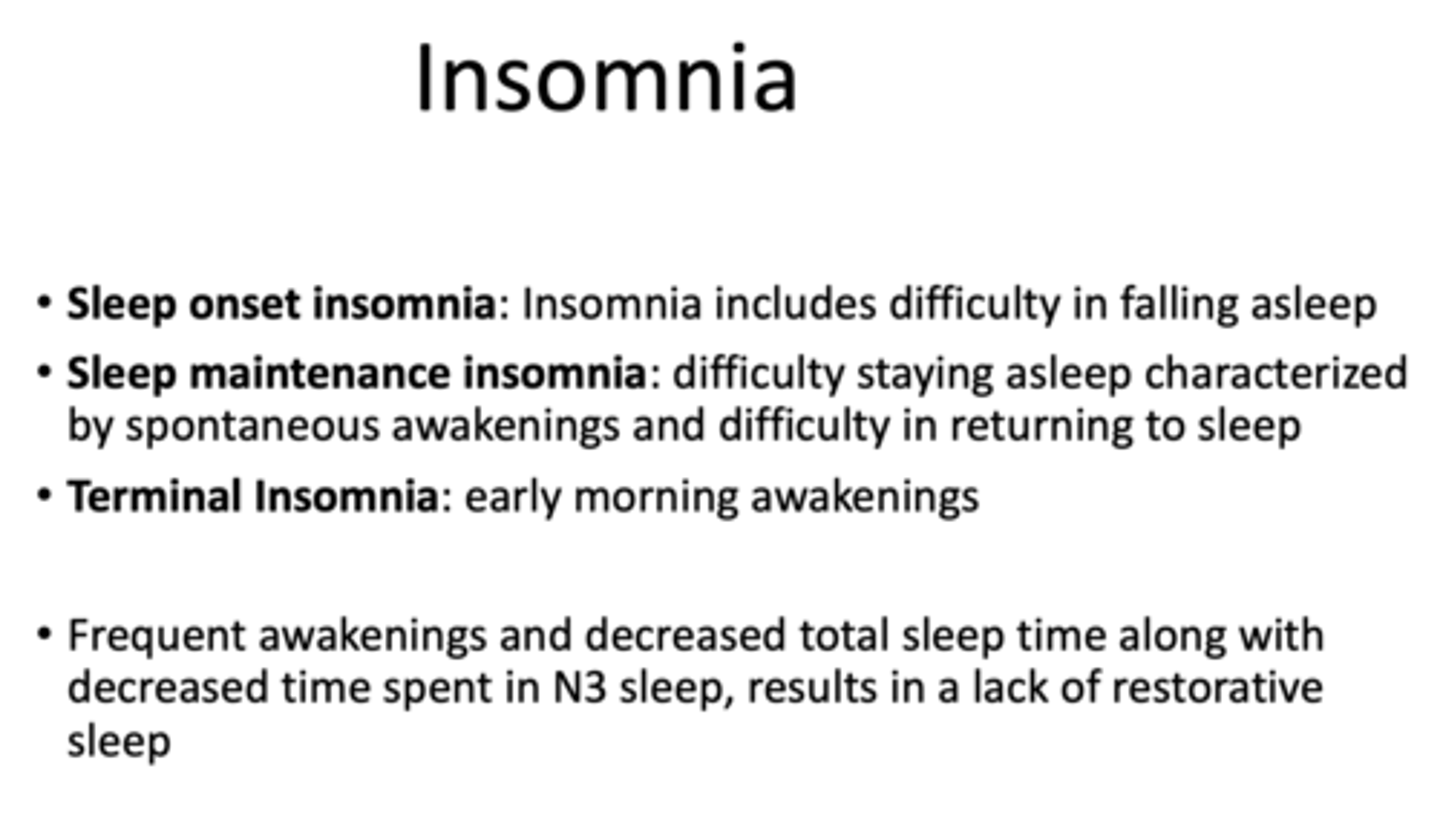
Insomnia includes difficulty in falling asleep
Sleep onset insomnia
Define the following:
Difficulty staying asleep characterized by spontaneous awakenings and difficulty in returning to sleep
Sleep maintenance insomnia
Define the following:
Early morning awakenings
Terminal insomnia
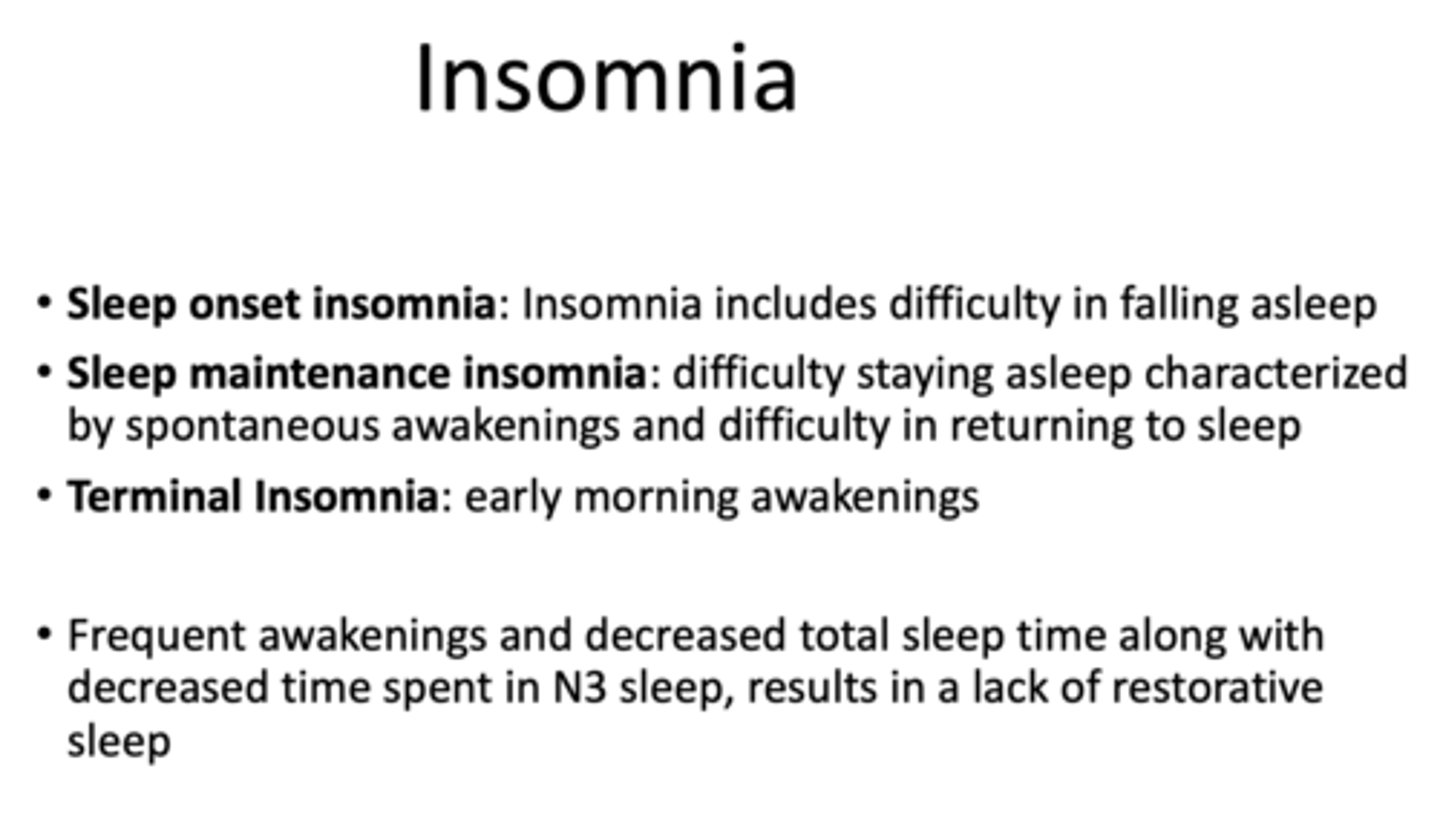
Frequent awakenings and decreased total sleep time along with decreased time spent in ______sleep, results in a lack of restorative sleep
N3 (Deep)
Define the following:
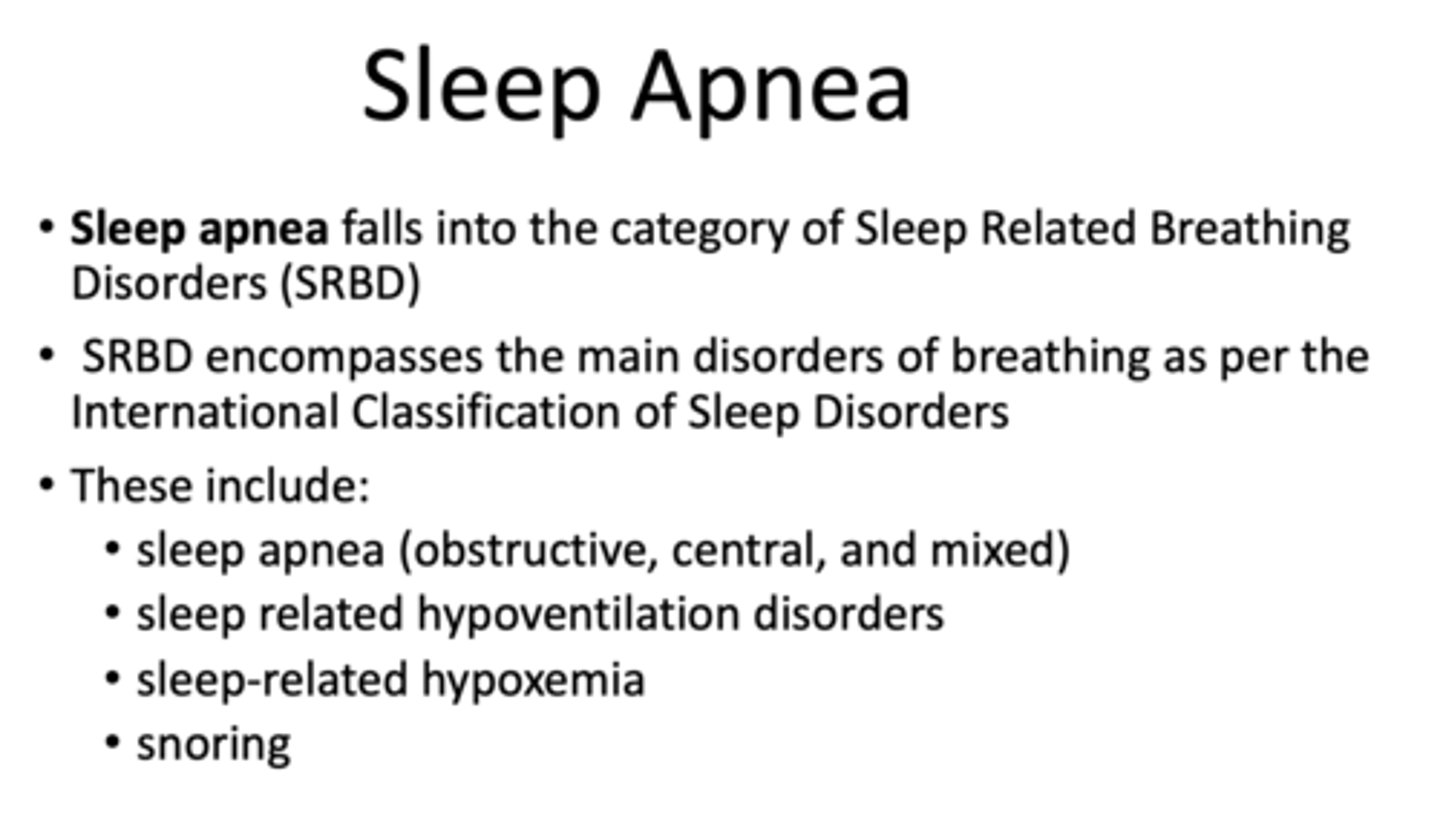
- Falls into the category of Sleep Related Breathing Disorders (SRBD)
- SRBD encompasses the main disorders of breathing as per the International Classification of Sleep Disorders
Sleep apnea
What has the following characteristics?
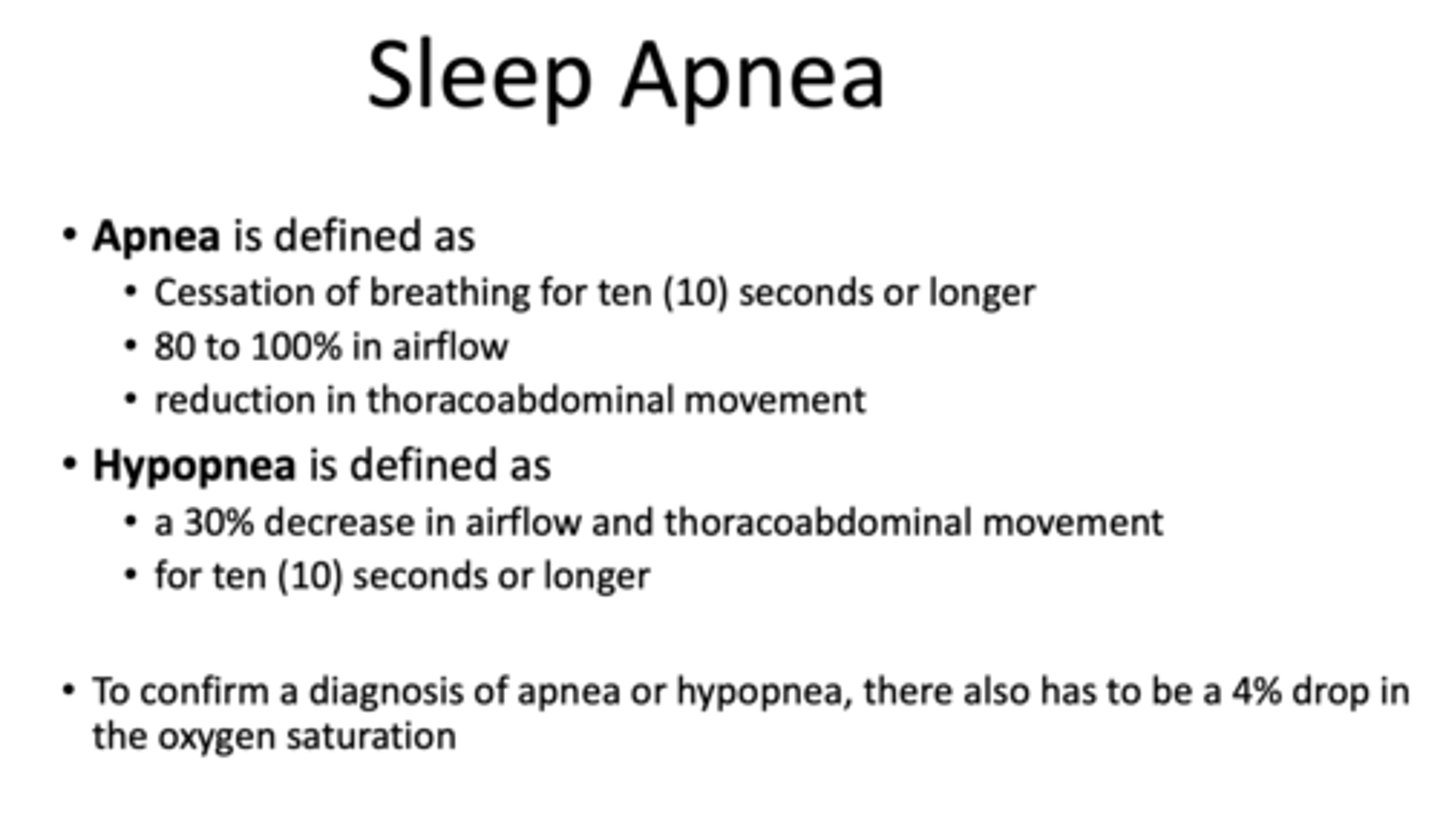
- Cessation of breathing for 10 sec or longer
- 80-100% in airflow
- Reduction in thoracoabdominal movement
apnea
What has the following characteristics?
- 30% decrease in airflow and thoracoabdominal movement
- 10 seconds or longer
hypopnea
To confirm a diagnosis of apnea or hypopnea, there also has to be a ___% drop in oxygen saturation
4%
T/F: As dentists we can diagnose sleep apnea
False (Dentists screen and refer)
What involves temporary cessation of breathing for 10 sec or longer during sleep?
Obstructive Sleep Apnea (OSA)
When there is a persistent effort to breathe and it is associated with gasping and choking (may cause patient to awaken and have fragmented sleep), what type of sleep apnea?
Obstructive Sleep Apnea (OSA)
OSA is due to obstruction of the oropharyngeal airway usually at the level of the ________ or ___________
tongue, epiglottis
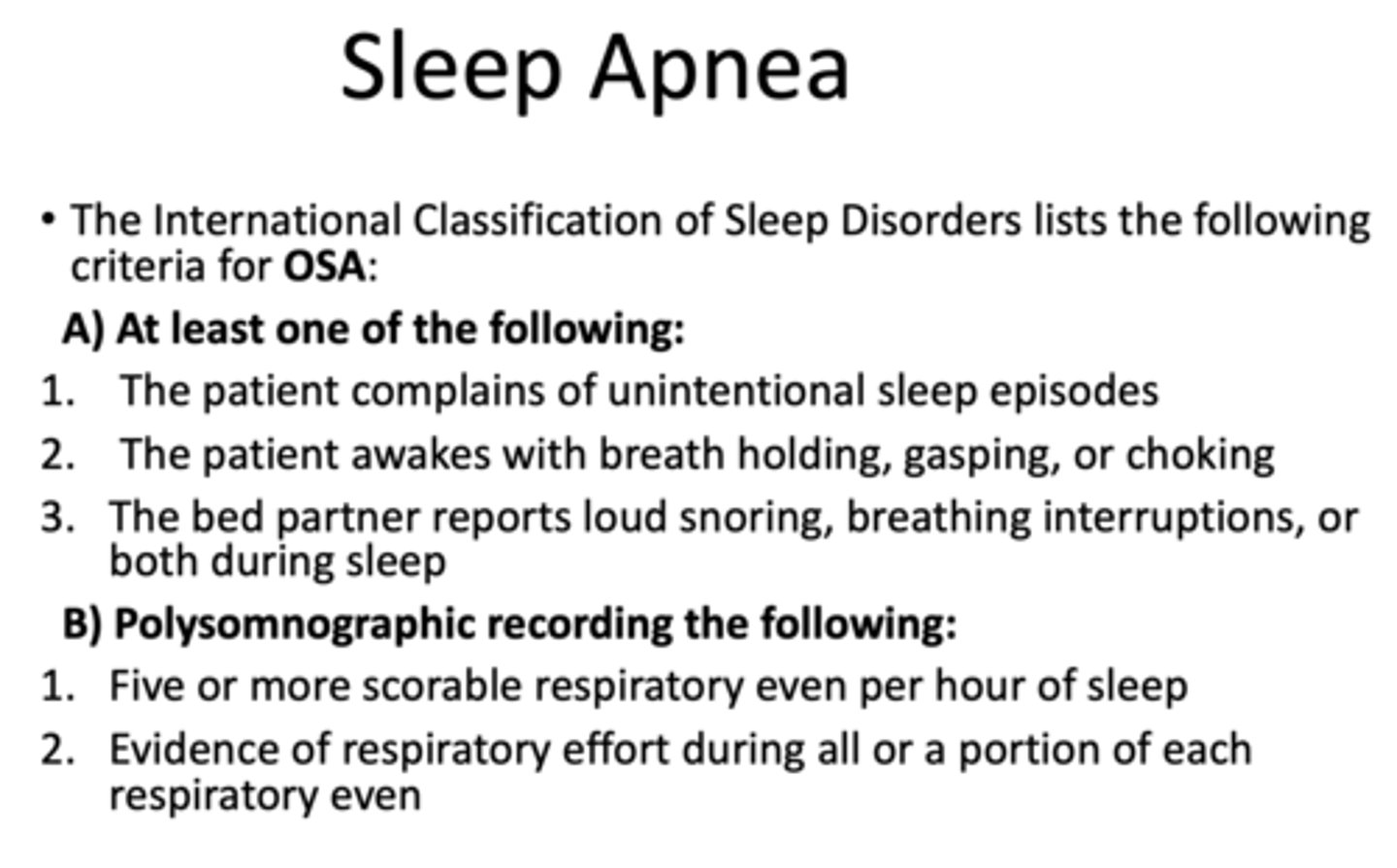
The International Classification of Sleep Disorders lists the following criteria for _______:
A) At least one of the following:
1. The patient complains of unintentional sleep episodes
2. The patient awakes with breath holding, gasping, or choking
3. The bed partner reports loud snoring, breathing interruptions, or both during sleep
B) Polysomnographic recording the following:
4. Five or more scorable respiratory events per hour of sleep
5. Evidence of respiratory effort during all or a portion of each respiratory event
Obstructive Sleep Apnea (OSA)
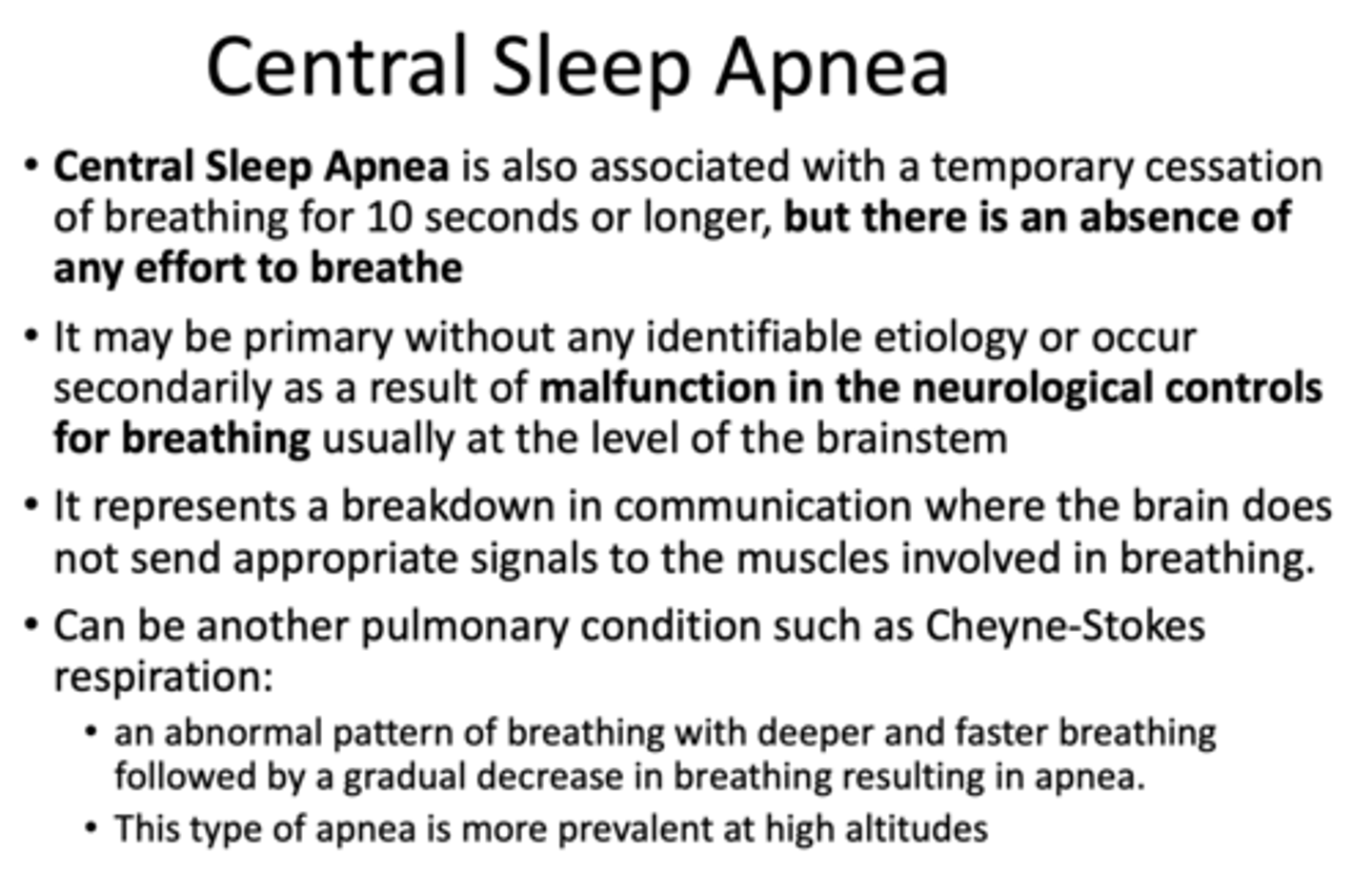
What has the following characteristics?
- Associated with a temporary cessation of breathing for 10 seconds or longer, but there is an absence of any effort to breathe
- It may be primary without any identifiable etiology or occur secondarily as a result of malfunction in the neurological controls for breathing usually at the level of the brainstem
Central Sleep Apnea
___________ is the term used when OSA and central sleep apnea occur at the same time over a ten second period.
Mixed Sleep Apnea
Sleep apnea is measured with mild, moderate, and severe by what?
apnea-hypopnea index (AHI)
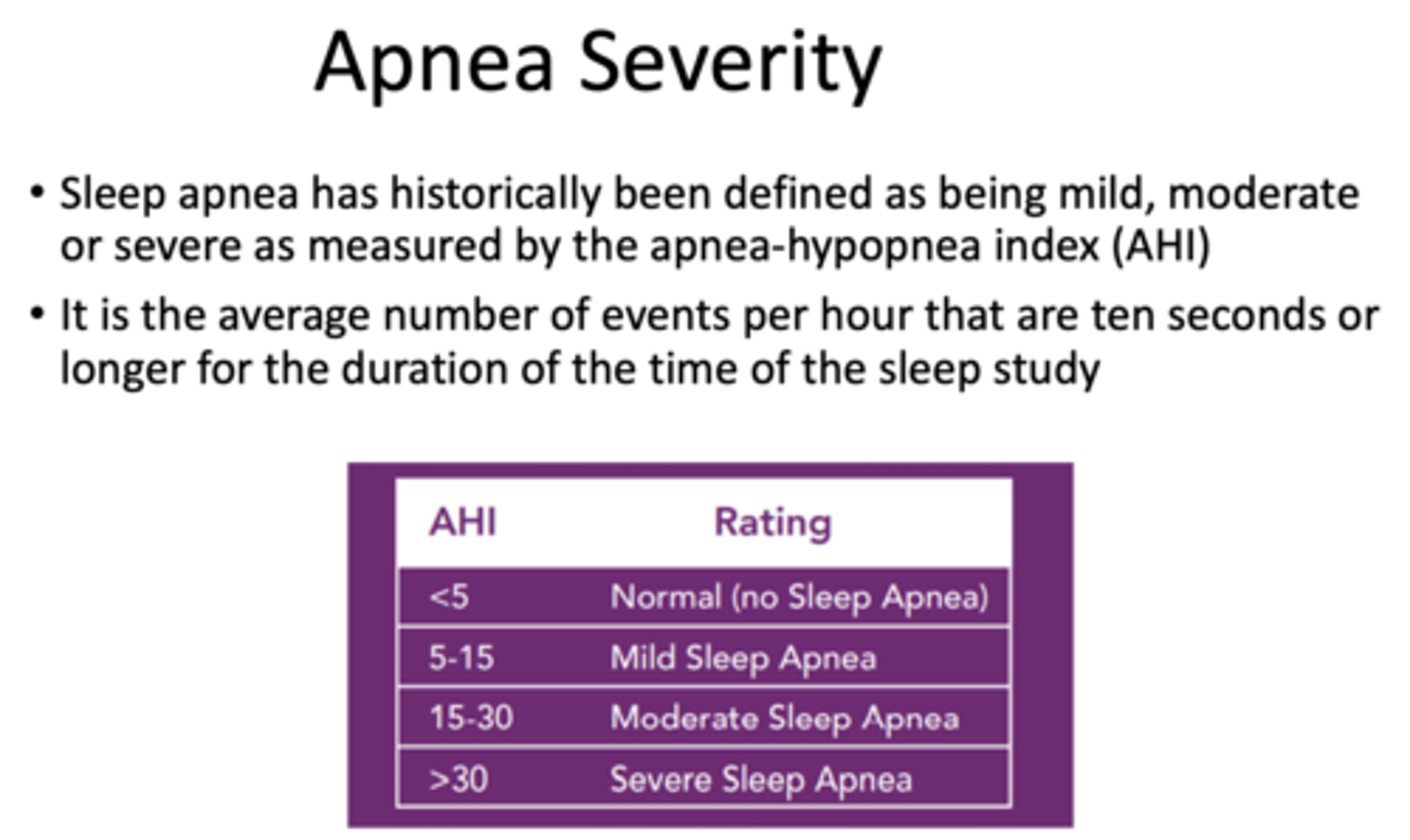
What is the AHI for normal?
<5
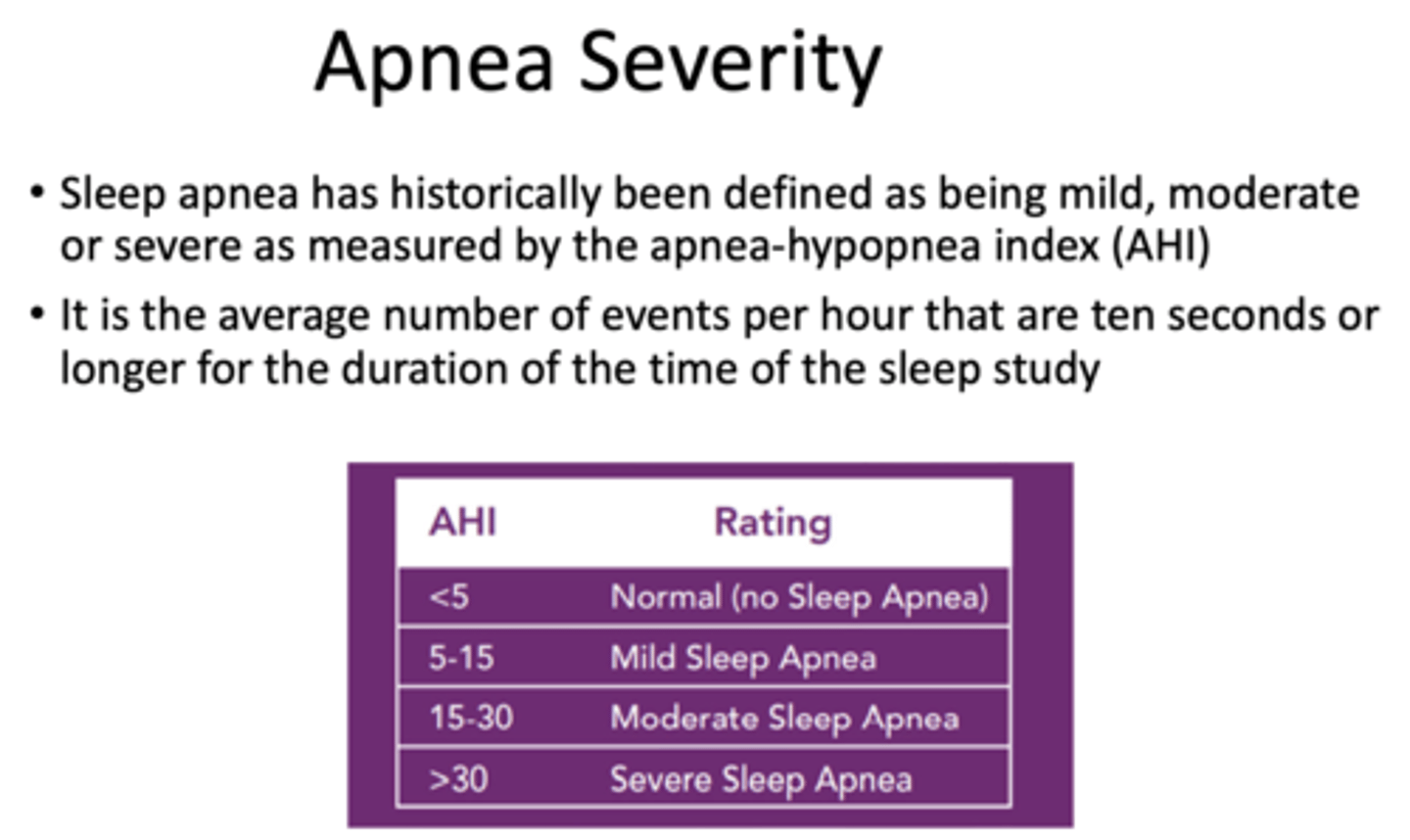
What is the AHI for mild sleep apnea?
5-15
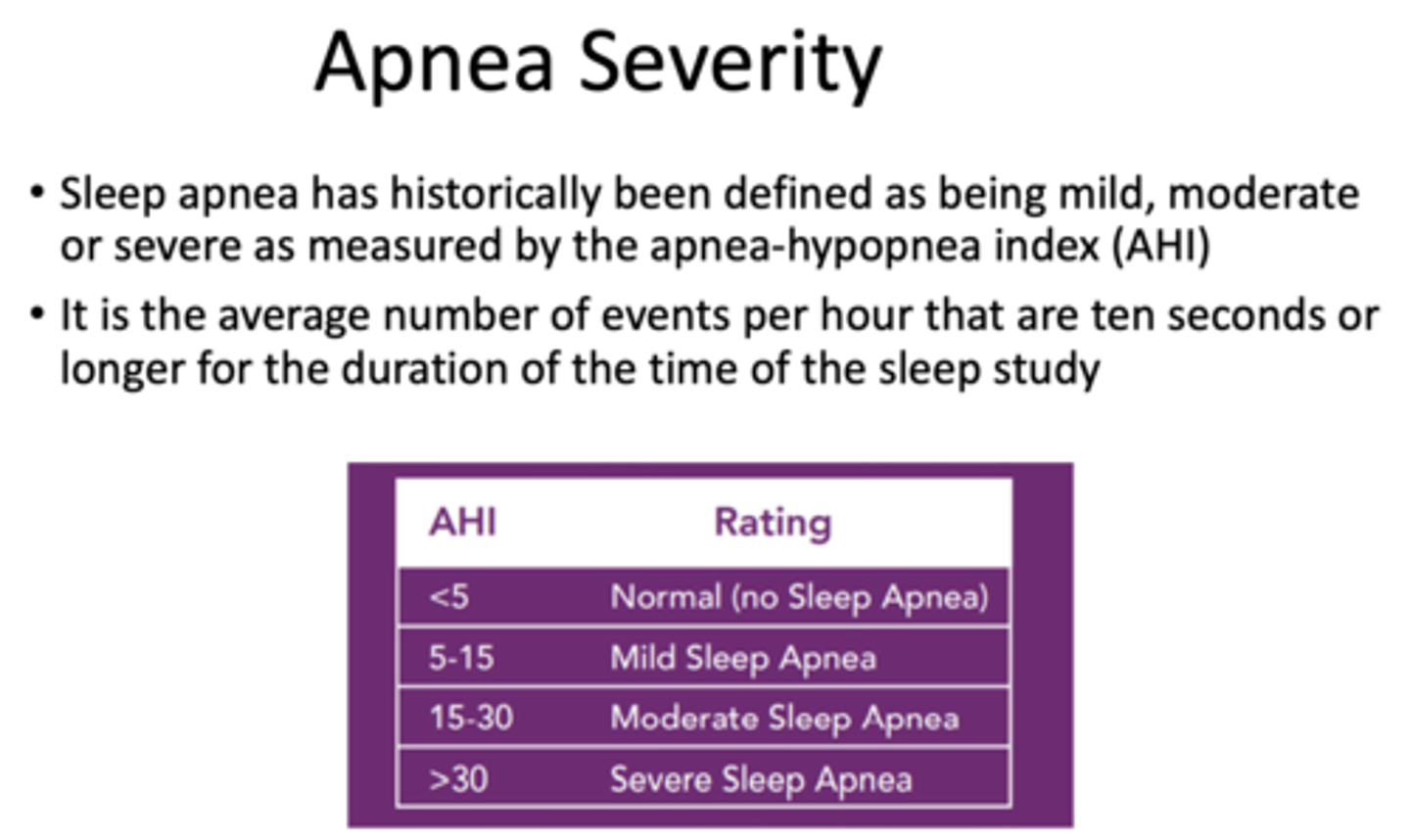
What is the AHI for moderate sleep apnea?
15-30
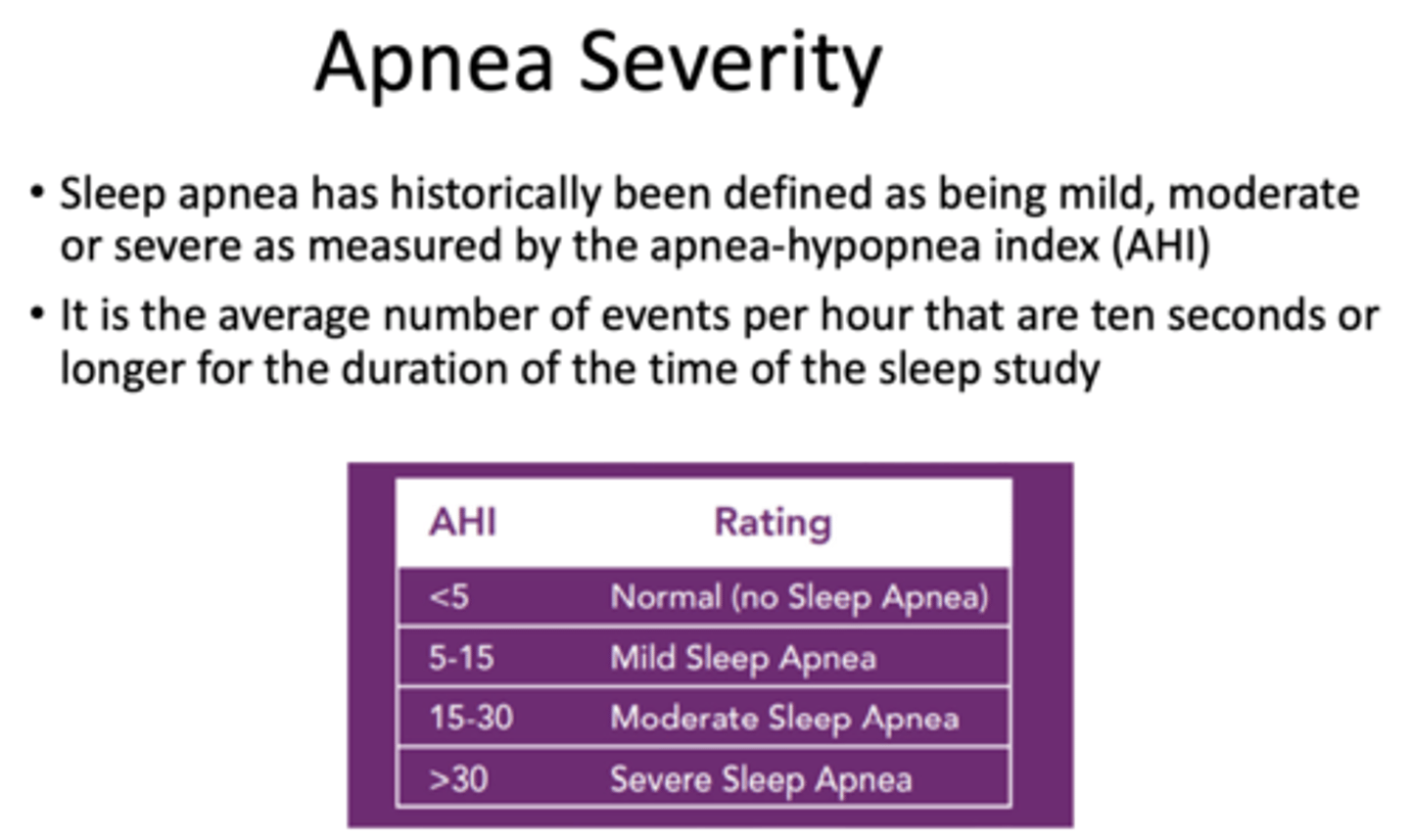
What is the AHI for severe sleep apnea?
>30
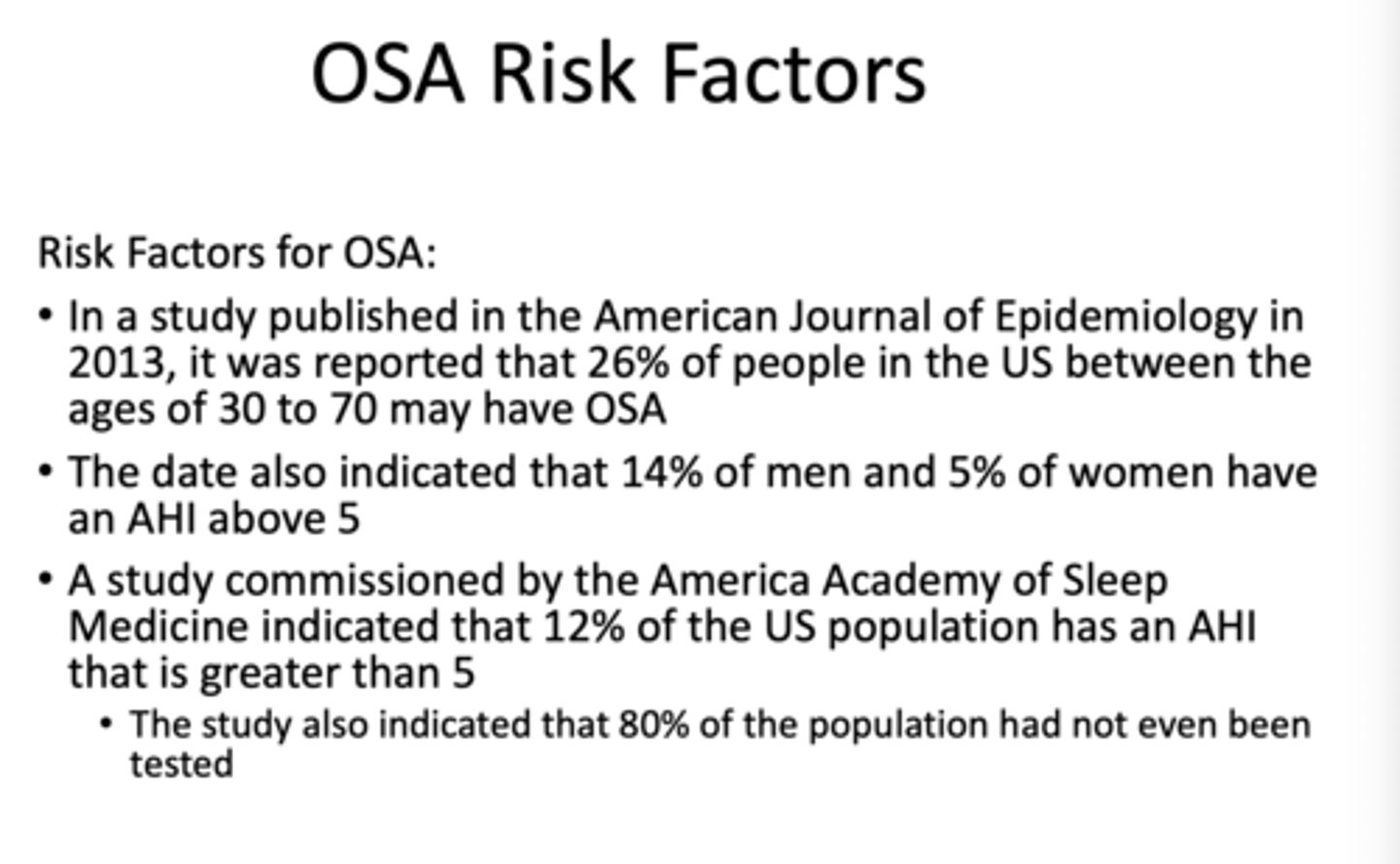
In a study published in the American Journal of Epidemiology in 2013, it was reported that 26% of people in the US between the ages of 30 to 70 may have ___________
Obstructive Sleep Apnea (OSA)
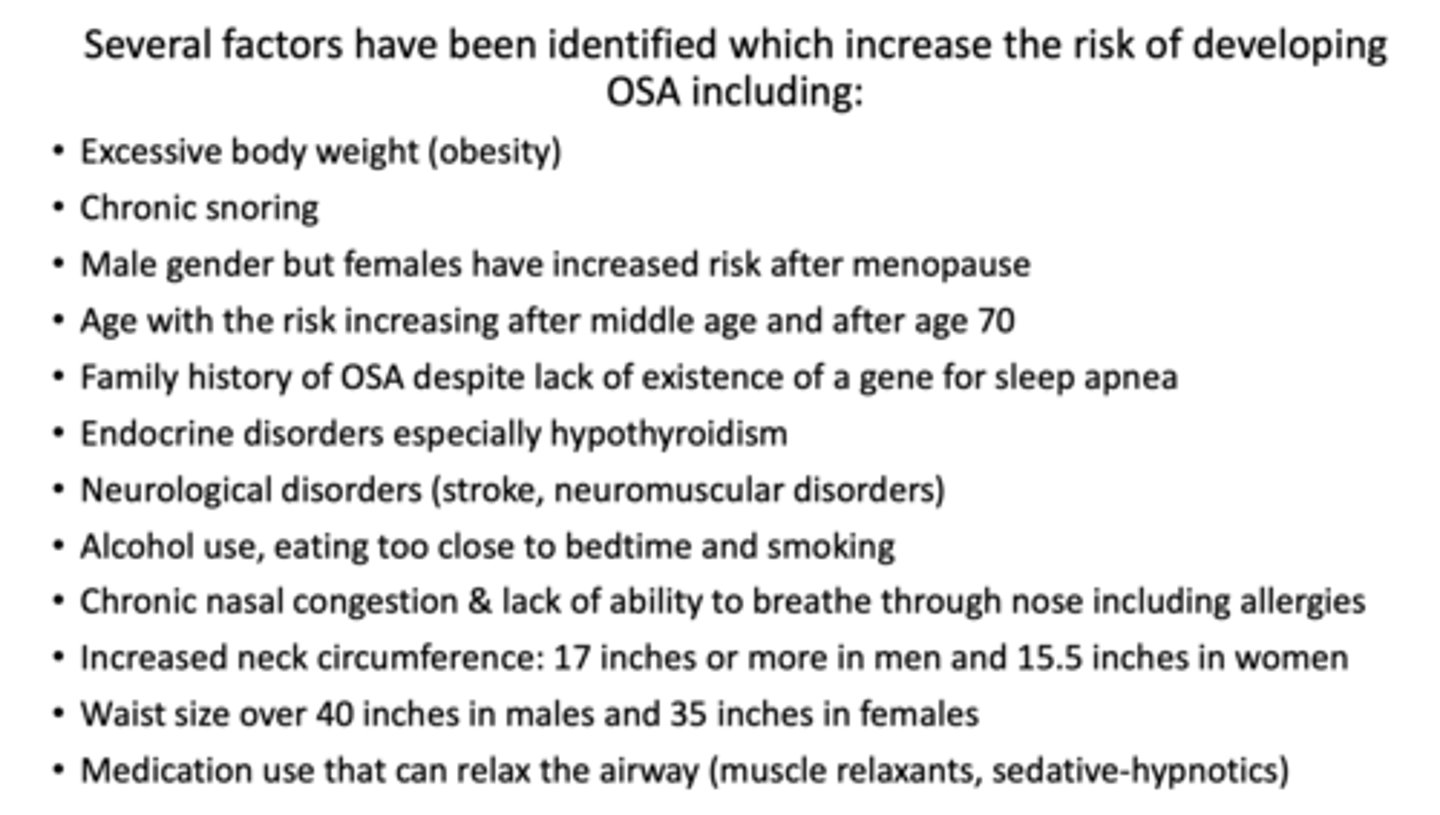
These are risk factors for what?
- Obesity
- Snoring
- Male gender
- Age
- Family History
- Hypothyroidism
- Neurological disorders
- Alchohol
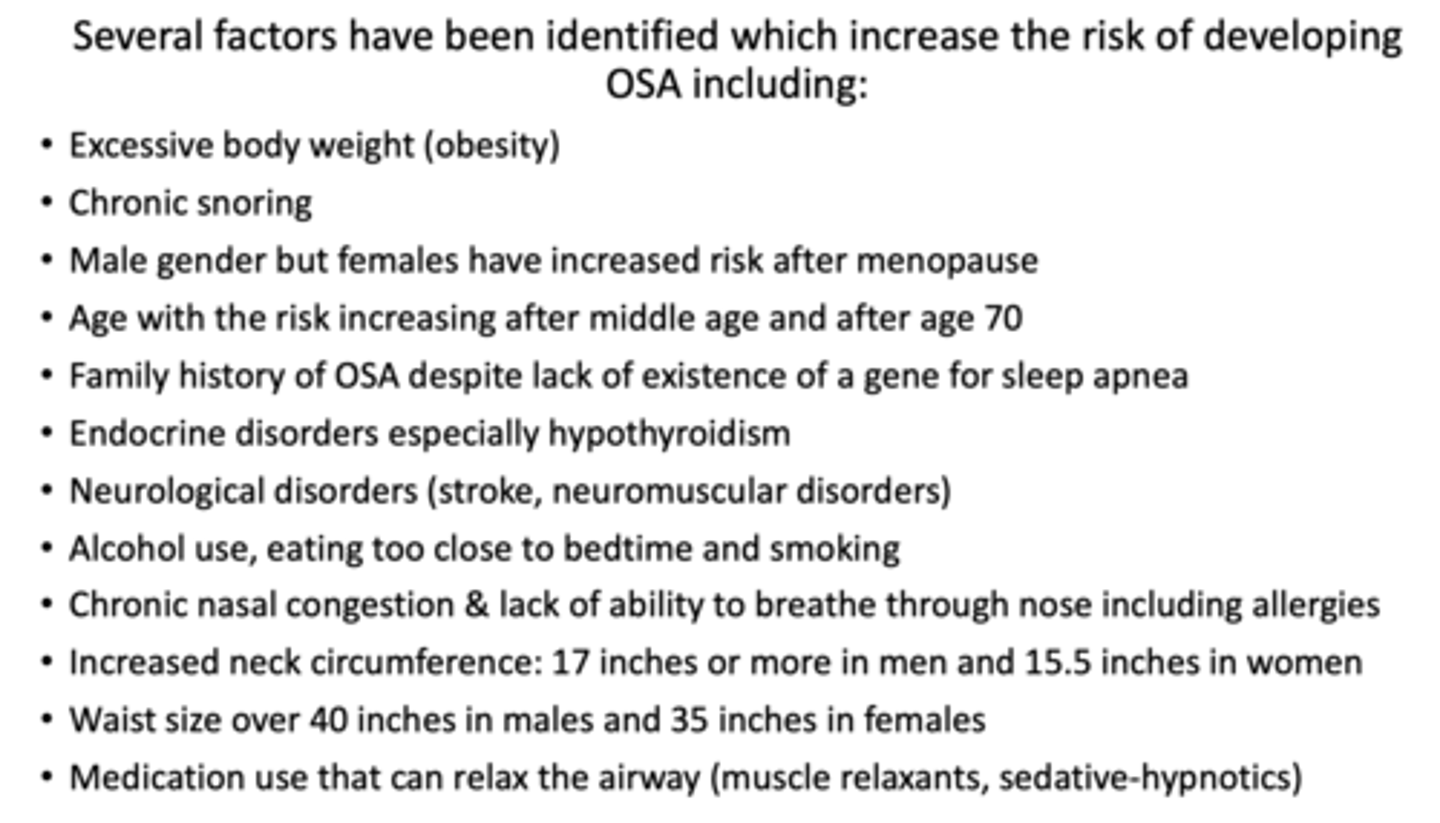
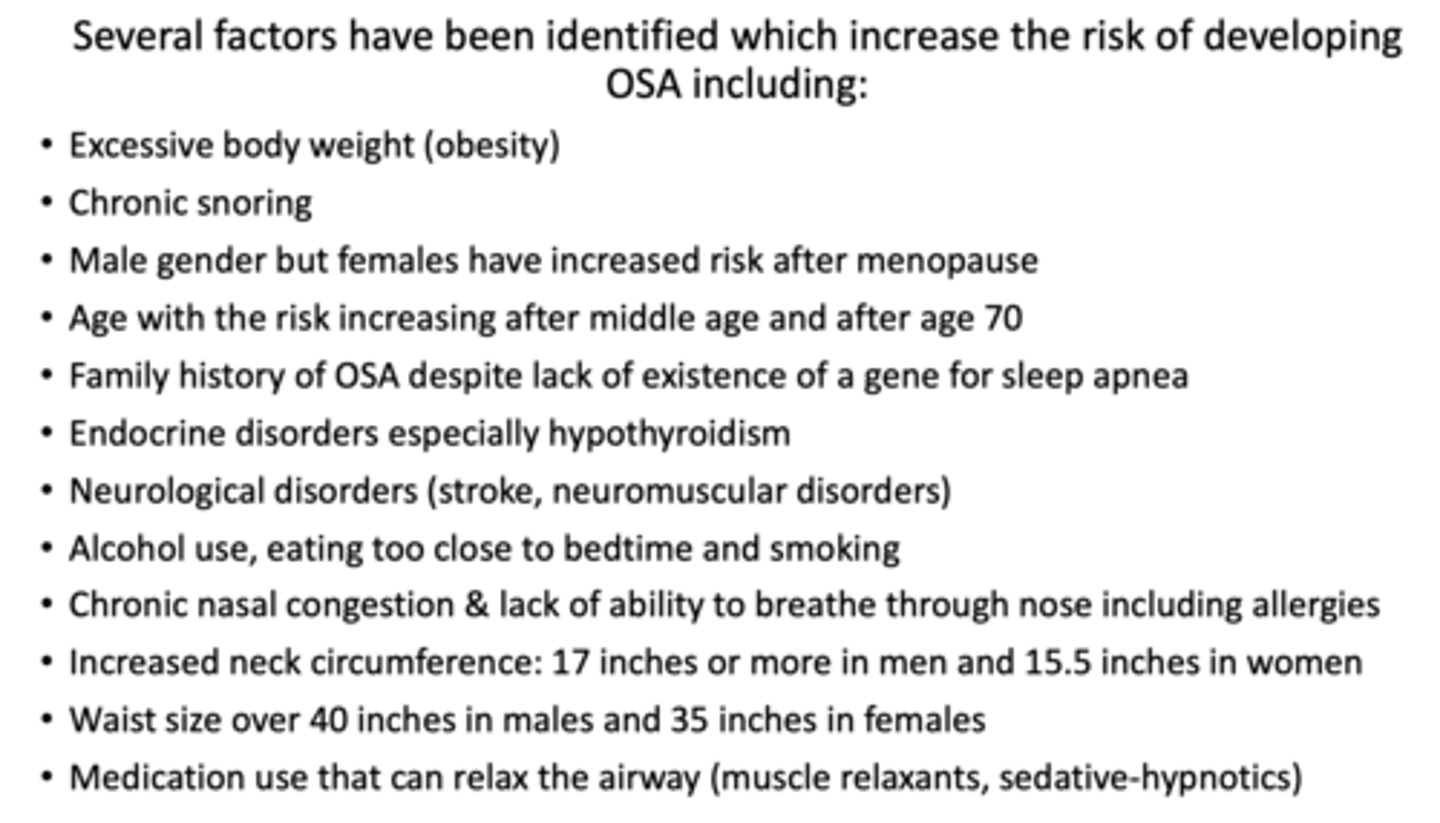
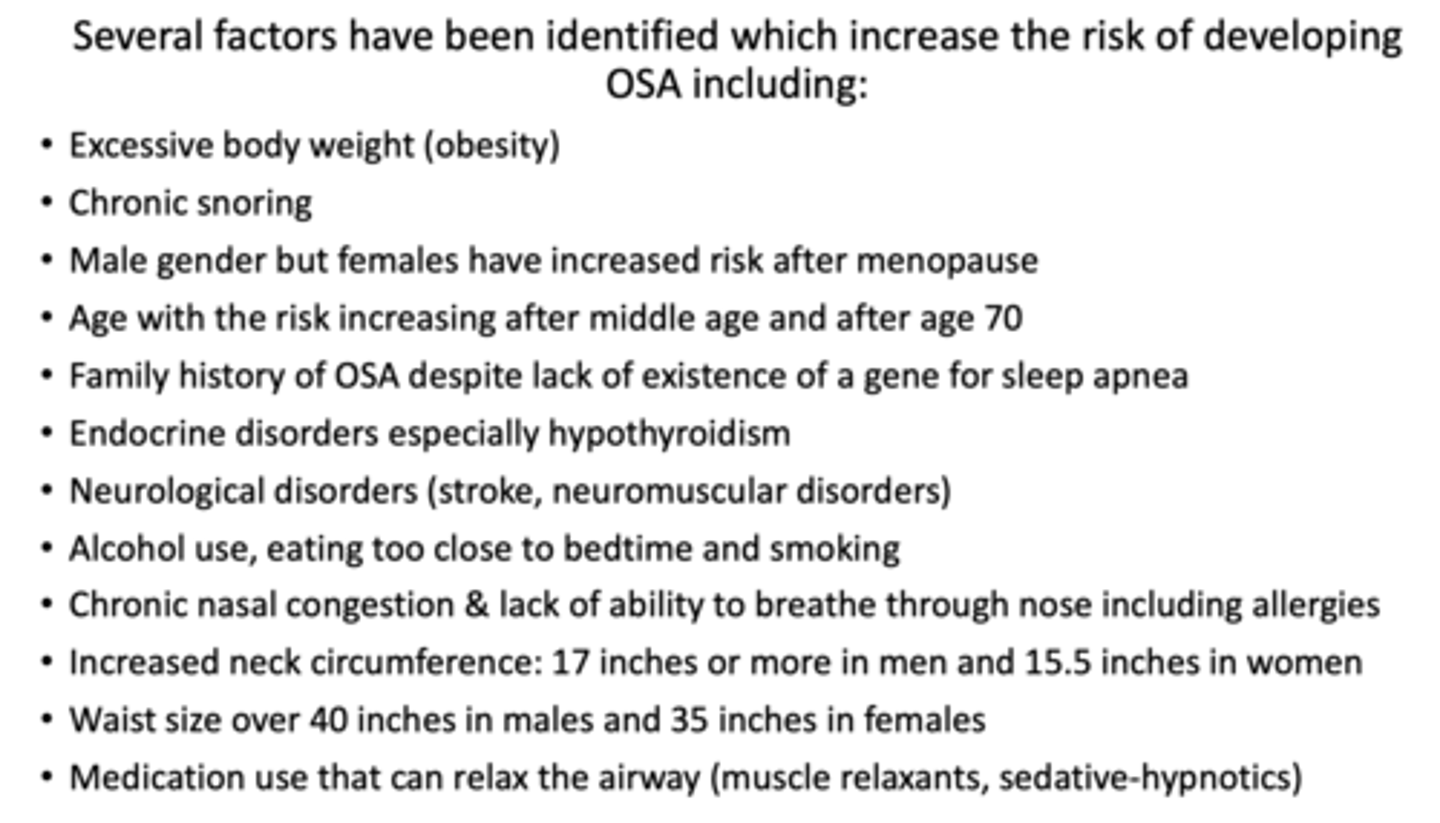
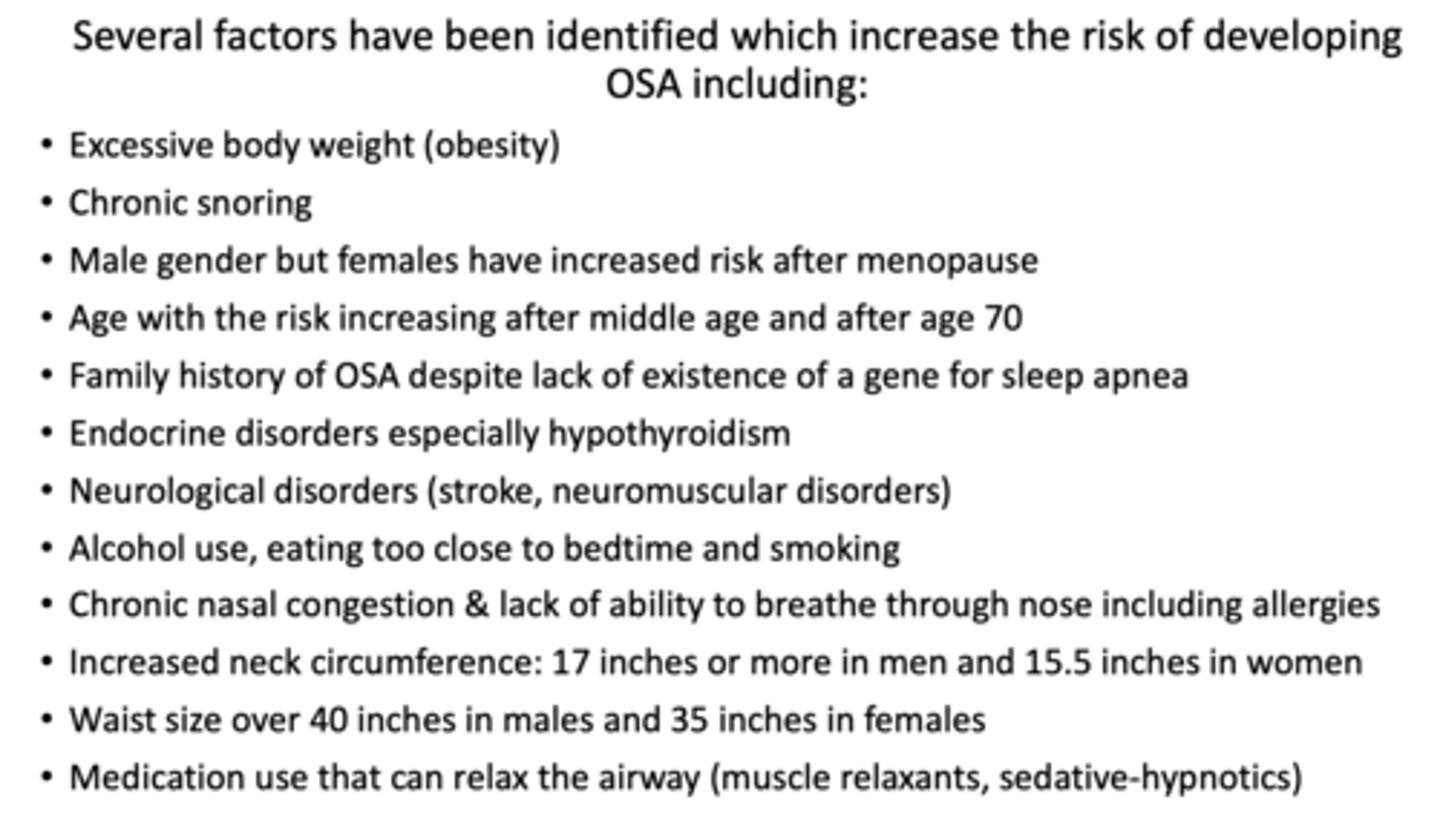
- Chronic nasal congestion
- Increased neck circumference
- Waist size
- Medication
Obstructive Sleep Apnea (OSA)
A neck circumference of what in men puts one at risk for OSA?
17+ inches
A neck circumference of what in women puts one at risk for OSA?
15.5+ inches
A waist size of what in men puts one at risk for OSA?
40+ inches
A waist size of what in women puts one at risk for OSA?
35+ inches
These are risk factors for what?
- Nasal obstruction
- Enlarged tonsils and adenoids (especially in children)
- Small nostrils
- Mandibular retrognathia
- Macroglossia
- Scalloping of the tongue
- Mallampati score
Obstructive Sleep Apnea (OSA)
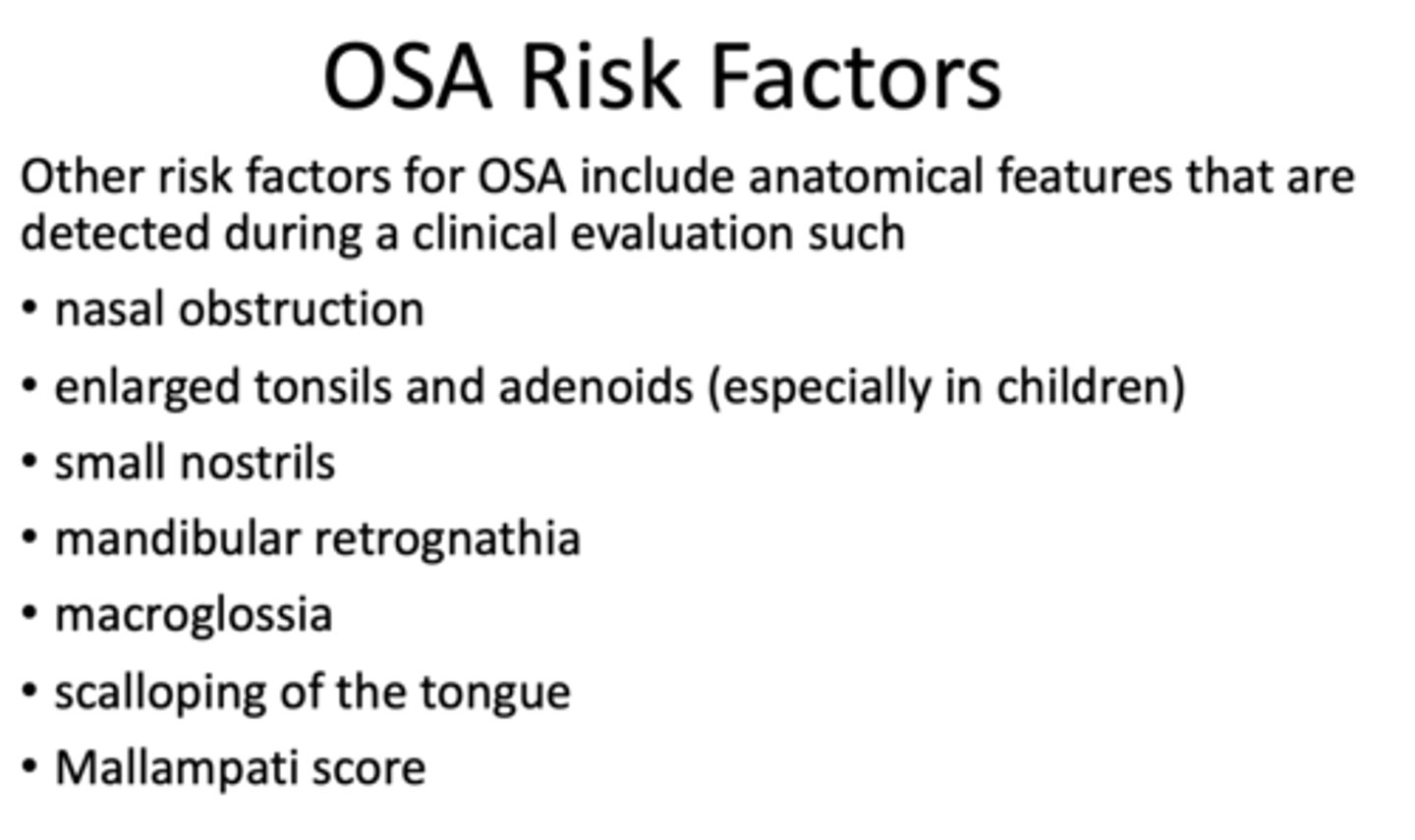
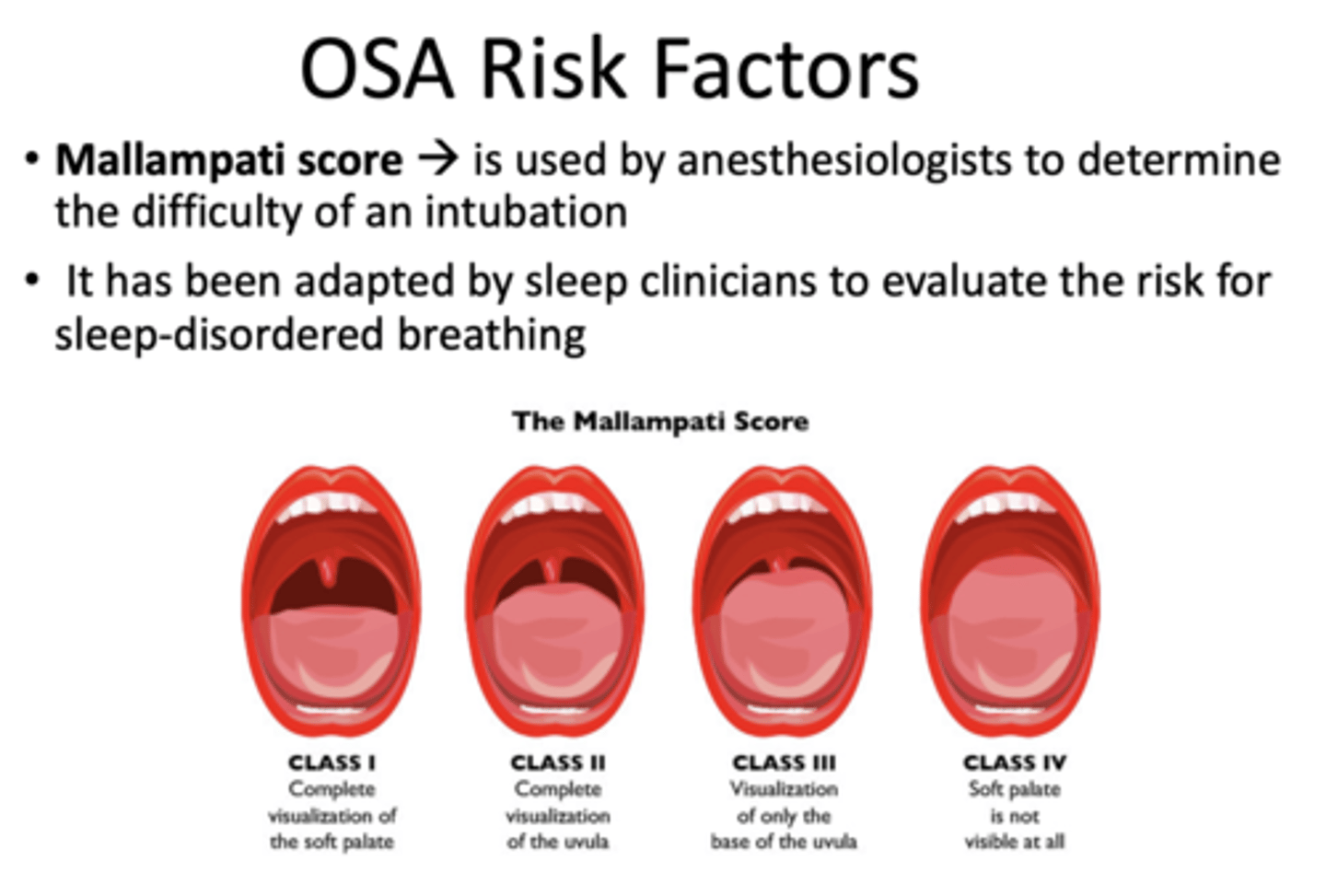
What is used by anesthesiologists to determine the difficulty of an intubation (has now been adapted by sleep clinicians for risk of disordered breathing)?
Mallampati Score
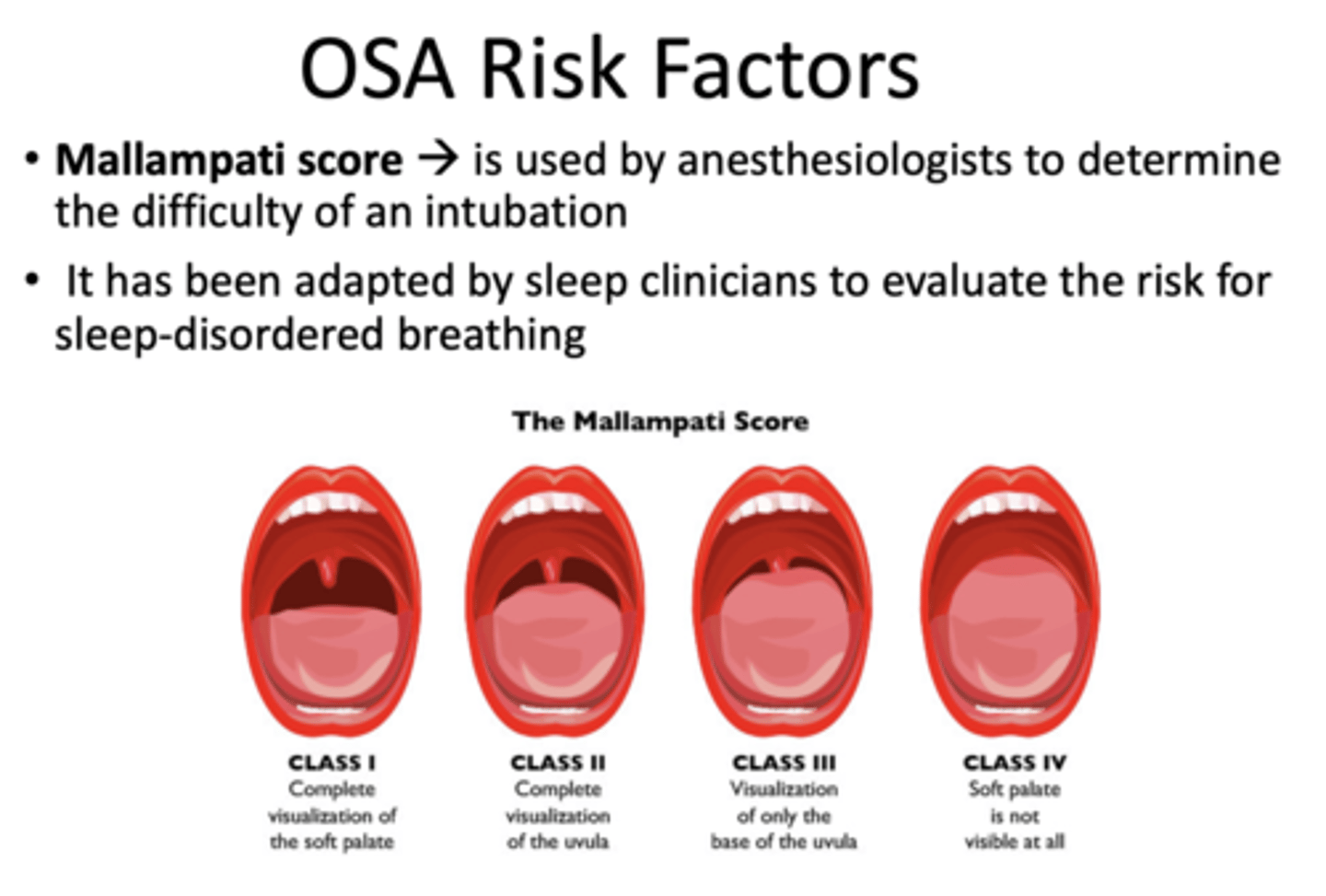
What class on the mallampati score?
complete visualization of soft palate
I
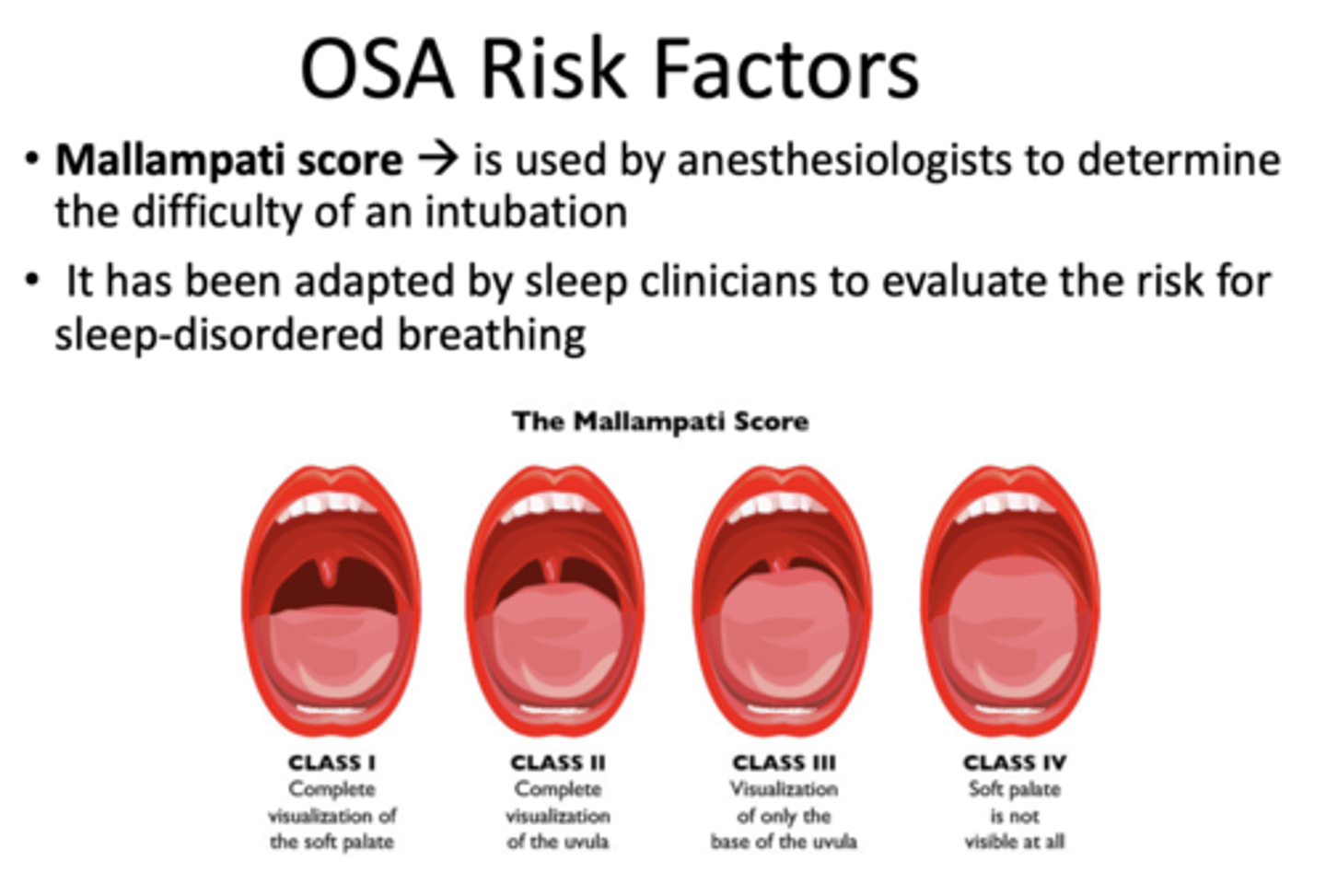
What class on the mallampati score?
complete visualization of uvula
II
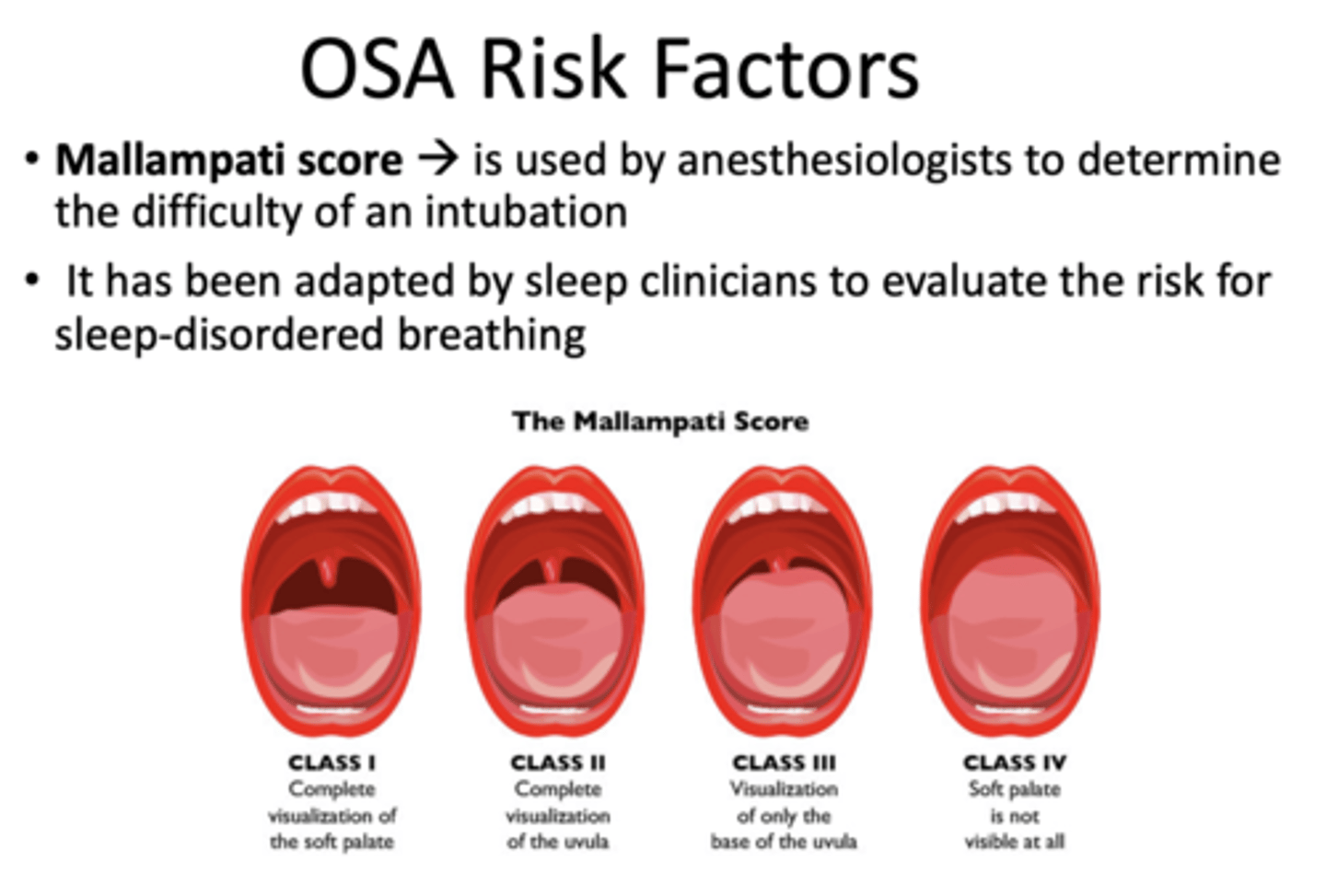
What class on the mallampati score?
Visualization of only base of uvula
III
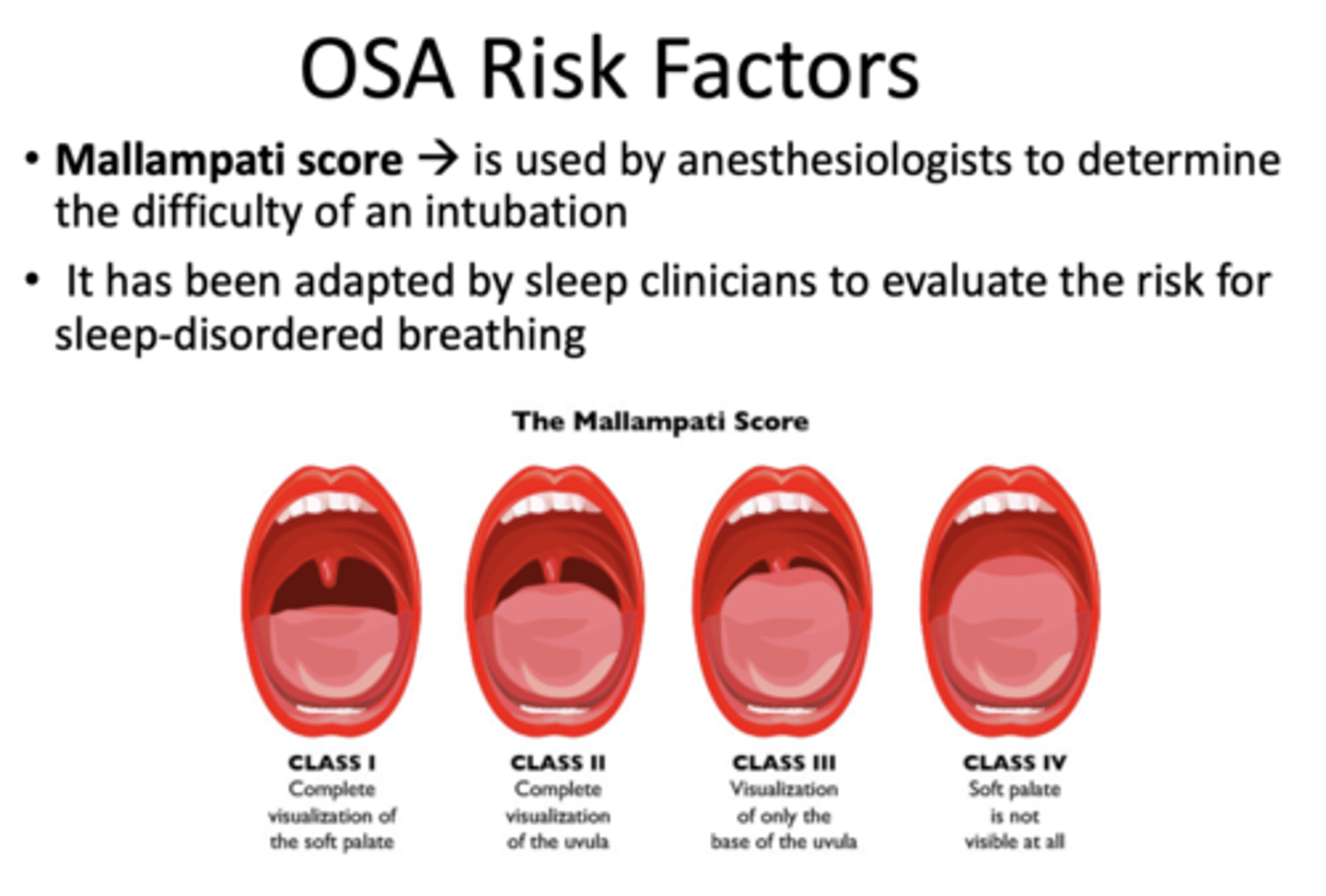
What class on the mallampati score?
Soft palate NOT visible at all
IV
T/F: Most patients with OSA are not aware of the problem despite being exhausted on awakening and showing signs of excessive sleepiness during the day which is probably the most obvious symptom of OSA.
True
T/F: NO one factor is totally indicative of having sleep apnea
True
Research confirmed SRBD and OSA in particular, can have health consequences depending on AHI and oxygen desaturation, and can adversely affect various physiological systems including...
- Cardiovascular
- Endocrine
- Gastrointestinal
- Psychiatric
- Nervous
- Immune systems
Other long-term consequences of OSA can include some orofacial pain disorders such as... (3)
- Myofascial pain
- Fibromyalgia
- Headaches (TACs, migraine)
T/F: Daytime sleepiness can cause work-related and/or automobile accidents and decreased cognitive function often resulting in poor performance at work or school
True
Sleep-related hypoxemia is critical because low blood oxygen may be associated with other medical conditions such as... (3)
- COPD
- Pulmonary hypertension
- Sleep apnea
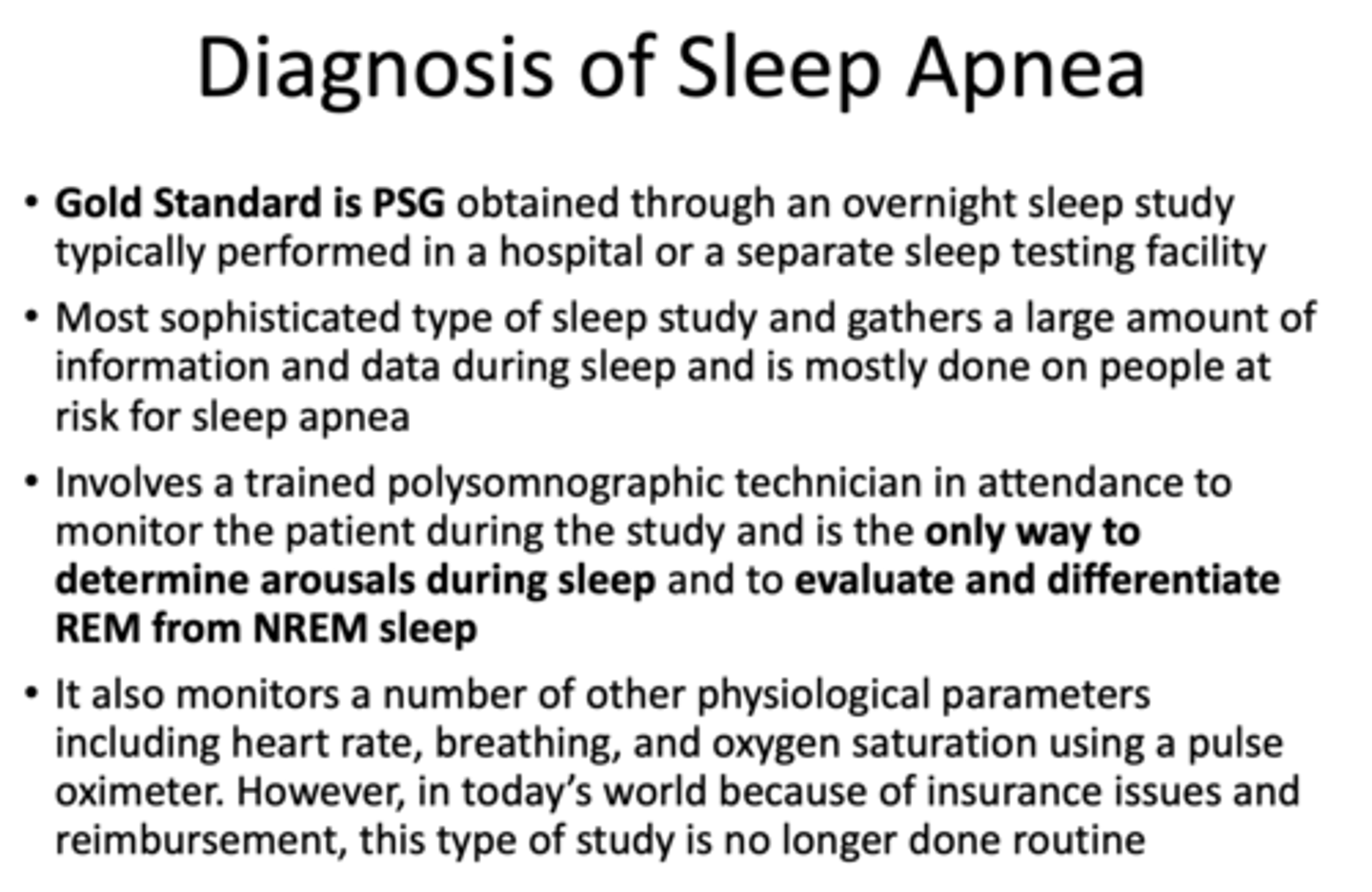
What is the gold standard for diagnosis of sleep apnea?
PSG
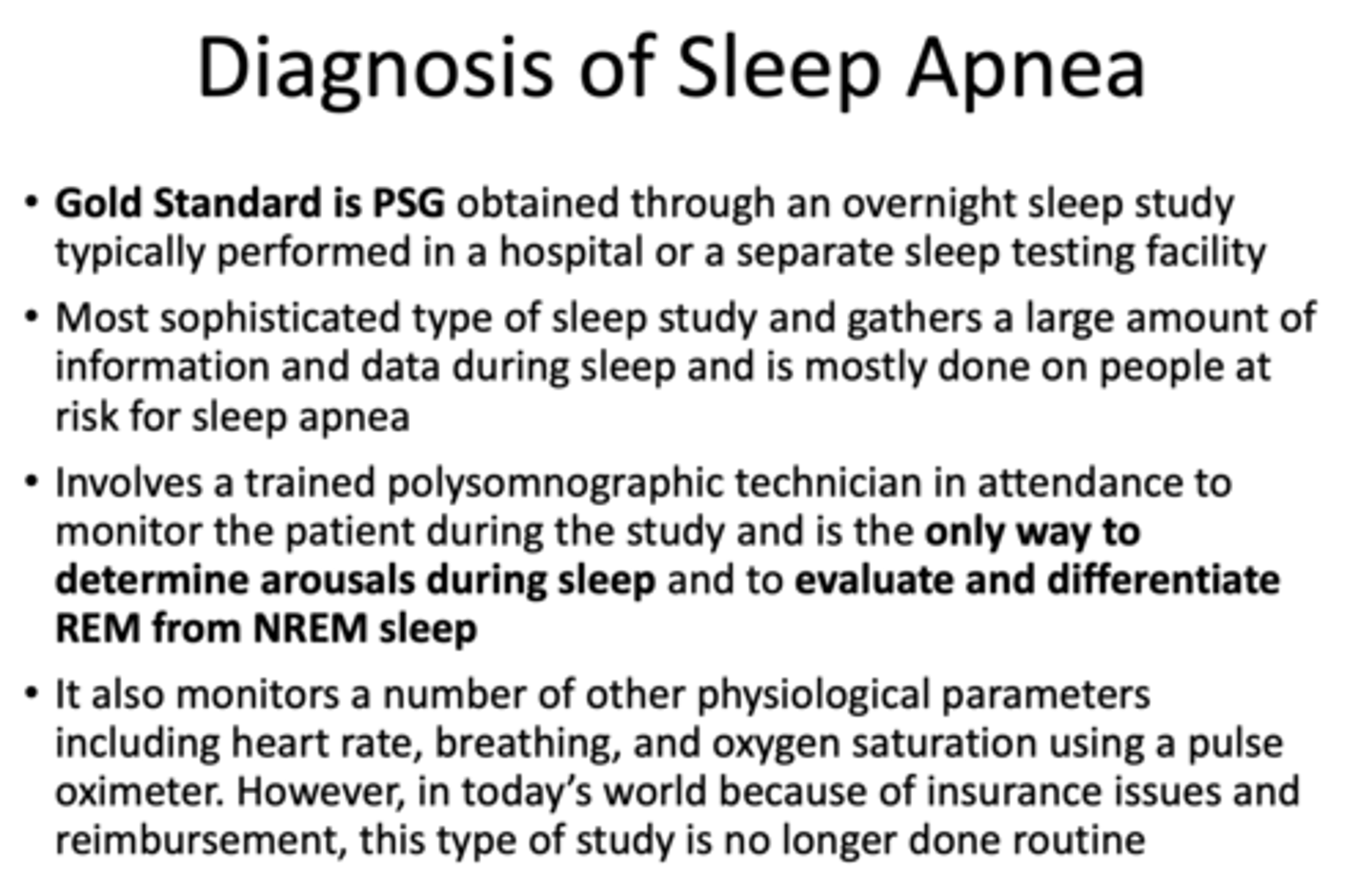
What is the only way to determine arousals during sleep and to evaluate and differentiate REM from NREM sleep?
PSG with trained tech in attendance
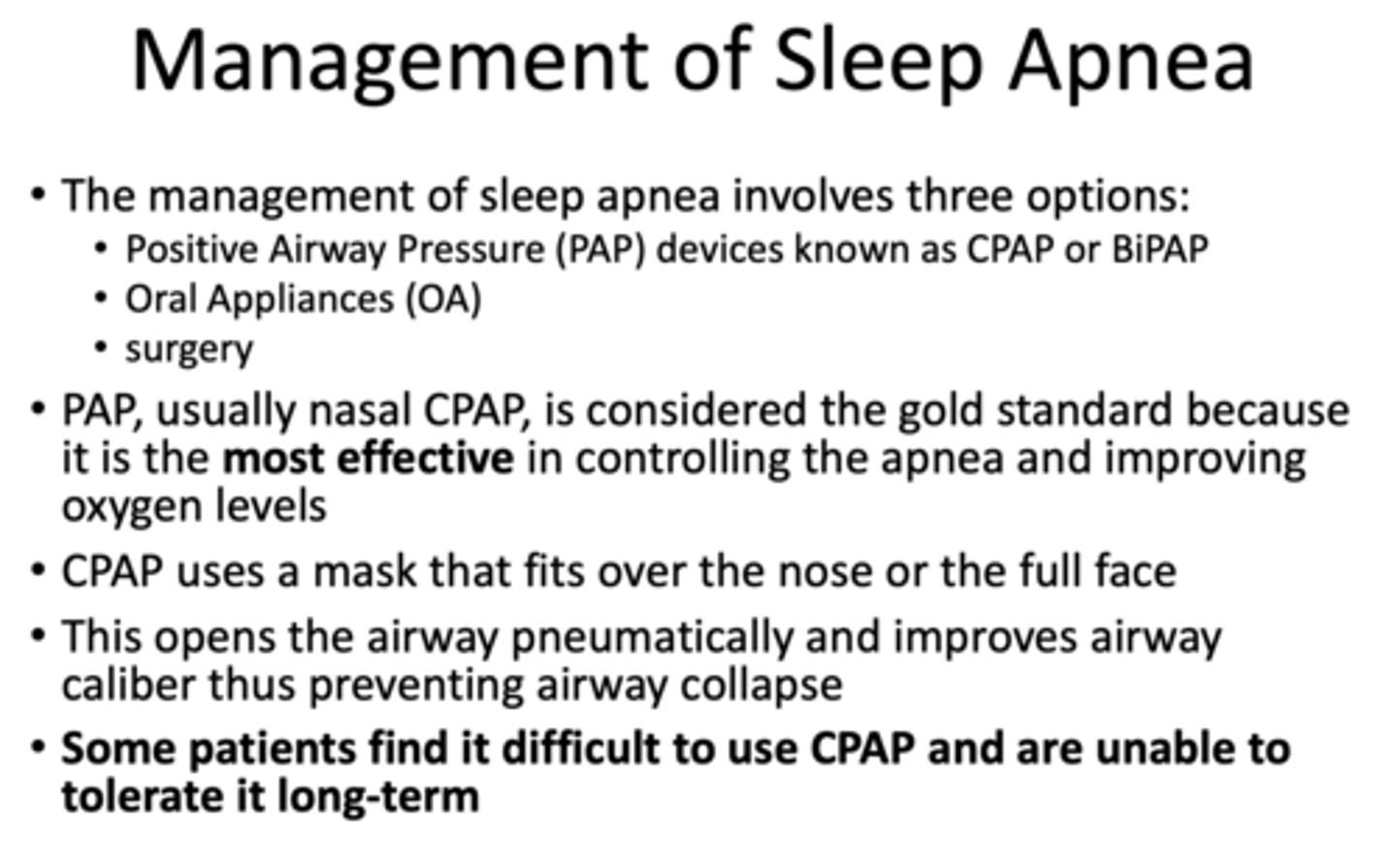
What are the three management options of sleep apnea?
- Positive Airway Pressure (PAP) devices known as CPAP or BiPAP
- Oral Appliances (OA)
- Surgery
___________ is considered the gold standard for management of sleep apnea because it is the most effective in controlling the apnea and improving oxygen levels
PAP (nasal CPAP)
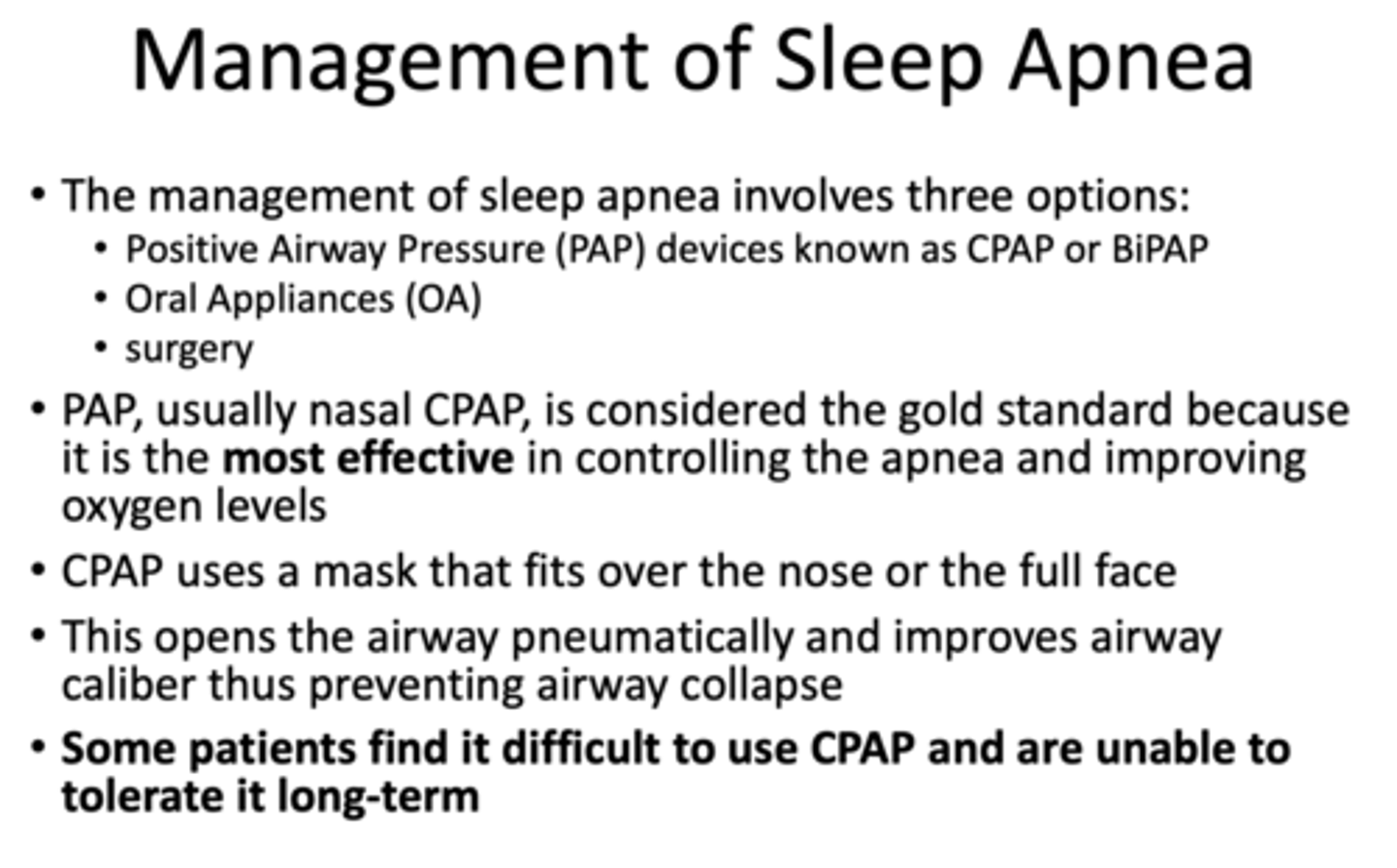
T/F: Some patients find it difficult to use CPAP and are unable to tolerate it long-term
True
____________ are considered an option for mild to moderate sleep apnea and for those patients who have severe sleep apnea, but cannot tolerate PAP therapy.
Oral appliances (OA)
___________ work by repositioning the mandible in an open (vertically) position and then advancing the mandible forward to open the airway and stabilize it during sleep
Oral appliances (OA)
Patients with severe OSA and are PAP-resistant and do not respond to Oral appliances (OA), __________ either by excision or laser recontouring of excess soft tissue in the posterior airway offers another option to facilitate air flow
Surgical intervention
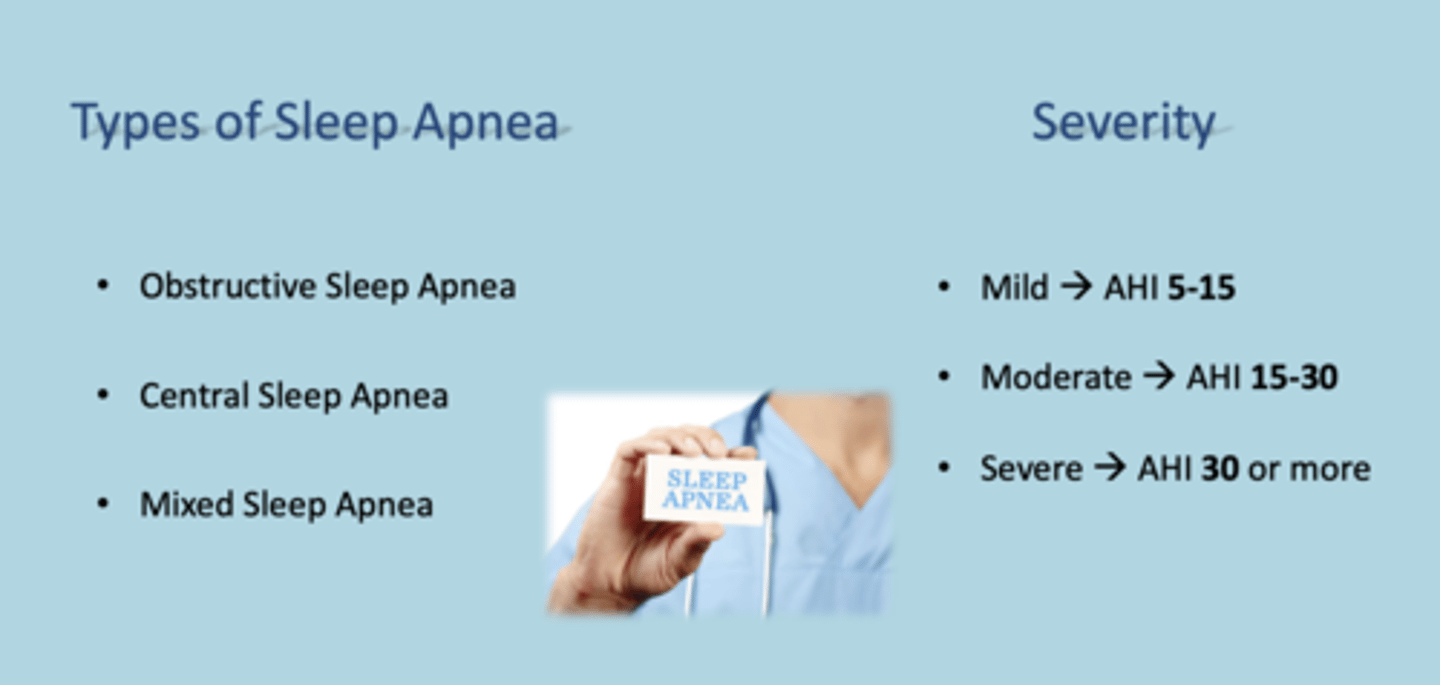
What are the three types of sleep apnea?
- Obstructive
- Central
- Mixed
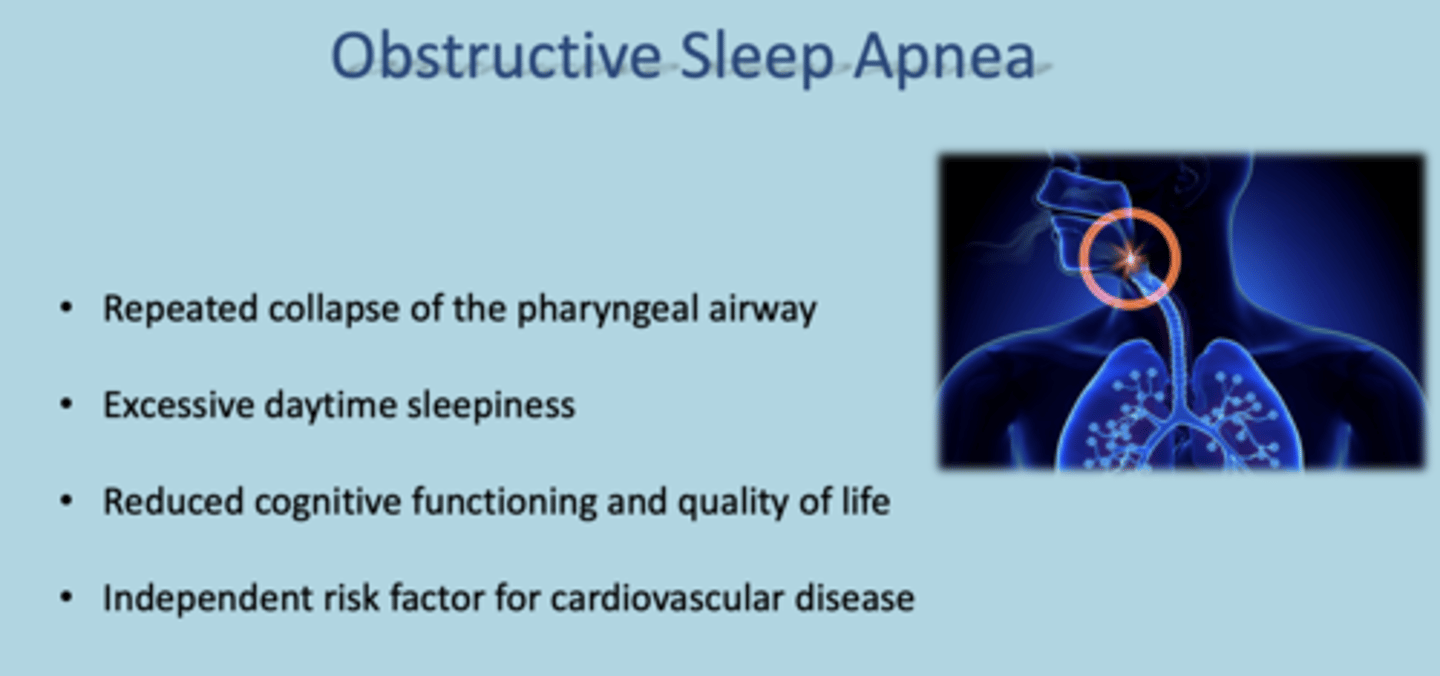
What has the following characteristics?
- Repeated collapse of the pharyngeal airway
- Excessive daytime sleepiness
- Reduced cognitive functioning and quality of life
- Independent risk factor for cardiovascular disease
Obstructive sleep apnea
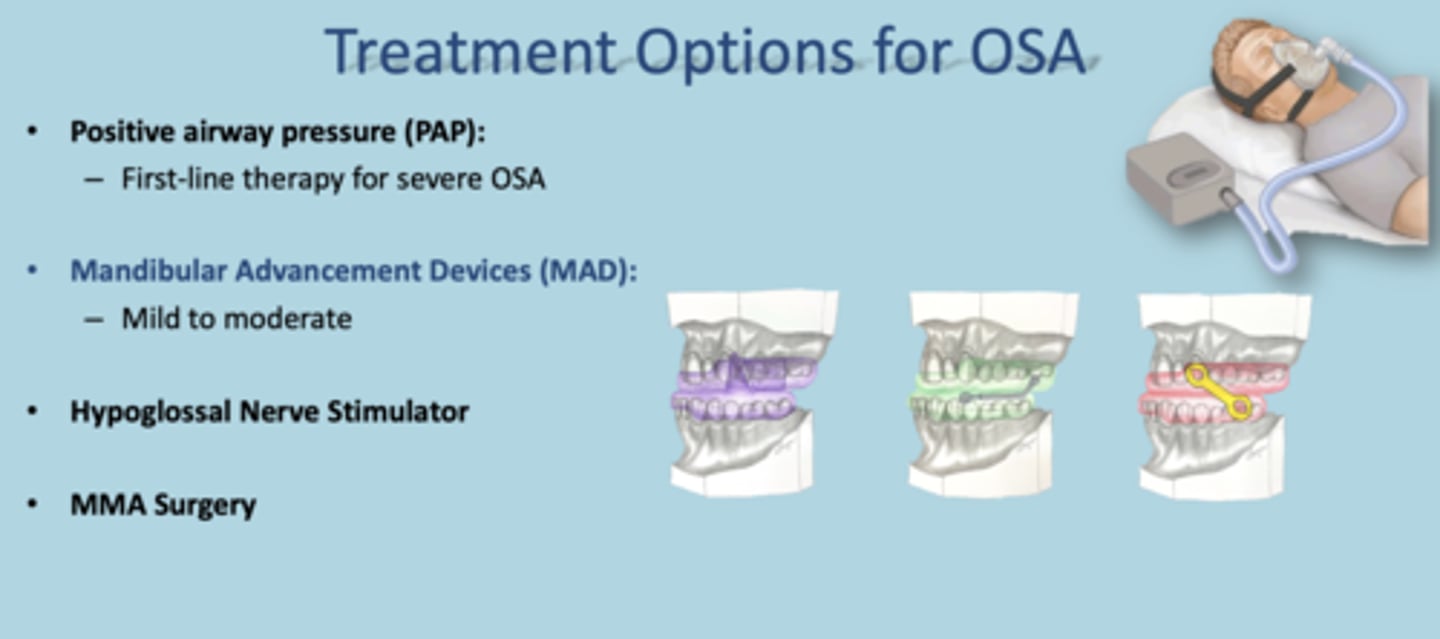
What is used to treat obstructive sleep apnea (OSA)?
- Positive airway pressure (PAP)
- Mandibular advancement device (MAD)
- Hypoglossal nerve stimulator
- MMA Surgery
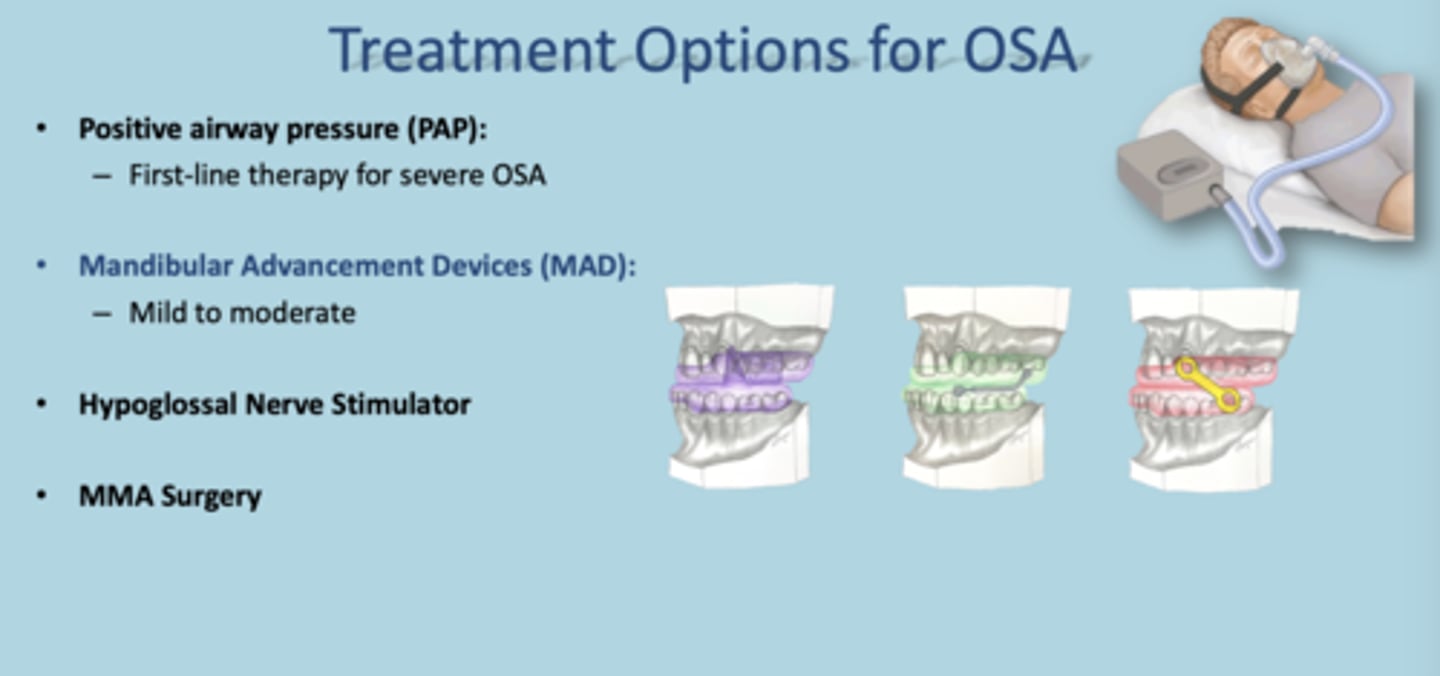
Why are MAD ideal to treat OSA?
They are titratable
What are side effects of MAD?
Protrude jaw forward and precipitate bite changes
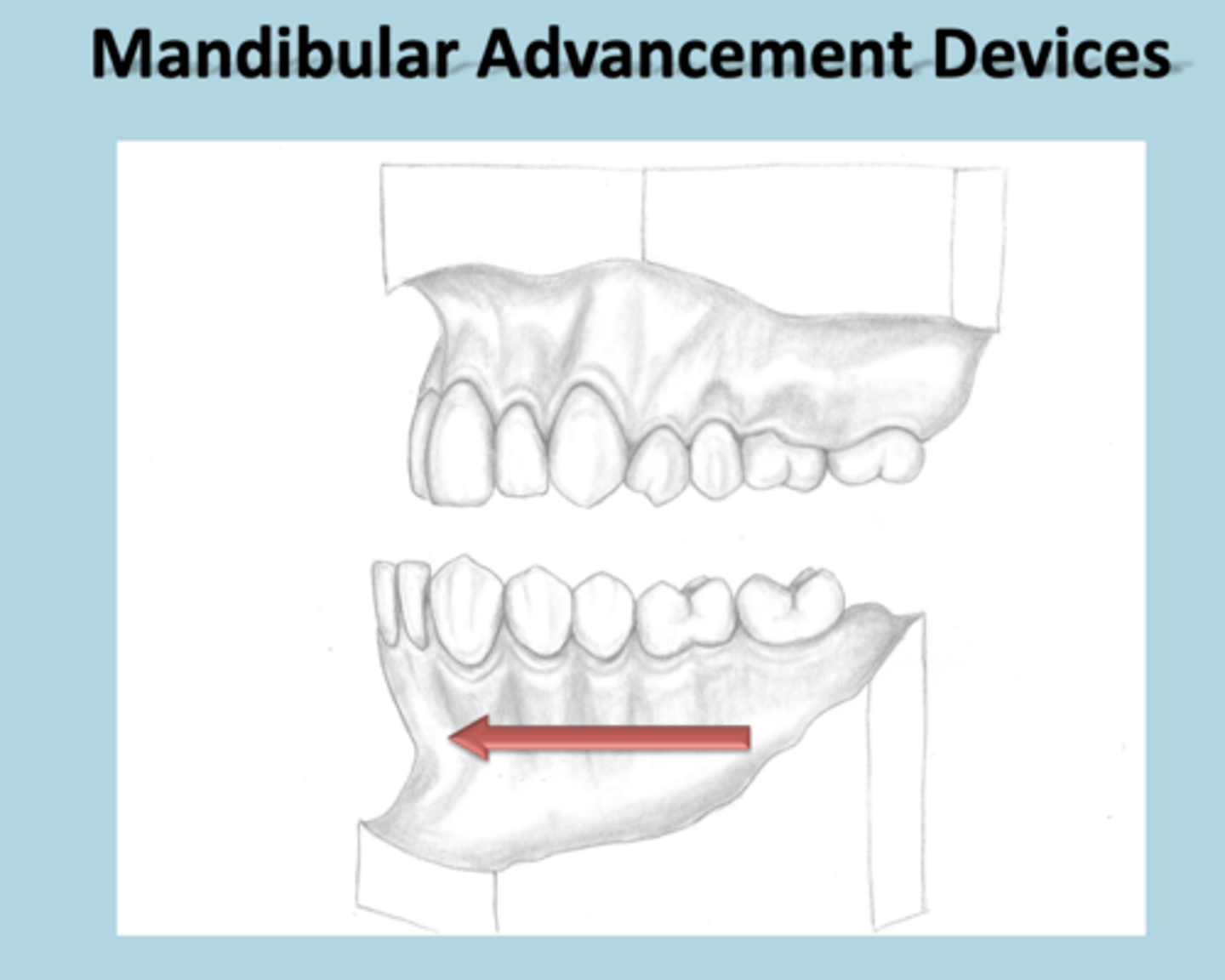
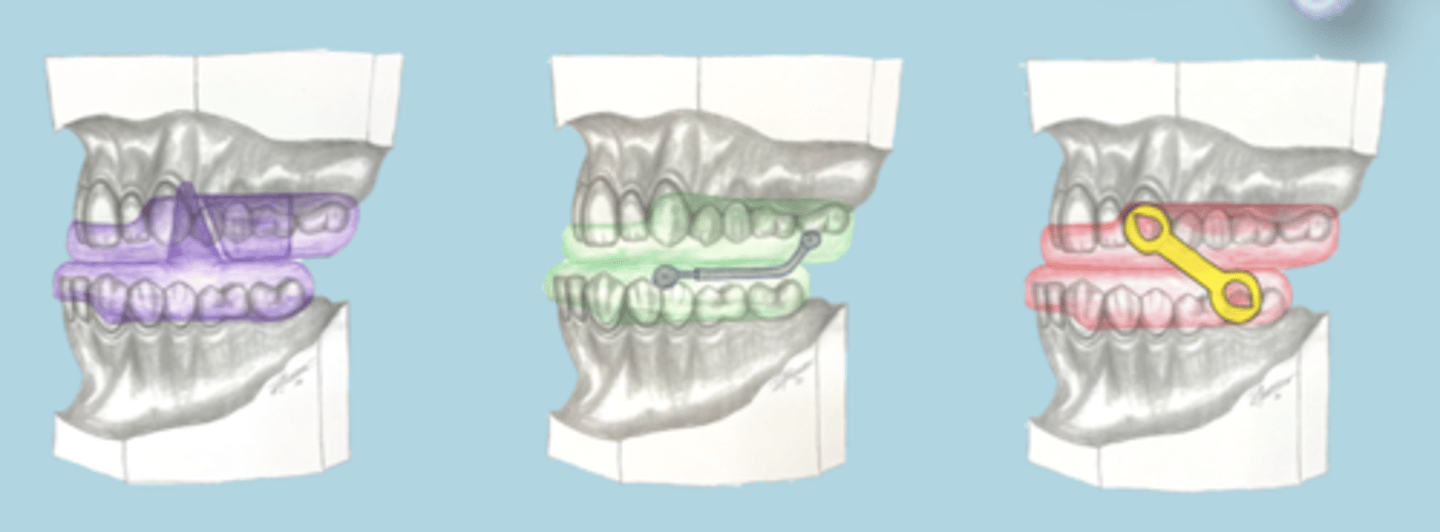
What are the MAD nomenclature?
- Bilateral traction
- Bilateral compression
- Bilateral interlocking
- Midline traction
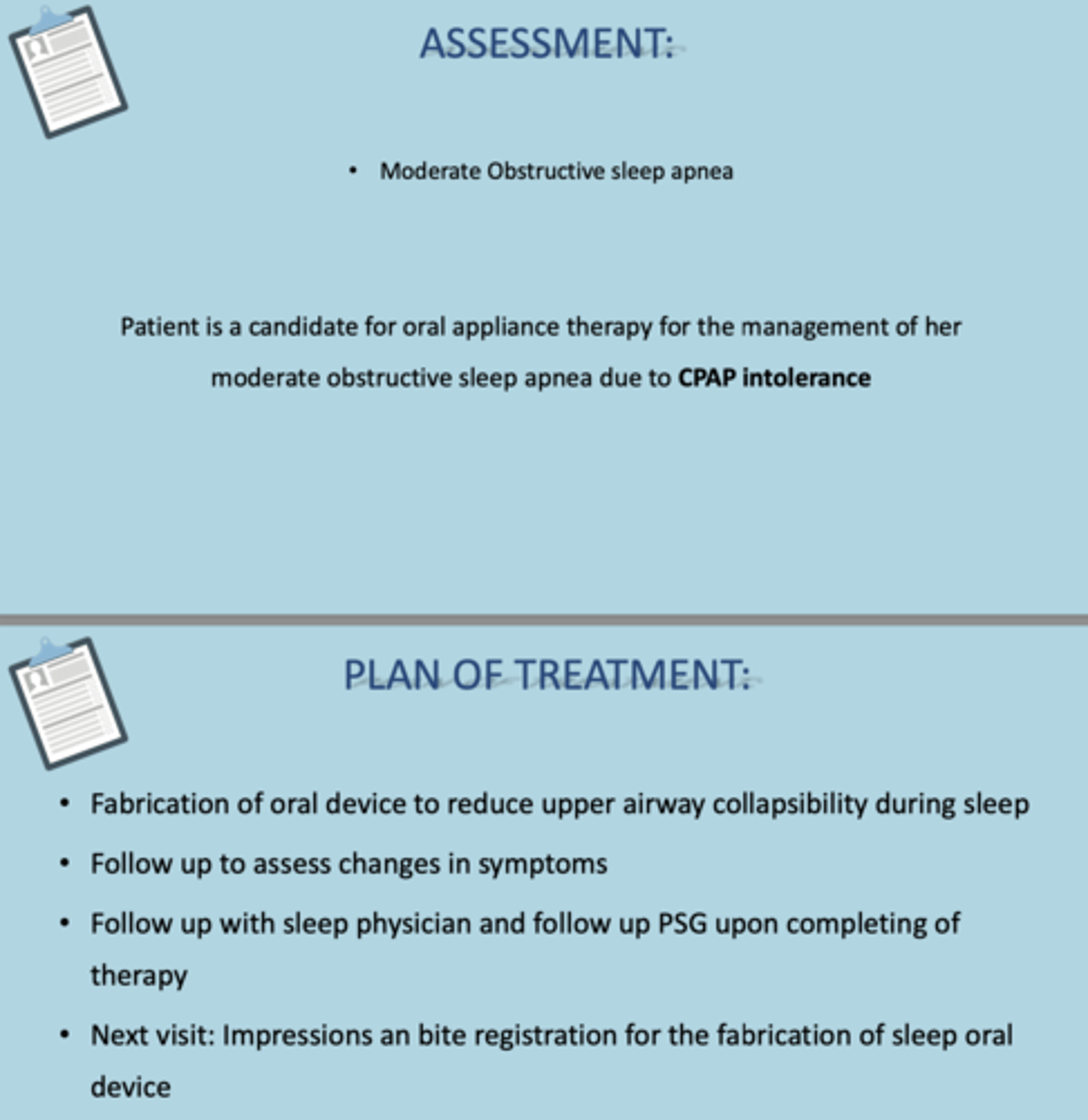
In the case study in the powerpoint, the patient is a candidate for oral appliance therapy for the management of her moderate obstructive sleep apnea due to __________
CPAP intolerance
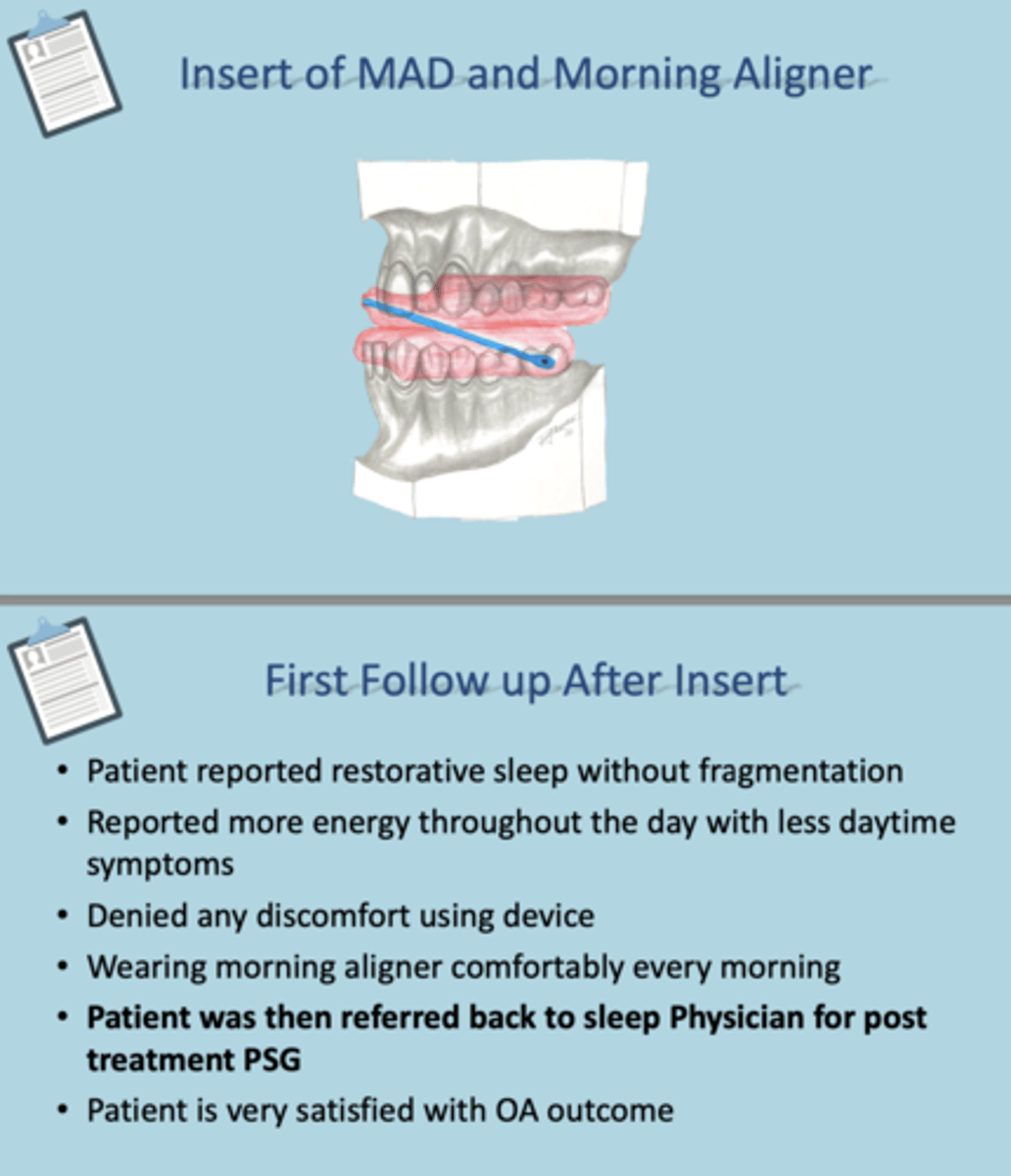
What can help reduce bite change with MAD treatment?
Morning aligner
Dentist can screen patients for apnea however must be evaluated and diagnosed by ____________
sleep physician