Neuro Step Up

0.0(0)
Studied by 0 people
call kaiCall Kai
learnLearn
examPractice Test
spaced repetitionSpaced Repetition
heart puzzleMatch
flashcardsFlashcards
GameKnowt Play
Card Sorting

1/69

encourage image

There's no tags or description

Looks like no tags are added yet.

Last updated 8:42 PM on 4/19/26
Name
Mastery
Learn
Test
Matching
Spaced
Call with Kai

No analytics yet

Send a link to your students to track their progress

70 Terms

1
New cards

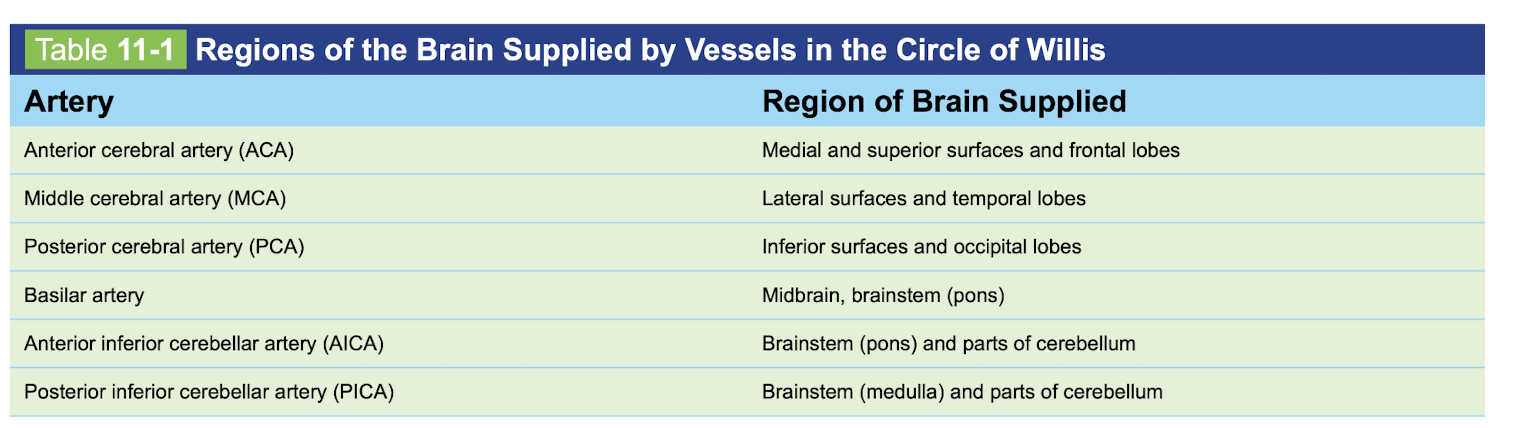
Regions of brain and blood supply

  • ACA

  • MCA

  • PCA

  • Basilar artery

  • AICA

  • PICA

knowt flashcard image
2
New cards

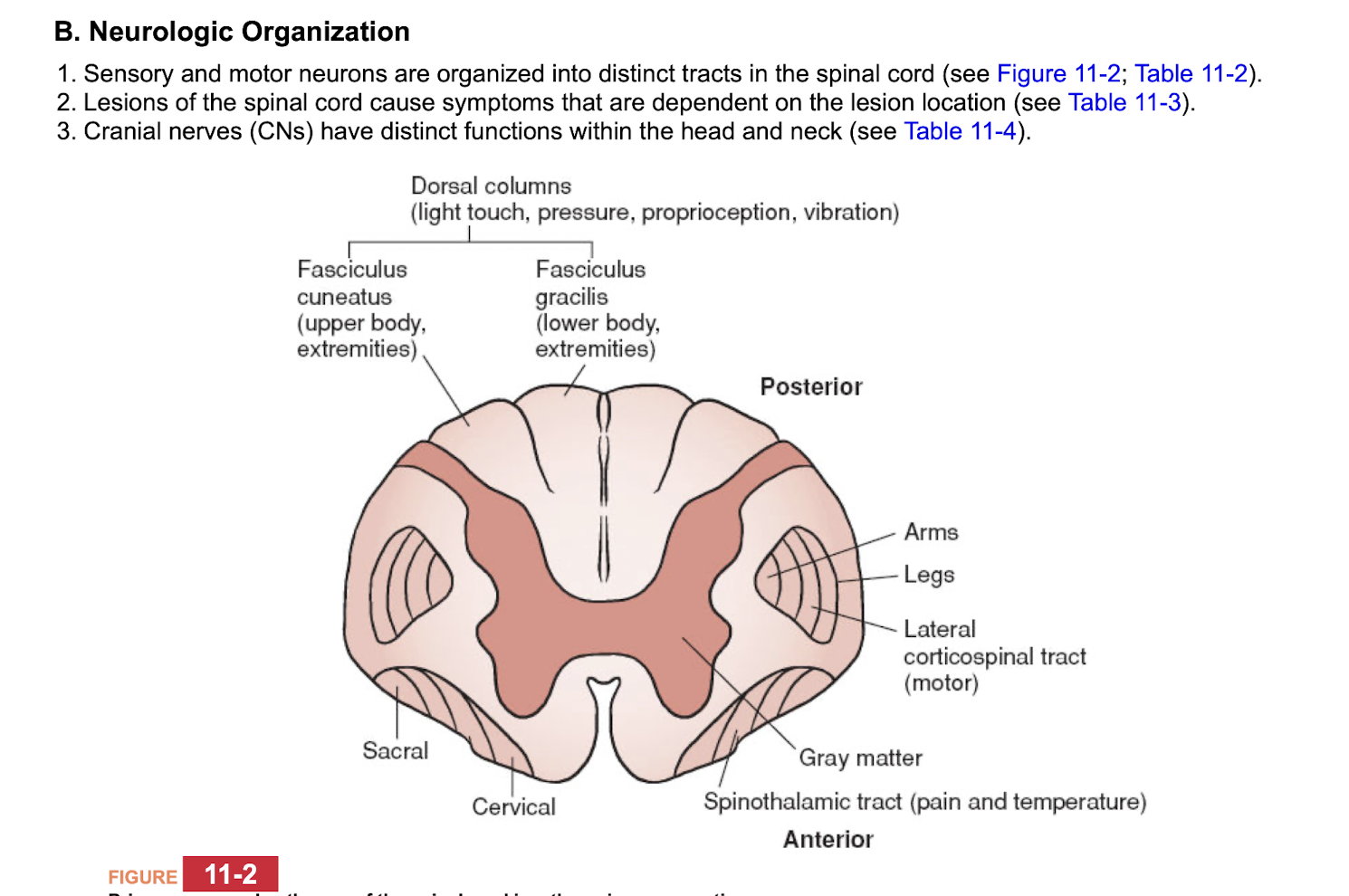
neuronal pathways in the spinal cord cross section
knowt flashcard image
3
New cards

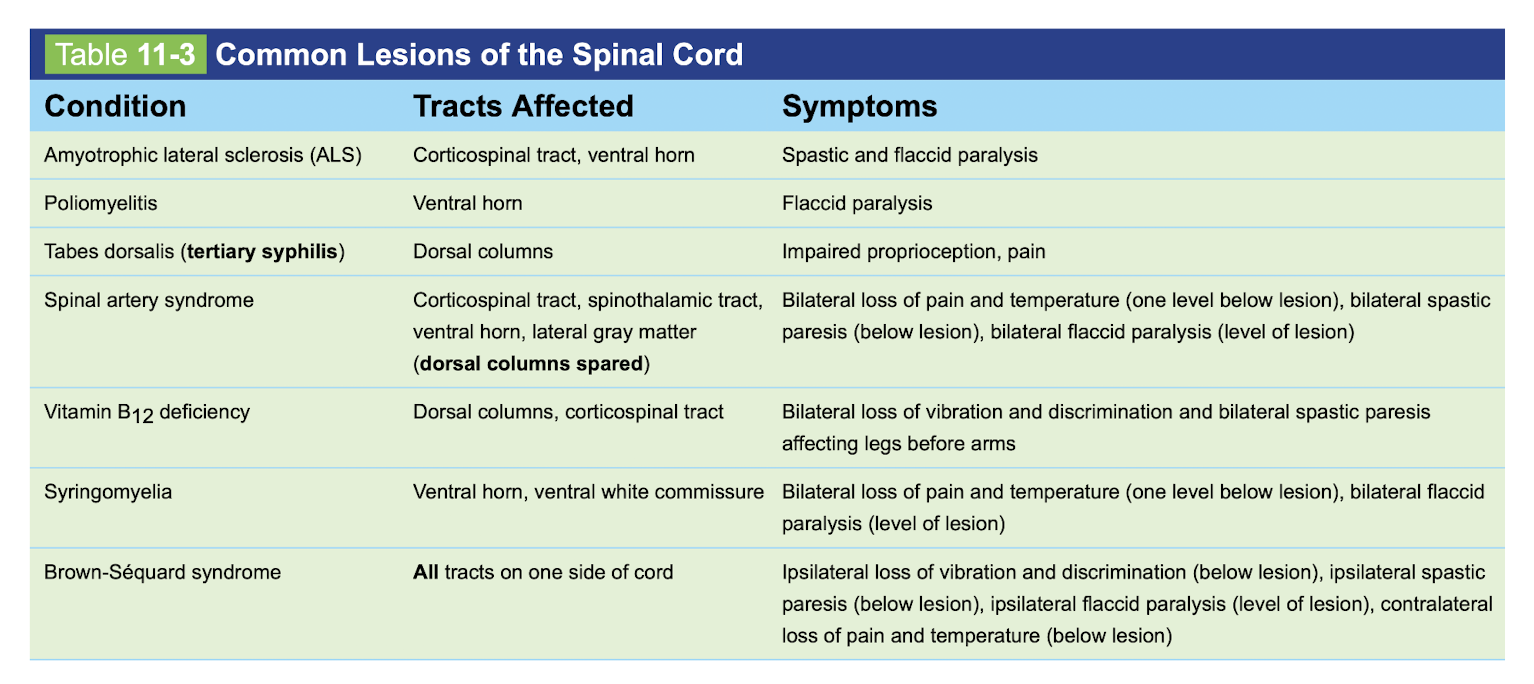
Tracts affected in

  • ALS

  • Poliomyelitis

  • Tabes dorsalis (Tertiary syphilis)

  • Spinal artery syndrome

  • Vitamin B12 def

  • syringomyelia

  • brown sequard syndrome

knowt flashcard image
4
New cards

Bacterial meningitis tx and complication

knowt flashcard image
5
New cards

What should be perfomed before LP

knowt flashcard image
6
New cards

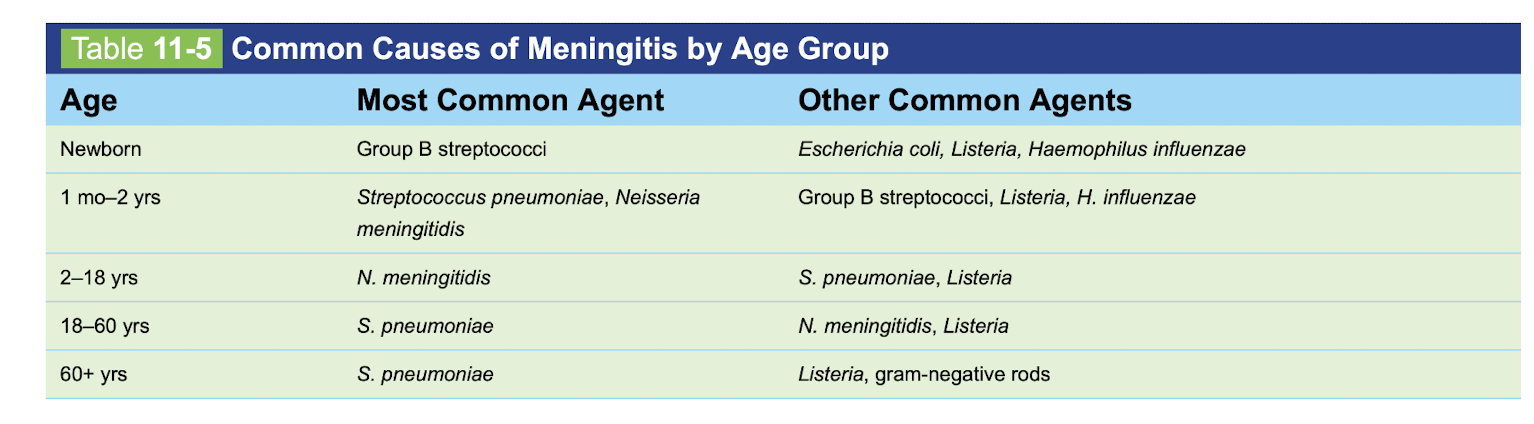
Common causes of meningitis by age group

  • newborn

  • 1mo-2yrs

  • 2-18 yrs

  • 18-60 yrs

  • 60+ yrs

knowt flashcard image
7
New cards

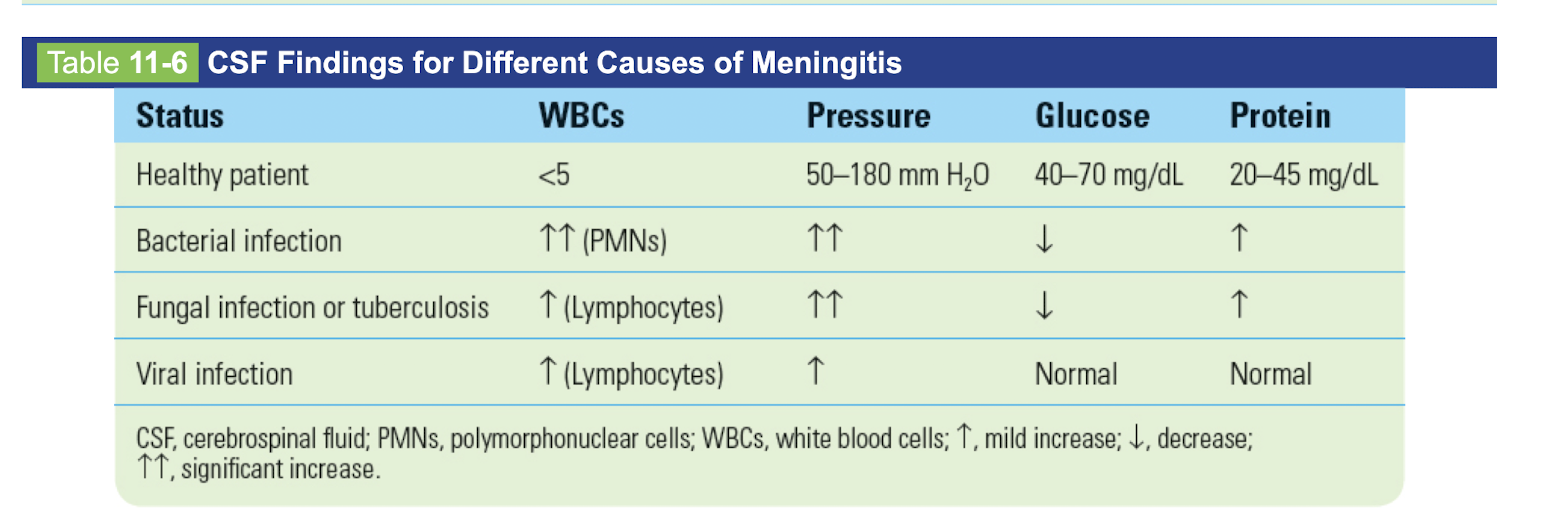
CSF findings

  • healthy

  • bacterial

  • fungal/TB

  • Viral

Wbcs/ pressure/ glucose/ protein
knowt flashcard image
8
New cards

Viral meningitis treatment

knowt flashcard image
9
New cards

fungal meningitis tx

knowt flashcard image
10
New cards

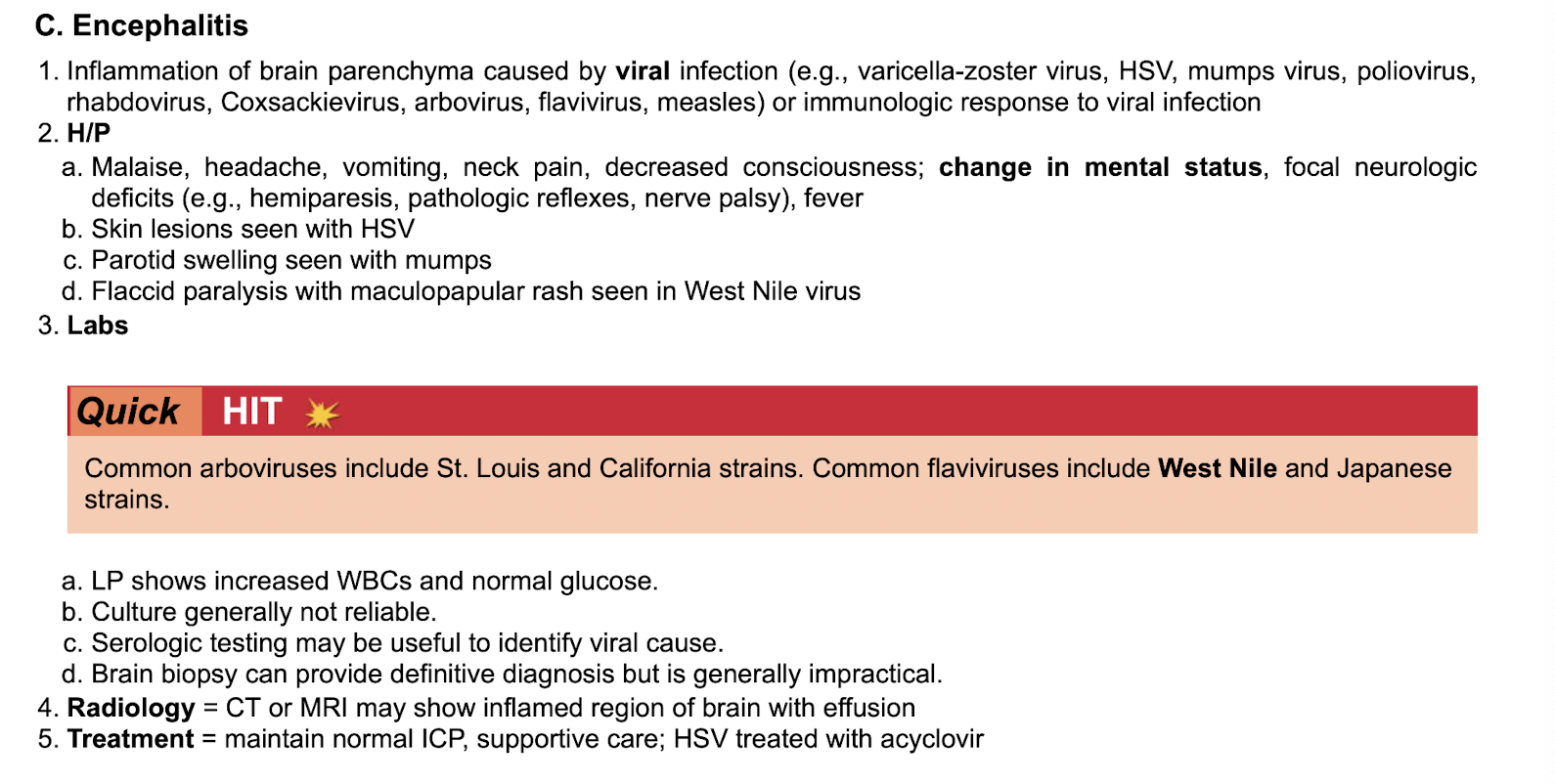
Encephalitis

-radiology

-tx

knowt flashcard image
11
New cards

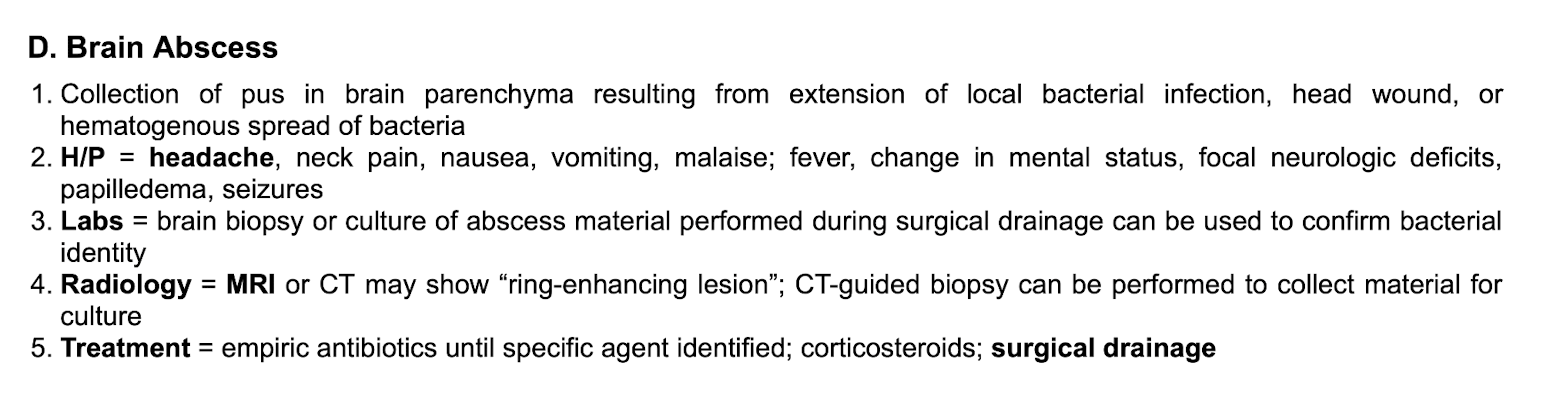
Brain Abscess

-Workup

-Imaging, what kind and what does it show

-What to use for culture

-Tx

-brain biopsy or culture of abscess material during sx draining to confirm bacterial identity 

MRI/CT shows ring enhancing lesions.

Can use CT guided biopsy to get culture 

tx: empiric abx until you figure out what bug, steroids and sx drainage
<p>-brain biopsy or culture of abscess material during sx draining to confirm bacterial identity&nbsp;</p><p></p><p class="p1">MRI/CT shows ring enhancing lesions. </p><p class="p1"></p><p class="p1">Can use CT guided biopsy to get culture&nbsp;</p><p class="p1">tx: empiric abx until you figure out what bug, steroids and sx drainage </p>
12
New cards

polio

-labs

-tx

-Complication of ORAL vaccine

-Positive polio specific antibody

-LP shows viral meningitis 

-Viral culture helpful for diagnosis 

-Tx: supportive care and respiratory care if respiratory muscles affected 

-Complications: after polio ORAL vaccine you can get poliomyelitis. So inactivated IM polio is more commonly used 
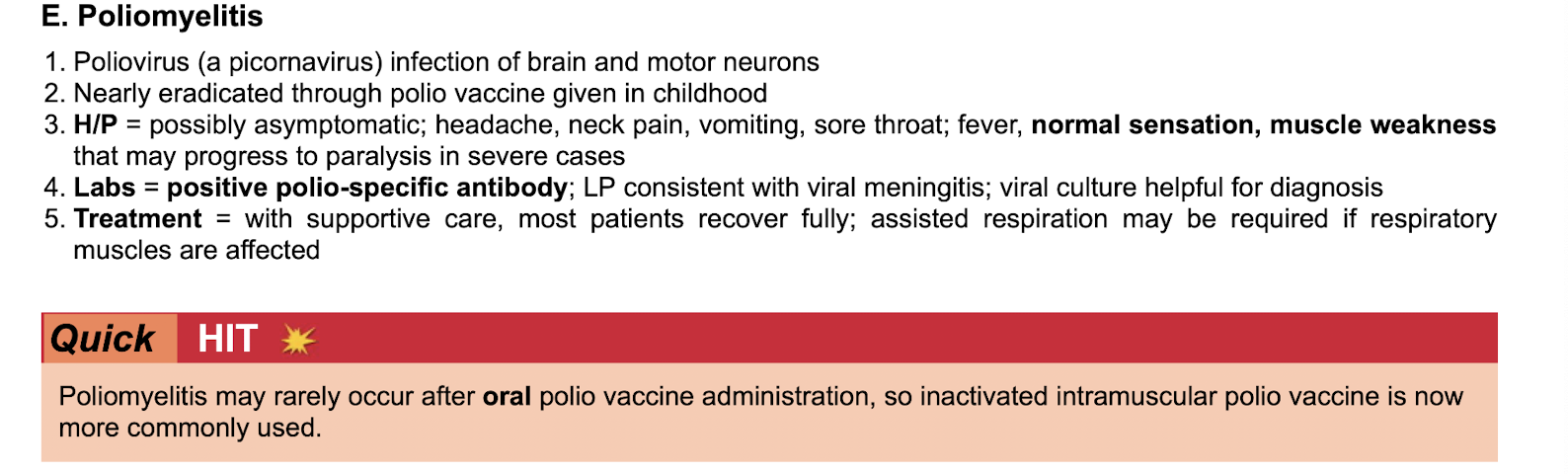
<p class="p1"></p><p class="p2">-Positive polio specific antibody</p><p class="p2">-LP shows viral meningitis&nbsp;</p><p class="p2">-Viral culture helpful for diagnosis&nbsp;</p><p class="p1"></p><p class="p2">-Tx: supportive care and respiratory care if respiratory muscles affected&nbsp;</p><p class="p1"></p><p class="p2">-Complications: after polio ORAL vaccine you can get poliomyelitis. So inactivated IM polio is more commonly used&nbsp;</p>
13
New cards

Rabies

-Workup

-prophylaxsis

-Catch the suspected animal and test or observe for signs of rabies 

-If suspicion: kill animal and check brain for Negri bodies (round eosinophilic inclusions in neurons) 

-viral testing in humans (CSF, skin, serum) if sxs is confirmatory of disease 

Proph: clean wound, administer rabies IG and vaccine if suspicion is high 
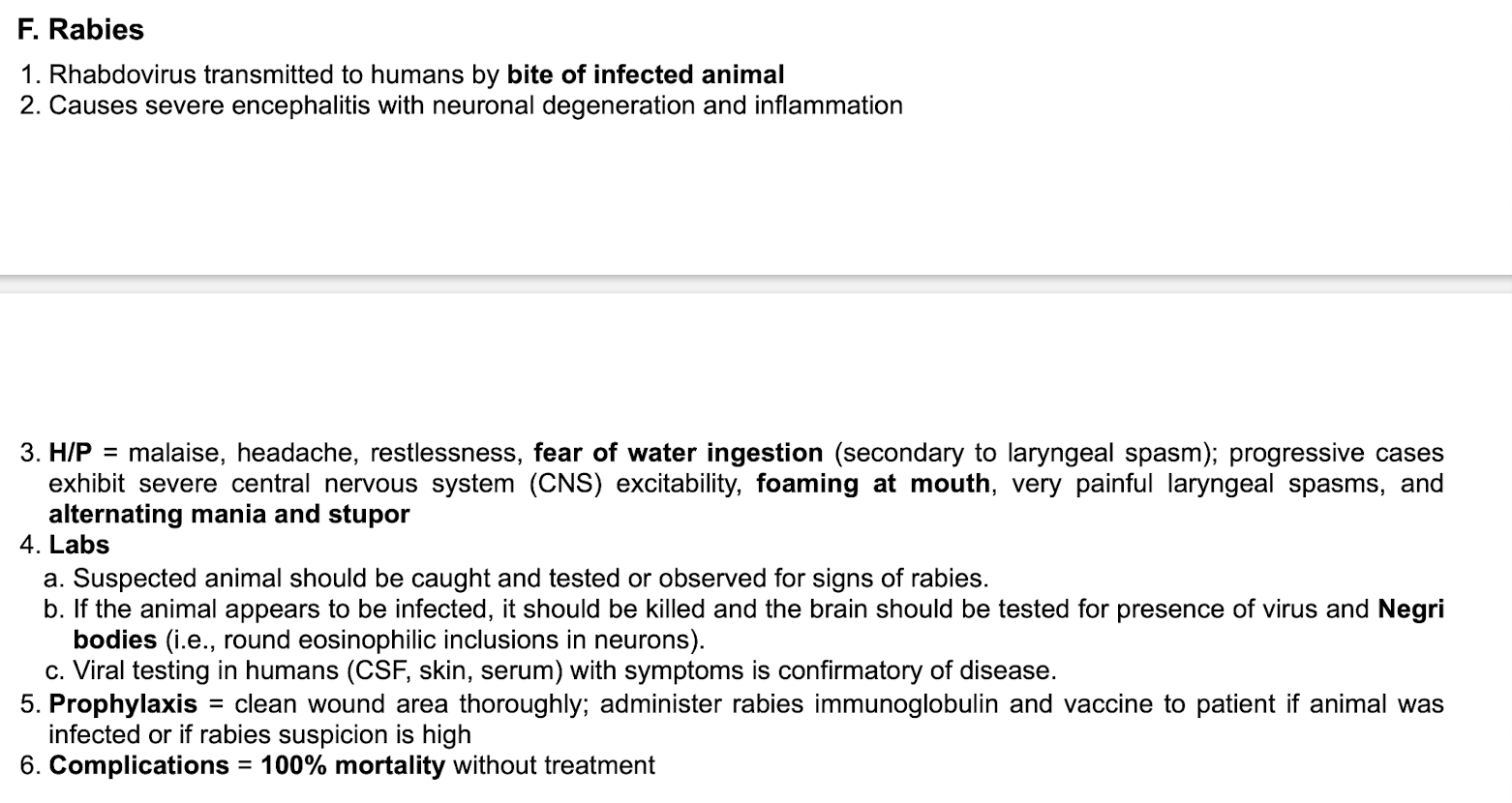
<p>-Catch the suspected animal and test or observe for signs of rabies&nbsp;</p><p class="p1">-If suspicion: kill animal and check brain for Negri bodies (round eosinophilic inclusions in neurons)&nbsp;</p><p class="p1">-viral testing in humans (CSF, skin, serum) if sxs is confirmatory of disease&nbsp;</p><p class="p2"></p><p class="p1">Proph: clean wound, administer rabies IG and vaccine if suspicion is high&nbsp;</p><p class="p2"></p>
14
New cards

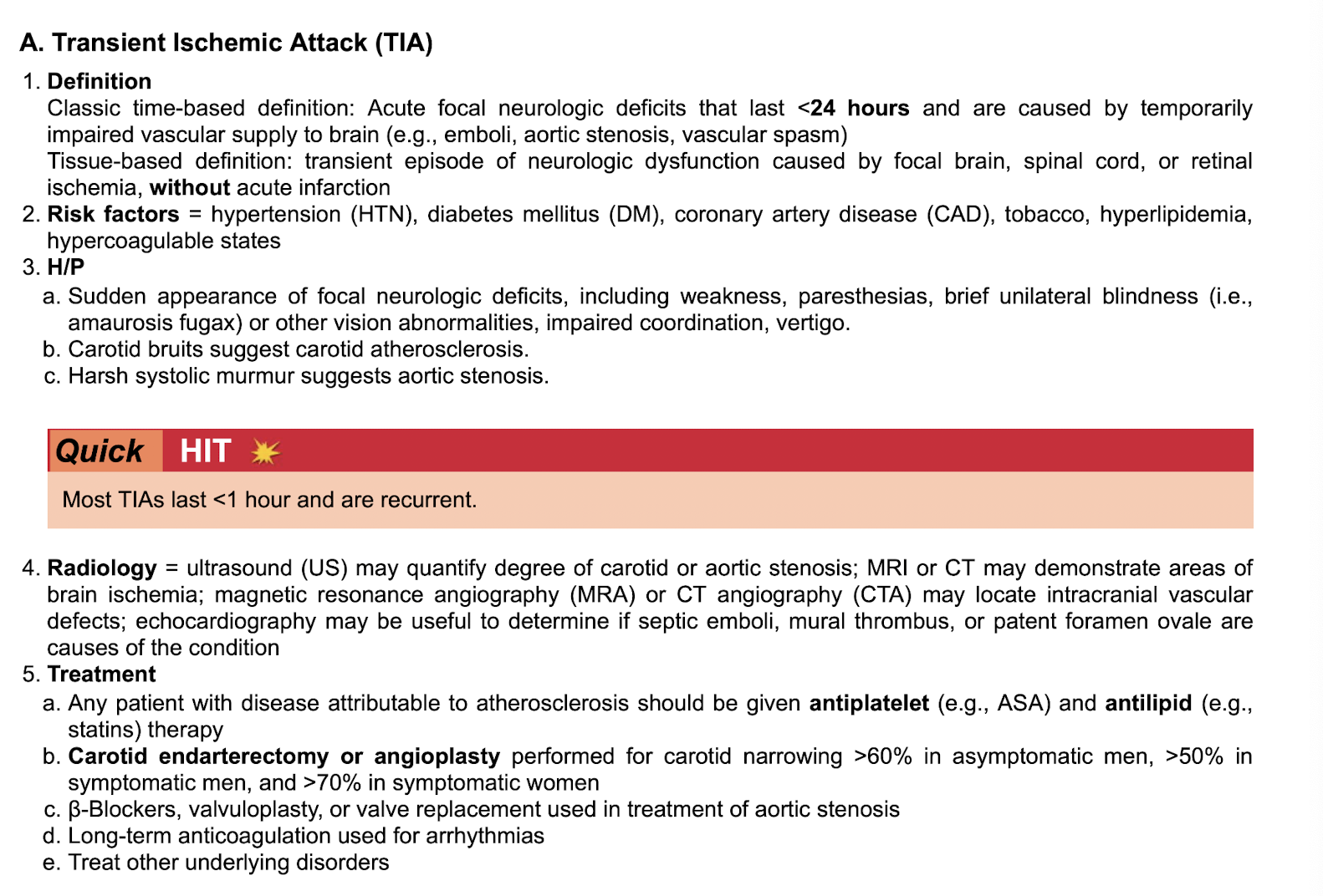
TIA

-Tx

  • if d/t atherosclerosis: anti platelet (ex. ASA) and antilipid (statin) 

  • Carotid endarterectomy or angioplasty if carotid narrowing

    • >60 in asymptomatic men,

    • >50 in sxs men,

    • >70 in sxs women 

  • BB, valvuloplasty or valve replacement if aortic stenosis 

  • long term anticoagulant if arrhythmia 

  • tx underlying disorders 

<p class="p1"></p><ul><li><p class="p2">if d/t atherosclerosis: anti platelet (ex. ASA) and antilipid (statin)&nbsp;</p></li><li><p class="p2">Carotid endarterectomy or angioplasty if carotid narrowing </p><ul><li><p class="p2">&gt;60 in asymptomatic men, </p></li><li><p class="p2">&gt;50 in sxs men, </p></li><li><p class="p2">&gt;70 in sxs women&nbsp;</p></li></ul></li><li><p class="p2">BB, valvuloplasty or valve replacement if aortic stenosis&nbsp;</p></li><li><p class="p2">long term anticoagulant if arrhythmia&nbsp;</p></li><li><p class="p2">tx underlying disorders&nbsp;</p></li></ul><p></p>
15
New cards

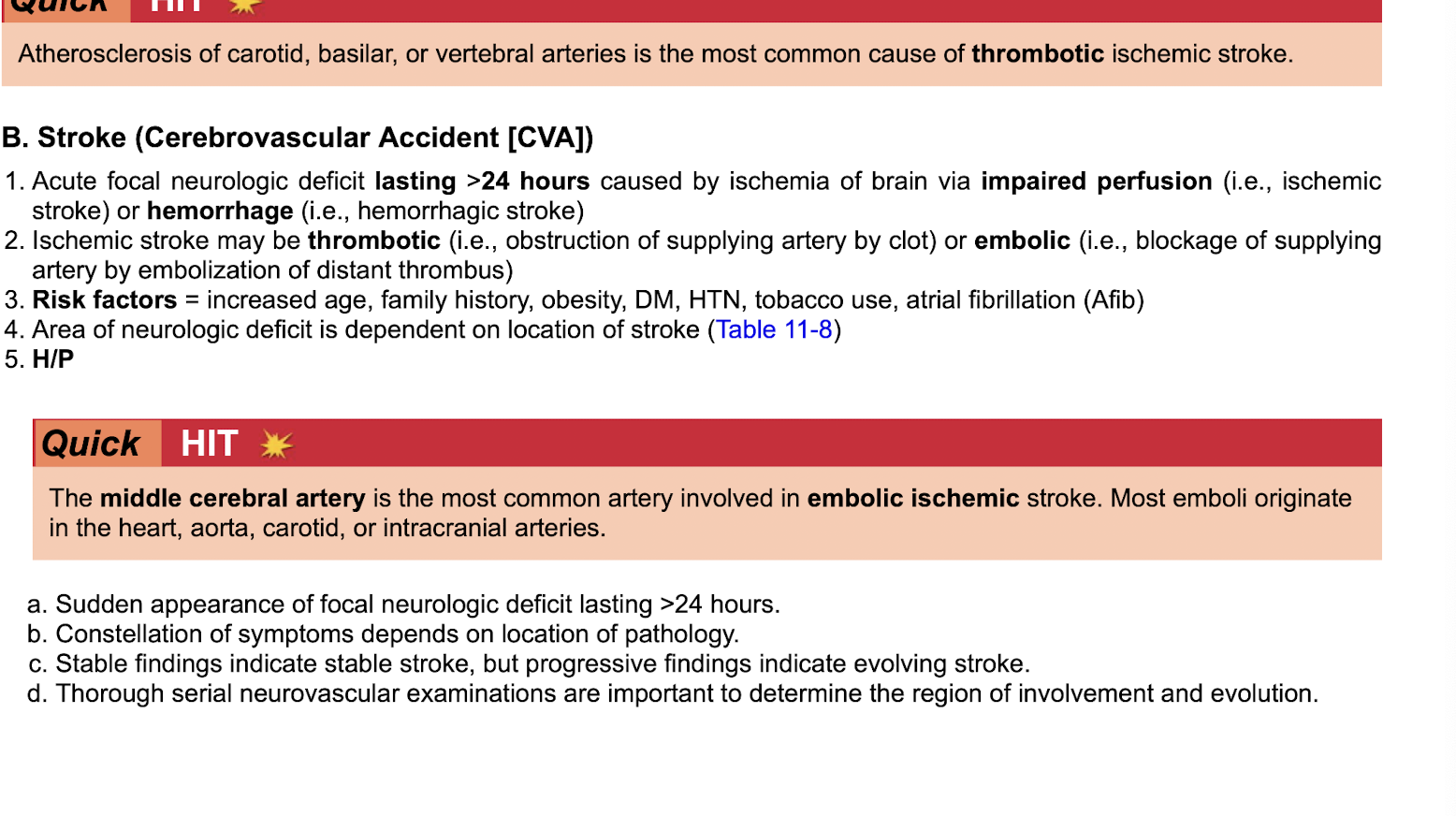
CVA/ Stroke

-common cause of thrombotic ischemic stroke

-most common artery involved in embolic ischemic stroke

-most emboli originate in

Most common cause of thrombotic ischemic stroke: atherosclerosis of

  • carotid,

  • basilar

  • or vertebral arteries 

Most common artery involved in embolic ischemic stroke:

  • MCA 

Most emboli originate in:

  • heart,

  • aorta,

  • carotid,

  • intracranial arteries 

<p>Most common cause of thrombotic ischemic stroke:&nbsp;atherosclerosis of </p><ul><li><p>carotid, </p></li><li><p>basilar </p></li><li><p>or vertebral arteries&nbsp;</p></li></ul><p class="p2"></p><p class="p1">Most common artery involved in embolic ischemic stroke: </p><ul><li><p class="p1">MCA&nbsp;</p></li></ul><p class="p1">Most emboli originate in: </p><ul><li><p class="p1">heart, </p></li><li><p class="p1">aorta, </p></li><li><p class="p1">carotid, </p></li><li><p class="p1"> intracranial arteries&nbsp;</p></li></ul><p></p>
16
New cards

Location of stroke and signs and symptoms

  • ACA
    MCA
    PCA
    Lacunar stroke

  • basilar artery

-ACA- opposite lower extremity 

-MCA- opposite face and upper extremity +/- visual abnormalities if dominant, neglect if not dominant 

-PCA: opposite visual/ blindness if bilateral PCA 

-Lacunar: focal motor or sensory deficits, no coordination, dysphagia 

-Basilar artery: locked in syndrome 
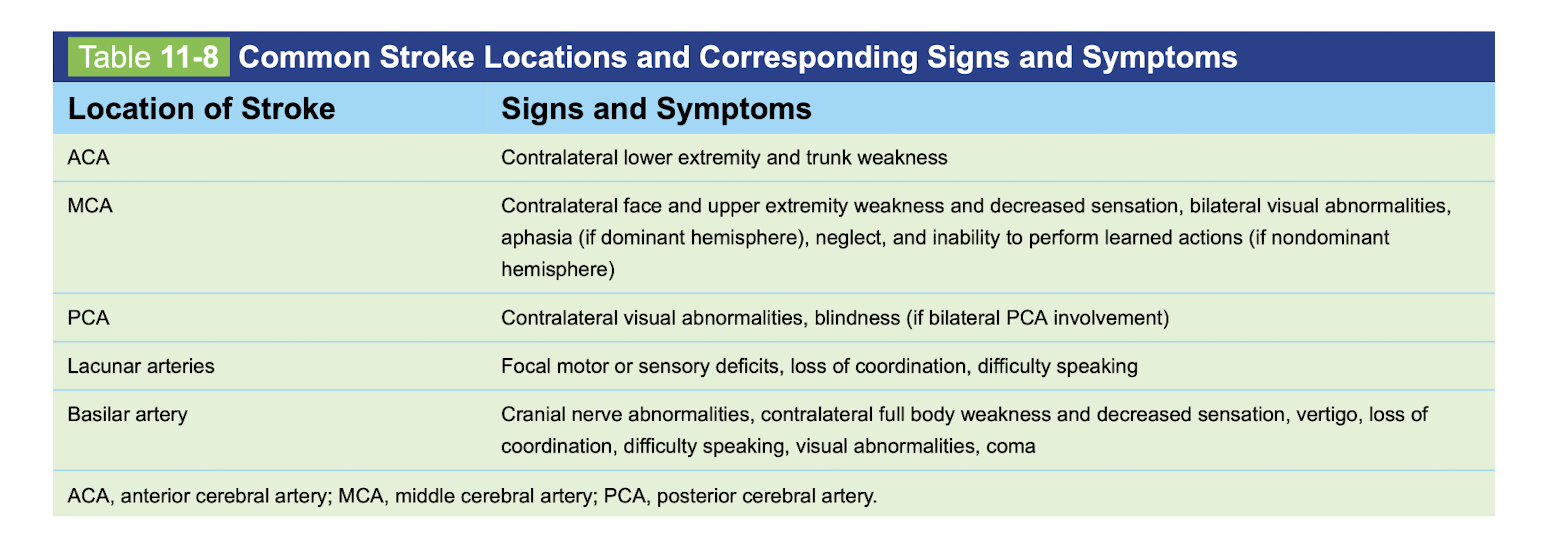
<p>-ACA- opposite lower extremity&nbsp;</p><p class="p1">-MCA- opposite face and upper extremity +/- visual abnormalities if dominant, neglect if not dominant&nbsp;</p><p class="p1">-PCA: opposite visual/ blindness if bilateral PCA&nbsp;</p><p class="p1">-Lacunar: focal motor or sensory deficits, no coordination, dysphagia&nbsp;</p><p class="p1">-Basilar artery: locked in syndrome&nbsp;</p>
17
New cards

tPA inclusion and exclusion criteria

Inclusion: 

-ischemic stroke 

-<3-4.5 hours of normal 

-18 years or older 

Exclusion: 

-no head trauma or stroke in past 3 months

-no SAH 

-no arterial puncture in last 7 days 

-no history of intracranial hemorrhage 

-no brain cancer, AVMF, or aneurysm in past 

-recent intracranial or intraspinal surgery 

-BP 185/110+ 

-active internal bleeding 

-PLT <100k 

-heparin in last 48 hrs with elevated aPTT

-INR>1.7 

-PT> 15s

-current use of direct thrombin inhibitors or direct factor 10a inhibitors with elevated lab tests (PTT, INR, PLT) 
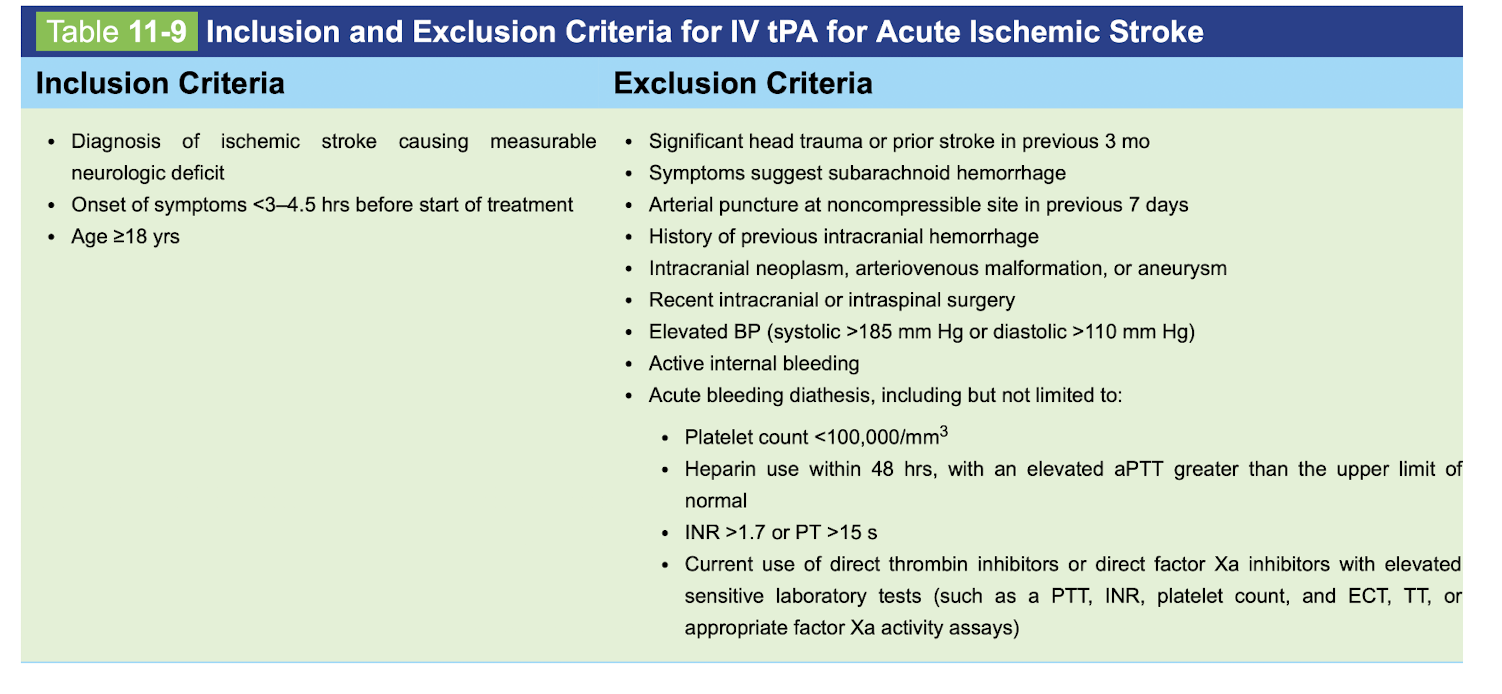
<p><strong>Inclusion:&nbsp;</strong></p><p class="p1">-ischemic stroke&nbsp;</p><p class="p1">-&lt;3-4.5 hours of normal&nbsp;</p><p class="p1">-18 years or older&nbsp;</p><p class="p2"></p><p class="p1"><strong>Exclusion:&nbsp;</strong></p><p class="p1">-no head trauma or stroke in past 3 months</p><p class="p1">-no SAH&nbsp;</p><p class="p1">-no arterial puncture in last 7 days&nbsp;</p><p class="p1">-no history of intracranial hemorrhage&nbsp;</p><p class="p1">-no brain cancer, AVMF, or aneurysm in past&nbsp;</p><p class="p1">-recent intracranial or intraspinal surgery&nbsp;</p><p class="p1">-BP 185/110+&nbsp;</p><p class="p1">-active internal bleeding&nbsp;</p><p class="p1">-PLT &lt;100k&nbsp;</p><p class="p1">-heparin in last 48 hrs with elevated aPTT</p><p class="p1">-INR&gt;1.7&nbsp;</p><p class="p1">-PT&gt; 15s</p><p class="p1">-current use of direct thrombin inhibitors or direct factor 10a inhibitors with elevated lab tests (PTT, INR, PLT)&nbsp;</p>
18
New cards

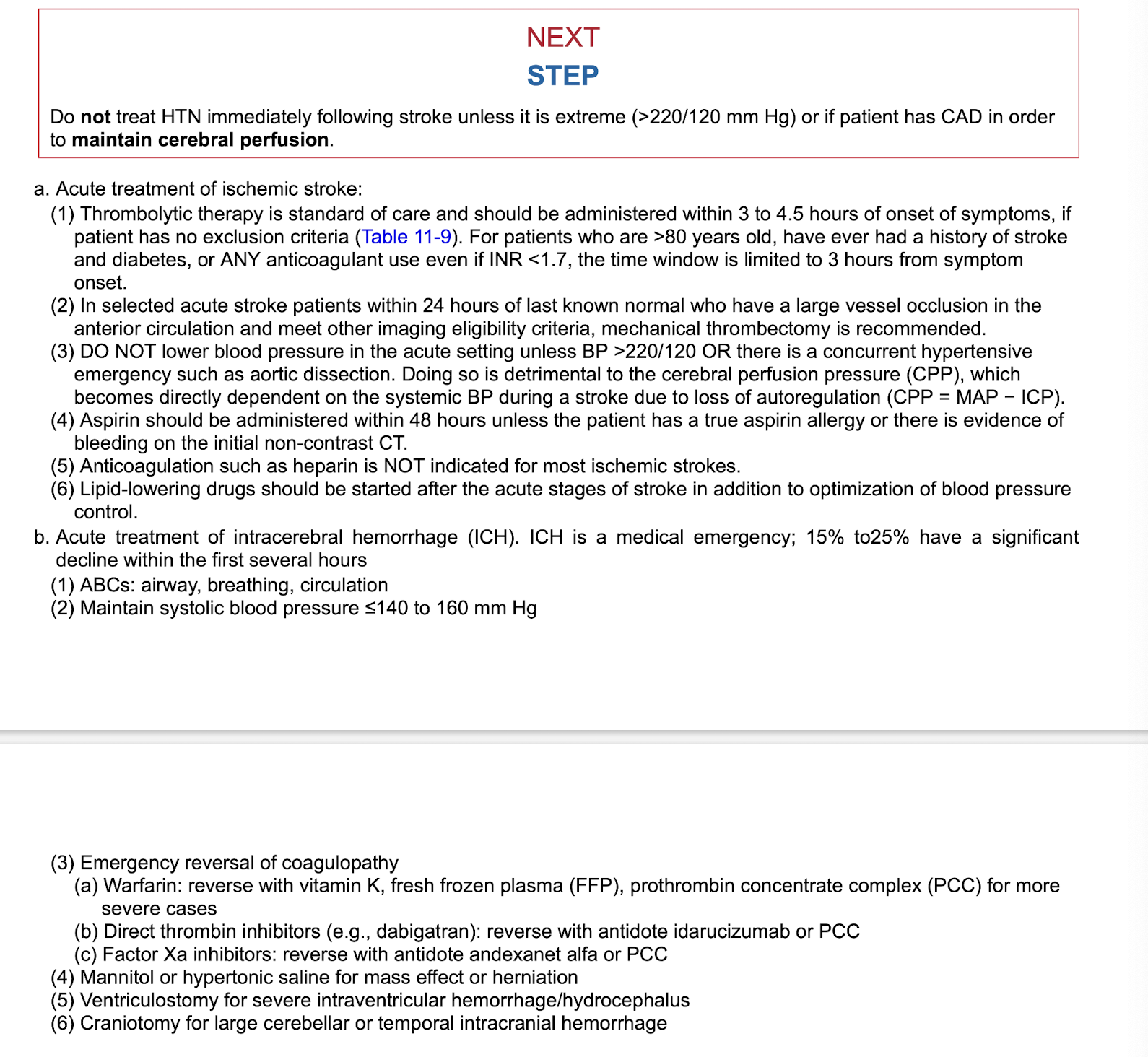
Treatment stroke/ CVA

Stroke Tx

-TPA within 4.5 hours of last normal 

-only lower BP if > 220/120 OR if concurrent hypertensive emergency such as aortic dissection 

-ASA within 48 hours 

-statins after acute stages of stroke 

-if ICH:

  • ABCs,

  • maintain BP at 140-160 or less,

  • reverse

    • blood thinners and

    • direct thrombotic inhibitors (dabigatran- idarucizumab or PCC),

    • factor 10A inhibitors (antidote andexanet alfa or PCC),

  • if mass effect or herniation (mannitol or hypertonic saline)
<p><strong>Stroke Tx</strong></p><p class="p1">-TPA within 4.5 hours of last normal&nbsp;</p><p class="p1">-only lower BP if &gt; 220/120 OR if concurrent hypertensive emergency such as aortic dissection&nbsp;</p><p class="p1">-ASA within 48 hours&nbsp;</p><p class="p1">-statins after acute stages of stroke&nbsp;</p><p class="p1">-if ICH: </p><ul><li><p class="p1">ABCs, </p></li><li><p class="p1">maintain BP at 140-160 or less, </p></li><li><p class="p1">reverse </p><ul><li><p class="p1">blood thinners and </p></li><li><p class="p1">direct thrombotic inhibitors (dabigatran- idarucizumab or PCC),</p></li><li><p class="p1"> factor 10A inhibitors (antidote andexanet alfa or PCC),</p></li></ul></li><li><p class="p1">if mass effect or herniation (mannitol or hypertonic saline)</p></li></ul><p></p>
19
New cards

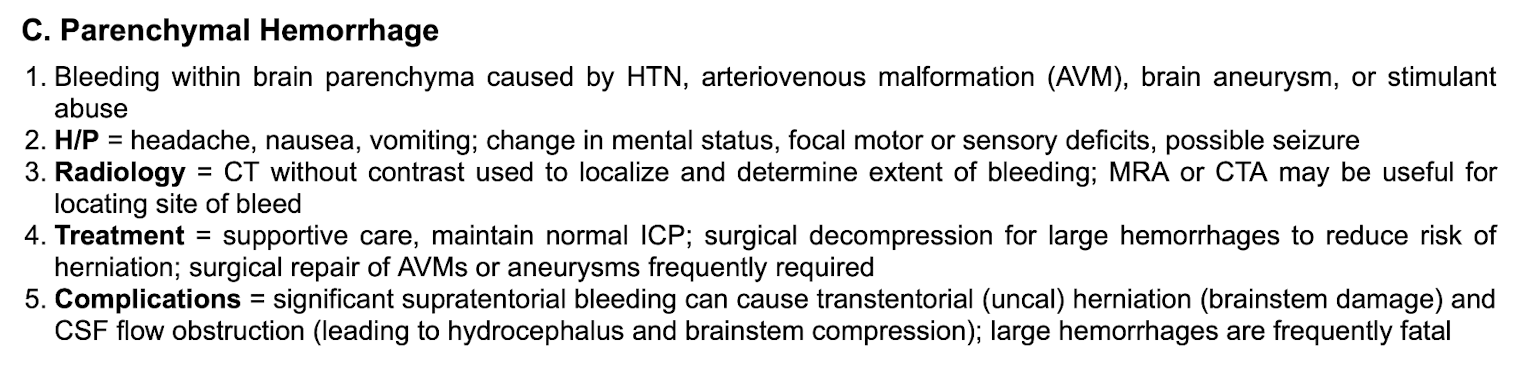
Parenchymal hemorrhage

-def

-sxs

-radio

-tx

-complications
knowt flashcard image
20
New cards

Berry aneurysms assoiciated with

ADPKD

ehlers-danlos

21
New cards

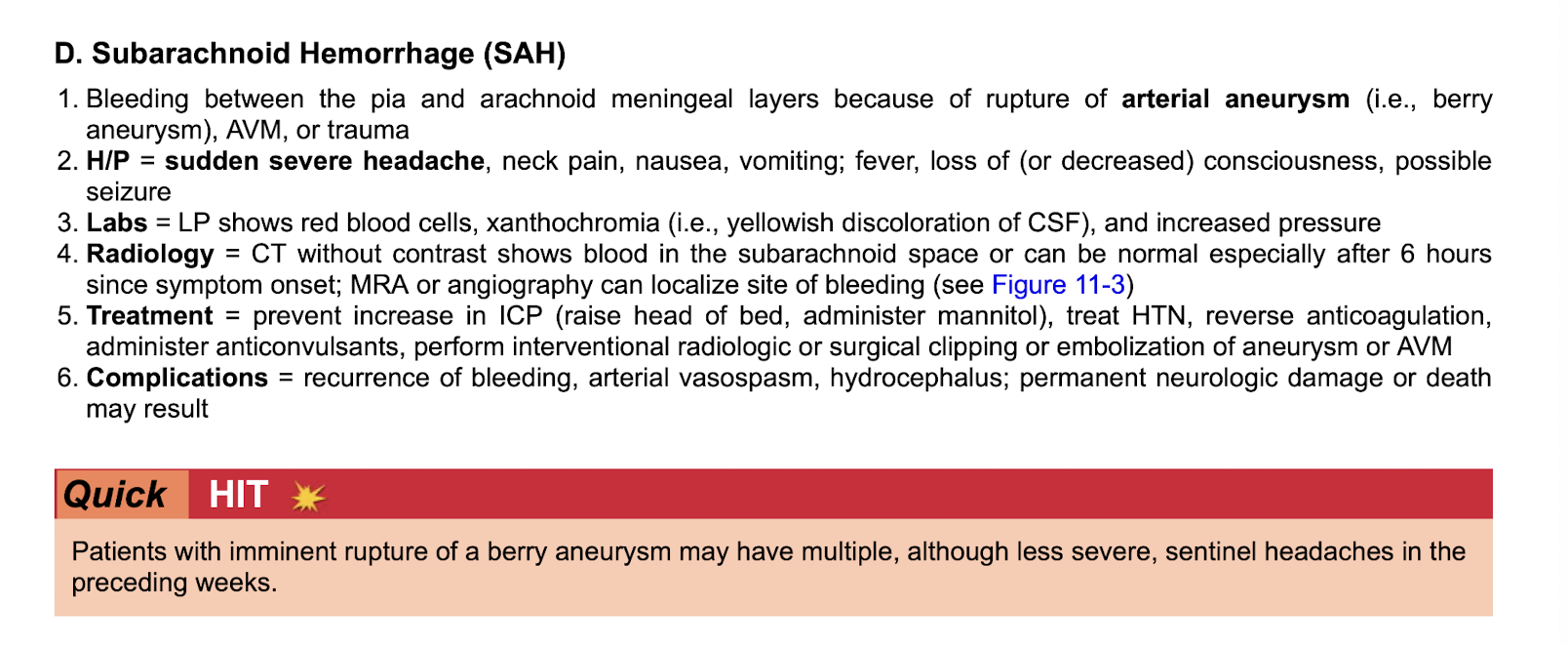
SAH

-Labs

-radio

-tx

-complications

knowt flashcard image
22
New cards

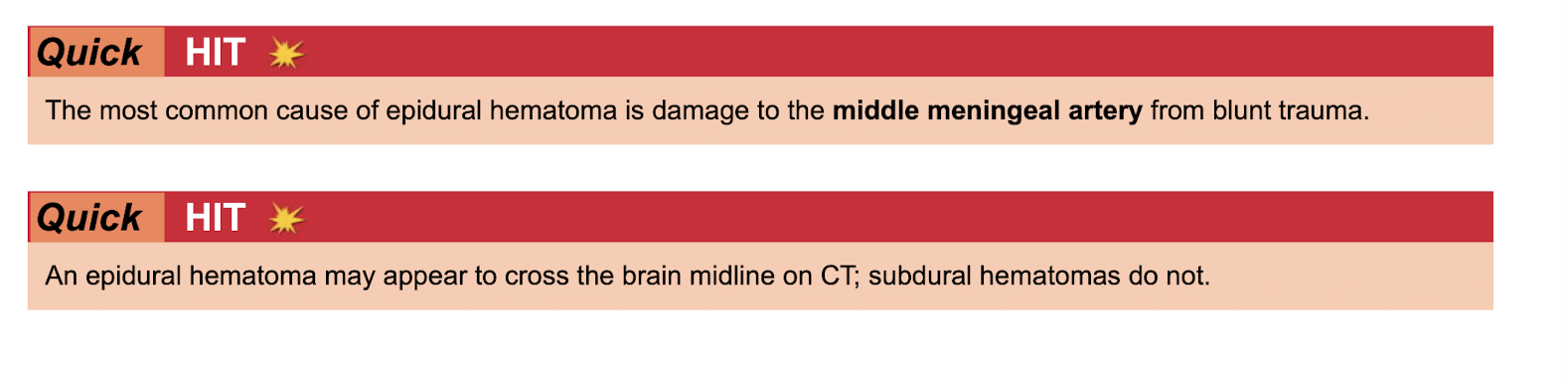
epidural vs subdural on CT

knowt flashcard image
23
New cards

Epidural hematoma

-sxs

-radiology

convex

<p>convex </p>
24
New cards

if SAH suspected despite negative CT

do LP

25
New cards

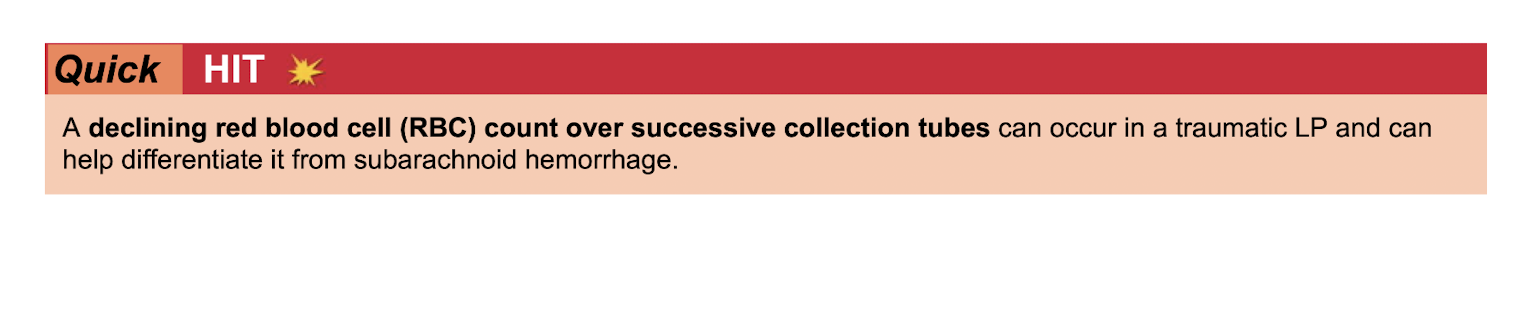
Traumatic LP vs SAH

knowt flashcard image
26
New cards

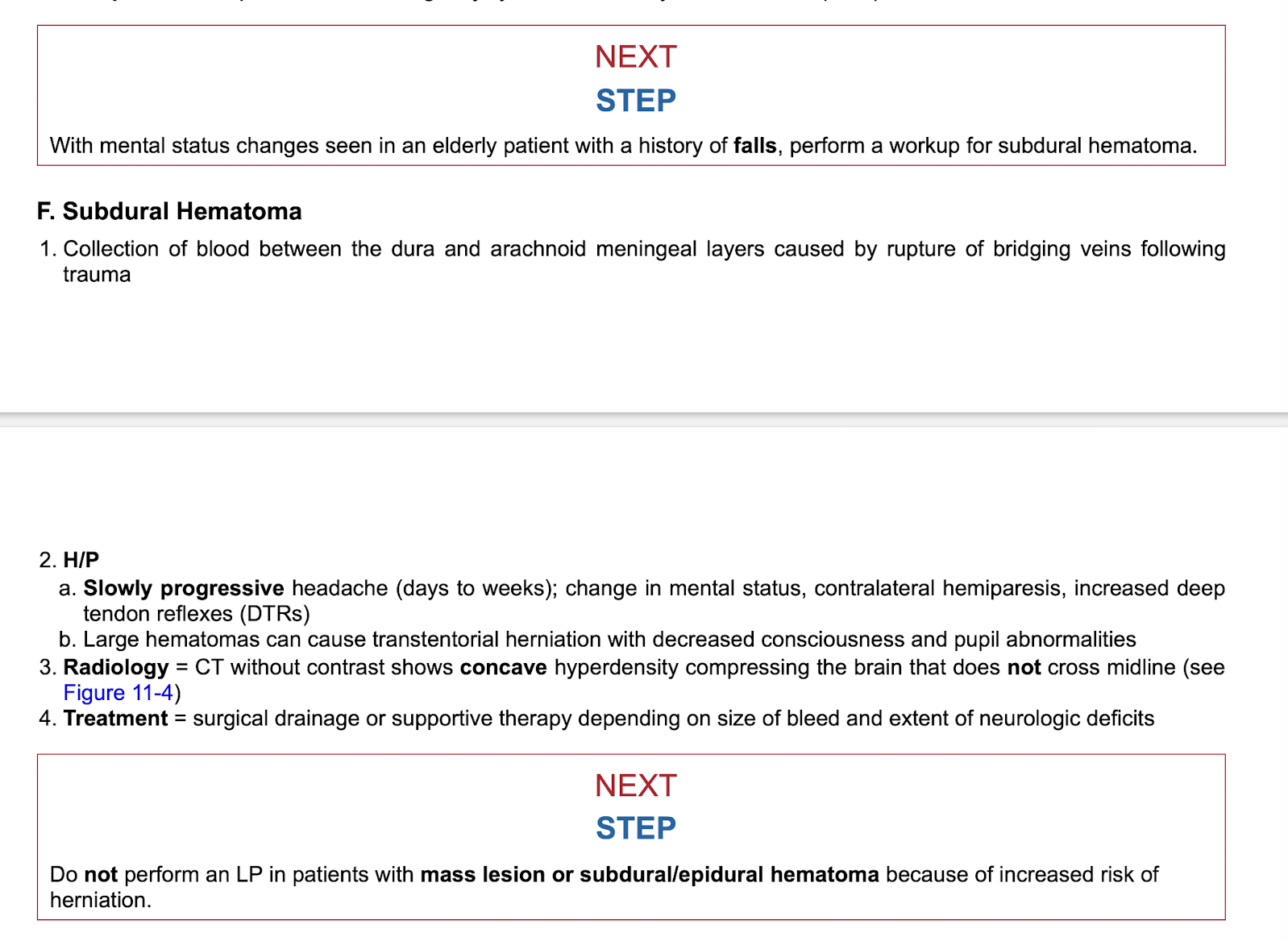
Epidural hematoma

-tx

-complications

Subdural hematoma

-sxs

-radio

-tx
knowt flashcard image
27
New cards

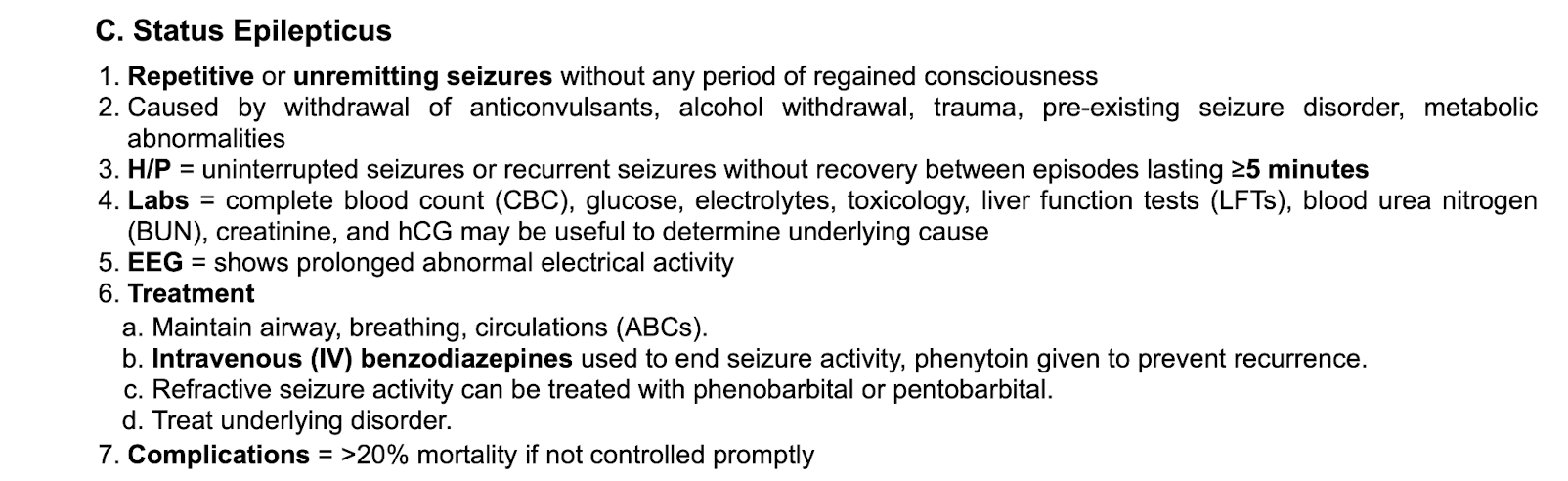
Status epilepticus

-def

-sxs

-labs

-eeg

-tx

-complications
knowt flashcard image
28
New cards

delay what during status epilepticus until pt is stablilized

CT and EEG

29
New cards

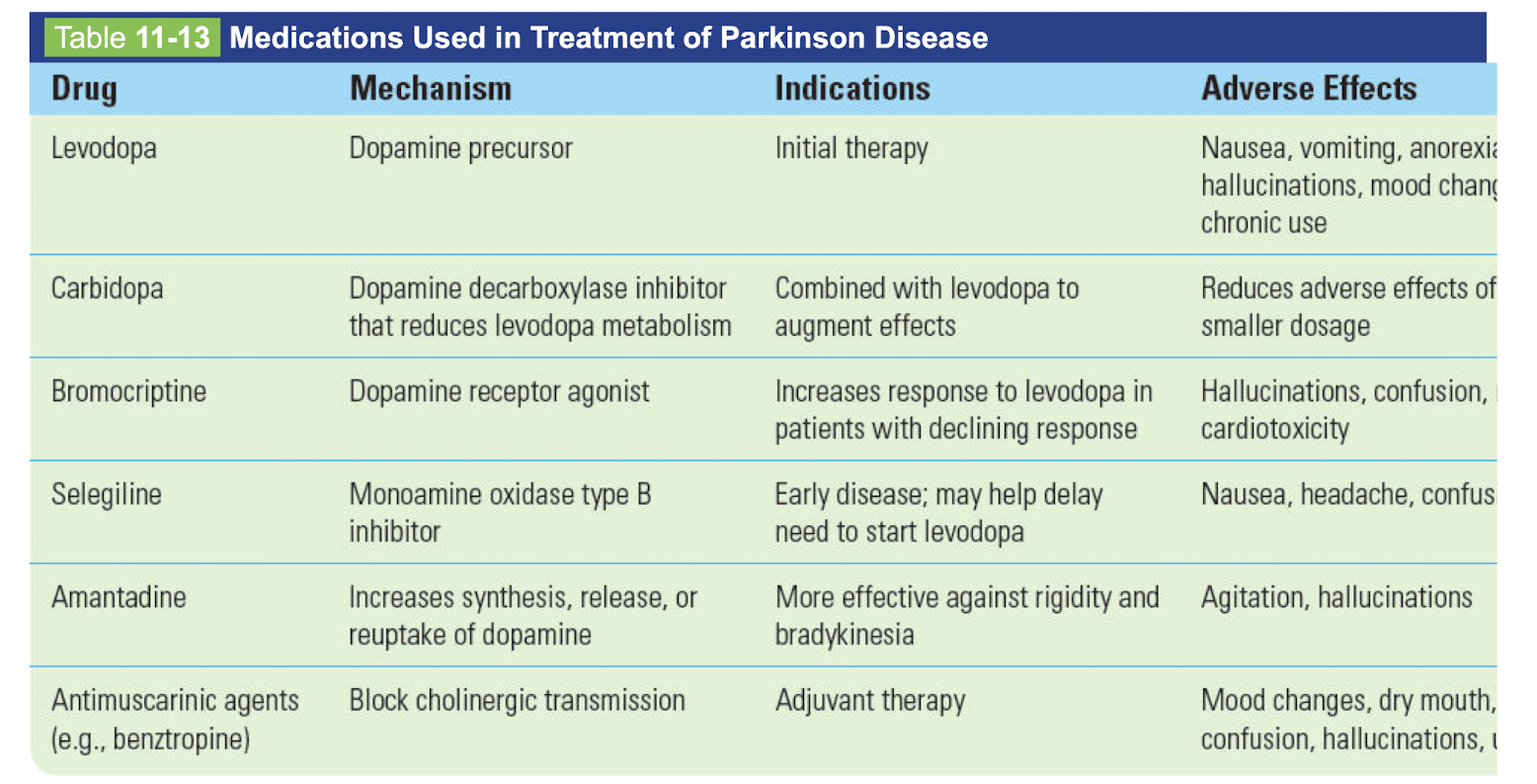
Parksinsons disease drugs, mechanisms, indications, adverse effects

  • levadopa

  • carbidopa

  • bromocriptine

  • selegiline

  • amantadine

  • antimuscarining agents

knowt flashcard image
30
New cards

ALS

-sxs

-labs

-EMG

-radio

-tx

-complications
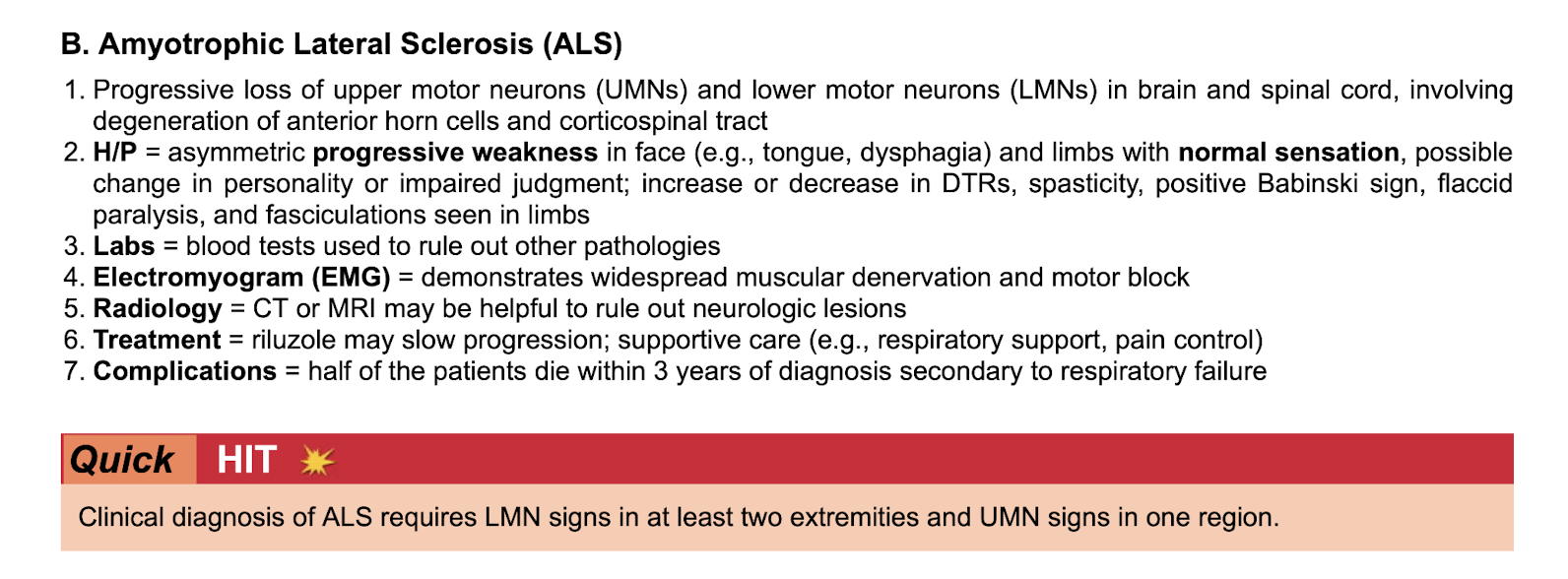
<p></p>
31
New cards

Huntington disease

-def

-characteristic signs

-sxs

-labs

-radio

-tx

-complications
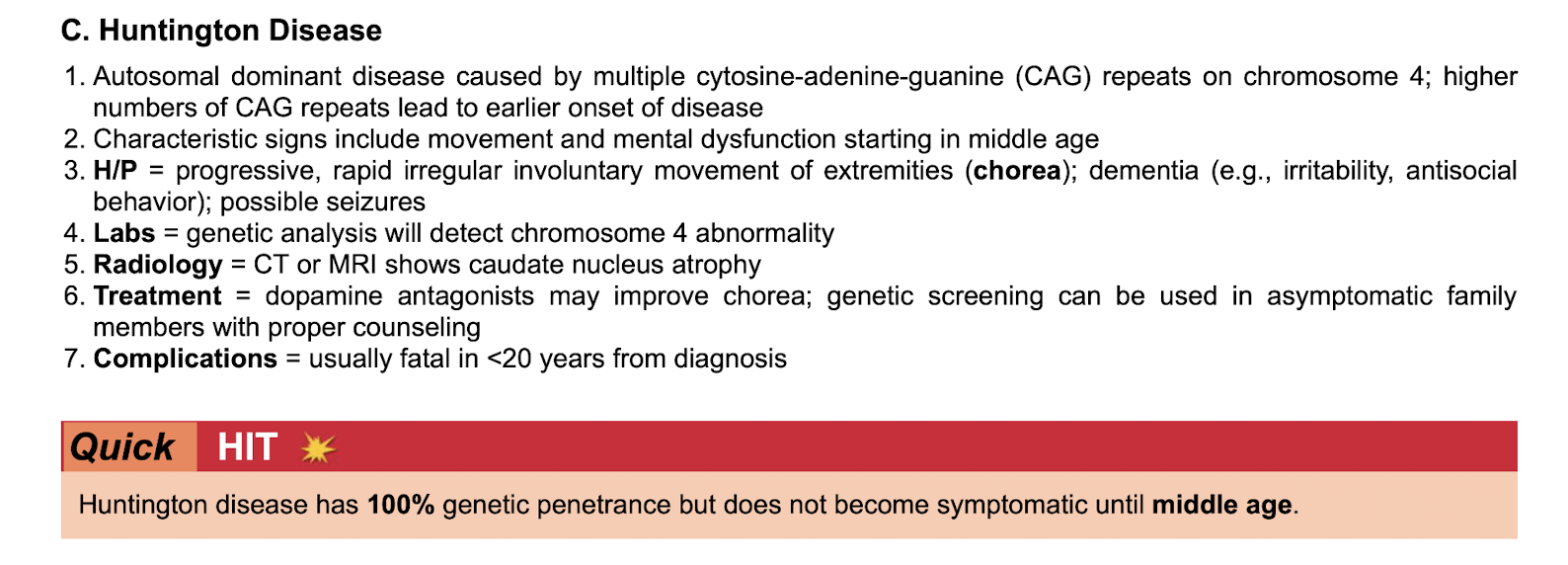
knowt flashcard image
32
New cards

MS

-labs

-radio

-tx

-complications

-next step
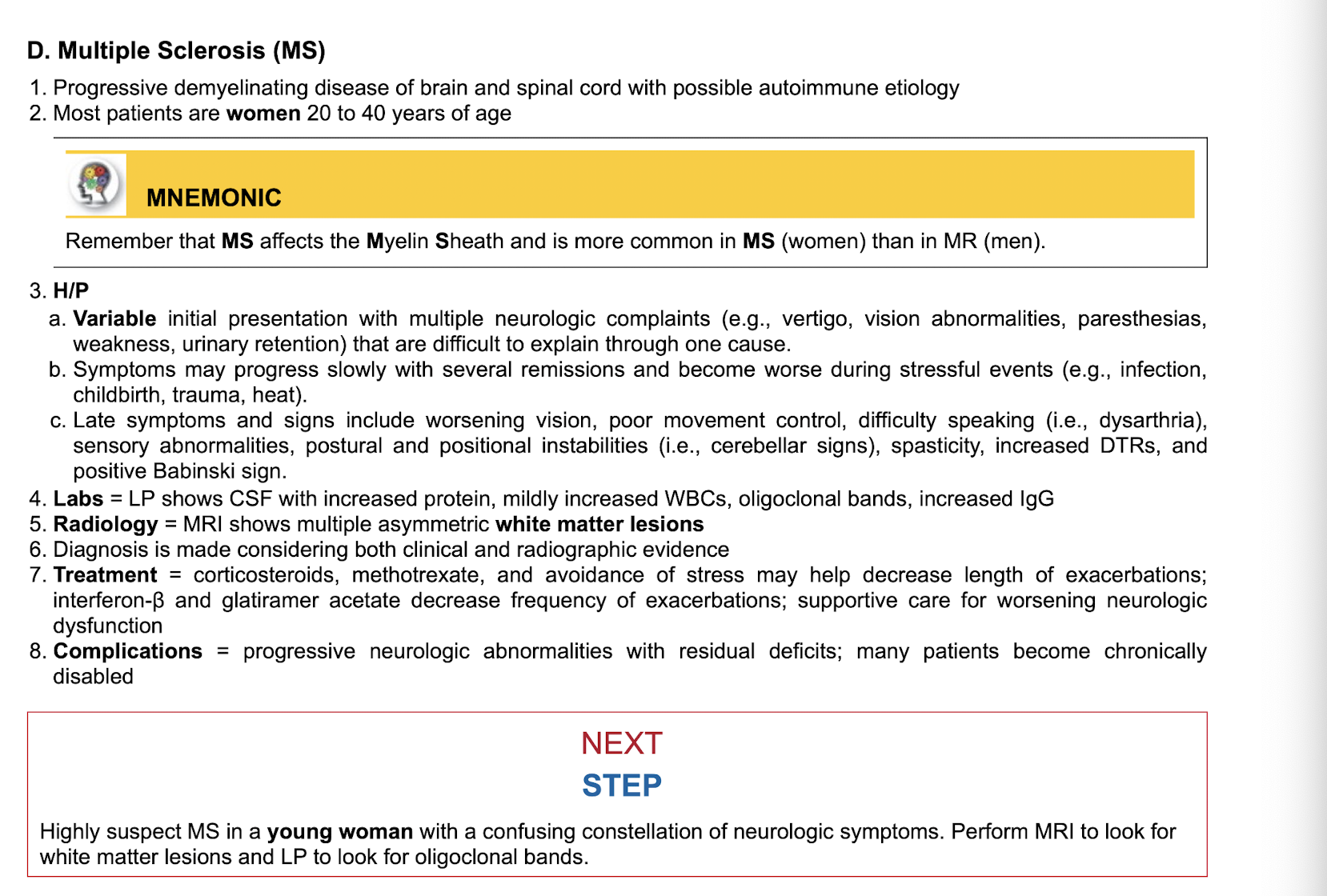
knowt flashcard image
33
New cards

syringomyelia

-def

-pathophysiology

-radio

-tx

knowt flashcard image
34
New cards

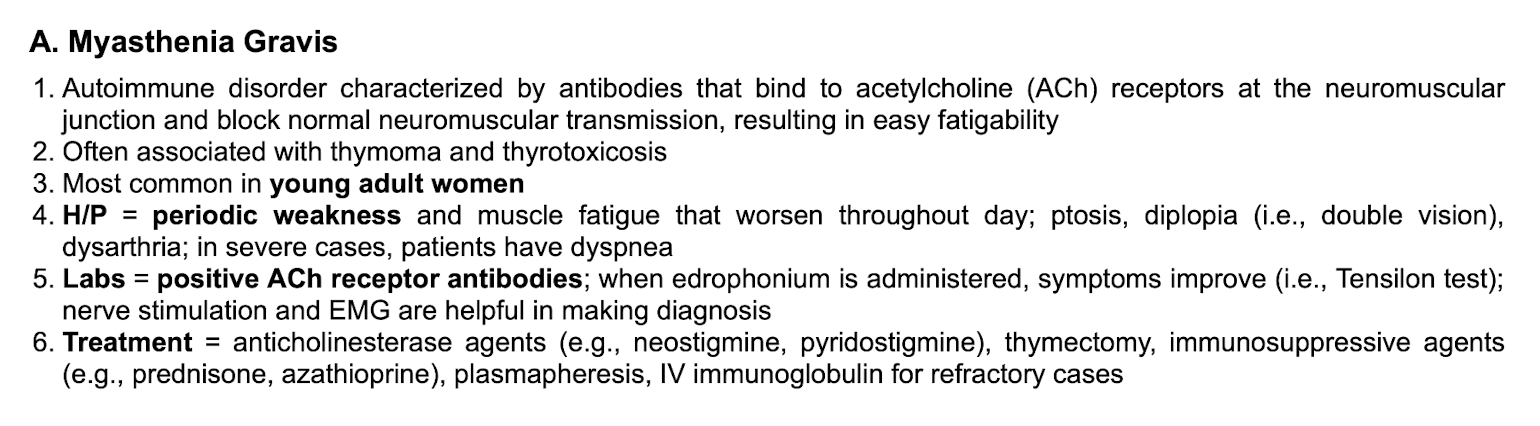
MG

-labs

-tx

knowt flashcard image
35
New cards

LES is a

-occurs because of

-tx with

knowt flashcard image
36
New cards

GBS

-def

-sxs

-labs

-emg

-tx

-complications
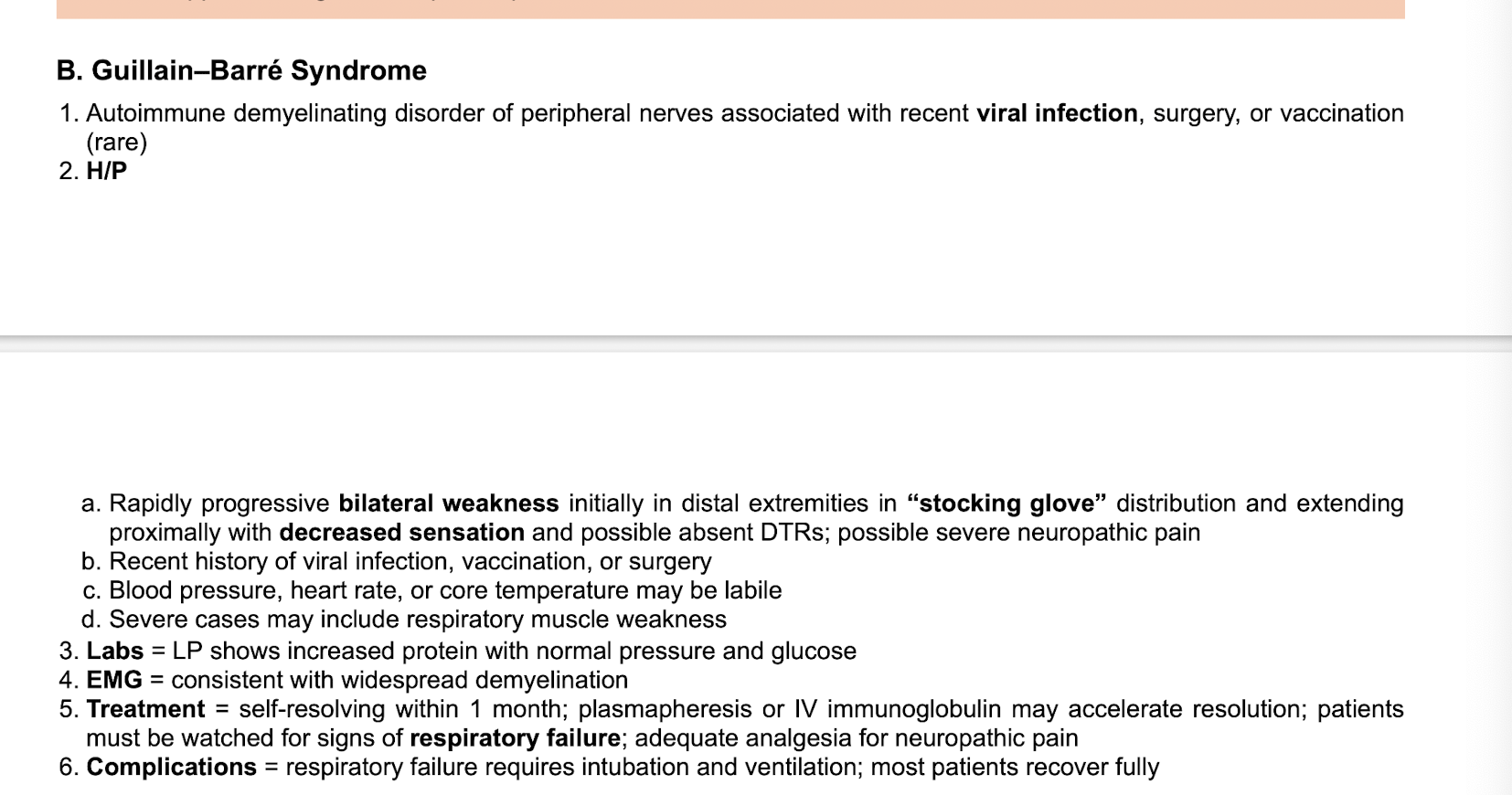
knowt flashcard image
37
New cards

If MG dx in pt, then

always get CHEST CT to look for thymoma

38
New cards

Edrophonium is

knowt flashcard image
39
New cards

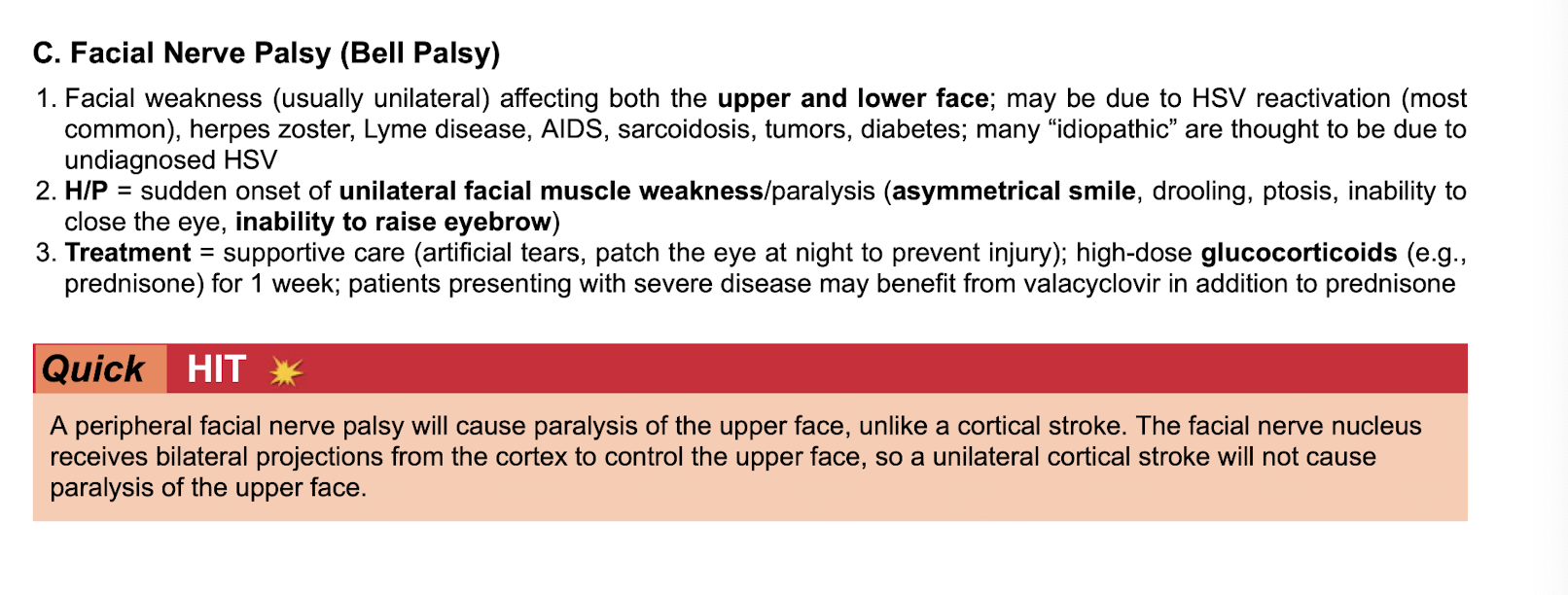
Bells Palsy

-def

-sxs

-tx

-difference vs cortical stroke
knowt flashcard image
40
New cards

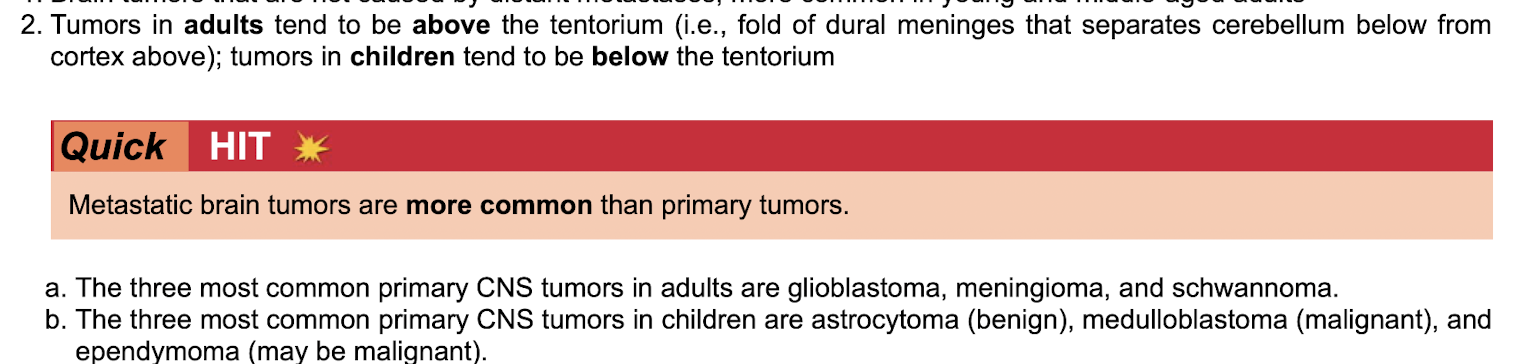
Most common primary brain trauma in adults vs children.

knowt flashcard image
41
New cards

Tumors in adults tend to be vs children
knowt flashcard image
42
New cards

Primary brain cancer

-labs

-radio

-tx

knowt flashcard image
43
New cards

Most mets to the brain are

supratentorial

44
New cards

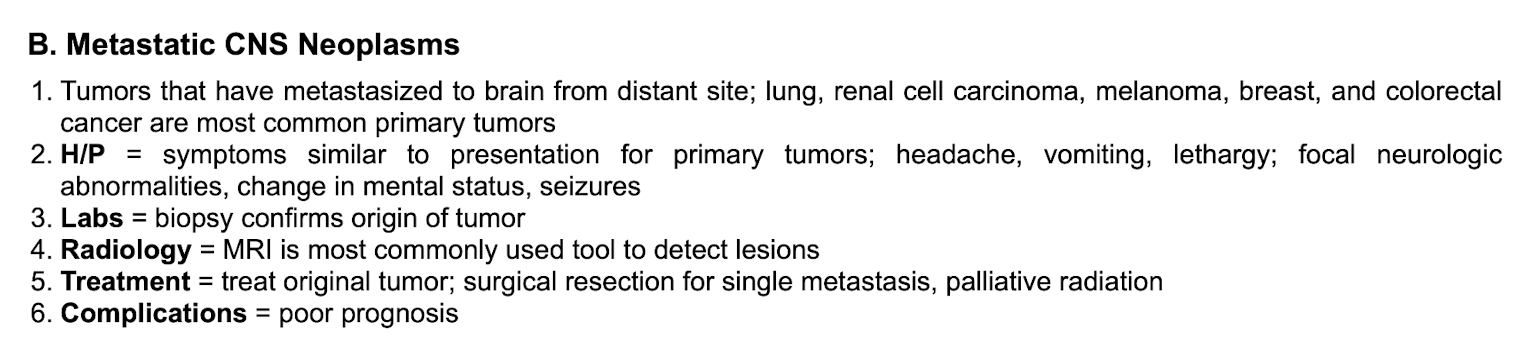
Mets CNS neoplasms

-labs

-radio

-tx

-complications
knowt flashcard image
45
New cards

If intracranial tumor is the initial lesion detected

workup should include a full search for a source neoplasm- full body CT, blood cancer antigens, etc.

46
New cards

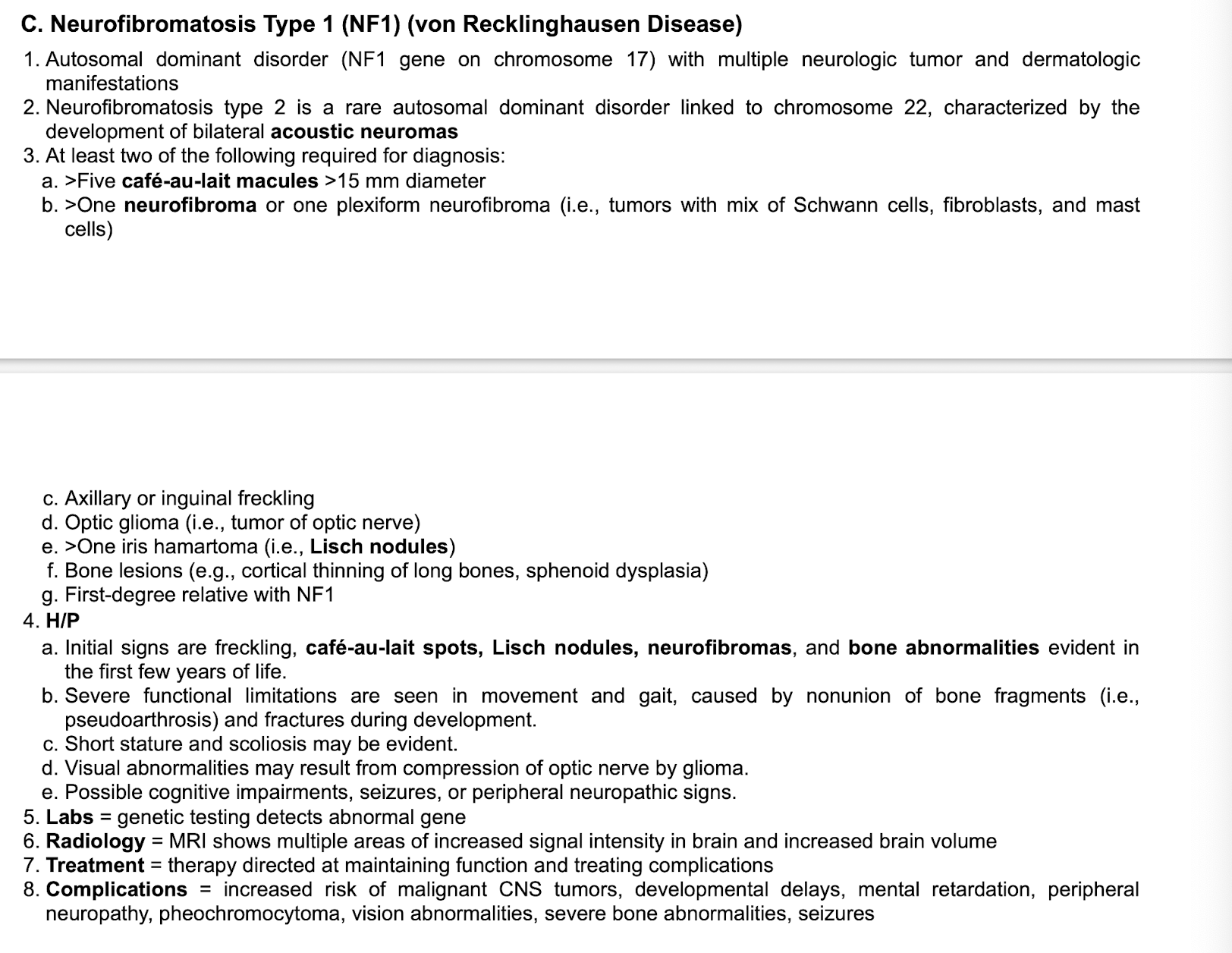
NFT1

-genetics

-dx requires

-labs

-radio

-tx

-complications
knowt flashcard image
47
New cards

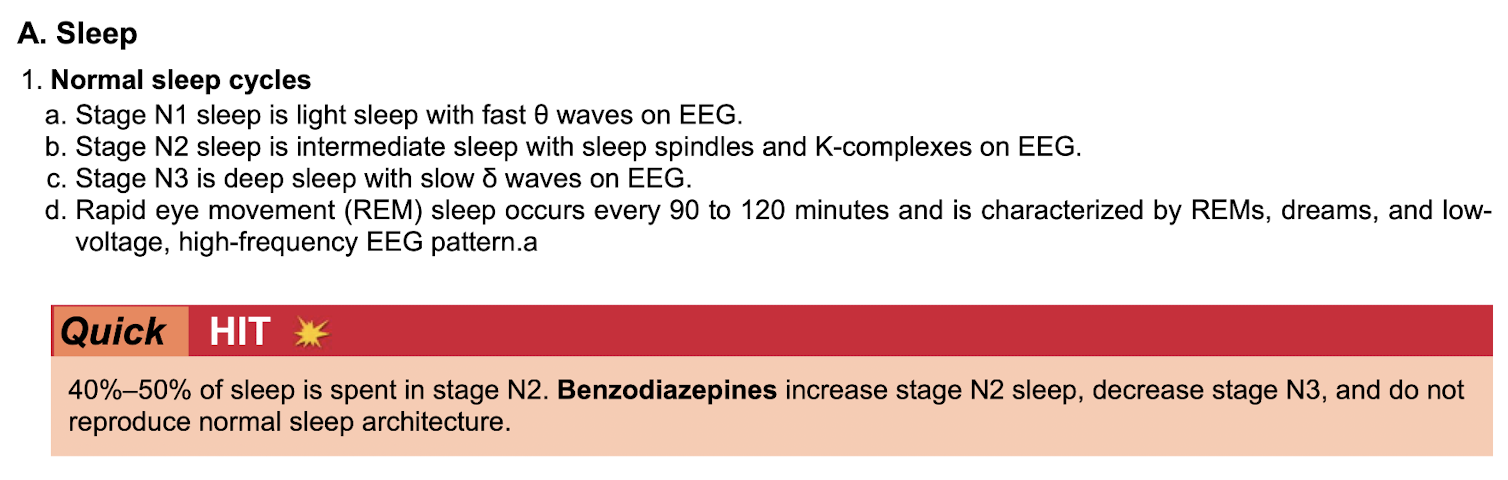
Normal sleep cycle

-half of sleep spent in

-benzos do what
knowt flashcard image
48
New cards

Narcolepsy

-labs

-tx

knowt flashcard image
49
New cards

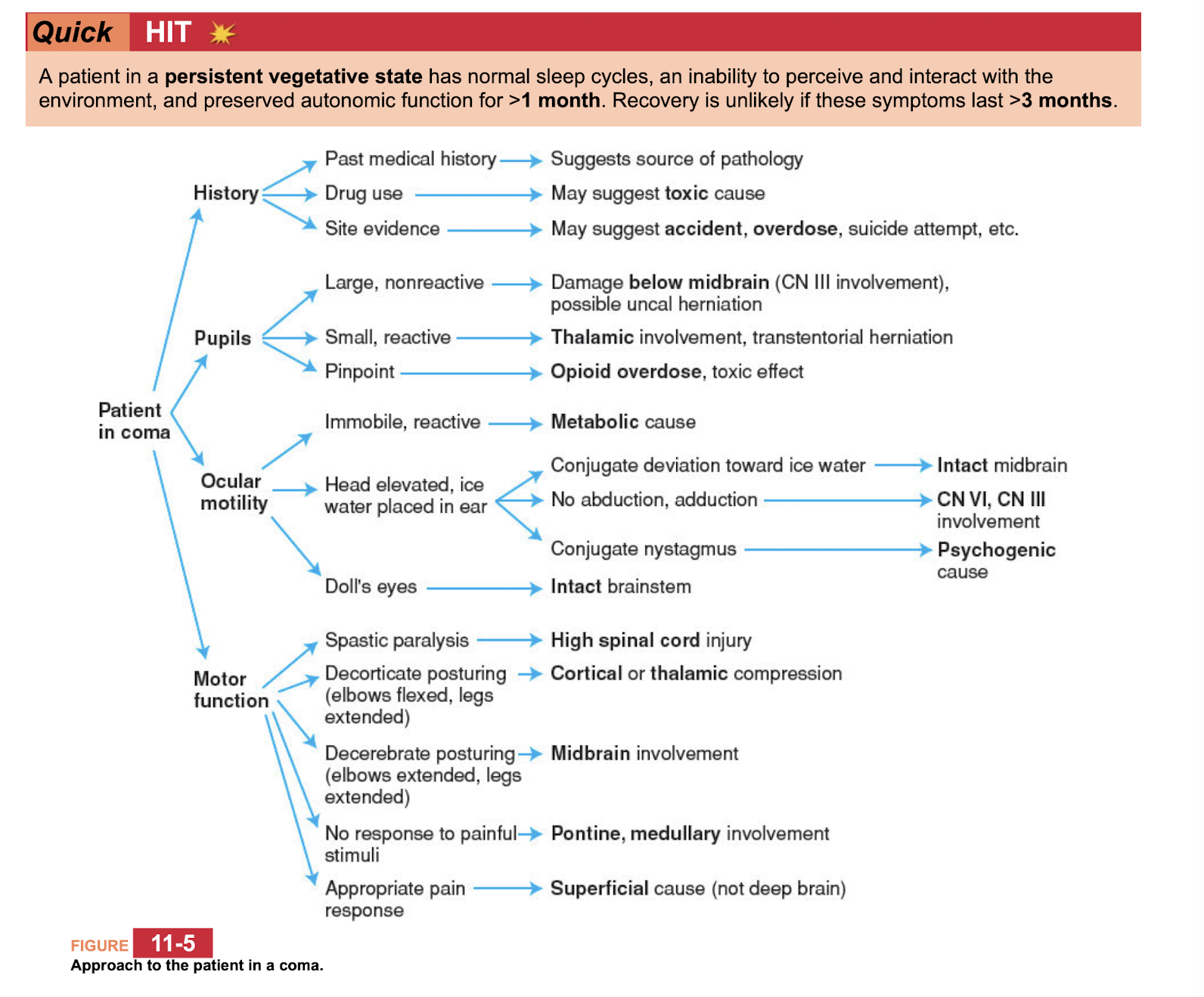
Coma pathway

knowt flashcard image
50
New cards

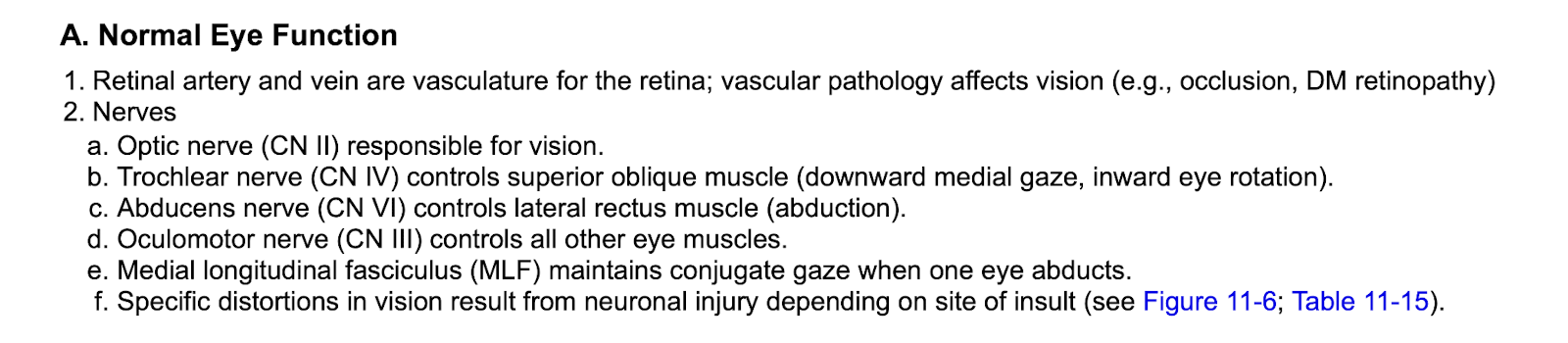
Eye nerves and functions

  • optic

  • trochlear

  • abducens

  • pculomotor

    • mlf

knowt flashcard image
51
New cards

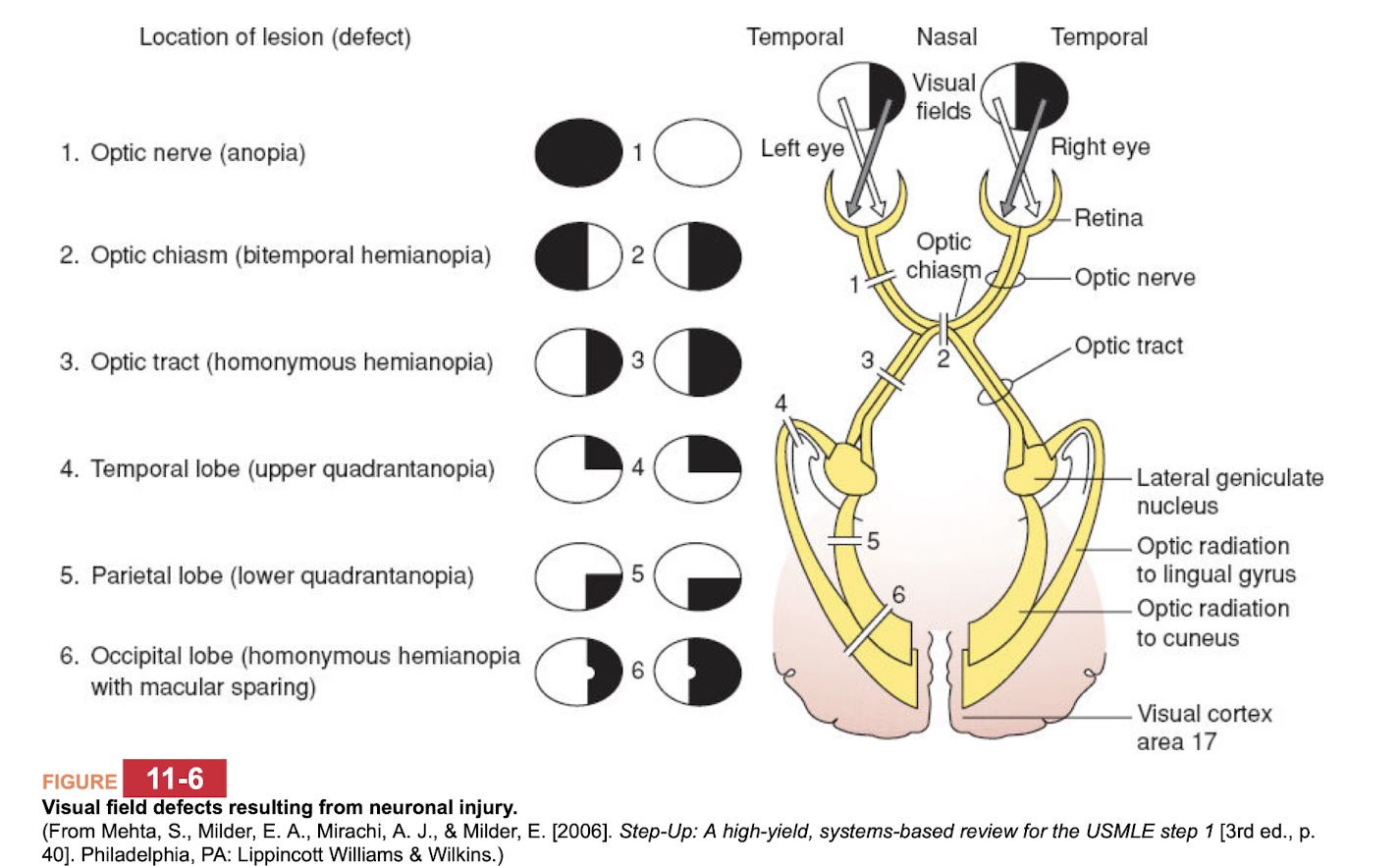
Vision pathway and lesions

knowt flashcard image
52
New cards

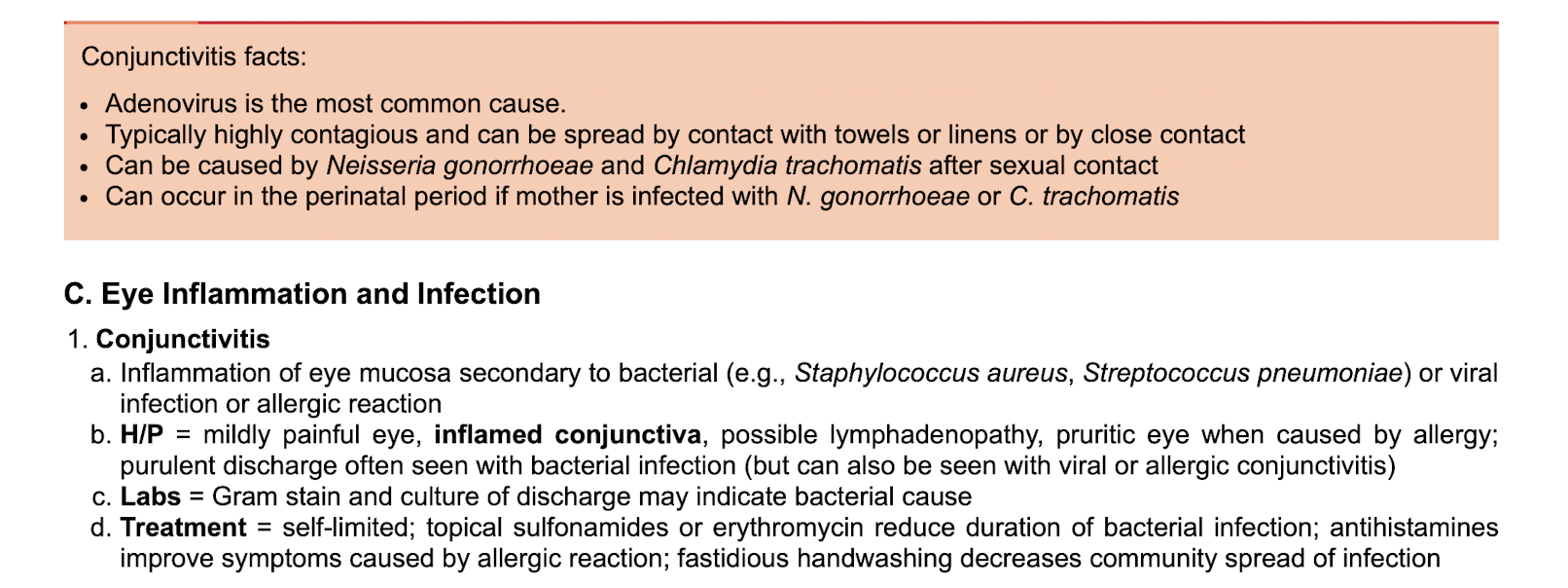
Conjuntivitis facts x4

-labs

-tx

knowt flashcard image
53
New cards

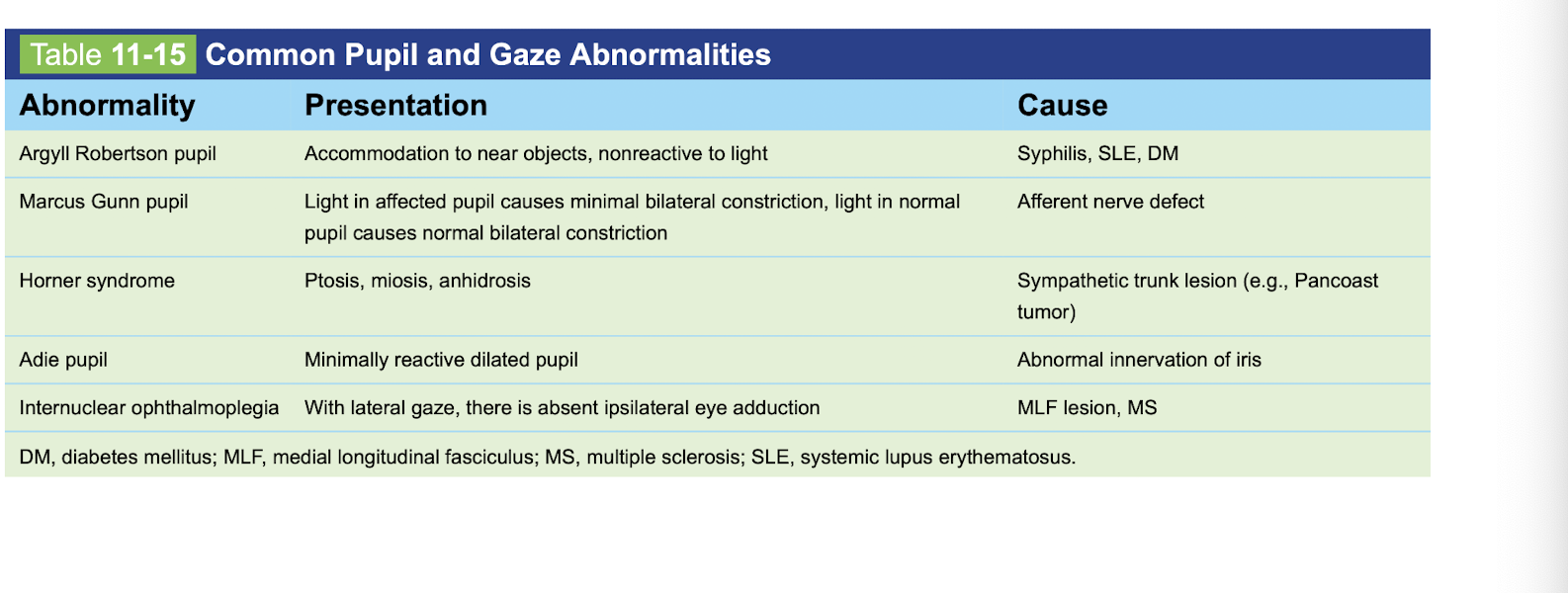
pupil issues

presentation and cause

  • argyll robertson pupil

  • marcus gunn

  • horner

  • adie

  • ino

knowt flashcard image
54
New cards

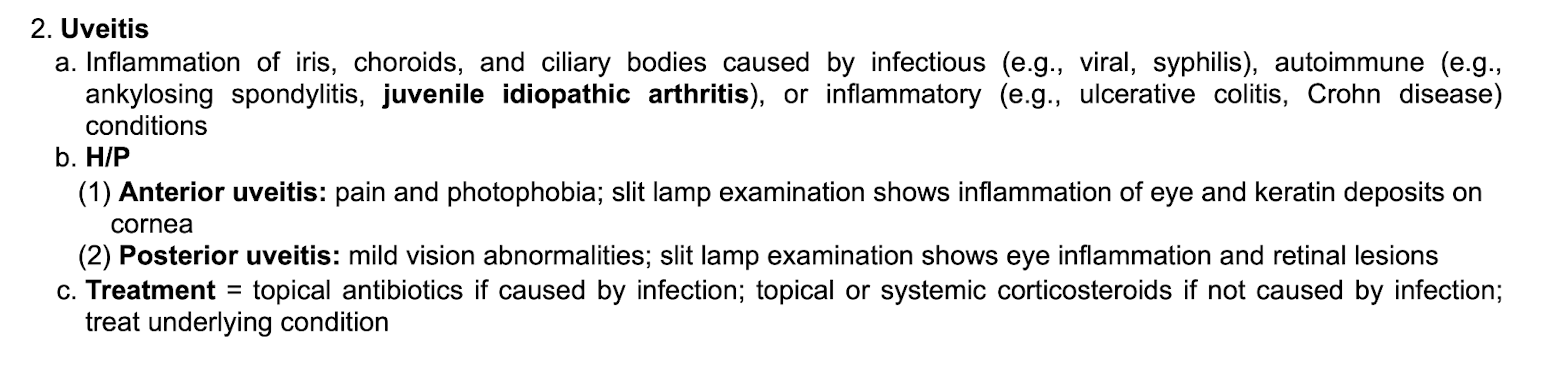
uveitis

-sxs

-tx

knowt flashcard image
55
New cards

cataracts

-sxs

-tx

knowt flashcard image
56
New cards

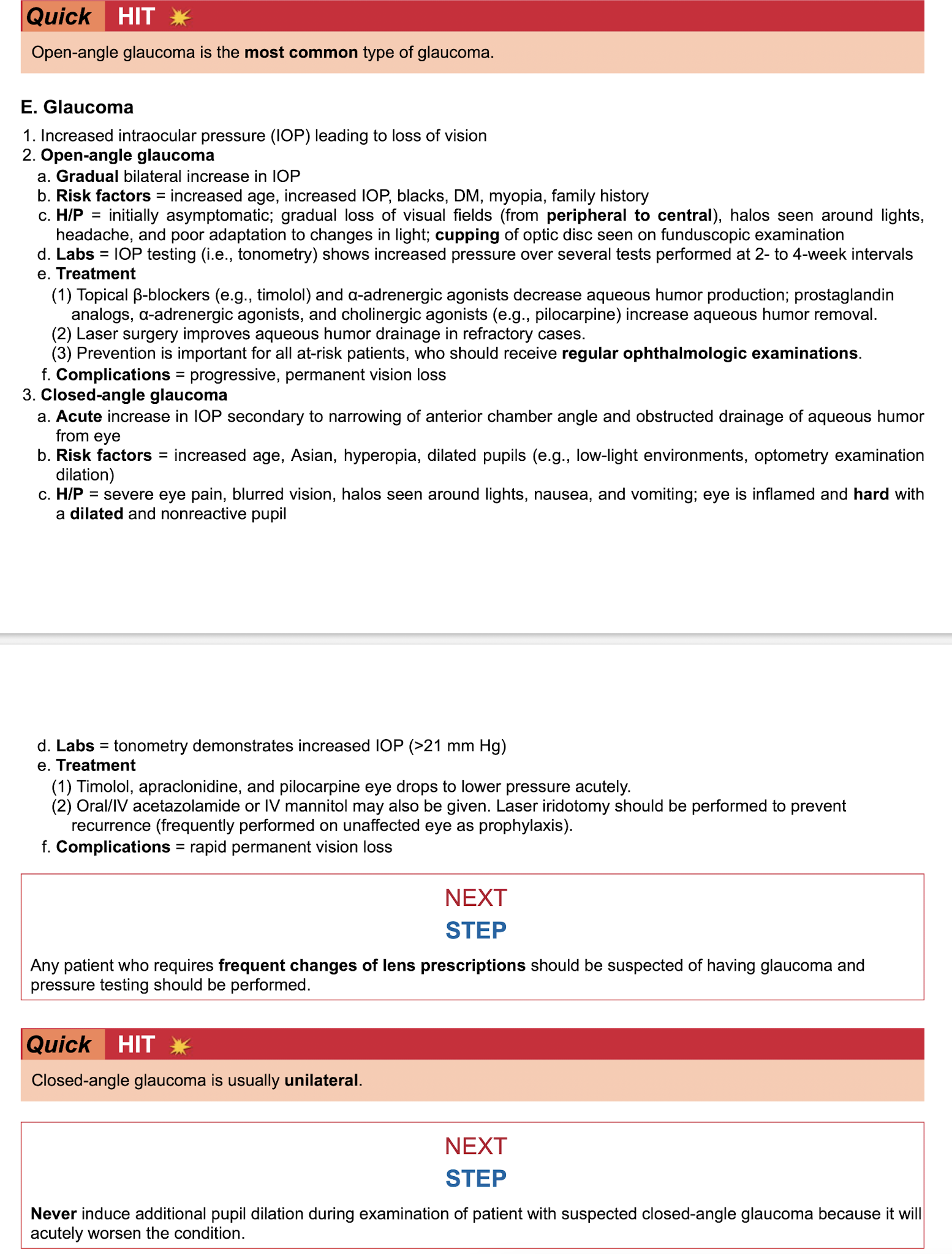
Glaucoma

-most common type

-patho

-open angle

  • patho

  • rf

  • sxs

  • labs

  • tx

-closed

  • patho

  • rf

  • sxs

  • labs

  • tx

  • complications

knowt flashcard image
57
New cards

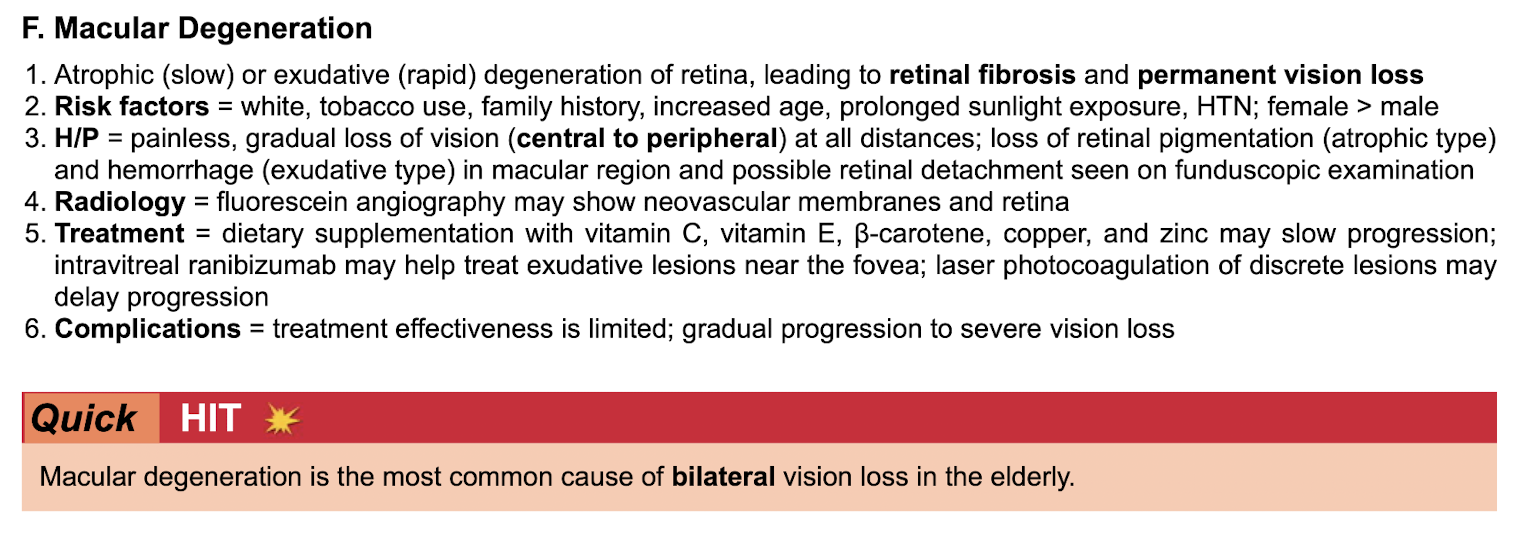
Macular degeneration

-def

-rf

-sxs

-radio

-tx

-complications

-most common cause of
knowt flashcard image
58
New cards

Retinal detach

-def

-rf

-sxs

-tx

knowt flashcard image
59
New cards

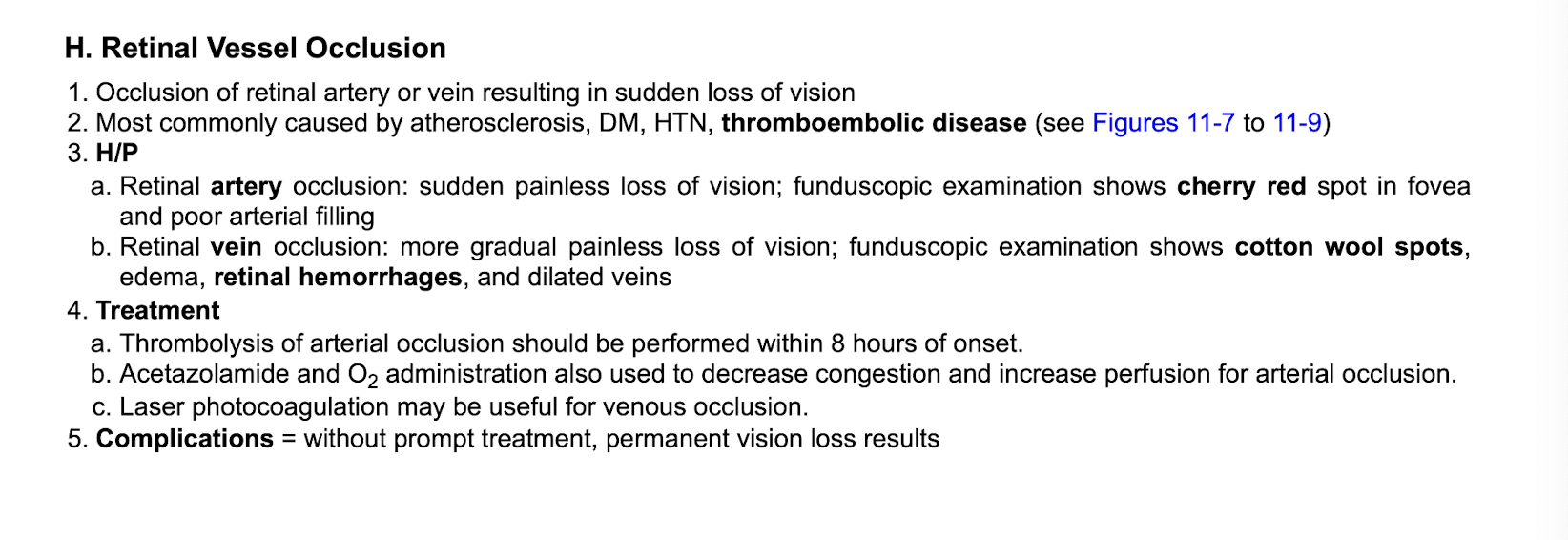
Retinal vessel occlusion

-def

-most commonly caused by

-sxs

-tx

-complications
knowt flashcard image
60
New cards

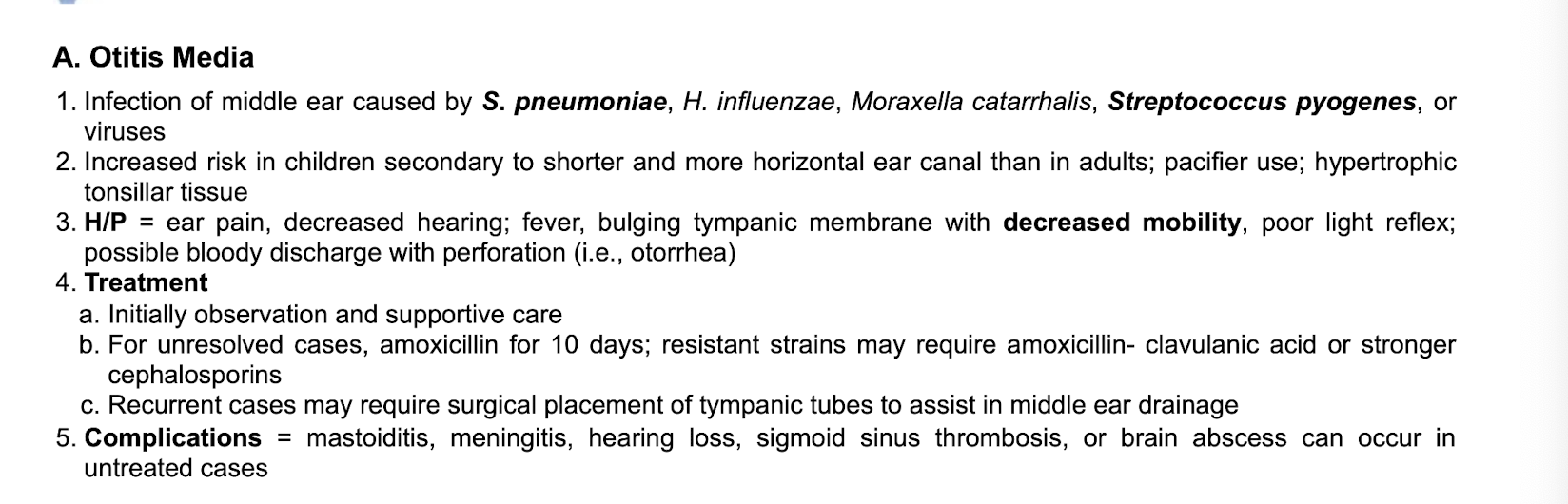
OM

-sxs

-tx

-complications

knowt flashcard image
61
New cards

OE

-sxs

-tx

knowt flashcard image
62
New cards

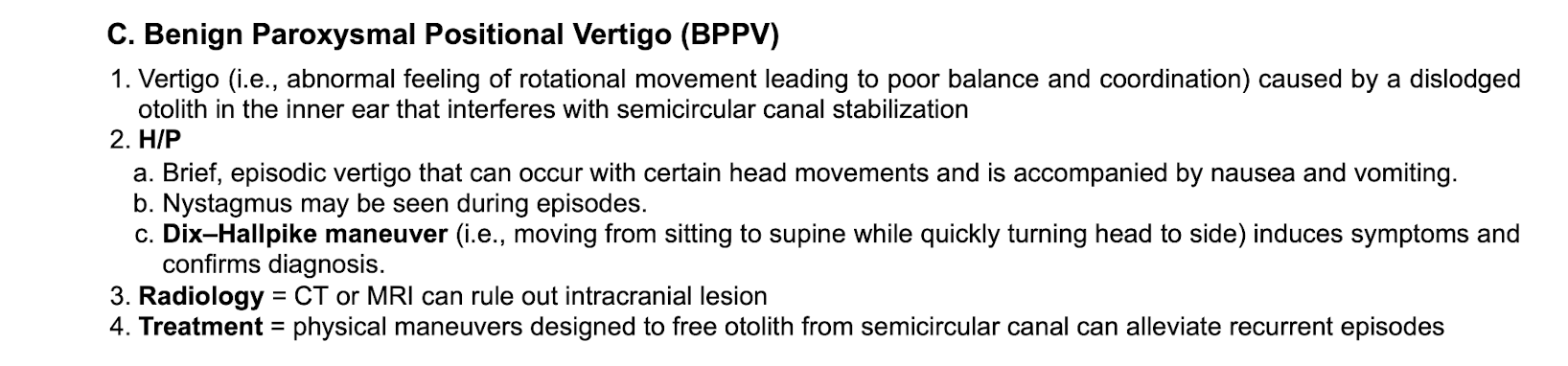
BPPV

-patho

-sxs

-radio

-tx

knowt flashcard image
63
New cards

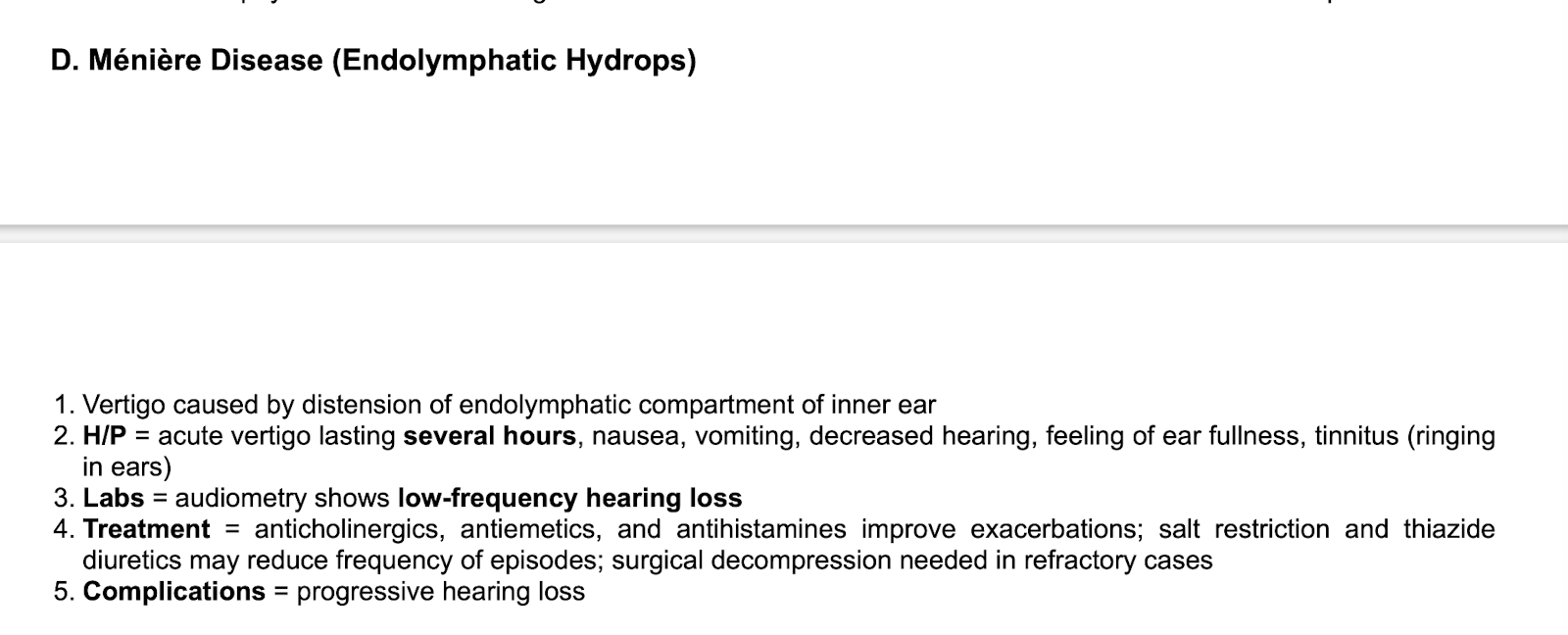
Meniere disease

-aka

-patho

-sxs

-tx

-complications
knowt flashcard image
64
New cards

Acoustic neuroma

-patho

-sxs

-labs

-radio

-tx

-complications

knowt flashcard image
65
New cards

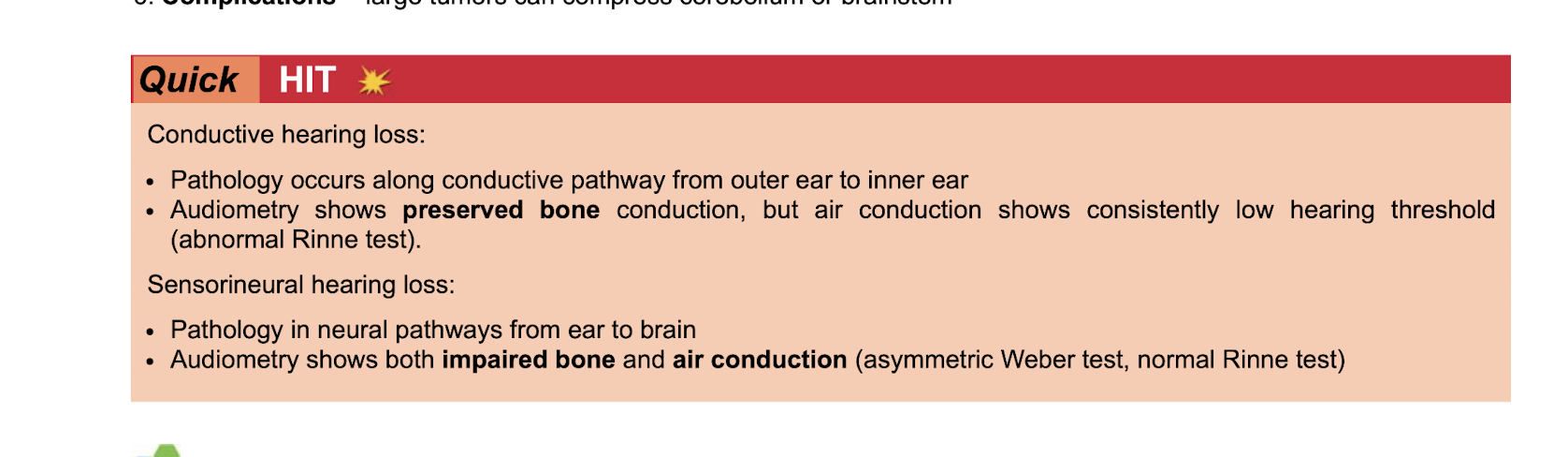
Review conductive vs sensonurial

knowt flashcard image
66
New cards

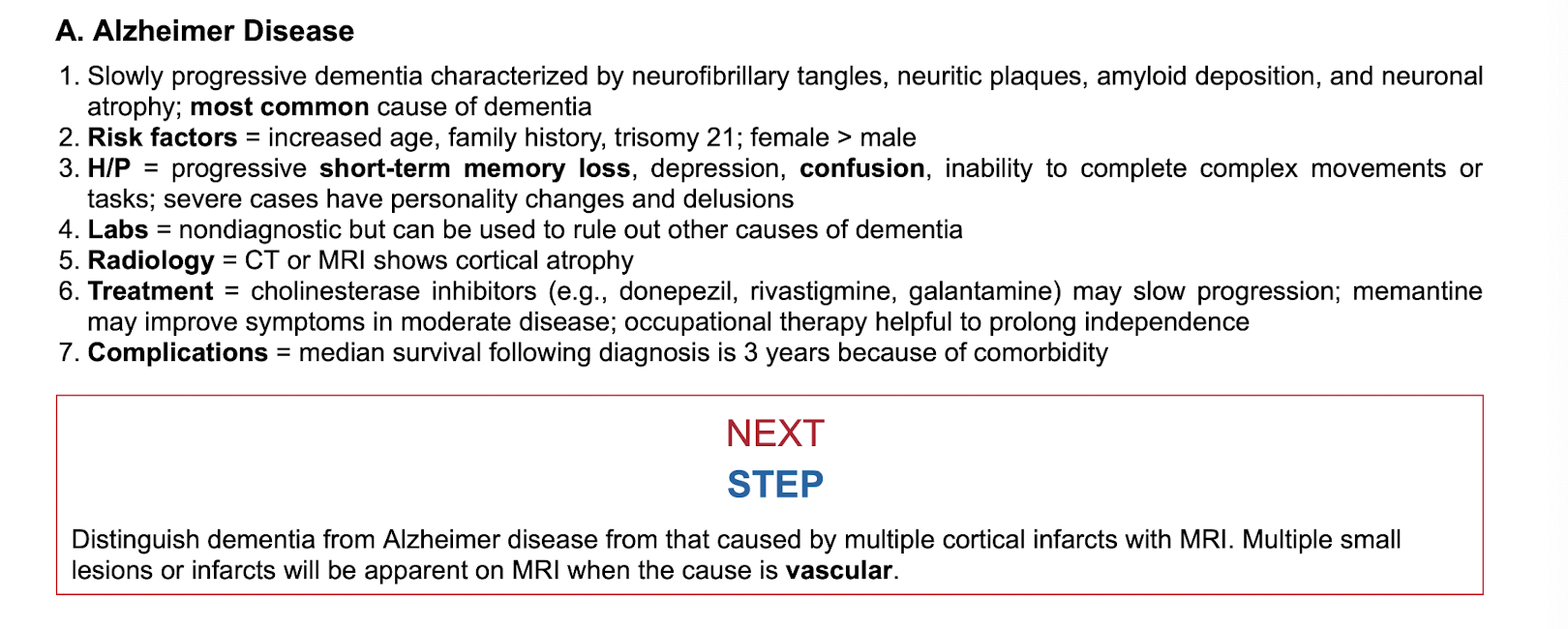
Alzheimer

-patho

-rf

-sxs

-labs

-radio

-tx

-complications

-dementia vs alzheimer
knowt flashcard image
67
New cards

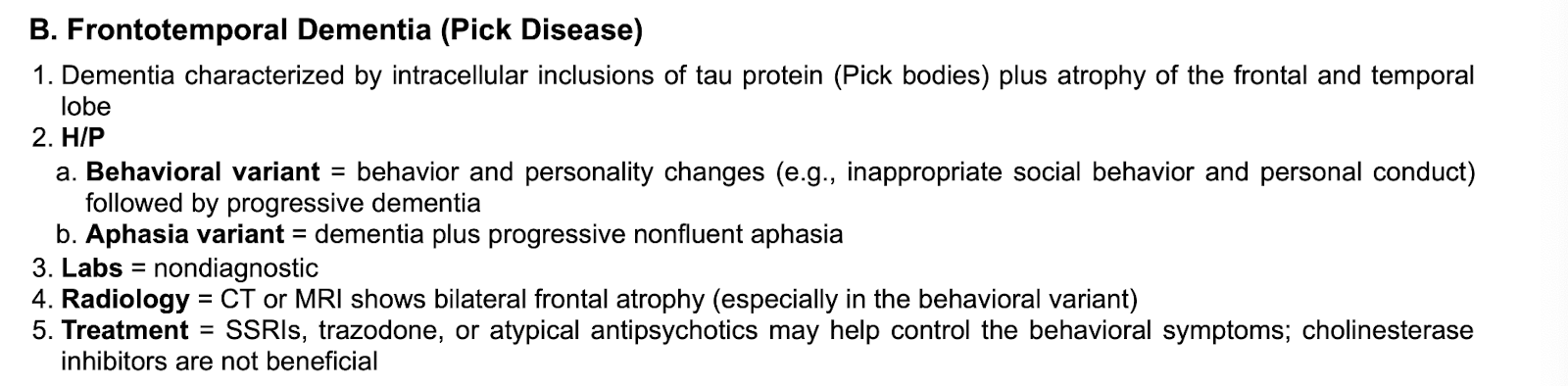
Frontotemporal dementia (pick dz)

-def

-sxs

-labs

-radio

-tx
knowt flashcard image
68
New cards

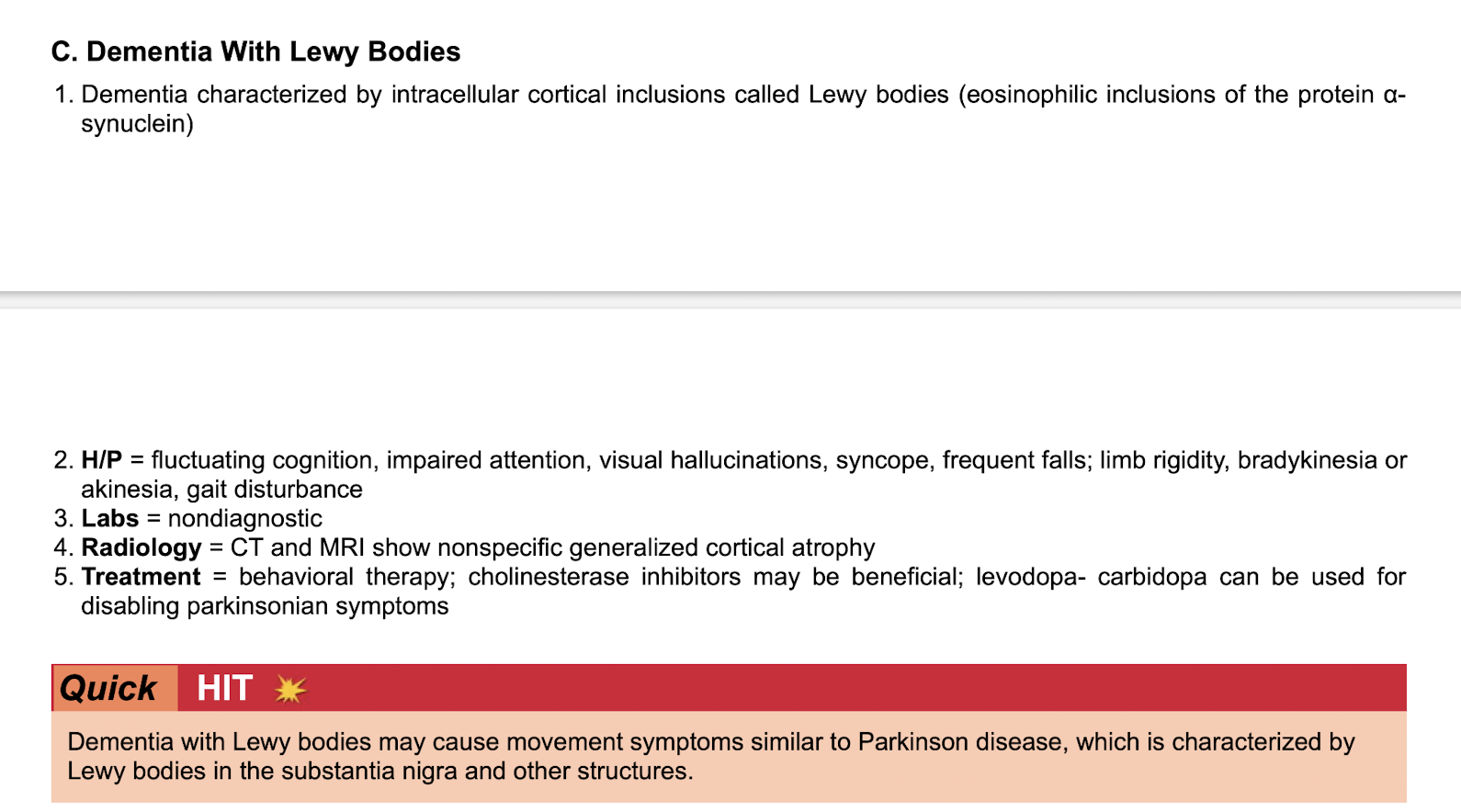
Dementia with lewy bodies

-def

-sxs

-labs

-radio

-tx

-may cause movement sxs similar to
knowt flashcard image
69
New cards

NPH

-sxs

-labs

-radio

-tx

knowt flashcard image
70
New cards

avoid what drugs when tx delirium or dementia related agitation

knowt flashcard image