herpetology chapter 4 pt 3 (exam 1)
4.0(1)
Studied by 7 people Call Kai
 Learn
Learn Practice Test
 Spaced Repetition
 Match
Match Flashcards
 Knowt Play
Card Sorting
1/38

Earn XP
Description and Tags
Last updated 4:15 PM on 2/11/24
Name | Mastery | Learn | Test | Matching | Spaced | Call with Kai |
|---|
No analytics yet
Send a link to your students to track their progress
39 Terms
1
New cards
relationship among the major clades
1. scolecophidia
2. alenthinophidia
2
New cards
alenthinophidia
caenophidia
3
New cards
caenophidia
colubroidea
4
New cards
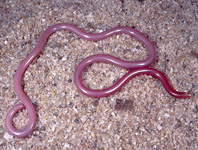
defining features of scolecophidia (6)
blind snakes (scolecophidia)
\
1. typically small
2. short, blunt tail often tipped with a spine and smooth scales
3. blunt head
4. vestigial eyes
5. retain vestiges of pevlic girdle
6. all oviparous
\
1. typically small
2. short, blunt tail often tipped with a spine and smooth scales
3. blunt head
4. vestigial eyes
5. retain vestiges of pevlic girdle
6. all oviparous
5
New cards
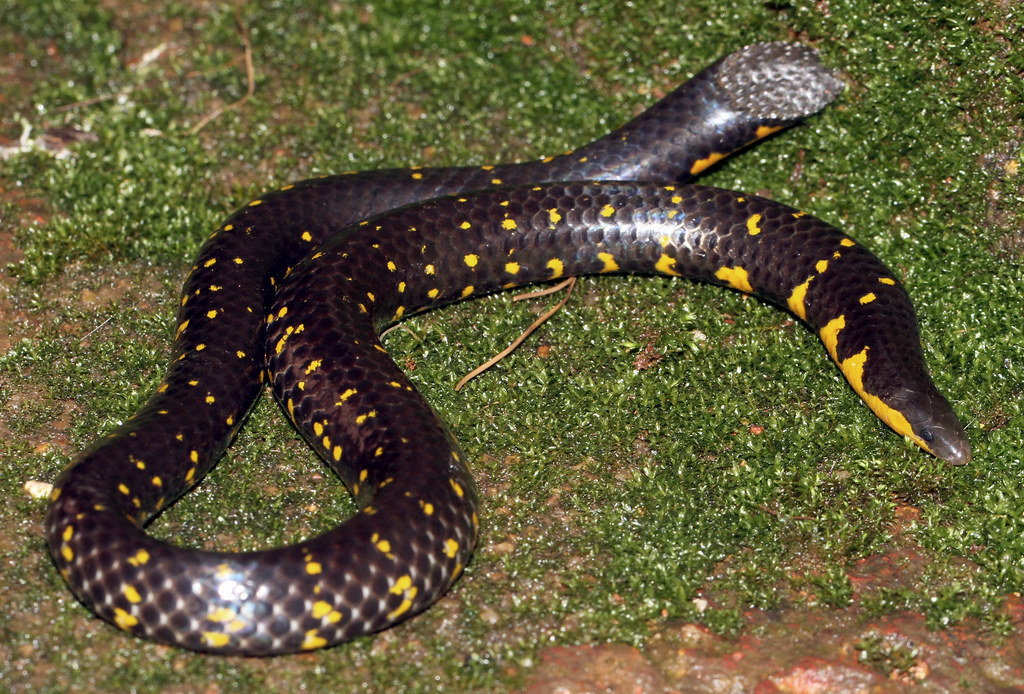
defining features of uropeltidae (2)
shield tailed snakes (alethinophidia)
\
1. head is conical, slender, often narrower than the trunk, has a distinct keel
2. the tail is blunt and in many species capped with a single large scale with a rough surface
\
1. head is conical, slender, often narrower than the trunk, has a distinct keel
2. the tail is blunt and in many species capped with a single large scale with a rough surface
6
New cards
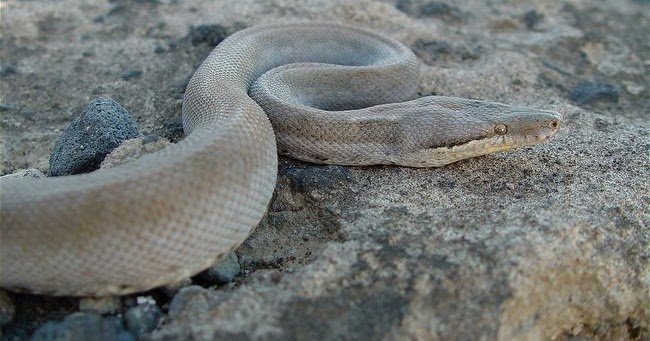
defining features of bolyeriidae (2)
split jaw snakes (alethinophidia)
\
1. have maxillary (upper jaw) bones that are divided by a joint into anterior and posterior sections
2. mandibles are jointed and both upper and lower jaws can be bent around prey
\
1. have maxillary (upper jaw) bones that are divided by a joint into anterior and posterior sections
2. mandibles are jointed and both upper and lower jaws can be bent around prey
7
New cards
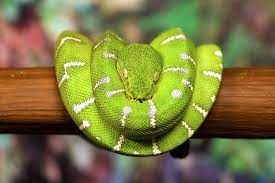
defining features of boidae (3)
boas (alethinophidia)
\
1. specialized labial infrared sensitive sensors
2. males of many species retain vestiges of a pelvis and femurs in the form of spur-like structures that grab female during mating
3. viviparity is the ancestral condition
\
1. specialized labial infrared sensitive sensors
2. males of many species retain vestiges of a pelvis and femurs in the form of spur-like structures that grab female during mating
3. viviparity is the ancestral condition
8
New cards
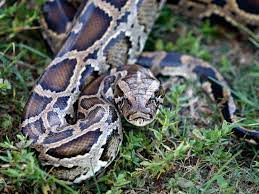
defining features of pythonidae (2)
pythons (alethinophidia)
\
1. infrared sensitive sensors between the labial scales but unlike boids, these sensors have distinct pits
2. males also have pelvic spurs
\
1. infrared sensitive sensors between the labial scales but unlike boids, these sensors have distinct pits
2. males also have pelvic spurs
9
New cards
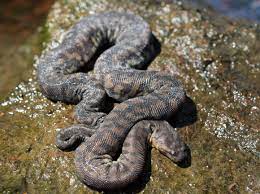
defining features of acrochordidae (4)
file snakes (caenophidia)
\
1. all aquatic
2. loose baggy skin with small tubercles and triangularily keeled scales (skin feels like sandpaper)
3. water moves rapidly over body surface through interscalar channels (may be adaptation for staying hydrated during rare migration of land)
4. nearly incapable of movement on land
\
1. all aquatic
2. loose baggy skin with small tubercles and triangularily keeled scales (skin feels like sandpaper)
3. water moves rapidly over body surface through interscalar channels (may be adaptation for staying hydrated during rare migration of land)
4. nearly incapable of movement on land
10
New cards
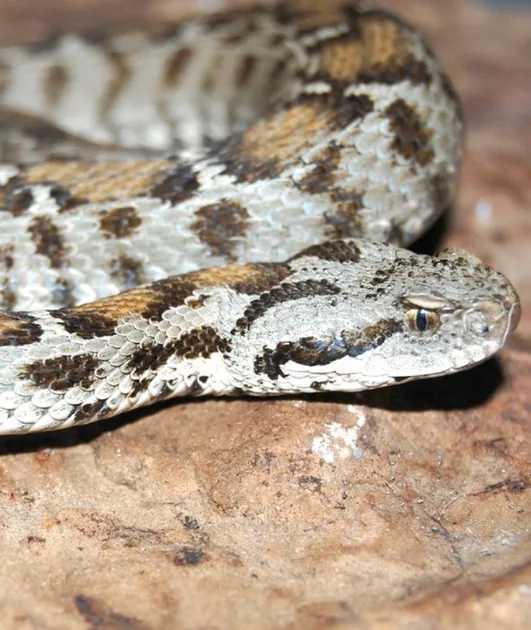
defining features of viperidae (2)
vipers (colubriodea)
\
1. long fangs that fold against roof of mouth when not in use
2. terrestrial, semi-aquatic, arboreal
\
1. long fangs that fold against roof of mouth when not in use
2. terrestrial, semi-aquatic, arboreal
11
New cards
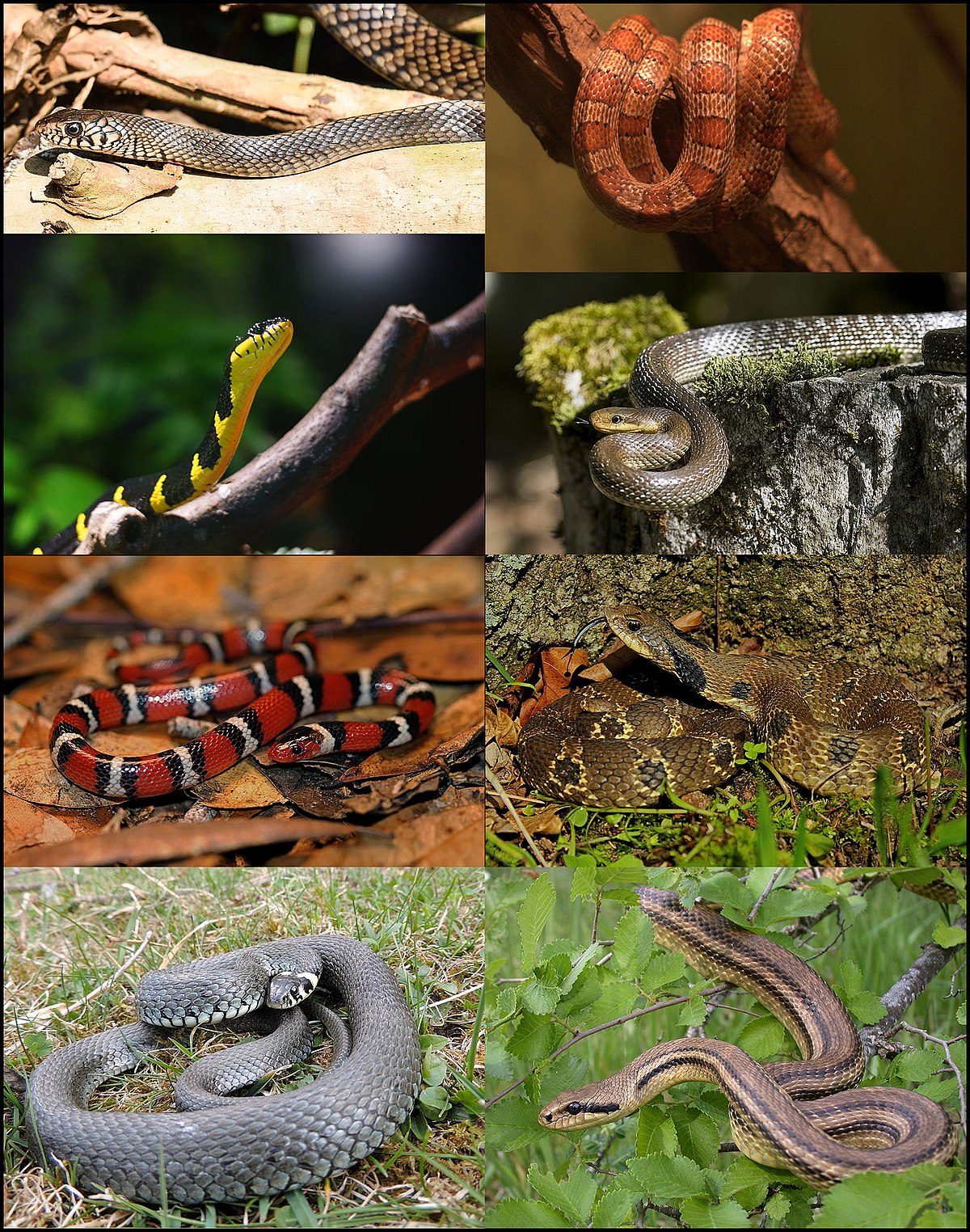
defining features of colubridae (6)
colubrids (colubriodea)
\
1. largest and most diverse family
2. several dangerously venomous species
3. much of north american snake fauna
4. no marine or burrowing species
5. diverse diets
6. mostly oviparous
\
1. largest and most diverse family
2. several dangerously venomous species
3. much of north american snake fauna
4. no marine or burrowing species
5. diverse diets
6. mostly oviparous
12
New cards
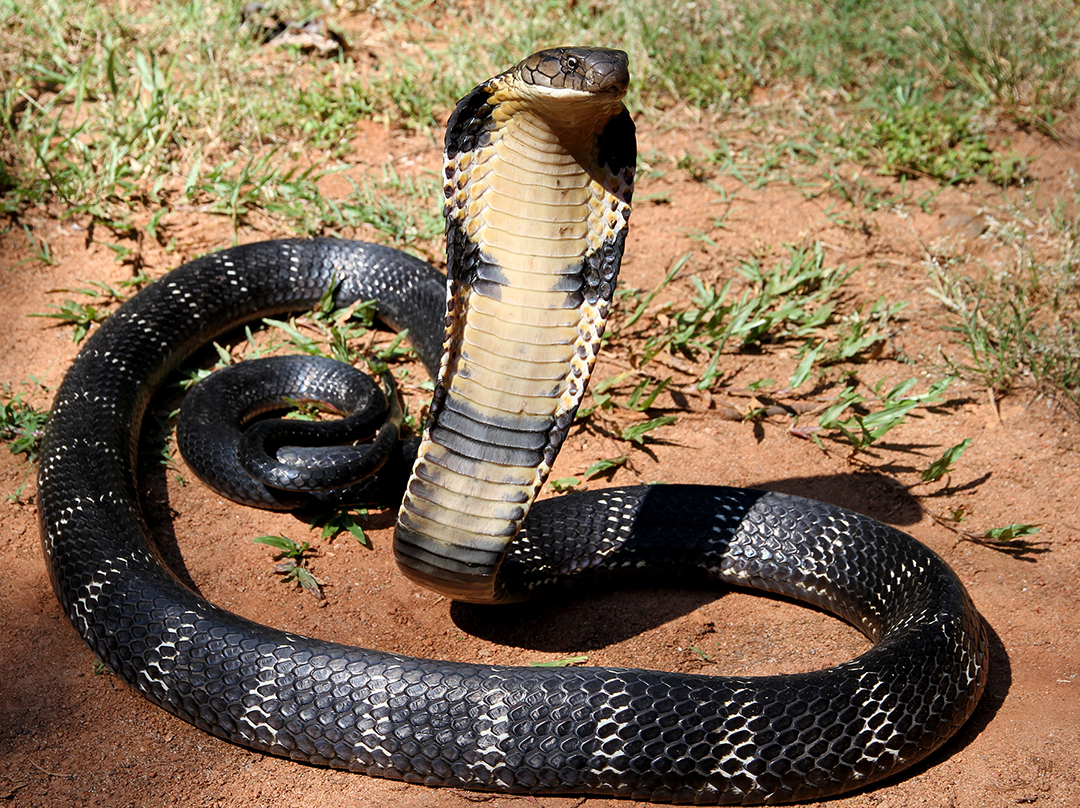
defining features of elapidae (4)
cobras, coral snakes, mambas, kraits, sea snakes, and relatives (colubriodea)
\
1. wide range of habitats and diets
2. proteroglyph dentition
3. relatively immobile maxillae may bear solid teeth posterior to the fang
4. all venomous but some are too small to post a threat to humans
\
1. wide range of habitats and diets
2. proteroglyph dentition
3. relatively immobile maxillae may bear solid teeth posterior to the fang
4. all venomous but some are too small to post a threat to humans
13
New cards
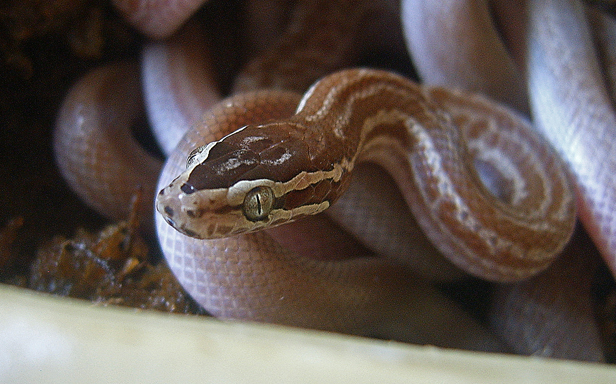
defining features of lamprophiidae (3)
house snakes, sand snakes, stiletto snakes, and others (colubriodea)
\
1. extremely elongate, extend behind head into dorsal neck region
2. maxilla is greatly reduced and bears a pair of enormous hollow fangs
3. strikes with lateral and posterior stabbing motions of the head
\
1. extremely elongate, extend behind head into dorsal neck region
2. maxilla is greatly reduced and bears a pair of enormous hollow fangs
3. strikes with lateral and posterior stabbing motions of the head
14
New cards
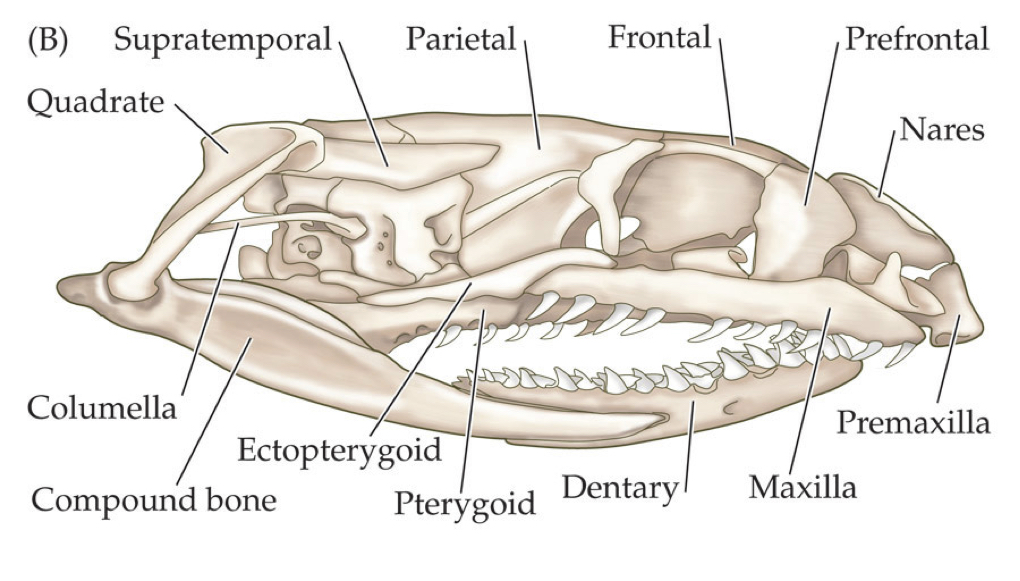
skull
less bones than the lizard skull
15
New cards
vertebrae
120-500 total vertebrae dependent on length
\
have ribs
\
have ribs
16
New cards
tail
tail vertebrae have no ribs or very small ribs
17
New cards
morphology related to habitat (3)
1. arboreal (compressed body, long tail, large eyes, etc)
2. fossorial (small body, small eyes, narrow/pointed snout, etc)
3. aquatic (laterally compressed body, dorsal/terminal displacement of eyes/nostrils)
18
New cards
limb remnants
vestigial pelvic elements
\
external: boidae, pythonidae
\
internal: scolecophidia, aniliidae, loxocemidae, tropidophiidae
\
external: boidae, pythonidae
\
internal: scolecophidia, aniliidae, loxocemidae, tropidophiidae
19
New cards
skull of snakes (5)
1. loss of both upper and lower temporal bars
2. elongation of quadrate and supratempoeral bones
3. brain encased in frontals and parietals
4. prokinesis
5. streptostyly
20
New cards
prokinesis in snakes
between the frontals and nasal region
21
New cards
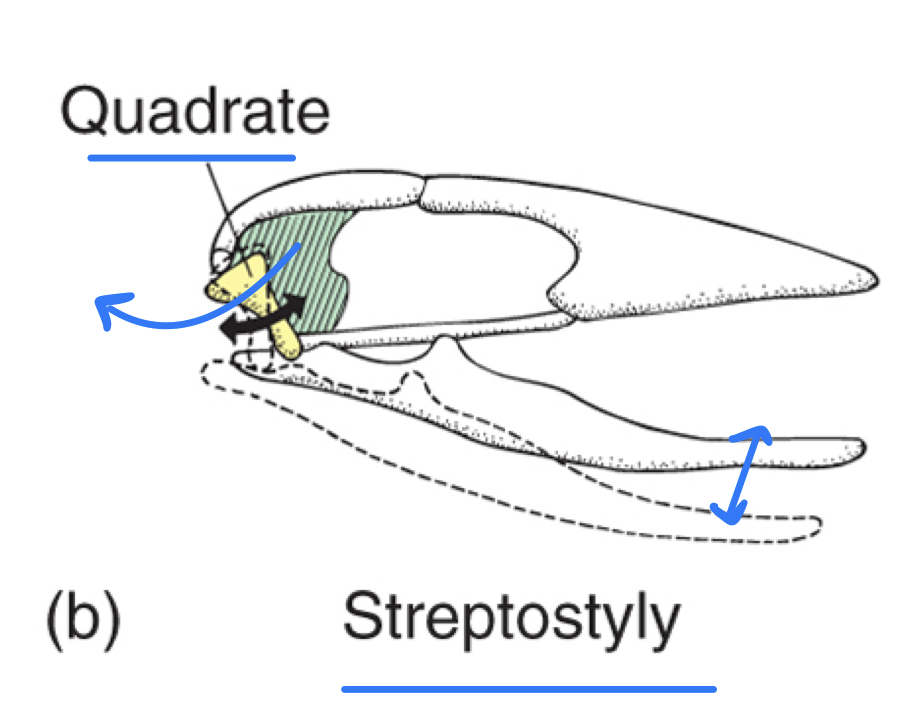
streptostyly
22
New cards
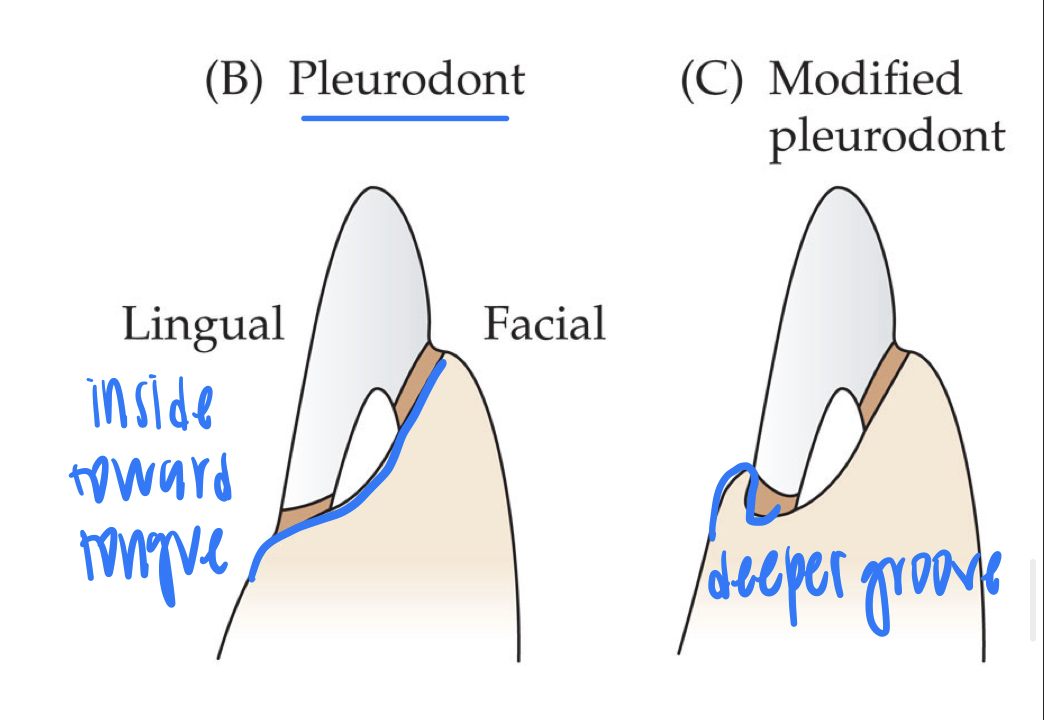
detition
all snakes have modified pleurodont tooth implantation
23
New cards
4 different tooth arrangements
1. aglyph
2. opisthoglyph
3. proteroglyph
4. solenoglyph
24
New cards
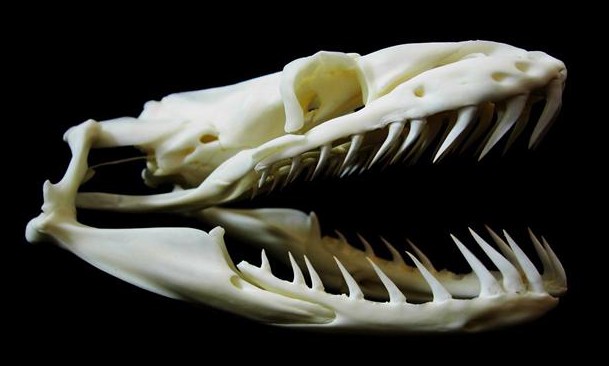
aglyph dentition
maxillary dentition with little variation in size or shape (homodont dentition)
25
New cards
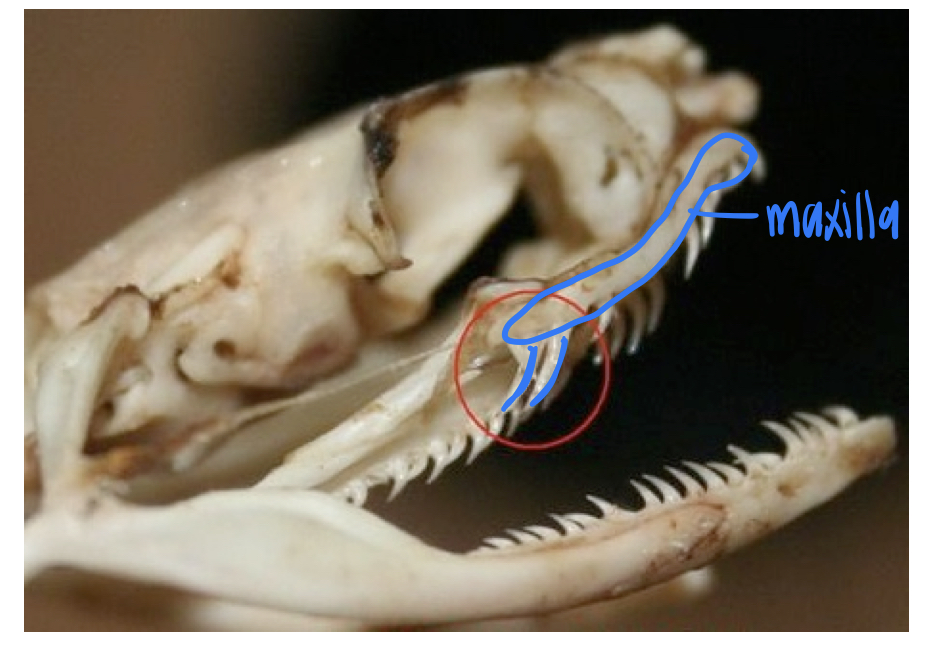
opisthoglyph dentition
“rear fanged” meaning enlarged, grooved fangs on posterior portion of maxilla
\
characteristic of colubrids and most lamprophiids
\
characteristic of colubrids and most lamprophiids
26
New cards
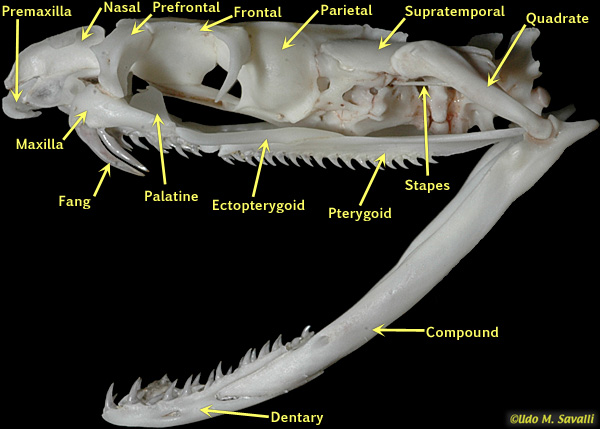
proteroglyph dentition
each maxilla bears a single hollow fang on its anterior end (usually additional teeth)
\
fang is not erected by rotation of the maxilla around the prefrontal bone
\
characteristics of elapids and the lamprophiid homoroselaps
\
fang is not erected by rotation of the maxilla around the prefrontal bone
\
characteristics of elapids and the lamprophiid homoroselaps
27
New cards
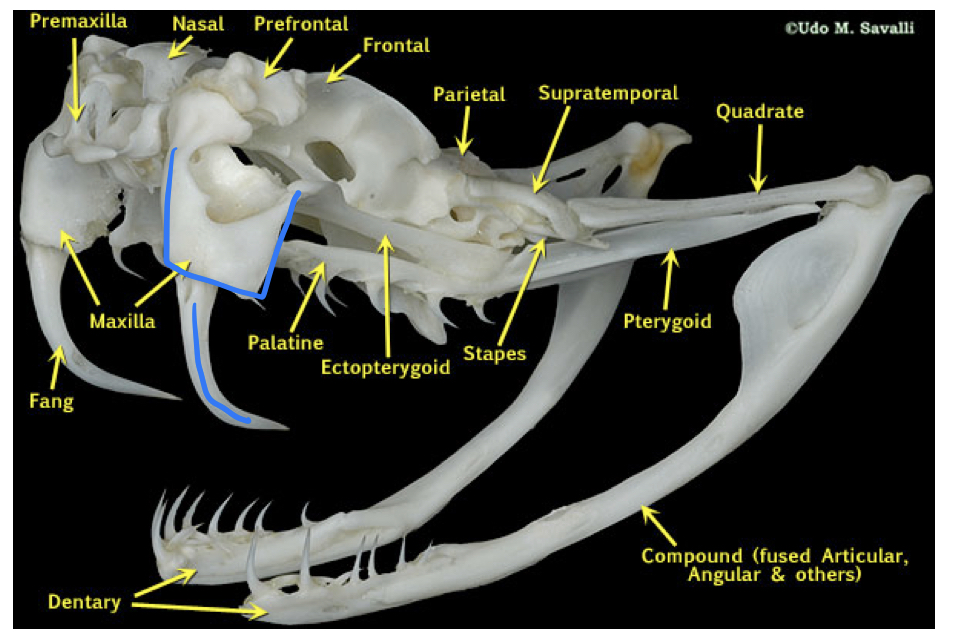
solenoglyph dentition
have extremely reduced maxilla with a single large hollow fang
\
the fang is erected by the rotation of the maxilla on the prefrontal bone
\
characteristic of vipers and the lamprophiid atractaspis
\
the fang is erected by the rotation of the maxilla on the prefrontal bone
\
characteristic of vipers and the lamprophiid atractaspis
28
New cards
venom canal
fangs of vipers, elapids, lamprophiids
\
connected to large venom gland (with associated muscles)
\
more elaborate delivery system
\
connected to large venom gland (with associated muscles)
\
more elaborate delivery system
29
New cards
venom groove
fangs of colubrids
\
groove associated with venom producing gland (duvernoy’s gland)
\
no muscles/duct
\
groove associated with venom producing gland (duvernoy’s gland)
\
no muscles/duct
30
New cards
4 types of venom
1. neurotoxic
2. haemotoxic
3. necrotizing
4. anticoagulant
31
New cards
neurotoxic
attacks nervous system
\
elapids
\
elapids
32
New cards
haemotoxic
blood
\
vipers
\
vipers
33
New cards
necrotozing
breaks down tissues
\
vipers
\
vipers
34
New cards
antocoagulant
causes animal to bleed out and blood can’t clot
\
vipers
\
vipers
35
New cards
unique traits of vipers (5)
1. solenoglyph fangs (hinges)
2. heat sensitive pit on face
3. rattlesnake: warning
4. lack pit organs
5. longest fangs of any snake
36
New cards
unique traits of elapids
1. all venomous but some too small for threat
2. hood displays (make head look larger) for threat
3. squirt venom often into eyes
4. aquatic species have narrow bodies and flat tails
37
New cards
are most snakes oviparous or viviparous
oviparous
38
New cards
viviparous groups (3)
1. majority of viperidae/crotalinae
2. boas (boidae)
3. most sea snakes (elapidae: elapinae, hydrophiinae)
39
New cards
sex determination of snakes
genetic (ZW)