AP psych EXAM
 Call Kai
 Learn
Learn Practice Test
 Spaced Repetition
 Match
Match Flashcards
 Knowt Play
1/214

There's no tags or description
Looks like no tags are added yet.
Name | Mastery | Learn | Test | Matching | Spaced | Call with Kai |
|---|
No analytics yet
Send a link to your students to track their progress
215 Terms
Nurture
Your environment shapes your behavior
Nature
your biology/genes are reason for behavior
Nurture V Nature
Both work together to create your personality and impacts on your behavior
twin and family studies
nervous system
bodies communication system made up of nerve cells
central nervous system
brain and spinal chord
peripheral nervous system
everything outside of the CNS
2 types
autonomic nervous sytem
automatic
what happens without you thinking about it
2 kinds
parasympathetic NS
calming/horomones
sympathetic NS
arousal- fight/flight
Somatic
voluntary
Peripheral NS motor pathway
signals from brain to muscles/glands
neurons
receives and sends messages with electro chemical signals
dendrites
receive signals
branchlike
soma
cells body (circle part) of a neuron
axon
carries messages to axon terminal
axon terminal
tip/end of the axon
myelin sheath
covers and protects axon
fatty substance
synapse
small gap between neurons where they meet
terminal buttons
small bulbs on axon terminal that send neurotransmitters
excitatory
inhibitory
neurotransmission
process where info travels through a neuron
resting potential
when a neuron is not firing
depolarization
neuron charging
action potential
actively firing
threshold
minimum voltage needed to fire
refractory period
resting before firing again
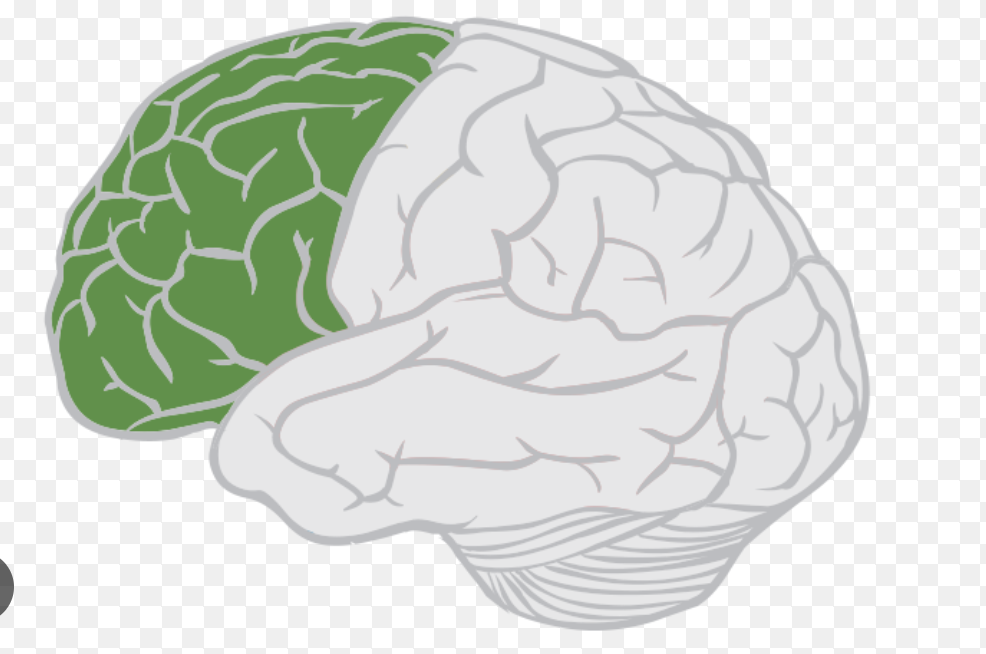
frontal lobe
controls high cognition
thinking/problem solving
expressions
high motor skills
left hemisphere
controls language, logic, analytical thinking
right hemisphere
controls depth perception, emotions, art/music
cerebral cortex
“gray matter”
controls consciousness and higher thoughts
corpus callosum
thick band of nerves that connect the 2 hemispheres
between
parietal lobe
registers pain and senses
impairment- cant feel pain
occipital lobes
interprets visual info.
Brocas area
speech production
left side
impairment- aphasia
wernickes area
speech comprehension
located in parietal lobe
motor cortex
ability to control body movement
somatosensory cortex
receive and process sensory info
located in parietal lobe
brainstem
base of brain that connects to the spinal chord
sends messages between brain and body
cerebellum
“little brain”
controls:
muscle coordination
balance
temporal lobe
plays key role in long term memory encoding
controls auditory processing:
wernickes (production)
medulla
controls homeostasis and automatic life functions:
breathing
heart rate
blood pressure
Thalamus
router for messages:
body message goes here before going where it needs to go
hypothalamus
regulates 5 basic needs:
hunger
thirst
body temp.
sex arousal
circadian rhythm
hippocampus
controls memory
amygdala
controls fear
fight/flight
non-REM sleep (stage 1)
transition from wake to sleep
light sleep
non-REM sleep (stage 2)
temp drops, heart rate slows, breathing slows
bursts of activity
non-REM sleep (stage 3)
most difficult to be woken up
restorative sleep
REM sleep (stage 4)
Rapid Eye Movement
dreams occur
sleep loss/deprivation
loss of focus
irritability
weakened immune system
mood changes
absolute threshold
smallest amount of stimuli needed for senses to kick in
just noticeable threshold
amount something needs to change for you to notice
signal detection theory
predicting how/when we detect stimulus
baby crying
olfactory bulb
responsible for smell
gustation
taste:
sweet
salty
sour
bitter
umami
parallel processing
info processing happening at the same time
can get mixed up
vision
cognition
mental processes like perception, memory, and problem-solving
bottom up processing
when learning new things
uses new senses and environment to learn
0 prior knowledge
top down processing
when adding on to things you already know
prior knowledge
expectations and perception
gestalt
theory humans perceive patterns and we organize them into groups
proximity (gestalt)
items close together are perceived as group
similarity (gestalt)
items with similar traits are perceived as a group
closure (gestalt)
human brain naturally fills in gaps/missing info to perceive
depth cues
allow us to perceive the world in 3D
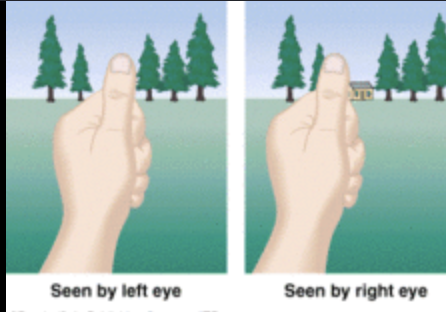
retinal disparity
difference in images is caused by the eyes different placements in the skull
both is how we see the world
monocular
creates visual perspectives
linear
parallel lines converge at vanishing point
interposition
when one object is in front of another, its perceived as larger
relative size
smaller objects- further away
larger objects- closer
perceptual consitancy
the idea that we know that objects are the same despite changing sensory input
a car is still the same size despite being further away
prototype
what you think about when thinking of a category
bird- you think of a bluejay
idealized
assimilation
adding new info to existing schema
integrating
accomodation
modifying existing schema
modifying
heuristics
allows for decision making
prior knowledge
the big 5- O
openness
practical-imaginative
the big 5- C
consciousness
organized- careless
the big 5- E
Extraversion
sociable- retiring
the big 5- A
agreeableness
trusting- uncooperative
the big 5- N
neuroticism
calm- anxious
free association
say the first thing that comes to mind
uncover unconcious mind
preconscious
not actively thinking about
easy to retrieve
unconcious
not actively thinking about
drives unconscious thoughts/behaviors
concious
actively thinking about
ID
childlike
primitive
wants
pleasure principle
ID
seeking immediate gratification
Ego
rational
mediator between Id and Superego
super ego
morals and aspirations
self image
reality principle
ability to understand that you cant have desires immediately
regression
retreating into a more infantile-like state
displacement
redirecting emotions onto something else
reaction formation
pretending
acting opposite of how you actually feel
projection
attributing own characteristics, thought, emotions onto other people
rationalization
create self justifying explanations for our actions
sublimation
diverting sexual impulses
denial
rejecting fact or seriousness of situation
unconditional positive regard
attitude of accepting people no matter what
drive reduction theory
drives ar directed at reducing needs
need —→ drive —→ action that reduces drive
james lange theory
emotions occur due to physiological reaction
stimulus—→ automatic response—→ feeling
cannon bard theory
response and feeling happen the same time
stimulus—→ response&feeling
two-factor theory
you have to interpret to feel (two step)
stimulus—→ response—→ interpret—→ feeling
classical conditioning
association of two things to learn a behavior