Edexcel A-Level Chemistry Paper 1
 Call Kai
 Learn
Learn Practice Test
 Spaced Repetition
 Match
Match Flashcards
 Knowt Play
1/369

There's no tags or description
Looks like no tags are added yet.
Name | Mastery | Learn | Test | Matching | Spaced | Call with Kai |
|---|
No analytics yet
Send a link to your students to track their progress
370 Terms
mass number
the total number of protons and neutrons in an atom of a specific isotope
atomic number
the number of protons in the nucleus of an atom
relative atomic mass
mean mass of an atom relative to 1/12th of a Carbon-12 atom
relative isotopic mass
mass of an isotope relative to 1/12th of a carbon-12 atom
define isotope
atoms of the same element with different numbers of neutrons but same number of protons
charge of a proton, electron and neutron
- proton: +
- electron: -
- neutron: 0 (neutral)
mass of a proton, electron and neutron
- proton: 1
- electron: 1/1836
- neutron: 1
how to work out number of proton, electron and neutron from periodic table
- proton: atomic number
- electron: same as protons if charge is neutral
- neutron: mass number - atomic number
Relative formula mass (RFM) and Relative molecular mass (Mr)
the combined mass numbers of all the atoms in a molecule
what is ionic bonding
strong electrostatic attraction between oppositely charged ions
metal with non-metal
What is an ionic bond
an electrostatic force of attraction between a positively charged metal (cation) ion and a negatively charged non-metal (anion) ion
The metal becomes positively charged as it transfers electrons to the non-metal which then becomes negatively charged
effect of a change in ionic radius to the strength of an ionic bond
the greater the ionic radii, the weaker the forces of attraction to the oppositely charged ion because the forces have to act over a larger ditstance
effect of a change in ionic charge to the strength of an ionic bond
Ions with greater charge will have greater attraction to the oppositely charged ions resulting in stronger forces of attraction
how are ions formed and displayed
through the gain or loss of electrons
the number of electrons gained or lost is then showed on the outside of the square brackets surrounding the outer shell on the dot cross diagram - with the charge left by the gain/loss of electron
trend going down group in ionic radii
gets larger as the number of quantum shells increase
trend with isoelectronic ions' ionic radii
the more protons the stronger the electrons are held into the nucleus
ionic compound melting and boiling points
due to the strong electrostatic forces of attraction, most ionic compounds are solid at rtp.
compounds made out of ions with larger charge therefore have higher melting and boiling points as they require more energy to overcome their stronger electrostatic forces of attraction
ionic compound electrical conductivity
do not conduct as a solid as the ions are in fixed positions
they can conduct as molten or aqueous as the ions are free moving
what evidence supports the existence of ions
electrolysis -
Positive ions in solution are attracted to the negative electrode
Negative ions in solution are attracted to the positive electrode
what is a covalent bond
strong electrostatic forces of attraction between two nuclei and a shared pair of electrons between them
- between two non-metals
how does bond length affect covalent bond strength
the shorter the bond length (one nucleus to the other), the stronger the covalent bond, the length of the bond depends on the strength of the forces of attraction between the electrons and nuclei. the stronger covalent bond therefore requires more energy to overcome thus having a greater boiling and melting points
what does the shape of a simple molecule depend on
the repulsion between the electron pairs which surround the central atom
what is VSEPR
valence shell electron pair repulsion theory
- Electrons are negatively charged and will repel other electrons when close to each other
- bonding pairs of electrons will repel other electrons around the central atom forcing the molecule to adopt a shape in which these repulsive forces are minimised
VSEPR rules to determine shape and bond angles
- draw dot-cross
- Valence shell electrons are electrons found in the outer shell
- Electron pairs repel each other as they have the same charge
- Lone pair electrons repel each other more than bonded pairs
- lone pairs tend to take 2.5° off of the ideal bond angle when present
- Repulsion between multiple and single bonds is treated the same as for repulsion between single bonds
- Repulsion between pairs of double bonds are greater
- The most stable shape is adopted to minimize the repulsion forces
why do loan pair electrons have a higher forces of repulsion compared to surrounding electron pairs
- Lone pairs of electrons have a more concentrated electron charge cloud than bonding pairs of electrons
- The cloud charges are wider and closer to the central atom's nucleus
- The order of repulsion is therefore: lone pair - lone pair > lone pair - bond pair > bond pair - bond pair
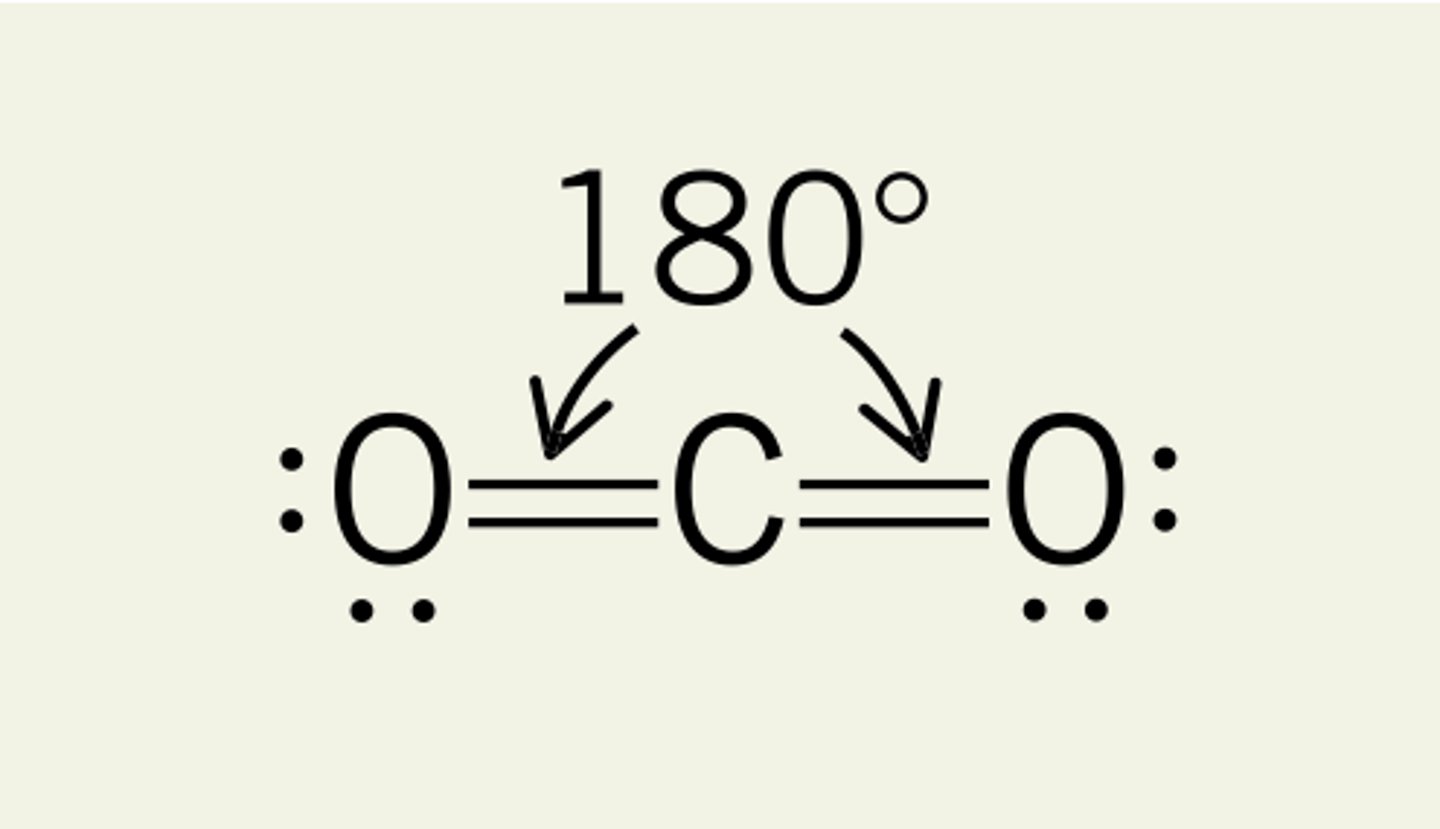
shape and angle for 2 bonding pairs, no lone pairs
linear - 180°
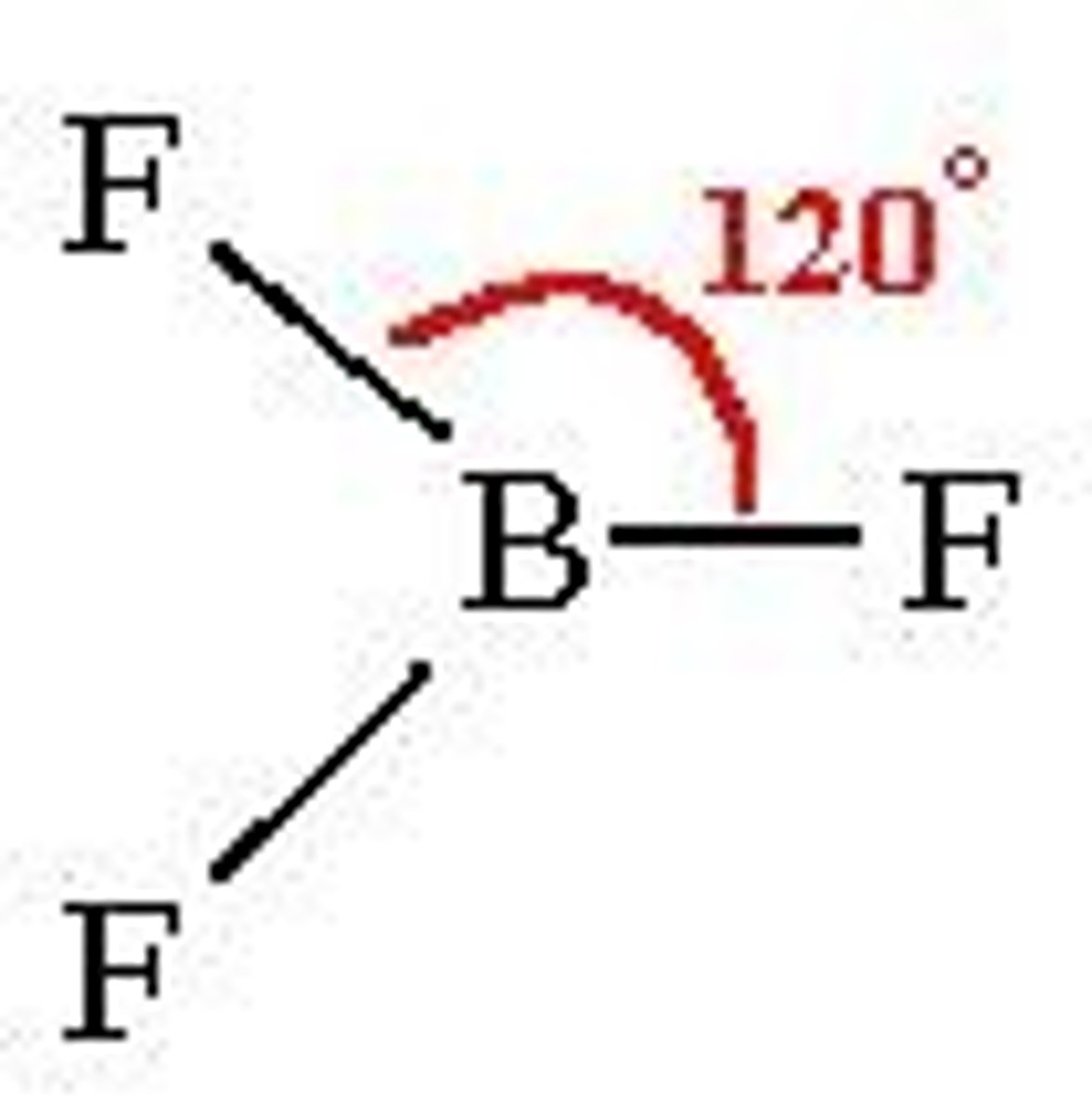
shape and angle for 3 bonding pairs, no lone pairs
trigonal planar - 120°
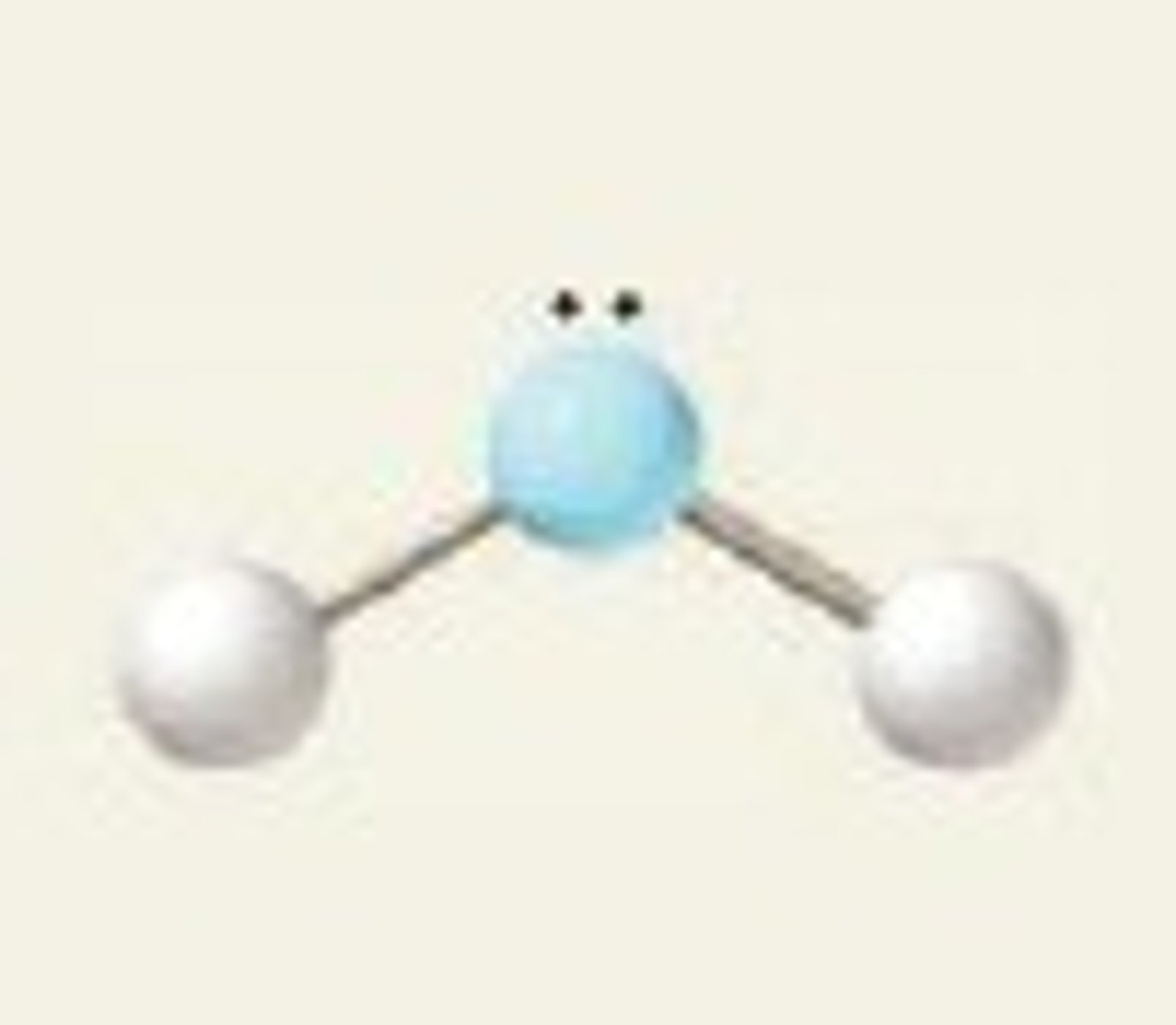
shape and angle for 2 bonding pairs, 1 lone pair
bent - 118°
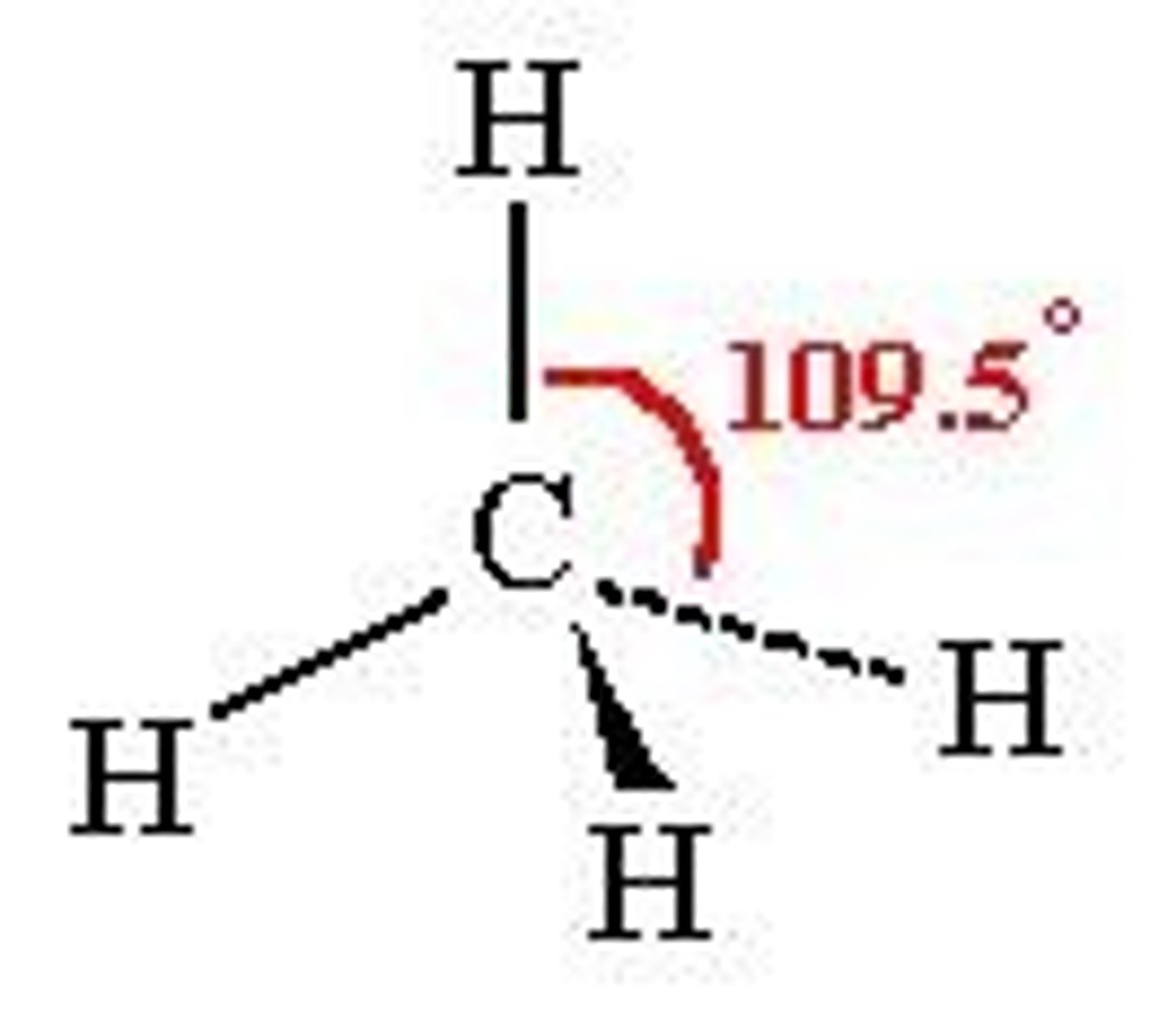
shape and angle for 4 bonding pairs, no lone pairs
tetrahedral - 109.5°
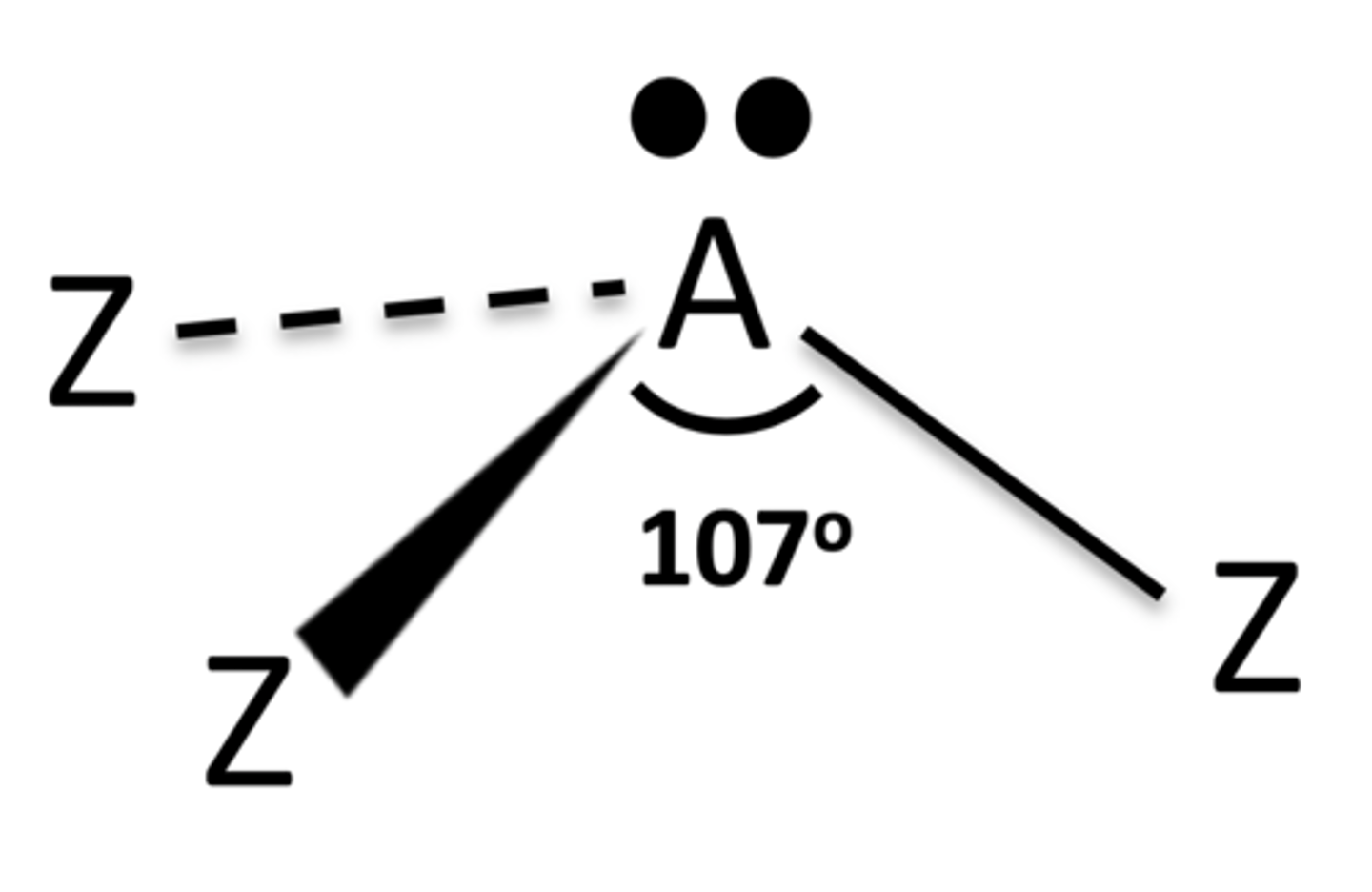
shape and angle for 3 bonding pairs, 1 lone pair
trigonal pyramidal - 107°
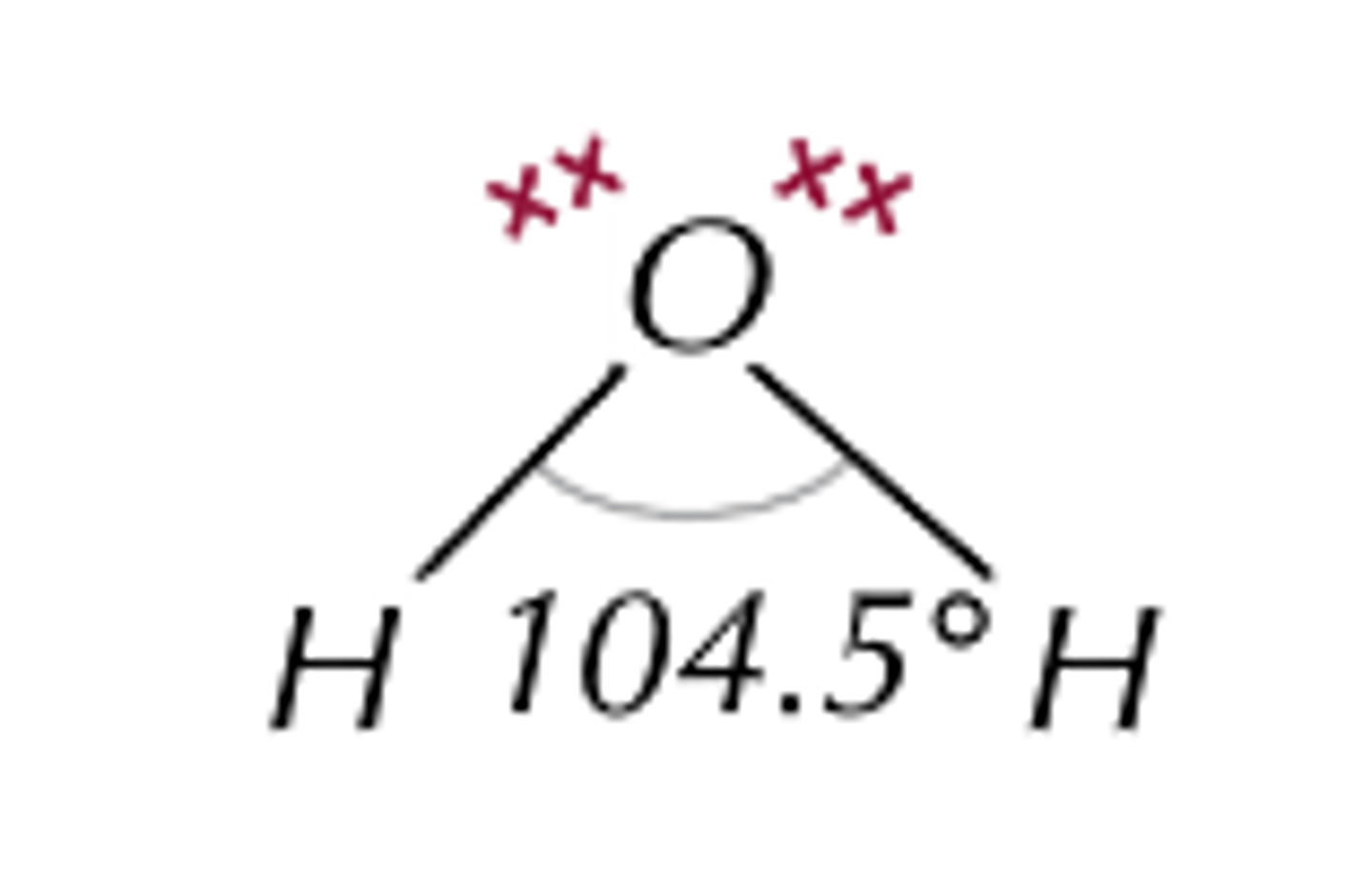
shape and angle for 2 bonding pairs, 2 lone pairs
bent - 104.5°
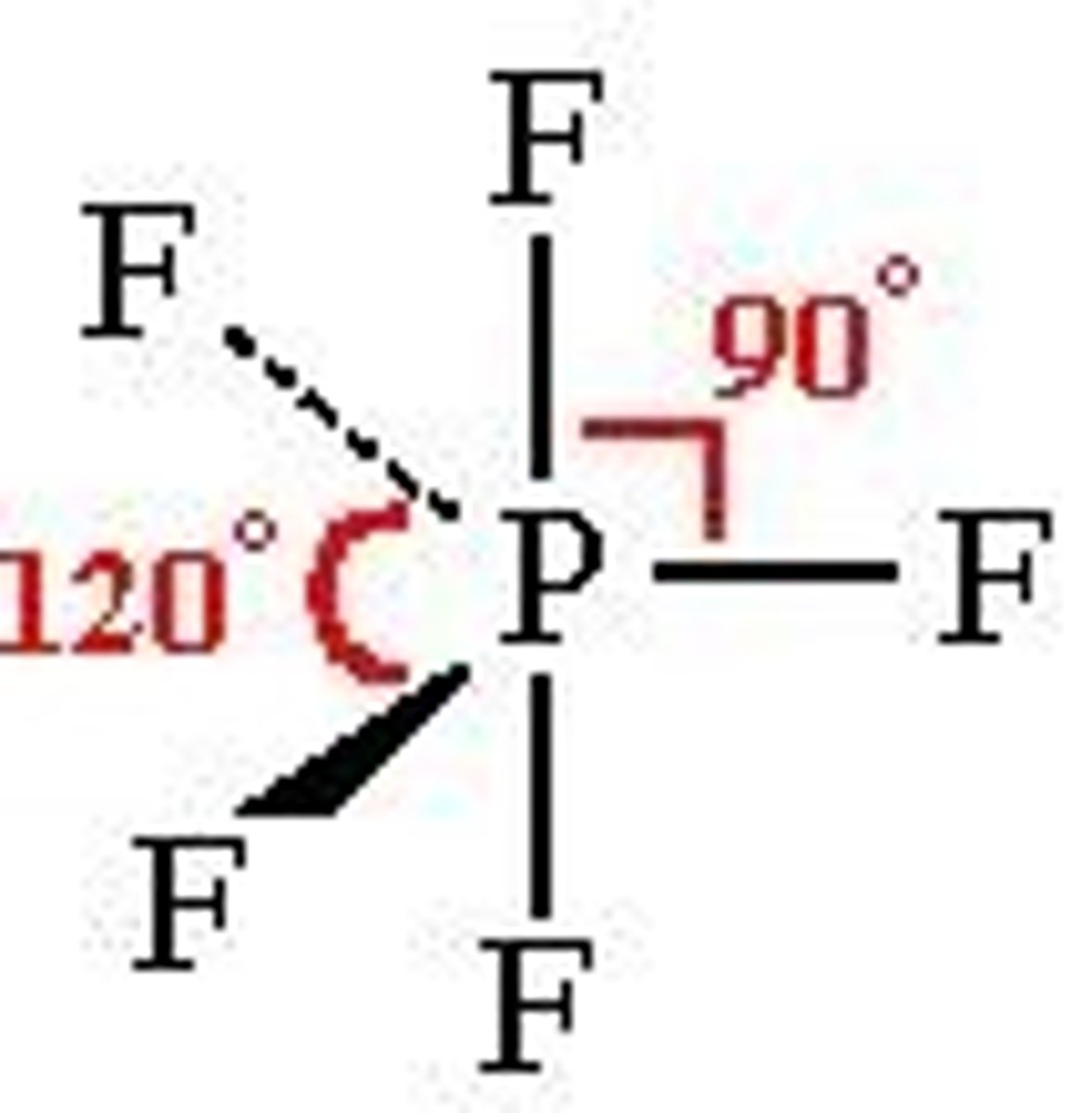
shape and angle for 5 bonding pairs, 0 lone pairs
trigonal bipyramidal - 120° and 90°
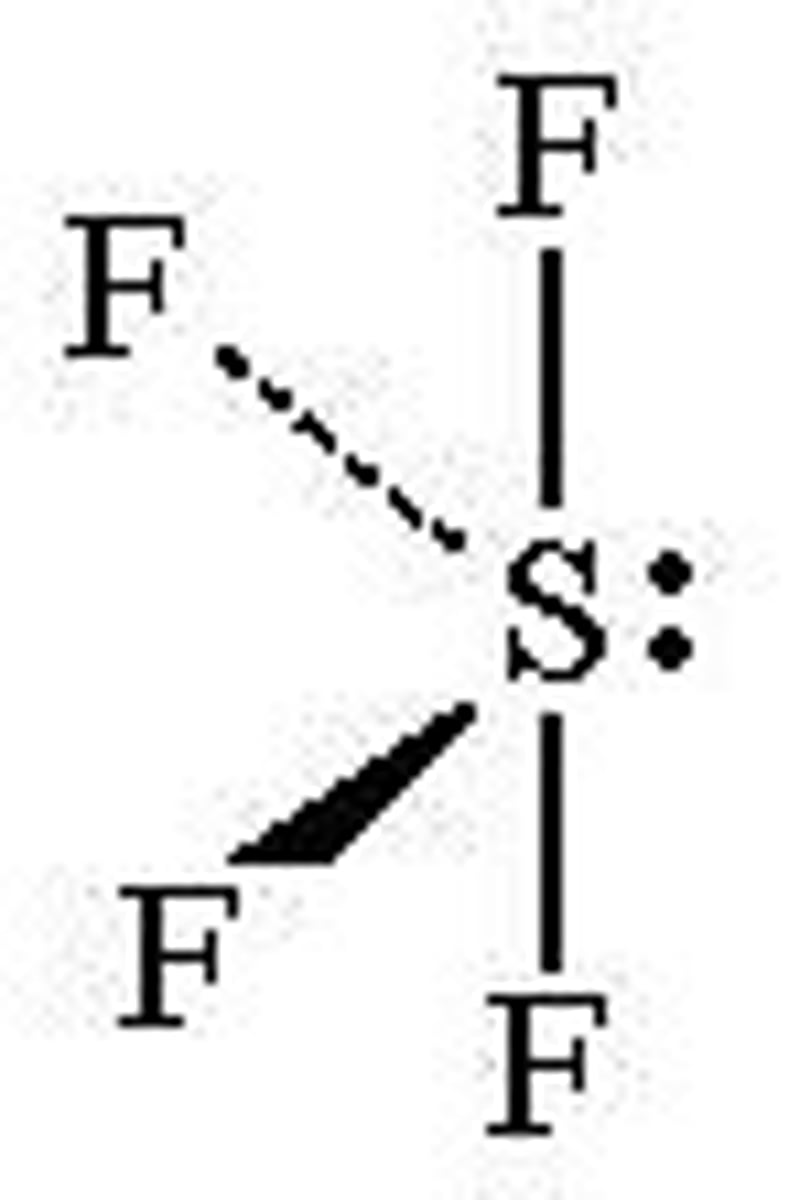
shape and angle for 4 bonding pairs, 1 lone pair
trigonal bipyramidal/ see-saw - 119° and 89°
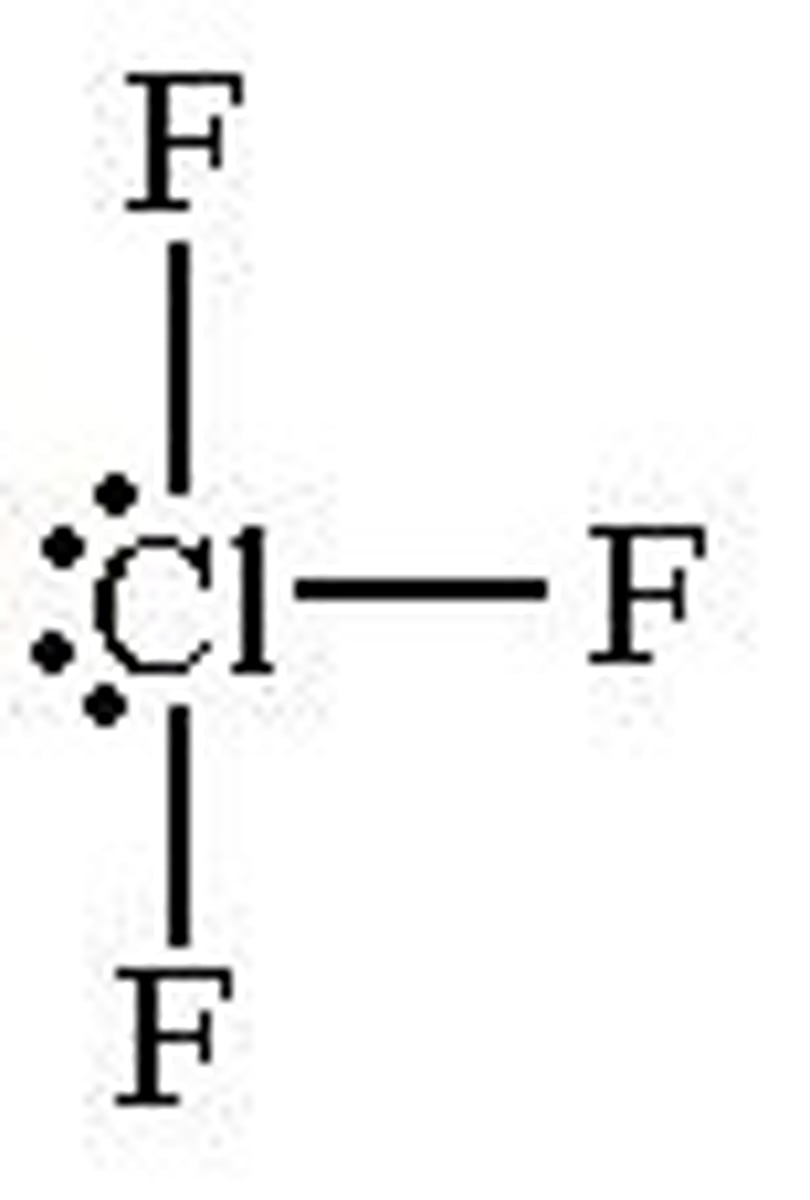
shape and angle for 3 bonding pairs, 2 lone pairs
trigonal planar - 120° /T-shape - 89°
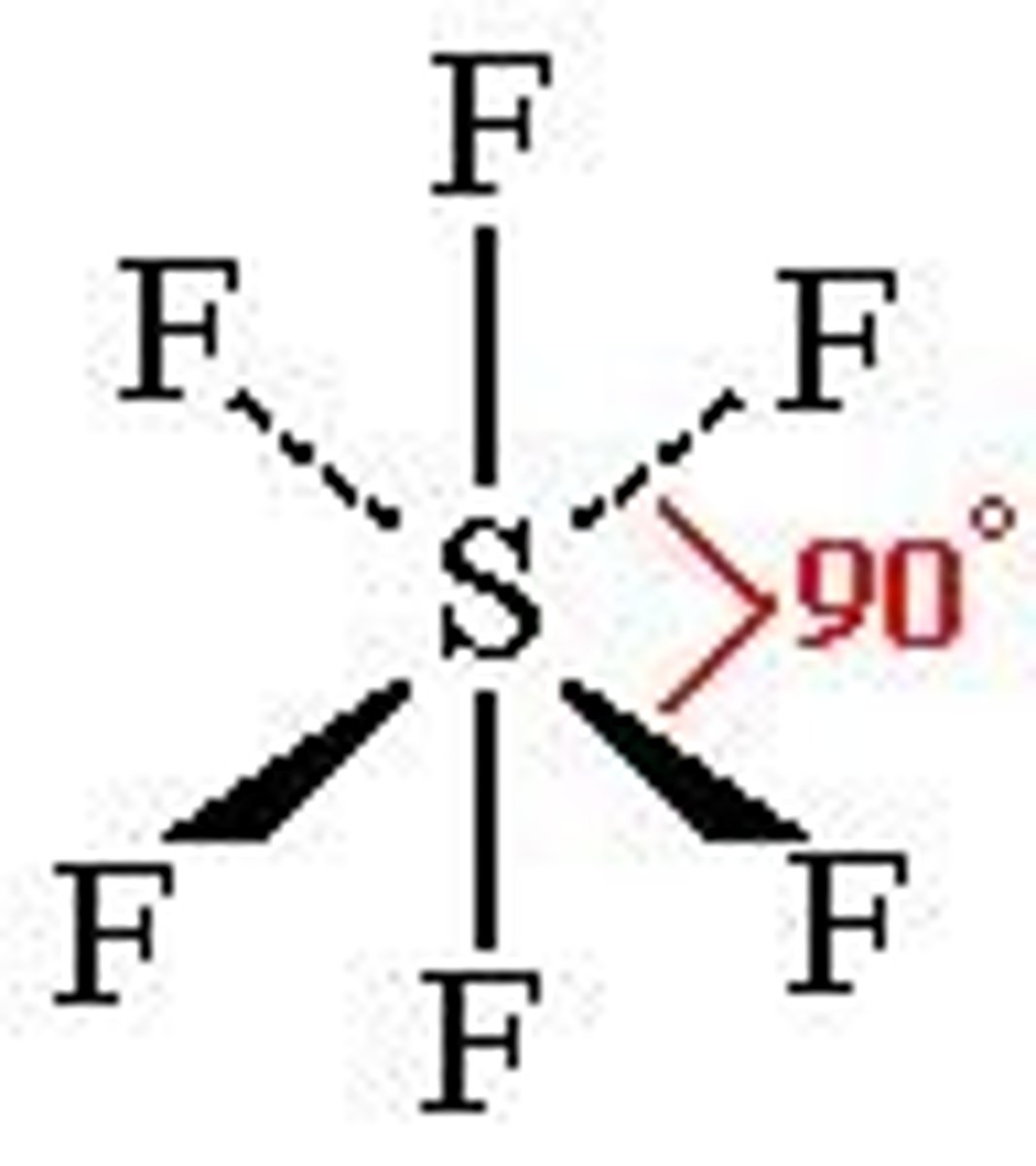
shape and angle for 6 bonding pairs, no lone pairs
octahedral - 90°
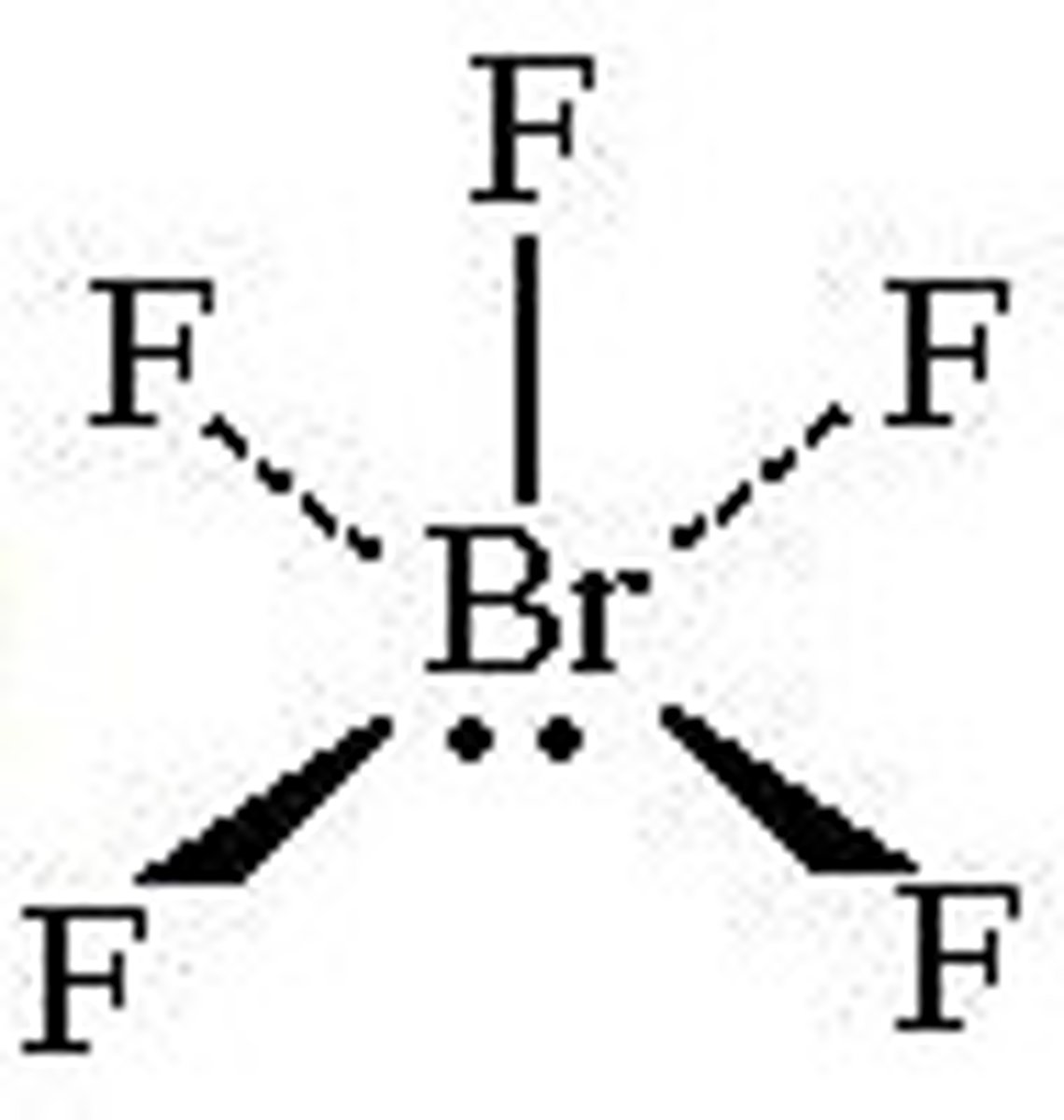
shape and angle for 5 bonding pairs, 1 lone pair
square pyramid - 89°
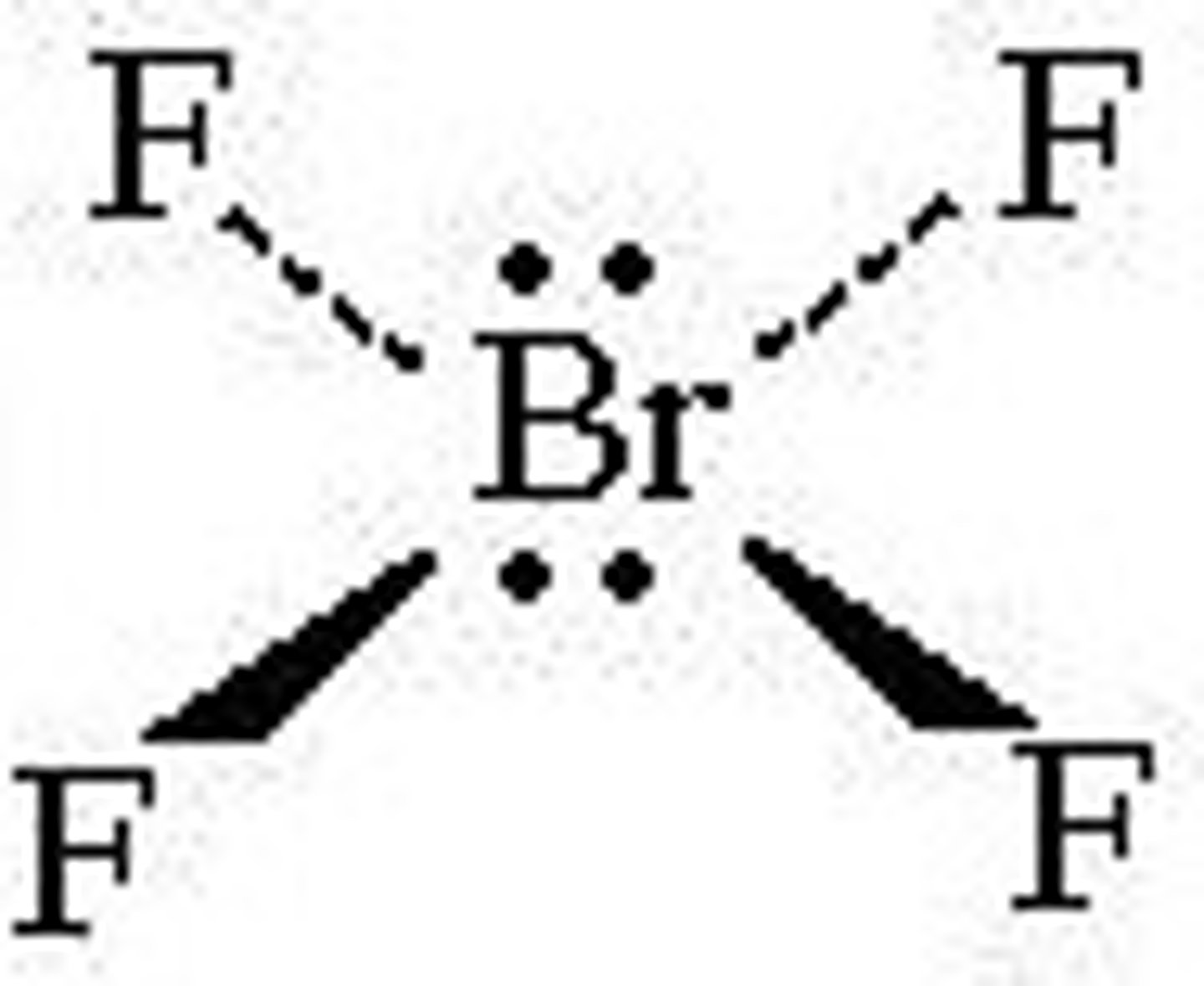
shape and angle for 4 bonding pairs, 2 lone pairs
square planar - 90°
what is electronegativity
the power of an atom to attract the pair of electrons in a covalent bond towards itself, this distorts the electron distribution in covalent bonds
Where are the most electronegative elements
top right of the periodic table, with fluorine being the highest
what factors help increase electronegativity
- smaller atomic radius
- less electron shielding
- nuclear charge (proton number)
what happens if two elements with differing electronegativities form a bond
the different electronegativities will mean that one of the elements will pull the bonding electron pair in closer, resulting in a polar bond in which one side is slightly negative and the other positive. the greater the difference in electronegativities the more polar a bond will be
how to work out whether a molecule is polar
The dipole moments, depending on the arrangement of each of the different bonds in the molecule, can cancel out and result in an equilibrium of polarities. resulting in a non-polar molecule containing polar bonds
What are intramolecular forces
forces inside a molecule, they tend to be covalent bonds, formed when outer shell electrons of two elements are shared, can be single, double, triple and co-ordinate
what are intermolecular forces
forces which are between molecules, weaker than intramolecular
three types of intermolecular forces from strongest to weakest
Strongest
- Covalent bonds (intramolecular)
- Hydrogen bonding
- Permanent dipole-dipole
-London dispersion/induced dipole-dipole
Weakest
What are London dispersion/induced dipole-dipole forces
- exist between all atoms and molecules
- occur due to the electron clouds constantly moving, inducing instantaneous dipoles in a molecule
- this slight charge then nears another molecule, repelling one charge and attracting the other
- this then creates a dipole in the molecule and they are now partly bonded together by a delta positive/negative attraction
What are permanent dipole-dipole interactions
- formed between permanently polar molecules
- delta + side of a molecule is attracted to the delta - side of another
What is hydrogen bonding
- type of permanent dipole-dipole bonding
- when hydrogen is covalently bonded to the 3 possible elements, it becomes slightly polarised
- the H becomes delta + and thus can then bond to the lone pair on another one of the 3 possible elements in another molecule
- number of hydrogen bonds per molecule depends on number of lone pairs on main element
Which are the only 3 elements that can hydrogen bond
- one of either an O, N or F bonded to a hydrogen ( due to high electronegativities )
why does water have abnormally high melting and boiling points
strong intermolecular forces of hydrogen bonding which aren't present in most other similar molecules result in unusually high energy requirements
Why is ice's density less than waters if it is a solid (solids tend to be denser)
The water molecules in ice are packed into an open lattice
This way of packing the molecules and the relatively long bond lengths of the hydrogen bonds means that the water molecules are slightly further apart in ice than in the liquid form
How does branching along the carbon chain increase/decrease boiling temperatures
- The larger the surface area of a molecule, the more contact it will have with adjacent molecules
- The surface area of a molecule is reduced by branching
- The greater its ability to induce a dipole in an adjacent molecule, the greater the London (dispersion) forces and the higher the melting and boiling points
How does number of electrons increase/decrease boiling temperatures
- The more electrons in a molecule, the greater the likelihood of a distortion and thus the greater the frequency of temporary dipoles
- The dispersion forces between the molecules are stronger and thus more energy is required to overcome these stronger bonds
How does an increase in chain length increase/decrease boiling temperatures
the longer the molecule, the more electrons and surface area to form temporary dipoles with and then pack closely together with, making the bonds stronger
why do alcohols have a significant change in boiling temperature compared to their corresponding alkane
alcohols have OH bonds which can carry out hydrogen bonding. both molecules having also london dispersion forces, means that the strong hydrogen bonding on alcohols result in a much higher boiling point
Explain the trend in boiling point of the Hydrogen Halides (HF-HI)
as you go down the group, boiling point will increase as there is a greater number of electrons, increasing the frequency of temporary dipoles being induced. However Flourine has a significantly higher boiling point than its neighbouring halides due to its ability to hydrogen bond, a far stronger intermolecular force
ΔHsoln
Enthalpy change when one mole of an ionic solid dissolves in an amount of water large enough so that the dissolved ions are well separated and do not interact with each other.
ΔHhyd
Enthalpy change when one mole of gaseous ions become hydrated (dissolved in water).
ΔHlatt
Enthalpy change when one mole of a solid ionic compound is formed from/broken up into its constituent ions in the gas phase
general principal for solubility
'like dissolves like'
molecules with the same intermolecular forces will dissolve each other since it is energetically favourable
non-polar will dissolve non-polar and so on
why do alcohols dissolve so well in water
they can both carry out hydrogen bonding
why does solubility decrease as molecules increase in size
because the polar part of the molecule is a smaller portion of the molecule
Factors that affect lattice energy of ionic lattices and their effect on solubility
the strength of the forces acting on the ions decides whether it will be easy or difficult for the solvent to dissolve the ions as it will say whether it is energetically favourable for the bonds to be broken since they may require too much energy
where may water be a poor solvent
when dissolving halogenoalkanes since they do not perform hydrogen bonding and are polar, it is difficult for water to dissolve
what is metallic bonding
the strong electrostatic attraction between positive metal ions and delocalised electrons
how does a metallic lattice form
the electrons in the outer shell of the metals become delocalised thus leaving a positive charge on the metal atoms. this free to move sea electrons then forms strong forces of attraction between the neatly and tightly packed lattice of positive metal ions
What are the different types of giant lattices
Giant Ionic
Giant Covalent
Giant Metallic
Ionic Lattices structure
- The ions form an evenly distributed lattice structure
- Ions in a lattice are arranged in a regular repeating pattern so that positive charges cancel out negative charges
- The attraction between the cations and anions is occurring in all directions
- Each ion is attracted to all of the oppositely charged ions around it
Therefore the final lattice is overall electrically neutral
Metallic Lattice structure
- Metals form giant metallic lattices in which the metal ions are surrounded by a 'sea' of delocalised electrons
- The metal ions are often packed in hexagonal layers or in a cubic arrangement
- This layered structure with the delocalised electrons gives a metal its key properties
Covalent Lattice structure
- Covalent bonds are bonds between nonmetals in which electrons are shared between the atoms
- Giant molecular structures are: silicon(IV) oxide, graphite and diamond
Simple molecular compounds
atoms covalently bonded to each other held in a rough structure with no strong intermolecular forces
Iodine is a simple molecule and can be represented but it exists as a crystalline structure involving a regular structure held together by weak London dispersion forces
Properties of Diamond
very high melting point due to large number of covalent bonds connecting the structure
very strong as it is difficult to break the 3D network of bonds (same as silicon oxide)
does not conduct electricity (same as silicon oxide)
Properties of Graphite
very high melting point due to large number of covalent bonds connecting the structure
soft as it is easy to slide the layers of graphite over one another because the forces between the layers are weak
conducts electricity
Structure of Diamond
In diamond, each carbon atom bonds with four other carbons, forming a tetrahedron
All the covalent bonds are identical, very strong and there are no intermolecular forces
Structure of Graphite
Each carbon atom in graphite is bonded to three others forming layers of hexagons, leaving one free electron per carbon atom
These free electrons migrate along the layers and are free to move and carry charge, hence graphite can conduct electricity
The covalent bonds within the layers are very strong, but the layers are attracted to each other by weak intermolecular forces, so the layers can slide over each other making graphite soft and slippery
What is graphene
A single layer of graphite - same structure and strong covalent bonds
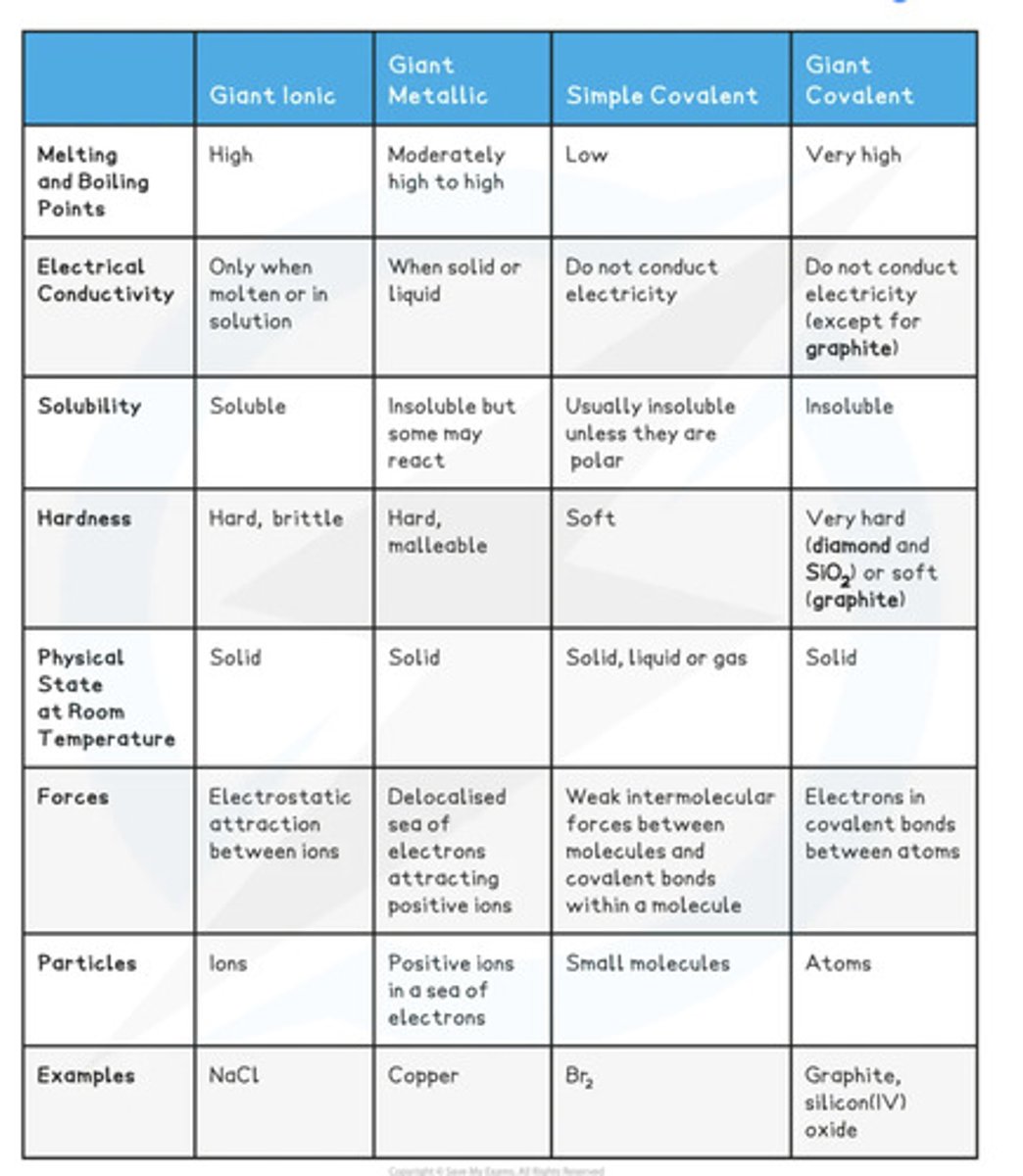
Predict boiling point, conductivity, hardness, solubility of different structures
What is the oxidation number of an atom
the charge that would exist on the atom if it had completely ionic bonding
the oxidation number of an uncombined element is
0
which atoms have fixed oxidation numbers and their exceptions
group 1: +1
group 2: +2
Fluorine: -1
Hydrogen: +1 (except in metal hydrides: -1)
Oxygen: -2 (except in peroxides: -1 and F₂O: +2)
sum of the oxidation numbers in a compound and ion are
compound: 0
ion: equal to the charge
how to tell which atom has been reduced and which has been oxidised in a reaction from the oxidation numbers
if an atom gains one or more negative charge it has been reduced since it has gained electrons and vise versa
oxidising agents _____ electrons
gain
substance that oxidises another atom (makes it lose its electrons)
they are reduced
reducing agents _____ electrons
lose
substance that reduces another atom (makes it gain electrons)
they are oxidised
What is a disproportionation reaction?
a reaction where an atom is both oxidised and reduced at the same time - it starts with one oxidation number and ends up with two different numbers in the products
What is a comproportionation reaction
a reaction where an atom starts with two oxidation numbers and ends up with only one
how to name compounds with elements which can have varying oxidation numbers
using roman numerals, we can show the oxidation number of an atom, giving information about the rest of the compound
Metal bonding
normally form positive ions, by losing electrons, they are therefore oxidised and their oxidation number increases
Non-metal bonding
normally form negative ions, by gaining electrons, they are therefore reduced and their oxidation number decreases
How to write half-equations to then turn them into balanced, full equations
- make one equation for the reduction and one for the oxidation
- add H₂O if there is unbalanced O
- balance extra H with H⁺ on the other side
- balance out the charge with electrons
- make sure both half equations are using the same number of electrons, if not, multiply to have them equal
- merge the two equations, electrons should cancel out and no need for spectator ions
reasons for the trend in ionisation energy down group 2
as you go down the group, despite the increased nuclear charge, the distance of the outermost electron from the nucleus and the electron shielding from the inner shells increases, meaning that the forces of attraction are weaker and thus it is easier to lose their electrons
reasons for the trend in reactivity down group 2
all group 2 elements form ionic bonds in which they donate two of their electrons and become 2+ ions. This means, the elements which can lose their outermost electrons the easiest will thus react the fastest. this is why as you go down group 2, the trend is that the metals become more reactive meaning reactions will carry out much faster
general equation for the reaction of group 2 metals with oxygen
2M₍ₛ₎ + O₂ ₍₉₎ -> 2MO₍ₛ₎
which two elements in group 2 can also form something different when reacting with oxygen, and what do they form
Ba and Sr
M₍ₛ₎ + O₂ ₍₉₎ -> MO₂ ₍ₛ₎
general equation for the reaction of group 2 metals with water
M₍ₛ₎ + 2H₂O₍ₗ₎ -> M(OH)₂ ₍ₛ₎ + H₂ ₍₉₎
except for Be which doesn't react
which element in group 2 needs to be reacted differently with water and the formula
Magnesium needs to be heated with steam to react faster
Mg₍ₛ₎ + H₂O₍₉₎ -> MgO₍ₛ₎ + H₂ ₍₉₎
general equation for the reaction of group 2 metals with chlorine
Mg₍ₛ₎ + Cl₂ ₍₉₎ -> MgCl₂ ₍ₛ₎
general equation for the reaction of group 2 oxides with water
MO₍ₛ₎ + H₂O₍ₗ₎ -> M(OH)₂ (aq)
group 2 oxide + sulfuric/hydrochloric acid
group 2 sulfate/chloride + water
group 2 hydroxide + sulfuric/hydrochloric acid
group 2 sulfate/chloride + water