Chapter 3: Cell Structure
 Call Kai
 Learn
 Practice Test
 Spaced Repetition
 Match
 Flashcards
 Knowt Play
1/49

Earn XP
Description and Tags
50 Terms
What are the cell walls of fungal cells made up of
They are made of chitin instead of cellulose
Do fungal cells contain chloroplast
No they do not
Which cells have an identical set of organelles to Algal cells
Plant cells
What is the material the cell wall within a plant cell made of
Cellulose
What is the difference between organelles within prokaryotes and Eukaryotes
Organelles within a eukaryotic cell are enveloped within a membrane whereas in prokaryotic cells they are not
What is the plasma membrane made from
Phospholipid belayer and a phosphate containing group
What type of DNA is found within bacterial cells
Circular DNA
What type of DNA is found within Eukaryotic cells
Linear DNA
What is the name of the membrane that the nucleus is enveloped in
The nuclear envelope
Describe the structure of the mitochondrion
Double membrane made up of the inner and outer membrane
Cristae are extensions of the inner membrane
The matrix makes up the rest of the mitochondrion
Nucleus (Structure)
Nuclear envelope
Nuclear pores
Nuecleoplasm
Nucleolus
Chromosomes
What is the purpose of the nuclear envelope
Double membrane
The outer membrane is continuous with the endoplasmic reticulum
Contains reactions that take place within the nucleus
Controls the movement of objects into and out of the nucleus
What is the purpose of the nuclear pores
Allows the passage of large molecules (mRNA)
40-100μm in diameter
What is the purpose of the nucleoplasm
A granular jelly like material
Makes up the bulk of the nucleus
What is the purpose of the nucleolus
Manufactures ribosomal RNA and assembles ribosomes
Mitochondrion (Structure)
Cristae
Matrix
Double membrane
What is the purpose of the Cristae
Extensions of the inner membrane
Provides a large surface area for the attachment of enzyme and other proteins involved with respiration
What is the purpose of the matrix
Makes up the remainder of the mitochondrion
Contains ribosomes, proteins, lipids and DNA which allow the mitochondria to control the production of their own proteins
What is the purpose of the double membrane
Controls the entry and exit of material
The inner membrane folds to form extensions (Cristae)
Chloroplast (Structure)
Chloroplast envelope
Grana
Thylakoids
Stroma
The chloroplast envelope
A double plasma membrane
Surrounds the organelle
Highly selective of what it allows to enter and leave the chloroplast
What is the purpose of the Stroma
It is where the second stage of Photosynthesis takes place, Within the stroma there are a number of other structures such as starch grains
What is the purpose of the thylakoids
contains Chlorophyll (photosynthetic pigment
What is the purpose of the grana
Where the first stage of photosynthesis takes place, Absorbs light
Grana (Structure)
Stacks of up to 100 Thylakoids
Thylakoids (Structure)
disks where the chlorophyll is stored
Arranged in stacks of up to 100 disks
Where the first stage of photosynthesis takes place (light absorption)
Stroma (Structure)
A fluid filled matrix
Where the second stage of photosynthesis takes place
There are other structures such as starch grains within the stroma
Nucleus (Purpose)
Found only in Eukaryotic cells, Carries genetic information/hereditary material (chromosomes), controls the cells activities.
Between 10-20μm in diameter
Mitochondrion (Purpose)
The site of aerobic respiration, responsible for the production of ATP.
It produces ATP from respiratory substances such as glucose
Chloroplast (Purpose)
Responsible for photosynthesis within plant cells.
They are adapted to their function through:
The large surface area of the general membrane, allowing for the attachment of chlorophyll
The fluid of the stroma contains the necessary enzymes needed to make sugars within the second stage of mitosis
They contain both DNA and Ribosomes so they are able to quickly manufacture the proteins required for photosynthesis
Golgi Apparatus (Purpose)
The Golgi modifies the proteins and lipids which are passed through by adding non-protein components (e.g carbohydrates)
Labels the proteins and lipids so that they are able to be appropriately sorted
Summary:
It adds carbohydrates to proteins to form glycoproteins
produces secretory enzymes
Secretes carbohydrates
Processes and packages new lipids
Golgi Vesicle (Purpose)
Store lipids and proteins made by the Golgi apparatus
Transports the proteins and lipids out of the cell
Lysosome (Purpose)
Hydrolyse material ingested by phagocytic cells
Release enzymes to the outside of the cell (exocytosis) in order to destroy material around the cell
Digest worn out organelles To recycle the chemicals the organelles were made of
To completely break down cell after they have died (autolysis)
Rough endoplasmic reticulum (Purpose)
To provide. Large surface area for the synthesis of proteins and glycoproteins
To provide a pathway for the transport of materials (especially proteins)
Smooth endoplasmic reticulum (Purpose)
To synthesise store and transport lipids as well a carbohydrates
Ribosomes (purpose)
To synthesise protein
Cell Wall (Purpose)
To provide mechanical strength to the cell, prevents the cell from bursting under the pressure created by the osmotic entry of water
To provide structure and strength to the plant as a whole
Vacuole (Purpose)
Supports the cells by making them turgid
The sugars and amino acids stored inside may be used as a temporary food source
The pigments stored may attract pollinating animals/insects
Cell membrane (Purpose)
To control the movements of objects into and out of the cell
The surface of the membrane has receptor cells which allow it to detect the presence of chemicals such as hormones
What are the names of the stages if the interphase
G1, S, G2
What are the four stages of mitosis
Prophase
Metaphase
Anaphase
Telophase
What happens during the prophase
DNA in the nucleus begins to condense
Chromosomes become more visible in the light microscope
Nuclear membrane dissolves
What happens during metaphase?
Chromosomes align along the middle of the cell
The line that forms is referred to as the metaphase plate
Spindles attach at the centromeres
Chromosomes begin to move
Nuclear envelope has disappeared
What Happens during anaphase?
Paired chromosomes separate and the centromeres
Move to opposite poles of the cell as the spindle fibres contract
What happens during the telophase
New membranes form around the daughter nuclei
Chromosomes disperse and are no longer visible under the light microscope
What is cytokinesis?
The completion of division
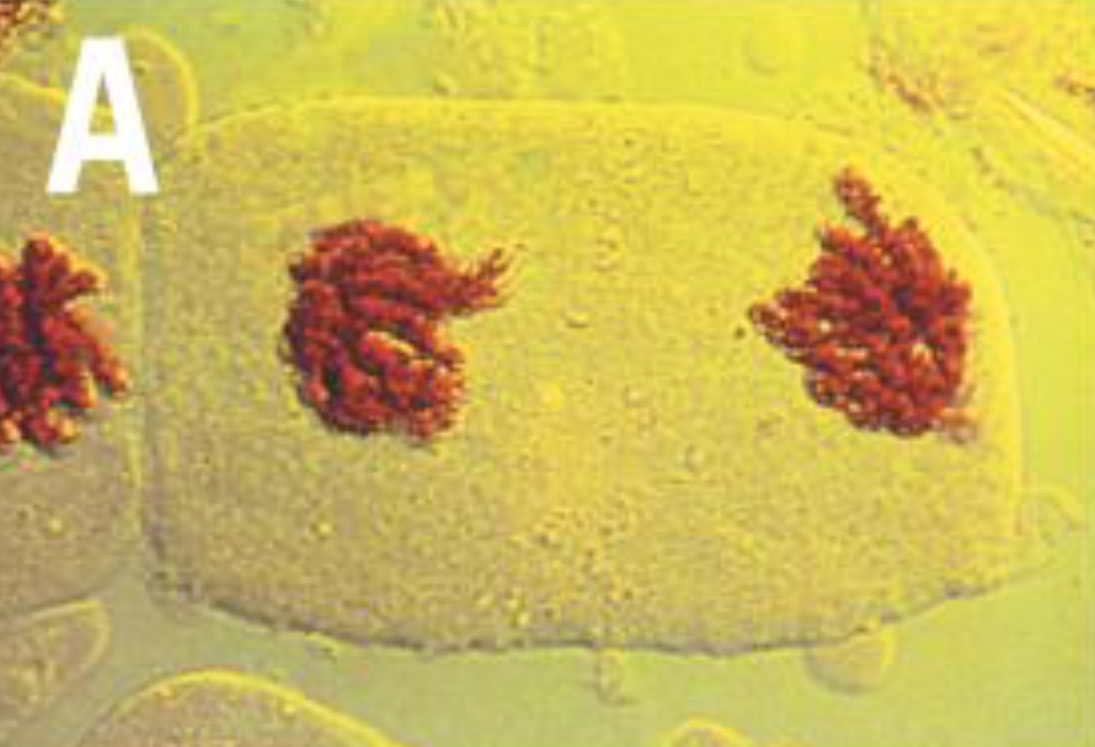
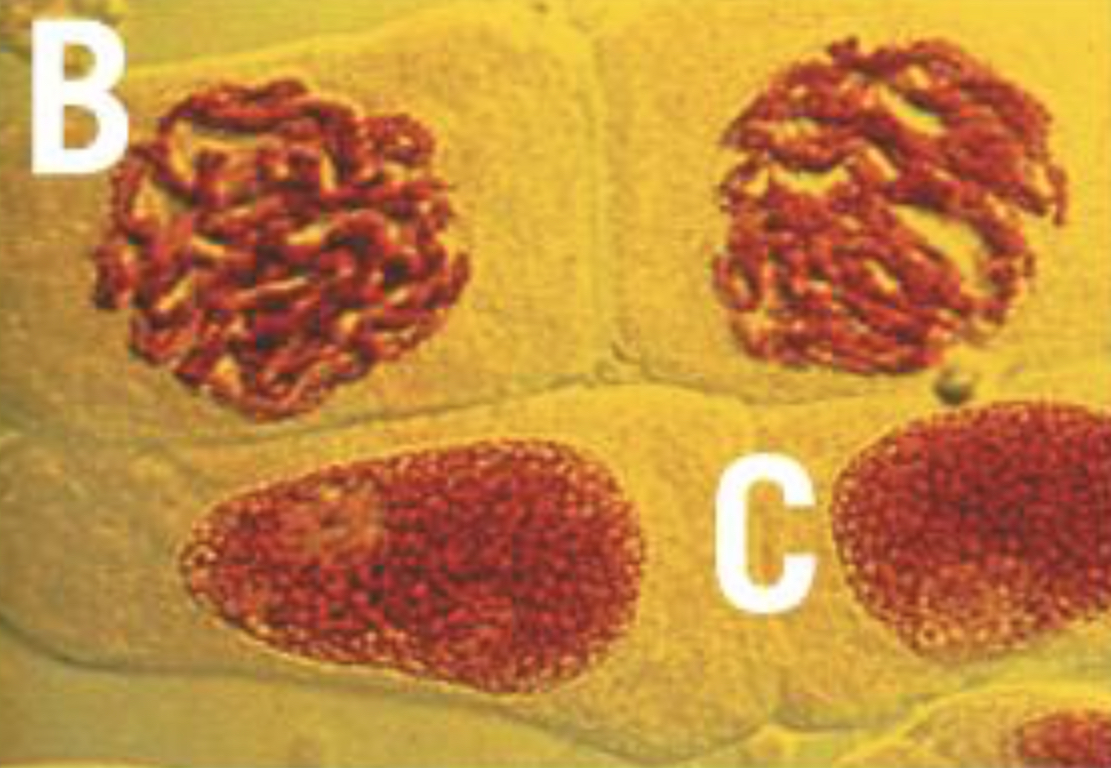
What stage of Mitosis does B represent, explain your answer
Prophase, the chromosomes are more visible
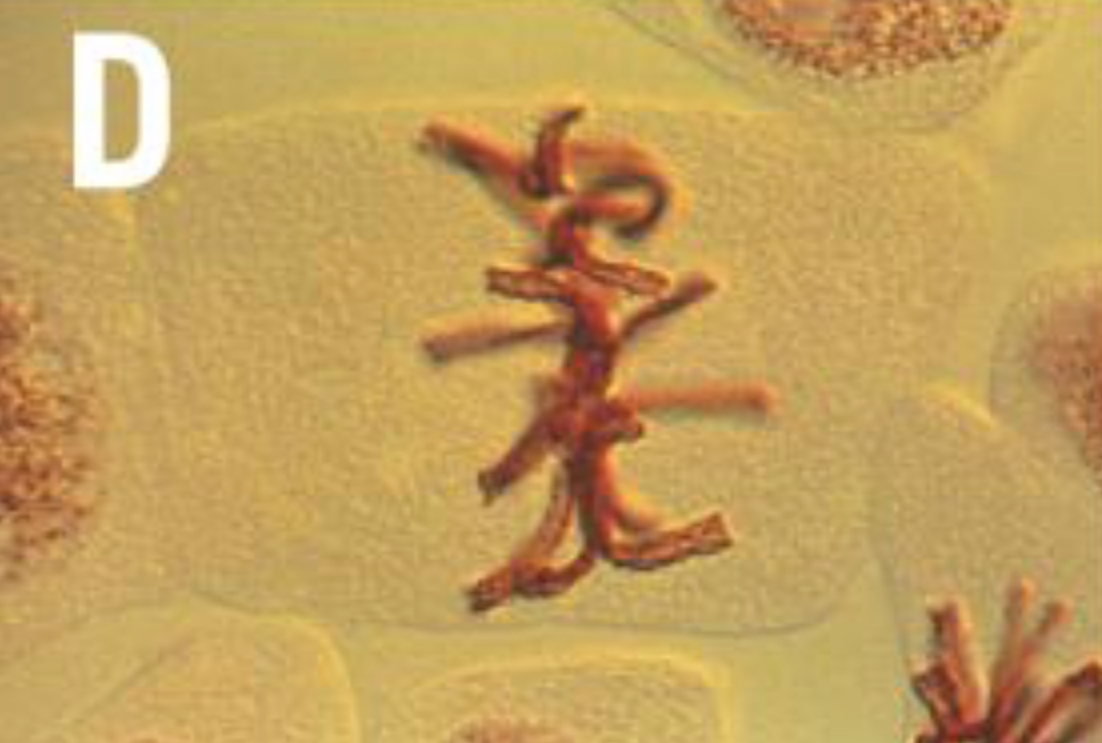
What stage if mitosis is D, Explain your answer
Metaphase, the chromosomes are aligned in the middle of the cell, they are on the metaphase plate
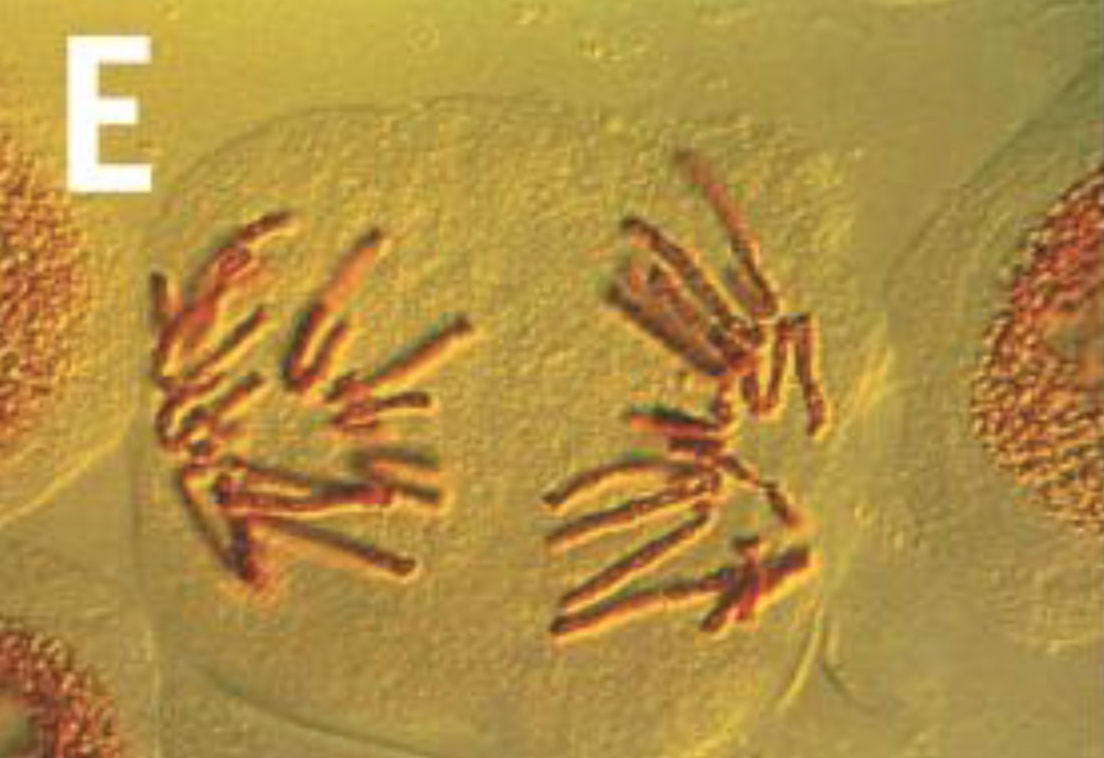
What stage of mitosis is E, explain your answer
Anaphase, being pulled to polar ends of the cell