NSE 111
0.0(0)
Studied by 3 people Call Kai
 Learn
Learn Practice Test
 Spaced Repetition
 Match
Match Flashcards
 Knowt Play
Card Sorting
1/116

Earn XP
Description and Tags
Last updated 12:42 PM on 10/17/22
Name | Mastery | Learn | Test | Matching | Spaced | Call with Kai |
|---|
No analytics yet
Send a link to your students to track their progress
117 Terms
1
New cards
What is patient centered care?
A standard off care that places the patient as the focus of care.
Includes the patient as a partner in care and one who participates in their care.
Having concern for the dignity, independence, preferences, privacy and safety of patients at all times.
Includes the patient as a partner in care and one who participates in their care.
Having concern for the dignity, independence, preferences, privacy and safety of patients at all times.
2
New cards
What does DIPPERS stand for?
Dignity
Independence
Preferences
Privacy
Empathy*
Respect*
Safety
Independence
Preferences
Privacy
Empathy*
Respect*
Safety
3
New cards
Explain DIPPS
Dignity- they must feel worthy of your attention and care being provided/ values respected regardless of differences
Independence- encourage and support patients to do what they can themselves (even if it takes longer)
Preferences- allow patients to make choices and how they would like to have things done (patient is part of decision making)
Privacy- ensure to provide privacy during care (information and physically of their body) you are not allowed to share info to family without permission
Safety- patients need to be in environment that will keep them safe from harm (keep call button around or mobility device)
Independence- encourage and support patients to do what they can themselves (even if it takes longer)
Preferences- allow patients to make choices and how they would like to have things done (patient is part of decision making)
Privacy- ensure to provide privacy during care (information and physically of their body) you are not allowed to share info to family without permission
Safety- patients need to be in environment that will keep them safe from harm (keep call button around or mobility device)
4
New cards
What are the steps of the nursing process?
Assessment- incomes the collection of data or cues important to the patients health care status or situation in order to fully understand the patients priority
Diagnosis- involves the analysis of the assessment data in order to determine key issues and make clinical judgements in the form of a nursing diagnostic
Also involves the creation of outcomes or goals for the patient and their situation
Planning- the creation of a plan that identifies strategies to reach the outcomes or goals
Implementation- involves implementing or carrying o or the plan (ex. Care delivery, teaching)
Evaluation- involves determining if the implementation of the plan was successful in reaching the outcomes or goals
Diagnosis- involves the analysis of the assessment data in order to determine key issues and make clinical judgements in the form of a nursing diagnostic
Also involves the creation of outcomes or goals for the patient and their situation
Planning- the creation of a plan that identifies strategies to reach the outcomes or goals
Implementation- involves implementing or carrying o or the plan (ex. Care delivery, teaching)
Evaluation- involves determining if the implementation of the plan was successful in reaching the outcomes or goals
5
New cards
What is layer 3 of the Clinical Judgement Model?
Recognize Cues
Analyze cues
Prioritize hypothesis
Generate solution
Take action
Evaluate outcomes
Analyze cues
Prioritize hypothesis
Generate solution
Take action
Evaluate outcomes
6
New cards
What is the difference between the nursing process and the clinical judgement model?
The identification and analysis of cues are not specifically highlighted in the nursing process
7
New cards
What is disease?
An objective state of ill health
8
New cards
What did WHO define HEALTH as?
A state of complete physical, mental and social well-being, and not merely the absence of disease or infirmity.
9
New cards
What are examples of determinants and social determinants of health?
1. Income and social status
2. Social support networks
3. Education and literacy
4. Employment and working conditions
5. Physical environment
6. Biological and genetic endowment
7. Individual health practices and coping skills
8. Healthy child development
2. Social support networks
3. Education and literacy
4. Employment and working conditions
5. Physical environment
6. Biological and genetic endowment
7. Individual health practices and coping skills
8. Healthy child development
10
New cards
Why should we examine infection control and prevention measures?
1. To protect a client (who is vulnerable to illnesses as their immune system may be compromised, making them susceptible to illness)
2. To protect the healthcare workers such as yourself from being infected
2. To protect the healthcare workers such as yourself from being infected
11
New cards
What is the chain of infection?
A cycle in which micro organism causes an infection
infectious agent, reservoir, portal of exit, mode of transmission, portal of entry, susceptible host
infectious agent, reservoir, portal of exit, mode of transmission, portal of entry, susceptible host
12
New cards
What is infection control based on?
Understanding how to break the chain of infection so that infections do not develop
13
New cards
What is the infectious agent?
Are microorganisms (single cells) ex) bacteria, viruses, fungi and protozoa They live and grow on objects as well as inside and on people (especially on our skin)
14
New cards
What is the difference between resident micro organisms and transient micro organisms?
Resident- Live permanently on the skin survive and multiply without causing harm
not easily removed by handwashing but can be killed with antibacterial ingredients
Transient- Carried after contact with a person or object
attach to dirt, grease underneath fingernails
they can spread between surfaces
not easily removed by handwashing but can be killed with antibacterial ingredients
Transient- Carried after contact with a person or object
attach to dirt, grease underneath fingernails
they can spread between surfaces
15
New cards
When does the potential for the micro organism to cause the disease increase?
-when they are sufficient in numbers -the micro organism is virulent
- can enter and survive in the host
-the host is susceptible
- can enter and survive in the host
-the host is susceptible
16
New cards
What is the most common reservoir?
human body
17
New cards
What is a reservoir?
A place where a pathogen can survive that may or may not multiply or cause harm/show symptoms
18
New cards
What does it mean when a pathogen is colonizing a site?
When a pathogen is present or in the body but does not cause harm
19
New cards
What is a carrier?
Animals or people who show no symptoms of illness but who have pathogens on or in their bodies that can be transferred to others
20
New cards
What factors contribute to the growth of pathogens?
Food
oxygen to survive
water or moisture
ideal temperature is 35° (cold temperatures tend to prevent growth) prefer environment with PH 5 to 8
Minimal light
oxygen to survive
water or moisture
ideal temperature is 35° (cold temperatures tend to prevent growth) prefer environment with PH 5 to 8
Minimal light
21
New cards
What is the Portal of exit?
The method which an infectious agent leaves its reservoir
Ex) body openings, Breaks in the skin, breaks in the mucous membranes
Ex) body openings, Breaks in the skin, breaks in the mucous membranes
22
New cards
How can the pathogens make it through the portals of exit? Via...
Blood
Body fluids
Excretions
Secretions
Body fluids
Excretions
Secretions
23
New cards
What is the mode of transmission?
Is the route by which the pathogen travels from the Reservoir to a host
24
New cards
List the modes of transmission (know what each means)
1. Direct contact
2. Indirect contact
3. Droplet transmission
4. Airborne transmission
5. Vehicle transmission
6. Vector borne transmission
2. Indirect contact
3. Droplet transmission
4. Airborne transmission
5. Vehicle transmission
6. Vector borne transmission
25
New cards
What is the portal of entry?
Path through which the pathogen can enter the body- can be the same way as they exited
Also any break in the skin- intentional or not- can be a portal of entry
Ex) needle piercing skin, catheter, breathing in Someones cough
Also any break in the skin- intentional or not- can be a portal of entry
Ex) needle piercing skin, catheter, breathing in Someones cough
26
New cards
Who is a susceptible host?
Patient, health care workers, visitors
27
New cards
What can vary susceptibility in individuals?
-their immunity (vaccinations our previous illnesses)
- Immunocompromise state
- general health status
- virulence of the micro organism, that is the severity or harmfulness of the disease
- Age
- Immunocompromise state
- general health status
- virulence of the micro organism, that is the severity or harmfulness of the disease
- Age
28
New cards
What are some normal defences against fighting infections?
1. Normal flora- Micro organisms that protect a person from pathogens that live outside and inside the body
2. Inflammatory Response-
3. Body system defences - Several organs have unique defences against infection (ex) respiratory tract, vagina
2. Inflammatory Response-
3. Body system defences - Several organs have unique defences against infection (ex) respiratory tract, vagina
29
New cards
What is a health care associated infection HAI?
Nosocomial infection/ iatrogenic infection (originating in the hospital)
Is an infection that a client acquired AFTER admission to a healthcare facility that was not present at the time of their admission
Is an infection that a client acquired AFTER admission to a healthcare facility that was not present at the time of their admission
30
New cards
What type of people are at an increased risk for acquiring a nosocomial infection?
Hospitalized patients, especially older people
31
New cards
What is Clostridium difficile (C. Diff) and who does is typically effect?
A bacterium that can cause symptoms ranging from diarrhea to life-threatening inflammation of the colon
Typically effects older adults inHospitals are in long-term care facilities and typically occurs after use of antibiotic medications
Typically effects older adults inHospitals are in long-term care facilities and typically occurs after use of antibiotic medications
32
New cards
How do antibiotics affect C Difícile bacteria?
The antibiotics change the normal: bacteria allowing the C Difficile bacteria to grow and produces toxins
33
New cards
What is a common healthcare associated infection?
Antibiotic resistant organisms
because of the overuse of antibiotics, many bacteria organisms develop resistance to certain drugs making it more difficult to treat
because of the overuse of antibiotics, many bacteria organisms develop resistance to certain drugs making it more difficult to treat
34
New cards
What is asepsis and the two types?
The process for keeping away disease producing micro organisms.
Medical asepsis- routine
Surgical asepsis -used in and out of the OR
Medical asepsis- routine
Surgical asepsis -used in and out of the OR
35
New cards
What is the focus of medical a sepsis and what does it include doing?
Focus is limiting/minimizing the spread of micro organisms
includes hand hygiene, using clean disposable gloves to prevent direct contact with any blood or body fluids, and cleaning the environment routinely
basic medical is sepsis techniques help to break the infection chain using standard procedures
includes hand hygiene, using clean disposable gloves to prevent direct contact with any blood or body fluids, and cleaning the environment routinely
basic medical is sepsis techniques help to break the infection chain using standard procedures
36
New cards
What are the three levels of cleaning equipment?
1. Cleaning- Physical removal of foreign material including micro organisms using water and soap, cleaning products
2. Disinfection- elimination of all pathogens except bacterial spores
Includes chemicals or ultraviolet light
3. Sterilization- destruction of all microorganisms including bacterial spores using moist heat (steam), chemicals, gas, and boiling water
2. Disinfection- elimination of all pathogens except bacterial spores
Includes chemicals or ultraviolet light
3. Sterilization- destruction of all microorganisms including bacterial spores using moist heat (steam), chemicals, gas, and boiling water
37
New cards
How can you control or eliminate infectious agents to break the chain of infection?
Clean, disinfect and sterilize
38
New cards
How can you control or eliminate bacteria at the reservoir stage?
Regularly empty drainage bags, replace bags of IV solutions at least daily, discard wound dressings that are soiled, syringes etc. to prevent the opportunity of bacteria growing in a potential reservoir
39
New cards
How can you prevent organisms from leaving the body in the portal of exit/entry?
Cover your mouth when coughing/sneezing
use protective clothing when handling potentially contaminated substances ex) using gloves when providing mouth care to a client or when changing so soiled linen or wearing a mask when necessary
use protective clothing when handling potentially contaminated substances ex) using gloves when providing mouth care to a client or when changing so soiled linen or wearing a mask when necessary
40
New cards
How can you break the chain of infection during modes of transmission?
Limit ways that the micro organisms can be carried from objects/or people to others
NO SHARING
HAMS HYGIENE
NO SHARING
HAMS HYGIENE
41
New cards
In the chain of infection what are ways to protect a susceptible client or host?
Maintain the client skin integrity in order to avoid breaks in the skin thereby introducing a portal of entry
supporting good hygiene practises
providing adequate fluid and nutrition intake
maintaining immunization schedule
providing comfort for adequate sleep and reducing stress also promotes healing
supporting good hygiene practises
providing adequate fluid and nutrition intake
maintaining immunization schedule
providing comfort for adequate sleep and reducing stress also promotes healing
42
New cards
What does routine practice include appropriate use of?
Gowns
Gloves
Masks
Eye wear
Etc
Gloves
Masks
Eye wear
Etc
43
New cards
What is routine practises based on?
The same safe standards of practice (hand washing, cleaning, disposal) should be used routinely with all clients/patients/residents to prevent the spread of micro organisms
All clients have the potential to transmit infection via blood and body fluids, which can be unknown
All clients have the potential to transmit infection via blood and body fluids, which can be unknown
44
New cards
What precautions must be taken for Tier 2 Contact Infections ?
When patient has direct or indirect contact infection nurse would need to wear gloves, gown and perform proper hand hygiene.
The client will also be in a private room or a room with similar clients.
The client will also be in a private room or a room with similar clients.
45
New cards
What precautions must be taken for Tier 2 Droplet Infections ?
Nurse would wear eye/mask protection if within 2 m of the client along with proper hand hygiene. The masks to be worn or surgical masks.
Clients are to be in a private room or cohort clients
Clients are to be in a private room or cohort clients
46
New cards
What precautions must be taken for Tier 2 Airborne Infections ?
An N95 mask would be worn
Clients must be in a private room with the door closed and negative pressure airflow
Clients must be in a private room with the door closed and negative pressure airflow
47
New cards
What is the difference between a negative pressure room and a positive pressure room?
Negative pressure room- when the air flows INTO the isolation room but does not escape the room. When opening the door the airflow/current will be into the room so that no airborne particles escape the room.
Positive Pressure Room- when air will flow OUT of the room instead of in, so that any airborne micro organisms that may infect the patient are kept away
Patients whose immune system's are compromised may be put into a positive pressure room to keep potential airborne micro organisms away from them.
Positive Pressure Room- when air will flow OUT of the room instead of in, so that any airborne micro organisms that may infect the patient are kept away
Patients whose immune system's are compromised may be put into a positive pressure room to keep potential airborne micro organisms away from them.
48
New cards
What is a pathogen?
A microorganism that is capable of causing disease
49
New cards
What is infection?
An infection is a disease state resulting from the entry and multiplication of a pathogen in the tissues of a host, causing the body to manifest clinical signs and symptoms.
50
New cards
What does virulence mean?
ability to produce disease
51
New cards
What is the most important and most basic technique in preventing the transmission of infections?
Hand hygiene
52
New cards
What is the prime cause of infection?
Contaminated hands
53
New cards
See the distance of why soap and water is more or less efficient than alcohol based waterless antiseptic
54
New cards
When are the 4 moments of hand hygiene?
1. BEFORE initial patient or patient environment contact to protect the patient/patients environment from harmful germs carried on your hands
2. BEFORE any antiseptic procedures in order to protect the patient against any harmful germs from entering his/her body
3. AFTER any exposure to bodily fluids to protect yourself and the healthcare environment from harmful germs
4. AFTER patient/ patient environment contact in order to protect yourself and the healthcare environment from harmful patient germs
2. BEFORE any antiseptic procedures in order to protect the patient against any harmful germs from entering his/her body
3. AFTER any exposure to bodily fluids to protect yourself and the healthcare environment from harmful germs
4. AFTER patient/ patient environment contact in order to protect yourself and the healthcare environment from harmful patient germs
55
New cards
List situations where hand hygiene must occur
Before and after direct contact with all clients
before donning gloves and after dolphin gloves
before and after performing invasive procedures after contact with bodily fluids or excretions, mucous membranes, non-intact skin, or wound dressing (if visibly soiled, must use soap and water)
after personal body functions, such as using the toilet or blowing ones noes
when moving from a contaminated body site to a clean body site during patient care
after contact with inanimate objects including medical equipment in the immediate vicinity of the patient before and after preparing handling serving or eating food before and after feeding the client
before donning gloves and after dolphin gloves
before and after performing invasive procedures after contact with bodily fluids or excretions, mucous membranes, non-intact skin, or wound dressing (if visibly soiled, must use soap and water)
after personal body functions, such as using the toilet or blowing ones noes
when moving from a contaminated body site to a clean body site during patient care
after contact with inanimate objects including medical equipment in the immediate vicinity of the patient before and after preparing handling serving or eating food before and after feeding the client
56
New cards
What are examples of PPE Personal protective equipment?
Gown, gloves, mask and protective eyewear
57
New cards
When are caps or shoe covers required,?
For sterile surgical procedures only
58
New cards
What is the primary reason to wear a gown?
To prevent contamination of clothes during contact with the client
to protect healthcare workers and visitors from coming in contact with infected material, blood, or body fluids
may also be required for contact precautions
to protect healthcare workers and visitors from coming in contact with infected material, blood, or body fluids
may also be required for contact precautions
59
New cards
What should the gown be made of when used for barrier protection?
Fluid resistant material and should be changed immediately if damaged or heavily soiled
60
New cards
Is there a special technique for putting on a gown?
No, as long as they are fastened appropriately however when taking off careful attention must be taken to minimize the contamination of hands in uniform
61
New cards
Is wearing gloves a substitute for hand hygiene?
No
62
New cards
What are gloves used for?
To prevent transmission of pathogens by direct and indirect contact
63
New cards
When should gloves be worn?
When there's a risk of hand contact with blood, body fluids, secretions, excretions, non-intact skin, mucous membranes or contaminated surfaces or objects
64
New cards
When should gloves be changed?
Between tasks and procedures on same client after contact with material with high concentration of micro organisms
65
New cards
Why should hand hygiene be performed after glove removal?
Because gloves may not be completely free of leaks and hands may become contaminated when removing gloves
66
New cards
Why would you verify information with the glove manufacturer?
Because gloves may be adversely affected by petroleum based hand lotions or creams so you have to see what the gloves are compatible with in regards to products to use in the healthcare setting
67
New cards
When should you not wear gloves?
- bathing a patient with intact skin except for doing pericare
- taking vital signs on a patient
- Delivering dietary trays
- applying lotion and provide comfort care to a patient with intact skin - pushing stretchers/carts
- handling intact laundry bags
- answering telephones
- taking vital signs on a patient
- Delivering dietary trays
- applying lotion and provide comfort care to a patient with intact skin - pushing stretchers/carts
- handling intact laundry bags
- answering telephones
68
New cards
What is the criteria for selecting a mask?
1. Mask should securely cover the nose and mouth
2. Mask should be substantial enough to prevent droplet penetration
3. Mask should be able to perform for the duration of the activity for which the mask is indicated (eg. surgery)
2. Mask should be substantial enough to prevent droplet penetration
3. Mask should be able to perform for the duration of the activity for which the mask is indicated (eg. surgery)
69
New cards
When are masks used?
In addition to eye protection, when it is anticipated that activity will generate splashes or sprays of blood, body fluids, secretions or excretions or within two m of a coughing patient
70
New cards
Why are masks worn?
To protect the mucous membrane of the nose and mouth
71
New cards
What is the order of Donning PPE?
Donning:
1. Hand Hygiene
2. Gown - tie properly
3. Mask
4. Eye protection
5. Gloves
1. Hand Hygiene
2. Gown - tie properly
3. Mask
4. Eye protection
5. Gloves
72
New cards
What is the order of removing PPE?
1. Gloves
2. Gown
3. Hand Hygiene
4. Eye protection
5. Mask
6. Hand Hygiene
2. Gown
3. Hand Hygiene
4. Eye protection
5. Mask
6. Hand Hygiene
73
New cards
Hygienic environment and bed making
-create needs for clean, safe, and comfy environment
-perform skills and knowledge related to unoccupied and occupied bed making, including equipment (linens)
-explain how tos for infection prevention control and practicing
-identify and explain basic bed positions
-perform skills and knowledge related to unoccupied and occupied bed making, including equipment (linens)
-explain how tos for infection prevention control and practicing
-identify and explain basic bed positions
74
New cards
Clean and comfy dry bed
-promotes patients comfort
-reduces spread of microorganisms
-prevents skin breakdown and pressure ulcers
-reduces spread of microorganisms
-prevents skin breakdown and pressure ulcers
75
New cards
Environmental factors preventing client comfort
-noise
-odours
-lights
-odours
-lights
76
New cards
Bed making allows nurses to asses for...
Pain
Mobility
Ability to assist
Assessment of skin
Access for dropped medication and food particles
Promote patient dignity and privacy
-continue to develop therapeutic NCR
Mobility
Ability to assist
Assessment of skin
Access for dropped medication and food particles
Promote patient dignity and privacy
-continue to develop therapeutic NCR
77
New cards
Bed making Steps
1- if onoccupide , have patient sit up in Chair while bed is made , if not do occupied bed
2 - collect necessary equipment
3- proper disposal of soiled linen
4- Optional drawsheet : used to lift & reposition patient ; place under torso to distribute most of the patients body weight over the sheet
5- maintain pt safety and body alignment during bed making and for turning
2 - collect necessary equipment
3- proper disposal of soiled linen
4- Optional drawsheet : used to lift & reposition patient ; place under torso to distribute most of the patients body weight over the sheet
5- maintain pt safety and body alignment during bed making and for turning
78
New cards
Body Mechanics
- achieved : low center of gravity is balenced over wide stable base of Support
- widen Seperate feet
- for balence bend knees , flexhips , til person is squating w / back aligned and trunk errect ( gravity close to base ) Short cut
- wide base = greater stability center gravity
- facing direction of movement
- no werid twists that are abnormal
-balance between arms and legs to prevent back injury's
-leverage, rolling, turning, pivoting are less work than lifting
-alternating periods of rest and activity= less fatigue
- widen Seperate feet
- for balence bend knees , flexhips , til person is squating w / back aligned and trunk errect ( gravity close to base ) Short cut
- wide base = greater stability center gravity
- facing direction of movement
- no werid twists that are abnormal
-balance between arms and legs to prevent back injury's
-leverage, rolling, turning, pivoting are less work than lifting
-alternating periods of rest and activity= less fatigue
79
New cards
Critical thinking
pain , limited communication , limitted mobility
80
New cards
linens
1 Spread ( colour )
-1 topsheet white flat )
- 1 drawsheet ( white flat )
- 1bottom sheet ) .
-1 lifter ( padder )
-1 topsheet white flat )
- 1 drawsheet ( white flat )
- 1bottom sheet ) .
-1 lifter ( padder )
81
New cards
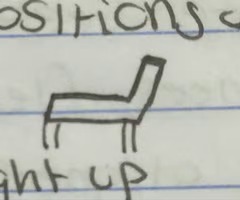
Fowler's position
-straight up
-between 45-60 degrees
-between 45-60 degrees
82
New cards
-flat bed position
-180 degrees
83
New cards
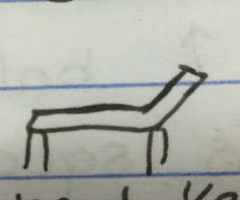
-semi Fowler's position
-30-45 degrees
84
New cards
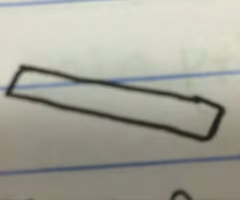
-trendelenburg position
-flat, feet are higher than head
85
New cards
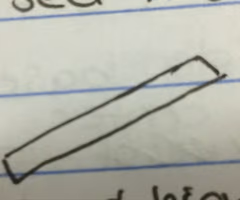
-reversed trendelenburg
-flat and head is higher than feet
86
New cards
Fowler's position
Low= 30 degrees
Supported=45 degrees with knees slightly elevated
High=60-90 degrees
Supported=45 degrees with knees slightly elevated
High=60-90 degrees
87
New cards
- lateral
side /laying positions
88
New cards
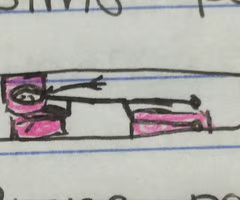
-sims position
-pink are pillows
89
New cards
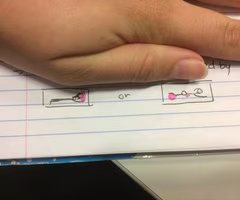
-prone positions
-prone positions
90
New cards
To move clients
Clients need to move to maintain good alignment and comfort
-move client from one side of bed to other need bed bath , changing linens
-move client from one side of bed to other need bed bath , changing linens
91
New cards
When is it safe to lift a client manually
-35 lbs/16kg
-if over use assistive device
-if over use assistive device
92
New cards
Nursing role in maintaining clients mobility and safety
- can client bear weight? Then no assistnce
-if they cant then ask if the client is cooperative and if they have upper body strength , if yes then use the stand up pivoutte technique and use transfer belt(power standing lift assist)
-if no then use full body sling and lift (2 caregivers)
-if they cant then ask if the client is cooperative and if they have upper body strength , if yes then use the stand up pivoutte technique and use transfer belt(power standing lift assist)
-if no then use full body sling and lift (2 caregivers)
93
New cards
Assessment and assesing ques before positioning or moving client
- activity intolerance
-ineffective breathing pattern .
-risk for disuse syndrome
-impared physical mobility
- impared Skin integraity
- Social isolation
-ineffective breathing pattern .
-risk for disuse syndrome
-impared physical mobility
- impared Skin integraity
- Social isolation
94
New cards
Safe transfer techniques
Step 1- assisting cooperative patient who can partially bear weight to sitting position on bed
Step 2- stand opposite to patients hips and turn diagonally to face far corner of the bed and head
Step 3- centre of gravity we have now reduced twisting by facing the direction of movement
Step 4- place feet apart with foot closest to bed infromt of thr other foot
Step 2- stand opposite to patients hips and turn diagonally to face far corner of the bed and head
Step 3- centre of gravity we have now reduced twisting by facing the direction of movement
Step 4- place feet apart with foot closest to bed infromt of thr other foot
95
New cards
Bed to chair
1- Asses activity tolerance , strength , coordination , balence orientation to determine the assistance required
2- evaluate environment for Safety
3 - client wears Supportive non - Slip Shoes
4- dangling is important the longer the immobilization the longer need to dangle (sit up woth feet touching the floor)
5- if patient gets dizzy for over 1-2 minutes/ 60 seconds put them back in supine
6- take blood pressure
2- evaluate environment for Safety
3 - client wears Supportive non - Slip Shoes
4- dangling is important the longer the immobilization the longer need to dangle (sit up woth feet touching the floor)
5- if patient gets dizzy for over 1-2 minutes/ 60 seconds put them back in supine
6- take blood pressure
96
New cards
Assisting ambulation (assessment)
-this is when clients mobility restricts the ability to walk
You must assess
-clients activity tolerance
-strength
-orthostatistic hypotension (increase of blood pressure upon assuming up right position)
-level of pain
-coordination
-baseline vital signs
-and determine which side needs help and what side can a cane go on
You must assess
-clients activity tolerance
-strength
-orthostatistic hypotension (increase of blood pressure upon assuming up right position)
-level of pain
-coordination
-baseline vital signs
-and determine which side needs help and what side can a cane go on
97
New cards
orthostatic hypotension
a form of low blood pressure that happens when you stand up from sitting or lying down
98
New cards
Ambulation of client with hemiplegia / hemiparesis
-scan all visual fields before moving
-a nurse with doubt should request help
-client wears a transfer belt and nurse supports at waist
-nurse stands on the weaker side
-walker is not a safe option
-a nurse with doubt should request help
-client wears a transfer belt and nurse supports at waist
-nurse stands on the weaker side
-walker is not a safe option
99
New cards
hemiplegia
paralysis of one side of the body
100
New cards
hemiparesis
weakness on one side of the body