consumer theory
 Call Kai
 Learn
Learn Practice Test
 Spaced Repetition
 Match
Match Flashcards
 Knowt Play
1/21

There's no tags or description
Looks like no tags are added yet.
Name | Mastery | Learn | Test | Matching | Spaced | Call with Kai |
|---|
No analytics yet
Send a link to your students to track their progress
22 Terms
properties of a utility function
completeness
non satiation
diminishing marginal rate of substitution
transitivity
completeness in utility function
needs to be expressed for all bundles
either a is preferred or b, or equally valued
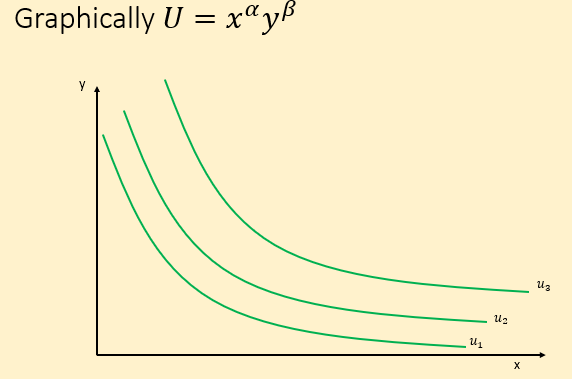
non satiation in utility function
more is better
diminishing marginal rate of substitution in utility function
willingness to give up a lot of a good in abundance for an increase in a scarce good, maintaining the utility
transitivity in utility function
if a is preferred to b and b is preferred to c then a must be preferred to c
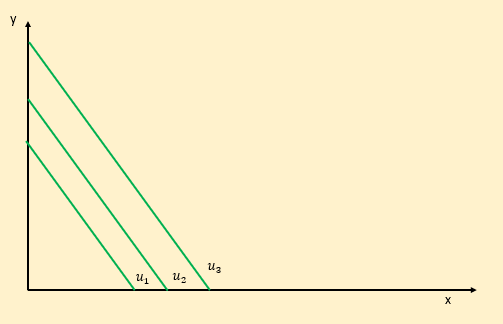
perfect substitutes
marginal rate of substitution is constant → no diminishing returns, fixed exchange rate
consumer is indifferent to which good they consume
linear utility function = •U=αx+βy
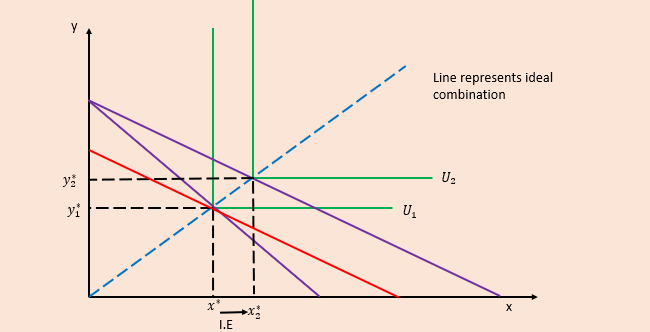
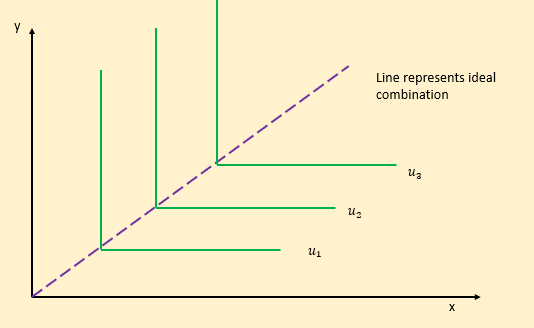
perfect compliments
goods are consumed together in a set ratio
having an extra unit of on means that the utility will still stay the same as the ratio you have 2:2 is the same as 2:3
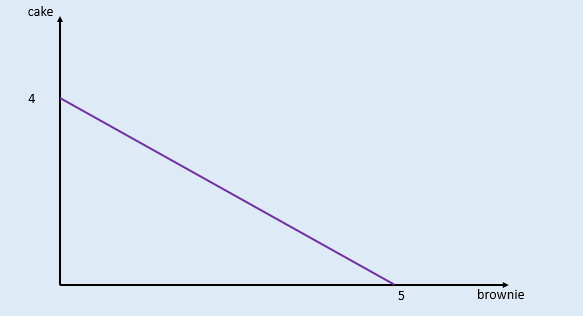
budget constraints
individuals do not have unlimited money, stick to a fixed budget
how much of the goods can they consume depends on the rice of the good and available budget
PXX + PYY = M
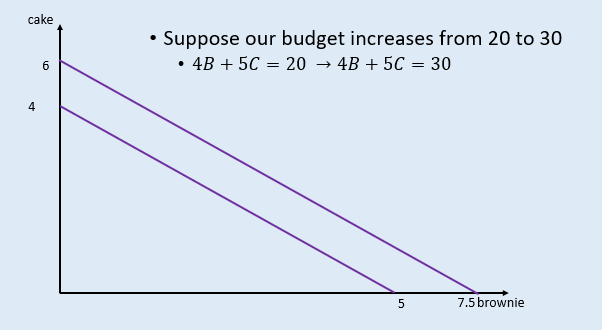
income change with budget constraints
BC shift inwards or outwards
increase → afford more
decrease → afford less
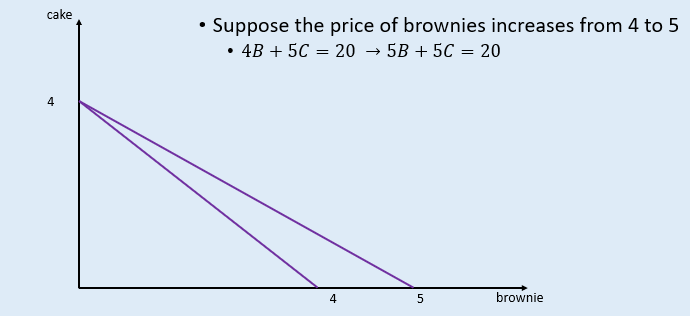
price change with budget constraints
pivot inwards or outwards around intercept
increase → afford less inwards
decrease → afford more outwards
utility maximisation
homo econmicus → utility maximiser
so they will choose the consumption bundle that maximises their budget constrains
tangency point between BC and IC
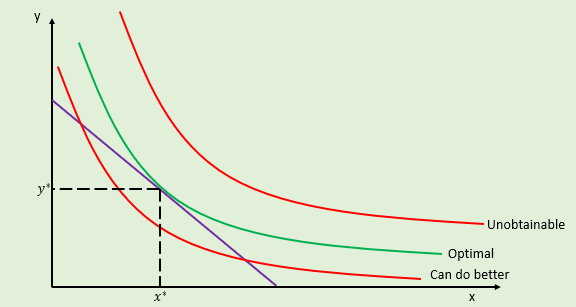
finding utility maximisation
tangency condition → MRS = PX/PY
MRS = MUX/MUY
MUX = DU/DX
effectively (MU_x)/MUy=p_x/p_y
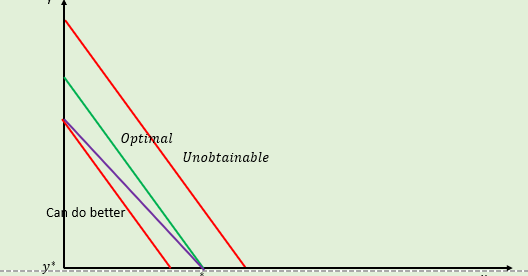
perfect substitutes and utility
price changes on the budget curve
pivots inwards or outwards
increase → inwards
decrease → outwards
re optimise based on new prices
demand changes with the budgets constraint
substitution effect → the change in the relative price of the goods
income effect → change in real income
slutsky, hicksian (substitution effects)
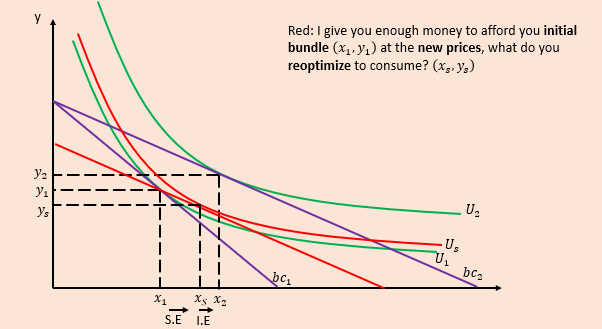
slutsky
i give enough money to afford original at the new price
substitution effect → difference between reoptimisation and initial
income effect → difference between the reoptimisation bundle and final
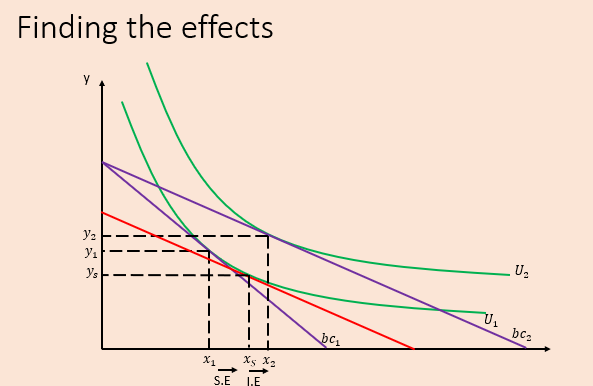
hicksian
i give enough to avoid original utility at the new price
substitution effect → difference between the new bundle and initial
income effect → difference between new bundle and final bundle
change in CB and normal goods
demand increase with income
substitution and income effects reenforce each other
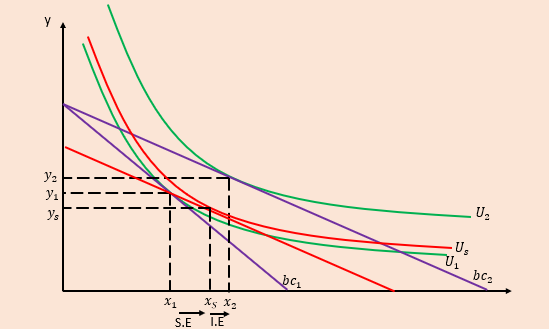
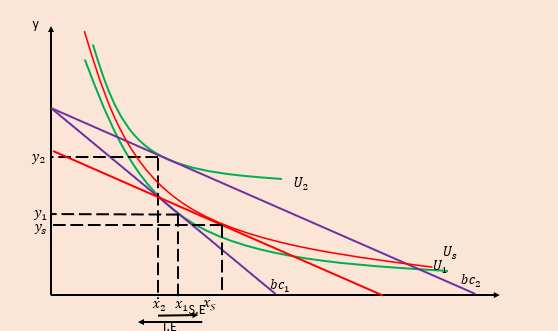
change in CB and inferior goods
demand decreases with income
both effects more in opposite ways
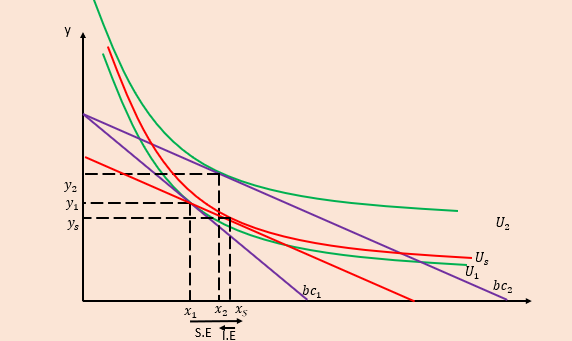
change in CB and giffen goods
extreme inferior
both move in opposite ways but income is greater
violation in law of demand
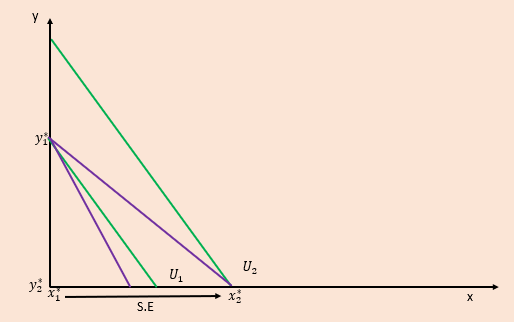
pure substitution effect
demand only shifts when the other good is the price of utility is cheaper for the other good
percept compliment in BC
good combination never changes → just quantity ever ratio
no substitution effect