Chapter 6: Mental Status and Risk Factors for Substance Abuse in Psychology
 Call Kai
 Learn
Learn Practice Test
 Spaced Repetition
 Match
Match Flashcards
 Knowt Play
1/101

There's no tags or description
Looks like no tags are added yet.
Name | Mastery | Learn | Test | Matching | Spaced | Call with Kai |
|---|
No analytics yet
Send a link to your students to track their progress
102 Terms
addiction
compulsive drug craving and use, despite adverse consequences
cognition
all the mental activities associated with thinking, knowing, remembering, and communicating
health care disparities
the population-specific differences in the presence of disease, health outcomes, and quality of health care across different social groups
mood and affect
Both of these elements deal with the prevailing feelings
affect is a temporary expression of feelings or state of mind
mood is more durable, a prolonged display of feelings that color the whole emotional life.
psychosis
a psychological disorder in which a person loses contact with reality
experiences irrational ideas and distorted perceptions
violence
behavior involving physical force intended to hurt, damage, or kill someone or something.
cognitive function
involves memory, thinking, reasoning, ability to understand, judgment, and behavior
emotional functioning
feelings, mood, behaviors, stability
mental health (defined by WHO)
a state of well being in which an individual realizes his or her own abilities, can cope with the normal stresses of life, can work productively and is able to make a contribution to their community
mental health is reflected in someones
appearance
behaviors
speech
thought patterns
decisions
ability to function in the home, work, or socially
mental health can
vary day to day
what contributes to poor mental health
environmental conditions
psychological
genetics
chemical
social
how many adults in the US have mental illness
1 in 5
19.1%
mental disorders can have
physical s/s
risk factors for poor mental health
rapid changes
economic/social factors
exposure to violence
unhealthy lifestyle choices
spiritual factors
cultural factors
changes in neurological function
psychosocial developmental level and issues
people with poor mental health may vein their situation as
hopeless
substance abuse can lead to
dependance syndrome
when using a substance becomes a priority in someones life then it can result in
avoidance of responsibilities
physical withdraw state
how many people age 12 and older use substances in the US
24.6 million people
what drug is a special case and why
weed because the legal status is changing within states
what drug is the most widely used psychotropic drug in the US
(alcohol is the 1st but its not a drug)
weed
What is the mind altering chemical in marijuana?
THC
tetrahydrocannabinol
short term affects of weed
altered senses
changes in mood
impaired body movement
difficulty thinking
hallucinations
paranoia
breathing issues
how does weed work?
the THC goes from the lungs into the blood and then into the brain cells. this causes an effect for 30minutes to an hour.
Long term affects of marijuana for those who begin in their teen years
respiratory damage
dependence
impaired memory, thinking, and learning
decrease in IQ
impaired brain development
CBD (cannabidiol)
Are the molecules in marijuana that have medicinal properties.
May reduce inflammation and pain.
Have been used for Glaucoma, Alzheimer's, Diabetes, PTSD, Epilepsy, and several autoimmune disorders.
May help heal bone fractures faster.
has much lower TCH levels
CBD can cause
liver damage
effects on metabolism
sedation
drowsiness
changes in alertness, mood
gastrointestinal function
drug interactions
what gender has a higher incidence of substance abuse
men
delirium
an acutely disturbed state of mind that occurs in fever, intoxication, and other disorders and is characterized by restlessness, illusions, and incoherence of thought and speech.
signs of violent behavior
loud aggressive speech
aggressive actions
tense posture
hitting the walls
or hitting/harming someone or themselves
Hallucinations
false sensory experiences, such as seeing something in the absence of an external visual stimulus
visual hallucinations are often seen with
Parkinson's disease
alcohol withdrawal
tactile hallucinations
Tactile hallucination is when someone experiences some perception related to touch when it is not really there.
olfactory hallucinations
smelling odors that are not really present
visual hallucinations
Seeing objects, people, or things that do not actually exist
posttraumatic stress disorder (PTSD) is often seen in
veterans who experienced combat
ADLs
activities of daily living
sedentary lifestyle
a way of life that requires little movement or exercise
true or false
the current levels of research has been inconclusive when determining if CBD is actual helpful
true
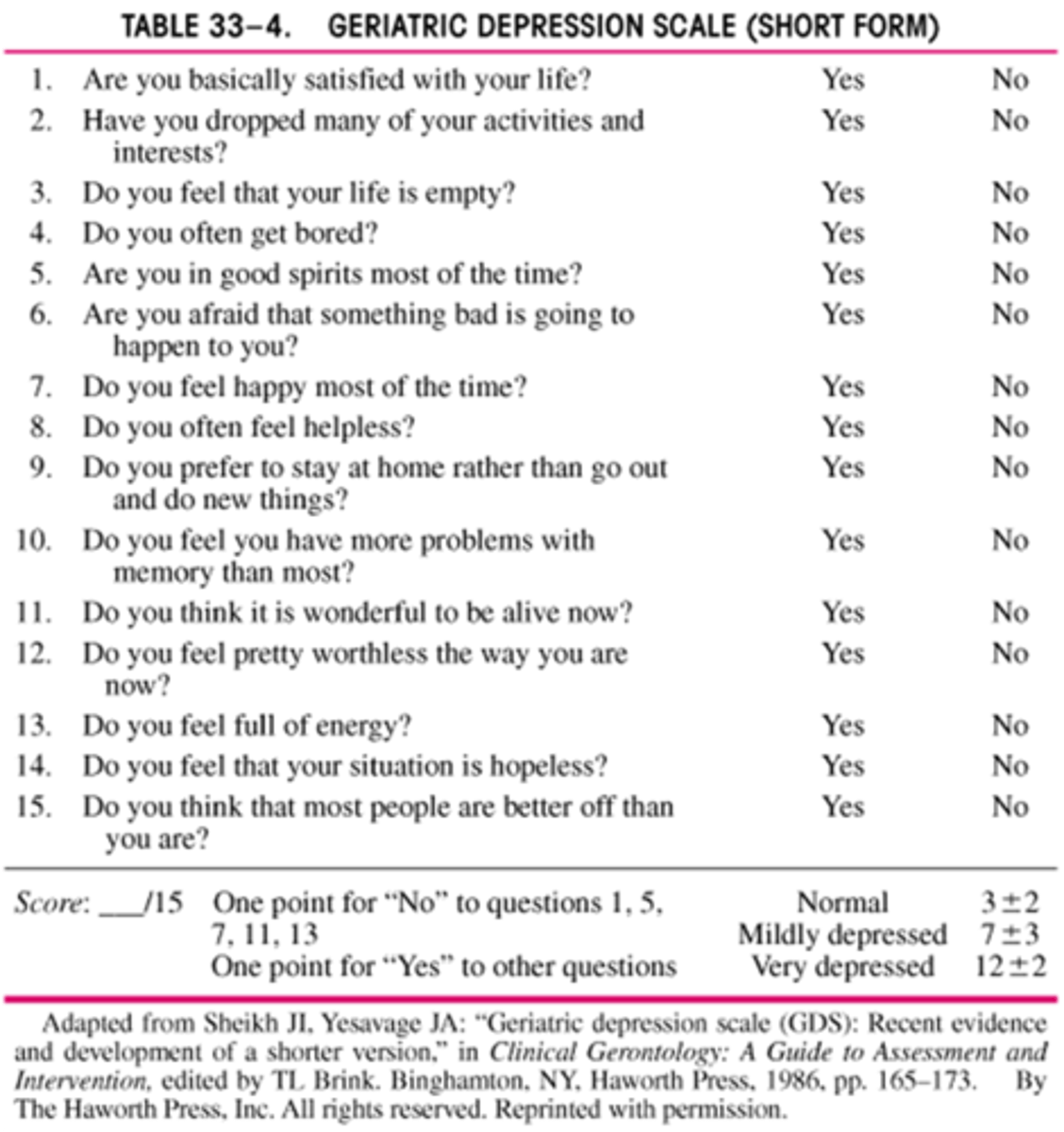
Geriatric Depression Scale
30 yes/no questionnaire that is used to evaluate depression in the elderly pt
Signs of Alzheimer's Disease and dementia
poor judgement and decision making
inability to manage a budget
losing track of the date or the season
difficulty having a conversation
misplacing things and being unable to retrace steps to find them
typical mental age related changes
making a bad decision once in a while
missing monthly payments
forgetting the day and remembering it later
forgetting the right words to use
losing things
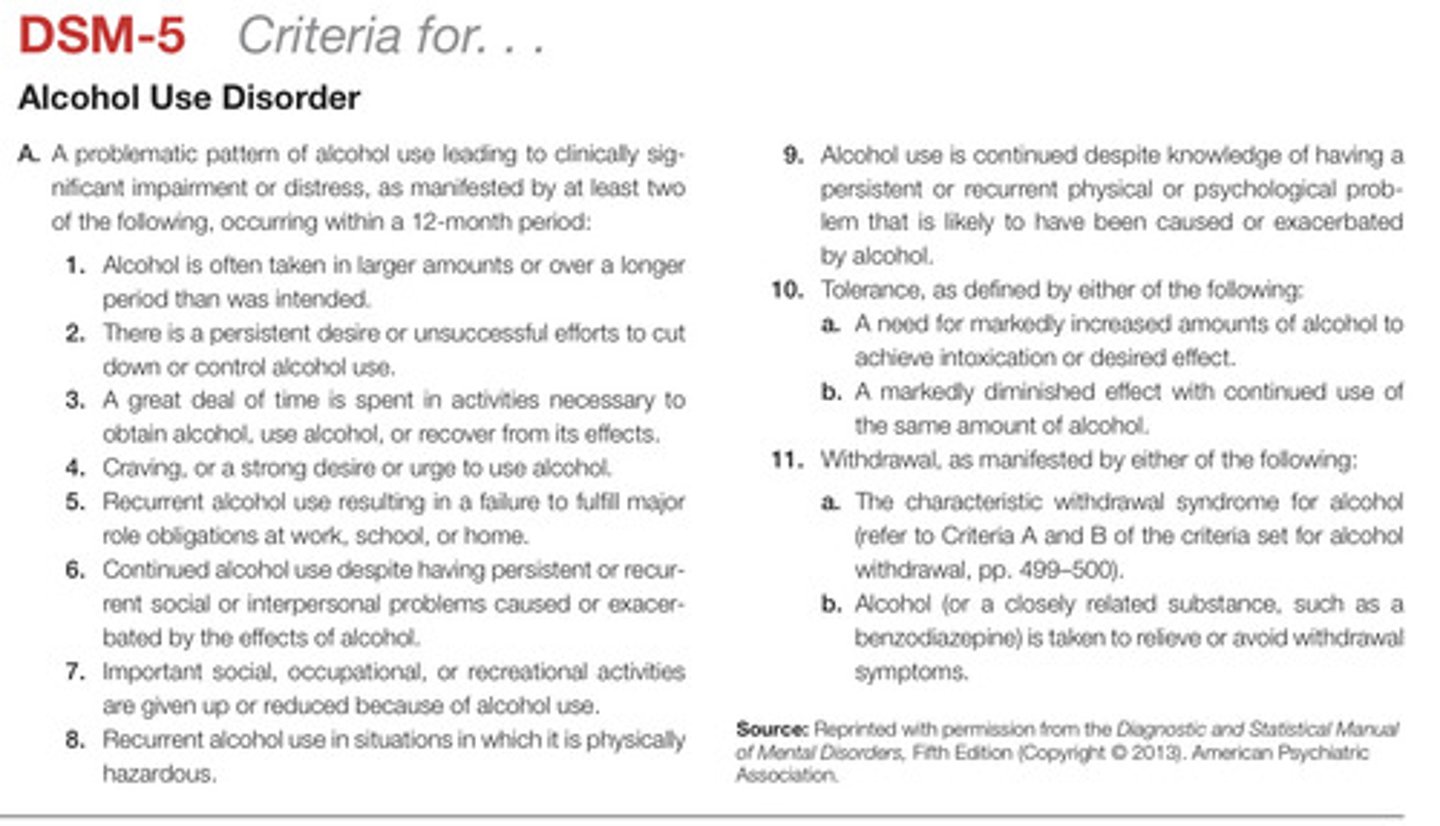
alcohol use disorder (AUD)
also called AUDIT
medical diagnosis for problem drinking that has become severe and is characterized by either abuse or dependence
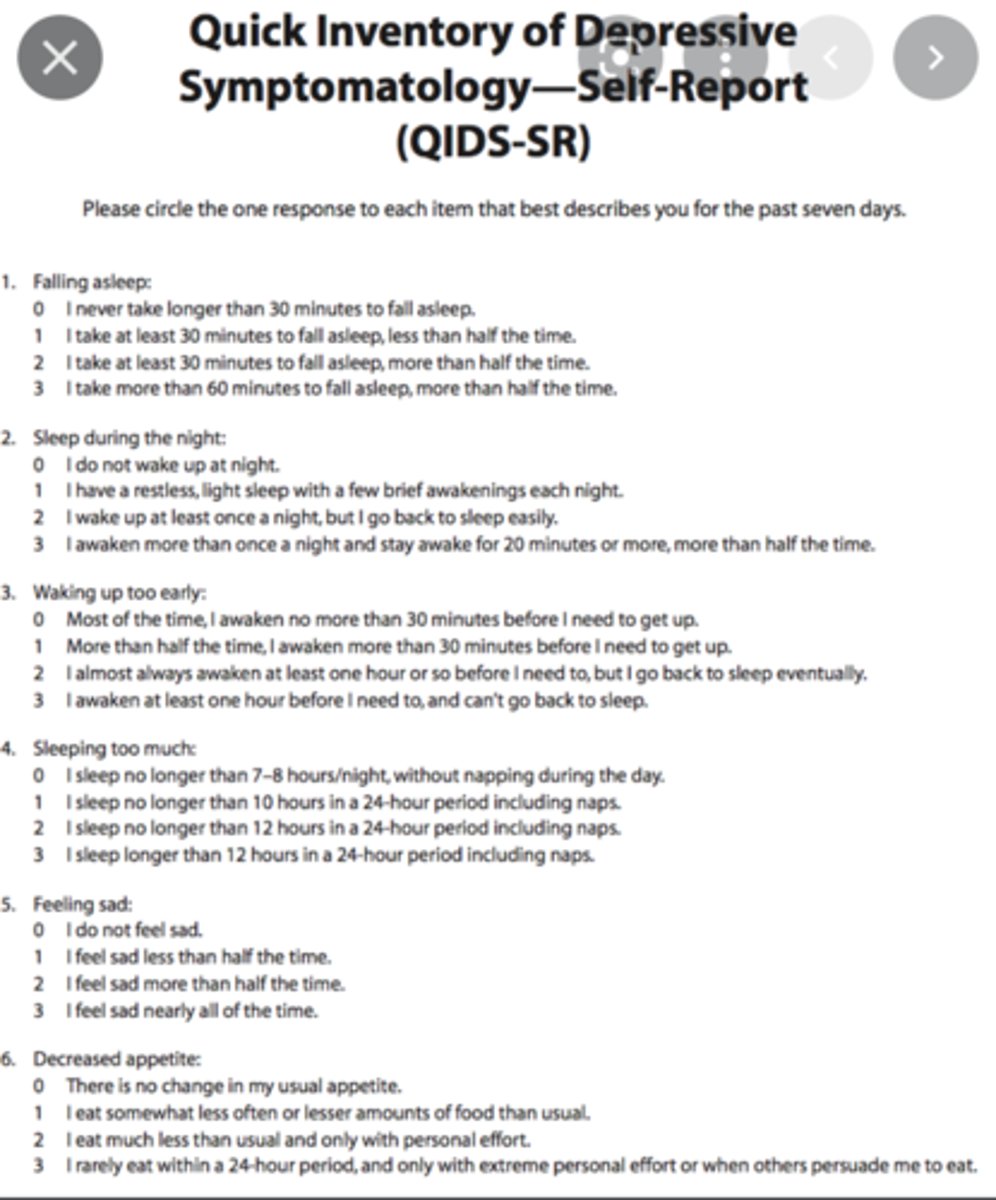
Quick Inventory of Depressive Symptomatology (Self-Report)
self evaluation sheet
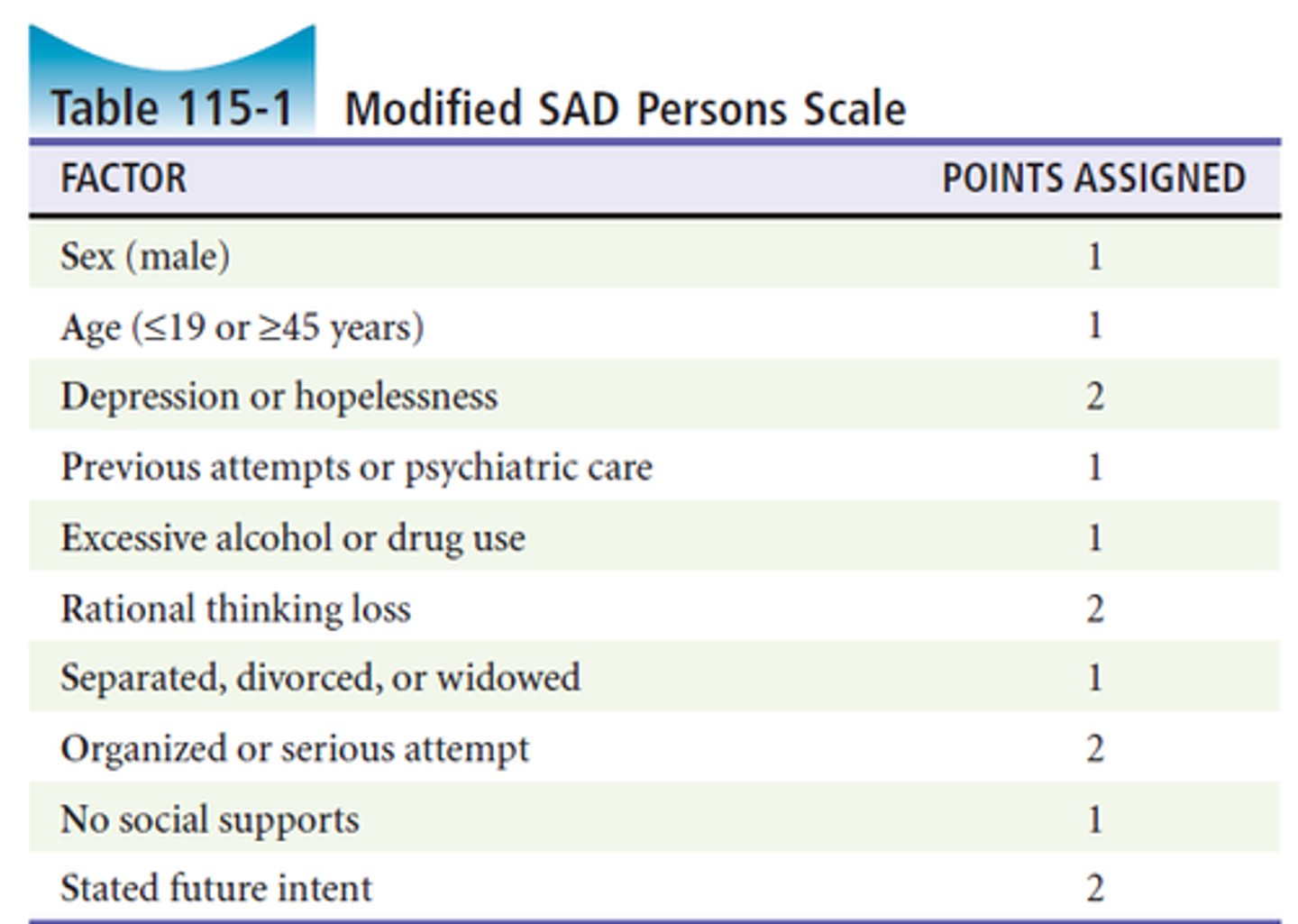
SAD PERSONS scale
A simple and practical assessment tool to evaluate potentially suicidal patients.
look at acronym on picture
most of mental health assessments are
subjective
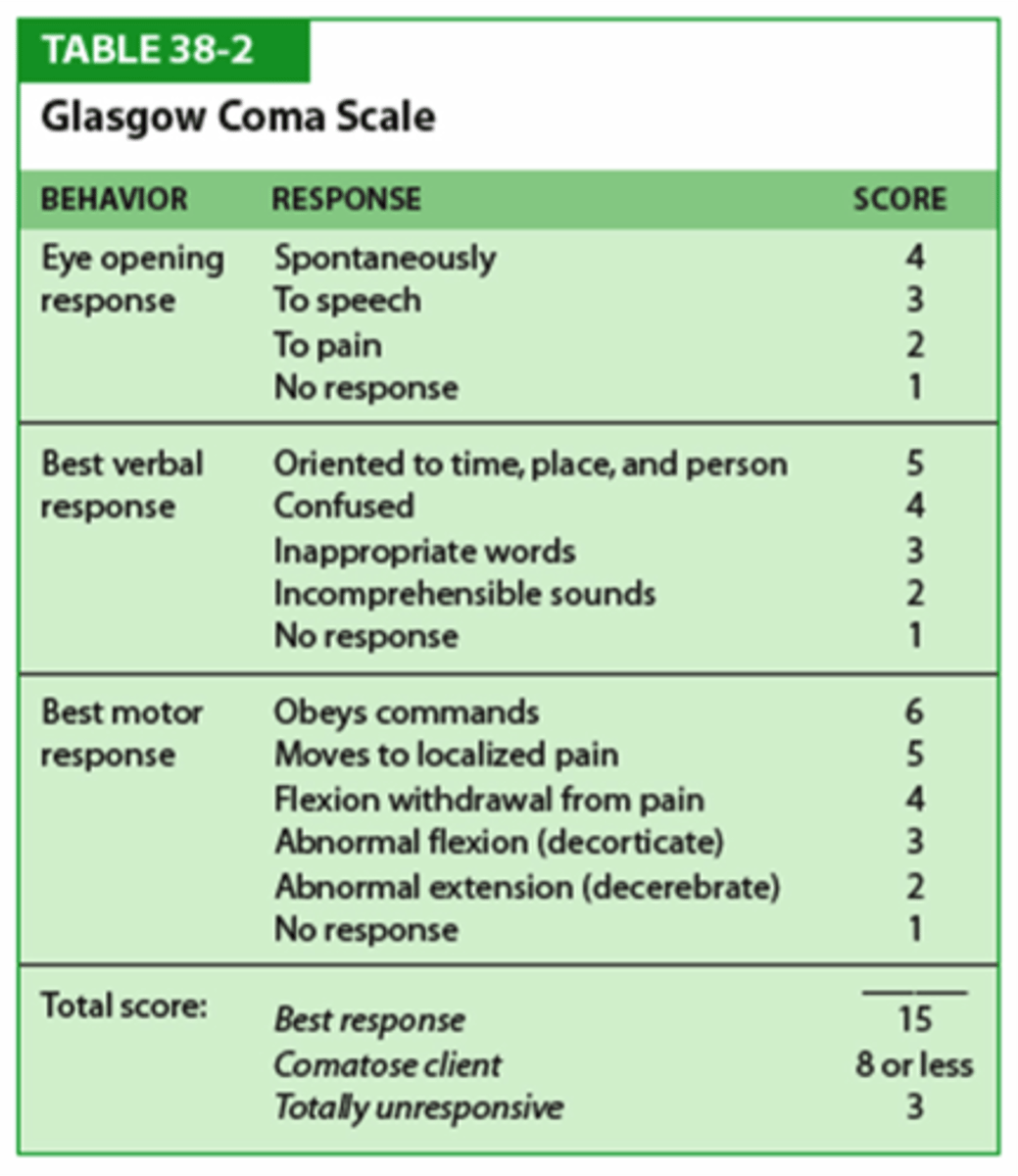
Glasgow Coma Scale
eye opening, verbal response, motor response
Max- 15 pts, below 8= coma
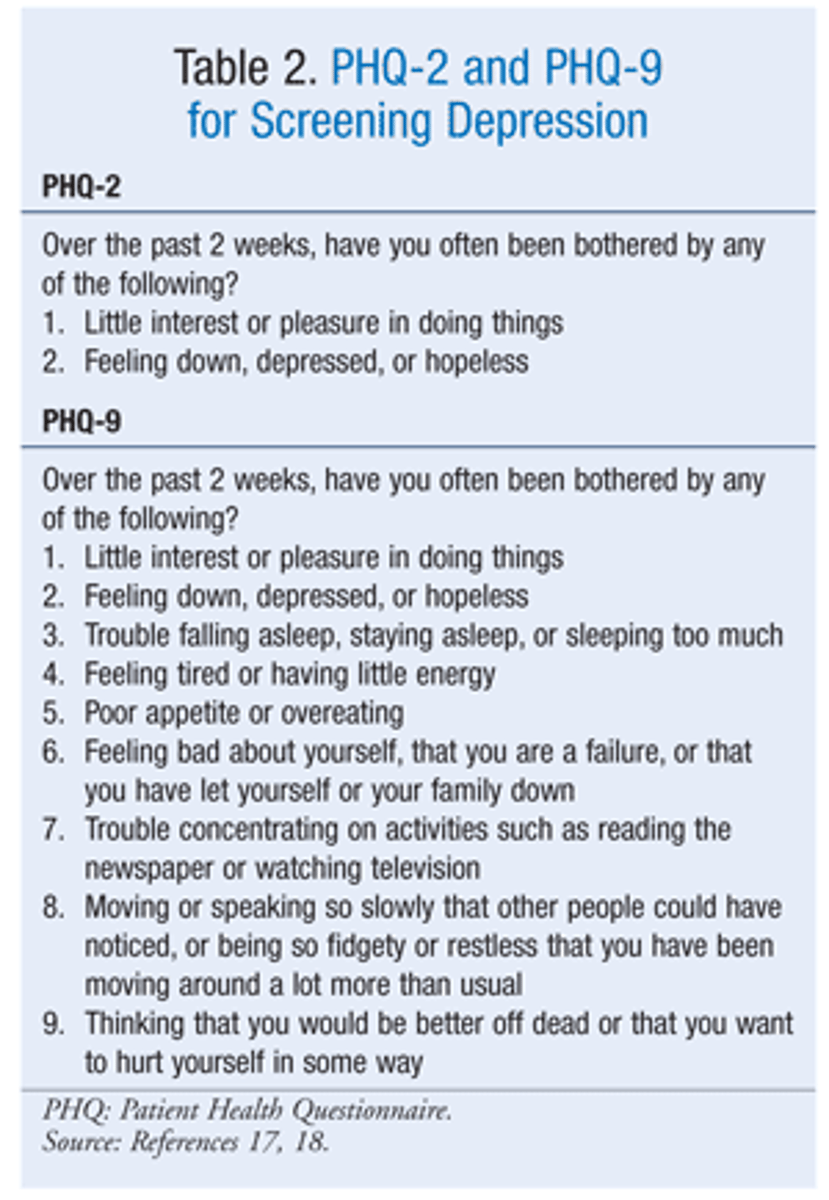
PHQ-2
patient health questionnaire 2
asking two questions about depressed mood:
over the past two weeks have you felt down, depressed or hopeless
over the past two weeks have you felt little or no pleasure in doing things
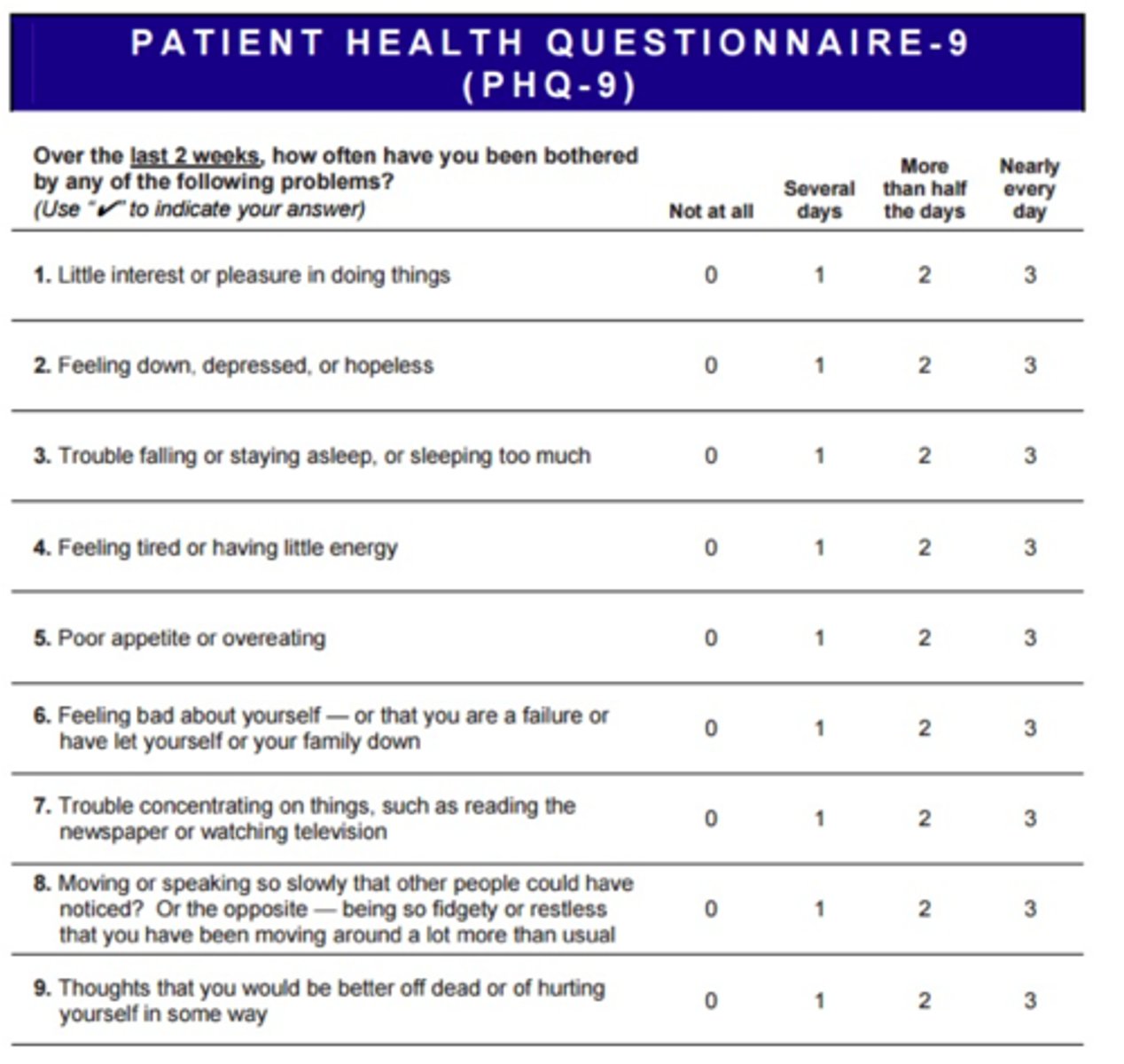
if they say yes to the first two questions proceed with the next 7 questions.
if question 10 is answered somewhat difficult it indicated functional impairment
PHQ-9
assessment that evaluates degree of depression
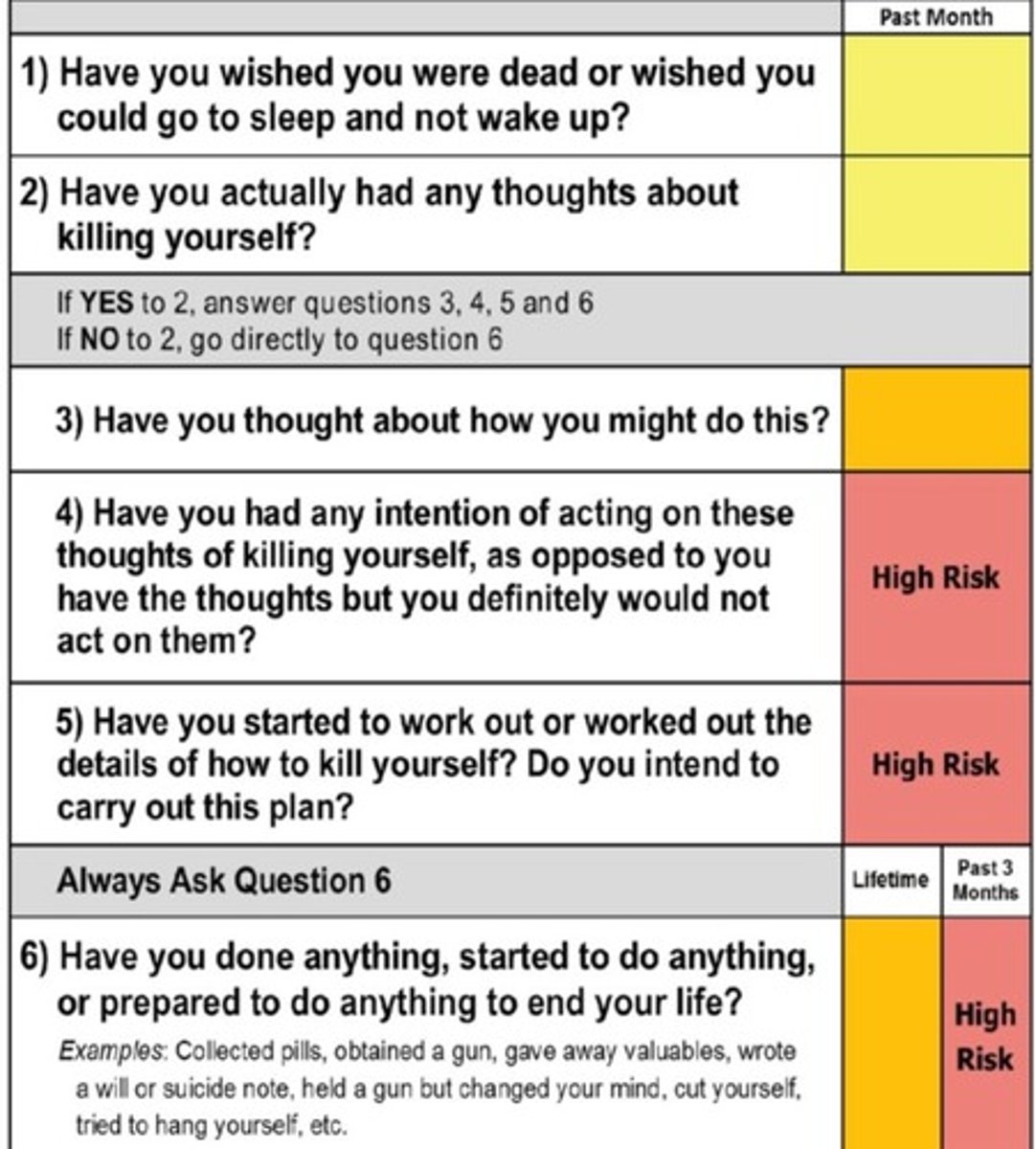
C-SSRS (Columbia-Suicide Severity Rating Scale)
Suicide assessment questionnaire in-depth
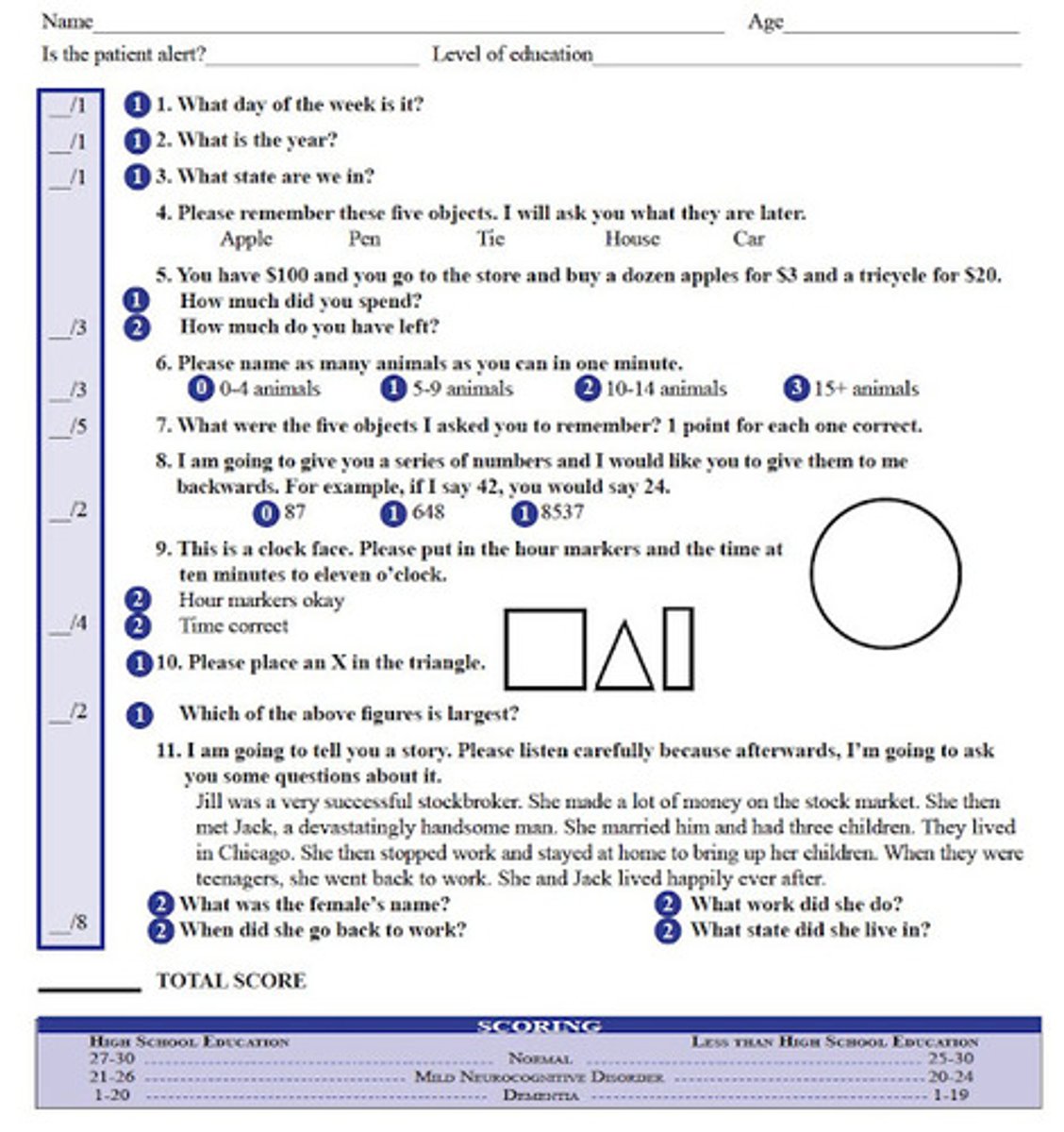
SLUMS Assessment
a common assessment tool for mild cognitive impairment
SBIRT
Screening, Brief Intervention, and Referral to Treatment
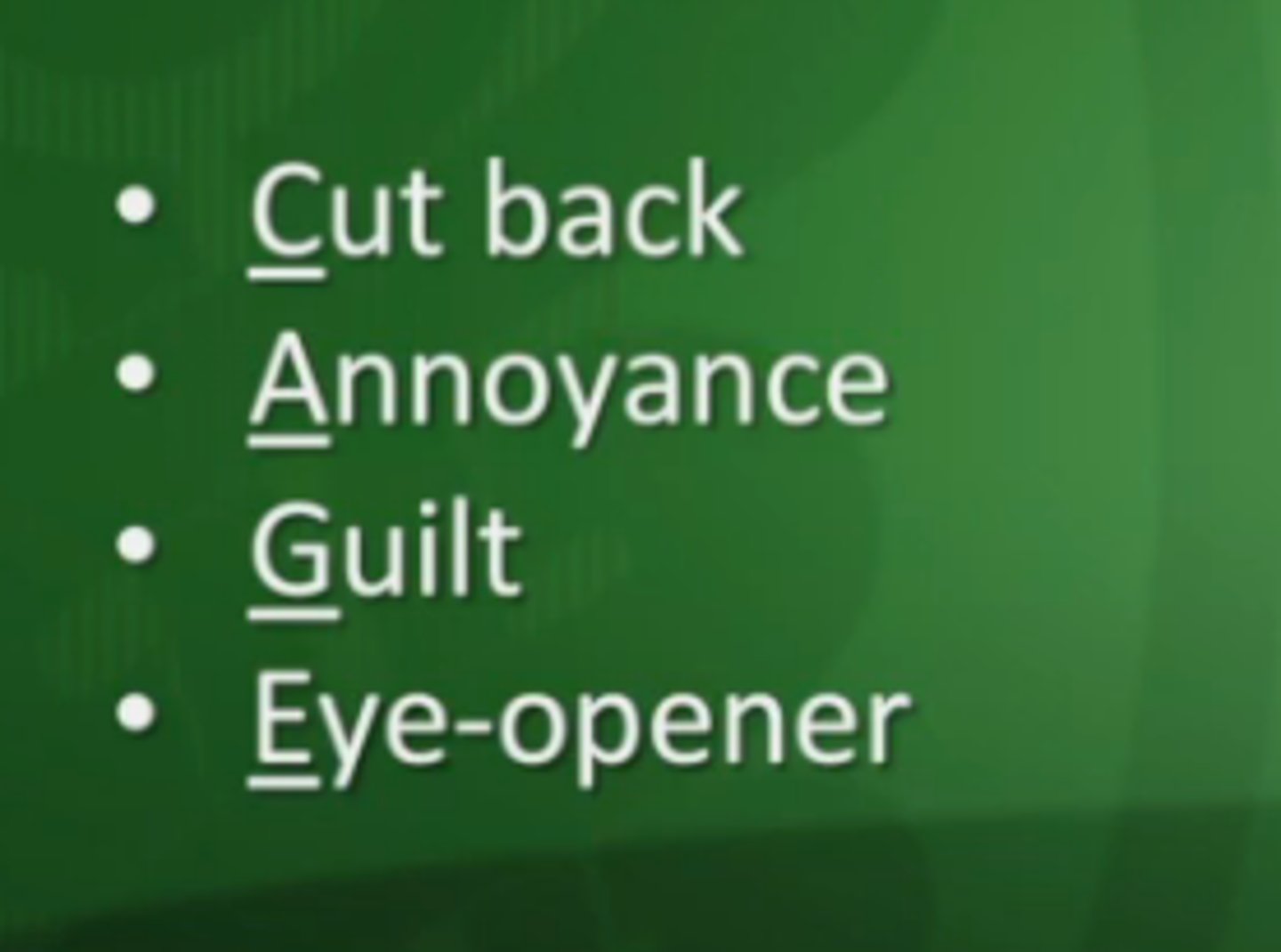
CAGE questionnaire
cut down, annoyed, guilty, eye opener
when checking mental health on an older patient first check
hearing and eyesight before assuming they have a mental issue
GCS
Glasgow Coma Exam, used to assess level of consciousness in trauma patients
GCS can not be used to asses
verbal scores in intubated or aphasic clients
infection can =
confusion
Euthymic
normal mood
Constricted Mood
mildly diminished range or intensity of emotional expression
blunted mood
Significant reduction in the intensity of emotional expression.
flat mood
a lack of emotional responsiveness
Labile mood
irregular mood swings
inappropriate mood
Display of emotions that are unsuited to the situation
a symptom of schizophrenia.
anxiety is associated with
awareness of increasing memory loss
fear is associated with
memory loss
poor coping skills are associated with
sudden stroke
loss of use of extremities
confusion is associated with
head injury
dementia
stroke
substance abuse
decreased memory recall is associated with
dementia
stroke
head injury
substance abuse
inability to dress and groom oneself is associated with
confusion
lack of caregiver/resources
lethargy
lack of energy
Obtunded
Less than full alertness (altered level of consciousness), typically as a result of a medical condition or trauma.
stupor
a state of near-unconsciousness or insensibility
coma
state of profound unconsciousness
dysponia
difficulty producing speech sounds
due to damage of vagus nerve or laryngeal disorders
Cerebellar dysarthria
irregular, uncoordinated speech caused by multiple sclerosis
Dysarthria
slurred speech
related to lesions of the nervous system, Parkinson's disease, or cerebellar disease
aphasia
impairment of language, usually caused by left hemisphere damage either to Broca's area (impairing speaking) or to Wernicke's area (impairing understanding).
Broca's area
speech production
Werknicke's area
language comprehension
wernicke apahasia
rapid speech that lacks meaning
caused by lesion in posterior superior temporal lobe
Broca aphasia (expressive aphasia)
damage is to the motor speech area of the forntal lobe
patient understands language but unable to answer questions, name common objects or express ideas
when is the best time to do a neurological assessment
in the beginning
frontal lobe function
involved in motor function: problem solving, memory, judgment, impulse control
temporal lobe function
hearing, smell, memory
brain stem function
control heartbeat
breathing
blood pressure
Cerebellum function
coordination of voluntary movements and balance
occipital lobe function
visual processing
parietal lobe function
sensory
what is the first thing you observe
gait
remote memory
long term memory
recent memory
short term memory
Apashia
impairment of language, usually caused by left hemisphere damage either to Broca's area (impairing speaking) or to Wernicke's area (impairing understanding).
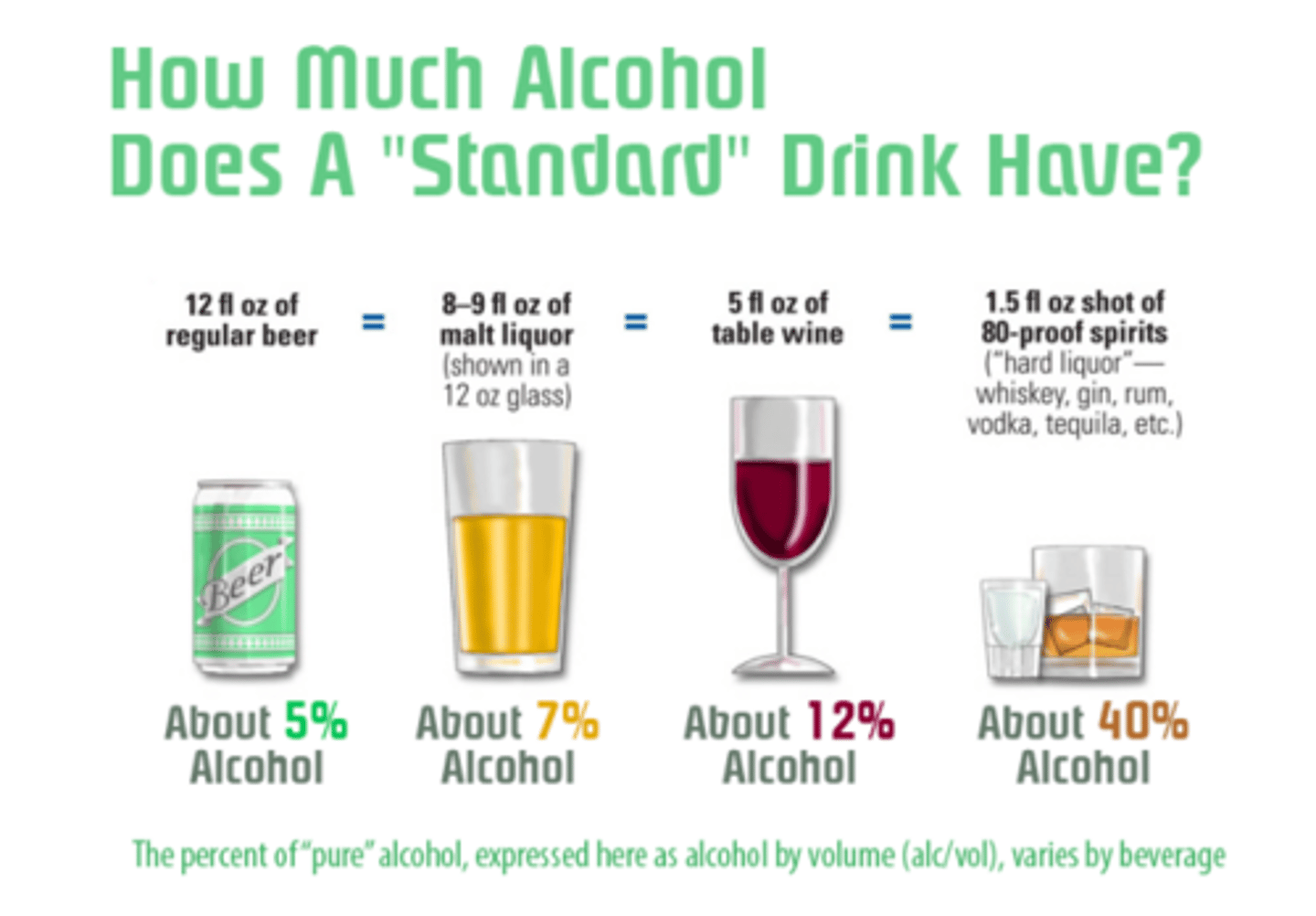
a standard drink
12 oz beer, 5 oz wine, 1.5 oz liquor
convergance
the inability of the person to maintain focus on a task and does not hold a gaze
pinpoint pupils indicate
Opioid overdose
less then 3mm
dialted pupils
stimulants
over 6.5mm
Dementia
a slowly progressive decline in mental abilities, including memory, thinking, and judgment, that is often accompanied by personality changes
Depresison
abnormal emotional state of sadness, despair, and discouragement
delirium
an acutely disturbed state of mind that occurs in fever, intoxication, and other disorders and is characterized by restlessness, illusions, and incoherence of thought and speech.
acute confusion
a disturbance of the brain caused by physical illness elsewhere in the body