Bio Unit 5: Heredity
 Call Kai
 Learn
Learn Practice Test
 Spaced Repetition
 Match
Match Flashcards
 Knowt Play
1/30

There's no tags or description
Looks like no tags are added yet.
Name | Mastery | Learn | Test | Matching | Spaced | Call with Kai |
|---|
No analytics yet
Send a link to your students to track their progress
31 Terms
monohybrid, dihybrid, trihybrid
mono: crossing two individuals that are hybrid for one gene
di: a genetic mating experiment between two organisms that are both heterozygous for two distinct, unlinked traits
tri: examines the inheritance of three independent traits simultaneously
law of segregation
when alleles for a trait are passed on to an offspring, one is maternal and one is paternal, as a result of the events of meiosis.
law of independent assortment
alleles of different genes get sorted into gametes independently of one another
laws of probability (two formulas: addition and multiplication)
P (A or B) = P(A) + P(B) ——> mutually exclusive
P (A and B) = P(A) x P(B) —→ independent
incomplete dominance
when a heterozygous genotype expresses a phenotype in between the dominant/recessive genotypes
in incomplete dominance, alleles are written: CB, CY, Cy, etc.
ex. red, white, and pink flowers
codominance
when both alleles are expressed in a heterozygous offspring
ex. speckled chickens with black/white patches
incomplete penetrance
occurs when an expected phenotype fails to appear
less than 100% of individuals with a certain genotype exhibit it
variable expressivity
when all offspring with a certain genotype exhibit it, but it can appear differently
normally due to environmental factors
epistasis
when genes infulence each other and seemingly go against independant assortment
i.e. one gene affects the phenotype of another
ex. albino gene overrides other fur colors or patterns in animals
sex-linked genes
located on only one chromosome
note: X and Y chromosomes share very few genes in common, and X has roughly 800 genes while Y has roughly 50 (accounts for their size difference)
how males pass genes to offspring
males transmit X-linked genes to daughter and Y-linked genes to son
sons inherit X-chromosome from mother
linked genes
genes located physically near each other on a chromosome
often segregate together in meiosis
map units
measure genetic linkage on a chromosome, where 1 map unit equals a 1% frequency of recombination
if 2 linked genes have a recombination frequency of 5%, they are 5 “map units” apart
maternal inheritance & mitochondrial inheritance
genes inherited from a mother
egg cell gives organelles to offspring
therefore, mitochondrial DNA is maternally inherited
paternal inheritance
when organelles transfer from a father to offspring
biparental inheritance
when organelles are inherited from both parents
phenotypic plasticity
ability of a gene to produce multiple phenotypes (mainly a result of environmental variance)
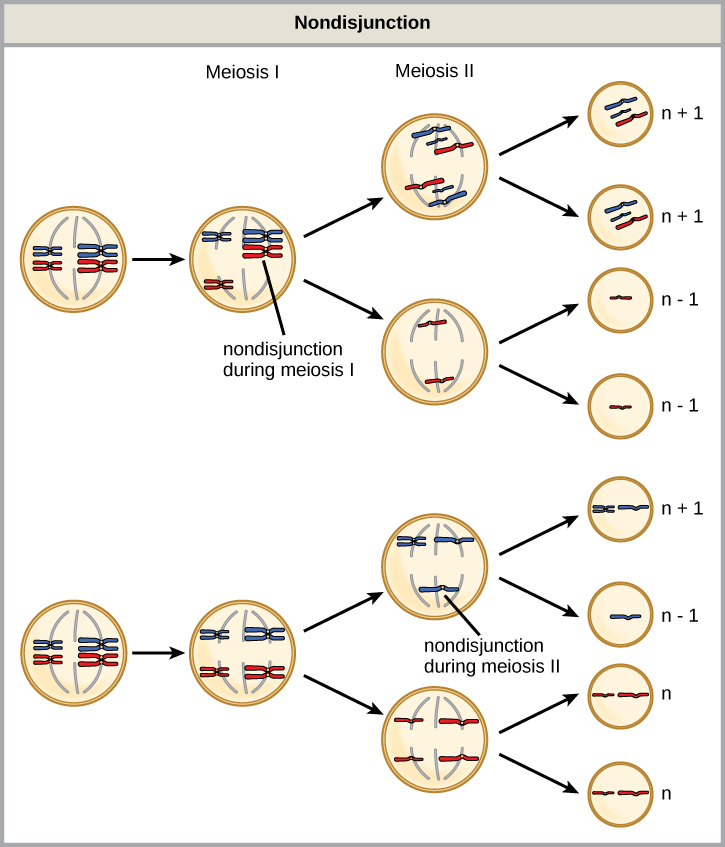
nondisjunction
the failure of chromosomes to separate during meiosis 1 or meiosis 2
if it happens in meiosis 1, two daughter cells will have no chromosomes and two will have two
if it happens in meiosis 2, one daughter cell will have no chromosomes, one will have two, and the other two will have the normal amount of 1
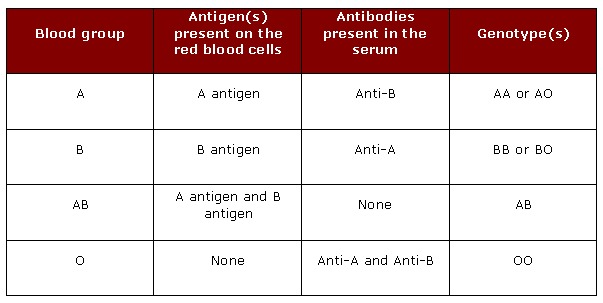
four blood types and dominance rules
types: A, B, AB, O
A and B are dominant to O
A and B are codominant to each other
how are genotypes written for blood
IAIBiO
what is Rh factor
Rh factor is a specific type of antigen on the blood cell
if you have the positive phenotype, the genotypes are RR or Rr
the negative phenotype is rr
corresponding blood type phenotypes, genotypes, antigens, and antibodies
diplod vs. haploid + human #’s
diploid is having 2 copies (sister chromatids)
haploid is when you have only one copy
human haploid # is 23, diploid is 46
cells become haploid at the end of meiosis I during telophase/cytokinesis
autosome
all chromosomes besides sex chromosomes
synapsis
aligning genes in crossing over
chiasma
where homologous chromsomes break to exchange genes
review the process of meiosis
fg
gamete
mature haploid cells that are either male or females
zygote
two gametes fuse making a diploid zygote
Oocyte vs. polar bodies and how they are made
in meiosis 1 cytoplasm is divided unevenly. The larger cell once again divides unevenly in meiosis 2. This makes 3 small cells (polar bodies) with disintegrate and one large cell (oocyte) which is the gamete
Meiosis + sperm formation
makes 4 equal sized cells. Most of the cytoplasm is eliminated, making the sperm small