MCAT - 3B: Structure and integrative functions of the main organ systems
 Call Kai
 Learn
Learn Practice Test
 Spaced Repetition
 Match
Match Flashcards
 Knowt Play
1/284

There's no tags or description
Looks like no tags are added yet.
Name | Mastery | Learn | Test | Matching | Spaced | Call with Kai |
|---|
No analytics yet
Send a link to your students to track their progress
285 Terms
Ingestion
The process of initial introduction and mastication of food in order to produce a chyme.
Saliva
A lubricative and enzyme containing fluid that initiates the breakdown of carbohydrates within the mouth.
Esophagus
A long, hollow tube that connects the pharynx to the stomach. There are sphincters present so as not to promote bi-directional flow. The top 1/3 is skeletal muscle, the middle 1/3 is a mix, and the bottom 1/3 is all smooth.
Stomach
A ovular hollow structure covered in rugae that receives a bolus and degrades it by churning and introducing peptidase enzymes. This organ also stores food.
Parietal Cells
Specialized cells in the stomach that release HCl and cleave pepsinogen to pepsin.
Chief Cells
Specialized cells in the stomach that release pepsinogen (a zymogen protein that requires low pH for activation by cleavage)
Mucous Cells
Provide protection from the stomach acid by forming a barrier within the stomach while also producing bicarbonate rich-mucus that protects from highly acidic conditions (pH=2).
Liver
The organ primarily responsible for toxicity management and catabolism/anabolism of energetic products.
Portal Vein
A vein that feeds the liver dirty blood in order to ask help in filtering.
Bile
A material that is produced within the liver, and stored within the gall-bladder, that helps to emulsify fats. This travels through the bile duct to reach the duodenum.
Hepatic Artery
The true blood supplying artery which feeds the liver good blood.
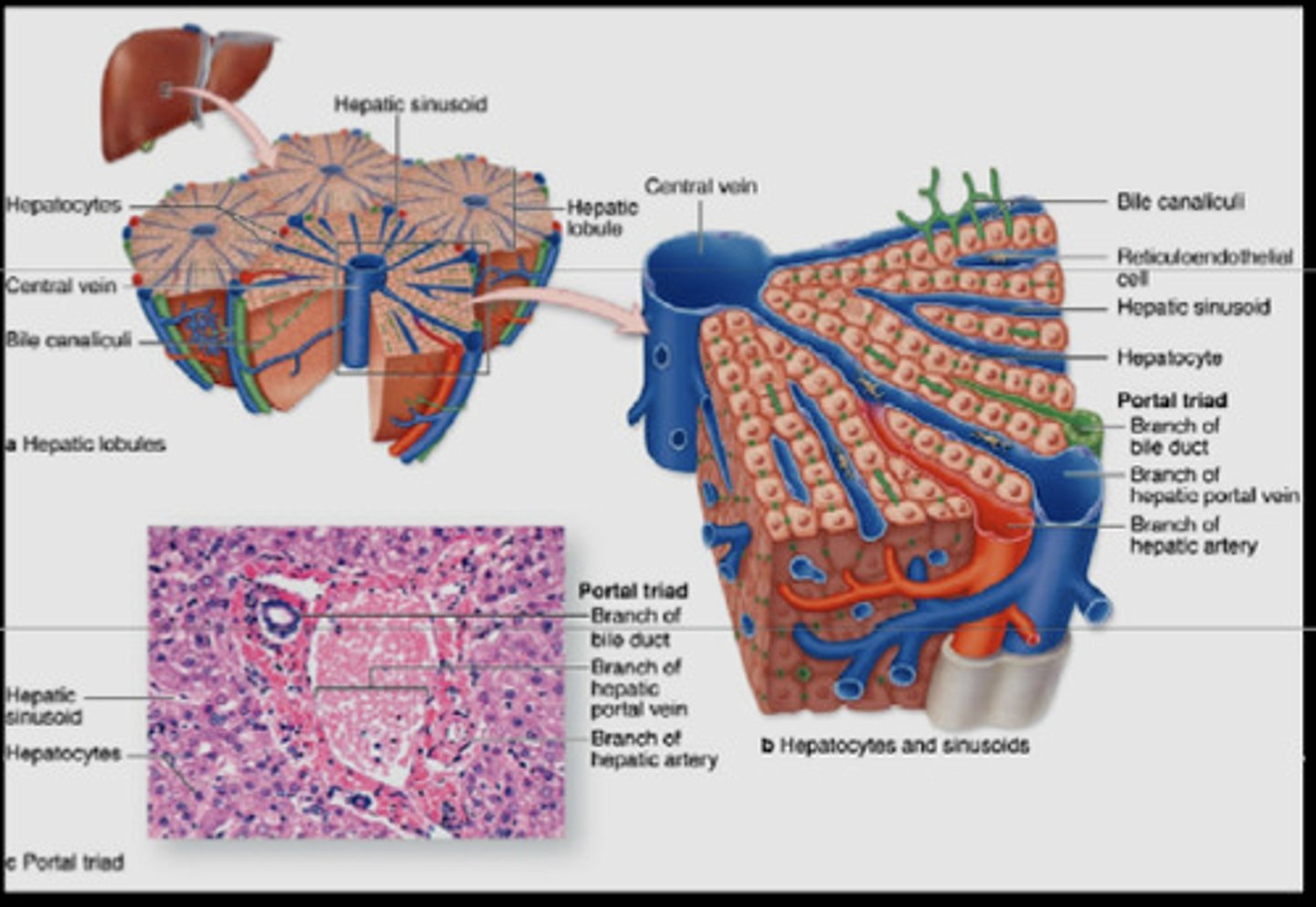
Portal Triad
A triad of vasculature that helps to feed the liver tissue fresh blood through the hepatic artery, dirty blood through the portal vein, and bile from the bile vessels.
Cytochrome p450
A major metabolism protein that serves in many detoxification metabolite strategies.
The Biliary Tree
Composed of the bile pigments and bile salts.
Cholecystokinin
An enzyme that causes the gall bladder to contract releasing products that help to emulsify fats in the duodenum.
The Pancreas
A major carbohydrate metabolism organ that secretes a variety of enzymes into the duodenum.
Bicarbonate Ion
A pancreatic product which neutralizes stomach acid.
Amylase
An enzyme that converts starches to smaller sugars
Lipase
An enzyme that converts Triglycerides into smaller fatty acids.
Proteolase
An enzyme that activates trypsinogen and chymotrypsinogen.
Glucagon
A protein released from the alpha-cells that lead to the breakdown of glycogen.
Diabetes Type I
A disease which is characterized by the lack of insulin production in the body.
Diabetes Type II
A disease that is characterized by the breakdown and deficiency of the insulin receptors.
Small Intestines
A hollow structure which seeks to dramatically increase the re absorption of nutrients over its length.
1) The duodenum is where most digestion occurs
2) The Jejunum is where most absorption occurs
3) The Ileum is where even more absorption occurs.
Brush Border Enzymes
These are enzymes that break down nucleotides in the small intestines to create a ribose backbone and a nucleotide base.
Nutrient Reabsorption
Protein reabsorption is facilitated by a primary active transport pump along with ATP hydrolysis. DNA uses primary active transport to move into the capillary whereas sugars use secondary active transport to enter the enterocytes. Fats diffuse into chylomicrons and enter the lacteal system.
Ileocecal
This point is the end of the Ileum and the beginning of the Colon.
The Colon
An organ that is primarily involved in water re absorption and has an ascending, descending, and tranverse segment to it. This reabsorption is facilitated by inorganic ions. The rectum will store waste, and the anus will contract and release the waste.
Enteric Nervous Control
The enteric system is under the control of peristalsis and the autonomic nervous system so it does not require conscious thought.
Secretin
A hormone the releases more bicarbonate into the body, which stimulates the release of hydrogen atoms.
Bacteria Flora
A subcolony of bacteria within the large intestines that produce vitamin K for our bodies as we feed them waste.
Function of the Excretory System
This system's main function is to manage metabolic waste, electrolyte concentration, and water concentration in the plasma.
Blood Pressure
The blood pressure throughout the glomerulus is equal to the sum of the outward exerted pressure against the inward pressure, colloidal pressure, and osmotic pressure.
(P=OP-IN-Col-Os)
Glomerulus
A sac that contains capillaries and catches liquid and items that are squeezed out from the blood.
Fenestrations
These are little holes within the capillaries inside the bowman's capsule that allows water and other items to seep out.
Capillary Walls
There are three layers to these walls that make up the glomerulus.
Endothelium: The large pores that material can slip through
Basement Membrane: Prevents proteins from diffusing from the solution.
Epithelium: Have podocyte projections and wrap around the capillaries.
Filtration Rate Regulation
Three different mechanisms monitor this filtration:
1) Renal Autoregulation (adjustment of the dialation/constriction or afferent arterioles
2) Nervous Control: Override the renal autoregulation
3)Hormonal Control: Uses ADH from the posterior Pituitary
The Proximal Tubule
Reabsorbtion here involves the Na+/K+ ATPase and sodium/proton exchanger seek to make the urine more acidic and the blood more alkaline. Amino Acids, glucose, water-soluble vitamins, and majority of salts are reabsorbed.
Ascending loop of Henle
Reabsorbtion here is impervious to water but not to ions, so more ions are able to diffuse back into the blood.
Reabsorption in the Thick ascending limb
Reabsorbtion here involves a 3 ion co-transporter such that Na+ is actively pumped out and K+/Cl- will diffuse.
Distal Tubule
Reabsorbtion here responds to aldosterone and facilitates sodium and water reabsorption decreasing the volume of urine.
Countercurrent Multiplication
This is the process of establishing an osmotic gradient through the filtration process in the loop of henle that allows later reabsorption to occur.
Renal Cortex
The outer portion of the kidney that encompasses all of the nephrons and outer kidney structure.
Renal Medulla
Part of the kidney that splits up into a variety of different pyramids which contain the methods to filter the fluid.
Micturition
This the process of expelling mature urine through the bladder and urethra.
Gender Muscular Differences
In urination, females have a membrane sheath that is under external control. They also have shorter urethras, so they are more prone to UTI. Males, on the other hand, have their urethras protected by a spongy tissue allowing for greater protection.
Bladder Sphincter Muscles
The bladder is under both skeletal and and autonomic control, which the sphincter at the top being the one that is under skeletal control.
RAAS System
Triggers from a drop in blood pressure and helps to ultimately activate aldosterone in order to increase the volume of the plasma.
Renin Production
This hormone is signaled by low pressure in the juxta-glomerular cells. Sympathetic nerves act on the juxtaglomerular cells, and low sodium is sensed by the distal convoluted tubule/macula densa cells. The macula densa cells secrete prostaglandins to the Justaglomerular cells, leading to the release of this hormone.
Angiotensin II Activation
Angiotensin begins in the liver as a 452 AA length protein. IN the blood, it meets up with renin and undergoes activating cleavage. After it becomes Angiotensin I, it will meet the Angiotensin Converting Enzyme in the epithelial cells to become Angiotensin II. This is the factor that will raise blood pressure by activating aldosterone and ADH.
Aldosterone
This is a hormone that is released from the adrenal gland which acts on the late distal tubule/collecting duct. This hormone acts on a-intercalated cells to initiate the exchange of HCO3- for chlorine in the basolateral side and H+ secretion into the urine.
AdH
This hormone is a secretion from the posterior pituitary gland and triggers the activation of the supraoptic nucleus. These receptors seek to increase blood concentration, decrease blood volume/pressure, and activate more angiotensin II. Ultimately, these receptors will increase the reuptake of water. It affects the heart/Kidneys by increasing stroke volume.
Osmoreceptors
Receptors that detect the change in the osmolarity of specific fluids and seek to regulate that change.
Baroreceptors
Receptors located in the veins near the vena cavae that help to signal low pressure.
Hormone Effects
Aldosterone ultimately increases tonicity by dragging H2O into a vessel whereas ADH works by increasing the amount of permeable water channels.
Detrusor Muscle
A muscular lining within the bladder that is caused by parasympathetic activity.
Starling Forces
This accounts for the pressure differentials in both hydrostatic and oncotic pressures between the blood and the Bowman's Capsule.
Descending Loop of Henle
Filtrate from the proximal convoluted tubule enters here, which dives deep into the medulla. This segment is impermeable only to water.
Collecting Duct
This structure is largely responsive to aldosterone and ADH controlling the reabsorption or secretion of water.
Alimentary Canal
This is the canal where extracellular digestion occurs and facilitates both chemical and mechanical digestion.
Intrinsic Factor
This is a glycoprotein secreted by the parietal cells that help absorb B12
Pyloric Glands
These are glands that contain G cells and secrete gastrin, a peptide hormone. These cells induce the parietal cells in the stomach to secrete more HCl and signals in the stomach to contract, mixing its contents.
Zollinger - Ellison Syndrome
This disease is a rare disease that results from gastrin-secreting tumor. Typically, this tumor is found in the pancreas. The excess gastrin leads to excessive HCl production by parietal cells.
Exocrine Cells
As opposed to endocrine cells, exocrine cells secrete their products into ducts.
Bilirubin
This is a byproduct of the breakdown of hemoglobin. This travels to the liver, where it is conjugated, and secreted into the bile for secretion.
Albumin
This is a carrier molecule that serves as a carrier for many drugs and hormones.
Function of the Respiratory System
This system serves to accomplish perfusion through negative pressure breathing, expiration of excess Co2, and thermoregulation through the expulsion of hot air.
Pressure
This is the amount of molecules that bump into each other over a period of time.
Volume
The amount of space that molecules occupy
Diapharagm
A muscle that contracts in order to let air into the body, and relaxes in order to expirate air out.
Mechanism of Breathing
In order to accomplish this mechanism, intercostal muscles extend out into the lungs. All the alveoli that are the small sacs within the bronchi fill with air. This places elastic pressure on the alveoli. When it is time to expirate all of the muscles relax.
Henry's Law
States that the pressure of a system is inversely proportional to its concentration within the system forming a constant Kh (P/C = Kh). When water is in contact with a gas, the amount of gas that will diffuse into the water is proportional to its concentration.
Solubility of Air
In terms of blood solubility, Co2 is about 26 more time as soluble as oxygen in blood, and this factor is so large because of the presence of the carbonic anhydrase enzyme.
Air Pathway
Nose ➙ nasal cavity ➙ pharynx ➙ larynx ➙ trachea ➙ bronchi ➙ terminal bronchioles ➙ respiratory bronchioles ➙ alveolar ducts
Intrapleural Pressure
This is the pressure within the pleural cavity. It is always negative to keep the lungs inflated, and always less than the intapulmonary pressure.
Surfactant
Dry alveoli tend to collapse from the elastic forces of the air, thus this liquid coating consisting of soapy like substance coats the material.
Particulate Filtration
This is the filtration that occurs within the nose hairs, mucus/cilia in the lungs, and other mucus membranes that help to trap particulates.
Alveolar Gas Exchange
This process is dictated by diffusion, and starts with higher concentrations of Po2 in the alveoli, and lower concentrations in the blood. This is the opposite for pCo2
pH Control of Breathing
The Medulla within the brainstem can send signals to the heart to increase BP and respiration rate in order to try and expel more CO2, this will try to increase blood pH.
Fick's Law of Diffusion
States that a particle will diffuse proportionally to the thickness of the wall, the molecular weight of the diffusing species, the increase in pressure, and expanding the area.
V (rate of diffusion) = (p1-p1) A D/T
D= Solubility divided by the molecular weight
Mechanoreceptors
These receptors detect changes of pressure in the nose (Cranial Nerve 5), the lungs (VN 10), and the Gi tract (VN 10)
Chemoreceptors
These types of receptors are located peripherally and constitute the aortic body and the carotid body (with air/pH pressure)
Functions of the Circulatory System
This organ system seeks to regulate the delivery of oxygen, hormones and nutrients, along with the removal of Co2 and waste to/from the tissues.
Circulatory Chemoregulation
When the blood reaches distinct capillaries far away from the heart, there is nutrient and gas exchange. When heat is delivered to these capillaries, they try to expand more in order to let the heat out through the skin. This can lead to itchiness in the summer.
Chambers of the Heart
This organ is divided into four sections: the atria (which receive blood) and the ventricles (which push blood to the rest of the body). The right ventricle pushes to the respiratory system, and the left ventricle pushed to the body.
Layers of the Heart
There are three layers to this organ:
The endocardium - outermost layer
The myocardium - A layer with lots of cardiac muscle
The pericardium - Two very thin layers that are separated by fluid: the visceral and the parietal.
Layers to Blood Vessels
These structures vary depending on their function: capillaries have only tunica intima cells in their basement membrane, whereas veins and arteries have a tunica media (smooth muscle) and a tunica externa (blood vessels and nerve endings). Arteries even have elastin in order to help alleviate some of the pressure that is exerted onto them. Arterioles have even less smooth muscle.
Systolic Pressure
This is the pressure that is felt right at the start of the push from the left ventricle (the maximum pressure)
Diastolic Pressure
This is the pressure that is felt in the atrium as blood is not being constricted
Electrical Control of the Heart
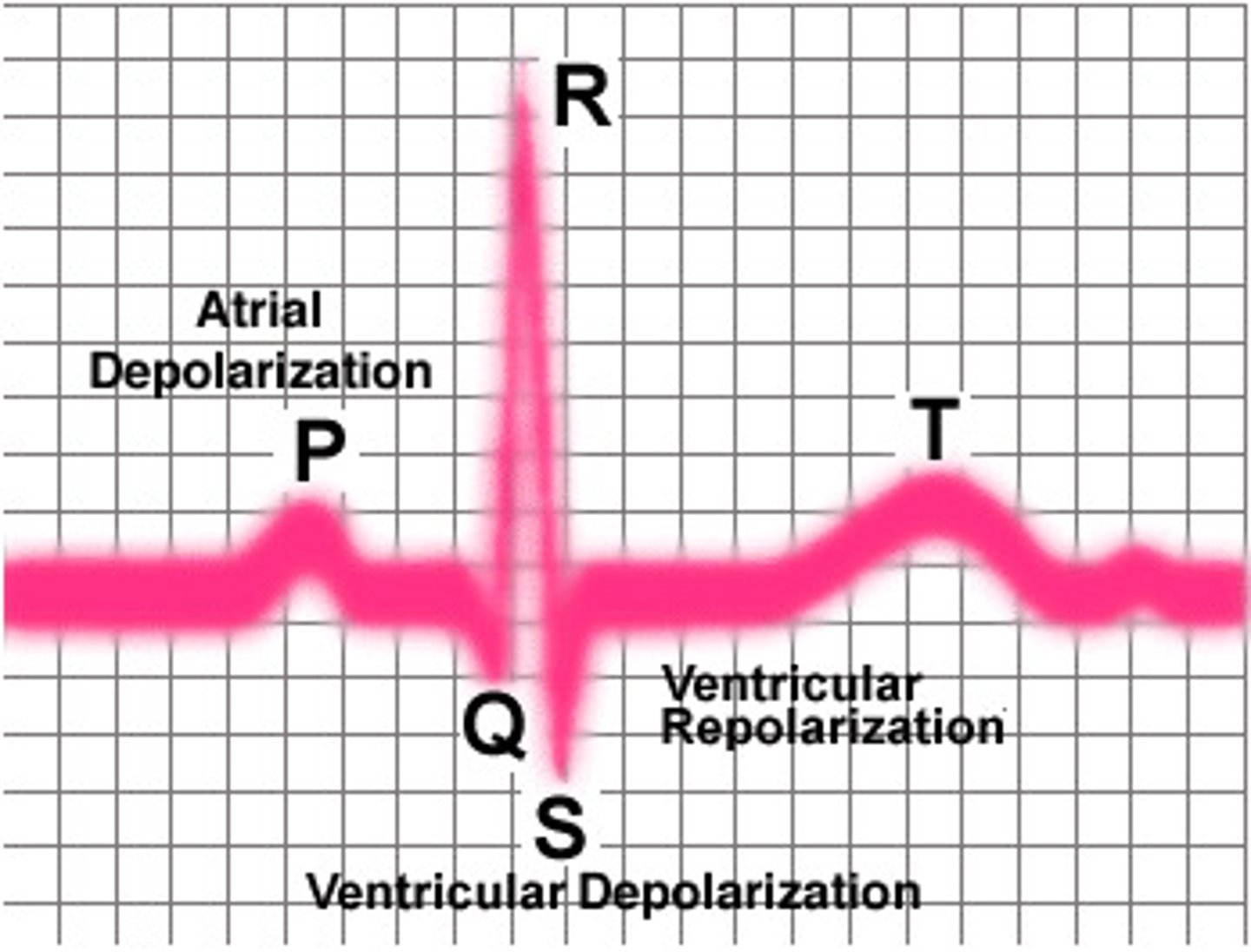
Heart signals are propagated throughout the heart originating in the SA node ("lub") and transmitting to the AV node ("dub"). From the AV node, these signals go to the bundles of His before traveling through the Purkinje fibers. These signals keep the contraction of the heart simultaneous, and form pqrst waves.
Resistance in a Tube
Resistance is highly proportional to the inverse of the radius. This variable is actually raised to the fourth power. In addition, the resistivity of the fluid and the length of the tube all contribute to the resistivity.
R = 8Ln/(PI)(r^4)
Blood Content
This fluid is primarily composed of plasma (including water, proteins, and hormones), white blood cells, and red blood cells. These can be separated out through centrifugation.
Polycythemia
This is the condition where there are too many red blood cells in the body
Anemia
This is the condition that is predisposed by not a lot of red blood cells in the body. This can lead to feelings of exhaustion.
Red Blood Cell Lineages
These cells originate from pluripotent hematopoietic stem cells that are found within the bone marrow. From there, they are either derived from myeloid cells (immune cells, RBC, megakaryocytes, and mast cells) or Lymphoid cells (B/T cells, natural killer cells).
The Spleen
This organ is the site of white blood cell and erythrocyte destruction.
Coagulation Cascade: Extrinsic
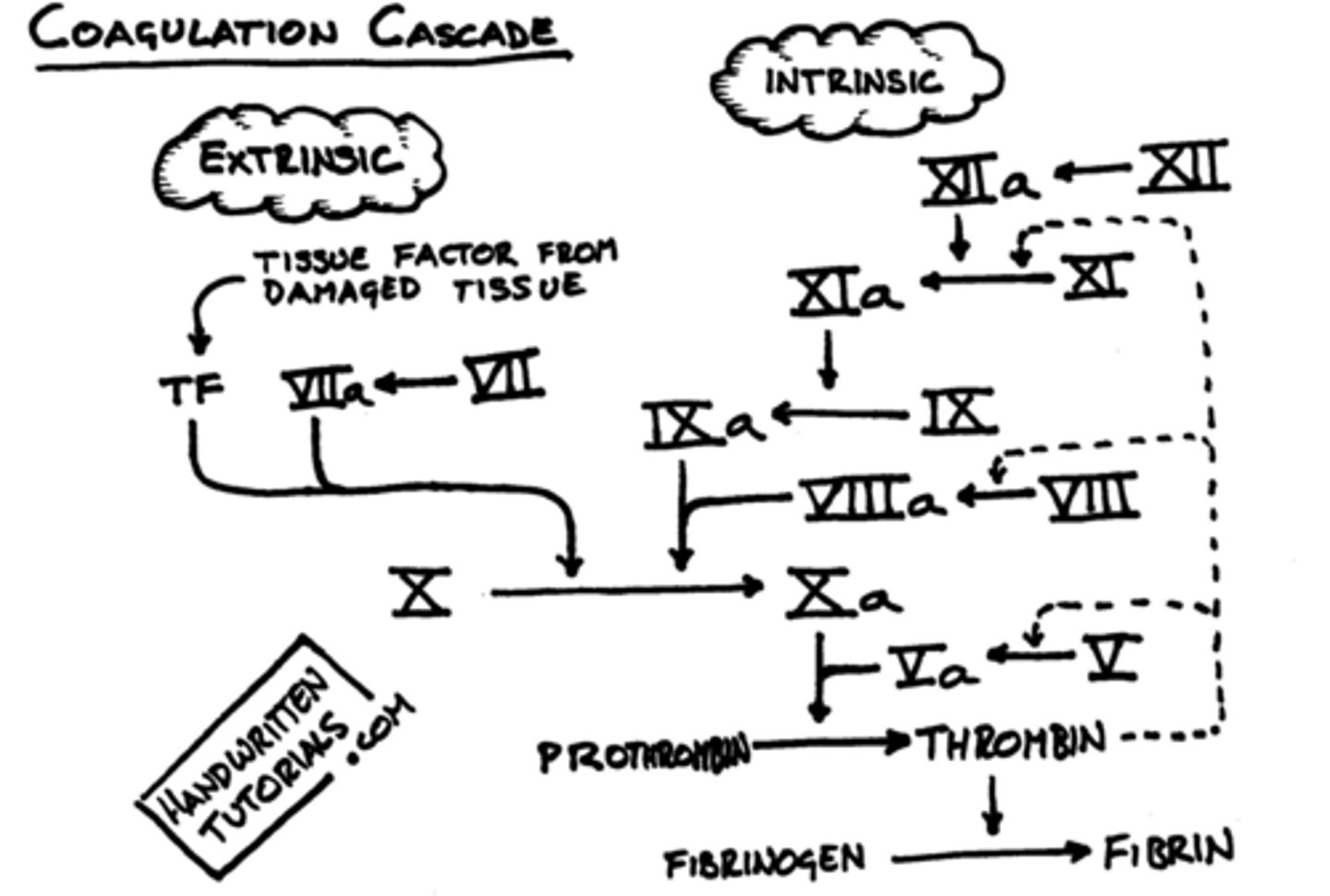
This mechanism is divided into two pathways: the extrinsic and the intrinsic pathway. The purpose of both is the same: convert fibrinogen into fibrin. Thrombin is the enzyme that activates this cleavage. In this pathway, a specific spark leads III to activate VII which leads to the activation of X.
Coagulation Cascade: Intrinsic
This mechanism is divided into two pathways: the extrinsic and the intrinsic pathway. The purpose of both is the same: convert fibrinogen into fibrin. Thrombin is the enzyme that activates this cleavage. IN this pathway, XII activates XI activates IX activates X in oder to activate a variety of other targets. This includes 5,7,8,11,13
Blood Clotting
Platelets plug the initial break within vasculature, then fibrin begins to polymerize in order to help seal the break. After the wound is healed, the clotting factors are dissolved into the blood.
Hematocrit
This is the value that is given to the volume of RBC/Total Volume of solution.