Chapter 20: Nucleophilic Acyl Substitution
 Call Kai
 Learn
Learn Practice Test
 Spaced Repetition
 Match
Match Flashcards
 Knowt Play
1/20

There's no tags or description
Looks like no tags are added yet.
Name | Mastery | Learn | Test | Matching | Spaced | Call with Kai |
|---|
No analytics yet
Send a link to your students to track their progress
21 Terms

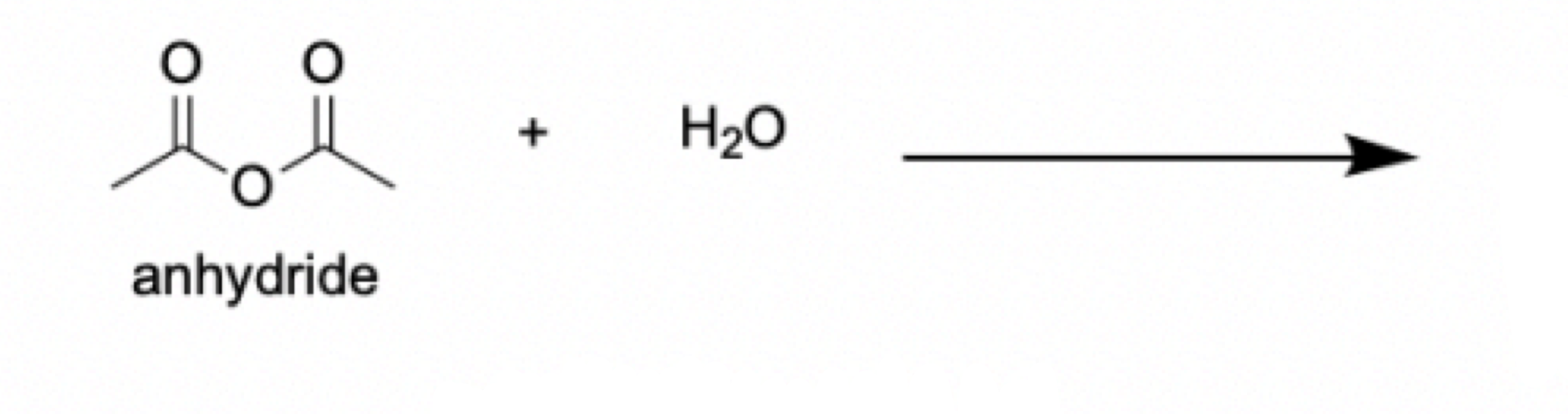
Anhydride Synthesis
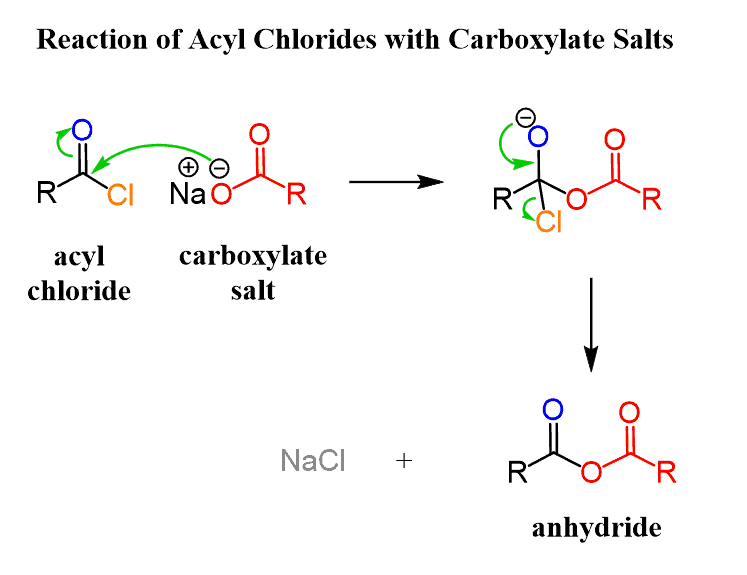
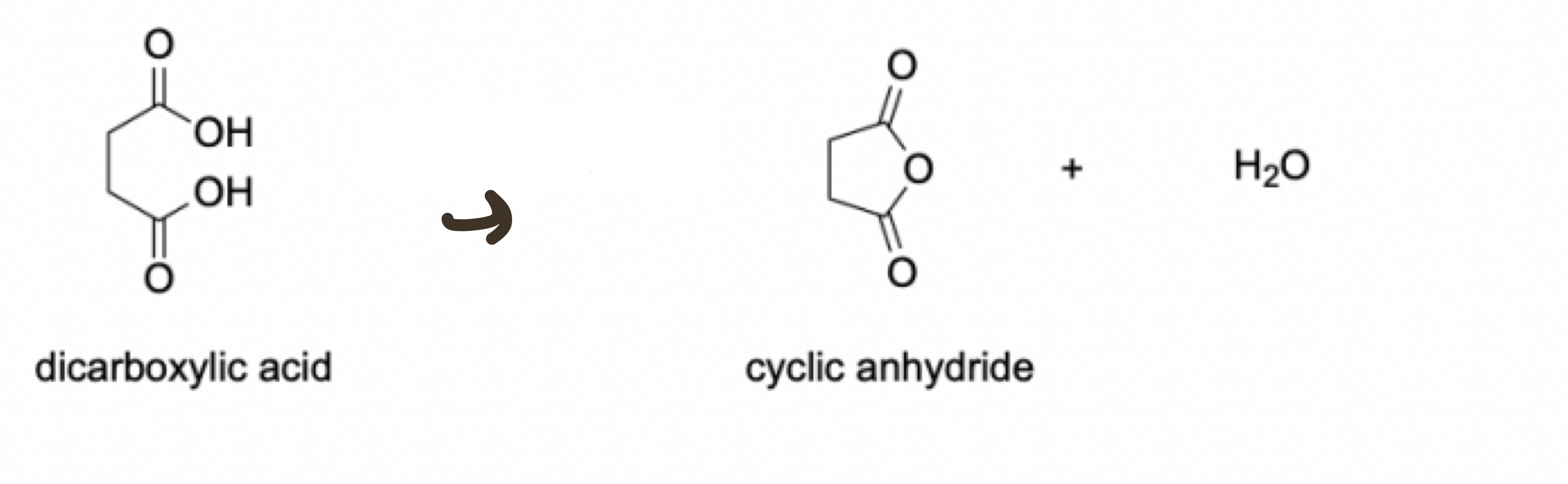
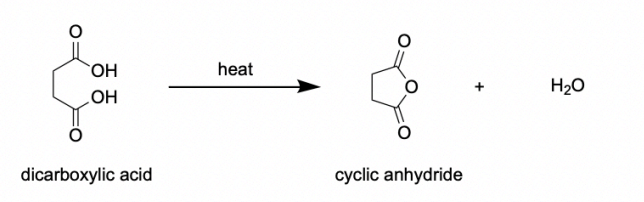
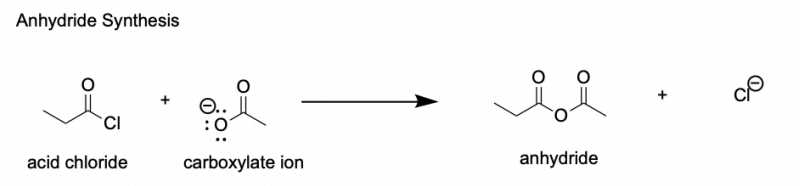
Anhydride Synthesis
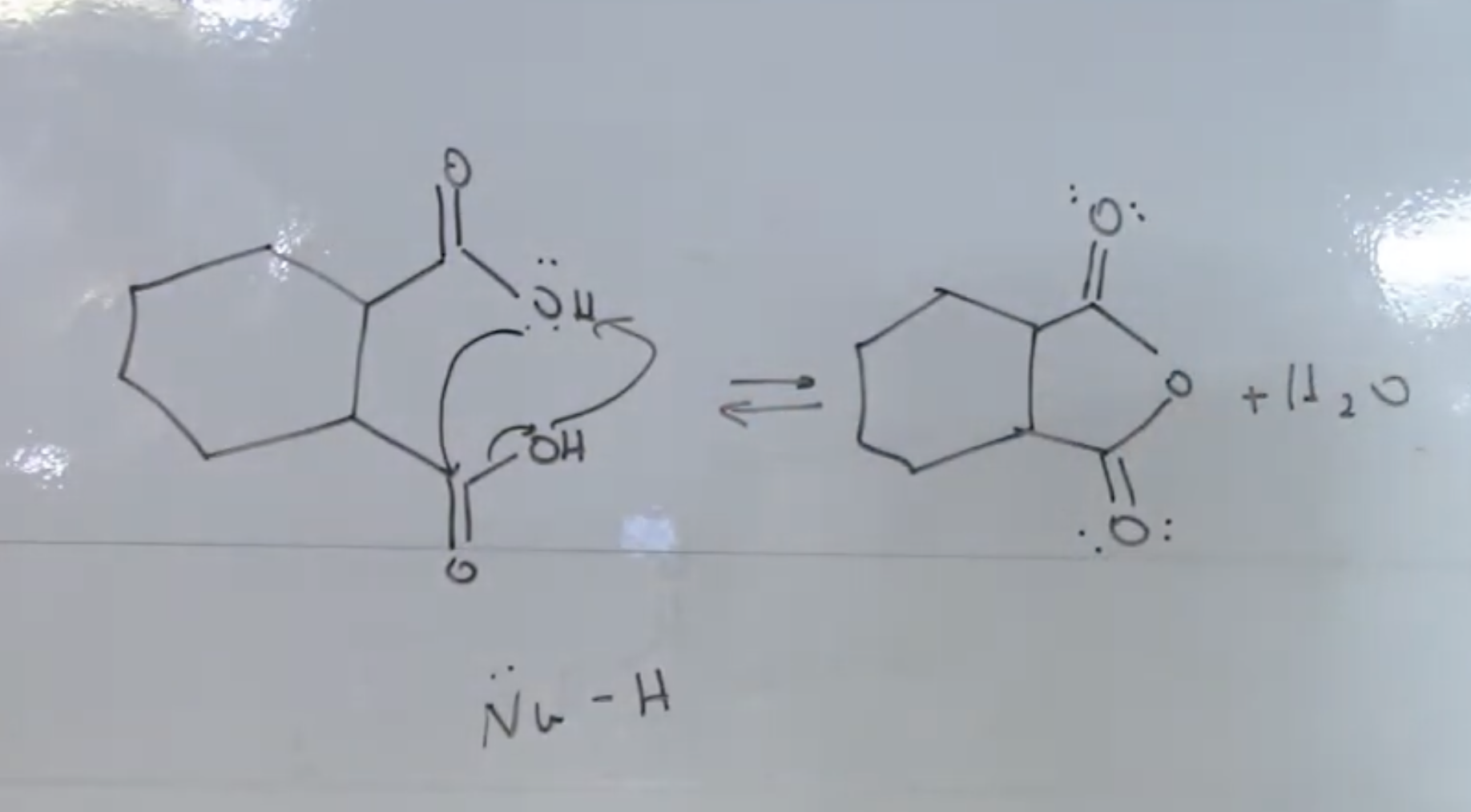
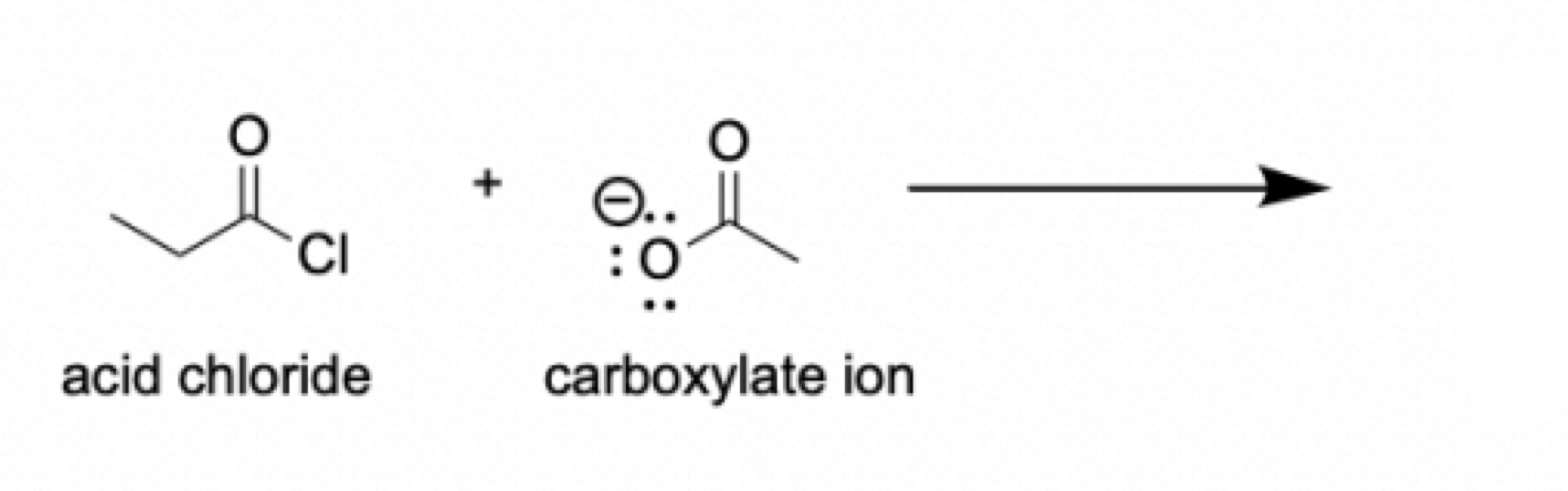
One carboxylic acid OH and the other carboxylic acid H leave as H₂O, then the remaining oxygen bonds between the two carbonyl carbons to form the anhydride link: C(=O)–O–C(=O).
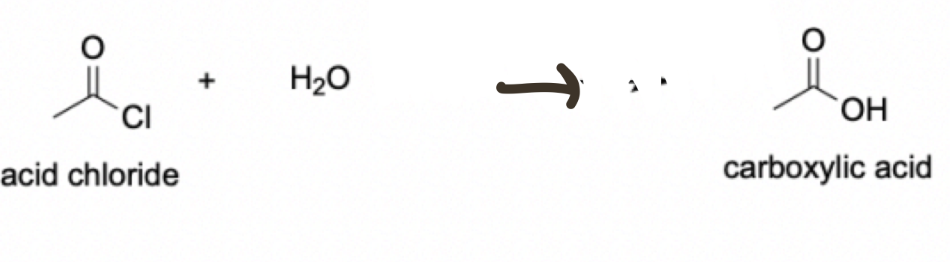
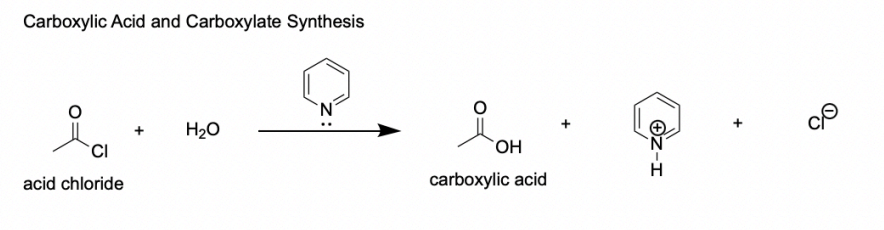

Carboxylic Acid and Carboxylate Synthesis
must add Pyridine. (It "mops up" the HCl)

Carboxylic Acid and Carboxylate Synthesis

ester → carboxylic acid
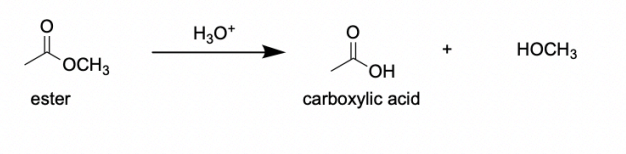
Carboxylic Acid and Carboxylate Synthesis

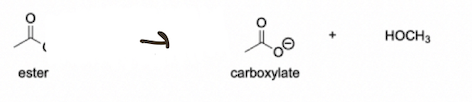
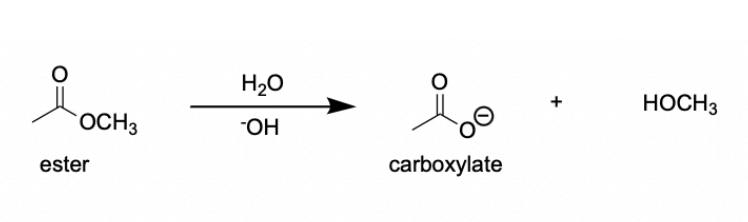
Carboxylic Acid and Carboxylate SynthesisOH⁻ attacks the ester carbonyl, OCH₃ leaves, and the carboxylic acid product gets deprotonated to the carboxylate (COO⁻), while OCH₃ becomes methanol.
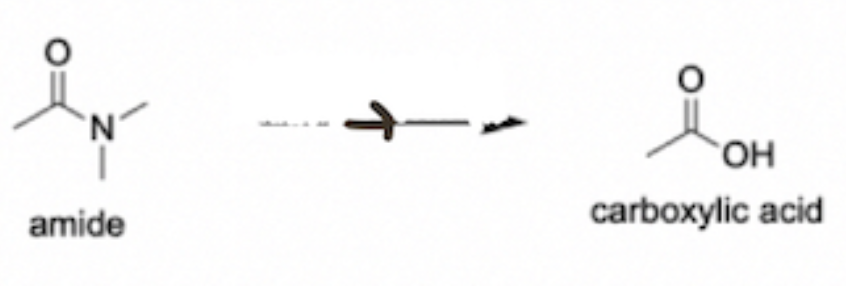
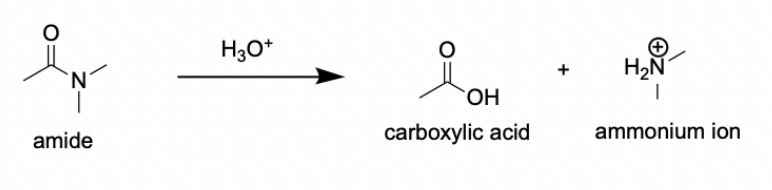
Carboxylic Acid and Carboxylate Synthesis

protonate N → make it a better leaving group → C=O reforms → N leaves → amine becomes ammonium
N needs a positive charge first, then it can leave neutral.
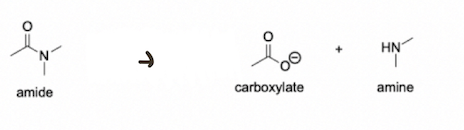
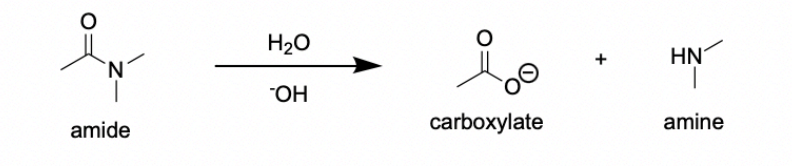
lone pair on the hydroxide oxygen attacks the electrophilic carbonyl carbon.
Charge
lone pair from the negative oxygen reforms the C=O double bond, this "kicks off" the −NR2
The nitrogen leaving group carries a negative charge (-1). The carbonyl part is now a neutral carboxylic acid
The lone pair on the negative nitrogen attacks the acidic proton of the carboxylic acid
Carboxylic Acid and Carboxylate Synthesis
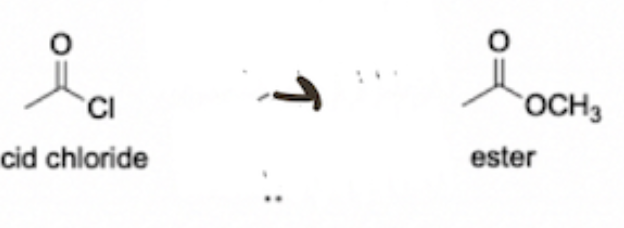

must add Pyridine. (It "mops up" the HCl)
lone pair on the methanol oxygen attacks the electrophilic carbonyl carbon
methanol oxygen, now bonded to the carbon, carries a positive charge (+1) , zwitterionic tetrahedral intermediate
lone pair on the pyridine nitrogen attacks the proton on the positively charged methanol group
lone pair from the negative oxygen reforms the C=O double bond.
"kicks off" the chloride ion
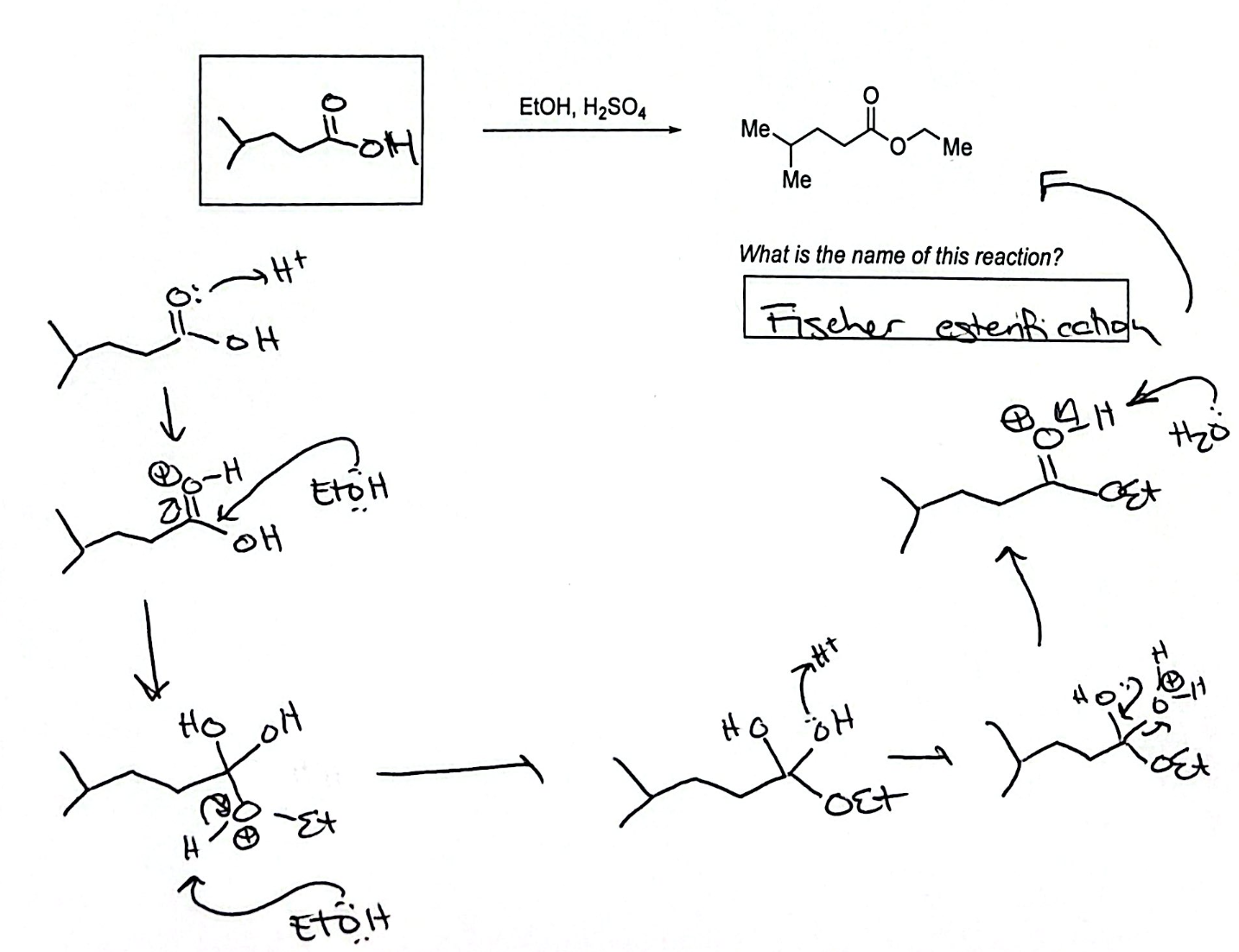
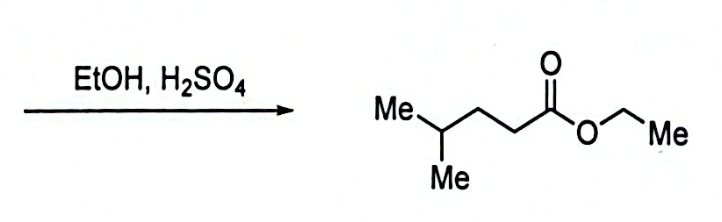
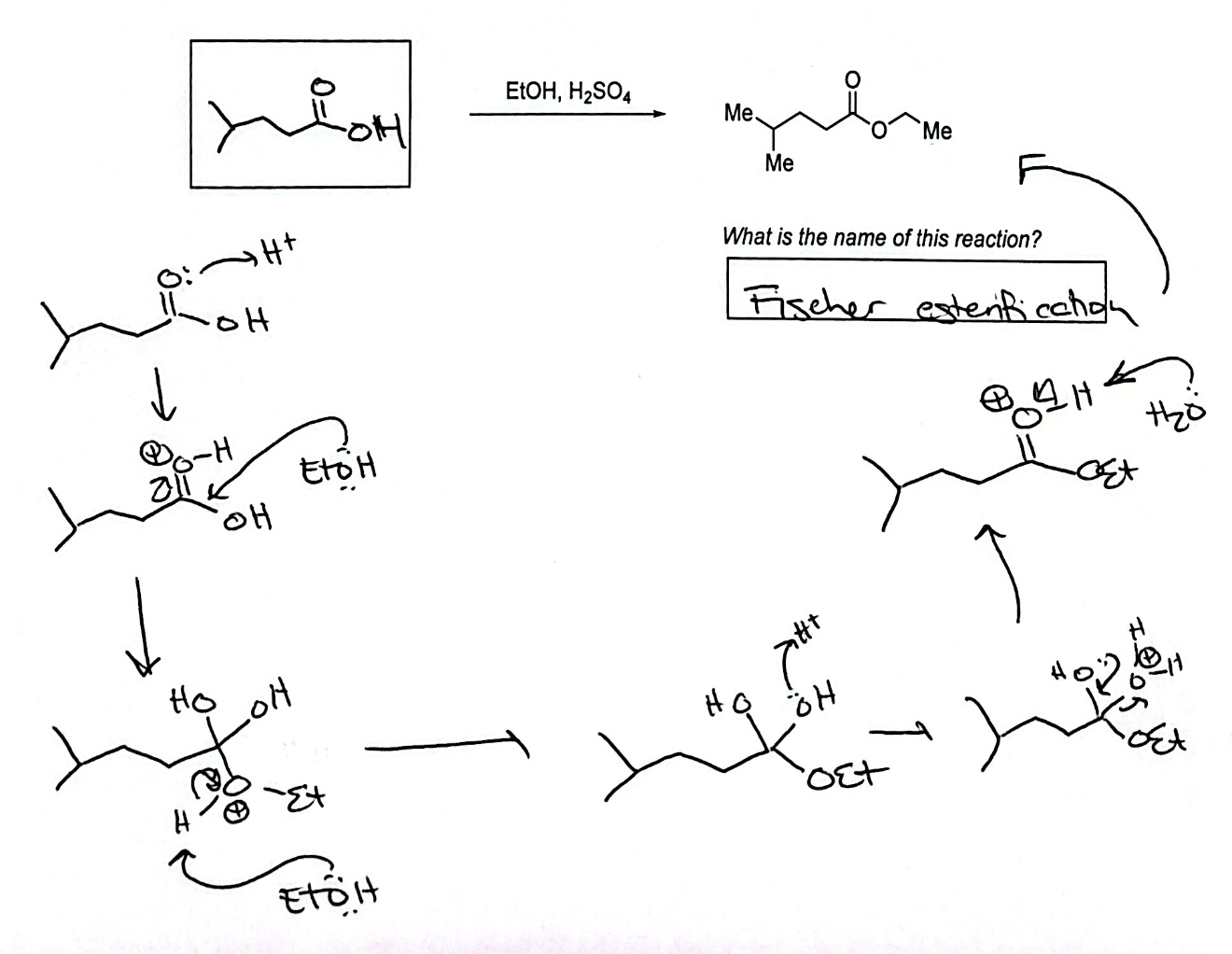
Reactions that produce esters
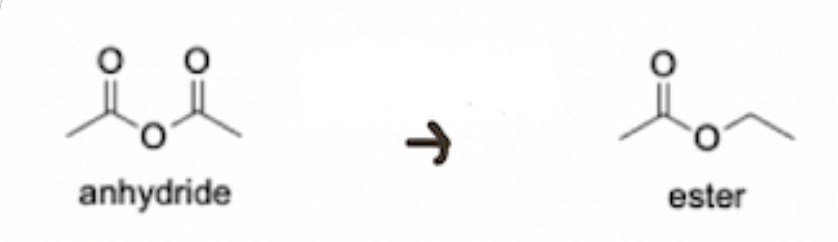
Reactions that produce esters

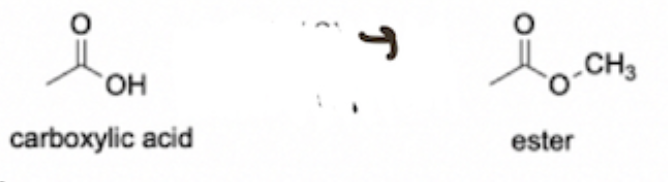

Reactions that produce esters
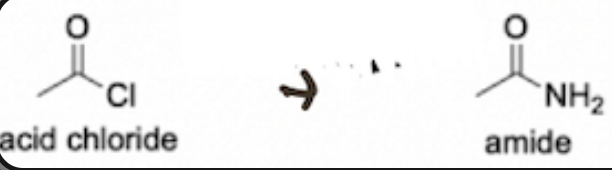

Reactions that produce amides
must use 2 equivalents of the amine. (The first equivalent attacks; the second equivalent neutralizes the HCl


Reactions that produce amides
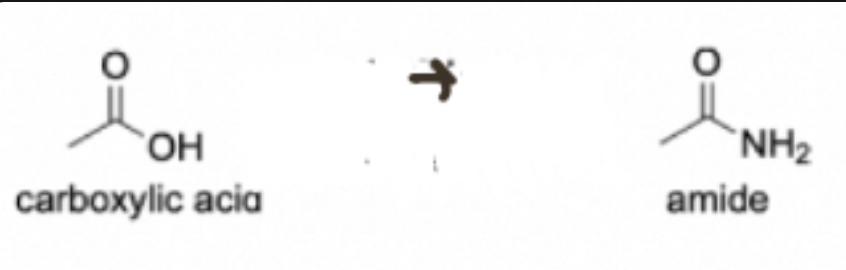

Reactions that produce amides
Heat forces dehydration/loss of water to form the amide.
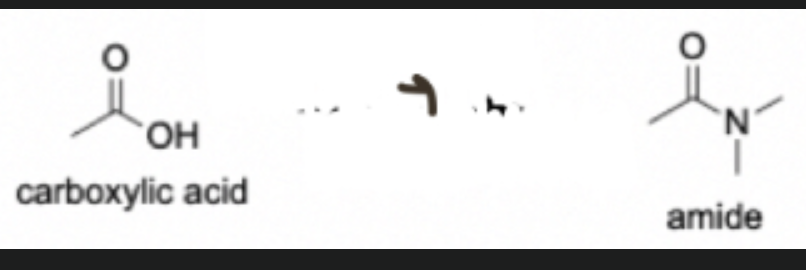
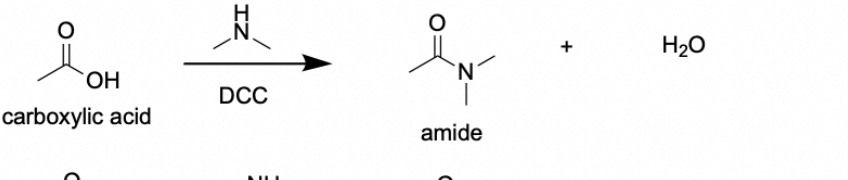
Reactions that produce amides
mild conditions
DCC nitrogen picks up the acidic proton from the acid. Then, the resulting negative carboxylate oxygen attacks the central carbon of the protonated DCC
lone pair on the secondary amine nitrogen attacks the carbonyl carbon of the activated intermediate
carbonyl oxygen moves its π electrons up to become negatively charged (–1). The attacking nitrogen now carries a positive charge (+1)
proton is transferred from the positive nitrogen to the nitrogen atom of the DCC group. A lone pair from the negative oxygen reforms the C=O bond
kicks off dicyclohexylurea (DCU) as the leaving group

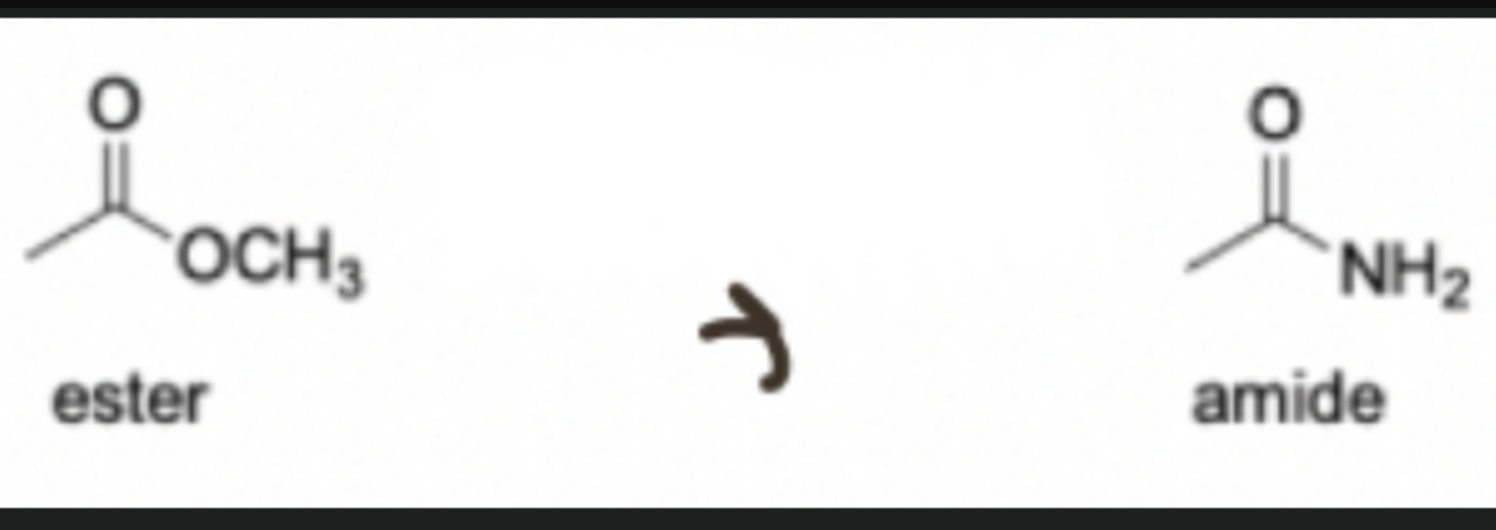
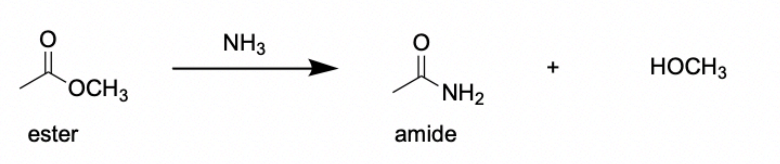
Reactions that produce amides
reagent Product Pattern
The reagent you choose is simply the version of the group you want to see in your product.
To get a Carboxylic Acid: Use water (H2O or H3O+).
To get an Ester: Use an alcohol (HOCH3,HOEt, etc.).
To get an Amide: Use ammonia (NH3) or an amine (RNH2,R2NH)
starting with a Carboxylic Acid → Acid Chloride
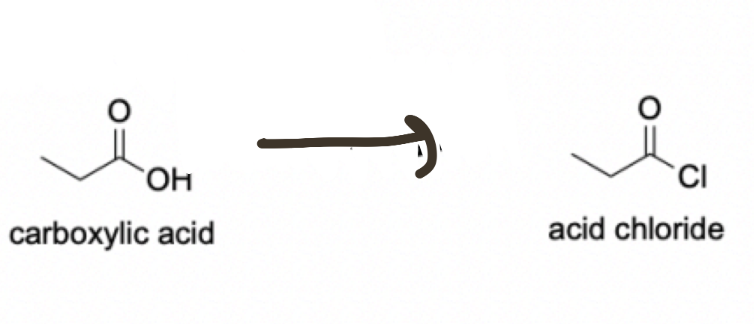
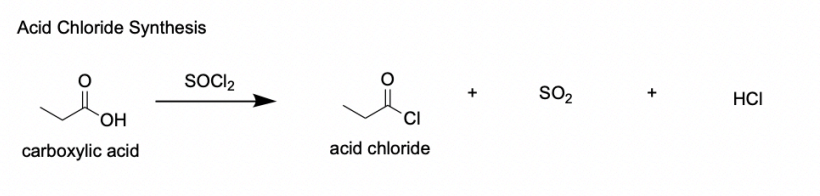
To go "Uphill" to an Acid Chloride: Use SOCl2. This is the only way to turn a less reactive acid into a more reactive chloride
When do I use pyridine in acyl chloride reactions?
Acid chloride reactions make HCl, and pyridine removes it:What pyridine does:
removes H from the attacked nucleophile
neutralizes HCl
prevents acid from messing up the reaction
Common with:
acid chloride + alcohol → ester
acid chloride + amine → amide
acid chloride + H2O → carboxylic acid