bsci160 - the niche
 Call Kai
 Learn
Learn Practice Test
 Spaced Repetition
 Match
Match Flashcards
 Knowt Play
1/15

There's no tags or description
Looks like no tags are added yet.
Name | Mastery | Learn | Test | Matching | Spaced | Call with Kai |
|---|
No analytics yet
Send a link to your students to track their progress
16 Terms
niche
the range of resources & conditions allowing species to maintain a viable population
defines organism’s role w/in ecosystem (food, shelter, behavior)
determine where species can live (w/ species interactions)
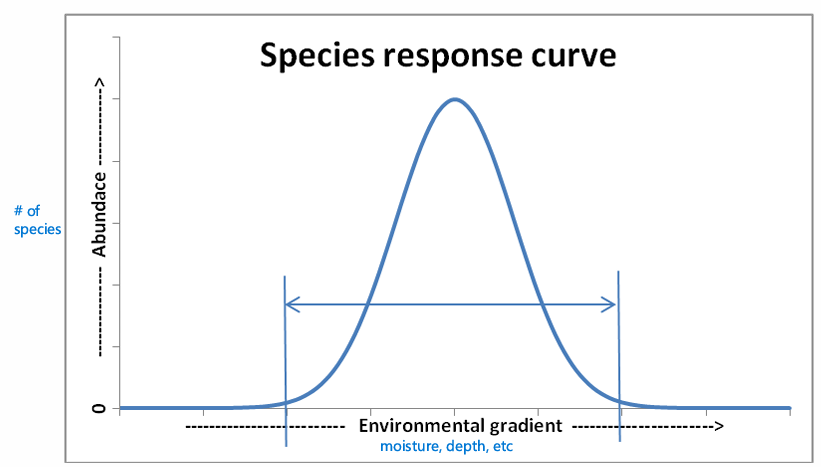
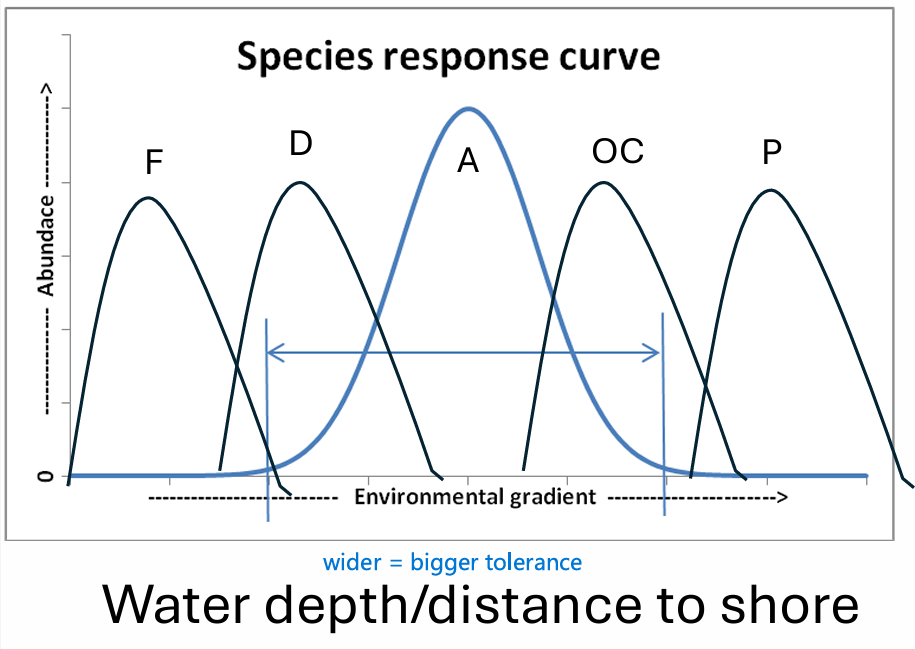
species response curve
include many dimensions that describe
resources, habitat, behavior
abiotic & biotic factors
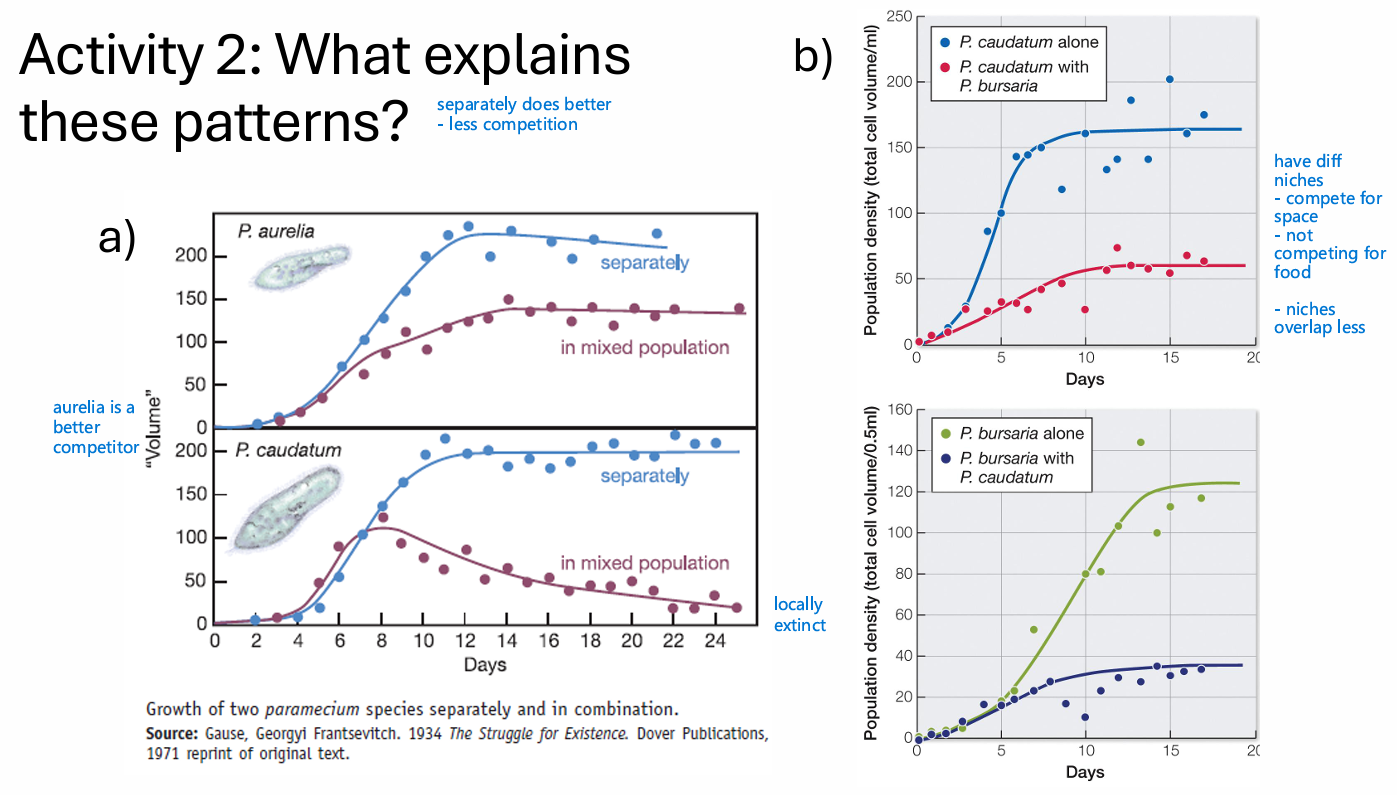
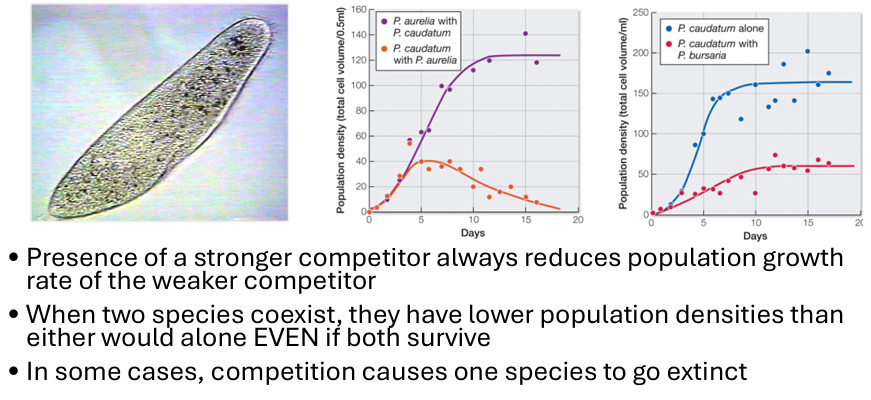
Gause’s Paramecium experiments
Paramecium is a genus of ciliates
Ciliates are unicellular protists
used:
P. aurelia
P. caudatum
P. bursaria → algae live inside
cultured Paramecium in test tubes with food items
limited space & nutrients
competitive exclusion principle
2 species w/ identical niches cannot coexist
also called limiting similarity principle
weaker competitor goes extinct
have diff niches to solve this problem
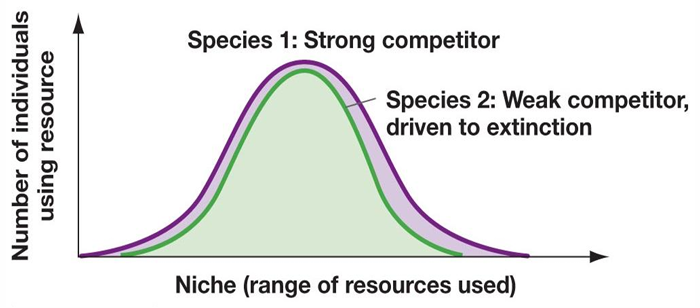
exclusion principle
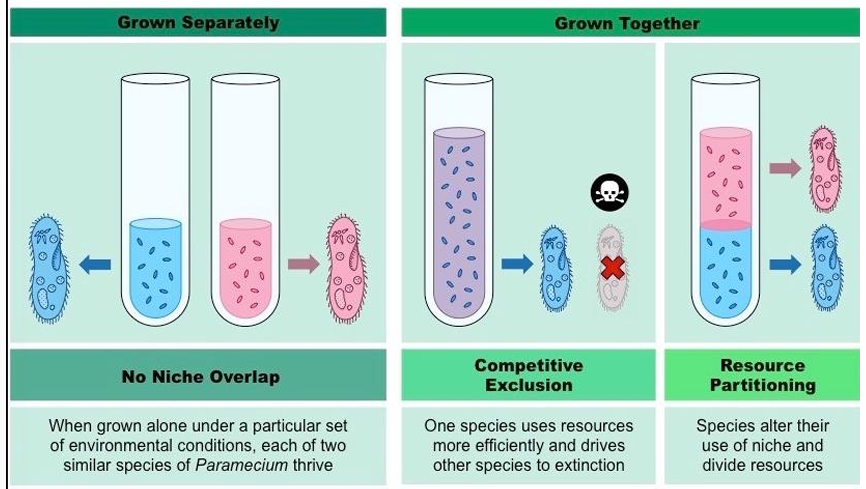
Gause’s’ Experiments conclusions
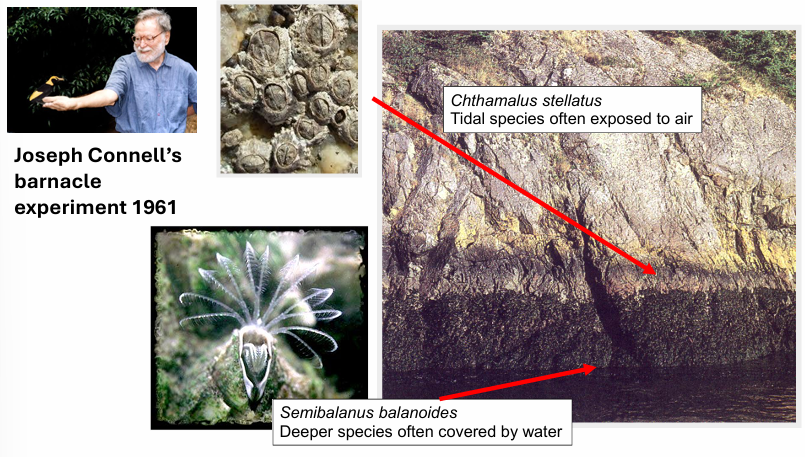
Barnacle experiment
Joseph Connell' (1961)
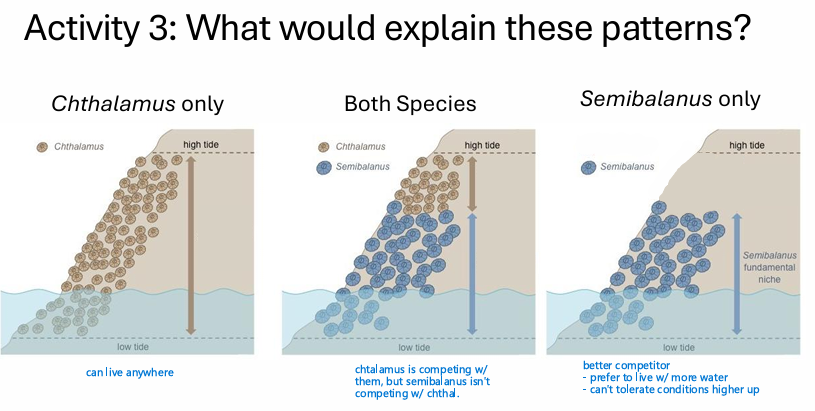
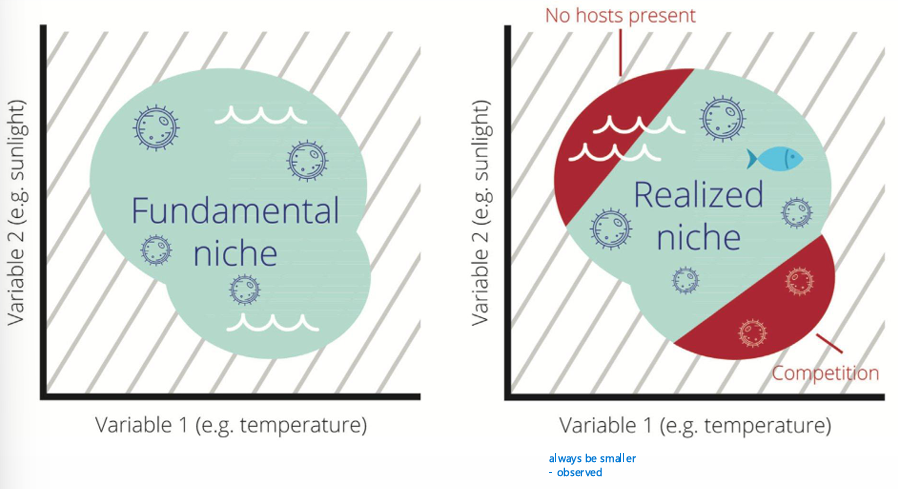
fundamental niche
the abiotic conditions required for a species to persist
range larger than realized niches
realized niche
the actual niche occupied by species when biotic interaction occur
competition
fundamental vs realized niche
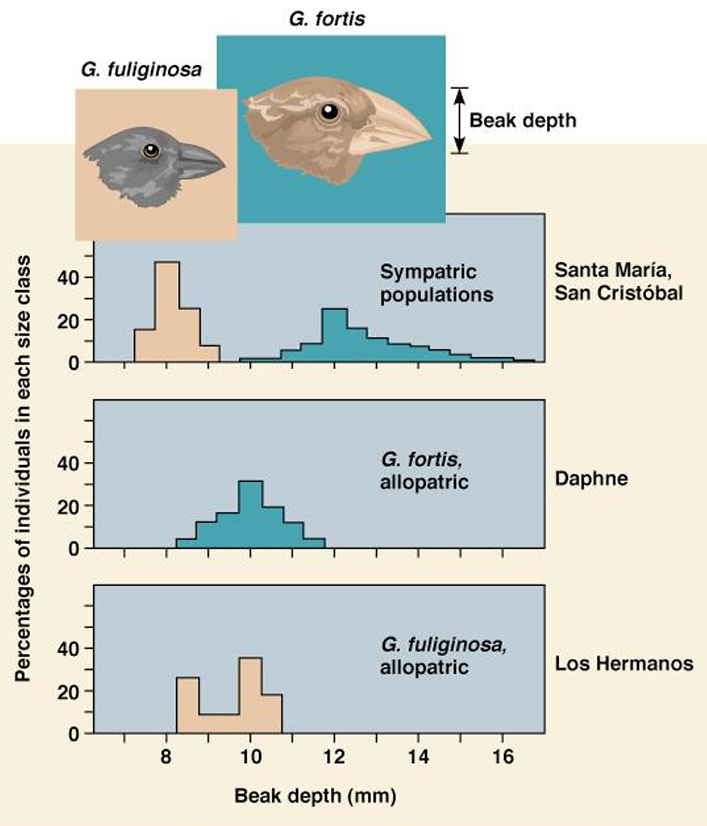
character displacement
competition drives populations of 2 species living in same area to evolve different traits
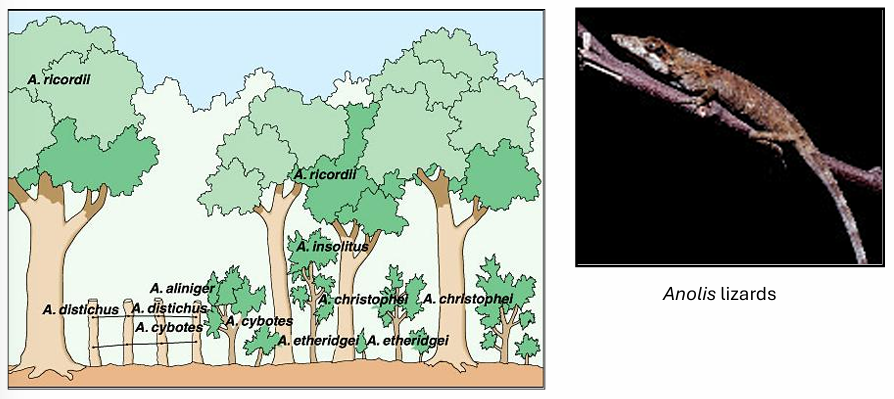
niche partitioning
species living together use resources slightly different & enables them to coexist in a community
McArthur’s warbler → live on diff parts of tree
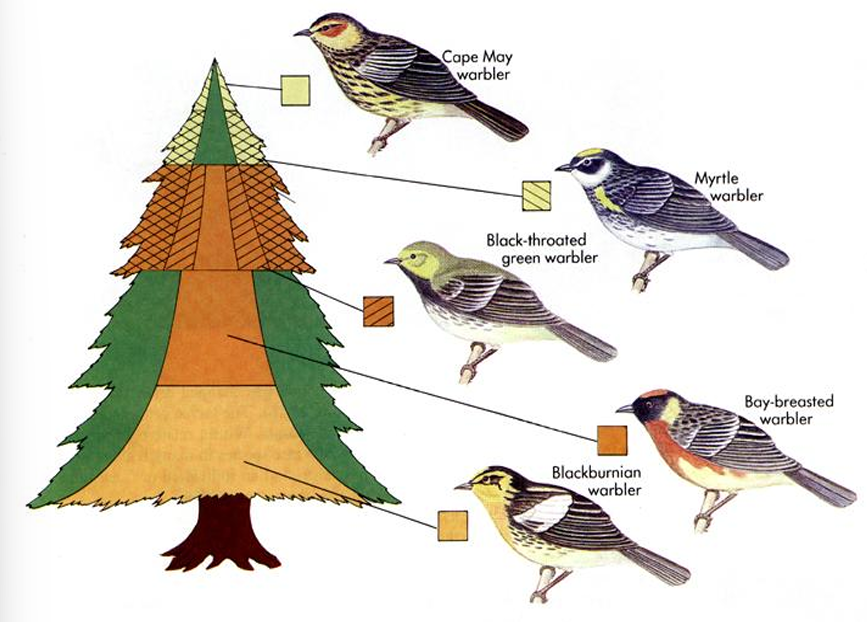
niche partitioning
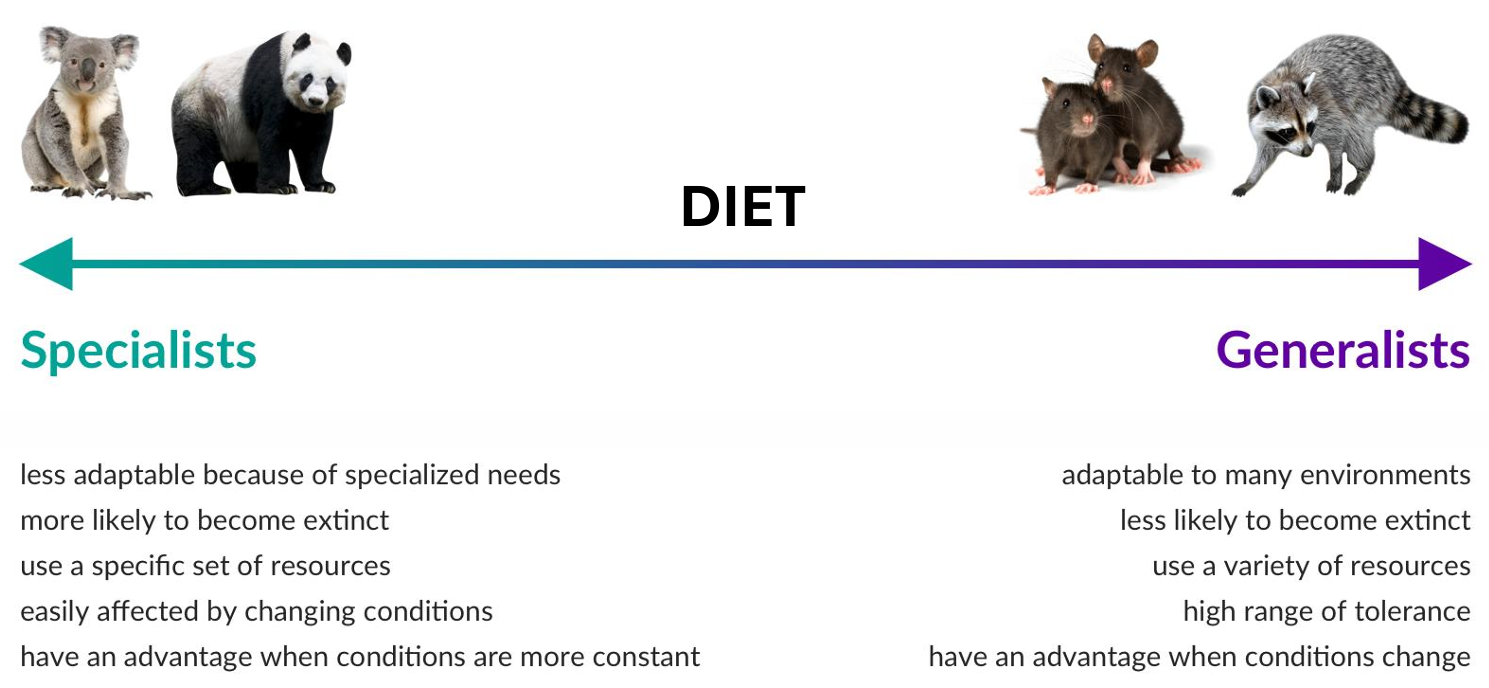
specialists vs generalist niche
specialist niche
less adaptable b/c specialized needs
↑ likely → extinct
use specific set of resources
easily affected by changing conditions
advantage w/ constant conditions
survive REALLY well w/ specific conditions
tradeoff
generalist niche
adaptable to many environments
↓ likely → extinct
use variety of resources
↑ tolerance range
advantage w/ changing conditions