myth: archaic sculpture
 Call Kai
 Learn
Learn Practice Test
 Spaced Repetition
 Match
Match Flashcards
 Knowt Play
1/6

There's no tags or description
Looks like no tags are added yet.
Name | Mastery | Learn | Test | Matching | Spaced | Call with Kai |
|---|
No analytics yet
Send a link to your students to track their progress
7 Terms
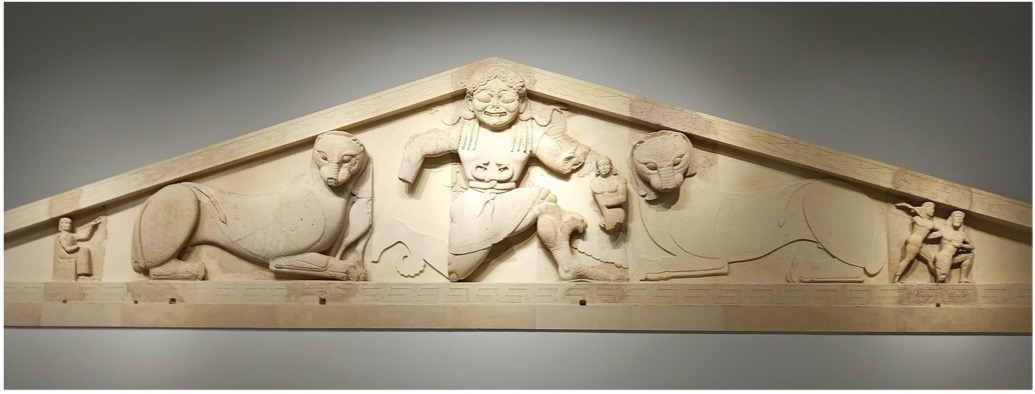
Temple of Artemis, Corfu, 600-575 BC.
Early Corinthian settlement, Doric temple and early pedimental sculptures (before very little on entablature).
Two identical limestone pediments, over 3m high.
Medusa running, and her two children Pegasus and Chrysaor. Impossible scene as collapses timeline of event (synoptic).
Bold shapes, coiled snakes in hair, round archaic face, power of petrification via eye contact. Frontality – divine more visible. More on power than a story.
Two large panthers (awe) then smaller sculptures in corners (Zeus and Giant) and unknown (God and Giant? Priam death?).
Viewer prepared for revelation of deity they to meet on entering temple. Fear (Medusa and Panthers). Encounter > narration. Or a protection of the temple?
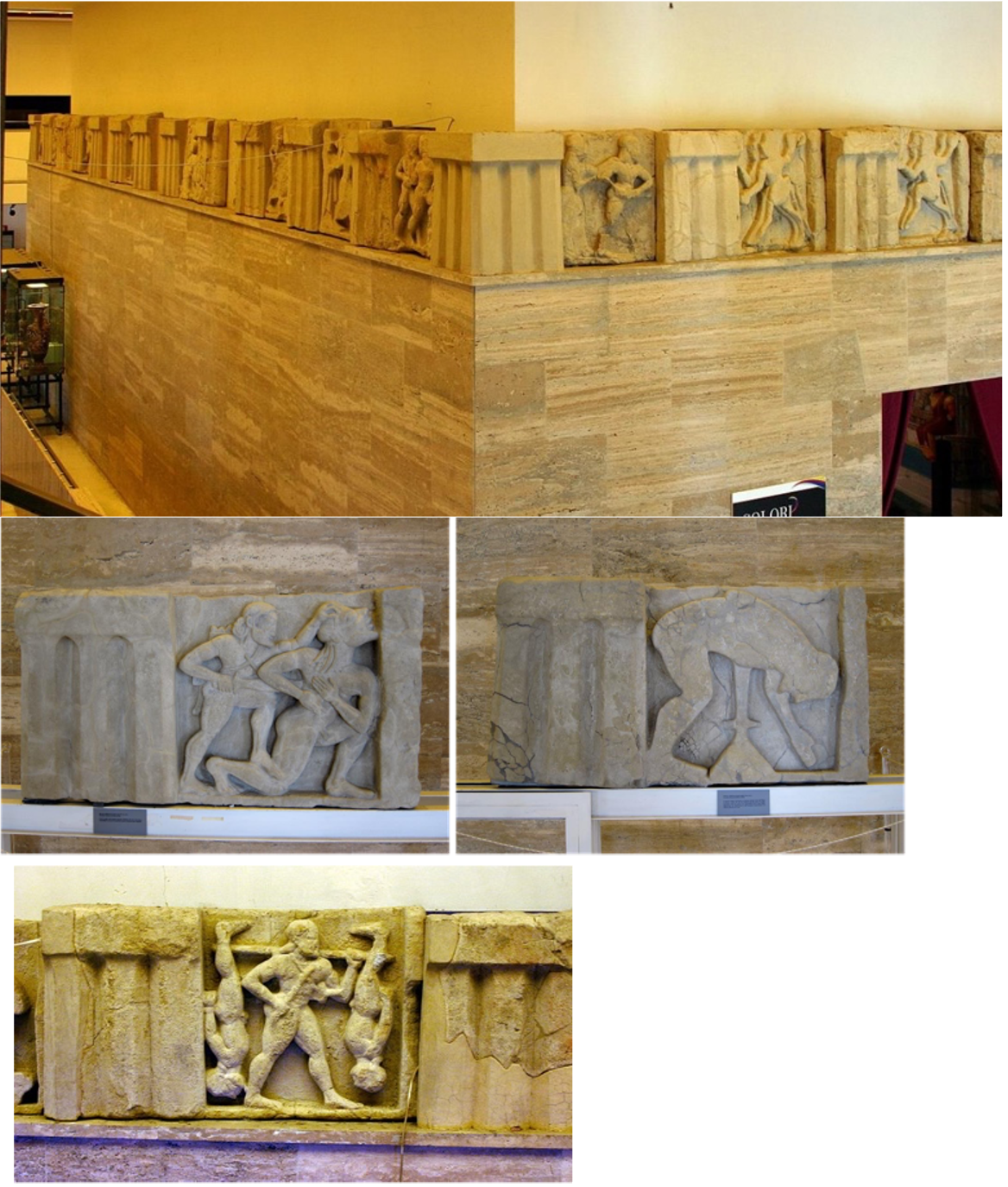
Heraion, Foce del Sele (Italy), mid 6th c.
Greek colony. 38 metopes that survived only so unknown original context and layout.
Labours of Herakles, Trojan War, obscure and other myth scenes eg. Herakles killing Alkyoneus (minor labour), suicide of Ajax (loss to Odysseus), Herakles and the Kerkopes (minor labour), punishment of Sisyphos (divine retribution), Artemis and Apollo attack Tityos. Unrelated narritival scenes?
Battles between gods and giants (gigantomachy) as some link.
2D sculpture, lack of frontality, lack of interaction with viewer.
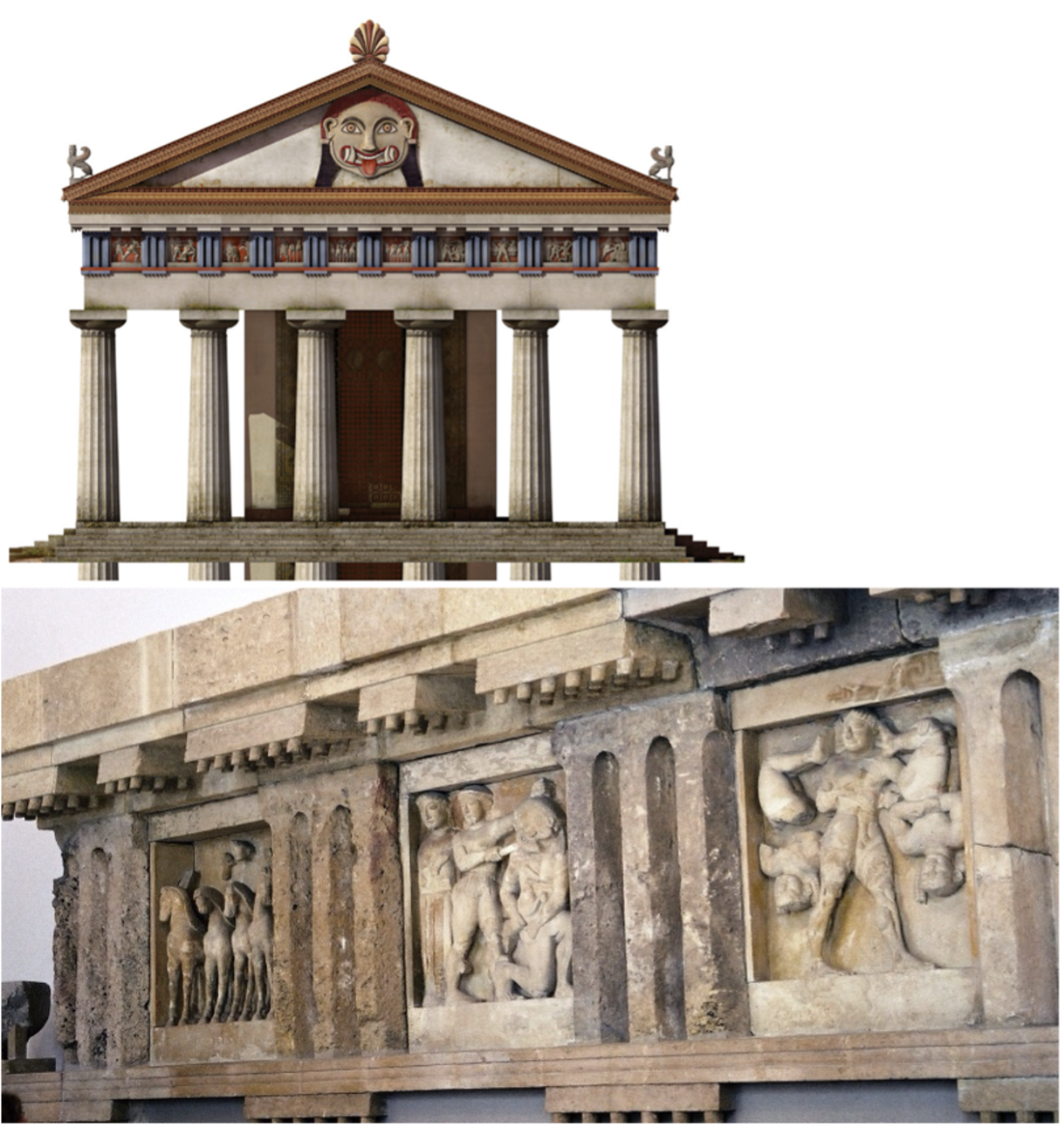
Temple ‘C’, Selinus, Sicily, 560-530 BC.
Clay Gorgonian as central figure above metopes.
Whole façade painted so assume similar of all types?
3 well surviving metopes:
Apollo in a chariot with 4 horses, maybe 2 figures next to him (Leto and Artemis?)
Medusa and Theseus next to Athena and small Pegasus.
Herakles and Kerkopes
Scholarship: Connection to Greek mainland and continuity in imagery?
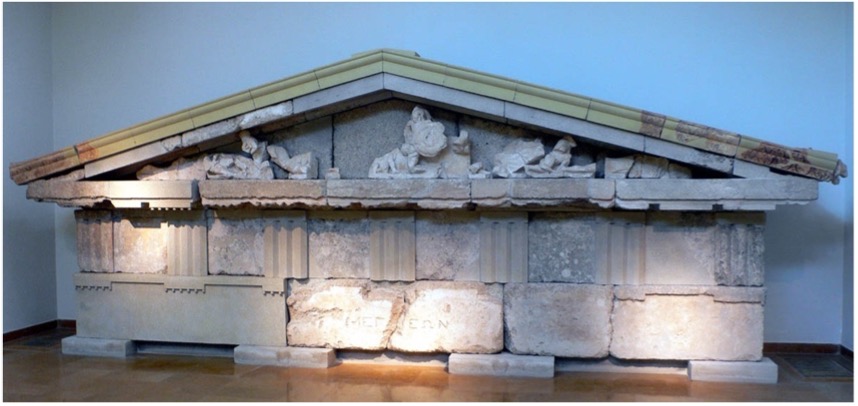
Treasury of the Megarians, Olympia, 525 BC
Early example of gigantomachy but badly preserved.
Pausanias (6.19.13): built from spoils from war with Corinthians and describes the Treasury.
Giants falling or lying on ground, holding shields i.e losing.
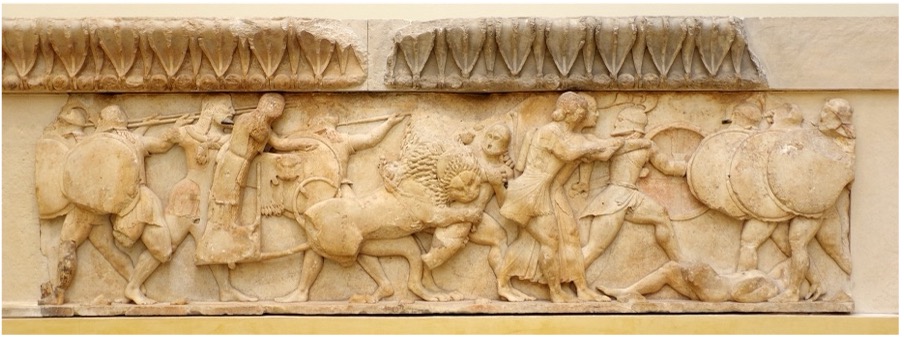
Siphnian Treasury, Delphi, 525 BC.
Pediment had the competition of Apollo and Herakles for Delphic tripod and Catyrid instead of columns.
Section of north frieze: overlapping figures, giants heavily armed, some figures named by inscription. Lions in centre. Goddess of divine law in chariot, Dionysus with panther skin? Of Herakles. Apollo and Artemis shooting arrows. Others in the rest of the frieze.
Giants are depicting more human hoplite like. All quite similar.
Power, organisation, unity of gods. Recognition of power, respect.
Only 1 frontal figure, rest are profile. More stylistic and artistic capabilities.
Position of treasury means frieze was seen along Sacred Way- story of battle as walk along.
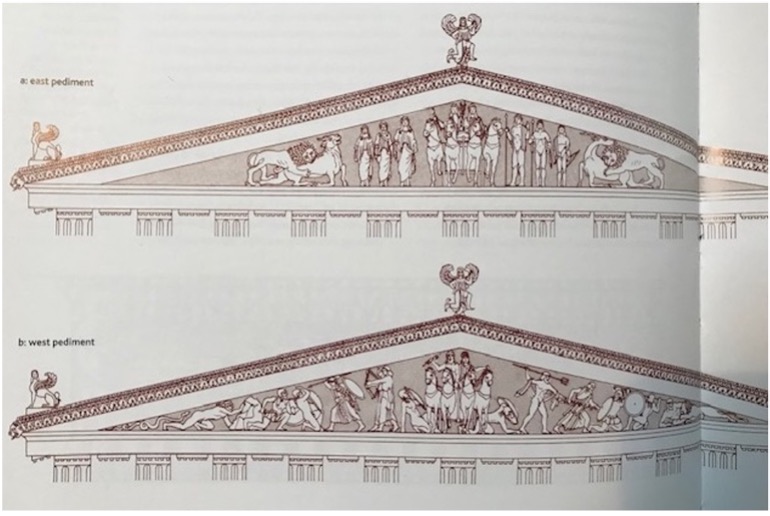
Temple of Apollo, Delphi, 514 BC.
Built to replace previous temple destroyed in a fire, hugely expensive paid by the Delphians and Alcmaeonid clan (exiled from Athens).
Made of limestone but East façade and pediment used Parian marble. Apollo in chariot.
West pediment: gigantomachy with Zeus in chariot at centre. Not much survived but do have Athena. Description from Euripides, Ion.
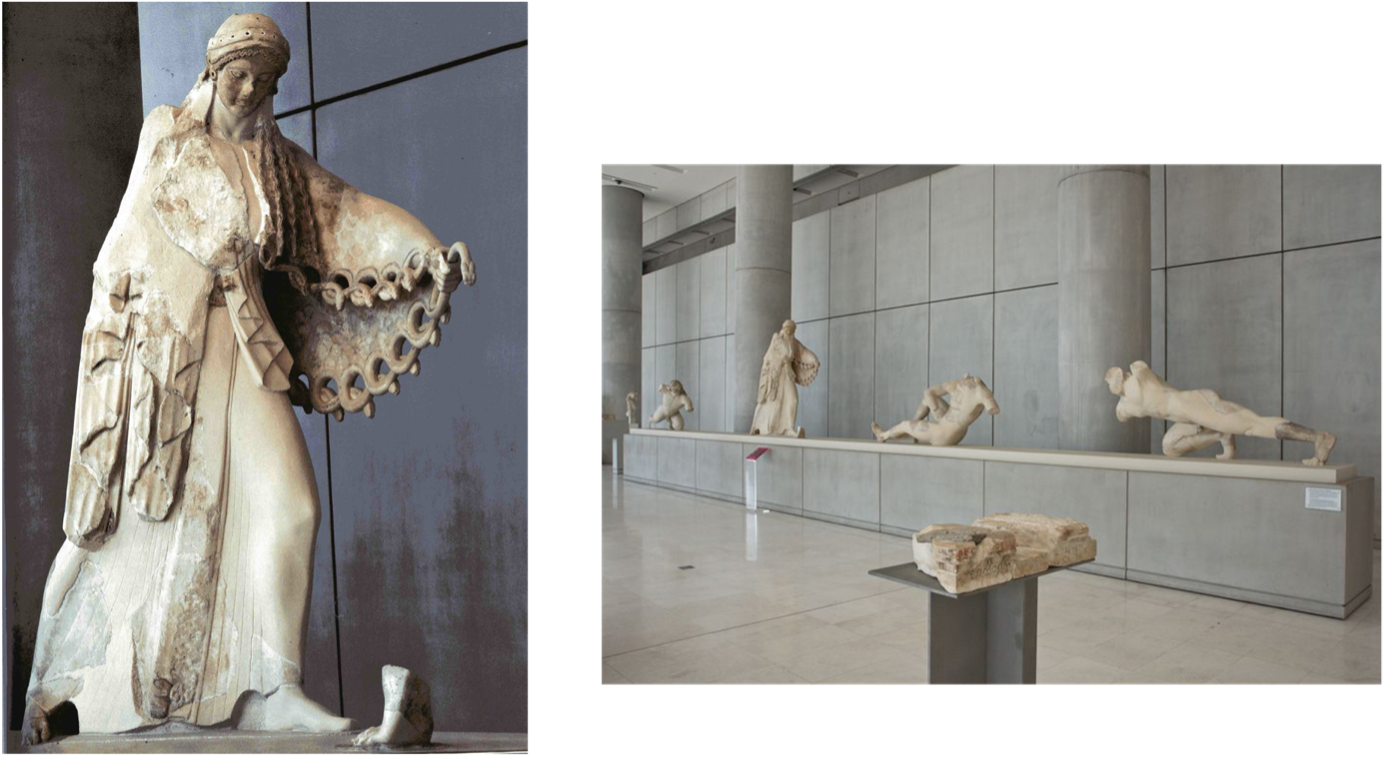
Archaic Temple of Athena, Athens, 525-500 BC.
First permanent structure on Acropolis. Burned down by Persians in Sack of Athens in 480BC
Oath of Plataea: Greek forced vowed not to rebuild any burnt down by Persians to remember their barbarianism.
West Pediment: Athena (wearing aegis and holding snake and helmet with holey band – metallic decorations originally, traces of paint) attacking Giant, fragments of 3 giants (wounded)