W10: Sustainability of contact lenses
 Call Kai
 Learn
Learn Practice Test
 Spaced Repetition
 Match
Match Flashcards
 Knowt Play
1/26

There's no tags or description
Looks like no tags are added yet.
Name | Mastery | Learn | Test | Matching | Spaced | Call with Kai |
|---|
No analytics yet
Send a link to your students to track their progress
27 Terms
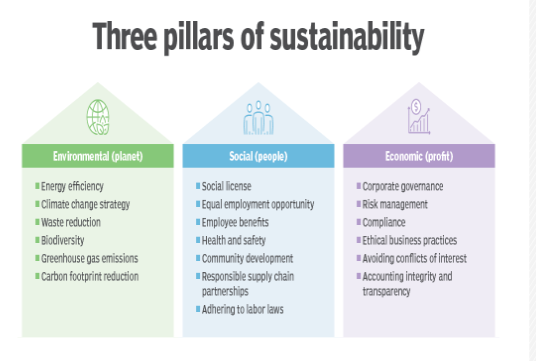
What are the 3 pillars of sustainability?
Environmental (planet)
Energy efficiency
Climate change strategy
Waste reduction
Biodiversity
Greenhouse gas emissions
Carbon footprint reduction
Social (people)
Social license
Equal employment opportunity
Employee benefits
Health and safety
Community development
Responsible supply chain partnerships
Adhering to labor laws
Economic (profit)
Corporate govemnance
Risk management
Compliance
Ethical business practices
Avoiding conflicts of interest
Accounting integrity and transparency
What is sustainability?
A company's strategy to reduce negative environmental impact resulting from their operations in a particular market.
Practices are typically analysed against environmental, social, and governance (economic) metrics
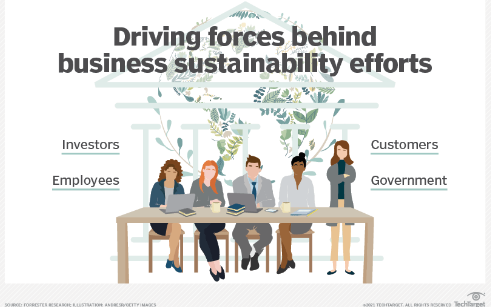
Why should companies publish sustainability goals and progress reports?
Promotes transparency about contribution to a sustainable global economy
Helps employees and external stakeholders understand business impact
Maintains trust with stakeholders through regular progress reporting
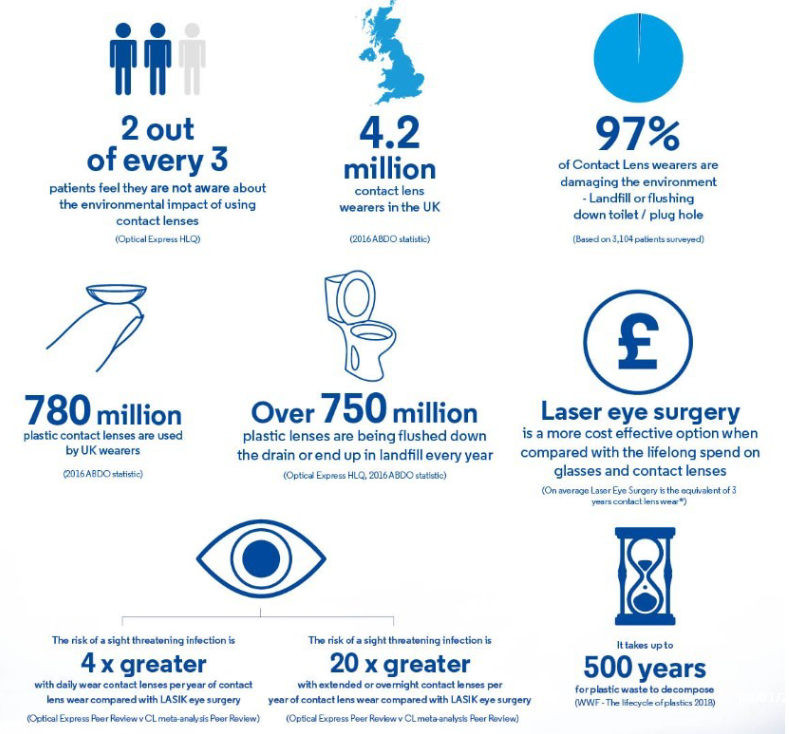
What is the scale of contact lens use and environmental impact in the UK?
~800 million plastic contact lenses used by >4 million people annually
97% disposed of in bin or down drain; only 3% recycled
What do surveys show about contact lens disposal awareness and behaviour?
Majority unaware lenses are non-biodegradable (73.9%)
Most disposed in trash (59.7%), some flushed (23.4%)
93.3% not recycled; many not informed on correct disposal (54.7%)
What is the environmental impact of contact lens waste (USA data)?
Yeung & Davis 2019:
45 million wearers; 35–46% use daily disposables
Annual daily disposable use ≈ 1 kg waste per patient
Reusable lenses + solutions ≈ 0.87 kg/year (excluding shipping/carbon footprint)
How does contact lens-related plastic waste compare across products?
Lens cases: equivalent to 4–8 years of DD’s
Solution bottles: equivalent to >2.5 years of DD’s
Contact lens products contribute ~0.5% of total environmental waste
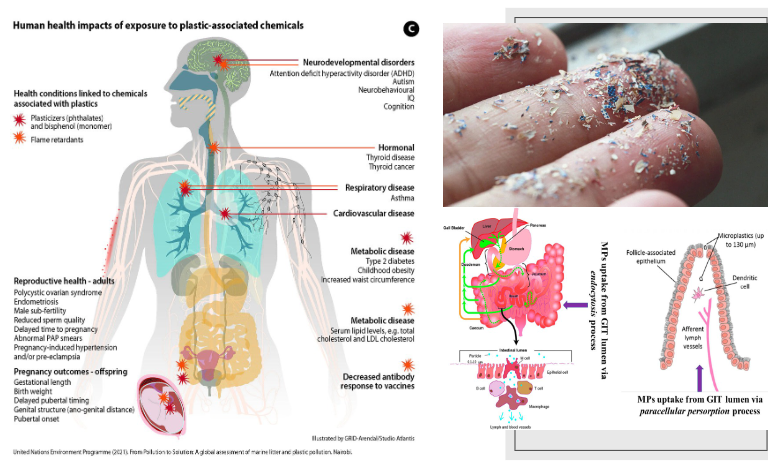
What is the source of microplastics?
Contact lenses that are flushed in the toilet end up in the main water sources, they further break down into smaller particles and become microplastics
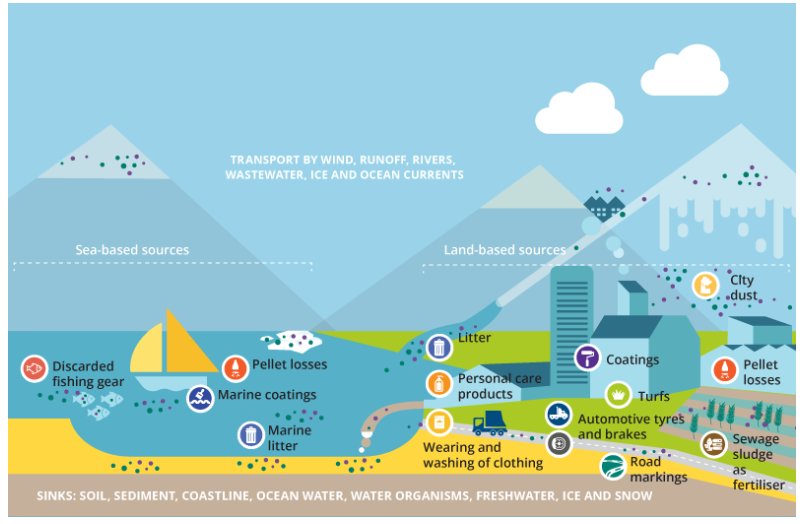
Where have microplastics been found?
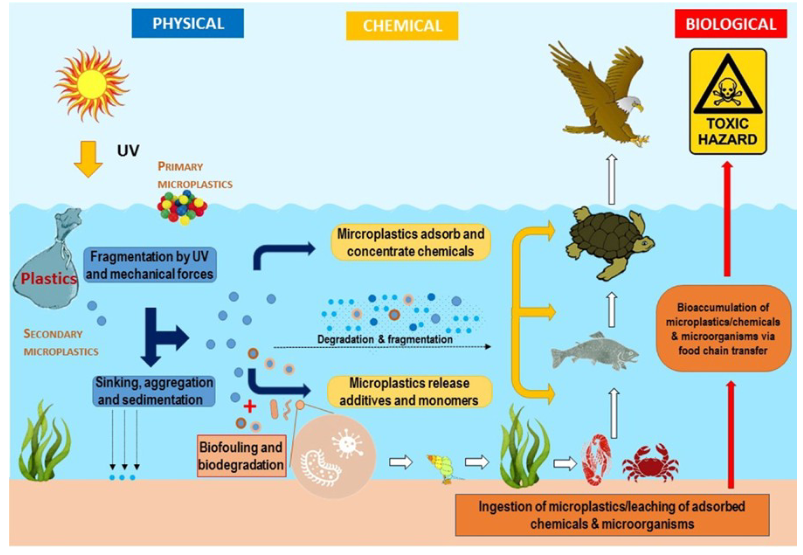
Microplastics undergo physical and chemical changes → become smaller
Physical changes: UV exposure + mechanical damage → fragmentation
Processes include aggregation, sinking, and sedimentation → particles accumulate in sand/river beds
Further chemical degradation → even smaller particles
Impact:
Release additives and monomers as they break down
Ingested by small organisms → enter food chain
Bioaccumulation → toxic hazard for animals and humans (via ingestion of contaminated organisms)
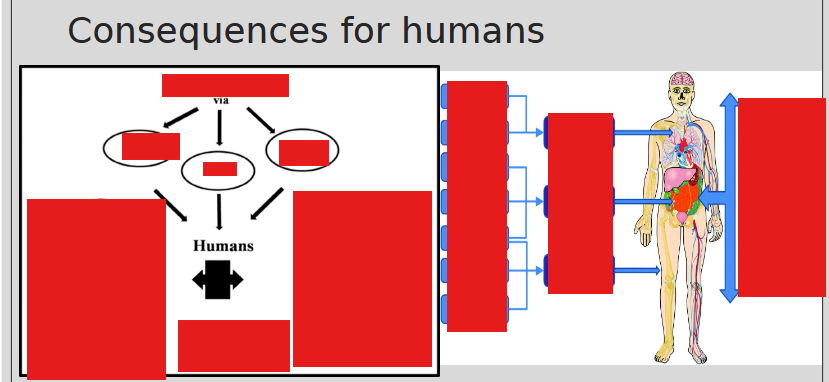
What are the consequences of microplastics for humans?
1
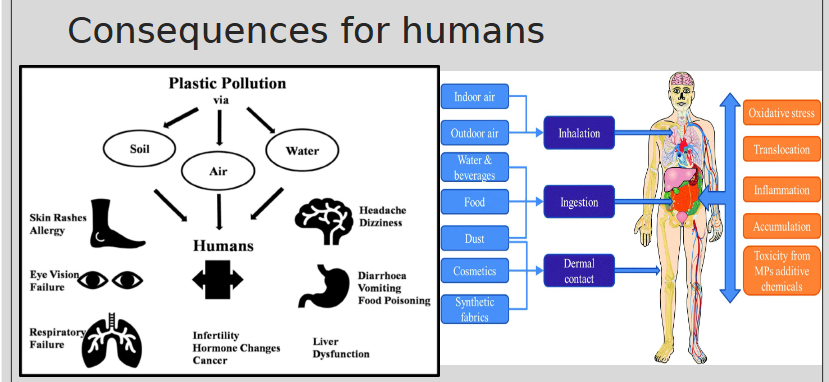
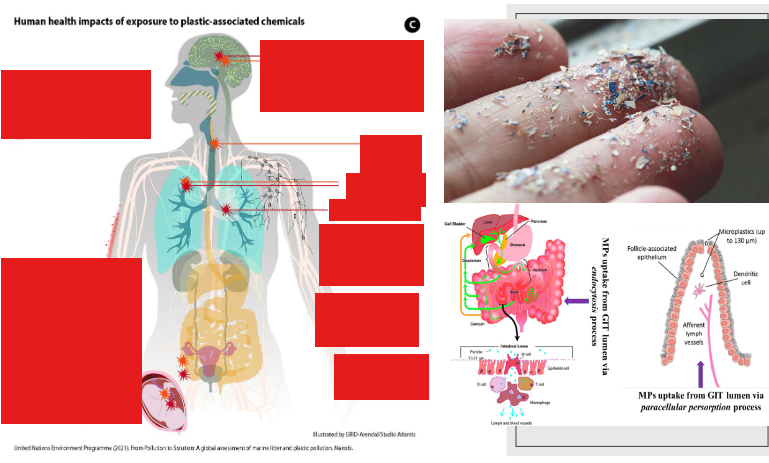
What are the consequences of microplastics for humans?
2
What sustainability measures has Alcon implemented in its operations?
Reduced water consumption by 8% using recycled water (saving 14.1 million gallons/year)
2% reduction in energy usage
79% of operational waste recycled and 4,900 tons hazardous waste prevented
10% renewable electricity and 14% recycled water used
98% of solvents recycled offsite
How has Alcon reduced environmental impact through product design and partnerships?
Packaging minimized and simplified to reduce material use and waste
Partnership w/ Plastic Bank to remove ocean-bound plastic from vulnerable coastal communities for every tonne of plastic used in Alcon Precision 1 + Dailies Total 1 cl’s + packaging.
(1:1)
Focus on reducing lifecycle environmental impact of products
What sustainability initiatives has Bausch + Lomb introduced for contact lens recycling?
One by One Recycling Program (with TerraCycle)
Separates plastic lenses and foil packaging
Recycled 2.5 million lenses and diverted ~14,000 pounds of waste
How has Bausch + Lomb improved sustainability in packaging and production?
Biodegradable shipping packaging and recyclable materials (e.g. PET for solutions)
Use of renewable energy in production
Focus on environmentally sustainable products
What energy management and waste reduction achievements has Bausch + Lomb reported at its major contact lens sites?
Rochester (US) and Waterford (Ireland) sites are ISO 50001 registered for energy management and efficiency
Drive towards zero landfill operations
Rochester site certified to UL2799 with 94% diversion from landfill
Waterford site achieves 97.92% against UL2799 criteria (not formally certified to US standard)
What sustainability and energy initiatives has CooperVision implemented in its operations?
Costa Rica plant recycles up to 95% of solid waste
90% of electricity from renewable sources (solar, wind, geothermal, hydro)
New York operations powered by 100% wind energy
UK Mountpark site powered by 100% biomass
Water recycling in cooling towers and rainwater used for facilities
How has CooperVision reduced material waste in manufacturing and packaging?
Mould closure technology uses raw materials fully without waste
Cardboard containers reused 5–10 times before recycling
99% of plastics repurposed (e.g. traffic cones, chairs)
What sustainability recognition has the Mountpark facility received?
Received top rating from Building Research Establishment Environmental Assessment Method (BREEAM)
BREEAM = world’s first sustainability assessment method for buildings
What sustainable innovations has Menicon introduced in its products?
Miru 1Day flat packs (1 mm thick) → ~80% less packaging bulk and less saline
“Foil on foil” design → fully recyclable (unlike standard blister packs)
How does Menicon promote sustainability in operations and environmental initiatives?
Conserves water and electricity through improved manufacturing efficiency
Forest restoration via planting seedlings
Recycles coffee grounds (e.g. from Starbucks in Tokyo) into dairy cow feed
What recycling and packaging initiatives has Johnson & Johnson Vision Care implemented?
Partnered with TerraCycle for contact lens recycling (UK)
Reduced packaging by increasing lenses per box → saved 57 tons of paper
Redesigned blister packs to reduce polypropylene and paper use
What energy and sustainability achievements has Johnson & Johnson Vision Care reported?
13% less energy used in shipping due to lighter packaging
12% reduction in manufacturing energy use (Acuvue Oasys with HydraLuxe)
Member of the New Plastics Economy Global Commitment
What recycling initiative has Johnson & Johnson Vision Care implemented to improve sustainability?
Funding 3500 zero waste boxes (2022)
Capacity to recycle ~5.6 million lenses, blister packs, and foils
Distributed to practices to ensure nationwide access
Aim to increase UK contact lens recycling by up to 25%
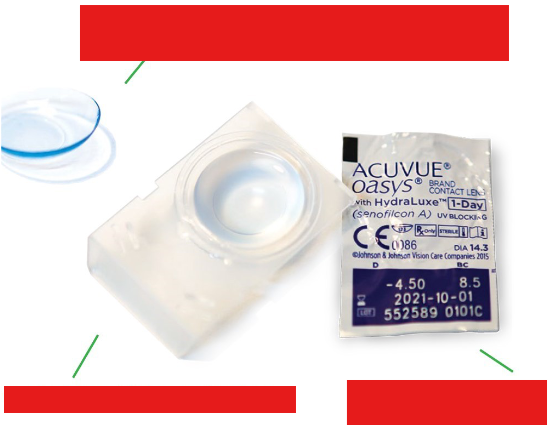
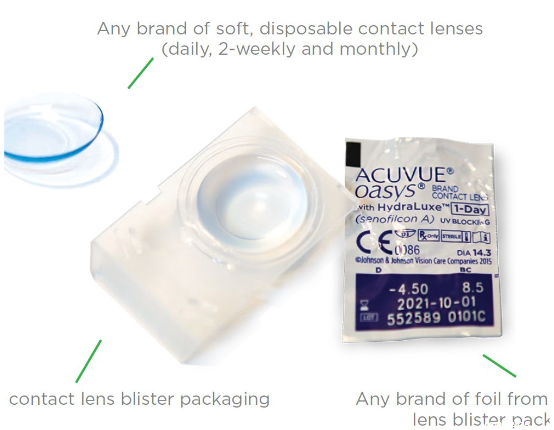
What is the practitioner’s role in improving contact lens sustainability?
Educate patients
Reinforce
Sign up for a recycling bin
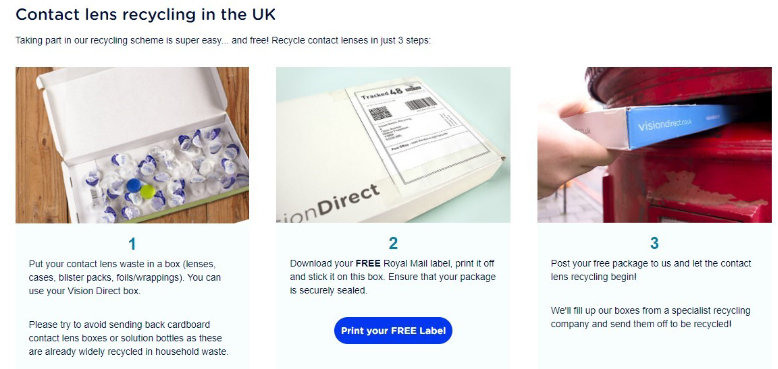
Vision direct:
Contact lens recycling in the UK
What is a potential consequence of environmental concerns in contact lens use?
Patients may opt for surgery that is more cost effective and produces less plastic waste