Geometric Dimensioning and Tolerancing (GD&T) Fundamentals
 Call Kai
 Learn
Learn Practice Test
 Spaced Repetition
 Match
Match Flashcards
 Knowt Play
1/59

Earn XP
Description and Tags
Vocabulary and key concepts from GD&T lecture notes covering features, form tolerances, orientation, location, runout, and material condition modifiers.
Name | Mastery | Learn | Test | Matching | Spaced | Call with Kai |
|---|
No analytics yet
Send a link to your students to track their progress
60 Terms
Surface feature
An individual surface on a part like the top of a box
Feature of size
Any feature with a measurable dimension, such as a hole, pin, or two opposed parallel surfaces.
Feature control frame
A box containing all the information needed to define a geometric tolerance, including the geometric characteristic symbol, tolerance value, diameter symbol (if needed), datum references, and modifiers.
Tolerance zone
The allowable region within which a feature must exist.
Flatness
A form tolerance that controls how flat a surface is without using datums.
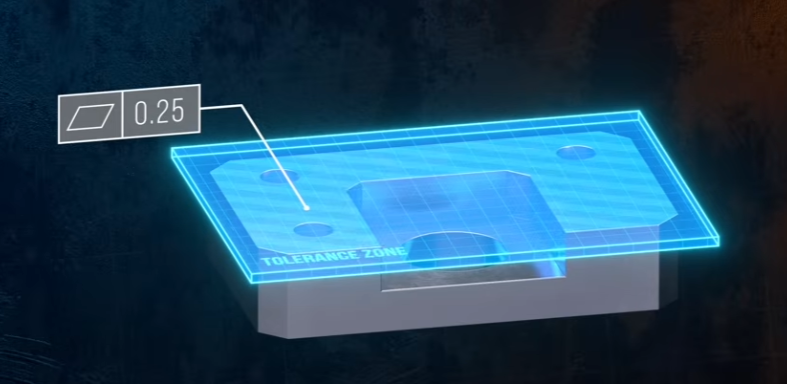
Flatness tolerance zone
Two parallel planes separated by the tolerance value.
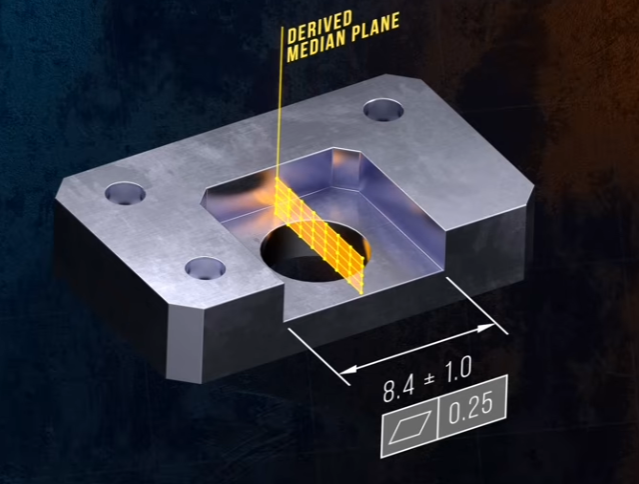
What is the derived median plane?
The derived median plane is created by connecting the midpoints of opposite points on a feature of size.
How does flatness work on a surface feature?
All points on the surface must lie between the two parallel planes.
How does flatness work on a feature of size?
The tolerance applies to the derived median plane of the feature.
The derived median plane is created by connecting the midpoints of opposite points on a feature of size.
Straightness
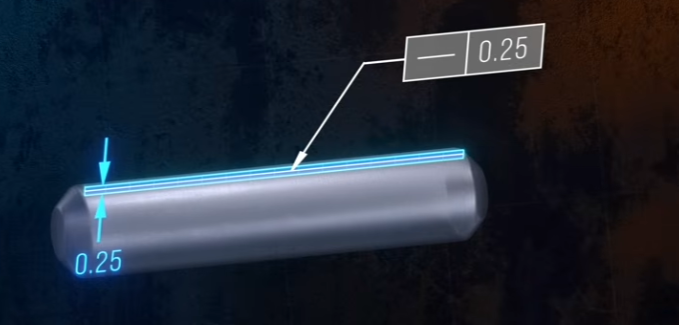
A form tolerance controlling how straight a line or axis is.
Straightness tolerance zone (surface feature)
Two parallel lines.
Any line along the specified direction on the surface must remain between the two parallel lines.
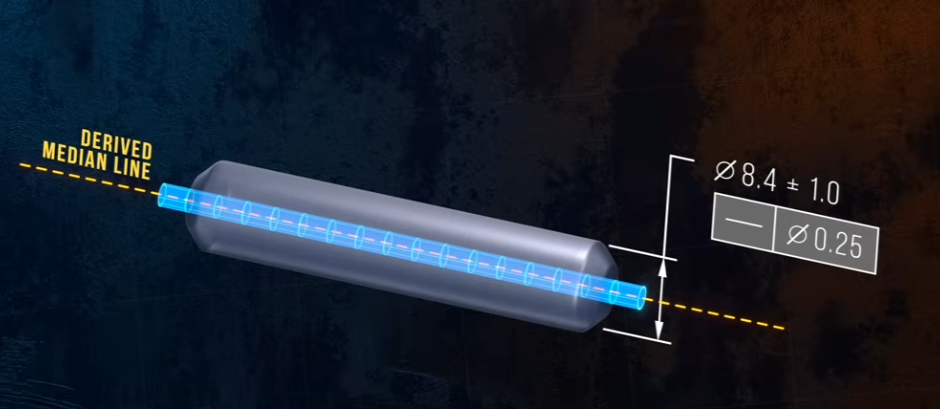
Straightness tolerance zone (feature of size)
A cylindrical tolerance zone within which the axis of the feature must remain.
Circularity
A form tolerance controlling how round a cross-section is independently. (in cross sections)
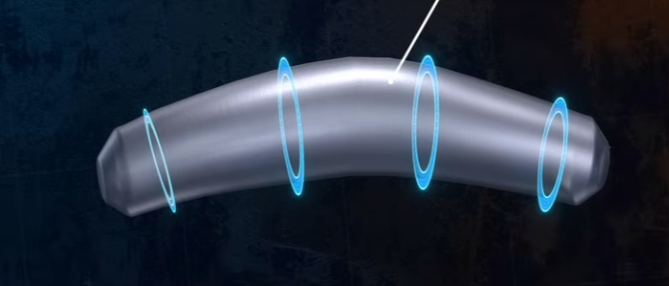
Circularity tolerance zone
Two concentric circles separated by the tolerance value.
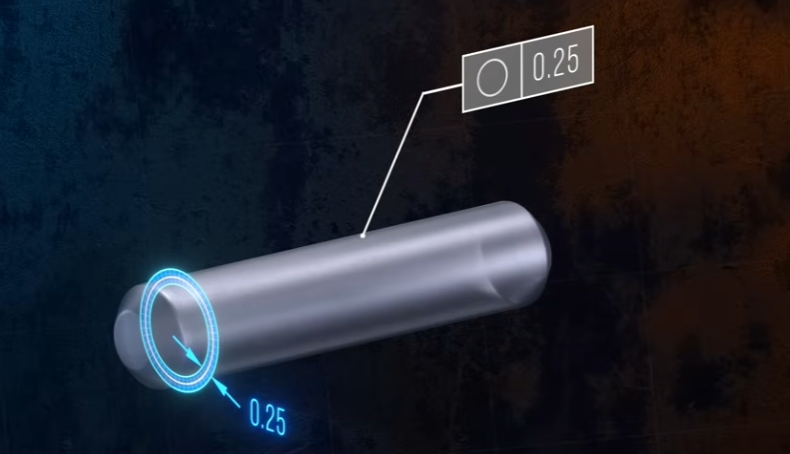
Cylindricity
A form tolerance controlling the overall cylindrical shape of a feature along its full length.
Cylindricity tolerance zone
Two concentric cylinders separated by the tolerance value.
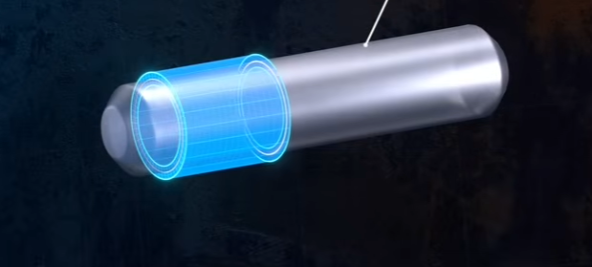
How is cylindricity different from circularity?
Circularity controls individual cross-sections independently, while cylindricity controls the entire cylindrical surface along its full length.
Datums
Theoretical reference surfaces used for measurement and inspection to ensure repeatable results.
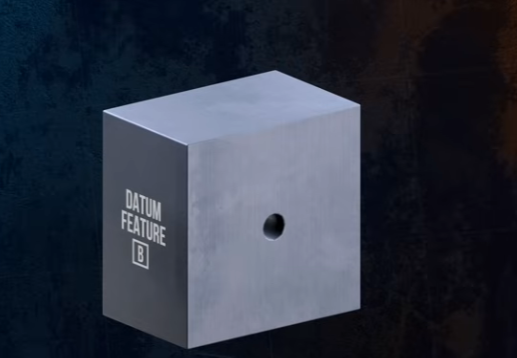
Datum feature
The actual feature on the object that is restrained during inspection.
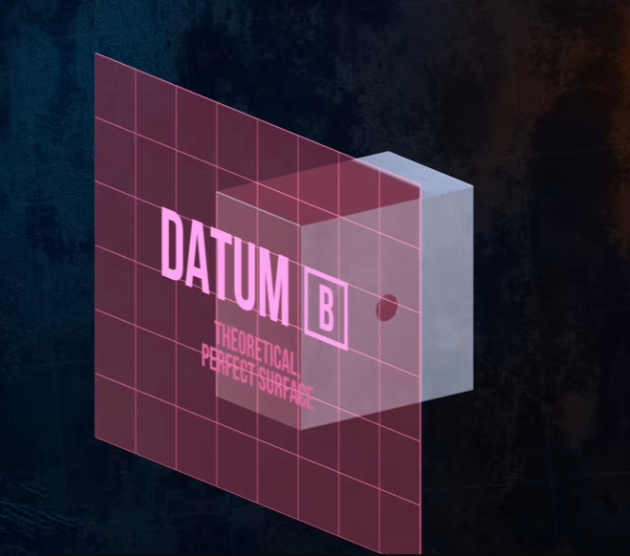
Datum
The theoretically perfect surface corresponding to the datum feature.
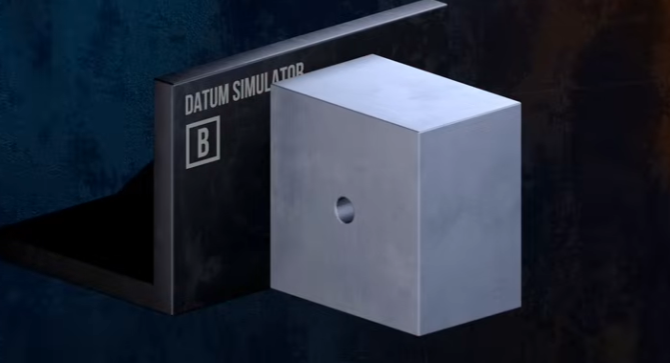
Datum simulator
The real imperfect surface used to approximate the perfect datum during inspection.
Datum reference frame
The coordinate system established using datums for inspection.

Why does datum order matter?
Real surfaces are imperfect, so using datums in the same order ensures repeatable measurements.
Parallelism
An orientation tolerance controlling how parallel a feature is relative to a datum.
Parallelism tolerance zone
Two parallel planes parallel to the datum with the width of the tolerence.
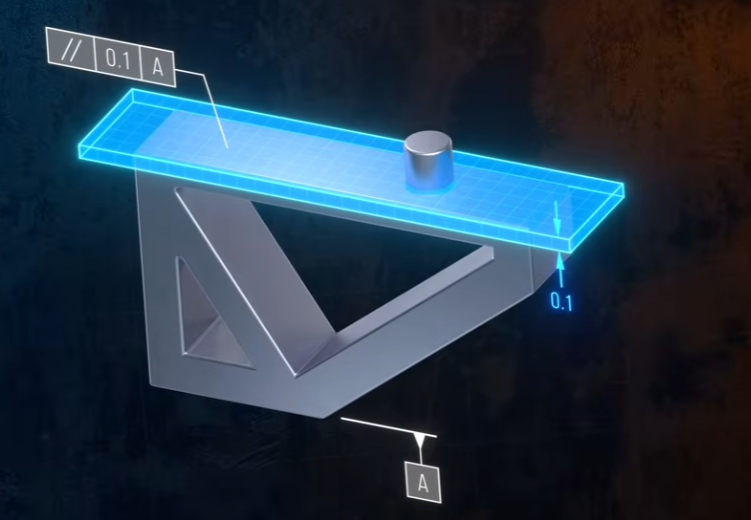
How does parallelism work on a feature of size?
The axis or center plane must remain within the tolerance zone.
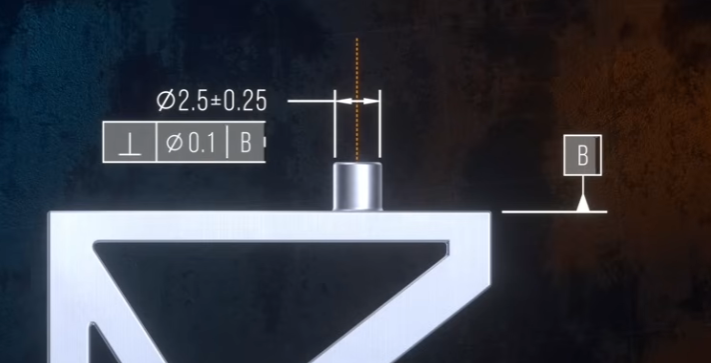
Perpendicularity
An orientation tolerance controlling whether a feature is at 90∘ to a datum.
What is the perpendicularity tolerance zone?
Two parallel planes at 90 degrees to the datum
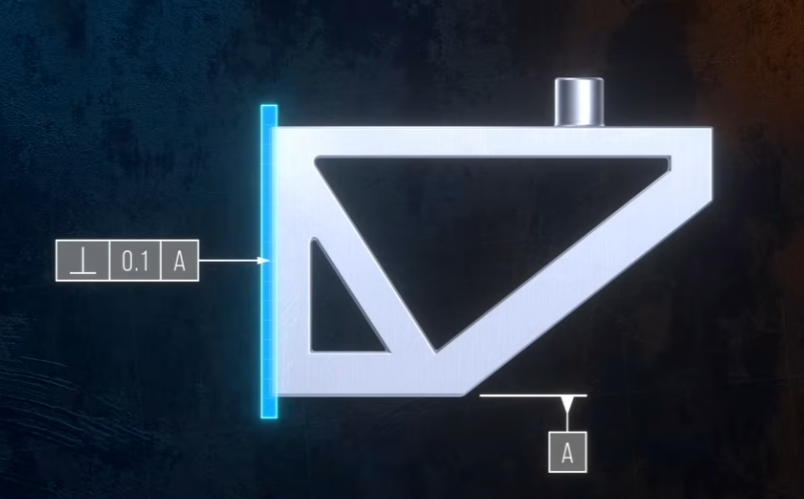
What is the perpendicularity tolerance zone for a feature of size?
a cylindrical zone for an axis, use the diameter symbol to indicate a cylindircal tolerance zone will be used
Angularity
An orientation tolerance controlling an angle other than 90∘ relative to a datum.
What is the angularity tolerance zone?
Two parallel planes at the specified angle relative to the datum.
Position
A location tolerance controlling how far a feature’s axis or center plane can deviate from its true position.
True position
The theoretically exact location of a feature defined using basic dimensions.
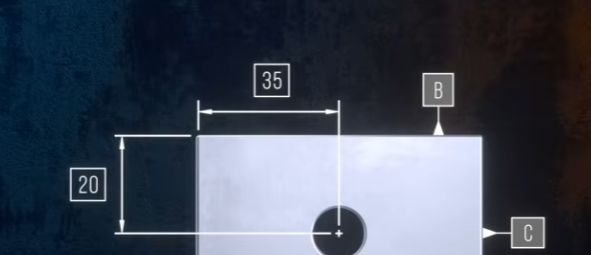
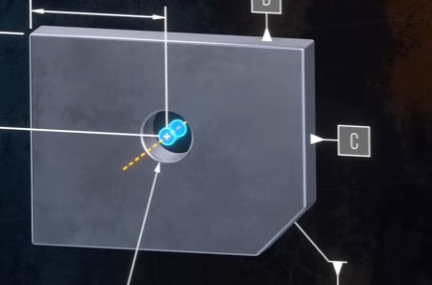
What is the position tolerance zone?
A cylindrical tolerance zone around the true position.
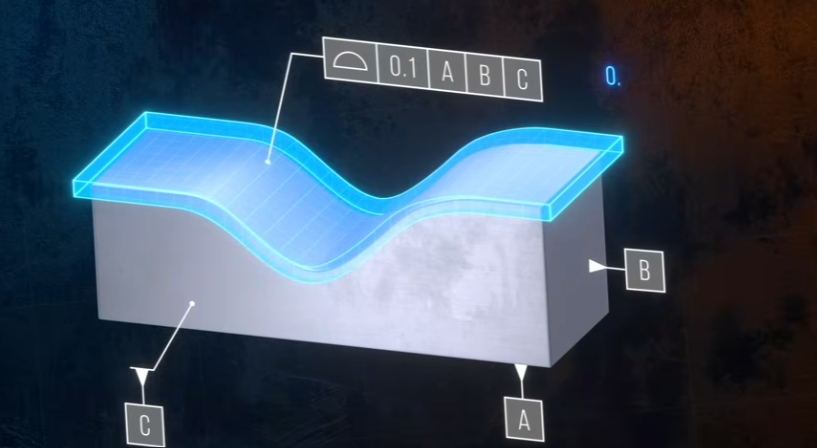
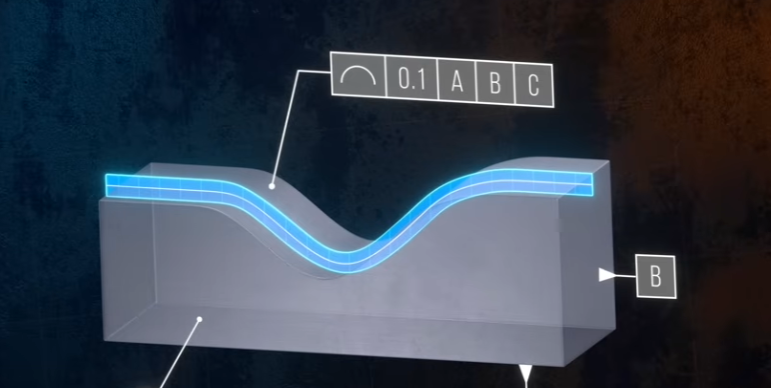
Profile of a surface
A tolerance controlling the form, orientation, and location of an entire surface via a boundary following the shape of the surface.
Why is position better than plus/minus tolerancing for holes?
Position creates a cylindrical tolerance zone evenly distributed around the true position instead of a rectangular zone.
What is profile of a surface?
Profile of a surface is a tolerance controlling the form, orientation, and location of an entire surface.
What is the profile of a surface tolerance zone?
A boundary following the shape of the surface with width equal to the tolerance value.
Profile of a line
A tolerance that controls individual line elements or cross-sectional lines of a surface.
How is profile of a line different from profile of a surface?
Profile of a line controls only individual cross-sectional lines, while profile of a surface controls the entire surface at once.
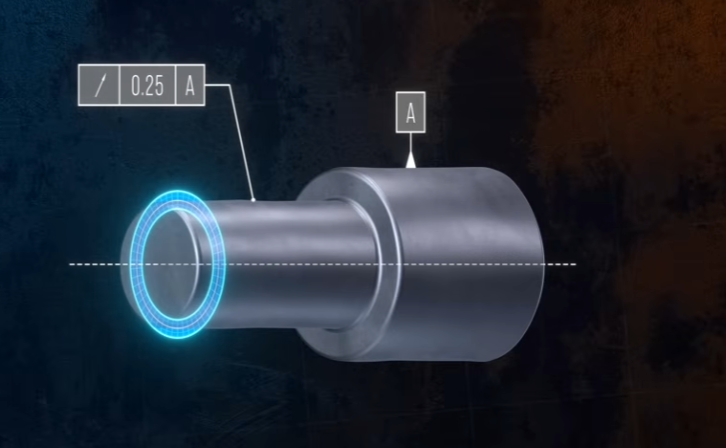
Circular runout
A runout tolerance controlling the roundness of individual cross-sections relative to a datum axis.
What is the circular runout tolerance zone?
Two concentric circles centered on the datum axis
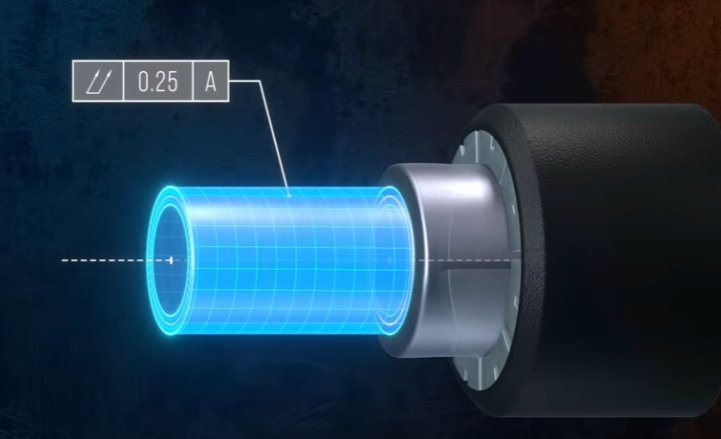
Total runout
A runout tolerance controlling both circularity and straightness along the full length of a rotating feature centered on the datum axis.
What is the total runout tolerance zone?
Two concentric cylinders centered on the datum axis.
Modifier
A symbol that changes how a geometric tolerance behaves based on material condition.
Maximum Material Condition (MMC)
The condition where a feature contains the maximum amount of material (e.g., the smallest hole or largest pin).
What is MMC for a hole?
The smallest allowable hole size.
How does MMC work?
At MMC, the stated tolerance applies directly. If the feature departs from MMC, bonus tolerance is added equal to the size difference.
Hole size limits: 9.2 mm to 9.8 mm calculate bonus tolerance for 9.5 at MMC
0.3
Least Material Condition (LMC)
The condition where a feature contains the least amount of material (e.g., the largest hole or smallest pin).
What is LMC for a hole?
The largest allowable hole size.
Hole limits: 9.2 mm to 9.8 mm calculate bonus tolerance for 9.6 at LMC
0.2
Regardless of Feature Size (RFS)
A condition where the geometric tolerance remains constant regardless of the actual feature size.
Bonus tolerance
Additional allowable geometric tolerance gained when a feature departs from MMC or LMC.
Envelope Principle
Also known as GD&T Rule Number 1, If a part is at its maximum material condition (MMC), it must also have perfect form.
If the pin is exactly 12.5 mm, it has to be perfectly straight and perfectly round. No bending or bulging is allowed.
Can a feature have imperfect form below MMC?
Yes. As size moves away from MMC, slight bending or barreling is allowed if the feature stays within limits.
Independency Principle
A principle that treats size and form separately, meaning size limits do not control form unless additional tolerances are applied.
How does the Independency Principle differ from the Envelope Principle?
Under independency, size limits do not control form unless additional geometric tolerances are applied.
E modifier
The modifier used in ISO standards to apply the Envelope Principle.
I modifier
The modifier used in ASME standards to apply the Independency Principle.