L39 - Cell Reproduction: Regulatory Proteins

0.0(0)
Studied by 0 people
call kaiCall Kai
learnLearn
examPractice Test
spaced repetitionSpaced Repetition
heart puzzleMatch
flashcardsFlashcards
GameKnowt Play
Card Sorting

1/6

encourage image

There's no tags or description

Looks like no tags are added yet.

Last updated 7:51 PM on 6/4/26
Name
Mastery
Learn
Test
Matching
Spaced
Call with Kai

No analytics yet

Send a link to your students to track their progress

7 Terms

1
New cards

overview

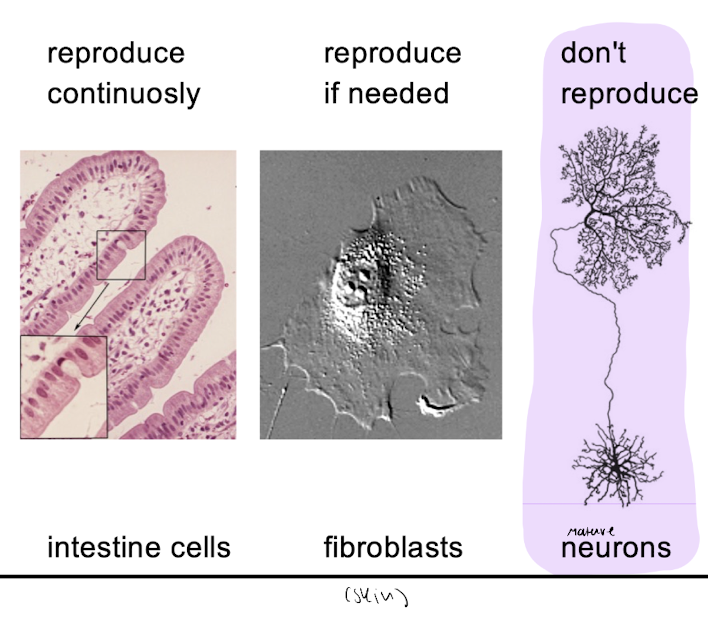
  • unicellular eukaryotes : reproduce if nutrients are available

  • multicellular eukaryotes : reproduce if appropriate (checkpoints)
<ul><li><p>unicellular eukaryotes : reproduce if nutrients are available </p></li><li><p>multicellular eukaryotes : reproduce if appropriate (checkpoints)</p></li></ul><p></p>
2
New cards
<p>Cell Cycle Checkpoints </p>

Cell Cycle Checkpoints

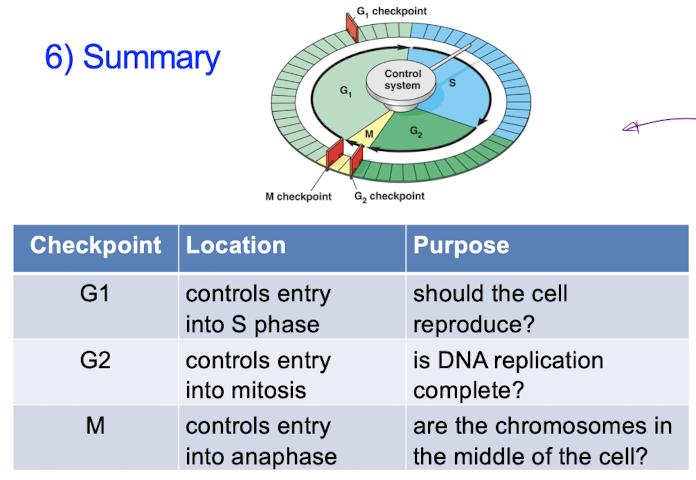
  • during interphase: 3 checkpoints can halt the cell cycle

    • each point has a control protein

———————————

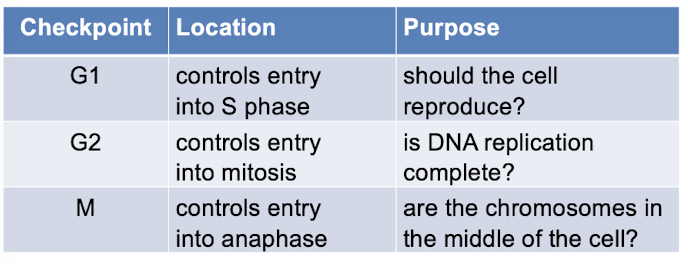
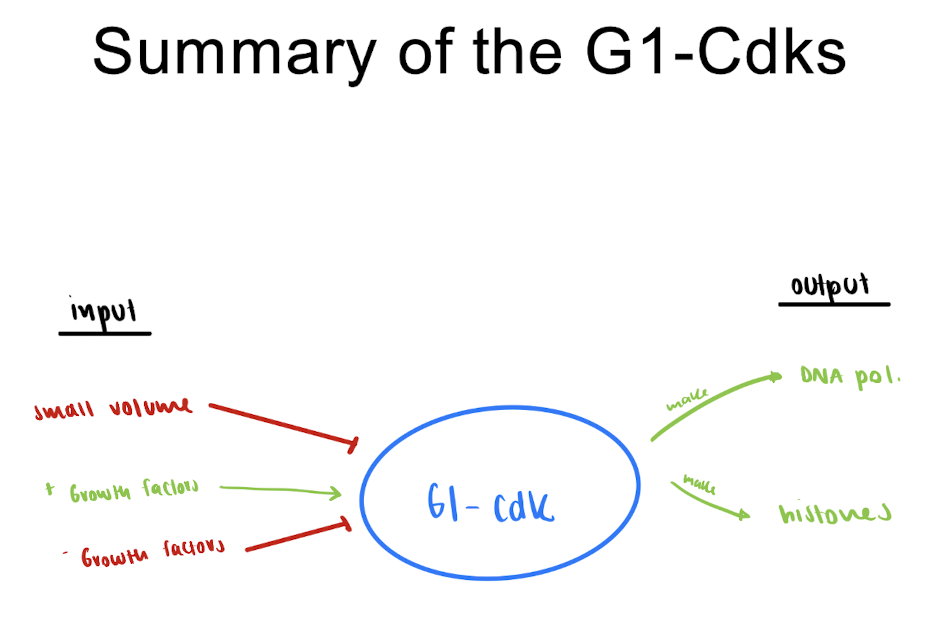
G1 check : entry to S phase (DNA replication)

  • should cell reproduce?

→ NO : enters G0

→ YES : activates G1-Cdk proteins → DNA replication
G2 check : entry to mitosis

  • is DNA replication complete?

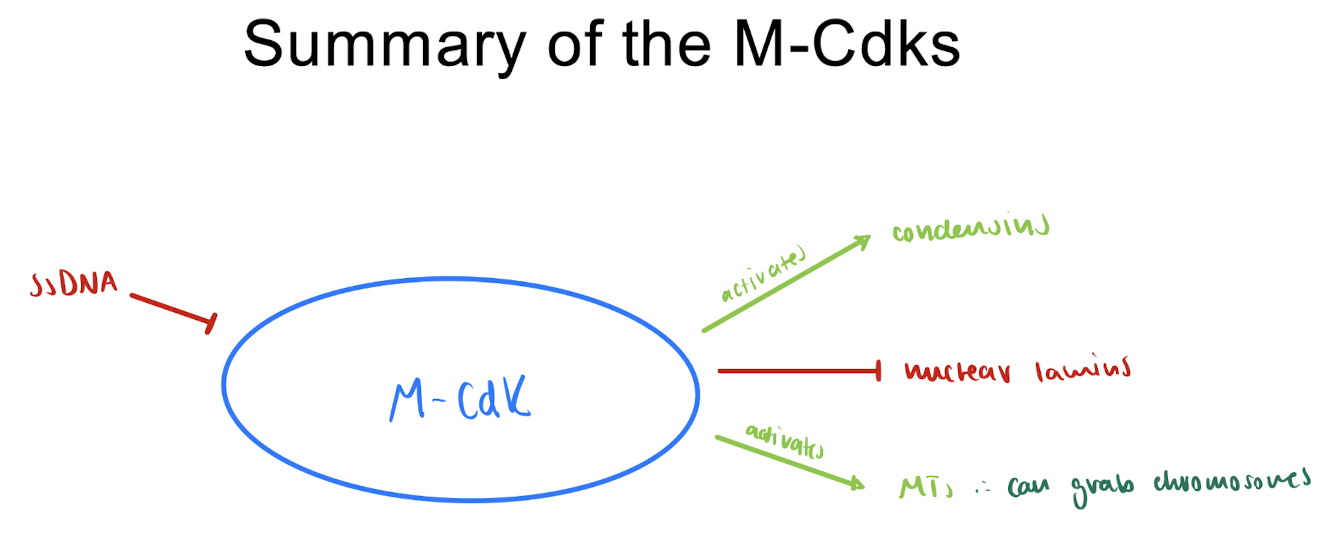
→ NO : if ssDNA is present (each chromosome MUST be replicated for mitosis)

→ YES : activate M-Cdk proteins
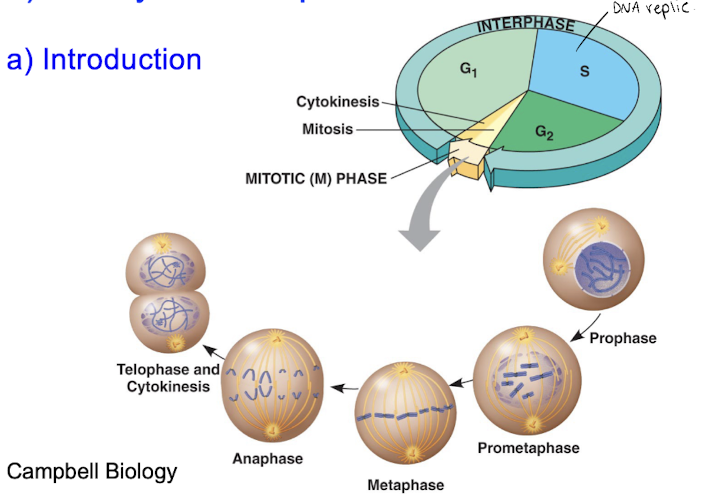
M check : entry to anaphase

  • is very chromosome connect to MTs

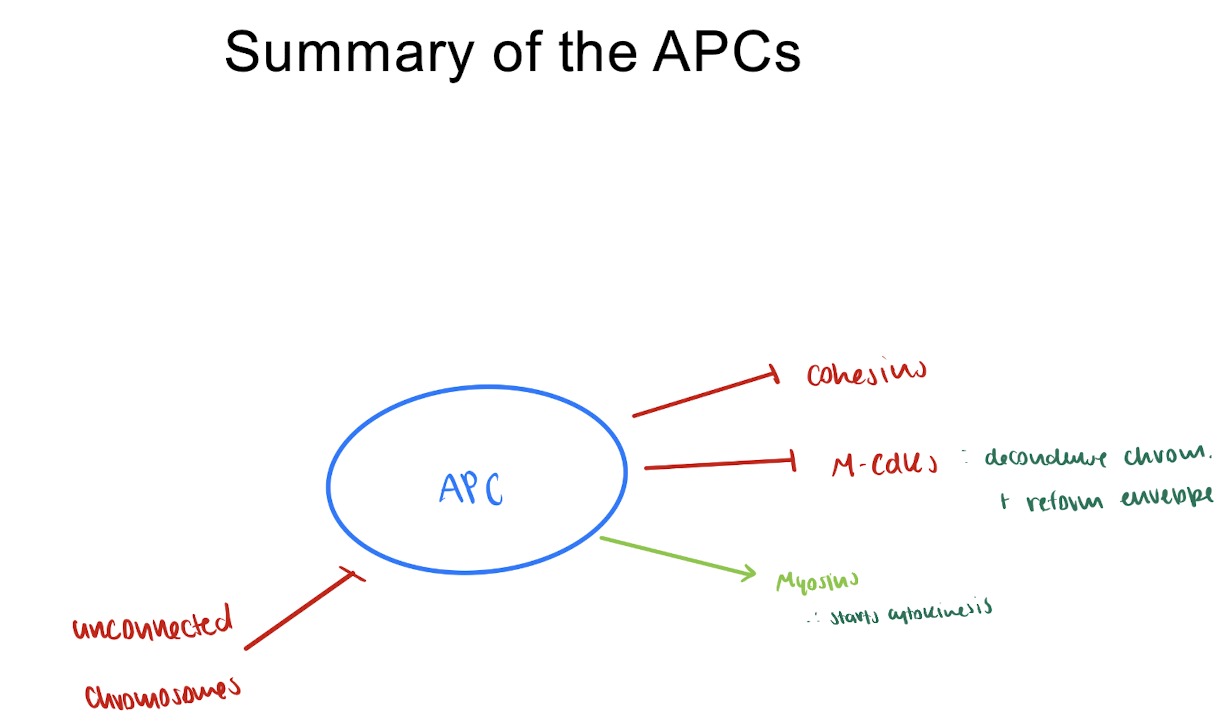
→ NO : unconnected chromosome inhibits

→ YES : activate APCs (anaphase promoting complexes)
3
New cards

G1 check point

= entry to S phase (DNA replication)

  • should cell reproduce?

→ NO : enters G0

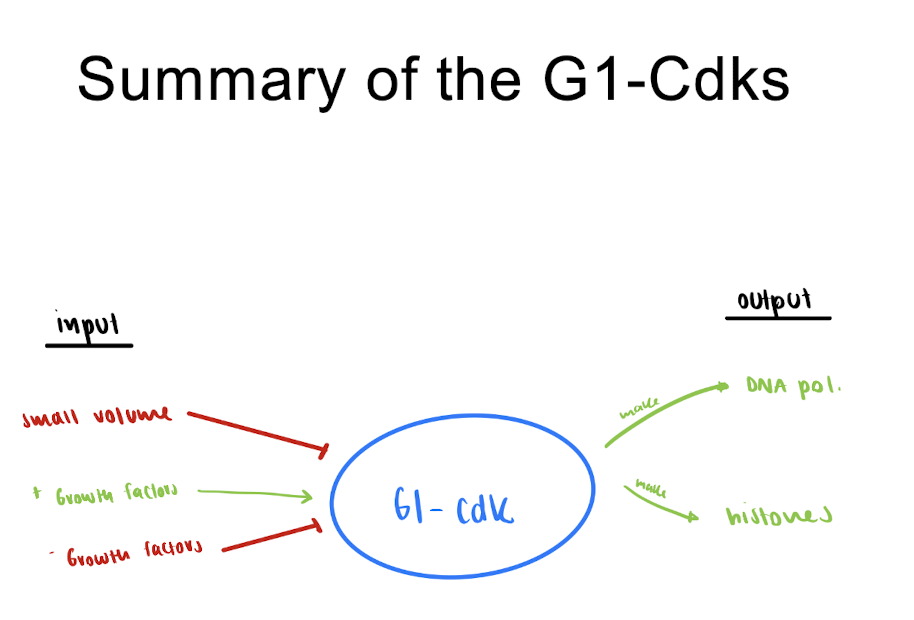
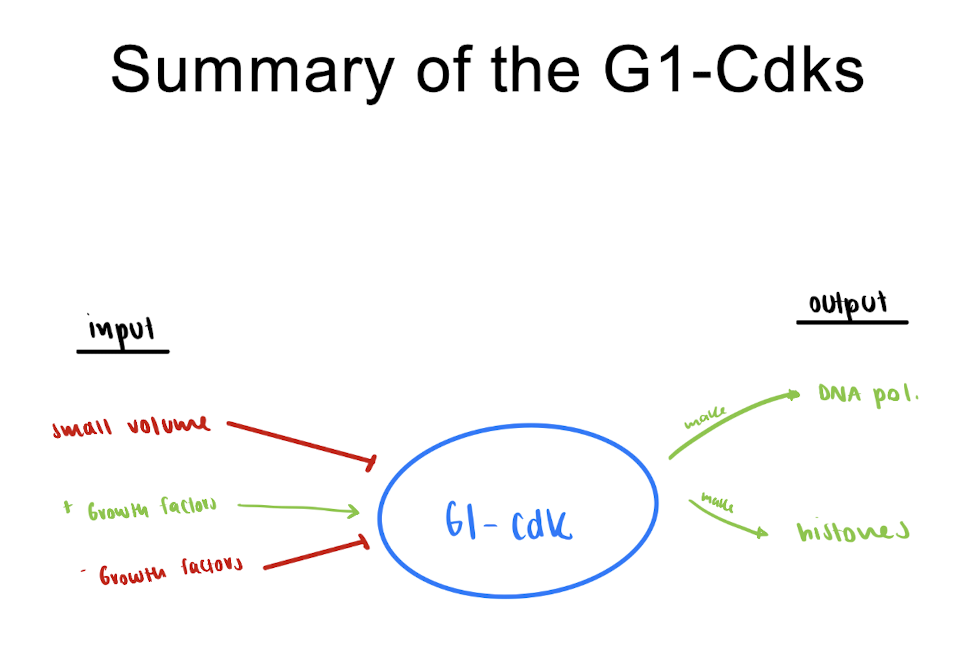
→ YES : activates G1-Cdk proteins → DNA replication

Steps

  1. G1-Cdk signals synthesis of DNA pols & histone proteins

  2. when done, S phase begins

in unicellular eukaryotes:

  • cell must be large enough to reproduce bc it has more (+) signals

→ small vol inhibits

ex. yeast cells: constant (-) signals, but (+) signals increase with larger size

in multicellular eukaryotes:

  • (+) growth factors = reproduce

  • (-) growth factors = DONT reproduce

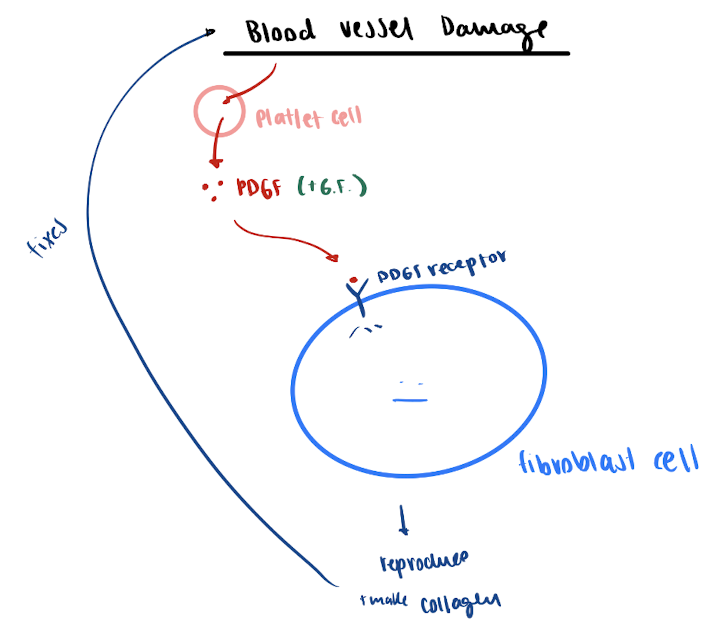
ex. fibroblasts are stimulated by blood vessel damage → platelet cells release PDGF ( + GF) → enzyme coupled PDGF receptor → fibroblasts reproduce → make collagen

  • this uses paracrine signalling & PDGF is an enzyme coupled receptor (puts P on itself)
ex. fibroblasts are inhibited by cadherins

  • plasma memb. proteins (cadherins) inhibit reproduction of adjacent cells
<p>= entry to S phase (DNA replication)</p><ul><li><p>should cell reproduce?</p></li></ul><p>→ NO : enters G0</p><p>→ YES : activates G1-Cdk proteins → DNA replication</p><p></p><p><u>Steps</u></p><ol><li><p>G1-Cdk signals synthesis of DNA pols &amp; histone proteins</p></li><li><p>when done, S phase begins</p></li></ol><p></p><p></p><p><u>in unicellular eukaryotes:</u></p><ul><li><p>cell must be large enough to reproduce bc it has more (+) signals</p></li></ul><p>→ small vol inhibits</p><p><span style="color: green;">ex. yeast cells: constant (-) signals, but (+) signals increase with larger size</span></p><p></p><p><u>in multicellular eukaryotes:</u></p><ul><li><p>(+) growth factors = reproduce</p></li><li><p>(-) growth factors = DONT reproduce</p></li></ul><p><span style="color: green;">ex. fibroblasts are stimulated by blood vessel damage → platelet cells release PDGF ( + GF)  → enzyme coupled PDGF receptor → fibroblasts reproduce → make collagen</span></p><ul><li><p><span style="color: green;"><em>this uses paracrine signalling &amp; PDGF is an enzyme coupled receptor (puts P on itself)</em></span></p></li></ul><img src="https://assets.knowt.com/user-attachments/5cf60bab-b5fe-4595-b226-7bcc93752a44.png" data-width="25%" data-align="center"><p></p><p><span style="color: green;">ex. fibroblasts are inhibited by cadherins</span></p><ul><li><p><span style="color: green;">plasma memb. proteins (cadherins) inhibit reproduction of adjacent cells </span></p></li></ul><p></p>
4
New cards

G2 Check point

= entry to mitosis

  • is DNA replication complete?

→ NO : if ssDNA is present (each chromosome MUST be replicated for mitosis)

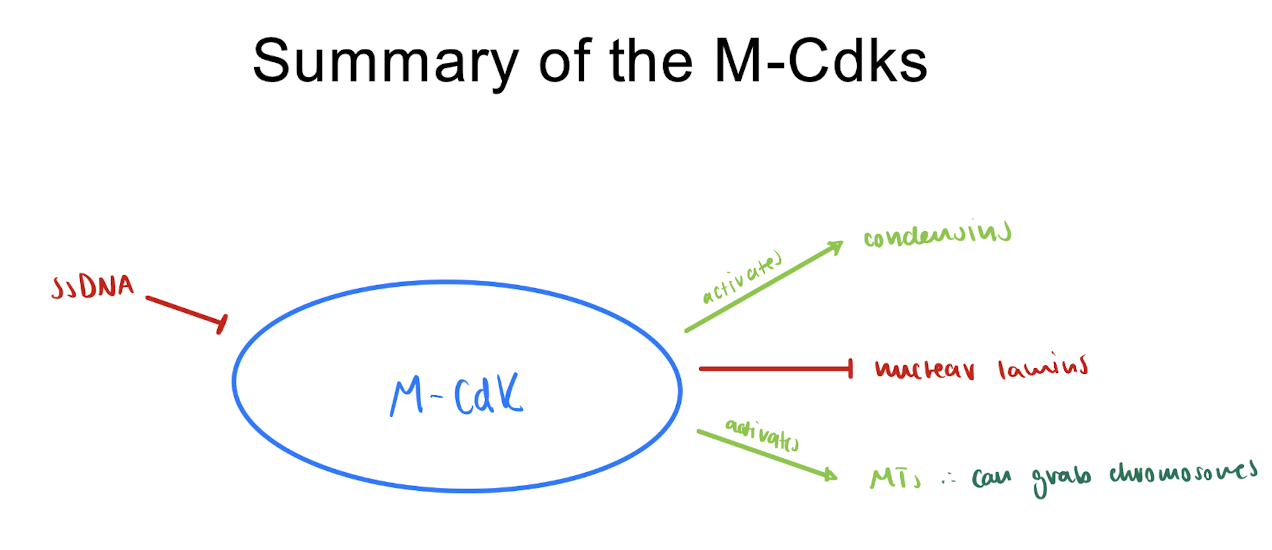
→ YES : activate M-Cdk proteins

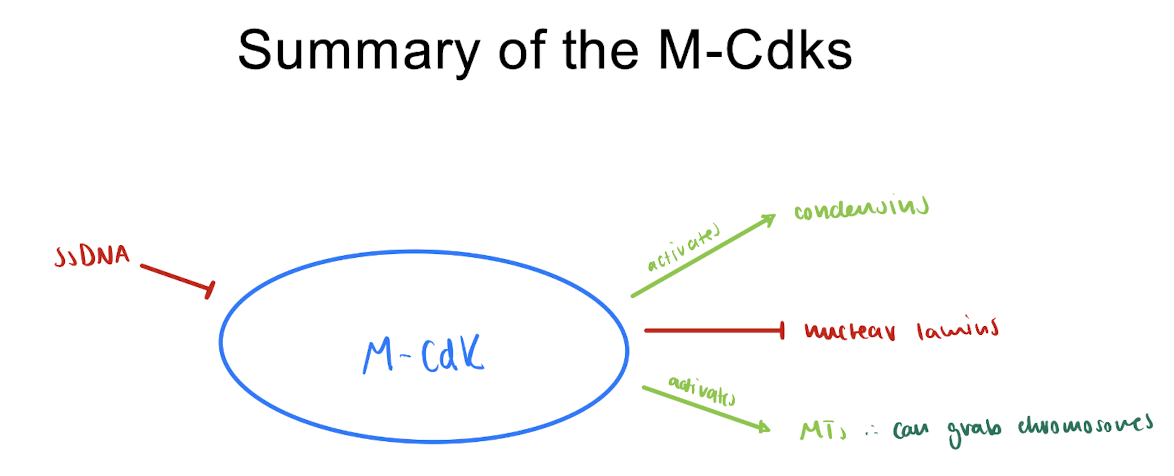
role of M-Cdks:

  1. activate condensins

  2. deactivate nuclear lamins → dismantle nuclear envelope

  3. activate MTs

<p>= entry to mitosis</p><ul><li><p>is DNA replication complete?</p></li></ul><p>→ NO : if ssDNA is present <em>(each chromosome MUST be replicated for mitosis)</em></p><p>→ YES : activate M-Cdk proteins</p><p></p><p><u>role of M-Cdks:</u></p><ol><li><p>activate condensins</p></li><li><p>deactivate nuclear lamins → dismantle nuclear envelope</p></li><li><p>activate MTs</p></li></ol><p></p>
5
New cards

M check point

= entry to anaphase

  • is very chromosome connect to MTs

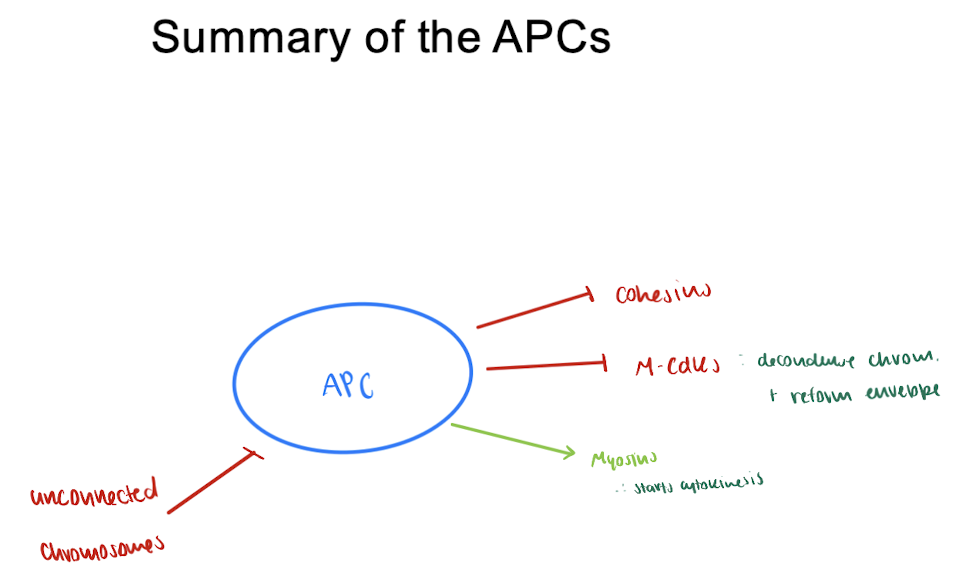
→ NO : unconnected chromosome inhibits

→ YES : activate APCs (anaphase promoting complexes)

note: each chromosome MUST be in the middle of cell for anaphase

  • if not: daughter cells are missing chromosomes

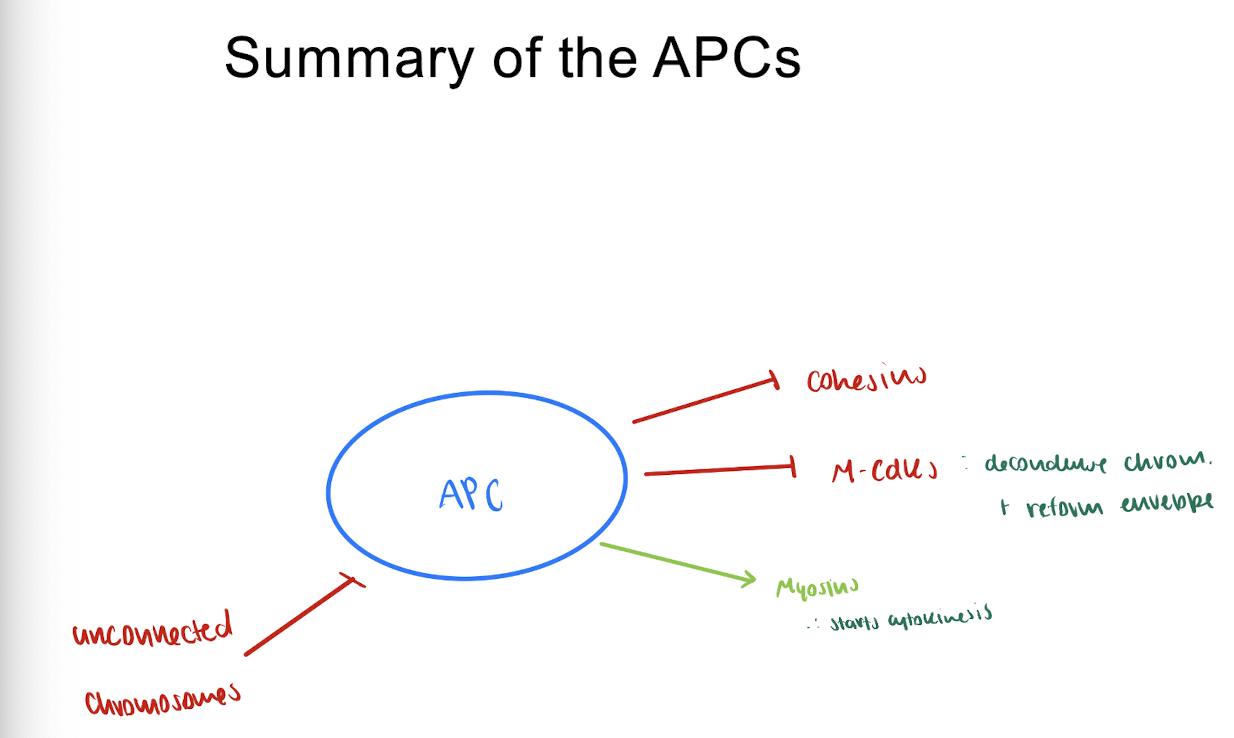
role of APCs:

  1. remove cohesins → daughter chromosomes move apart (start anaphase)

  2. inactivate M-Cdks → decondense chromosomes + reform envelope (start telophase)

  3. activate myosins (start cytokinesis)

<p>= entry to anaphase </p><ul><li><p>is very chromosome connect to MTs</p></li></ul><p>→ NO : unconnected chromosome inhibits </p><p>→ YES : activate APCs <em>(anaphase promoting complexes)</em></p><p></p><p><em>note: each chromosome MUST be in the middle of cell for anaphase</em></p><ul><li><p>if not: daughter cells are missing chromosomes </p></li></ul><p></p><p><u>role of APCs:</u></p><ol><li><p>remove cohesins → daughter chromosomes move apart (start anaphase)</p></li><li><p>inactivate M-Cdks → decondense chromosomes + reform envelope (start telophase)</p></li><li><p>activate myosins (start cytokinesis)</p></li></ol><p></p>
6
New cards
<p>Summary</p>

Summary

7
New cards
<p>Examinable Content</p>

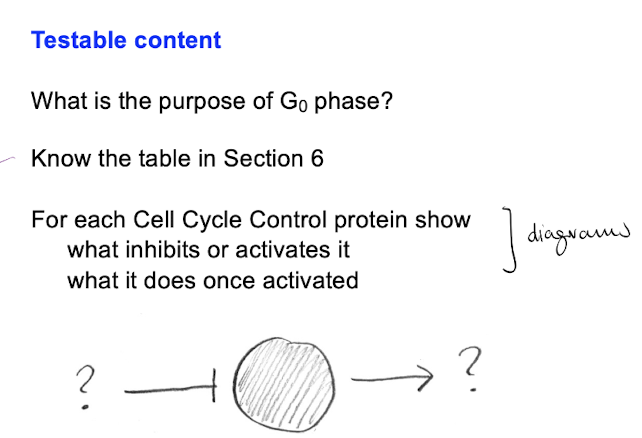
Examinable Content

G1 check:

G2 check:
M check: