Creating and Growing Organizations
 Call Kai
 Learn
Learn Practice Test
 Spaced Repetition
 Match
Match Flashcards
 Knowt Play
1/37

There's no tags or description
Looks like no tags are added yet.
Name | Mastery | Learn | Test | Matching | Spaced | Call with Kai |
|---|
No analytics yet
Send a link to your students to track their progress
38 Terms
definition entrepreneurship Schüßler
entrepreneurship is about assembling/organization-creation: planning, coordinating, resources, people, ideas, establishing routines, structures and systems through ongoing interactions that are socially embedded and context-specific
early framework for new venture creation
creating a new venture = creating a new organization
pocess takes time and unfolds in the environment
Gartner, 1985
cycles of entrepreneurial activity
organization creation
enactment ↻ selection ⇒ emergence
establishing routines
selection ↻ retention ⇒ newness
changing routines
newness ↻ emergence ⇒ transformation
Gartner & Brush, 2016
entrepreneurship as a verb
bringing an organization into being
variance view entrepreneurship
focus on the differences between individual entrepreneurs and their outcomes
assumes that entrepreneurs are either succesful or unsuccesful
focus on traits, variables and variables between relationships
⇒ entrepreneurship as an act
process view entrepreneurship
focus in the underlying processes that drive entrepreneurial outcomes (e.g. learning, adaption, innovation)
recognizes that entrepreneurial outcomes and entrepreneurial individuals are shaped by a complex interplay of factors
focus on sequences, events and feedback loops
⇒ entrepreneurship as a journey
valley of death
space between opportunity discovery and product development
shift from invention to commercial innovation
organization variables (legal, supply chain, finance, …) begin to matter
shift in roles
idea journey
idea generation
need: cognitive flexibility
idea elaboration (evaluating idea’s potential)
need: support
[valley of death]
idea championing (convincing investors)
need: influence and legitimacy
idea implementation (producing a tangible outcome)
need: shared vision and understanding
five phases of growth model (Greiner, 1998)
each phase involves growth and a crisis
creativity; leadership
direction; autonomy
delegation; control
coordination; red tape
collaboration; variable
maturity increases throughout the stages
critique and limitations to Greiner, 1998
focusses only on moderately growing, industrial and consumer goods industries -> different problems e.g. in knowledge-based firms
failure is possible at all stages
additional stages exits, overlaps across phases
past-oriented and deterministic; neglects role of future-making
IPO
Börsengang
life cycle entrepreneurial firm: ideal type model
startup: define and validate business concept
transition: lay the foundation for a scalable business
scaling: add resources to profitably scale the enterprise
exit: harvest the venture through IPO, private sale, merger or acquisition
Picken, 2017
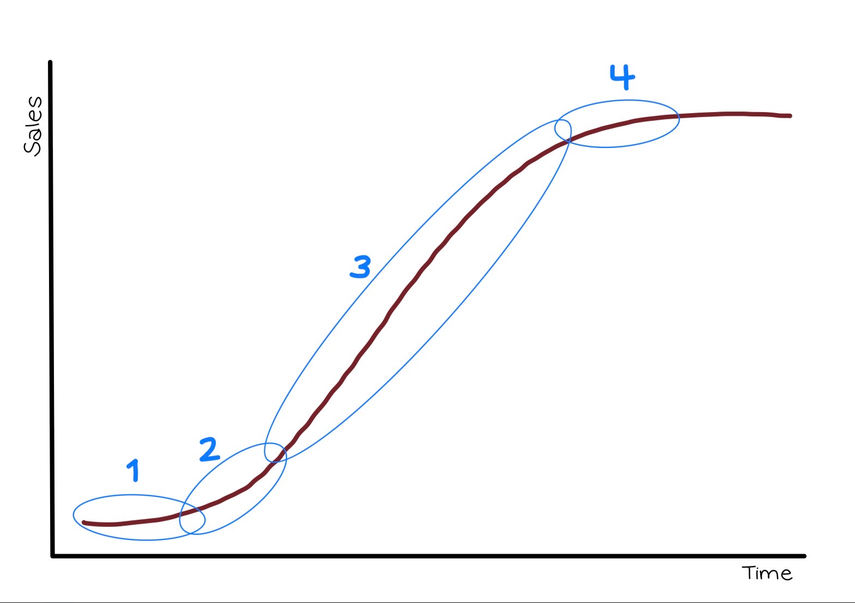
ideal type model: startup (1)
define and validate the business concept
understand the market opportunity, the offering, the business model and go-to-market strategy
organization: informal, loosely structured, founder-driven
Picken, 2017
ideal type model: transition (2)
lay the foundation for a scalable business
get the product-market fit and organizational structures in place
engage customers
organization: develop new organization capabilities, build repeatable processes and lay foundation for growth
Picken, 2017
ideal type model: scaling (3)
add resources to profitably scale the enterprise
leverage partnerships to grow the business within the framework of the validated business concept geographically/market segments
organization: professionalized functions
Picken, 2017
ideal type model: exit (4)
harvest the venture through IPO, private sale, merger or acquisition
realize returns for funders and investors through a succesful exit
Picken, 2017
transition challenges
setting a direction and maintaining focus
positioning products in an expanded market
maintaining customer/market responsiveness
building an organization and management team
developing effective processes and infrastructures
building financial capital
developing an appropriate culture
managing risks and vulnerabilities
Picken, 2017
transitional challenge managing risks and vulnerabilities
managing technical, market, competitive and execution risks through proactive risk management
transition challenge developing an appropriate culture
shape values, beliefs and norms early on
transition challenge building financial capital
prudently manage capital
don‘t overpromise and underdeliver
focus on returns for investors
transition challenge developing effective processes and infrastructures
further develop structures, planning, accounting, HRM, and performance management
transition challenge building an organization and management team
align staffing and structure with strategy
transition challenge maintaining customer/market responsiveness
maintain responsiveness despite growing standardization
focus on organizational design and communication
transition challenge positioning products in an expanded market
adjust and reposition product offering beyond initial core
develop sales, marketing, production and management processes
transition challenge setting a direction and maintaining focus
validate the business concept in the market
test value creation & value capture in the context of competition
growth ambitions: start-up
growth ambitions: yes
right business model: no
⇒ find a model
growth ambitions: scale-up
growth ambitions: yes
right business model: yes
⇒ scale the model
growth ambitions: shape-up
growth ambitions: no
right business model: no
⇒ reinvent the model
growth ambition: stand-up
deliberate strategic choice
growth ambitions: no
right business model: yes
⇒ secure the model
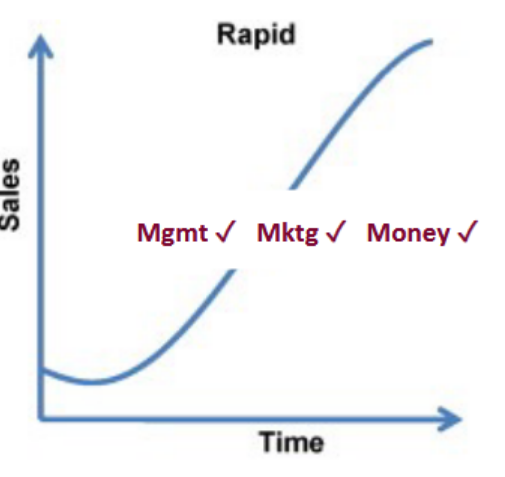
rapid growth
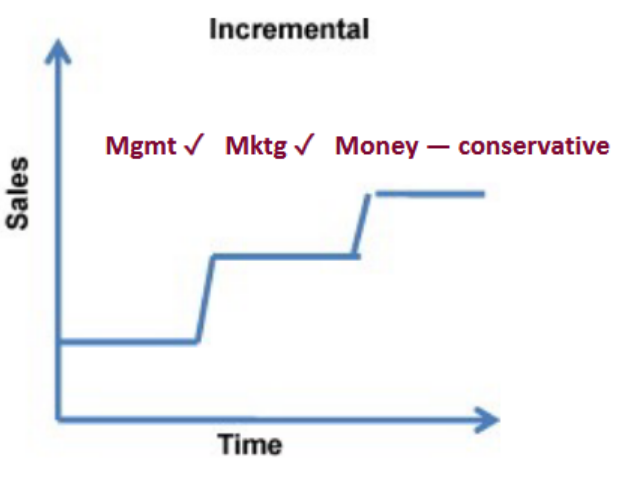
incremental growth
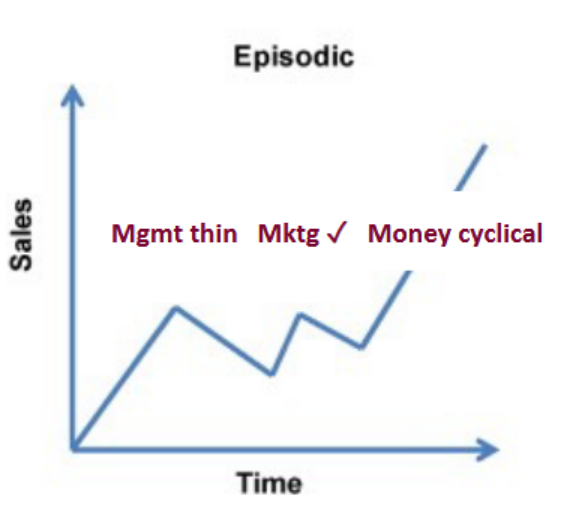
episodic growth
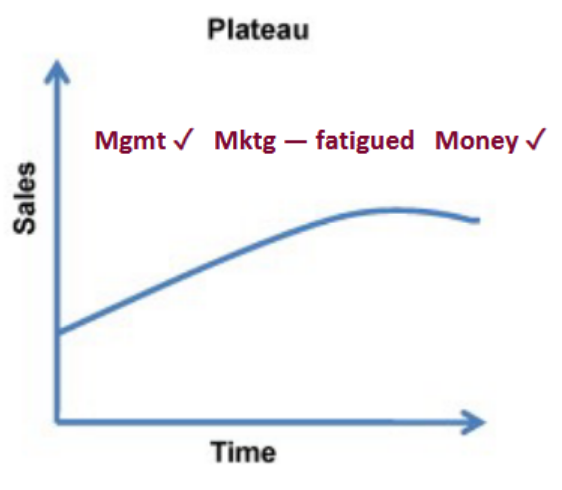
plateau growth
difference between growing and scaling
growing: increasing revenue with incrementally increasing costs
scaling: adding significant numbers of clients/customers/users, increasing revenue without necessarily expanding costs
⇒ scaling as a high-growth strategy, significant in digital economies
pathways of growth
affected by:
management
marketing
money
blitzscaling
measure when you need to grow really quickly
rapidly building out a company to serve a large (usually global market) with the goal of becoming the first mover at scale
timing of scaling
is important
scaling early
benefit: decrease imitation risk
cost: increase commitment risk
both increases if scaled earlier
specific challenges of scaling, compared to continuous growth
sense of turmoil and chaos instead of path dependence and rigidity (lack of an internal organization)
no possibilities to learn from prior experience
scaling early may reduce imitation risk, but prematurely curtails learning through experimentation
bringing a “minimum viable product” (MVP) to market means that competitors can move ahead and quickly bring a better product to market
launching an MVP product is only acceptable in a limited number of industries – mainly software
compromising on ethics – i.e. a lack of HRM, dysfunctional corporate cultures, unethical business practices