6- Final Impression Procedure and Master Cast Fabrication
 Call Kai
 Learn
Learn Practice Test
 Spaced Repetition
 Match
Match Flashcards
 Knowt Play
1/18

There's no tags or description
Looks like no tags are added yet.
Name | Mastery | Learn | Test | Matching | Spaced | Call with Kai |
|---|
No analytics yet
Send a link to your students to track their progress
19 Terms
What tray/material can you use for MANDIBULAR final impression?
A stock metal tray (Caulk Rim-Lock) with alginate material
Custom resin tray + alginate
Custom resin tray + PVS
Stock plastic tray
What areas of the stock metal tray typically require a wax extension?
Lingual and disto-lingual regions to prevent the sublingual tissues from displacing the alginate
How can you manipulate the border wax?
Warmed in hot tap water then border molded intraorally for better tray adaptation (broad coverage is essential for distal extension cases)
Why would you want to use a custom resin tray + alginate?
Helpful for the final impression if the provider had trouble getting an adequate impression using the stock trays
Is a custom resin tray + PVS recommended to use?
It’s possible but its more expensive, time consuming, and there has been a greater percentage of non-fitting castings using this method
Can you use Impregum as a final impression material?
No because it is so stiff, you may lock the tray onto the patient’s teeth or fracture teeth off the model
What tray/material can you use for MAXILLARY final impression?
Custom resin tray
3 layers of wax relief
Alginate
Stops
Why should you avoid using a stock tray for maxillary impressions?
The major connector may not contact the palate when a stock tray is used
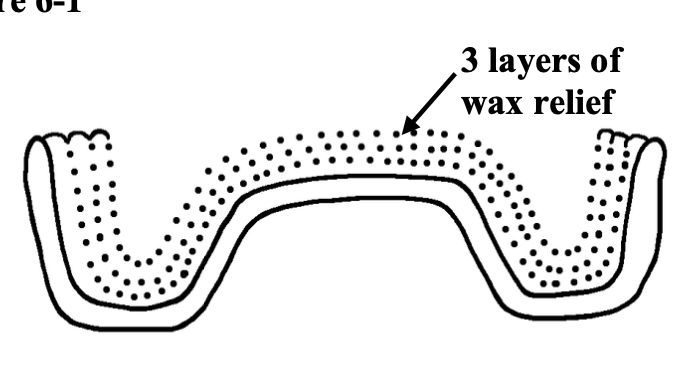
What does the 3 layers of wax do?
Provide space for a thick layer of alginate
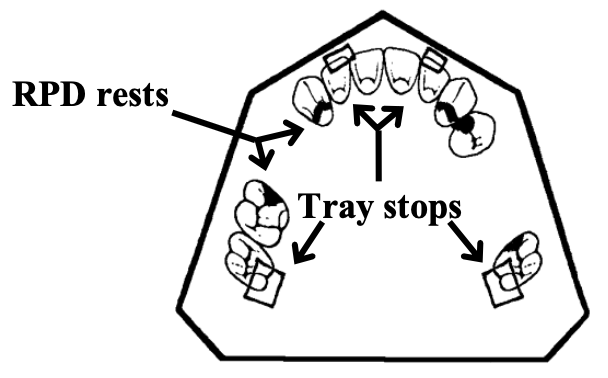
Stops should be used whenever possible with acrylic resin final impression trays. How many stops are preferred?
3-4 widely spaced stops on uninvolved teeth. Soft tissue stops must be used in free-end situations and when there are insufficient uninvolved teeth remaining. Keep stops away from areas to be contacted by mental framework
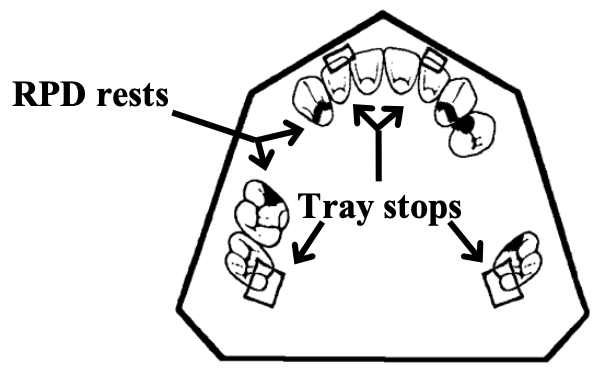
How large should tray stops be?
5×7mm in size and should cover the entire incisal edge of an anterior tooth and from buccal to lingual surface on posterior teeth
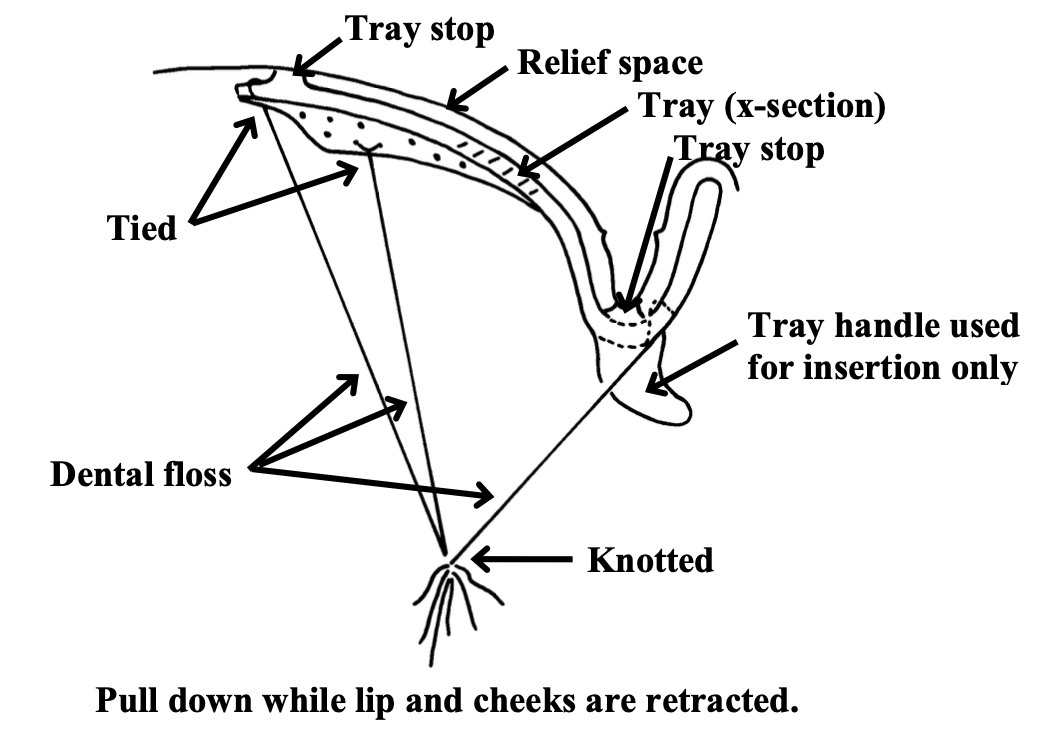
Removing the impression from the mouth is difficult because alginate covers the borders, and custom tray handles are slippery. What can you do to help easily remove the tray?
Tie floss through the right and left posterior holes and an anterior site. Tie the loose ends in a knot and remove the impression parallel with the long axis with a jerk on the floss. Make sure someone is retracting for you and blow some air from a syringe
What material can be used when there are no large hard or soft tissue undercuts?
PVS- use one layer of wax relief in tray construction
Prior to taking the impression, what are some things you need to do beforehand?
Sometimes u might need to do a prophy
Measure the distance from gingival margin to lingual frenum and FOM
Mark functional limit of labial frenum if u are making a swinglock prosthesis
Mark PPS
Fill tray with alginate, wipe remaining alginate into palate and around teeth
Insert tray immediately
Remove after 90 sec
What is the most common problem seen in clinic when taking impressions?
Underseating the tray. The edge of the tray should extend well beyond the gingival margins. There should be about 3mm of alginate overlying the incisal / occlusal surfaces. Underseating leaves too much unsupported alginate
How long after you take an impression should you pour up?
Immediate- 3 min is maximum