Ohio Biology EOC Review
Due: Apr 29, 2025, 3:59 PM
 Call Kai
 Learn
Learn Practice Test
 Spaced Repetition
 Match
Match Flashcards
1/73

There's no tags or description
Looks like no tags are added yet.
Name | Mastery | Learn | Test | Matching | Spaced | Call with Kai |
|---|

74 Terms
What are genes?
Genes are sections of DNA that control a single genetic trait and code for a protein.
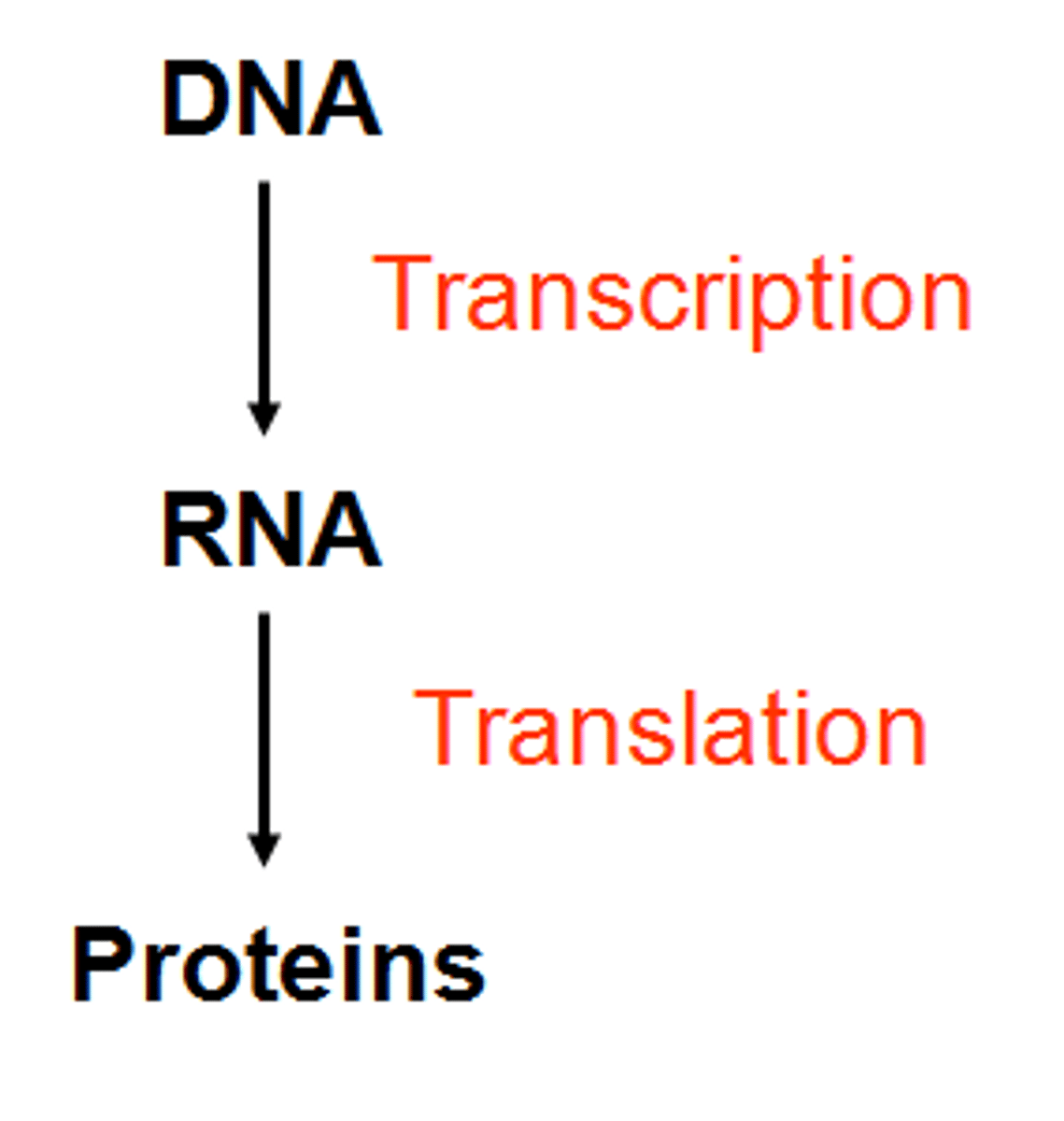
What is the central dogma of molecular biology?
DNA -> RNA -> Protein
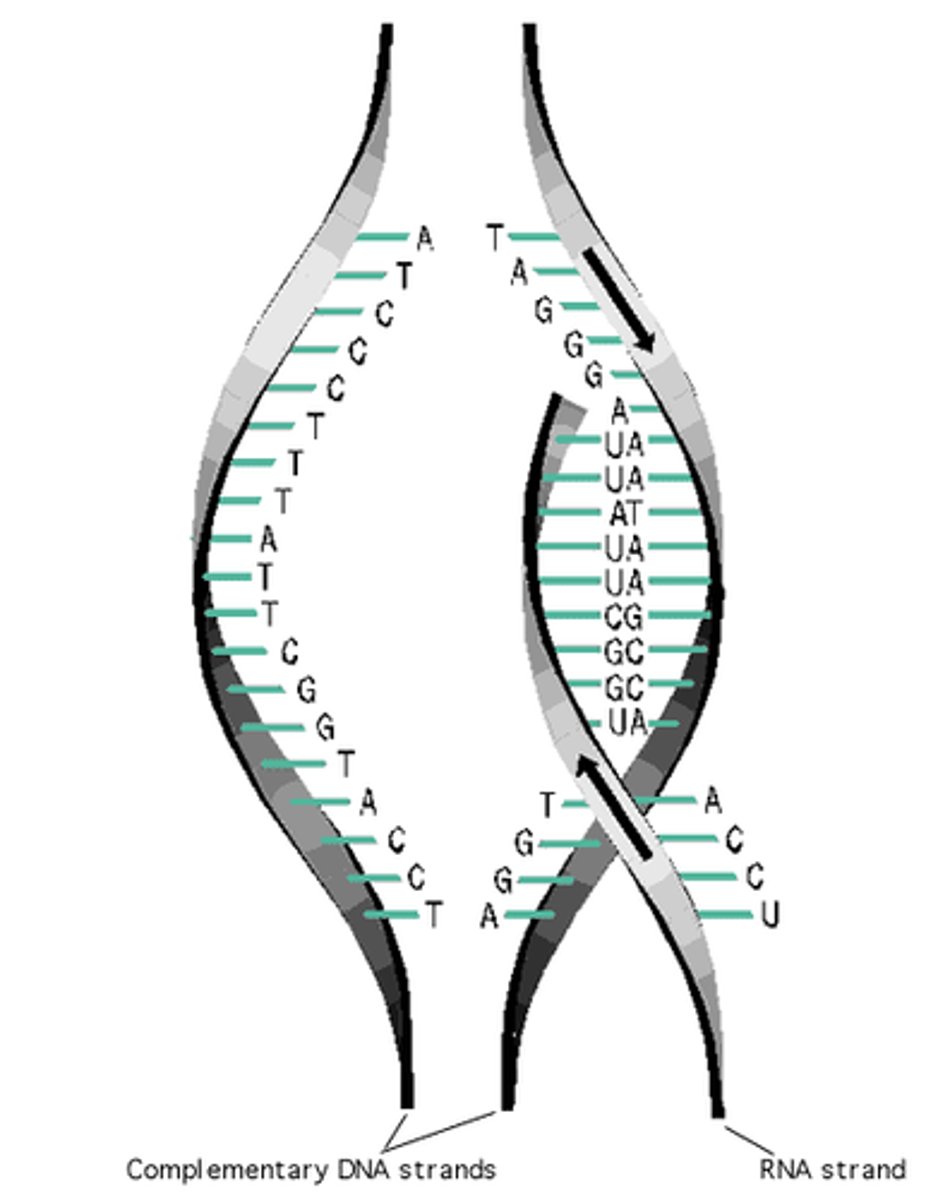
What process makes mRNA?
transcription
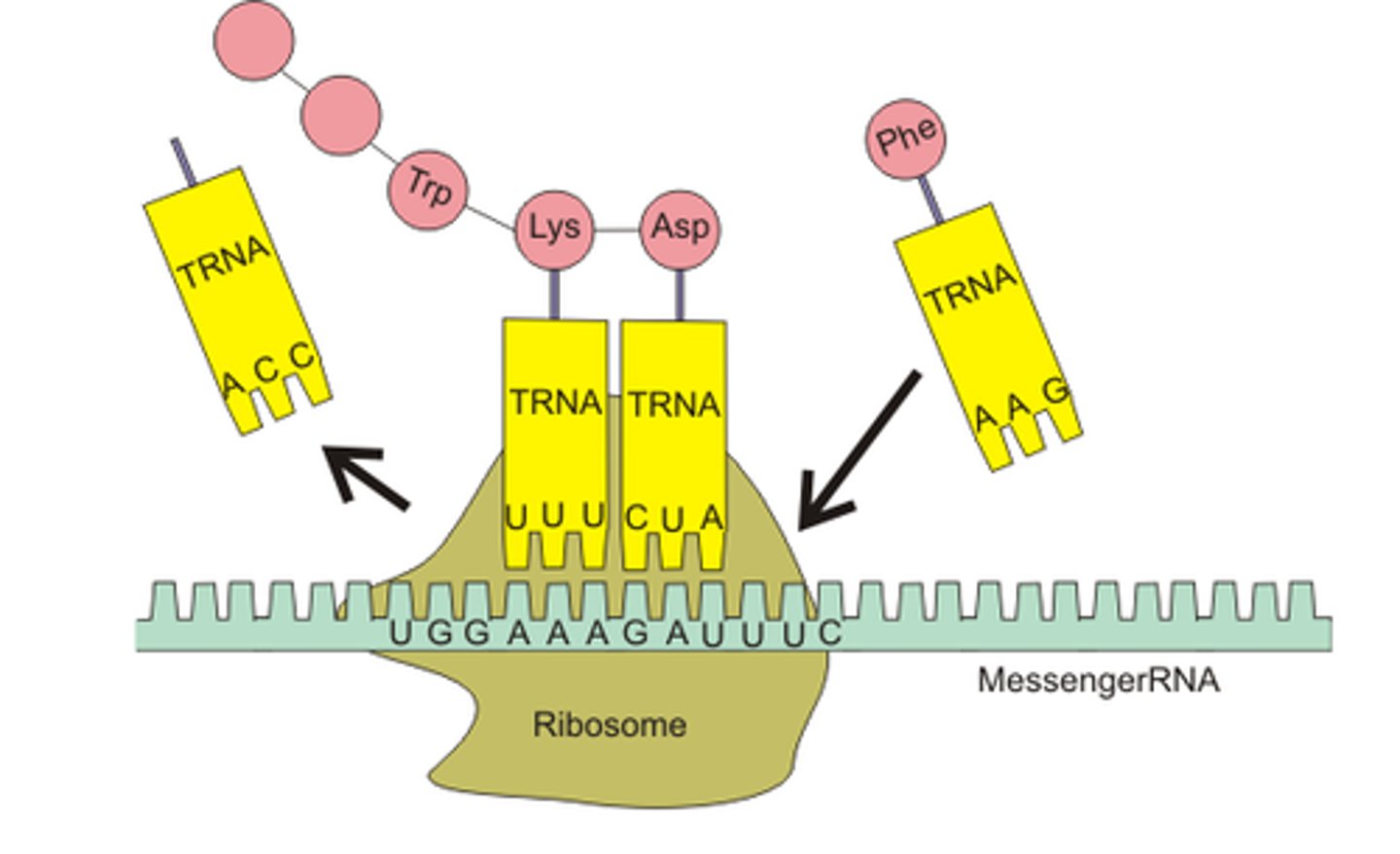
What process makes proteins?
translation
Name the base pairs in DNA
A-T
G-C
Name the base pairs in RNA
A + U, C + G
What determines the shape of a protein?
sequence of amino acids
What is genetic recombination?
the production of offspring with combinations of traits differing from either parent
What are two types of genetic recombination?
crossing over and independent assortment
Crossing over is
Process in which homologous chromosomes exchange portions of their chromatids during meiosis.
Independent assortment
Independent segregation of genes during the formation of gametes
How can a mutation affect a protein?
It can have NO EFFECT on a protein or change the structure and function of the protein.
When is a DNA mutation harmful?
If the protein the DNA codes for can not function properly.
Is DNA identical in all cells of an organism?
Yes!
Complete dominance
a relationship in which one allele is completely dominant over another
Incomplete dominance
Situation in which one allele is not completely dominant over another allele, causing a mix of traits.
Codominance
A condition in which neither of two alleles of a gene is dominant or recessive, and both traits are expressed.
Sex-linked traits
Traits controlled by genes located on sex chromosomes.
Where does translation occur?
ribosome
Where does transcription occur?
nucleus
genetic engineering
Process of making changes in the DNA code of living organisms
What is the goal of genetic engineering?
to produce organisms with new & improved characteristics and correct a malfunction
What are restriction enzymes?
They cut the DNA into specific parts
What is cloning used for?
Cloning can be used to make a copy of a particularly good strain of plant
What is gene therapy?
the transplantation of normal genes into cells in place of missing or defective ones in order to correct genetic disorders.
What is gel electrophoresis?
the separation of charges molecules using an electric field
What are three types of genetic engineering?
Cloning, gene therapy, gel electrophoresis
How do the order of bases affect the protein made?
the order of bases in a section of DNA decides the order of amino acids in the protein. these amino acids then fold to produce specifically shaped proteins such as enzymes
Why must DNA be able to make copies of itself?
For the organism to grow and use DNA in different cells for unique functions.
Compare and contrast the genetic makeup of two different cells in the SAME organism.
The DNA will be identical in both cells, but different genes in each cell are used.
Why is selective breeding used?
Scientists are able to use organisms with beneficial traits and mutations for reproduction, and the positive mutations are spread out and variation occurs.
How many phenotypes are involved in incomplete dominance?
THREE
Why does a gene mutation change a protein?
The sequence of amino acids changes, and therefore the protein changes. The protein that helps make the specific trait can't do its job.
What is genetic drift?
A change in allele frequencies caused by random events
If the allele frequency is not constant, what is occurring?
Evolution
What factors can disturb the genetic equilibrium and cause evolution to occur? (5)
Sexual selection, small population size, immigration or emigration, mutation, and natural selection.
What is sexual selection?
Mate preference by one sex for certain characteristics in individuals of the other sex.
How does sexual selection lead to evolution?
The allele frequencies change due to a preference for or against an allele, so genetic equilibrium is thrown off.
In what types of populations do genetic drift occur?
Small populations, because a certain allele can become more common and represented.
Immigration
Moving into a population
Emigration
Migration from a location
How do mutations cause genetic variation?
Mutations cause new alleles to appear in a gene pool, due to a changed protein, and this leads to a change in allele frequencies and evolution.
What is speciation?
the formation of new and distinct species in the course of evolution.
Two types of gene flow
immigration and emigration
What is used as evidence for evolution?
homologous structures and selective breeding of domesticated animals, similar DNA base sequences.
What is reproductive isolation?
when the members of two populations cannot interbreed and produce fertile offspring
What are three types of reproductive isolation?
behavioral, geographic, temporal
behavioral isolation
isolation between populations due to differences in courtship or mating behavior
Geographic isolation
form of reproductive isolation in which two populations are separated physically by geographic barriers such as rivers, mountains, or stretches of water
How much energy is passed from one trophic level to the next?
10%
Why is only 10% of energy transferred between trophic levels in an energy pyramid?
Most of the energy is used directly by the organism for breathing, finding food, and mating and is released as heat.
How are molecules recycled?
Biogeochemical cycles help pass atoms that are used for different functions. Matter is only transformed, not created or destroyed.
What do similar organisms share?
Similar DNA sequences and similar homologous structures(morphology)
What is carrying capacity?
the number of people, other living organisms, or crops that a region can support without environmental degradation.
What is exponential population growth?
The expansion of a population in an ideal and unlimited environment
What is logistic population growth?
occurs when the growth rate decreases as the population size approaches carrying capacity
Ecosystem Homeostasis
The ability of an ecosystem to maintain steady equilibrium by responding to internal and external negative feedback systems
What caused ecosystems to be change?
Competition, predation, disease, weather.
What are invasive species?
Non-natives that overrun native species in ecosystems
What are niches?
All ways an organism interacts with the environment (jobs)
What is photosynthesis?
the process by which green plants and some other organisms use sunlight to synthesize foods and oxygen from carbon dioxide and water.
What is cellular respiration?
Process that releases energy by breaking down glucose and other food molecules in the presence of oxygen and creates ATP.
What can change an enzyme?
Substrate Concentration, pH, temperature and physical force.
What is a hypertonic solution?
Solute concentration is greater than that inside the cell; cell loses water
What is a hypotonic solution?
the solution has a lower solute concentration than the cell so water moves into the cell causing plant cells to swell and animal cells to swell and burst
What is an isotonic solution?
Contains equal concentratinos of solutes on both sides.
reactants of photosynthesis
carbon dioxide and water
reactants of cellular respiration
glucose and oxygen
Chemosynthesis
process by which ATP is synthesized by using chemicals as an energy source instead of light
Passive transport
Requires NO energy, Movement of molecules from high to low concentration, Moves with the concentration gradient
Active transport
Energy-requiring process that moves material across a cell membrane against a concentration difference
What is the role of carbohydrate?
Supply energy to the body
What is the role of lipids?
long term energy storage, insulation, cell membrane
What is the role of nucleic acids?
Source of genes & hereditary information