Gen Surg: Need to Know (GI)
 Call Kai
 Learn
Learn Practice Test
 Spaced Repetition
 Match
Match Flashcards
 Knowt Play
1/117

There's no tags or description
Looks like no tags are added yet.
Name | Mastery | Learn | Test | Matching | Spaced | Call with Kai |
|---|
No analytics yet
Send a link to your students to track their progress
118 Terms
Atelectasis
Wind: MCC of early post-op fever, presenting day 1-2
-Presentation: low grade fever, decreased breath sounds, mild hypoxia, shallow breathing, recent anesthesia
Early ambulation
In addition to incentive spirometry, what is a hallmark of post-op atelectasis treatment?
UTI
Water: Cause of postop fever on days 3-5, usually related to a Foley catheter placement
-Sx: fever, dysuria, frequency, suprapubic tenderness, cloudy urine
-Tx: remove catheter, urinalysis, culture, antibiotics
DVT
Walking: Cause of postop fever on days 5-7
-Presentation: leg swelling, calf pain, erythema, sudden dyspnea, tachycardia, chest pain
-Tx: anticoagulation with heparin and then DOAC
Surgical Site Infection
Wound: Cause of postop fever around days 5-7
-Presentation: fever, erythema, warmth, purulent drainage, wound pain
Open wound
If a patient is presenting with a surgical site infection, what is the first step in treatment?
Drug Reaction
Wonder Drugs: Cause of postop fever
-Presentation: persistent fever, rash, eosinophilia, watery diarrhea (C.Diff)
-Tx: stop offending drug
Vancomycin
What PO drug is given for C.Diff?
Beta Blocker
What class of cardiac medications can be continued preoperatively?
One week
How long should GLP1s be held before a surgery?
6-8 weeks
To decrease pulmonary risk, how long should patients stop smoking for before their procedure?
Malnutrition
What can cause poor wound healing, infection, and anastomotic leak? Patients with this are given nutrition support for 7-14 days before elective surgery
3
An albumin of less than what is indicative of malnutrition?
LMWH + Mechanical Compression
All major GI surgeries require prophylaxis with what two agents?
28
How long should LMWH be used before an elective procedure if the patient has cancer?
Cefazolin + Metronidazole
What two IV antibiotics are given 30-60 minutes before surgery to help prevent postop infection with GI surgeries?
Anastomotic Leak
Fever + tachycardia on post-op day 3-5 after bowel surgery is what until proven otherwise?
Anastomotic Leak
A complication of bowel surgery that typically occurs on postop day 3-7
-RF: malnutrition, steroids, hypotension, tension on anastomosis, pelvic anastomosis, smoking, and radiation
-Presentation: fever, tachycardia, abdominal pain, leukocytosis, sepsis, purulent or feculent drain output
-Dx: CT with contrast (oral and IV)
Emergent surgery
If a patient with a suspected anastomotic leak is unstable or showing signs of diffuse peritonitis, what is the treatment of choice?
Post-op Ileus
Temporary cessation of bowel motility after surgery, normally lasting 24-72 hours
-RF: opioids, electrolyte disturbances, long surgeries, peritonitis, handling of bowel
-Presentation: abdominal distention, no flatus or bowel movements, nausea/vomiting, hypoactive bowel sounds
-Dx: abdominal x-ray shows diffuse dilated bowel loops with a transition point
-Tx: NPO, fluids, reduce opioids, chewing gum, NG tube
Ileus
If the abdominal x-ray DOES NOT show a transition point, should you suspect an ileus or a SBO?
SBO
If the abdominal x-ray shows a transition point, should you suspect an ileus or a SBO?
SBO
Obstruction of the small intestine, typically due to adhesions from prior abdominal surgery
-Presentation: crampy abdominal pain, vomiting, no flatus or stool, high-pitched bowel sounds
-Dx: x-ray shows air fluid levels, CT identifies the transition point
-Tx: NPO, NGT, IV fluids
Surgery
If a patient with a small bowel obstruction shows signs of strangulation, peritonitis, or no improvement after 48 hours, what is the recommended treatment of choice?
Wound Dehiscence
Separation of the wound after surgery
-RF: malnutrition, infection, steroids, obesity, increased intra-abdominal pressure
-Presentation: serosanguinous pop of drainage, visible wound separation, and sudden pain
-Tx: wound care, surgery
Superficial
What type of dehiscence is being described?
-Skin separation
Fascial
What type of dehiscence is being described?
-Separation of the fascia
Evisceration
What type of dehiscence is being described?
-Bowel protruding
Abdominal Abscess
Post-op complication that occurs around days 5-10
-Presentation: fever, tachycardia, abdominal pain, leukocytosis, and peritonitis
-Dx: CT with contrast
-Tx: CT guided drainage to visualize + antibiotics
Esophageal Cancer
Malignancy of the upper GI tract that presents as progressive dysphagia, with solids first and then liquids
-Two subtypes: adenocarcinoma, squamous cell carcinoma
-Dx: EGD with biopsy, CT, EUS
-Tx: chemoradiation + esophagectomy
-Complications: tracheoesophageal fistula, mets
EGD + biopsy
What is the first and best test for diagnosing esophageal cancer?
EUS
What imaging is the most accurate for depth of invasion of esophageal cancer?
Adenocarcinoma
Malignancy affecting the distal esophagus, associated with GERD and Barrett’s esophagus
Squamous Cell Carcinoma
Malignancy affecting the mid/upper esophagus
-Linked to tobacco, alcohol, hot beverages, achalasia, caustic injury
-Often diagnosed late
H. pylori
What is the most important risk factor for gastric cancer?
Gastric Cancer
Malignancy of the mid-GI tract, with adenocarcinoma being the most common
-Early Presentation: dyspepsia, vague abdominal pain in the elderly
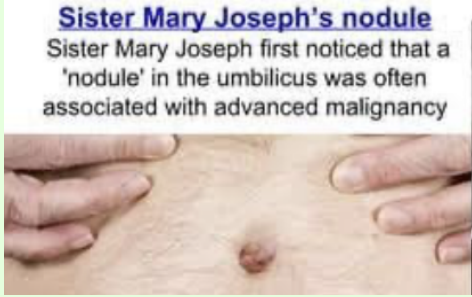
-Late Presentation: weight loss, early satiety, anemia, melena, vomiting, Virchow node, Sister Mary Joseph nodule
-Dx: EGD with biopsy
-Tx: gastrectomy with lymph node dissection
Upper GI Bleed
Bleeding proximal to the ligament of Treitz
-Causes: PUD, gastritis, esophageal varices, Mallory-Weiss tear, alcohol use, NSAID use
-Presentation: hematemesis, melena, syncope, epigastric pain, signs of shock
-Dx: endoscopy after stabilization
-Tx: IV fluids, blood transfusion
7, 8
Blood transfusions are needed if a patient’s hemoglobin falls below ___ or ___ if they have cardiac disease
PUD
MCC of upper GI bleeding, related to NSAIDs or H. pylori
-Presentation: melena then hematemesis
-Dx: EGD, biopsy for H.pylori
-Tx: high dose IV PPI, EGD with epi injection, thermal coagulation, or clips
Esophageal Varices
Cause of upper GI bleeding due to portal hypertension
-Presentation: large volume hematemesis, hypotension, stigmata of liver disease
-Dx: EGD shows dilated veins, check INR, platelets
-Tx: octreotide, ceftriaxone, emergent EGD band ligation
Octreotide
What agent can be given for bleeding esophageal varices before undergoing an EGD?
Mallory-Weiss Tear
Mucosal tear after forceful vomiting/retching, related to alcohol use
-Presentation: hematemesis after vomiting
-Dx: EGD shows linear tear at GE junction
-Tx: PPI, clip if persistent
Esophagitis
Cause of upper GI bleeding in immunocompromised patients
-Presentation: odynophagia, chest pain, mild bleeding
-Dx: EGD
-Tx: PPI, treat cause
Obesity
Chronic health condition defined by a BMI of > 30, associated with an increased risk of diabetes, GERD, NAFLD, sleep apnea, CAD, and gallstones
-Presentation: dyspnea on exertion, snoring/OSA, joint pain, reflux, fatigue
-Dx: BMI + labs for metabolic syndrome
-Tx: lifestyle modifications, pharmacotherapy, bariatric surgery if BMI > 40 or > 35 with comorbidities
Small Bowel Obstruction
Mechanical blockage of the small intestine, MCC is adhesions
-Sx: crampy abdominal pain, profuse vomiting, abdominal distention, obstipation, hyperactive to absent bowel sounds
-Dx: x-ray, CT scan is the best test
-Tx: NPO + fluids + electrolyte replacement + NG tube decompression
Large Bowel Obstruction
Mechanical colon blockage, most commonly due to colorectal cancer
-Presentation: progressive abdominal distention, mild vomiting, constipation, tympanitic abdomen, crampy pain
-Dx: abdominal X ray + CT
-Tx: treat cause, surgery
Diverticulitis
Inflammation of colonic diverticula, usually sigmoid
-Presentation: LLQ pain, fever, changes in bowel habits, nausea
-Dx: CT abdomen with contrast, avoid colonoscopy
-Peritonitis is a complication
Colonoscopy
What should be avoided in the acute phase of diverticulitis, due to the risk of perforation?
Ciprofloxacin + Mentronidazole
What combination of antibiotics is used in mild diverticulitis?
Lower GI Bleed
Bleeding distal to the ligament of Treitz
-Presentation: hematochezia, maroon stools, abdominal cramping, anemia
-Dx: stabilize, labs, two large bore IVs, colonoscopy after stabilization, CTA for active bleeding
-Tx: IV fluids, transfusion
CTA
What imaging should be ordered in the case of an active lower GI bleed?
Diverticulosis
Most common cause of an acute lower GI bleed
-Presentation: painless, large-volume bright red blood per rectum
-Dx: CT angiography or colonoscopy
-Tx: endoscopic therapy
AVM
Cause of lower GI bleeding in older adults with CKD or aortic stenosis
-Presentation: recurrent, intermittent bleeding
-Dx: colonoscopy shows flat, red lesions
-Tx: argon plasma coagulation
Hemorrhoid
Painless or painful bleeding per rectum
-Presentation: blood on toilet paper when wiping
-Dx: anoscopy
-Tx: topical therapy, banding, or excision
Colorectal Cancer
Cause of occult or overt bleeding and is associated with a change in stool habits or weight
-Presentation: anemia, intermittent hematochezia
-Dx: colonoscopy with biopsy
-Tx: surgical resection + oncology
Ischemic Colitis
Cause of lower GI bleeding in the elderly and those in “low-flow” states, typically occurring at the splenic flexure because it gets the least reliable blood flow
-Presentation: crampy abdominal pain + bloody stools
-Dx: Colonoscopy + CTA
-Tx: supportive, surgery if perforation
Infectious Colitis
Cause of lower GI bleeding in those who have traveled recently, have a foodborne illness, or have taken antibiotics
-Presentation: fever, abdominal pain, bloody diarrhea
-Dx: stool PCR, colonoscopy if unclear
-Tx: treat the underlying infection
IBD
Cause of lower GI bleeding in younger patients, due to chronic inflammation
-Presentation: bloody diarrhea, tenesmus, abdominal pain
-Dx: colonoscopy shows continuous inflammation (UC) or skip lesions (Crohns)
-Tx: steroids for flares, 5-ASA for UC
Meckel’s Diverticulum
Cause of lower GI bleeding in children or young adults, secondary to ulceration of ectopic gastric mucosa
-Presentation: painless bleeding in a young patient
-Dx: T-99 meckel scan
-Tx: surgical resection
Hiatal Hernia
Herniation of stomach through diaphragm, which can be sliding or paraesophageal
-Presentation: heartburn, regurgitation, chest discomfort, dysphagia, postprandial fullness, chest pain
-Dx: barium swallow, EGD, manometry
Barium Swallow
What is the best initial diagnostic for hiatal hernias?
Crohn’s Disease
Chronic transmural inflammatory bowel disease, most commonly affecting the terminal ileum
-Characterized by skip lesions, cobblestoning
-Presentation: RLQ pain, chronic diarrhea, weight loss, fever, perianal disease, extraintestinal manifestations
-Dx: colonoscopy with biopsy, + ASCA
Ulcerative Colitis
Chronic mucosal inflammatory disease limited to the colon, associated with the higher cancer risk
-Presentation: bloody diarrhea, urgency, tenesmus, LLQ pain, fever, arthritis, erythema nodosum
-Dx: colonoscopy shows continuous inflammation and crypt abscesses, + pANCA
-Tx: mesalamine, steroids, total colectomy is curative
-Complications: toxic megacolon
Colon Cancer
Adenocarcinoma of the colon or rectum, associated with a history of polyps
-Presentation: altered bowel habits, occult or overt blood in stool, iron-deficiency anemia, abdominal pain, weight loss, obstruction, and palpable mass. May complain of thin stools
-Dx: colonoscopy with biopsy is diagnostic, CT for staging, CEA for follow up
-Tx: surgical resection, chemo
CEA
What tumor marker should be tracked in colon cancer?
Anal Hemorrhoids
Dilated venous plexus in the perianal area, can be internal or external
-Presentation: bright red rectal bleeding, pain with external hemorrhoids
-Dx: clinical exam and visualization, anoscopy for internal hemorrhoids
-Tx: fiber, sitz baths, steroids, hemorrhoidectomy if Grade III-IV
Anal Fissure
Linear tear in anoderm, usually posterior midline
-Presentation: severe pain during/after defecation, often described as tearing. Possible skin tag if chronic
-Dx: clinical
-Tx: fiber, stool softeners, sitz, topical nitroglycerin/CCB to improve sphincter spasm and blood flow
Anal Fistula
Abscess from gland obstruction, which can be associated with Crohn’s disease
-Presentation: severe anal pain, swelling, fever (abscess), chronic drainage, recurrent infections (fistula)
-Tx: I&D (abscess), fistulotomy
Ileus
Functional paralysis of bowel motility, which is common after surgery, using opioids, electrolyte issues, and infection
-Presentation: mild diffuse abdominal pain, distention, N/V, minimal bowel sounds
-Dx: diffuse dilation without a transition point on x-ray or CT
-Tx: treat underlying cause, minimize opioids, early mobilization
Colonoscopy
Endoscopic exam of entire colon, which is used for screening, biopsy, polypectomy, and evaluating bleeding or anemia
-Start at 45, 10 if history of FAP
-Procedure: bowel prep, sedation, insertion of colonoscope, visualization, biopsy, and polyp removal
-Contraindications: suspected perforation, severe diverticulitis, fulminant colitis, toxic megacolon, and unstable patient
Appendicitis
Inflammation from obstruction, with fecalith and lymphoid hyperplasia being the MCC
-Presentation: periumbilical pain that radiates to the RLQ at McBurney’s point, anorexia, N/V, low fever, pain before vomiting, guarding, rebound, Rovsing, Psoas, Obturator sign
-Dx: CT abdomen with contrast for adults, US for kids/pregnancy
-Tx: laparoscopic appendectomy
Ceftriaxone + Metronidazole
What two antibiotics are given in appendicitis?
Hepatic Cancer
Primary neoplasm of the parenchymal cells, with cirrhosis and hepatitis being the most common causes
-Presentation: malaise, weight loss, hepatomegaly, jaundice, abdominal pain
-Dx: multiphasic helical CT and MRI with contrast, biopsy is definitive, positive AFP
AFP
What tumor marker should be monitored in hepatic cancer?
Pancreatic Cancer
Most commonly ductal adenocarcinoma of the pancreatic head, which is associated with a history of smoking and chronic pancreatitis
-Presentation: painless jaundice, weight loss, abdominal pain, anorexia, steatorrhea, new-onset diabetes, palpable gallbladder with jaundice (Courvoisier sign)
-Dx: elevated bilirubin, ALP, CA-19-9, CT pancreas with contrast, EUS with FNA for biopsy
-Tx: Whipple if localized, biliary stenting if unresectable
Cystic artery
What branches off of the right hepatic artery to supply the gallbladder?
Cholecystitis
Inflammation of the gallbladder, usually from gallstone obstruction of the cystic duct. Can be acute or chronic
-Presentation: RUQ pain, fever, nausea, vomiting, mild jaundice, pain often postprandial
-Dx: US
-Tx: elective laparoscopic cholecystectomy
Cholelithiasis
Gallstones in the gallbladder without active inflammation, with most being cholesterol stones
-Presentation: biliary colic, RUQ or epigastric pain after fatty meals, nausea, sometimes radiates to right shoulder (Boas Sign)
-Dx: US
-Tx: elective lap chole
Common hepatic duct, cystic duct, inferior surface of liver
What are the three parts of Calot’s triangle?
Bile duct
An injury to what structure is the most serious early complication of a cholecystectomy?
Pancreatitis
Acute inflammation of the pancreas, most commonly due to gallstones and alcohol
-Presentation: epigastric pain radiating to the back, worse when supine, improves when leaning forward
-Dx: elevated lipase, amylase, and CT abdomen with contrast
-Tx: NPO, IV fluids, analgesia
Ranson’s Criteria
What scoring system is used in Pancreatitis?
Peritonitis
Inflammation of the peritoneum due to perforation, infection, or inflammation. Can be primary or secondary
-Presentation: severe abdominal pain, rigid abdomen, rebound tenderness, guarding, fever, tachycardia, ileus
-Dx: CBC, peritoneal fluid analysis
-Tx: surgery, broad-spectrum IV antibiotics
Toxic Megacolon
Severe colon dilation + systemic toxicity, can be caused by UC/C.Diff/Crohn’s
-Presentation: severe abdominal pain/distention, fever, tachycardia, dehydration, altered mental status, bloody diarrhea
-Dx: abdominal x-ray shows colon dilation > 6 cm, elevated WBCs
-Tx: NPO, NGT, IV fluids, IV abx
Abdominal Drain
Used for postop fluid, abscess drainage, and bile monitoring
-Procedure: placement via surgery or image-guided, used to monitor output
-Contraindicated: uncorrected coagulopathy, inaccessible collection, overlying bowel/vascular structures
ERCP
Endoscopic fluoroscopic exam of biliary and pancreatic ducts, used for choledocholithiasis, cholangitis, and strictures
-Contraindicated in pancreatitis
-Procedure: endoscope to duodenum → cannulation of bile/pancreatic duct → contrast injection → stone extraction, sphincterotomy, stenting
Pancreatitis
What is the biggest complication of ERCP?
Endoscopy
Examines esophagus, stomach, duodenum
-Used for dysphagia, GERD, bleeding, weight loss, and ulcers
-Contraindications: suspected perforation, severe instability, uncooperative patient
Ileostomy
Stoma created from ileum to divert fecal stream, used in IBD, colorectal cancer, and perforation
-High-output is common early postop
-Contraindicated in severe hemodynamic instability, inability to tolerate anesthesia
NG Tube
Tube placed via nose into stomach for decompression, feeding, medication, or gastric sampling
-Placement confirmed with x-ray
-Contraindications: basilar skull fracture, severe midface trauma, esophageal varices/strictures
Parental Nutrition
Complete nutrition delivered via a central line when GI-tract cannot be used
-Procedure: gradually advance rate and check glucose, electrolytes, and liver function regularly
-Contraindications: functional GI tract
PEG Tube
Long-term feeding access, which is indicated for stroke, neuro disease, and head/neck cancer
-Contraindicated in severe ascites, gastric outlet obstruction, peritonitis, and hemodynamic instability
Dark Urine
What is something that can only be attributed to conjugated hyperbilirubinemia?
Pseudocyst
A 45-year-old man presents to his primary care physician with complaints of mild abdominal pain. The patient reports he has intermittent, upper abdominal pain that comes and goes. He reports no fever, chills, nausea and vomiting, or changes in bowel habits. Medical history includes history of hypertension and one episode of acute pancreatitis five weeks ago. Abdominal exam is negative for tenderness or masses. Amylase and lipase are within normal limits. CT scan shows a fluid collection adjacent to the pancreas, and MRI is recommended for further evaluation. MRI with contrast shows an 8 cm well-circumscribed, oval fluid collection that is adjacent to the pancreas. The fluid collection has a well-defined wall without evidence of necrosis. No solid components are seen in the fluid collection. What is the most likely diagnosis?
Pancreatic Pseudocyst
Encapsulated, mature fluid collections occurring outside the pancreas that have a well-defined wall with minimal or no necrosis. Typically occur more than four weeks after an episode of acute pancreatitis
-Can present with abdominal pain, weight loss, early satiety, or jaundice
-Imaging shows a well-circumscribed oval or round fluid collection
Chronic Mesenteric Ischemia
A 79-year-old woman with past medical history of hypertension and hypercholesterolemia presents to the office with a month-long history of worsening, dull, aching abdominal pain. The pain is generalized but is often worse in her midabdomen and significantly worsens 30 minutes after eating. The discomfort lasts approximately half an hour and then spontaneously resolves. She has lost all interest in food and avoids eating large amounts in an attempt to avoid abdominal pain. She has no recent medication changes and is consistent with taking hydrochlorothiazide and simvastatin. She reports an 8-pound unintentional weight loss over the last 3 weeks. What is the most likely diagnosis?
Toxic megacolon
A 48 y/o man with a history of UC presented with frequent bloody stools and abdominal pain four days ago. His daily treatment plan since admission has included two units PRBCs and IV glucocorticoids, and yesterday he was started on IV infliximab. His vitals are WNL, however, his abdominal pain has not improved. CT abdomen and pelvis with IV and PO contrast shows 6.25 cm dilation of the transverse colon, compared to 5 cm at admission. Since admission, his hemoglobin and hematocrit have improved, and CRP is consistently > 50. What is the most likely diagnosis?
Subtotal colectomy with end-ileostomy
What is the recommended surgical intervention for patients with toxic megacolon?
Ulcerative Colitis
A 24 y/o female presents to the ED with a 3 day history of bloody diarrhea and painful defecation. She reports 3-4 bowel movements per day and has noticed the presence of mucus. She has had these symptoms before and was using oral and rectal medications but stopped using them after she felt better. She has some tenderness to palpation of the lower left abdominal quadrant with some mild abdominal distention. What is the most likely diagnosis?
Splenic and hepatic flexures
What two parts of the colon are most likely affected by ischemic colitis?