CLST 131
 Call Kai
 Learn
Learn Practice Test
 Spaced Repetition
 Match
Match Flashcards
 Knowt Play
1/37

There's no tags or description
Looks like no tags are added yet.
Name | Mastery | Learn | Test | Matching | Spaced | Call with Kai |
|---|
No analytics yet
Send a link to your students to track their progress
38 Terms
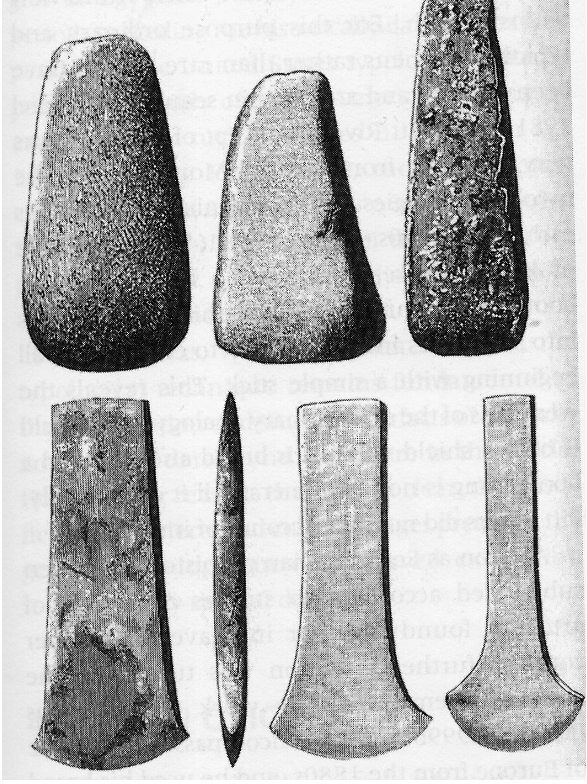
Context: Dating, talking about relative dating techniques archaeologists use to create artifact typology using seriation (technique based on the chronological ordering of a group of artifacts where the most similar are placed adjacent to each other in a typological sequence)
Culture/Time Period: Shows the hypothesized typological sequence for the axes that have been categoriezed and organized by the three age system, from the stone,broze,and iron age
Theme: Shows one method of how archaeologists will organize the artifacts that they have found, as well as the importance of typology (systematic organization of artifacts into types on the basis of shared attributes)
Explain: image itself relates back to topics on drawings and recording of artifacts within their context, as well as units on 9th century attitudes as the 3 age system was created in the arealy 19th century
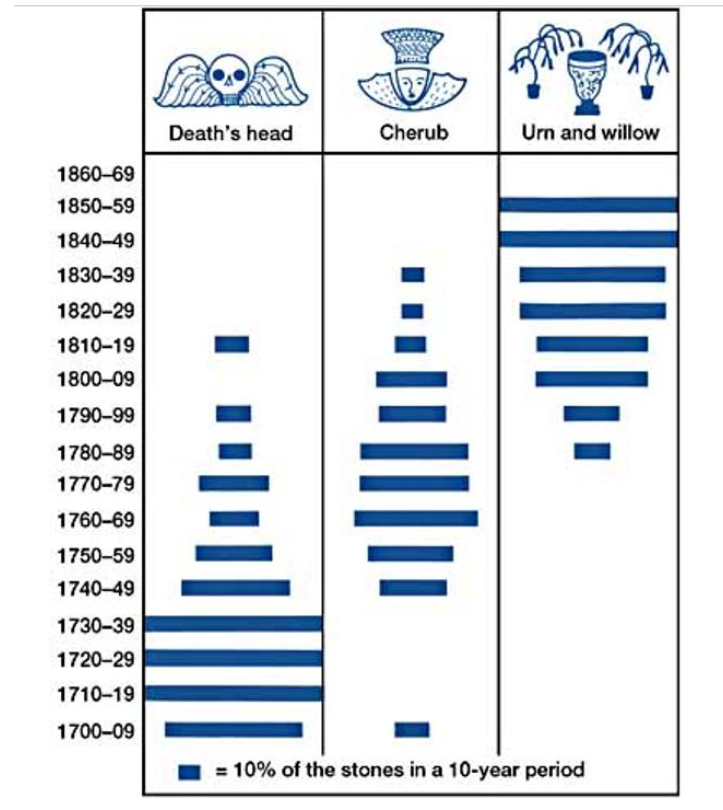
Context: From topic 9 - dating in reference to the sub-unit on relative dating typology and frequency seriation. Shown on a battleship curve
Culture/time period: example is showing the proportional abundance of symbols engraved on dated tombstones in a cemetary from 16th to 19th century. Data sources to plot the frequency seriation and battleship curves come from historical records, such as the dates on the tombstones
Theme: How frequency seriation can be used to date artifacts within context
Explain: relates back to other parts of relative and absolute dating as arhcaeologists can pinpoint the artifact back to an exact date (written on the tombstone) and use it to create a typology of drawings as well as allowing for the context and further record to be preserved
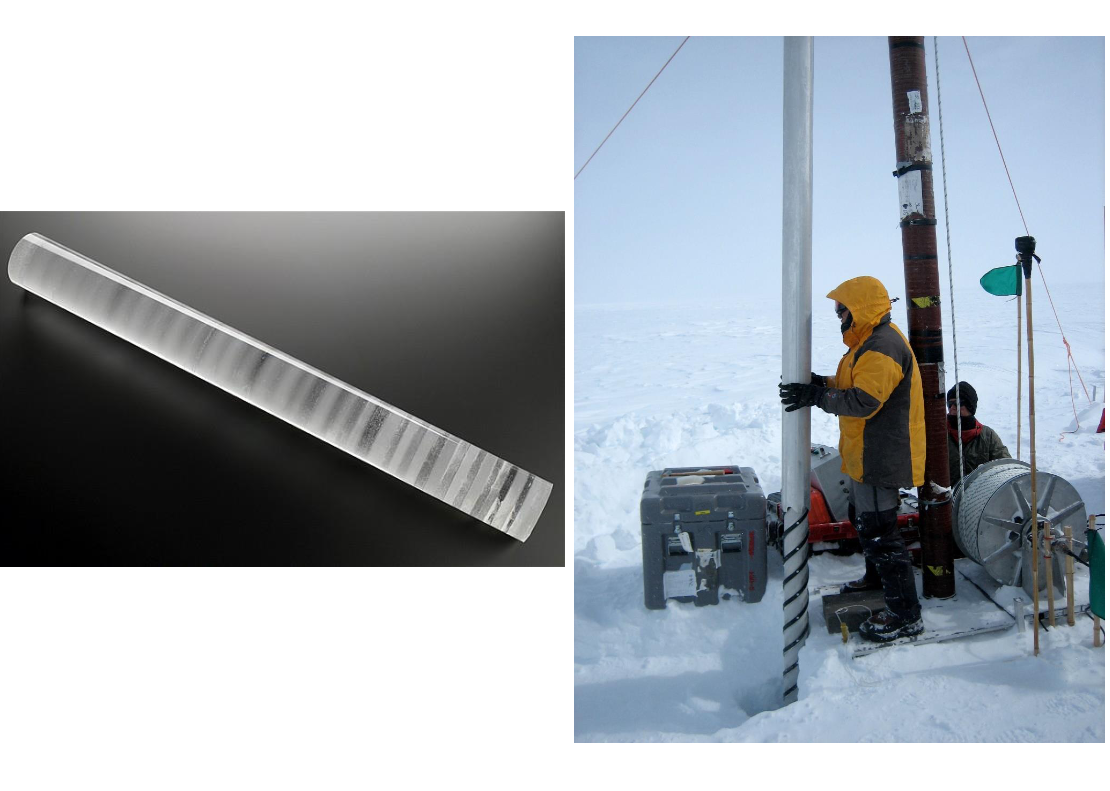
Context: from topic 9 - dating, showing relative dating techniques involving environmental sequences of ice cores. Provide relative dating of layers that can be linked to specific years via historical/archaeological data
Culture/time period: shows modern archaeologists excavating ice cores from permanently frozen regions of the artic and antarctic to provide a record of the arth’s atmosphere for the last 2-3000 years
Theme: how relative dating can be used to provide a greater overall context to changes in atmosphere and envrionmental conditions
Explain: allows for visible changes in strata to be identifies and add to the greater archaeological context, and connects back to pre-excavation techniques as it can be compared to known historical events like the industrial revolution
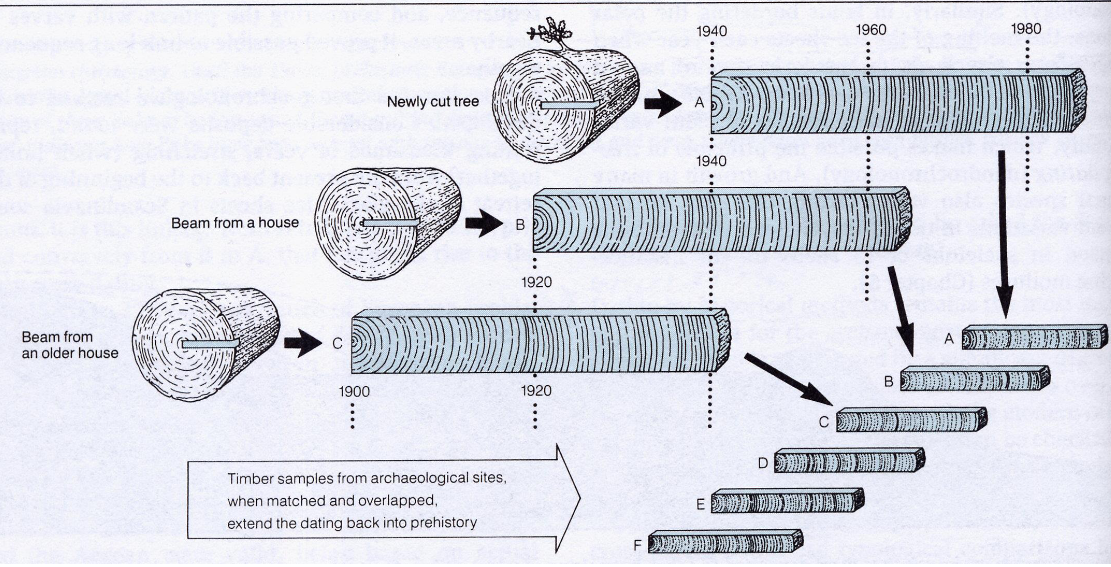
Context: from topic 9 - absolute dating techniques. Dendrochronology (tree ring dating)
Culture/time period: showing modern archaeology finds of a regional master sequence of trees from early to late 20th century
Theme: shows how trees can be used to add to the archaeological record and reflect events that have happened to them in teh past, and when they died can be recorded exactly by counting tree rings until the terminal ring
Explain: relates back to units on context and recording
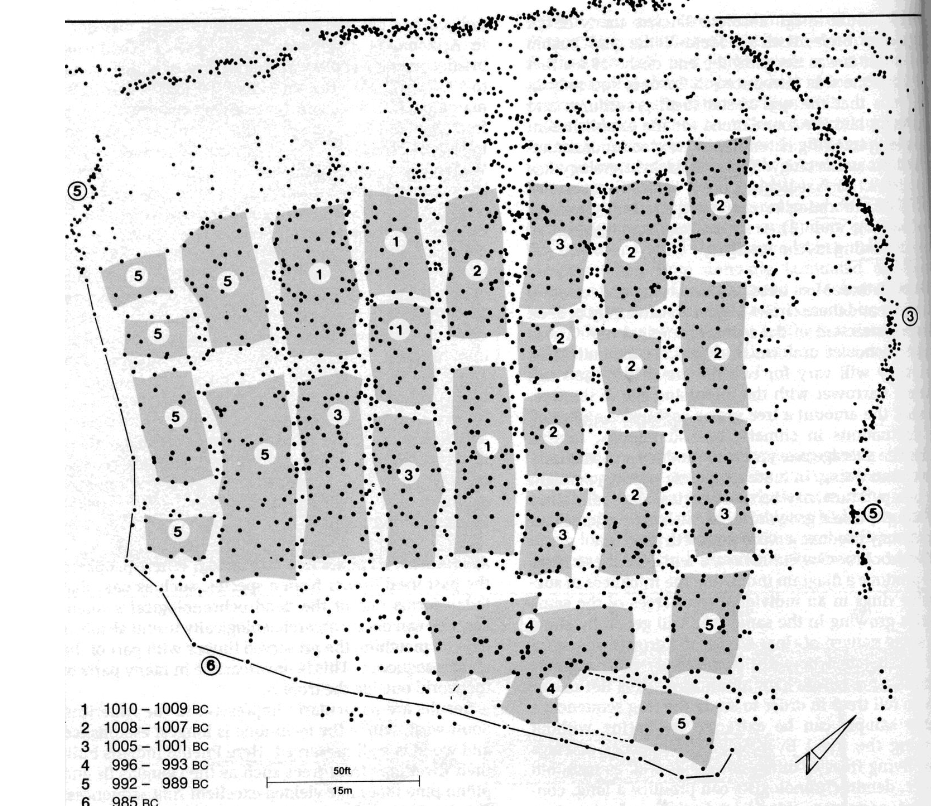
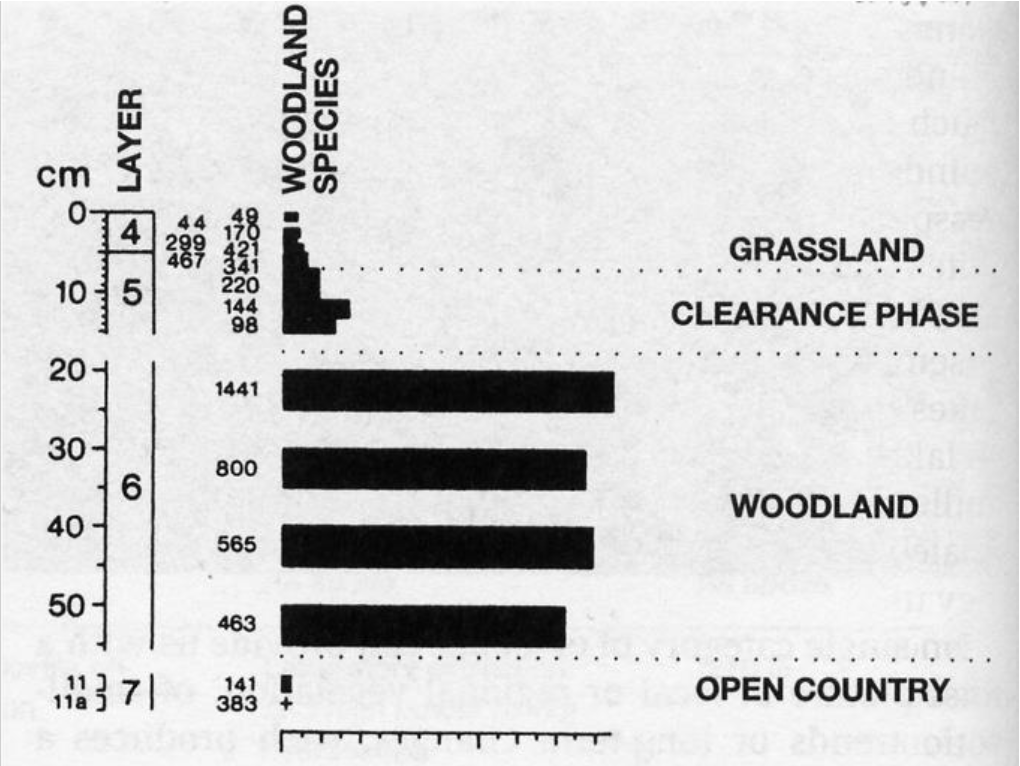
Context: from topic 9 - absolute dating techniques. Dendrochronology
Culture/Time Period: example is from cortaillod-est switzerland from 1000 to 985BC. The remains of an ancient waterlogged village in switzerland preserved many types of wood dating back to the neolithic ear. Settlement featured 22 houses arranged in eight rows, enclosed by a fence - part of the period of extensive forest exploitation
Theme: use of dating techniques to date preserved organic material to add to the overall context and archaeological record
Explain: loops back to preservation of organic material in extreme conditions
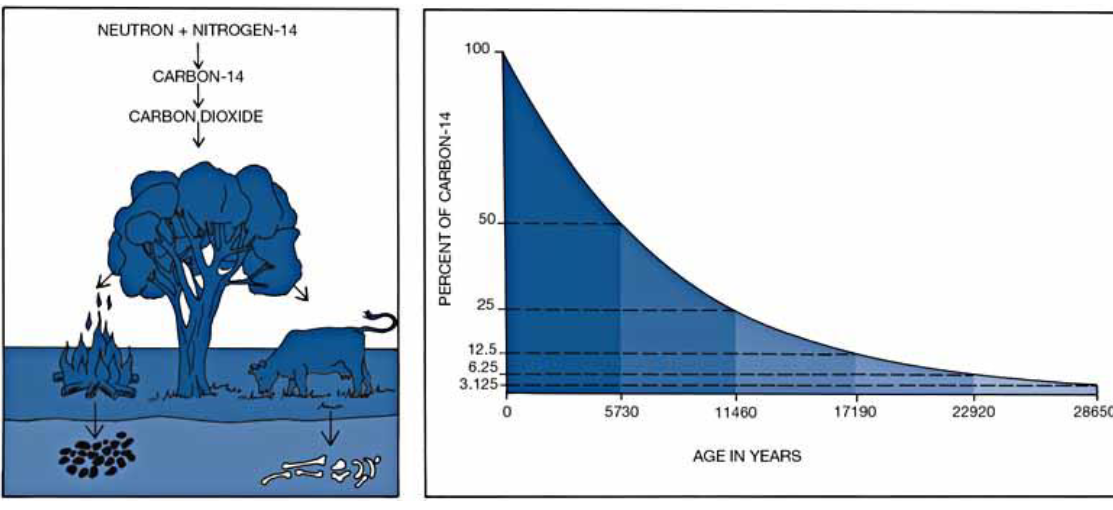
Context: topic 9 - absolute dating techniques. Using radiocarbon dating for oganism deaths by coutning atoms to provide estimate. (68-95 % accuracy)
Culture/Time Period: an example of modern archaeological practices in reference to absolute dating techniques
Overall theme: use of dating techniques to date preserved organic material to add to the overall context and archaological record.
Explain: modern archaeological tool, connects to modern attitudes as it is labelled BP for before present (1950). Technique and samples are limited and must be understood in greater context and in combination with other techniques discussed
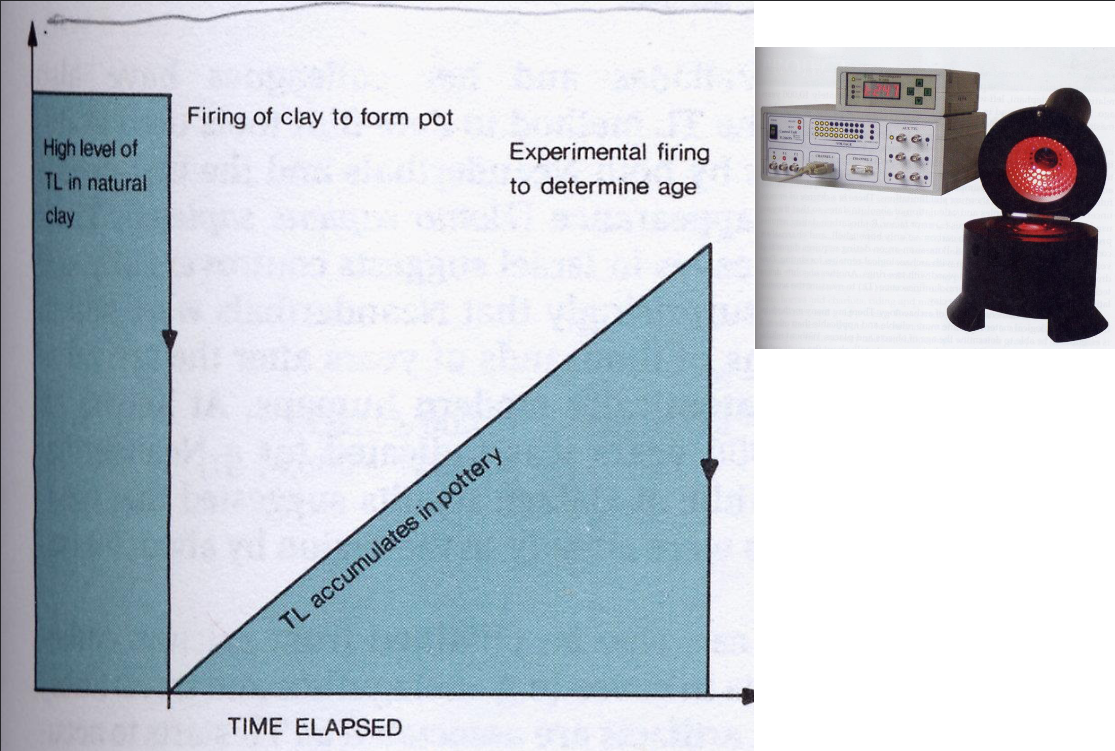
Context: topic 9 - absolute dating using thermoluminescence. Dating measures the radiation absorbed by inorganic materials to provide an estimate based on the differences in TL leavels between the original firing and experimental firing to determine age.
Culture/Time period: modern archaeological practice
Theme: tradeoff between gathering more precise information, and preserving the actual artifact
Relates back to practices on providing context after excavation, but can possibly result in the damage or irreversible change to an artifact through the firing process, thus damaging the record.