T-Level Science Health: Adult Nursing Core B Overview
 Call Kai
 Learn
Learn Practice Test
 Spaced Repetition
 Match
Match Flashcards
 Knowt Play
1/213

There's no tags or description
Looks like no tags are added yet.
Name | Mastery | Learn | Test | Matching | Spaced | Call with Kai |
|---|
No analytics yet
Send a link to your students to track their progress
214 Terms
Body Systems 1
The first section of the exam covering the cardiovascular, respiratory, nervous, and musculoskeletal systems.
Body Systems 2
The second section of the exam covering the digestive, renal, integumentary, reproductive, and endocrine systems.
Body Systems 3
A synoptic section of the exam that can assess any of the B1 and B2 content in combination.
Anatomy models
Physical representations of human anatomy used for practical demonstrations in the curriculum.
3 principles of cell theory
The foundational concepts that describe the properties and functions of cells.
Cell
The most basic unit of structure and function in all living things.
Eukaryotic Cells
Cells that have a nucleus and are specialized to perform particular functions, such as yeast.
Prokaryotic Cells
Cells that lack a nucleus, such as bacteria like salmonella.
Cell-Surface Membrane
Fluid mosaic model that controls the passage of substances into and out of the cell and is the site of antigens.
Nucleus
Contains chromosomes.
Mitochondria
Organelles responsible for respiration, producing adenosine triphosphate (ATP).
Ribosomes
Sites of protein synthesis/translation.
Rough Endoplasmic Reticulum
Involved in protein synthesis and packaging.
Smooth Endoplasmic Reticulum
Involved in lipid synthesis and storage.
Golgi Apparatus
Involved in packaging proteins for transport.
Centrioles
Involved with the separation of chromosomes during cell division.
Lysosomes
Involved in digestion/breakdown of worn-out cell parts and invading microbes.
Specialised Cells
Eukaryotic cells that are specialized to perform particular functions through differentiation from stem cells.
Erythrocytes
Red blood cells that carry oxygen.
Neurones
Specialized cells that transmit nerve impulses.
Squamous Epithelial Cells
Flat cells that line surfaces and provide a barrier.
Sperm Cells
Male reproductive cells involved in fertilization.
Striated Muscle Cells
Muscle cells that have a striped appearance and are involved in voluntary movement.
Ova
Female reproductive cells.
Light Microscope
An instrument used to study cells.
Magnification
Calculated as the size of the image divided by the size of the object.
Mitosis
A process that produces 2 daughter nuclei with the same number of chromosomes as the parent cell.
Interphase
The stage that always precedes mitosis when DNA is replicated.
Prophase
The stage in which chromosomes become visible and the nuclear envelope disappears.
Metaphase
The stage in which the chromosomes arrange themselves at the center of the cell.
Anaphase
The stage in which each of the 2 threads of a chromosome (chromatid) migrates to the opposite pole.
Telophase
The stage in which the nuclear envelope reforms to produce 2 daughter cells.
Cytokinesis
The stage in which division of cytoplasm into 2 daughter cells takes place.
Macronutrient Proteins
The basic units of proteins are amino acids, used for growth and repair.
Macronutrient Carbohydrates
The most basic carbohydrate is a monosaccharide, which is a source of energy.
Fatty acids
Molecules from which triglycerides and phospholipids are formed.
Glycerol
Molecules from which triglycerides and phospholipids are formed.
Triglycerides
Formed by the condensation of 1 molecule of glycerol and 3 molecules of fatty acid.
Phospholipids
Formed when one of the fatty acids of a triglyceride is substituted by a phosphate-containing group.
Hydrophobic
Describes fatty acid molecules that repel water.
Hydrophilic
Describes glycerol molecules that attract water.
Phospholipid structure
Made up of 2 parts, a hydrophilic head and a hydrophobic tail, forming a bi-layer important for membrane functions.
Lipids
Used within the body for insulation, protection, and as an energy source.
Enzymes
Proteins that catalyze biochemical reactions, with properties determined by their tertiary structure.
Active site
The specific region of an enzyme where substrate molecules bind and undergo a chemical reaction.
Proteases
Enzymes that break down proteins, including trypsin.
Carbohydrases
Enzymes that break down carbohydrates, including amylase found in saliva.
Lipase
Enzymes that break down lipids.
Surface area to volume ratio
Must be large in comparison to the volume for efficient exchange.
Specialised exchange mechanisms
Required when the surface area is small compared to the volume to maximize the rate of exchange.
Diffusion distance
A factor that affects the rate of exchange.
Temperature
A factor that affects the rate of exchange.
Metabolic rate
A factor that affects the rate of exchange.
Fluid mosaic model
Describes the structure of the cell surface membrane and how it facilitates cellular exchange and transport.
Passive transport
Movement of substances across the cell membrane without the use of energy, such as diffusion.
Active transport
Movement of substances across the cell membrane using energy against a concentration gradient.
Co-transport mechanisms
Processes that involve the simultaneous transport of two substances across a membrane.
Deoxyribonucleic acid (DNA)
Holds genetic information.
Ribonucleic acid (RNA)
Transfers genetic information from DNA to the ribosomes where proteins are synthesized.
Nucleotides
The molecules (monomers) from which DNA and RNA are formed.
DNA nucleotide components
Consist of deoxyribose, a phosphate group, and one of the organic bases adenine, cytosine, guanine, or thymine.
RNA nucleotide components
Consist of ribose, a phosphate group, and one of the organic bases adenine, cytosine, guanine, or uracil.
Phosphodiester bond
Formed by a condensation reaction between 2 nucleotides.
DNA structure
A double helix with 2 polynucleotide chains held together by hydrogen bonds between specific complementary base pairs.
RNA structure
A relatively short single stranded polynucleotide chain.
Microorganisms
Include types such as bacteria, fungi, protists, and viruses.
Average size of bacterium
0.5 µm - 5 µm.
Average size of fungus
5 µm - 50 µm.
Average size of protist
1 µm - 2 mm.
Average size of virus
20 nm - 350 nm.
Prokaryotic cell
Type of cell that includes bacteria.
Eukaryotic cell
Type of cell that includes fungi and protists.
Pathogen
A microorganism which are the causative agents of disease.
Bacteria
A type of pathogen that can cause diseases such as chlamydia, gonorrhoea, and tuberculosis.
Viruses
A type of pathogen that can cause diseases such as common cold, mumps, and measles.
Fungi
A type of pathogen that can cause conditions like yeast infection (thrush).
Prions
A type of pathogen that can cause diseases such as Creutzfeldt-Jakob disease (CJD).
Protists
A type of pathogen that can cause diseases such as malaria.
Parasites
A type of pathogen that can cause diseases such as toxoplasmosis.
Direct Transmission
Physical contact with an infected person or contaminated surface, sharing of needles, unprotected sexual contact, or airborne transmission.
Indirect Transmission
Vehicle transmission (e.g., ingesting infected food or water) or being bitten by an infected vector.
Epidemiology
Research into incidence, prevalence, and trends of diseases.
Antigen
A substance that is recognised by the immune system as self or non-self and stimulates an immune response.
Antibody
A blood protein produced in response to, and counteracting, a specific antigen.
Non-specific Defences
Physical and chemical barriers, inflammation, and phagocytosis.
Specific Defences
Actions of T-cells and B-cells to protect the body against foreign substances.
Cell-mediated Immunity
A response associated with T-lymphocytes destroying pathogens without producing antibodies.
Antibody-mediated Immunity
A response associated with B-lymphocytes destroying pathogens by producing antibodies.
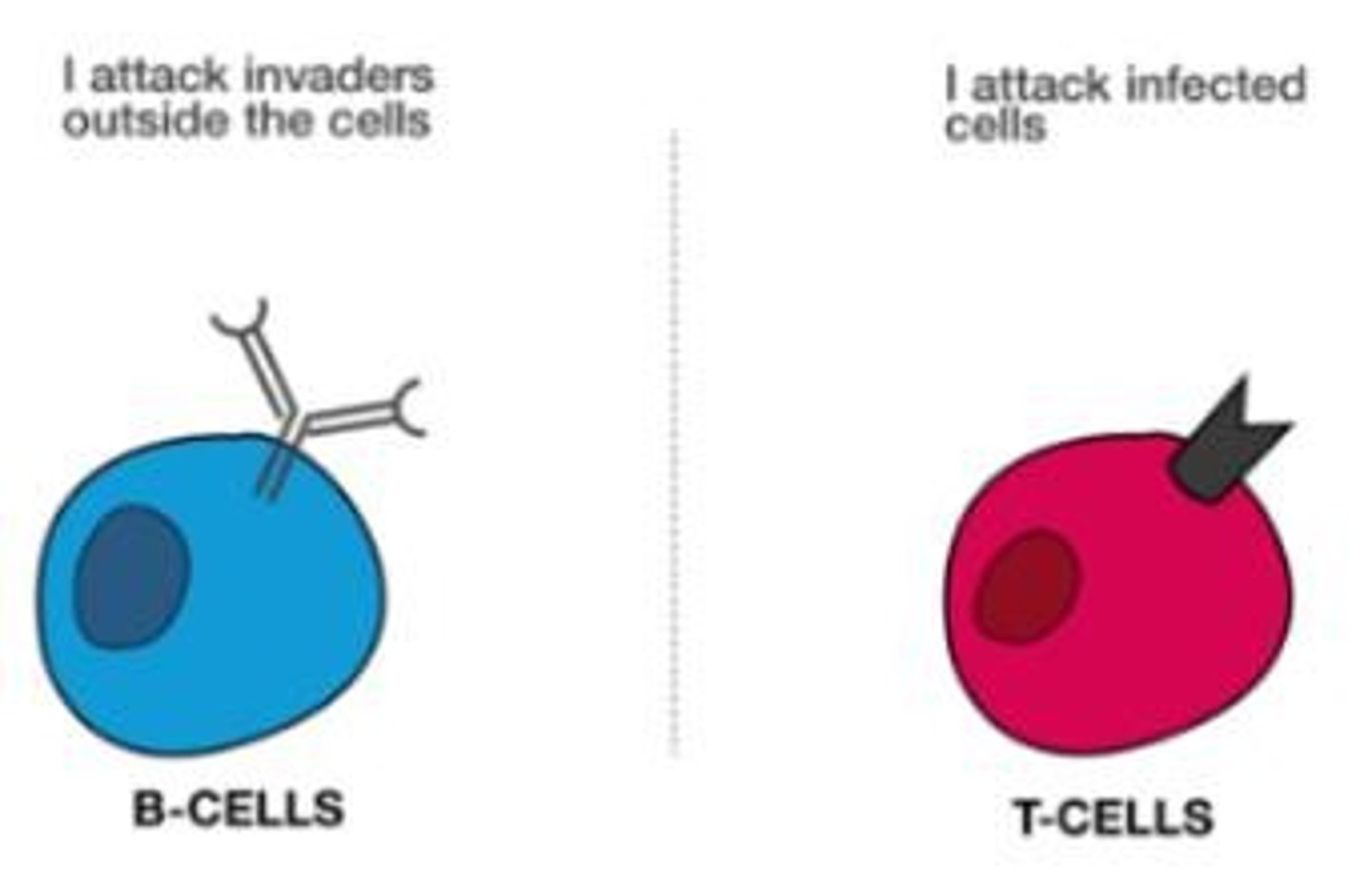
T and B Memory Cells
They trigger a stronger and more rapid immune response after encountering the same antigen.
Injury
Damage to the body caused by external force.
Trauma
An injury that has the potential to cause disability or death.
MRI Scanning
Uses strong magnetic fields and radio waves to generate detailed images of inside the body.
Considerations for MRI
Health and safety before scan, including patient medical history and removal of metallic objects.
Epidemiology
The study and analysis of the distribution and patterns of disease in population and why they occur.
Incidents
The occurrence of new cases of a disease in a population over a specified period.
Prevalence
The total number of cases of a disease in a population at a given time.
Mortality
The rate of death in a population.
Morbidity
The condition of being diseased or the incidence of disease in a population.
Health Promotion
Strategies used to prevent the spread and control of disease and disorder.
Homeostasis
The ability to maintain a stable internal environment despite changes in external conditions.