Gothic Architecture
 Call Kai
 Learn
Learn Practice Test
 Spaced Repetition
 Match
Match Flashcards
 Knowt Play
1/50

There's no tags or description
Looks like no tags are added yet.
Name | Mastery | Learn | Test | Matching | Spaced | Call with Kai |
|---|
No analytics yet
Send a link to your students to track their progress
51 Terms
Rebuilding the Abbey Church of Saint-Denis
1137-1144
Construction begins on Cathedral of Notre-Dame at Paris
1163
Reign of French King Philip August
1180-1223
Fire destroys Chartres Cathedral
1194
Fourth Crusade results in the sacking of Constantinople
1204
Construction begins on Salisbury Cathedral
1220
Spanish King Ferdinand III unites kingdoms of León and Castile
1230
Sainte-Chappell, court chapel of French King Louis IX, designed
1241
Italian Theologian Thomas Aquinas begins teaching in Paris
1252
Nicola Pisano’s Pisa Pulpit
1260
Turks expel Crusaders from Holy Land
1291
Dante composes the Divine Comedy
1307-1321
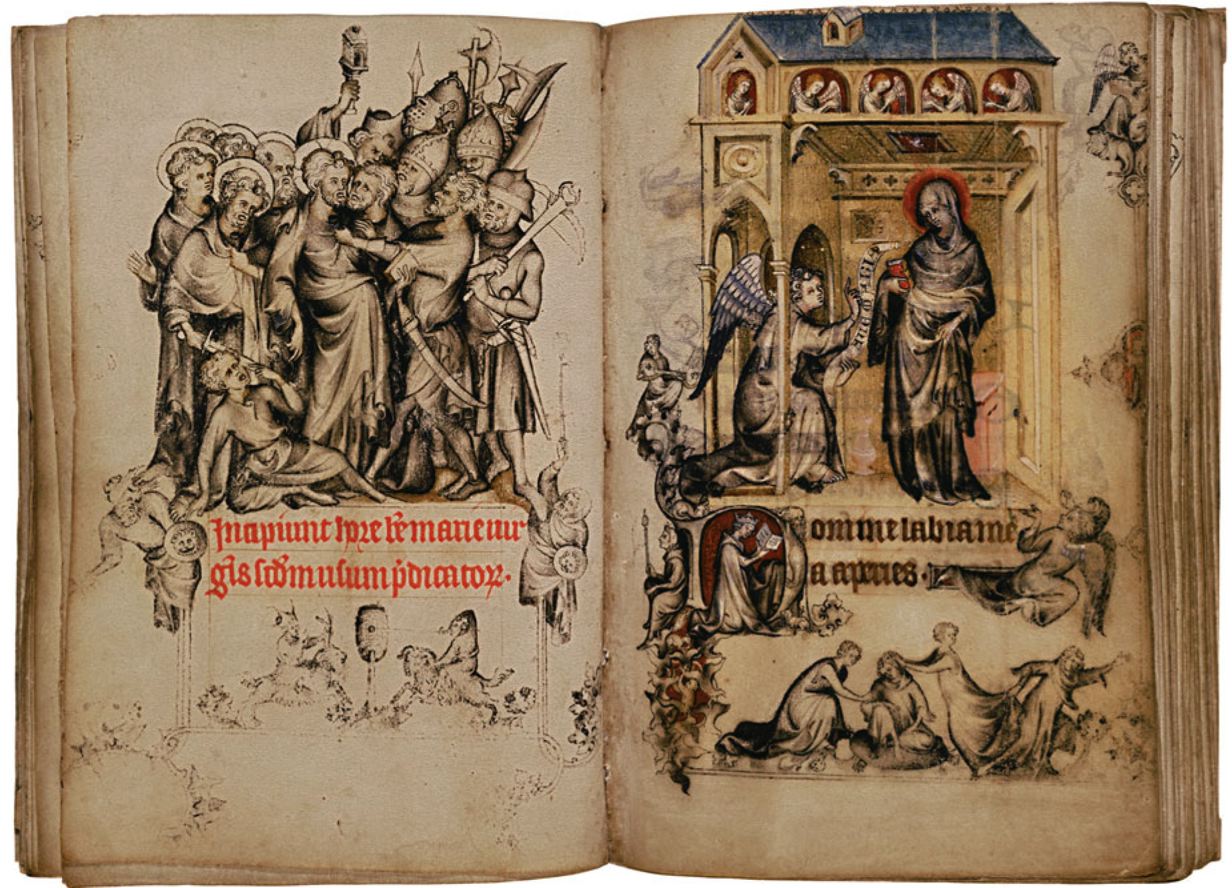
Jean Pucelle illuminates book of hours for Jeanne d’Évreux, Queen of France
1325-1328
Hundred Years’ War between England and France
1339-1453
Black Death takes hold of Europe
1347
Joan of Arc burned at the stake
1431
Gothic Period began in Paris around
1140
The Gothic period spread
to the rest of Europe within one-century
The Gothic style began to dissipate by
1400
The Gothic style had disappeared by
1500
First Gothic building
Abbey church of Saint-Denis
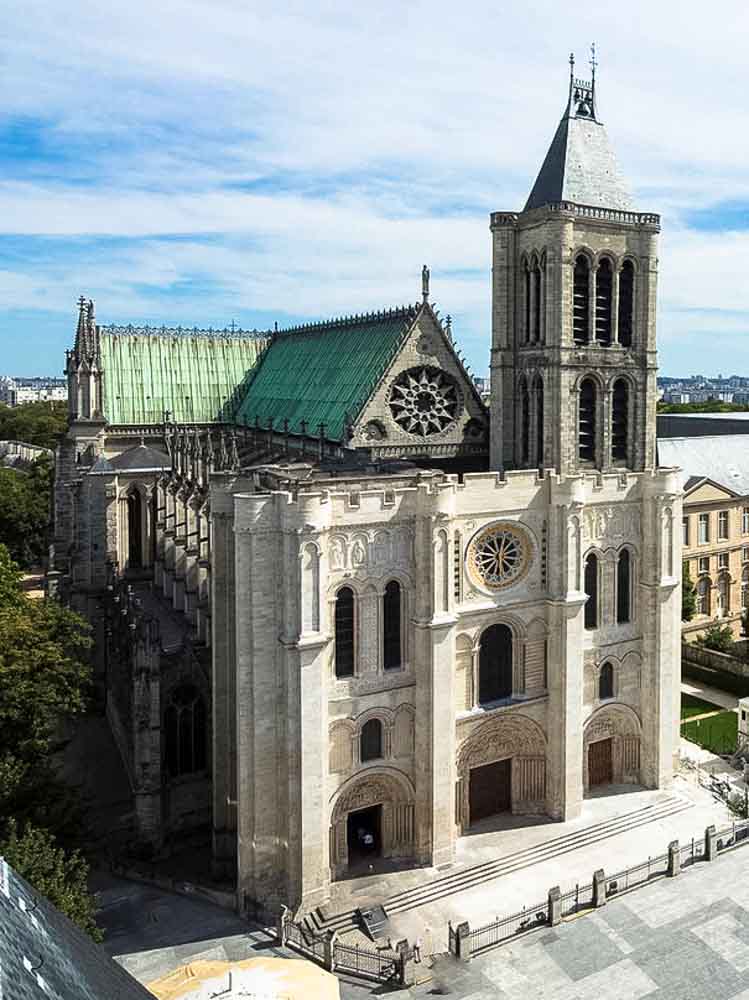
Early Gothic architecture is characterized by
graceful architectural forms and large windows
The Gothic jamb was the first indication
that monumental sculpture was back in style.
By the end of the twelfth century, jamb figures
appeared more organic and influenced by Classicism.
The classicism created by early Gothic jamb figures lasted until
the early fourteenth century.
The High Gothic period in France was characterized by
the rebuilding of Chartres Cathedral during the thirteenth century
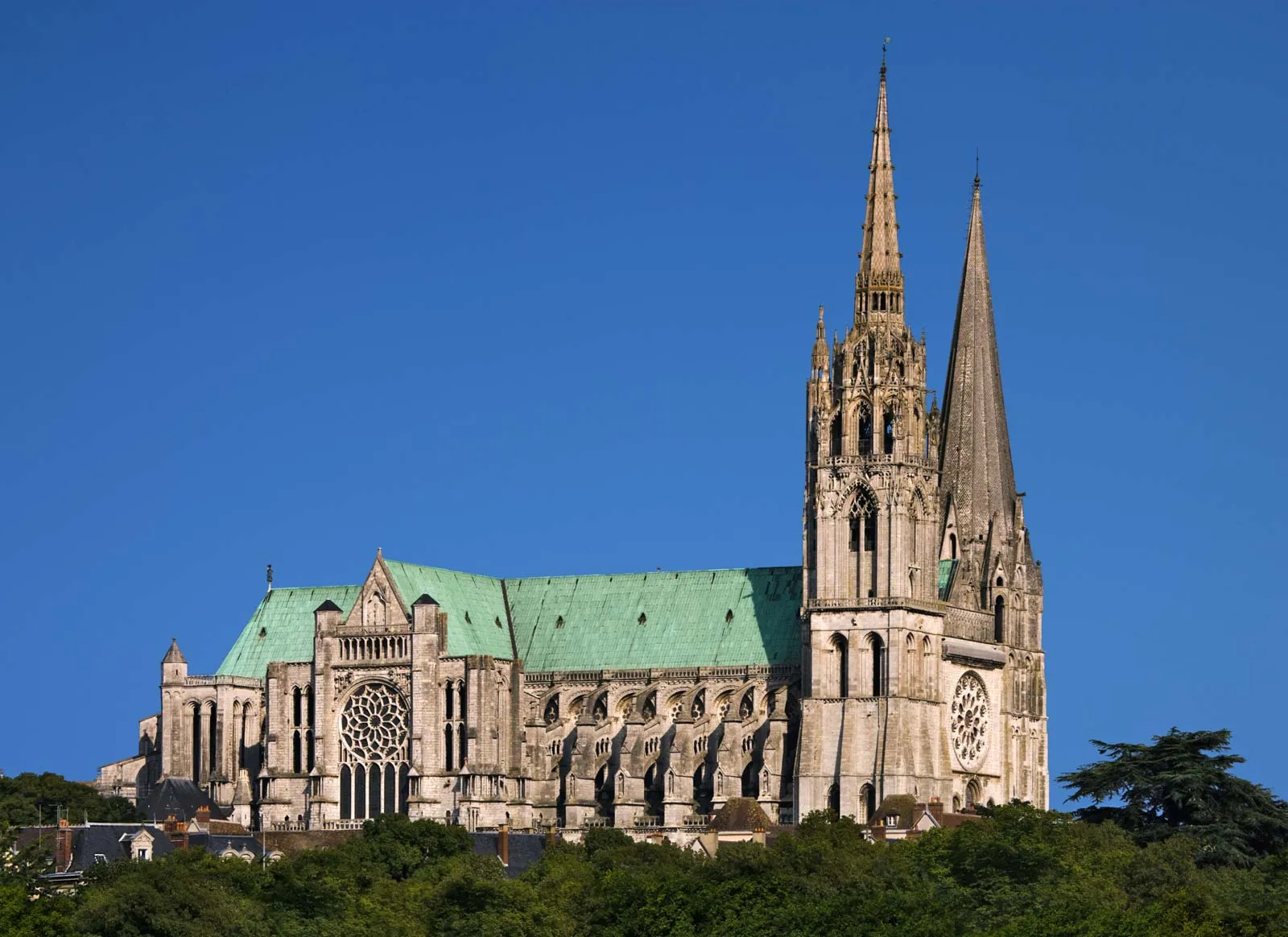
Emphasis in the High Gothic Period in France was placed on
verticality and translucency
High Gothic France jambs were
characterized by increased naturalism
Manuscript illumination was popular
in the High Gothic France
Scriptorium (pl. scriptoria)
A workroom in a monastery reserved for copying and illustrating manuscripts.
Gothic art spread due to the
Skill of the architects and artisans
Prestige of French centres of learning
Power of the Gothic style itself
Late Gothic art in France deviated from
Earlier Gothic style
In Late Gothic art in France, builders produced
complex visual displays - flamboyant style
In Late Gothic art in France, artists show a new interest in
Representing spatial depth, e.g. a Book of Hours
Guilds
Economic and social organizations that control the making and marketing of given products in a medieval city. To work as a painter or sculptor in a city, an individual had to belong to a guild, which established standards for the craft.
Scholasticism
A school of medieval thought that tries to reconcile faith and reason by combining ancient philosophy with Christian theology.
Abbot Suger
Founder of Gothic Architecture. Rebuilt the Saint-Denis.
Spire
A tall tower that rises high above a roof. Spires are commonly associated with church architecture and are frequently found on Gothic structures.
Nave
The central part of a church building, intended to accommodate most of the congregation. In traditional Western churches it is rectangular, separated from the chancel by a step or rail, and from adjacent aisles by pillars.
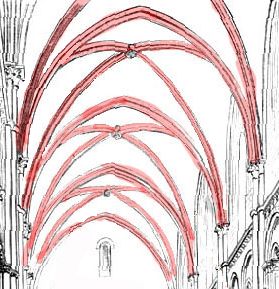
Sexpartite Vault
a ribbed groin vault in which each bay is divided into six compartments by the addition of a transverse rib across the center.
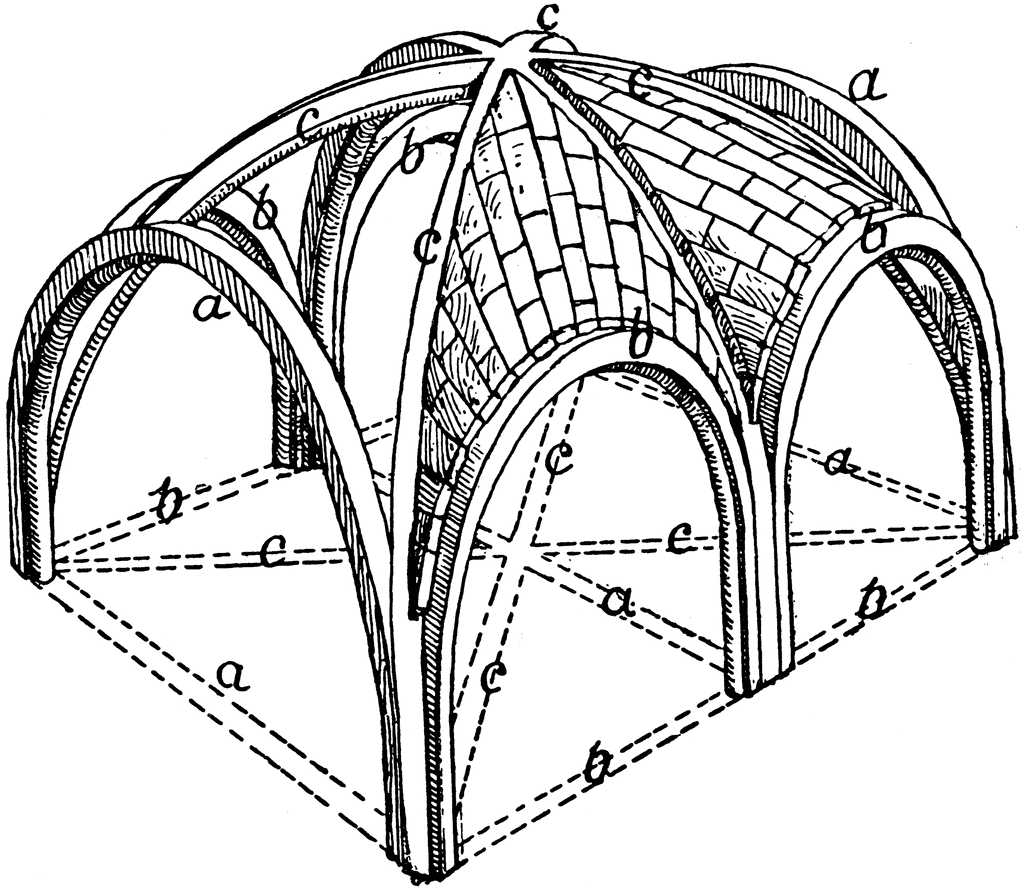
Quadripartite vault
The normal Gothic vault, four-part vaults
Theophilus Presbyter
Benedictine monk and metalworker. Theophilus’ text, De diversis artibus, written in the twelfth century, is the first in the Western tradition to give a practitioner’s account of the technology of art production, particularly in glass production.
Flying buttress
Arched bridge above the aisle roof that extends from the upper nave wall, where the lateral thrust of the main vault is greatest, down to a solid pier.
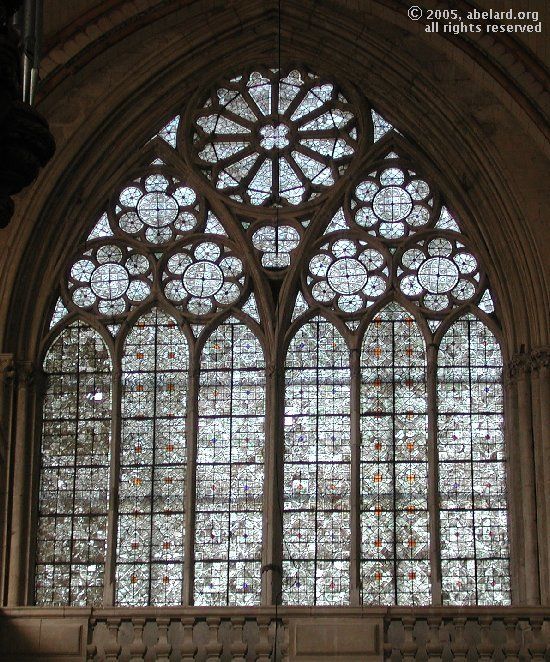
Lancet
A tall, pointed window common in Gothic architecture.
Rose Window
A large, circular window with stained glass and stone tracery, frequently used on façades and at the ends of transepts in Gothic churches.
Cames
Strips of lead in stained-glass windows that hold the pieces of glass together.
Grisaille glass
White glass painted with gray designs.
Manuscript illumination
Decoration of handwritten documents, scrolls, or books with drawings or paintings. Illuminated manuscripts were often produced during the Middle Ages.
Flamboyant
Literally meaning “flamelike” in French, describes a late phase of Gothic architecture where undulating curves and reverse curves were a main feature.
Andachtsbild
German for “devotional image.” A picture or sculpture with imagery intended for private devotion. It was first developed in Northern Europe.
Pietà
Italian word for both “pity” and “piety.” A representation of the Virgin grieving over the dead Christ. When used in a scene recording a specific moment after the Crucifixion, it is usually called a Lamentation.