bio practicum #3
 Call Kai
 Learn
Learn Practice Test
 Spaced Repetition
 Match
Match Flashcards
 Knowt Play
1/102

There's no tags or description
Looks like no tags are added yet.
Name | Mastery | Learn | Test | Matching | Spaced | Call with Kai |
|---|
No analytics yet
Send a link to your students to track their progress
103 Terms
monocot characteristics
one cotyledon, petals in groups of threes, parallel veins in leaves, vascular bundles, fibrous roots
dicot characteristics
two cotyledons, petals in groups of four or five, branched/net like veins in leaves, taproot system, veins in bundles
what are two types of angiosperms
monocot and dicot
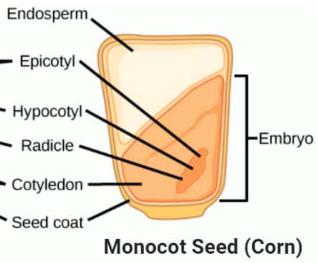
monocot seed (corn)
dicot seed (bean)
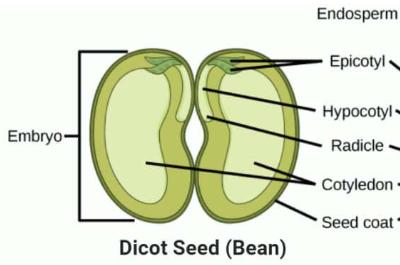
what is something that the monocot seed has that the dicot seed does not
endosperm (cotyledons store food reserves in dicot bc double fertilization)
3 main parts of both gymnosperms and angiosperms
seed coat (2n), embryo (2n), nutritive tissue (haploid in gymnosperms and triploid in angiosperms)
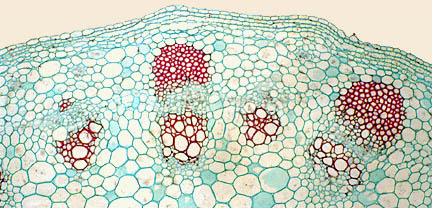
dicot stem (with vascular bundles)
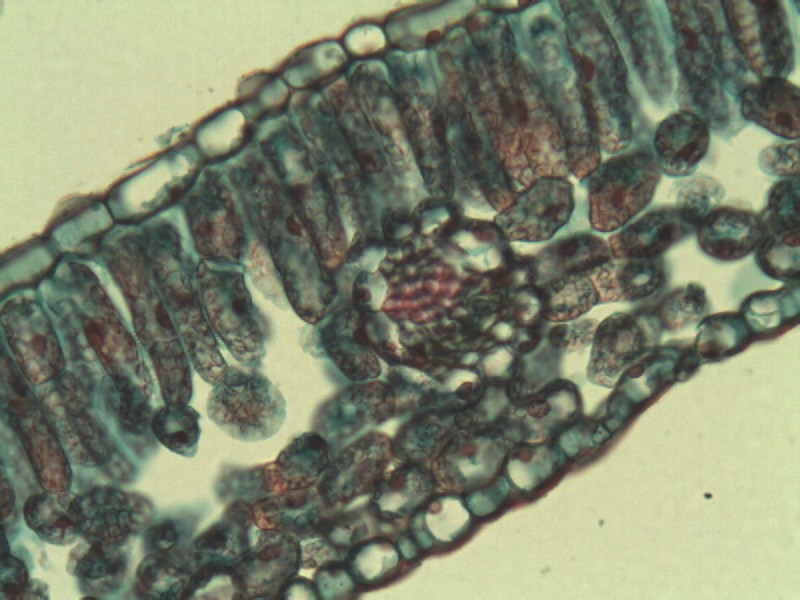
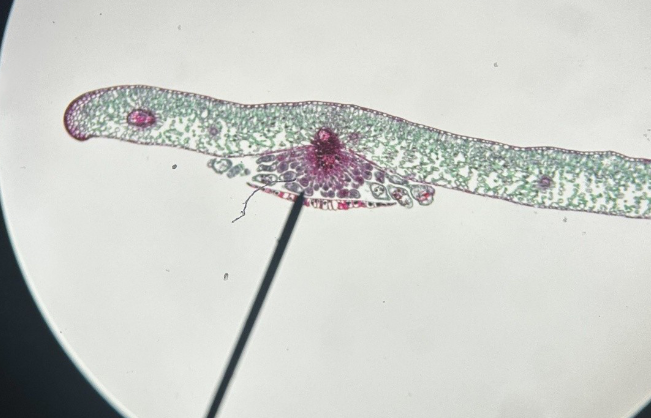
dicot leaf
bryophytes examples
moss, liverworts, hornworts
what are bryophytes
nonvascular plants
bryophyte green leaf like tissue
1n gametophyte
bryophyte dominant generation
gametophyte 1n
what is the photosynthetic tissue in bryophytes?
thallus
liverwort labelled
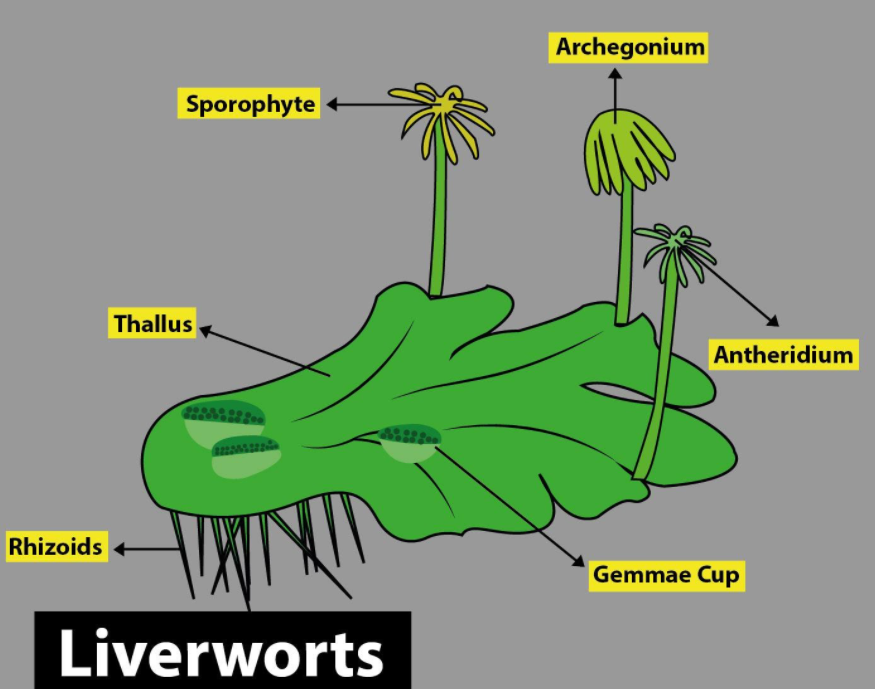
sporophyte of bryophytes
relies on gametophyte for nutrients, responsible for dispersing spores to new gametophytes
how is sporophyte adaptive
allows for spore dispersal on land without water involved
antheridiophore
male gametophyte structure (stalk and disc) produced by mitosis (structure)
antheridia
where sperm is produced (cell)
archegoniophores
female gametophyte structure produced by miosis (structure)
archegonia
where egg cells are produced (cell level)
how do male gametophytes (sperm cells) get to female gametophyte
travel in water droplets, fertilization then occurs
rhizoids
anchor plant to the ground
gemma cups
asexual reproduction, can develop into new individuals
moss antheridia
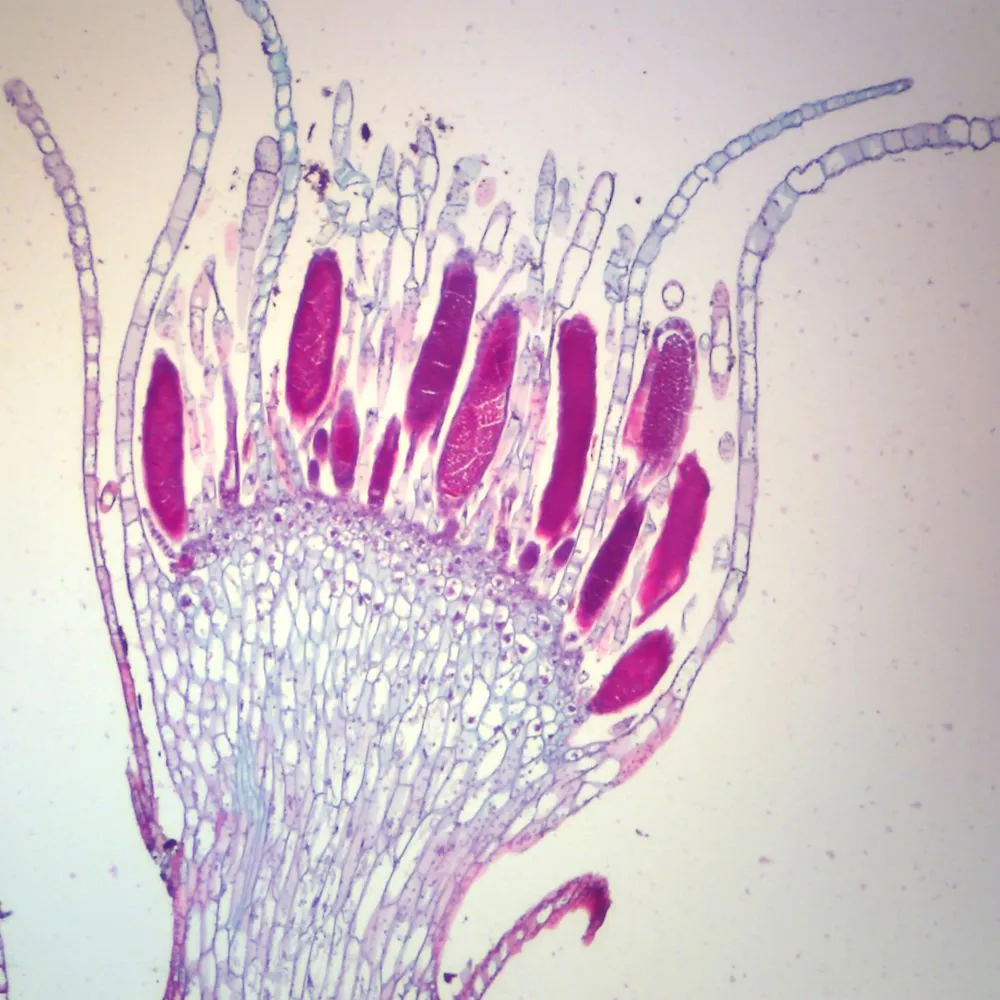
antheridia vs archegonia
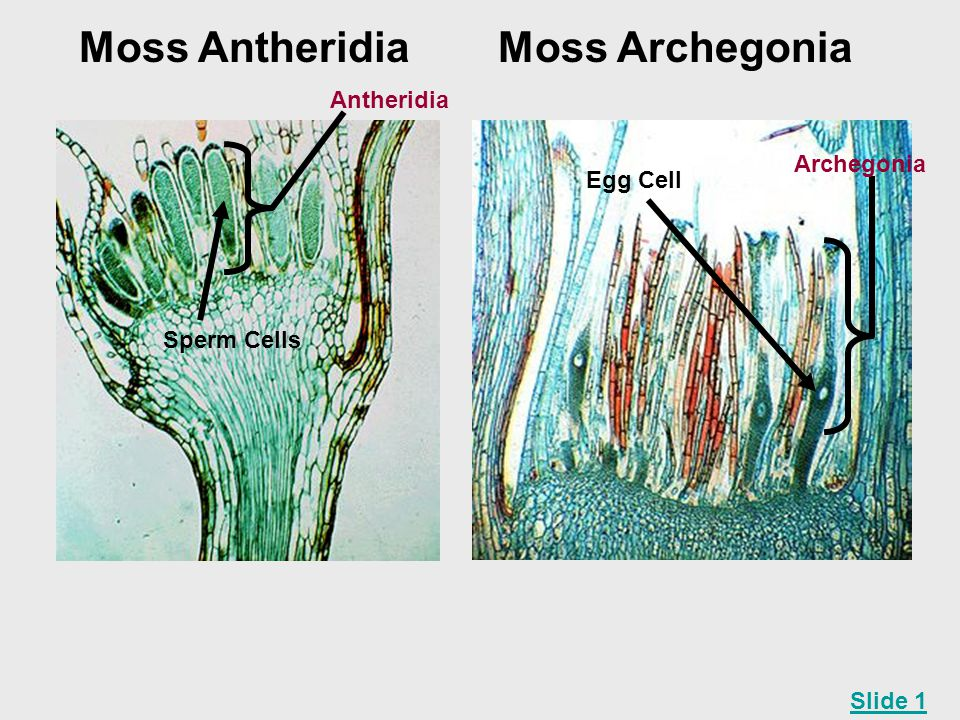
atheridiopore vs archegoniopore structure differences
disc of archegoniopore are longer and droopy, antheridiopore shorter and more solid
seta
stalk structure in moss
what generation is dominant in ferns
sporophyte 2n
vascular seedless gametophyte
small and free living
vascular seedless sporophyte
larger, free living
what do vascular seedless plants rely on for fertilization
water
what is the heart shape
fern gametophyte
where are rhizoids on fern gametophyte
on bottom, stingy like things
archegonia on fern gametophyte
in middle near apical notch
antheridia on fern gametophyte
everywhere but the exact middle
fern frond
leaf of fern
fern reproduction cycle
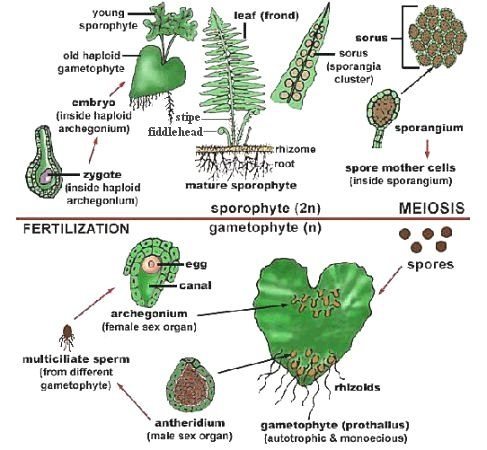
prothallus
gametophyte in ferns, contains antheridium and archegonium
sorus
sporangia cluster, bog circle sections in cross section containing spores
sporangia
in sorus (clusters), released from sporangia to undergo mitosis and become gametophyte, diploid
sorus image
roots vs rhizoids in ferns
roots bring up water and nutrients, rhizoids anchor to the ground
are gametes n or 2n
n
what are gametes produced from
multicellular gametophyte (n) that underwent mitosis
what are multicellular gametophytes produced from
spores (haploid) that underwent mitosis
what generation is dominant for all vascular plants
sporophyte (2n)
how was the evolution of seeds adapted
improved dispersal, allowed for dispersal and protection in drier environments, nutrients for the embryo
where is gametophyte (n) in gymnosperms
confined to part of the cone
where is gametophyte (n) in angiosperms
in flowers
what are benefits of a dominant sporophyte 2n stage for vascular plants
advantage against damaging effects of the sun on DNA, can sustain many gametophytes and provide resources for production of pollen grains and seeds
what happens after sporophyte generation gymnosperms
male gametophytes develop from spores within pollen cones, female gametophytes develop from spores within ovule cones
what happens when cones undergo meiosis
sporangium is formed (mega and micro)
what is formed from microsporangium
microspore, the multicellular male gametophyte (n), aka a pollen grain, 4 celled
what is formed from megasporangium
megaspore, aka multicellular female gametophyte, aka ovule with egg in it
what has to happen before fertilization occurs
pollen must germinate to form a pollen tube that grows to female gametophyte
pollination
pollen is released into air and transported by wind, with some landing on ovule cones
what does fertilized ovule develop into
seed
parts of gymnosperm seed
2n embryo surrounded by n female gametophyte for nutrieients surrounded by 2n seed coat for protection
what do seeds do
they germinate and eventually complete the cycle as sporophytes
what happens after 2n sporophyte generation in angiosperms
ovule (prod by carpel) undergoes meiosis to form haploid megaspore, male counterpart in anther undergoes meiosis to become haploid microspore
what happens after microspore
microspore undergoes mitosis to become pollen grain, then attaches to sigma and forms pollen tube that drops down into style
result of angiosperm fertilization
triploid endosperm cell with a diploid zygote (also a nucleus in the pollen tube)
angiosperm seed characteristics
2n seed coat, 3n endosperm, 2n embryo
what do fertilized ovules develop into
seeds
what do ovaries develop into
fruit
only real structural difference in gymnosperm and angiosperm seeds
nutritive tissue is haploid in gymnosperms and triploid in angiosperms
do gymnosperms produce fruit
no
stamen function
male reproductive organ (anther and filament)
anther function
produces/stores pollen
filament function
supports anther
carpel/pistil function
female reproductive part
stigma function
sits at top of carpel, to capture pollen grains
style function
stalk that connects stigma to ovary
ovary function
contains ovules, develops into fruit after fertilization
ovule function
contains female reproductive cells, develops into seeds
sepal/calyx function
to protect flower bud
petal/corolla function
to attract pollinators
why is the endosperm 3n in angiosperms
the zygote fused with the haploid nuclei
what does dicot root look like
cell is circular and things are tightly packed together/bunch of circles
where is xylem in vascular bundle
very center
dermal tissue examples
epidermis
what does the waxy cuticle on leaves and stems do
prevents water loss
root hairs function
extend from epidermis to increase water and nutrient absorption
three plant organs
root, stem, and leaf
ground tissue examples
parenchyma, sclerenchyma, collenchyma
parenchyma
cells that resemble soap bubbles, function in storage, photosynthesis, and wound recovery
collenchyma
elongated and support stalks of leaves/growing stems and shoots, flexible and allow bending of plant (strings in celery stalks)
sclerenchyma
dead cells with thick walls for rigid support
vascular tissue
xylem and phloem
phloem
transporting carbs (food)
xylem
transporting water and minerals taken up from roots
what does dicot stem look like
big circle with a central gap, has both parenchyma and sclerenchyma
is xylem towards inside or outside of stem
inside (middle)
is phloem more towards inside or outside of stem
outside (edge)
how to tell dicot leaf
long and skilly with both spongy and palisades parenchyma (mesophyll)
what do palisade parenchyma cells look like in the leaf
columnar and closer to the edge
what does spongy parenchyma look like
more bubbly and towards center
stoma
pores towards edge where calvin cycle takes place
embryo of dicot seed
basically the whole thing