Unit 1: Biology and Chemistry of Life - Key Concepts and Processes
 Call Kai
 Learn
Learn Practice Test
 Spaced Repetition
 Match
Match Flashcards
 Knowt Play
1/73

There's no tags or description
Looks like no tags are added yet.
Name | Mastery | Learn | Test | Matching | Spaced | Call with Kai |
|---|
No analytics yet
Send a link to your students to track their progress
74 Terms
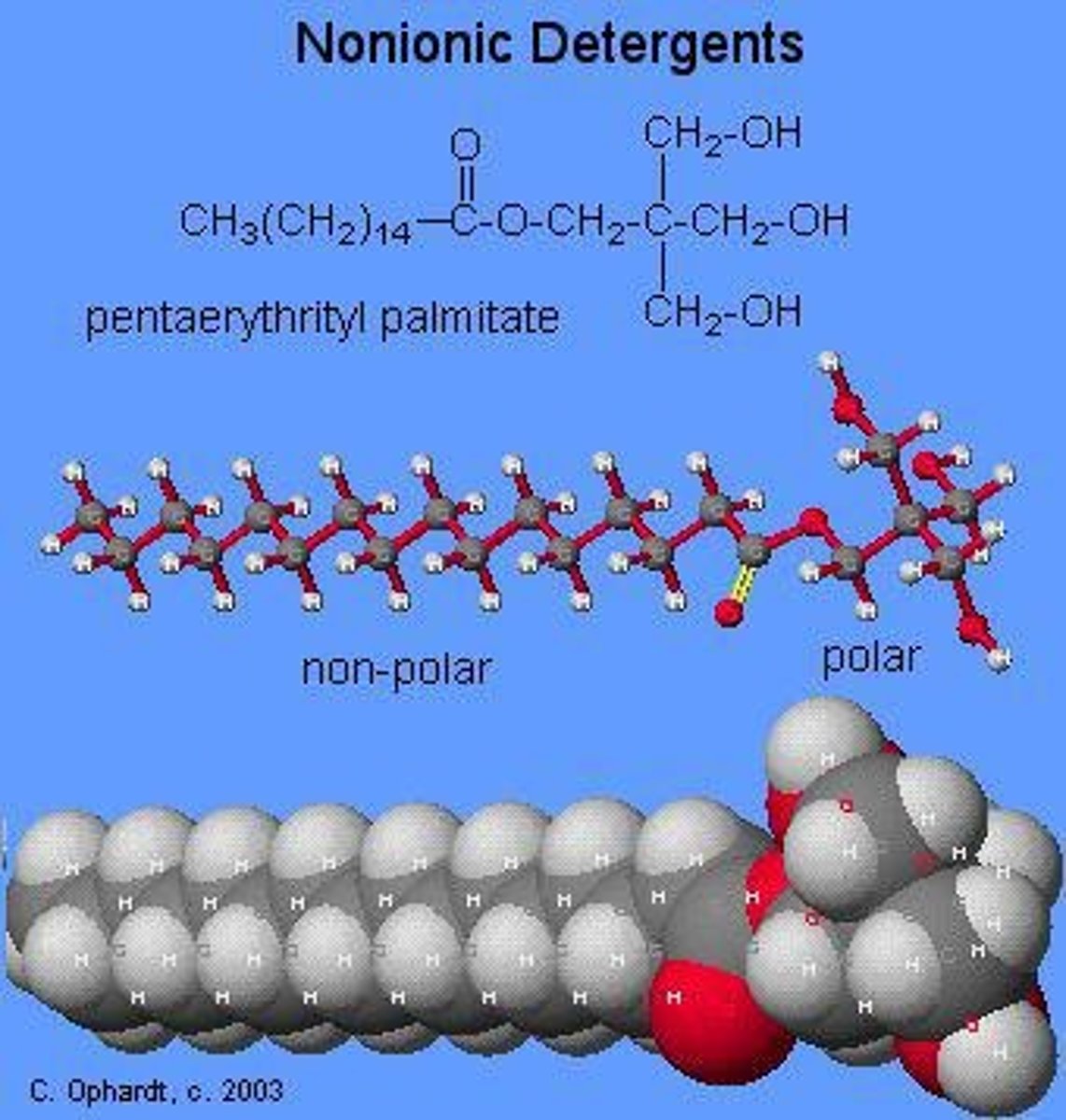
What type of molecule is detergent?
Detergent is amphipathic, meaning it has both polar and nonpolar properties.
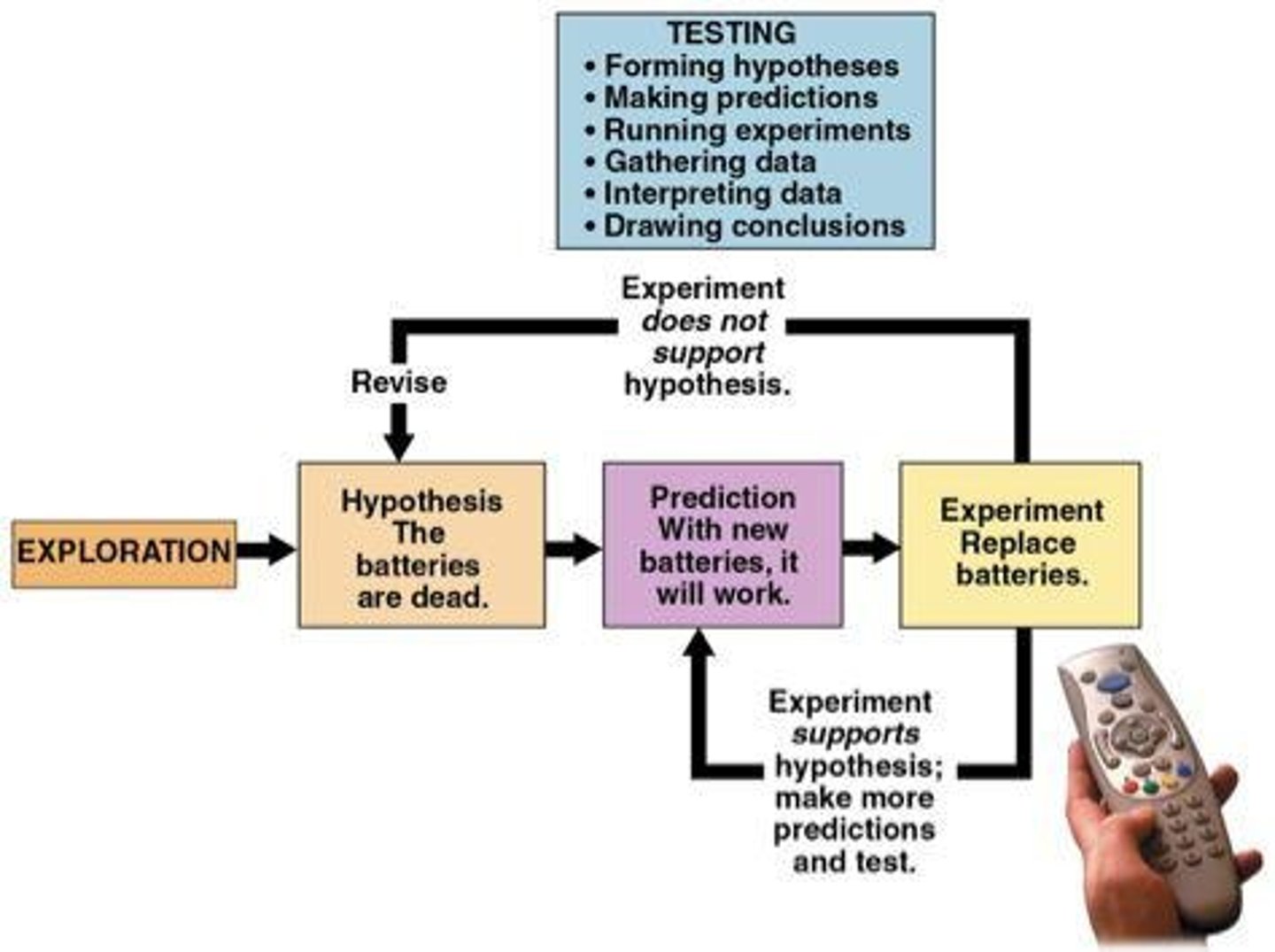
What is a controlled experiment?
An experiment that compares two or more groups differing only in one variable being tested.
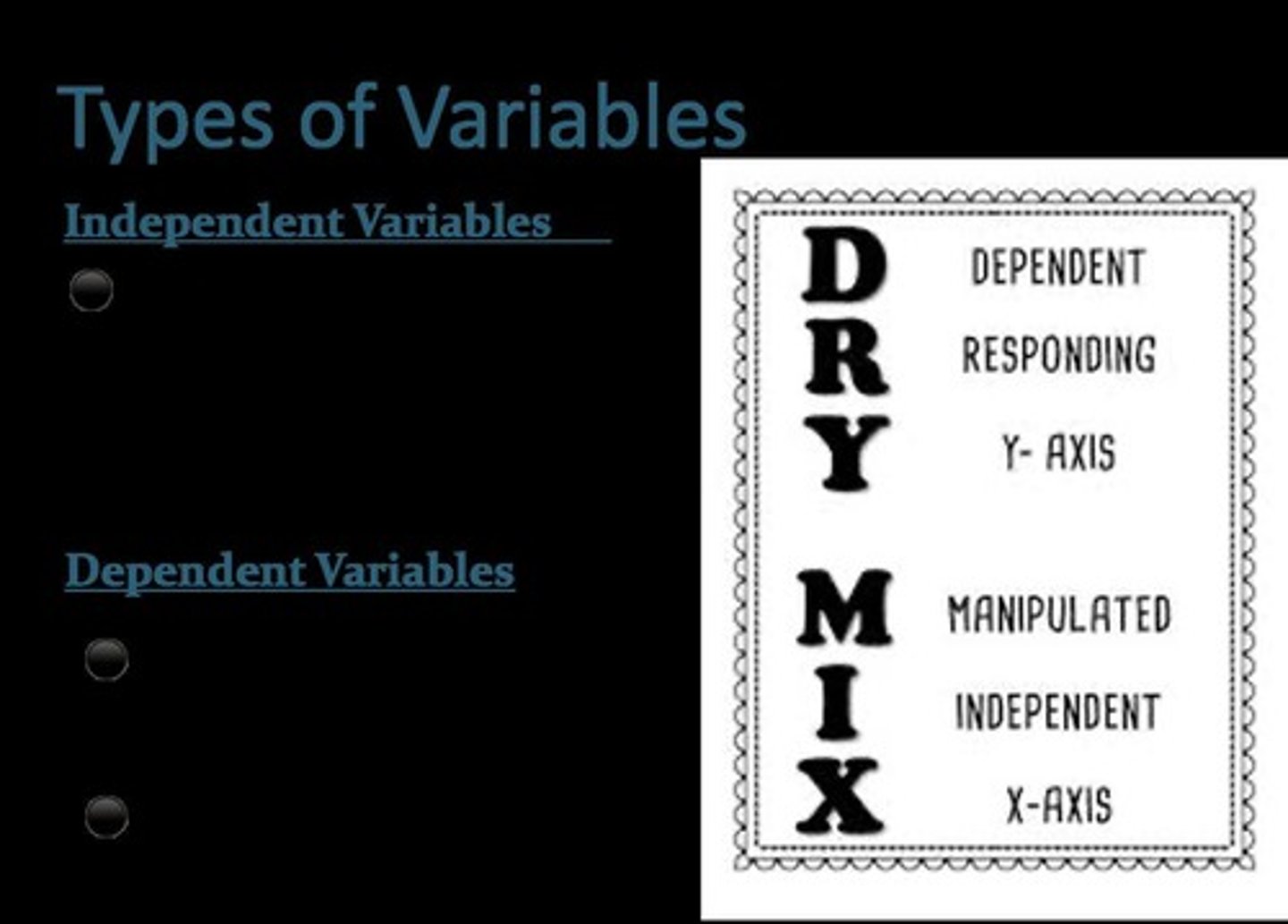
Define independent and dependent variables.
The independent variable is the factor that is changed, while the dependent variable is what is measured in the experiment.
What does it mean to be biased in science?
To have prejudice against a thing, person, or group, which can affect data interpretation.
What is the significance of water on Earth?
Water covers 71% of Earth, is vital for human cells (70-95% water), and regulates temperature.
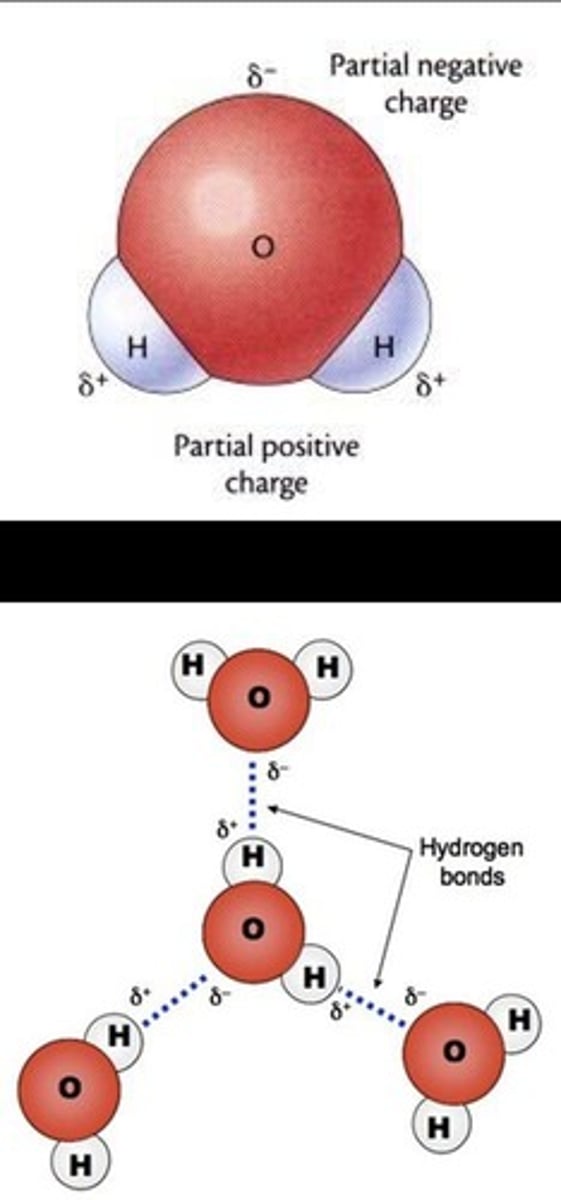
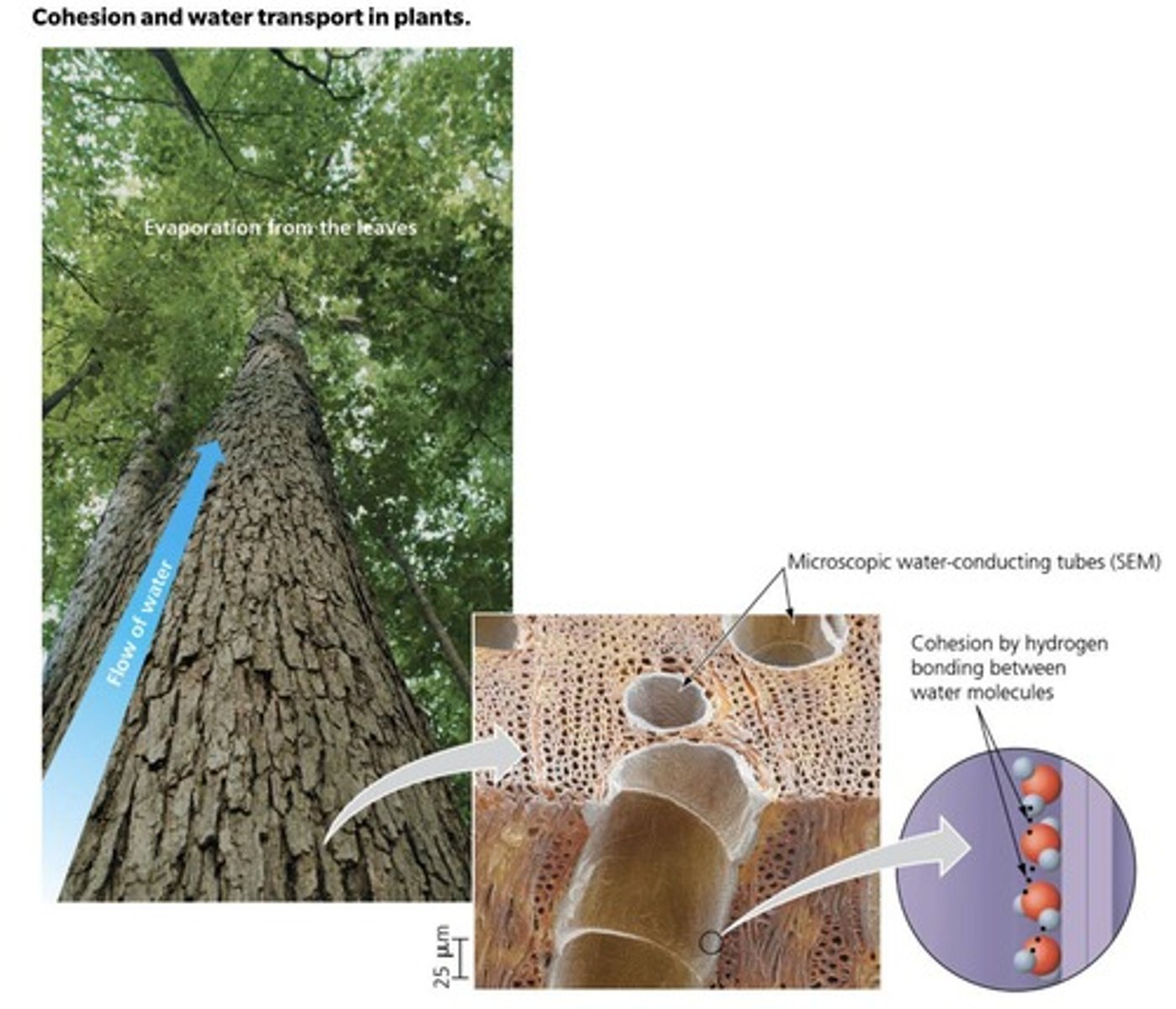
What type of bond is formed between water molecules?
Hydrogen bonds.
What is cohesion in relation to water?
Cohesion is the tendency of water molecules to stick to each other.
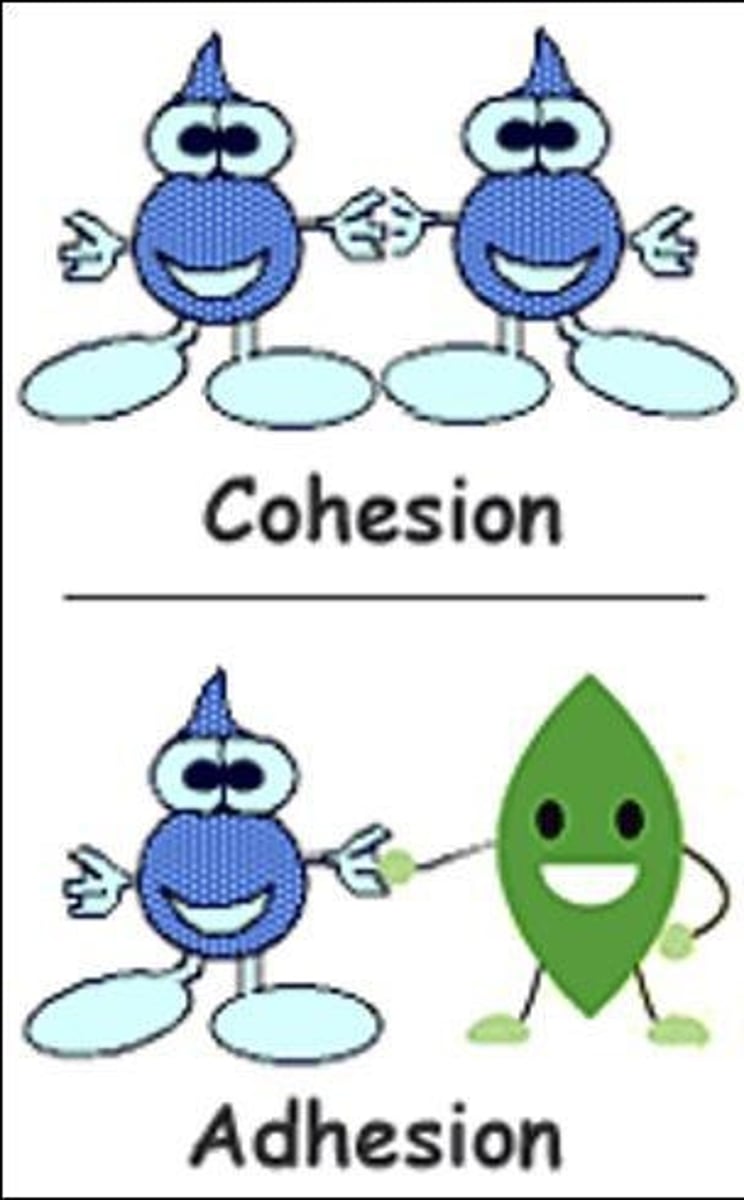
What is adhesion in relation to water?
Adhesion is the tendency of water molecules to stick to other objects.
What is the specific heat of water?
Water can absorb and store large amounts of heat, helping to regulate temperature.
What is an aqueous solution?
A solution where water is the solvent.
What does the pH scale measure?
The concentration of hydrogen ions (H+) in a solution.
What are organic compounds primarily composed of?
One or more carbon atoms bonded to other elements.
What are functional groups?
Different arrangements of atoms bonded to a carbon skeleton that give organic molecules special properties.
What is dehydration synthesis?
A reaction that builds larger molecules by releasing water as monomers bond together.
What is hydrolysis?
A reaction that breaks down larger molecules into smaller ones by adding water.
What are the four categories of macromolecules?
Carbohydrates, lipids, nucleic acids, and proteins.
What is a monosaccharide?
The simplest form of carbohydrates, containing one sugar molecule (e.g., glucose).
What is a disaccharide?
A carbohydrate formed from two monosaccharides connected by a dehydration reaction.
What are polysaccharides?
Complex carbohydrates made of three or more monosaccharides.
What is cellulose?
A fibrous polysaccharide used for plant structure and support.
How do starches and fiber polysaccharides affect the body differently?
Starches are digestible and provide energy, while fiber is not digestible and aids in digestion.
What are macromolecules?
Large molecules essential for life, including lipids, proteins, and nucleic acids.
What is a triglyceride?
The monomer of fats and oils, composed of one glycerol and three fatty acids.
What are the types of lipids?
Fats, oils, and steroids.
What is the primary function of saturated fats?
Long-term energy storage, insulation, and protection of vital organs.
How do saturated and unsaturated fatty acids differ?
Saturated fatty acids have maximum hydrogens and no C-C double bonds, while unsaturated fatty acids have C-C double bonds and are liquid at room temperature.
What are steroids composed of?
Four carbon rings and various functional groups.
What is the monomer of proteins?
Amino acid.
What are the three parts of an amino acid?
Amino group, carboxyl group, and side chain (20 options).
What roles do proteins play in the body?
Structure, storage, muscle contraction, transport, and enzymes.
What is a polypeptide?
A chain of amino acids linked by peptide bonds.
What is the structure of DNA?
A double helix shape with a sugar-phosphate backbone and four bases: adenine, thymine, cytosine, and guanine.
What are the two types of nucleic acids?
Deoxyribonucleic Acid (DNA) and Ribonucleic Acid (RNA).
What is the function of nucleic acids?
To store information and provide instructions for protein synthesis.
What is an enzyme?
A special molecule, mostly proteins, that acts as a catalyst to speed up reactions by lowering activation energy.
What is the active site of an enzyme?
The region of the enzyme that binds to the substrate.
What happens to enzymes under harsh conditions?
They can denature, losing their shape and function.
What is the role of inhibitors in enzyme activity?
They block or modify the active site to prevent enzyme function.
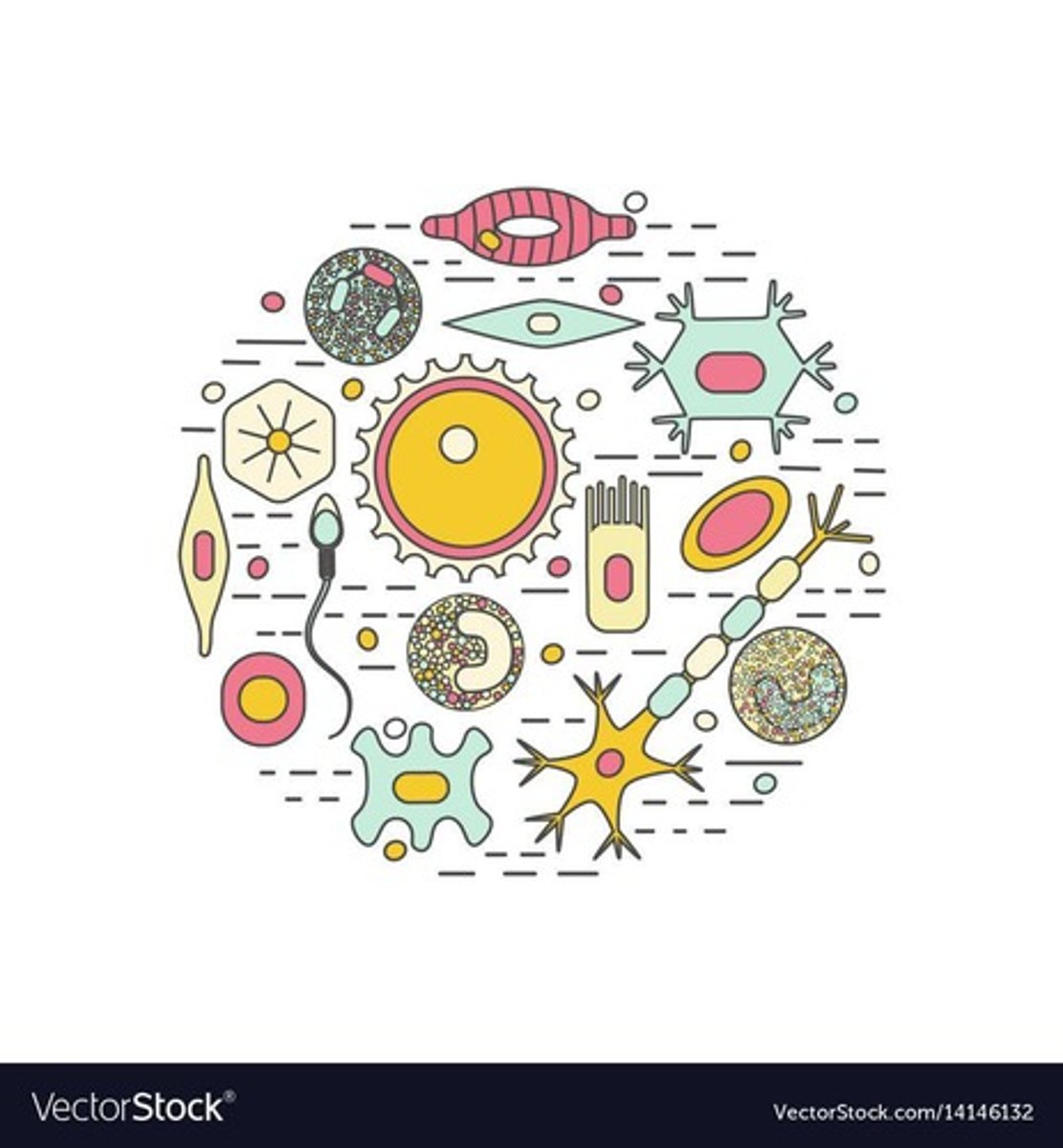
What distinguishes prokaryotic cells from eukaryotic cells?
Prokaryotic cells lack a nucleus and membrane-bound organelles, while eukaryotic cells have both.
What are the domains of prokaryotic cells?
Bacteria and Archaea.
What are the kingdoms of eukaryotic cells?
Protista, Plantae, Fungi, and Animalia.
What is the function of mitochondria in cells?
To produce energy through cellular respiration.
What process occurs in chloroplasts?
Photosynthesis.
What structures do plant cells have that animal cells lack?
Chloroplasts and a cell wall.
What is the function of the plasma membrane?
It acts as a protective and enclosing barrier for all types of cells, enclosing the cytoplasm.
What is the structure of the plasma membrane?
A thin layer of phospholipids with embedded proteins forming a phospholipid bilayer.
What is the role of the nucleus in a cell?
To protect DNA and provide instructions for cell activities.
What are ribosomes responsible for?
Making proteins using instructions from DNA.
What are the main components of the endomembrane system?
Endoplasmic Reticulum (ER), Golgi Apparatus, Lysosomes, and Vacuoles.
What is the function of chloroplasts?
To perform photosynthesis by using sunlight to build sugars.
What is the role of mitochondria in cells?
To break down sugars and produce energy in the form of ATP.
What is the function of the cytoskeleton?
To maintain cell shape and allow cell movement.
What is ATP?
Adenosine Triphosphate, a rechargeable 'battery' that cycles between ATP (charged) and ADP (uncharged).
What is passive transport?
The movement of molecules across the plasma membrane without the need for energy, moving down the concentration gradient.
What is osmosis?
The movement of water from high to low concentration toward equilibrium.
What does isotonic mean?
Solutes inside and outside the cell are equal, resulting in water moving back and forth equally.
What happens to a cell placed in a hypotonic solution?
Water will move into the cell, potentially causing it to swell.
What happens to a cell placed in a hypertonic solution?
Water will move out of the cell, potentially causing it to shrink.
What is active transport?
The movement of substances across the membrane against the concentration gradient, requiring energy in the form of ATP.
What are stomata?
Small holes on the underside of a leaf where gas exchange occurs for photosynthesis.
What is the equation for photosynthesis?
6CO2 + 6H2O + light energy → C6H12O6 + 6O2.
What is the process of cellular respiration?
The breakdown of sugars into ATP energy, occurring in the mitochondria of all eukaryotes.
What are the two stages of photosynthesis?
Light reactions, which capture light energy to create ATP, and the Calvin Cycle, which uses that energy to build carbohydrates.
What is the absorption spectrum of chlorophyll?
The range of light wavelengths that chlorophyll absorbs for photosynthesis, making leaves appear green.
What is the role of guard cells?
To open and close stomata, balancing the plant's needs with environmental conditions.
What is the significance of bromothymol blue in experiments?
It is a pH indicator used to determine the presence of carbon dioxide in water.
How does carbon dioxide affect pH in water?
Carbon dioxide forms carbonic acid in water, lowering the pH.
What is the relationship between photosynthesis and cellular respiration?
Photosynthesis converts light energy into chemical energy, while cellular respiration breaks down that chemical energy to produce ATP.
What is the role of membrane proteins in facilitated transport?
They assist in the natural movement of molecules from high to low concentration without requiring energy.
What is the difference between potential and kinetic energy?
Potential energy is stored energy, while kinetic energy is energy in motion.
What is the main characteristic of fats?
Fats are nonpolar and hydrophobic.
What is a logical conclusion based on observations called?
An inference.
What is the difference between quantitative and qualitative observations?
Quantitative observations involve measurements (e.g., mass), while qualitative observations describe characteristics (e.g., color).
Still learning (70)
You've started learning these terms. Keep it up!