litosphere
 Call Kai
 Learn
Learn Practice Test
 Spaced Repetition
 Match
Match Flashcards
 Knowt Play
1/51

There's no tags or description
Looks like no tags are added yet.
Name | Mastery | Learn | Test | Matching | Spaced | Call with Kai | Chat |
|---|
No analytics yet
Send a link to your students to track their progress
52 Terms
key piece of evidence supporting the process of seafloor spreading as a mechanism for continental drift?
magnetic anomaly patterns on the seafloor, ocean barhymetry, sea floor age
Earth’s outer layers: which two layers have the same composition?
Rock, breaks under stress
Iron-rich rock, breaks under stress
Iron-rich rock, bends under stress
2 & 3
Rock, breaks under stress (crust)
Iron-rich rock, breaks under stress (mantle)
Iron-rich rock, bends under stress (mantle)
Earth’s outer layers: which two layers have the same behavior under stress?
Rock, breaks under stress
Iron-rich rock, breaks under stress
Iron-rich rock, bends under stress
1&2
Rock, breaks under stress (lithosphere)
Iron-rich rock, breaks under stress (lithosphere)
Iron-rich rock, bends under stress (asthenosphere)
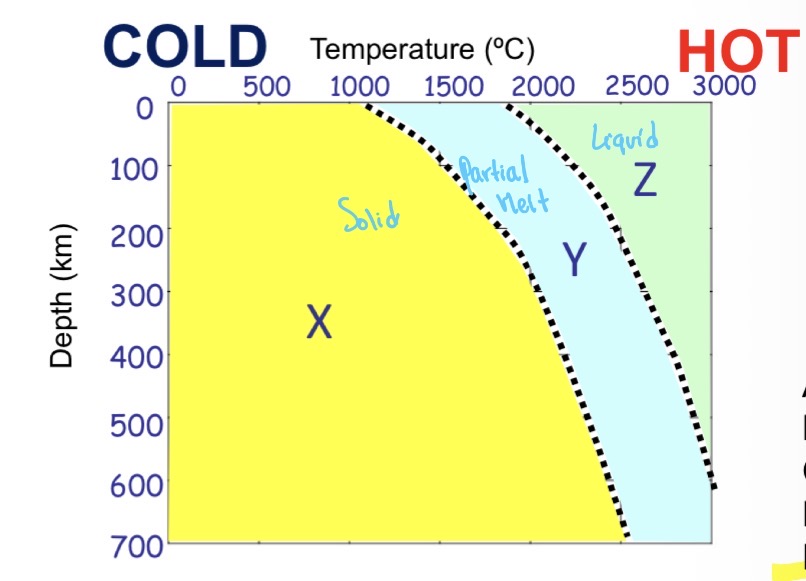
In which part of the graph is rock most likely to be liquid and where is it solid?
Z=liquid
X=solid
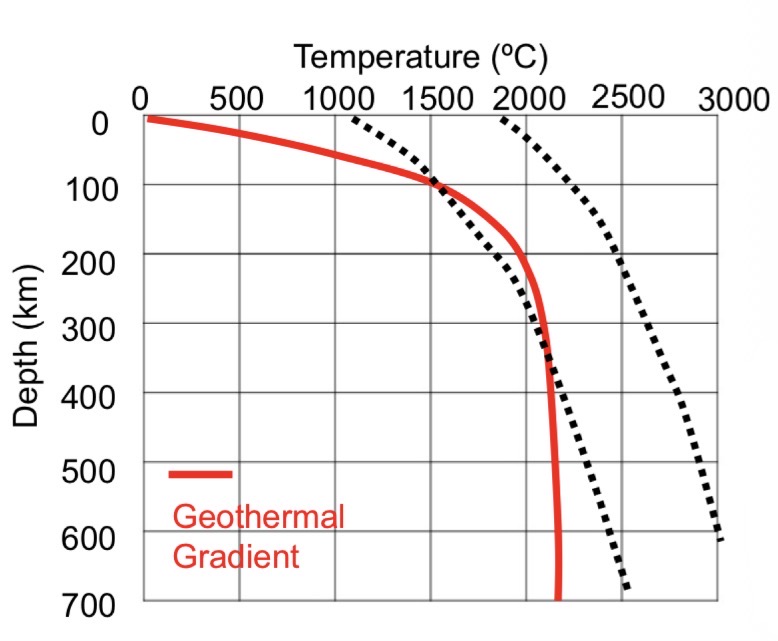
At what DEPTH underground, would the rocks likely FLOW the most easily?
A) 0-100 km
B) 100-350 km
C) 350-700 km
D) 0-100 & 350-700 km
E) Below 700 km
A) 0-100 km
B) 100-350 km the rocks likely flow the most easily
C) 350-700 km
D) 0-100 & 350-700 km
E) Below 700 km
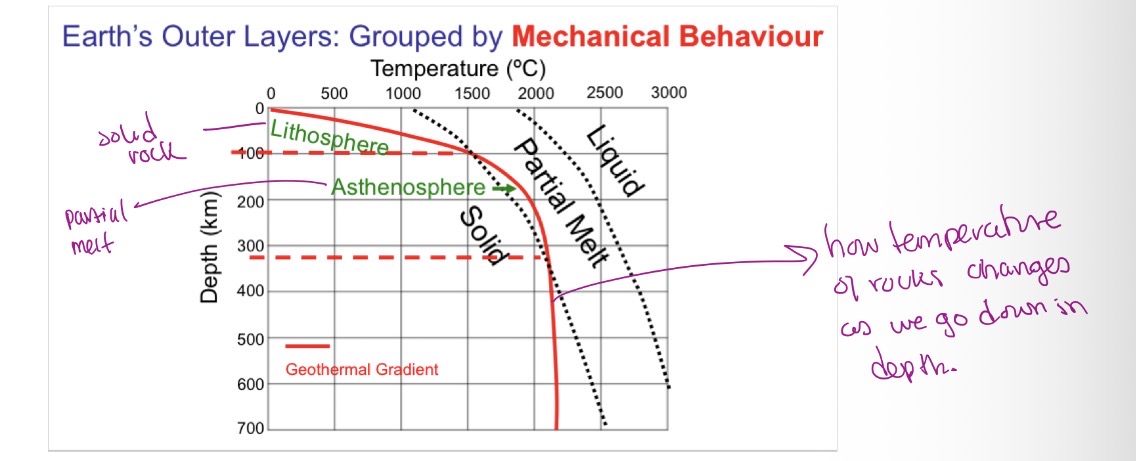
Lithosphere
The rigid plates that move around on Earth’s surface
Asthenosphere
Move on top of a plastic layer
Plate tectonics
Movement of lithospheric plates
plate tectonics influences_______in a number of ways.
plate tectonics influences climate in a number of ways.
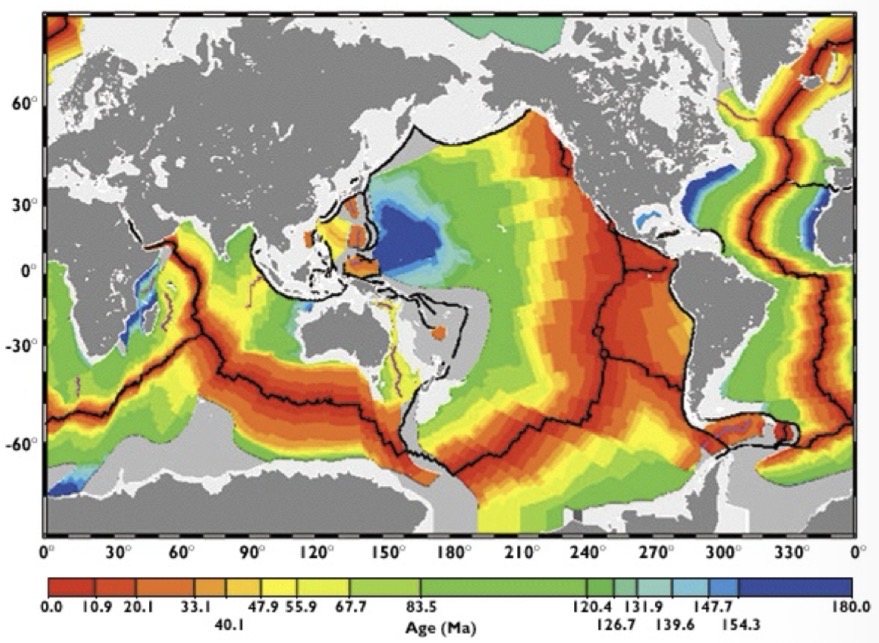
Where’s the youngest seafloor? (Observations and evidence of plate tectonics)
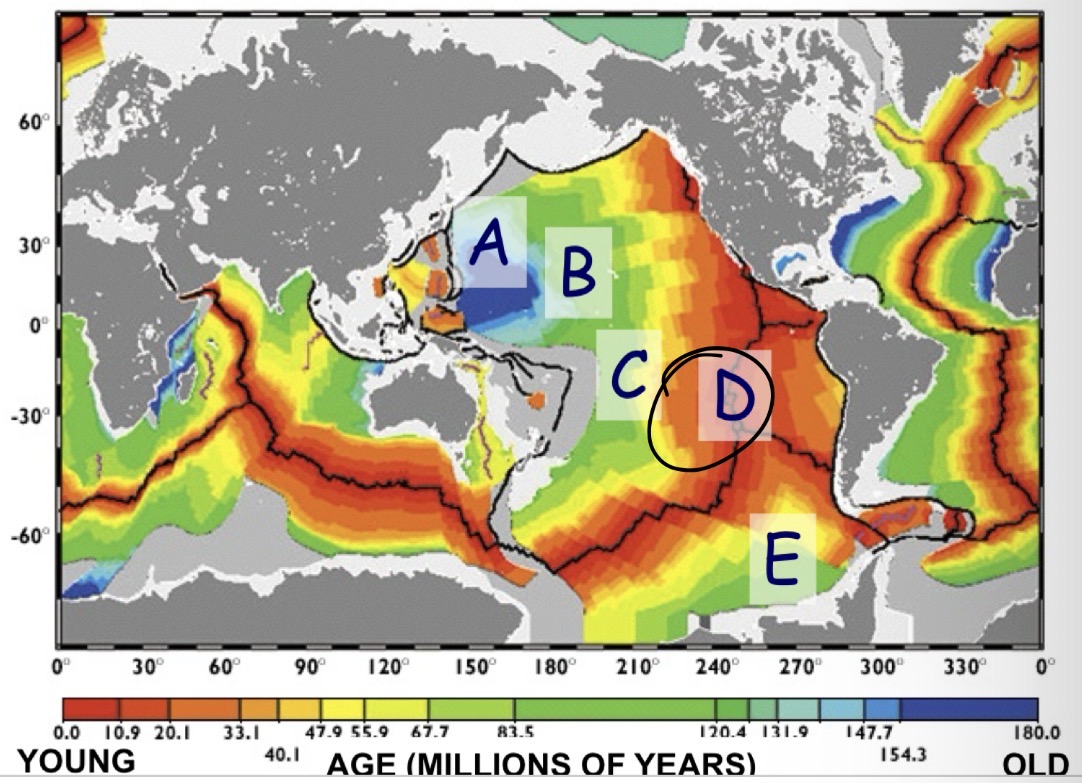
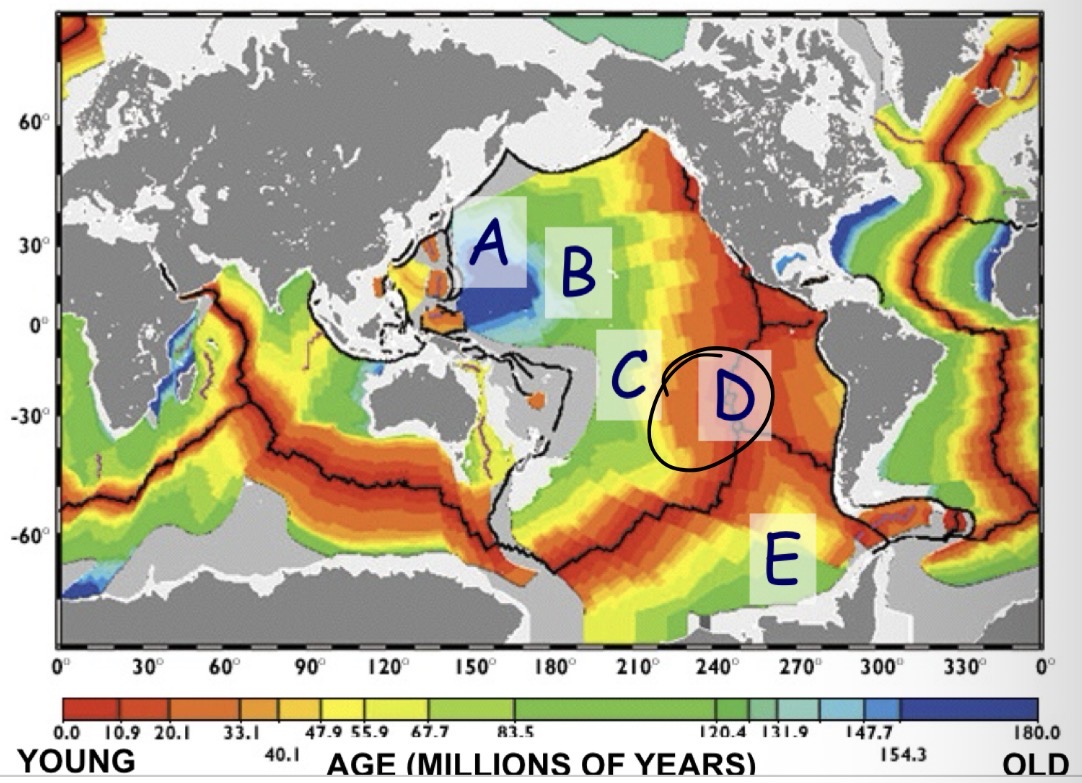
Where is the fastest spreading rate?
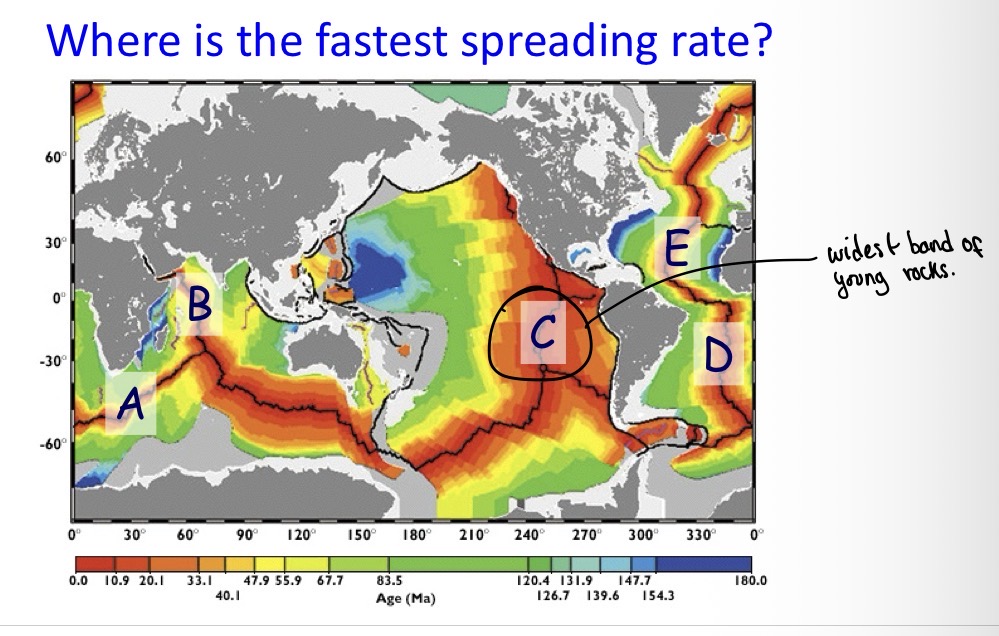
Seafloor spreading
-plates moving apart
-magma rising
-undersea volcanoes make new crust
Undersea volcanoes form new rocks that make up new sea floor
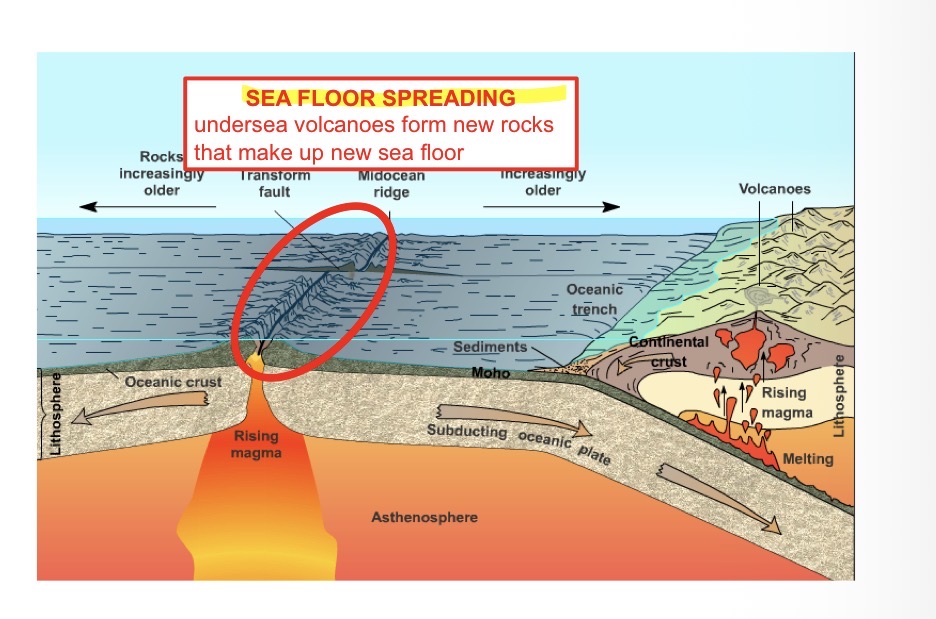
Subduction Zone
Ocean litospheric plate blends down beneath a continental lithospheric plate.
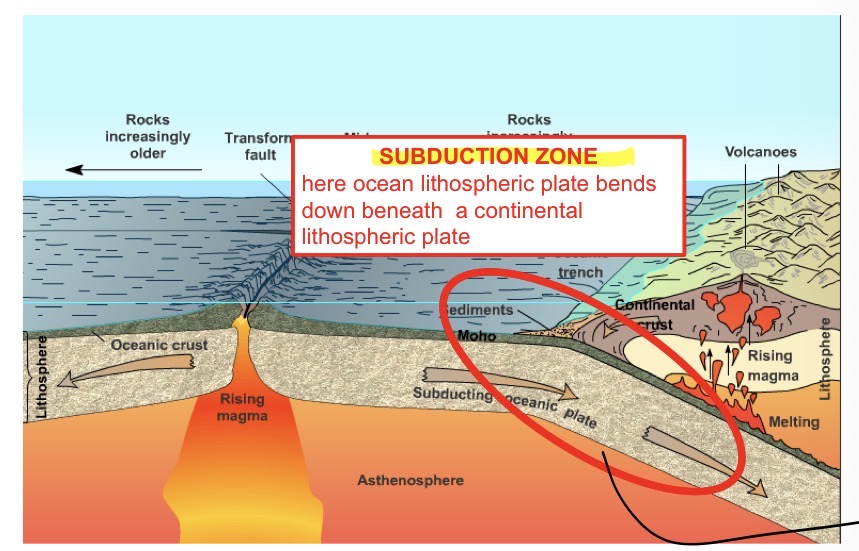
COMPARE and CONTRAST the two primary types of tectonic plate boundaries (divergent and convergent) and provide examples of each on today’s Earth
Old lithosphere is subducted at which of the following types of plate boundaries?
Ocean-ocean convergent boundaries & ocean-continent convergent boundaries
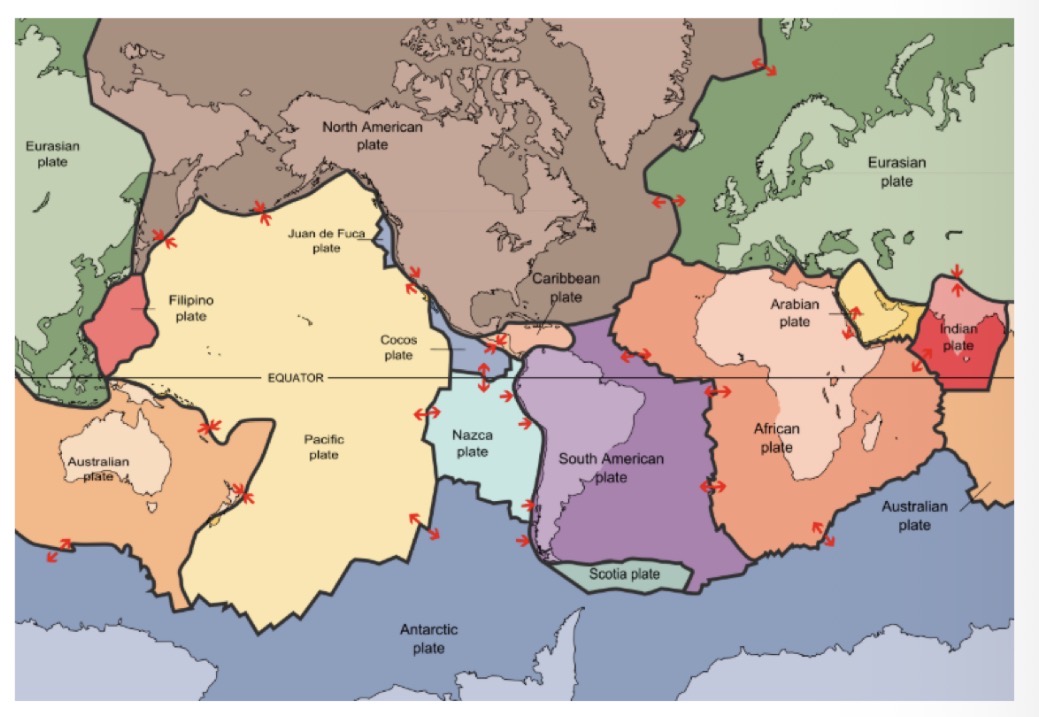
1142. DESCRIBE aspects of the interior structure of Earth needed to explain tectonic processes, in particular, the relevant layers and how they are defined (crust, mantle, lithosphere, asthenosphere)
Where is the EASTERN boundary of the North American Plate?
The Mid-Atlantic Ridge
DESCRIBE aspects of the interior structure of Earth needed to explain tectonic processes, in particular, the relevant layers and how they are defined (crust, mantle, lithosphere, asthenosphere)
Which layers of Earth comprise the lithosphere?
Crust and upper mantle
Compositional layers
Compositional layers = crust and upper mantle
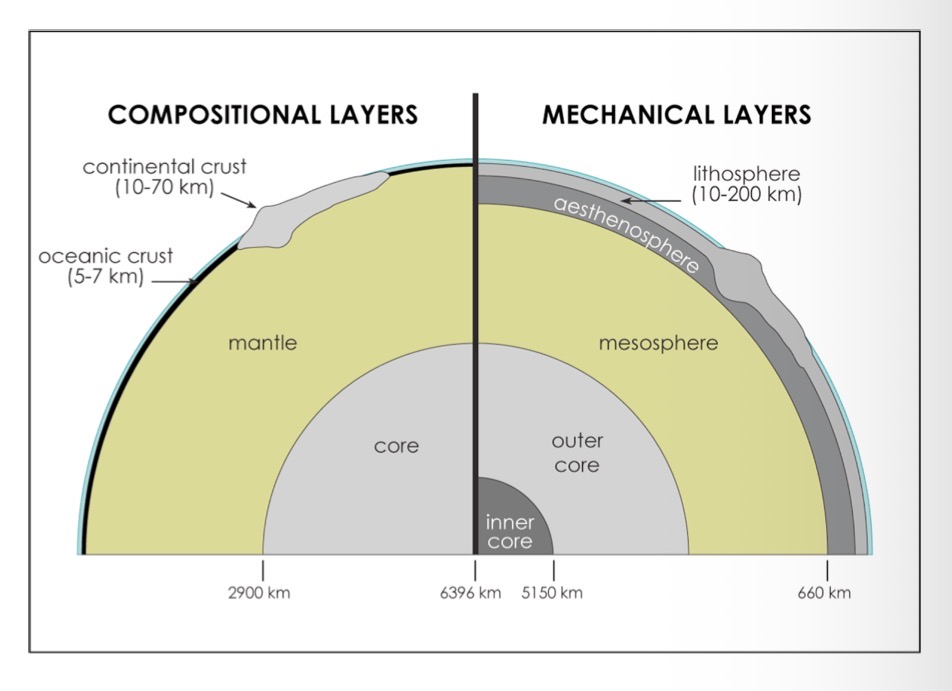
Plates of lithosphere move =
Plates of lithosphere move = plate tectonics
Mechanical layers
Mechanical layers= lithosphere + asthenosphere
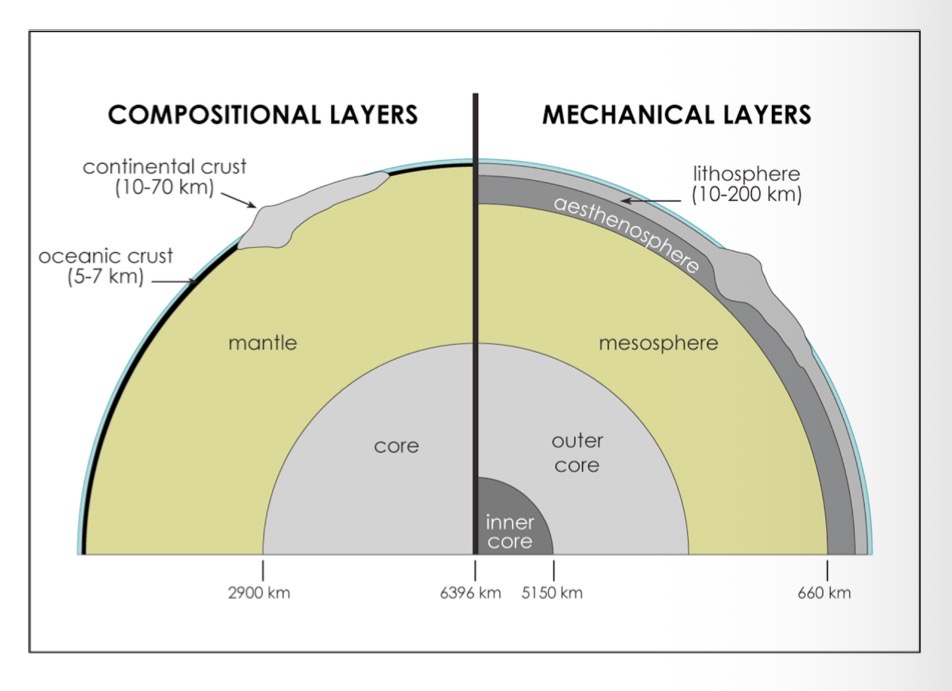
Lithosphere
Litosphere = the rigid tectonic plates that move around on Earth’s surface
Asthenosphere
Asthenosphere = the plastic layer they move on top
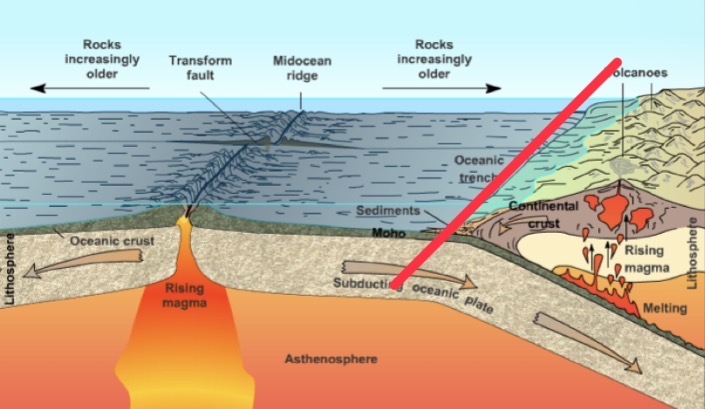
DIVERGENT BOUNDARY
Plates pull apart
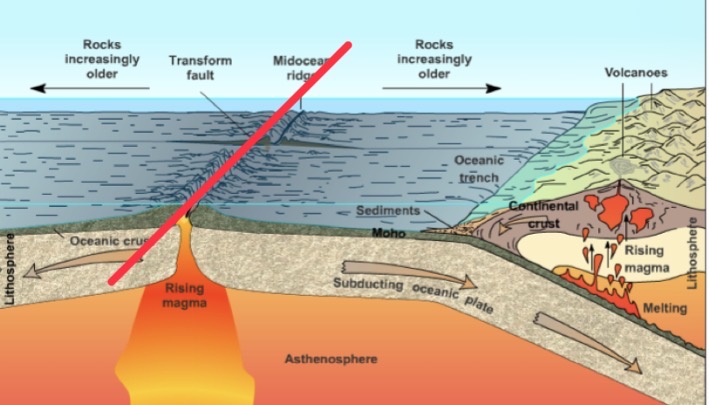
CONVERGENT BOUNDARY
Plates come together
.
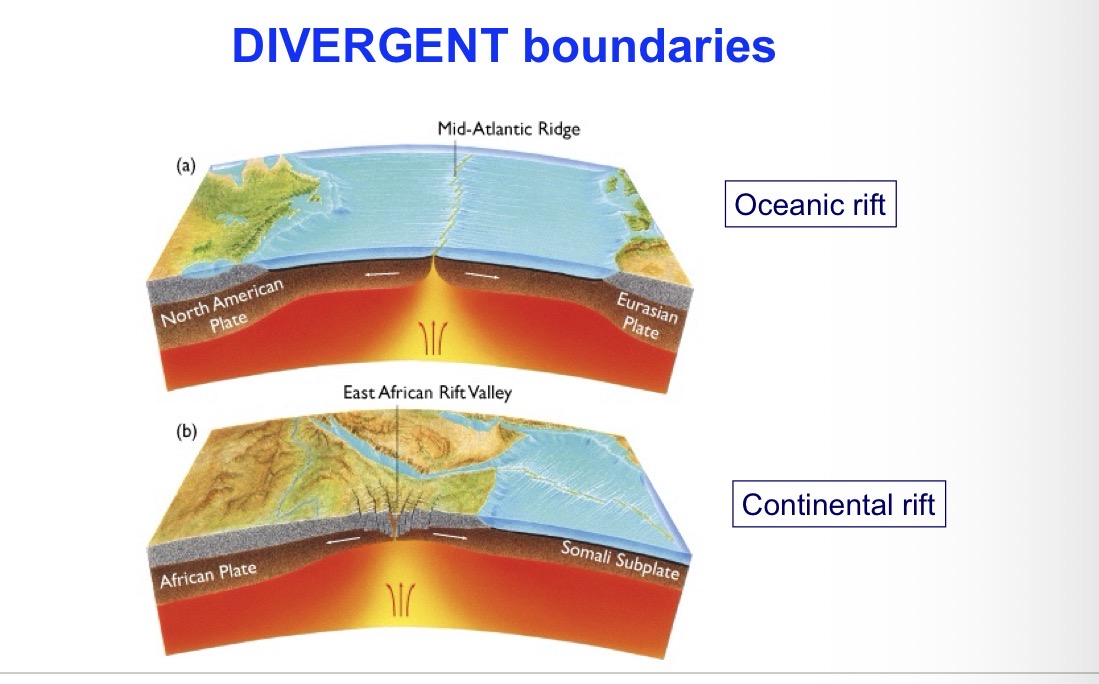
Types of divergent boundaries
oceanic rift
Continental rift
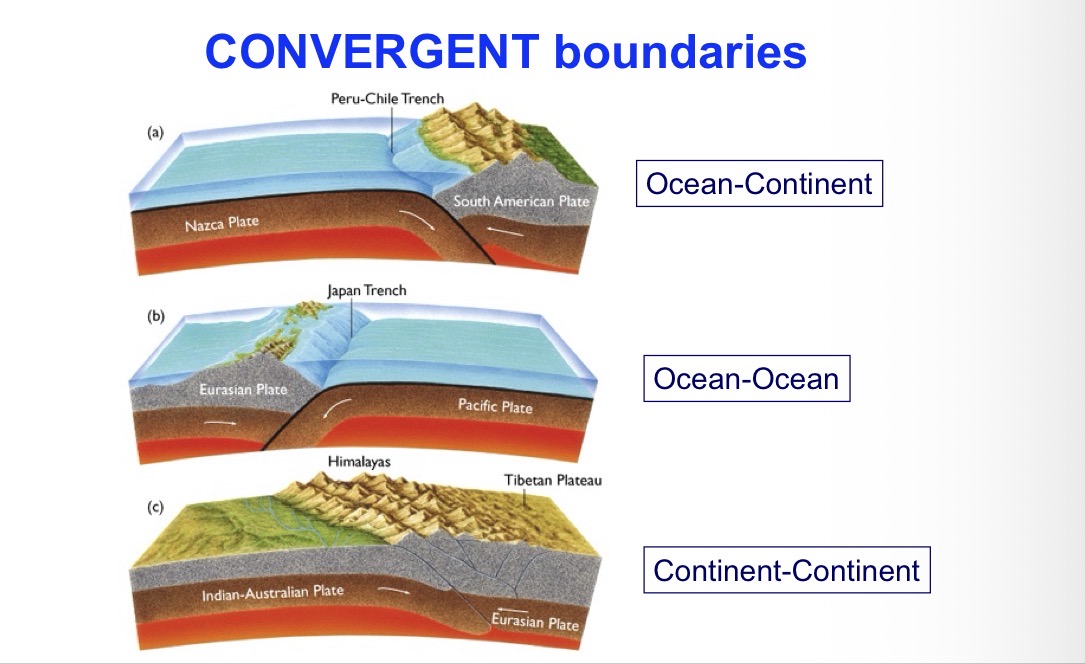
Types of CONVERGENT boundaries.
Ocean-continent
Ocean-ocean
Continent-continent
Where’s the global distribution of volcanoes?
At both DIVERGENT and CONVERGENT plate boundaries.
What would happen to volcanic activity if the average rate of sea-floor spreading sped up?
More volcanic eruptions at mid-ocean ridges and at subduction zones.
Faster spreading → faster plate movement
Faster plate movement → more magma production
Result → more volcanism at both mid-ocean ridges and subduction zones
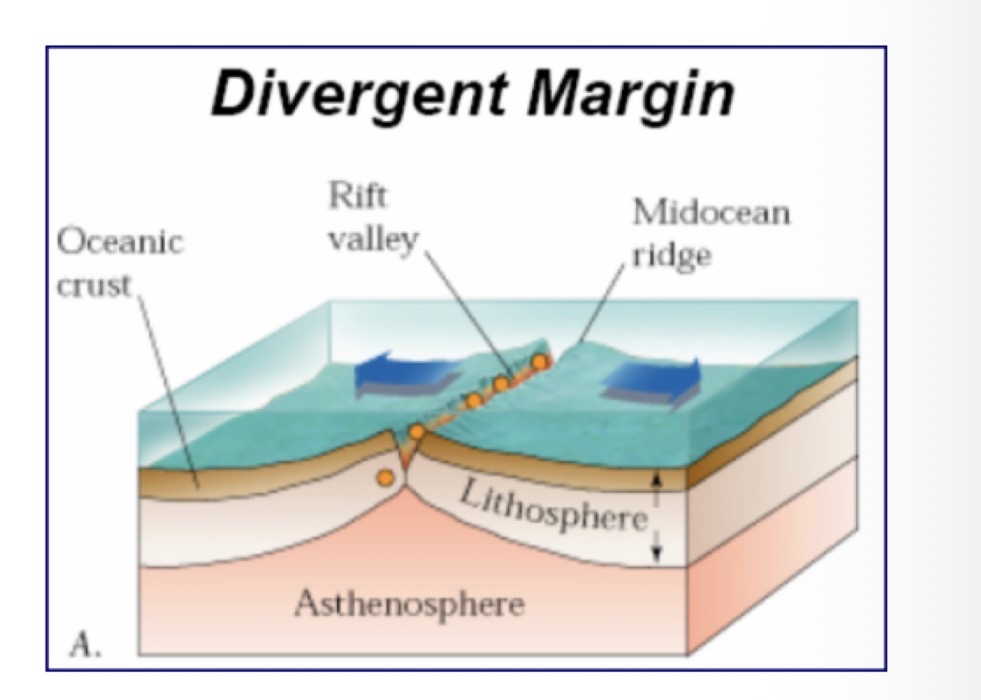
DESCRIBE the processes of seafloor spreading and subduction, and the evidence for these processes
How many tectonic plates are in this picture?
2
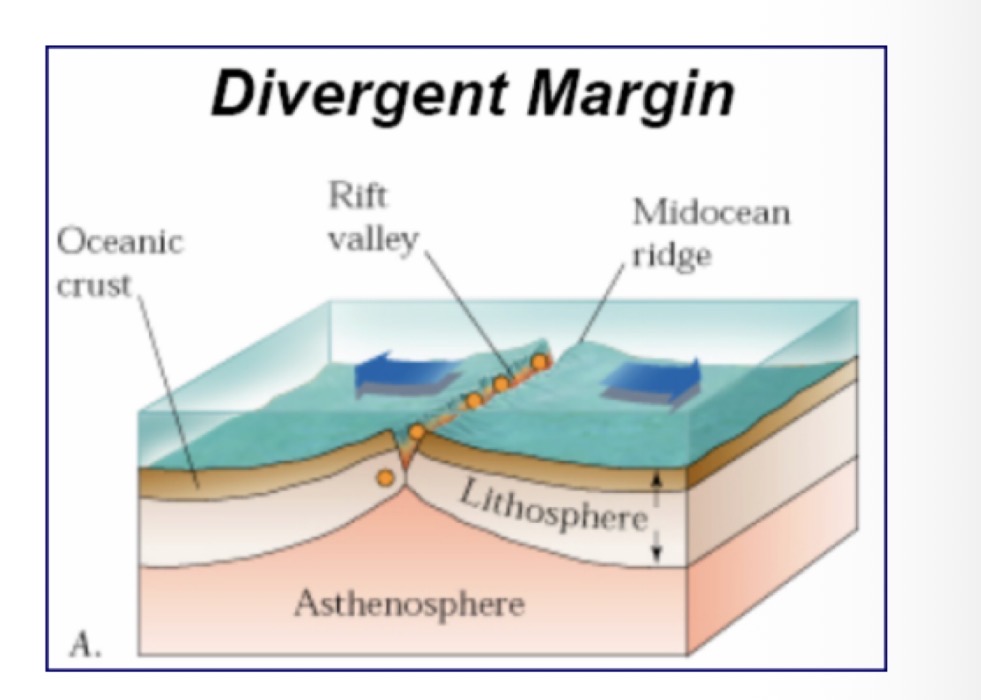
If on Earth there was lots of active spreading and subduction, what would you expect to happen to atmospheric CO2 as this continued?
Increase
Volcanoes produce carbon dioxide
Enhanced tectonic activity → enhanced volcanic activity → input of CO2 to the atmosphere → warming on long timescales
Scenario on Earth when continents are colliding and coming together to form a supercontinent. What would you expect to happen to atmospheric CO2 as this scenario continued?
Decrease
Mountain building consumes carbon dioxide
Mountain building → enhanced weathering = when rock material is broken down by mechanical forces or chemical reactions → CO2 drawdown from atmosphere → cooling on long timescales
Plate tectonics and atmospheric CO2:
-high tectonic activity enhances volcanism and increases atmospheric CO2 (→ warming /cooling)
-mountain building enhances chemical weathering and decreases atmospheric CO2 (→ warming/cooling)
Plate tectonics and atmospheric CO2:
-high tectonic activity enhances volcanism and increases atmospheric CO2 (→ warming /cooling)
-mountain building enhances chemical weathering and decreases atmospheric CO2 (→ warming/cooling)
Plate tectonics and albedo
-fast sea floor spreading increases sea level and lowers the albedo (→ warming/ cooling)
-supercontinent buildup increases the albedo (→ warming/cooling)
-the migration of continents towards the poles allows for ice cheer to for (→warming/cooling)
Plate tectonics and albedo
-fast sea floor spreading increases sea level and lowers the albedo (→ warming/ cooling)
-supercontinent buildup increases the albedo (→ warming/cooling)
-the migration of continents towards the poles allows for ice cheer to for (→warming/cooling)
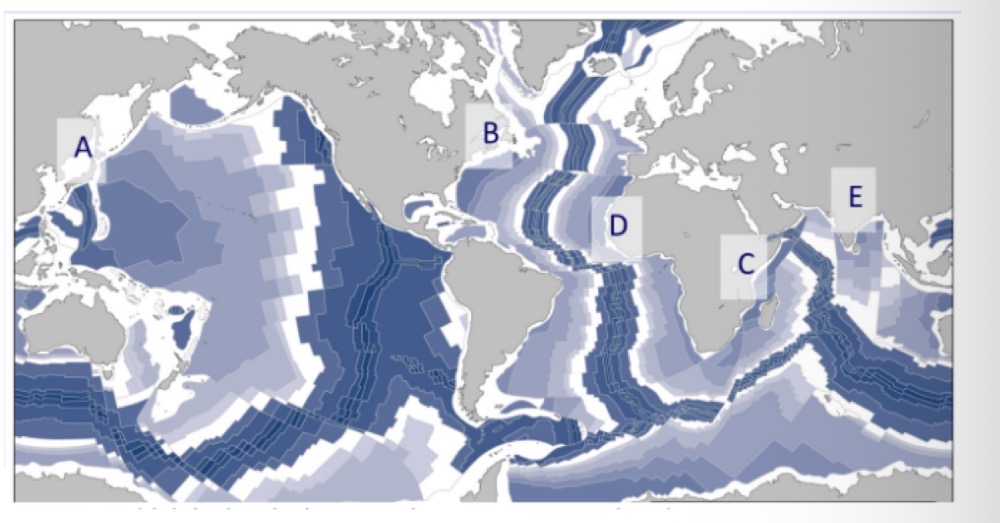
APPLY understanding of the Wilson Cycle to predict the locations of spreading and subduction on Earth both in the past and in the future.
Which is the opening ocean on Earth today?
Atlantic Ocean (B)
Which is the closing ocean on Earth today?
The Pacific Ocean
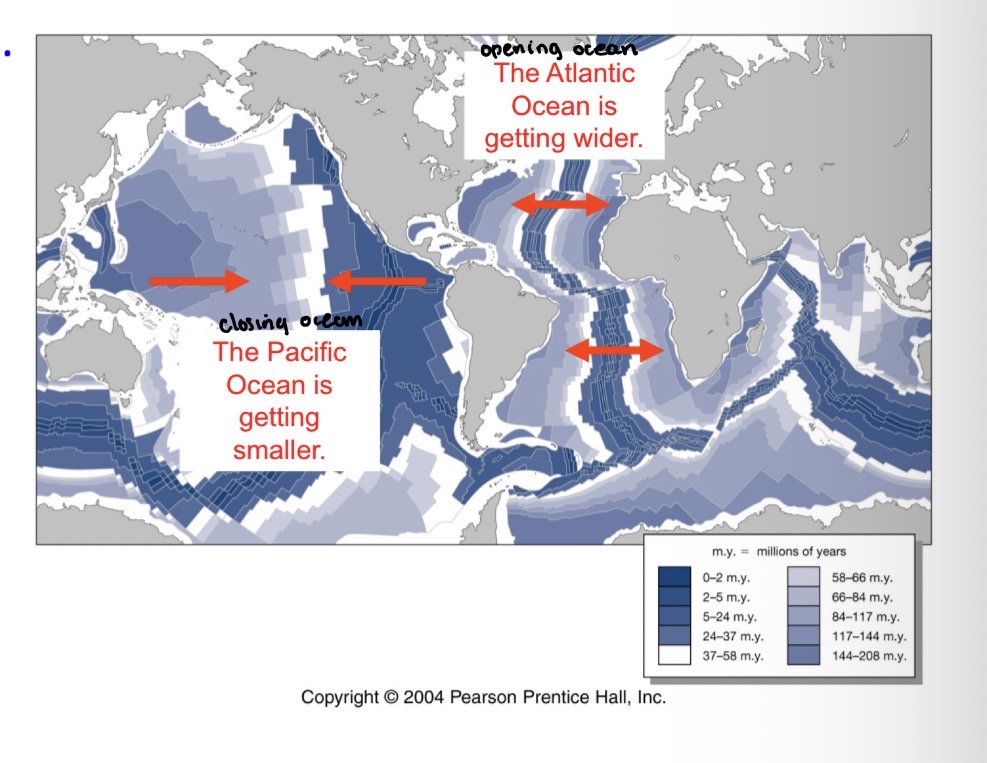
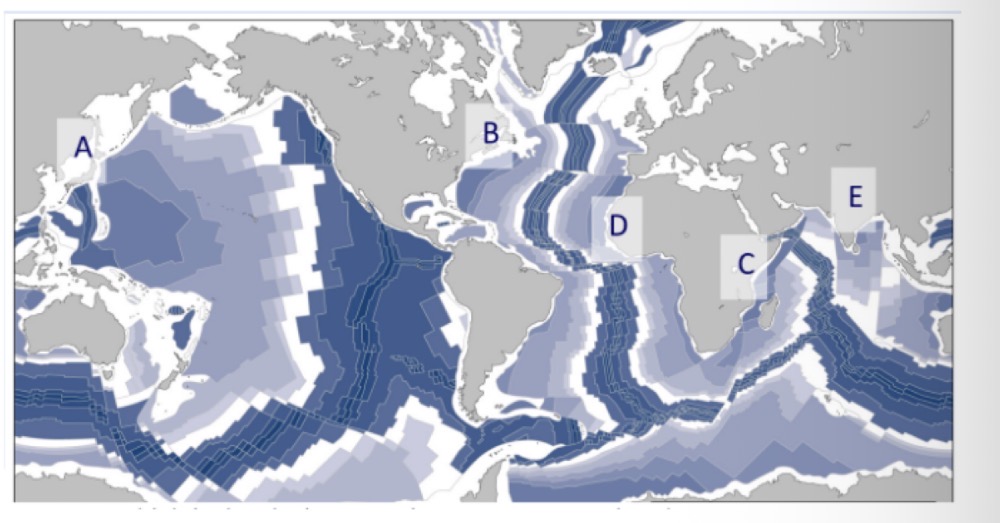
Where will the next mountain range from?
A since the pacific ocean will close, the Americas will collide with Asia and Australia to produce another supercontinent, and a new mountain range will form at their conjunction.
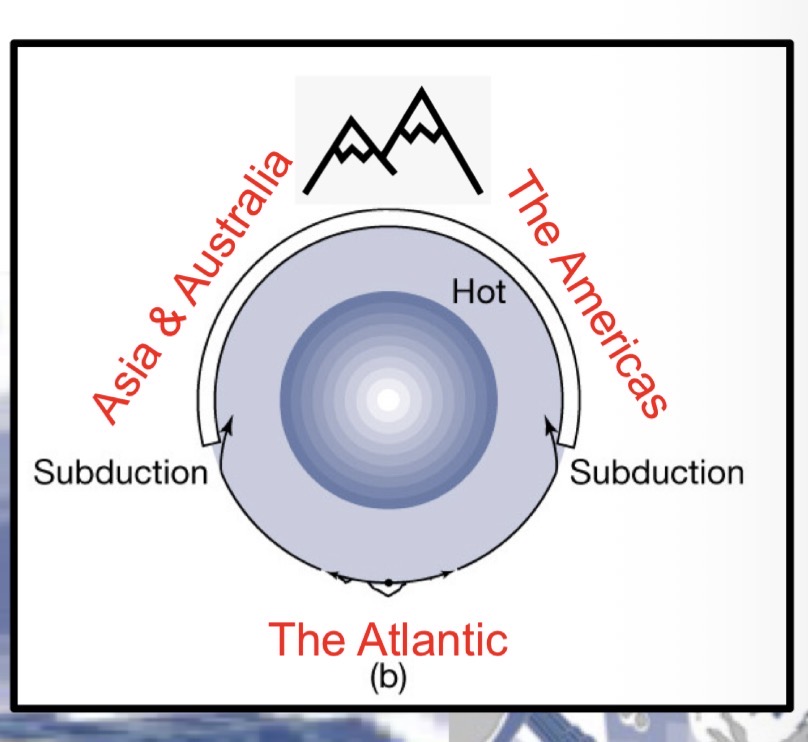
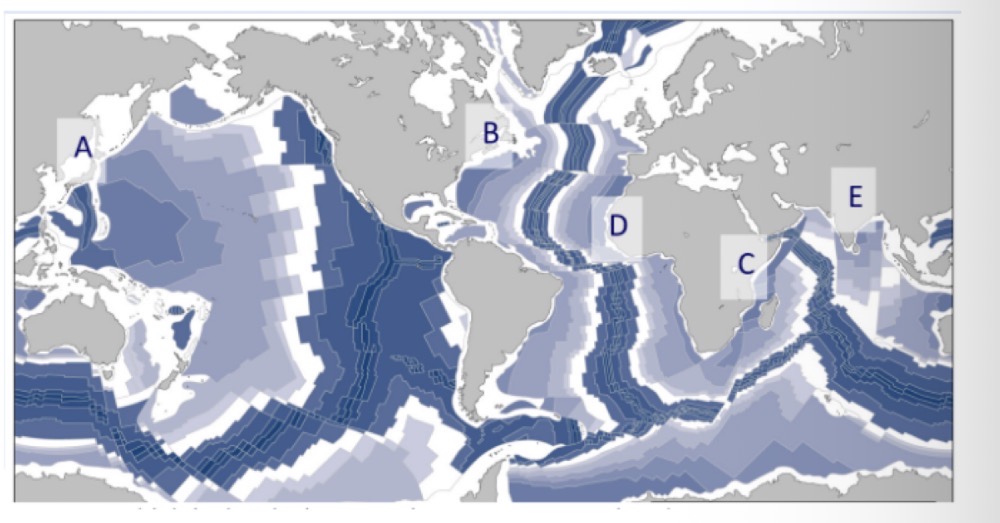
In the next phase of the Wilson Cycle, where will new subduction zones appear?
B and D
DESCRIBE the processes of seafloor spreading and subduction, and the evidence for these processes
About how fast does seafloor spreading happen?
Centimeters per year
COMPARE and CONTRAST the two primary types of tectonic plate boundaries (divergent and convergent) and provide examples of each on today’s Earth
How many tectonic plates are in this picture?
4
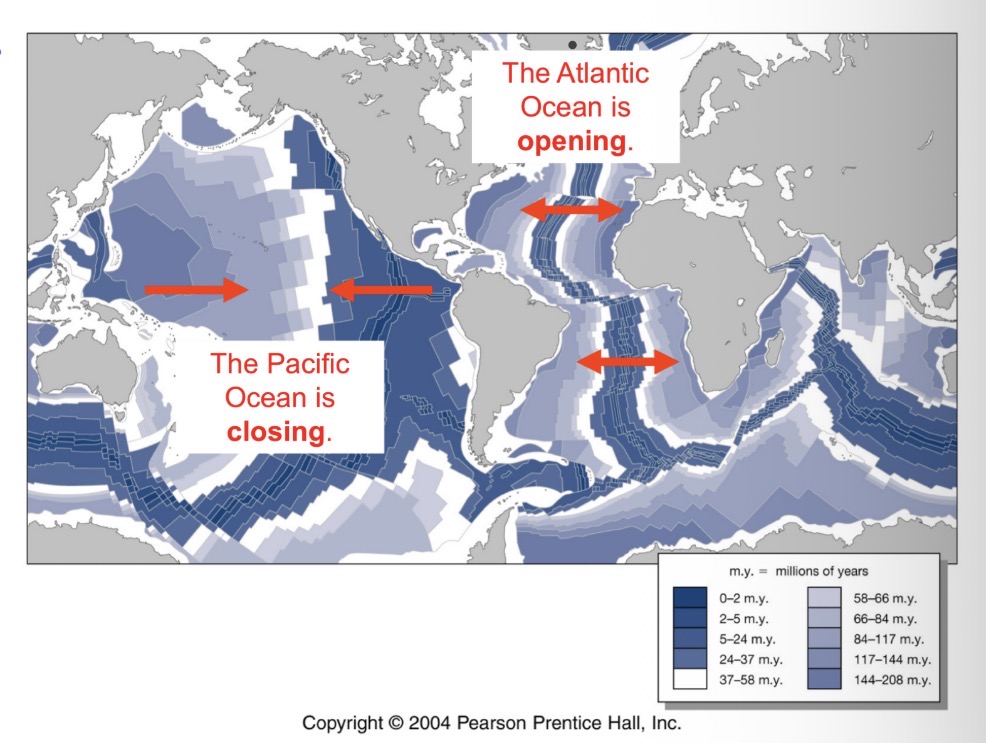
APPLY understanding of the Wilson Cycle to predict the locations of spreading and subduction on Earth both in the past and in the future.
Where on Earth is an example of a continent starting to break apart?
East Africa
DESCRIBE the Wilson Cycle, through the formation and breakup of a supercontinent
Subduction zones appear:
When two cranks plates collide
When continental and oceanic plates collide
In a closing ocean
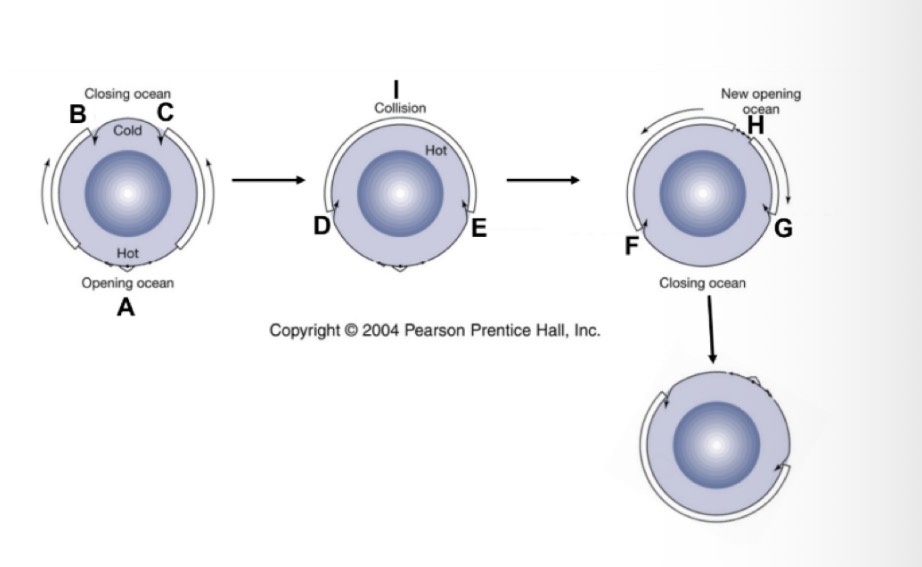
Wilson Cycle, through the formation of a supercontinent
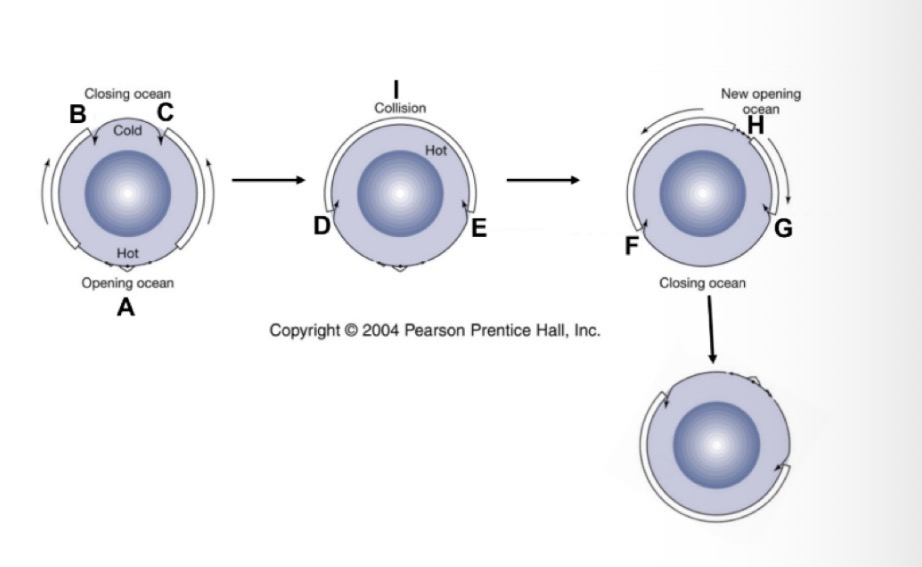
What happens at A?
Continents are being pushed apart by a mid-ocean ridge without subduction zones.
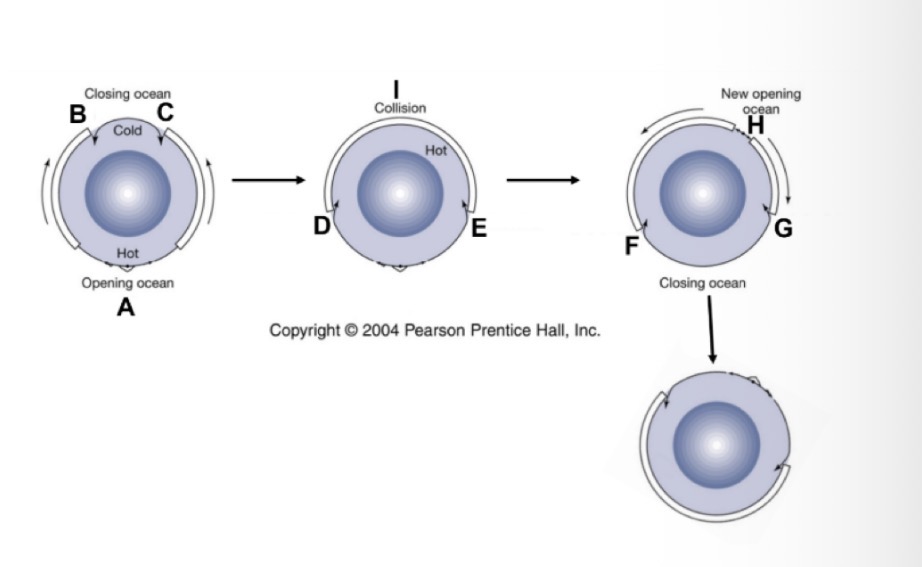
What happens at B?
The second ocean is shrinking with subduction zones at the edges.
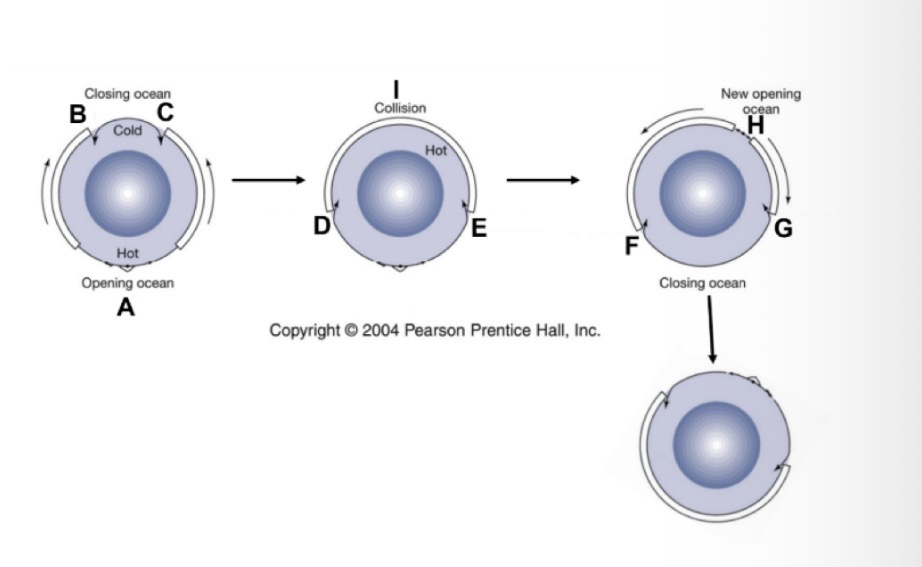
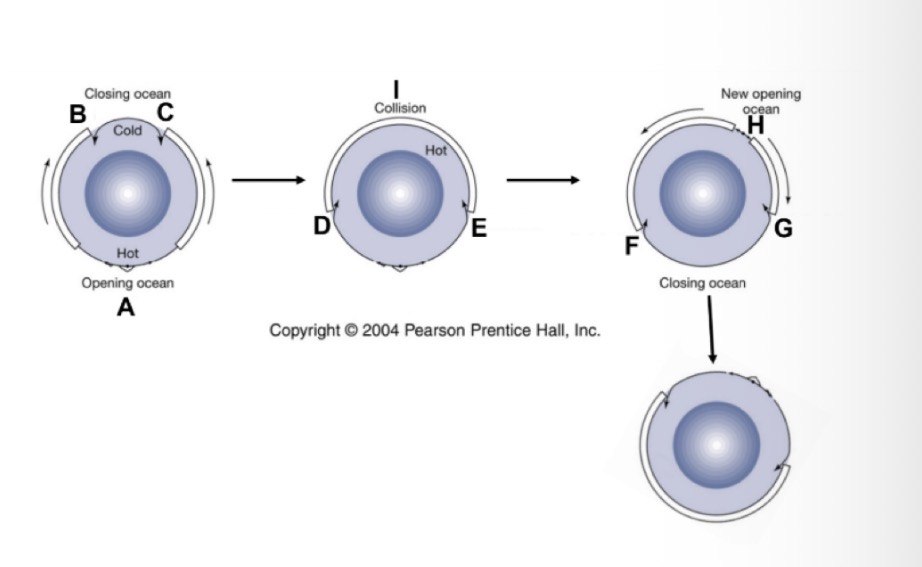
What happens at C?
The second ocean is shrinking with subduction zones at the edges.
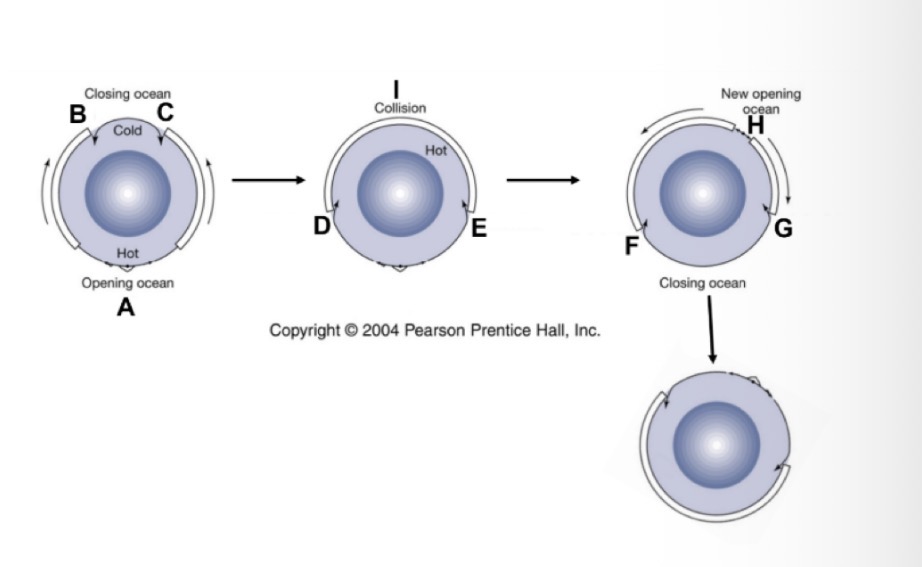
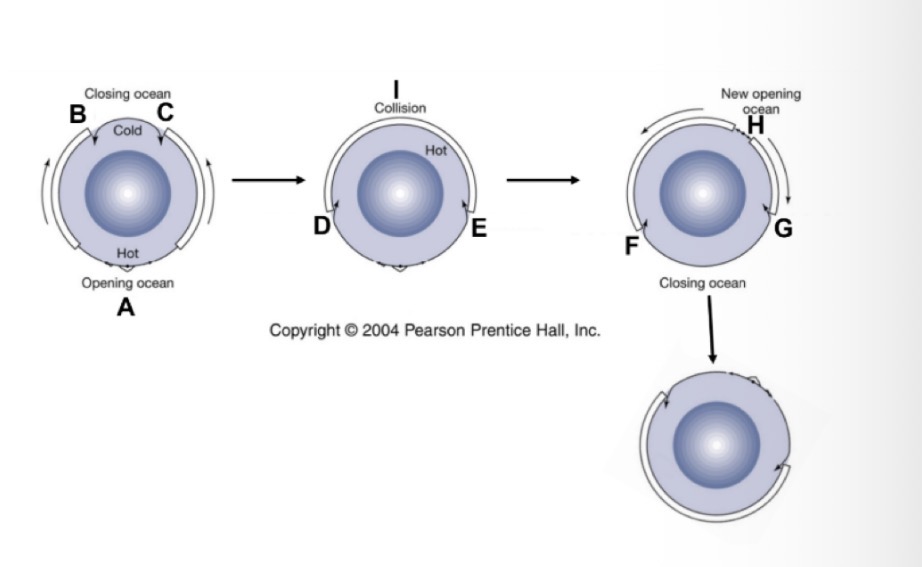
What happens at D?
The formerly widening ocean cannot widen further and starts to shrink as its seafloor is sub-ducted
A new sea flor is produced, subduction zones appear at the margins.
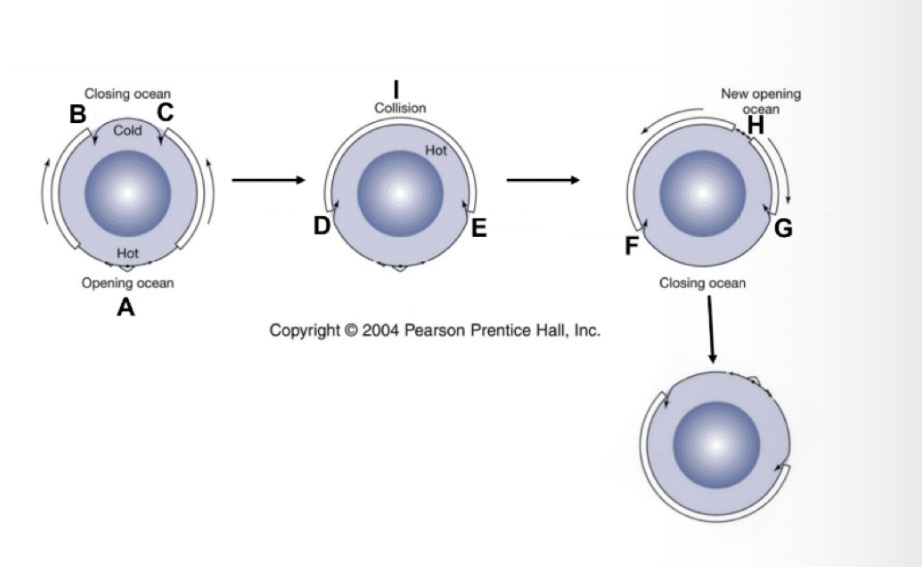
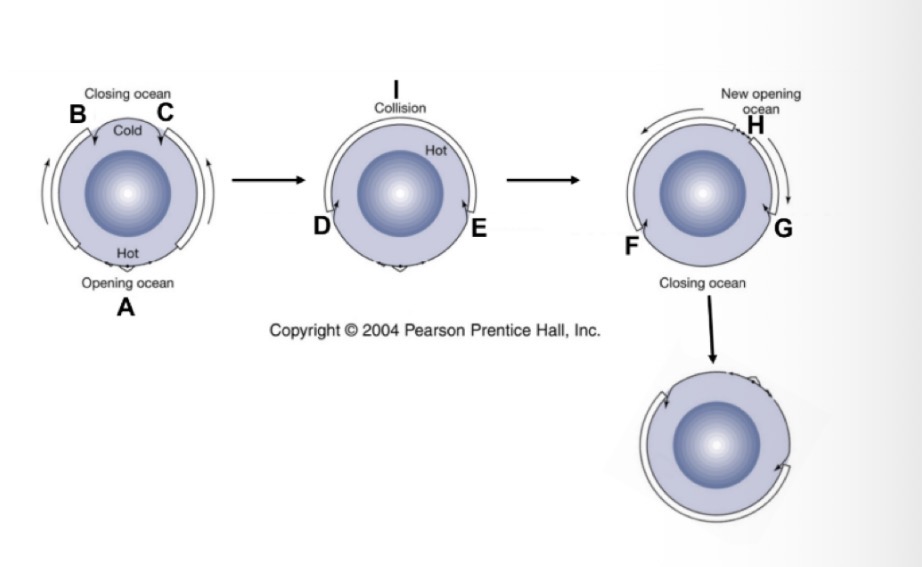
What happens at E?
The formerly widening ocean cannot widen further and starts to shrink as its seafloor is subducted.
2. A. De seafloor is produced and subduction zones appear at the margin.
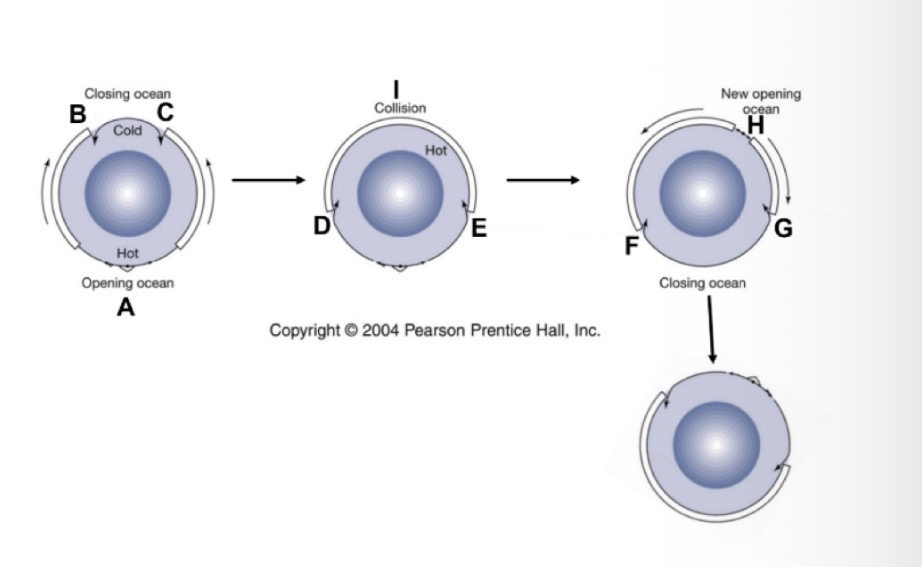
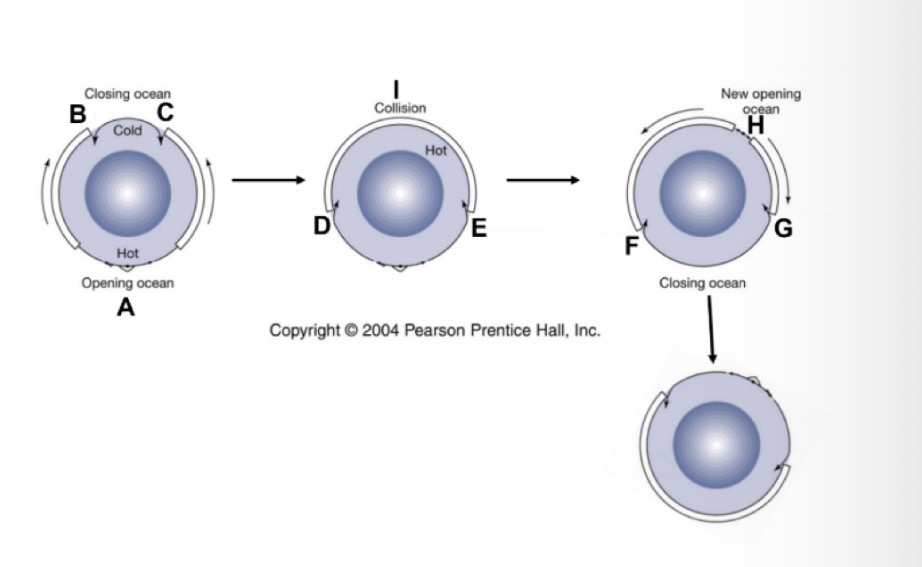
What happens at F?
The second ocean is shrinking with subduction zones and edges.
The formerly widening ocean cannot widen further and starts to shrink as seafloor is subducted.
When new sea floor is produced, subduction zones appear at the margins.
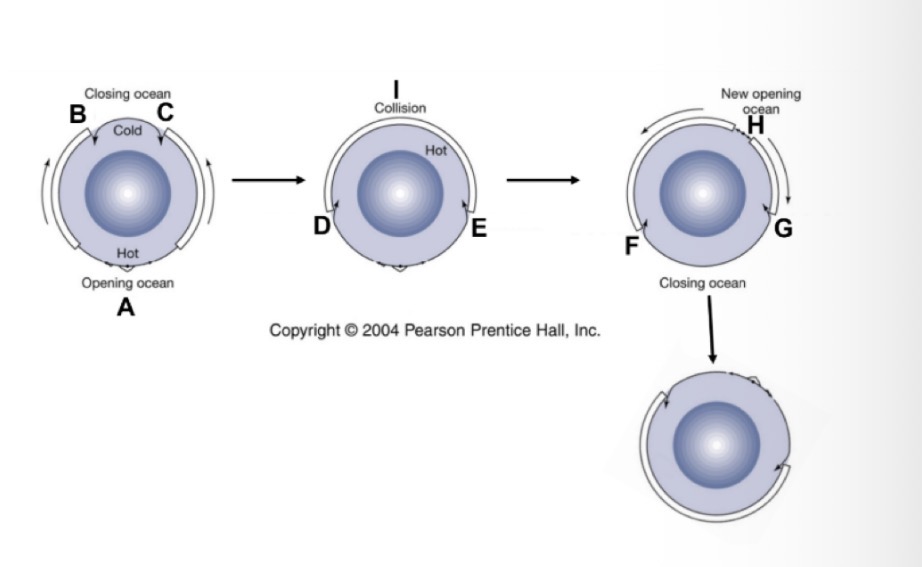
What happens at G?
The second ocean is shrinking with subduction zones at the edges.
The formerly widening ocean cannot widen further and starts to shrink as seafloor is subducted.
When new sea floor is produced, subduction zones appear at the margins.
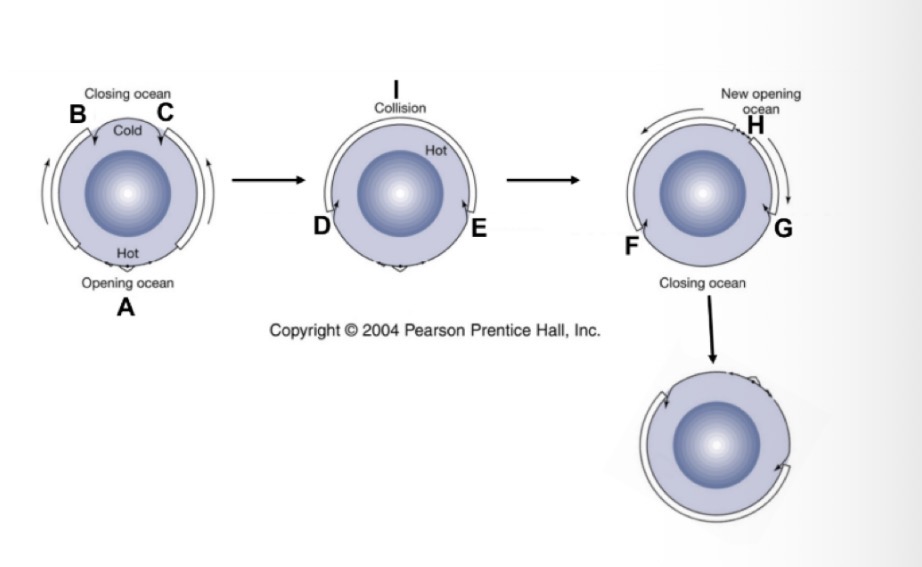
What happens at H?
The supercontinent breaks apart, and a new ocean basin appears with sea floor spreading and no subduction.
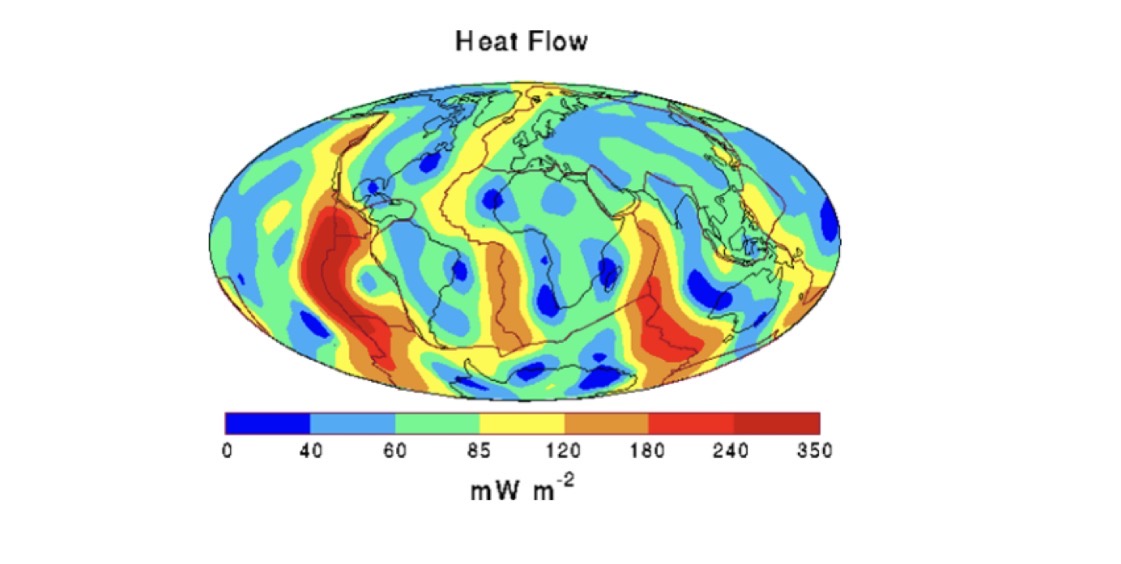
DESCRIBE the processes of seafloor spreading and subduction, and the evidence for these processes
What areas correspond to areas of high heat flow and why?
Mid-ocean ridges because hot magma rises there.