Bio-Renewable Polymers
 Call Kai
 Learn
Learn Practice Test
 Spaced Repetition
 Match
Match Flashcards
 Knowt Play
1/17

There's no tags or description
Looks like no tags are added yet.
Name | Mastery | Learn | Test | Matching | Spaced | Call with Kai |
|---|
No analytics yet
Send a link to your students to track their progress
18 Terms
Bio-derived poly(lactic acid) (PLA)
Lactic acid --> Polylactic acid
-Derived from corn starch or sugar cane
-Biodegradable (can be ester hydrolysed), biocompatible, bioresorbable
-Used in packaging, textiles, medical devices
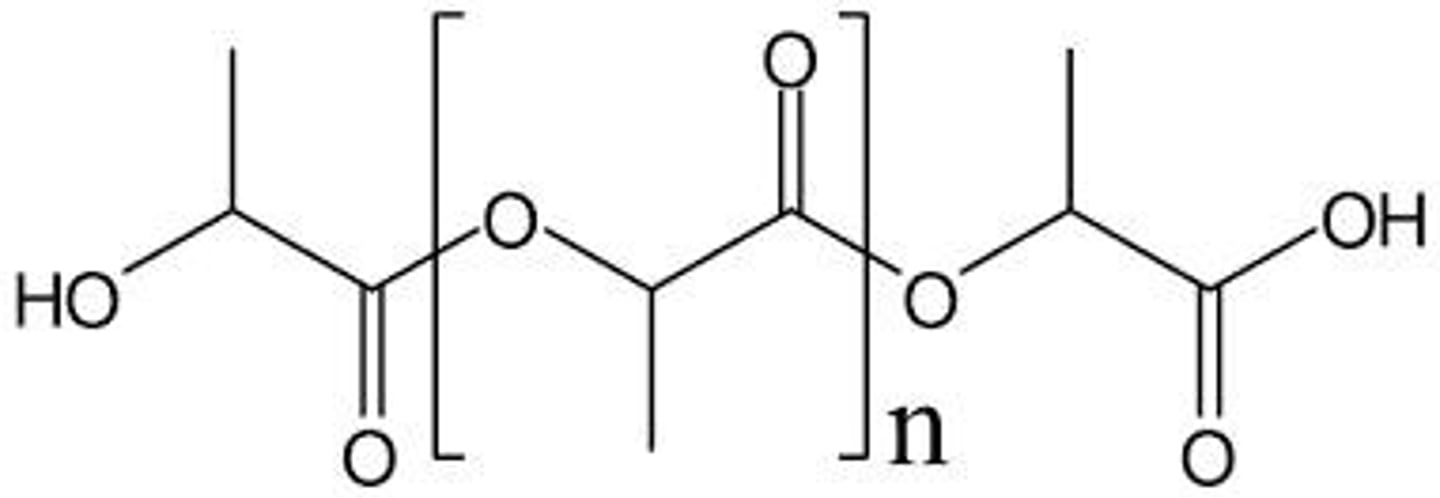
Direct condensation synthesis of poly(lactic acid)
Lactic acid is used to give low molecular weight PLA
corn --enzymatic degradation--> sugars --fermentation--> lactic acid --step-growth polymerisation--> PLA
-Step-growth polymerisation is slow and unreliable
Ring-opening polymerisation synthesis of poly(lactic acid)
Lactide (cyclic lactic acid) is used to give high molecular weight PLA
corn --enzymatic degradation--> sugars --fermentation--> lactic acid --heat--> lactide --chain-growth polymerisation--> PLA
-Chain growth polymerisation is faster
-This method is preferred by industry
Applications of poly(lactic acid)
Used in sandwich packs as a window
Used as coffee cup lids
Issues with poly(lactic acid)
-Uses genetically modified crops
-Recycling of PLA was not always feasible
-PLA in landfill sites would not biodegrade but create methane over time (as slow to biodegrade)
Bio-based poly(butylene succinate) (Bio-PBS)
Succinic acid (dibutanoic acid) + 1,4-butanediol --> PBS
-Both monomers derived from renewable sources
-PBS fully biodegradable and compostable
-Strong, flexible, heat resistant
-Used in food packaging, textiles, medical applications
Production of bio-succinic acid
Produced via microbial fermentation
BIomass --extraction hydrolysis--> sugars --fermentation--> succinic acid
-Microbial fermentation using bacteria
-Converts sugars into succinic acid
-Purified via crystallisation or electrolysis
Production of bio-1,4butanediol
Produced from bio-succinic acid through catalytic hydrogenation (so derived from biomass)
Succinic acid --(H₂, metal catalyst)--> 1,4-butanediol
-Not environmentally friendly as uses metal catalyst (e.g. Ru, Pd, Ni)
Synthesis of bio-based poly(butlyene succinate) (Bio-PBS)
Formed through step-growth polymerisation via esterification between bio-BDO and bio-succinic acid
-Initial step temperature 160-190°C then second step temperature 220-240°C
-Requires Lewis acid catalysts (e.g. Sc(NTf₂)₃, Sc(CF₃SO)₂, Ti(OBu)₄)
-Solvents not required
Production of bio-ethylene for poly(ethylene)
-Sugars are processed to produced fruit juice
-Fruit juice is fermented and distilled to produce ethanol
-Ethanol is catalytically converted to ethylene
Ethanol --(H₂SO₄, 180°C)--> Ethylene
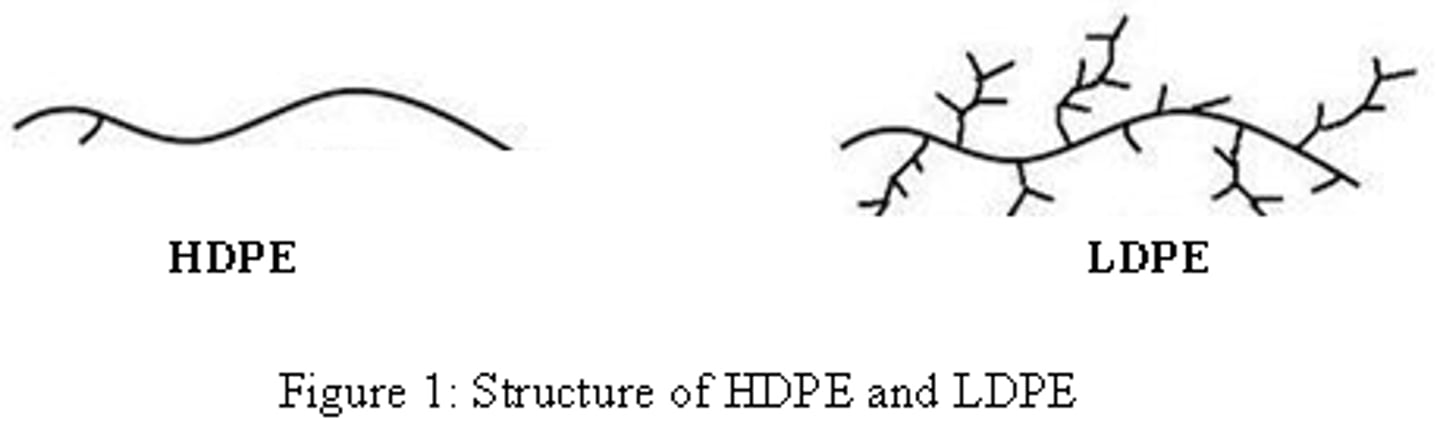
Low density polyethylene (LDPE)
High degree of branching on chain so less dense
-Better flexibility, impact toughness, resistance to environmental stress vs HDPE
-Crystallisation impeded by branching -> limits degree of crystallinity to ~40%
-Low density since more amorphous content (0.910-0.930 g cm⁻³)
-M_w of 80-40g mol⁻¹
-Used in drinks packaging as film to bundle them
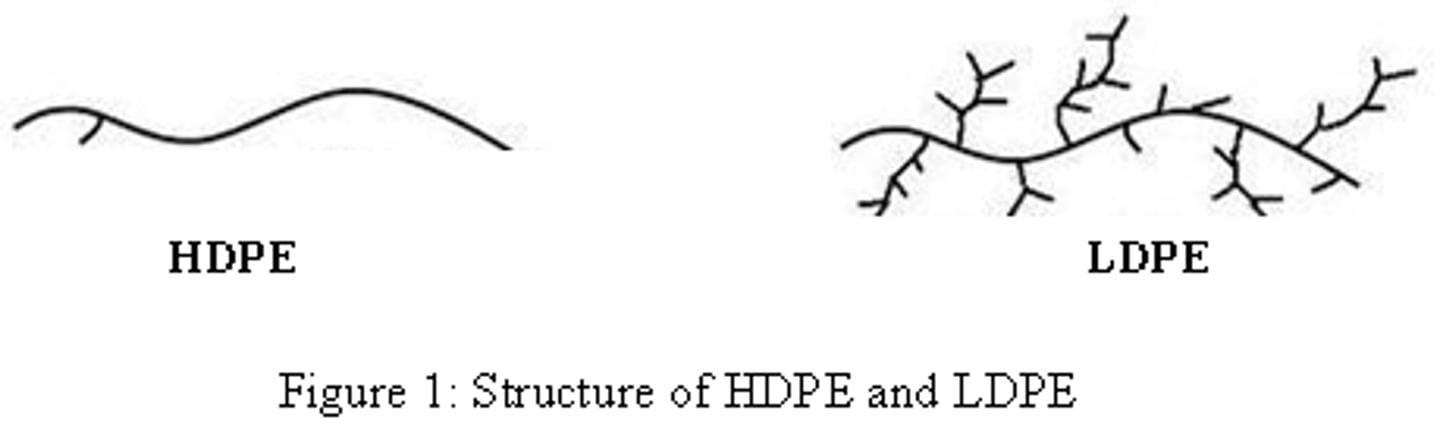
High density polyethylene (HDPE)
Little branching on polymer chain so dense
-Increased crystallinity results in increased stiffness and higher density (0.935-0.960g cm⁻³)
-70+% crystalline
-M_w of around 35 kg mol⁻¹
-Large strength to density ratio
-Used in pipes, hard hats, LEGO
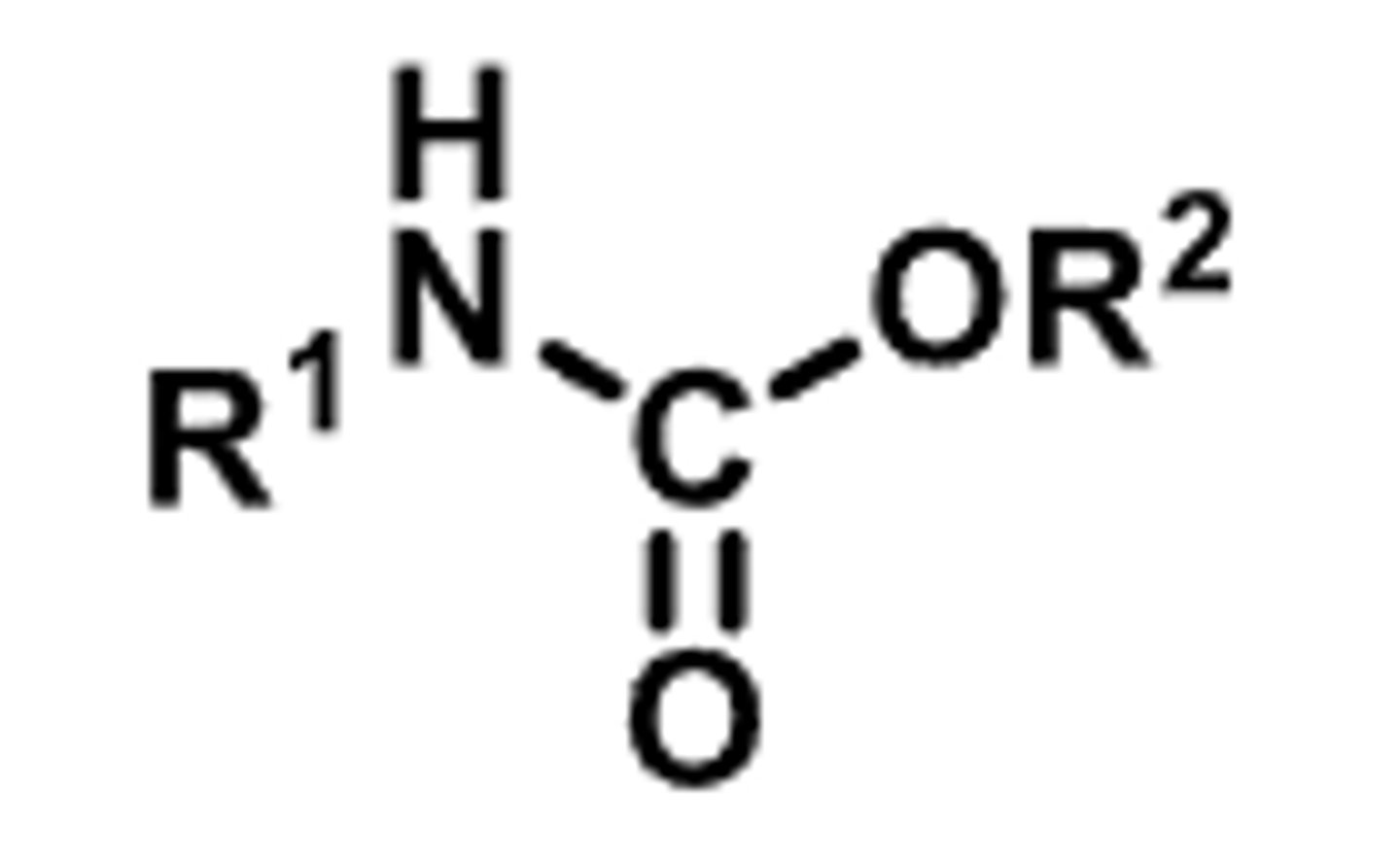
Urethanes
Formed by the reaction between an isocyanate (R-N=C=O) and an alcohol
-Alcohol attacks electrophilic C and electrons go to O
-O⁻ reforms double bond, N=C electron pair abstracts proton from O⁺-H
Polyurethanes
Produced by the step-growth polymerisation process between an isocyanate and alcohol
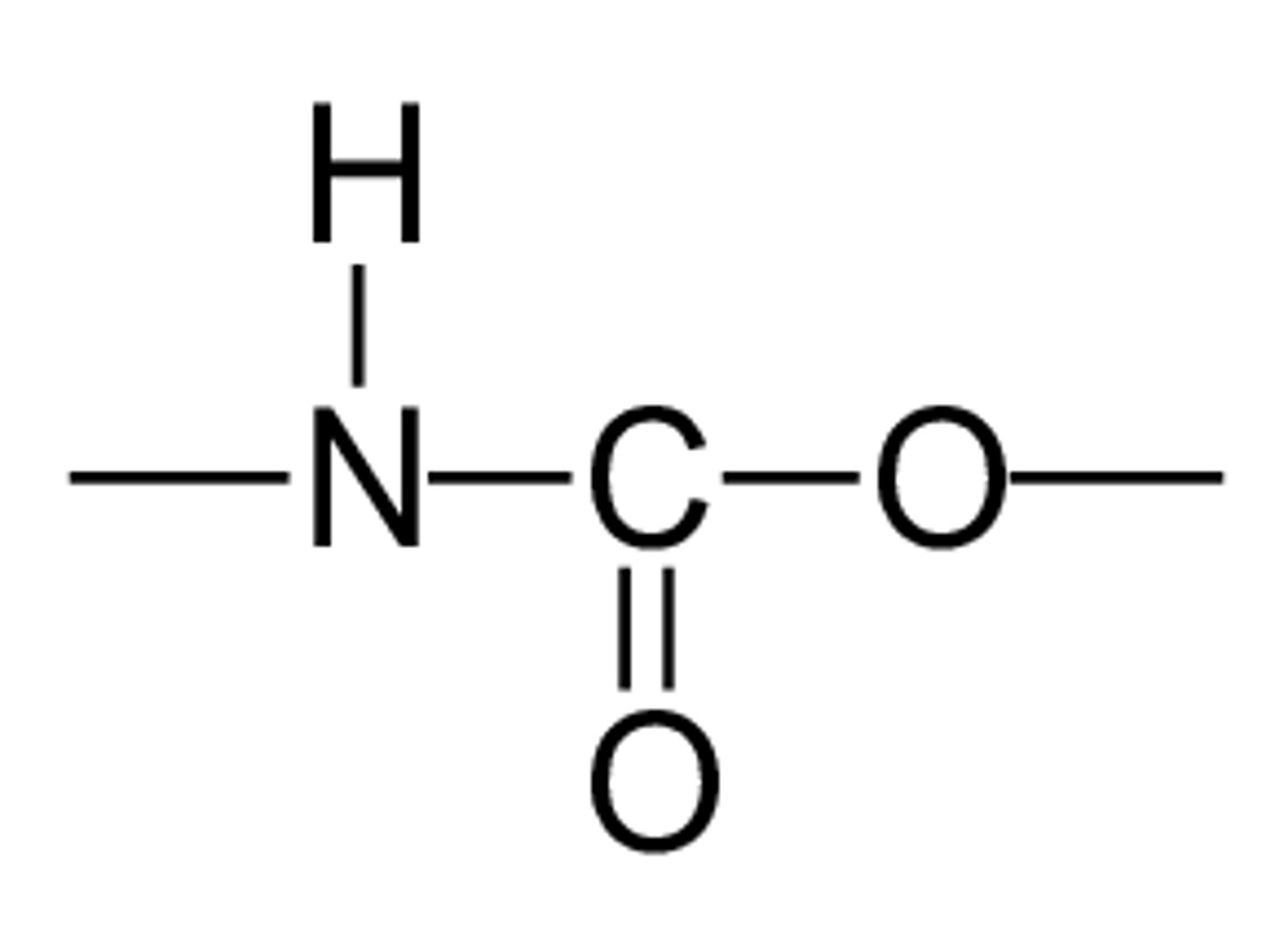
Derivation of polyurethane monomers
-Polyols can be derived from natural sources such as corn
-Isocyanates need to be derived from carboxylic acids, often using harsh conditions
-Isocyanates also highly reactive so limited stability -> usually prepared then used straight away
Applications of polyurethanes
Can be designed to provide strength (e.g. through addition of benzene rings) or to provide elasticity (through addition of alkane chains)
-Commonly used in textiles to make them durable, stretchy, waterproof
-E.g. Lycra, medical textiles, waistbands, fabrics
Biorenewable polymer
A polymer made wholly or partly from renewable biological resources, rather than from fossil-based feedstocks
Non-renewable production of ethylene for poly(ethylene)
Ethylene produced by thermal cracking of oil
-Energy intensive and produces significant amount of CO₂