Bacteria
 Call Kai
 Learn
Learn Practice Test
 Spaced Repetition
 Match
Match Flashcards
 Knowt Play
1/17

There's no tags or description
Looks like no tags are added yet.
Name | Mastery | Learn | Test | Matching | Spaced | Call with Kai |
|---|
No analytics yet
Send a link to your students to track their progress
18 Terms
Characteristics of Bacteria
Mostly single-celled
No nucleus or membrane bound organelles
Circular chromosomes
Cell walls
Reproduce asexually & sexually
Anaerobic or aerobic
Heterotrophic or autotrophic
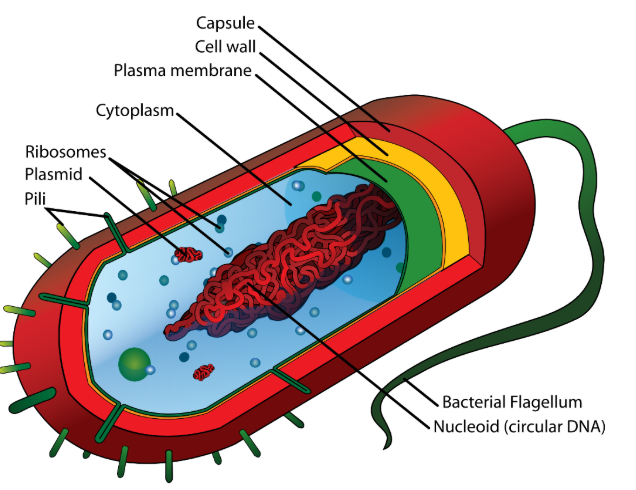
Structure of a Representative Bacterial Cell
Outer capsule offers protection
Stiff cell wall made of peptidoglycan
No membrane-bound organelles (some free ribosomes present)
Chromosome is a single loop of DNA called a plasmid.
Often have one or more flagellum (for locomotion) and many pili (hair-like structures to stick to surfaces)
Cell Shapes
Spherical are called COCCUS
Rod are called BACILLUS
Spiral are called SPIRILLUM or SPIROCHETE

Coccus
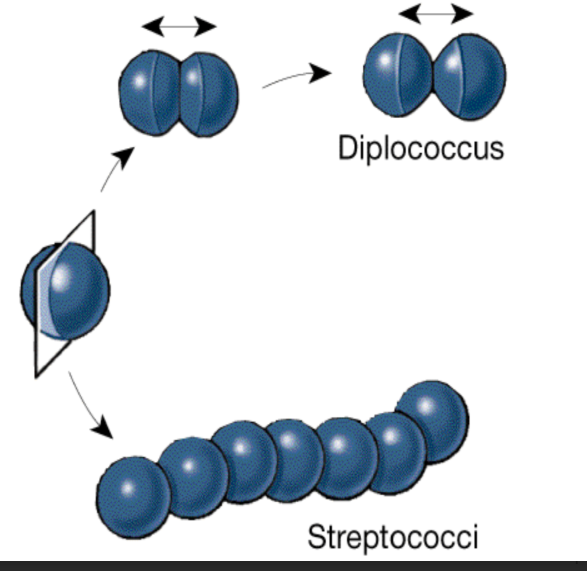
Cocci that live as…
Separate cells = Monococci
In Pairs = Diplococci
Linear Chains = Streptococci
Grapelike clusters = Staphylococci
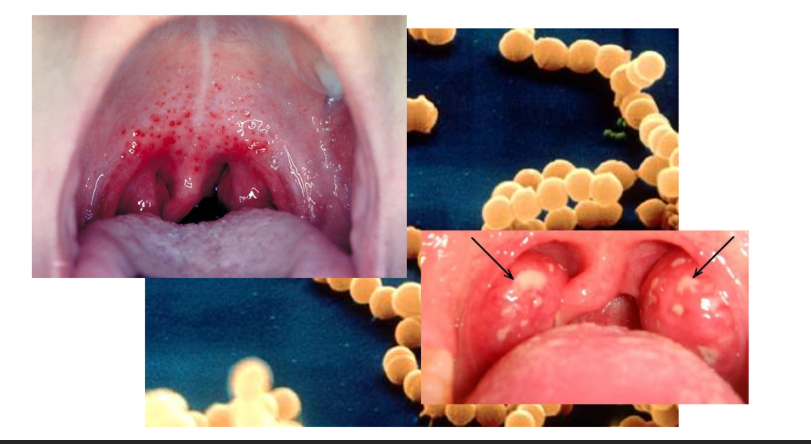
Streptococcus
Causes Strep Throat
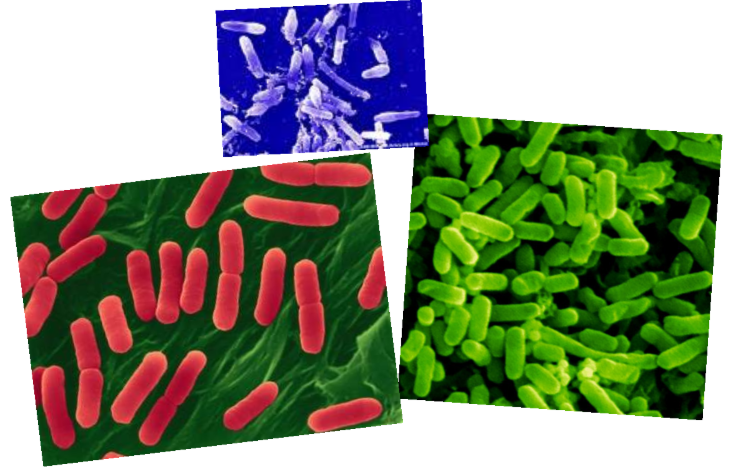
Bacillus
E. coli
Spirochetes
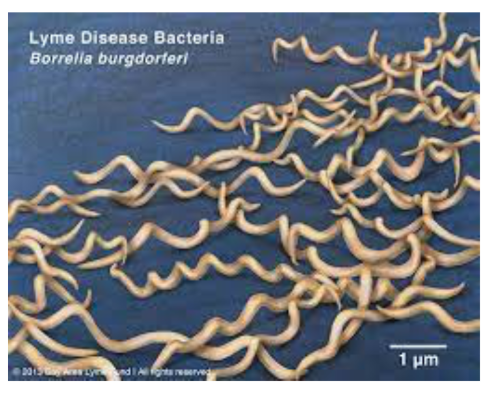
The spirochete Borrelia burgdorferi is a tick-borne parasite responsible for Lyme disease in humans!
Blacklegged ticks are often carriers of Borrelia burgdorferi
An infected tick may transmit Lyme Disease during the act of attaching and biting their host
Gram Stain
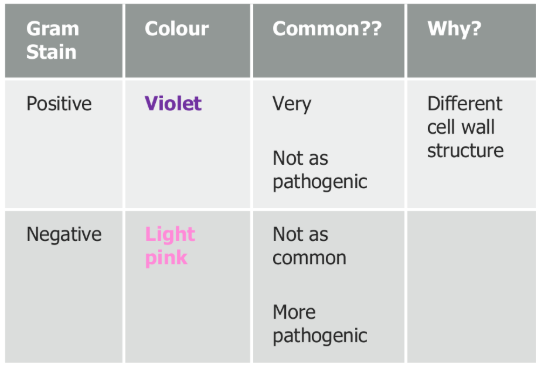
Bacteria can be classified by their reaction to a dye made of crystal violet and iodine called GRAM STAIN
Bacteria- Cell Wall Structure
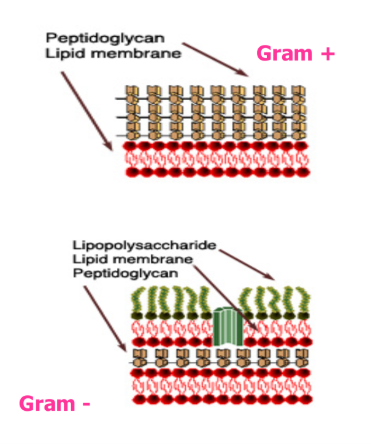
Bacteria are divided into two groups based upon the composition of their cell walls.
Gram positive : two layers (lipid, peptidoglycan – sugar/amino acids network)
Gram negative : three layers, lipid, peptidoglycan, and lipopolysaccharide.
Cellular respiration
How our cells make energy!
Equation: Sugar (glucose) + Oxygen 🡪 Carbon dioxide + Water + ENERGY
Types of Respiration
Aerobic
Grows in presence of oxygen – eukaryotic cells
Anaerobic
Grows in absence of oxygen – mostly prokaryotic, sometimes eukaryotic
Obligate Aerobes
MUST have oxygen to live
Obligate Anaerobe
Must NOT have oxygen present to live
Facultative Anaerobes
Can grow with or without oxygen – carries out fermentation when
oxygen is absent
Autotrophs
they can make their own food by photosynthesis. E.g cyanobacteria
Heterotrophs
they get their nutrients from eating other organisms. E.g. E.coli
chemotrophs
rely on carbon or sulfur containing compounds for energy
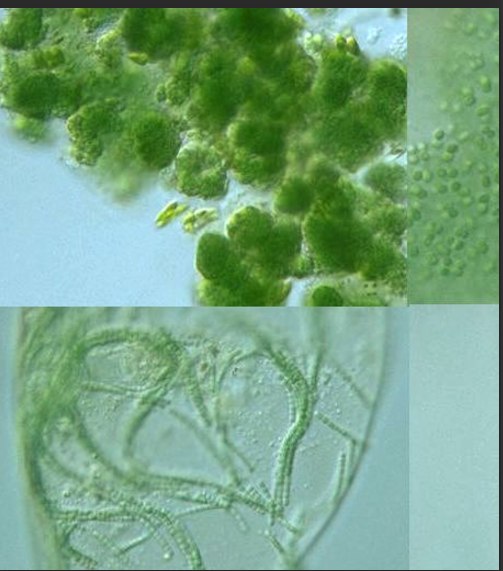
Cyanobacteria
Photosynthetic bacterium
Bluish-greenish color
Contain membranes that carry out the process of photosynthesis
Can survive in extremely hot environments and even extremely cold environments
Why not a plant?
Can be unicellular
Prokaryotic (no nucleus and membrane-bound organelles)
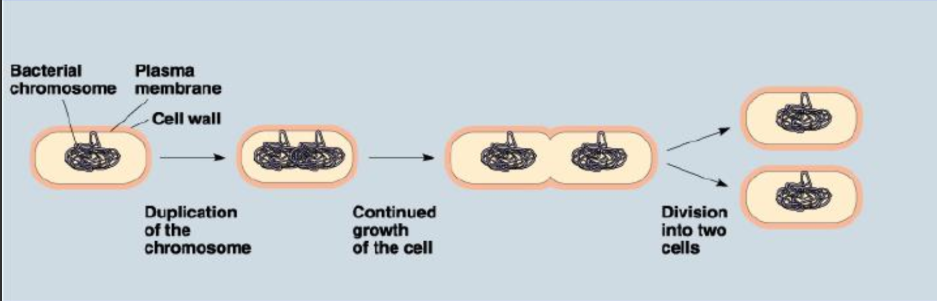
Binary Fission in Bacteria
a rapid form of asexual reproduction and cell division used by prokaryotes (bacteria and archaea) and some single-celled eukaryotes. A single organism replicates its DNA and splits into two identical daughter cells
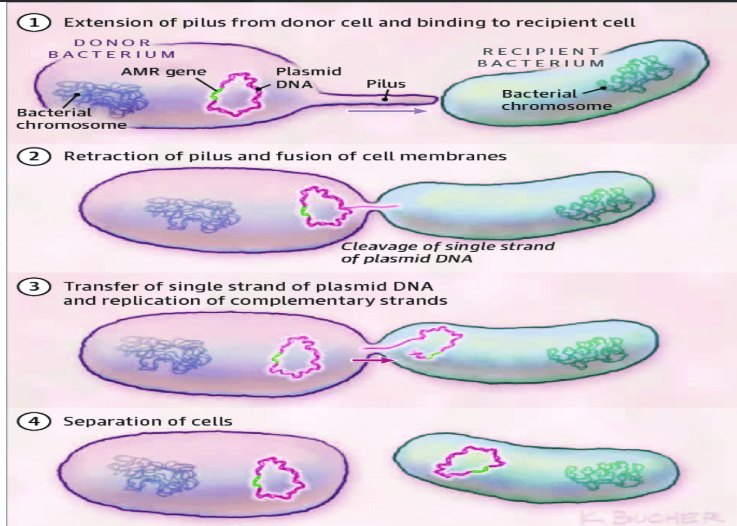
Sexual Reproduction - Conjugation
Extension of pilus from donor cell and binding to recipient cell
Retraction of pilus and fusion of cell membrane
Transfer of single strand of plasmid DNA and replication of complementary strands
Seperation of cells
Endospores
A type of dormant cell forms (sometimes for years) when conditions are unfavourable.
Exhibit no signs of life
Resistant structure that forms around the chromosome when cell is under some sort of environmental stress such as:
High temperatures
Irradiation
Strong acids
Disinfectants