3P98 - Functional Anatomy
 Call Kai
 Learn
Learn Practice Test
 Spaced Repetition
 Match
Match Flashcards
 Knowt Play
1/66

There's no tags or description
Looks like no tags are added yet.
Name | Mastery | Learn | Test | Matching | Spaced | Call with Kai |
|---|
No analytics yet
Send a link to your students to track their progress
67 Terms
What are the intervertebral ligaments?
Ligamentum flavum
Posterior longitudinal ligament
Interspinous ligament
Supraspinous ligament
Anterior longitudinal ligament
Spinalis Cervicis
Extends neck
Origin: inferior portion of ligamentum nuchae and spinous process of C7
Insertion: spinous process of axis and C3-C4
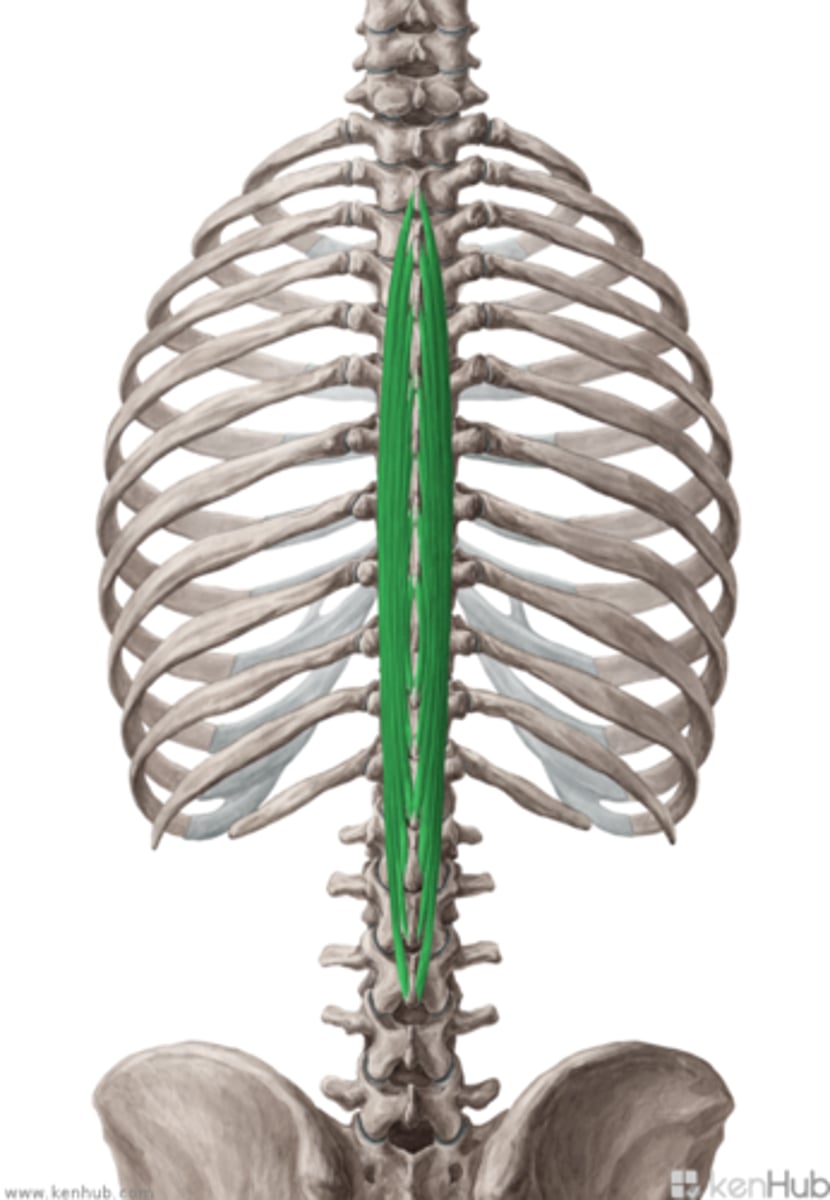
Spinalis Thoracis
Extends vertebral column
Origin: spinous process of T11 and T12, L1 and L2
insertion: spinous process of superior thoracic vertebrae
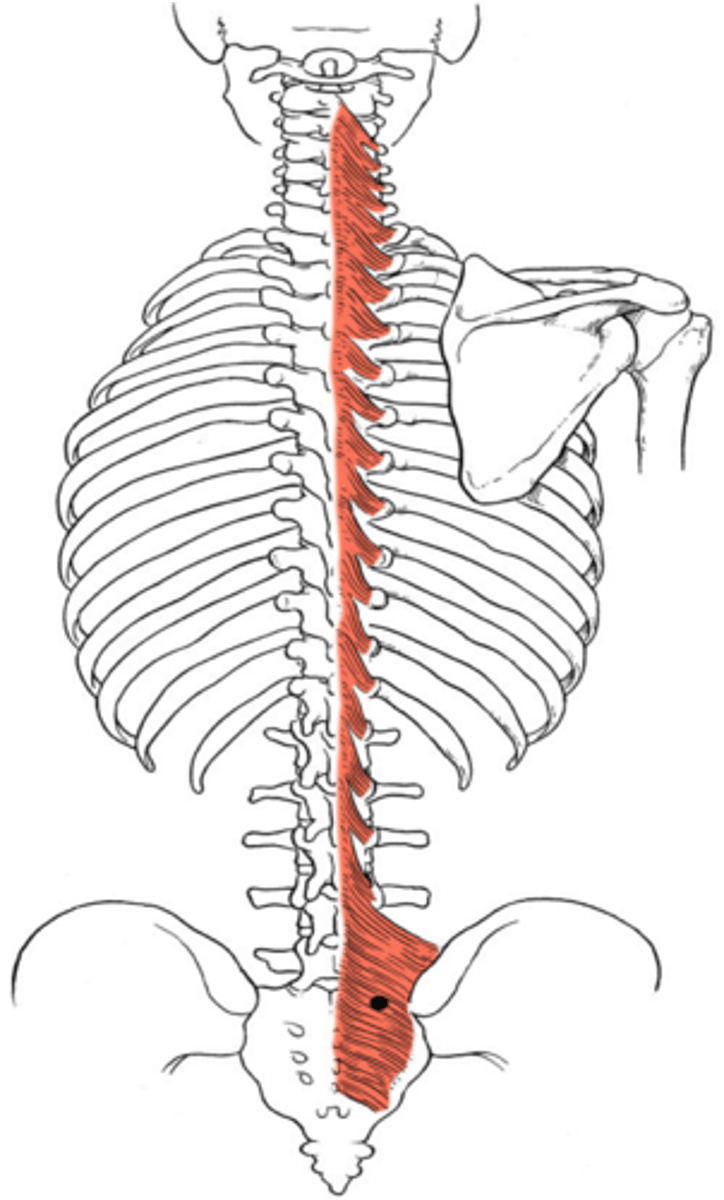
Multifidus
Extends vertebral column and rotates toward opposite side.
Origin: sacrum and transverse process of each vertebra
Insertion: spinous processes of the 3 or 4 more superior vertebra
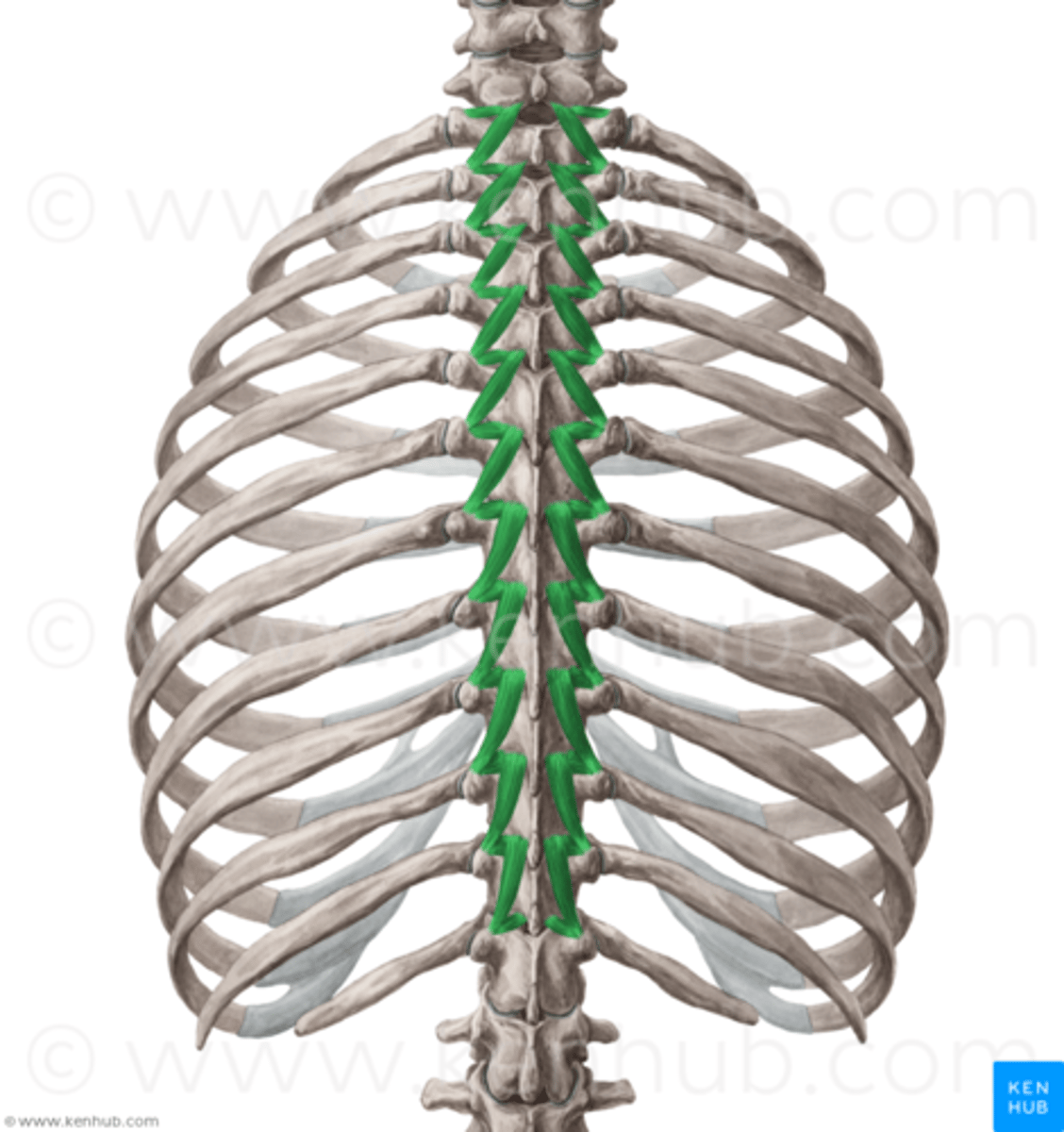
Rotatores
Extends vertebral column and rotates towards opposite side
Origin: transverse processes of the vertebrae in each region
Insertion: spinous process of adjacent, more superior vertebra
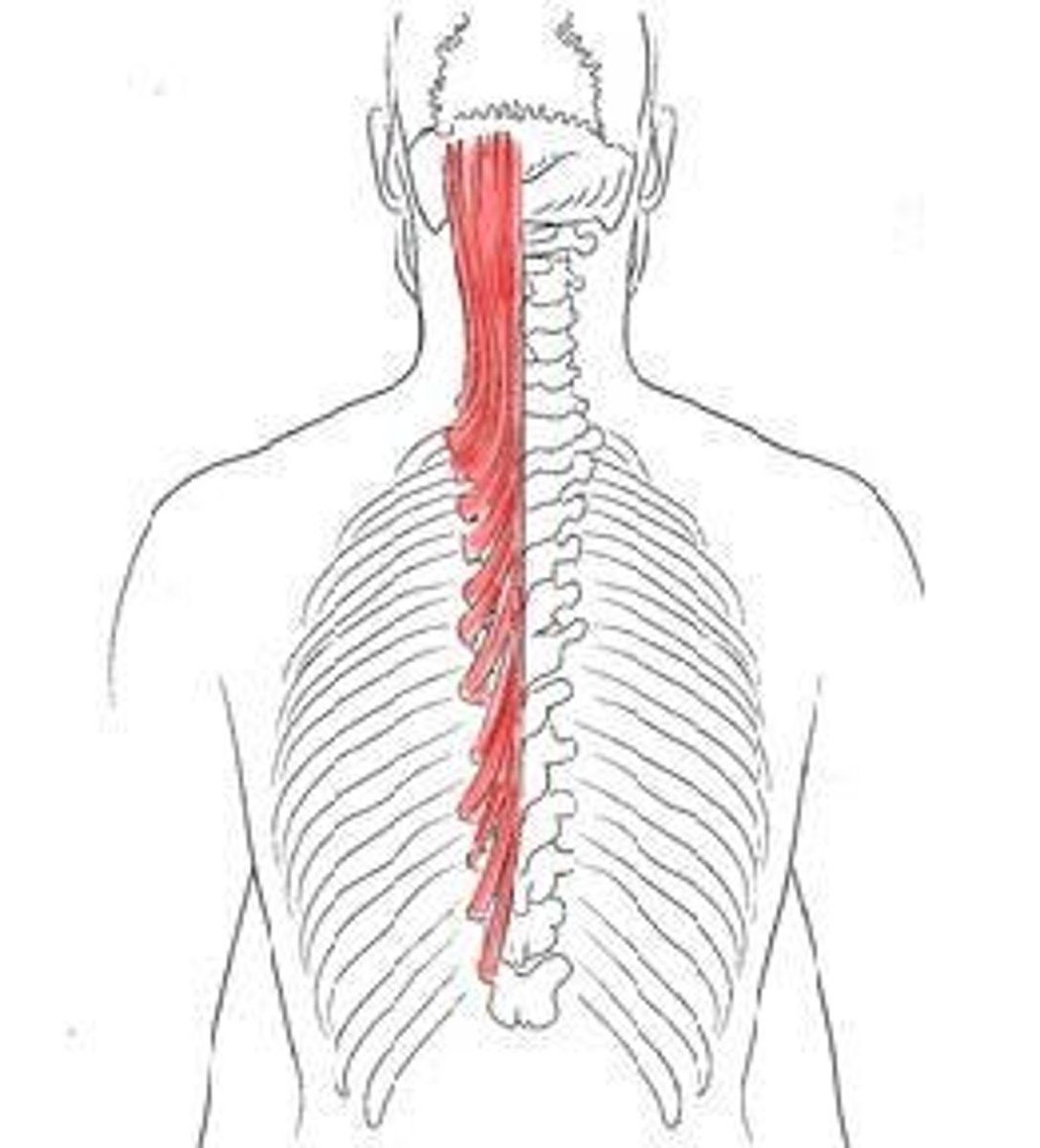
Semispinalis capitis
Bilaterally; extend the neck
unilaterally; extends and laterally flexes neck and turns head to opposite side
Origin: processes of lower 4 cervical and superior 6/7 thoracic vertebrae
Insertion: occipital bone, between nuchal lines
Semispinalis cervicis
Extends the vertebral column and rotates toward opposite side
Origin: Transverse processes of T1-T5, or T6
Insertion: Transverse processes of T6-T10
What are characteristics of the cervical vertebral body?
Small, oval, curved faces
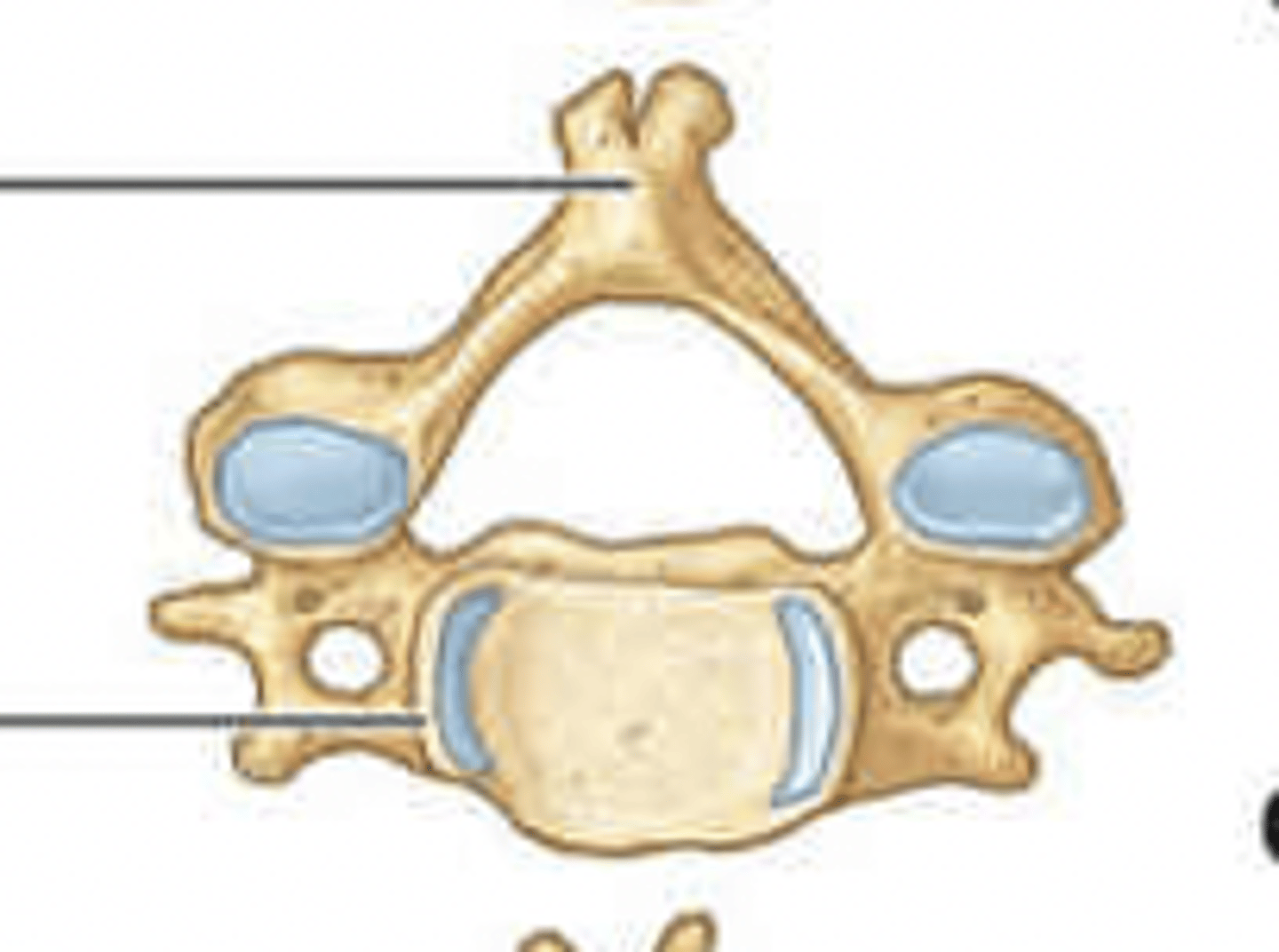
What are characteristics of the thoracic vertebral body?
Medium, heart-shaped, flat faces, facets for rib articulations
What are characteristics of the lumbar vertebral body?
Massive, oval, flat face
How many bones are in the vertebral column of an adult?
26 bones
7 cervical, 12 thoracic, 5 lumbar, the other 3 sacral
How many spinal curves does the spinal column have?
4; the thoracic and sacral curves are primary and the lumbar and cervical curves are known as secondary curves
What separate adjacent vertebrae?
Intervertebral discs
What region of vertebrae have the greatest strain?
Lumbar vertebrae
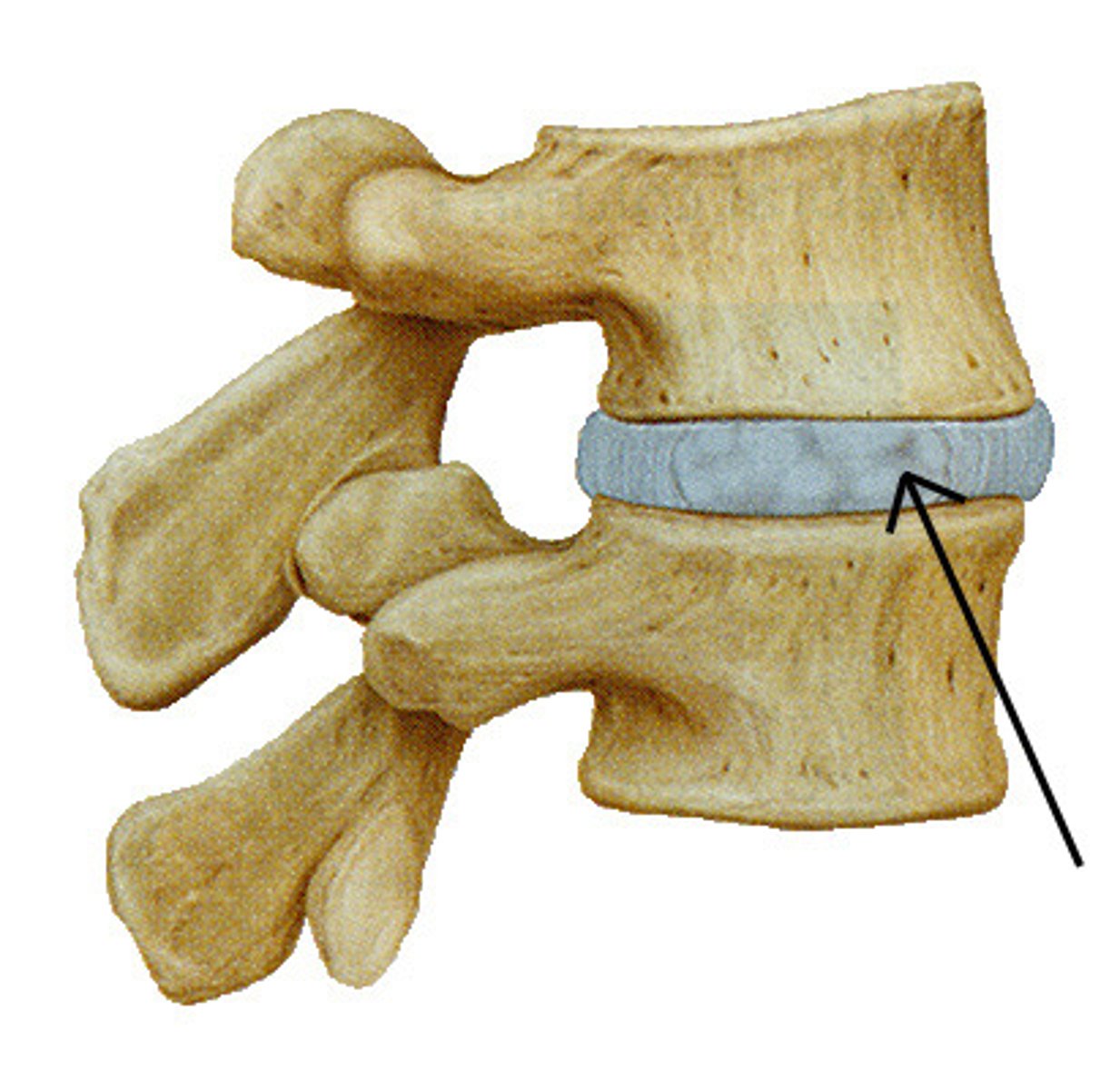
Intervertebral discs
fibrocartilage pads that separate and cushion the vertebrae
symphysis joint
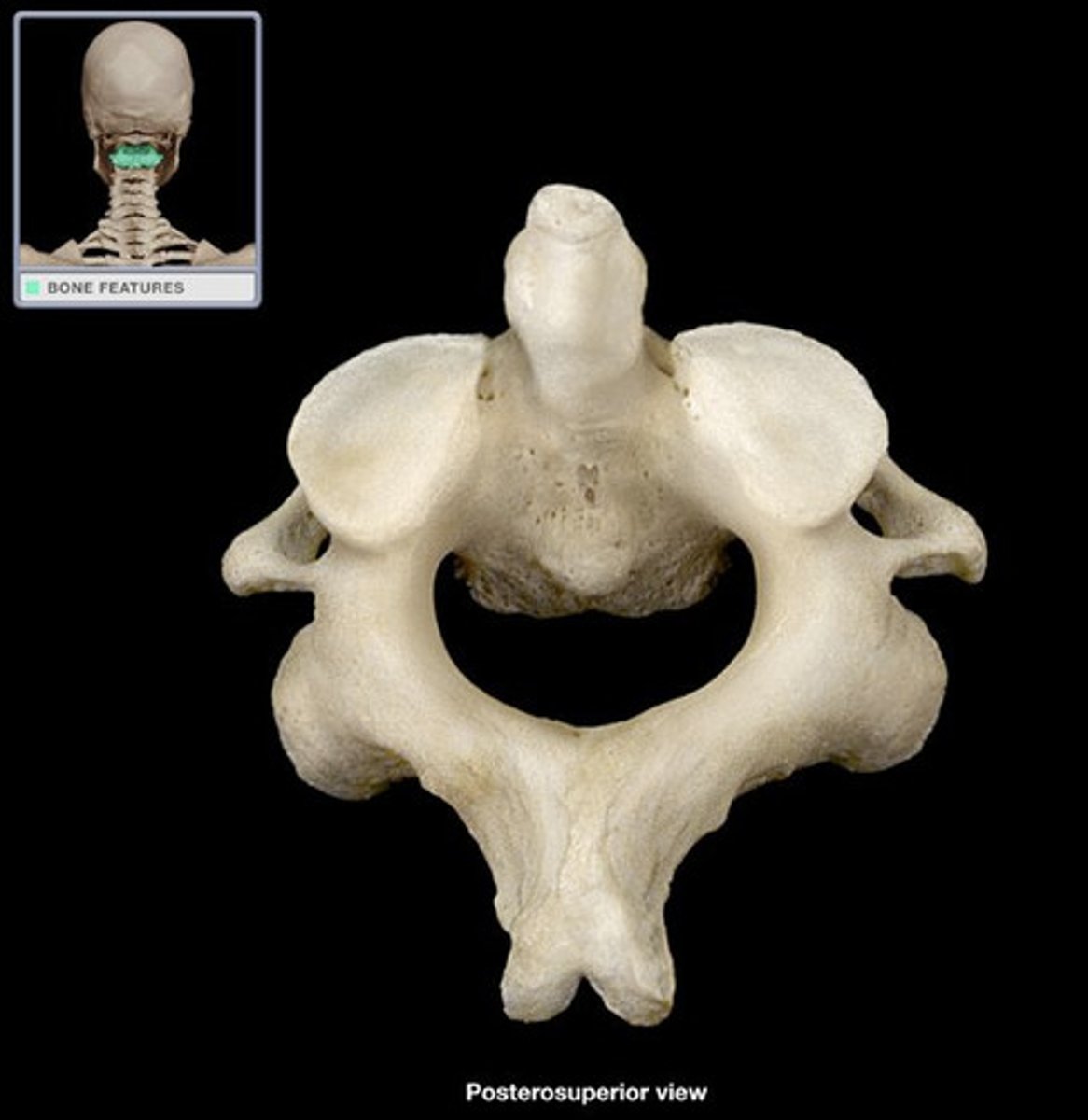
Atlas - C1
- only vertebra without vertebral body
- largest vertebral foramen
- articulates with occipital condyles ("yes" motion)
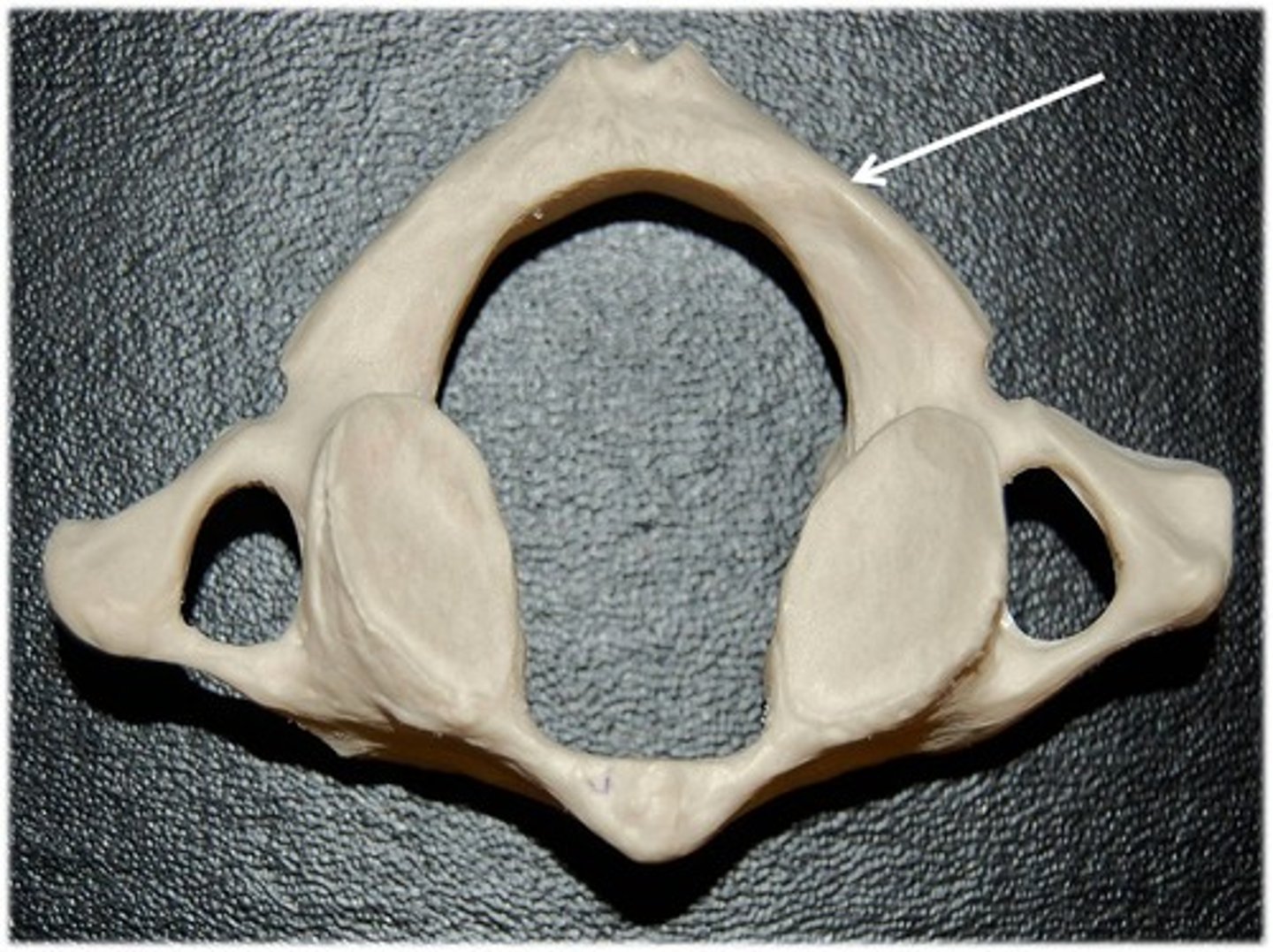
Axis - C2
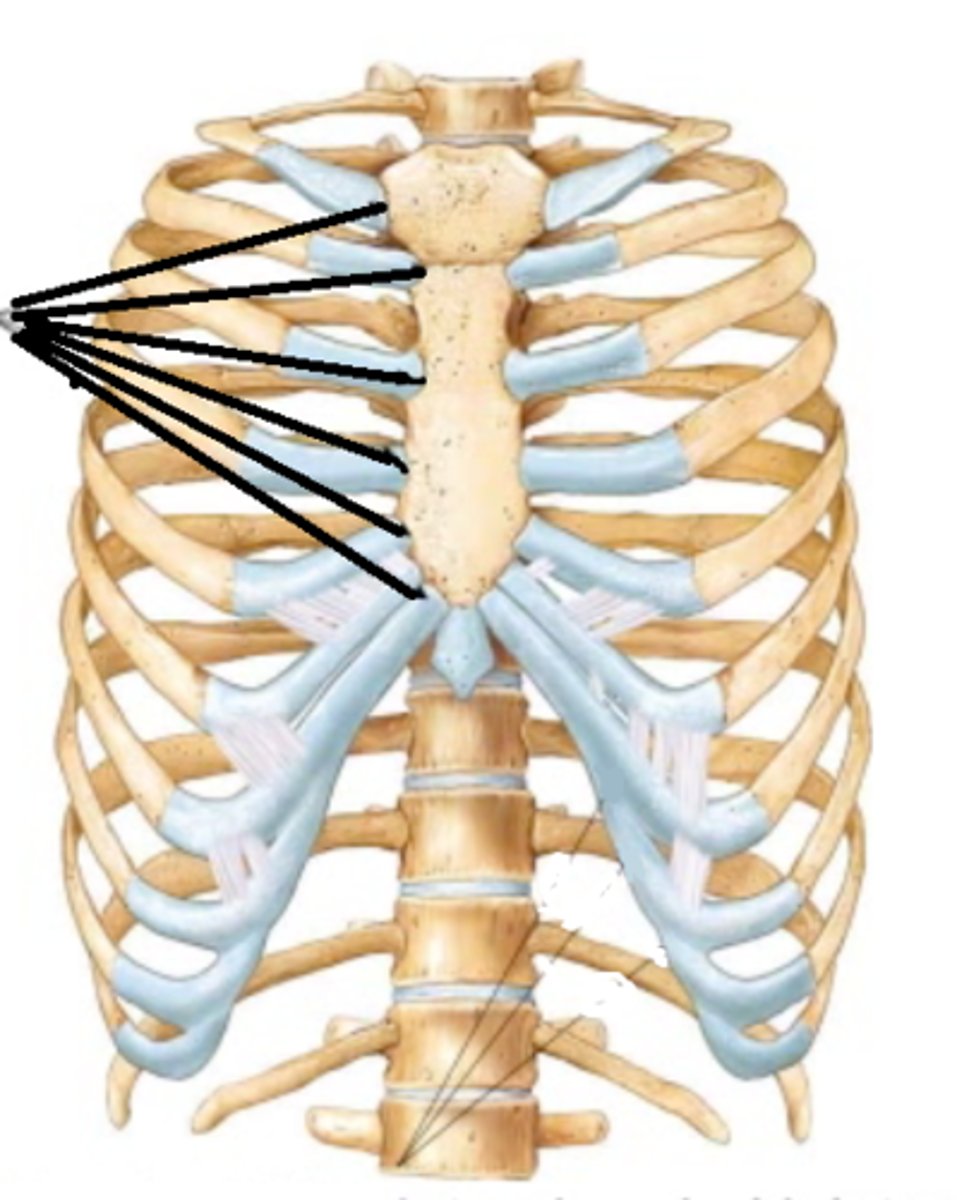
Sternocostal joints
- synovial (gliding) joints between costal cartilages and the sternum
- surrounded by articular capsule
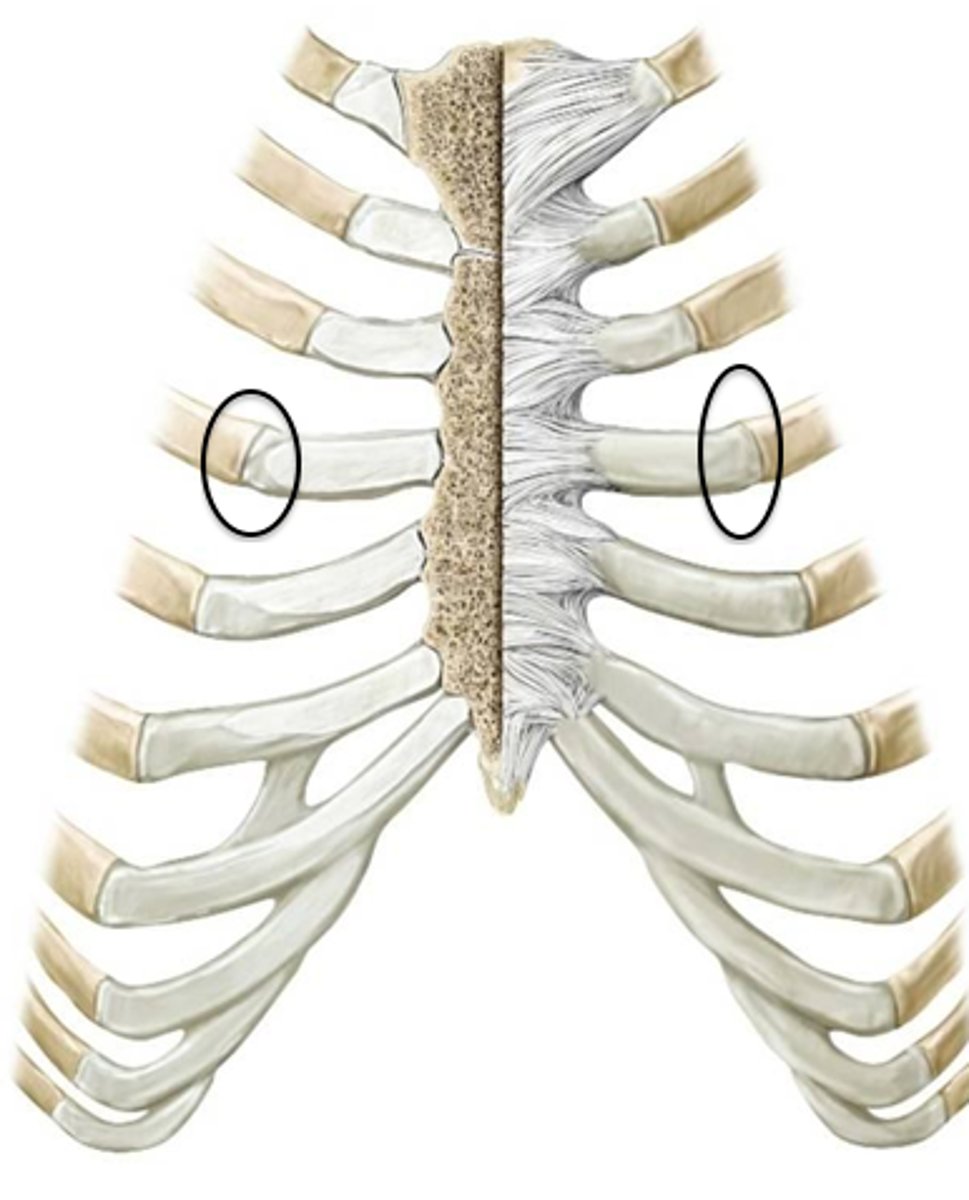
Costochondral joints
- synchondorsis joints
- very little movement
- between ribs and cartilage
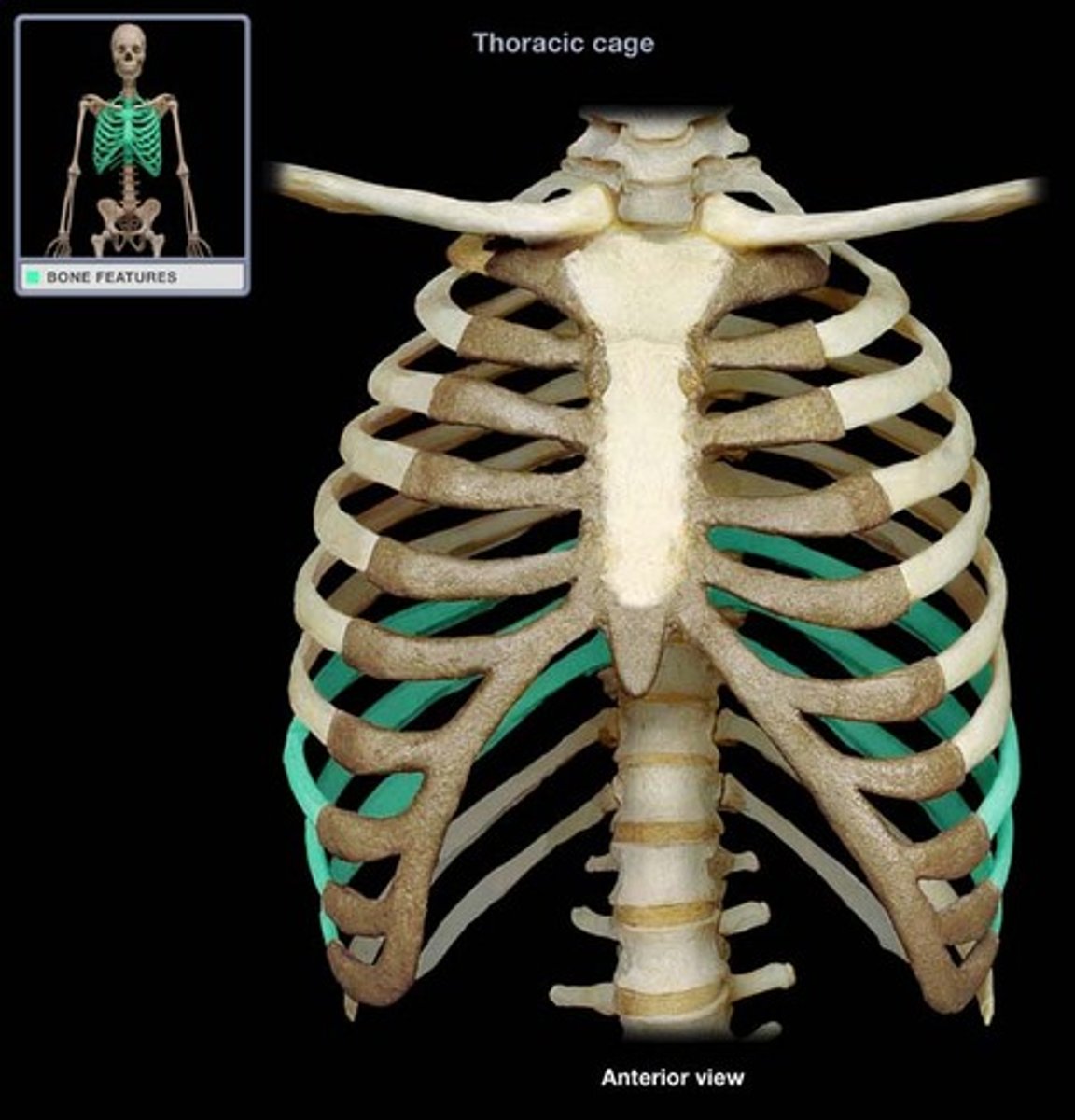
Verterbrocostal joints
- synovial gliding joints
Spinalis cervicis
extends neck
origin: inferior portion of ligamentum nuchae and spinous process of C7
insertion: spinous process of axis and C3-C4
Innervation: cervical spinal nerves
Spinalis thoracis
Extends vertebral column
ORIGIN: spinous processes of T11, T12, L1, L2
INSERTION: spinous processes of superior thoracic vertebrae
INNERVATION: thoracic and lumbar spinal nerves
Longissimus capitis
Together = extend neck
Alone = rotates and laterally flexes neck to that side
ORIGIN: transverse processes of inferior cervical and superior thoracic vertebrae
INSERTION: mastoid process of temporal bone
INNERVATION: cervical and thoracic spinal nerves
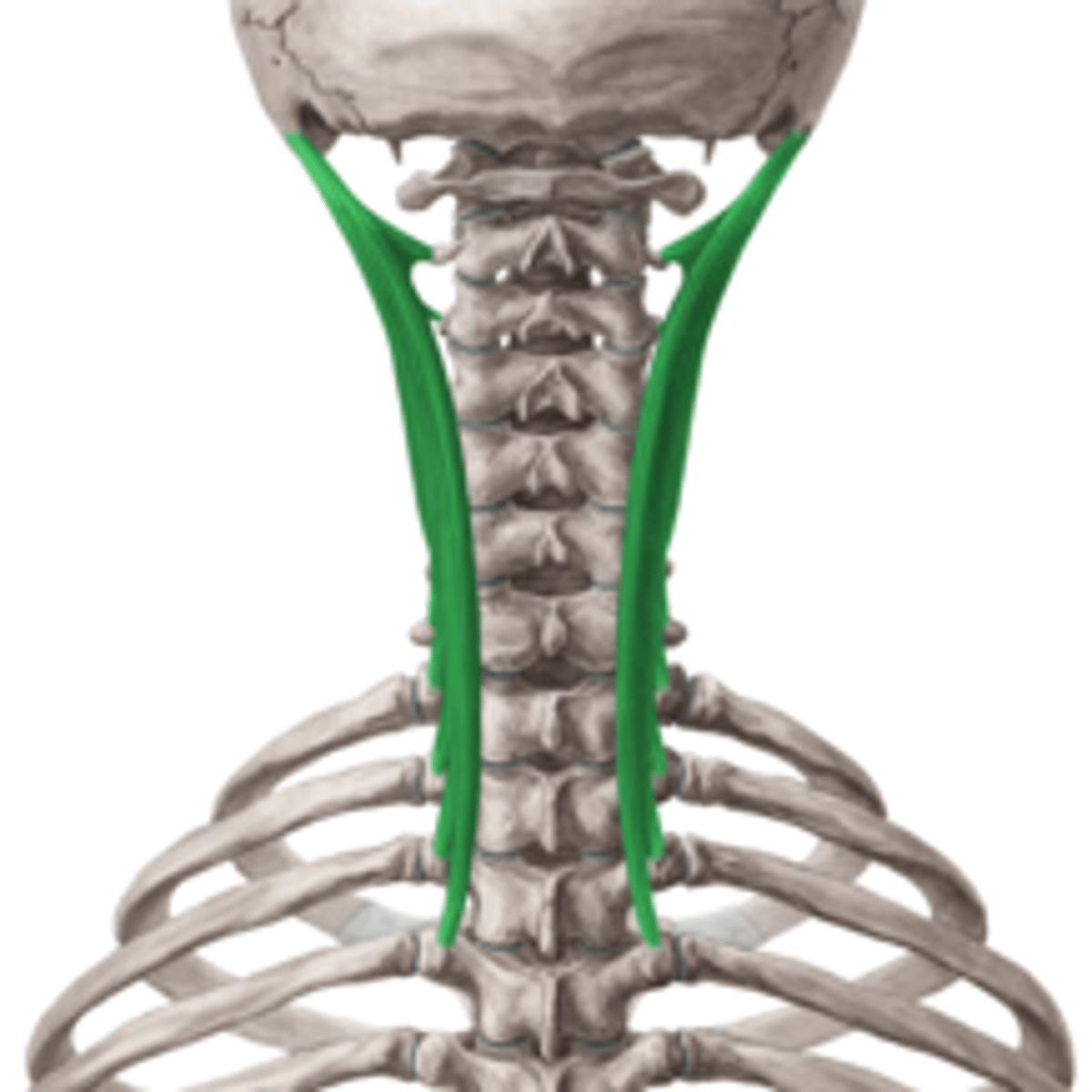
Longissismus cervicis
Together = extend the neck
Alone = laterally flexes the neck to that side
ORIGIN: transverse processes of superior thoracic vertebrae
INSERTION: transverse processes of middle and superior certical vertebrae
INNERVATION: cervical and thoracic spinal nerves
Longissimus thoracics
Extension of vertebral column
Alone = lateral flexion to that side
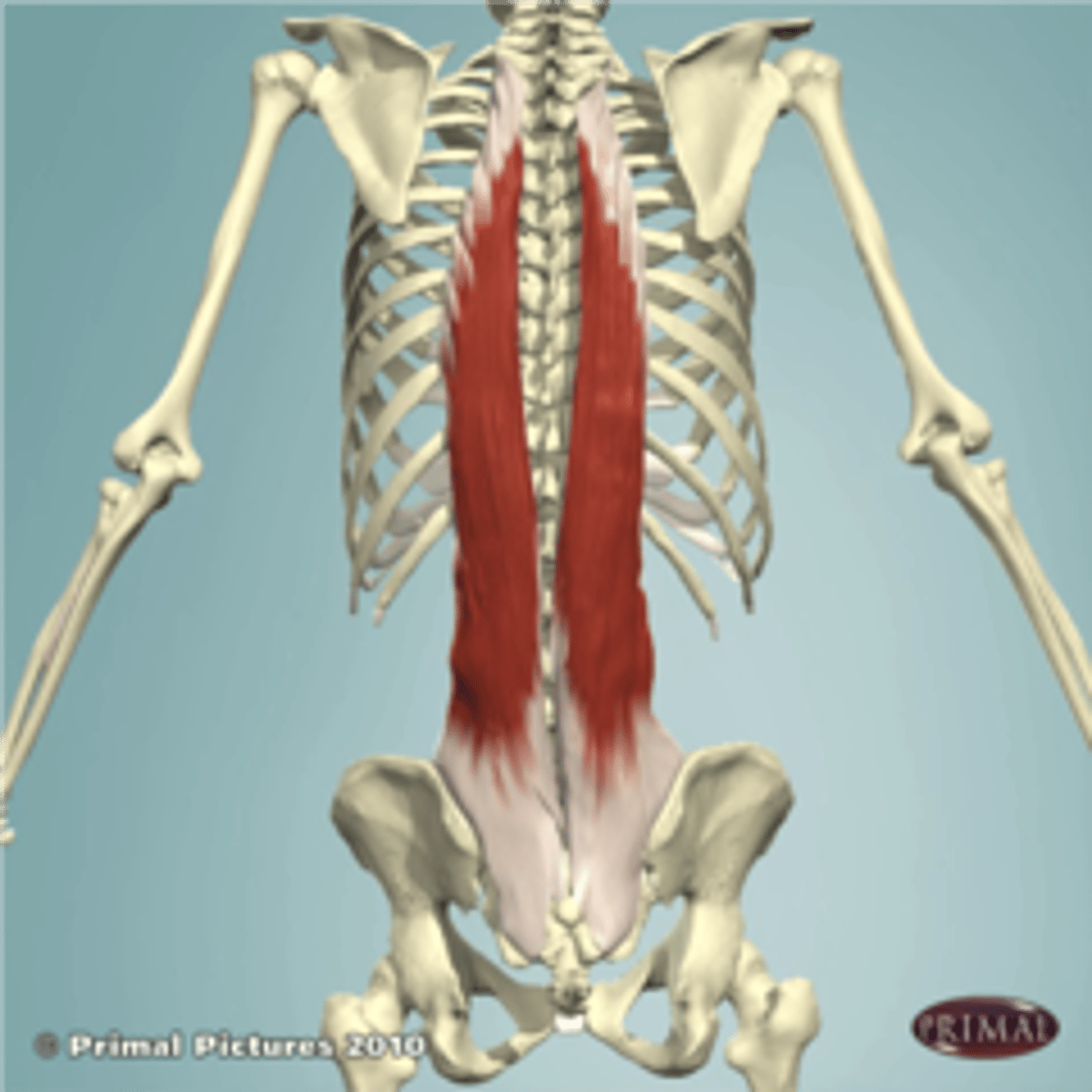
Iliocostalis cervicis
Extends or laterally flexes neck, elevates ribs
ORIGIN: superior borders of vertebrosternal ribs near the angles
INSERTION: transverse processes of C4-C6
INNERVATION: cervical and superior thoracic spinal nerves
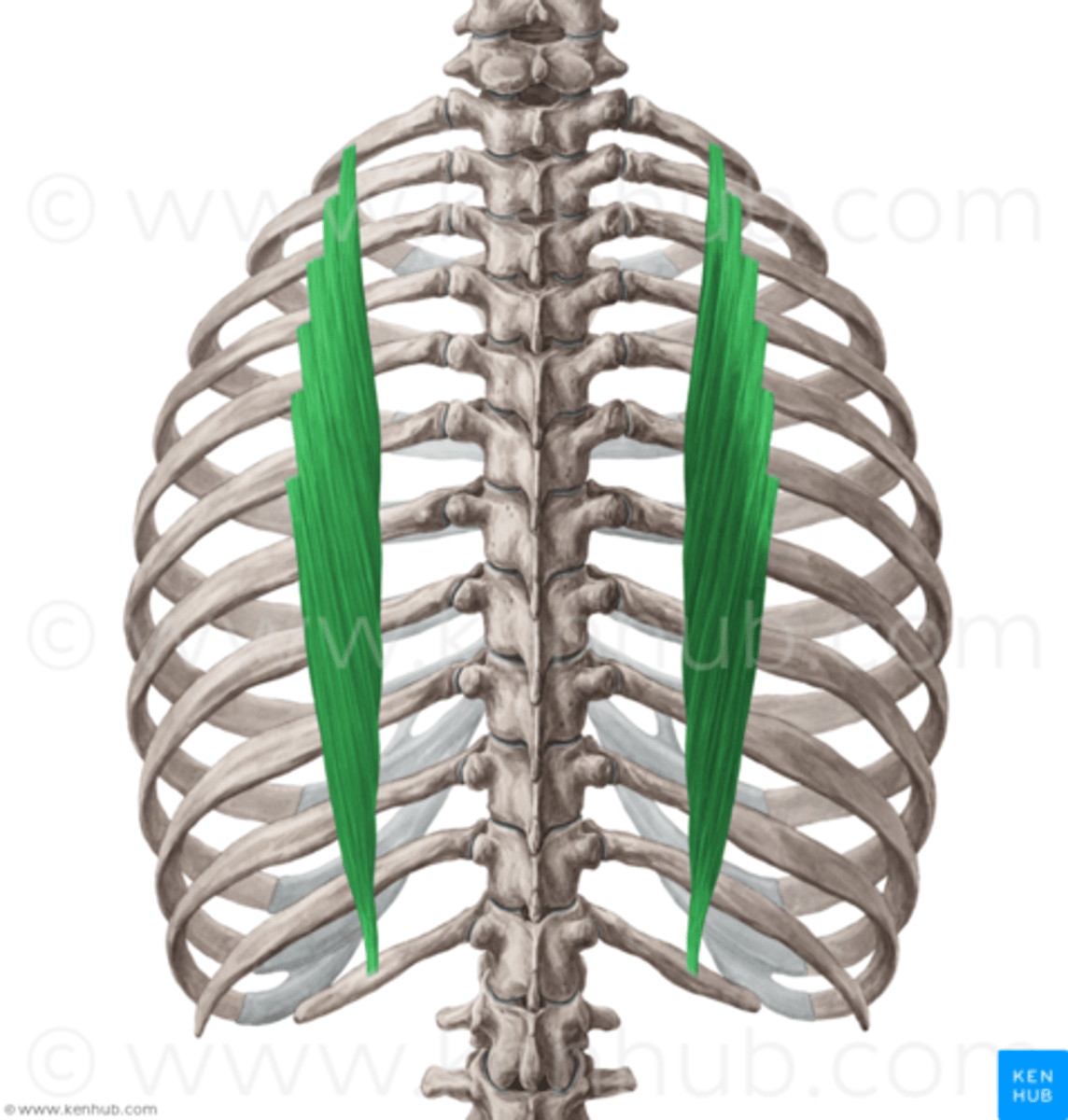
Iliocostalis thoracis
Stabilises thoracic vertebrae in extension
ORIGIN: Superior borders of ribs 6-12 medial to the angles
INSERTION: superior ribs and transverse process of C7
INNERVATION: thoracic spinal nerves
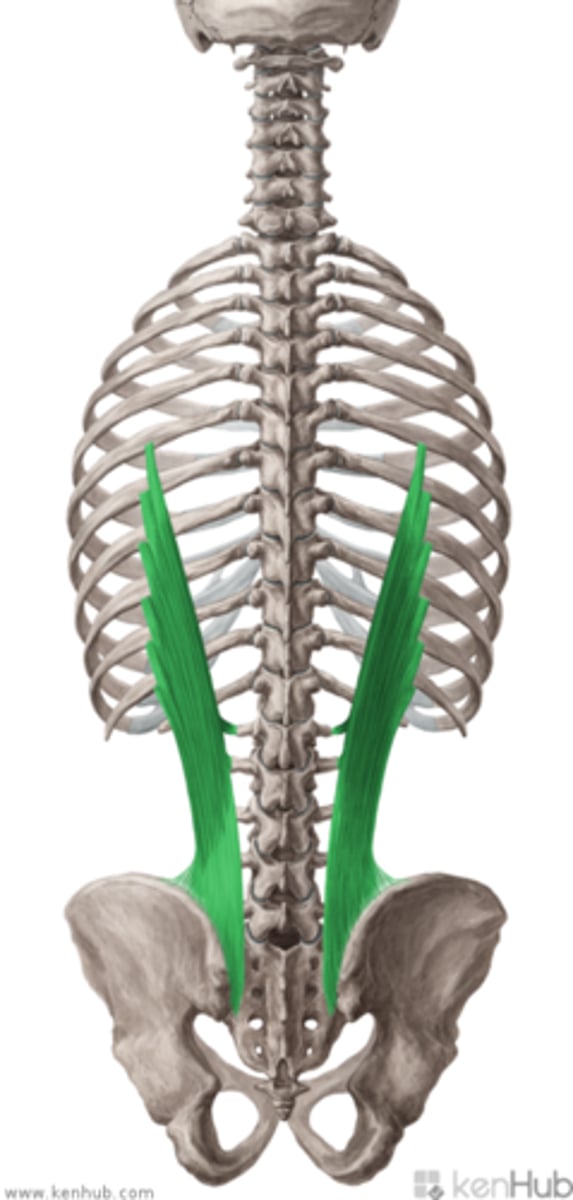
Iliocostalis lumborum
Extends veterbral column, depresses ribs
ORIGIN: iliac crest, sacral crests, and lumbar spinous processes
INSERTION: inferior surfaces of ribs 6-12, near their angles
INNERVATION: inferior thoracic nerves and lumbar spinal nerves
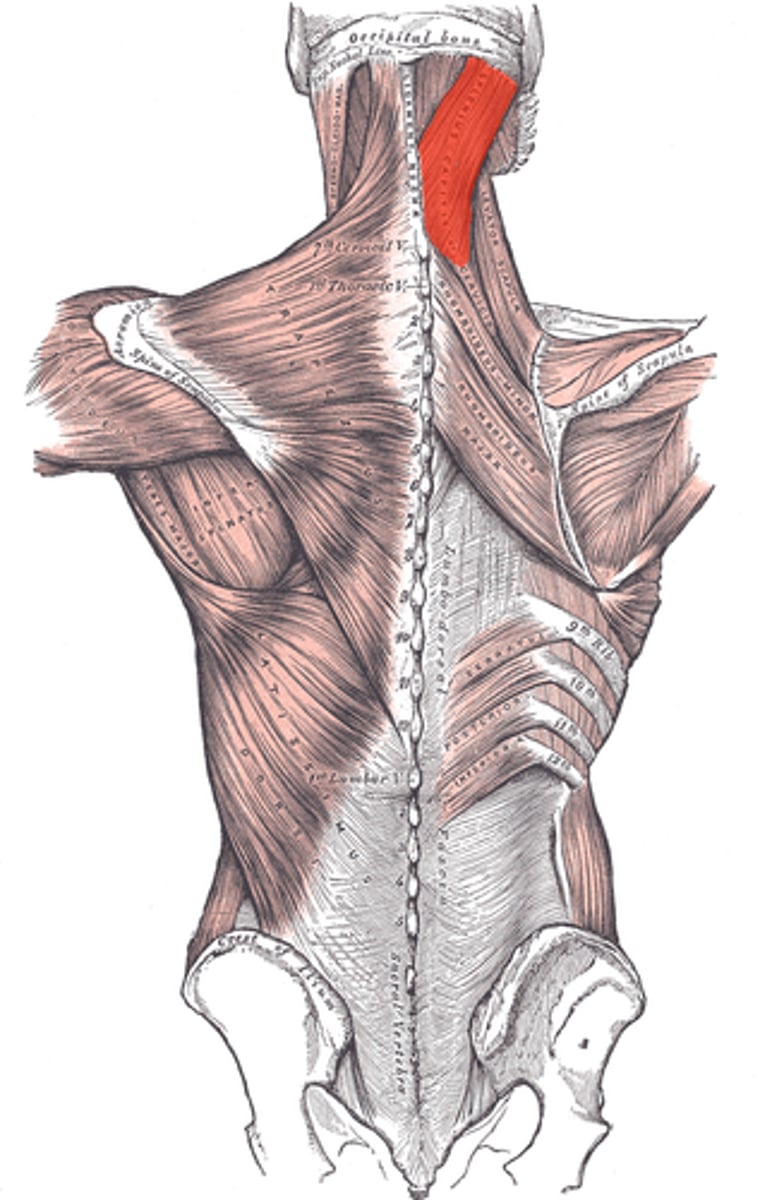
splenius
Together = extend neck
Alone = rotates and laterally flexes neck to that side
ORIGIN: Cervical and thoracic vertebrae, nuchal ligament
INSERTION: mastoid process, occipital bone, atlas + axis
INNERVATION: cervical spinal nerves
Intrinsic (deep) muscles
Transversospinales (semispinalis group, multifidus, rotatores, interspinales, intertransversarii)
Intrinsic (intermediate) muscles
Erector spinae (iliocostalis, longissimus, spinalis)
Intrinsic (superficial) muscles
splenius capitis and splenius cervicis
Extrinsic/superficial back muscles
trapezius, latissimus dorsi, levator scapulae, rhomboids
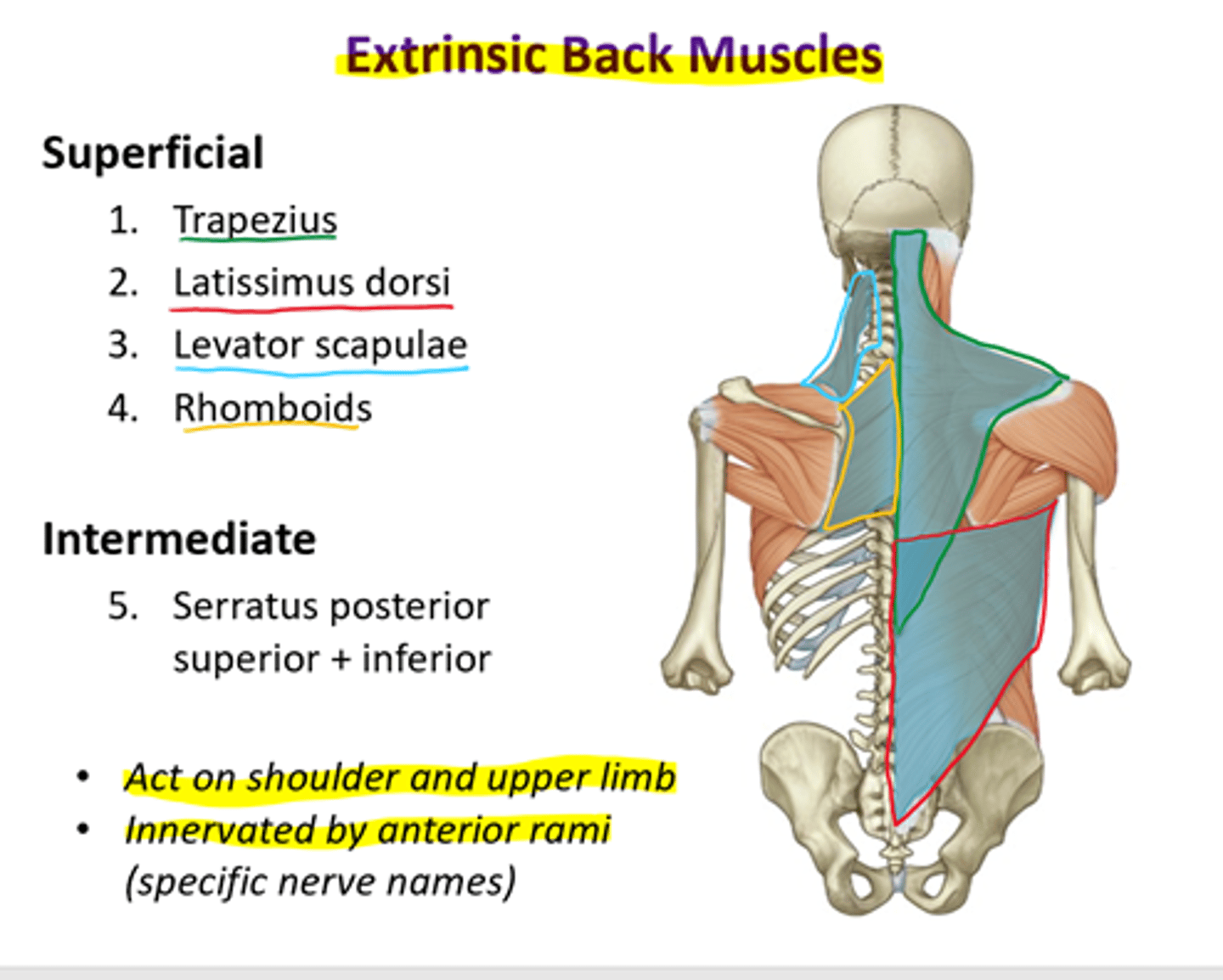
Levator scapulae
Elevates scapula
ORIGIN: transverse processes of first 4 cervical vertebrae
INSERTION: vertebral border of scapula
INNERVATION:cervical nerves C3-C4 and dorsal scapular nerve C5
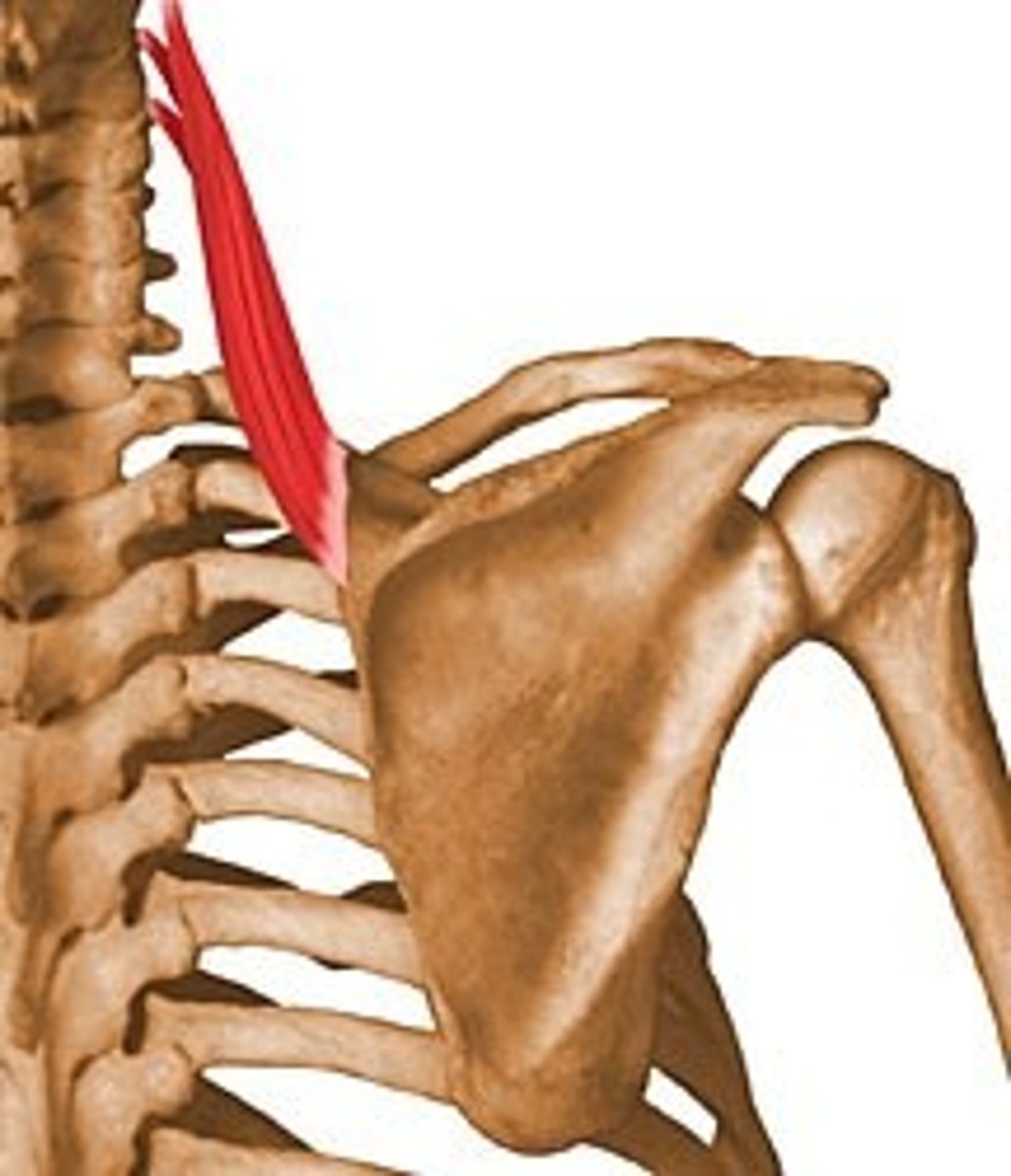
Pectoralis minor
Depresses and protractors scapula, rotates scapula so glenoid cavity moves inferiorly (downward rotation)
ORIGIN: anterior surface and superior margins of ribs 3-5 or 2-4 & fascia covering
INSERTION: coracoid process of scapula
INNERVATION: medial pectoral nerve (C8, T1)
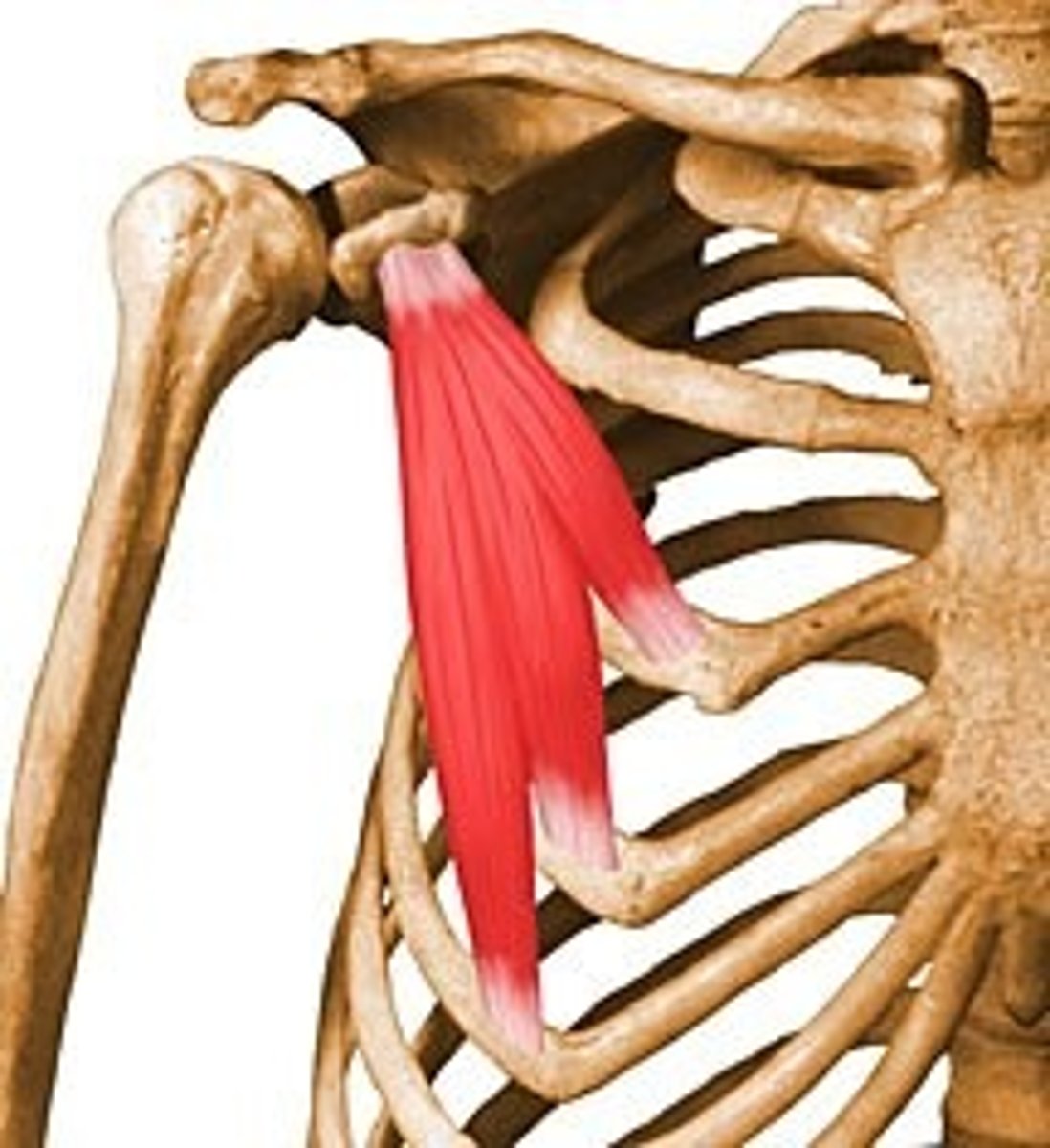
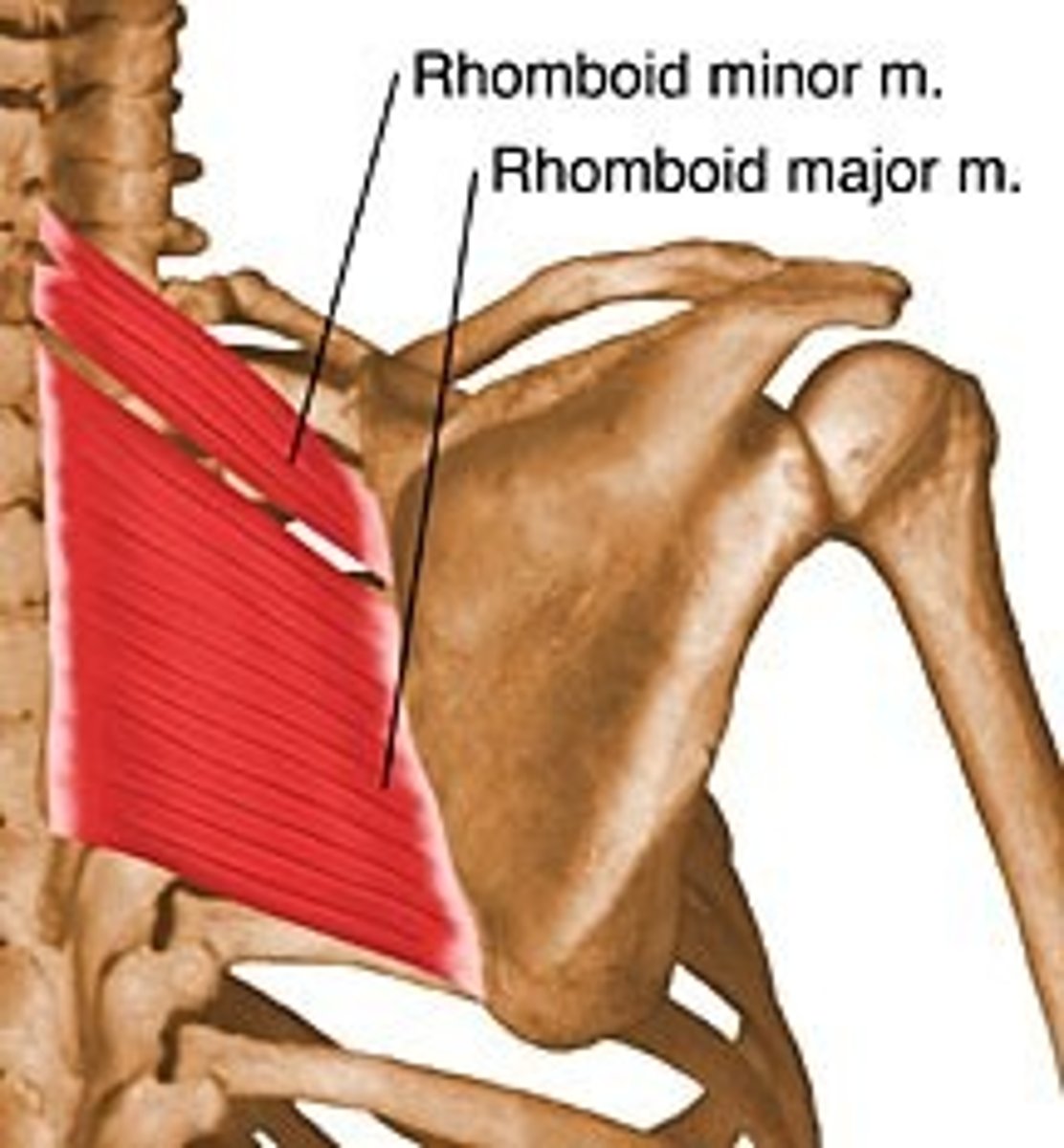
Rhomboid major
Adducts and performs downward rotation of scapula
ORIGIN: ligamentum nuchae and the spinous processes of vertebrae T2-T5
INSERTION: Vertebral border of scapula from spine to inferior angle
INNERVATION: dorsal scapular nerve
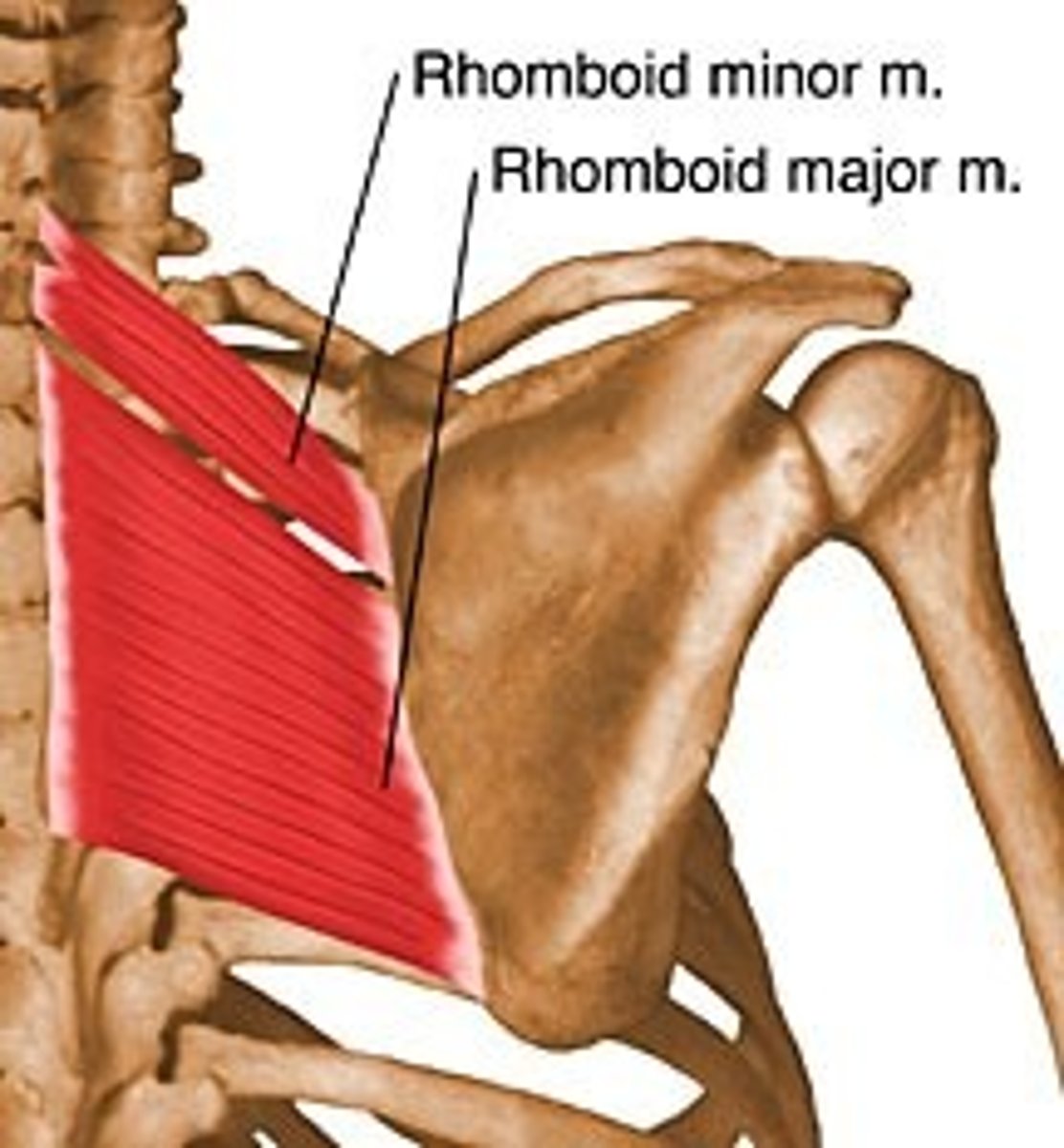
Rhomboid minor
Adducts and performs downward rotation of scapula
ORIGIN: spinous processes of vertebrae C7-T3
INSERTION: vertebral border of scapula
INNERVATION: dorsal scapular nerve
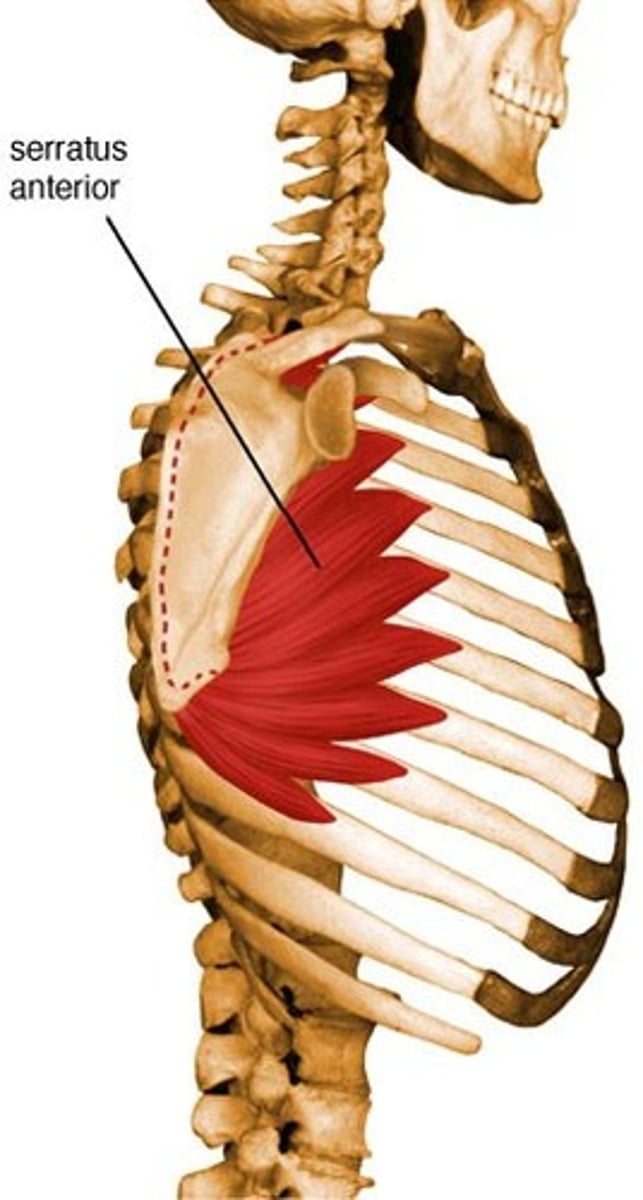
Serratus anterior
Protracts shoulder, rotates scapula so glenoid cavity moves superior (upward rotation)
ORIGIN: Anterior and superior margins of ribs 1-10
INSERTION: anterior surface of vertebral border of scapula
INNERVATION: long thoracic nerve
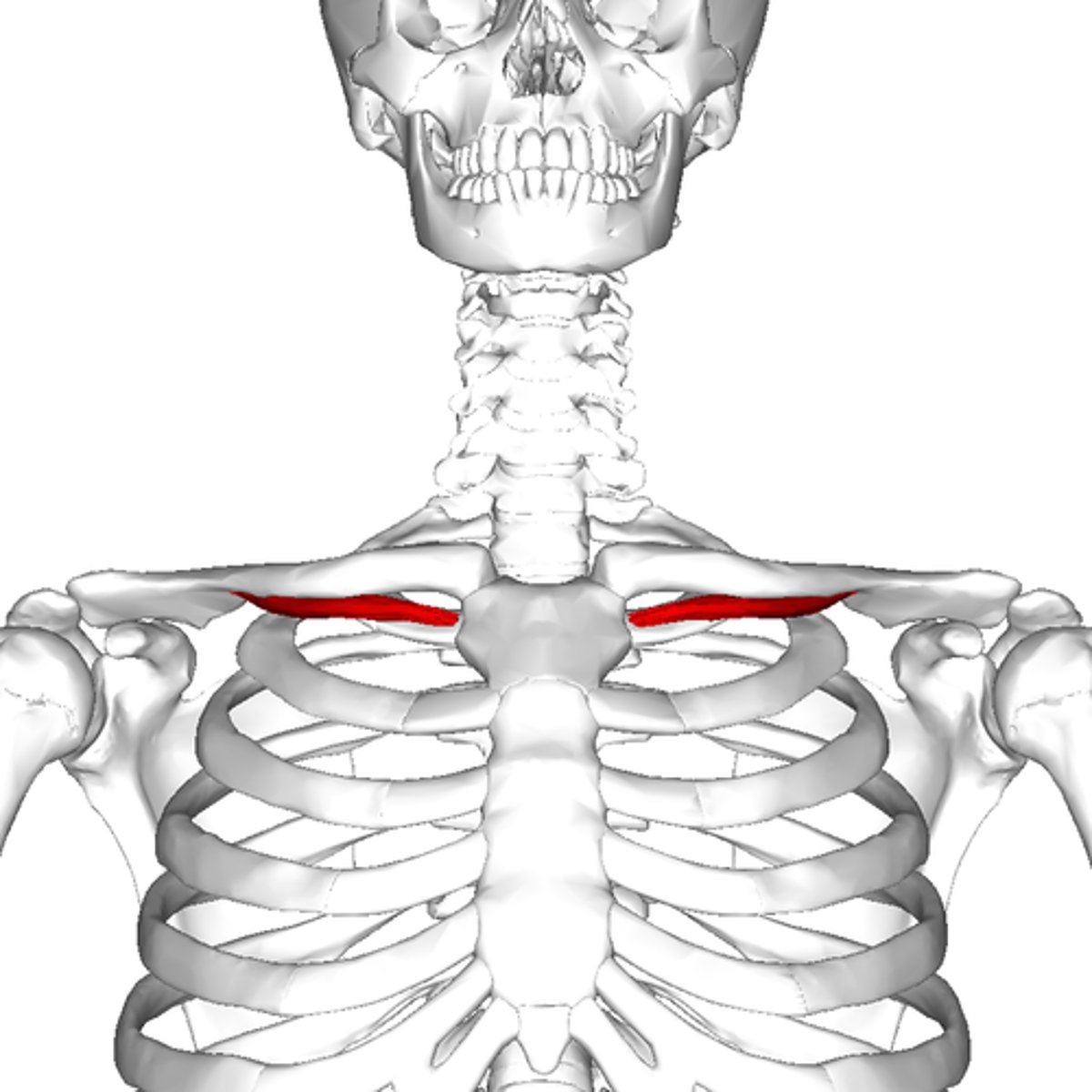
Subclavius
Depresses and protracts shoulder
ORIGIN: First rib
INSERTION: Clavicle
INNERVATION: Nerve to subclavius
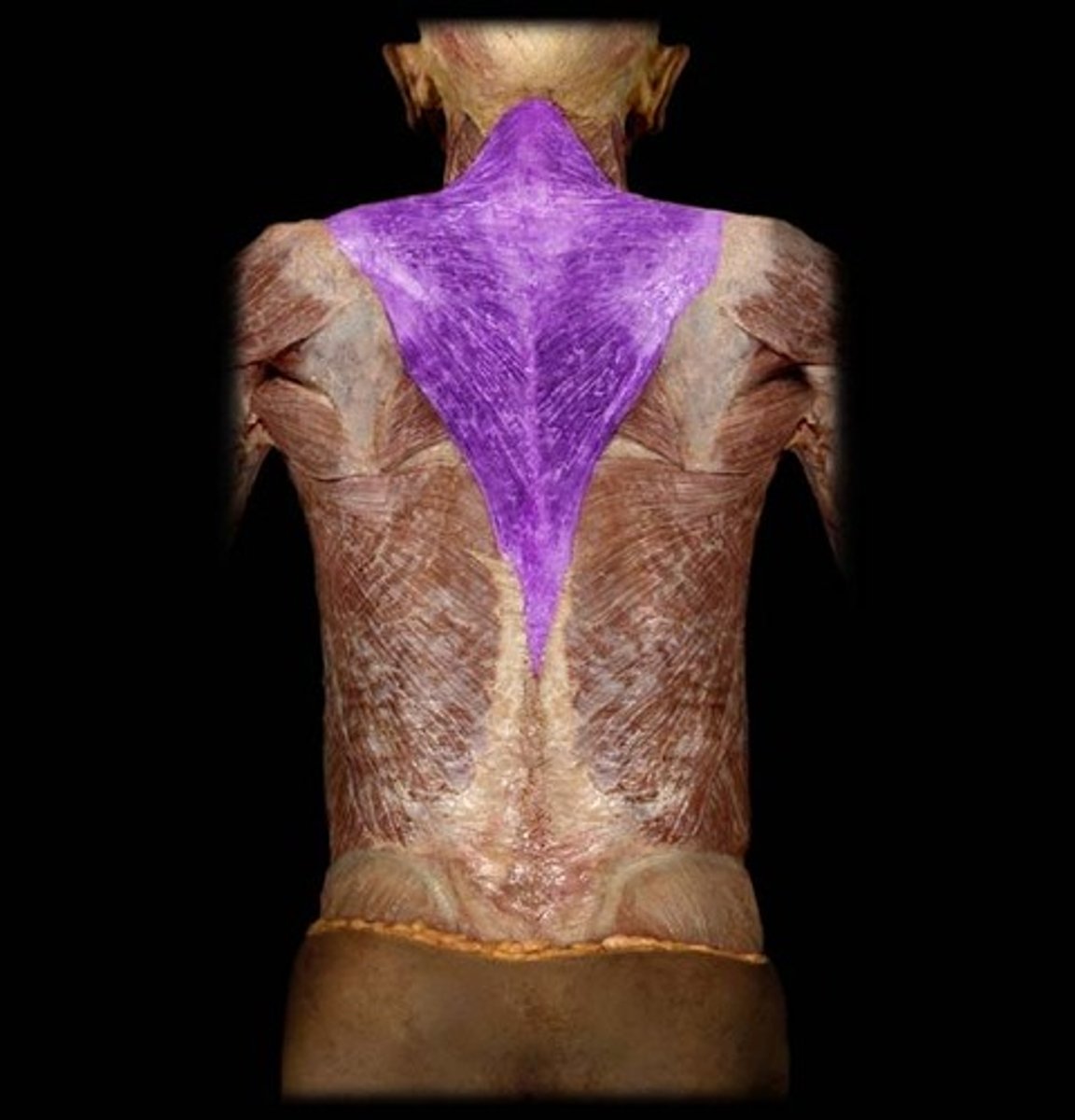
Trapezius
Elevate, retract, depress or rotate scpula upward and/or clavicle, extend neck
ORIGIN: occipital bone, ligamentum nuchae, spincous processes of thoracic vertebrae
INSERTION: clavicle and scpula (acromion and scapular spine)
INNERVATION: accessory nerve
what are the 4 main functions of the anterior trunk muscles?
flex the trunk anteriorly and laterally
act in opposition to spinal extensors (stability)
rotate (obliques)
aid in breathing
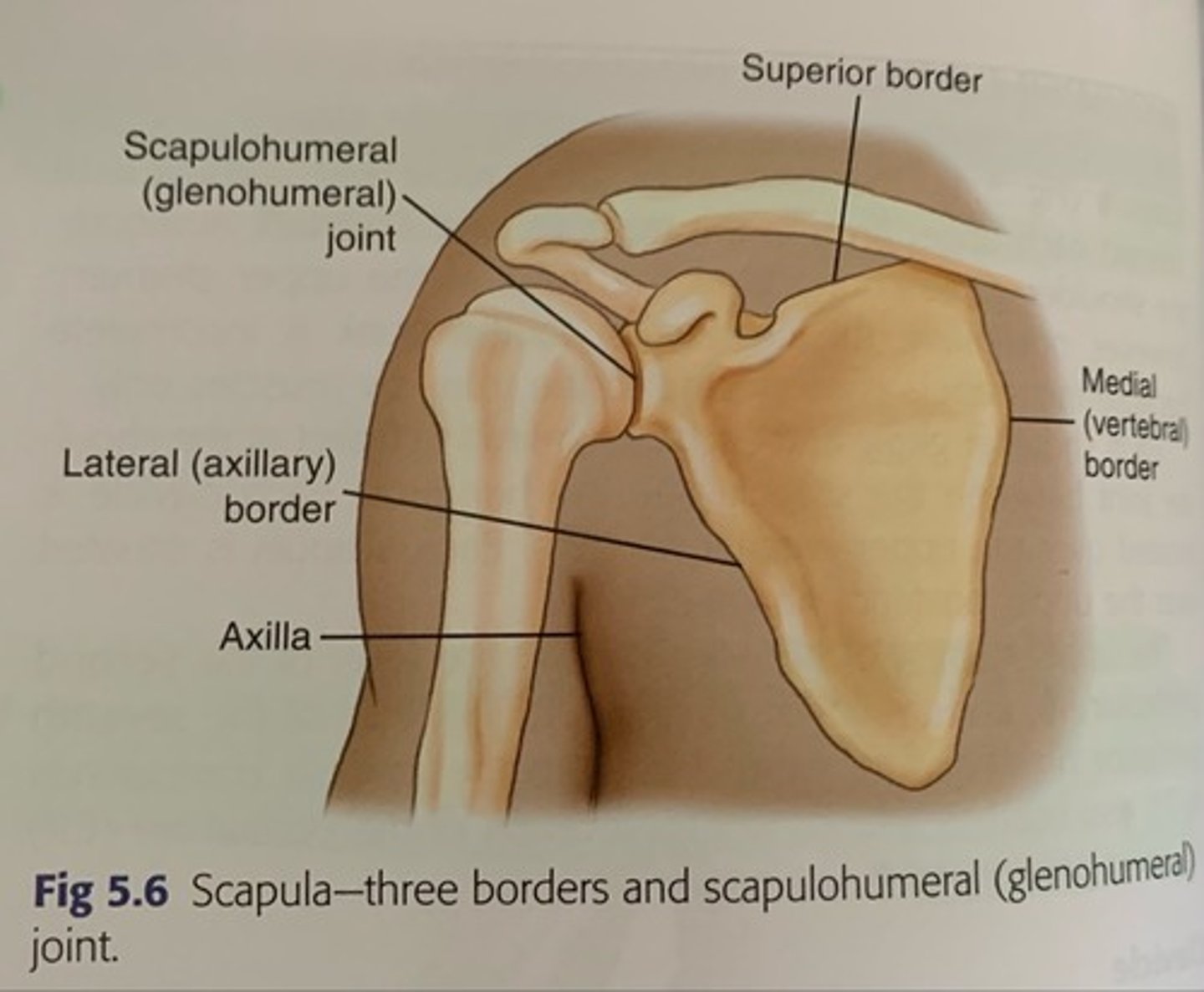
What are the borders of the scapula?
superior, medial (vertebral), lateral (axillary)
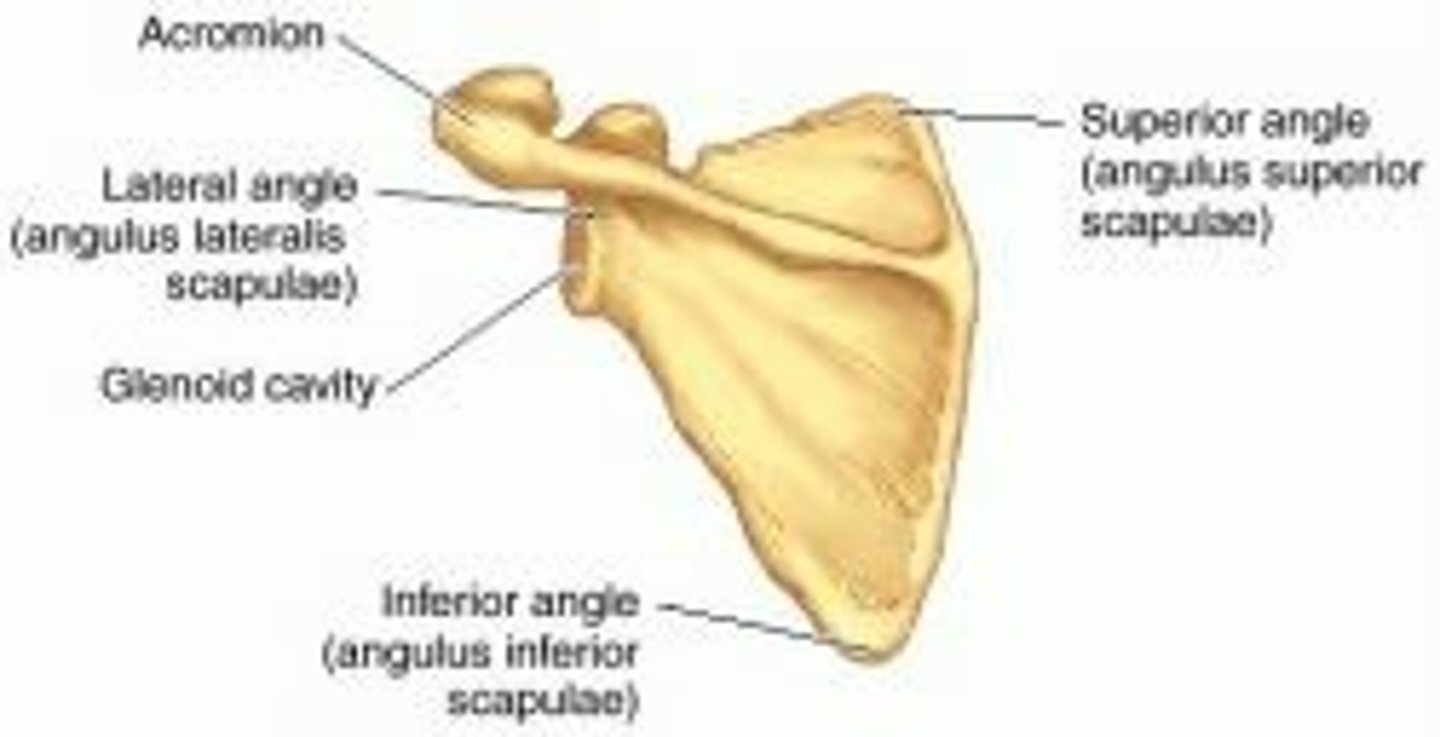
What are the angles of the scapula?
Superior, inferior, lateral
What muscle inserts on the spine of the scapula?
Trapezius
What muscle originates on the spine of the scapula?
Deltoid
What muscle inserts on the acromion of the scapula?
Trapezius
What muscles originate on the fossa of the scapula?
Supraspinous, infraspinous, subscapular
Supraglenoid tubercle is the origination site of what muscle?
Long head of biceps brachii
Infraglenoid tubercle is the origination site of what muscle?
Long head of triceps
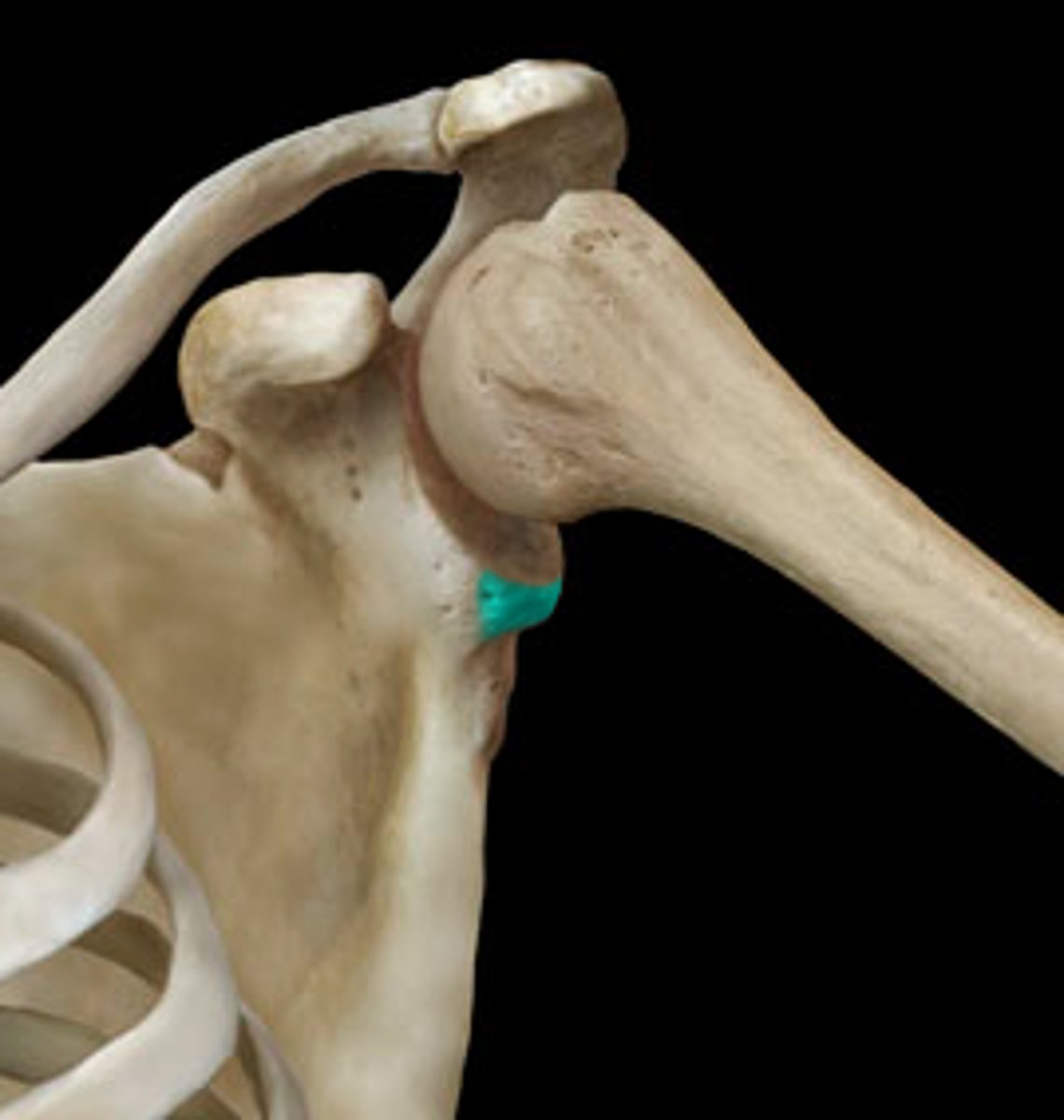
What movements occur at the scapulothoracic joint?
Protraction/retraction, elevation/depression
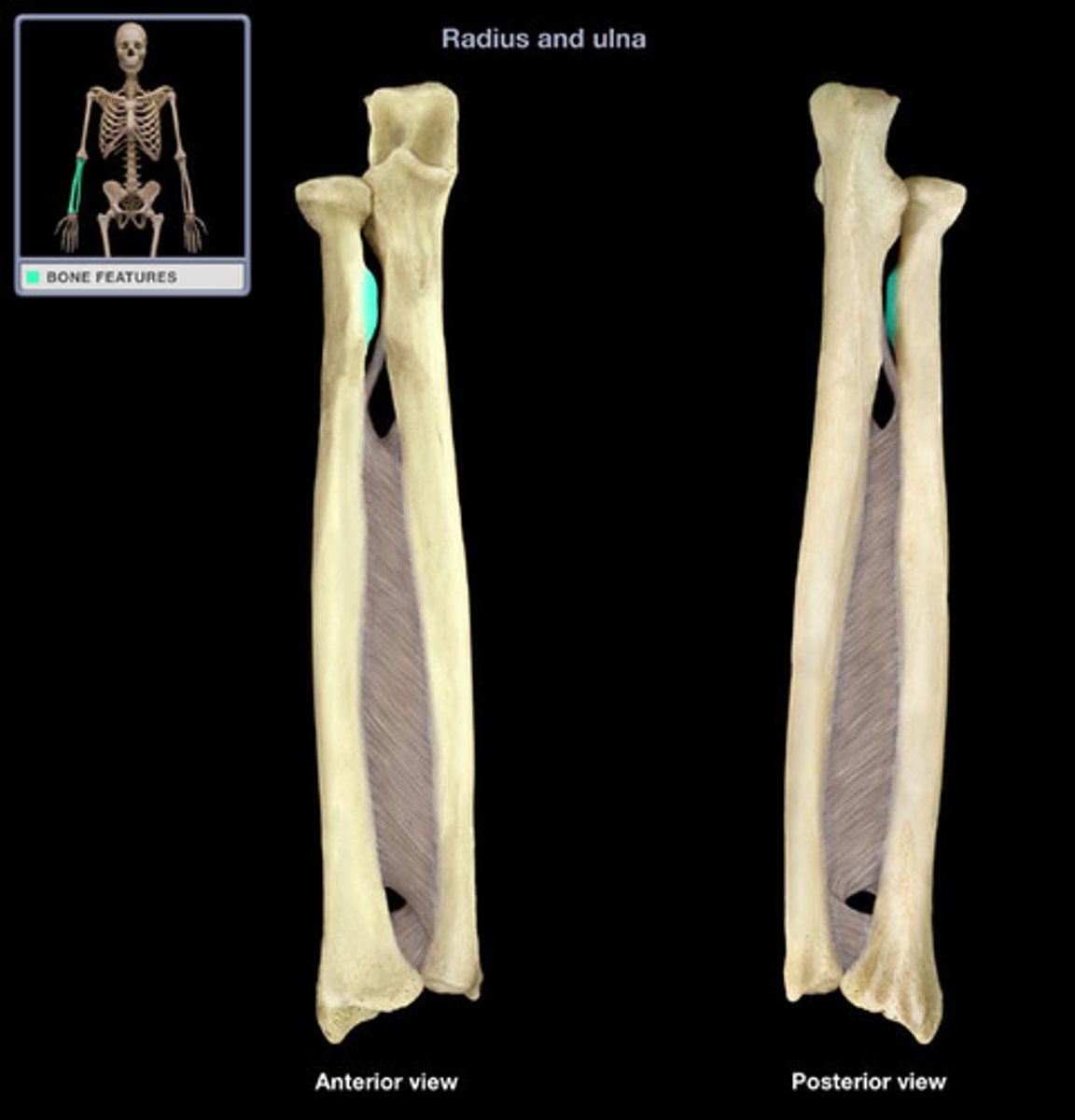
What muscle inserts on the ulnar tuberosity?
brachialis
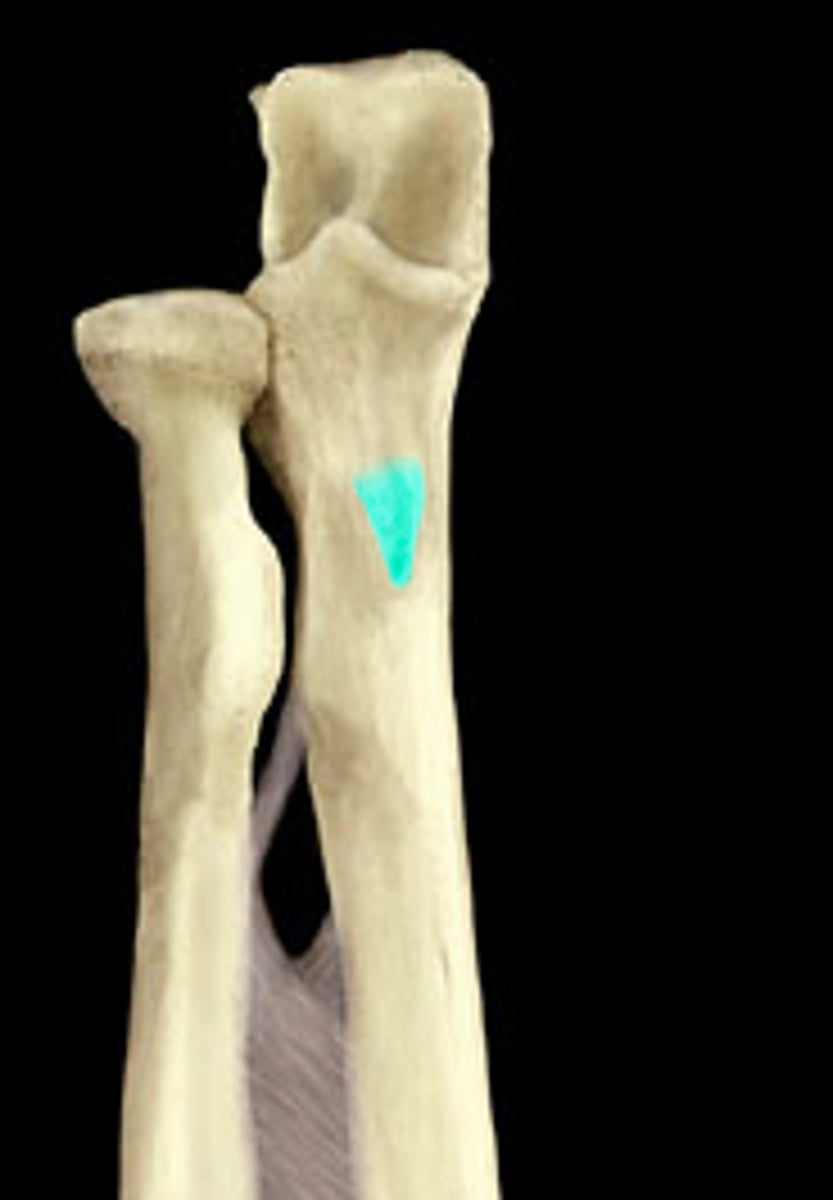
What muscle inserts on the radial tuberosity?
Biceps brachii
What muscles cause elevation of the scapula?
upper trapezius, levator scapulae
what muscles cause depression of the scapula?
lower serratus anterior, pectoralis minor
what muscles cause medial rotation of the scapula?
levator scapulae, rhomboids
What muscles cause lateral rotation of the scapula?
upper trapezius, lower serratus
what muscles cause retraction of the scapula?
middle trapezius and rhomboids
what muscles cause protraction of the scapula?
serratus anterior and pectoralis minor
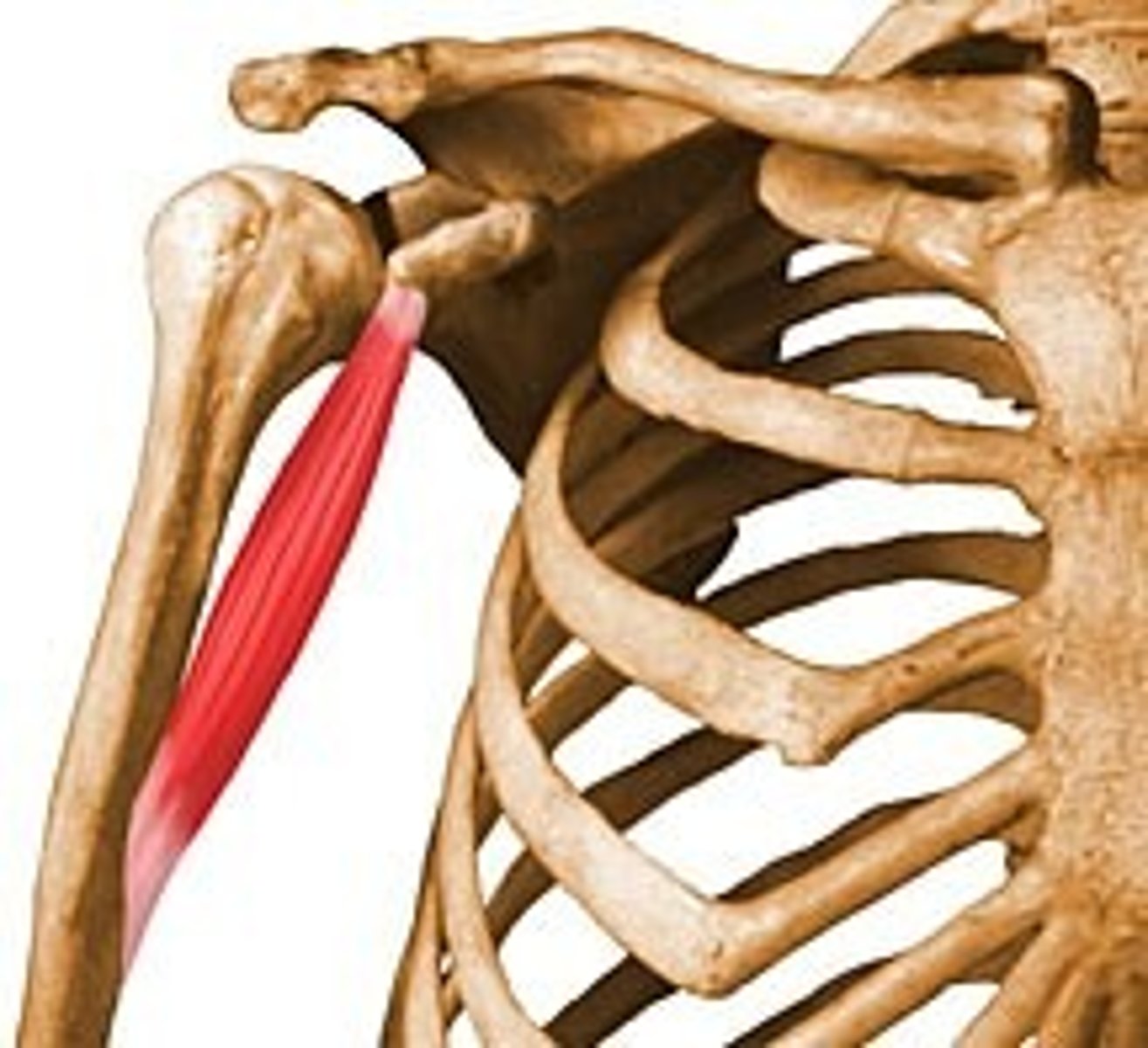
Coracobrachialis
Adduction and flexion at shoulder.
ORIGIN: Coracoid process
INSERTION: Medial margin of shaft of humerus
INNERVATION: musculocutaenous nerve
Deltoid
Whole muscle; abduction of shoulder
anterior part; flexion and medial rotation of humerus
posterior part; extension and lateral rotation of humerus
ORIGIN: clavicle and scapula (acromion and adjacent scapular spine)
INSERTION: deltoid tuberosity of humerus
INNERVATION: axillary nerve
supraspinatus
Abduction of shoulder
ORIGIN: supraspinous fossa of scapula
INSERTION: greater tubercle of humerus
INNERVATION: suprascapular nerve
Infraspinatus
Lateral rotation at shoulder
ORIGIN: infraspinous fossa of scapula
INSERTION: greater tubercle of humerus
INNERVATION: suprascapular nerve
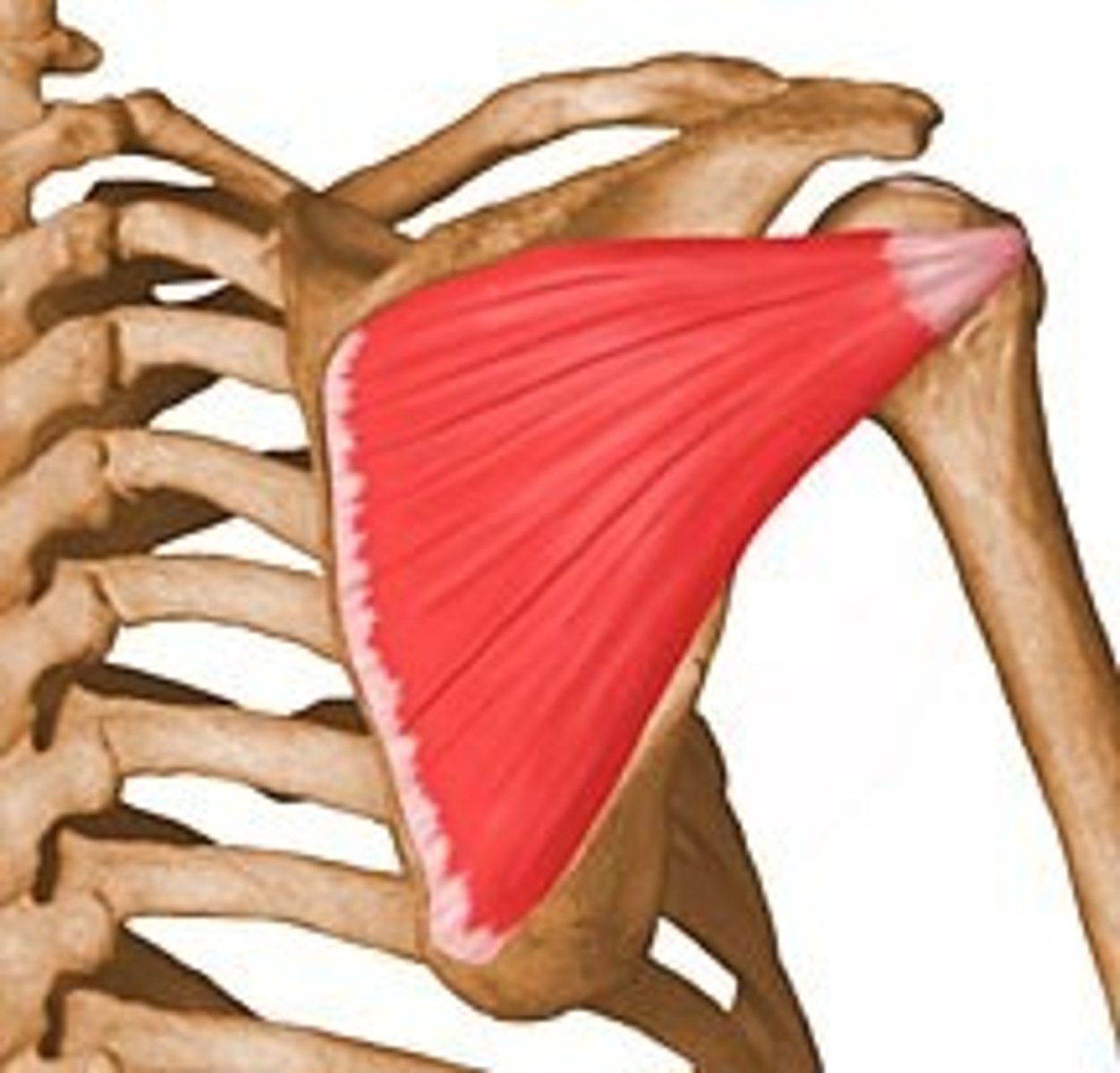
Subscapularis
Medial rotation at shoulder
ORIGIN: subscapular fossa of scapula
INSERTION: lesser tubercle of humerus
INNERVATION: subscapular nerve
Teres major
extension and medial rotation at shoulder
ORIGIN: inferior angle of scapula
INSERTION: medial lip of intertubercular sulcus of humerus
INNERVATION: lower subscapular nerve
Teres minor
Lateral rotation and adduction at shoulder
ORIGIN: lateral border of scapula
INSERTION: greater tubercle of humerus
INNERVATION: axillary nerve
latissimus dorsi
extension, adduction, and medial rotation at shoulder
ORIGIN: spinous processes of inferior thoracic and all lumbar and sacral vertebrae, ribs 8-12, and thoracolumbar fascia
INSERTION: floor of intertubercular sulcus of the humerus
INNERVATION: thoracodorsal nerve
pectoralis major
flexion, adduction, and medial rotation at shoulder
ORIGIN: cartilages of ribs 2-6, body of sternum, and inferior, medial portion of clavicle
INSERTION: crest of greater tubercle and lateral lip of intertubercular sulcus of humerus
INNERVATION: medial and lateral pectoral nerves