OAT Biol 8: Microscopy
 Call Kai
 Learn
Learn Practice Test
 Spaced Repetition
 Match
Match Flashcards
 Knowt Play
1/59

There's no tags or description
Looks like no tags are added yet.
Name | Mastery | Learn | Test | Matching | Spaced | Call with Kai |
|---|
No analytics yet
Send a link to your students to track their progress
60 Terms
What is microscopy?
What is the point?
Microscopy aims to magnify the image of a given specimen
Preparative techniques are used to ease viewing and interpretation of the specimen
Fixation
Meaning
What is the point of that
Fixation: “Sticking” or “securing” cells to a slide, preserving them in as close to a lifelike state as possible
Staining
Def
What is the point of this
What does it do the specimen
Application of stains or dyes to a specimen to add color and contrast
Different structures may become more easily distinguished
Staining often kills the specimen
Optical Microscopy Def
Cells are viewed directly
Thin specimen are illuminated with a light source, while the lenses magnify the resulting image
Living cells CAN be viewed using this method
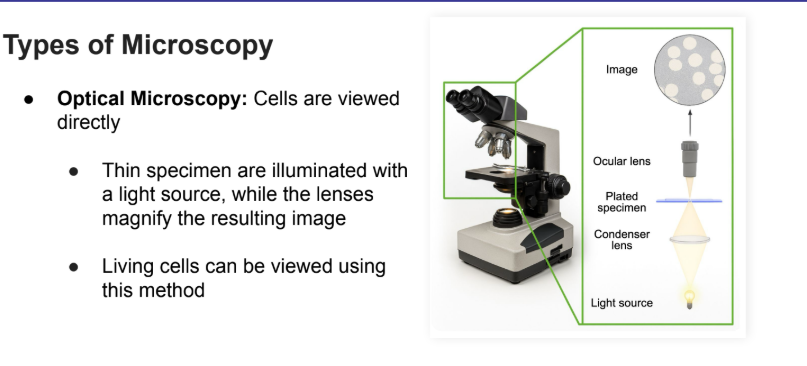
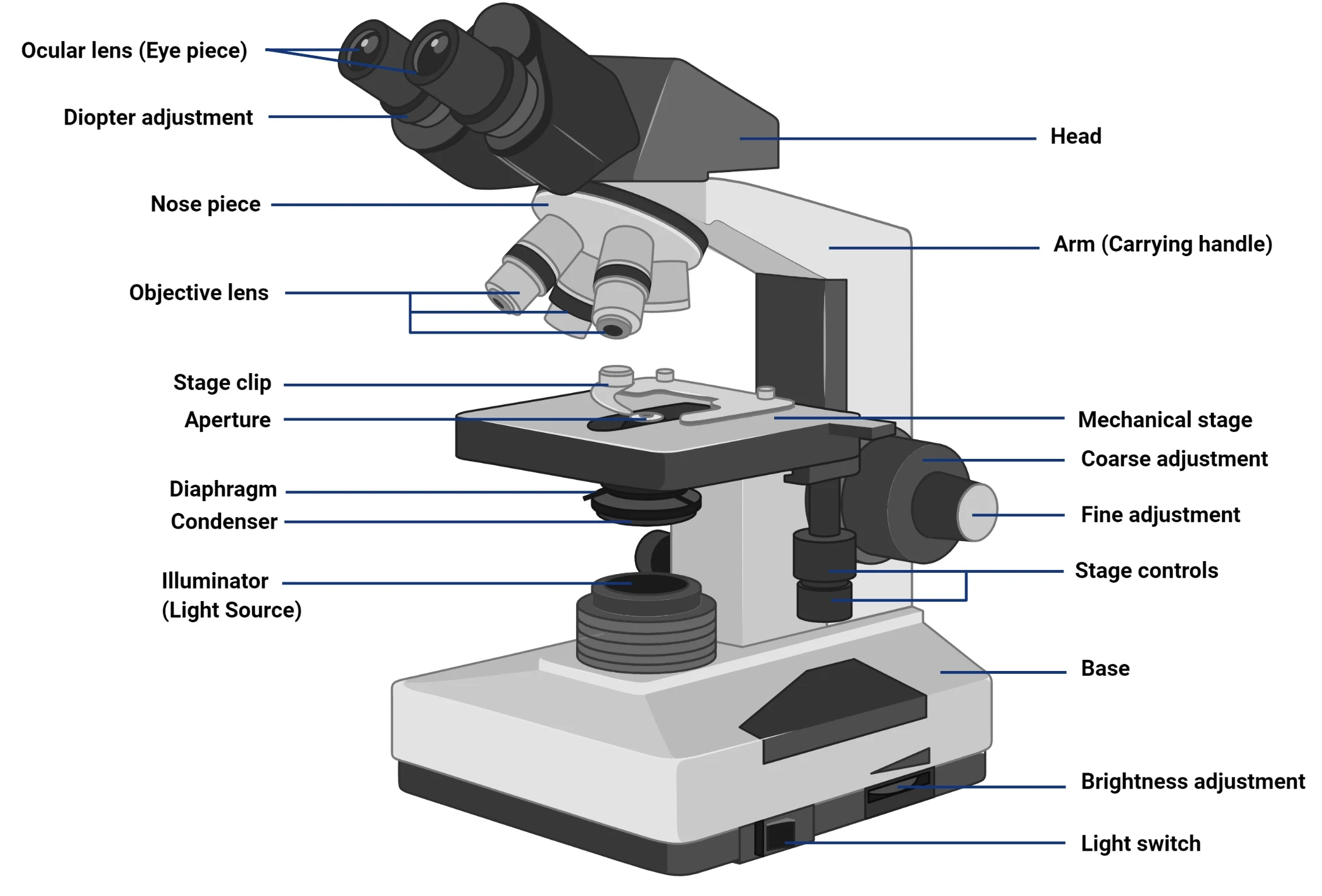
Types of Optical Microscopes (3 types)
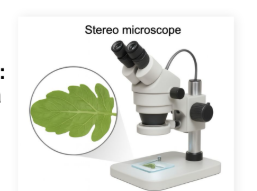
Stereo Microscope
Compound Microscope
Bright Field Microscope
Stereo Microscope
Def
Low magnification is used to view the surface of a specimen
3d
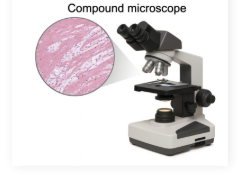
Compound Microscope
Positives
Negatives
DEF
Multiple lenses are used to provide variable, adjustable magnification
Viewing of simple, one-cell thick samples requiring fixation and staining
Poor image contrast
Bright Field Microscope
Compound microscope with a bright light
Phase Contrast Micrscopes
View thin samples of live, unstained cells
High image contrast
Type of compound microscope
Does NOT require fixation
Fluorescent Microscope
View live cells that are tagged with fluorophores
Cellular components are visible with this method
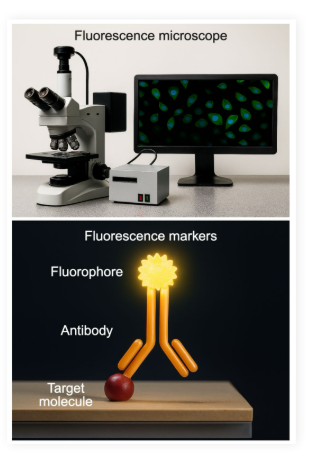
Fluorophores
Fluorophores: Fluorescent chemical markers used to “tag” target structures
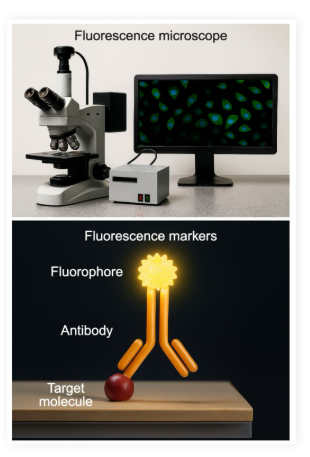
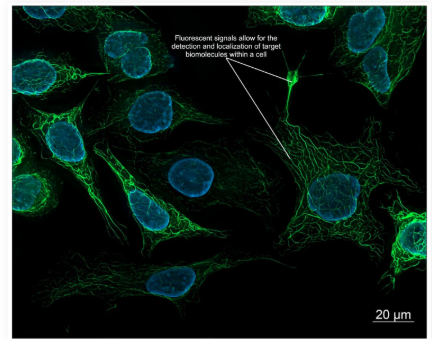
Immunoflorescence Microscopy
Fluorophores are used to identify the location of target proteins
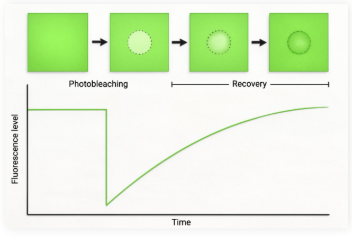
FRAP (fluorescence recovery after photobleaching)
Quantitatively measures biomolecule movement in a live cell
Protocol:
Baseline fluorescence is measured, and an area of the sample is photobleached
Over time, photobleached molecules are replaced by unbleached molecules via diffusion
Gradually, the area will recover fluorescence based on cell dynamic
Electron Microscopy
How it works
Mortality
What do you need to treat the specimen with
Cells are viewed indirectly
Electrons are fired at the sample
The electrons bounce off of the sample, causing them to pass through a magnetic field
Smaller objects can be viewed, however, specimen must be stained with a metal coating and killed
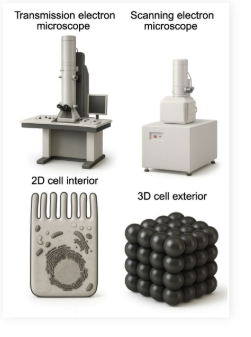
SEM (Scanning Electron Microscope)
Def
Type of sample
(SEM): High resolution 3D images of the surface of a dehydrated sample
Transmission electron microscope (TEM):
Def
Type of sample
High resolution 2D images of the internal structures of a sample
Bacterial Growth Curve
Def
What does the it look like
What are the phases of it
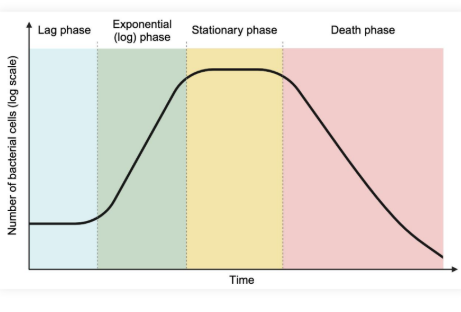
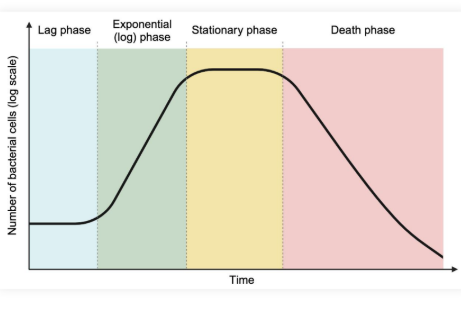
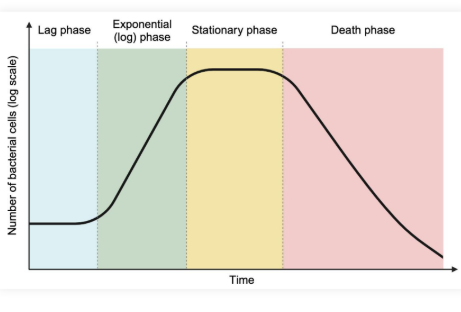
A graphic depiction of the phasic growth and death of bacteria from culturing
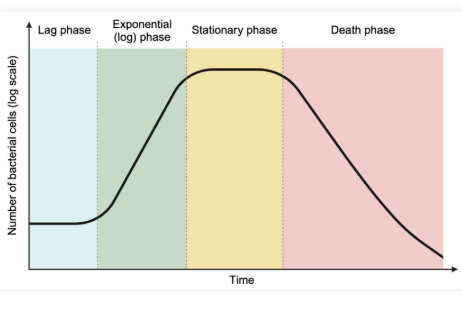
What are the four phases of the Bacterial Growth curve?
Lag
Exponential (log)
Stationary Phase
Death Phase
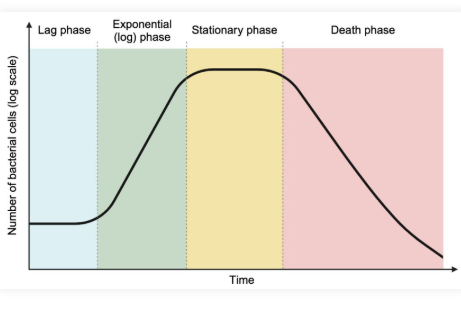
Bacterial Growth curve: Lag Phase
Lag phase: Bacterial proliferation is stagnant as cells initially adapt to new environment (culture medium)
Growth rate = death rate
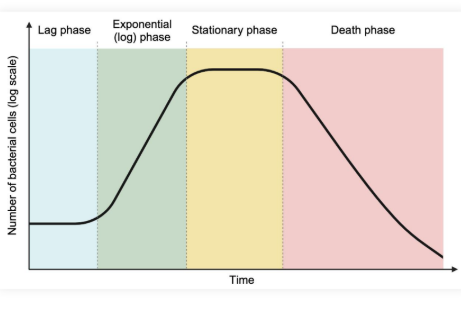
Bacterial Growth curve: Exponential (log) Phase
A period of exponential cell growth
Growth rate > death rate
Bacterial Growth curve: Stationary Phase
A second period of stagnant proliferation
Growth rate = death rate
Total population is much higher than in lag phase
Bacterial Growth curve: Death Phase
Rapid decline in bacterial population size
Death rate > growth rate
Caused by lack of resources after log and stationary phases
Differential Centrifugation
What compenents are created?
What is the point of it?
What does it seperate?
What does it allow for furthermore?
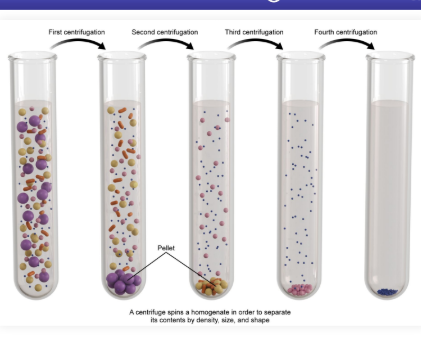
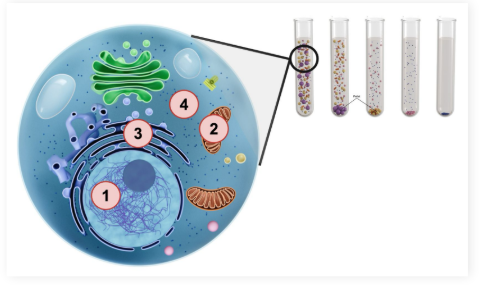
Separating solutes in a given solvent based on size and density
Test tubes filled are subjected to several rounds of centrifugation, with each round increasing centrifugal forces
Each step selectively pellets components within a specific size or density range
Pellet: The components which have sedimented to the bottom of the tube
Allows for the fractionation of cell organelles and macromolecules
List these from dense to least dense:
Er and Golgi Fragments
Mitochondria, Chloroplasts and Lysosomes
Nucleus
Ribosomes and large macromolecules.
From MOST dense to LEAST dense (correct order)
1. Nucleus
2. Mitochondria, chloroplasts, and lysosomes
3. ER and Golgi fragments
4. Ribosomes and large macromolecules
Karyotyping
Def
Uses
What phase do we undergo this technique?
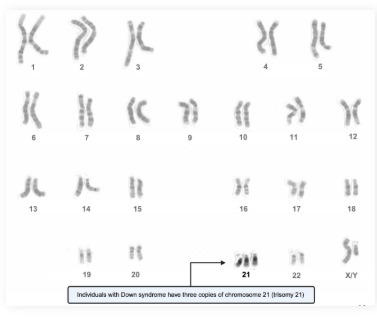
Observing chromosomes under a microscope to identify potential chromosomal abnormalities
Ex: Trisomy 21 / Down syndrome
Observation occurs during metaphase
CRISPR (if u dont know this i would be a little upset)
Uses
Def
What does it do specifically?
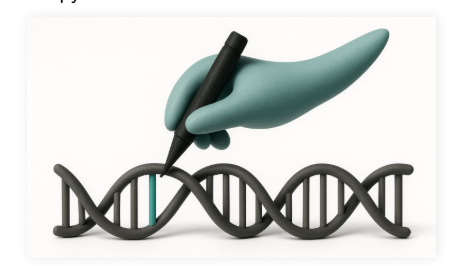
● Technology allowing the editing of specific genomic regions
● Target sequences may be inserted or deleted
● Uses: Gene therapy
DNA fingerprinting
Uses
What does it do?
What innate technology does it use?
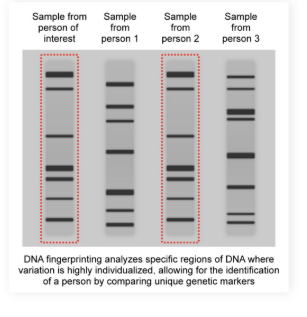
An identification technique which relies on the inherent uniqueness of each human genome
Specific regions of noncoding DNA are fragmented with restriction enzymes and analyzed
Uses: Paternity testing and forensic identification
DNA Sequencing
Def
Example of DNA Sequencing
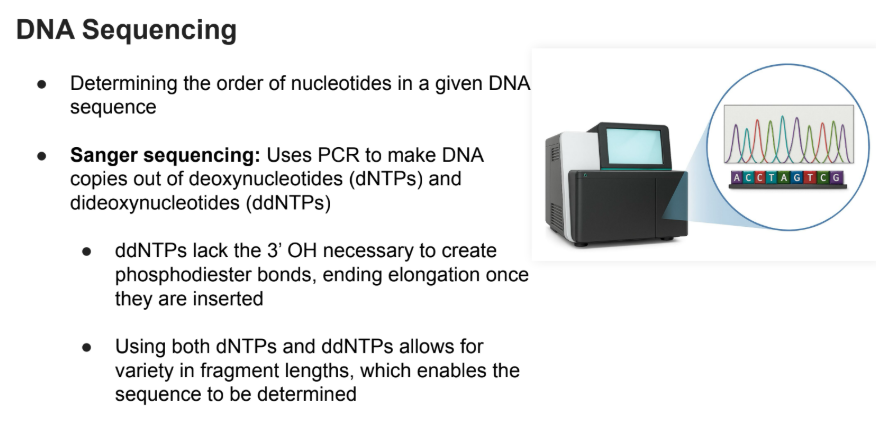
Determining the order of nucleotides in a given DNA sequence
EX: Sanger Sequencing
Sanger sequencing:
Sanger sequencing: Uses PCR to make DNA copies out of deoxynucleotides (dNTPs) and dideoxynucleotides (ddNTPs)
ddNTPs lack the 3’ OH necessary to create phosphodiester bonds, ending elongation once they are inserted
Using both dNTPs and ddNTPs allows for variety in fragment lengths, which enables the sequence to be determined
PCR (polymerase chain reaction)
3 steps
def
An automated process that allows for the creation of 1+ billion of copies of a DNA fragment
3 Steps:
Denaturation
Annealing
Elongation
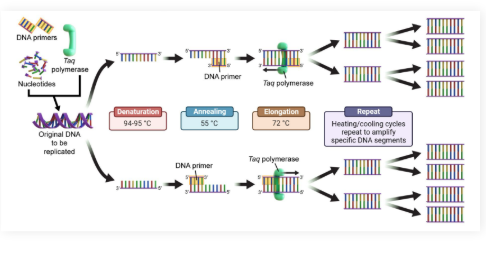
PCR: Denaturation
What is the temp
Denaturation (94-95° C): Intense heating separates the DNA double strands into single strands
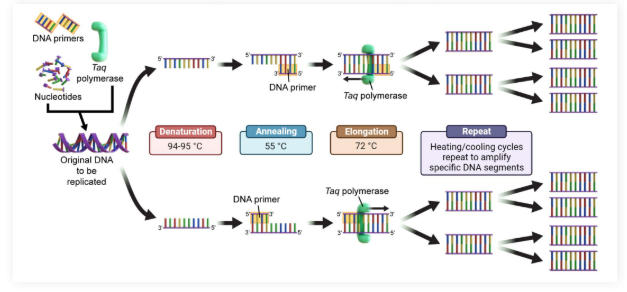
PCR: Annealing
Temp
Def
Primer annealing (55° C): The sequences are cooled, allowing DNA primers
to hybridize with the single strands
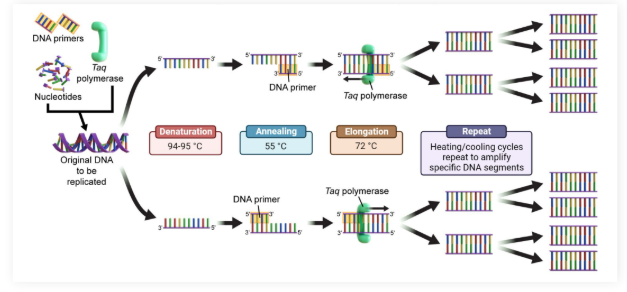
PCR: Elongation
Elongation (72° C): Moderate temperature elevation encourages Taq polymerase activity, adding nucleotides to the 3’ ends of the strands
Bacterial Cloning
General Def
(eukaryotic gene product cloned using prokaryotic cells)
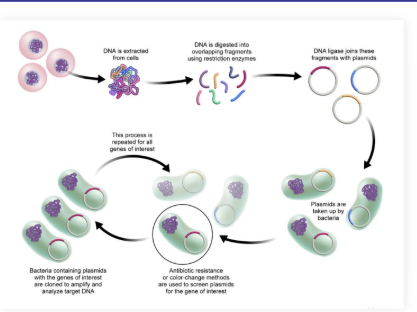
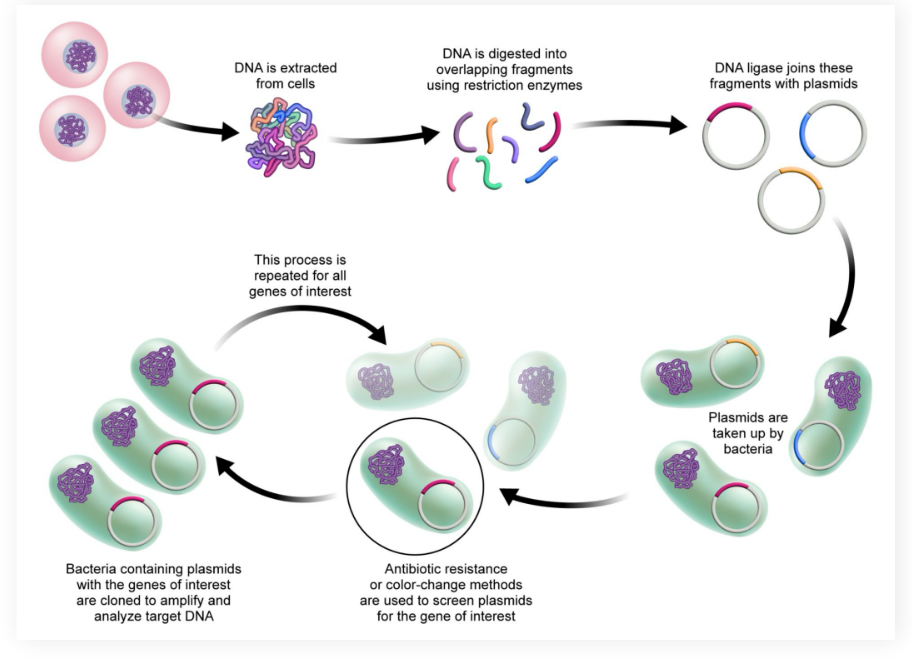
Process of Bacterial Cloning
Eukaryotic gene products are cloned using prokaryotic cells
Process:
Processed eukaryotic mRNA is converted to cDNA (copy DNA) using reverse transcriptases
cDNA is incorporated into a plasmid using restriction enzymes and DNA ligase
Plasmid vector is taken up by competent bacterial cells via transformation
Process continued:
Gene of interest is located using antibiotic resistance (antibiotic resistance gene is attached to target gene) and color change methods
Uses: Medicine production
Gene Therapy
Def
How does it work
Types of it
What does it treat?
Medical treatment where target genes are inserted into patient cells
Viruses are the preferred vector
High transduction rate (most efficient)
Potential to trigger an immune response
Non-viral vectors do not cause immune responses but are less efficient
Examples include CRISPR and naked plasmid DNA
Uses: Treatment of diseases with clear genetic involvement
Enzyme Linked Immunosorbent Assay (ELISA)
Purpose
Def
What is it used for
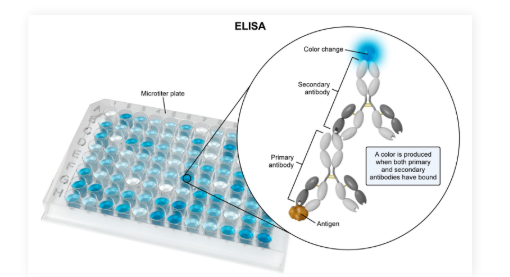
Determines if a person possesses a specific antigen
Antibodies are placed on a microtiter plate with a sample from the individual
If the individual possesses the antigens of interest a color change will occur
Uses: Disease diagnosis (HIV)
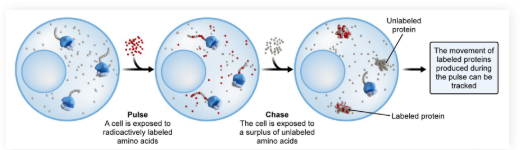
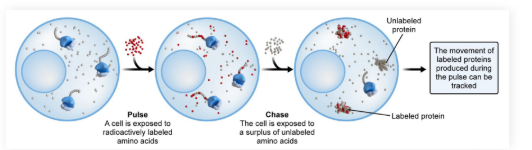
Pulse Chase Experiments:
● Observing protein movement through a cell
● Pulse phase: Amino acids are radioactively labeled and then incorporated into proteins
● Chase phase: Prevention of radioactively labeled protein production
● Radioactive proteins are tracked using simple staining
● Uses: Study gene expression and protein fates (synthesis, movement, degradation) within a cell
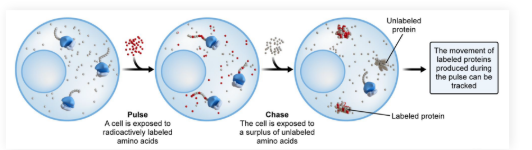
Pulse Phase (Pulse Chase Experiment)
● Pulse phase: Amino acids are radioactively labeled and then incorporated into proteins
Chase Phase (Pulse Chase Experiment)
● Chase phase: Prevention of radioactively labeled protein production
Gel Electrophoresis (another obvious one)
Use
How does it undergo it’s use mechanically
Charges top and bottom
What travels the furthest
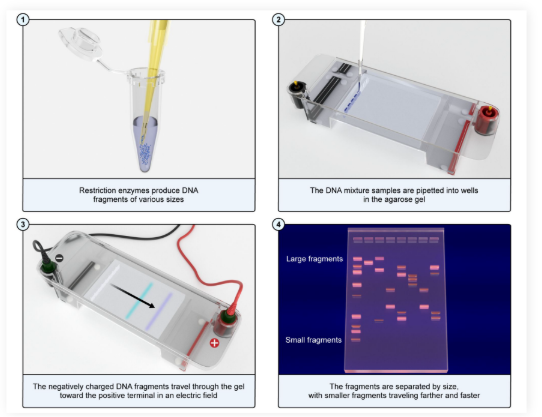
● A technique to separate DNA fragments or proteins by size and relative charge
● Samples are placed into wells within an agarose gel
● The gel is situated within an electric field
Top: negative cathode
Bottom: positive anode
Smaller and more negatively charged fragments travel further from the top of the gel
Uses: Genotyping, fingerprinting, diagnostic testing
SDS Page
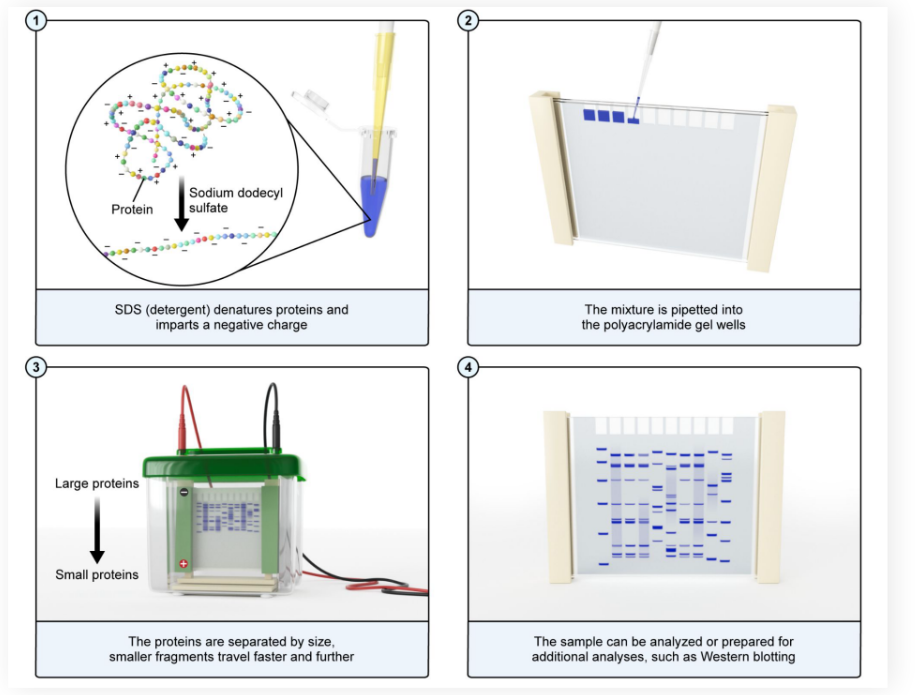
Used in protein gel electrophoresis
Sodium dodecyl sulfate (SDS): A strong detergent which denatures proteins and gives them a negative charge
Denatured proteins are placed into polyacrylamide gel wells
Protein fragments are separated out based on density and size for analysis
Uses: Assessing protein size and purity
Exonucleases and Endonucleases
Def
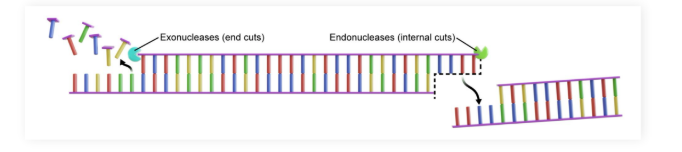
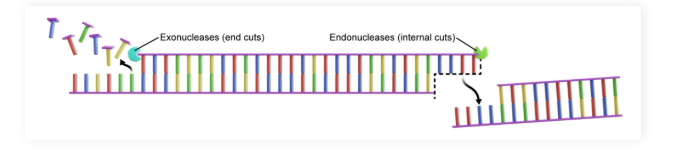
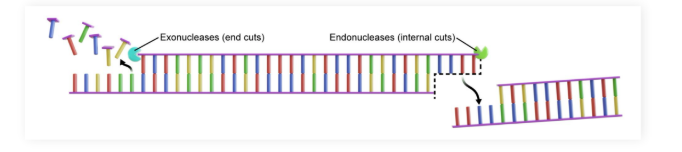
Nucleotide cleaving enzymes differing in their target location
Exonucleases
Where does it excise
What does that produce then?
● Exonucleases: Cleave nucleotides from the ends of a polynucleotide chain
Can only produce sticky ends
Endonuclease:
Cleave nucleotides from the inside of a polynucleotide chain
Can produce sticky ends or blunt ends
Restriction Enzymes
Where do they affect the subject
What is the subjet
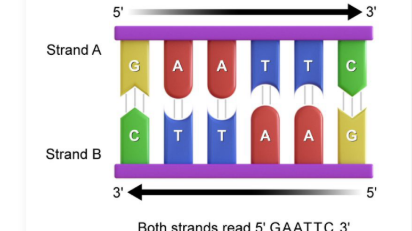
Restriction enzymes: Special endonucleases that mostly cut DNA at palindromic sequences
Palindromic Sequences
Palindromic sequences: Short regions where the sequence reads the same in the 5’-3’ on both strands
Recombinant DNA
DNA produced when DNA fragments from different sources are joined together at blunt and/or sticky ends
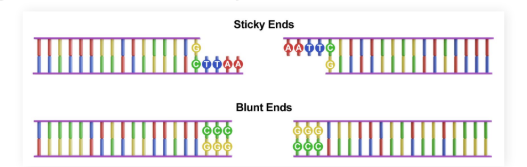
Blunt ends
Blunt ends: DNA fragments without any unpaired nucleotides

Sticky Ends
DNA fragments with single-chain overhanging segments (unpaired nucleotides)

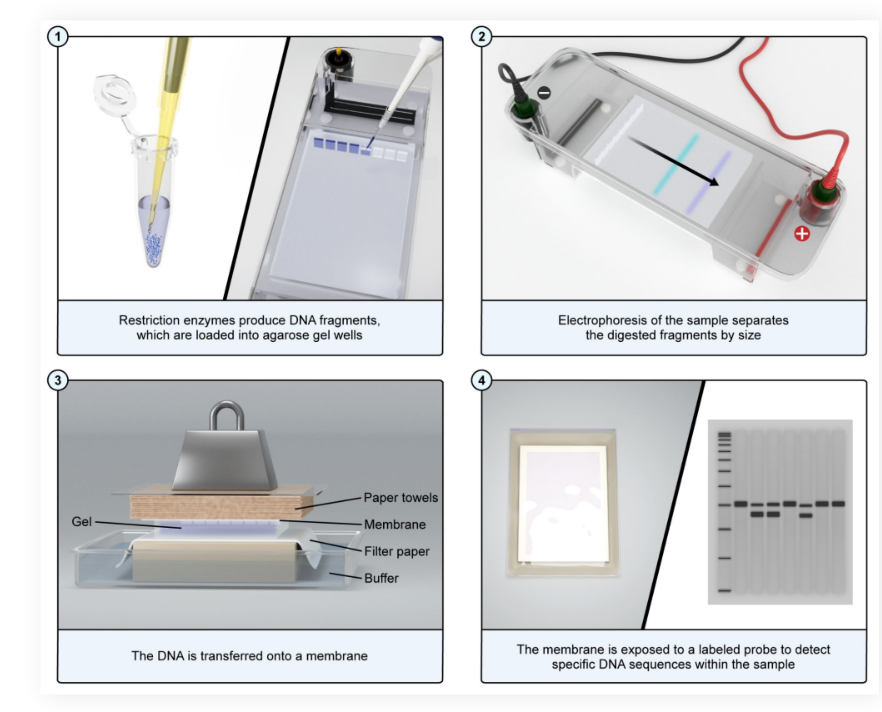
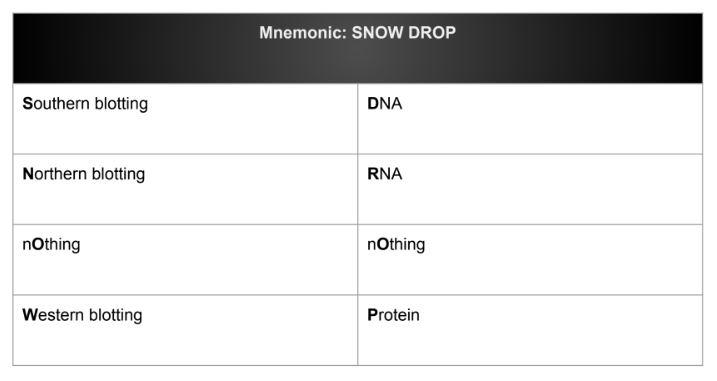
Southern Blotting
A technique used to identify fragments of a known DNA sequence within a large population of DNA
Electrophoresed DNA is separated into single strands
The strands are then identified via complementary DNA probes
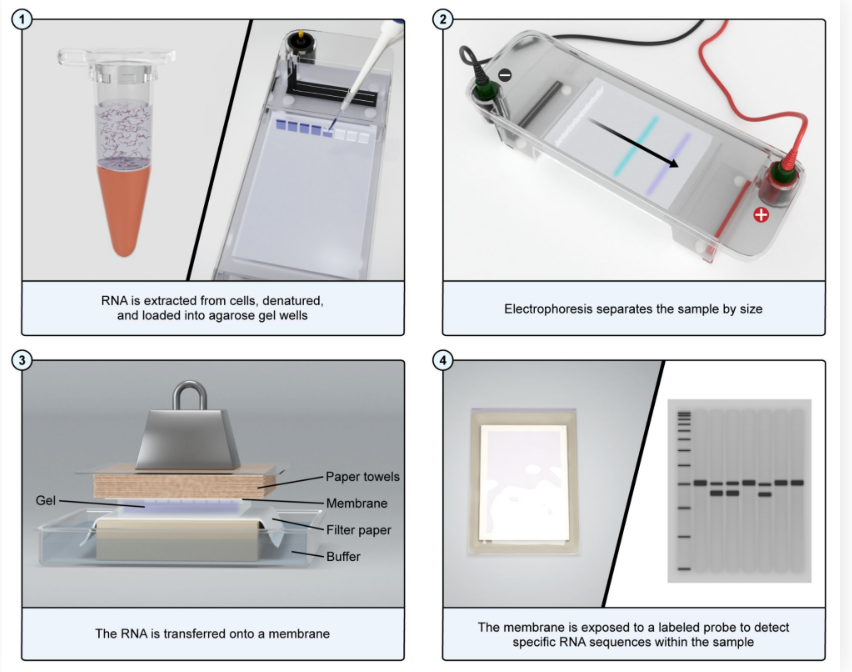
Northern Blotting
Identify known fragments of RNA using an RNA probe
Conducted in a similar fashion to the Southern Blot but using RNA
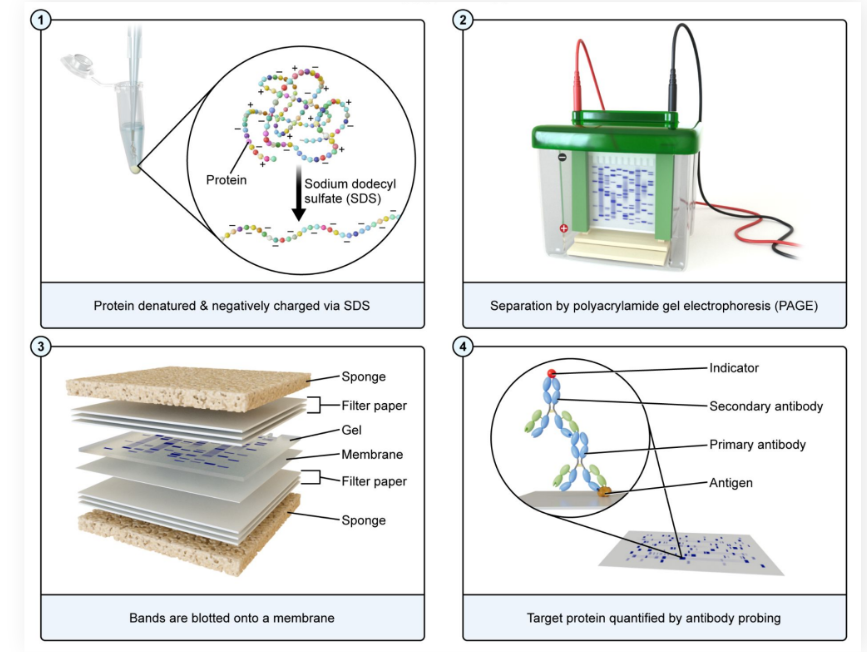
Western Blotting
Quantifies the amount of a target protein in a sample
Uses SDS-PAGE
Proteins are treated with primary antibodies, which bind to the target protein, and secondary antibodies, which bind to both an indicator and the primary antibody
TYPES OF BLOTTING
SNOW DROP
Genomics
The study of all genes present in an organism’s genome and how they interacts
Gene Annotation
Gene annotation: The process of identifying the location of genes and coding regions within a genome and determining each of their functions
Requires a genomic library and DNA microarray
Genomic Library
● Store the DNA of an organism’s genome
● DNA fragments are incorporated into plasmids
● These fragments can be screened for using antibiotic resistance and color changing techniques
● They can they be cloned by bacterial cloning
DNA Microarrays
Def
Process
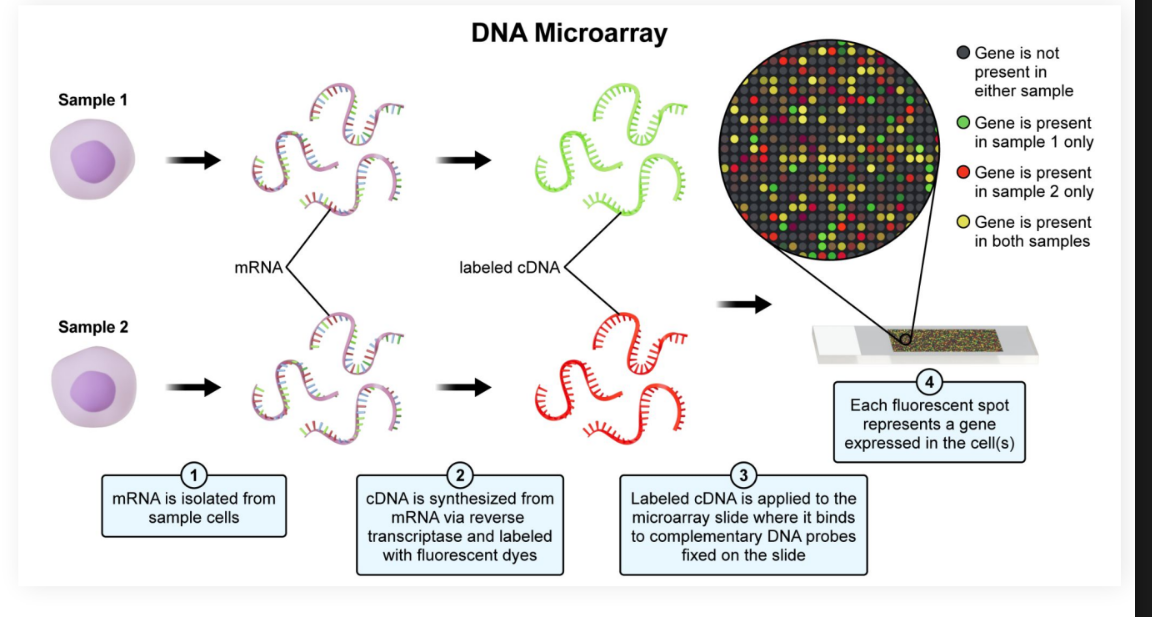
Contain thousands of DNA probes
Bind to complementary DNA fragments, allowing researchers to see which genes are expressed
Protocol:
Isolate a cell and remove the mRNA before exposing it to reverse transcriptase in order to produce cDNA
Hybridize the cDNA with DNA probes and examine the microarrays for fluorescence. The microarray can now be compared with the sequenced genome
adenovirus