engr 141 midterm
 Call Kai
 Learn
Learn Practice Test
 Spaced Repetition
 Match
Match Flashcards
 Knowt Play
1/18

There's no tags or description
Looks like no tags are added yet.
Name | Mastery | Learn | Test | Matching | Spaced | Call with Kai |
|---|
No analytics yet
Send a link to your students to track their progress
19 Terms
10 supports in 2-D and unknowns created
cable/rope - one unknown which is tension force
weightless link ( connects two things..?) - link imposes a force along its axis ( force in its direction)
roller ( support with wheels) - one unknown , contact force
rocker( support that rocks back and forth)- one unknown - contact force
smooth contact ( smooth rod that contacts surface) - one unknown, contact force
roller/pin confined in smooth slot ( wheel stuck in slot gap) - one unknown perp to slot ( think of direction it cant move in)
member pin connected to collar on a smooth rod ( a rod that slids on another rod)- one unknow perp to smooth rod
hinge/pin - 2 unknowns forces ( allows rotation tho)
member pin fixed to collar on a smooth rod ( a rod that slids on another rod but this time the rod is fixed so edge of link cant swing)- 2 unknowns , 1 force perp to rod and one pure moment
fixed support ( no movement whatsoever allowed) - 3 unknowns in 2 -d abs every type of movement is restricited
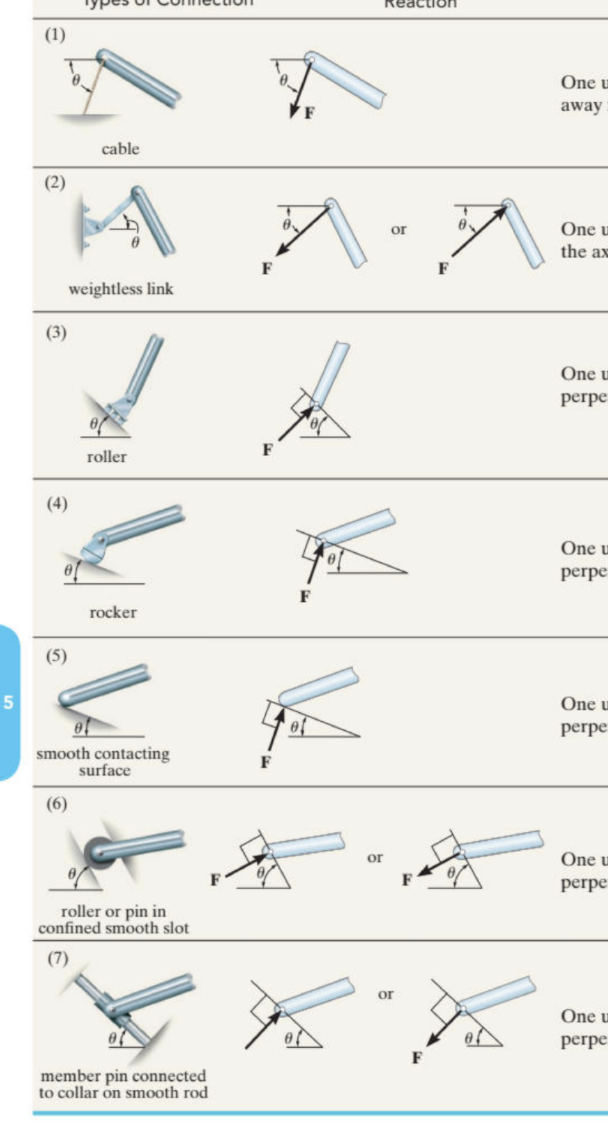
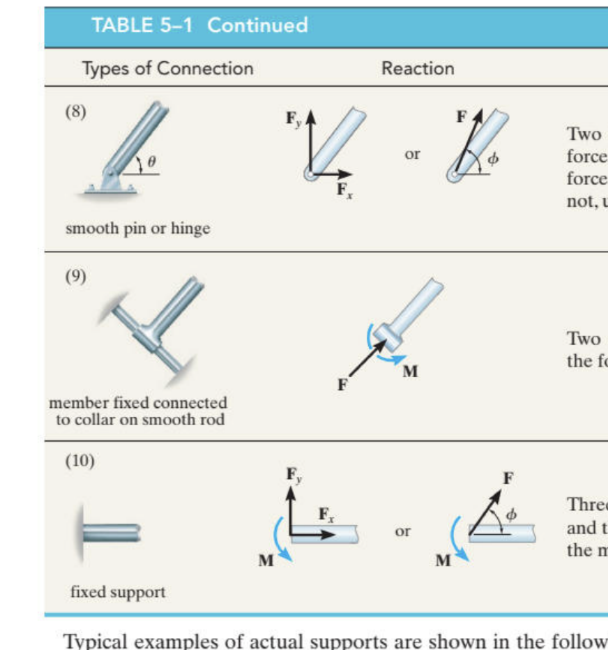
best way to understand reaction forces from supports
think of where movement or rotation is restricited - that creates a moment or force
two force member
-object with only 2 forces
in order for object to be in eq the forces must be equal mag op direction, along same line of action ( so no resultant moment)
three force member
all three forces must intersect at some point ( their Lines of action must intersect)
the could also all be parrelel but they have to be right mag ( balanced out)
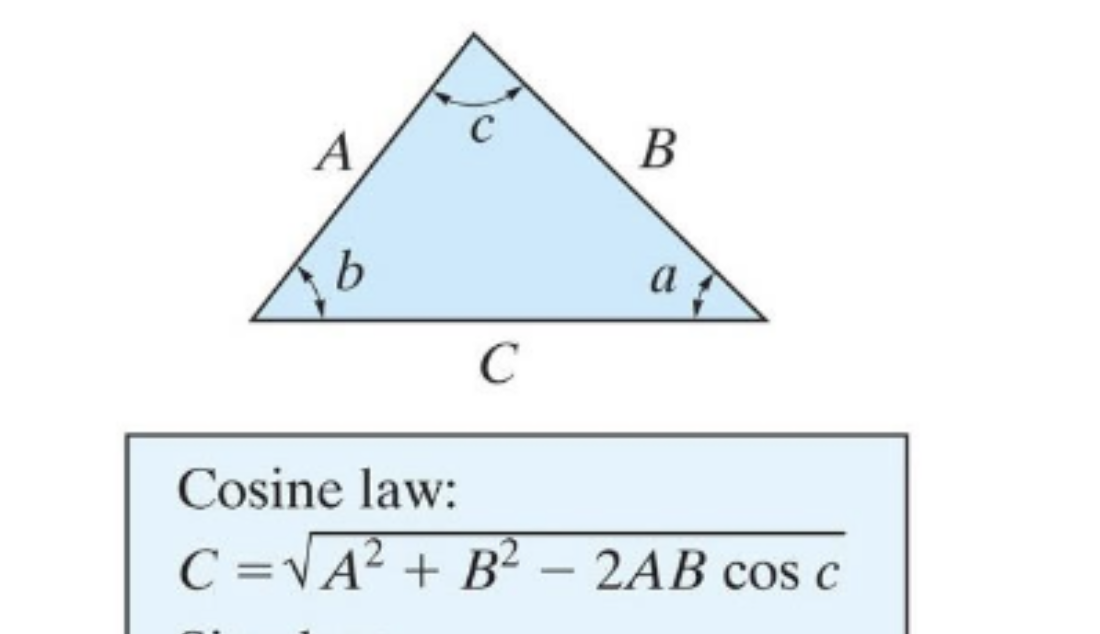
cosin law
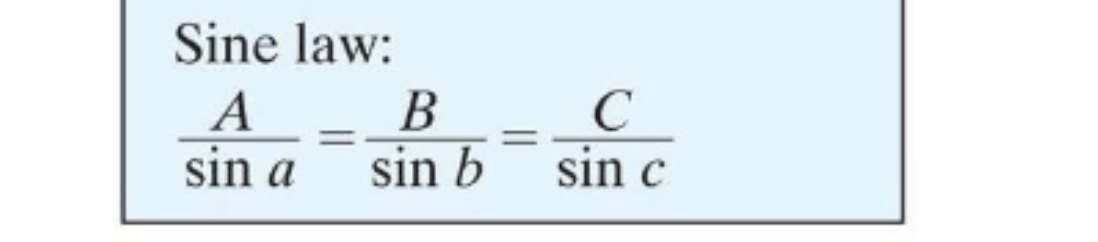
sin law
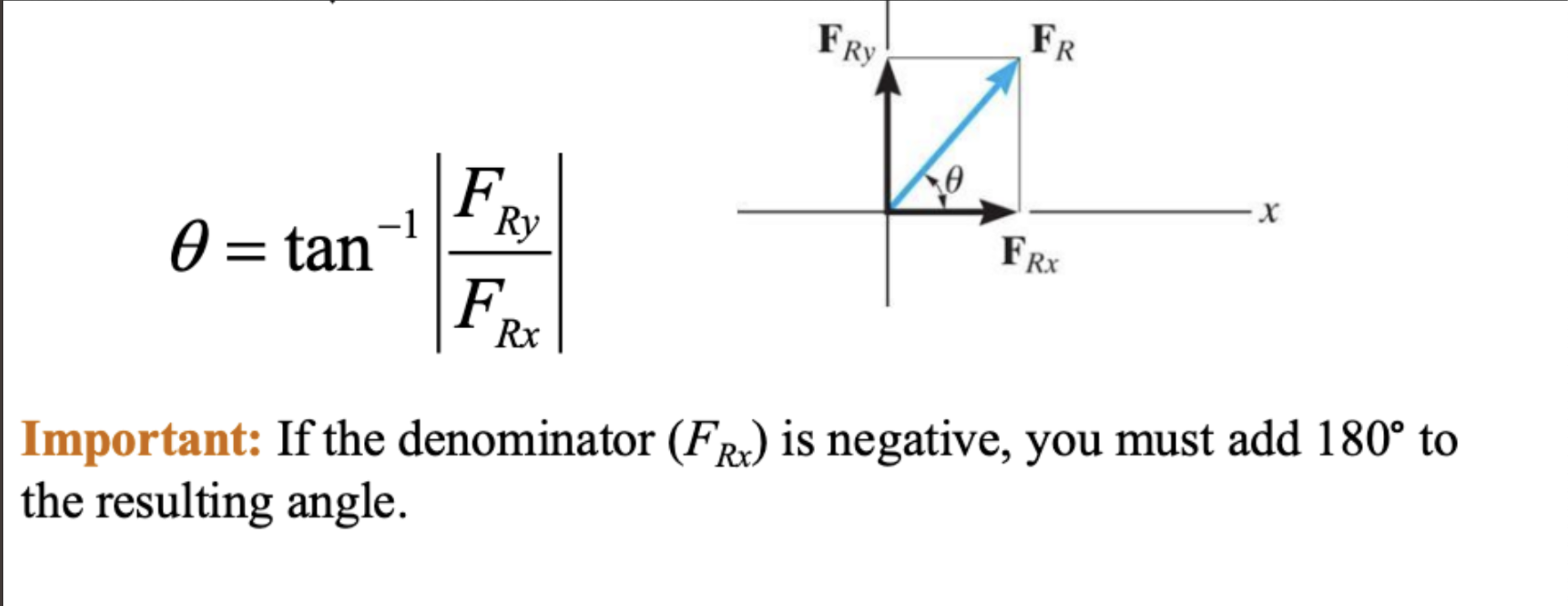
finding resultant angle of right triangle
if denom is neg add 180
for torque smallest force will always be force directly perpendicual to distance - since none gets wasted on parrelel compomnent
rectangular components
forces resolved along fx and fy
cartessian form
mag x direction vector ( unit lenght form)
dot product and cross product formula - angle between question!
coordinate direction angles
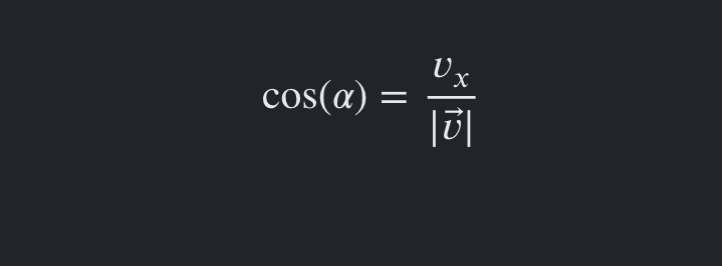
where alpha is angle between vector and pos x axis - can be taken for any direction ofc
moment of force about an axis
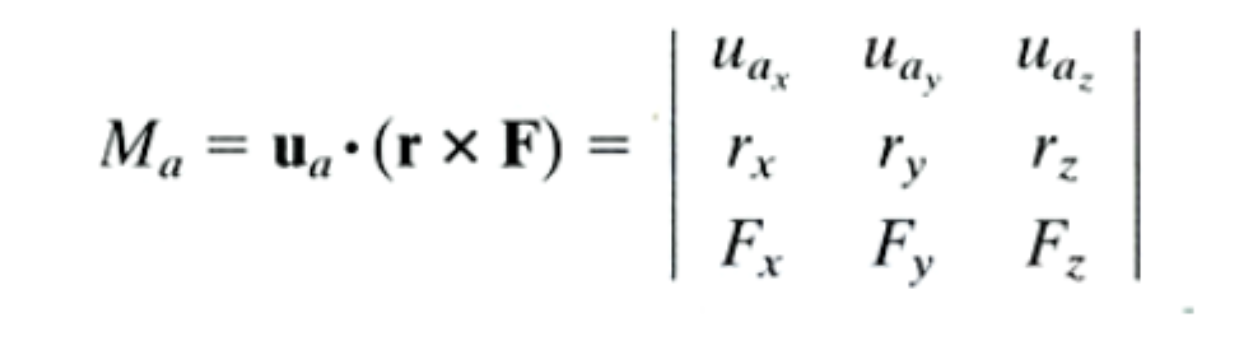
when solving for a moment in 2d
if ur not using the cross product u must use the RHR for direction silly girl!
counterclockiwse or out of the pg is positive
my rhr
fingers are r and palm is force
in wrenches when ur confused cause ur stuck with the mag of a moment
multiply that mag by the unit direction vector of the force! that gives u components then silly
couple moments generally not applied in journel bearings/pin/hinge if body is supported elsewhere
single thrust bearing prevents translation in direction of axis
fixed support number of unknowns ?
3 forces and 3 moments ( all 6)