Lab Exam 2 - Kingdom Protista II: Plant-like Protists, Fungi, Animals 1 & 2
 Call Kai
 Learn
Learn Practice Test
 Spaced Repetition
 Match
Match Flashcards
 Knowt Play
1/53

Earn XP
Description and Tags
Name | Mastery | Learn | Test | Matching | Spaced | Call with Kai |
|---|
No analytics yet
Send a link to your students to track their progress
54 Terms
What is a heterotroph?
What is an autotroph?
What is algae?
What kind of organisms are grouped into the Phylum Dinoflagellata?
What are unique characteristics of the dinoflagellates? Why are they important?
What kind of organisms are grouped in the Phylum Bacillariophta?
What is unique about the composition of the diatoms?
What organisms are grouped in the Phylum Euglenophyta?
How does Euglena move?
What organisms are classified in the Phylum Chrysophyta?
What are seaweeds?
What is a thallus? What are the three parts of a thallus?
What is alternation of generations?
What is the difference between isomorphic and heteromorphic alternation of generations?
What kind of organisms are classified in the Phylum Phaeophyta?
What are floats? What purpose do they serve in seaweeds?
What kind of organisms are classified in the Phylum Rhodophyta?
What organisms are classified in the Phylum Chlorophyta?
What kind of organism is Chlamydomonas?
What kind of organism is Volvox?
How is Volvox different from Chlamydomonas?
What is Ulva? How does it differ from Chlamydomonas and Volvox?
How is Spirogyra unique?
What is a coenocytic mass?
What are hyphae?
What does dikaryotic mean?
What kind of organisms are grouped in the Phylum Glomeromycota?
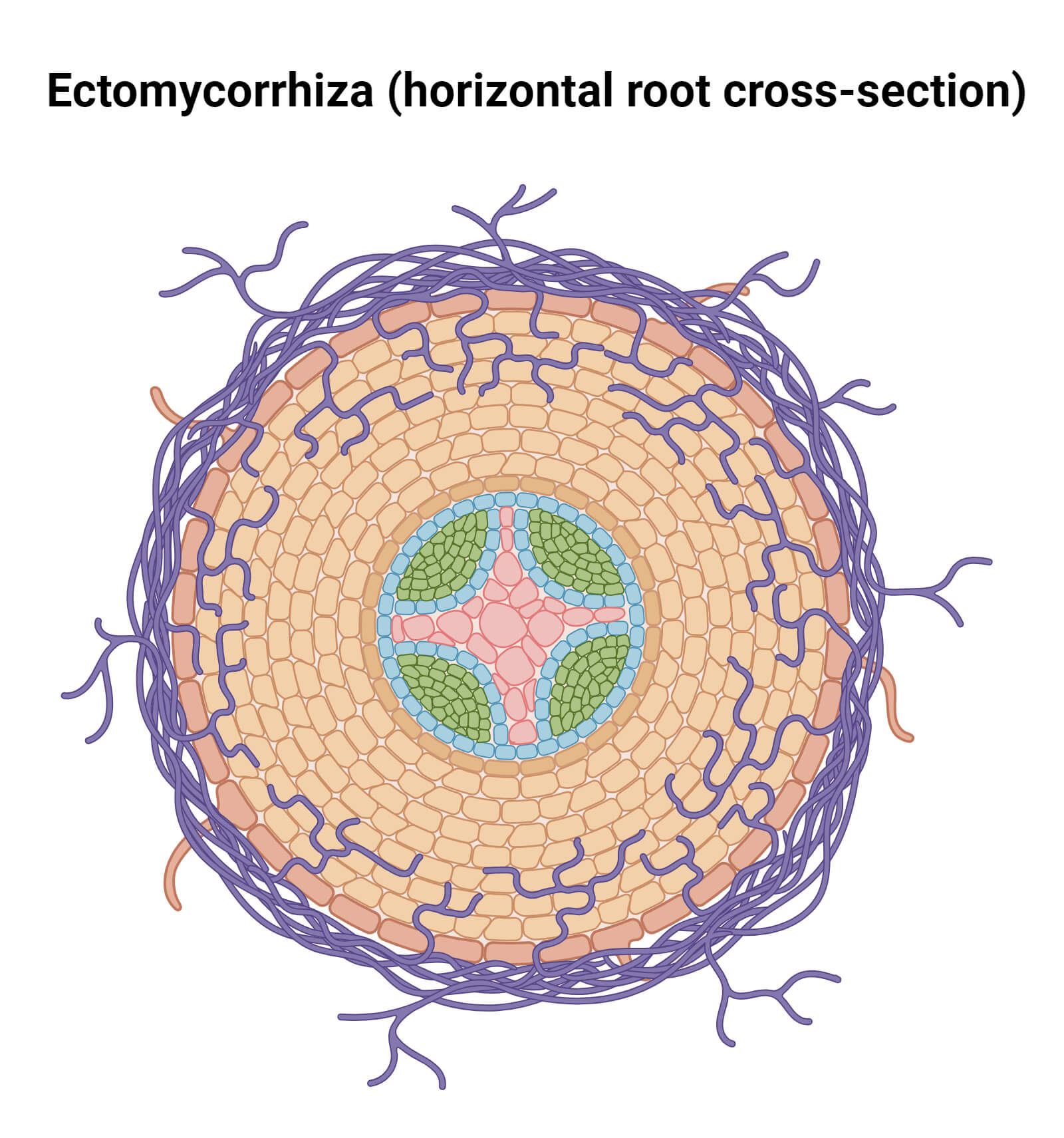
Ectomycorrhizae
fungal sheaths form around the plant root (mostly Basidiomycetes)
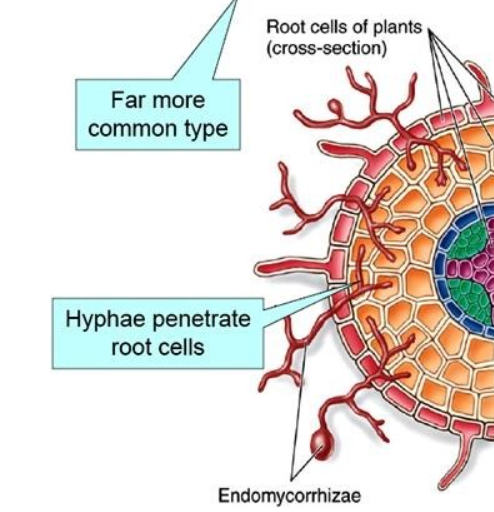
Endomycorrhizae
hyphae penetrate cells of host (plant) and form arbuscules - tufts of hyphae that increase surface area with plant root cells - sites of exchange
What kind of organisms are grouped in the Phylum Zygomycota?
Sporangium
Sporangiophore
Zygospore
Rhizoids
Hyphae
Out of sporangium, sporangiophore, zygospore, rhizoids, and hyphae are haploid, diploid, or dikaryotic?
Which of these structures, sporangium, sporangiophore, zygospore, rhizoids, and hyphae, undergo meiosis?