UPCAT CHEM - NUCLEAR CHEMISTRY
 Call Kai
 Learn
Learn Practice Test
 Spaced Repetition
 Match
Match Flashcards
 Knowt Play
1/8

There's no tags or description
Looks like no tags are added yet.
Name | Mastery | Learn | Test | Matching | Spaced | Call with Kai |
|---|
No analytics yet
Send a link to your students to track their progress
9 Terms
Nuclear Decay
A process where unstable (radioactive) atoms undergo a decrease in nuclear particles to transform into a more stable atom.
Nuclear Fission
The breaking apart of a large nucleus into two or more smaller elements when hit by a high-energy particle. Releases energy and is the basis of nuclear power plants.
Nuclear Fusion
The merging of smaller nuclei to form a bigger atom. Requires extreme energy to induce, produces more energy than fission, and is the basis of energy in the Sun.
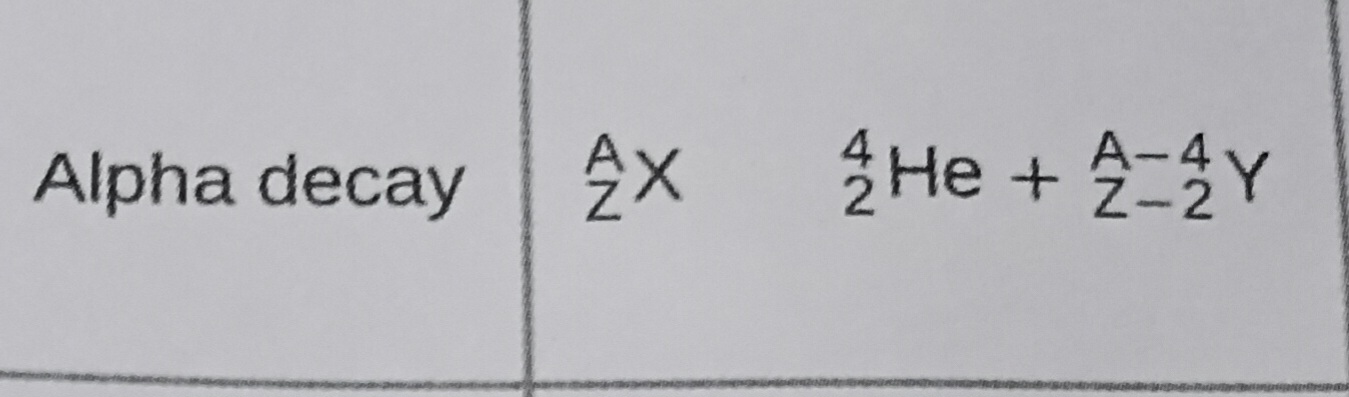
Alpha (α) Radiation / Decay
Emits an alpha particle (2 protons and 2 neutrons). Mass number decreases by 4, and atomic number decreases by 2.
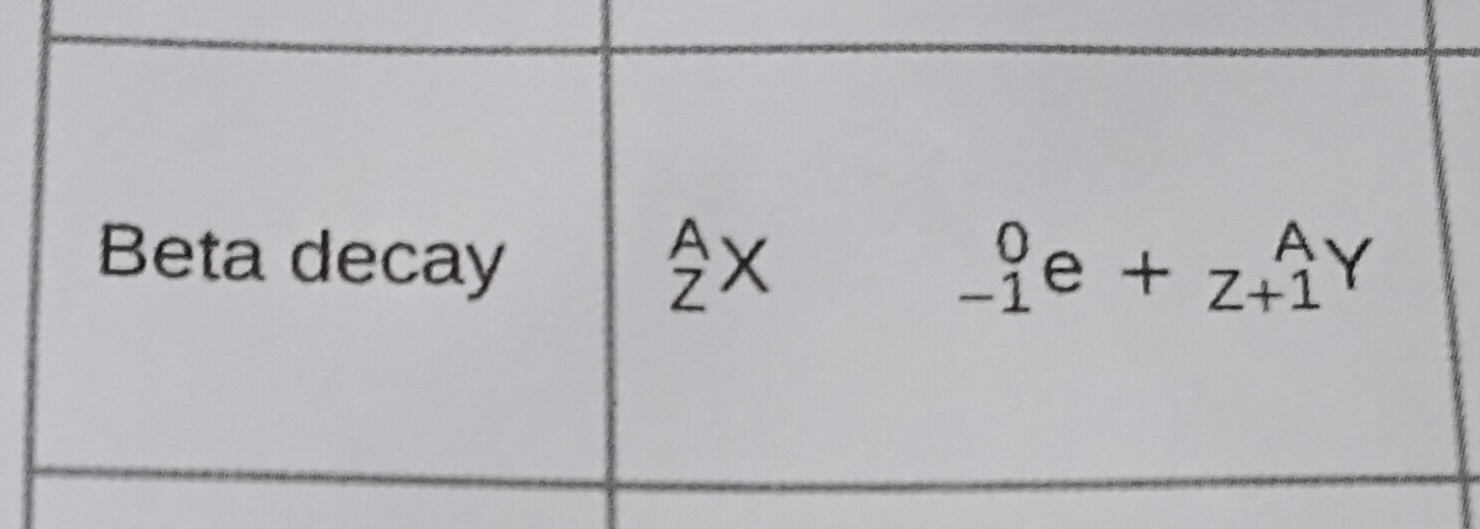
Beta (β-) Radiation / Decay
Emits an electron when a neutron converts into a proton. Mass number is unchanged, and atomic number increases by 1.
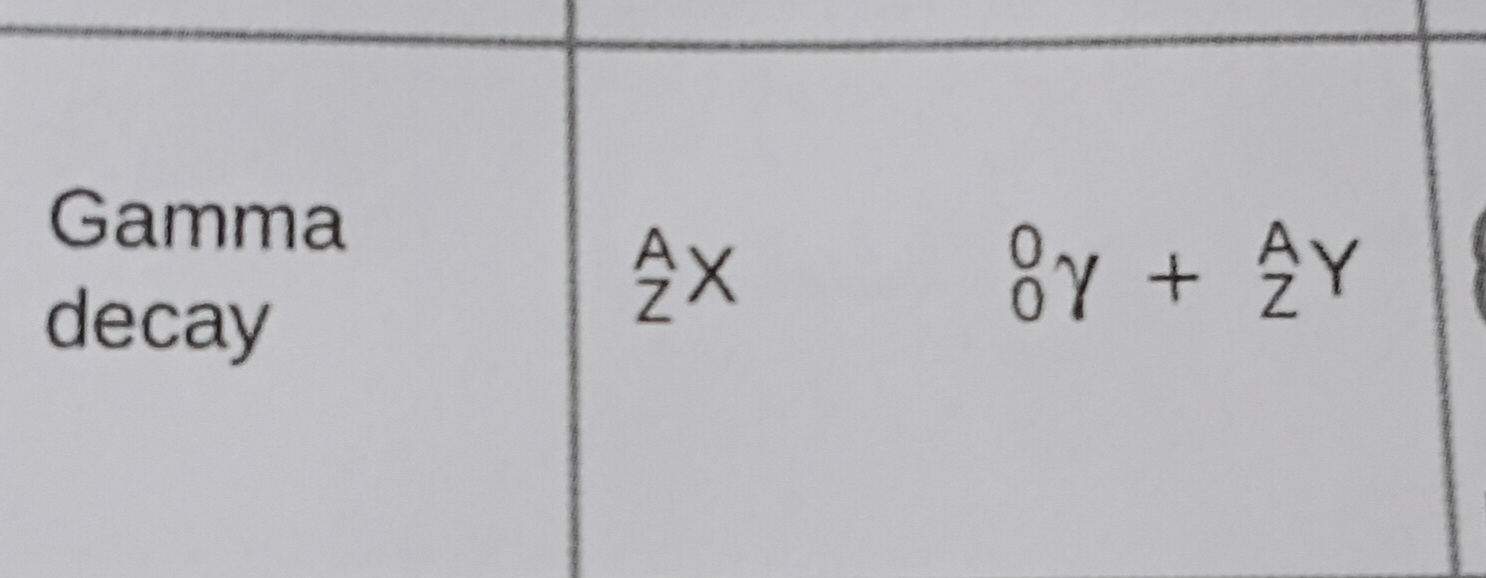
Gamma (γ) Radiation
Emits high-energy photons from an excited nuclear state. Both mass number and atomic number remain unchanged.
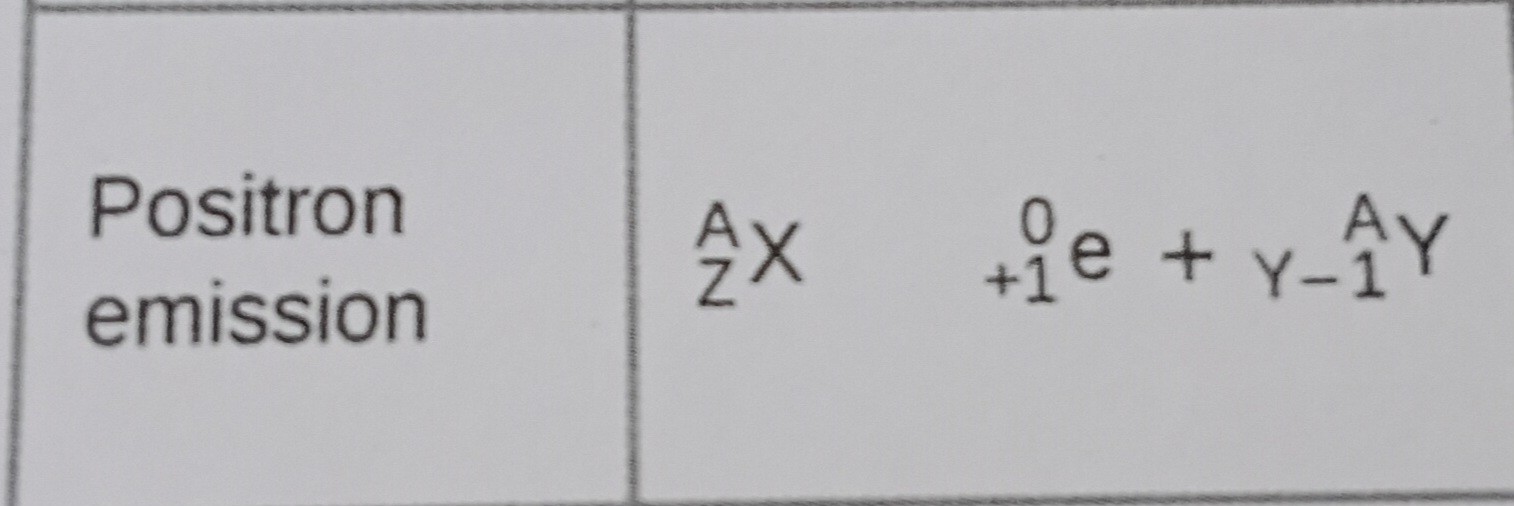
Positron Emission (β+ Decay)
Emits a massless positive particle when a proton converts into a neutron. Mass number is unchanged, and atomic number decreases by 1.
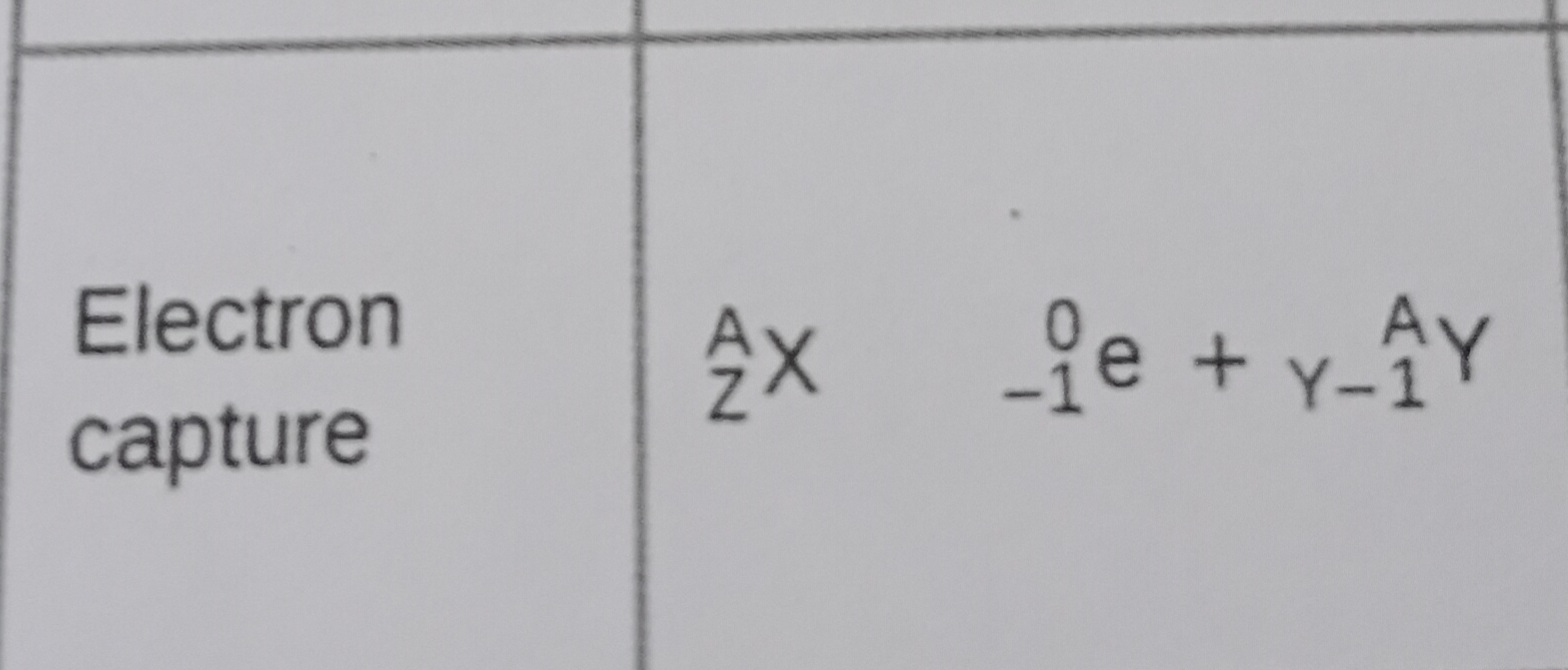
Electron Capture
An electron is absorbed by the nucleus, converting a proton into a neutron. Mass number is unchanged, and atomic number decreases by 1.
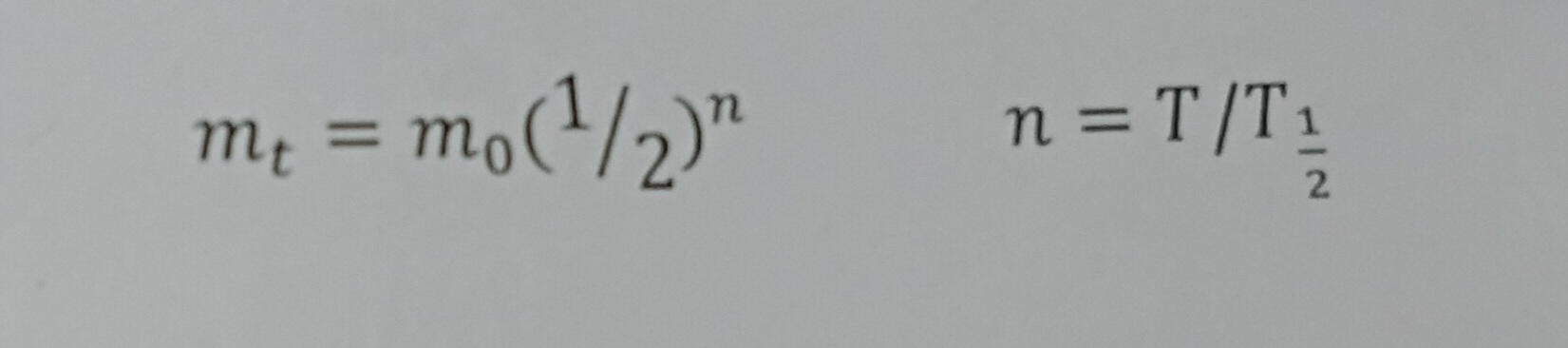
Half-Life (T1/2)
The amount of time it takes for a radioactive material to decay until exactly half of the original amount is left.