Cellular Processes
 Call Kai
 Learn
Learn Practice Test
 Spaced Repetition
 Match
Match Flashcards
 Knowt Play
1/16

There's no tags or description
Looks like no tags are added yet.
Name | Mastery | Learn | Test | Matching | Spaced | Call with Kai |
|---|
No analytics yet
Send a link to your students to track their progress
17 Terms
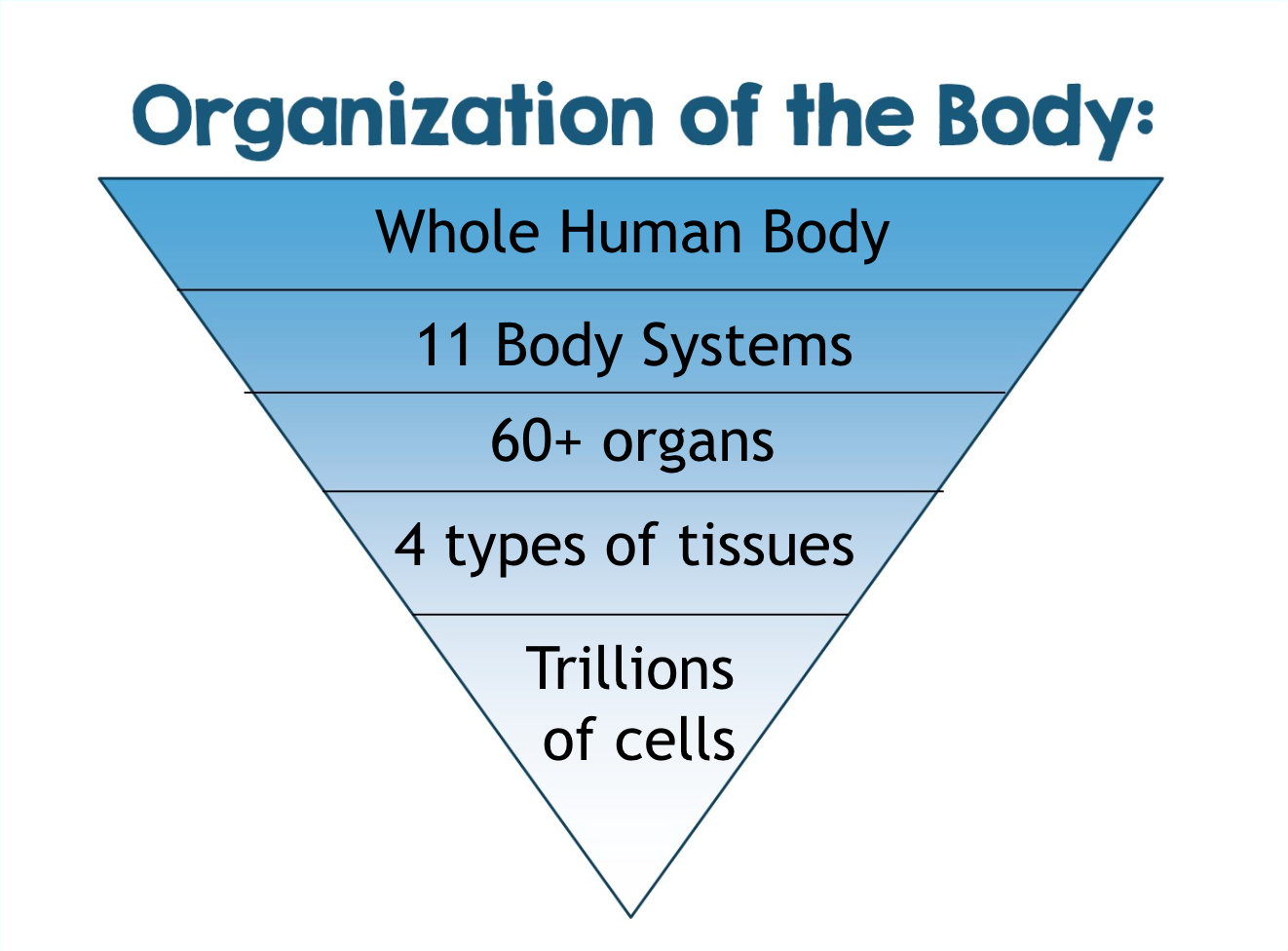
How is the body organized from highest to lowest level
Organism
11 Systems
60+ Organs
4 Types of tissues
Trillions of cells
What is Homeostasis
Helps the body maintain a stable internal environment; self-regulate to maintain stable
What are the 4 Tissue Types?
Muscular
Connective
Nervous
Epithelial
Cellular Organization
Nucleus
Endoplasmic Reticulum
Mitochondria
Golgi apparatus
Lysosomes
Centrioles
Vacuoles
Genetic Information and DNA Structure
Each human somatic cell contains 46 chromosomes
arranged in 23 pairs
They are contained within nucleus for protection
What are the characteristics of DNA?
Double-helix shaped
The sides of the ladders are made of sugar and phosphate molecules
Rungs are made of nitrogen bases (adenine, thymine, cytosine, & guanine)
Base pairing: A - T; G - C
Protein Synthesis and Gene Expression
Transcription: the gene’s DNA sequence is copied into mRNA in the nucleus
Translation: ribosomes read the mRNA code and assemble amino acids into a polypeptide chain (makes protein)
U (uracil) is made rather than a T
Cell Division
Cells divide for growth, development, tissue repair, and reproduction
The Cell Cycle
Consists of interphase, during which the cell grows and replicates DNA, and the mitotic phase during division occurs
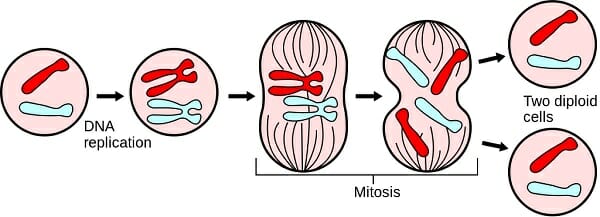
What happens during mitosis?
Period of division in somatic (body) Cells
Division of chromosomes and then cytoplasm
One parent cell makes two identical daughter cells
Maintaining chromosome number
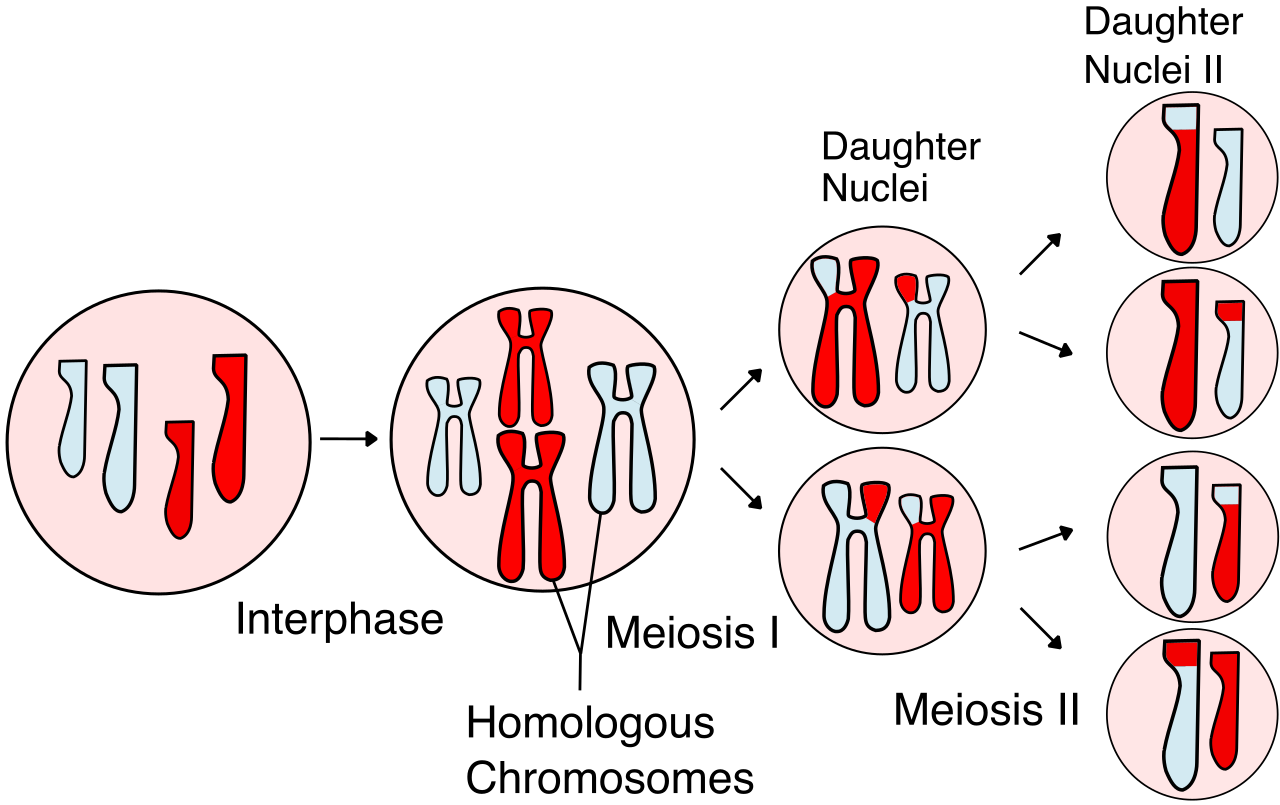
What happens during meiosis?
Period of division in sex cells (gametes)
One parent cell makes four different daughter cells
Produces half the chromosome number
Introduces genetic variation (critical for evolution & reproduction)
Cell Membrane Structure
Composed of a phospholipid bilayer with embedded proteins (Polar heads and non-polar tails)
What is passive transport?
Relies on concentration gradients and includes diffusion, facilitated diffusion, and osmosis
Molecules move from high to low concentration
Does NOT require energy
What is Osmosis
Movement of solvent molecules (water) across a semipermeable membrane
Molecules move from low to high concentration
Does NOT require energy
What is a facilitated diffusion
Larger molecules need to be assisted (facilitated) across the membrane by channels made of protein
What is active transport?
Requires energy to move substances against gradients
What is Vesicular transport?
allows bulk movement of materials
endocytosis: into cell
exocytosis: out of cell