Active 43
 Call Kai
 Learn
Learn Practice Test
 Spaced Repetition
 Match
Match Flashcards
 Knowt Play
1/152

There's no tags or description
Looks like no tags are added yet.
Name | Mastery | Learn | Test | Matching | Spaced | Call with Kai |
|---|
No analytics yet
Send a link to your students to track their progress
153 Terms
define innate immunity and acquired immunity.
innate = general fast defense
acquired =adaptive specific defense
innate immunity barrier defenses
skin
mucous membrane
secretions
innate immunity internal defenses
phagocytic cell
natural killer cell
antimicrobial cell
inflammatory response
adaptive immunity humoral response
antibodies defend against infection in body fluids
adaptive immunity cell mediated response
cytotoxic cells defend against infection in body cells
adaptive immunity is only found in
vertebrates
Which immune cells are found in interstitial fluid and consume bacteria and virus-infected cells?
phagocytic cells
-macrophage
-neutrophil
-dendritic cell
What role do natural killer cells play in the immune system?
kill infected or abnormal body cells (cancer or virus infected)
What is the function of lysozyme in tears and saliva?
break down cell walls of bacteria, causing bacteria to burst and die
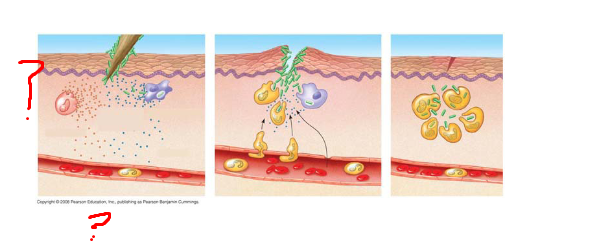
when cells are damaged, chemical signal is released instructing nearby blood vessels to open and let immune defenses in
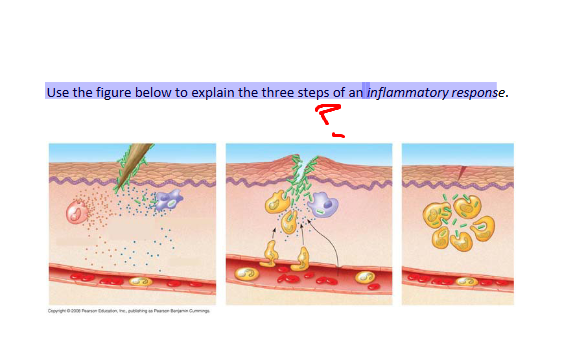
blood vessels dilate, becoming more permeable which leaks fluid and protein into tissue
allows clotting elements
antimicrobial proteins
immune cells
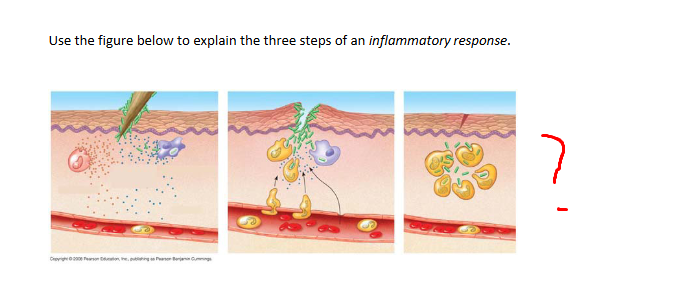
phagocytes clean the area
chemokines attract more immune cells from blood
neutrophils and macrophages move into infected tissue and perform phagocytosis
What chemical alarm signal is released immediately after tissue damage
histamine
What is the immediate effect of histamine release
vasodilation
increased permeability
What is the main function of the inflammatory response
protect damaged tissue by allowing immune cells and defensive chemicals to injury site
List the three innate defenses vertebrates share with invertebrates
barrier defense (skin)
phagocytic cells (eating)
antimicrobial proteins (kill or slow microbes)
two defenses unique to vertebrates
humoral response (antibodies fight pathogen in body fluid)
cell mediated response (cytotoxic t cells kill infected body cells)
neutrophil role in innate defense
fast response, leaves blood enters infected tissue, destroy bacteria
macrophage role in innate defense
eat pathogen dead cell debris + release chem signal that trigger inflammation
eosinophil role in innate defense
attack large parasites, especially worms
dendritic cell role in innate defense
engulf pathogens, then show pieces of them to lymphocytes for identifcation in adaptive immunity
What proteins are produced by virus-infected cells to protect neighboring cells?
interferons, warn nearby cells that a virus is present. Neighboring cells then activate defenses that make it harder for the virus to replicate and spread.
where do t cells develop
thymus
t cells main function
attack infected body cells and control immune response
where do b cells develop
bone marrow
b cells main function
create antibodies that fight pathogen in body fluids
What type of molecules are antibodies?
proteins
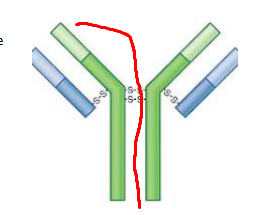
heavy chain, larger protein chain that forms y shaped structure
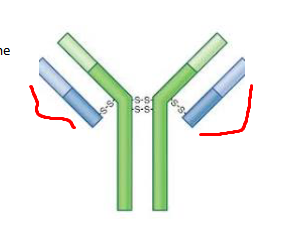
light chain, help form antigen binding site
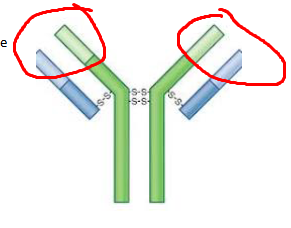
variable region, region of antibody that binds to a specific antigen
what is an antigen
molecule used for recognition of foreign or dangerous cells
List 3 type of molecule that can act like antigen?
protein
polysaccharide
lipids