ch. 22 - respiratory system
 Call Kai
 Learn
Learn Practice Test
 Spaced Repetition
 Match
Match Flashcards
 Knowt Play
1/31

There's no tags or description
Looks like no tags are added yet.
Name | Mastery | Learn | Test | Matching | Spaced | Call with Kai |
|---|
No analytics yet
Send a link to your students to track their progress
32 Terms
what consists within the upper respiratory tract?
nose
nasal cavity
pharynx
larynx
paranasal sinuses
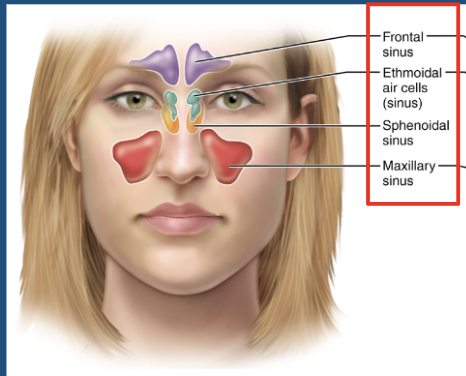
what are the paranasal sinuses ?
frontal
ethmoid
sphenoidal
maxillary
whats the function of the paranasal cavities?
help warm, filter and moisten incoming air through its mucus lined cavities
what are the organs in the lower respiratory tract?
trachea
bronchi
lungs
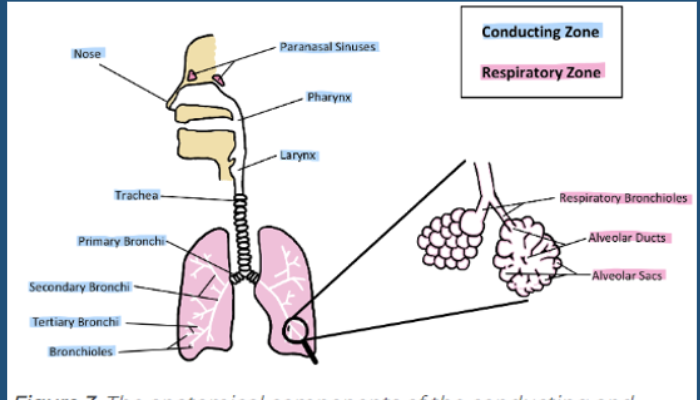
conducting zone
respiratory passageways that carry air to the sites of gas exchange, oxygen exchanged with carbon dioxide. filters, humidified, and warms incoming air
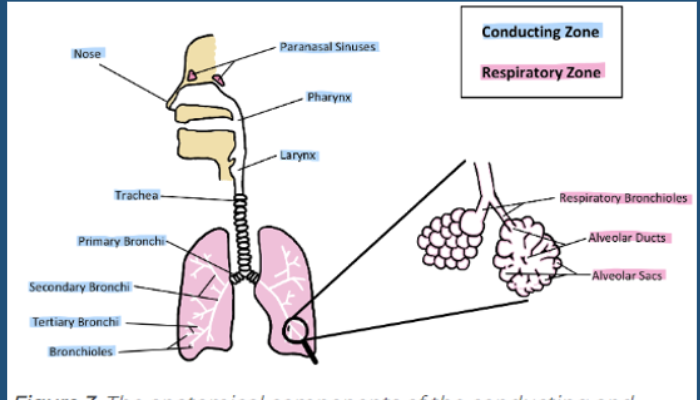
respiratory zone
actual site of gas exchange in the lungs. composed of the terminal respiratory passageways that contain the respiratory bronchioles and alveoli
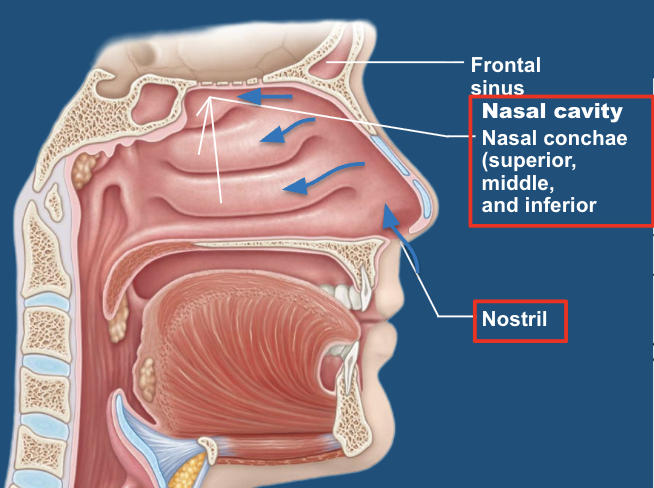
nasal cavity consists of the…
superior nasal conchae
middle nasal conchae
inferior nasal conchae
what forms the nasal cavity?
the roof by the ethmoid and sphenoid bone. the floor by the palate $
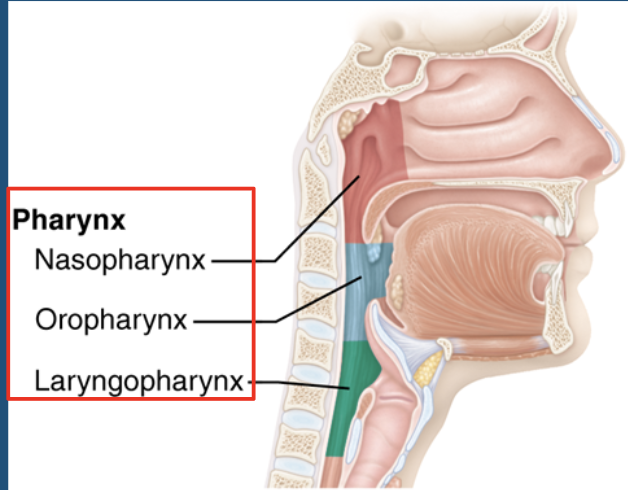
pharynx
a hollow muscular tube that connect the nasal cavity and mouth to the larynx and esophagus
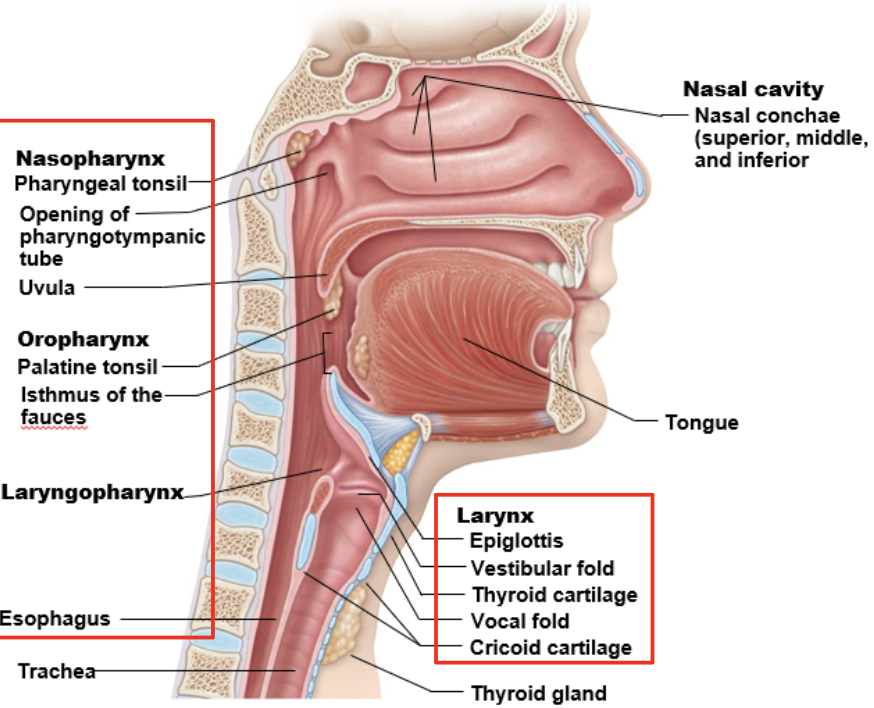
nasopharynx
posterior to nasal cavity serving only as air passageway. soft palate closes off the nasopharynx and prevents food from entering the nasal cavity
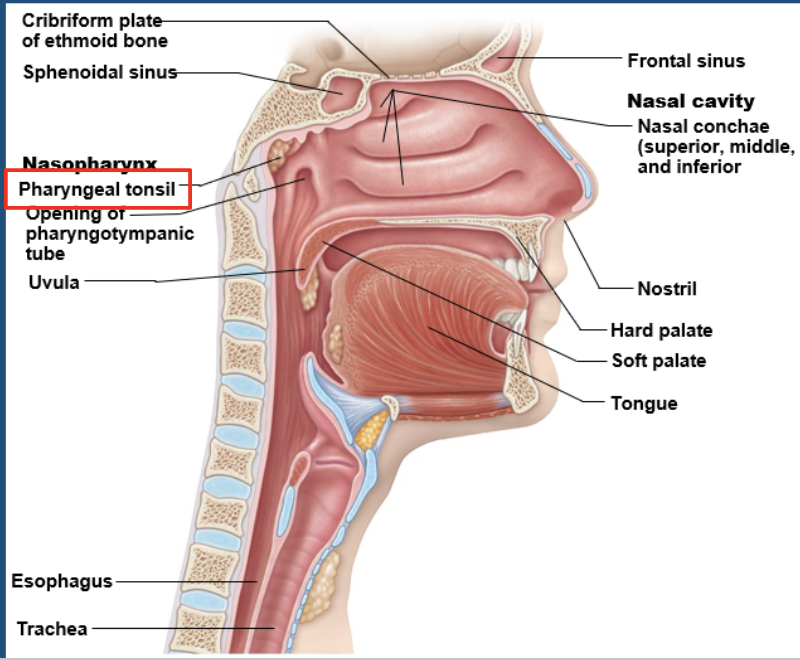
pharyngeal tonsil / adenoids
located in the posterior nasopharyngeal. lymphoid organ that destroys pathogens entering the nasopharynx via the air
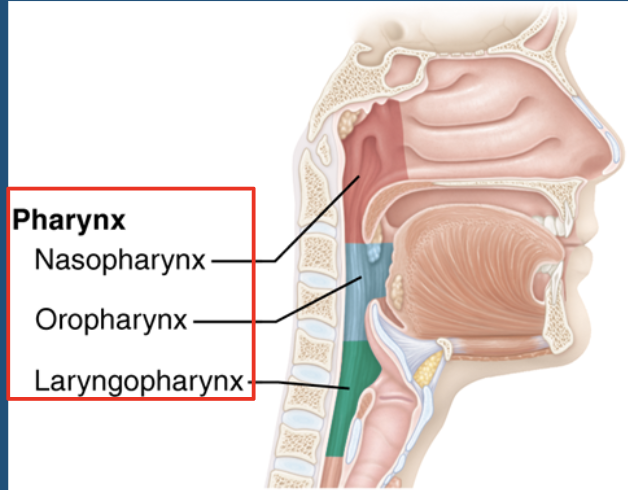
oropharynx
“back of the throat”. contains the epiglottis
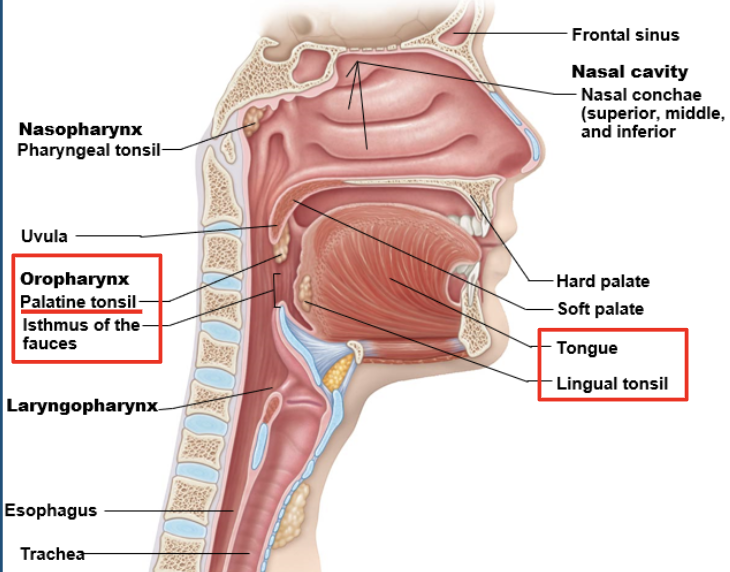
what two tonsils are embedded in the mucosa of the oropharynx?
paired palatine tonsils
single lingual tonsil
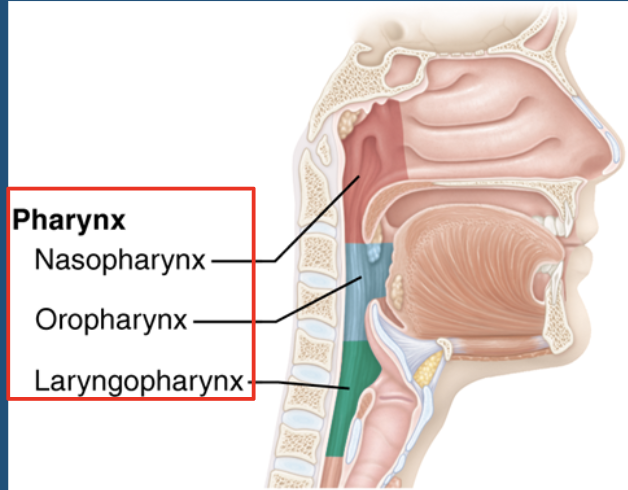
laryngopharynx
serves as a passageway for food and air and is lined with stratified squamous epithelium. ends at cricoid cartilage
esophagus
located in the laryngopharynx. conducts food and fluids to the stomach
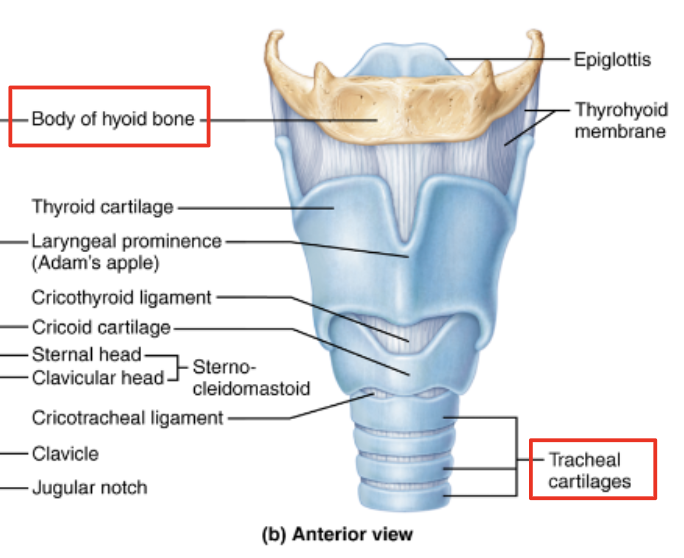
larynx
located in the laryngopharynx. conducts air to the respiratory tract and is known as the voice box
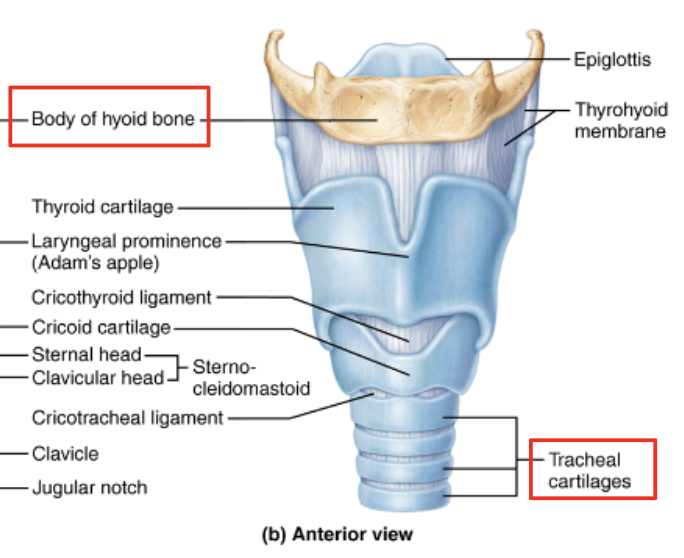
thyroid cartilage
composed of two cartilage plates that meet to form the laryngeal prominence, protecting vocal cords.
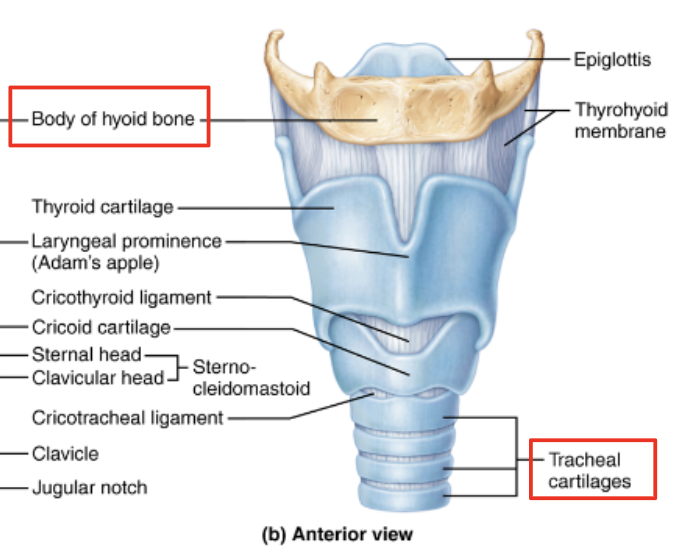
cricoid cartilage
composes the inferior most boundary of the larynx. encircles the trachea and where the larynopharynx ends
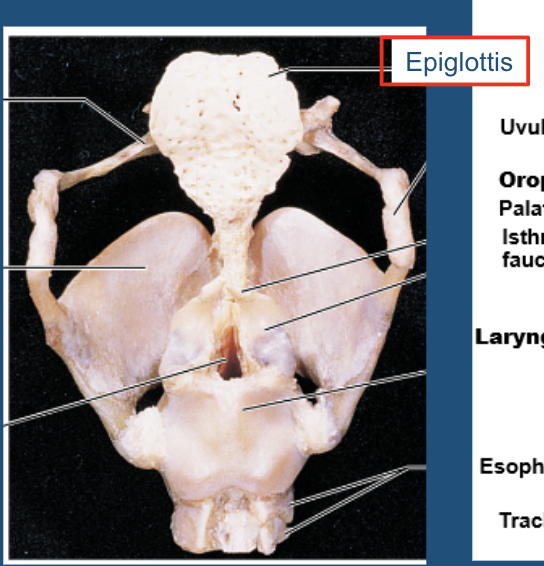
epiglottis
composed of elastic cartilage. almost entirely covered by mucosa. attaches anteriorly to the internal aspect of the of the thyroid cartilage
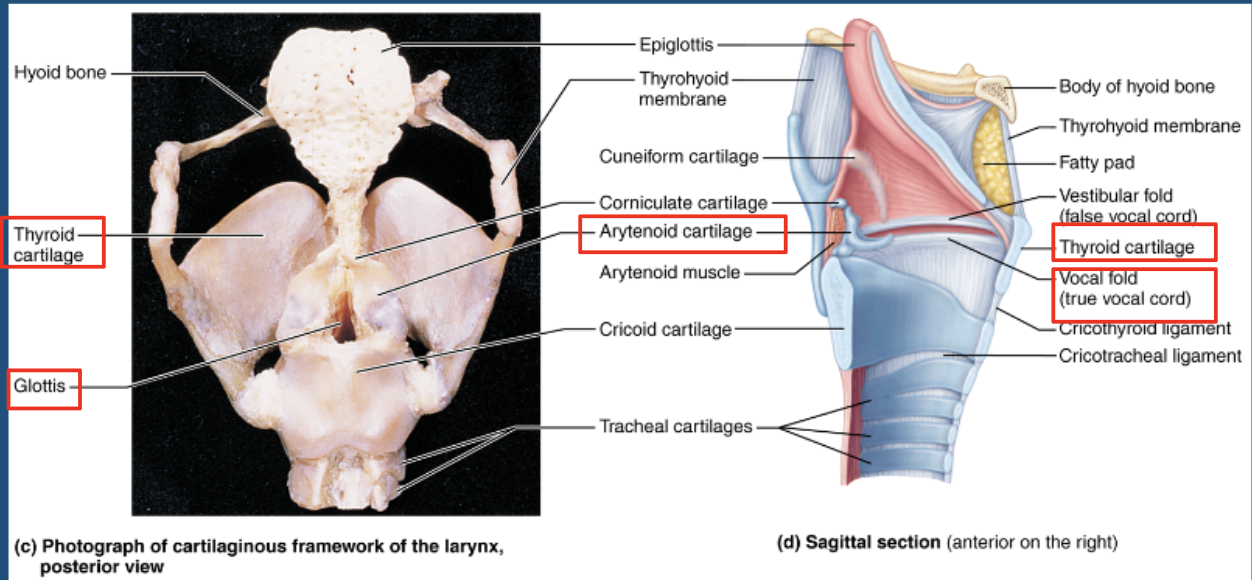
arytenoid cartilages
pyramid shaped cartilages resting on top of cricoid cartilage ring. serve as anchor point for vocal cords
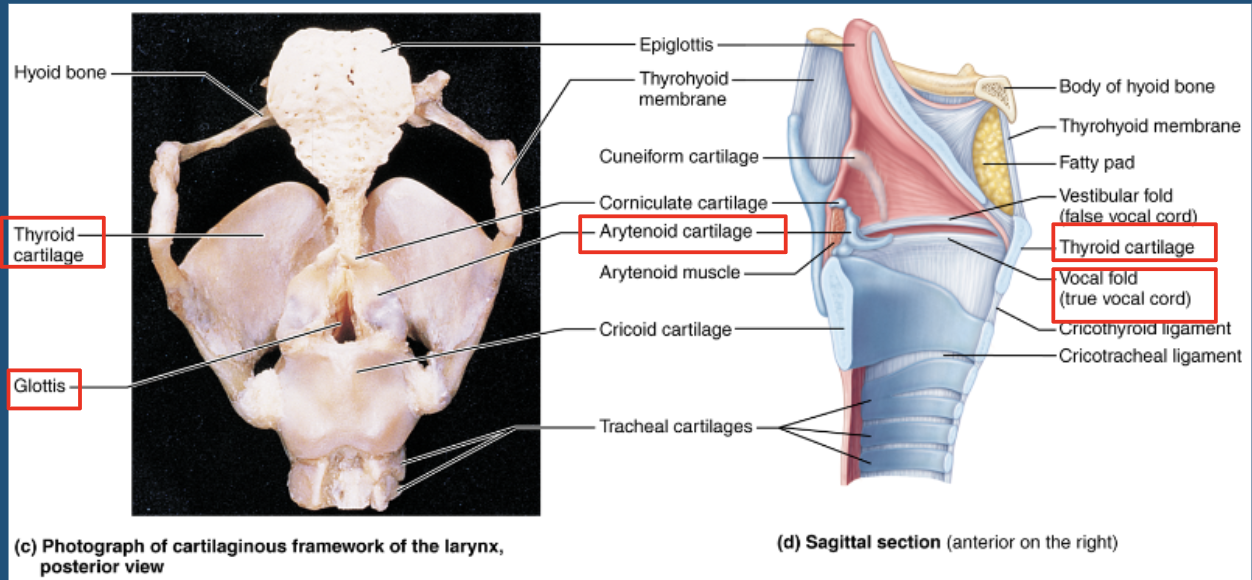
vestibular fold
horizontal mucosal folds that lie directly superior to the vocal folds.
bronchial tree
a system of respiratory passages that branches extensively within the lungs
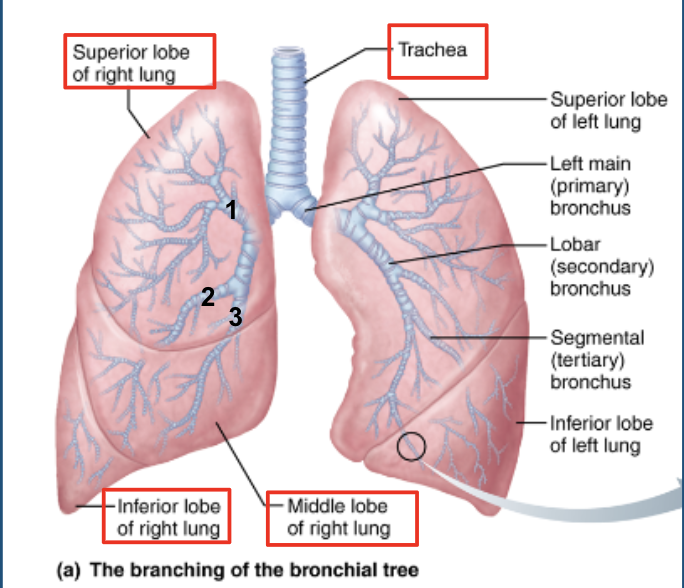
right main bronchus subdivides into…
superior lobe
middle lobe
inferior lobe
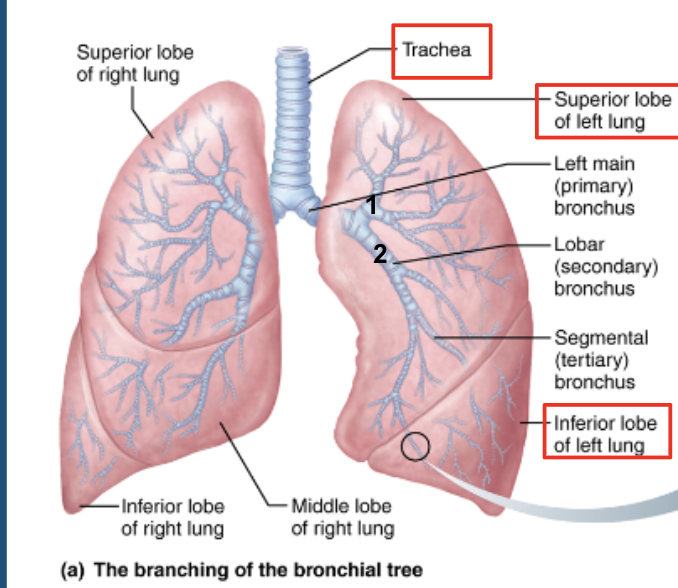
left main bronchus subdivides into ….
superior lobe
inferior lobe
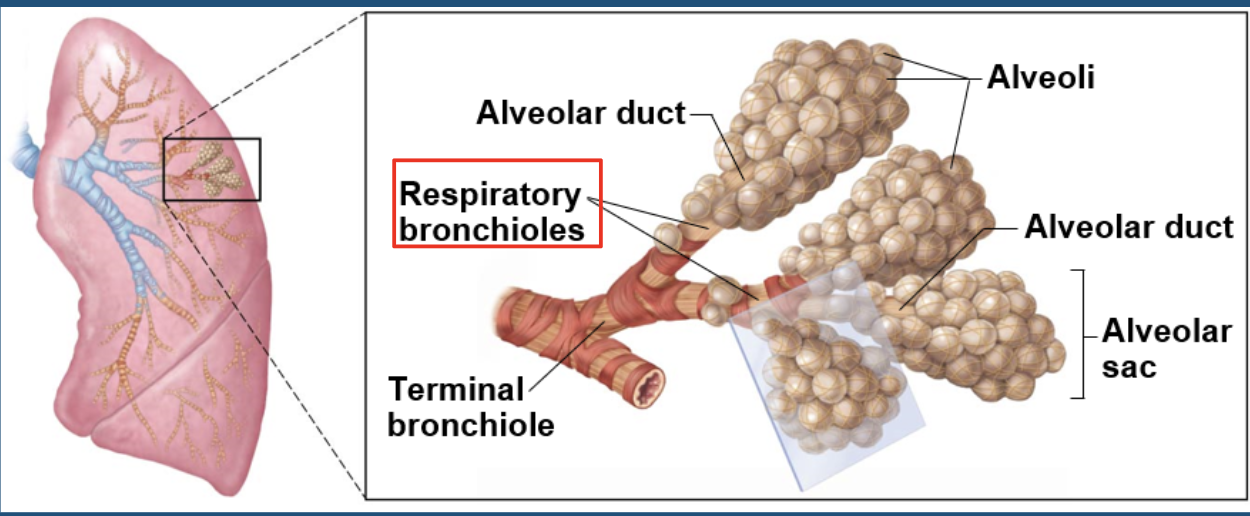
bronchioles
smallest tubes that branch off the bronchi. part of the end part of the respiratory tree in the lungs
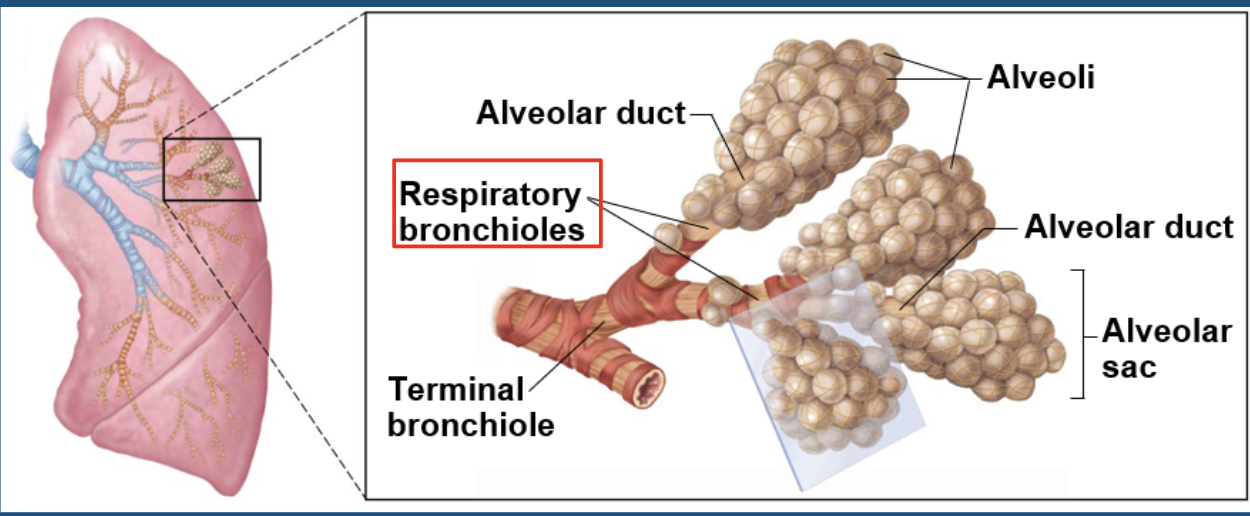
alveoli
tiny air sacs of the lungs which allow for rapid gas exchange.
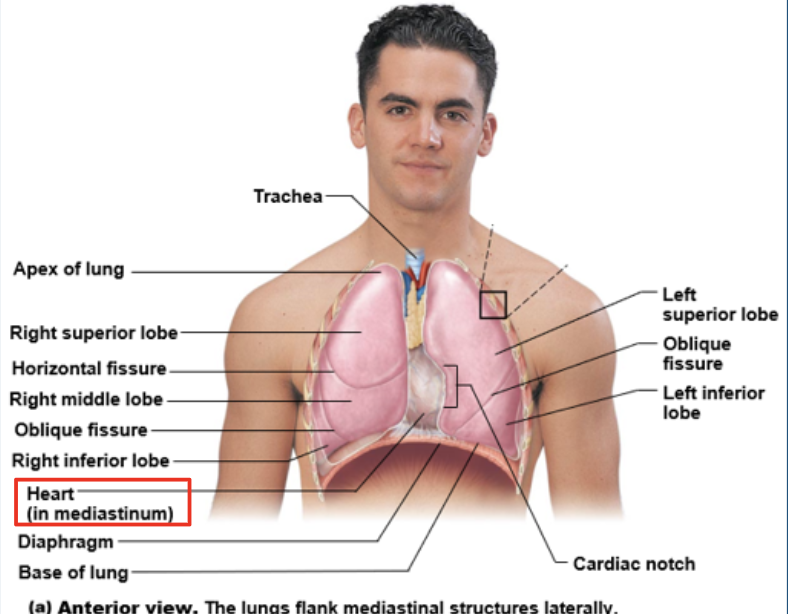
hilum
indentation on the medial surface of each lunch. through this indentation, blood vessels, bronchi, lymphatic vessels and nerves enter and exit the lunch
The main function of pulmonary surfactant is to:
Reduce surface tension in the alveoli
Most carbon dioxide in the blood is transported:
As bicarbonate ions
Which brain region contains the dorsal and ventral respiratory groups that regulate breathing?
Medulla oblongata
Which of the following structures is directly involved in gas exchange?
Alveoli
What happens to intrapulmonary (intra-alveolar) pressure during inspiration?
It becomes lower than atmospheric pressure