Busman Unit 3 AOS 2
 Call Kai
 Learn
Learn Practice Test
 Spaced Repetition
 Match
Match Flashcards
 Knowt Play
1/108

There's no tags or description
Looks like no tags are added yet.
Name | Mastery | Learn | Test | Matching | Spaced | Call with Kai |
|---|
No analytics yet
Send a link to your students to track their progress
109 Terms
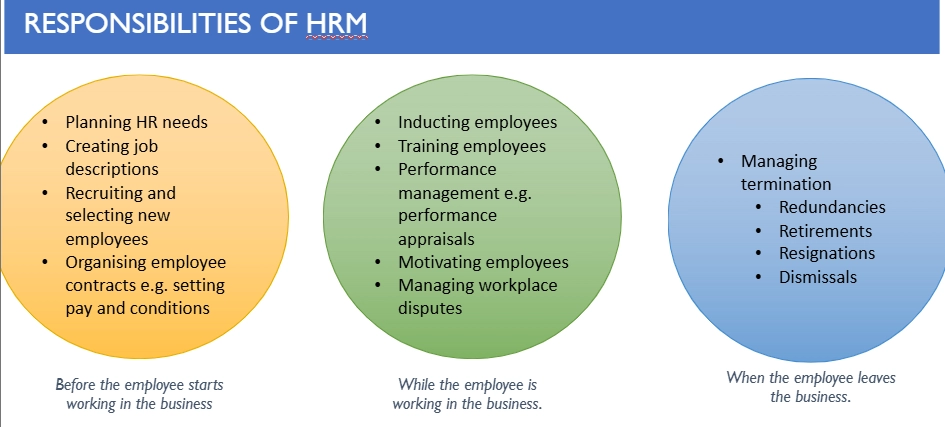
human resource management (HRM)
the area of a business that is responsible for managing the relationship between the employees and the business in order to achieve objectives of both, aims to have the best employees working to the best of their ability so that the business can achieve objectives, ensures that the best staff is hired, are motivated and have the skills to perform their job to a high standard
responsibilities of HRM
connection to business objectives
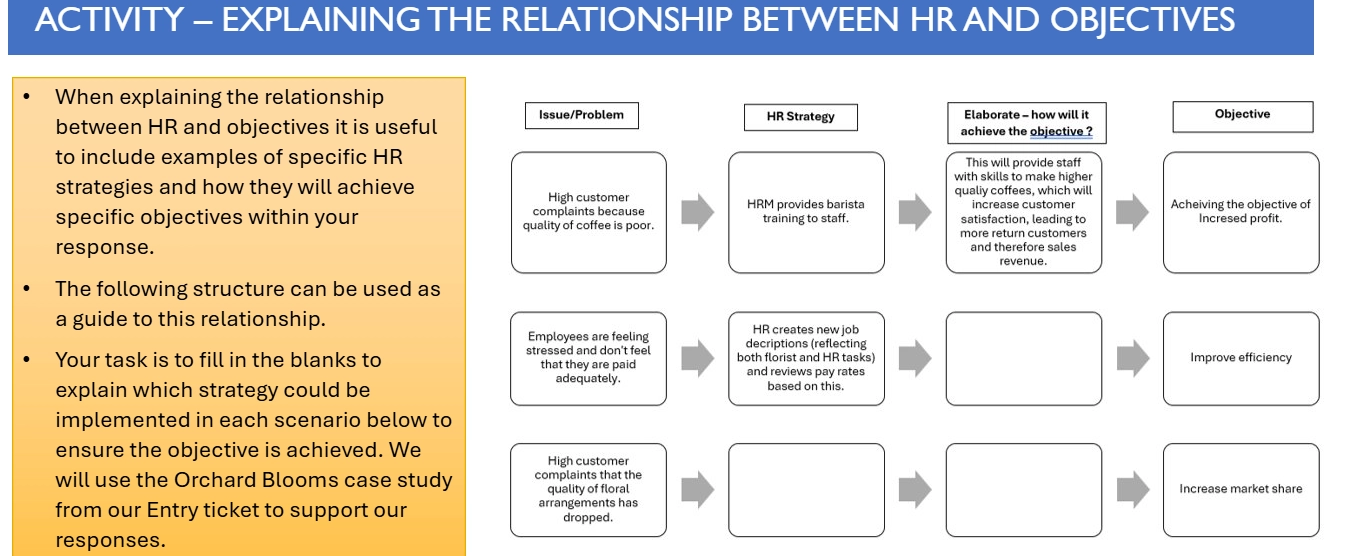
the role of HR is to support the business to achieve their business objectives through effective people management
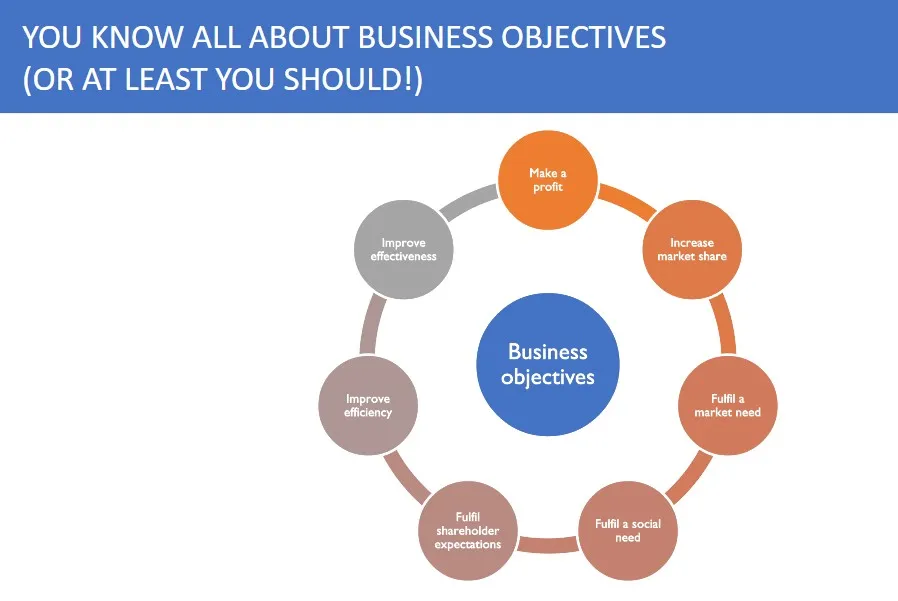
Business objectives: make a profit, increase market share, fulfil a market need, fulfil a social need, meet shareholder expectations, improve efficiency, improve effectiveness
the connection between HRM and business objectives
employees are the human resources used to achieve business objectives, HRM implement strategies (e.g. recruitment, motivation, training) to ensure the right people are in the right jobs with the right skills to ensure objectives are achieved
staff absenteeism
the rate of staff absenteeism refers to the number of employees not attending work when scheduled to be
motivation
the drive a person has to work towards the achievement of business or personal goals/objectives
different motivators
each employee will be motivated by different things, it is the manager’s role to provide the right business climate to enhance their employees’ motivation, being familiar with key motivation theories can provide insight on how to achieve this
theories of motivation
Maslow’s hierarchy of needs, Locke and Latham’s goal setting theory, Lawrence and Nohria’s four drive theory
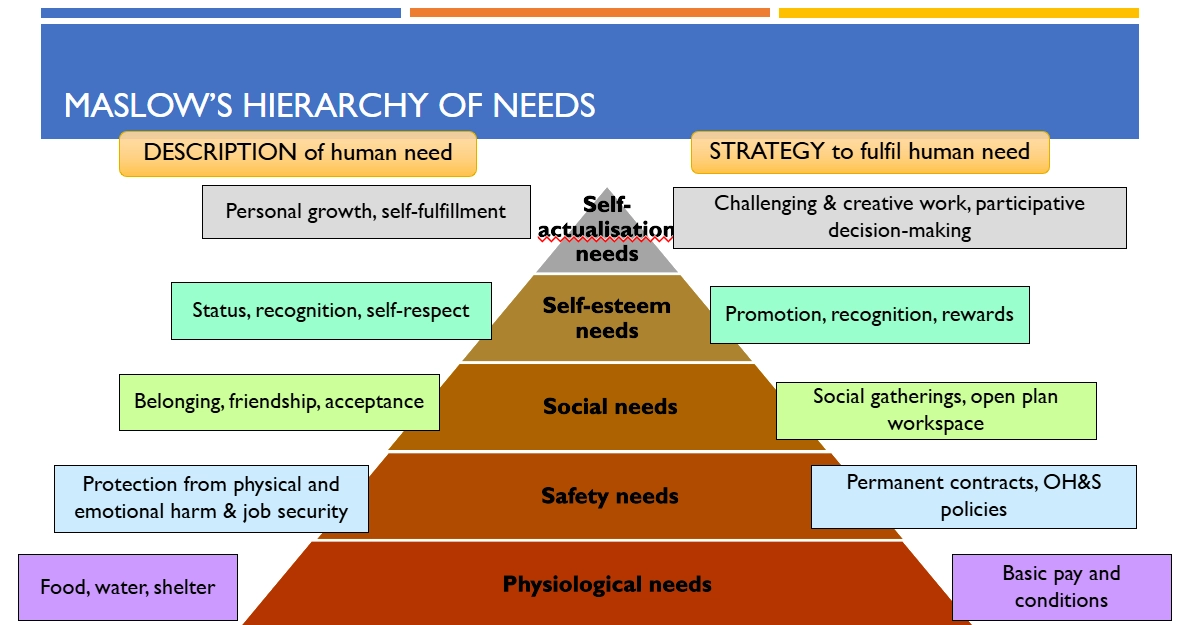
Maslow’s hierarchy of needs
suggests that employees have 5 levels of needs: physiological, safety, social, self-esteem, self-actualisation
lower needs must be satisfied before an individual can move to the next level of needs, once a need is met, it no longer motivates and the employee moves up the hierarchy
Maslow’s hierarchy of needs advantages
tailored to each employees individual needs by identifying their level and matching strategies to specifically motivate them, social and esteem needs emphasise good relationships which improves corporate culture, can motivate employees by physiological needs which can be easily provided by the business
Maslow’s hierarchy of needs disadvantages
needs of all employees aren’t uniform e.g. some satisfied only with physiological and job security so will not be motivated by higher order needs, time consuming and difficult to work out where each employee is on the hierarchy so its difficult to assess when a level has been satisfied
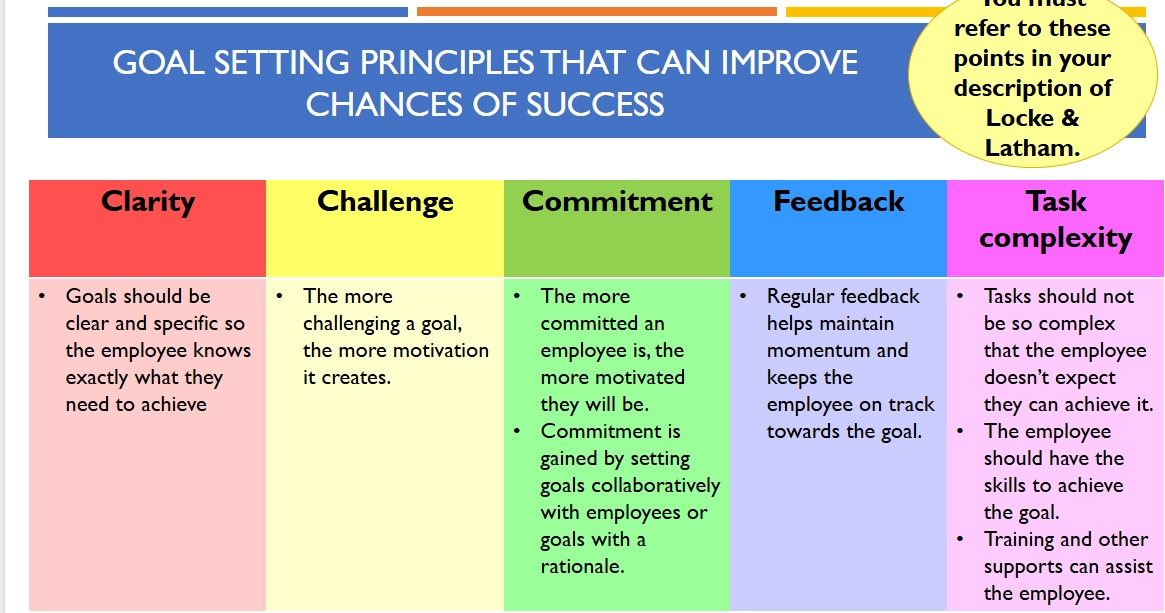
Locke and Latham’s goal setting theory
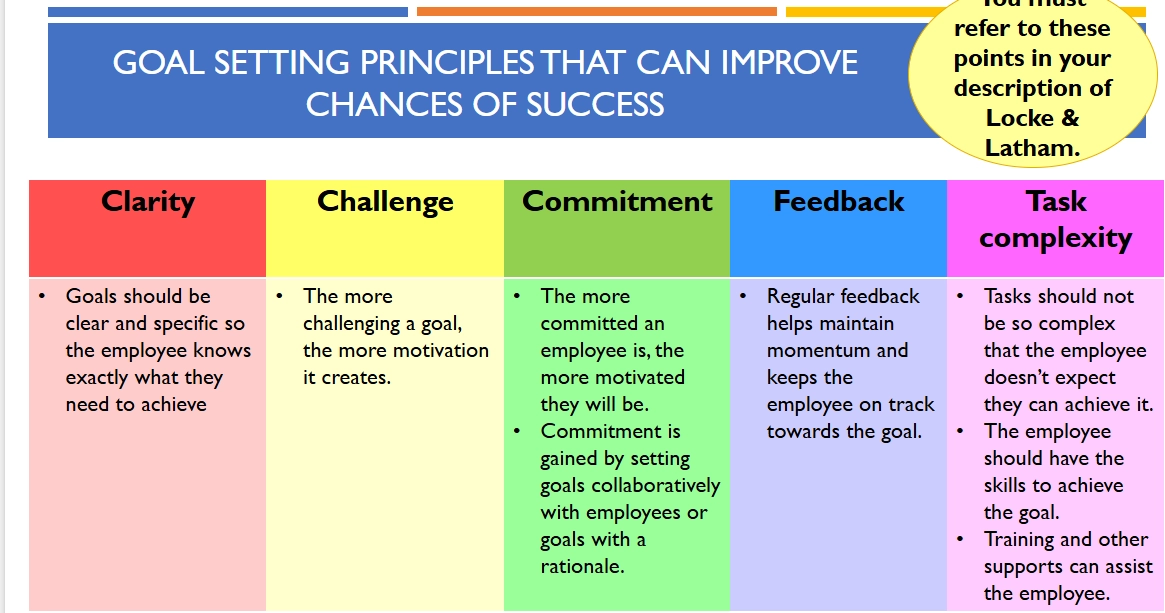
focuses on the process of setting and attaining goals, states that the setting of goals leads to increased effort, task focus and persistence which leads to improved organisational performance
Locke and Latham’s goal setting theory advantages
goals align with organisational objectives meaning staff are more effective, feedback improves relationships between managers and employees
Locke and Latham’s goal setting theory disadvantages
time consuming to periodically meet with employees to set goals and provide feedback, may be difficult to align personal goals with organisational goals
Lawrence and Nohria’s four drive theory
theory has identified 4 basic motivational drives: drive to acquire, bond, learn and defend
the level to which these needs are satisfied directly affects our emotions and behaviour, the 4 drives act independently of each other but are present in each individual
drive to acquire
desire to own basic and complex needs
basic: necessities for survival (clothing, money, housing)
complex: status, accomplishment and power (promotion, private office)
drive to bond
desire to seek strong working relationships within the business, employees are motivated when they feel proud to belong to a business
drive to learn
desire to explore and develop understanding and learn new skills, functions well in group contexts, this is why learning and work engage and energise employees
drive to defend
must be stimulated by a threat for it to become active, threats to individuals, group, and businesses can trigger the drive to defend, links to peoples fear and resistance to change
strategies for drive to acquire
praise, recognition, interesting assignments, competitive pay, link pay to performance in business
strategies for drive to bond
collaboration, encourage teamwork, culture of openness, friendship and pride, managers are people-oriented
strategies for drive to learn
set meaningful, interesting, challenging work that encourages to grow, learn and explore, ensure employees work within their area of responsibility, set variety of tasks
strategies for drive to defend
businesses want to avoid employees feeling threatened so they can adopt the following strategies:
create fair and trustworthy processes
use participative management style to overcome fear of change
create welcoming and non-intimidating work environment
provides a safe workplace or job security
four drive theory advantages
Drive to bond emphasises teamwork and good relationships, improving corporate culture
Drive to learn offers opportunities for training and development, increasing morale
Drive to learn: employees are motivated to perform if given challenging jobs, resulting in lower staff absenteeism and staff turnover
Drive to defend: if properly focused on, it can be a source of motivation and energy
four drive theory disadvantages
Teamwork and culture of openness in drive to bond, can result in conflict due to different ideas
Desire to learn could be expensive because it may involve training of employees
Purpose isn’t addressed in this theory. Purpose has been shown to be a key motivator in research — including that done by Locke and Latham
The relative strength of each drive varies in individuals and varies over time in an individual. It’s difficult for the manager to know the strength of each drive in an employee and therefore how to motivate an employee
motivation strategies
It is important the managers ensure that the knowledge gained from various motivation theories are turned into practical strategies, strategies can lead to a more motivated workforce:
performance related pay
career advancement
investment in training
support
sanction
performance-related pay
a financial award to employees whose work has reached or exceeded a set standard, a performance appraisal is conducted to determine if employees will receive performance related pay, primarily a short-term motivator as it can have a positive impact on short-term motivation as the employee is excited about the prospect of earning more money, however in the long term it can create a competitive culture where the employees work against each other
can come in the form of:
pay increase: ongoing pay rate
bonus: one off payment
commissions: receiving a percentage of each sale made
share plans: receiving shares of the business
profit sharing: receive direct share of the profits
performance-related pay advantages
targets are normally clear so employees know what they need to achieve, can improve productivity levels as staff work hard knowing their efforts will be rewarded financially
performance-related pay disadvantages
generates a competitive culture where team members don’t work together, can cause conflict amongst employees if they feel the assessment is unfair, difficult to measure productivity levels in some types of jobs, businesses may not be able to afford extra cost
career advancement
promoting employees to positions that include more responsibility and more pay, primarily a long term motivator as the employee can be motivated about the prospect of taking on greater responsibility in the future, some employees may see the type of position they would like to hold in the next 3-5 years which provides the motivation to work hard as they look to be promoted
People are motivated for job promotions through:
Remuneration: the amount a person is paid for performing work tasks; can be a salary (annual figure paid fortnightly) or wage (worked out on hourly basis)
Job experience: the employee will be motivated by a more challenging experience
Ambition and status: when an employee seeks independence, authority, management skills and competencies
Strategies to support career advancement
Job enlargement: making a job bigger or more challenging
Job enrichment: increasing the job’s depth of content and degree of control the job holder has
Job rotation: workers are moved between different jobs to increase variety of work e.g. Google
career advancement advantages
helps the business to retain its talented employees, employees may work hard for several years in anticipation of eventually getting a promotion (long term motivator), helps build a positive culture where current employees are valued
career advancement disadvantages
may demotivate employees overlooked for promotion, can cause competition and rivalry amongst staff, there may be lack of outside perspective if only promoting from within
investment in training
the process of enhancing employee’s knowledge and skills to help them perform better in their job, training can be either a short term or long term motivator, in the short term the employee is able to perform their job to a higher level as they can implement the newly gained skills and knowledge, however if the business invests in ongoing training it can motivate the employees in the long term as they see the business is investing in them
investment in training advantages
indicates the business values its employees and the contribution they make to the business, creates a sense of loyalty and attachment to the business, better trained employees feel more confident in abilities and perform roles to a higher standard
investment in training disadvantages
expensive, if up-skilled employees arent given opportunities to use their skills it leads to disappointment, well-trained employees might resign and take their new skills to another business
support
designed to show care, encouragement and acknowledgement for employee’s work, employees want to feel supported, stimulated and recognised for their work performance and have job security
This can have an impact on the short term and long term motivation. In the short term, the employee can be motivated as they know they are being supported. A mento or counsellor can help them through some difficult times
But also knowing that the support is there if needed and the developing close relationships, can have a positive impact on long term motivation
Support strategies:
Employee assistance program: confidential counselling services
Mentoring: an experienced employee acts as a coach for new employees
General management support: frequent and positive communication to employees
support advantages
can improve mental wellbeing of employees thereby reducing absenteeism, can reduce staff turnover as employees know they are supported, it can help build relationships within the business
support disadvantages
needs a positive culture to work effectively, relies on manager exercising good communication and interpersonal skills
sanction
penalties for poor performance or disobeying a policy, some employees respond well to sanctions while other don’t
Sanctions are normally only a short term motivator. This strategy can motivate employees in the short term as they fear the possibility of a sanction or they begin working well after being sanctioned
If this is the only motivation strategy used, it may seriously impact relationships and create a negative culture in the long term
Examples:
Reprimand
Disciplinary counselling
Dismissal
Loss of benefits
Written warnings
sanction advantages
can stop undesirable behaviours, quick to implement
sanction disadvantages
can create a fearful culture, can cause resentment from employees and negatively impact relationships, can cause disputes and union involvement
training
the process of improving an employees skills and knowledge so that they are able to perform their job more efficiently and effectively, a training needs analysis and diagnoses the current shortcomings and future challenges that need to be overcome through use of a training program
types of analysis
organisational analysis, task analysis, personal analysis
organisational analysis
what training does everyone need to achieve strategic objectives?
task analysis
what specific skills are required in order for a specific job to be performed?
personal analysis
what training does an individual employee need to perform their role?
types of training
on the job, off the job
on the job training
training that occurs at the workplace and often involves completing a task
E.g. coaching, mentoring, role modelling (experienced staff member demonstrates and teaches a skill), apprenticeship, job rotation
on the job training advantages
employee is being trained on the specific tools or equipment they will be using in their role, employees practise under the supervision of more experienced staff acting as their coach or mentor, training is tailored to meet the specific needs of the business, cost effective way to train as they arent paying for outside course provider
on the job training disadvantages
quality of trainer may vary if mentor/coach isnt trained in how to act in this role, training may not be adequately planned and may be too disjointed in its delivery making it difficult for employee to grasp some of the concepts, trainer may pass on bad habits to trainee, trainer may have to leave their own duties to carry out the training
off the job training
training that usually occurs away from the workplace in a more formal environment
E.g. lectures, conferences, online training, online simulations, role plays
off the job training advantages
learning from specialists and experts, less opportunity to be interrupted by workplace issues therefore able to focus on the course/training program, provides opportunity for networking and information, employee may receive a formal qualification
off the job training disadvantages
more expensive if paying course fees, transport and possibly accommodation, lost working time and potential output from employees while on training course, employees with these new skills/qualifications may leave the business to gain a job elsewhere, skills acquired may not directly relate to that workplace
business objectives
examples of employee objectives
earning a higher wage/income, getting a promotion, meeting a target, increasing productivity, improving job-related skills
performance management
the process used to evaluate and improve individual and business performance
a range of strategies are used:
management by objectives
appraisals
self-evaluation
employee observation
management by objectives
a performance management strategy where managers and employees establish, measure and monitor goals together for a specific period, individual goals contribute to the measurable objectives of the business, goal setting is participative, at the end of the review process performance is measured against goals and feedback is provided
management by objectives advantages
a reward based system helping employees maximise their achievement which helps increase employee motivation and ensure business achieves set goals
helps build relationships between management and employees as they negotiate, communicate and share journey towards achieving goal
employees feel more connected with the direction of business
management by objectives disadvantages
time consuming as negotiation phase and review stages takes managers and employees away from their normal tasks and duties which lowers productivity, relies on goals being achievable therefore if goals are too difficult it can create a competitive environment within business which reduces corporate culture
performance appraisals
Measures how well an employee has performed their job, provides feedback to employees and establishes plans to improve performance
broad analysis of how an employee has performed over a past period of time, usually a year
reviews should occur at regular periods so employees can adjust behaviour based on feedback
performance appraisals advantages
outcome helps management make important decisions like promotions, transfers or terminations
identified employees needs for training and development if skills gap identified, helps business identify how functional areas are performing so if new employees perform poorly it can indicate issues with recruitment and selection, effectiveness of training and development programs can be determined by assessing performance of employees that participated
performance appraisals disadvantages
Can be biased — performance appraisal should be conducted fairly — based solely on work performance and not other non-work related issues. If not done fairly, can cause conflict and resentment
time consuming for both manager and employee
self-evaluation
An employee self-assesses both their performance related to criteria and their contribution to the team
Often the first step in the performance management process. Employees might keep documentary evidence of their achievements to provide a factual and measurable basis for their evaluation
Often, results from self-assessment differ from manager’s assessment. This opens up a dialogue that can benefit the development of the employee
Provides insight for managers into employees’ perception of their performance, as well as their strengths and weaknesses
self-evaluation advantages
helps improve communication between managers and employees, allows employees to play an active role in their performance management, can highlight the need for training that the employee feels would be helpful
self-evaluation disadvantages
Can be difficult for employee to give themselves a fair assessment — if they’ve done a good job, may find it difficult to express this without appearing conceited or if they’re too harsh on themselves it may cause a manager to think less of their actual performance
Employee may find it difficult to know how to measure their own performance — unsure of standards that need to be met or remember everything they have completed over a full year
employee observation
Feedback is received from a variety of sources that witness an employee during their daily work. One form is 360 degree feedback, where feedback is collected from a variety of people the employee deals with
This removes bias by collecting feedback from an employee’s manager, peers, subordinates and sometimes customers
This feedback is then compiled to highlight strengths and weaknesses to be addressed through performance management
employee observation advantages
training needs can be identified via feedback to improve on areas identified as needing improvement, the perspectives of a wide range of different people is considered (not just managers) which increases fairness
employee observation disadvantages
feedback provided may not be accurate or effective (as reviewer may not have full or enough information regarding employees performance) to improve motivation and performance of employee, time consuming to gather all of the feedback for each employee
termination
results of decisions made by either the employer or employee to end the employment contract and relationship, must be legal
types of termination
resignation, retirement, redundancy, dismissal
all include entitlement and/or transition considerations
entitlement
benefits a business must legally provide an employee upon termination
transition
benefits which arent legally enforceable but may be provided to employees upon termination as a form of corporate social responsibility
resignation
voluntary termination that occurs when an employee leaves the workplace usually to go to another job
entitlement considerations:
Payment for completed work and accrued benefits (e.g. annual leave, long service leave)
Business is entitled to notice (e.g. 2 weeks, 1 month)
transition:
As the employee is likely on their way to another workplace, businesses tend not to offer transitional benefits
An exit interview is recommended to find out why the employee is leaving, and recommendations for the future
retirement
voluntary termination where an employee decides to leave the paid workforce
entitlement considerations:
Payment for accrued benefits (annual leave and long service leave)
Employee must notify business of their intention to retire
transition:
Allow older employees to reduce the number of working hours leading up to retirement
Assistance to organise finances e.g. superannuation, pension, investments
Support employees to find volunteering or community activities
redundancy
voluntary or involuntary termination of employment by an employer because it no longer needs a particular job to be done by anyone or needs fewer people to do a particular type of job
entitlement considerations:
employees are entitled to a redundancy package, notice, pay and accrued benefits, time of to attend interviews
transition:
Outplacement services are specialised assistance given to redundant employees to assist them to find jobs with other businesses
Counselling
Resume writing
Interview techniques
Offer employees training in new areas to help them find a new job
dismissal
involuntary termination of an employment contract due to unacceptable behaviour or performance, if an employee believes they were unfairly dismissed they may lodge an application with the fair work commission
entitlement considerations:
payment for accrued benefits (annual and long service leave)
transition:
some businesses may use career transition services
workplace relations
workplace relations is the relationship between employers and employees in determining wages, conditions and methods of resolving disputes should they arise
aims of workplace relations
create optimum working relationships —> increased business productivity —> greater business competitiveness
causes of disputes
employers and employees usually have different viewpoints as to how profits generated should be distributed or shared
employers wish to promote business growth, capital reinvestment and payments of dividends to shareholders
while employees tend to seek better pay and working conditions
participants of workplace relations
HR manager, employee, employer association, union, fair work commission
employee
a person working for another person or business for wages or salary, perform their tasks in order to achieve objectives, involved because their wages and conditions of work are at stake in this process, need to ensure they are satisfied with pay and conditions, negotiate and vote on new agreements about pay and conditions, participate in dispute resolution such as discussions or strikes
union
organisation formed to represent and protect the rights of workers in a particular industry
employees who join a union pay an annual fee. the union will then:
Represent employees when negotiating pay and conditions
Provide advice to individual employees
Acts as a spokesperson to the media on behalf of union members
Support and represent employees during disputes
Organise industrial action (e.g. strike) by applying to the FWC to take industrial action
employee associations
Organisation that provides a range of advice to businesses and represent their interests in workplace relations issues
Provides advice to employers about changes in legislation e.g. new minimum wage
Represent employer when negotiating collective bargaining agreements over pay and conditions
Provides advice to business and represents employers during a dispute
Advise employers of their rights and obligations
Acts as a spokesperson to the media
human resource (HR) manager
Manages the overall relationship the business has with employees in order to increase the efficiency of both employees and the business
Represent the employer to negotiate with employees/unions about pay and conditions
Implement agreements about pay and conditions and ensure business is meeting their legislative requirements
Participate in the resolution of disputes. May act as a mediator to resolve disputes internally
Liaise with employer associations, unions and Fair Work Commission
how can HR managers promote good workplace relations
Create a common purpose and teamwork of organisation
Allow employees to contribute to decision making (participative style)
Treat employees and their complaints seriously
Promote the idea that change is inevitable and essential for organisational survival
Display effective communication skills and empathy to reduce conflict
Provide fair pay and working conditions and recognition of employee achievement
Maintain good working relationships between management and trade unions
Establish fair and accessible grievance procedures
fair work commission
Australia’s national workplace relations tribunal. Its role is to assist employees and employers to maintain fair and productive workplaces
The FWC is an independent body that operates under the fair work act 2009
Provides safety net of minimum pay and work conditions by creating awards
Approve collective/enterprise agreements (pay and conditions) created by employers and employees
Hearing unfair dismissal applications
Approving applications to take industrial action during disputes (e.g. strikes)
Resolving workplace disputes through mediation, conciliation and arbitration
Providing support for enterprise bargaining
Not to be confused with the Fair Work Ombudsman
methods of determining wages and conditions
awards, enterprise agreements, individual contracts
national employment standards
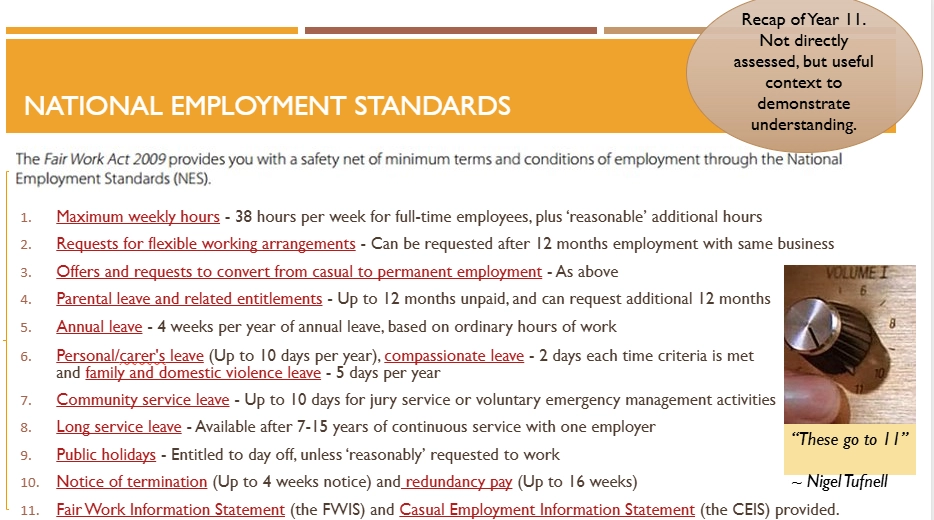
methods of setting pay and conditions exceeding NES
Awards (apply to an entire industry) — must meet or exceed conditions in NES
Enterprise agreement (applies to a workplace) — must meet or exceed conditions in NES and award
Individual contract (applies to a single employee) — must meet or exceed conditions in NES, award and enterprise agreement
Each of these documents sets out information including pay rates, working hours, leave (e.g. annual, personal, parental), notice of termination, redundancy pay etc.
awards
sets out the minimum pay rates and conditions for those in a particular industry, FWC is responsible for making and varying awards, ongoing but is reviewed every 4 years, applies to employees in an industry, must meet or exceed NES standards
awards advantages
only need to provide minimum wages and conditions which reduces costs for business, no time spend negotiating an agreement within the workplace because the awards are set by the FWC rather than at an enterprise level, stability and predictability because single set of rules apply across the industry
awards disadvantages
inflexible for the business as same rules apply regardless of size or location of business, harder to link productivity gains to wages and conditions, less incentive for a participative approach to management which decreases employee empowerment
enterprise agreement
sets out terms and conditions of employment at a workplace that results from negotiation between an employer and union and is ratified by the FWC, created via the process of enterprise bargaining which is is the negotiations between an employer and union (representing employees) about pay and conditions and once agreed on it is submitted to FWC for approval, lasts up to 4 years, must meet or exceed NES standards, must be better off overall than the award
enterprise agreement advantages
Increased flexibility because business can tailor pay and working conditions to meet the unique needs of their workplace
Easier to link wage growth with productivity increases
Large incentive for good employee-employer relations
FWC approves enterprise agreement = fairness
enterprise agreement disadvantages
Can be very time consuming to negotiate and agree on conditions of enterprise agreement
Causes conflict (or industrial action) between employer and employee due to ongoing negotiation
Increases the costs to the business because there are higher wages and often better conditions that are offered
individual contract
sets out wages and conditions agreed between a single employee and a business, negotiation between the employer and employee, lasts for the period determined through negotiation e.g. 1 year, applies to an individual employee, must meet or exceed NES standards, must include conditions that are better off overall than award and enterprise agreement
individual contract advantages
Promotes hard work and higher productivity
Other employees may use other ‘role modelling’/benchmarking employees to inspire their performance
Employees may feel more valued/appreciated if they can bargain for higher pay (self actualisation)
individual contract disadvantages
May create tension and/or competition in the workplace between employees, resulting in disputes
Greater time needed to negotiate contracts with specific employees
Increased costs to businesses when offering higher pay and conditions to specific employees
disputes
a workplace disagreement between employees or between employees and employer
reasons for disputes
a dispute or conflict can arise at any time within a business. it can arise for multiple reasons including:
Negotiation of a new enterprise agreement
Job security
Managerial policies
Discipline issues
Health and safety issues in the workplace
Harassment or bullying issues