Rates of reactions
 Call Kai
 Learn
Learn Practice Test
 Spaced Repetition
 Match
Match Flashcards
 Knowt Play
1/43

There's no tags or description
Looks like no tags are added yet.
Name | Mastery | Learn | Test | Matching | Spaced | Call with Kai |
|---|
No analytics yet
Send a link to your students to track their progress
44 Terms
Define rate of reaction
Change in concentration per unit time of any one reactant or product
How are rates of reaction measured?
a) Formation of a product per unit time
b) Loss of a reactant per unit time
Average rate of reaction formula
Amount of substance formed/lost / Time taken
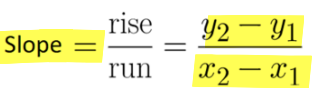
How to find Instantaneous rate of reaction
1) Draw a tangent to curve at time asked
2) Choose two good points on tangent
3) Find slope of tangent
Instantanous rate= slope of tangent
How to find initial rate of reaction
1) Draw tangent to curve from (0,0)
2) Choose two good points on tangent
3) Find slope of tangent
Initial rate= slope of tangent
Outline basic assumptions of collision theory
• For a reaction, reactant particles collide with each other
• Reactants have energy
• If reactants collide with correct orientation and meet required energy it will be an effective collision
• Effective collision causes chemical bonds to be broken and new bonds to form resulting in formation of products.
• Rate of a reaction depends on number of effective collision per second
What is activation energy
Minimum combined energy of colliding particles necessary for a reaction.
What is meant by an effective collision
Results in the formation off products
Factors necessary for an effective collision
Reactants have correct orientation
Reactants must collide with energy that equals or exceeds activation energy.
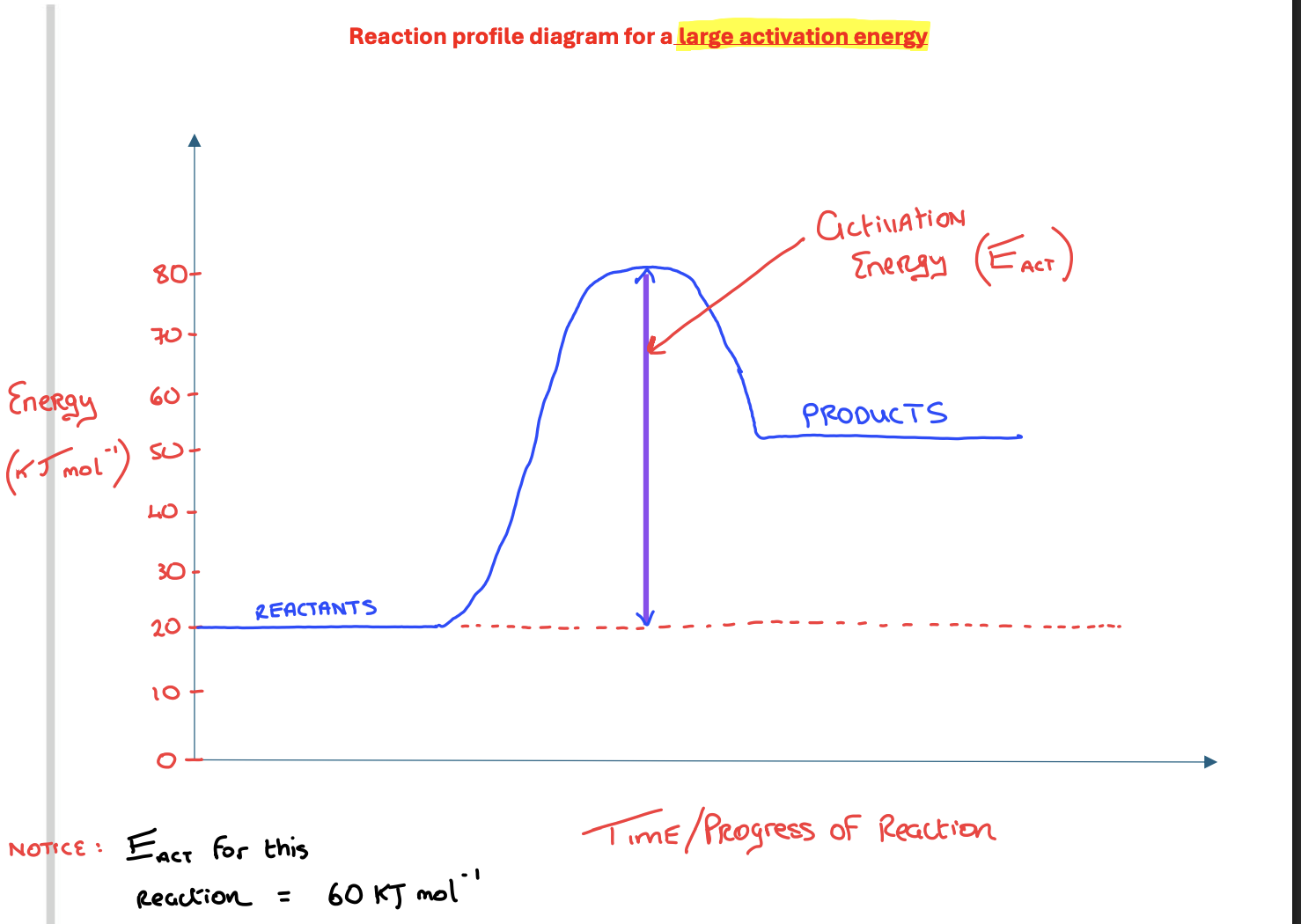
Why does large activation energy=slow rate of reaction
Low number of effective collision per second
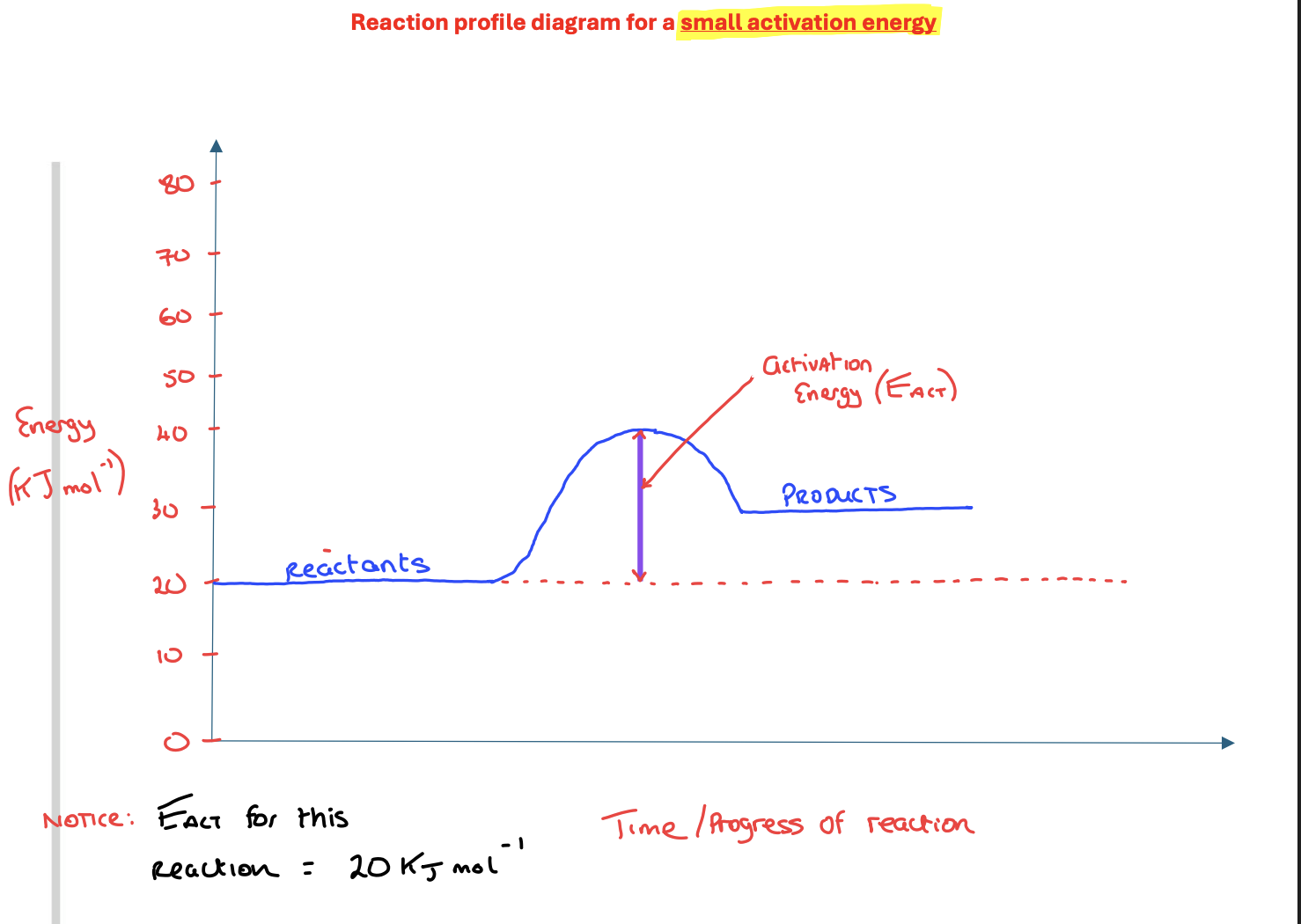
Why does small activation energy= fast rate
High number of effective collision per second
What is an exothermic reaction
Produces heat and gives it out
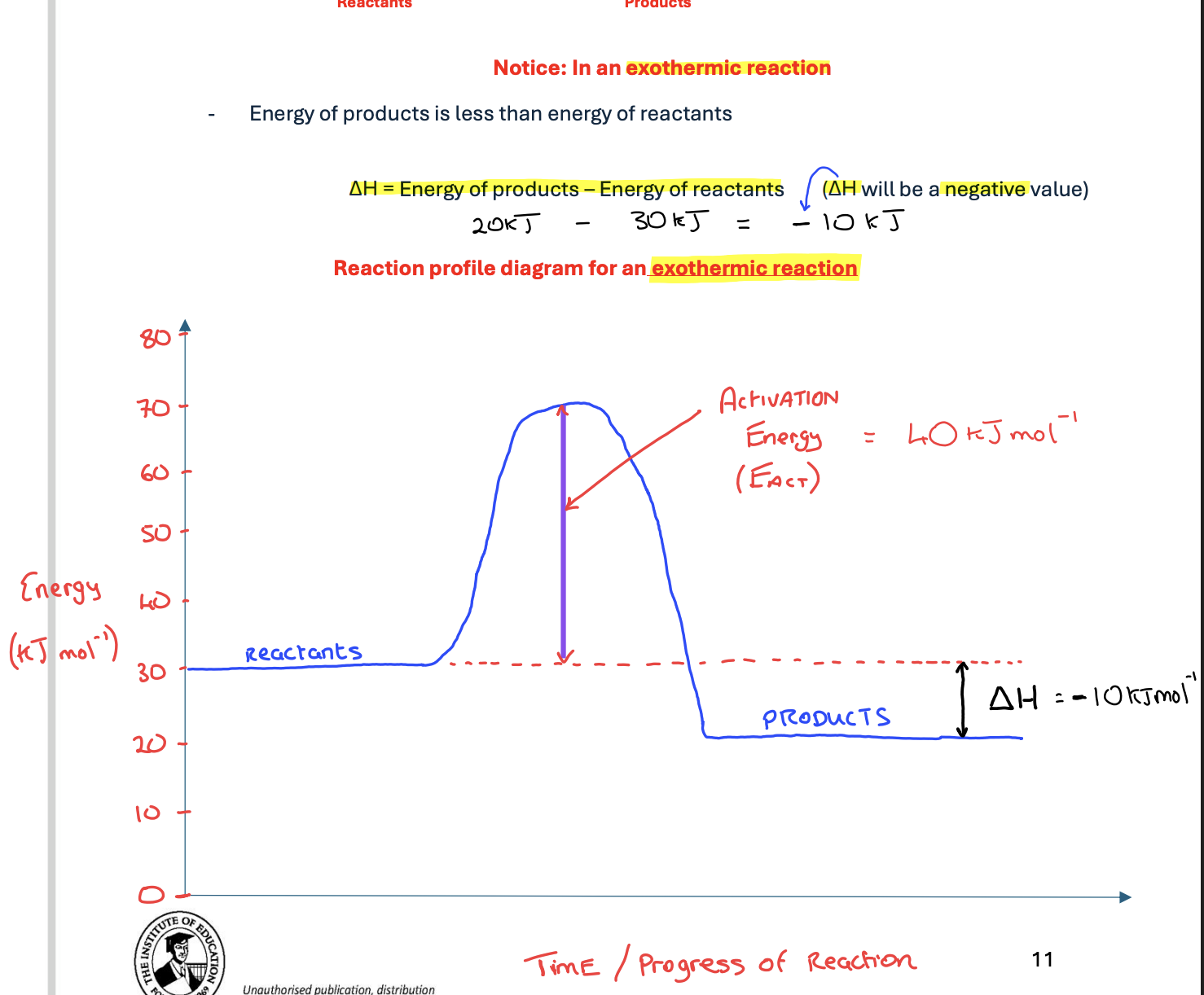
In exothermic reaction is change in energy positive or negative
negative
What is an endothermic reaction?
Takes heat in
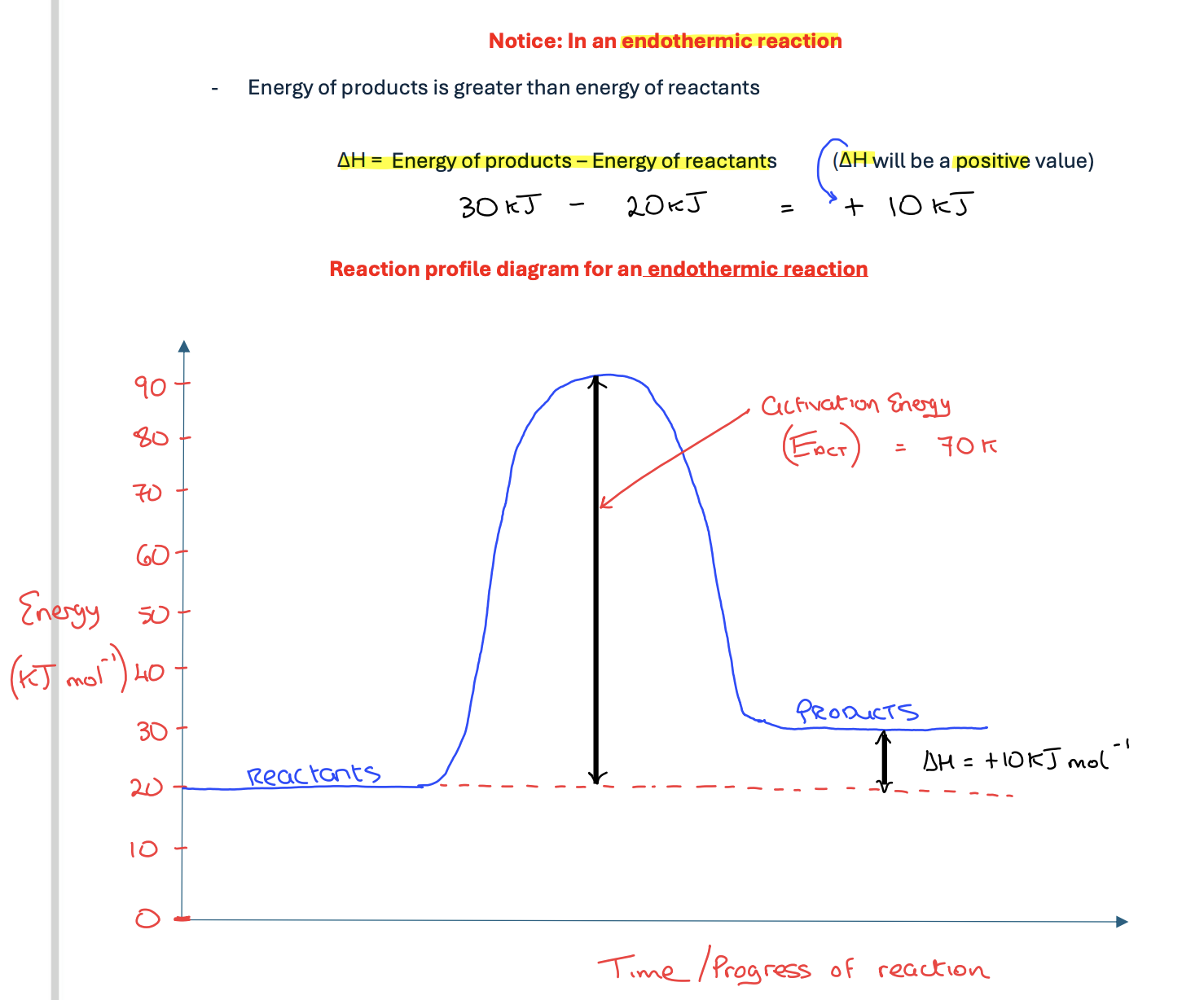
Is change in energy in endothermic reaction positive or negative
positive
Factors affecting rate of a reaction
Nature of reactants (ionic or covalent)
Particle size/ surface area
Concentration
Temperature
Pressure
Catalyst
Why are reactions including ionic compounds in solution faster
In solution, ionic compounds are already dissociated as free ions
No bond breaking is required, activation energy is lower and reactions are fast
Why are reaction involving covalent compounds slower
Covalent compounds do not dissolve
Bonds need to be broken, activation energy is higher and reactions are slow.
How does particle size affect rate of reaction and why
Smaller particle size increases rate
larger particle size decreases rate
Because smaller particles have greater surface area which means more collisions meaning more effective collisions per unit time.
Dust explosions present a risk in industry. Give five conditions necessary for a dust explosion to occur
1) Dust must be combustible
2) Dust must be dry
3) Source of ignition
4) Oxygen must be present
5) Must be in an enclosed space
How does concentration of reactants affect rate of reaction
Increasing concentration increases rate
Decreasing concentration decreases rate
Relationship between rate of reaction and concentration
Rate is directly proportional to concentration
Why does increased concetrationn increase rate
More concetrated solution has greater number of particles
Means more collision meaning more effective collision occur per unit time
Explain why the rate of a chemical reaction is always fastest at the beginning and then slows down as the reaction proceeds?
At the beginning of a reaction, concentration of reactants are highest.
As reaction proceeds, reactants are used up and concentration decreases- rate of reaction decreases
In what situations does concentration NOT have an effect on the rate of a reaction?
1) If reactants in very high concentration and one reactant is saturated, maximum number of collisions are already occuring
2) If chemical reaction produces an immediate precipitate
How does tempertature affect rate of reaction
Increasing temperature increases rate
Decreasing temperature decreases rate
Relationship between temperature and rate of reaction
As temperature increases, rate increase exponentially
Why does increases temperature increase rate of reaction
Increasing temperature increases energy of particles so more effective collisions per unit time.
Increasing temperature increases velocity meaning more collisions meaning more effective collisions per unit time
: Which of these two reasons is more significant in temperature increasing the rate of reaction? Explain.
• Increasing energy of particles
• For same temperature rise, increase due to higher velocity is small compared to increase due to particles acquiring more energy
What type of reaction does pressure effect
Only effects gaseous reactions
How does pressure affect rate of a gaseous reaction?
Increasing pressure increases rate
Decreasing pressure decreases rate
Why does increased pressure effect rate of gaseuous reaction
Increased pressure, gas particles compressed into smaller volume. This means more collisions meaning more effective collisions per unit time
What is a catalyst
Substance that alters the rate of a reaction without being used up.
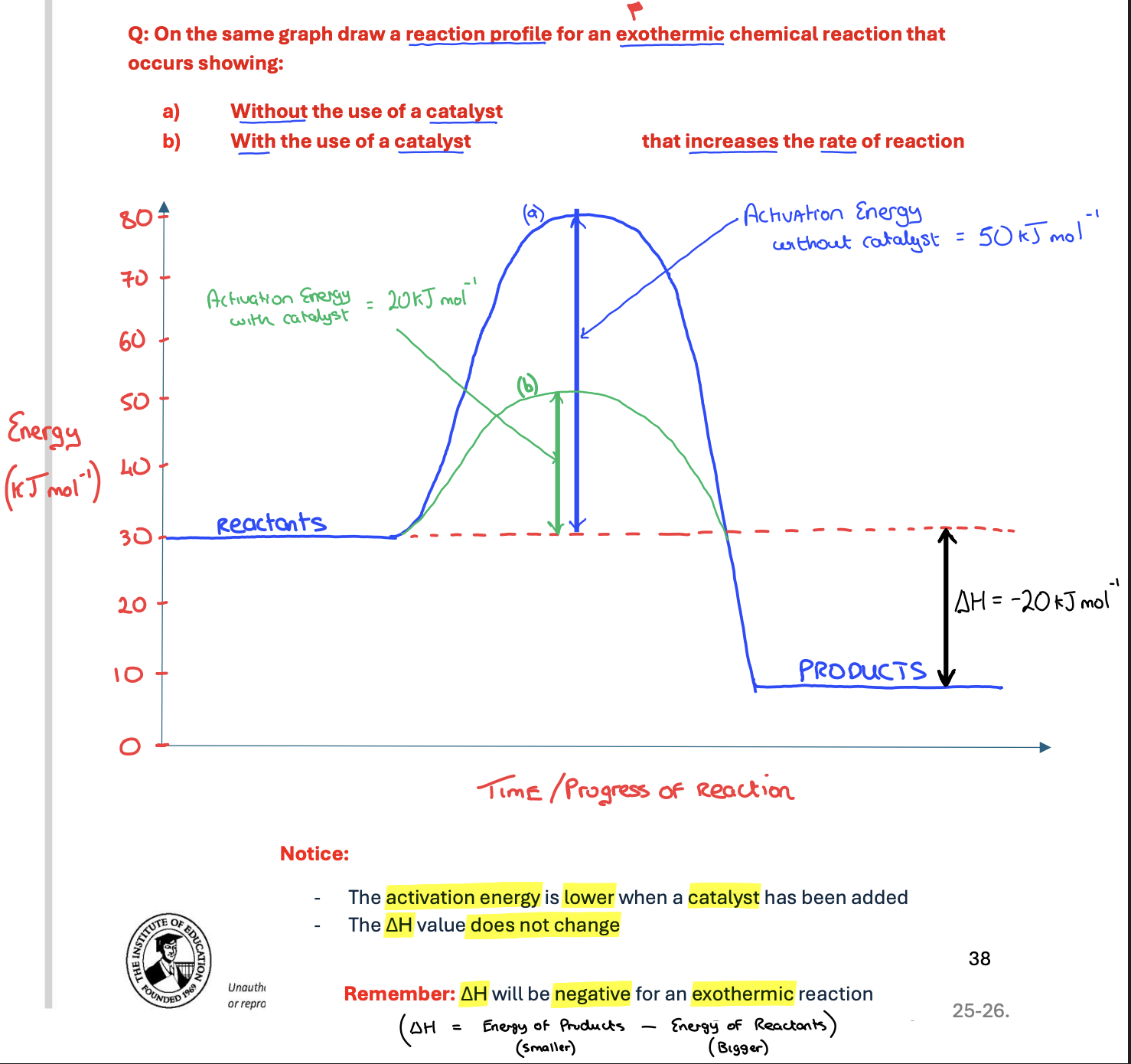
Explain why the presence of a catalyst can speed up the rate of a chemical reaction
Lowers activation energy providing an alternative pathway for a reaction
More effective collisions per unit time
Properties of catalysts
1) Chemically unchanged at end of reaction
2) Specific to reaction
3) Can be inactivated by catalytic poisins
4) Brings reversible reaction to equilibrium more quickly but doesn’t affect state of equilibrium
5) Only required in small amounts
What is an enzyme
Biological catalyst
Examples of enzymes
Catalase and amylase
How could you reduce the rate of a chemical reaction that takes place in solution
1) Lowering temperature- cooling
2) Lowering concentration- diluting
3) Adding inhibitor
Experiment to monitor rate of production of oxygen from hydrogen peroxide using mangasnes dioxide as a catalyst PROCEDURE
1) Add hydrogen peroxide to conical flask, clamp horizontally and add manganese dioxide to neck of flask
2) Stopper the flask and connect to inverted graduated cylinder
3) Turn flask vertical, start stopwatch
4) Measure volume of oxygen gas at regular intervals
5) Graph volume of oxygen vs time
What is appearance of manganese dioxide catalyst
Black powder
How is it ensured the stopwatch is started at exactly the same time as the reaction starts
• Add hydrogen peroxide to conical flask, clamp horizontally and add manganese dioxide to neck of flask.
• Turn flask vertical and start stopwatch
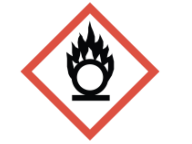
What does this mean
Oxidiser- Keep away from other substances
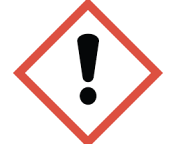
What does this mean
Irritant- wear gloves and use spatula
What effect would increasing the mass of the catalyst have on the rate of reaction? Explain
No effect
Catalysts required in very small amounts